Ask ChatGPT
 Give First
23 Jun 2025 · 36m · 18 chapters
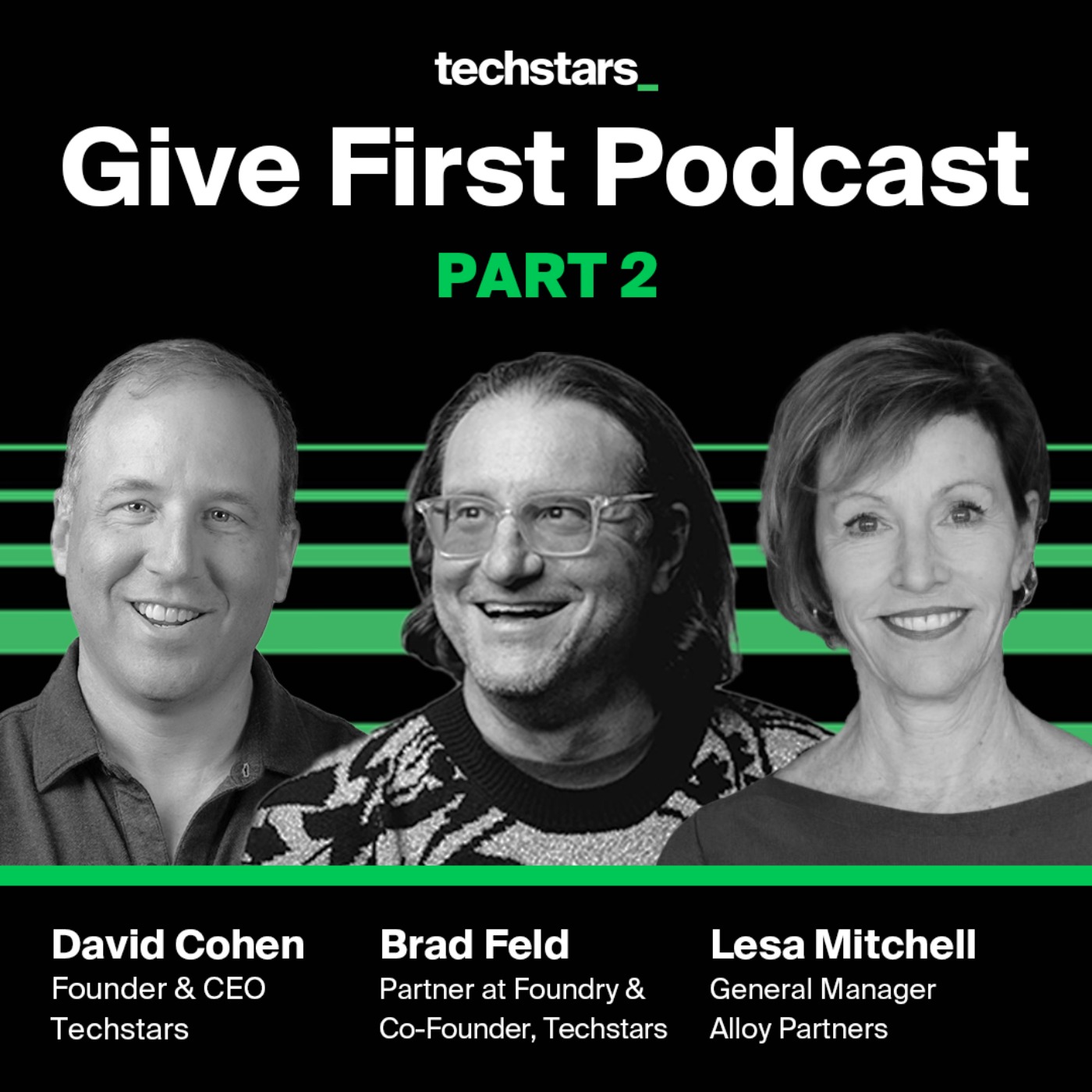
Part 2 of a mini-series on the Startup Community Movement (35-year arc), focusing on how “Give First” mentorship and community-building scaled entrepreneurship from niche to global. It traces key inflection points from 2006–2007 (Techstars, Startup Weekend) through 2013 (Global Entrepreneurship Congress in São Paulo and the Startup Weekend Organizer Event) and later scaling via UpGlobal/Techstars and philanthropic mechanisms like Techstars Foundation.
Lesa (Lisa) Mitchell is a long-time startup ecosystem builder and Kauffman Foundation collaborator, pushing “experiential entrepreneurship.” She later becomes involved with Techstars and startup community scaling.
Venture funds aren’t fixed 10-year vehicles; community programs succeed by inspiration and networks, not ownership; “global democratization of entrepreneurship” is the goal; “Give First” is the “secret weapon” that sustains communities.
Startup Weekend origins in Boulder (Vosnap); Startup Weekend scaling to cities; Rover (Seattle) created via Startup Weekend; Techstars Foundation funding via Rover equity; Zapier as a Startup Weekend-origin success; a 21-year-old in the Middle East saying Startup Weekend “changed my life.”
Written by AI. May contain mistakes.
Discussion about the history and evolution of the startup community movement.
“Certain of Techstars funds own or may own in the future securities and some of the companies discussed in this podcast.”
Insights into the changes in venture capital landscape and personal experiences.
“But it's also when David and I met in 2006.”
Details on the Kauffman Foundation's initiatives to promote high-growth entrepreneurship.
“And we had, I think, 302 companies applied for it.”
The story behind the creation of Startup Weekend and its impact on the community.
“So you could decide if you were going to do a thing or not do a thing and have everybody vote, like, you know, where you were going to go get food or whatever.”
Discussion about the difficulties and personal experiences related to writing books.
“By now, actually, maybe I was starting to not be terrible at writing books.”
Exploration of the Global Startup Weekend Organizer Event and its purpose.
“Talk a little bit about that experience.”
Introduction of the concept of democratizing entrepreneurship globally.
“where you did hundreds of talks to small groups.”
An impactful experience shared about how Startup Weekend changed lives.
“Well, are you doing this because you're trying to find the next great investment?”
Discussion on how Startup Weekend and Techstars fostered startup communities.
“and he puts a hat on, a green hat on my head.”
The story of Rover.com and its connection to Startup Weekend.
“And if you remember, relative to your Startup Weekend statistics, in Columbia, Missouri, a town, whatever, two hours from me in Kansas City, you have at least two, if not more, unicorns that came out of Startup Weekend.”
Exploration of the equity from Rover and its impact on startup communities.
“And the question is, you know, what's this, is this equity worth anything?”
Discussion on Techstars' rapid growth and the challenges faced during expansion.
“Because those grants went to other communities around the world.”
Reflections on how entrepreneurship has evolved over the years.
“Right, which was created because of another downturn.”
Thoughts on the future and continued growth of startup communities worldwide.
“it is the secret weapon of the startup communities that work, right?”
Learn about the evolution of the startup community and its global impact.
“We're 35 years into our 55-year journey.”
Discover influential organizations shaping the entrepreneurial landscape.
“The only reason I had 20 years was because my publisher maybe put a number on it.”
Understand the contributions of key individuals in fostering entrepreneurship.
“You know, the origin story of that was something in Boulder again, Entrepreneurs Foundation of Colorado, which I attribute to Ryan Martins, who co-founded a company called Rally.”
Find out how to engage with the startup community and make an impact.
“Yeah, not that surprising for a dude that started AOL, like the idea of connecting everyone.”

Get the gist, explore an idea or ask about something said.
 Claude
On Give First, what are the key points of this episode?
Searching your listeningAutomatic transcript. May contain errors.
0:04David Cohen: Hi, everyone. This is David Cohen, and I'm here with my amazing co-host, Brad Feld. Hey, Brad. And this is the Give First podcast. In the startup world, Give First means simply trying to help anyone, especially entrepreneurs, without any expectation of getting anything back. So we'll be talking to mentors and founders about what Give First looks like in action and how it makes great entrepreneurship possible. We polled everyone and they said consistently that their favorite part of the show was the legal mumbo jumbo. So here it is. The following discussion is an expression of personal opinion and does not represent the opinion of Techstars or any company we discuss.
0:38David Cohen: Our conversations for informational purposes only, including any mention of securities or funds. This is not legal business investment or tax advice and is not intended for use by any investor. Certain of Techstars funds own or may own in the future securities and some of the companies discussed in this podcast. Got it?
1:00David Cohen: All right, we are back at the Global Entrepreneurship Congress in Indianapolis. Special guest Lisa Mitchell. Part two of the exciting mini-series, two-episode series, talking about the startup community movement, which is now 35 years old. Amazing. Where did we get to last time? Roughly what year? 2006. 2006. We did pretty well. I've to bank that up because it's a nice number. We did pretty well. We're in the zone of halfway-ish. I guess. So let's pick up the story there. What was going on 2006 plus? Well, 2006, for me, the prior firm that I was part of, which was originally known as SoftBank Technology Ventures and then became known as Mobius Venture Capital, that's an entire episode about why that happened.
1:48We had decided early in 2006 that we as a team we're not going to raise another venture fund. I had also, as part of that, committed to manage out the Mobius funds through end of life, regardless of what happened with the partnership dynamics. I don't know that I would have made that commitment if I had realized that the last fund would last until 2022. So, which was a 2000 fund. That's a whole not restricting. So, you know, if anybody tells you that venture funds are 10-year vehicles, you can just laugh. Just, you know, roll your eyes like off now and you cry later. Yeah. But I had started making angel investments again because we were no longer making new investments, although we had a very large portfolio, lots of companies that we had to keep supporting.
2:33So, you know, I was kind of out and about in the startup scene. Boulder had come back pretty fast relative to the rest of the country in terms of startups. You're starting to have people. Web 2.0, I think, was a word by now. Yeah. Yeah. USV, Fred Wilson and Brad Burnham had started a fund in 2004. That was kind of the beginning of the next generation of venture funds. Spark, Santo and Todd had started their fund. And a handful of others were some Jeff Clavier on the West Coast that started a fund. I think Manu Kumar started a fund. Chris Saka had a fund. Josh Koppelman had a fund. I mean, these are all, you know, this timeframe in this sort of 2006, 2007 timeframe is when we started Foundry in 2007.
3:22But it's also when David and I met in 2006. And the random day story is well known. And for those of you that have not yet purchased your copy of Give First, The Power of Mentorship, this is the part of the episode where you have to listen to the advertisement that I didn't have to pay for because it is a podcast that I co-host.
3:44David Cohen: So, and you want to sell books and, you know, books, books, books. I'm like, like, like, like, like Steve Ballmer. Developers, developers, developers, books, books, books. Give first, give first, give first. All right. So David and I connect and with David Brown and Jared Polis, Star Techstars. Lisa, what were you doing in 2007? In 2007, we had figured out at the Kauffman Foundation that high growth entrepreneurship was a thing. We were funding a lot of initiatives at that time, working with Dash Desponde, who had just launched Desponde Center a little bit before that, working with Reg Kelly, working with a number of universities that were launching really, really cool initiatives that were more experiential than, I mean, obviously, we were doing some of the funding of academic entrepreneurship and entrepreneurship programs, but I was pushing hard on experiential entrepreneurship was the answer.
4:48Yeah, I think the first year of the Deshpande Center, I think I funded something personally as well. And I'm trying to remember, it wasn't Zee Howie wasn't running it yet, but I'm trying to remember who the person was. I can't remember. Woody Flowers was involved a little bit. Charlie Cooney. Charlie. Yes, that was the name I was digging for. All right. And we didn't know each other then, other than sort of just very, I mean, I knew your name and you knew mine. And I hadn't worked a lot together yet because I think right around 2001, after the Internet bubble collapsed, I had a series of years that I refer to personally as the grind.
5:27So from about 2000. Went underground. Well, I just had a shit ton of work because everywhere, everything in my world blew up. And so from about 2001 to about 2005, I just worked and worked and worked and worked to try to take this giant pile of mess that I had in my portfolio and make it less of a giant pile of mess. But I sort of picked my head up by then. And I remember a couple of interesting tidbits that then led to real meaningful engagement with Kauffman again. Paul Kudrowski was the link. Paul, I think Paul probably was because he was at Kauffman. He was a senior fellow working with me.
6:05That's right. And I had become friends with Paul. I think Paul and I ended up connecting through Eric Norlin. Eric and Paul have started a venture fund at some point down the road called SK Ventures at Foundry. It's an LP in. But Eric and I had started a conference called Defract. Yep. and Eric had done previous conferences. I can't remember when we first met, but the idea was, hey, there's this thing happening that's Web 2.0 and we don't want to do Web 2.0 conference, but there's something interesting in this. So let's start doing a conference series. Let's do it in Boulder, which is kind of a weird place to do it because everybody's used to doing conferences in New York City or conferences in California.
6:54Let's make it a really niche-y conference and let's make it really for developers, for people that are working on these technologies. And for people that don't know the defrag reference, it came from defragging your hard drive. Like if you're old enough, he used to have a hard drive and you have to run, I don't know which defrag software you used.
7:12David Cohen: I think I used OnTrack. Like, I can't remember, but I'd like to watch them. Watch it in little blocks, you know, that would consolidate all your files. And our idea was let's defrag our brains. Like let's use a little time here to defrag our brains. and that's how I got to know Paul. Paul got excited about this stuff and that was the linkage back between the two of us. And I'm like, yeah, I used to work with Kauffman a lot. I kind of lost touch, blah, blah, blah. Oh, you love this person, Lisa. And he was right. I mean, it was like the first time we sat down and talked about this stuff. It was awesome.
7:46That 2007 year for Techstars was quite remarkable. You want to talk about a couple of things that happened that first year?
7:51David Cohen: Yeah, I mean, that was just the first accelerator we ran, but it also was the first time that Startup Weekend happened that same summer. And, you know, with Andrew Hyde, I was the, you know, the only person actively working at Techstars and I was running the accelerator. And we had, I think, 302 companies applied for it. And we were offering an incredible amount of capital. I think it was$20 ,000, you know. Which was almost all of the capital that was invested in Techstars up to that point. That's right. And we went around the world and found people that were attracted to this idea of mentorship and the context of Accelerator.
8:32David Cohen: And, you know, found 10 interesting companies, brought them to Boulder, you know, created the mentorship group there, which was a new idea. People got excited about, oh, I can just kind of give first and help some startups that you're doing the work to pick and you're doing investing in. And it can make our local startup community stronger. right? Because we'll work together on it. It's not just another event to go to. It's a thing to do together to actually help some companies. So that got going and there was a lot of energy around that. And when Andrew Hyde experienced the accelerator, he walked into my office one day and sat down and said, I want to do this for the community.
9:11David Cohen: Like there's so much cool energy here. Can't we just do this like in a weekend and let everybody experience it? And that's what, That's what created the first Startup Weekend, which was held over University Bikes in downtown Boulder. All the tech startups companies that were in the program went to that first Startup Weekend. It was just an experience of entrepreneurship for people. There had been no way to just go and decide if entrepreneurship was for you. But if you work with a bunch of people for 48, 72 hours straight all night long, you might discover you love it. And so those two things were happening really at the same time in 2007.
9:48One of the sort of memory lane moments, especially for anybody that's listening to this, Miha, that means you, or Julie, that means you, who are both on my team that weekend. My partner Seth Levine and I covered the food bill, which was maybe a grand. Pizza. It was pizza, pretzels, Coke, and beer. Boxes stacked down high in the corner and tons of energy. And it was awesome. So we covered that. I remember very viscerally three things because I didn't stay the whole night. I went home and went to sleep and then came back the next morning. I remember, one, that that room above university by bicycles smelled like it was.
10:32David Cohen: Yeah, as it should. I mean, Vales, smelly bike shops. It was pretty right. Yeah. That's sad. Second, the company that came out of it, which we should probably dig up on the Wayback Machine, was Vosnap. Vosnap, that's right. And why don't you, you remember what Vosnap did probably as much as I did. Yeah, it was just social voting. So you could decide if you were going to do a thing or not do a thing and have everybody vote, like, you know, where you were going to go get food or whatever. Just, you know, no business model, which you would expect at day one. Perfect startup community. But we wrote Arrington over at TechCrunch and said, hey, there's, I don't know, 80 people huddled over a bike shop creating one startup together this week.
11:10David Cohen: And they wrote a story about that. Wow. Because they had been covering tech stars a little bit as a new thing. But this was even more interesting in that moment. Like, oh, they're all working on one thing together? How's that going to work? The other thing that I remember coming out of that was startup yoga. Which evolved into goat yoga. Go yoga, yes. And it was just like, it was an awesome weekend. Like, you know, as the emergence of these things are, they happen and you kind of forget the origin story. And, you know, people that know me know I love origin stories. I just remember that moment so fondly.
11:49David Cohen: So it was almost like Andrew had this idea of doing sort of Techstars Accelerator for the community. No funding, just fun, right? And we did that and supported it. And I just remember saying, yeah, you should do it. And he did it. It was amazing. And then he started to do it in more places. He just started traveling around and doing, yeah, start a weekend in Portland or wherever. Right. And it became part of this like grassroots movement to people could experience entrepreneurship in a way that they hadn't before. That then scaled up quite a lot over the years. And, you know. So, Old Mark Nigger joined and you called me and Bo Fishback and said, we should make this bigger.
12:32And we threw in a very large check that a small little not-for-profit didn't quite know how to deal with. So, we then had to create infrastructure to help them figure out how to do it. Yeah, and I really think of that, you know, that is a good segmentation between startup and scale-up. Exactly. The very beginning of Startup Weekend was startup. Figuring it out, trying it, do it. Go find your own local funders. Yeah, do your own little thing each place. And then all of a sudden when Mark and the team that he brought in, Frank and Clint, sort of came together, you provided the funding that then allowed them to scale it up.
13:14And a key part of it, of course, was figuring out like, oh, my God, is there a problem here? Like if somebody creates a real company that actually turns into anything, who owns it? What does that mean? And what do you do?
13:26David Cohen: It turned out not to be about that, though. It turned out to be about inspiration, right? And the network that it created in a local community. So let's wind that one forward. We were talking about sort of this dynamic of how these things build on each other in the other episode. there was a moment in time that I don't remember the year, but it was like 2013, I think. 2013, GEC. Yeah, that's right. It was GEC in Sao Paulo. And it was the first time I came to Global Entrepreneurship Congress. And you'd written a book. I had written a book. I was always writing books. I'd written a couple of books.
14:10By now, actually, maybe I was starting to not be terrible at writing books. They were still torturous for me. Every one has been hard. It's like I've run a bunch of marathons, and after every marathon, Amy says to me, how was it? I said, that was really hard.
14:25David Cohen: It's just a little after one. That's so hilarious. Yeah. So, you know, we're hanging out there, and there's a couple things that happened together. One was GEC. One was the Global Startup Weekend Organizer Event. Correct. Talk a little bit about that experience. Yeah, the whole idea for the Startup Weekend Organizer Event was we, because of the work of Andrew, Mark, etc., they suddenly had just thousands of people around the globe that were taking this minuscule playbook that we gave to them and going off and doing it. And a number of them had said, we want to come together. And so we said to Jonathan, who is going to hold Global Entrepreneurship Congress in Sao Paulo, why don't we do it jointly?
15:13And oh, by the way, Brad's written a book called Startup Communities. Don't those three things all have to do with each other? And we brought them together into this just crazy, wild, no one slept for a week event where you did hundreds of talks to small groups. The startup community organizers got together to figure out how they scaled, scaled their fundraising, scaled their mentor models, scaled everything. And we had a number of Techstars people there essentially talking about the same thing. How do we link our mentor model? How do we link funding to all of this? So it was like consilience everywhere.
15:55I had two really profound moments I had multiple moments, but two really profound positive moments from that. One was a phrase I then started using, which I think today is, I think it's kind of obvious and accepted, but then was a pretty provocative phrase. And that phrase was the global democratization of entrepreneurship. Yes. And I was just having a hard time explaining like why I cared about this, you know, and there was always everybody would always say, well, what's your why or some version of that, whatever the 2013 version of that line was. And I didn't have good answer. I'm like, it's fun.
16:39I like these people. I'm a founder. I started a bunch of companies. Well, are you doing this because you're trying to find the next great investment? Nah, I don't give a shit about that. Like maybe I will. Who knows? But, you know, I'm learning a lot and I'm meeting a lot of interesting people. And yeah, this thing over here turned into an investment, but that's not really why. Like, it's just the energy around it. And I landed on that phrase when I was in Sao Paulo, which was, wow, this is really about making entrepreneurship accessible for anyone, anywhere in the world. The other profound moment I had, and I'm going to not say what country it was because of the geopolitical dynamics that we have in the United States right now.
17:22And I don't really feel like getting a call from somebody at OFAC. I'm standing in this event that was the closing event for the Startup Weekend stuff. It's in this gigantic tent. It's probably, I don't know, 500 or 1 ,000 people there. and I'm just sort of, I'm doing my big event thing. I'm standing in the corner because I don't really want to be in the middle of it and people are coming over to me and I'm doing my thing and this kid comes over to me, a kid, 21 years old. I'm now getting a little bit older. By 2013, I was almost 50. I was 47, so I was, you know, like a 21-year-old felt like a kid and he puts a hat on, a green hat on my head.
18:04He just comes over, just slaps it on my head and he gives me this giant hug he's a little kid he's smaller than me he's like five foot five just giant hug and um you know i come back whatever okay cool and i say uh uh uh why'd you do that you know what's up he's you you changed my life exactly and i said what do you mean i changed your life i just met you like thanks for the hat and he says no no no look at the hat and i take the hat off and it says startup weekend and then uh city and it's a city in the middle east and i said yeah i kind of said oh that's interesting and i i said uh what's special about you know this he says i don't think anybody in my city ever thought certainly not of my generation thought that we could do anything like this yeah yeah and this is this is uh those moments when someone walks up to
18:58David Cohen: and says, you changed my life. My life. We've all been fortunate to hear that from people. It really hits you. And I remember several moments like that in my life too. But, you know, you think about the global democratization of entrepreneurship. I mean, really Startup Weekend and things like Techstars Accelerators were making that opportunity available to more people. And they sort of grew. They were separated at birth, those two things, right? We sort of have a similar origin story, But they grew very independently to where Techstars was funding many hundreds of companies a year and other people were replicating that accelerator model.
19:34David Cohen: You coined the word accelerator somewhere along the line there. And so you just had so many more opportunities for people to even jump in and understand it or do something where their community suddenly was supporting them. They weren't just doing it alone. And that was totally new in that era. And if you remember, relative to your Startup Weekend statistics, in Columbia, Missouri, a town, whatever, two hours from me in Kansas City, you have at least two, if not more, unicorns that came out of Startup Weekend. Equipment Share, Zapier, I think there's multiple. They're still running Startup Weekends every single year.
20:14As they should. Well, and the starting points for these companies is really fun. I mean, Zapier is a good example of a company that, you know, today is a very, very large, very successful company. Didn't end up raising very much money. And, you know, the... Good for them. Great for them. Great for them. And it has had a huge impact on, you know, the internet infrastructure. One that I had the experience with that we ended up funding as a company that came out of Startup Weekend was Rover. Yes. And Rover.com was a Seattle. Greg Gottesman. Greg Gottesman went to Techstars, went to Startup Weekend before was part of Techstars with the explicit goal of starting a company for this.
21:01Like he wanted to. Yeah. And he was a VC. Like he just like, I just got to get this going. And Startup Weekend was the container for getting it started. Yeah. There's a couple of fun linkages. I ended up, Foundry ended up being the next round investor. That company went public and it subsequently got private. Blackstone bought it for two and a quarter, two and a half billion dollars, something like that. Hugely successful company, but as part of it, it gave some of its equity to Startup Weekend. And a very small part from the beginning was voluntary. and when I remember getting a call from David around the time that it was, Rover hadn't gone public yet, but it was after Startup Weekend had been acquired, or UpGlobal had been acquired by Techstars, and they were sort of sorting out all this old stuff that existed and this equity existed.
22:03And the question is, you know, what's this, is this equity worth anything?
22:07David Cohen: And if it is, it's a nonprofit piece of equity. It's not something tech stars would keep, right? And so like, how do we deal with this? What is it? Is it worth anything? I remember asking you. What was amazing was the lake of mentorship and give first to all of this. That's right. Because as you know, in many communities, you couldn't get serious, experienced entrepreneurs or investors necessarily involved in Startup Weekend coming for the weekend or mentoring, but you could in Techstars. And then you ended up seeing them go back and forth relative to giving back to the community and being willing to be involved in both, which was amazing.
22:46That's right. So the value system sort of gets woven in. Just for avoidance of doubt, as my friendly lawyers would say, so that nobody listening here thinks that we made money, We Techstars, the corporation, made money off of the Rover contribution. That stock, when David called me, I said, yeah, that stock's going to be worth something because I was on the board. There was some confusion about what to do with it because everybody was trying to figure out, like, how to deal with the pieces. I think maybe the exercise period was ending or something. I don't remember. It was becoming real. It was becoming real.
23:22And I said, we talked about it, and the very easy decision was stick it in the Techstars Foundation. Yeah. And the Techstars Foundation, which existed to fund organizations that were nonprofits that were helping underrepresented communities around entrepreneurship.
23:42David Cohen: Yeah. So different organizations that were focused on underrepresented founders was where the funding flowed. And that ended up being a pretty sizable amount of money for the foundation. And that community startup weekend in Seattle that created, you know, Rover was created in the context of ended up essentially funding so many other startup communities that were trying to do things, right? Because those grants went to other communities around the world. And it's sort of like a great story of communities helping communities, even though there's no obvious linkage, that's what actually happened to that money, right?
24:15David Cohen: And so somewhere along the line, you end up joining Techstars. Yes, exactly. I got from Brad one day. He said, hey, you want to do this crazy thing in Kansas City? When you got off the phone, what was your first reaction? Did you just laugh and say, no way? No. I said, why would I not do that? That sounds so much fun. You make decisions based upon fun. There you go. And people that you want to work with. It's hard. Yes. That was a formative time because Techstars was growing very quickly. You know, both in terms of geography and number of programs, a lot of corporate programs as well as the city programs, trying to sort out how that stuff worked.
24:56It was before what, you know, David, I think, is now describing very eloquently as Texter's awkward teenage years. I've described it recently in a couple of talks. You know, we definitely, you know, got drunk, you know, and probably parties. Yeah, I drove drunk a couple of times and, you know, snuck out of house overnight. Took the car out for a span like I shouldn't have. But it was a little bit before that because it was this curve that was moving very quickly. And now, you know, a couple of things have happened. Techstars had also essentially acquired UpGlobal, which was Startup Week, Startup Weekend, and Startup America, all three, which you and I had been very well - Right, which was created because of another downturn.
25:38That's right. That was a global financial crisis. So, you know, startups are having, you know, we started this episode in 2007. and in 2008, for people that are too young to remember, the world was going to end. Yeah. Right? The government was going to take over everything. There was going to be no such thing anymore as a bank. In fact, a couple of countries got completely nationalized in that period of time because they were in such financial distress. But founders kind of did what founders do. They just kept starting companies. By 2010, 2011, starting to come out of this, was the language that then turned into startup communities.
26:17That phrase didn't exist before that period of time.
26:20David Cohen: So this whole story is sort of entrepreneurship going from inaccessible to much more open, democratized. Globally. Globally. You should. I should use that phrase. You should. That's a great phrase, Brad. Maybe you should write a book, too. I don't know. I've got two on that one. I think I'm done with that topic. Two people realizing that they have to give first in order to allow it to happen in their own. it is the secret weapon of the startup communities that work, right? As people give first and help each other. And now Brad's written that book to capture that. I mean, the contributions that you both made to this long story are incredible.
26:56David Cohen: And it's awesome to sort of hear it. And you sort of look at today, you know, these things have scaled up. There are so many, you can build a startup anywhere. These communities exist all over the world. The playbooks are out there. People are Consciously working on it. You know, even at Techstars, we now have these startup community partnerships where you can work with us on, you know, making your startup community grow and thrive. It doesn't have to be just an accelerator. It can be other ways to do that, like through these events. And it's so powerful to see now where are the startups that are working coming from?
27:29Everywhere. Everywhere. Everywhere. I've been to Angola for Global Entrepreneurship Week. I've been to so many countries where we're driving on a dirt road and you're meeting with entrepreneurs and they say a year later, you changed my life.
27:44David Cohen: Which is that's the payoff moment for all of us. That's why we do it. Well, I guess that means our mission is over. No. 35 years. You've got to be always thinking 20 years ahead, Brad. I don't know if you know this. Did somebody once say that? You've got to think at least 20 years into the future if you want to build. We hit new walls and we have to create ways to get better. We're 35 years into our 55-year journey. And here we are at the Global Entrepreneurship Conference with, what, thousands of people who are focused on— I saw that there's 8 ,000 or 9 ,000 people here. We are all focused on building their own ecosystem, their own storage communities.
28:16Yes, there's people here from every continent.
28:20David Cohen: Amazing. And, you know, shout out to Jonathan Artmans and his team for what they've created here, which is really pretty amazing as another thing, which is, I think, a key part of the whole story is, you know, we talk about, obviously, Give First is linked to Techstars, but it's a philosophy that we've tried to spread to many other organizations. It's not a proprietary thing. The dynamics of the networks and a lot of the things that we've learned, I think, from the very beginning, we've always tried to be very open about how they work. And, you know, the idea that many, many, many different organizations can be successful at the same thing.
28:57And that's all good. Yes. The interesting, when I sort of sit here in this moment and think about, like, what's next, from my standpoint, this idea that originally when we came up with the, or I came up with the Boulder thesis, I would say you have to have a 20-year view. The only reason I had 20 years was because my publisher maybe put a number on it. I wanted to say you have to look forward into the future forever. He sounds ridiculous. Right, right. But I think the right language is what, David, you use that we've been using for a long time is you have to look 20 years from today. Right. And, you know, there's some nice cliches in tech like the Jeff Bezos, every day is day one.
29:40There's a I kind of feel like there was a podcast. Maybe it was. Yeah. Or a video thing on YouTube. I think it was Linda at Endeavor. Linda Rottenberg had this day one interview that I did at Sao Paulo where, you know, talked about that again, day one looking for that this this notion that if you're into this thing, always just every day get up and move forward.
30:05David Cohen: I have an idea to wrap this episode because, you know, we tell this story. There were so many organizations and so many people. You've mentioned a bunch. But just rapid fire, who is a big part of the story that we didn't mention? I would say like, oh, you know, Endeavor, you just mentioned, certainly. Pledge One. I mean, there's so many organizations. Do you have any others that you feel like come to mind? Oh, so many. Startout was an organization that I funded a long time ago that was, you know, intended to support lesbian and gay entrepreneurs that was nothing and became huge. Much of the global entrepreneurship women's movement came out of Astia and then created Winning Women at Ernst & Young Entrepreneur because we found that there weren't enough women that were getting in there.
30:51C. Witt. NCWIT was a precursor to both of those that you were linked to. Well, National Center for Women in Information Technology, which Lucy Sanders started, has within it one of the alliances is an entrepreneur alliance. And so then this sort of notion of that, you know, David, you mentioned Pledge 1%, which is now given, I believe the number I saw recently was over$3 billion of philanthropic giving from startups back to local communities around the world. You know, the origin story of that was something in Boulder again, Entrepreneurs Foundation of Colorado, which I attribute to Ryan Martins, who co-founded a company called Rally.
31:32So Ryan would be one of those people. Yeah. Ryan sat down with me and said, I want to do this thing that Salesforce. He said, I want to do this thing Benioff is doing. And I didn't say who was Benioff. I knew who Benioff was. But I said, what is Benioff doing? He said he gave 1 % of Salesforce to the Salesforce Foundation before they went public. I want to do that with Rally. I was on the board of Rally. I'm like, great. He's like, but that's not enough. We want to do that with every startup in Colorado. Yeah. Yeah. And his spin out of all of this was also Steve Case starting Rise of the Rest.
32:03Rise of the Rest. Starting America, all this stuff. And, you know, we didn't mention Steve, but it's probably Steve's a good person to end on because Steve's woven through this in lots of ways. Yes, he does. You know, he was a critical funder with Kauffman of a number of things, including Startup America Partnership. He was the chair of it and was really a key motive force behind that, both personally and with Case Foundation. And, you know, when Startup Weekend had gotten to a scale point, Startup America Partnership had had its sort of three-year run, which was what the initial charter was. He was integrally involved in architecting this idea of putting together Startup America Partnership and Startup Weekend, which turned into UpGlobal.
32:53when UpGlobal was acquired by Techstars before Rise of the Rest, I believe he was key to creating the Startup American Champions Network, then Rise of the Rest, which we've all been very big supporters of in different ways, which turned not just into a movement, but into a venture fund that he supported a bunch of companies, many of whom have also been funded by Techstar seed funding there. And so, you know, like the level of effort that Steve has put into this global democratization of entrepreneurship is pretty profound. Especially in the U.S., yeah. Yeah, not that surprising for a dude that started AOL, like the idea of connecting everyone.
33:38So there's a couple of one, Nate. Yeah.
33:39David Cohen: That's great. And I'm sure we're still forgetting some people. But, you know, I think when you think about that 35-year arc and where it can go from here, I know there's people listening that are building their own startup communities, their own entrepreneurial ecosystems. It does work. Your effort does pay off. And it's pretty cool to think back on a long arc of it. So wish you all the best of luck if you're doing that. Let's do an ending call out for anybody that happens to listen to this that doesn't feel like they're connected into the existing startup community movement and the things that are happening or feel like they're doing something that's special.
34:12Brad at Feld.com is interested in hearing from you to be part of whatever you're doing.
34:20David Cohen: So is David at Techstars.com. You don't have to give your email. Believe me. Lisa at AlloyPartners.com. Look at that. She did it. And we're all interested because the way networks work from my frame of reference is it's not how many people you're connected to. It's how many people you're connected to times the throughput, times the information that goes across. So if you're connected to lots of people but you don't do anything, you're worthless. But if you're connected to a lot of people and you do lots of things with lots of people, then you really can make a difference. It's a powerful network.
34:56If you could be a math problem, call us. Lisa, thank you. Thanks, Lucy. Sure. Great to be here with you guys.
35:05David Cohen: Thanks a lot for listening to the show today. We'd love to hear your feedback, ideas, or who you'd like to hear next on Give First. And please leave a rating and review, ideally a good one. And reach out anytime to podcasts at techstars.com or on Twitter, I'm at David Cohen. See you next time. Don't forget, Give First.
35:26You
In this special episode of the Give First podcast, David Cohen and Brad Feld go deep with Lesa Mitchell on the 35-year evolution of the startup community movement. Recorded live at the Global Entrepreneurship Congress, they reflect on the early days of entrepreneurship support—from the founding of EO and early angel networks to the ripple effects of the Kauffman Foundation.
Together, they explore the rise of startup ecosystems, the shift from gatekeepers to networks, and how placing founders at the center reshaped everything. Brad shares pivotal moments from Boston to Boulder, Lisa brings insider context from Kauffman’s legacy, and David reflects on how it all led to Techstars. It's a look back,—and a look forward,—at the movement that transformed how startups start.
Follow David Cohen on LinkedIn and Twitter
Follow Brad Feld on LinkedIn and Twitter
Listen & subscribe to the Give First podcast on Apple Podcasts, Spotify, and more.
Hosted on Acast. See acast.com/privacy for more information.