 Ask ChatGPT

Rethinking capitalism and its future, arguing against a “capitalism vs socialism” false choice; also an update on venture firm Foundry and Colorado’s startup ecosystem.
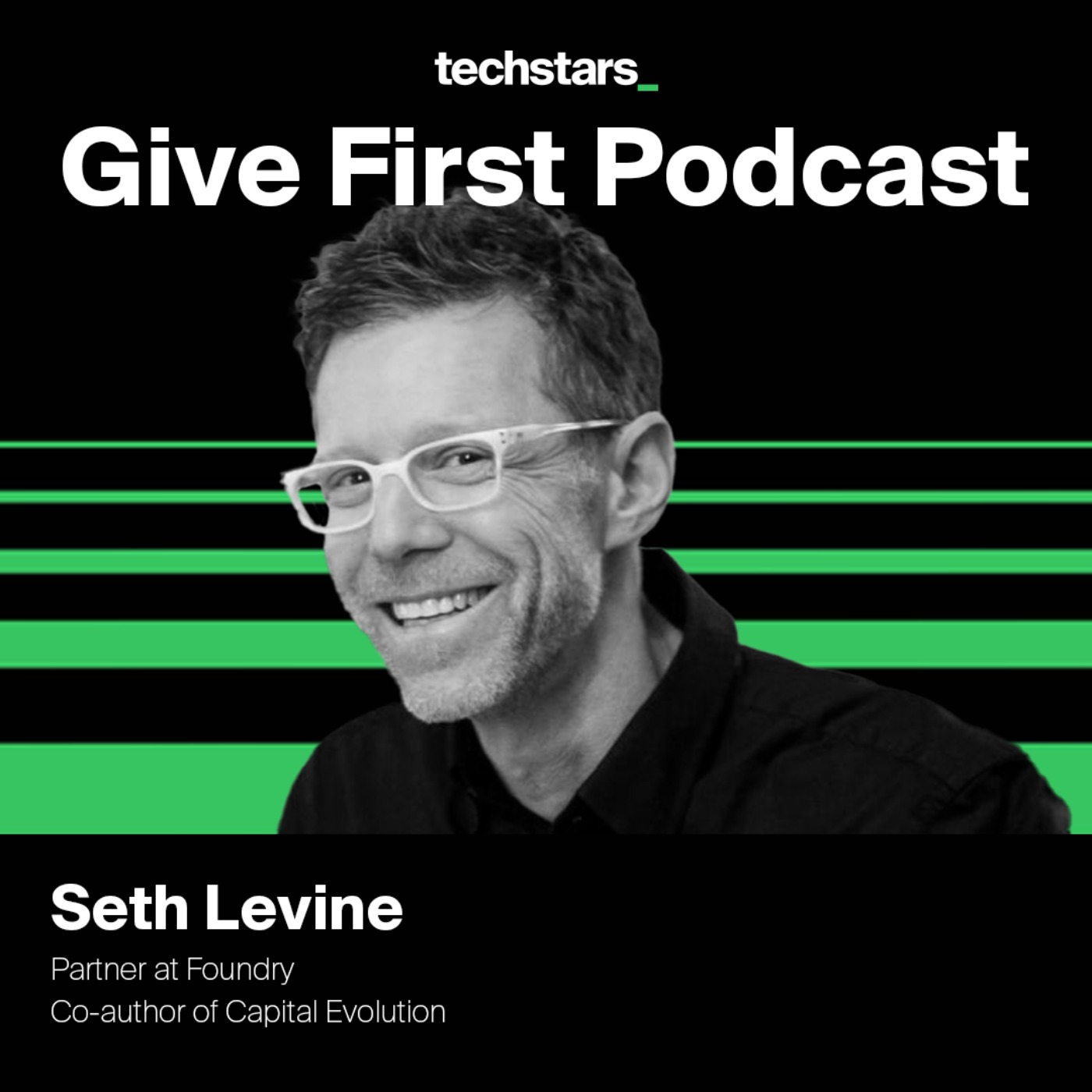
Seth Levine is a long-time venture capital partner at Foundry and involved since the early Techstars era (met David Cohen around 2006; Techstars program began 2007). He co-wrote The New Builders (with Elizabeth McBride) and is author of Capital Evolution (Dec 9, 2025).
More than half of people under 40 don’t believe capitalism works; the economy looks fine in aggregate but middle-class wages lag while CEO pay and wealth concentration rise. Solution: “economic dynamism” via broader ownership and investment—creating more “capitalists” (stakeholders), not necessarily more entrepreneurs.
Techstars/entrepreneurship as non-pedigree-driven; broad equity ownership in mainstream manufacturing via KKR; employee ownership structures (ESOPs/EOPs); JOBS Act; “baby bonds” (mentioned as a Trump-era version).
Written by AI. May contain mistakes.
Seth shares his long history with Techstars and his first memories of the program.
“This is not legal business investment or tax advice and is not intended for use by any investor.”
Discussion about the early days of Techstars, including locations and memorable experiences.
“We were, you know, that first Techstars program would run.”
Seth discusses the current status of Foundry and their decision not to raise another fund.
“And just to be clear for people listening, it smelled too, right?”
The conversation explores Foundry's influence on Colorado's startup ecosystem and new funds emerging.
“And shortly after that, we decided as a group that that would be it for Foundry.”
Seth introduces his book 'Capital Evolution' and discusses its themes on capitalism's future.
“And so I'm really happy to see that that tradition will continue on in Colorado as well.”
Explore the false choice between capitalism and socialism and its implications.
“And I think, again, we're sitting here at the end of November in 2025.”
Discuss the disillusionment with capitalism among younger generations and its societal impact.
“So Capital Evolution in the New American Economy, it comes out December 9th.”
Learn about the need for economic dynamism and creating opportunities for all.
“I think that is the conversation today, right?”
Examine strategies to broaden public participation in the economy through investments.
“book are some various ways that we can create that opportunity for more people, right?”

Get the gist, explore an idea or ask about something said.
 Claude
On Give First, what are the key points of this episode?
Searching your listeningAutomatic transcript. May contain errors.
0:00David Cohen: What's going on with capitalism? It's strange, right? Lots of change. We're going to explore that with Seth Levine, a good friend, a partner at Foundry. Been in venture capital for a long time, been around the Techstars story for a long time. He's got a new book out called Capital Evolution. Super interesting topic. We're going to hear the latest on his thoughts from Seth himself. We're going to hear a little bit of an update on Foundry and what's happening across the Colorado startup community. That's coming up right now on the Give First podcast.
0:38David Cohen: Hi, everyone. This is David Cohen, and I'm here with my amazing co-host. Brad Feld. Hey, Brad. And this is the Give First podcast. In the startup world, Give First means simply trying to help anyone, especially entrepreneurs, without any expectation of getting anything back. So we'll be talking to mentors and founders about what Give First looks like in action and how it makes great entrepreneurship possible. We polled everyone and they said consistently that their favorite part of the show was the legal mumbo jumbo. So here it is. The following discussion is an expression of personal opinion and does not represent the opinion of Techstars or any company we discuss.
1:11David Cohen: Our conversations for informational purposes only, including any mention of securities or funds. This is not legal business investment or tax advice and is not intended for use by any investor. Certain of Techstars funds own or may own in the future securities and some of the companies discussed in this podcast. Got it?
1:33David Cohen: Seth, great to have you on the Give First podcast. Thanks for joining us today. David, thank you for having me. Well, I thought it might be fun to help people understand your long history with Techstars as a starting point. I think we met around 2006 and the first Techstars program was in 2007. And you've been involved from the get-go as part of Foundry. Uh, so tell me what you remember about the early days of Techstars. Yeah. Well, I was actually thinking about something very specific, which is like, when did I first meet David Cohen? Right. Cause you know, we've become great friends. We've done so many things together.
2:12David Cohen: And I thought you were going to say you rue the day or something. I can't believe that. Um, everything changed after I met David, but it was, yeah, it was in 2007. I actually kind of have this vision. We were, you know, that first Techstars program would run. So, you know, I had heard from Brad, you had met, met Brad and you guys decided to kick off this, this thing called Techstars. And I remember Brad saying, Hey, there's this thing called Techstars. It's gonna be really cool. Here's what it is. And sort of the program kicked off. And it was in that space that was like downstairs in some old like spa or club, like the bunker.
2:43Yeah. And, and I remember being in there and sort of you walked over and anyway, that's probably making it up. But that is my first memory of you, which is like, you know, the empty hot tub thing that used to be in, you know, what was the men's locker room or whatever. And that's crazy. Yeah.
3:04David Cohen: It's interesting because the first program, actually, the 2007 program was held in a different space, which was a one-time thing, which was actually, it was a design firm that ended up getting bought by Crispin Porter. And it's where Sovereign is now. Yeah. No, I know exactly. That's right. And of course, it's funny because I remember, you know, I mentored a company in that first cohort. And of course I remember meeting them there. I don't know why that's the memory I have of you. I think the bunker is just so memorable that people transpose their... I think it was 20 years ago and my memory sucks.
3:40I think it's really what it is.
3:42David Cohen: No, but the bunker with the lockers and the hot tub, it was an old gym and it had the flooring that was that mat that you sweat on when you work out. And I think we stapled carpet on top of that mat. That was how we did it back then. And just to be clear for people listening, it smelled too, right? Like you don't move into an old gym that would have been used for however long in this like class C building. I mean, it was not nice. But no, now that you say you're right, I do remember that other space because I remember meeting Ari and Tom, the company that I mentored, Filter Rocks, in that very first program.
4:17But, you know, it was such a great idea from the beginning and we all knew it, right? And it was clear that it was going to be something. I don't know that at that moment, you know, any of us thought it was going to be quite as big as it ultimately got in terms of its global reach. But but maybe you did. Right. Maybe you always had that. No, no.
4:34David Cohen: You know, there's always the sort of story that you tell 20 years later. But like every business I've ever started, right, I had no idea that it would be a big thing. It just seemed like a fun thing to do. Right. And they grow from there because they can and you have some vision around it. But no, there was no huge vision around it to have it become what it's become. And it was and is fun, right? I think that's in part why so many people from the community initially in Boulder and then obviously in Boston, Seattle, New York, et cetera, got excited about it is because it is fun, right? And we really, you know, people enjoyed being a part of it.
5:09And there was a lot of energy around that. And it was a fun time in Boulder too, as well, because it was a little bit of kind of a, I don't want to say changing of the guard, but some of the old venture funds that had been around were sort of clearly not going to be raising again. And you were doing stuff and Andrew Hyde and obviously Brad. And eventually right after Techstars founded, we started Foundry as well. So like a lot of stuff was changing at that time in Boulder. It was pretty fun.
5:35David Cohen: And speaking about funds that are changing, you're part of Foundry and Foundry has been a huge, huge part of the TechSource story, but also a huge, huge part of the Colorado story and national story as an investor. I know people listening might want to hear, what's the latest with Foundry? What's happening today? Yeah, well, I think there's sort of two things, two narratives around Foundry, and it's probably helpful to just be super clear about it. We are not going to raise another fund. When we started Foundry in 2007, so later that same year, we did so with the idea that we would work on Foundry, the four original partners, work on Foundry for 20 years and then kind of be done, right?
6:17The joke at the time was the last one out turns the lights off. We kind of flirted for a little while and maybe in the last five or six years about maybe that wouldn't be the case and we'd hand the firm off. But in 2022, we raised our last fund. And shortly after that, we decided as a group that that would be it for Foundry. So that's kind of where we are. People sometimes describe that as like Foundry is shutting down or had shut down or something like that. And that's not the case. Right. I mean, we're actually as we're as we're speaking here in November of 2025. We still have new investments to make.
6:49We're still in our investment period. From that perspective, like nothing has changed. And, you know, like venture funds take forever to be done. Right. I mean, we still have a couple companies left in our 2007 fund, so that's approaching 20 years now. And so it'll be, we've got at least, you know, 10, 12, maybe even 15 more years of work to do on a thing that will be known as Foundry. But at the same time, you know, it's time for us to kind of step aside and, you know, pass the baton a little bit. And, you know, just as we were saying that 2007 was a pivotal year for sort of the Boulder ecosystem and Colorado ecosystem with Techstar starting and Foundry starting and some other things that were going on, you know, it's been a good run and it's time for other people.
7:34And Foundry takes up a lot of airspace in Colorado. And we felt like it was time to kind of move aside and let the next generation of folks take it over. Yeah.
7:45David Cohen: And you and Foundry overall have had a huge impact on what that next generation is. You've been investing in funds. I've also invested in some funds here in Colorado that are doing great and growing and scaling. Some of them have people come through the Techstars system like Natty and Matchtick and other funds like Range that have emerged that are really interesting. And what's so cool to see is, you know, yeah, that 20-year vision, right? 20 years later, there are all these other funds and there are all this, you know, there is all this activity, right, that wasn't there before. And y 'all played a huge role in, you know, instigating a lot of that.
8:24I mean, our hope has been, I mean, as have you, David, right? I mean, the give first ethos sort of really transcends all of this work. You mentioned Natty, but also Ari and David Mandel, who both have connections to Techstars, have their fund massive. And, you know, there's a handful of other funds that are also around Colorado. Like that Techstars and this give first ethos kind of really laid the seeds for, you know, the next generation of VC in Colorado, which is important, right? I mean, obviously we all have a stake in Colorado, continue to be prominent in the innovation ecosystem, you know, nationally and globally.
9:01And, you know, that part of what it takes, a lot of what it takes is, you know, entrepreneurs and drive and connectedness and community, but it also takes some capital, too. And so I'm really happy to see that that tradition will continue on in Colorado as well. Yep.
9:17David Cohen: And like all good partners at Foundry, apparently, you know, the next career is author. you sort of following in the footsteps of others who've written books Jason, Brad, I don't know who else I'm missing At the moment I think that's it Brad's written enough books for all of us I don't think I'm ever going to catch up to that He has You wrote a book before which is excellent The New Builders and now you have your new one Capital Evolution We'd love to hear why did you get into writing What sort of prompted that and maybe talk a little bit about both of those books. Yeah, I thought about, I mean, really, I mean, like so many things in my life, like Brad has modeled for me, right?
10:01So I've had the great fortune of having Brad Bell be my mentor, best friend, you know, all sorts of my business partner. And yeah, so at some point, like Brad's been putting out these books and I think it was really startup communities that got me thinking about it because, you know, that really felt like a bunch of sort of shared ideas for lack of a better way of saying it. And, you know, and obviously Brad put a lot of himself into that book as well. But I remember reading it thinking like, this is the kind of book that I would like to write. And it just got me thinking about, and maybe it's time to try to put some ideas down on a piece of paper.
10:37I, by the way, I had a couple of fits and starts, right? I was going to do something called startup metrics. If you search online, you can even find like there's a cover for it and some stuff like that. I never ended up doing it because it just, it kind of descended into this like technical, it was like going to be an accounting like textbook or something like that. By the time I was done, it sounded really boring. But it did get me thinking about like, hey, I'd like to get some ideas out of my head and onto a piece of paper. And one of the things I didn't realize when I started this work of writing was I just like, my brain is constantly thinking and there's always, it's a very messy place, my head and it's very loud and crowded.
11:17And when I write, it gets quiet and calm. And I didn't realize that. And so when I started getting serious about writing and I write with a partner, a friend of mine, Elizabeth McBride, who we've written both of these books together. And when we started this writing project and when I would really sit down, I'd spend two, three, four hours just writing, like my brain calmed down. And I actually really loved that about that experience. And so we wrote this book, The New Builders, and it was published in 2001, which is about how the people that are starting businesses writ large, not tech businesses specifically, but all of the businesses in the US are becoming increasingly diverse.
11:59Women, people of color, black women are the fastest growing group of entrepreneurs. And that was kind of new news, right? Certainly it was new news to me, it was new news to most of the people I shared that information with. And so we wrote it up as sort of partially storytelling, partially sort of describing what's going on. And it was a great experience. And Elizabeth and I got together after we were done marketing and we'd sort of gotten over the hangover of having written and then marketed a book, which you can understand, of course, you've done it a few times too. And we started thinking about, do we want to do something else?
12:34And there was sort of the logical next book that included some of the things that we've been talking about, The New Builders. But neither of us really wanted to write that book. And it was at a time when we started thinking about what's the future of capitalism look like? And what's the role of business in our economy, if you will? But not just the economics of it, but also the sort of social economy. And we started talking to some interesting people and sort of getting some ideas and and realized that there was a, we thought a really interesting story to tell. This was probably three years ago when we started, uh, started researching the book and then eventually writing it.
13:10I think it's more relevant today than ever before, right? We stand at a moment where I think people are really questioning, um, what the benefits of capitalism, right? So that's on the, on the one hand and sort of what that system should look like on the other. And the book ends up being a real defense of capitalism, but also describes maybe a slightly different path forward, right? Neoliberalism, which is the Milton Friedman, shareholders are the only thing that matters version of capitalism, which he defined in both a book, which was in the late 60s, and then eventually in a New York Times article that is very famous and very well known for that was published in 1970.
13:51And so that's kind of the capitalism that all of us have known for our entire lives. But it both wasn't always that way. And it doesn't have to be that way. And I think, again, we're sitting here at the end of November in 2025. You know, there's been this flirtation now with socialism across the U.S. and some interest in that. And there's a lot of people who clearly are disenfranchised or disillusioned with capitalism. And I think the book serves as an interesting thought piece for maybe there's a different way, but that different way doesn't have to be socialism, right? I think this dichotomy of capitalism and socialism is a false choice.
14:32And so we tell that through stories, through lots of interviews. We talk to people like Jamie Dimon from JPMorgan Chase, Dan Schulman, who's now the CEO of Verizon. He was the CEO of PayPal when we spoke to him. Lisa Greenhall, who was a pioneer in impact investing. And we did, let's say, 100 or so interviews for this book. It's very, very well researched. And it's a really interesting topic. What should the future of capitalism look like? And that's fundamentally what we try to ask and ultimately answer in the book.
15:06David Cohen: Amazing. Yeah. So Capital Evolution in the New American Economy, it comes out December 9th. December 9th. That's pretty soon as we're talking. Thanks for the chance to sort of look at it ahead of time. Appreciate that. It's been awesome to dig into. And I first sort of came across this in my life. really started thinking about it. I have a grown son now, Andrew. He's a paramedic in the Minneapolis area. He's really down on sort of corporate America, right? Every time I'm talking to him, he's like, yeah, what about the shareholders, right? It's all about the CEO and the executives and these corporations are so evil.
15:46David Cohen: And I feel like he's representing a generation when he's speaking. He's sort of just down on it, right? And it's like, Like, does capitalism even work, right? And you hear, you know, well, is capitalism just dead? Is it the end of capitalism, right? Like, you're just saying there's maybe a better way. It's not just socialism or just what's happening today. There's something in between. And fundamentally, we're acknowledging his question, right? And the truth is that he is not alone. Nearly, and at this point, maybe more than, because the study I'm citing is a couple years old, but more than half or nearly half of the people who are under 40 don't believe that capitalism works, right?
16:26Now, Minneapolis is an interesting market to consider that in because they had their flirtation with DSA, the Democratic Socialists of America, you know, over the last handful of years. And they've since pulled back, right? And their November, I know a little bit about it just because I went to college in St. Paul. And so I follow sort of the local stuff in Minneapolis, St. Paul. And they just had, in their November election, they kind of pulled back from that, right? So the Minneapolis City Council that had been like super majority DSA has now, most of those people lost their seats. So now it's more even with some people that have all Democrats from a political party perspective, but sort of much more kind of centrist views, if you will.
17:11And, you know, we saw the same thing, by the way, in San Francisco, right? They really tried to experiment with some stuff that was very, very kind of far to the left, if you will, and have since pulled back because they found that challenging. So I don't know what New York is going to experience, but I think the book, for people that are interested in this topic, regardless of what you think the answer is, I think the book will be an interesting think piece and will force you to sharpen your thinking no matter what it is, right? Which is my hope for the people that read it. Yeah.
17:43David Cohen: I love the notion of the false dichotomy. I think that is the conversation today, right? Like if you're not on board with America and capitalism, the way it works, you must be a socialist, right? Like it's this, you know, sort of us and them that we're obviously getting very good as a country at developing that sort of attitude in general. Absolutely. So, so you mentioned New York, any other, you know, with Mom Donnie and what's going on there, right? Like, how does that relate to the book? Or what are you seeing when you see that playing out? Yeah, I mean, the thing that I would point out about Mondani is that a surprising percentage of voters who voted for Mondani are also Trump voters, right?
18:25And I think that that speaks to sort of the underpinnings of populism, whether it's populism on the left or populism on the right. Obviously, their prescriptions sound often a little bit different. But I think it speaks to these broader trends in our economy that relate to people being left behind and feeling disempowered, right? And one of the things we argue for very strongly in the book is like creating more capitalists, right? We want more people to be invested in, I mean that both literally and figuratively, in the market economy. And when people aren't invested in the market economy, you get what happened in New York, right?
19:03Which is people saying, we got to try something else and it needs to be radical, right? And I think to some extent that was also underpinning Trump. He governs differently than his rhetoric, but the populism that exists on the right is due to the same things, right? It's factories moving offshore, it's lack of job opportunities. And I think one of the challenges we have in the US is that we think about our economy and we measure our economy sort of in its total. And if you look at that, things are going pretty well, right? It's bar and there's 100 people in there, the average person's a billionaire.
19:38It tells you absolutely nothing about anyone in that bar, right? And we tend to do that in our economy. And so you look at the US economy, which is by far, by far the best performing economy, sort of let's say over the last 50 to 100 years, sort of in aggregate. But if you look more closely, middle class wages have gone up by 12 % total in the last 50 years, right? Relative to say, let's say CEO pay that's gone up by 900 % or et cetera. And income inequality or the concentration of wealth has gotten startlingly high, right? I mean, it kind of mirrors, frankly, the late 20s, which we obviously, we know how that ended.
20:17If you don't, you can read Andrew Ross Sorkin's book, 1929, which is excellent. I just finished it, that talks about it. So, you know, but from my perspective, the solution isn't to necessarily take away, and I'm not talking about sort of tax policy specifically, but it's to, and it's definitely not to sort of blame one group or another group, it's to create more opportunity for everyone, right? I mean, the way we get out of this is to allow people and enable people to create more of the American dream for themselves. And this, we call that economic dynamism. It's gone down a lot in the last 50 years, right?
20:53It used to be this sort of easy to remember, but it was, if you were born in the bottom 25th percentile of wealth, you had a 25 % chance of dying in the top 25th percentile of wealth. Now that chance is 5%, right? So we just, we don't have the same kind of mobility. And what we ultimately argue for in the book are some various ways that we can create that opportunity for more people, right? More Americans should have that opportunity. And we see this in Techstars and we see it, of course, in entrepreneurship, where, you know, we, it's not very pedigree driven, right? It's not, you know, you can kind of come from anywhere, you can go to whatever school.
21:31That's not what we care about. We care about, you know, your passion, your drive, your idea, you know, your person. And I think we need to get back to more of that in our economy. Yeah.
21:41David Cohen: So creating more capitalists, I mean, that doesn't mean necessarily that people have to go and start a business. It might mean they are investing in business or they're participating in business or, you know, I know in our world, right a lot of it is you know you have to be wealthy to create wealth through startup investing for example right not not everyone can do that and uh this is something i actually talked to my son about you know hey look you know i know you're not into the investing thing like dad right but uh you know he's out in the in the world helping people right uh in his paramedic role but i gave him jason calacanis's book angel right i said you know maybe you want to uh with the jobs act you can participate in more business.
22:23David Cohen: And I actually recently ran into Jason in Tokyo and sat with him for a couple hours, and we're talking about the power of that. So I don't know if that's one of the ideas, but it feels like just being involved economically in the broader economy, giving people more ways to do that, you know, could be powerful. Yeah, we call that out really in three ways, right? One, actually, Trump ended up doing a version of, which is these baby bonds, you know, money for every child born. There's a whole bunch of reasons why that makes sense. We actually talked about it in our last book too. But we talk a lot about something we take for granted in sort of tech entrepreneurship, which is this broad sharing of ownership that happens in most tech businesses.
23:05Most employees at least have some stock options. That was surprisingly rare, right? I mean, I guess I thought from my little bubble in the tech that more companies did stuff like that. It's actually not as common as I would have thought. And we talk about some really interesting stories, including a guy at KKR who's really pioneering this sort of broad equity ownership across very mainstream manufacturing style businesses. And so we talk about ESOPs and EOPs and sort of different ways to accomplish that and maybe how to make that a bit of a broader sort of cross-section of employees. And then we also talk about kind of what you described to you know, to Andrew, which is like, look, the JOBS Act was a good step in the right direction to enabling people to invest.
23:51And, you know, I guess my personal view is that, you know, we often, the government is often pretty sort of paternalistic, for lack of a better way of saying it, you know, they sort of expect people to not be able to take care of themselves. And so they put all these rules around what you can and can't do, particularly around investing because of that, you know, that were put in place in like the 30s, right? I mean, you know, the, that they're nearly 100 years old that don't really make sense for the current economy. And so I think loosening those reins would be helpful, right? And allow more people to feel like they can invest in things that excite them around them.
24:26David Cohen: Yeah, exactly. I mean, at least putting a little bit of savings or a little bit of money or a little bit of your investment portfolio into these things that could grow and being a part of those stories is a really exciting opportunity. So hopefully they expand that as well. Have a stake in the economy, right? I mean, I think that's what's missing is there are so many people now in the U.S. that don't have any stake in the market economy. Awesome, Seth. Yeah, I can see you light up when you talk about this stuff. I know, I love it. The book is Capital Evolution, a New American Economy, coming out December 9th, 2025.
24:58So excited to hear everybody's feedback on that.
25:01David Cohen: I'm sure you are, too. Thanks for all you've done for the startup world in general. For Techstars, you've done a lot in our network and for Colorado. I know you've got a lot more in you, so it's awesome to see you still putting stuff out into the world. I appreciate you hanging out with me a little bit on the podcast. Right back at you, David. Thank you for everything that you do. Thanks for having me on the podcast today. I appreciate it. Thanks a lot for listening to the show today. We'd love to hear your feedback, ideas, or who you'd like to hear next on Give First. And please leave a rating and review, ideally a good one.
25:37David Cohen: And reach out anytime to podcasts at techstars.com or on Twitter, I'm at David Cohen. See you next time. Don't forget, Give First.
In this episode of the Give First podcast, David Cohen talks with Seth Levine, Partner at Foundry and co-author of Capital Evolution. Seth looks back on the early days of Techstars, the original Boulder community that shaped it, and how Foundry is approaching its final fund while still actively investing.
The conversation explores why so many people are questioning capitalism today. Seth breaks down the decline in economic mobility, the growing wealth gap, and the rise of populism on both sides of the political map. He explains why he believes capitalism can still work, but only if more people have access to ownership and economic participation.
Seth also shares insights from interviews featured in his book and highlights ideas like broader employee ownership, baby bonds, and modernized investing rules. He ties these themes back to the Give First mindset and how expanding opportunity can strengthen communities and the future of entrepreneurship.
Seth Levine LinkedIn ➡️ https://www.linkedin.com/in/sethjlevine/
Get Capital Evolution here 📖 https://www.amazon.com/Capital-Evolution-New-American-Economy/dp/1637747780
Hosted on Acast. See acast.com/privacy for more information.