Ask ChatGPT
 Give First
25 Nov 2025 · 49m · 15 chapters
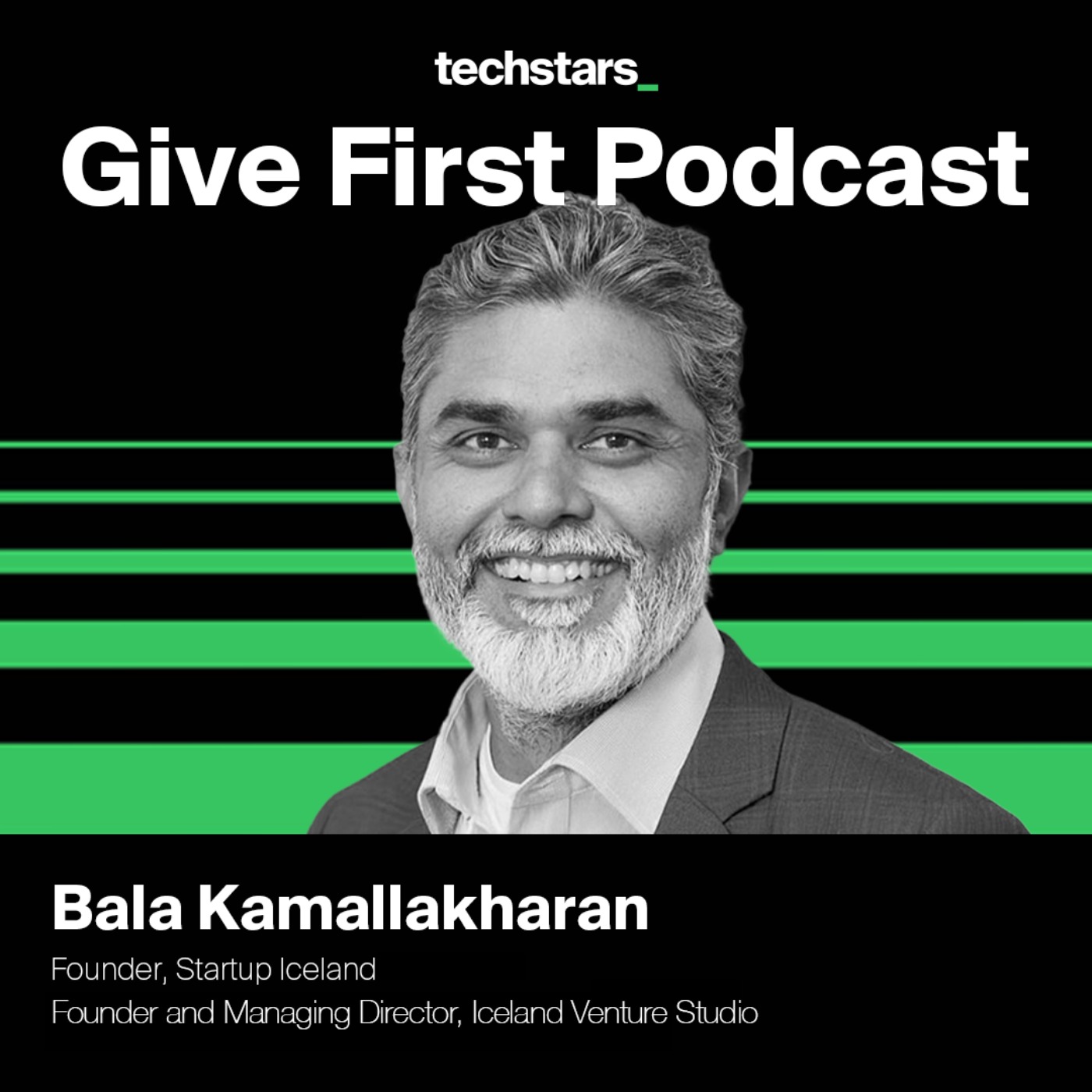
Bala Kamallakharan’s life-changing experience during the 2008 Iceland financial crisis—specifically launching a Bank of Iceland operation in Mumbai in May 2008 and having it nationalized/closed three months later—then using the collapse to help build Iceland’s startup ecosystem.
Bala Kamallakharan lives in Reykjavik, runs seed funds in Iceland, and founded Startup Iceland. He previously worked for an Icelandic bank during the boom years, reporting to the CEO and being tasked to build India.
Iceland’s banking boom was fueled by European capital access and leverage; when Lehman failed, a Lehman-linked credit line created a ~€3B hole, triggering nationalization. Bala argues the crisis shifted him from “good vs bad” to first-principles rebuilding, leading to venture and an “anti-fragile” startup community.
Mumbai bank wind-down via emails to India’s central bank (Nov–Feb); Mumbai terrorist attacks (Taj Mahal hotel) prompting return to Iceland; Startup Iceland catalyzed by Bala’s outreach to Brad Feld and Brad Burnham; investment in Clara, later acquired by Jive (first such Silicon Valley acquisition narrative in Iceland). Award: Iceland’s Order of the Falcon (highest civilian honor) for entrepreneurship.
Written by AI. May contain mistakes.
Discussion of Iceland's transformation during the 2008 financial crisis and its implications.
“First, what it was like living through Iceland's transformation from a fishing village to a giant hedge fund, at least according to Michael Lewis, during the banking boom.”
Bala shares his unique experience of starting and closing a bank in three months amid the crisis.
“said consistently that their favorite part of the show was the legal mumbo jumbo.”
Bala discusses the banking boom in Iceland before the financial crisis and its societal impact.
“when I tell them I live in Iceland, the first question is big question mark on their heads.”
Bala reflects on his aspirations and the environment in which he operated during the banking boom.
“So we had to build these systems and things like that.”
Bala shares his transition to Mumbai and the early steps in building a bank.
“And, you know, I would, you know, be sitting in tables where I was always the youngest guy.”
Bala recounts the shocking news of his bank's nationalization amidst the Icelandic financial crisis.
“I just met with him and he didn't mention nothing about this.”
Bala describes the surreal experience of returning to Iceland and the immediate impact of the crisis.
“Everybody who worked for these things were fired overnight.”
Bala reflects on his unique perspective during the crisis and how he sought to rebuild.
“So Augusta moved during Christmas and then I moved end of February.”
Bala discusses the dramatic shifts in the Icelandic economy and its implications.
“And, you know, like just me kind of understanding on the ground what was happening as Iceland was coming through.”
Learn about the challenges and motivations behind building a startup ecosystem in Iceland post-financial crisis.
“And then there were lots of young people that I knew were smart people that they could figure things out.”
Bala shares his humbling experience of receiving the Order of the Falcon for entrepreneurship.
“And again, the context here was you and a bunch of the stuff around you had been flattened by this financial crisis.”
Discussion on the significance of the first startup acquisition in Iceland’s history and its implications.
“Yeah, I mean, you know, I have to say it was very humbling.”
Learn about the significance of Clara's acquisition by Jive and its impact on Iceland's startup landscape.
“We were building all this unstructured data for text analytics.”
Discover how belief in entrepreneurs and mentorship can shape their success and the broader startup ecosystem.
“Reading your book, you know, I think more and more that idea gets reinforced.”
Reflect on the journey shared between the hosts and the value of human connections in business.
“is not useful or meaningful or important.”

Get the gist, explore an idea or ask about something said.
 Claude
On Give First, what are the key points of this episode?
Searching your listeningAutomatic transcript. May contain errors.
0:00Welcome to the Give First podcast. I'm Brad Feld and today I'm talking with Bala Kamallakharan from Iceland about a story that perfectly captures how profound moments can completely redirect your life. We were together recently in Aspen and Bala told me about an experience he had during the 2008 financial crisis that I thought was so remarkable that I wanted to get it on record. So we're doing it here. It's the story of launching and closing a bank in three months, which sounds kind of nuts until you understand it in the context of Iceland's complete financial collapse during the financial crisis of 2008.
0:43We'll cover three key parts in this episode. First, what it was like living through Iceland's transformation from a fishing village to a giant hedge fund, at least according to Michael Lewis, during the banking boom. Next, we'll talk about these surreal three months that Bala had moving to Mumbai to create a bank, Bank of Iceland in Mumbai, to then the nationalization of the bank three months later, which resulted in the thing that he was starting being shut down. And finally, how that plus terrorist attacks in Mumbai sort of inspired him to move back to Iceland with his family and ultimately create a vibrant startup community that resulted in Bala recently receiving the country's highest civilian honor.
1:35it's a fun one and covers a lot of different ground than we have in some others in that it brings to mind Len Fassler's quote to me that I heard when everything was blowing up in my world during the internet bubble and that quote is hey Brad they can't kill you and they can't eat you suit up
2:24said consistently that their favorite part of the show was the legal mumbo jumbo. So here it is. The following discussion is an expression of personal opinion and does not represent the opinion of Techstars or any company we discuss. Our conversations for informational purposes only, including any mention of securities or funds. This is not legal business investment or tax advice and is not intended for use by any investor. Certain of Techstars funds own or may own in the future securities and some of the companies discussed in this podcast. Got it?
2:57Hello, Bala from Iceland. Hey, Brad. Nice to see you. You know, my email with you still comes up as Bala from Iceland is what I get. I don't have like... I'm still in Iceland, so it's true. It makes me smile every time I get an email from you. I'm like, I should go change my Google account. Oh, man, never mind. You know, my Twitter handle is Bala in Iceland, so I don't think it's... There you go. Well, I think we got something special today because when we were together a month or so ago, when you came out to see me in Aspen and we had a wonderful long afternoon and evening together and then in the torturous storm that rolled in at the end of the day, where neither of us felt like walking to the next place.
3:48you got to spend some time with Amy as she came in was our Uber driver since there are no Uber drivers in Aspen apparently. You know, during that moment, you told me the story that was just awesome. And it was this profound experience that you had and the label I'll use for it is, you know, kind of simple, right? Starting and closing a bank in three months. which for people that don't remember or weren't in business during the financial crisis of 2008, was an absurd and just insane moment in time. And I said, Bala, have you ever said this, you know, recorded this? Is this public anywhere that I could point people at?
4:35And you said, no. No. And I wanted to use this. You know, it's a podcast. Let's use the podcast to record the story. And so for people listening, I think this is a really powerful story to tell an example of a moment that really changed your trajectory that you survived. You know, in the language that I learned from Len Fassler, they can't kill you and they can't eat you. You got through it, but it changed what was important to you in terms of the work that you were doing. So that's the thing we're going to do today. Before we do that, just so anybody listening can hear a little bit about Bala in Iceland, if they don't know who you are, just give a quick intro and talk about what you've been doing.
5:20Yeah, sure. Thanks, Brad. It is very unique. I only say this because I don't think anybody probably has that on their resume because nobody starts and closes the bank in three months, but that I have that. So just a background, my name is Bala Kamlakaran. I live in Reykjavik, Iceland. I am an investor, an accidental one, and you'll see why I became an accidental investor. I run a small seed fund, two of them in Iceland. I invest in founders. I work with founders and now working on building a more focused on the blue ocean and the economy around Iceland and technology. So that's kind of what defines me, but I'm also the founder of Startup Iceland.
6:10I was probably played a catalytic role in building the startup ecosystem in Iceland. That's how we met. So maybe going back to the foundational story, whenever people see me, when I tell them I live in Iceland, the first question is big question mark on their heads. Why is somebody like you living in Iceland? You don't really look like a Viking to me. No, although I've grown some beard and I try to play the role, but I think the Viking side of it all lives on the wife's side of the family. I met my wife, Augusta, actually in Baton Rouge, Louisiana. You know, and as you meet an Icelander in Baton Rouge, Louisiana, I've never met an Icelander before.
6:59She was the first one. And lo and behold, you know, 30 years in, she's my wife and we have two daughters. so it was because of Augusta I even knew about Iceland I mean I knew geographically where it was so we moved in 2006 from the U.S. to be in Iceland I actually got a job to work in one of the Icelandic banks this was the boom years of the banking system and it was a dream job I mean I I was actually reporting to the CEO of a bank and I was flying all over in private planes here and there, doing a lot of mergers and acquisitions for the bank. When I joined the bank, we had maybe about 600, 700 employees and we had a rep office in London and rep office in Luxembourg.
7:54but when the financial collapse happened, we had offices in 11 countries and our balance sheet had tenfolded and the number of people working for the bank was like almost 3 ,000 people. So during the boom years, I actually was selected as one of the most five valuable employees and I I was given the mandate to go and build India. So I moved to Mumbai in May 2008. Let's just before you launch in, because I want to set the stage a little bit, because Michael Lewis wrote an amazing book called Panic. And I enjoy Michael Lewis a great deal as a writer. This book was called Panic. the story of modern financial insanity yeah and it was about the financial crisis and there was a whole chapter in iceland and what i remember and when i read the book i kind of remember that he labeled iceland as the uh as basically a country that had become had evolved from a fishing village to a hedge fund yeah and that's how he described iceland so before we get into you you you went to India.
9:14This is at the beginning of, you know, it hasn't blown up yet. No. Describe this moment. Like, what's it like in Iceland, which is kind of a country that is a hedge fund? Right. I mean, so there were three big banks in Iceland. And I mean, a hedge fund really, you know, obviously hedge funds do many things. But first thing you need to be a hedge fund is you need to have access to capital. And the banks had plenty of it because Iceland actually took advantage of one of the loopholes. Iceland is part of the European economic area. So what that allows Icelandic banks to do is that really operate like a European bank.
9:58So they could actually issue bonds in the large European market. So the banks grew very fast. And they did that by, you know, All kinds of means. And obviously, when you have leverage, you can do all kinds of clever things. And suddenly, Icelanders could do many things. Everybody borrowed to buy Land Rovers and apartments and everything else. And that kind of created this massive boom cycle. But more importantly, I don't think the banks really did anything crazy other than just build a business, a lending business globally. And I was, you know, I was new to banking. I had not been a banker. I was working in management consulting and I was hired actually to be kind of like an internal consultant for the bank because we were growing fast and lots of things were breaking.
10:50So we had to build these systems and things like that. So that's what I did reporting to the CEO. and when Augusta and I moved in 2006, we had decent jobs, but we would look around and we would be like, wow, maybe we are the low end of the hierarchy because everybody was driving a brand new Land Rover and taking ski vacations and shopping trips to New York. And I was scratching my head asking myself, what is it that these people are doing? How are they getting all this money from? And then I realized, obviously, you know, all of them had really large overdraft accounts. So everybody in Iceland had an overdraft and they could just, you know, kind of roll over just like a credit card.
11:39I mean, you know, I didn't think much about it. I was just focused in what we were doing in the bank. I really was excited about the work. I was working with really smart people and that was very fun. and you know as part of that exercise you know the bank was growing and India was a large market had a huge I mean we focused on the seafood industry so we were lending to a lot of the big seafood companies and one of the things that my board said is that hey I India has a huge you know coastline I'm sure there are a lot of seafood companies maybe we should go and start building the bank there. And I said, sure.
12:16And I just packed up my bags and moved to Mumbai to start a banking business in India, mainly to focus on the geothermal energy development and fishing development in India. We're about to get into three months of starting and closing. and the insanity that you went through, but to frame it, I just looked this up while we're talking. There's an index called the OMX Icelandic 15. And that was the index, the stock index that was commonly used to talk about the Icelandic economy and the public stocks. And in 2002, 2003, that number, the index was about 1 ,000 to 1 ,500. Let's call it 1 ,000. And at the very peak, before the financial crisis, 2007, this timeframe, it's 9 ,000.
13:25So for the Americans, it would be as though the NASDAQ went from 40 ,000 to 400 ,000 or 300 ,000. Yep. So all of a sudden, everybody that had any exposure to the stock market in that period of time felt 10 times wealthier than they were previously. Yeah. And maybe the clincher to this is that the three biggest market cap in the stock was the three banks. The three banks, right? So you had employee of the bank, you had stock options, you had. I mean, you know, just to put even more context, I mean, 2008, I was 35. And, you know, I would, you know, be sitting in tables where I was always the youngest guy.
14:13I would look around and these were like finance ministers of India, finance ministers of Iceland, the CFO of the largest bank in India, the CFO of the largest bank in Iceland. I mean, these were all, you know, my peers. And, you know, I kind of would look around and I would think, you know, I think my life is done. I mean, you know, there's nothing more I could achieve from this. You know, I thought that maybe I would just, you know, drink good wine, eat great food, grow fat and die. That's about it. You know, there's nothing more I could possibly aspire to do. And that was the context of me going and landing in Mumbai.
14:54You know, I was I literally felt like, you know, I could take on the world because I had this fantastic back behind me, all the funding in the world. Our balance sheet was 35 billion euros. And, you know, and, you know, everything was working out to me. I mean, at that time, I think about it. The CEO then actually recommended that Bala, you know, why are you transferring money here and there? When you move to Mumbai, maybe you should just take a couple of million euros and just take it with you. You know, when I think back, maybe I should have done that. because you know when when things collapse you know everything just went up went up in arms no i i i i told my bank manager i said no no no i'll just you know do it like a startup you know i'll just be pretty lean let's build up the business and then you know we'll decide all that you know so i moved to mumbai uh we find this apartment in palihill it's uh you know the Most expats live there.
15:55My daughter joins the American school. So, you know, even within Mumbai, you know, I'm moving within the elite circles, to say the least. And me and Augusta were probably, again, the youngest couple in that group. And it was fantastic. I mean, this was May 2008. And I already had fantastic leads for how to build the bank. We had already filed the application with the Central Bank of India. who are working on the office licensing and whatnot. And sure enough, you know, September, I was actually in Norway flying from Mumbai and I met my CEO. And we were actually positioning each of our platforms, you know, to our customers.
16:46One of the big customers was a food company in Norway and they were looking into India and we were going to be their advisors into India. And, you know, obviously I was there talking about India and what we could be doing there. And I actually shared a cab. I mean, I was sharing the ride with my CEO and he was very quiet during the whole time. And, you know, I was just updating him on India and everything. And he just looked at me and said, Bala, all that's great, but just don't make any commitments. And I was like, sure, you know, we're just in the very early stage. I'm not making any commitments to Lent or anything like that.
17:21So I go back to Mumbai. That was September 30th. October 2nd is my birthday. And then we have our birthday thing. And then, you know, after that, on October 3rd, I think it was like two, three in the morning. and my wife Augusta woke me up and said, hey, you need to call the CEO of the bank because he just had an overnight meeting with the prime minister of Iceland and the central bank governor and they just came out and I don't know what's going on. And I was like, what? I just met with him and he didn't mention nothing about this. So I pulled up the phone. I called him. he didn't pick up the phone.
18:08I called the CFO, he did not pick up the phone. I called my manager, who was the head of international banking, he did not pick up the phone. And literally, I went down the list of everybody that I knew in the bank, and nobody picked up the phone. And for a very small instance, I was just, you know, thinking, am I imagining this? Am I still dreaming something you know this is like a twilight zone why would nobody pick up the phone you know because i've never experienced anything like it um so obviously my wife read the news in icelandic and said that my bank was being nationalized and they were thinking about diluting everything.
18:54So I bought a flight ticket back to Iceland and I left on October 5th. So this was October 3rd, October 5th I left and nothing, no news from Iceland for three days. And I landed in London and then there were like 27 messages from my secretary from Iceland telling me that, Pala, all your credit cards, all your cards have been canceled. I don't know how you're going to pay your bills.
19:25You know, my secretary was the only one who really cared about how I was going to make some bill payments. So anyway, you know, I just laughed about it. And I just told her, hey, don't worry, I'm in London, I'll be in Iceland in the next, I don't know, half a day or So I came, I landed in Iceland and this was surreal because the entire country, everybody is walking around like zombies. I mean, like nobody really got what really happened. They couldn't believe it. I mean, there was a lot of disbelief. They were like, how did this happen? What happened to Iceland? Everybody kept saying this is such a darling of the growth story and the OECD countries.
20:16We were like the best in all kinds of things. And sure enough, the first bank that went down was mine because we were the first ones to have a line of credit with Lehman Brothers. and of course we all know what happened to Lehman Brothers so when suddenly you know Lehman Brothers went down there was a three billion euro hole in our balance sheet and literally there were no other people to lend us so the central bank of Iceland literally took the bank like public like private or whatever you know nationalized and sure enough you know all the international banks, our international offices were all closed overnight.
21:07Everybody who worked for these things were fired overnight. At least I was in Iceland. So I walked into the resolution committee or they had a bankruptcy committee that was discussing all this. Luckily, I knew two people who were part of the bank sitting in the committee. And I just, you know, just went to them and said, I don't know what you're all talking about, but my family is stuck in Mumbai, so you need to give me an exit. You need to figure out a way for me to get out of there, at least bring my family back.
21:45And sure enough, you know, the resolution committee or the banking bankruptcy estate hired the lawyer. He was the first employee and I was the second advisor that was hired by the bankruptcy estate as a consultant to go and maybe wind down the things in Mumbai and maybe recover some of our assets. And I went back to India in about a month, you know, end of October, the first week of November. and then from November to February I basically wound down everything that was there which is you know just write an email to the central bank of India saying that I don't think we're going to open this bank so sorry and you know I mean it was also I mean I was kind of interesting at that time because because I'd built so much very good relationships in India lots of people were telling me, maybe you should just stay back.
22:46And I was thinking about it. But then end of November, the terrorist attack happened in Mumbai. This is also in the back of 2008 financial crisis. And most of the people that were attacked were expats. And we lived in the expat community. And one of my daughter Mira's friend, they were Americans, they were in the Taj Mahal hotel and they actually were killed by the terrorists. And this was a very, you know, shocking observation. So both Augusta and I decided, no, I don't think we want to stay back here. We should just, you know, head back to Iceland and we will figure things out. So Augusta moved during Christmas and then I moved end of February.
23:37And then 2009, I was back in Iceland and unemployed and looking around or, you know, not unemployed, but I had a consulting role with the resolution committee. I didn't know how long that would last. So that was the way we started and closed the bank. And, I mean, it was strange to work for the resolution committee because a lot of them were people who worked in the bank And suddenly, you know, Iceland even internally changed. People were starting to point fingers at saying, OK, these are all the bad people. These are all the good people. And I was in the middle of this. And I was like, you know, I don't want to be part of this.
24:20It makes no sense because we all sat on the same table talking about the same kinds of things. Suddenly, some people are good. Some people are bad. It didn't make any sense to me. So I kind of literally just quit. I said, I'm not I'm not going to do this. and Augusta was suggesting to me, yeah, maybe we should just go back to the U.S. because we moved from the U.S. and I used to work in management consulting and my previous employer would have taken me back. I told her, no, I think I'm going to try to do something here. And Augusta, being a very practical woman, looked at me and said, what are you going to do here?
24:56And how long is this going to take? yeah um that that experience it's it's interesting to sort of think about the end point right so may was the beginning point uh the end point was you know shortly after christmas january february and you know when we were looking at numbers before right the high point yeah the index was 9 000 and i think the low point of the index was like a hundred yeah um i mean almost zero. So like it was, it was zero. It was zero. It was perspective on how aggressive that shift. I mean, when you look at the graph of it, it's basically a vertical line down during that period of time.
25:39And what it did was instead of just feedback, right. Instead of you. And when we're talking about this, uh, when we're together, instead of like, uh, clutching tight, right. on things and like sort of like feeling defensive about it. My observation of you, I mean, even a year later when I, I think it was about a year later when I came out or maybe two years later. Two years later, yeah. The first Startup Iceland event. And, you know, you like were touring me around town and showing me this building has got graffiti all over it that's halfway built because they were going to build a giant thing.
26:19Yeah. For now they're not. And, you know, like just me kind of understanding on the ground what was happening as Iceland was coming through. Look at this building. This was built, you know, with borrowed money, you know, and now it's like just trying to understand that. And your view, though, was not good guys, bad guys. Your view was sort of temporal. Like that's just a thing that happened. Yeah. And it had shifted you into this idea of trying to build what really became a very vibrant startup community in a place where previously there wasn't, even though there had been this enormous artificial wealth created that then vaporized overnight.
27:05Yeah. I mean, so my context at that time, you know, just to get back to how I looked at it. Luckily for me, you know, I have different pair of glasses, right? Because Icelanders, you know, if you're part of this community, you have a set of glasses in which you see the world. Luckily for me, I had different glasses to see the same thing. And I just looked at it very first principles. And I said, you know what, when I go and turn on the tap of water, water comes and it's fantastic. It's beautiful. It's great. And then I go to the grocery store, you know, still there's, you know, stuff in the grocery store.
27:48And then when I turn on the power, the electricity is always on. And I said, you know, I mean, pretty much that's all we need, right? We just need food, power, and some chutzpah. And then there were lots of young people that I knew were smart people that they could figure things out. And I basically just bet on that view. I just said, you know what? Push comes to shove. We will just build new things and then kind of grow ourself out of that. That's what we would have to do because all the equity was wiped out. And I did some research. I mean, the way I bumped into you was basically because I wrote a paper that got published in University of Iceland.
28:31I actually looked at the Icelandic krona, and just to give context, you said 1 ,000 stock market going to 9 ,000. At the height of the Icelandic krona's strength, 59 Icelandic krona could buy you a dollar, $1. At the low point, almost 200 Icelandic kronas could buy you a dollar. So suddenly, everybody who was holding on to Icelandic Krona where one, I don't know, three-fourths poor, just overnight. It just didn't make any sense. So I actually went and did research on it. And obviously that's what led me to thinking a lot about venture because the banking system is built around this weird concept where this financial system all has to work a certain way all over the world.
29:30Otherwise, nothing works. And the corona, whatever it showed, was obviously a lot more smarter people have written more about it, starting with Nassim Taleb. By the way, Taleb actually came to Startup Iceland because he wrote this book on Black Swan. And I reached out to him and I said, hey, we want to build an anti-fragile startup community. You wrote a book on anti-fragility. So I think it'd be great for you to come and talk about it. And he was like, man, you put a conference with my book's name. There's no way I'm going to say no. So he showed up. Obviously, he was going to fly in, but something with a flight didn't make it.
30:15So he came through Zoom. And so Taleb was very influential in how I was thinking about Iceland. And I was reading a lot about this power law and the positive side of power law is venture. And the negative side of power law is the existing banking system because every 10, 15 years, it kind of has a reset. And then we kind of go through the same cycle again. I don't know when the next cycle will be or when the next collapse will be, and I don't try to quantificate on those things. I just decided I want to be on the positive side of the power log curve, which basically led me to venture. And I started reading about it, and then I bumped into Fred Wilson's blog.
30:58And through Fred, I bumped into your blog. So that's how this whole thing started. And I started reading everything you'd written, and I knew nothing about venture or investing or anything like that. I'd invested in one startup in Iceland at that time. And you wrote this blog post in November 2011, saying that you're going to write a book on startup communities. And just being your generous self, you said, hey, anybody who's reading this who has something to contribute, just write to me. And sure enough, staying up at 4 a.m., reading your blog, I wrote to you right away. And much to my surprise, I wasn't expecting an answer.
31:44You responded right away. And I think your email was like, hey, you live in Iceland. You are building, you're investing in startups, tech startup. Iceland is not known for all that. Tell me more. So that's how this whole conversation started. And I wrote an open letter to you through my blog. And then you published it on your blog as well. I think it was very prescient what I wrote there. I said, I think we can build a vibrant community here because I've met the founders. I think they're no different than founders anywhere else. They have all the ingredients. So we just need some crazy people to believe that this is possible.
32:29And I'm willing to be the first crazy one to try that out and see what happens. and you know to be honest you know I think your response really gave a lot of energy to what I was trying to do because I really didn't believe that you know I could do it alone I really was trying to get more people to join in this craziness and there were a lot of founders who were very interested you know and as I said I invested in one startup and suddenly you know i was the vc in iceland i know everybody wanted to meet me and i met everybody and the only problem was i had not enough capital to invest in all these companies and i was like okay how do we find all this capital i said maybe instead of finding capital we should probably find a lot of investors to come down here and that's what led to you know more conversations and whatnot that led to startup iceland um i i went uh one step further i i i the minute you said you know you you know, Bala, what you're doing is inspiring.
33:34I want to help. What can I do? And that obviously gave me even more energy. And I said, you know, maybe you can come here. Because, you know, I was going around meeting everybody, trying to explain to them that this venture is a good thing. We can build new things and new technology. And this was the, you know, Instagram just got bought for a billion dollars or whatever. And at that time, the social media thing was like really growing. And I was saying, you know, we can actually tap into this momentum and build new things on top of that. And almost everybody looked at me like I'd gone crazy. You know, they would just, you know, show me the door and say, obviously, very politely say, please leave because you're not making any sense.
34:18So after exhausting my own energy, I said, maybe if we get somebody like you to come down here and tell the same thing, because obviously I'd been reading your blog. So I understood what you were saying and what you were writing about, which was total alignment with what I was also saying, but it didn't matter what I said. So that's what led to the first Startup Iceland. So the minute you said, I'm going to come and you said one more thing, you said, no, you know what? I'll do one better. I'll bring one of my friend with me. And that was Brad Burnham. Right. And Brad was thinking about Iceland for various other reasons.
34:56So he immediately became a good friend like you and came down. And once both of you are going to come, that gave me a lot more energy. I went to the president of Iceland because I'd known him from the banking days. I wrote a small one pager and I told him that, I believe we can build new things. We can build new industries. And obviously it all starts with a startup, a few groups of people starting to build something new. And he read it for 30 seconds and immediately looked at me and said, Bala, I think you're absolutely right. I think this is how we should do this. And I want to help. What can I do?
35:38And suddenly this is kind of like a very weird feeling for somebody who is unemployed. The most powerful guy in Iceland, which is the president of Iceland, turning around and asking me, what can I do for you? And then you, who obviously have no context to do anything for me, suddenly turned around and said, hey, what can I do for you? And I think that kind of really inspired me to this whole give first thing. Because when people see, I think not everybody sees it. I think that's the real thing. When people see the power of doing something that is collectively good and somebody who's willing to do it and then you want to help them do it is empowering in its own way.
36:29It kind of gives you tremendous energy to go and do bigger things. I mean, I had no ambition other than, you know, just getting this idea, the seed planted, you know, in Iceland to believe that we can build new things. And, you know, it doesn't take rocket scientists or smart, talented people. I mean, obviously you need talent. Obviously you need capital. Obviously you need all those other things. But at the start, you don't need all that. You just need some small groups of people who believe that it's possible. And obviously that's all I wanted to do. I think the last bit that you said is just lovely because it's such a good underscoring of the mode of force when you're trying to figure something out new.
37:23And again, the context here was you and a bunch of the stuff around you had been flattened by this financial crisis. As you're trying to figure out what was next, you got inspired from a distance. But when you engaged with that, it engaged back. when you engaged with leadership in Iceland that was looking for what's next, it engaged back. Yeah. And that by in and of itself created this positive feedback loop for you that was very motivating. Yeah. Then, and we'll sort of, I want to end with bragging on you a little bit. You sort of followed this decade, 12 year ish path where you ended up raising some funds and making a bunch of investments and becoming a successful investor at the very early stages in a bunch of Icelandic companies.
38:33continuing to build out this network of people that were not of Iceland, that had affinity for Iceland for whatever reason, that got this extended network of what you were doing. and, you know, recently culminated in a really profound award, which my guess is, you know, 12 years earlier, not only would you have ever envisioned, but probably no one would have envisioned the construct for. So why don't we end on that? What just happened? What was the award? And what's the significance of that in the arc of this story about entrepreneurship in Iceland? Yeah, I mean, you know, I have to say it was very humbling.
39:25And I do believe that there's no point in time, not in a million years, I would have imagined that this kind of honor would be best out to me. So on January 1st, the current president of Iceland bestowed the Order of the Falcon, which is the highest honor that is bestowed on civilians by the state of Iceland. and it's kind of like knighthood, Iceland way. And I mean, usually it's only given to heads of states and other prominent dignitaries. And when I got the phone call from the president, I thought it was the wrong number. I was like, what are you talking about? I don't understand what you're really saying.
40:13They were like, no, no, no, you have been nominated and the president has actually selected you to receive this Order of the Falcon Award. And what was more profound for me is that this is the first time in the, I don't know, 50, 60-year history of the Order of the Falcon I've been recognized for entrepreneurship and building new things. This was never awarded for this category. So I'm really, you know, maybe the first one to receive it that makes this category, again, possible for others to follow and build on. And I think that's what has been extremely rewarding, gratifying, that I'm thankful for, because it was a public good.
41:11And it was something that I believe that if we built a very foundational platform, everybody standing on it will rise. And because I'm standing on it, I will also rise. I didn't know how, but I could imagine what I could have been part of. And luckily, the startups that we invested in succeeded, obviously, with a lot of hard work, the network and all that that you talk about in the book really did play a role because I don't know if you remember it or not, Brad. I think in the first start of Iceland, I sat you right next to Gunnar Holmstein, the founder of Clara, the first startup that I had invested in.
41:52And you both started talking and you asked him, hey, what do you do? and he told you that we were the first large language model. We were building all this unstructured data for text analytics. And you immediately made the connection and said, you know what, I know this company called Jive, a Portland, Oregon company, but they're now a Silicon Valley company. I know the founders, I should connect you to them. And you generously did that. And I immediately, because I'd been part of M &A and I immediately saw the connection and I just flew right away to Silicon Valley with Gunnar and we met with the founders and Jive was the company that acquired Clara.
42:29And this acquisition, you know, in the thousand year history of Iceland has never been done before. No other company in the thousand year history of Iceland was acquired into Silicon Valley before this, you know. So how cosmic is that? You kind of scratch your head and say, I mean, come on. I mean, this is like a cosmic event. that fundamentally changed the trajectory of what Iceland could do because what happened with that exit was at that time that was the biggest exit Gunnar Holmsteen was on the front page of the most read newspaper in Iceland after that exit and he was 24 years old so it totally changed the narrative in Iceland that a 24 year old could actually build something for a billion kronas in value, which was like, you know, 10,$12 million at that time.
43:21It was not a massive exit, but it was decent. It was a small company and everybody suddenly were rich, the founders and the people, the employees, everybody, because, you know, to put it context, we were the first ones to actually write a call, an option agreement. You know, this is, you know, this kind of agreement has never been done before. We were the first ones to do it. Now, you know, all startups do it in Iceland. So it's history. This was very profound when I think about it. So it was a momentous event. And obviously, this award was a culmination of that. And I continue to believe in this give philosophy, because even today, when I meet the founders, that's what Gunnar and Yon and the others talked to me about.
44:10They were like, you know, you believed in us. That made all the difference. And I said, you know, I had no idea. You know, I didn't know that you guys really respected my view. You just wanted money. And I thought I'll find money and give you the money. That's what I did. But he was like, no, no, no. I think money was important. But more importantly, the fact that you believed in what we were building made all the difference for us. And I think that's what this whole mentorship is about, right? I mean, when you sit there and you start listening to some of these founders, not only are you giving them time, what you're giving them is this belief that what you're saying is important, what you're building is important.
44:52I want to learn. I want to be part of that conversation. I want to be part of that journey. Reading your book, you know, I think more and more that idea gets reinforced. And I think, you know, my big idea is that I think if everybody did that, right, I think we'll solve some really hard problems, you know, globally. Bala, I think the stories are fantastic. You know, the arc of the last 15 years from this very low point started to where you are today is incredibly inspiring. And, you know, your friendship has been wonderful. It's for me, you know, somebody listening might say, well, that sounded like, you know, Brad, what did you get out of that?
45:45And the answer is, I got out of it a whole bunch of things that are not financial, but the learning, the life experience, the exposure to a part of the world that I really knew nothing about prior to knowing you. And just frankly, the friendship. I mean, when I think about the time we spent together a month ago, just being together. Yeah. It doesn't come from that level of emotional intimacy doesn't come from, you know, places other than sort of deep shared experience of appreciation with the right tongue. Yeah. And so I couldn't agree more. I couldn't agree more. And I just want to say one small correction.
46:36You haven't gotten anything yet. Oh, I shouldn't say that. My view is that, you know, I think this is kind of, you know, it's a very long arc, right? Absolutely. We don't know what comes out of these things. And my strong belief is that, you know, I think relationships matter. The human connections matter. I really give myself fully when I engage with founders, and I hope most investors do that. I know you do that, because, you know, Bree, who is, you know, an investor in my fund, who you are an investor in his company, and, you know, our connection, Bree and my connection happened because of you.
47:24He basically shares that, you know, obviously, when you give that kind of human level commitment to whatever it is that you're doing, sometimes you succeed, sometimes you fail, but you always gain from that. And I'm always happy to do the same things as you did, which is be generous and giving time to founders. We might not invest in them. We might not do anything with them, but that doesn't mean that what they're building is not useful or meaningful or important. So we should just, you know, engage. And obviously we have only 24 hours a day. So, you know, there's a limit to what you can do. But wherever we can, I try to do the same.
48:10And I think if we continue to do or kind of go in this arc, I think it'll be fantastic. I would love to see more people do this. And I think more people will probably win the Falcon Falcon Awards and, you know, get to be friends with Brad or people like Brad. I think that's rewarding in its own merit. thanks for the time today this was lovely it's great to see you again and I will see you soon I'd love to see you Brad I'll be back thanks a lot for listening to the show today we'd love to hear your feedback, ideas or who you'd like to hear next on Give First and please leave a rating and review ideally a good one and reach out anytime to podcasts at techstars.com or on Twitter I'm at David Cohen See you next time.
49:00Don't forget, give first.
In this episode of the Give First podcast, Brad Feld talks with Bala Kamallakharan, founder of Startup Iceland and a driving force behind the country’s modern startup ecosystem. Bala shares the remarkable story of moving to Mumbai to build an Icelandic bank in 2008, only to watch the entire financial system collapse overnight. Within three months, he went from launching a new bank to shutting it down, navigating canceled credit cards, emergency flights home, and the emotional aftermath of Iceland’s economic freefall.
What followed was a personal reset. Returning to Iceland with no clear path forward, Bala began to rethink how the country could rebuild. His belief that new ideas and young founders could reshape the future led him to invest in early startups, create Startup Iceland, and champion the power of community-driven entrepreneurship. That work later earned him the Order of the Falcon, Iceland’s highest civilian honor.
Bala reflects on uncertainty, resilience, and why believing in founders can transform not only companies but entire countries.
Bala Kamallakharan LinkedIn ➡️ https://www.linkedin.com/in/balakamallakharan
Hosted on Acast. See acast.com/privacy for more information.