Ask ChatGPT
 Give First
22 Jul 2025 · 41m · 11 chapters
Simple Energy’s near-death moment after a VC-led $6M round pressured rapid spending/hiring before full product-market fit; they rejected a low buyout offer, ran out of cash (18 days), and used Socratic mentorship to reset the company, cut costs, and rebuild around values and cashflow.
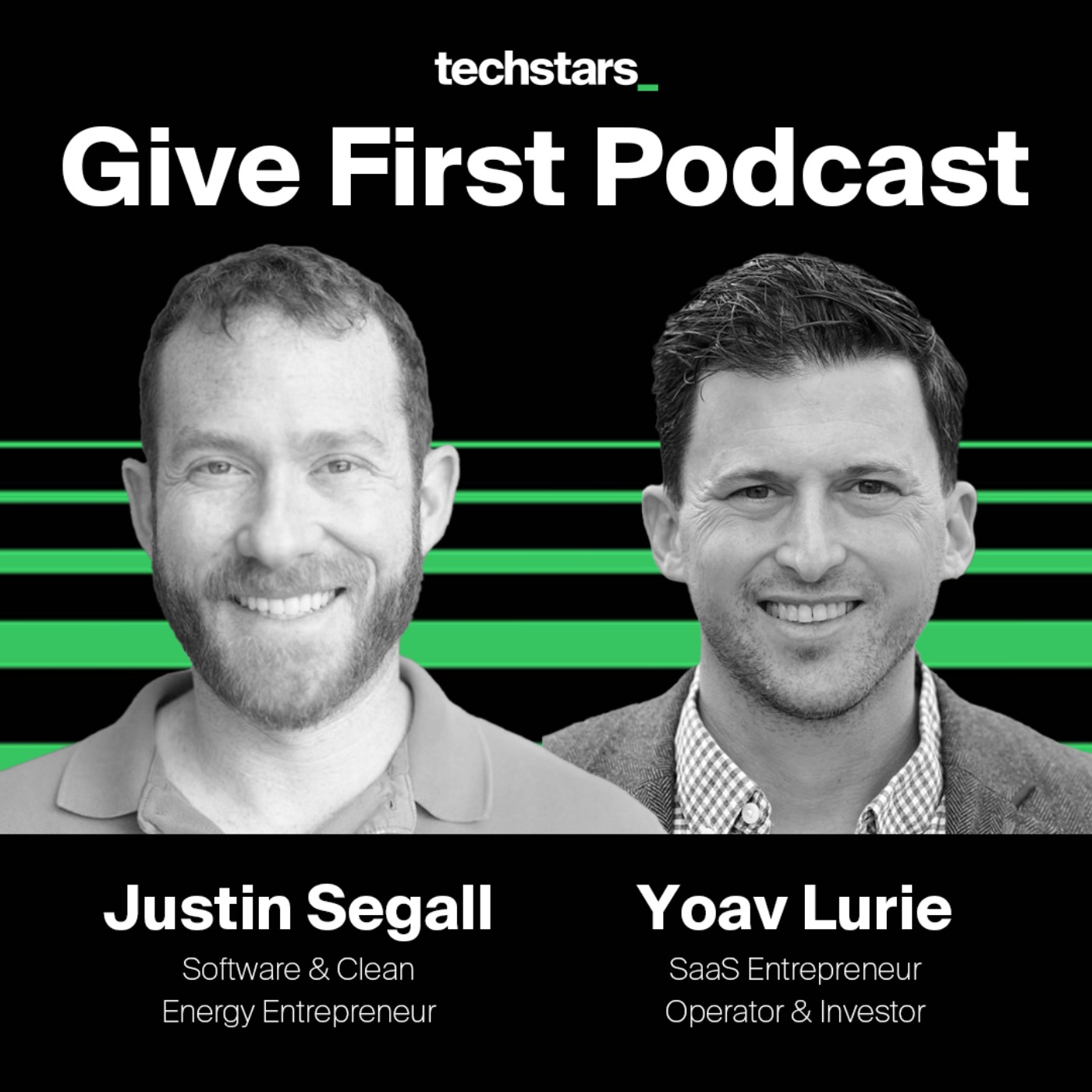
Yoav Lurie and Justin Segall, co-founders of Simple Energy (Duke best friends; built a “simple thermostat”/energy engagement approach; Techstars Boulder 2011; later exited via Uplight).
mentorship helped them “listen to ourselves,” clarify fiduciary options, and choose a “life” path (lay off ~two-thirds, raise ~$1M debt via convertible note, refinance, launch a new product).
Techstars forced 40 utility executive calls leading to tens of millions in contracts; competitor Opower’s peer-reviewed results; Walt Winshaw’s “charge up front” insight; after the reset they signed a $10M/year contract with the largest US utility and later Oracle acquired Opower for $532M; Simple Energy/Uplight sold for ~$1.5B in 2021.
Written by AI. May contain mistakes.
Yoav and Justin share the origins and journey of Simple Energy.
“This is David Cohen, and I'm here with my amazing co-host, Brad Feld.”
Discussion about their time in the Techstars program and its impact.
“Yeah, so Justin and I were best friends in college.”
Yoav and Justin discuss the challenges they faced and growth strategies.
“And I went, and it's really funny because we're talking about your book.”
Exploring the critical moment when Simple Energy almost failed.
“quite certain we wouldn't have built and wouldn't have survived without the people who we met and and still, still load today.”
The pivotal decision to reject an acquisition offer from Opower.
“So sort of constrain it in those windows and maybe sort of think about how to weave into that.”
Learn about the difficult decisions entrepreneurs face during financial struggles and how values influence these decisions.
“But for us, there were a couple of problems with that.”
Discover the strategies used to restructure the company and realign it with core values after a major workforce reduction.
“What's life going to be like on the other side of it?”
Learn how Simple Energy transformed its culture and values after a crisis.
“So there was another Techstars company who had gone through Techstars called Roundpeg, which had a great tool that we loved that assessed your values.”
Discover how mentorship provided crucial insights for business growth.
Explore the journeys of Simple Energy and Uplight through acquisitions and growth.
“about being Socratic, but I can't let you go without telling you about one other thing you did.”
Hear about the personal and professional lives of the founders after leaving Uplight.
“And so I've been enjoying some of that time off, but always making time.”

Get the gist, explore an idea or ask about something said.
 Claude
On Give First, what are the key points of this episode?
Searching your listeningAutomatic transcript. May contain errors.
0:00Well, it's time for another Give First podcast episode. Today I'm talking with Yoav Lurie and Justin Segall, the co-founders of Simple Energy. In addition to being awesome co-founders, they're the subject of a chapter in Give First, the book, in which I use them as an example in being Socratic. Their chapter is titled The Near Death of Simple Energy, and it talks about a moment in Yoav and Justin's experience leading Simple Energy where the company almost died. And how one experience with me being Socratic in the context of a mentor was really helpful to them. So let's use that and talk about that as an example and get to know Yoav and Justin a little bit better.
0:51Hi, everyone. This is David Cohen, and I'm here with my amazing co-host, Brad Feld. Hey Brad, and this is the Give First podcast. In the startup world, Give First means simply trying to help anyone, especially entrepreneurs, without any expectation of getting anything back. So we'll be talking to mentors and founders about what Give First looks like in action and how it makes great entrepreneurship possible. We polled everyone and they said consistently that their favorite part of the show was the legal mumbo jumbo. So here it is. The following discussion is an expression of personal opinion and does not represent the opinion of Techstars or any company we discuss.
1:26Our conversations for informational purposes only, including any mention of securities or funds. This is not legal business investment or tax advice, and it's not intended for use by any investor. Certain of Techstars funds own or may own in the future securities and some of the companies discussed in this podcast. Got it?
1:47Well, it's a sunny day in Boulder, and I am talking to two really longtime friends now. uh justin yo it's great to see you guys good to see you great to see you brad it's pretty cool to see you sitting in the same room like i didn't even know that people sitting in the same room was a thing it wasn't gonna be he texted me we're all gonna be remote all the time right yeah all remote from roughly the same place like within a couple miles of each other that would be great fun fun to get together it is it's good to see you together you both look happy So let's give the audience a quick intro to both of you and really sort of the starting arc of Simple Energy, how it came about and what it was.
2:35Yeah, so Justin and I were best friends in college. We both went to Duke together and he was actually the very first person I met in college. So a couple weeks before school started, we took a backpacking trip through the wilderness in North Carolina and immediately kind of started talking about starting a company together. All of the early ideas were terrible, and we won't share those all with you, but they were the kind of things that 18-year-olds on their first week of college would come up with. And about 10 years after that, having graduated and gone on and done other jobs, we got back together to to first talk about could we build a company together that was the first question uh which was i think and i still think is the most important question just two founders who want to work together uh well before figuring out what we wanted to do and and then we said we worked through a lot of issues we still have a long doc about can we work together and then um on the other side of that came up with a list of here are all the ideas we have and we narrowed it down to just a couple of them.
3:40And, you know, without no pun intended, we asked ourselves, like, where is the energy? Like, where are we being drawn? This problem of how consumers relate to their utilities, when I say it like that, it doesn't sound as exciting as we feel about it. That sounds like, you know, let me go to sleep and take a nap. You know, people... I really relate. I relate to my utilities. You know, I stare at my Nest thermostat and just... And this was before Nest. And actually, the very first idea we had was a very simple thermostat. We basically said people aren't going to relate to their utility, so let's automate it with a simple thermostat and do that.
4:20And then we started going into the market and realizing, you know, there's a challenge before that, which is how you get it into the market. and we think we can use gamification and all of the tools of behavioral science to get people to care just a little bit more about their energy use. And I'm glad we didn't because Nest ended up coming out about a year later with a sexy thermostat that would have blown us out of the water. And by that point, we were already selling into utilities. And it's actually funny how we ended up getting into Techstars or moving to Boulder in the first place. I was living in Washington, D.C.
4:57Justin was living in Denver, working in Boulder. And I went, and it's really funny because we're talking about your book. And you and I met at a Cooley conference room near the airport, near Dulles Airport, back before they had a downtown D.C. office. And you were on the book tour with Cohen. And I remember stopping - That was a Do More Faster book tour. I remember that Dulles Airport conference center. yeah so i said i pitched you on the idea and you you told me a couple things you said foundry is never going to invest in it because we don't do deals like this you're going to apply the tech stars and you're going to get in and you're going to move to boulder and tim manuel who's the founder of tendril networks is going to be your lead mentor and it's going to be great and really all of those things ended up being true and you know we'll get back tendril comes up in the story at the end.
5:51So stay tuned through like the end of the story too. That's cool. So you were, which, which Techstars Boulder program were you in? It was the third one or the fourth one? 2011. 2011. So that would have been seven, eight, nine, 10, 11, fifth one. So you, let's just time travel back to 2011 for a sec. What was, what was it like to go through Techstars Boulder in 2011? What was the experience? Oh, man. I mean, we were in the bunker. So, you know, the old gym in the basement there. And we still describe that as the rocket ship under our ass to everybody else. you know for me being the one who is customer and market facing you know the first month when it was go talk to as many customers as we could we put up a board on the wall in the bunker and it was go talk to 40 utility executives in the next 30 days which was crazy because at that time if I reached out to any utility executive if I got a single meeting within 30 days it was rare but This was the forcing function of Techstars of we're going to go do 40 customer development calls in the next 30 days.
7:05And the great thing was that we had a reward, which was we had a conference coming up in New Orleans. And Yoav told me we couldn't go to Cafe Du Monde and we couldn't have beignets if I didn't hit the goal. And I love hitting goals and I love beignets. And so, you know, we used every lever we could. We reached out to people we'd met at conferences. We found one mentor who had just retired as a utility executive. And I said, we're in Techstars. And this is the thing we need to do. So I need you to introduce me to every utility executive that you can. And I need to talk to them for 30 minutes for customer development.
7:41I'm not going to sell them anything. I just want to get their feedback on our product. And lo and behold, we went to Cafe Du Monde a month later. And we got beignets. And the crazy part about that, that a decade after that, I could look at our revenue and trace tens of millions of dollars of contracts to those conversations. Wow. That never would have happened if Techstars hadn't been like, go do customer development and actually go talk to the buyers and get their feedback on the product. And it was amazing as we get through, you know, more of the story of Tim Manuel was our lead mentor, who had been the founder of Tendral Networks, which was a similar company in our space.
8:20You know, we closed our round shortly after Techstars and we didn't have a lead. It was a party round with a bunch of angels and mentors who we'd all met through Techstars. and as we come through to the story they come back again in really important ways of how we didn't die and so I think for us that time that experience both amazing a lot of fun I think finally at the time in the bunker and also really just that catalyst to building something that I'm quite certain we wouldn't have built and wouldn't have survived without the people who we met and and still, still load today. So in the end, just to frame the next question, I think that the final exit for the business was about a billion and a half dollar valuation.
9:11Is that right? Not about, it was exactly.
9:16And I remember pretty good. Yeah. So that was the, the ending outcome. What I want to talk about today is I want to talk about the moment in time where simple energy almost died. And I write about this in my new book, Give First, The Power of Mentorship. The story, the subchapter is the near death of simple energy. And it's in the first of 18 chapters on the Tech Start Mentor manifesto. It's the first item, which is be Socratic. Let's do two things. One is I'd love to hear or tell me for the audience, the story of how you almost died and what happened and what happened that caused you not to die.
10:03So sort of constrain it in those windows and maybe sort of think about how to weave into that. Not just the facts of what happened, but the way you interacted with me and other mentors during that period of time to get to not dying? So Justin mentioned that our first round coming out of Techstars was a party round, lots of angels, lots of small checks. About a year changed later, we did another one of those. About a year after that, and then about a year after that, But we finally did a proper VC-led round,$6 million. The problem with that round, though, was that our VC put a tremendous amount of pressure on us to move really fast, to spend fast, to hire executives.
10:58Because he said, look, you need to have a lot of talent who's done it before. So it's sort of manager mode, founder mode. He's like, you need to hire some managers. and also one of his largest LPs or a couple of his largest LPs who you know were probably half his investors were large European energy companies and so he was getting he was sort of pitching it to them about look at this amazing company he's like you need to grow in Europe you need to set up an office there you need to hire some people there you need to sell to them and and so those That was creating a lot of pressure on us to grow really fast.
11:37And if I look back at it, we had not gotten to 100 % product market fit. We were doing$4 million in annual recurring revenue, but it was tenuous. It was in a market where someone else had really already established themselves as the category king, as the winner of that market. And for us to scale, we were going to need to pivot. we were going to need to find something else that we could win in our in the utility market you know we say most markets are winner take all or winner take most but in the utility space um even more so because they're so risk averse and they all share information and that competitor was another venture-backed company right that was i think it was opower yeah so opower um which you know to this day i'm still friends with the founders and they're pretty incredible entrepreneurs um but they were as you know sort of in a way that you can be with your friends right like I mean we weren't close friends then by any means we're competitors and we were in we would beat each other up as much as we possibly could and they were winning at they they raised a lot of money and they had a lot of credibility and they had most importantly a lot of peer-reviewed definitive results that the industry really cared about.
12:55The industry has a process of verifying that the things utilities do actually perform in terms of energy efficiency, actually like having the impact that they say it will. And they had cartloads of results and we had like a white paper. And so we were just getting our butt kicked, even though we were winning on the edges of their business. And so we had this idea that we'd build this new business, but it was slow getting there. And so we came to this moment where we hadn't cut spend we continued to spend and spend and in mid in so as we got into that year we started the sale process we're gonna be able to raise more money work growing fast enough and actually went to to o power and they they gave us an offer that was it was not a it was definitely not a great offer for our investors and it would have been a good offer for us in terms of what our outcome would be.
13:56We had, they'd gone public, there was some public stock and they would incentivize us mightily. But for us, there were a couple of problems with that. One was we really valued our early investors. They, you know, people like Techstars and Tim Manuel and folks who were with us at the very beginning and they would have gotten nothing. um and two it didn't feel right to for us to benefit and and not pay through the the capital stack and three we had a new product in the wings that we had not like fully gotten out to market and we really believed in so we really wanted to see that that come to pass so we turned down that offer and i remember sitting in a taxi uh in in washington dc and uh the morning after the meeting and I was like, you know, visibly unhappy.
14:46And the cab driver asked, man, why are you so upset? I'm like, well, I'm flying home to lay off most of my team. Like intrinsically, I knew that's what I needed to go do. I was, I had to leave that meeting early to go get on a plane to Europe to go try to make a deal happen that still never happened. But yeah, I think the part I would add to that is, I think there are pieces of that on just our own instincts of where we felt like we weren't spending the way that we should. The values on the wall didn't, and the way they're getting reflected in the way that the company operated didn't feel like us.
15:28It felt like, and literally we had had somebody else on our team write the words. We had let somebody else take the verbiage of our values. And Yorov and I would talk about it like, it just doesn't feel right. And, you know, but we didn't trust ourselves for whatever reason to go act on it. Like we just kind of kept going because we're like, well, our investors, I guess our board goes better. We're first-time entrepreneurs. And we didn't trust ourselves on that. And so, you know, we found ourselves in this place where we literally had 18 days of cash left in the bank at the beginning of May. and you know we we sort of knew we needed to cut costs we knew we needed to bring money in and the conversations had basically come to something that again was going to be a really terrible recap uh cramming down investors that basically would wipe everybody out and the conversations we had was you know these are people we might see at thanksgiving dinner or we might see in town who are our friends and how are we going to feel if the way out of this is something that royally screws them because of something that ultimately we screwed up and like ultimately we were responsible for the spending and the hiring and the things we did like we had agency not these people and like how's that going to feel if the way out of this is something that crams them down and wipes them out and we end up there and the thing that we were both really clear on when we look deep at our individual.
17:01And, you know, at this point, you know, we've known each other for 15 years by this point, our shared values of that was not going to be something that we could sleep at night with. We said, we got to find another way. But we didn't really feel like we knew exactly what that was. And so that was actually when we reached out to you, we said, who can help us think through, you know, like, there's got to be another way. We're not convinced that it's like die or screw people who we care about over. There's got to be another one. And so then we said, and that was sort of the context for the phone call that we had.
17:39So we were like, hey, so here's our shit show. And everything I'd add to that is just like personally for us, right? We were personally guaranteeing debt. At this point, we were both charging stuff to our credit cards to make sure that we could make payroll. um we had we both had one young child um and you know and and another in my case another one on the way uh for later you know who's due a few months later um and so it was it felt existential right like it was a treat it was a calm mellow moment in your lives yeah totally chill yeah so that was context in which we said hey brad help uh and you uh you told us a couple things you said one uh uh call your lawyer because it turns out that there are different fiduciary responsibilities that we had to our debt provider we had venture debt at the time with silicon valley bank and um and the responsibilities under delaware law that we had to our shareholders and we had no idea about that so you're like you need to you need to understand that and mike platt from cooley actually came over to our office that afternoon and helped us with that and helped us understand that and some options and then and then the second thing you said is that you would clear your calendar for Monday morning and then we should come to your office and and so that's what we did we came to your office on Monday morning and and you start to ask us a lot of questions and in you know you certainly kept asking us why right but you also with the The question that always stuck with me was kind of like, is it worth it?
19:14Like, wow, you're about to do a brain surgery or a heart transplant. What's life going to be like on the other side of it? And is it worth it? Is it going to, you're going to still have good quality of life? Is the patient going to survive? And we were like, and I'm not sure that the answer is yes in most cases, but in our case, it was definitively yes for a couple of reasons. One, we really believed in this new product. And two, we actually had definitive contracted known payments where we had customers who were going to pay us money. And we had like over the summer, we're going to get a million dollars.
19:51It was already on the books. It was just scheduled to come in. So we were like, we just need to live that long. But this was before we did the layoffs. And we talked about, okay, how we're going to do each step and then why each step. And you kept asking questions. and um and i don't i think we came to you hoping you would have an answer you go see brad he tells you so like what you didn't tell us what to do um unfortunately but we weren't upset about that because you because i think collectively we we felt like we got to a really good answer which was unfortunately you know lay off two-thirds of the team but also rebuild the company in a way that was aligned to our values in terms of the actual values on the wall, as well as being cashflow positive, focused on the kind of cash fundamentals and revenues of the business and costs, and just really buckling down and focusing on the people, the values and the product.
20:51And so we did that. We completely reset the business. We raised a million dollars in debt from the board through a convertible note and then laid off about two-thirds of the team in a way that allowed us to get to those future payments, allowed us to refinance the debt, allowed us to launch the new product, and ultimately, over the course of the next three years, allowed us to grow revenue by over tenfold. And that was all back to that initial, like, Brad, what the F are we going to do conversation? Yeah, so I remember that conversation well. I also, you know, when you called me, you know, I knew what Simple Energy did and I knew you guys, what you're doing, but I wasn't an investor.
21:35I was, you know, indirectly an investor through Techstars, but I wasn't really very close to what was going on in the business. And I very deliberately didn't tell you on whenever you called me over the weekend and I said, let's get together first thing Monday. I didn't say, send me a bunch of stuff, right? Send me all your old board packages. Let me look at the pipeline. Let me dig into it. I came, deliberately came to that meeting, you know, with what, you know, Jerry Colonna would call beginner's mind, you know, sort of classic Buddhist approach. But, you know, I just, I didn't want any preconceived notions that were colored by anything.
22:16I wanted to just be in a position where I could look at you guys and listen to you and try to sort of understand in real time what was going on. One thing I really remember from that meeting in the beginning part of the relatively beginning part of the conversation is the both of you were very distressed and you sort of alluded to it earlier. You're really distressed about the decisions you had made that led you to this point and how they didn't feel like, you know, with you sitting in this moment, they didn't kind of feel like you. Like you kind of were almost, you know, playing a role in a game that you felt like you had to play because you'd taken money from these VCs and they were telling you to do this.
23:01And, you know, very early in that conversation, you know, was where my comment was, you know, well, if you do all this shit, what's it going to feel like on the other side? And one of the things I remember, and I think, I don't remember which of you said it. I remember one of you said it, I think it was Yoav, was this notion of, you know, something like, you know, shit, we're just not listening to ourselves. And, you know, it was something like that. And if you sort of teleport back to that, and you have a moment where you then go back, you know, you leave the discussion with me. Obviously, I'm sure I was directive about a couple of things, But I didn't say this is the answer.
23:44I do remember, you know, the conversation about what's your source of cash to make the payroll after the one you can make. And the answer pretty clearly was if your existing investors aren't willing to pony up some money so you have some time, you're dead. And so don't play a game. Just tell them. This is the story. Like if you want to keep playing, we got to do this. If you don't want to keep playing, we're dead. And, you know, of course, they wanted to keep playing. So once you declared that, you know, it happened. But what was the emotional change? Like when you start to think about the next day, the next week, the next month, where after you'd realized that you weren't, you know, living your values, making decisions the way you wanted to, trusting each other to just say, this is what we got to do to make a successful business.
24:33You know, one of the ways I described that, that I described later, was imagine you went into a store and you found a really nice jacket. Beautiful. From a great designer you've always wanted. And not only that, it's like 90 % off. The only problem is it's like a half size too small. And so I often felt like we were living this life that just didn't fit. We were always like, we're not that fat, but we're fat men in a real coat the whole time. and and living the values it felt like we finally had a different coat but one that actually fit and and it it felt like our own we ended up putting up new values and the new values were divisive and they were clear like we had people who left the team because of them and that's great i think good value should and they were us and i often say that those years the after we did the riff after we reset um a one year to the day from when we laid off uh two-thirds of the team we signed a 10 million dollar contract a 10 million dollar a year or 10 million dollar contract with uh the largest utility in the country uh we rolled out a cart of champagne and sparkling apple cider uh it was like such a celebration for the team and and the three years were in the best years of my career, even with all of the future huge successes that we have.
25:58Yeah, I think the, which is crazy because here we are sitting, I mean, this was 10 years and three days ago that we did the riff. So as I was getting ready for this, I was like, oh my gosh, this is like almost 10 years to the day. you know I think for for me what I'd add is there was a renewed energy from for whence we came which is to say why do we start this in the first place because it was almost like the refounding and as we talked about the company lore you know over the years we really talked about these different chapters and I think actually you know the next day literally we were back in your office you had let us you'd said i'll give you a conference room bring your executive team here and work here until you guys have this figured out and you know we figured out we made some of the hard decisions that we needed to make of how do we go forward uh and we held to that of until you know everybody until the board created the bridge for us to do that we weren't executing the riff these weren't going to lay people off only for the company to fold days later um and we were able to do that We were able to get our earliest investors, those same people who invested in us out of Techstars, to come in and invest, which gave us more runway.
27:14And then we literally got back to the basics of the things that I think we know and do best, which is to say we put a goal on the board. We literally rolled whiteboards into our office. And it was like, here's how much cash has to come in the door to have a holiday party this year. And here are all the ways that we can do that. We can sign new ARR that gets paid. We had launched our marketplace product, so we had transactional revenue that could happen each day. And we could reduce spend. And that was something that literally everybody remaining on that team had agency over. And when they could do that, there were sticky notes that were sitting there and markers for them to go put up on the board and write what happened.
27:51That fundamentally changed how everybody's orientation of their day. The other thing that we did, when you all have talked about this with each other and with others, when they asked us, they're like, how did you turn around? and we're like, values and culture. They're like, what? So there was another Techstars company who had gone through Techstars called Roundpeg, which had a great tool that we loved that assessed your values. And Natalie, one of the founders of Roundpeg, was like, diversity is great in all respects, except for when you have diversity of values because then people don't have a way to align in how they work.
28:24And they gave everybody a score of zero to 100. When we took it right after the riff, we were eight out of 100. We were literally the worst company in their database. So if that wasn't data to prove like what we were feeling inside, we were like, yeah, that's part of why this is really grading because we don't have clarity of how we communicate and how we make decisions. So we made changes about the values, about the day-to-day operating. You know, we started communicating that out with transparency and clarity to the team, to investors, to the board every week. Much to sometimes our team chagrin of like, why are we doing this?
28:58because everybody needs to know exactly where we are because then everybody has agency for how we get there. And then the things that we started to do and, you know, we interviewed everybody that we hired because we want to make sure that we were building, that it was a value add, that they were a culture add to the team. And it was also really great feedback for us because we were at the end of the interview process. And so hearing the reflections from candidates about the team, how was the interaction with the people and what was it like? What was their take on this company? It was really great data.
29:29The last thing I'll address about this sort of immediate chapter is like one of the things that came out of this is, again, back to the power of mentorship. Walt Winshaw, who is one of our investors and mentors that I know, longtime friend of yours, I was sitting in his house in Massachusetts. And, you know, we were talking about these challenges we had. And, you know, Walt had built a business selling software to libraries in the early days. And he looks at me and he says, Justin, why are they not paying you more faster? And I just remember being floored and being like, what? That's a great question.
30:07He said, you know, with libraries, I figured they had the money. I didn't have money. So I just charged them for the contract up front. And then they paid me. And then I used that to grow the business. And I was like, that's the simplest thing that I don't know how I've never thought of that idea. Oh, my gosh. And that was over the summer of 2015. And then by Thanksgiving, we had signed new contracts that brought a couple of million dollars of cash in the door before the end of the year that, along with all the other things that we were doing in the other buckets, had given us the runway that then we were out of the needing to put a sticky note to get on through the end of the year.
30:42and so I think for me just as I reflect on that it's the you know into some of the topic of the conversation of the power of mentorship of just you know that you know some of these are things that maybe you or Walt or others had said to us of like go do this but at the end of the day we and our team had to go execute it and having somebody to either hold up the mirror to help you see where we weren't living our values or we weren't trusting ourselves or we weren't doing something or just plant a seed with like, what about this slightly different way of looking at it than the way that you were and what could really be transformational both to the company's outcome, but also just really importantly, you know, if I reflect on my own personal experience on that journey from the depths of the darkness that much of that time was to this being, as you I've said, I think probably the most fun and exciting and exhilarating chapter of my career.
31:38Brad, you've got this book, The Power of Mentorship, and I know we're in the section about being Socratic, but I can't let you go without telling you about one other thing you did. Go for it. Which is a thing that now I've now invested in. Dozens of companies, I'm mentoring still a bunch of them and it's one of the things I do and it was after the riff I remember you started to email me and I and there were a bunch of times where I didn't respond and so instead of you know just being pissed off about that saying like oh who is this jerk who's like not responding to the great Brad Feld you just emailed me the next morning and it was always like first thing in the morning it was like a just subject line only email how's it going or like how are you doing and maybe there'd be a one line in the body which would be like thinking about you like that was it it was the question and then i uh and those emails were uh unbelievably motivational like i remember i oftentimes it was like the first thing i did in the morning was write to brad felt and be like, oh, I'm good.
32:47I'm good enough. I promise. We're good for it. We're doing this. Because especially in the first few months after we reset the company, that was incredibly hard. And so just checking in. I don't know if you remember those because there were one-line emails you sent a decade ago, but they were incredibly valuable, incredibly helpful. That's great to hear. And I'd say I think a soft way of saying that is you didn't have a lot of people, you were carrying a lot. And I know the two of you were carrying a lot, including the RIF, but then like trying to rebuild the company after the RIF, family life with little kids and relationship, investor dynamics where I know at least one of the investors was not being particularly helpful or supportive.
33:36And the comment is somebody that is near the business all of a sudden is saying, I care about you. Like, you know, if Simple Energy failed or succeeded, I didn't really give a shit. Like, I mean, I kind of did a little bit because I'd rather you succeed than not, but it didn't really impact my life. But I cared a lot about how you were doing and, you know, wanting to make sure that you knew, even if you didn't need me to be there for you, that I was there if you needed something. And I'm glad that that made an impression. It's fascinating to me. I have people in my world that know me really well and that know when I'm in distress and will reach out and check on me or see me in a certain path where they know me long enough to feel like, eh, Brad, maybe he's putting too much energy into this thing over here that's, eh, maybe he's not doing so well.
34:32Those little notes, in a world where you used to have to write it on a piece of paper and stick it in an envelope and mail it to somebody. Today, you can do it in like, I don't know, seven seconds. They're so rare. So it's good that that hits you well. Let's end with the end of the story. What ended up happening? I looked it up while we were talking. I was curious. I didn't remember what happened to Opower. Google tells me that Opower was acquired by Oracle in 2016 for$532 million. So good outcome. But what happened to you? It was a good outcome, but they had gone public about two years earlier for a billion dollars.
35:17So their public market time. So about half a good outcome. Was troubled. and ultimately they, you know, this isn't a podcast about them, but I think it's an interesting case study in itself. For us, we hadn't raised new capital, but we were raising debt and we kept raising new debt. And in late 2017, we had a PE firm who came to try to buy us and we were doing cartwheels. I mean, like we were so happy about the valuation that they were offering and about the team and everything that they were proposing. And we got really lucky that one of our investors had a call with a corporate, a strategic holding company that owned a bunch of utilities and power producers and others in our space.
36:12And they had come up with the idea after two years of independent work without talking to us that there was one company in the world they needed to buy and it was us. And like, that was like, and then they were like, oh, and now we should call them. And so it was the funniest thing. They called us and they called us in the middle of this process. And so we ended up selling them about half the business. And they, they then became our supporter, gave, uh, offered us, uh,$50 million to go start acquiring customers. And we started to do just that tax cut and M and A strategy. We signed that deal in April 2018.
36:52By the end of 2018, we were in negotiations with a number of companies and that private equity firm to bring everyone together. In the middle of 2019, we created what is now Uplight. I told you, I promised we'd bring Tim Enwall and Tendril Networks back into the story, but the two biggest pieces of Uplight were Simple Energy and Tendril. and two companies that were based in Boulder selling software to electric and gas utilities. We merged those companies, took the three companies that we were in the midst of acquiring and had this kind of five-company roll-up that from first announcement to last announcement happened in about 60 days in the summer of 2019.
37:34And Uplight, when we put it together, was called$300 to$350 million in enterprise value between the various component parts of it. So that in itself was positive. But then 20 months later, we ended up selling the company again, selling all of Uplight and changing who was on the cap table. That was a billion and a half dollar transaction valuation transaction in March of 2021 when we did that. Awesome outcome. What are you guys doing today? Well, neither of us work there anymore. how are you uh well uh my daughter graduates from elementary school tomorrow so uh top of the agenda right now is uh is is graduation celebration um and yeah i i'm i'm i'm enjoying still some time off i left uh i left uplight at the end of 2022 um and been enjoying uh some time with family i'd spent the better part of a dozen years uh on the road 50 to 80 percent of the time and I think didn't realize the cruft that had built up from all of this that we'd been talking about of actually just how hard that was and how much that had impacted me.
38:52And so I've been enjoying some of that time off, but always making time. And if somebody reaches out to me about a company, entrepreneurs, always an important part of my time. And again, to the get first ethos of, It's really great that I've said no to boards and advisory and all of these other things because I just love being able to say, let's go take a hike and let me be a thought partner to you. And not being in that place of I have something other than just the entrepreneur's best at heart. And so starting to think a little bit about what might be next. And we'll see. Yeah, and I got out a little bit before Justin, traveled the world with my family, ended up stuck in New Zealand for most of the pandemic.
39:46but we moved back to Boulder for a tail end of the pandemic to, to continue to raise our two kids here and have been investing in funds and companies, chairman of a company in a similar space, and actually have just gotten back on the train at a VC meeting yesterday, pitching the next new thing, which is a little too early to announce. Awesome. Awesome. Well, you have Larry, Justin Siegel. it makes me smile to see you guys smile. You've had a great impact on me, sort of watching and participating a little bit in your journey and just the energy that you put back in to everything in and around Boulder is pretty awesome.
40:33So thank you for everything you do and for your awesomeness. Thank you, Brad. Wouldn't be sitting here without you for sure. Absolutely. Thank you, Brad. Thanks a lot for listening to the show today. We'd love to hear your feedback, ideas, or who you'd like to hear next on Give First. And please leave a rating and review, ideally a good one. And reach out anytime to podcasts at techstars.com or on Twitter, I'm at David Cohen. See you next time. Don't forget, Give First.
In this episode of the Give First podcast, Brad Feld sits down with longtime friends and Simple Energy co-founders, Justin Segall and Yoav Lurie. Together, they revisit a pivotal moment in their startup journey, when the company was on the verge of collapse.
The conversation dives into the chapter inspired by their experience in Brad’s new book, Give First, titled The Near Death of Simple Energy. They reflect on the pressure to follow investor expectations, the emotional toll of nearly losing everything, and the breakthrough conversation that helped them course-correct.
Brad, Justin, and Yoav explore the power of mentorship, what it means to lead with integrity, and how staying true to your values can revive not just your company but your sense of purpose.
Follow Justin Segall on LinkedIn ➡️https://www.linkedin.com/in/justinsegall/
Follow Yoav Lurie on LinkedIn ➡️https://www.linkedin.com/in/yoavlurie/
Hosted on Acast. See acast.com/privacy for more information.