
 Harvard Business Review
3 Jul 2026 · 13m

 Add vo to ChatGPT or Claude to ask about everything you hear
vo listened to this episode to put together the overview and transcript, so there may be the odd mistake.
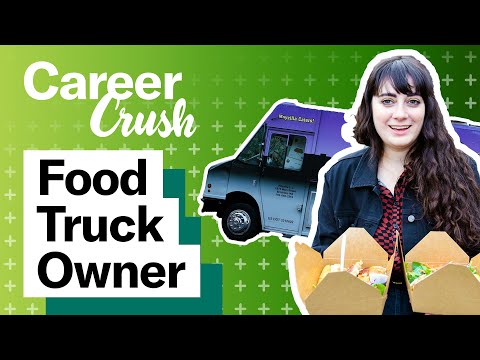
Career Crush episode about what it really takes to own and operate a food truck—costs, regulations, daily operational breakdowns, menu strategy, and income—plus advice on whether you have the “stress tolerance” for it.
John Moy, founder and owner of Moyzilla Food Truck in Boston, MA; started in finance (2008), later returned to the restaurant world despite disliking long hours as a kid.
Food trucks are expensive and require more than cooking; John cites first-truck total cost about $82,000 (truck $17,000; build-out/electrical/plumbing; generator; commissary; startup costs). Revenue peaked in 2019 at over $1M with ~20% bottom-line margin; COVID caused negative periods.
trucks run on generators powering refrigeration/sinks; “everything is going to break”; menu shrank after first season (yakitori and many dumpling/rice/noodle options) to serve ~100 people per lunch shift.
0:01This episode is brought to you by Google Chrome. You think you know a browser, but Gemini and Chrome, that's new. It can help you with practically anything on the web, like restoring a vintage motorcycle from a 50-page restoration block, or finally break down that long article you've had open for weeks. Gemini and Chrome is here for it. Ready to make anything online make sense? There's no place like Chrome. Check responses set up required, compatibility and availability varies 18+. When you need to build up your team to handle the growing chaos at work, use Indeed Sponsored Jobs. It gives your job post the boost it needs to be seen and helps reach people with the right skills, certifications and more.
0:38Spend less time searching and more time actually interviewing candidates who check all your boxes. Listeners of this show will get a$75 sponsored job credit at Indeed.com slash podcast. That's Indeed.com slash podcast. Terms and conditions apply. Need a hiring hero? This is a job for Indeed Sponsored Jobs. Every time I'm waiting in line at a food truck, I'm standing on my tippy toes trying to get a glimpse of what exactly goes on back there.
1:11So it is very intense in there. For this episode, I got in touch with an actual food truck owner to find out what it takes to own your very own restaurant on wheels. It's more than just cooking food or having great recipes. It's a lot of dealing with confusing regulations and rules, being prepared to fix a flat tire or a broken generator. It costs a lot more money than I thought it did. Stick around if you want to find out what it actually takes to start your very own food truck.
1:47Owning a food truck, I think, is a very romantic idea to a lot of people. And owning any type of business is a romantic idea. It's like, hey, you're your own boss. I think it was pretty quick for me to realize that I literally work for everyone else as the owner of the business. That's John Moy. He's the founder and owner of the Moyzilla Food Truck based in Boston, Massachusetts. John actually started his career in finance back in 2008, but he found himself dissatisfied with the job and despite his best intentions, was thinking a lot about joining the food world. At that point, the economy was kind of in shambles and I just kind of felt fortunate to have a job.
2:26And my family had always been in the restaurant business. And I actually grew up hating the restaurant business just because I never saw my parents for holidays. The restaurant industry is hard. the hours are really long. So I never thought that I'd be drawn to it again. But I think I had it in my blood, so to speak. And I just kind of was looking for a way to get back into something tangible. Why did you decide to go the truck route instead of, you know, the brick and mortar restaurant? Yeah, so restaurants are super expensive. We just we just had I personally just didn't have the financial ability to kind of just jump in and, you know, lock into a lease.
3:12You know, I had no idea. My family has restaurants and I've worked at them before, but I've never owned a business. So I think just jumping into a 10-year lease or something like that was super daunting. I think the food trucks are, and I think they still are, a really good way for people to kind of test the waters a bit. Didn't expect it to be as roomy as it was. Like you could actually fit like a decent amount of people in there. John said that it is one of their biggest trucks. So that makes sense. It's actually an old UPS truck, which is wild. Okay, so I need to know how much does a food truck actually cost?
3:50I'm thinking it's like 30 ,000, 40 ,000. $82 ,000. That was like including everything though, the generator, the build out, the truck itself was$17 ,000. And then the rest of it is really like building it out, putting the electrical in, the plumbing in and that type of thing. Our first truck cost$80 ,000. And then with other startup revenue, like startup costs associated with that, like the product and you know, most food trucks rent a commissary, definitely over $100 ,000 to get a food truck business started. To save money, John actually moved home after graduation and started his career in finance.
4:36At this time, the food truck idea was far off, but it definitely helped him raise money when the time came. I actually, I lived with my parents right after I graduated school while I was working for a bit, which I'm like best decision of my life, I think, just because like I was able to save a bit of money. after school, working in the office. So let's talk money. How much does John make as a food truck owner and operator? When we started the food truck in the second year, we made$15 ,000 between my wife, my dad, and I. So that was just like, okay. I was 26 at the time during our second season.
5:19I'm like, all right, that's okay. we can like you know eat the extra dumplings we don't sell and we'll be okay and then um right now actually we had our best year in 2019 when we did over a million dollars in revenue um and our margin on our bottom line is about 20 of that and then we actually started paying ourselves so my wife and i pay ourselves 75 000 a year right now just uh from the business and so So our total like take home income was probably around like 300 ,000 in 2019.
6:20compatibility and availability varies 18 plus. When you need to build up your team to handle the growing chaos at work, use Indeed Sponsored Jobs. It gives your job post the boost it needs to be seen and helps reach people with the right skills, certifications, and more. Spend less time searching and more time actually interviewing candidates who check all your boxes. Listeners of this show will get a$75 sponsored job credit at indeed.com slash podcast. That's indeed.com slash podcast. Terms and conditions apply. Need a hiring hero? This is a job for Indeed Sponsored Jobs. And then COVID came and ruined it all, I'm sure.
6:56Oh yeah, and then we were back in the negative again. It was like, yeah, this felt, and that's in a lot of ways how it felt like year one again. It just, we weren't sure which of our employees were going to come back. None of our spots were there. They had all expired. And I think this past year has really been like year one. really just, you know, trying to learn things over again and how we can kind of be successful going into the future.
7:28Everything is going to break. And I think like you can't have nervous breakdowns about that because it's just going to happen. All the trucks are powered by generators, which essentially like they're on the food truck, but they supply power to like our refrigeration, And our hand sinks and things like that. And those things, they just break all the time for whatever reason. And I think, like, without a generator, you can't take the truck out. So there's a lot. Oh, my gosh. How do you deal with, like, the anxiety or, like, just being nervous about that all the time? Like, do you deal with it or is it just ever present?
8:05You know, I think I've almost gone numb to it at this point. Like, I'm just like, they're like, if someone calls me and is like, hey, John, this isn't working. And I'm like, okay, let's think about it more rationally. And if we can fix it, we'll try to fix it. But, you know, starting the food truck, I had, I was like the least mechanically inclined person starting the food truck. I had no idea how to check the radiator fluid of a truck, but I think like my personality was just like, whoa, we're not going to be able to cook food if we don't figure this out. So I've like spent more hours probably than I thought going into it, just, you know, learning how to fix generators or checking trucks out.
8:44And I still can't do a ton, but I think that eases my anxiety a bit knowing like I know the first steps to take if something goes wrong. I'm eating the dumplings.
9:03Our dumpling is kind of like a hybrid between a Chinese dumpling, like kind of a thicker skin, more hearty dumpling and a Japanese gyoza. So it's pan-fried on both sides and then kind of steamed to finish the cooking process. I learned that they prep a lot of the food ahead of time. They bring it here, they cook it up fresh for people, and they bring more than they could possibly ever need just to make sure that they don't run out or anything like that. John really started his business as a chef first with this vision of having a ton of different options on the menu. But he quickly realized that that just wasn't sustainable.
9:40Through the first season, we had chicken yakitori, beef yakitori, four different kinds of dumplings on the truck, rice, noodles, and then a bunch of other things. And it was super fun. And we had a huge menu. But I think like we would be able to only serve 100 people during a lunch shift with that big of a menu. We knew something kind of had to give, But I really wasn't ready to let that go just because like I got into it because I love to cook. So I was like, oh, we can't just offer like three or four things. That's no fun. But I realized to like the business side of things is that we really had to slim things down.
10:20So we cut our menu down quite a bit after the first season and we just saw huge improvements. What are the skills that I should prioritize learning if I'm going to be successful at this? work ethic is kind of the biggest things. Like if you're not prepared to work seven days a week and you know, 70 hours, it just right off the bat, I don't think it, I don't think it'd work. I think it was pretty quick for me to realize that I literally work for everyone else as the owner of the business. I feel like I work for my employees, you know, cause I have a responsibility to them. Ultimately, I have to keep them happy.
11:02It doesn't make it doesn't work if my team's not happy. In terms of specific to the food truck, being used to working in really warm conditions and also really cold conditions, that's an important characteristic. And I think just the ability to just kind of problem solve on the fly. Do I want to start my own food truck? Honestly, I don't have the money, cooking ability, or stress tolerance for any of this. I think I'm just going to stick to peeking through the window, enjoying my food, and crushing on the people that are inside.
11:55Brussels clean up nicely at Sweetgreen. Maple glazed, roasted, and edges perfectly caramelized. Sweetgreen's fall harvest is back on the menu, and the season's most overlooked little green vegetable is dressed to be devoured. You know what to do. Order on the Sweetgreen app. Close your eyes, exhale, feel your body relax, and let go of whatever you're carrying today. Well, I'm letting go of the worry that I wouldn't get my new contacts in time for this class. I got them delivered free from 1-800-CONTACTS. Oh my gosh, they're so fast. And breathe. Oh, sorry. I almost couldn't breathe when I saw the discount they gave me on my first order.
12:36Oh, sorry. Namaste. Visit 1-800-CONTACTS.com today to save on your first order. 1-800-CONTACTS Fall never arrives all at once. first the air then the light and slowly the things you love begin to find each other a jacket meets a dress a hoodie slips beneath a blazer an old cap finds a new scarf because you don't simply step into the season you create it layer by layer until it finally feels like fall find fall your way at Ross
Do You Have What it Takes to Own a Food Truck? | Career Crush
18 Jan 2022
---
Starting a food truck seems like a fun idea. But there’s a lot more to it than just being a great chef.
00:00 Ever thought about getting a food truck?
01:06 Meet Jon Moy
02:50 How much does a food truck cost?
03:31 The money
05:34 The struggle is real
07:00 The food
08:35 Skills needed
In this episode, Ascend editor Kelsey Alpaio chats with Jon Moy, owner of the Moyzilla food truck, to find out what it’s really like to run your own restaurant on wheels. He shares that there’s a lot happening behind the scenes — from navigating the often confusing rules and regulations, to fixing flat tires and faulty generators, to dealing with the financial ups and downs. And even though it’s not as expensive as opening a restaurant, the startup costs for a food truck are a little surprising.
But if you love cooking, starting a food truck can be a good first step on the road to running your own restaurant.
Learn more about Moyzilla: https://www.moyzillaboston.com/
Produced by Andy Robinson and Kelsey Alpaio
Video by Andy Robinson and Elainy Mata
Editing by Andy Robinson
Animation and Design by Riko Cribbs and Karen Player
Follow us:
https://hbr.org/ascend
https://www.tiktok.com/@hbrascend
https://www.linkedin.com/showcase/hbrascend
https://www.facebook.com/hbrascend/
https://twitter.com/HBRAscend
https://www.instagram.com/hbrascend
Learn more about your ad choices. Visit megaphone.fm/adchoices
Scan the code with your iPhone camera
Listen in the app.