 Ask ChatGPT



How to negotiate a beginning salary, including mindset, research, compensation tradeoffs, negotiation strategy, and when to walk away.
Dr. Tiffany Jonna, author and speaker; founder of TMI Consulting, a diversity and inclusion management consulting firm.
Employers may pay $10k–$30k less if you don’t ask; early salary sets future raises/bonuses and can affect pay equity for similar roles. Employees have more leverage after pandemic-era “no mas” resistance. Do research (Glassdoor, PayScale, Department of Labor; also talk to friends/mentors). Know your floor (living costs) and don’t rely on future promotions. Ask for a number (not a defensive range) and negotiate total compensation (time off, flexibility, hybrid). Use the medium you’re strongest in (email/phone/in-person). If they won’t meet your target, walk away to build reputation and find better-fit companies.
California company vs Virginia wages; asking for California rates if employed by a California firm.
Written by AI. May contain mistakes.
Understand why negotiating your salary is crucial early in your career.
“So you find a job to apply for, you do the application, you actually get an interview, you do the interview, you follow up after the interview, and then you actually get an offer.”
Learn strategies to manage nerves and boost confidence during salary discussions.
“I'm excited to learn how to do this, but I'm also kind of interested.”
Learn strategies to manage nerves and boost confidence during salary discussions.
“where you give someone permission to shortchange you.”
Gain insights on how to determine your salary range and the value you bring.
“From living in a virtual society, like you don't have to get shortchanged for that.”
Recap essential strategies for effective salary negotiation.
“Do you value me and my presence and my experience and what I bring to the table?”

Get the gist, explore an idea or ask about something said.
 Claude
On Harvard Business Review, what are the key points of this episode?
Searching your listeningAutomatic transcript. May contain errors.
0:28This episode is brought to you by Google Chrome. at work? Use Indeed Sponsored Jobs. It gives your job post the boost it needs to be seen and helps reach people with the right skills, certifications, and more. Spend less time searching and more time actually interviewing candidates who check all your boxes. Listeners of this show will get a$75 sponsored job credit at Indeed.com slash podcast. That's Indeed.com slash podcast. Terms and conditions apply. Need a hiring hero? This is a job for Indeed sponsored jobs. So you find a job to apply for, you do the application, you actually get an interview, you do the interview, you follow up after the interview, and then you actually get an offer.
1:08You did it. But before you say, yes, please, I'll take it. Let this job hunt be over. Please, this process has gone on so long. There's one more thing, and it's pretty important.
1:30I've never negotiated a salary before. I don't want to do this video. Why am I doing this video? People will absolutely pay you$10 ,000,$20 ,000,$30 ,000 a year less just because you didn't ask. Fine. Fine. That's Dr. Tiffany Jonna. They're an author, speaker, and founder of TMI Consulting, a diversity and inclusion management consulting firm. Negotiating your salary is super crucial, especially early in your career. It really sets the bar for your raises and bonuses in the future, and it will even impact what others will make in a similar role to yours.
2:21What has changed regarding the negotiation dynamic? Like there definitely seems to be kind of this like different power in the labor force than ever before. Employees are driving this change. We are now standing up after being put on the front line of a global pandemic and being shown that corporations are literally willing to kill us for their profit, we're saying no mas, por favor, right? We're done. We're absolutely done. Everyone who's negotiating needs to be able to stand in that power and recognize, no, I'm not an interchangeable cog in a machine. I am a unique asset. It is worth holding out to be treated well, to be respected, and to be appreciated for what you're bringing to the table.
3:05So the change is real. If you don't win here, you'll win over there. Look, I've never negotiated a salary myself. I know that this is really, really hard, but let's get into it. I'm inspired. I'm excited to learn how to do this, but I'm also kind of interested. How much have I lost by never negotiating? I don't think that you can generalize it, but I would definitely say tens of thousands of dollars. It's like, I love this new movement towards everybody advertising the job range for every job because literally, especially if you're working for a for-profit corporation, the corporate imperative is to maximize shareholder value.
3:47And that means the less I can pay you, the more the shareholders get. So let's talk about nerves. How do I get outside of my head when I'm feeling super nervous about this and feeling like I kind of don't really deserve anything more than they're offering? If you're doubting yourself before you even, you know, start with the negotiation or start with the interview, there's something that you're not believing in in you. Like you're feeling like you are inadequate. You're feeling that you're insufficient. You're feeling that you're not bringing it up to the table. So the first thing to do is recognize, excuse me, you are amazing.
4:26You wouldn't even be pursuing this if you didn't have something in the bag that made you qualified, that made you amazing. so understand that what you're bringing to the table is not only experience and not only passion for what you do but you're also bringing you then you'll have a little bit of power when you walk in there a little swagger this is an obvious one but don't just pull numbers out of thin air do your research go on sites like glassdoor payscale department of labor you've heard of them before, but what is most effective is talking about salary with your friends, your mentors, your teachers, anyone who might know.
5:05Go and get some context for what the going rate for a job like yours is. What you're looking for is the total compensation package, and that is your time off, your flexible time, all the various benefits that are, so they need to articulate very clearly what those benefits are for you. If you don't know all of the benefits that are being offered, you can ask and you should ask. That background information is really, really helpful. The money is crucial, but think holistically. Would you be willing to take less money for more time off or for a flexible or hybrid work schedule? Be thoughtful, but also creative.
5:49if you're living in you know virginia but your company's in california should you be asking for a california salary or virginia salary or just a salary that reflects your personal value so that that's a that's a great one i you would you need to index for the higher value honestly right if it's a california company then a california company can afford to pay california prices and if they try to pay you Virginia prices in California, they're cheating you. Don't ever put yourself in a situation where you give someone permission to shortchange you. California company, you pay California wages. You ask for California wages.
6:24That, you get to benefit. This episode is brought to you by Google Chrome. You think you know a browser, but Gemini and Chrome, that's new. It can help you with practically anything on the web, like restoring a vintage motorcycle from a 50-page restoration block, or finally break down that long article you've had open for weeks. Gemini and Chrome is here for it. Ready to make anything online make sense? There's no place like Chrome. Check responses set up required compatibility and availability varies 18+. When you need to build up your team to handle the growing chaos at work, use Indeed Sponsored Jobs.
6:58It gives your job post the boost it needs to be seen and helps reach people with the right skills, certifications, and more. Spend less time searching and more time actually interviewing candidates who check all your boxes. Listeners of this show will get a$75 sponsored job credit at Indeed.com slash podcast. That's Indeed.com slash podcast. Terms and conditions apply. Need a hiring hero? This is a job for Indeed sponsored jobs. From living in a virtual society, like you don't have to get shortchanged for that. The flip side is a little bit harder, right? I have Virginia companies that are hiring people all around.
7:32I would love to be able to pay Virginia rates, but if my people are coming from California, I want them to actually be able to do well. So the onus is on me to be profitable enough to be able to afford the best talent. Know your floor. Figure out how much it's going to cost for you to just live. Throw the list up on the screen. Rent, groceries, student loans, your wellbeing. Make sure you're gonna get more than that amount. Don't rely on promotions, raises, bonuses. your starting salary is going to calibrate all of those other numbers. So if you start too low, it's going to be a lot harder to raise that number.
8:12I've always been told that going into negotiations, I should always ask for like a lot more than I want. So say that I actually want like a salary of$60 ,000. How much more should I be asking for? So that's where you have to know the landscape. If it's absurd to ask for$80 ,000 based on industry experience and geographic region, then you're going to get yourself kicked out of the running because you don't know the industry. So do I give a salary number or a range? You go in with a number, I feel like, then I'm putting you on the defensive to tell me why you don't think I'm worth enough because I'm prepared to tell you why I'm worth that.
8:52Now, I know a lot of people do go in with range. If you have a bigger flexibility in terms of like your floor, right? But I wouldn't put my actual floor anywhere near the bottom of that range. Where should it take place for me to have the best leverage? Is it over the phone, over email? Is it something that should happen in person? Where do you think is the best place for that to happen? So you can't always control that because you don't always get to have, you know, every level of access. So it just depends on the situation. Try to move towards a platform where you feel empowered, right? So if you are a mistress of the written word and you know that your command of language and your ability to formulate your thoughts is best when you can sit back, compose, sit on it, hit send and go, then I would do it there.
9:38If you feel like I want it to be personal, but sitting in front of them, I'm going to sweat in my armpits and it's going to be terrible. Then you can ask for a phone call and you can do it that way. Say it's an email. How do I respond back? Is it just like, well, you know, 75 is what I asked for. I can't really budge on that. Or is that where I start to build the case? You would say, thank you so much for the offer. I was really looking for$75 ,000. Can we discuss the total compensation package? That shouldn't be a long email. Shouldn't be a lot of stuff there. But what you're saying is, all right, I said this, you're saying this.
10:16There's a lot in between those things, including how I get to work, where I get to work, how much time I have off. But what do I say? This is not the time to be shy. This is when your introvert is not your best friend, right? You've got to bring those big guns out and say, okay, oh my gosh. So you're looking for somebody with positive energy, who's got the right number of years experience. I've got that. And then you reiterate it to them. You say, this is really exciting because it's exactly the kind of thing I was looking for. I know that I can do this because here are the ways that I feel these things and then look for their concerns.
10:53Look for the things that they are afraid of. Look for any reasons that you could see them justifying paying you less. Say, you know, I've done a fair amount of research and, you know, and I understand based on the people that I've talked to in the research that I've done that this role commands, you know, anywhere from 60 to 90 ,000. Every negotiation expert will tell you this and it's a tough one. Like I cannot even picture myself ever doing this, But if it gets to the point where you're not getting what you want, you have to be willing to walk away. You actually have more power when you walk away, right?
11:31When you're the person who was the best candidate, who they were willing to go back and forth and back and forth and back and forth with, and you finally said, you know what, thank you all for trying, but this is not going to be what I need. They're going to remember you. You're going to build a reputation in the industry as the one who didn't compromise their standards. and then you're going to go and get an amazing job somewhere else. And that's the thing that we think that there's scarcity, so much scarcity because we're scared not to have the job. And you can always find a company that's willing to value you.
12:02And that's what I see it as at the end of the day. Do you value me and my presence and my experience and what I bring to the table? If you feel like these people don't value what you bring, I don't care how much money they give you. You shouldn't go. All right, let's recap. up. Don't let nerves get the better of you. Do the research. Know your floor for how much you need to make. Remember the whole compensation package. The negotiation will most likely not be in person, but if you want to take the negotiation to your strongest medium, go for it. Phone, email, whatever you feel most comfortable.
12:41Bring positivity and research to back up your salary ask. If you can't come to an agreement, always be ready to walk.
12:52Brussels clean up nicely at Sweetgreen. Maple glazed, roasted, and edges perfectly caramelized. Sweetgreen's fall harvest is back on the menu, and the season's most overlooked little green vegetable is dressed to be devoured. You know what to do. Order on the Sweetgreen app.
13:12This week, it pays extra to be a Milo's Rewards member. Through October 14, members get$10 Milo's money when you spend$200 or more on an eligible purchase during Milo's Money Days. Also using your Milo's Rewards credit card? Even better. That's an additional$20 Milo's money. Use it to save on your next Lowe's haul. Exclusions, restrictions, and more terms apply. See Lowe's.com slash Milo's Money Days for details. Milo's Money expires 30 days after issuance. Subject to change. Credit offer subject to credit approval. Fall never arrives all at once. First the air, then the light. And slowly the things you love begin to find each other.
13:51A jacket meets a dress. A hoodie slips beneath a blazer. An old cap finds a new scarf. Because you don't simply step into the season. You create it layer by layer until it finally feels like fall. Find Fall Your Way at Ross.
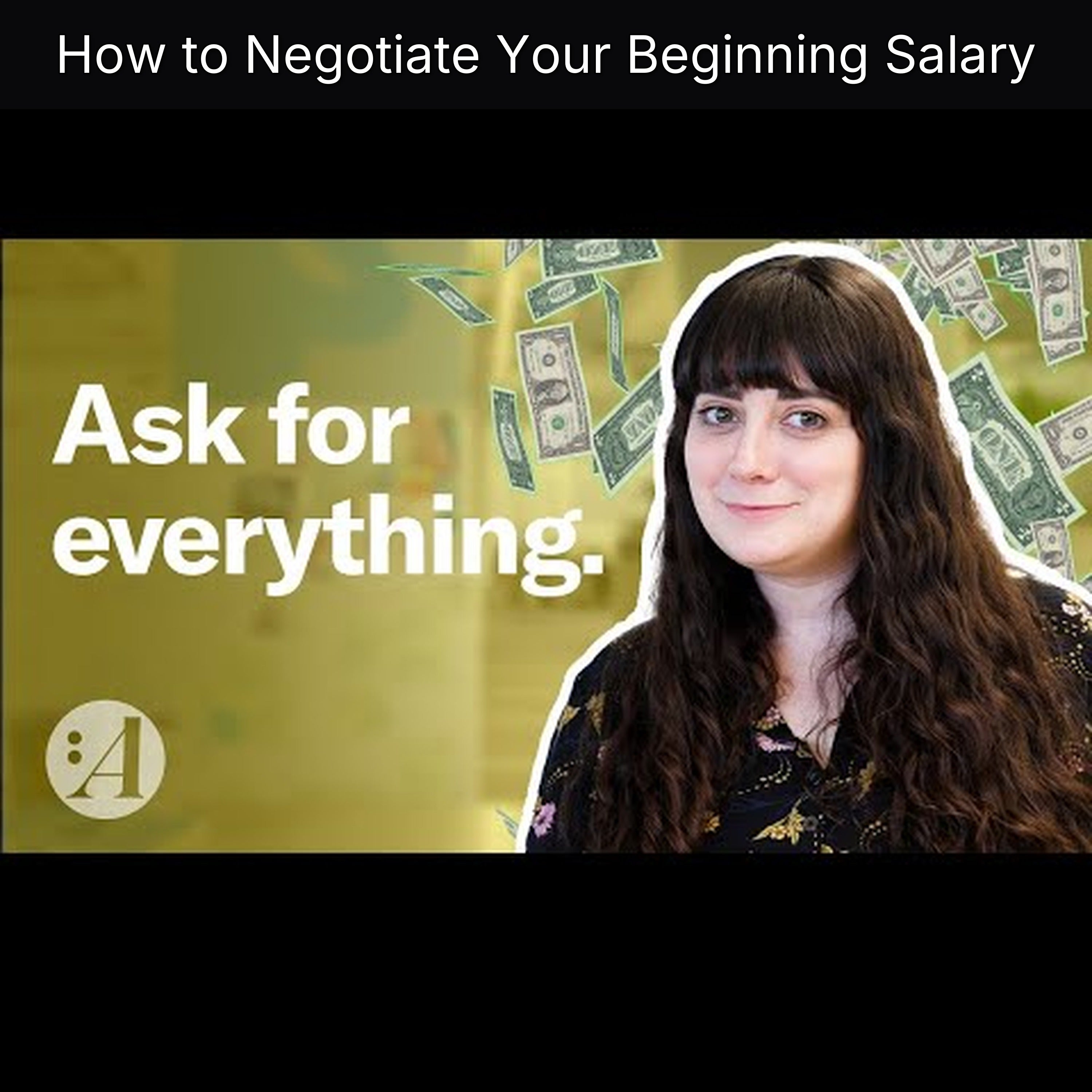
How to Negotiate Your Starting Salary
25 Jan 2024
---
Your starting salary calibrates all your future raises and bonuses. So don't just accept the first offer.
Produced by Andy Robinson, Kelsey Alpaio
Video by Andy Robinson and Elainy Mata
Editing by Andy Robinson
Animation and Design by Alex Belser and Karen Player
00:00 Let's learn about salary negotiation
01:25 The labor market today
02:14 How much have I lost?
02:55 Don't let nerves hold you back
03:51 Do your research (and talk about salary!)
04:15 Consider the whole compensation package
04:52 How does your location factor into your salary?
05:53 Know your financial floor
07:12 Email? Or over the phone? Or in person?
08:08 What do I do if they offer me less?
08:43 What language do I use?
09:19 Be ready to walk away
Subscribe to our newsletter: https://hbr.org/email-newsletters?movetile_hbpascendnl&hideIntromercial=true
#Negotiation #JobSearch #Salary
Learn more about your ad choices. Visit megaphone.fm/adchoices