Ask ChatGPT


 Harvard Business Review
1 Jul 2026 · 8m · 2 chapters
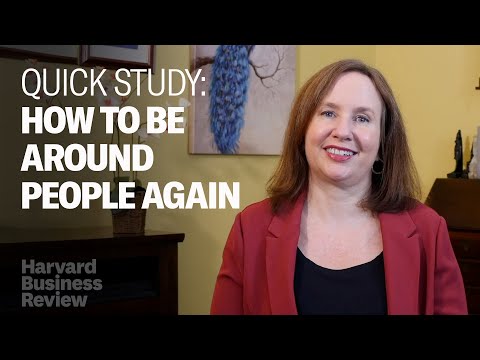
Returning to in-person work after remote work can feel “weird” and socially exhausting; the episode offers strategies to adjust. It argues that the discomfort is normal and manageable, especially as camera-off habits disappear and “impression management” returns.
No specific guest is named; the host is described as a social psychologist.
Re-entering workplaces increases self-monitoring (facial/body language), metacognition, and cognitive load from processing multiple conversations. Asking questions reduces impression-management pressure and helps relearn nonverbal signaling. Planning alone time prevents burnout. In group settings, gently requesting “one conversation at a time” can reduce overwhelm.
Turning cameras off at home vs. not having that option at work; asking a colleague “how did I come across?” after a meeting; telling a room “post-COVID…can we try to have one conversation at a time?”
Written by AI. May contain mistakes.
Learn about the challenges of re-entering social environments and strategies to cope.
“As some of us start to head back into the workplace, we're going to have to adjust to something we haven't done in a long time.”
Learn about the challenges of re-entering social environments and strategies to cope.
“And if you have more questions about how you and your colleagues can adjust a little more effectively to this new normal, please leave them in the comments and I'll try to address them in future videos.”

Get the gist, explore an idea or ask about something said.
 Claude
On Harvard Business Review, what are the key points of this episode?
Searching your listeningAutomatic transcript. May contain errors.
0:28This episode is brought to you by Google Chrome. at work? Use Indeed Sponsored Jobs. It gives your job post the boost it needs to be seen and helps reach people with the right skills, certifications, and more. Spend less time searching and more time actually interviewing candidates who check all your boxes. Listeners of this show will get a$75 sponsored job credit at Indeed.com slash podcast. That's Indeed.com slash podcast. Terms and conditions apply. Need a hiring hero? This is a job for Indeed Sponsored Jobs. As some of us start to head back into the workplace, we're going to have to adjust to something we haven't done in a long time.
1:03Be around other people. And it's going to feel weird. As a social psychologist, I'm here to tell you that that's okay. Just embrace it. And I also want to share with you a little bit about why it's going to feel so weird so that you can apply some strategies that are going to leave you feeling a little bit more prepared and hopefully make it a a little less weird for everyone. We had something we could do when we were all working from home that was really kind of quite nice. You could just turn your camera off. We're going back into a world where, for at least some of the time, most of us won't have that option.
1:40There's no turning your camera off. You can't go and hide. That impression management stuff is really exhausting, right? Having to care about how you look, not just whether or not you have made yourself look nice, right whether you have done your hair and and dressed nicely but even like your facial expressions right like having to pay attention to how you're coming across to other people your body language and if you're a little bit out of practice being around other people one of the best things you can do is actually just ask questions right at the end of a conversation ask how did i come across like how did how did that go did i seem like normal in that meeting like did i seem like i because what I was trying to convey was that I was actually really happy about this or I was really excited.
2:24Give them the opportunity to say like, well, you seemed a little upset during that conversation or you seemed a little angry. Maybe you weren't any of those things, but you're so not used to paying attention to what you're doing with your face and paying attention to what you're doing with your body that you may lapse into doing things you're not realizing you're doing and sending signals you may not realize you're actually sending. And that way you can start to relearn what you need to do in conversations to put people at ease, to more clearly telegraph your intentions because you're a little bit out of practice.
2:56It is just really exhausting to just have to talk a lot. Your brain has to do a lot of work in order to actually make meaningful conversations. You also, again, have the impression management part, right? How am I coming across? Do I look smart? Do I look foolish? So while we are communicating, we're also engaging in a bunch of what psychologists would call metacognition. We are thinking about our own thinking. We are thinking about our own speech. Do that long enough and you're going to get really, really tired. There's a couple of things that I think can help us manage how exhausting it will be to talk to people all day again.
3:36Plan your day in such a way that you're going to get some alone time. In the past, when you may not have felt you needed it as much, you might have been someone who often went to lunch with other people, other colleagues in your office. Or if you were going to go get a coffee, you would ask other coworkers if they wanted to get a coffee with you. Now is a time to think about when can I get some alone time? Taking that lunch by yourself or taking that walk to go get a cup of coffee by yourself. So you have a little bit of time in your day that you've carved out for quiet and for just as important you not having to deal with talking to other people.
4:14Another thing that's really important to do is to realize that you don't have to do all the talking. One of the things that you can do to make it easier is just ask more questions. People, by the way, love to be asked questions because in general, people do like talking about themselves. And while they're talking, you'll get a little bit of a break. One of the most surprising things to people when they're sort of reentering the world, they're out and around people again in groups, is how shockingly difficult it is to process conversation. You're in a room with a group of people and multiple conversations are happening at the same time.
4:54And I will tell you that I experienced this and it was mind-blowing to me how difficult it was for me literally to process the language around me, to follow any particular conversation, because my brain was also managing the fact that it was overhearing other conversations happening at the same time. Our brains are actually normally quite good at being able to sort of push away the noise and really zero in on what you want to be focused on. Except what happens with the brain is that if there's something you don't use for a very long time, it sort of atrophies a little bit. And the more things we have that we have to pay attention to, the more strenuous it is, the more exhausting.
5:36If you're in a position to do so, let's say you're in a gathering of people and you start to hear people talking over each other and multiple conversations going on. It never hurts to just say like, hey guys, you know, post COVID, this is really a little bit overwhelming. So can we try to just have one conversation at a time? I think that would help everyone. That kind of gentle nudge will help everyone in the room to be able to manage their attention a lot more effectively. The bottom line really is that for us all to thrive or at least try to thrive as we transition to being back in the office at least part of the time was to go into it having really clear expectations.
6:15It's going to be weird. It's going to be uncomfortable. Embrace the weird and above all, be patient with yourself. The great news is brains are amazing. You're going to get used to it. to be patient and give yourself that time to adjust. Thanks so much for watching. And if you have more questions about how you and your colleagues can adjust a little more effectively to this new normal, please leave them in the comments and I'll try to address them in future videos. Brussels clean up nicely at Sweetgreen. Maple glazed, roasted, and edges perfectly caramelized. Sweetgreen's fall harvest is back on the menu and the season's most overlooked little green vegetable is dressed to be devoured.
7:00You know what to do. Order on the Sweet Green app.
7:07This week, it pays extra to be a Milo's Rewards member. Through October 14, members get$10 Milo's money when you spend$200 or more on an eligible purchase during Milo's Money Days. Also using your Milo's Rewards credit card? Even better. That's an additional$20 Milo's money. Use it to save on your next Lowe's haul. Exclusions, restrictions, and more terms apply. See Lowe's.com slash MyLowe'sMoneyDays for details. MyLowe's Money expires 30 days after issuance. Subject to change. Credit offer subject to credit approval. Afternoon glare totally ruined my watch party for the big game. That's when my buddy recommended Blinds.com.
7:43With custom window treatments made to fit your style, space, and budget, customers who shop at Blinds.com experienced overwhelming satisfaction. Side effects may include a fuller, deeper night's sleep and the sudden urge to host the watch party again. Blinds.com isn't a medication, but it can improve how you feel about your home. Visit blinds.com now to save up to 50 % off site-wide during our annual fall blowout sale.
It’ll Feel Weird to Be Around People Again at Work. That’s Fine.
30 Sep 2021
---
As some of us head back to the workplace, we’re going to confront something we haven’t in a while: other people. It’s going to tire you out. Here’s how to cope.
00:00 It’ll soon be time to be around other people again, and it’s going to feel weird
00:33 Weirdness 1: We have to re-learn how to present ourselves
01:07 Here’s how to cope for now
01:56 Weirdness 2: Talking a lot is going to take a ton of energy (at first)
02:32 Here’s a couple things you can do to reduce the stress
03:38 Weirdness 3: Listening to multiple conversations is going to be really hard
04:39 This is one small thing you can do to make it easier for everyone
05:04 The good news: Brains are amazing!
Social psychologist Heidi Grant explains what specific weirdnesses to expect, and has strategies to help you prepare. From relearning how to present yourself to dealing with the exhaustions of talking and listening, she offers small steps to reduce the stress and anxiety we’re all feeling as we re-learn how to be around each other again.
Produced by Scott LaPierre
Video by Joseph Francis
Follow us:
https://hbr.org/
https://www.linkedin.com/company/harvard-business-review/
https://www.facebook.com/HBR/
https://twitter.com/HarvardBiz
https://www.instagram.com/harvard_business_review
Sign up for Newsletters: https://hbr.org/email-newsletters
#HarvardBusinessReview #Social #Psychology
Copyright © 2021 Harvard Business School Publishing. All rights reserved.
Learn more about your ad choices. Visit megaphone.fm/adchoices