
 Ask ChatGPT


 High Performance Business
14 Apr 2026 · 47m · 24 chapters
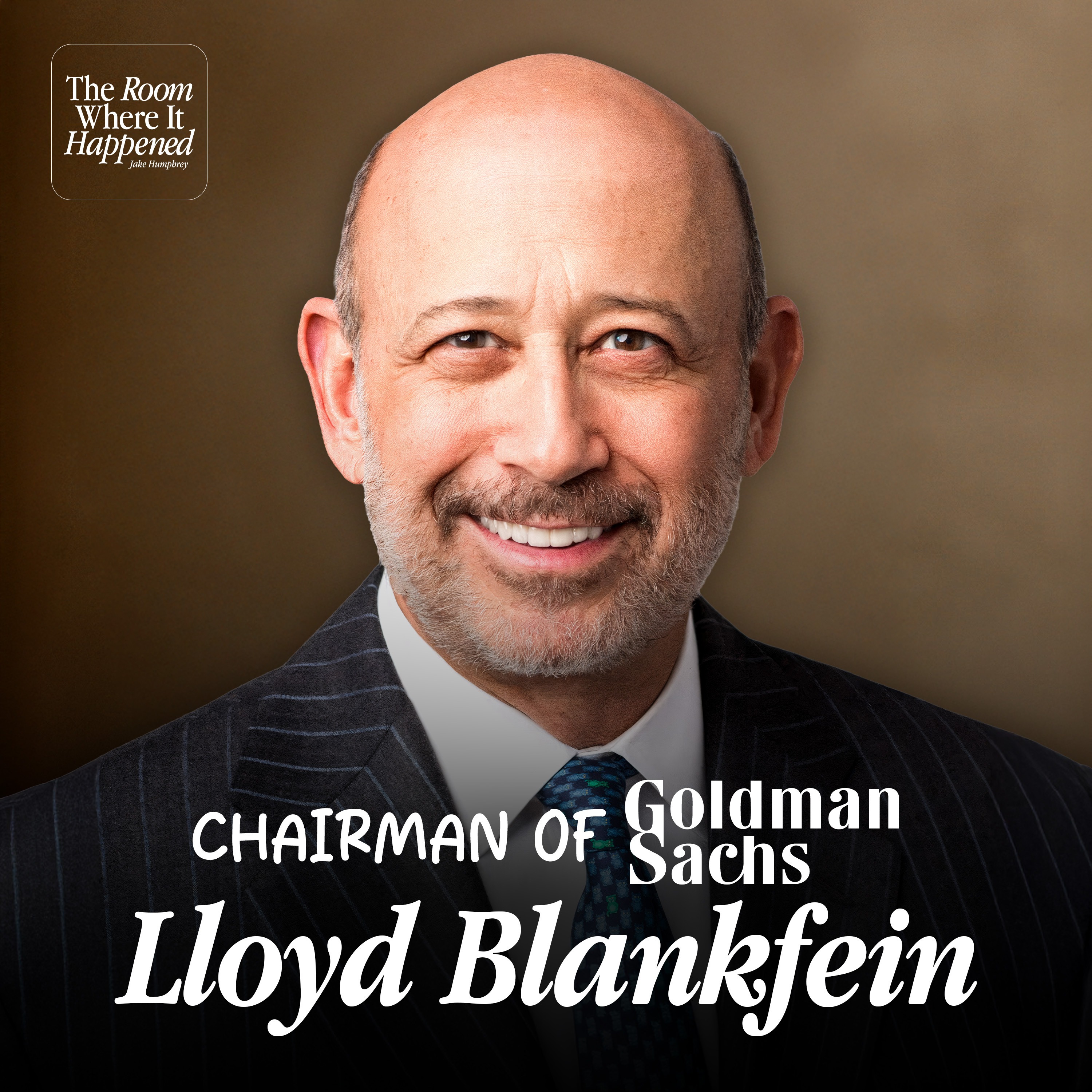
The episode argues that AI and automation are inevitable productivity upgrades that will displace some jobs but also create new work, and it connects that shift to financial risk—especially private credit, AI/data-center overinvestment, and the likelihood of a future financial crisis. It also discusses “paranoia” in finance, fairness/social mobility, and personal resilience.
Lloyd Blankfein, former Goldman Sachs CEO (trading/foreign exchange background; later led a major investment bank). Host: Jake (The Room Where It Happened). Blankfein grew up in public housing in the Bronx/Brooklyn; father worked as a mail sorter for the post office.
Progress is inexorable; people should focus on happiness/flow and resilience (save for “rainy days”) rather than fear job loss. Winners are those who adapt fastest and deploy AI efficiently. Financial crises recur when discipline fades and balance sheets become overextended.
His father’s electronic mail sorter; slide rules/telexes as analogies for letting go of old tools; Robert Maxwell fraud story (“paid to be paranoid”); tech bubble roots (Microsoft/Amazon survived); data-center credit risk; private equity buying without selling; “kindling” metaphor for an overdue crisis.
Written by AI. May contain mistakes.
Discussion on the impact of automation through personal anecdotes.
“I want to start by going back to a moment where you were at your father's retirement party.”
Exploration of how technology has displaced traditional jobs over time.
“But of course, the government didn't want to fire anybody.”
Reflecting on past technologies and how they relate to the current era of AI.
“no one would do today and no one would remember.”
Discussion on how AI can change work-life balance and happiness.
“And I wonder whether we have that same feeling now, like we're so clinging to what we know and we're so fearful of what AI is going to do.”
Insights on who will succeed in the AI-driven landscape and the evolving market.
“And so what we call, I was listening to somebody on a television show and said, you know, this industry is 98 % involved and uses AI, 98 % of them use AI in some capacity.”
Explore the uncertainties surrounding investments in AI and data centers.
“And at the end of the day, I could try to persuade someone to like it and get used to it.”
Learn about a significant fraud case and its impact on professional judgment.
“Will the companies that are building these things, and some of these things are built for these companies, but are owned by other companies that are dedicated and bear the credit risk of having built these things?”
Understand how paranoia can be a virtue in finance and risk management.
“And I learned early in my professional life that you have to be a little bit, make yourself a little bit remote from that and withdrawn.”
Gain insights into potential upcoming financial crises and their triggers.
“When you look forwards and you try and look around the corner, I wonder what you see, because I saw an interview with you recently where you said that you can sniff a potential financial crisis in the offing.”
Explore the reasons behind businesses not being sold despite high market prices.
“Well, a lot of companies have been bought by big pools of capital, but they haven't been sold.”
Understand the natural cycles in economics and politics and their implications.
“on their balance sheets, what they think the things that they own are really worth.”
Learn how geopolitical conflicts can impact economic stability and inflation.
“Professionals in the market are looking for it.”
Delve into the challenges of balancing inflation and growth in economic policy.
“And that creates simultaneously inflation so that you can't lower interest rates.”
Discover the importance of personal financial resilience in uncertain times.
“there being big growth or slow growth, we get negative growth or cutbacks in the economy.”
Examine the resilience of America’s economy despite past crises and current leadership.
“And eventually, just like walking around the UK could look nice in the morning, but by the middle afternoon, you think, what was I thinking to go out without an umbrella?”
Discuss the cultural implications of economic mobility and the value of comebacks.
“And after you get beaten up, there's a very high degree of respect for resilience and coming back.”
Analyze the challenges of wealth distribution and societal polarization in the U.S.
“And I think the most important thing that we should be chasing here is fairness.”
Reflect on personal narratives of overcoming adversity and the role of opportunity.
“in an outer borough of New York, a T here that would be called council housing.”
Challenge the notion of the self-made individual and emphasize the role of support systems.
“So, you know, in the States, certainly at these schools, certain people that are fifth generation Harvard, but sometimes those people were branded as legacies.”
Discuss the implications of AI on risk management and investment strategies.
“I'd love to know, you talk a lot about risk in your book.”
Explore the opportunities and risks posed by AI, including potential recession.
“constantly assessing what the returns could possibly be, how much was being invested overall, and what the likely returns and how fast it would come.”
Explore the contrasting perspectives on AI’s impact on society and the economy.
“And so you also have to recognize for sure we'd be doing things that in hindsight will have regret, but we don't know which ones they are.”
Learn about the personal journey and success strategies of a former Goldman Sachs CEO.
“But if we're looking for a spark that could set off a chain reaction, that's a possibility.”
Understand the importance of recognizing and capitalizing on opportunities throughout life.
“I came to wall street at a time when it was globalization took effect.”

Get the gist, explore an idea or ask about something said.
 Claude
On High Performance Business, what are the key points of this episode?
Searching your listeningAutomatic transcript. May contain errors.
0:00Lloyd Blankfein: What do you spend more time in trying to get the guests or doing like the work and doing the background? Because these are varied people like you do. You know, I guess everybody has Wikipedia, but you must have to. Yeah, we have to go deeper. Exactly. Like Simon having that call with you beforehand. There's a lot of podcasts that wouldn't do that. They would just tell you when to turn up. Yeah, poor Simon. How long is it? How long do you want this to be? Seven hours, I think. Because I reserved. You'll be done for dinner. But I talk quickly. Yeah. Being from the Bronx. Being from Brooklyn, yeah.
0:30You've got to be the kind of person who's curious about what other people do. Well, I think an explorative mindset is probably one of the most important things you can have in your arm, right? I think the most important virtue is to be curious. Well, Lloyd, welcome to The Room Where It Happened. Well, thank you, Jake. It's good to be here. I want to start by going back to a moment where you were at your father's retirement party. You write about this in your brilliant new book. And there's a moment where your dad can kind of see how the future looks. and everyone knows that change is coming, but they're not sure in what form that change is going to come.
1:02And I wonder whether you can now see the parallels between the experience that your father was having at that time with where we now sit with the advent of automation and AI.
1:11Lloyd Blankfein: So my father worked for the post office. He was a mail sorter, which you did manually. So he worked at nights and knew the name of every village in the state of Connecticut as he pushed letters into one box or another. And he'd done that for a very long time, working for the government. And it was a public building. We were never allowed in. And calling it a party is generous. We just sort of snuck in as he was saying goodbye to his colleagues and walked in. And when I did walk in, I saw where he was working. There was this big machine behind him that was still covered in plastic. I said, what is that?
1:48Lloyd Blankfein: And it turns out that was an electronic mail sorter, which we would take for granted today. But in those days, a while ago, it was new. but not that new. It had apparently been sitting behind him for a long time. At any time, it could have been plugged in, put to work, and done his job much more efficiently, much better without making mistakes. And I thought to myself, how sad. My dad did this job for years, and it was a job that didn't need to be done because a machine could have done it. But of course, the government didn't want to fire anybody. They had people leave only by attrition when they retired, and somebody somewhere was waiting for them to retire so they could plug in the machine and turn it on.
2:28Lloyd Blankfein: And I'm thinking, boy, what a very low level of job satisfaction. And I think to myself, and that kind of haunted me. And my dad passed away. I never would have written about this were he still alive, because it's sad for me. And I'm sure on some level, it was sad for him. But for him, it was a job, and he was earning money, and he wasn't thinking in terms of job satisfaction or big questions about the displacement of human labor by machines. And he was just trying to earn a living and he was earning a living by stuff that hasn't been done. And so a lot, you know, very often when I approach things and I think about new technologies that are coming along, I think to myself, what are we doing today that doesn't have to be, even watching a war movie and you see people risking their lives, flying these crickety machines over to drop bombs wherever they were dropping, you know, to liberate the continent of Europe.
3:24Lloyd Blankfein: I'm thinking today, people wouldn't be doing that. They push a button and a missile would be launched. There's a lot of, I mean, maybe that's not the first example that you'd pick of technology displacing labor and risk and other resources. But, you know, it has its, you know, it has its moments today. And there have been elements of my career early in my career where I did things that no one would do today and no one would remember. I remember even in school, in college, taking examinations in science classes where you had to do calculations. And the teacher wouldn't let us use calculators. That's how old I am because calculators were just becoming available.
4:05Lloyd Blankfein: Electronic calculators that now cost zero. Those days were a little expensive. Not everybody had it. And they said, you know, you can't take that calculator into the exam with you because if you did, how would you ever learn how to use a slide rule? Now, I don't know if you, my kids would say, what's a slide? Exactly what my thought was. Did you ever see the movie Apollo 13, where they're trying to make a calculation? They're moving these, you know, these things, but it's a logarithmic scale. And that's how people did division and multiplication. But anyway, the point is that there's a lot of things that I even did in my life.
4:40Lloyd Blankfein: Proofreading telexes. What's a telex? You know, you see ticker tape parades on Wall Street and you say, what are those ribbons and those tapes that people are throwing. That's how people used to send messages to each other. And you couldn't... That's where the ticker tape comes from. Yes. I haven't even thought about that. I just thought it looks pretty. Yes. And so it was holes punched in a thing and would come across a tape and you'd read it like that and lost to memory what people use them for. And today, of course, everything is by email. If you make a mistake, you could correct it. In those days, you couldn't correct a mistake.
5:08Lloyd Blankfein: You'd issue... Anyway, as we sit here, you referred to my book. One thing I want to do is get my book out quickly before everyone assumed that a machine wrote it. Yeah. Or while people are still reading books. Or while people are still reading books. Yeah, rather than just putting it into AI and summarizing it in one sentence. Yes. And so now... But I think this is what's really interesting, though, is that you're saying, like, you looked at your dad the day that he walked away and you kind of thought, man, there's a sadness there that he thought he had to do something he doesn't need to do. And I wonder whether we have that same feeling now, like we're so clinging to what we know and we're so fearful of what AI is going to do.
5:48And it's like the modern world is the telex. The modern world is the slide rule. We need to let go of these things, don't we?
5:55Lloyd Blankfein: Of course, I get the point. So in other words, the rumination today, people are stressed and wringing their hands. AI is bad because look at the job that's going to displace. How could you be mad at anything that makes people more productive? There will be, at the beginning, I can't, I'm not as familiar with the UK, but I'm sure the statistics are similar. In the United States, at the turn of the 20th century, more than half the country was involved in agriculture. Single digit percentages today in the US, they all found something to do. Detroit, you know, the auto industry, different manufacturing, that goes by the board.
6:30Lloyd Blankfein: They found software. Software will go by the board. They'll find other things. Maybe there'll be more massage therapists. Maybe people will work six hours a day instead of eight hours a day and four days a week instead of five days a week. Two generations ago on Wall Street, people worked five and a half days a week. They came in Saturday to finish their paperwork for the week. And now people don't do that at all. There is no paperwork. And so how could anyone be against progress? And even if you found someone who was against progress, it doesn't matter. Progress is inexorable. You might as well be cursing at the tides or the winds.
7:03Lloyd Blankfein: It's just going to happen. See, I look at these kind of modern tech bro influencers who are talking all the time about productivity and hard work and output and achievement. They never talk about flow. They never talk about happiness. They never talk about contentment. And I wonder whether AI is going to put us into a world where we actually, as human beings, can start prioritizing the things that actually we love more than needing to just work to live. Look, the economy could deliver to you time and wealth and, you know, good housing and available meals. You know, I think you have to go to other sources, other places to source your happiness and stuff.
7:46Lloyd Blankfein: And you shouldn't rely too much or blame the economy or the political system for that. I think if you can get your needs satisfied by working 25 hours a week instead of 45 hours a week, I think the economy has kind of done its job. Now it's up to other sectors of life to deliver your happiness.
8:08If your eyes are the windows to your soul and your glasses are the windows to your eyes, then it's pretty important to find your perfect frames. That's why at Warby Parker, we've made shopping for eyewear as easy and fun as can be. Peruse endless styles in our stores or use our app to virtually try on frames and get personalized recommendations. To find your next favorite pair of glasses, sunglasses, or contact lenses, or to locate your nearest Warby Parker store, head over to WarbyParker.com. That's WarbyParker.com. Shipping, billing, admin, payroll, marketing. You're managing all the things.
8:43So why waste time sending important documents the old-fashioned way? Mail and ship when you want, how you want with Stamps.com. Print postage on demand 24-7 and schedule pickups from your office or home. Save up to 90 % with automated rate shopping. That's why over 1 million small businesses trust Stamps.com. Go to Stamps.com and use code PODCAST to try Stamps.com risk-free for 60 days.
9:12who do you think will be the winners in this ai movement well and again you know this is not a
9:21Lloyd Blankfein: one-off moment of time where somebody sounded a horn and now we have technology we've been we we've we've you know again cursed or benefited by by depending on your point of view by technology all along and it's kind of incremental. And so what we call, I was listening to somebody on a television show and said, you know, this industry is 98 % involved and uses AI, 98 % of them use AI in some capacity. And I'm saying, well, that depends on how you define AI. I mean, going back a few minutes ago, I guess you could say something that does arithmetic for you in a calculator is a form of intelligence in some way.
9:55Lloyd Blankfein: So winners will be the people who can adapt the quickest and deployed and make themselves more efficient. And yes, there is an incentive for industry, for employers to deploy machines because they're going to be cheaper than having humans. And somebody will identify that as a callousness because they'll hire fewer people and therefore they'll support fewer families. But those people and those families will find other things to do, other services to perform, other things to create, or else society will require less time to satisfy the material needs of society. And so they're all good things, but nobody has singular responsibility for delivering wealth and happiness to everybody.
10:49Lloyd Blankfein: So who are the winners will be? Yes, the people who can apply these things more efficiently. By the way, in the early days of anything new, what we think of doing first is the same things we do today, quicker, more efficiently, and with fewer mistakes. But as you get comfortable with the technology, you suddenly discover things that you never thought you could do, that you'll now do for the first time, that you haven't thought now. I'd love to tell you what they are, but I haven't thought of them either, necessarily. But I remember, again, I was reading, not to jump around, but I was reading a book on architecture in New York, and they're repurposing one of the earliest skyscrapers in New York, where it was like one of the first skyscrapers that used structural steel.
11:32Lloyd Blankfein: Prior to that, you just made a very heavy base, and you just built on top until the weight would be crushing. And so the buildings were six stories tall or seven stories. And this was big. But they used structural steel on this building, and they clad it. the building was clad not in glass, which you could do in a, which somebody would do in a modern scrap, because they didn't contemplate the buildings. They made the building look like all other buildings, just a lot bigger. And so they clad it in stone all the way to the top of it. And they thought about that because they couldn't get it out of their head of what a building should look like.
12:05Lloyd Blankfein: And then of course, time goes on. And now you can make building, because of structural steel, you didn't have to use that material. You could use glass and you could use other things to build your skyscraper. And that's going to be in a lot of things. We're going to find uses that we don't, we're going to do activities that we don't think of today. And there'll be new industries that will grow up around it. Now, in the short term, there'll be dislocation because software programmers don't want to be massage therapists. And don't want to be gardeners that may not be displaced by AI. And so they'll be, you know, we'll talk about retraining and that won't work so well.
12:42Lloyd Blankfein: and people will take time and some people will resist retraining and won't be effective at it. And so sometimes, you know, the public sector has to step in and sort of, you know, as the society gets more wealthy, they'll have to tax them and somehow redistribute things in a way that if they do it correctly, that makes it more seamless than it otherwise would be. But there's always things that are being displaced by technology and always new things and new opportunities that are being advanced. We're sitting here on a podcast Who would have, what is this plan? And now the network television has to find, you know, has found itself in a different position than it otherwise was in before and life moves on.
13:22Lloyd Blankfein: This is the perfect example. You know, the days are gone where a television network has all the power. They're now coming to podcasters trying to get a podcast owned by an individual onto a TV network. And sure, and you disintermediate, and those platforms are now somewhat disintermediated. You have your own brand and your own reputation and your own following. and you don't have to be, you know, maybe it's a poor choice of words, you don't have to be a slave to a bigger enterprise that wants you to do things in a certain kind of way. You're liberated. And that means an audience can, a specific audience can find you that might not find it on one of three or four networks that was only available before.
13:59Lloyd Blankfein: Everyone could be his own network now. You know, this is progress. And at the end of the day, I could try to persuade someone to like it and get used to it. But, you know, at the end of the day, there's no choice. So are the people who are going to be the winners, the individuals and the companies investing in AI or not necessarily? Well, I think, no, that's the big issue in the world today. The big issue in the finance world today, when you could see, and again, I live this more, probably more than you do, where people are nervous about credit, the credit that's been extended to build these data centers, where you have, for example, companies in the United States that are each spending over$100 billion of research.
14:39Lloyd Blankfein: Countries don't spend$100 billion, but each of these companies, by the way, they're spending it out of their cash that they earn every year. These are how massive these multi-trillion dollar companies are. And the question is, now that this has been going on for a bit of time, people have said, whoa, have we overbuilt this? Will we get a return on this investment? Have we overdone it? Will the companies that are building these things, and some of these things are built for these companies, but are owned by other companies that are dedicated and bear the credit risk of having built these things?
15:15Lloyd Blankfein: In other words, in order to pay back their loans, they need to get the revenue and thinking, will they earn that revenue? And is it overdone? And then one of the things now that's roiling finance a little bit is, have we institutionally over-invested in building these data centers, which are very, very expensive? And have we overbuilt it or will some technology come along and means we don't have to invest? And if we build these data centers, will we have the energy to actually run them? And if we do have the energy, will that come at the cost of elevating everybody else's, the energy costs of real humans.
15:53Lloyd Blankfein: You know, life is never, you know, when you're, you know, when you're at the precipice of change, which we seem always to be, it's never that simple. What I really like about this conversation, well, for a start, I like your humility. For someone that's done what you've done at the level you've done it, for the number of years you've done it, to sit here and say, what do I know? The answer is, you know, quite a lot. I also like the fact that I think there's often a point in people's lives where they stop exploring because they think they know everything. And you are clearly an explorer who is still as excited about the future, if not more so than the present and certainly the past.
16:24And you tell a story about a sort of a run-in with the whole Robert Maxwell affair. And in that, you said, it paid to be paranoid. And I wonder where the importance of it pays to be paranoid sits with the importance of exploration and optimism for the future. How do you balance the two?
16:42Lloyd Blankfein: Well, I was such, I mean, I relate that story. it happened. I'm happy to say I was very young when that happened. And I wasn't a full-fledged adult, but I was a very young person in my firm at the time. And I got a little bit over-seduced by the great man who was calling the desk and transacting in foreign exchange. And I was a little person on the foreign exchange desk making. And to get to the point, I was an unwitting, duped instrument of part of his fraud, which I didn't know. I'm not even in the whole story of Robert Maxwell, which your audience probably won't even know about. He was a fraudster.
17:25And one of the things he did is he moved money from a public company that he controlled to his private company that he owned and, you know, basically dissipated the pensions of people in that public company.
17:37Lloyd Blankfein: And it was very, very scandalous. and he did that and I worked for the bank at that time, Goldman Sachs, which was making payments and he was transacting. He was authorized to do these things and there was no reason I should have known it. But I was so impressed with myself that the great man was calling me up and executing foreign exchange plans and his back office would give me instructions, move the money here rather than there and all legal. And the feeling was he was a great man because he was achieving a lot. Is that what? Yes. And he was important. He was famous in his name. You know, I was going to say his name was in the newspaper.
18:12Lloyd Blankfein: He owned the newspapers. And I did this and I realized, you know, problems can come at you from all sorts of different directions and one shouldn't be. And as life moved on for me and I became much more important and more influential and was able to control more levers, one has to step back and not get overly seduced by the fact that people who you look up to or you think are important are now favoring you with their attention. And, you know, we all want to be well thought of, especially by people who we think of well, especially if they're famous or important or rich. And I learned early in my professional life that you have to be a little bit, make yourself a little bit remote from that and withdrawn.
19:00Lloyd Blankfein: And, you know, I will note for you that the people who had the job I have, which is running big financial institutions. And again, I don't live here. I live more in New York. But those people tend not to be in the social swirl of New York. You make yourself remote because people come to you to finance them, to help them launch their stuff, to lend them money and take their credit risk or to endorse their products with your imprimatur and validate them. And, you know, you have to, you know, if you're too friendly, you get, you know, kind of get drawn into things. So that's just my observation that I'm a friendly person and I like knowing it.
19:43Lloyd Blankfein: But you have to be a little bit aloof from that because you have to exercise this judgment. And sometimes judgment gets a little clouded, can get clouded by your own natural desire to be liked and put on a pedestal by others. And people can fawn over you and have an influence and you have to make yourself a bit impervious to that. So interesting. And you had to do that in your career. One does that or else one wouldn't survive in his career. So I never said I have to do that. But in thinking back and reflecting back, I realized I have done that. And do you think that there is enough paranoia in the financial markets today?
20:20Lloyd Blankfein: Oh, I can't tell you how. I mean, I may have been an outlier in terms of my level of nervousness and paranoia. I said I was once asking, you know, people were talking about finance. And I came from the, you know, I ran a big investment bank, but I came from the trading side of the business and people project themselves as tough. And I once said, you know, I'm a worrier, not a warrior. A worrier, not a warrior. A worrier, not a warrior. And so I was always nervous. And I think that nervousness in a financial business, in a business where you take risk and where you take credit up to a point is a virtue.
21:00Lloyd Blankfein: Being nervous is a virtue and not taking things for granted. that you always had an expression in this business. You know, you had to see around corners. Now, you can't literally see around corners, but the point was you had to see that which, you know, that you had to look for things that weren't easy to see. Yes. In it. And of course, when things go wrong and when something does happen, everybody thinks they saw it all along. And when they look back and so, you know, hindsight is 20-20 and when sentiment changes, it affects your memory And everybody, everybody, I promise you, if AI turns out to be a success with never move back, everyone will remember having always thought that.
21:44Lloyd Blankfein: And if parts of AI turn out to be a bubble, everyone will remember thinking that it was a bubble. And that's just that's also a part of human. That's also a part of human nature. But by the way, you started the conversation by saying, referring back to the tech bubble. Tech was a bubble because there were too many companies that weren't very good. And the companies that were very good all couldn't make it. So it was a bubble. It burst. But guess what? The technology was still valuable, but not as valuable in that moment as they thought. And a lot of the valuable companies that remain today, Microsoft, Amazon, they all had their roots in the tech bubble and they came through it.
22:29Lloyd Blankfein: and others fell by the wayside. And so you say, when you sit here and thinking, was it really bad that we had that? Maybe it's just inevitable that you overdo stuff, that who's going to get it right? It's an uncertain future. You don't know where it's going to go. Of course, you're going to go in multiple directions and they won't all work. Of course, you're going to overinvest. That's why when somebody said, do you believe that this is good or bad that we're investing here? It's inevitable that some of it will be investing in a cul-de-sac that goes nowhere, and some of it will be overdone. But we're just people, and we don't know the future until we get there.
23:11Lloyd Blankfein: And so it's kind of baked in the cake that we're going to have to write off some mistakes. To say that we're not overinvesting is to say that we're not going to make mistakes about an uncertain future, about guessing an uncertain future, and that's impossible. So failure is the price of ambition. Yeah, 100%. Well said.
23:57Yuzu Chantilly Cake. Savor the tropics and save at Whole Foods Market. If your eyes are the windows to your soul and your glasses are the windows to your eyes, then it's pretty important to find your perfect frames. That's why at Warby Parker, we've made shopping for eyewear as easy and fun as can be. Peruse endless styles in our stores or use our app to virtually try on frames and get personalized recommendations. To find your next favorite pair of glasses, sunglasses, or contact lenses, or to locate your nearest Warby Parker store, head over to warbyparker.com. That's warbyparker.com.
24:36When you look forwards and you try and look around the corner, I wonder what you see, because I saw an interview with you recently where you said that you can sniff a potential financial crisis in the offing.
24:46Lloyd Blankfein: Yes, unfortunately, I probably sniffed 10 out of every three of them because, you know, your paranoia makes you see this. But I'd rather over-sniff than under-sniff. Okay, well, let's over-sniff then for our audience because I think it's valuable for them. And it's much better for them to listen to over-sniff. Today there's a number of... And by the way, they could come from left field. You can have a financial crisis from a malevolent, you know, tech hacker who erases, you know, some system that we all rely on to keep track of everybody's payments. or where everybody's wealth are because they all exist on computers.
25:24So these left-field things can happen.
25:25Lloyd Blankfein: These things can happen. A media arc could come down and, you know. Of course. Yes. But are you seeing a few things that ring alarm bells? Yes. And alarm bells are ringing now, as we say. Again, I'm more sensitive to this in my line than you are, probably. But yes, today, so everybody's focused on private credit. A lot of credit has been extended. By the way, a lot in connection with AI and building out data centers. but there are other things. You know, one of the things in finance is, well, let me first say, in human nature, when you have a problem, you become very sensitized and very nervous about that problem.
26:04Lloyd Blankfein: And then very, again, sensitive to it. And you are very, very, very disciplined about not repeating that problem because recency is, you know, weighs on you. And so after the global, with a big global financial crisis. We're not going to let that happen again. All sorts of rules get passed. All sorts of redundancies get built into the market. We run it. And then what happens? The passage of time. And everybody says, do we really need this safeguard? Do we realize isn't this slowing things up? Aren't we making institutions hold too high a level of reserves? And therefore, we're not lending enough.
26:42Lloyd Blankfein: And we're making the gross domestic product and the economy slower than it needs to be. So we forget the lessons. We forget the lessons. Old people die, new people come up that don't remember it, didn't live through it. In other words, you can learn about war from reading in a book, but it's not quite the same as having lived it. The people who lived it sort of go by the wayside, new people come up, and that's why we have cycles to things. And so the mere passage of time erases people's discipline or, let's say, society's discipline. and it's been more than 15 years, 17 years. I used to joke, it's not a real joke, it's a real thing.
27:21Lloyd Blankfein: We used to have the crisis of the century every four or five years. You know, I can name them for you, but it would be lost on your audience. You know, the long-term capital burst, the Asian credit crisis, the tech bubble, the global financial crisis. These kept coming up every five or six years. And so we would kind of - So you get reminded of the lessons all the time. We haven't had a good reminder for a long time. And so the indiscipline grows on people's balance sheet and financial firms' balance sheet. So people understand there's private equity out there and people are in the business of buying and selling companies.
28:01Lloyd Blankfein: Well, a lot of companies have been bought by big pools of capital, but they haven't been sold. We've just come off a period of very high stock market prices and very easy financing conditions. Those are good things if you want to sell businesses, but businesses haven't been sold, probably because they've been overvalued by the people who have them. So that's been built up. There hasn't been, in other words, there hasn't been a reckoning. There hasn't been for a long time a force that has forced people to come to grips and have a reckoning with what they have on their balance sheets, what they think the things that they own are really worth.
28:43Lloyd Blankfein: And a reckoning is when you're forced to sell because you have to raise liquidity and you have to raise capital. We haven't had that. So just the mere passage of time tells me, just to give you another metaphor for this, there's a lot of kindling has been built on the floor of the forest. There's a lot of wood. And wood is a kind of potential energy. some point a spark is going to come. If there wasn't that much kindling on the floor of the forest, the spark would come and we wouldn't have a fire. But with the kindling there, eventually will be a spark and it will be a spark that a different time wouldn't have caused it.
29:25Lloyd Blankfein: And so there's kind of an inevitably, that's why we have business cycles. That's why we have political cycles. That's why one time conservatives are, you know, Tories are in and labor's out. We hate, you know, there are cycles to things. because we get complacent about the last set of problems we were trying to deal with. And those don't loom large anymore. And so I think we are overdue for a kind of an eruption. And guess what? Professionals in the market are looking for it. And so they decided maybe it's credit. Maybe it's the overbuilding of AI. Maybe it's private equity on it. and you know life being the way it is it might be something totally from someplace else could the donald trump's war in the middle east absolutely absolutely so now we have the war in the middle east is sparking high energy prices and the world is a little is looking at this and saying gosh it's so severe and so bad it can't last that long we can't allow it to last but what if allowing it is not within our control yeah what if everything we do doesn't end it for a while What if they, in the course of this war, they destroy so much infrastructure that even if they reconcile in some way or get some sort of stasis, whether we're not shooting at each other anymore, it takes a long time to build this infrastructure.
30:49Lloyd Blankfein: And prices go up to a level. And that creates simultaneously inflation so that you can't lower interest rates. In fact, you're tempted to raise interest rates, but simultaneously with growth, with lower productivity, because one of the big inputs is the price of energy. So you simultaneously have inflation and low growth. So do you raise interest rates to combat inflation or lower interest rates to spark growth? It's the worst situation for these. And that could be sort of the start of a kind of a crisis where because of inflation, we're forced to raise interest rates in a slow growth environment, we stop growth.
31:30Lloyd Blankfein: And so instead of there being big growth or slow growth, we get negative growth or cutbacks in the economy. And that could be stimulus. Somewhere or another, the cycle gets triggered and you start. Now, and then guess what? It'll reverse itself. Also, and there's cycles to things. So I suggest to anybody who's listening, make sure you don't overspend, have savings for emergencies and rainy days. And eventually, just like walking around the UK could look nice in the morning, but by the middle afternoon, you think, what was I thinking to go out without an umbrella? That's very much the lived experience of people in the UK.
32:13So really what you're talking about is on a personal level, we need some financial resilience. Yes. And this is interesting because in the book, if you talk about America, America's economy is resilient. Yes, it is. Is it still resilient with Donald Trump as the president?
32:28Lloyd Blankfein: Oh, yes, it is. I mean, the U.S., for a lot of these crises, the U.S. was ground zero for the crisis. Yet,
32:41Lloyd Blankfein: even as ground zero, America got out of it quicker than anybody else. Now, you know, for a lot of reasons. One, the system in America, just the culture in America. By the way, there's virtue and bad stuff about all of this. The culture in America is very oriented to beating people up like crazy when they make their mistakes. And after you get beaten up, there's a very high degree of respect for resilience and coming back. People in America have comebacks frequently. by the way, it's almost considered virtuous. I once, you know, sometimes I say in the book that sometimes when people have had big problems and maybe get beaten up in the press or, you know, maybe behave badly and they get punished for it.
33:31Lloyd Blankfein: And I said, well, congratulations. You now have the predicate for a comeback. I love that bit in the book. Absent the problem, you wouldn't be in a position to have your comeback. And it made me think actually of sort of big moments we celebrate in sport or in finance or in life. So often it's someone who a year or two years before had the biggest crushing blood. And they're much more valued because of the comeback. Is that the best example I've thought of in my head? Rory McIlroy. Sure. When he went and won the Masters after years and years of setbacks and disappointments and failures and struggles.
34:02It made it so much sweeter. So much sweeter. And that's a very, that's a, you know, that's an important thing. When we talk about what value we should lord and praise, there's one that kept coming up in your book, particularly when you were talking about your upbringing in the Bronx and the kind of challenges that you face as a young guy to then end up on Wall Street. And I think the most important thing that we should be chasing here is fairness. Yes. And I wonder what your take is on that for someone who grew up on, you could argue the wrong side of the tracks, but then ended up seeing incredible wealth and incredible growth, but also huge disparity and how we can, how can we start to correct this
34:41Lloyd Blankfein: No, no, social mobility is very important. And fairness is, look, society, you know, dare I say, around the world, certainly in the U.S., which I'm more familiar, but everywhere here is much more polarized than it had been. Because of a lot of dad points, even the wealth creation today that's going on is making assets more valuable. And so the people who have assets are getting richer and the people who have no assets are not participating. I would say generally the capitalistic economies around the world, and again, I should speak for the U.S. with which I'm more familiar, economies have to do two important things.
35:19Lloyd Blankfein: It has to create wealth and it has to distribute that wealth according to the values of society. We've done a much better job at creating the wealth and a much poorer job of distributing, and it's fed into the polarization that's very bitter around the world and certainly in the States. And I think that's created the very left side of the Democratic Party and the very right side of the Republican Party. And, you know, the populistic, the populist elements of both parties are kind of like each other. You know, it's not a line in which the polls are far from each other. It's more like a circle where the polls of each party are kind of adjacent to each other because they come around.
35:59Lloyd Blankfein: And that's a situation that pertains today. So I'd say mobility and fairness is something that's very important because otherwise you can have a polarized society, you can have society to go quote Lincoln who quoted the Bible, a house divided itself cannot stand. And I think we're going to all be in a big trouble unless, so again, the values and the contracts are honored by both sides. I am a beneficiary because I grew up in public housing in an outer borough of New York, a T here that would be called council housing. And my dad was was frankly a low-level clerk in the post office. And we had subsidized everything in my childhood, free lunches at school and free everything, even because of our level of income, our housing costs were highly subsidized.
36:52Lloyd Blankfein: But I could go and apply and get a scholarship. My grades and my test scores weren't, it wasn't like I had overwhelmingly higher scores. is somebody looked at that and said, for somebody who came from the schools he went to, those were very, very good. I didn't compare favorably to people who'd gone to better schools, but they saw in my scores potential for where I came from. And so there was a lot of, it wasn't just all done by numbers. Somebody looked and evaluated, and I was a beneficiary of a system that then I went to some of the, I went to arguably the most prestigious school in the country and did that.
37:29Lloyd Blankfein: Now I had a lot of social issues once I got there because they can admit you, but they can't make you feel comfortable and they can't make you automatically adjust overnight. And I talk about some of those aspects too. But I'd say that one of the cultural things that persist is that there's a certain kind of appreciation for people who are self-made in some places more than in others. So, you know, in the States, certainly at these schools, certain people that are fifth generation Harvard, but sometimes those people were branded as legacies. And instead of being looked up to for their long lineage, they were, you know, they were looked down a little bit as people who should, you know, who were not, didn't get there on merit.
38:20Lloyd Blankfein: And they were regarded, you know, they were kind of generically called legacies and sort of, and so there's kind of a reverse snobbery sometime. Absolutely. And I was, in some cases, I was the beneficiary of that. So in the US, people, you know, in some places, people hide their humble origins. In the US, you brag about it. In fact, there's an expression, humble brag. Yeah, exactly. People try to outdo each other for how - Oh, it's the thing these days. Yeah, how low they started. And so I say - And it's always about them. It's never about the people that help them. Everyone's a self-made man or a self-made woman.
38:55Lloyd Blankfein: Well, of course, everybody is, you know, look, we all get born and guess what? We grow up and guess what? There are roads that are built and traffic lights and schools and I didn't build those. So somehow I came into a world where people had already built stuff. So everybody has helped to some extent. Well, exactly. That's really my point is that there is no such thing as a self-made man or a self-made woman. There are people who take advantage of opportunities and people who don't. Yes. I'd love to know, you talk a lot about risk in your book. If you were the Lloyd of 20 years ago today and you were still involved in managing risk, what would you think about AI?
39:35Lloyd Blankfein: Oh, I would totally be involved in it. But again, we're a financier of people who are, by definition, they're doing new things. That's why they need financing. And so they're on the cutting edge and we want to participate in that. But we would try to do that within reason and not put all our eggs in one basket. And we would be, you know, watching it very, very carefully and kind of marking it to market in a way. Now, marking it to market means always assessing the value of what we were doing. And that's a uniform thing. In any market, in any turn of the dial, in any technology wave or any kind of credit cycle, we're always making assessment and trying to have reality intrude upon our always high optimistic expectations.
40:32Lloyd Blankfein: And so we would try to always mark to market. You know, and again, I would say this, but it's easier to say we would try to do the very good ones and not the very, you know, not the weak ones. Do the A levels and not the B. And it's easier said than done. And guess what? I made mistakes. Everybody will make mistakes. If I were doing it starting today, I'd make some mistakes. But the object is to take fewer of them. and when you made those mistakes, when you backed the wrong horse, you reversed more quickly than anybody else. You identified it faster than anyone else. In fact, you did it so fast, people think you predicted it, but you didn't predict it.
41:10Lloyd Blankfein: You just contingency planned for the eventuality that didn't work and you were looking for signs of whether it was working or not. I mean, this is very abstract because we don't have a specific example, but if they say in AI today, we would be constantly assessing what the returns could possibly be, how much was being invested overall, and what the likely returns and how fast it would come. Because there's a lot of things, just think back to the tech bubble. A lot of things worked, but they didn't work in 1999 or 2001. It took another 25 years and you can't hold your breath for 25 years waiting for that to happen.
41:49Lloyd Blankfein: So you have to look at the pace of investment. And the faster you invest, you just know the less discipline is being applied. And sometimes you have to invest quickly because it's a competitive world and you want to get out there ahead. And so you also have to recognize for sure we'd be doing things that in hindsight will have regret, but we don't know which ones they are. It is interesting though, isn't it, that when we talk about AI at the moment, it's either AI is a huge opportunity for everyone or AI is going to take everyone's jobs. It's both. It is both. But what I haven't heard is very many people saying some AI companies are so over leveraged, there is an argument that the advent of AI could cause a recession.
42:35Lloyd Blankfein: Well, the overinvestment in it and therefore the write-off of debt. So look, you invest and you build some important infrastructural element for AI or anything. And somehow it's overbuilt and you don't need it anymore. You put in$20 billion into making that thing. And now you don't need it. Now it's worth nothing. One day you think you had something that was worth$20 billion and the next day it's worth zero. That gets written off. You, the world, is less wealthy by$20 billion. Did you really lose that in one second? No, you realize that you lost that over time, but the realization occurred to you just now.
43:21Lloyd Blankfein: And so the loss of it wasn't instantaneous and sudden. The realization was, that's my point. we are building up assets on balance sheets that are probably overvalued because it's not working out the way you thought, but we haven't realized it yet. Then one day there's a reckoning and we realize that some of the things that we are citing as being valuable, that we own, that's part of our wealth, part of our balance sheet if we're a company, part of our wealth if we're an individual, that's really not worth what we thought it was worth yesterday. And so that gets written off. And could that be the spark that triggers insecurity about people's ability to pay you back a credit crisis?
44:07Lloyd Blankfein: I don't think it's big enough, but I didn't think the global financial crisis was big enough either until it became big enough. And so you don't always know. But if we're looking for a spark that could set off a chain reaction, that's a possibility. I think the book is fascinating. I think your personal story is incredible. I think your success is something to be inspired by. But I also think the things you've spoken about today, about economies, about AI, about the direction the world is going, about the importance of being an explorer are all things that we can continue to learn from. I would love to finish up by finding out from you why you think you were so successful.
44:50What were the things you did? What were the skills you had? What are almost the secrets that you would like to leave people listening to, particularly maybe young people listening to this conversation as they try and embark on their own journey in the world? You know, I was lucky.
45:04Lloyd Blankfein: The first chapter I call where I talk about my childhood, which, you know, was burdened, you know, no money. My father was unemployed for a while before he'd gone into the public sector. But I labeled the chapter advantages. I was unburdened by high expectations. Sometimes I feel sorry for my kids. because, you know, my name, Blank Fine, is very hard to hide from. And they know, and they're burdened by high expectations. And they do well. You know, they're adults, and I'm very proud of them. They're doing well. But, you know, I was unburdened by high expectations. So anything I got at any point was a plus.
45:43Lloyd Blankfein: And so I never, you know, I wasn't born saying, oh, gee, I want to be CEO of this and that. And I didn't face that. So that was one set of advantages. And, you know, there were liabilities. that came with that because, you know, the world was mysterious to me. I didn't know how to, you know, how you're supposed to wear a suit and how to, you know, and you had to learn that stuff. And some, I could have fallen by the wayside, like a lot of people that are burdened by not knowing how to, how to climb the ladder. But I got through it. I was helped by being curious. You know, I was a, I was a smart kid.
46:18Lloyd Blankfein: And so I learned, I was a curious kid. So I valued learning. and I liked dealing with people. And in this world, if you want to get ahead and you said it yourself, everybody gets helped. I was, people I think recognize in me, coachability. I'd say to my kids, if I give you advice, listen patiently and then when I leave the room, don't follow it. But don't argue because if you argue and push back, people aren't going to give you suggestions. Suggestions are options for you. Options are things you can exercise or not. Make yourself coachable. Make yourself the person that somebody wants to help.
47:02Lloyd Blankfein: And people want to help people where if they make the investment, they see a return. So make yourself coachable. And I think I made myself coachable and it wasn't out of calculation. I really appreciated it. And I really wanted to know, and I really didn't have another, you know, I was an open book. And And so, and then of course you get lucky breaks and you take advantage of it. People took an interest in me and they did well. And so I did well behind those people. I came to wall street at a time when it was globalization took effect. And I was in an area of foreign exchange, which when I started was a little kind of little area in a corner, but it became very important as economies opened up.
47:48Lloyd Blankfein: And so foreign exchange became international investing and globalization and the expansion to us were foreign countries. The people living there, they weren't foreign countries. But to me, it was a foreign country. But I became very comfortable in that kind of globalizing world. Today, it's kind of reversing a little bit. The world is becoming less global. So there's luck. And, but I think you have to make yourself willing to accept and take advantage of the opportunities that luck. You know, I think in some ways, like is like, you know, somebody a good poker player or a bad poker player. I'm not a poker player.
48:28Lloyd Blankfein: So I, sometimes I use analogies. I know nothing about this is it. But I think to myself, everybody statistically, if you play enough poker, everybody statistically is going to get the same proportion of good hands and bad hands. Yet somebody who's a good poker player seems to always win. Why? It's not because he's luckier or getting better cards. It's because he's playing them better. And so I just think you have to be open to play the cards you get better and not to be the kind of person who wrings your hand about all your bad luck. Because everybody over a long enough life is getting chances.
49:06Lloyd, what a fascinating conversation. Thank you so much.
49:10Lloyd Blankfein: Well, thank you very much. Really, really enjoyed that. Really did. Thank you.
Is the next global financial crisis not just possible, but overdue?
Former Goldman Sachs Chairman and CEO Lloyd Blankfein didn’t just survive the 2008 financial crash; he steered the firm through it by trading the ego of a "warrior" for the "professional paranoia" of a worrier.
In this episode, Lloyd explains why the "kindling" for the next global crisis is already building on the forest floor and why survival depends on a discipline most leaders ignore. He offers a sharp assessment of the AI bubble and why America’s unique standing allows it to recover faster than the rest of the world. From the personal moments that shaped his skepticism to his lessons on navigating extreme risk, this is a masterclass in leading when the global economy is on the brink.
Lloyd Blankfein's new book Streetwise: Getting to and Through Goldman Sachs is out now: https://geni.us/StreetwiseGS
EXCLUSIVE NordVPN Deal 👉 https://nordvpn.com/rwih Try it risk-free now with a 30-day money-back guarantee
IFS - award-winning Asset & Service Management software
👉 Reimagine your operations at: https://highpfrmc.com/ifs-au
Stride 👉 Feel, think and perform better today and invest in your future health at: https://highpfrmc.com/Stride_au
Eight Sleep 👉 Upgrade your sleep and wake up with more energy - get up to £350 off the Pod 5 with code RWIH: https://highpfrmc.com/eightsleep-au
Hosted on Acast. See acast.com/privacy for more information.


