Ask ChatGPT


 High Performance Business
21 Oct 2026 · 35m · 9 chapters
English football’s financial crisis and the proposed Independent Football Regulator (IFR) to stop the pyramid disintegrating, focusing on club losses, owner funding, wage inflation, licensing, and wage control.
Mark Pallios, former FA Chief Executive; owner and executive chairman of EFL League Two clubs Tranmere Rovers (and described as “Superwide Army”); former insolvency practitioner/turnaround specialist; also served as a PFA representative at Tranmere.
94% of clubs are losing money; nearly one in three could not survive a month without owner cash. Owner funding creates wage bubbles (especially in League Two) and social-media-driven narratives worsen governance. IFR licensing (starting November, provisional then full within three years) plus effective wage control is essential; Premier League distributions must be tied to wage limits.
Tranmere community impact (42,000 kids attending; Christmas toy/meal support); historical “smaller clubs bleeding the game dry” quote; references to Premier League clubs like Brentford/Bournemouth/Brighton as competitive examples; Manchester City/United financial-leverage discussion.
Written by AI. May contain mistakes.
“Therapy's biggest impact doesn't show up in some dramatic breakthrough.”
Explore the need for balance in the football league system and player development.
Discuss the financial sustainability of clubs and the impact of wealth distribution.
“I think you've got to, A, be flexible and say it's not going to be done for 10 years.”
Analyze the regulatory challenges in maintaining fairness and competitiveness in football.
“Because as soon as it flips to a foreign agent, a foreign player, a foreign club, jurisdiction went to FIFA.”
Investigate the reasons behind investments in football clubs and their financial viability.
“And there's a very dangerous narrative that's out there.”
Understand how football clubs connect to their communities and contribute socially.
“You've got to be good on injuries and stuff like that.”
Understand the importance of regulatory measures for financial stability in football clubs.
“to what has been left to sort of fray at the edges for quite some time and it's now got pretty serious.”
Explore the risks associated with financial strategies in football clubs.
“and you've got to say, well, okay, where's this going to get to?”
Discuss the importance of good governance in ensuring the sustainability of football clubs.
“Yeah, I mean, the conversation around boardrooms over the last few years, people want to get out of the championship and they don't care which way, which tells you everything.”

Get the gist, explore an idea or ask about something said.
 Claude
On High Performance Business, what are the key points of this episode?
Searching your listeningAutomatic transcript. May contain errors.
0:00Therapy's biggest impact doesn't show up in some dramatic breakthrough. It shows up in the smallest moments. You bite your tongue instead of escalating. You put your phone down instead of firing off that text. You say what you actually mean instead of what would hurt someone else the most. Nobody applauds those moments, but they quietly change your life. That's what growing feels like, and that's exactly what Grow Therapy is here for. Grow is therapy that works, covered by insurance. Sessions average$21 with insurance, and some pay as little as$0, depending on their plan. There are no subscriptions, no long-term commitments.
0:37You just pay per session. Grow connects you with thousands of high-quality, licensed therapists across the U.S., offering both virtual and in-person sessions, nights and weekends. You can search by what matters, like insurance, specialty, identity, or availability. And you can book a therapy session in minutes and begin in as little as two days, not the national 48-day average. See if you could pay as little as$0 for therapy in seconds at growtherapy.com slash ACAST. That's growtherapy.com slash ACAST. growtherapy.com slash ACAST. Availability and coverage vary by state and insurance plan. Business is booming.
1:19Is your fulfillment ready for peak season? Switch to ShipStation now and handle more volume with confidence when it counts. ShipStation connects Shopify, Amazon, TikTok Shop, and over 200 more integrations with one platform that does it all. You can manage orders, sync inventory, track returns, all automatically. Everything your operation needs, all in one place. Right now, qualified shippers get a real dedicated person to get you set up and switched over for free. So when peak season hits, you're ready to go. Switch today at ShipStation.com, code audio.
1:50Colin Murray: English football is a£9 billion industry, but the independent regulator's State of the Game report draft reveals that 94 % of clubs are losing money and almost one in three couldn't survive a month without more cash from their owners. This is High Performance Business in proud partnership with IFS. And here to talk with us today is Mark Pallios, former FA Chief Exec, and of course, owner and executive chairman of AFL League Two Club, the Superwide Army, Tramir Rovers. Mark, welcome to High Performance Business. Thank you. So I'm going to be totally honest with you. I can understand you welcoming this report.
2:30I can understand you being disgusted by this report. But if you tell me you're shocked by it, I don't think I have anything else I can ask you. Because anyone who's involved in football cannot be shocked by this, Mark Palios. I was actually quite pleased when it came out in the way that it did, because I think it gets into some of the main issues. All right, some of the facts are a little bit more stark than people realized. But the fact you've got an analysis, but you've also got an ability to make a difference through the IFR. And that's because he's got powers that I've not seen before. And if you look back at the history of the game, the game is patently being unable to save itself from this.
3:13And this has been a process, you touched on it. It's been going on for many, many years. Ever since we got involved with European competition in the 50s, this has been an inexorable move towards where we've got to. And, you know, if you go back to when the television monies were sort of being first mooted and talked about in the very dire period of the 80s, I managed to get Tramir's gates down when I was playing at 8 till 85 and they got down to about 2 ,500. So part of it was my fault. But generally the game was in a really bad state. and I think it was Martin Edwards who'd said a famous phrase that he said basically at the end of it that was that the lower league clubs need to be put to sleep because they were taking cash out of the game and that was the start of if you like you move towards the concept of the Premier League which was in fact the FA Premier League at one stage Can I just give you that quote because I think it's really important many people see this as the origin story of what became the Premier League it was even more than that and it was explicit it he said and i quote smaller clubs are bleeding the game dry for the sake of the game they should be put to sleep look you've got to stand back and look at the the overall perspective and context there are two basic themes that come through one is globalization of elite sport and the other is commercialization of it but we've got something in this country that is unique when i was at the FA and I went around, everybody was, I wouldn't say they were jealous, but they always referred to the fact that the strength and depth that we have, you know, being part of the fabric of the country, football was fantastic.
4:56I mean, football is great in lots of other countries, but here it was recognised as something that was nailed hard and fast into making the everyday home-dum lives of people different, that, you know, once every two weeks they could perhaps go to a game and get outside of it. And that can't be dismissed. And I think that's also why you might actually say the Conservative government responded to the clamour for the Super League. And that was just patent sort of political get on the boat. There's lots of votes in this. But Labour, when they came in, actually did something that was quite important.
5:30I think clause 37 from memory that was there. And it was about political interference effectively, because it was saying that the regulator had to take into account issues such as the trade and bigger national issues, political issues, as part of his consideration of what's right for the game. That was taken out by the Labour government when they actually came back in December 24, I think it was. Massive point that, because David Cogan rightly said that if people tried to interfere, and everybody loves the fact that the Prime Minister said something and it slipped out and they all jumped on it because it's nice political content around this.
6:14But the regulator was quite clear that if there was political interference, and I think that's massively important, he would resign. And so we now have, okay, the guy himself is independent, but he's also got to have the powers. I go back to COVID and my perception was that the AFL tried to do stuff, But they went to meetings. They didn't go to negotiate. But when you negotiate, you need all parties. You look at Putin and you look at Trump. You look at Zelensky. Well, look at the PFA. I was also the PFA rep at Tramir. And so I understand the issues around players and players' wages. But they need to come to the party.
6:59And there are moves afoot anyway within the leagues to try and get to controlling wages. But to do that, you've got to disturb, potentially disturb, the collective bargaining agreement with the PFA. If they don't want to see that market shrink, then they need to do something which helps. Because the cash coming in that the regulator is going to bring in from the Premier League, hopefully, if not, if they can't agree, and I'll come back to that in a bit if I may, that can't be given to professional football clubs without some kind of control over wages in particular. Now, in America, they say politics, it's the economy, stupid.
7:40In football, I say it's wages, stupid.
7:46Therapy's biggest impact doesn't show up in some dramatic breakthrough. It shows up in the smallest moments. You bite your tongue instead of escalating. You put your phone down instead of firing off that text. You say what you actually mean instead of what would hurt someone else the most. Nobody applauds those moments, but they quietly change your life. That's what growing feels like, and that's exactly what Grow Therapy is here for. Grow is therapy that works, covered by insurance. Sessions average$21 with insurance, and some pay as little as$0, depending on their plan. There are no subscriptions, no long-term commitments.
8:23You just pay per session. Grow connects you with thousands of high-quality, licensed therapists across the U.S., offering both virtual and in-person sessions, nights and weekends. You can search by what matters, like insurance, specialty, identity, or availability. And you can book a therapy session in minutes and begin in as little as two days, not the national 48-day average. See if you could pay as little as$0 for therapy in seconds at growtherapy.com slash ACAST. That's growtherapy.com slash ACAST. growtherapy.com slash ACAST. Availability and coverage vary by state and insurance plan. When you're running a growing business, the right systems can unlock your full sales potential and make fulfilling every order effortless.
9:09Switch to ShipStation before peak season so you're prepped and ready before the rush hits. ShipStation connects Shopify, Amazon, TikTok Shop, and over 200 more marketplaces with one platform that does it all. You can manage orders, sync inventory, track returns, all automatically. Everything your operation needs, all in one place. Upgrade your shipping operations to stress-proof your biggest sales days and capture every bit of potential revenue. Go to ShipStation.com and use code AUDIO and get 30 days free.
9:37Colin Murray: Let's go back to wages because this is really interesting. Give us a real bigger picture of what it's like to be an owner and the wage issue. I've seen many industries throughout my career. I have never, ever seen an industry that is so reliant on owner funding, ever. And it doesn't matter what industry you're talking about. And that's a very dangerous place to be. Now, you overlay on top of that the difference between being an owner in 1985 and the difference being an owner in 2025. And I'll say there's one major difference, and that is social media. So one of the things that's happening is that owners are getting abused because you've You cannot fulfil the expectations that are unrealistic of fans in terms of what you can do and still keep the club solvent.
10:28You should not underestimate the impact on owners. Anyway, owners also are not represented by the EFL. And they've done a better job recently, and there is a move within the owners themselves to have a bit more of a voice and to reduce the amount of owner funding that's in the calculation as to what you can spend. And that's ongoing as we speak. But as an owner, I mean, I take no notice of social media, partly because I'm too old to, but partly because I, you know, from my time at the FA, I know if you looked at the media in those days or the papers, you wouldn't get anything done. So, I mean, I don't look at social media, but I know sufficiently and I speak to other owners and they hate it.
11:13But you also come back to the fact that if you allow owner funding, say, for example, you look at League Two, every season there will be a club that comes into League Two and the owner will be wanting to put cash in because he might be new in post or he's just come out of the National League and he will fund it. That then creates a bubble of wage inflation in League Two. And every time you go and try and sign a player, the agent will say, well, actually, you know, X, Y, Z are paying, you know,£4 ,000 a week. But there's also a big updraft, which is the wages that go in the Premier League because the Premier League is actually connected right the way down through the pyramid through promotion and relegation.
12:05And so you see this constant sort of updraft, but you also see local bubbles because owners are allowed to come in and fund and actually agents are straight on the back of that. And we're talking probably in League Two about two-year contracts. So it's very sensitive to people coming in and suddenly upping the game, upping the market. And you all know the clubs. There's certainly one that's in League Two at this point in time. We know exactly that they are making massive losses because the owner's putting cash in and that then puts the wages up for everybody else. Is it viable to think or is it a pipe dream to think that you can reset this clock that everyone has watched ticked for so long?
12:51Is there a way that the Premier League can still exert its global dominance while at the same time through this independent commission fix the broken, beautiful English football pyramid? Look, there's a lot of moving pieces in this, but any distributions that come down have to be matched with effective wage control. Simple as that. I know there are certain clubs listed out there that if their players played for three, they'd still make a loss. Well, that's just rampant management. That will go. If the licensing system works in the way it's intended to work, because that's one of the things you'd immediately pick up on.
13:34So forget those extreme cases for now. But if you're talking in terms of can it work, yes, it can, because the balance that's got to be struck at the top end of the game is we want to keep it as a real golden goose. This is where the balance is. You've got to attract players in, but you've got to maintain competitiveness within the league itself, not have the top six just pouring boiling oil on the others because they've got to a certain point whereby they can do that and so that's one area where you've got to have a lot of balance in it and then the second thing is you've got to have the balance into our leagues in between leagues because otherwise then people are trying to get across the gap so the parachute payments understand why they were there but that's a classic example if this is not finished it's not a one set finish it's not a one pack you've got to keep on top of it all the time and keep looking at the things that make it work so you know you guys know more than anybody else the fact that we're doing this uh the way people take in in in media etc and watch the game and streaming that's all going to change um and the premier league have got to be on top of that and keep that going but they also need the infrastructure beneath to produce the the players if you look at lots of the players not lots of the stuff that we do in terms of um developing players um it all the premier league clubs know that what they want to do is to drop players down to get into men's football why did they make the under 23 league because nobody was coming through into the first teams it's my view it's my it's my cynical view they cancel that sort of thing but now they're putting them out on loan into the lower leagues and they need those that that game program for a player coming out for, say, six months, playing in League 2, playing in League 1.
15:32It's absolutely massively important. I think you've got to, A, be flexible and say it's not going to be done for 10 years. You've got to keep changing it. You've got to maintain competitiveness. But the simple thing in the short term is you've got to take the debt out of the game. And I've said it to David Kogan, the IFR came on the back of the Super League and people saying, well, you know, fans need to be represented and stakeholders such as fans need to be included well yes but the reality is he'll be judged on the financial health of the game in three or four years time you seem to sort of be
16:11Colin Murray: suggesting the premier league has a responsibility to distribute this wealth and you know it's all part of the same ecosystem and everything but if this financial impasse between efl and the premier does come to fruition. How do you make it more sustainable? How does the IFR ensure that that money has a positive effect rather than just fuelling what we already see? The approach is different for the Premier League than it is for the lower leagues. I think you've seen that absolute riches coming into a particular club distorts the game, completely changes the competitive landscape and that it has to be bad for the games.
16:52In some way, you've got to put a limit on that. And I did talk about maybe, you know, the horrible scenario would be like the top six or seven clubs becoming global clubs and then Real Madrid and whatever. And then sort of exiting really what is our local league. But I keep coming back to it. It's got so out of kilter with normal life. I mean, how much do you need to live on? you know if you're looking at player wages but you've got to get this this this this cooperation with real madrid and with barcelona and so and that's where the real issue is in for me and that's why i think that one of the problems that the regulators will face is that it's a problem that i faced at the fa because on my day one in the fa alan sugar rang me up and said you've got to deal with these effing agents that was his first words to me on the phone and i thought well look i've you know it was less than 10 o 'clock on my first morning i thought well i'll i'll i'll get my pa to ring yours maybe we in a couple of weeks we can have a coffee and he says you've got to deal with these effing agents and put the phone down so i thought i better deal with these effing agents so i went i went and looked at it and this is where it it's sort of i feel really sorry for the FA because they have apparent authority, but they haven't really.
18:12Because as soon as it flips to a foreign agent, a foreign player, a foreign club, jurisdiction went to FIFA. So why was I going to put Man United at a disadvantage trying to shop in a global market when Real Madrid are not going to be put at the same advantage? You could only pay an agent 5%. And I come back to the point, without the powers, how would I know if somebody gave a player in South America a ranch? there's a couple of things on that so we we know they have the teeth to in theory make a difference and i'm asking this from a point of ignorance more than trying to set you up for an answer here mark palios which is this this is not a case of you can bring a horse to water but you can't make it drink this is a case of the horse doesn't want to go anywhere near the water right and the horse is not there.
19:02I am not anti-business. I'm not anti-commercial. I'm not anti the Premier League being the biggest league in the world. I'm not anti it making money, but I am furious with what has been such an idol standing by and watching the pyramid disintegrate. Are you worried that there could be a situation where if it's been this long and it hasn't been fixed voluntarily and the EFL and the Premier League have not been able to come up with a scenario and a solution to this, that they may walk away at the top level, that they may just close the door. Colin, you've just taken the point that I was talking about very early on, and that is the globalisation and the commercialisation of elite sport.
19:47I mean, you've got golf, lift and whatever. It seems to be failing at this point in time. You've always had this. you've had the Super League in rugby. And you've also got, in cricket, you've got issues there in terms of the, you see in the sort of the Indian Premier League, there's even a major league cricket in the States. You see players who play rugby in France rather than play for England. So this globalisation of sport is happening all over the place. And within that context, yes, I could see what you're saying is a danger. but I'm not sure that's going to necessarily be a reaction to the independent regulator, certainly in the short term.
20:32I think the other side to it is the league and also the championship. The championship is one of the most watched leagues in the world. So you still have that. And what you get is incredible passion in our games. And I think that if they can protect the competition, and this is where it gets difficult. But, you know, when I said that, you know, you look at the B's this year, the Brentfords, the Bournemouth, the Brightons. And so there is a good element of competition. And what I always thought was that there's no dead rubbers in the Premier League. And as long as they can maintain that position, you will maintain the attractiveness of it as a product.
21:19It's like, almost like your mum or your dad saying if you two kids can't sort it out, we're going to step in and grind you. That's where we're at now. I keep coming back to it. The report actually was spot on in terms of the problems. And you would say, yeah, well, we knew all that. But it's the things like owner funding that I don't think people realised. And there's a very dangerous narrative that's out there. And this is a narrative that is purveyed on social media. I call social media anti-social media. It's very Orwellian. It's animal farm, four legs good, two legs bad. Fans good, owners bad.
21:59That's not right. And not because I'm just an owner. I talk to a lot of owners, and the majority of them have got into it trying to help the club. There are some others who come into it. I look at people sometimes and say they're in it for the wrong reasons. But then I have to look and say, well, that's just because I'm old. You know, and people, but you've got to respect the fact that fans are not customers. And that's where I think the commercialisation is a real problem.
22:28Colin Murray: In this report as well, it found that investors and owners across the top four leagues lost an average of 41 % in the space of four years. Why, if you're a rational business person, like why would you invest in a football club when the financial returns were being shown are quite poor? They're not brilliant, Mark. So why? Why would you do it? I can only talk for myself. The career I had, first half was as an insolvency practitioner and the second half was doing corporate turnaround. And I remember saying, if you can turn around a lower league football club, you can turn around anything. But also it was the club that I played for for 13 years, gave me a lot in terms of my life.
23:12And it is a question of putting something back. And I felt it could be done. The motivations of people coming in are different. But a lot of the guys that I know, certainly down the lower leagues, are in it. Because, you know, yes, it must be an ego trip. I would say that's it. You know, you're somebody in the local community. And there's still that that's there. If you're in it to make cash, I mean, I mean, people ring me up and say, because of my background, they say, well, Mark, what do you think about investing in this club or that club? And I say that because of my hatred of social media and this context that's there, I say that if it's not fulfilled its potential, its commercial potential, to produce revenues that are football performance agnostic, so off-pitch revenue generation, basically, I would say to you, no, because otherwise you're going to now have to fulfill out of your pocket the unrealistic expectation of fans because it's gone beyond its commercial level of what it can fund on the pitch.
24:24Unless you have an element of luck, you've got to have great recruitment. You've got to have great performance. You've got to be good on injuries and stuff like that. There are so many variables in there. If, for example, all of our games finished at 90 minutes this season, we'd be top of the league. It's a business that has a lot of jeopardy built into it, but that's part of the attraction. So if it's not fulfilled its potential commercially, then yes, go in. And you say, well, why Tramia Rovers? Well, Tramia Rovers has a massive potential in the process of selling the club, but part of the issue is that the south bank of the River Mersey is not developed.
25:05So our potential is the geography. And also it's a massive hotbed of football in terms of Merseyside, et cetera. Other clubs don't have that potential necessarily. I think they're not as attractive. So you've got to look at the potential of a club when you invest. I don't think people do. There'll be lots of emotional decisions. There's lots of also Me Too strategies. So I think there's a lot of money that's come across the ponds from the States and come into clubs and found it quite difficult because it's not an easy industry in terms of if you've come from a more regular industry. And if you tie all that together, Natalie, and you have somebody who's losing money with the right intentions, what type of person wants to take over that club?
25:58Well, the gambler. The person who wants to put in three, four, five million their own money and can afford to lose it and to hell with what they leave behind if they don't get to the Premier League and it's such a vicious circle can we just remind ourselves about because here's a question that you might ask if you are an American who are a are an Australian who has decided to follow Liverpool um because they're Boston Red Sox fan or they're going to follow Birmingham City because they like Tom Brady or whatever and they'll say well why is it in important? Why does it matter? And that's a question that we take for granted.
26:38But there's a thousand answers to that, of course, which is the place of the club and its community. And you can go so far beyond the 92 clubs that make up the Premier League and the Football League. It's entirely right. And I was talking about being nailed into the fabric of the community. You look at where football came from, and it came from working men's clubs. It came from churches, you know, social institutions. Coal mines. Absolutely. Social institutions buried in Victoriana. When I was a kid, I was in care briefly. And a local guy who had a local football team, I got myself a football team.
27:20I was 13, 14. And the guy knew my circumstances. And he came to my door and said, I've got you a ticket for the cup final in 1967. I'd never been to a professional game in my life, didn't have the cash and so forth. And I went down to, and he'd organized a lift for me. And I never forgot that. And when I came back to Tramere, at the end of my first season, we'd been relegated out of the league for the first time in our history. And I was sitting abroad and I was reading some stuff that came through. and a season ticket holder said, use my season ticket money for somebody who can't come to the game.
27:56I thought, wow. And from that, we moved into our community tickets. And a few years ago, they told me that we had 42 ,000 kids that come to games. And at Christmas, we have a super wide Christmas. The Merseyside side is pretty poor. Some of the poorest areas in the country, which is where Tramia is based. Coley give us hundreds of quality toys that we then give away to kids. And fans will give us stuff as well. And the kids will come in and on Christmas Day we'll have kids who come out of care because there's no support in society for kids who come out of care. And they might be single mothers.
28:43So they come in and we'll give them a Christmas meal. I look at COVID and I say, what happened to COVID? It was the game didn't do anything, but individuals within the game did things. So you had Rashford, you had certain players did things, you had certain individual clubs did things, but the game itself couldn't help itself. And we're back, you know, full circle. That's why I think the regulator is important locally in this country for the next, well, for however long. but certainly it is the best opportunity to make a difference to what has been left to sort of fray at the edges for quite some time and it's now got pretty serious.
29:25Colin Murray: I grew up literally one road away from Kennewith Road in Luton and, you know, the car industry was obviously huge in Luton and important in the airport, et cetera, and those clubs that are embedded in their local community are beyond important. People maybe don't realise. And Mark, when you were talking about that, you can really tell how much it means to you and how much it matters to the local people. So what happens now? And what do you need to see in, say, three years time to believe that this regulator has genuinely made the game more sustainable, safer, better? They're going to start licensing from November.
30:09My understanding is that you'll have a provisional license effectively, it's almost like driving, but within three years, you have to move to a full license. That is the key to looking at the financial stability of clubs. This has to be properly resourced because that's going to take a lot of resource to do that for 116 clubs. And by the way, what's been included in this has been the upper echelons of the non-league, which I think is great. I mean, this whole question of resourcing the IFR is massively important. And you see everybody's trying to grab money off the government, but it's a percentage of revenue.
30:50So it'll come mainly from the Premier League, which I think is the right thing to happen. But, you know, if I'm looking at this and if I was doing David Cogan's job and he won't thank me for it, I'd sit back and say well okay let's model what we want in terms of the industry to look like in five years time it's not going to happen overnight you've got to make sure you've got contracts that you've got to run out for players you've just seen the Chelsea lad's been given a contract what was it 2038 or something ridiculous good for him but in the lower leagues you've still got two years to rattle hours etc so you've got to look at that and you've got to say, well, okay, where's this going to get to?
31:34And that's why I say that tight wage control at the start, if you don't do that, you'll have no chance of getting anywhere near that. But I think that whilst you've got the stage of the game, the next stage for me is to look at what should the game look like in five years' time. Mark, just before you go, quick fire, we just want to involve those comments we've been getting. Ben's been in touch. He's a Burnley fan and he wants to know, should football clubs be allowed to fund their own takeovers through borrowing, which he says effectively leaves the club and its supporters exposed to the financial risks of its owners.
32:09I will say he also says that he understands it's important not to build these massive, insurmountable barriers to investment, but that is the tightrope that needs to be walked. Listen, I worked in insolvency in turnaround, and debt is something that is, there's a place for it, But in an industry that's patently loss-making, you don't see when debt gets paid off. I mean, we've built up debt. A lot of it is our personal debt that we've put into the club. And my view is that if you can, again, control the major output, which is wages, and get the P &Ls into a reasonable shape, get the debt taken out of the game.
32:48If you're talking in terms of stopping owners coming in because they want to finance it through debt, where am I on that? If they can produce a business plan that actually says that that debt will be serviced properly and it's a reasonable business plan, then yeah. So, OK, if you wanted to build a new stadium, you probably would have a debt element in the capital structure. Just to give you those numbers for purely not siding with the red side of Manchester or the blue side of Manchester, it's just purely the numbers. And Mark said, by the way, for not looking it up, you get very good instincts.
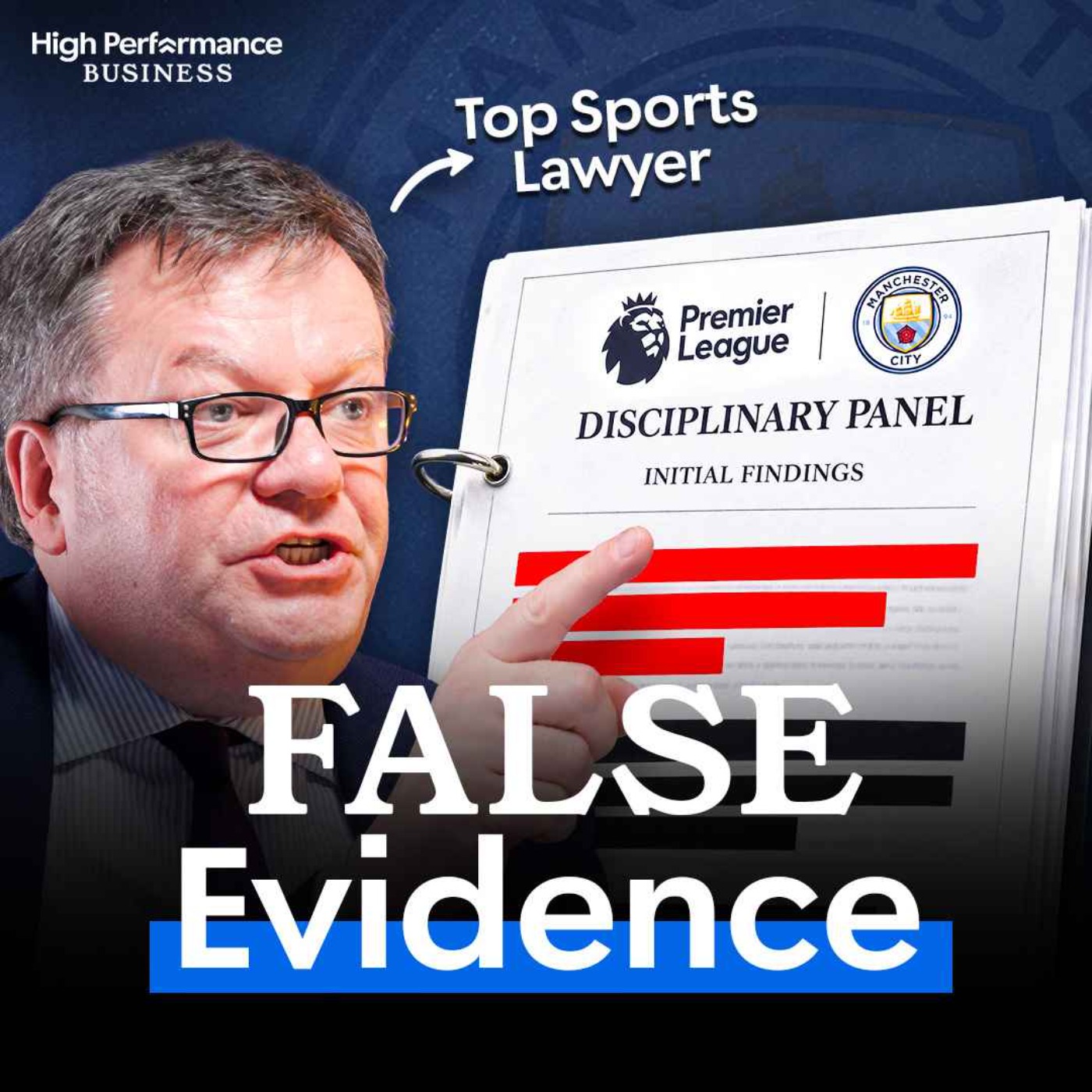
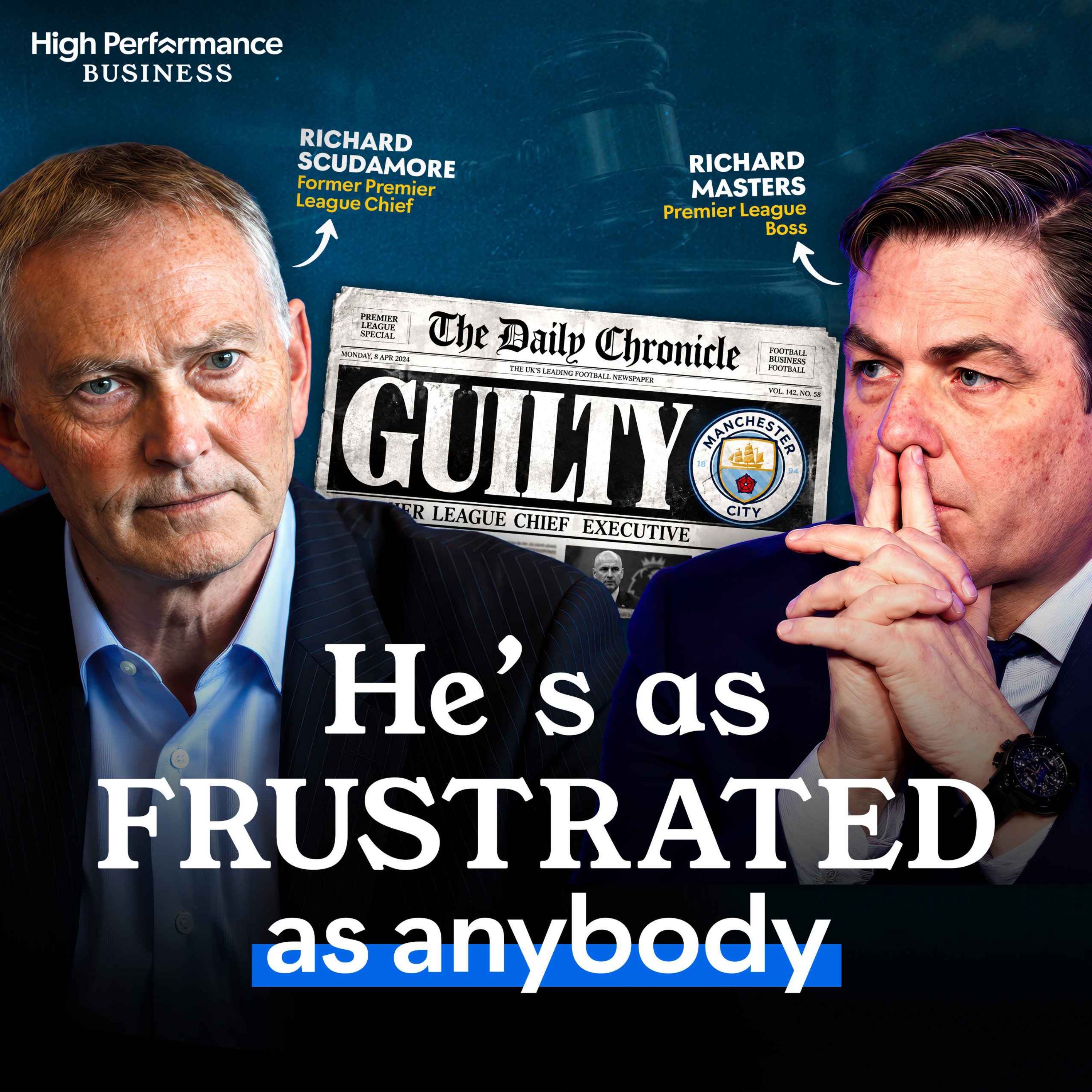
33:24So with the Premier League's panel report into Manchester City, which they're appealing, they said the club's income was hugely overstated by£830 million. Sorry, Colin. I think plus they've claimed that the club also understated costs as well. Yes. But in relation to that Manchester United comparison that you're making, the Swiss Ramble which is a respected football finance blogger estimates that Manchester United's net interest payments are almost exactly the same since the leverage Glazer takeover of Manchester United and that's about 852 million so that I think was the, you got that very very close indeed, you should probably go on to the prices right definitely should.
34:13To the point of the guy who came in there you see it's It's the difficulty. At one level, the cashers come into the club, and at the other level, the cashers come out of the club, and they're virtually matching. And one is getting castigated. The other, people moan about it, but they're not getting castigated in the same way. Now, I'm not defending what City were found guilty of in the process so far, but all I'm saying is it does show you the difficulties that you've got around financing it.
34:46Colin Murray: And Mark, we've got a question from Steve. He wants to know, do you think English football has reached a point where clubs outside of the established Premier League elite are effectively forced to gamble financially to remain competitive? And I guess there we're talking really mainly about sort of championship clubs who are really trying to meet that hallowed ground of the Premier League. Yeah, I mean, the conversation around boardrooms over the last few years, people want to get out of the championship and they don't care which way, which tells you everything. I'm told that a deal is near in terms of, when I say a deal, I mean, one of the chairmen of, my old club, I used to play for Crew as well, he indicated that he'd rather not talk about it as a deal, you talk about a relationship between the EFL and the Premier League, which, you know, I can understand and agree.
35:43But the relationship or the deal coming off that relationship is, I think, close to being agreed. And the reason I say that is because I did sort of say at one stage, I've got a lot of friends in the EFL, that the EFL don't represent me as a club owner. It's just the point I want to make. I think it's changing a little bit. But, you know, if you talk about the reliance of the industry on ownership funding, and you then look at, and you believe the context that I think the owners now live in this world of social media, which is so negative with this narrative. If you look for a definition, my best definition of governance, good governance, is all stakeholders, all stakeholders have confidence in the decision-making process.
36:30Now, if you then look at the EFL, over a period of years, not just the current incumbents, because they've been desperate to keep the championship within the EFL, the whole voting system has become sclerotic. And anything material requires really the majority of championship clubs to vote for it. Now, I can understand that from a commercial perspective, trying to maintain the EFL rather than seeing the championship clubs or part of the championship migrate to a second division of the premiership. But over a period of time, it meant that people in League Two, for example, have very little say in what's going on.
37:11So just coming back to the point, I think that what I'm told is that the championship are reasonably happy with the deal that's going to be coming through. So hopefully there will be a resolution that won't require the intervention of the regulator. It feels like the independent regulator is being used exactly how my stepdad used to be used, which was we deal with it. And if we can't deal with it, I'm going to tell your stepdad. And you were like, please don't tell my stepdad. So in a way, they're indirectly absolutely pushing this through, whether they have to do it by hook or by crook, whether by carrot or stick they're so important to focus that conversation Mark as you have helped focus ours today so thank you so so much for your time.
38:00Pleasure thank you Well interesting Natalie Mark used the word hope that was quite positive at the end he thinks the independent regulator won't even need to wield the axe the pressure that they're putting on will see an important change but I think I go away thinking that that hope will always come with anger because if you're Wimbledon or Scarborough or Halifax or I don't know Chester City, Darlington, Hereford. It's sad I can do this by the way like Bury, Ruston and Diamonds, Macclesfield and we go on they'll think where were you? Why is it taking so long? That anger and that heartbreak will be there but I like to take a bit of Mark's hope away today.
38:40Colin Murray: Well we'd love to know what you think. Are you angry? You know do you think the regulator can save English football or is the damage already done? Let us know in the comments and don't forget to like and subscribe. And you can send us DMs on highperformance.business on Instagram. Yes, indeed, Natalie. Do that. Be part of the podcast and there'll be another one along next week. Bye.
English football is a £9bn industry. So why are so many clubs struggling to make money?
Former Footballer & Executive Mark Palios joins Colin Murray and Natalie Pirks to examine a financial model that rewards ambition but often punishes sustainability.
From spiralling wages and owners willing to gamble millions to the clubs that have already disappeared, they explore what happens when the pursuit of success puts the future of a club, and its community, at risk.
With a new football regulator promising change, the question is whether it can make the game financially sustainable without driving away investment. And if money is going to flow down the pyramid, can anything change unless wages are brought under control?
IFS - award-winning Asset & Service Management software 👉 Reimagine your operations at: https://highpfrmc.com/IFS_HPB_AU
Hosted on Acast. See acast.com/privacy for more information.