 Ask ChatGPT


Whether Premier League clubs value “tourists” (one-off visitors who pay full price and spend heavily on matchday/hospitality) more than “loyal” fans (season ticket holders who care most but face higher restrictions and costs). The episode argues tourists can be more profitable and easier to serve, while clubs risk damaging atmosphere and loyalty if they over-commercialize.
The transcript is a panel-style discussion led by Colin and Natalie (no further guest bios provided). They reference industry sources (Premier League, UEFA, Football Supporters Association) and personal experiences attending matches “for work.”
Tourist spending drives global TV/brand value; hospitality is the “stress-free” route to tickets; season ticket holders face minimum attendance rules and tighter restrictions; clubs must balance commercialization with authentic matchday culture.
Man City selling ~50% of tickets match-by-match and offering Tunnel Club hospitality (e.g., “two tickets for two grand”); Arsenal extracting high revenue despite 74% season tickets; Fulham’s Riverside Stand generating new revenue; Manchester United’s Stretford End filming complaints; UEFA estimate of £74 per spectator per match for six clubs; UEFA/FSAs ticket-price freeze debate.
Written by AI. May contain mistakes.
Explore the shifting value dynamics between loyal fans and tourists.
“Yeah, the loyal football fan who for decades, season ticket holders, they're the lifeblood of a football club.”
Understand the financial benefits of attracting tourist fans to clubs.
“Right, Colin, we're going to start with a really simple premise.”
Learn about the difficulties season ticket holders face compared to tourists.
“But how many people are actually tourists at Premier League football grounds?”
Discover how clubs are capitalizing on hospitality for revenue.
“they had the second highest amount of loyal fans.”
Discuss the importance of preserving matchday atmosphere for fans.
“So it's a much more clear route if you want to go and have the classic Roy Keane prawn sandwich and a grin.”
Examine the balance clubs must strike between profits and loyal fans.
“A feat of complete architectural brilliance, of course, that goes out onto the River Thames.”
Reflect on potential improvements for season ticket holder experiences.
“How do you get the balance right between that commercialization and bringing in the tourist buck and keeping the product that they travel from all over the world to see?”
Explore the frustrations of season ticket holders compared to tourists.
“There's a key ring, there's a little welcome gift, and here's all of your restrictions.”
Discuss the balance between ticket prices and loyalty in football clubs.
“So in February this year, UEFA said that the six biggest Premier League clubs were generating an average of£74 per spectator per match.”
Examine the impact of tourism on the atmosphere and experience in football.
“Let me give you a great analogy that someone much more clever than me and wiser than me once said on the radio.”

Get the gist, explore an idea or ask about something said.
 Claude
On High Performance Business, what are the key points of this episode?
Searching your listeningAutomatic transcript. May contain errors.
0:00Therapy's biggest impact doesn't show up in some dramatic breakthrough. It shows up in the smallest moments. You bite your tongue instead of escalating. You put your phone down instead of firing off that text. You say what you actually mean instead of what would hurt someone else the most. Nobody applauds those moments, but they quietly change your life. That's what growing feels like. And that's exactly what Grow Therapy is here for. Grow is therapy that works, covered by insurance. Sessions average$21 with insurance, and some pay as little as$0, depending on their plan. There are no subscriptions, no long-term commitments.
0:37You just pay per session. Grow connects you with thousands of high-quality, licensed therapists across the U.S., offering both virtual and in-person sessions, nights and weekends. You can search by what matters, like insurance, specialty, identity, or availability. And you can book a therapy session in minutes and begin in as little as two days, not the national 48-day average. See if you could pay as little as$0 for therapy in seconds at growtherapy.com slash ACAST. That's growtherapy.com slash ACAST. growtherapy.com slash ACAST. Availability and coverage vary by state and insurance plan. Welcome to Playbook, a new special from High Performance Business, a smaller bite-sized episode where we take a big question and try to make it more simple.
1:30Colin Murray: And today we are asking what if the most loyal football fans are no longer the most valuable? Yeah, the loyal football fan who for decades, season ticket holders, they're the lifeblood of a football club. They turn up rain or shine every week. They sit in the same seat for decades and they pass it through the generations. But financially, primarily clubs may now have a more valuable customer, and that's the tourist. Yeah, and they come once. They pay full price for their ticket. They buy all the merchandise, the food and drink in the actual ground, and maybe even pay hundreds, possibly thousands for hospitality.
2:10Colin Murray: And as clubs raise season ticket prices, they introduce minimum attendance rules and they expand their premium seating, it raises a fascinating question. Yeah, and that is, are Premier League clubs starting to value the fan who pays the most over the fan who cares the most? Welcome to The Playbook from High Performance Business in proud partnership with IFS. Right, Colin, we're going to start with a really simple premise. If you were a club owner, why would a tourist be more interesting to you than a loyal fan? And more valuable. It's because when I go to see my local football team that I may have a season ticket for, I know where to drink at the best price.
2:51I'm not going to go to the club shop every time. That's just pure weight of numbers, right? If I'm going to go and see that team 25 times a year, I'm not doing the whole merchandise. The best analogy is taking your kids to Disneyland. It's a global product, the Premier League. And you go to Old Trafford and you go to the Emirates in the same way, actually, as you go to Disney World. You take your kids there and you save for it. And you buy the Mickey Mouse ears and you go on Space Mountain and you do absolutely everything because it's a once in a lifetime opportunity or something that you do every couple of years.
3:24So the fan that comes in once can arguably spend more money than the fan that goes 20 times. Because you're going to buy the shirt, like we said. You're going to do all of those things, but also you don't have the local knowledge. You fall into every single trap. And also, you know, on holiday, when you save for it, you put that money aside. It's not real money anymore. I save for the holiday. That's what I'm going to spend. That's why I didn't get the takeaway on a Friday night for three months to save that money. So if you're looking at it from the point of view of we own a football club, of course, Natalie, we're going to want to try and get that balance.
3:57We're going to want to get that tourist in because that tourist is going to make us more, more money. It is as simple as that. But how many people are actually tourists at Premier League football grounds? Because the amount of people have season tickets varies quite a lot. Well, according to the Premier League, so this is quite a good source, I would say, in 2024, they reckon there were 1.1 million international football fan visits to the UK,
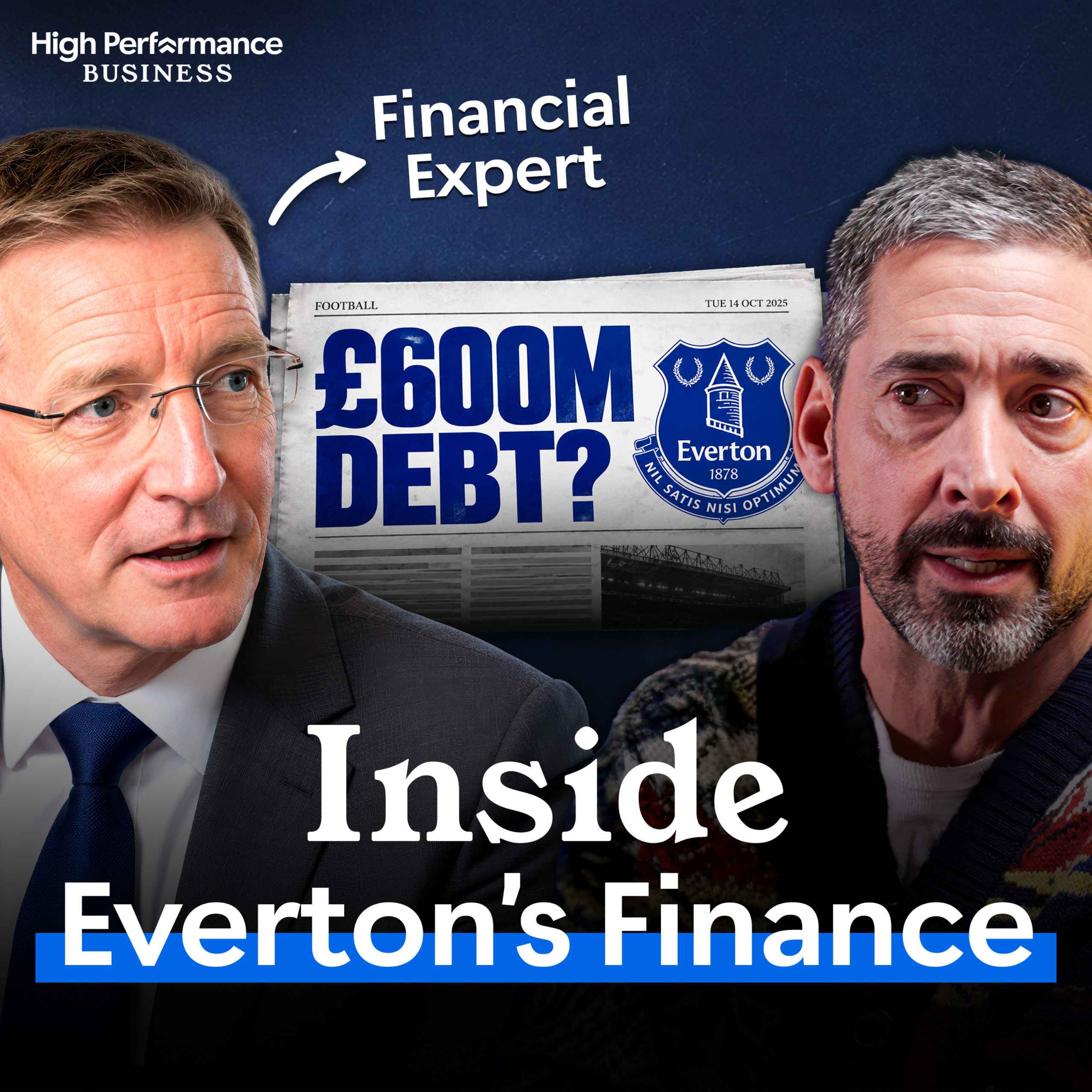
4:24Colin Murray: generating more than a billion in GVA, which is gross value added, is what you said, going to the restaurants around the club, going to the hotels, you know, popping in the shop, all of that kind of stuff. Nearly 20 % of people, that 1.1 million that came into the country for the purposes of watching Premier League football, went to Old Trafford and Anfield. United being the most globally followed. But interestingly, lots of clubs are doing very different things. Man City is the most explicit case of sort of designing a match day experience around tourists because they, I think it's around half their tickets on general sale, specifically go to capture that higher spending one-off visitor.
5:02Colin Murray: And Arsenal by ticket price alone is the one that extracts the most money from anyone willing to pay for it. And that's despite the fact that last season they had the second highest amount of loyal fans. Over 74 % were season tickets. So there you go. The tourist brings you more money on every single level. And the most basic one we did mention is the ticket itself. It's cheaper if you're a season ticket or you're paying full face value at the very least to get it if you're a tourist. So all those reasons makes the tourist more financially attractive. Fairly straightforward, but that's what we're doing.
5:38We're breaking it down. What's next?
5:39Colin Murray: I guess people listening, if you're not a Premier League fan, you might be thinking, well, it's quite hard to get a ticket for a Premier League match, isn't it? How do you as a tourist go and watch an Arsenal match. If you're not a season ticket holder, it's almost impossible to be a local unless you know somebody and you can work on how to get in off their ticket, which is harder and harder. It's really difficult just to go, I want to go and see my team. They're 100 miles down the road. Can't afford to go to every game, but I can afford to go to one. It's a really difficult pass. So why is it easier for a tourist?
6:11Colin Murray: If you are a fan of, let's say, Liverpool, you've got to be a member first, mandatory. You've got to have your own paid membership per person. You've got to have your own unique customer reference number. You've got to sit together. You've got to have them sort of manually linked. And even then, it doesn't guarantee you're going to get a ticket because you've got category A for the big ones, category B, category C, yada, yada. Really, the only stress-free path to the turnstiles as a tourist is hospitality. Right, which prices out a vast majority of people. So it's a much more clear route if you want to go and have the classic Roy Keane prawn sandwich and a grin.
6:48You can be in the Legends Lounge and the ex-player can come in and give you a half-time talk and you can have a padded seat. They might even give you a club-branded blankie just to keep you warm in those cold days because it's a winter sport and it's really, really difficult.
7:02Colin Murray: Some of them have heated seats. Some of that's heated seats. The game's gone. So that path's easier. And maybe relating to what we say, tourists are willing to pay that in the same way you do pay the premium for Disney World and all of those other places we go on holiday or to that nice hotel in the Maldives, it becomes that destination for you. So which clubs are, how can I word this, capitalising the most on hospitality? Actually, if you look at all the Premier League clubs, they're all doing something different and the same. So a lot of them are offering unbelievable packages. Man City do an interesting thing.
7:41Colin Murray: They sell nearly 50 % of their tickets on a match-by-match basis, often targeting those day-trippers, willing to spend more, as we've said. I was having a look at this. For the next match, for two grand, you can get two tickets at Man City in the Tunnel Club Premier. So that's where you can watch behind the glass. Have you seen it on the telly? You can watch the teams. Yeah, of course you have. For work. For work. I was there for work. You can watch the teams line up in the tunnel. You've got your padded seats, your booze, your dinner. Very nice. Have you seen Fulham's Riverside stand? Yes. My word.
8:15A feat of complete architectural brilliance, of course, that goes out onto the River Thames. I've talked to Fulham fans as recently as last week. He said to me, yes, it's generating a revenue we weren't able to generate before. In other words, from the tourist pound. It affects the atmosphere a little bit because they don't necessarily sing along with the other stands or understand that culture. So there you go. That's another way to do it. And those tickets can be exceedingly expensive.
8:39Colin Murray: Shockingly expensive. But that standard cost 100 million to build. And, you know, they're doing a thing with local residents where it's like a private members club as well. So it's almost going down the Spurs route of just making your stadium work harder for its money. And I guess we talked before on a different podcast about the Americanisation of football. That's a clever thing to have done. Yeah. When Manchester City, the team arrive on the coach at the ground, that old traditional vision that we all have, How do they enter the ground? Go on. Through the hospitality. Exactly. Through the Tunnel Club.
9:14It's the first people that get to see the players with just a little velvet rope. I've been there for work.
9:20Colin Murray: United do that as well. All standing there with their drinks and their sandwiches and whatever else they paid for. And they literally get to see the team arrive right there in their faces, five yards away from these heroes. You can see why it is appealing. As long as you've got a grand or more. Or more. Here's the next point. How do you get the balance right between that commercialization and bringing in the tourist buck and keeping the product that they travel from all over the world to see? They're coming for the Stretford End. They're coming for the cop. They're coming for the Ellen Road masses with the white scarse up singing marching on together.
10:00And if you don't get that balance right, well, you've actually just created a tourist trap. You just created that spaghetti and meatball stall in the corner of Leicester Square that's charging three times too much.
10:16Therapy's biggest impact doesn't show up in some dramatic breakthrough. It shows up in the smallest moments. You bite your tongue instead of escalating. You put your phone down instead of firing off that text. You say what you actually mean instead of what would hurt someone else the most. Nobody applauds those moments, but they quietly change your life. That's what growing feels like, and that's exactly what Grow Therapy is here for. Grow is therapy that works, covered by insurance. Sessions average$21 with insurance, and some pay as little as$0, depending on their plan. There are no subscriptions, no long-term commitments.
10:53You just pay per session. Grow connects you with thousands of high-quality, licensed therapists across the U.S., offering both virtual and in-person sessions, nights and weekends. You can search by what matters, like insurance, specialty, identity, or availability. And you can book a therapy session in minutes and begin in as little as two days, not the national 48-day average. See if you could pay as little as$0 for therapy in seconds at growtherapy.com slash ACAST. That's growtherapy.com slash ACAST. growtherapy.com slash ACAST. Availability and coverage vary by state and insurance plan.
11:37Colin Murray: Literally yesterday, I was having a conversation with a Manchester United fan, been going all his life, who was sick of seeing, for want of a better word, tourists in the Stretford End or wherever with their phones up, filming each other rather than watching the match, celebrating a goal with their phones out. So how does a club kind of strike that balance It needs that tourist money, but how does it keep fans happy? Correct. Bish, Bosh and Boogie. You need that tourist money coming in because the Premier League has become this global league. So actually, the tourists are the engine room for that global TV revenue that far outstrips matchday revenue.
12:16Let's just get that clear. We're talking about an ever shrinking percentage, which is why hospitality is becoming such a big thing. So balance is absolutely key. it's that product that ripples out throughout the world the merchandise, what territory are we big in that's why these clubs are sending representatives week in, week out to all ends of the earth to spread the gospel of Liverpool Football Club of Fulham Football Club and anything else so you have the loyal fan who wants to keep the authenticity of what a match day is all about and they want that atmosphere to be brilliant so does the tourist that's the reason why they've got there So it's up to the club to get that balance right.
12:56Colin Murray: That's really the elephant in the room, isn't it? Loyalty. Do clubs value the tourist dollar more than they value that loyal fan? At their own peril, because the songs, the atmospheres, the rivalries, the history, the sense of belonging is what everybody's paying the big buck for. So you have to get that right. Every club is very different. So you look at Liverpool have on the lower end of season ticket holders, but when they expanded last, they postcoded a lot of those new season tickets. But it's how you treat them when they're in. What are they getting? Will you allow me a slight, slight tangent?
13:37My season ticket that I have, is it a North American sports team? It's at the Toronto Blue Jays. I have a liaison officer. I can move my seats around the ground. I can have other experiences. I can move a ticket from Monday to Friday if I want to bring four or five people with me. I have experienced the season ticket experience at a football club, and it is lacking any of that. There's a key ring, there's a little welcome gift, and here's all of your restrictions. And I think that's what pisses off the season ticket holder more right now. And let's look at that in playbook. If you are a season ticket holder right now, what are the restrictions that are on you that aren't on the tourist?
14:21Colin Murray: So here we go, because this is something that winds up season ticket holders at every club that you ever speak to. Yeah, thank you for your money. Now off you go. Here's what the season's going to be like for you. Various clubs, several clubs have a minimum attendance for season ticket holders. If not, like you say, you've got to give your ticket back. Why? They don't want empty seats. I'm not for inflated ticket touting. I'm not for that happening at all, but they do it better in other countries. As a season ticket holder in American sport, I can resell my ticket at face value, at single game face value.
14:58They reward my loyalty. I paid 80 bucks as a season ticket holder, but actually the tourist pays 120 bucks. By law, I can't go over that, but I can resell it for that. Why can't we let season ticket holders, why can't we reward our loader and say, you can be part of that. We can, at times, like when people are spending all their money to follow their football team, sorry, I'm getting angry, but like make them part of your family. You're treating them like an estranged cousin. Like let them be part of that. Don't take their money and then take their money again. They bought that seat. Give them privilege.
15:35Let them walk pit side. Spread them out throughout the season. reward their loyalty, but they don't. More and more, it's about the face and the ticket has to go through the turnstile. You must be here on these days at this time. And you're thinking, really? Really? I bought 19 Premier League tickets, cup tickets and Champions League? You should be treating me the best because without me, you're not getting the tourist. There's so much more we could do for them. And I know this is just going to be information. So let's take it back to that. Here it is in a very calm way. The season ticket holder, the fan who's the most loyal, is way more restricted than the fan that's just come on holiday.
16:15Is that right? People can decide. Let me get a deep breath and just do what you always do. Calm me down with stats.
16:22Colin Murray: So in February this year, UEFA said that the six biggest Premier League clubs were generating an average of£74 per spectator per match. So their combined ticket revenue has gone up substantially year on year. Meanwhile, you've got the Football Supporters Association pushing for a league-wide two-season freeze on home ticket prices. And I guess the argument is essentially that with broadcast and commercial revenues growing so much, clubs shouldn't really then need to increase the cost for match-going loyal fans. So I guess the fight over ticket prices isn't whether the Premier League or Premier League clubs need another five or ten quid per person.
17:05Colin Murray: it's about what a football club thinks its most loyal customers are worth and whether it should maximise them just because it can. Yeah, you've got to get that balance. You look at the Star Wars franchise, which you in no way thought I was going to say, but you buy the rights to it and then you look at how you're going to expand it and create series. There's a moment where those millions of fans who love it go, that's too much, I'm not going to watch that. And it's that expansion that we're seeing across so much of our media and entertainment at the moment. And make no mistake, football is becoming that.
17:40Let me give you a great analogy that someone much more clever than me and wiser than me once said on the radio. And I thought that's absolutely right. We used to go to football and cheer because we supported the team. What's happening now with the balances at the Premier League is the atmospheres have dropped. And this is exactly the business of tourism versus loyal fan. And the first huge cheer you're going to hear is when a goal goes in. Now, that should be for the theatre, not the football ground. You go to the theatre because you know what's going to happen. It's scripted. And you applaud when you see the great acting or you see that great moment on stage.
18:13That's not why you're meant to go to football. You're not meant to go to see that. You're meant to go to see your team. And if you mess that balance up, you will mess your business up.
18:21Colin Murray: So I think what we're doing here is agreeing that the Taurus probably does have a big part to play because people want more money into their club to translate into that new left back. That's why you can spend that money. There's a hypocrisy to everything. Absolutely. But it shouldn't be at the expense of the loyal, going, fan. Every Saturday, every Sunday, it shouldn't be at their expense. And that's where the flashpoints come. Correct. In one line, don't rob Mickey Mouse to pay Daffy Duff. And that is us today on High Performance Business. Come and join us next week. But please send us all your thoughts on DM.
18:55Colin Murray: Maybe not all your thoughts, but some thoughts on DM, Instagram, highperformance.business. And we'll be back next week. Thank you.
Are football clubs becoming too focused on tourists at the expense of loyal fans?
Colin Murray and Natalie Pirks explore the battle between football's biggest commercial opportunity and the supporters who make the matchday experience worth selling, and ask how clubs can grow globally without losing what makes them special.
With international visitors generating more than £1 billion for the UK economy in 2024, the stakes are clear. But how much is a club willing to sacrifice in the pursuit of more revenue?
IFS - award-winning Asset & Service Management software 👉 Reimagine your operations at: https://highpfrmc.com/IFS_HPB_AU
Hosted on Acast. See acast.com/privacy for more information.