
 Ask ChatGPT


 High Performance Business
24 Feb 2026 · 51m · 22 chapters
Host: Jake Humphrey
This podcast revolves around significant moments that shaped major brands, featuring conversations with top entrepreneurs and industry leaders sharing their journeys and insights.
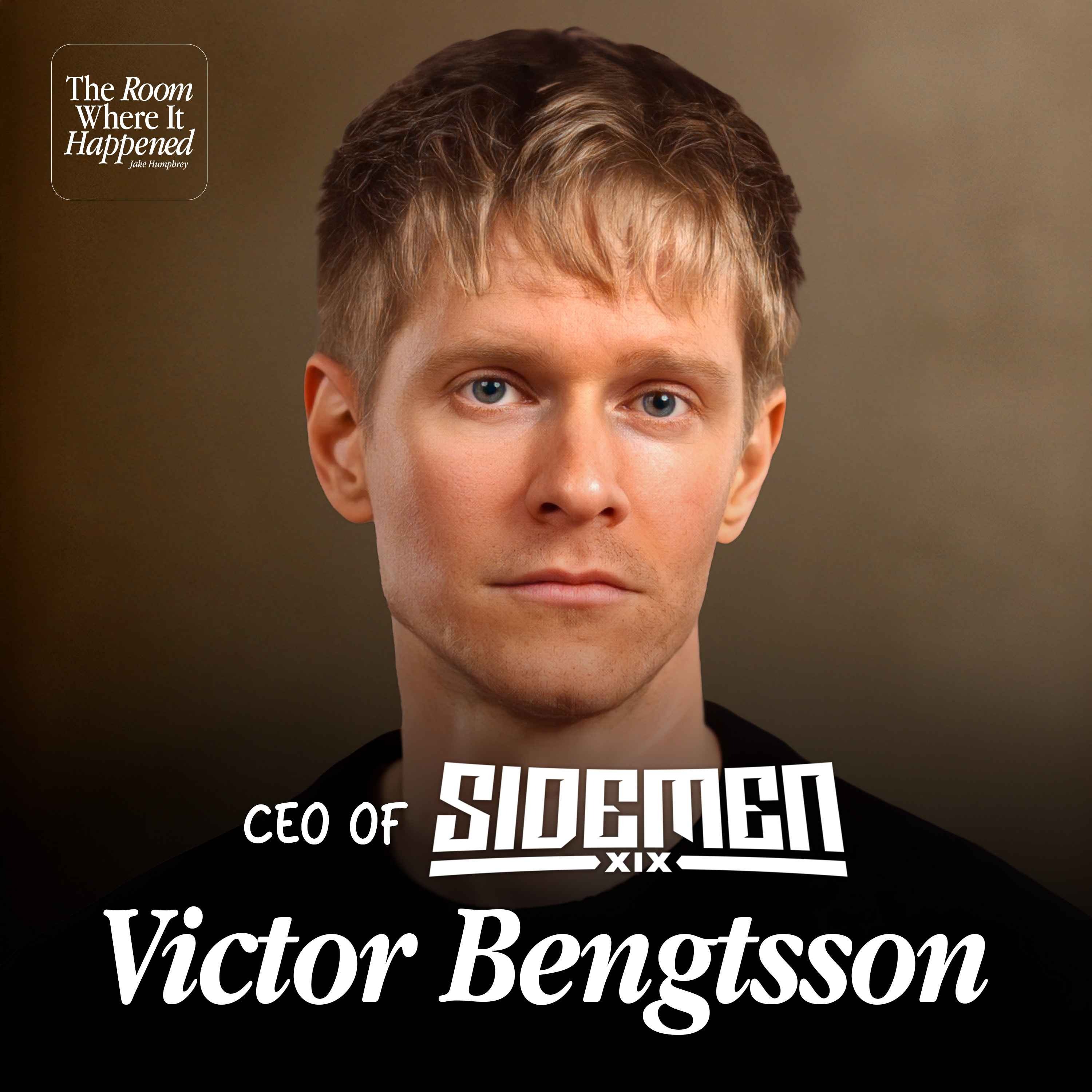
Victor Bengtsson, CEO of Sidemen
Victor recounts his unexpected journey with the Sidemen, detailing how he helped build Side+ in just 75 days, his unconventional methods, and the strategies that have enabled the Sidemen to disrupt traditional media.
Written by AI. May contain mistakes.
Explore the evolving landscape of content creation and its implications.
“In 10 years time, you're going to have the first Pixar movie production between Pixar Disney and the biggest creator in the world at that point.”
Discussion on how creator groups may shape the future of entertainment.
“In 10 years' time, you're going to have the first Pixar movie co-production between Pixar Disney and the biggest creator in the world at that point.”
Understanding the Sidemen's business model and content strategy.
“And if we start making absolute horrendous content, then I'm sure we'll get punished.”
The challenges and experiences of building a streaming platform for Sidemen.
“So I walked into, it was a soul house down in Shoreditch.”
Recounting the emotions and challenges faced during the platform launch.
“And that day, that September evening, is the most terrifying day of my life.”
Exploration of human behaviors in the digital-first content landscape.
“Yeah, so that's the beginning of my journey with them.”
Analyzing how the Sidemen represent diverse experiences in the UK.
“I think that they are, by chance, a great representation of the entire country of the UK.”
Discussing the strategic reasons behind partnering with Netflix.
“So my first question is why you felt that you needed a platform other than YouTube and the social media and the digital platform that you built to tell the story of the Sidemen or to share the content?”
Learn how Sidemen shifted their production strategy to embrace unscripted content.
“There's no team production that can do that.”
Discover how Sidemen's unconventional production drew interest from major streamers.
“So it became almost like an MVP by itself.”
Explore the development of a hybrid production model for more authentic content.
“and we're trying to make Mastermind 67, season 67 or whatever.”
Understand the necessity for traditional media to adapt to the creator economy.
“We were like, why don't we just build our own team?”
Learn about the potential future of broadcasting in collaboration with creators.
“Because I think the challenge for production businesses isn't that they're running a way that isn't modern and forward-thinking and ambitious and creative and quick.”
Discusses the rise of self-funded scripted content and the role of traditional media.
“But I don't necessarily have that distribution.”
Examines the distribution advantages of platforms like Netflix and BBC.
“What I do know is that that distribution does exist on Netflix.”
Explores the balance of creative control and production in content creation.
“The luck of that, I guess, is if I have a good idea, not me personally, but my company and the people that I get to work with.”
Analyzes competition among content creators and the infrastructure needed for success.
“from a creative standpoint for sure Like there are so many people across the YouTube space that are exceptionally good at just creating really, really good formats.”
Encourages young content creators to explore their potential in today's landscape.
“You know, when I was starting out in my career, the only way to be a broadcaster was to get a job with a broadcaster and they would pay you what they pay you.”
Discusses the importance of grit and talent in achieving success in content creation.
“But it requires a very specific skill set to be fantastic at it.”
Learn how the landscape of content creation has shifted and evolved over the years.
“But if you compare them to the stardom of Speed, of Drewski, of Kai, of A &P, of Sidemen, of Mr.”
Discover the techniques for making long-form videos engaging and shareable.
Explore the potential synergy between traditional broadcasting and the creator economy.
“So I loved it when he spoke about the fact that he appeals to a certain demographic that have their audience, but actually Netflix or Amazon or Channel 4 or the BBC can give them access to a whole different audience.”

Get the gist, explore an idea or ask about something said.
 Claude
On High Performance Business, what are the key points of this episode?
Searching your listeningAutomatic transcript. May contain errors.
0:00Victor Bengtsson: In 10 years time, you're going to have the first Pixar movie production between Pixar Disney and the biggest creator in the world at that point. It would not surprise me at all if Mr. Beast creates the toy story of this generation. And if you're not fighting for attention on short form, you will struggle to be equally good at telling great stories in 2026 on long form. Like, I'm sorry, the times of you owning IP is going to come to an end. We're not interested in just appearing in your shows. I'm saving your show. So this is ownership and control. I don't need your money. I want your money.
0:34What do you think this creator space looks like in five or ten years?
0:41Victor Bengtsson: In five years, you will have more creator groups or individuals that sit on the same sort of average viewership that we have. And it might be that the George Clarkies, the Chris M.D.s, the Willanies, the big names in this space, form together to create real companies. And they will make productions alongside either Co-Pros or as their individual productions. They might do the summer productions, let's hope so. But there will be a much, much wider approach to formats rather than just making what we call YouTube videos, if that makes sense, where you just put yourself in a sofa in a wide-cove studio and you just create something.
1:19Victor Bengtsson: There will be way more formatted, bigger productions that are supported by way more money coming into this space. In 10 years' time, you're going to have the first Pixar movie co-production between Pixar Disney and the biggest creator in the world at that point. It would not surprise me at all if Mr. Beast creates the toy story of this generation at all. You will have people making feature films. Like if you look at if Speed and Drewski right now made Rush Hour, the revival, it would bang. It would be the greatest thing that's ever come. Is the infrastructure there yet? Are the big suits across the world really take those gambles?
1:57Victor Bengtsson: Maybe not yet. Or is there money enough to pay these people? We don't look at speed maybe in Brewski or at KSI the same way you look at a brand pit yet. We're not there. But maybe we should be. And the people who are the early movers there will be the people who get to reap the rewards when they take those gambles. if you had done it five years ago it's too early maybe now it's a little bit too early i don't know insight is a good example of that we clearly can do productions give it five then we're at bigger production formats give it 10 i just don't see why you wouldn't back someone who creates beautiful things with an audience that trusts them rather than i mean you can look at the trust that we have in hollywood execs like it's not like they're on the rise right now but you will also see on the opposite side of that spectrum great facilitators are massive ip so the way we have seen star wars star wars live on disney now right or we look at marvel or we look at any of the major movies that are being made they're safe bets because you trust these things and they have nostalgic value and the audience that goes there trusts almost captain america more than they trust the person who makes the film yeah we hopefully will not be superheroes that would be almost ludicrous, we'd say, but we will have the same sort of trust capital so that if it is made by these people, you will maybe go and see it.
3:14Victor Bengtsson: And if we start making absolute horrendous content, then I'm sure we'll get punished. But right now, I think that there is a moment for us to really go make something and that has not reached its peak in any capacity. That peaks in five to 10 years. When did your journey with the Sidemen begin? So my journey with the Sidemen, I mean, if you look at people my age, you're all going to go like, well, my journey began when I sat back come in Sweden I saw on YouTube and they were popping off but my journey with them on a professional level started in 2021 I had been approached at that point by three guys who were coming together because the side men didn't have management they had like different agents that would like take care of them and propose some different commercial deals stuff like that but they didn't have like any managerial structure around them and at the time I was at a video game company called Fnatic which was like it was in the gaming and esports space when those were like the buzzwords in the 2017-2018 the assignment said we want to build a subscription service we want to build something where we can do slower paced edits we don't have to fully function within the YouTube meta but we also understand that that might be a problem if we upload it to YouTube because we're going to get punished for it but if we already have a hardcore group of people who really love us for who we are, what content can we make for them?
4:35Victor Bengtsson: So I walked into, it was a soul house down in Shoreditch. And they said, we have spoken to the sidemen and they would like to build a platform that kind of looks like Netflix. And then they said, just flipped this piece of paper over and said, what would it look like? And I just started drawing for like three, four minutes. And I had a couple of ideas that we had done on the network. So I was like, something like that and then looked down and said he's good and i'm like okay what do we do now and that was like when i've the sidemen at the time like they are the most humble people you'll meet they're the least famous famous people that i know um and they basically said jump on a zoom and then just we'll get all seven on there you'll just walk in they don't really read cvs it was maybe 20 minutes and they said leave your job uh come do this and i said do what they said build a netflix thing that we're that we want to do can we do it in 75 days i'm like 75 days to build it an online like to build netflix and then i like in my mind i was trying to say like you're crazy but that was also my first interaction with the sidemen where they were like why not what does it look like if we give you that time timeline we didn't do it in that day i think it took 76 or 78 or 79 or whatever.
5:51Victor Bengtsson: But that was in the summer of 21. And we launched that in September. Wow. You're not daunted. I was terribly terrified. There was also something about the people who are really moving the needle in an industry and in content creation and in gaming and content in general. They were the guiding light and no one really knew how they were doing it. Everyone kind of thought they had some strategy, some magic to it, like they were thinking through. but they were just friends having fun challenging every single rule that existed and that I think made me think all of the rules that I know all of the red tape that I'm aware of all of the things that I've been told maybe I just challenged the same thing and that led me down this rabbit hole of trying to build my team for for that first project which led to being almost like a talent hunt for the best like short form editors that were on like discord or doing fortnight montages it was like 17 19 20 year olds who had like just come out of school but they'd been like passionately working on their ipad since they were 11 coming up with how to do fonts like it was a whole new world i didn't reach out to single agency and then we just built this team of misfits and odd people that just happened to be incredibly skilled at one part of the creative process.
7:17Victor Bengtsson: And it was beautiful to see. And that day, that September evening, is the most terrifying day of my life. If you haven't launched a digital product, a digital product responds in real time. And that evening, when we pressed live, you have this back end that you're looking at, and it just says zero. And as you see the zero, you really like. I better say a different number really fast, because otherwise I might as well just pack my bags, fly back to Sweden and get out of here. And then you see that first flick, and the first number pops up. That rush compares to nothing that exists on planet Earth.
8:01Victor Bengtsson: Maybe having two, I don't have any, so maybe that changes it. But when you stand and you've been putting in 20 hours a day, 75 days in a row. And it's a gamble. And you don't know what's going to happen. And you see the response. And you have the Sidemen in a group chat. And they go, update please. And then you go, we're 15 minutes in, this is how many people have signed up to the project. And they just went bananas in there. And I just went from being some random talent manager to being the guy that had joined the Sidemen and built the first really successful streaming platform independently.
8:37Victor Bengtsson: Yeah, so that's the beginning of my journey with them. And as we were walking in here, you described what you do as the least digital, digital-first business out there. Yeah. And that was surprising for me because before we met today, first time we've met, I was thinking you will be the most digital-first person I've ever spoken to because that is what the Sidemen represent to me. So just explain what you meant by we're the least digital-first focused people. Yeah, yeah, I know. So the behaviors of humans hasn't changed because we have gone digital. And I think that a lot of people now believe that the behaviors of humans have changed.
9:15Victor Bengtsson: So like, yes, we have lower attention spans because we're sitting on TikTok. That's true. We consume shorter form content. That's still true. So 15 minutes instead of an hour, which was like the HBO era when they were doing Sopranos and The Wire or whatever. The difference in how that feels hasn't changed. so the community of gathering and making food and sitting down at seven o 'clock on on a sunday that's primetime tv from the 70s and the 80s um that is what our bread and butter is um among us is our second most successful show it releases weekly twice around the same time it has a a place on our social feed that almost tells you here's when it's going to happen um we're not trying to push the content out to live forever on the internet just to be on the internet forever it is going live with the intention of making it a ritual something that you can feel comforted by to feel at home with uh we we talk about this a lot internally because when you make when your content is making hide and seeks with 30 year olds and 60 of them in a military base you're not thinking you're francis ford coppola like that's not who i think i am when we're making these pieces right but i do think about um maybe there's someone who has had an absolute horrible day at work and they come home to their girlfriend and they order some delivery and then they sit down and they watch an hour and a half of what we do and then the monday morning feels slightly better and being able to do that for millions every week that is not digital first that's almost human first because the people who made it of these seven boys who came together at some point in their life and their friendship leads into this beautiful sort of let's see what happens if we make videos and that's every week so when i say least digital we're doing things that have been done before but we're more questioning how it was done rather than why it was done maybe and you're doing it in a world where and this is the beauty of youtube anyone can upload anything at any time to any platform 100 right but millions come to consume your content what is it about those guys that you think is special?
11:20Victor Bengtsson: There's something magical about it. I think that they are, by chance, a great representation of the entire country of the UK. And it's like if you live in Newcastle and you come from, say, a lower middle class neighborhood and you had Indian parents, then Vigstar123 is basically a representation of him. If you were someone who grew up in a Nigerian household in London, then Toby is the sort of person who has had that same experience. If you were someone who is just almost a bit of an outsider living on a Guernsey, or you don't belong to the center of the major cities or you're almost regional by default, then Harry's that person.
12:03Victor Bengtsson: I think that they represented a moment in time that encapsulated the country in a sense. But then I think that what they managed to do, which you will never see with anyone really when you take music, film, is a collective that put friendship first through whatever changes may have come. And I'm talking about the changes of production, money, success. Somehow the seven of them have decided to stick it through for 13, 14, and it's going to keep on going. Years where whenever there has been a disagreement or a trial and tribulation moment for the company or for the boys, they fall back on friendship.
12:42Victor Bengtsson: and I don't think anywhere, honestly, on YouTube, there's anything that comes close to the sort of friendship that the Sidemen have represented. And that is the magic. But for people that aren't on YouTube, they can now enjoy the Sidemen because you've done a deal with Netflix, right? That's true. I'd love to talk about this deal because for someone like me who comes from a TV background and has founded a TV production company and then founded a podcast production business like this, I feel I kind of see both sides of the tail here. You've got this amazing brand and you've kind of got ownership of what you do.
13:16And then you've gone to Netflix. So my first question is why you felt that you needed a platform other than YouTube and the social media and the digital platform that you built to tell the story of the Sidemen or to share the content?
13:29Victor Bengtsson: I think what we've had as a guiding light is not only to tell the story of the Sidemen, but to tell the story of almost the creator space. And we've carried that flag with us, I think. So you will see in our productions, our biggest productions, as I mentioned here a few minutes ago, it's 60 creators go to a military base and they play hide and seek. That might sound almost stupid in its execution because it's like a bunch of adults playing hide and seek, but it's 144 cameras. It is pre-production of insane measures, yet it's turned around in two days and then edited in four. There's no team production that can do that.
14:05It's impossible, but we can.
14:08Victor Bengtsson: because there are things that happen in there that are not perfect. There are sometimes sound glitches. There are sometimes transitions that didn't work out perfectly. But I get to produce what I want, how I want, and when I want in the cybernism minds, right? So when we had done that for a period of time, I think that we started thinking, at some point, they're going to start wondering, what's going on over there? And we then decided, I mean, I don't know how to say this without sounding like an asshole. Just say it. Yeah, no, but it's like, we wanted to be offensive on purpose. Right, why? Because if we can do what we do, we might not do it perfectly, but there's no way you guys are doing it the way it's supposed to be.
14:52Victor Bengtsson: You say you guys as in what, traditional media? Traditional media, TV. We were meeting people who were like being paid insane salaries, and they were not even the people making the TV anymore. one of the big things that really struck us was that doing fancy short film and like being in the scripted world meant that you got almost more respected than if you were in unscripted so if you were doing reality TV it was almost like you were like slightly off to the side and yes you get viewership but we all know what it actually is right it's not that great and we were like everything we do is unscripted that is what we are There's some scripted stuff, like things that may happen in videos, but it's just people, entertaining people.
15:36Victor Bengtsson: It's not acting at all. So we were like, we sat down at the end of 2023 into 2024, and the boys were on their podcast, and off cameras, one of them went like, what is Big Brother but for our audience? And at that moment, we all went like, wait, so why can't we do a reality show? So we decided to start ideating, And that's when this campaign of Offensive and Purpose started, which I took my team, we put us all together, our creatives, our post-production team, our editing team, and everyone just came together. And the idea was that how fast can we do this? Yes, we'll break every single conventional rule in the game, but how fast can we do this?
16:17Victor Bengtsson: So we pre-produced for 30 days, then we shot for seven days straight, and then we edited for nine, and then we released it as a live product so that the audience could live react to every mistake we potentially made. but also they could almost share the love if they enjoyed what we were trying to do here. So it became almost like an MVP by itself. And the first time that went live, it was on the main channel, which was Sidemen Sunday. And I was in a restaurant at the time because my then-girlfriend's father had a birthday and I felt like I can't reject him here. I feel like this is going to have to be a dinner.
16:49Victor Bengtsson: It's an important birthday to go to. I feel like it. But I'm sitting just holding my phone, just watching this, and then it goes live. And I think the first comment was like, where are the Sidemen? because Inside didn't have the Sidemen as the main cast, right? It's other creators. And we were kind of like, this isn't great. And then five minutes in, they go worse. Now they really didn't like what was happening. 25, 30 minutes into the episode, there is a little group of people who seems going like, kind of funny. Like, I'm still going to get my Sidemen Sunday next week. So one week off, they do something different.
17:22Victor Bengtsson: Quite fun. And then it grew over that hour. And it was a long episode, that opening episode. And at the end of that, everyone was like, I'm back here tomorrow. So we had 350 ,000 people tune in live to watch that first episode. When we went live the next evening, it was 425 ,000. When we went live towards the end of the season, it was more than 550 ,000 people. Watching live, that episode and the following episodes over the course of 15 days got 55 million views. And then suddenly our little reality show idea that had been made at four times the speed TV does it, had taken over the internet. And we were like, that's crazy.
18:04Victor Bengtsson: To now answer your question, which was just to give you the context of what the show was. Then, almost the day after we finished, we got cold emails from essentially every single streamer and the country representatives from the streamers. Because they went, so how did you do it? And who did it? And we're like, we did it. Yeah, but what showrunners made? No, no, no, we did it. And then we hired great freelancers. We hired great people from the industry. And we said, it's not going to be like it is on other sets. It's going to be different. But you're part of a cultural moment here. And when we met with Nat Crewey at that time, he was like a legend in the unscripted game.
18:43Victor Bengtsson: And he's out in LA now, he lives there. And he took the call immediately. It had never happened to us in the UK that someone from the BBC, Channel 4, ITV, had ever wanted to have a conversation. And we were now sitting with the vice president. And Netflix basically went, this was fantastic. We want you to make this stuff with us. And the only thing we had ever heard was, can we stop these guys? How do we stop these guys? Not directly to our face, but from everywhere around. It was like, God, here they go again. They're making a precision test. They're throwing tiny objects into holes. and we're trying to make Mastermind 67, season 67 or whatever.
19:26Victor Bengtsson: So I think it was a real eye-opening moment for us to feel like they wanted to collaborate. So what had the BBC, ITV, Channel 4, I guess Netflix, Amazon, Apple, the whole gamut of OTT providers and traditional broadcasters, what had they seen on Inside that they hadn't seen from the previous content that Sidemen had produced? I think that it was diversified away from the Sidemen. That was a major thing. So we were not making the Sidemen Sunday. We were making TV. That was a problematic or positive. For Netflix, it felt like a positive. But it was like, wait, so now you're just using the money that you've earned from being the friendship group.
20:07Victor Bengtsson: And you're now making a show that, I mean, in the first season, we were 5 % in the show. And the next season, we were 3 % in the show. So the argument, well, it's just because it's them. Didn't work anymore. So I think that was a big changing, that was a big breaking point. And when Netflix spoke to us, they were like, we can't do it the way you've done it because there are still mistakes in here. But I do agree with you. What budgets would you put together if you were to make it more like us, but still more like you? And that started this idea of a hybrid production company where we could service external shows rather than just the stuff that we do internally.
20:43Victor Bengtsson: And that is what we've been facilitating and what we've been perfecting over the last year and a half is figuring out what the future of TV production looks like. And we launched Sidemen Productions here a month ago, which is led by Adam Cohen, who's come from Studio Noah. We also brought in Jack Richardson, who has been doing a bunch of seasons on Love Island. So we're taking people from the traditional space, but it's people who looked at it and went, this is closer to what we need to do. Because this feels like I'm being heard. This feels like I'm being allowed to talk about what I talk about.
21:16Victor Bengtsson: And I think that we built this company on four very key strategy points. I set out what's the difference between me and any other production company in the country. The first one is authenticity, like for sure. I can put from the minds of the sidemen, 12, 13, 14 years of trust to an audience that goes, I love the stuff that they do. Banerjee can't say 50 years of 20 years or 10 years of trust. It's like we don't know who Banerjee is, right? Well, we knew who they are, but there is no faces behind them. So that was the first thing. The second one was pace. I can just do this much faster. My team works differently.
21:53Victor Bengtsson: This is not the way it is on TV, where you might be put onto a set and you have to freelance and you're terrified if you're going to get another freelance gig. We started learning all these things about how often teams are actually overlapping. The same people work on almost all of the different shows across the country, praying that they're going to get another six-week contract somewhere. We were like, why don't we just build our own team? And we have the same group of people that just come back and work on these but we can do it much faster so we can do more productions in a year uh so so pace became a thing um we talked about budget how much should it cost to make a show um and how do you still walk away with a good profit if you don't have to take away a bunch of money for high execs so we we started questioning what the budget should be and through that we built i think a hybrid model now that we have done for the the first I mean, we're releasing UK Season 3 here in the spring here soon.
22:43Victor Bengtsson: And I think that is basically us saying we were a YouTube collective making YouTube videos. We're actually more like an ecosystem. And we want a piece of the cake everywhere. Well, I think it's a bold statement. Oh. And I think it's exciting. But I also think it's exciting for people like me that come from the world of traditional media. Because we still look and think about broadcasting in the way that we did 15 or 20 years ago. Yeah. what should we be thinking about when it comes to broadcasting what should the traditional incumbent production companies be thinking about to remain relevant yeah i think i think you will remain relevant it's like the one thing we said as well i did it in a big post i wrote not too long ago the one thing we learned was that there's no lack of talent like there are such exceptional creatives working in tv and especially in unscripted because when you work in scripted, it's like you need to do one big film or one big series and you will get time to make it.
23:39Victor Bengtsson: Here, if you get one successful unscripted show, you're like, go and cast for the next 15 seasons of this in 15 different countries. And then we'll get all of these people combined. It's like a grind that is like immediate as soon as you have a success, right? But I think the first thing is you will remain relevant for sure. There will be people who just have to move maybe be more to a digital first approach. And that is the pace, the budgets, the authenticity, like working with people who has that authenticity. I think it comes down to joining arms and becoming co-pros and being part of the creator economy rather than fighting the creator economy.
24:18Victor Bengtsson: And also not the idea that go and try to take the talent and put them as talent in the shows, invite them to be part of the creative process, build things with them, and give up the ownership. Like, I'm sorry, the times of you owning IP is going to come to an end. We're not interested in just appearing in your shows. I'm saving your show. You might have a great format. I need to own that. I own my shows. We're over here getting... If my worst video last week got 1.2 million views, that's 1.2 million viewers. That's a failure when we do our fourth, most important show. If you released a new IP in the UK right now on a Sunday and it got 1.2 million unique viewers, you would be celebrating and laughing throughout the country.
25:06Victor Bengtsson: And there are people out here who can do that for you. But we are disconnected right now. And I think slowly but surely, and I hope that Simon Productions become this vehicle in the middle that brings us all together. Because I have no interest in, I don't want a war. That's not what it is. I don't want conflict. I want to be like, that isn't the room. We just want to sit at a table. We want to talk. Like, inside is one step, but we want to make way more than inside. And the sidemen are going to continue doing what the sidemen do. They're the friendship group that keeps releasing on our channels.
25:32Victor Bengtsson: And over this year, you will be seeing as well, we're going to be launching a bunch of new things that we're just going to test. Because if it doesn't work, cool. Next week, we do what does work. And we move back, we reverse, and we go back to the drawing board. I don't have the experience of working in a traditional production company, but I can imagine that if you go in and you pitch and you pitch and you pitch, any pitch and I don't know what the hit rate is like how often out of 50 pitches do you get a commission I don't know I just know that I've done one and it worked out and now we're going to go back into that room with the same sort of blueprint and say we've thought about it again here are the people that are part of the show we would love to talk to you guys and say like how do we do this hybrid how do we do it the way you would like to have done it if you weren't held back by all the red tape or you weren't held back by what your execs are saying that I think is the the most exciting point for us.
26:23Because I think the challenge for production businesses isn't that they're running a way that isn't modern and forward-thinking and ambitious and creative and quick. It's as soon as you start speaking to the traditional broadcasters that you have to go and meet one person who decides who gets that gig. And you could think you're so far down the road with them, they then move jobs or go to another company and suddenly you go back to zero. Isn't there a risk, though, that you end up playing that same game You become a production company, like another production company, and you have to swim in that world of traditional broadcasters and play to their rules.
27:00How do you change that relationship?
27:03Victor Bengtsson: I think that it's not like we have a hostile relationship, right? We have a super healthy relationship. But if you don't want my show, I'll release it on YouTube. I don't need your money. I want your money. I want to collaborate. I don't need it. I have seven of the most successful people in the creator space ever. And their friends are the 200 most successful people in the creator space worldwide. I don't have any interest in going like taking all of our stuff off YouTube and uploading it to a new streaming platform and then saying we're the new TV. That's not the intention. I think it's more saying there is maybe something in the industry when it comes to traditional TV that needs to be slightly tweaked.
27:43Victor Bengtsson: And there are things in our industry that needs to be slightly tweaked. And here's where we need to come together. so it's not that I think I'm going to sit there and have to wait for that there is one person in a suit somewhere who says yes no they can but their no doesn't mean oh god we have to cut five members of our staff this is going to be really tough because we own our own distribution so if we believe in the idea let's go and speak to the boys and say hi let's self-fund this let's push it out and at the same time I think there's going to be way more actors that move towards the creator space to look at how do they just self-fund this brands brand partners for for major show formats or even scripted moving forward not today not tomorrow but there will be a move for what it looks like to do scripted content as well with funding and the intelligence and the and the production of of the creator space so i think it's not that i i don't need the commission i want the commission but why do you want it because i think like when bbc and itv and channel 4 ring you and say we loved what you just created how can we be part of this you could have just gone well we don't need you anymore oh yeah no i think the bbc i mean you they just did a massive deal here right they're kind of coming to youtube now that's going to be a big thing for them which is going to be really exciting to see and see what that looks like uh when i'm talking about the opportunity and we call i mean they're maybe not traditional maybe it's like i'm talking about the amazon primes the disney pluses the the netflixes the people who have still have distribution of you know hundreds of millions of households around the world they still have this power where they can take me and move me in front of my mother and father's friends maybe i don't have that audience now necessarily on youtube youtube is still very young in terms of its audience there are niche audiences that have an older audience but primarily it's the the gen c and the millennials millennials less so but the millennials that grew up watching the sidemen and then more into the gen c that would watch them as well but i want to engage with i would love for an older audience to love something we create.
29:37Victor Bengtsson: But I don't necessarily have that distribution. What I do know is that that distribution does exist on Netflix. I know the numbers. I've seen the demographics. I don't know where BBC sit in that equation. Like, I think I will have enough of my collaboration from a YouTube-Netflix sort of relationship. But at the same time, I think there's a big thing, which is like, BBC is here not only to be successful, they're here to do good. Because of the relationship it has to. I mean, it's governmental ties, it's the connection to the country, the population. And that I think is exciting, which is that my interest there would not be about let's make the most viral show ever.
30:12Victor Bengtsson: If the intention was instead to make something that was purely because it was right, I would love to see us do that as well. Because I think what we do is we entertain the young people of this country. And I think that the BBC entertained the old people of this country. So there is maybe a different collaboration there rather than let's try and make just what I do but on your distribution. Yeah, yeah, yeah. Well, because you would love to also entertain the old people. Of course. The BBC are desperate to entertain the young people. That's like their number one aim. 100%. And I mean, I think that the next three to five years will be super defining.
30:47Victor Bengtsson: We've seen even like on, you will have seen Neil Mahan, who's the CEO of YouTube, obviously. He talked about YouTube being the new Hollywood. We have seen content creators now getting major deals on the platform alex earl just got another deal with one of the streaming platforms we obviously are on netflix beast is on amazon prime um we just saw this year right i'm not going to say that we did it and it's not our it's not that we created the opportunities for people like angry ginch or george clarky but angry ginch won i'm a celeb yeah like three years ago he was just a kid streaming at twitch then simon minimenter is one of the members of our our group right he calls someone on stream and says, you should play inside my charity match.
31:29Victor Bengtsson: We want to springboard people not to be successful in our shows, to be successful, to entertain people. We don't have an interest of like, oh, I can't wait to see the day that the BBC shuts down the lights and the day I will go home. That stuff doesn't interest us at all. What interests us is creating things that the people want to see. And I think that we're doing that, hopefully. I mean, sometimes we make shows that they don't like, but that's just how it is. The luck of that, I guess, is if I have a good idea, not me personally, but my company and the people that I get to work with. If we have a good idea, we release it on our second channel in a very budgeted version.
32:01Victor Bengtsson: We see if the feedback is, did you like it? They go, yeah, okay, let's put more budget to it and release another episode. Now it's better than it was the first time. That luck doesn't exist the same way on TV. Like if you commit to a show and it's going to go live, you're kind of putting all your eggs in one basket. And if it's successful, great. If it's not, you might have to move away from it, right? One thing we're learning as well, which is exciting, it's just about that format, is some shows haven't been successful for a season. if we're not successful first 10 minutes it's kind of like bind yeah but on tv you could have had big brother or i'm a celeb i don't know when i'm a celeb hit its first real peak or love item i know when love item hit its first repeat could be season four could be season five it's quite a lot of sync cost yeah into that before you see the huge success so this is very interesting because you're de-risking the whole production model yeah because you can do it on a much tighter budget and put it on one of your channels which is not going to be a problem because the money is a lot less and the risk is a lot less.
32:54But you're also the production company as well as the commissioner because if it works, you can put it on your bigger channels and you can pump more money in. But then also if somebody wants to take that and put it in front of a whole new audience on Apple, you can allow them to do that as well. So this is ownership and control.
33:14Victor Bengtsson: Fully. And the only argument we have when we go in there, we're not really interested. Well, we want to be the IP stakeholder for sure. We want to build and we want to be the people that came up with it. I think that's important to the boys to feel that authenticity and be like, this is mine. I made this, we made it as a group. But the second one is just have creative control. Like Netflix is a mega corporation with insane amounts of quality control, safety nets, fantastically talented people. But they've really allowed us to go and make kind of whatever we want to make. Sure, they have some hard lines.
33:47but if you look at
33:50Victor Bengtsson: the next season that's coming out here that is a sideman production for sure that's a sideman production no one has forced us into any box or refused us to go ahead and do what we want to do and I'm not saying that's because they think that if we have to do it their way otherwise we'll just walk away I don't think that's the relationship I think they're saying maybe they have a point maybe there is something in the recipe that they have created over all these years yeah you had more oomph to it when you said like it's end-to-end controlled but it's true it is end-to-end control of the production but I think it's a good thing because I think for so long content creators have not they've managed to get what they want to produce to a certain level to go any further you have to give it away you have to give away your IP you have to or take a huge risk are there other groups like the Sidemen who you think can recreate what you're doing or copy what you're doing?
34:41Victor Bengtsson: from a creative standpoint for sure Like there are so many people across the YouTube space that are exceptionally good at just creating really, really good formats. And I mean, in this country, you have people like Max Foch is probably one of the brightest minds that we have. Nico Malana is the brightest mind maybe right now in the YouTube space. Beta Squad, obviously, we have been next. They've been, you know, sort of we're called the Sidemen. They're called the Beta Squad. It's like there are similarities between us for sure. There are so many fantastic creators. in this country. The difference here is that we have built the company over the last five years.
35:17Victor Bengtsson: We have diversified away from the sidemen, we have created revenue streams from so many different avenues that we now can make these risks and take on this production. We have learnings and experiences that put us in a place where we can go and make it and make it happen. It's not just great creative ideas. It would be crazy for Max Foch with the great videos that he produces to take on overheads and then say let's go and slam this out of the park right now and then take massive financial risks. I would never advise Max to do that. But then you have over in America, Beast has a massive company out in this compound in North Carolina.
35:49Victor Bengtsson: You have people like Dude Perfect who took on great amounts of investment this year and they're building their own real, real infrastructure. Great creators out there and Jesser, Ryan Treon is probably one of the most intelligent people in that space. The only thing they're lacking is time. I've had time. Well, not me. I've been here for five years but the boys have had time. and Ryan has maybe been there and doing this before he's been doing it for a lot of years but successfully with money coming in and being facilitated in the right way that's going to happen to them as well not today but today Submitroductions might be the vehicle that helps them onto these platforms and creating these things so creatively there are so many people that can operate on this level there is not enough infrastructure in the creative space yet for everyone to operate like we do in the same capacity and I think that's hugely exciting particularly for young people who might listen to this conversation I have a 13 year old girl and a 10 year old boy who obviously consume a lot of the content that you create but also are talking about being content creators my daughter often talks about being a podcaster because that's what her dad does so it's kind of obvious but what she really means is she wants to be creative and all I hear around me are parents saying that's not a proper job be more ambitious, don't think about things like that and I'd love to have a very different conversation which is I think that people now who are 7, 8, 9, 10, 11, 12 years old have more opportunity than ever before.
37:12You know, when I was starting out in my career, the only way to be a broadcaster was to get a job with a broadcaster and they would pay you what they pay you. And that's the only way to do it. Now you get your phone out your pocket and you can be a broadcaster. So what's the secret to creating content that cuts through in 2026 and beyond for people who want to make a mark?
37:35Victor Bengtsson: the two things that we kind of like attribute to the sideman uh one of them is grit and because we live in a society as you just heard parents will look and say it's not really a job yeah try producing 14 videos a day it's hard it takes insane amounts of just technical skill that is not very hard to learn so if you want to get fairly okay at editing is not going to take you years upon years upon years. But it requires a very specific skill set to be fantastic at it. All of the sidemen are, they all sat in rooms, recorded, edited, produced, sound designed, designed, graphics, then uploaded. And when they uploaded, five days later, two hours later, you ate food back in.
38:26Creatively ideate, produce, pre-produce, edit
38:30Victor Bengtsson: upload you become a mini production company with a bunch of flaws obviously and you're doing it without a big audience at that point as well you're doing it because you think that it's going to work out and it's grit it's the only thing and you still to this day yesterday it's we released Sideman Sunday right every Sunday today's a Monday I get a ping from Josh who's like and like most of them are highly highly intelligent highly intelligent people some and I'm talking now purely on IQ like Josh has an IQ that you can almost like feel as you walk into a room with him. Mick has sort of the same situation.
39:02Victor Bengtsson: But then you have like, they have different kinds of skill sets, but they all work together really well. But Josh will be like, I'm just looking at this one scene. I'm not fully happy with it. My guy has a lot on his plate. I know his schedule. I keep track of it. He sat down and made feedback on one single thing because since he was 14, 13, 12, right? That mattered. And it's the same grit and the same constant drive that we do not settle. And it's just keep on going. If we're going to push out 14 videos a week, which we do, right? We're still not going to make them. If we have a mistake, fine.
39:37Victor Bengtsson: But let's figure out we had a mistake, right? That's the first. The second one is you need to be talented. You need to have something that someone might not have or something that is very rare to have. And when you combine that with grit, something fantastic happens. And you can look at people who are doing it really well now, like Speed, who you will probably look at when he was 17 years old or 16 years old, and he told his teachers, I'm going to go home and start barking at this webcam. They'd be like, maybe you shouldn't do that, you know? But my guy has been traveling around the world with a great team around him as well.
40:10Victor Bengtsson: He's done an entire African tour now. Traveled from country to country to country, meeting people upon people upon people. there is no mental frame of mind that you need to be in to get there that you can compare to anything except maybe like you do a 200 show tour taylor swift does 200 gigs in a year but look how we celebrated taylor swift's work ethic i don't see people celebrating speed's work ethic no i see people you know of my generation going oh what an idiot yeah of course like no allowance is made for the dedication that he's shown to what he's done And the amount of kids that show up to this where they're like, they feel happiness.
40:51Victor Bengtsson: These people never, how many times does Taylor Swift go to play a show in Lagos? I don't know. But Speed showed up after two years of success. And that's not shade on Taylor, right? Taylor's doing great. She's celebrating all of these people around the world who get to go and see her. But Speed says, I'm going to go there on Tuesday. I'm going to be there on Thursday. And then he... And that grit combined with he has a skill. Whether you want to call it a skill is different. And we have this rule at the company, which is, it's not art, it's entertainment. And if art is what you're trying to make, then there is no place for you here right now.
41:23We don't have the luxury to sit here and create art. Because no one in this world believes what we make is, they don't see it even as entertainment at this point.
41:32Victor Bengtsson: They see it as young people screaming at cameras, getting millions of views, and still denying it. And when you look at someone like Speed, I don't think he goes to bed thinking, God, I feel so sorry about all the fact that people really think I'm just barking at a camera. he doesn't and the people that i work with every day they're proud of what they do and this as i said before this unscripted versus scripted thing that exists even you look at the budgets right unscripted is way lower budgets than the talent has in unscripted we are something in between we're like big big big big big talent with huge followings more like the scripted people but we do content that is unscripted so as we now start pulling this narrative of it's okay you don't the the old movie star we're not creating as many of them who's the greatest movie star of our time right now it's probably still the the 90s generations the brad pitts like tom cruises george clooney's like you could talk about some up and coming names here but it's like they're not on the level of these people yeah however the stars of our field if you compare them from 10 years ago, if you look at Casper Lee, who's now doing exceptionally well here and like he started his company, he's doing great.
42:42Victor Bengtsson: But if you compare them to the stardom of Speed, of Drewski, of Kai, of A &P, of Sidemen, of Mr. Beast, and we can continue that list, they have exponentially grown. And I think as we now move, that's going to happen again. So telling, if you have a talented daughter who wants to start a podcast about the impact of nature in makeup, the environmental importance in makeup, or she sits at home and plays football and she doesn't really love football yeah then make a creative podcast she's going to learn how to edit graphics she's going to learn how to produce she's going to learn how to push something live and have to take the feedback from other people what you learn on a football pitch how to pass a ball it makes no sense i also said i had a big thing when i started out my early in my career where people said oh you there's so many young people in this industry how do we protect them like yeah how do we protect them like let's talk about how we do protect them but don't talk to them about what they're creating that's not the issue here.
43:36Victor Bengtsson: If your son has learned Photoshop at 12, and he's now getting asked by people to create imagery for them, how is that worse than him driving around throwing newspapers on doorsteps? Yes, if you talk safety again, I think he's more unsafe on the street driving around some random neighborhood than he is sitting in his computer learning how to do things like pattern recognition, creative exercises talking to people learning how to interact on a social level the other one is a lone ranger on a bike hoping to get 15, 20 quid I don't know yeah but that's what we did as parents yes yeah of course we assume that's the right thing to be doing you know this is for anyone over the age of 30, 35 this is a this is a foreign language oh that's why we have to be so careful not to criticize it heavily as parents and it's fine to criticize it I think it's what I always say it's completely fine to criticize because it's going to be a bunch of people who don't succeed.
44:31Victor Bengtsson: But like, what's the hit rate of football? Not that high. And you can talk about brotherhood being built and sisterhood being built when you play football. And that's true. There's still real social interaction that is important. But my thing is not criticizing. It's fine to criticize. Don't stigmatize. Don't make them feel weird for starting a podcast. Children feel weird enough as it is. So if they want to go and do something, especially if their father is a podcaster, of course, you're going to be way easier to talk to them. But if your father is a doctor, if you are nine years old and you want to be a doctor, there's something wrong with you.
44:58Victor Bengtsson: like that is not a fun job there's blood and like surgery and like saving like it's quite a heavy gig why can't she go and talk about things she cares about for a year and protecting children's allowance to imagine for me is like more important than anything because these boys are now super successful in what they do in a big production companies and 90 people working for them they were just kids in rooms doing what they wanted and there is something that needs to be protected you're so interesting before we wrap up i want to talk to you about virality and the the importance of going viral every time you produce something yeah do you look for things in it that you believe will go viral and that's a really important sort of check for you yeah yeah no that is still a very important thing for us not necessarily viral but it's about it's about almost honoring the viewer so when you look at different parts of the video especially when you do long form content so we do long form content as our flagship right it's between 45 is maybe our shortest ones up to two hours or some of our longer ones i mean some of our big parts of three hours probably but in those you need to have moments that are going to be one exciting for the audience so like almost like a story point but that story point almost has an evolution now in the social media landscape where we need it also to have some form of viral capabilities and we have different parts of the excitement that are like more available to make viral viral hits they're more like listen uh if harry's making a video he'll fill it with a bunch of different things that you might not expect like one of my favorite things we've done was like jj we celebrated jd's birthday on a on a roof terrace and then he had just hidden a bunch of fireworks in and around the roof terrace so when they're saying like happy birthday or something they just all go off and there's just like there's a bunch of people getting scared but that moment is one it's fun if you're viewing the video but more importantly that in its entirety just on 30 to 60 seconds will also have capability as a clip clip right i think for our virality now it's not only when it comes to long form because long form is more like you want to get more viewership free long form but it's more when we do big things like charity match we just sold out wembly those leading up videos that we created which was seven different videos for each of the sidemen deciding what team they were going to play on and they're now for the first time going to clash right we need to tell the story clashing but how do you make them go viral as well so you want to get those you know millions of views on social and then you sit down and really do like an exercise on what would be the most viral thing we can do for jj for example and then we sit there we ideated we ideated and we had a conversation with uh the boys on the inside set actually and they were like remember that time when he left like he left the sidemen i was like of course everyone knows when jj left the sidemen and it was the biggest internet thing of the era.
47:37Victor Bengtsson: What if he just sings the first two lines from that song again as if he's leaving again? We're like, that's clever. That's really clever. So that's what became his video for it. Another one was, Harry's known for all of his videos. So we like, his football videos, so he's very famous for those football videos. So he was like, what if we take the old school sound bites and like try to imitate those, those songs we can't use because we don't have rights to them anymore. But what if we did that and he just does an insane crossbar hit from middle of the pitch low key? Yeah. and then that sound cue is almost going to make anyone who's seen that go like this was my childhood and like then you have that sort of like in it it's not that i'm trying to be like let's go and throw a rock off a building from the highest possible height that's like explosive sort of like virality for us it's more like how do i make it viral with also community in mind because we have built such a huge following over this period of time but i think reality would always matter and if you're not fighting for attention on the shorter on short form then you will struggle to be equally good at telling great stories in 2026 on long form you need to have them both combined victor what a fascinating conversation and a incredible opportunity to sort of understand the direction of media um and i what you do with the sidemen it should be applauded i love the ambition i love the hard work um i love the fact that it's working as well because someone has to do it and make it successful for other people to believe they can follow it so i think it's so important what you've done yeah no thank you so much for having i mean it's the old quote right it's impossible that someone does it thank you man thanks really enjoyed that thank you so good that's the first conversation i've had with someone where they're not talking about the death of traditional media and the growth of the new creator economy what victor is saying is these two things can go hand in hand like in some ways i I suppose what we're talking about here is the creator economy saving traditional broadcasting, but traditional broadcasting giving the creator economy something that they can't get themselves.
49:33So I loved it when he spoke about the fact that he appeals to a certain demographic that have their audience, but actually Netflix or Amazon or Channel 4 or the BBC can give them access to a whole different audience. But at the same time, what they can give is access to an audience that otherwise they can't reach. So everybody wins in Victor's imagination. And talking of his imagination, it is limitless in terms of what the future looks like. And I'm so glad that he didn't sit here and say to us, yeah, I think we've kind of reached the limit of what the creator economy can achieve. They are changing the rules, and it means that it's not just a rule that works for them, but it works for the broadcasters, it works for the content creators, and it works for a production company like Sidemen.
50:16I think the work that he's doing, of course it's great for the Sidemen in the short term. I think in the long term it's great for anyone and everyone including people like my kids who dream of being content creators. Victor and the work that he's doing now means that that is not just going to be a viable job in the future, I think it's going to be a really exciting and
50:36Victor Bengtsson: ambitious job for the future as well. And also we look at being a YouTuber as someone sitting in front of the camera right talking, what's Victor just spoken about? Script writing, lighting, editing, the whole ecosystem of creating content is what we should be thinking about when we think about the content creator economy, not just the individual who wants to be famous and have loads of followers. This is about so much more than that. I'm excited to see what the future looks like. Thanks for watching.
Victor Bengtsson’s journey with Sidemen began with a single, unexpected interview, where instead of touting credentials, he cracked a joke that showed he understood their world. In this episode, Victor takes us through how he went from that first conversation to building Side+ in just 75 days, a challenge that became the blueprint for a new approach to content creation and distribution.
From the rush of their first subscriber to the groundbreaking decision to recruit a team of young, self-taught editors from Discord and Fortnite communities, Victor discusses the unconventional methods that fuelled their success. He reveals how the Sidemen’s speed and willingness to challenge the norms of traditional TV gave them an edge, creating content faster, cheaper, and with complete creative control.
This episode is a deep dive into the mindset, decisions, and strategies that allowed the Sidemen to compete with, and ultimately disrupt, the media giants. It’s a story about seizing control, challenging the status quo, and proving that speed and creativity can change the game.
IFS - award-winning Asset & Service Management software
👉 Reimagine your operations at: https://highpfrmc.com/rwih-ifs-yt
Hosted on Acast. See acast.com/privacy for more information.


