
 Ask ChatGPT


 High Performance Business
7 Oct 2025 · 58m
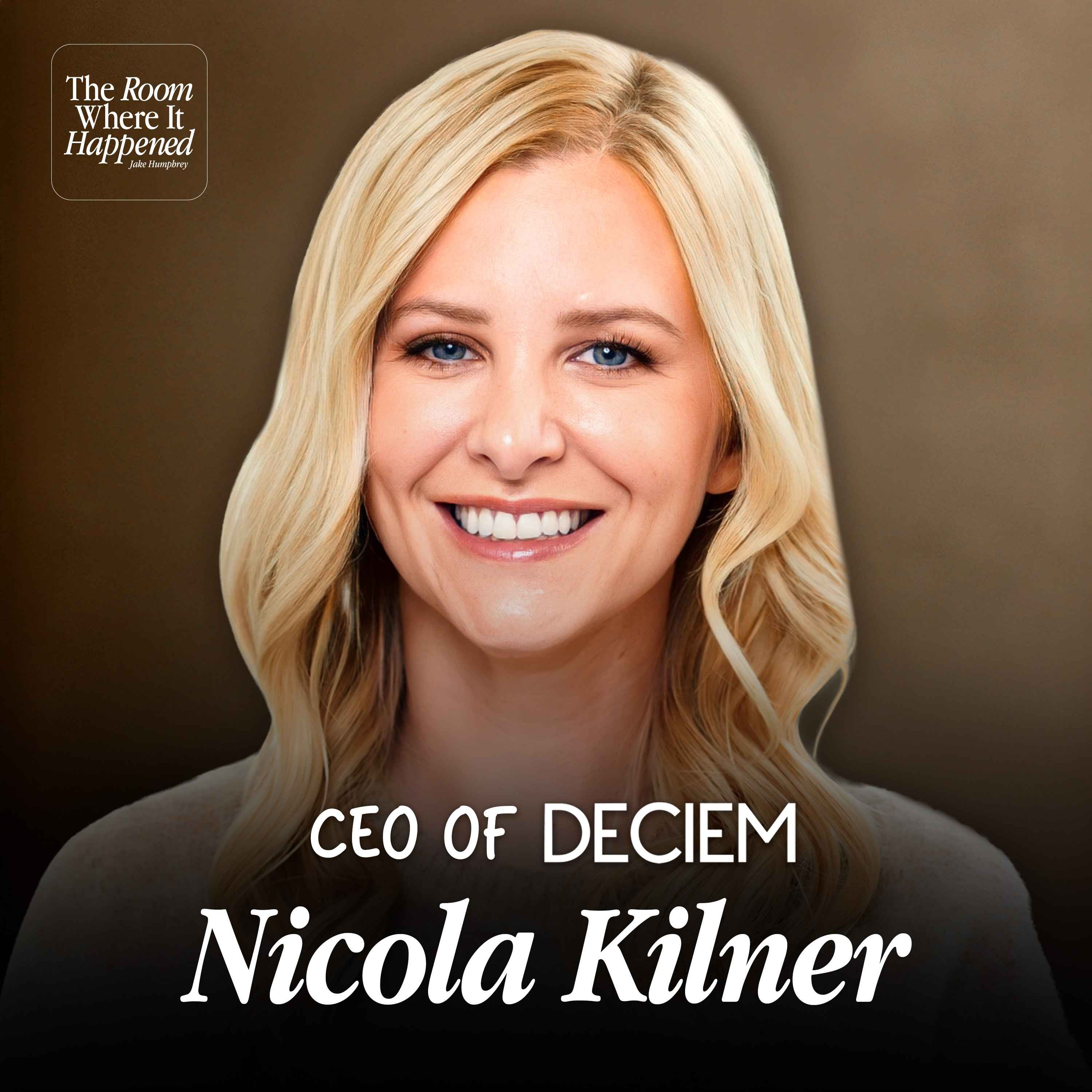
In this episode of The Room Where It Happened, host Jake Humphrey interviews Nicola Kilner, co-founder and former CEO of Deciem, discussing her journey in building one of the most disruptive beauty companies of the last decade. The conversation dives into pivotal moments, brand strategies, and the challenges faced during her career, including the tragic loss of co-founder Brandon Truaxe.
Written by AI. May contain mistakes.

Get the gist, explore an idea or ask about something said.
 Claude
On High Performance Business, what are the key points of this episode?
Searching your listeningAutomatic transcript. May contain errors.
0:00Today we're joined by force of nature Nicola Kilna, the CEO of Decien, one of the biggest beauty companies in the world. she helped to create an iconic suite of brands including the ordinary valued in the billions. She reveals the secret sauce behind iconic brands how culture is vital for success and the timeless advice she got from the grandson of Estee Lauder that you need to hear. This is the room where it happened. First-hand accounts are from behind closed doors in business. The rooms, the pressure and what you should do when it's your turn at the table. Brought to you by IFS. This is the room where it happened.
0:36with Nicola Kilner.
0:42So to the Estee Lauder Company's GM building in New York, the 40th floor looking over Central Park, where we were very fortunate to be invited to Leonard Lauder's office. And I remember our first meeting with Leonard, who was, you know, in his 80s and more energy than most 20-year-olds I know. But he gave us this advice. he said, always put brand first and business second. And I think as brand people, they were just music to our ears. It's something we wanted to hear. Would you mind describing to us an anti-business decision that's good for the brand? So one actually for us would be Black Friday.
1:22So in the early years of the business, we used to do these really deep sales on a few of the products. But ultimately, we were picking the products that we were overstocked on, probably had the best margin. So therefore, consumers were actually getting products that weren't right for them. They were buying them because we were like 70 % off. So none of that made sense. So we actually said, look, we're going to boycott Black Friday. And we, on Black Friday, we actually shut all of our stores. You can't buy from our website as kind of a protest against Black Friday, because what happens on Black Friday is people buy things they don't need because, you know, we all get into this moment of a sale, et cetera.
1:59But we're saying actually in that month, so we do something different called Slowvember, where we take a much smaller amount, it costs every product, and we say take your time this is a crazy month but actually have slow shopping buy just what's right for you buy what's what you need so something like that you know when we black friday was our biggest weekend of the year because it was our big sale so when we're like actually no this just doesn't make sense like this is something we actually should boycott because it's it's not right for a consumer or brand that's the kind of decision that puts our brand first um but ultimately business second because we were saying no to one of the biggest moments i remember being in new york on holiday with my family a few years ago we went into macy's and it looked kind of tatty right and there was things piled up everywhere it kind of felt a bit like a bit like a jumble sale and just outside a couple of blocks away is patagonia and there's this huge sign in their window saying buy one jacket for the rest of your life and the queue was huge and it that's the sort of first time I remember looking at exactly what you're saying, something that I would perceive as a really bad business decision, tell people to buy one jacket compared to piling it high and encourage them to buy five or six.
3:09But they obviously, in the same way that you've managed to in your career, they kind of tapped into the zeitgeist or the thinking of the audience at the moment and worked out exactly what they want. So if people are listening to this and they're thinking, yeah, I really understand what Nicola says here. I need to really think about my brand. what's the first thing they should do do they think of a brand that is what they want it to be or do they try and work out what the world needs and then build their brand around that the thing i always think about the ordinary is what in a decim like we've never followed trends but i like to think we created a trend like after we kind of did the ingredient thing suddenly that was in all the trend reports the next year and actually now you look around and there are many people being more transparent around ingredients but i think ultimately when you build a brand you You have to try many different things.
3:55And people look at The Ordinary as the success it is. But that was our 11th brand we launched, which means there were 10 brands before, of which one still exists, but the other ones have all been retired. So we did a lot of testing and a lot of learning. And ultimately, that's what led to The Ordinary, because we had learned so much by everything else we had done in the previous three years of Decian that it kind of all came together. And that's what The Ordinary was. And I think we'd obviously built so much trust in that point. So I think it's an element of trying because I think with market research and insights, you know, what someone tells you they think can often be different to the actual behavior, you know, until they're in the store and they're about to part ways with their 20 pound note, you don't fully know, like, do they really love this?
4:42Like they say they do. So sometimes you just have to get started. And like, if I look at, I mean, if you look at Dusty and from 10 years ago to now, like it's vastly different. but actually we've always been so agile that we'll always update we'll change like we'll move with times and so I think the most important thing is just to get started and then you can kind of adjust as you go along. I was very excited to have this conversation because I love your career trajectory of being sort of sponsored through university by Boots working for Boots becoming a buyer and then getting to work with people who had this desire for their brand to be successful then helping them to make those brands successful, then meeting Brandon, your co-founder at Deceum, building those brands, and then finally the ordinary happening in 2016 and everything exploding in a great way.
5:30And then after that, a very difficult way, which we'll also talk about. So would you explain to us some of the key things that you learned in that time at Boots, in that time building Deceum, that when the ordinary finally happened for you, you were able to kind of line all of those things up from a brand perspective that you think was really crucial to helping the ordinary to go and to go very, very quickly? Yeah. So when I was at Boots, the role that I actually ended up doing was the buying manager for innovation, which was all about like bringing new brands in. I think one of the shifts that we really tried to do was I think previously, you know, a brand would get a listing at Boots and be like, we've made it.
6:08Like, you know, we've got our shelf placement, we've got this kind of big PO. and I'd always say to the brands like that's getting that first PO is actually not the moment to celebrate is when we get the sellout report to celebrate because you know you get a listing on a shelf but like for most retailers like it's still the brand's responsibility there's probably a sell or return agreement which means if it doesn't sell the stock goes back to the brand and a new brand comes in like it's space on shelf has to be productive so it can be quite ruthless so like a big part of my role then was actually almost to kind of work on the brand side to be like okay what's the comms strategy what's the PR strategy what's the marketing plan to make sure that they had all of that in place so that they weren't just um because you know a lot of these were brands from Australia or in other countries where they would just think right we've got the listing we'll just supply yeah when no really it was still the brand's role to create that demand um and then obviously the retailer kind of just serves it by by being there so I would just make sure that they had a really robust plan and again you know when I worked at Boots which was obviously like 15 years ago now so that was pre-social being as big as it is now which again I think is such a great tool for new brands because it's quite not easy but I think you know there's less barriers now whereas back then comms was great but actually otherwise you know it's spending money on advertising which soon sucks up a small brand's budget and I guess you can spend money on advertising and you can make sure your product looks great and things.
7:39But I always think of brand as something a bit deeper than that. So would you encourage people who are maybe at the start of their own journey with their own business and are thinking about brand and maybe they've got Leonard Lauder's advice ringing in their ears that, you know, it was almost brand over business. What's the first thing that you have to find? Is it your why? Is it a kind of a sync? Should people start with one strap line or tagline or one sentence to describe what their brand is and work out from there i mean i'm coming from like a consumer product brand but i think you just have to find a product that really works that other people will want to and then build from there because i think you know so often when i see investment decks and things i think people spend almost too long focusing on all of this strategy i mean we didn't have a strategy document until probably about three years ago because it was kind of like we just do what we need to do and kind of we just move and and and so much is just done on whatsapp and i think too too often i see almost too much planning that happens yeah rather than just focus on making an incredible product i think aesthetic is sometimes overlooked like it's sometimes you see great products and you're like gosh this design is just terrible and actually it's probably one of the easiest things to fix like if you've got a good product you can get a good design and how do you know if if it's the design that's letting you down rather than the the product because i i guess i've always thought if you just make something great people will buy it right but maybe i'm it sounds like maybe i'm a bit naive in that yeah so i think you see for the ordinary i actually think our aesthetic is like one of the one of the key parts of our success and also actually one of the other things is you have to ignore a lot of people's advice because when we first proposed the ordinary to retailers I mean, we got turned down by two of the most major retailers in the UK and the US.
9:27And actually, some of the feedback we got was white packaging. It will never work. It will look dusty on shelf. It will get dirty. You know, consumers want color. Now, I walk into a Sephora store and we're like a sea of white. That actually is so breathtaking because we're in a world of color. And, you know, every brand now tends to have all the different colors. And that's kind of how they distinguish their different sub ranges. So actually, by having this kind of more minimalist view, actually, it really stands out in store. So actually, I think the white design was actually part of actually what makes a brand so appealing.
10:02But also, I think the aesthetic is something where, you know, people are proud to have it in their bathroom, like everyone, particularly this kind of more minimalistic over, you know, the past decade has become something where people want more in their home environment. So actually now having a product where whether you're a guy or, you know, it's genderless, it's ageless, really whatever your interior is, it will sit proudly on your shelf and probably look good. so actually something which people might see is like quite a minimalistic design I actually think is a very thought-through design that actually is kind of part of our success because you see the other thing I think for the ordinary that always gets overlooked is one of for me probably the thing that I think brands can't really it's the hardest thing I think to copy about the ordinary that actually our positioning is seen as quite aspirational you know it's something that people we'll see, you know, the kind of bathroom shelfies and we're next to Chanel and Byrido and kind of all of those brands.
11:02Yeah, our price point, you know, you can get most of our products for under £10. But actually, again, that was a very thought through decision that said price point shouldn't define luxury. Like luxury should be about authenticity, about aesthetics, about so many other things. But actually, we had to really think through the retail strategy to get that positioning, which means that actually when we first launched, we were in Selfridges long before we were in Boots. Had we launched in Boots first, we probably wouldn't have got the Selfridges listing. But actually really thinking through, okay, where do we want to be available?
11:38Which platforms do we want to be on? Who do we want to work with? Because actually, if we want to have this luxury perception, but actually doing it at the price point that is so accessible, that's a big shift that doesn't particularly happen particularly in the I think the beauty consumer goods um and that's the one thing today that I'm actually so proud of because you know today we see in this there are so many other brands that also have their neocinamides and you know kind of a um similar more product range yet so few I think have actually managed to have that aspirational kind of people just feel proud to have the ordinary which I think is so much because of our values and how we've positioned it.
12:22So I think the brand team did an amazing job on that. And what is the best way to get the answer to that question, what do consumers want? Because it feels like that's almost the first question that any brand should be asking themselves. You just have to make something and put it for sale. The consumer tells you quickly. And I actually think especially today with TikTok, Shopify, it's easier than ever to just create a website kind of put something out there um so i think you just have to get a product to get it live and actually see the reaction um and as much as i say you know the other brands weren't a success i mean we were probably doing about 60 million before we launched the ordinary so we we did have success with the other brands it's just the ordinary launch and it became this kind of whirlwind you know kind of ruined all the other the siblings but you know there was lots of success in them but we just kept trying things and I think you know we I think back to the the early days that we were just having fun like we're all people who just passionate about the industry we're always a group of good people that actually just believed in you know being fair and doing the right thing and we would meet find new technologies we were like wow that's interesting like that would make an incredible you know growth serum or whatever we were trying to work on you know we had an amazing range of supplements which were all liquids you put a teaspoon in a day which I feel like if that launched a day it would do really well it was called fountain but probably wrong timing and you know it never kind of got the traction that I think it deserved and but we never we just kept trying and doing different things um I put out a question to my audience across my socials about the fact we're having this conversation the question was if you if you're building a brand what would you like to know from Nicola and actually what was very interesting was how many people came back and said, I've begun.
14:09And a couple of them were running sort of like little cafes or one-off restaurants. There was a couple of people, obviously, involved in the beauty industry, but they were right at the very beginning of the journey. And there were some people who were kind of, they knew they wanted to work in business and entrepreneurship, but weren't really sure how to begin. So for people who have started on this journey, let's say they've got one product and it's a passion project and they've got a few customers their big question was how do I go from where I am to genuine scale and I think that's one of the big challenges for people isn't it how how do we scale these brands if people have got something that they think the world wants and they love doing and they've got enough capital just to launch it what were the key things that you would encourage people to do even back when you were working at Boots to turn it from where it is to where it can be yeah well I think having one great product is the perfect place to start and actually you know we used to this was actually an example Brandon used to give he used to say if there was you know a shop that only sold sold smoked salmon or a supermarket that sold everything including smoked salmon which one would you perceive had the best smoked salmon probably the shop that only sells smoked salmon so actually there's something around I think kind of if you're starting just with really that one product that can become iconic and everyone is like well that you know has changed my hair or like whatever it is like people obsess around that like that is a great place and you know it's probably more affordable to start with one product versus you know investing in a range of 20 products and kind of that carries much more risk and you know the one thing when you carry stock you can end up making bad decisions because like i said around the black friday thing you know you're making decisions based on stock levels versus actually demand so starting with one product and then i think you know today social like if you can get something viral on tiktok i mean you can be selling a significant amount within 24 hours so like having something again like putting the right feelers out there on social whether you're seeding the product you're gifting the product you're giving people something to talk about and again I mean TikTok's hard because again these are things where you don't want to make decisions based on this but you know back in in COVID one of our products that went viral was our AHA peeling solution which went viral because it's this kind of bright, very kind of deep, dark red color.
16:29So you put it on and it almost kind of looks like this vampire blood. So because it had an aesthetic to it, it went viral, except it was going viral with 19-year-olds using it when actually it's a product for more mature skin. So we actually then had to do a very anti-sales campaign to kind of say, look, this is for like more mature skin. These teenagers, like give this to your mum, your auntie, like this is kind of not for your skin. And, but, you know, maybe there's, if there's an aesthetic to it that can kind of help with getting that social appeal. And then again, like, you know, Shopify, like you can get your website, you can do TTC, you can sell on TikTok shop, you can sell on Amazon, but just kind of getting that traction going.
17:10And then if you get people falling in love with a product, then that's the point when you can then look at which way you scale. So what are the product extensions? Like what else would that consumer benefit for? Like, how do you build it that way? Then also what does your retail distribution strategy looked like so again like i said for the ordinary it was actually placing it more in kind of the luxury shopping before we kind of went broader um so depending on how you're trying to build your brand but again decisions like that you only make if you have the i guess the the funds available because obviously you're going to get more money by going to mass retail soon because the orders are obviously more significant but that's not always the right thing for your long-term brand.
17:54So you're always having to kind of like trade off these decisions to kind of just, you know, if your business doesn't have cash, like you won't survive. So you have to kind of understand your funding to then kind of decide which path you want to take. And this is a very important point I think we should stop on and talk about because when Leonard Lauder says brand over business, in many ways that's wonderful for you to hear because you've got the backing of Estee Lauder Company, right? So you can focus on your brand because you have this huge behemoth underneath you valuing your business in the billions.
18:25So you're kind of safe. Whereas if someone's just starting out and they don't have very much money, the first thing that might fall down is the stuff that really matters, but isn't going to give you an instant sale. So you might prefer to spend your money in marketing or on social media spend than actually developing the product because you just need to start selling it. But then that's where actually it's so good in today's world, where I think people are so trusting of you know going to a brand's website and buying directly from them because you're going to get that cash straight away because the one thing when you work with retailers is you know you have payment terms like you're you may often be financing you know you might not get paid for three months you might be having to buy and pay for your stock three months and suddenly you have like a six-month cash flow that you have to do so the more you can minimize that I think helps in the early days and I think that's where like you know just investing in your own website is kind of like a for any startup I think where their focus should be and what about the fear of failure because one of the most exciting parts of your story from my perspective is when you decided to walk away from boots and do your own thing and this was when you met Brandon Truax and he had something he wanted to do you had something that you decided you wanted to do but then you went together yeah and you created Decian where was the the fear of failure emotion for you when it came to building these brands?
19:48Well, I think, I guess there's two angles. I think from like a building a brand perspective, I think if you adapt, you never have to fail because it's kind of a case of you just have to keep trying. And if you keep changing and tweaking things and like eventually, you know, the ordinary, I think is like a, you know, I always say it's like a once in a lifetime what we created. So don't see it as failure. See it as kind of iteration. Yeah, you're just going on to the next. Like if you're an entrepreneur and like, as long as you can kind of keep having some money coming in to keep it going. But actually, you just have to adapt, like be agile, because you kind of don't, until the consumers start actually associating with you and building that relationship, you just keep adapting.
20:30And then from a personal perspective, you know, I think the failure is just something that just doesn't worry me because it's a, you learn from everything in life. And look, you know, I say this as someone who, obviously, when I started to, um with Brandon I could go back and live with my mum so like there's a privilege there if it's much different and you know we had this conversation just before we we started filming around like for me in your early 20s is actually such a good opportunity to take all the risks because and again everyone's lifestyles are different but the less commitment you have I think the easier it is to take a risk like when you're older and you have mortgages and you have children you have all of these other things to consider it probably would feel different so I think I was lucky that when I took probably what would be perceived as most of my risks I was in my early 20s where I wasn't risking anything like I had no mortgage I had you know a lovely mum with a house I could kind of move back to like everything kind of fell like just the right time to kind of put my all into trying to make it work and I think sometimes people separate the culture in a business from the brand.
21:38And I struggle with that a bit because I think so often your brand is a reflection of the culture you've created. So let's talk, if we can, about the sort of culture you created at SCM. So when did you first think maybe Brandon is someone that I could go on an incredible journey with? The minute I met him. And when was that? So he was with his previous brand called Indeed Labs and I was the buyer at Boots. And you know, from like when you just instantly fall in love with someone, like he just walked into, you know, back in Nottingham d90 uh the reception building and i was like wow who is this guy with this energy and just this like i feel like in my life you know you meet a few geniuses and three of them are descien people brandon prudvi and dion you don't put yourself in the that's nice modest i thought you would have said brandon me definitely not no i'm i have other strengths but definitely not being a genius but like Brandon is someone whose mind just worked in like a different sphere he spoke a million miles an hour but just someone who you you know when you're just mesmerized by someone but actually his commitment to just just being good like cutting out any BS and just actually creating great products like he was science obsessive you know I remember in the early days in Toronto he would you know we would be working he would drop me off at like 10 p.m he'd pick me up the next day at 7am he'd be like I've read this study this study this study and I'm like whoa I've just been to sleep for like eight hours but like that was his mind like he was so passionate and obsessive and anyone who met him could could feel that and I think there are you know we were actually also just having a conversation before this about you know neurodiversity and I mean to me anyone who like that is a superpower to so many people and and Brandon was one of those people where like his brain was very different to anyone else's I've ever met but also he was so good with it all you know he was he was a decade older than than most of us so most of us who were all working at Decium at the time were kind of all in our early 20s and again that was because we couldn't really afford salaries like someone straight out of college school university effectively was on a much lower salary than someone with experience but actually Brandon was kind of our like mentor our teacher our guide like he'd already built a beauty business so I think we had this really good mix of someone who had enough experience but was also such a maverick and wanted to challenge everything then with a group of people who actually didn't have that much experience but naivety was also I think a superpower of ours because we didn't have this feeling of oh well we can't do it that way because I think what amazed me it's like when we speak to people in beauty they're like oh no you you know you can't have the white packaging you can't call the names that you you need to call it an anti-aging moisturizer because that's what consumers understand it's like everyone is stuck in a world of doing things the same way it's always been done and if you take out experience the people are like but why like that doesn't make any sense naivety was almost a superpower in that amazing in business because i think you're actually much more challenging and and even now you know we have it with a team where not that we get jaded but like we're sometimes like oh that won't work and I'm like no like we have to get back to like thinking of a new way but it's difficult because once you've done something for so long you you don't always take that step back to be like actually is there a better way to do it so I think um always having fresh voices and you know people swapping industries like I think is an amazing thing because like I said around the comparison to pharma and healthcare like you can learn so much I think by swapping industries and it just gives you different perspectives and you said at the beginning you said Brandon was just good yeah but what does that look like just he cared about people he cared about doing the right thing and you know I think so like one thing I'm very proud of at Decium is I think you know we're in a world now where there are so many founder brands as in like the founder is very visible as the face of the brand and And I'm not saying this applies to all by any means, but, you know, I know people who work there and they'd be like, say, if you were in that, it'd be like, well, will Jake like this?
25:51Will this make Jake happy, et cetera? Whereas at Desian, we've always just built this incredible team and community where like everyone is trusted, empowered. Everyone's almost like their own entrepreneur. And therefore, like, you know, Pridvi, who was leading all our science, Dion, who's leading our brand, Jason, who's leading our creative. of like they're just empowered to make their decision because they will make that decision far better than I will because they're the one where it's like their expertise and I think we just have this group of people where everyone just cares about doing the right thing being good you know we always say you have to do the right thing even when no one's looking because there's no skeletons like and especially in today's world like you get cancelled very quickly um and I think we always say there's things that we're prepared to be cancelled for and we all stand by those as our values it makes me incredibly sad that whenever we do for example a social post and we'll support pride for us belonging and inclusivity is just so important to us as a company and whenever we do those posts we lose followers but then we're like we actually don't care we don't want those followers so you have to be prepared for the things that you're okay being cancelled for but I think by having a culture where actually everyone feels like they own the company everyone has this feeling that actually I'm respected I'm empowered I'm the expert I think that's what gives you longevity over it being so much around one person's vision look we obviously can't talk about your story which is peppered with success without talking about the hardest time of all which was when Brandon, your co-founder, after creating Desiem together, after launching The Ordinary, after taking the investment from ELC, he had a really difficult time with his mental health.
27:48It involved sending social media posts that were really unhelpful for the business. It involved some very hard conversations for you. At one point, it involved him removing you from the business, asking you to return, falling out with almost everybody. And from what I've read and listened to, that was such a difficult time for you because you were, I felt like on one hand you were just fighting to try and save a business, which by then was big and had value and was employing a lot of people and paying a lot of mortgages. But on the other side, you also had this sense of wanting to protect Brandon because the Brandon that you knew at the very beginning was such a loving, caring, sweetheart of a man that this person in front of you now didn't feel like Brandon.
28:33What has that period taught you about the importance of prioritising mental health in business? So I think, you know, it's, well, it's six years ago now. And in that time, I've kind of spoken to many different people because I think what's so difficult for anyone who's been around someone who suffers from mental health or addiction, there's never like a diagnosis that you kind of i'm not you know if someone has cancer it's not easy but at least everyone's aligned there okay this is the treatment plan you know largely like you know what you're dealing with when someone's personality does a an entire change and then you're you know and again someone told me like they were like you you think you're communicating because you're still both speaking english but she was like you may as well be speaking Russian like you're not actually understanding the same language anymore because that brain has changed but I guess like a couple of the things that I think I have have really learned over the the the past six years so first of all like one of the reasons that to me like belonging and just this this ability to just allow people to be themselves is so important is because I think that's something that Brandon wasn't given in life you know he was born in Iran and I think he was you know born to a culture that doesn't particularly accept men to love other men and kind of be be diverse in that way and I think if you I don't know like be I mean imagine being born into a culture where you just can't be yourself and you're scared to actually ever admit that that you wouldn't be accepted and I think to carry that burden your whole life because you know this was something that was kind of like never particularly open that I think that's, you know, and again, I'm privileged that I've never had to experience that.
30:28I can't imagine spending 40 years of my life having to hide who I am for feeling that people wouldn't love me or accept me. So I think that's why one thing is that, you know, company, society, like we have to just make people feel like they can be who they want to be and loved for that. So I think that's kind of one thing that as society, we can do better. and then the other thing that I have learned and again you know Brandon was someone who he barely even drank alcohol you know he was diet coke and french fries and you know just very kind of happy and he didn't need any extra stimulants like he was kind of super happy but he was obviously also someone who was curious but I think something that isn't well known until I actually recently went on a trip with someone who's a child psychologist but actually looks after children all the way up to the age of 20.
31:19And she was sharing with me that actually a lot of people she deals with are, they're like A-star, like super kind of top performing students. They go to university and have their first experience of taking a drug. And actually for some people, they're kind of predispositioned for it to actually change their brain. And it changes their brain for the rest of their life like there's there's no coming back and it when she said this I was like wow that that is what I feel like happened with Brandon he was someone who tried nothing but there was something that was such a fundamental change and and I think I never had that you know I'm someone who I'm always I remember being a teen you know you see that article about like the that one time you try a pill and you're gonna die like that was always my mindset so I've always been kind of a bit scared but I was like wow I didn't realize that there is this thing but particularly with people who are highly intelligent so again kind of like more neurodiverse where they may be more likely that there is a permanent change to the brain so like this is the stuff over I guess the past six years that like I'm starting to understand a bit more but again I mean it's difficult I can't diagnose him like he's he's not here anymore and it's just trying to understand what happened but I think that's kind of like two of my biggest learnings in terms of things like you know when I raise my children and things that I want them to just be aware of that this kind of feeling of just make sure everyone feels like they can belong and be themselves and like be authentic and then again like with drugs like I think there are risks that we don't fully appreciate but particularly when it comes to very intelligent you know people who have got that brain that's kind of you know you see and again you never want to diagnose on someone else's behalf but like there are geniuses Elon Musk etc where you're like you're kind of a genius and then you're like it's like sanity insanity but like that's what makes you so special as a person but then I don't know potentially there's things that I think can trigger things so there's also yeah but I'm still learning so I guess that's kind of just my personal journey of learning but again we i think back to the team at the time and everyone loved brand like i can't even explain just you know people i don't like when the word family gets kind of branded too much in the workplace but i think in the early years of a startup like you are you are there like you know all of brandon's next of kin were sem employees like it was just like an incredibly tight group but obviously then when that happens like you know you can't erase years of you know when someone's a good person so therefore you know everything happening isn't them so therefore it becomes much more about okay how do i manage this myself because i know he's a great person and like even though at the moment he's acting like an absolute idiot i know that's not him yeah but but what's difficult is like there was no way to support him because you try to support him you got fired so then you would come in and you'd be like okay fired by him by him um and again like even though he technically couldn't and stuff like it just didn't matter yeah you then also had this anxiety of everything being on like social media so like you'd be like oh gosh like you'd get an alert or you'd get an email and you'd either be the subject of it someone else would be but like the whole like journalist like the whole world was cc'd on on these emails there'd be the videos so it was just like a very difficult time of being how do you help someone when and and the one thing that I don't think has actually progressed in the last six years is how we help those people.
34:58Like what worries me is if I was in that exact same situation today, I don't know what I would do differently because, you know, he got sectioned many times around the world and he was released again. And again, I think it's just mental health is so challenging to deal with when it is these types of episodes, because you have the person who's, they're like, well I'm there's nothing wrong with me but you're seeing it's a different person they get sectioned and then you've got all like the drug cycle with it then like that comes down they get released then it's kind of just back to the same cycle again and and since I've spoken about this before honestly the amount of people that have reached out to me and and like there are so many people out there as in like the the loved ones of those suffering and like there isn't any answers yeah And I don't know what the answer is because, again, it's something that's so hard to diagnose and it's so hard to treat.
35:55I think the important thing is, and I like to hope this is the case, I'm sure it is with you, is that it sort of increases your empathy for other people, particularly in the world of business. You know, when I was a young guy, I lost a family member after mental health and then subsequent suicide. And I think when that happens, in fact, strangely, I'm more emotional about it now in my 40s, 30 years later than I was at the time when it happened because I think that there are other things to preoccupy your mind at that moment. In your case, it would have been trying to save a business that could have been taken under by some of the behaviours.
36:30And now, a few years on, you can look at it much more objectively, much more, maybe more compassionately, and actually understand that this stuff is very, very common. There are reasons why it's increasing and growing all the time. You know, where we're having this conversation in the UK at the moment, there's a mental health crisis among young people. There's no debate or doubt about that. But I think that if we don't have these conversations when we're talking about business, then we are not doing justice to the kind of entrepreneurs and business people that are going to follow on from the likes of you.
37:06because if you don't prioritize it, then you can't help to take steps to solve it. But you're right that one of the biggest challenges is what do you do? And I think empathy and understanding is the first place to start. And again, like I think the belonging piece is actually something that so many business leaders can do more on. And I think, you know, it's a shame in the last year or so, I think diversity, equity, inclusion, like we were making so many steps forward And now I know it kind of can feel a little bit more confusing in the world. But I think, you know, just making someone feel accepted can go a long way for their mental health as well.
37:45Brandon once actually said that Decien was looking for rabbit-sized holes in a world full of elephants, which I thought was fantastic. Would you explain how, as a brand-building exercise, you went about doing that? So, you know, that effectively means that there is no point us doing what the big brands are doing when we have far less money. is far less following. And, you know, an example of that would be we want to be the trend rather than follow the trends. We want to go to the retailers where the big companies aren't even looking for. You know, we were one of the first beauty brands on ASOS in Urban Outfitters.
38:19Now there are many brands there, but you have to be the one that almost takes those opportunities that the big companies are too busy, too big to see. I think this is so helpful for people because everywhere you look, that these founder-led businesses do seem to be flying at the moment. You know, in your world, I would think about Florence by Mills, right? Or I would think about Hayley Bieber's brand. But then I think about when I first started to build High Performance and it started off as a single podcast and now this show and a few others have produced by it. I thought the superpower of that show was me going, well, I'm the founder of the business and I love High Performance and I love finding ways to unlock all the incredible things that we can achieve.
39:04Therefore, I'm going to be the face of it. I'm going to be the front of it. And in some ways, it makes it easier at the start because brands who might partner with you or sponsors, they go, well, what can we latch on to? Well, you can latch on to an individual and then that really helps. But it's very interesting what you say then about you end up in a world where you're trying to grow as a business and everything's trying to be funneled through one person's view. and I also then wonder whether that person actually really hears the truth from everyone because they're just trying to tell them what they want to hear to get through that funnel so their idea can and probably there's actually now like we're talking about it there's probably a balance that for any company to start you probably need that tight vision of someone who yeah believes it has the energy but then if you need to scale you quickly have to move into a kind of more shared ownership but you think about apple i mean they have a very rich founder history with steve jobs but i don't think they're at the moment you know they're not really a founder-led brand anymore because actually they've done such a good job at really just instilling those values kind of having those beliefs and you know obviously steve jobs has gone we we lost brandon so like a founder is not there forever so like a company has to survive them and the only way you can do that is if you've really embedded your culture, where actually, you know, you're all drinking the Kool-Aid, like you all believe in this mission, you're kind of all really shared and aligned.
40:29So talking about founder-led brands, does it worry you? Or do you kind of see that in some ways it's an easy win? So it's obvious why people who are already well-known are branching out into business and putting themselves front and centre. I guess it carries big risks. Yeah, I mean, look, I guess the rise of social media, and now there are so many people who have their own cult following. I mean, everyone's human, like they they kind of need to find a way to commercialize that like it's it's life everyone is you know trying to to survive and the way that I think a lot of people do that is therefore by creating a brand but you know I think about brands that are going to be here 50 years from now and I don't know how many of those brands will actually survive their founder when it's so visible you know you think about like some of my favorite brands a brand like Muji and and their whole brand is to almost be brandless but just have incredible product quality you know something like lego that's going to be here 100 years from now like there are brands that have such longevity because their product is exceptional and it's never been about the person it's been about the product and the brand if there was one brand who you would encourage your our audience to look at the story of and study a little bit and just work out how they've done it and why they've done it which brand would you ask them to just research a little i mean patagonia and ben and jerry's for me are just the two that i think even like way before their time their purpose their their kind of commitment to just sustainability um just diversity inclusion like i think they they really stood for ultimately brand first business second in so many decisions they made so for those those are like two of my all-time favorite brands i think supreme did a good job for many years i think you know the last few years have maybe been a bit tricky but again you know their whole scarcity drops like they made anti-business decisions to put their brand first and so i think there's some examples of really good brands like muji i just love it again like they they created a whole brand about being brandless um yeah they're so iconic in the way and and again trusted but yeah there are a few of the ones well i suppose what we're saying is the founder can set the tone, they can set the vision, they can set the ambition, but they shouldn't be the person that curates it all the time.
42:45And Richard Branson of Virgin is another really great example. If we went back 40 years, he'd probably be central to every decision. Well, the Virgin group of brands operates now with him quite rightly spending most of his time with his family or getting involved in little passion projects. I guess if you want to be totally central at all times to your brand, you're really going to limit its growth maybe. You are. And also, I mean, like I've said before, like I'm definitely not a qualified CEO. So obviously part of me stepping down last year and a few years before that asking Stefan, who is our kind of guardian at SA Lord of Companies, I was like, I need someone else to run this business because I recognize that's not my skill set anymore.
43:25Like there's no one who will ever love the company, the brand, the people, all of that stuff more than I do. I love the brand stuff. But, you know, we're at a scale now where we need someone who's very good at also making the logistics, the supply chain, like all of these other calls. And I was like, I don't enjoy that stuff. And I'm not the right person for it. Like there is someone now much better to actually manage the business than I. you know we were very fortunate we brought in this incredible man Jesper who now is he runs the business and it actually first of all now I have way more time because I was also like I have worked probably my lifetime of hours in my 20s like I want children and I want to be at the pickup and the drop-off and I want to be like the really present mum so I don't want to be sat in a meeting where I actually also know I'm not the right person to add value and so I think it's again And like, you know, I think founders have to be careful to not let their ego get in the way of growing.
44:21And also just recognize like things change. I mean, we're 1500 people. The, you know, the sheer scale of the business, the units we do is just insane. And that needs someone who actually has experience. But, you know, it doesn't mean that I'm not still the brand moments. And, you know, like I was in China in June and, you know, sharing a story, like doing things like this. like you can kind of find the things where you can kind of still be involved and be the guardian and i'll you know if i ever see something where i'm like whoa like let's just take a minute to kind of double check that but that actually rarely happens because i think we've done such a good job at empowering people at every level um because again you know for me someone new to the company like their voice is just as important as someone who's been there for a long time because they have that naivety they have the ability to be like but why are we doing that and I think those are the things that keep you moving forward that's also I think vital for people if they do create a business and the business starts to grow and it's grown to the point where late last year you stepped back as CEO as we have this conversation if anyone's watching they will know if they're listening we'll tell them that you're currently heavily pregnant with your third child congratulations for that.
45:36But it does mean that you can't be everything at all times. So, you know, it's the right decision for you to step back and focus on your family. What have you discovered is the secret to finding and hiring great people? Well, I think the one thing is you actually have to go through people. And, you know, for every great person we had, there were also many people where it didn't work out. And those are hard conversations to have. And I think sometimes you just have to recognize it quickly and not so much now because I think now you know we're much bigger we're kind of but in the early days you know when you don't particularly have a hierarchy there's no structure it's it takes a certain mindset I think to work in a startup and again I think some of those people that then were like pivotal to us and you know the first kind of five years some of them aren't here now because today's world's very different and not everyone likes that world so it's kind of a you need the right people for the right stage of the journey um but I think just being really honest with people about kind of what's expected and I think you know it's in a startup it's difficult like this whole work-life balance because I think really for a startup particularly you know your first like for under 10 employees you need people who really are also living and breathing it and you know that what I mean by that is like that they are the ones on whatsapp where you're you know maybe you're watching netflix and i feel like oh my gosh i'm just seeing this on instagram like did you see this what do you think of it it's like that energy that really kind of takes it and then obviously as you get bigger then you need to bring particularly experience when it comes to like finance legal supply chain like those are things where actually i think that experience really helps because um i think you can be inexperienced when it comes to brand because I think it actually gives you more new thinking but you need someone who really knows how to get the shipments there one time and kind of pay the taxes and do the other stuff otherwise you'll you'll get in trouble but those people kind of change through time and like Jesper who I said is our GM now he's the best like he's from Denmark so he has all of these just amazing qualities I think of just like family and people but he's the best person for the business now but he wouldn't of being the best person when we were two years old.
47:52Just like, you know, myself, Brandon, like we were great then. Like even Brandon, like, I don't know, he would be the right person. So it just changes over time. And I think, you know, what you can be proud, like if you have a brand that survives you, I mean, there's nothing that can make you prouder in the world because like, it's like your child has actually grown up, graduated, and now they're living their life and you can kind of watch and enjoy that. I love the way you talk about the early years of Dessiem when it didn't feel like there was a separation between work and play. The whole thing felt kind of seamless.
48:28And I have to be honest and say that that was also a fortunate time because you didn't have the demands of children and aging parents and failing health and mortgages and all the other things that people have to deal with as years go on and you get a little bit older. but I also just want to talk to you about something that really bothers me which I see all over social media at the moment particularly with either marketeers who are telling us that they're business people or with founder-led brands where they're kind of telling people that you can't have both and it feels kind of toxic to me that I see people sharing like a photo of their day and it's just unattainable for 90 % of people and this idea that if you want to be successful in business you have to you have to kill every other part of your life and you have to fully focus and if you don't then you're never going to be successful and I I just want to explain to people that it is possible to be successful in a startup without having a kind of toxic culture of having to work 24 7 and removing sacking or criticizing people that aren't willing to do that yeah well it might you know in our early years like the the desiccum like we were all best friends like we all became family so like we were having a lot of fun on the way because look when you're 20 and you're getting the chance to actually travel the world and have all of these experiences like it's and I think the big thing Jake really is also about choice like everyone has the choice of kind of what they want to focus on and you know the other thing that I think startups I think they can give more much more flexibility than you know when you get into a large organization and there has to be more rules that kind of apply to everyone but again like I think about things that really worked for me and actually being in a global business was amazing because for me it meant that actually I wouldn't feel guilty by taking an amela to her swimming lesson or kind of doing things in in the day with her because when she was in bed at seven o 'clock that's two o 'clock in Canada so actually I'd maybe have a call in the evening so again it's around like finding these balances I mean just my personal perspective I think the five-day working week is just so old and outdated and I think this was done you know Henry Ford era back when actually it was probably just one person per household going out to work probably manageable but now we live in a world where actually most households are two people working well you can't raise a family look after a house do everything else enjoy life and both be working Monday to Friday like it's just not I don't think it's something that we can do so I really hope with AI and everything happening it means that actually people can get some more human time back and but obviously we'll have to kind of see what what happens there but yeah for me balance is it's also just different chapters of your life different phases um but there are times when you know you do have to work super hard and kind of i feel like somewhere somewhere there's always a sacrifice so you kind of have to decide what is that sacrifice whether it's time whether it's you know a period of like age um but if you you know hard work ultimately pays off so it's just when you're going to do it I think you're totally right.
51:34This stuff doesn't come for free. And we can't discount luck, being in the right place at the right time, the right people just happening to come across our path, as Brandon did with you. But I would say everyone I've sat next to, whether it's on this show or on high performance, hard work is the key that I don't think anyone can get away from. I think hard work and also energy. Yeah. Like, you just have to have this, like, positive, we can do it, keep going. And you're right, by the way, because, I mean, like, I never shy away of the privilege of the fact that everything that went right for me could have gone right in terms of all those things in my 20s.
52:11But I'm also the type of person who will always say yes. I'll always take the opportunity. I'll always kind of just see what... So is optimism important? Incredibly important. I think you have to be low ego to be a realist. but actually I mean particularly like we work in beauty like it's not life or death like we can just have fun and actually find a way to to make things happen yeah and I love your your sort of flexible approach to what life looks like you know I like getting up in the morning and doing a bunch of emails before the kids have woken up and then I love doing nothing while I kick a ball about with my son on the landing we've got a little indoor football which he loves and doing the school run maybe having some breakfast with Harriet but then at about 11 o 'clock going back into some deep work but by four o 'clock making sure I'm picking the kids up from school it is possible to do and it is a lie for people to tell you that you can't have a family you can't have relationships you can't have fulfillment you can't have balance and run a successful business I think you absolutely can well technology has enabled that to mean that you you know it's a good thing and a bad thing but like you ultimately can be contacted at anywhere so therefore people know if if there's an emergency you know like you're a whatsapp away you're a phone call away and and i think it is good for leaders to actually show those examples of actually personal time like it is important and you know the more you travel the more you have that time like the more creative you're likely to be you know you never come up with your best ideas when you're chained to a laptop just on on meeting after meeting it's when you're in person, you're having interactions, you're just having those experiences.
53:50We're moving towards the end of this conversation. After everything you've done, whether that's working for a big business like Boots, going into a startup like Desiem, having an amazing multi-billion pound exit as you did with your business to Estee Lauder, to stepping back as a CEO, to focus more on your family and be a mum. I'd love to get from you the kind of three key lessons you'd love to leave people thinking about when it when it comes to business and life um so i think one would just honestly being good because i think it goes such a long way and you're like everything's about relationships like relationships within your business your partners your consumer and i think we live in a world now where like transparency is is there consumers expect it and actually just be a good person make good decisions do the right thing i think there is actually so much longevity to that and i think we're seeing more and more of that actually being something in leadership and something companies do but i think just being good like think about the planet think about people think just just be human and do the right thing i think never forget how important the um product is like the aesthetic the performance like you know ultimately that's what people might buy the first time because of the founder because of whatever they've heard what they've seen but if they're going to come back again it's because of the product like that always has to actually be you know almost your obsessive focus like what's the product is it the best like how can we keep improving it um and then agility because you're no one gets it right first time like but actually that ability to kind of have the energy keep going keep adapting um i think is so important thank you so much for joining me for this conversation i think it's been really valuable for people whether they're at the very beginning of their journey or maybe they're a bit further down the road, like you and I are, and they're trying to balance work and family and other things.
55:46Final question for someone a bit like my 12-year-old daughter, Florence, who has suddenly started to take a real interest in entrepreneurship. And maybe they're a little older, maybe they're at university. There's always a fear when it comes to going out on your own or doing something that's a passion project because you're very much opening yourself up to the world. What would your advice be to those people who are kind of having to balance huge ambition with huge amounts of fear? You just have to go for it. You just have to try it. And I think the barriers are coming down and actually it's easier than ever, I think, to start your own business.
56:21And even if it's a side hustle and, you know, like I definitely think by working in Boots for a couple of years first, like I did learn a lot in that time, probably more than I did at university in terms of actually just applicable stuff. But then don't leave it too late because I think, you know, once you start getting the salary it's hard to give it up like you see the paycheck coming in you're you have outgoings and but you just have to get going just try something because the hardest thing is getting started and you know there's there's many people I know who for for years have spoken about starting a business and I'm like just do it like you just sometimes have to take that leap of faith because how you start isn't how it finishes and you know you don't need to be doing five-year business plan, 10-year business plan, strategy documents.
57:07Just create something you're passionate about. Put it out there to the world and see if there's a community that feels the same. You know, we used to have a great saying that, you know, first you have to get a thousand people to love you before a million people will like you. And that's kind of how you scale. So to begin with, you've just got to get that thousand people to love you. Then they hopefully will spread your message and then you get the million people who like you. but actually just getting this kind of first evangelist for your brand. Brilliant. Thank you so much. No problem. Thank you, Jake.
57:38Lovely. Really nice. Thank you, Nicola. Thanks so much for joining me. I hope you feel you've got loads to take away from being in the room where it happened. If you can just take a couple of seconds to subscribe, it means you get each episode directly to your inbox and it also means we can attract more incredible guests like George Heaton, Rory Sutherland or Richard Branson. Thanks for joining us. See you next time. Thank you.
As co-founder and former CEO of Deciem, Nicola Kilner helped build one of the most disruptive beauty companies of the last decade, but the journey was far from straightforward.
In this episode, Nicola shares the career-defining advice she received from Estée Lauder’s Leonard Lauder, the bold decision to boycott Black Friday in favor of values over sales, and the unexpected rise of The Ordinary, a brand that went from retail rejection to global sensation. She also reflects on navigating the turbulence of co-founder Brandon Truaxe’s mental health crisis, stepping down to focus on family, and the lessons she’s learned about leadership, authenticity, and building brands that truly last.
It’s a story of persistence, purpose, and the power of putting people and principles at the center of business.
Partners:
IFS - award-winning Asset & Service Management software
👉 Reimagine your operations at: https://highpfrmc.com/ifs-au
Heights 👉 Join Jake in maintaining your energy, with Vitals. Get 20% off with code Room20: https://highpfrmc.com/heights-vitals-au
Hosted on Acast. See acast.com/privacy for more information.


