Ask ChatGPT


 High Performance Business
8 Apr 2026 · 1h 4m · 30 chapters

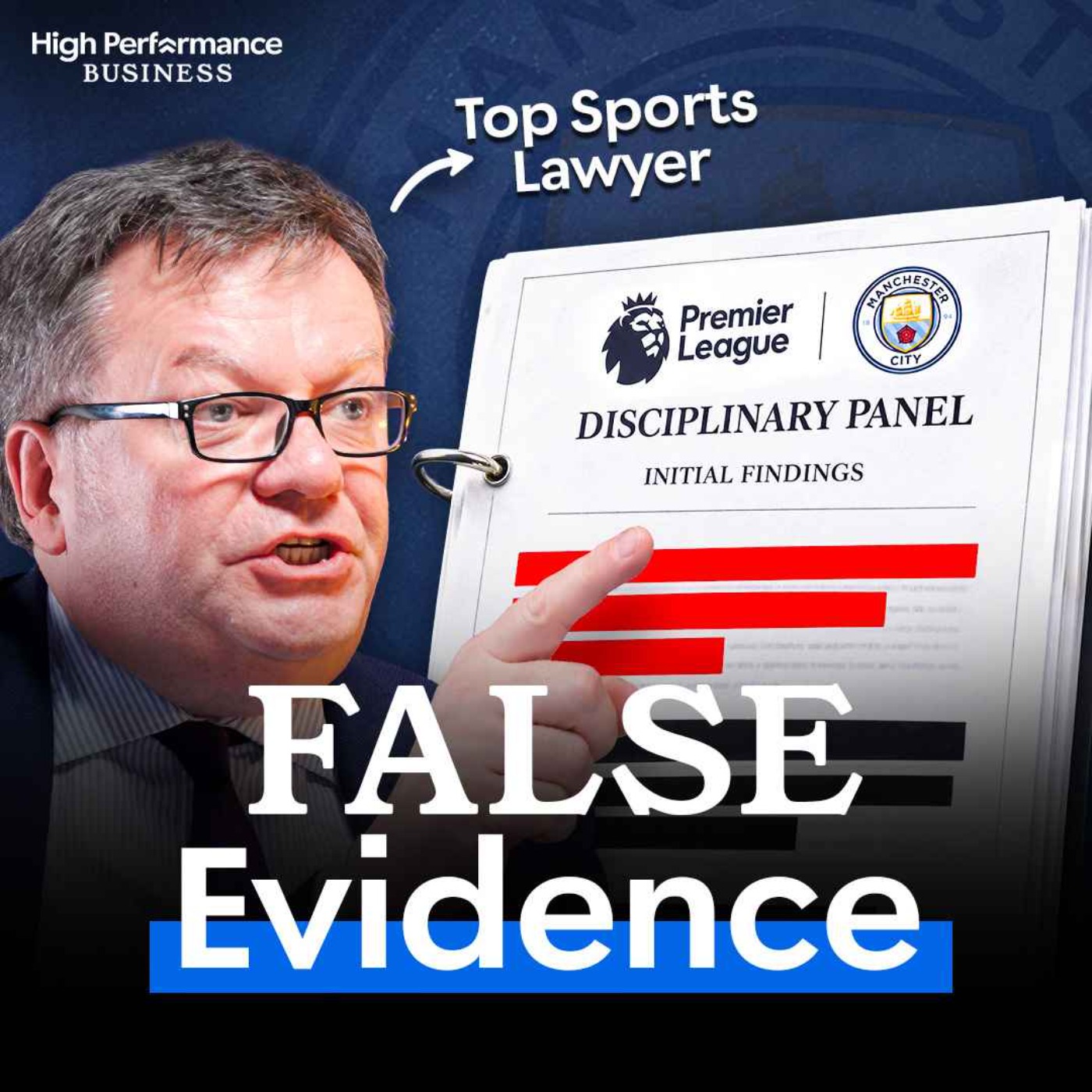
Football finance regulation and enforcement, focusing on the Premier League’s handling of PSR (Profit and Sustainability Rules) breaches, Chelsea’s admitted off-book payments, and the pending Manchester City “115 charges” case; also discusses broader inconsistencies in sanctions and the business impact of long-running investigations.
Stefan Borson, a football finance expert and adviser with experience in football ownership/transactions (including advising on Manchester City’s sale in 2007) and long involvement in football finance matters.
Written by AI. May contain mistakes.
An overview of the competitive landscape in football and its financial implications.
“the game and done things that you go, what are you doing?”
Discussion on the Premier League's financial regulations and their enforcement.
“payments that were made outside of Chelsea Football Club for the benefit of Chelsea Football Club to agents, players, coaches, and scouts, totaling£47.5 million.”
An in-depth look at Chelsea's financial breaches and their implications.
“over a very long period, systematic, over a seven-year period in the early 2010s.”
Examination of how Chelsea's actions affected rival clubs and the league.
“originally docked 10 points originally before their appeal, two things came out in that decision.”
Explanation of Profit and Sustainability Rules and how clubs can breach them.
“So you can't have a negotiated settlement for a PSR breach.”
Comparison of the sanctions faced by Everton and Nottingham Forest with Chelsea's situation.
“And so there are clearly very big differences in those respects from the mitigation perspective.”
Learn about the implications of Manchester City's potential financial penalties.
“they would not have had a 50 % reduction of the financial penalty.”
Explore the meaning behind the 115 charges against Manchester City.
“And we may be able to just treat you with a financial penalty and all move on like nothing happened.”
Discover the history leading to the current accusations against Manchester City.
“Manchester City are accused of a lot of the same stuff Chelsea have been accused of.”
Understand the timeline and complexity involved in the Manchester City case.
“It was quite a fractious process between the end of the Cass hearing and City's successful appeal and the Premier League actually formally laying down the charges in 2023.”
Learn about possible punishments Manchester City may face if found guilty.
“This is, we understand, from particularly the lawyers reporting on this, which is an industry newspaper, very well sourced with the clerks and the barristers in the legal world.”
Delve into the complexities of cooperation and non-cooperation in legal disputes.
“Now, you know, I know a lot about the case.”
Explore the impact of Manchester City's charges on staff and operations.
“is the kind of open-endedness of the Manchester City conversation.”
Discuss how Manchester City continues operations despite ongoing allegations.
“They've signed players in competitive situations.”
Understand the financial audits Manchester City has faced since 2018.
“There's no possibility that in those competitive situations, the agents haven't said, well, you know, what's going on with this 115 case?”
Examine the potential effects of charges on employees and fans.
“I mean, various people have left to go on to new roles.”
Analyze whether financial issues are unique to English football or global.
“So is this like a uniquely English football issue or are these kinds of financial things going on in all the football leagues around the world?”
Discuss why the Premier League is considered the most successful league.
“I'm not saying they shouldn't pursue wrongdoing.”
Explore what a successful outcome looks like for the Premier League in this case.
“I hadn't even thought about what does a win look like in this case.”
Discuss the importance of fairness in handling financial misconduct in football.
“So let's say they've gone through this process and none of the serious stuff is established.”
Understand the challenges of maintaining objectivity in football debates.
Explore the difficulties of maintaining impartiality in football discussions among fans and professionals.
“Well, you know, it's a good open question.”
Learn about the motivations behind investors acquiring struggling football clubs and the potential for profit.
“I mean, you were recently involved in a consortium that were interested in buying Sheffield Wednesday.”
Understand the financial challenges and risks involved in owning and turning around football clubs.
“And at the top end is the problem we're having now with clubs like Spurs.”
Dive into the economic implications of success and failure in the Premier League for clubs.
“Sheffield Wednesday is definitely that kind of platform.”
Understanding the severe financial implications of relegation for clubs.
“So you're going to lose 100 million on the UEFA, you're going to lose 75 on the domestic.”
Exploring the difficulties of finding buyers for top-tier football clubs.
“And of course, you know, Newcastle already owned by Saudi, uh, through PIF city, you've got strong links with Abu Dhabi, shall we say.”
Discussing how fan perceptions of ownership can fluctuate with performance.
“an interesting sort of challenge for them once they've ticked their boxes of ownership.”
Analyzing the shifting power dynamics among fans, owners, and investors.
“why football is such a difficult industry.”
Predicting the challenges and strategies for maintaining the Premier League's dominance.
“I don't, I'm not, I'm not, I'm not convinced that that's true, but definitely formats are changing and the way that we communicate with the fan base is changing.”

Get the gist, explore an idea or ask about something said.
 Claude
On High Performance Business, what are the key points of this episode?
Searching your listeningAutomatic transcript. May contain errors.
0:01I look at the football landscape of recent times and whether it's the punishments for Nottingham Forest or Everton, what's happened just recently with Chelsea, the question marks hanging over Manchester City, I'm a Norwich City fan, so in our league, it's Sheffield Wednesday and Leicester. How would you sort of describe that football landscape to people that don't understand it? Well, look, I think it's a combination of things. I mean, the first thing is it's incredibly competitive. So that's the first thing. People desperately want to win and take their eye off the ball, I think, a lot of the time about the financial realities of the clubs that they're involved in, that they own.
0:38And we've seen over time, so many people have lost their heads when they've got involved in football. Very successful business people and entrepreneurs have come into the game and done things that you go, what are you doing? How are you spending this kind of money? and it's got away from them. They chase the success. So I think part of it is the competitive nature of sport, the fact that it sends people slightly bonkers when they're signing checks, and it's to do with footballers. We've seen it at all levels, be it in the championship or at the top of the table. And then the regulator says, well, what do we do about this?
1:15What do we do about overspending? And what do we do about external money coming in from the US, clearly Abu Dhabi, clearly Roman Abramovich, generally very wealthy people perceived to be overspending. What do we do about it? Do we restrict it? Do we allow it to just go unguarded and not worry about sustainability? And so I think the game has got itself into a terrible mess in terms of trying to figure out how it should deal with that problem. then they finally set up some rules so i think really driven by the manchester city situation a lot of the clubs were saying that we can't have another chelsea effectively disrupting where we expect the revenues to come from largely champions league football where the trophies are going to go we really need to to stop a situation where this happens where it's just about signing signing the checks and we're going to put in some financial restriction now i think manchester city probably did most of their building in advance of that we'll see what happens with the case clearly that might change the perception of what happened um or the reality of what happened um but once those rules were in place at some point you have to enforce yeah and this is this is richard master's particular argument he's the the boss of the premier league the boss of the he will say we've got no choice so we run we have the rules those are the rules when people breach the rules we have to enforce them without fear or favor okay and then you've got cases well should we talk about one there's about six we could talk exactly you're not thinking well which one can we discuss one of the most recent and highest profile was chelsea right before we go into the punishment for chelsea where that punishment leaves teams like manchester city or what that punishment means for clubs like Everton and Nottingham Forest.
3:14For people that aren't fully aware of the story, what actually happened behind the scenes in the boardrooms, in those dealings that have got Chelsea into trouble? Well, in a nutshell, at least 36 times between 2011 and 2018, Chelsea made off-book payments, i.e. payments that were made outside of Chelsea Football Club for the benefit of Chelsea Football Club to agents, players, coaches, and scouts, totaling£47.5 million. Those are the admitted, no dispute. That's what Chelsea told me. So they're buying a player and on the quiet from a different bank account, they shift the player some cash or the agent some cash, right?
3:56Yeah. To sweeten the deal. As we understand it, the players involved were never aware. Right. It certainly was never proved that any of the players were aware of the payments. But we do know that in the case of Hazard, Willian, Scherler, Etou, Luiz, i.e. some of the most important players of that Chelsea era, their agents were paid something in the order of 45 million of the 47 and a half off the books, into bank accounts, usually in the Cayman Islands or offshore. and they were paid by Abramovich. Nobody knew about the dealings outside of Chelsea. Apparently, the payments were known to the senior executives at Chelsea.
4:46We don't know the identities of those individuals, but none of those individuals are still with the club. So the payments were made. The advantage appears to be obvious in that they were used to aid the signing of those players in competition with other teams. We know, for example, Manchester United were offered Hazard if they paid the agent£5 million. They refused to do so, and he went to Chelsea. We know that Willian was, I think, actually in the building at Tottenham, and for reasons that now are clear, or at least partly clear, ended up at Chelsea. So I think there's little doubt that those transactions created a sporting advantage for Chelsea at that time.
5:32And we don't need to debate whether they happened. As I say, all of this has now been admitted by Chelsea's new owners. It was described by the Premier League as obvious and deliberate breaches of the rules that involve deception. and effectively, in other words, they are fraudulent transactions within football over a very long period, systematic, over a seven-year period in the early 2010s. And it's very interesting this because I've seen a lot of the conversation around Chelsea saying this helped Chelsea sign better players, which is absolutely right, right? But I haven't seen many people saying, well, it prevented Manchester United from getting...
6:21Hazard. It prevented Tottenham getting Willian. So it's a bit like playing a six-pointer with a team next to you in the table. You know, neither did Chelsea benefit, but the other teams were kind of handicapped by this. This was discussed at length in the Everton and the Nottingham Forest cases around PSR as to how you deal with sporting advantage in a scenario where you can't know for sure what would have happened. You know, we don't know if Hazard signs for Manchester United. Maybe he gets an injury straight away and and you know he doesn't have any impact at all who knows but in the Everton and the Nottingham Forest cases and in previous cases before in the EFL we've got to a position where the sporting advantage is inferred even if you can't precisely describe it and articulate it to anybody who's a sports fan it's obvious to be perfectly honest that Chelsea had a sporting advantage from these signings, Everton had a sporting advantage from breaching PSR, Nottingham Forest had a sporting advantage from their breach of PSR and therefore all of the situations deserve a sporting sanction if those are the rules.
7:30And you've mentioned Nottingham Forest and Everton in this same conversation. For those that are not aware of what PSR is, would you explain PSR? Yeah, PSR is a three-year rolling limit to what you can lose. And PSR stands for? Profit and Sustainability Rules. And how do you breach PSR? You breach it by exceeding the loss limit of$105 million over the three years. So you take the operating losses of a club, you allow various add-backs for what's known as good spending, so women's football, community spending, this type of thing. there was allowances made for COVID. You add that back, and if over the three-year rolling period you've lost more than£105 million, then you're in breach of PSR.
8:17So in the Everton case, they breached by£20 million. In the Nottingham Forest case, they breached by a similar percentage. So I won't go into too much detail, but because Nottingham Forest got promotion, their loss limit was lower than£105 million in their particular year of breach. so therefore the absolute the absolute breach was still 20 million but it was a higher percentage and therefore it's perceived to be very serious yeah but they had a lower limit than the 105 but work on the basis that most premier league teams that haven't been in a lower division have 105 limit and over the three years if you go over that limit then you're in breach it was established within those cases that any breach of PSR is very serious and needs a sporting sanction and a considerable one at that.
9:07Now, and this is where it gets interesting in respect of Everton in particular, because in the Everton case, the first case that caused the real stir when they originally docked 10 points originally before their appeal, two things came out in that decision. One was that in August of 2023, the Premier League board had established in their own room that the right sanction, and this was without discussion with the clubs, that the right sanction for any breach of PSR should be six-point deduction plus another point for every five million above 105 over the three years. very, very, almost extreme sanctions for a PSR breach.
9:55That was then in the witness statement that they gave in the Everton hearing. And whilst in the hearing, they walked back a little bit from that as a sanction matrix for the clubs. It was there. And what that then means is when you then come along three years later and look at the Chelsea situation and see that there's no points, you are obviously going to be led to ask serious questions, especially when in the Everton case, going back to that case, it was made clear that sanctions that are financial sanctions can't really be applied in fairness to very wealthy owners because it's not really a deterrent.
10:42So in the Everton case, it says, well, we can't go and fine a billionaire owner and think that's the end of the matter because that isn't a deterrent for very wealthy owners. Yet you then come to the Chelsea case. And again, that seems to have not been a consideration at all, despite these positions that I'm explaining to you, despite these positions having come from the very same Premier League board, which apparently set out these views about points deductions and about not having financial penalties to wealthy owners just three years before so it's a very it's very hard to say that the two cases work in a coherent way the only thing that you can fairly say is that Everton initially denied the breaches, and therefore there was a hearing, that the Premier League believed that you can't have a sanction agreement.
11:42So you can't have a negotiated settlement for a PSR breach. That's the Premier League's view that they've put out in the Nottingham Forest case. Because Nottingham Forest were saying, well, we'll have a sanction agreement. We'll agree we breached. We'll do a settlement. We'll do a deal. We don't need to go through a full hearing. The Premier League said, no, we're going through a full hearing. We have a very big decision in the Nottingham Forest decision as well, probably 60 pages long of deliberations. And in that case, we learned that the Premier League agreed with Nottingham Forest that Nottingham Forest had cooperated exceptionally.
12:21And they had also admitted at the first available opportunity. And even then said, that's all well and good, but we can't possibly allow them to have more than a 30 % reduction to their penalty due to mitigation. It can't be more than 30%. Yet you then go to the Chelsea situation where again, there is exceptional cooperation and an early admission. And they've not only allowed them to suspend the transfer ban into the future, almost certainly will never bite. they halved the financial penalty from 20 to 10 and they completely crossed out the possibility of a points deduction all because of the the the way Chelsea had dealt with the situation so that again on a contrast between that case and the Chelsea case it doesn't make sense and does the rolling that we've seen regarding Chelsea recently have any bearing on what you think the result is going to be in the Manchester City case I think Manchester City is going to look at it very carefully and go that is interesting that if you if you were to read between the lines in the in the chelsea situation and i you know i do emphasize that it is a settlement and a sanction agreement versus something that's come from uh in the city case a 12-week adversarial hearing they're not the same um and of course city according to the premier league have not cooperated in the slightest and have not admitted anything.
13:51And so there are clearly very big differences in those respects from the mitigation perspective. But it does say in the Chelsea sanction hearing that had there not been this exceptional cooperation from Chelsea, they would not have had a 50 % reduction of the financial penalty. What it doesn't say is that had they not cooperated, that had been an enormous sporting sanction, It actually seems to point towards a situation where if you don't breach PSR, the profit and sustainability rules, then, well, you know, it's not great, but it's not as serious as the Everton and Nottingham Forest cases. And we may be able to just treat you with a financial penalty and all move on like nothing happened.
14:37So let's talk then about Manchester City, because the number 115 gets thrown around, banded around, used by opposition fans to criticise City, talked about in the media. For people that know the number but don't know what the number relates to, 115 what? Effectively, for almost a decade, Manchester City are accused of breaching 115 individual all Premier League rules, first of all. The number, I think, was created partly by the Premier League to portray a scale of their charges and their investigation. And it does, doesn't it? That 115, it feels like a huge number, feels severe, feels big. Yeah.
15:21So I would question, you know, from a business and a PR perspective, why that decision was taken in the first place. you know I mean that's a separate conversation about what the Premier League is as a business and what it's trying to achieve So was that message the 115 was released by the Premier League Yeah not by City right Yeah and sort of and brief to be 115 as opposed to allowing people to go well you know there's they could have done a very short announcement that says here is Manchester City being charged with multiple breaches of the Premier League rules between blob and blob and there'll be a hearing in due course.
16:02Instead, what they did was they listed out all of these individual rule breaches. Actually, in the first draft, got some of them wrong because it's complicated, in fairness to them, because each year there's a new rule book, and each year some of the rules move. So you've got to transcribe each of the rules. But in essence, just to sort of be clear on what 115 means, over a decade, broadly a decade, Manchester City are accused of a lot of the same stuff Chelsea have been accused of. Payments off the books, not disclosed within the accounts, exaggeration of their commercial revenue. So allegations that certain sponsors paid money over in excess of the contractual requirements, that third parties settled some of those obligations, and various other bits and pieces.
17:02all of it all of which effectively if originally uh were disclosed um in the from the football leaks which was illegal hacking of manchester city and various other clubs uh emails and documents uh that was then published by various parties including des spiegel in germany that then became initially a uefa case uh manchester city were originally banned from the champions league for two years. They successfully overturned the ban to a non-cooperation charge and a fine. And then in 2023 were charged by the Premier League after a process that had quite a lot of dispute between the two parties. They were trying to get documents, ended up in the High Court.
17:49It was quite a fractious process between the end of the Cass hearing and City's successful appeal and the Premier League actually formally laying down the charges in 2023. But essentially, City are accused of the most serious things you can imagine. Civil fraud, false accounting over 10 years. And why is it taking so long to get a result of this case? So there's two parts to it. First of all, there's the period from the charge date to the hearing itself. So the hearing took place at the end of 2024. That in itself, not unusual for a case of this complexity and scale. If you think about, so if this was in the outside world, i.e.
18:37in the courts, those are the sorts of times that they take to get to court. There's a whole lot of preparation in advance of a case of this size. You've got huge bundles of disclosure, so millions of documents. um you've got many witness statements for people that were there people that are trying to say that the city have done wrong there's expert witnesses that need to be involved there's expert reports so there's a huge process and industry that goes behind the case of this scale there was then a 12-week hearing which then shows the complexity of the case that that means that it is one of the most complex bits of civil litigation of that year.
19:25And then there's the question as to how it's taken, what are we now, 15 months since the end of the hearing? I think that's a more difficult question to answer. I don't think that there's a good answer to why we don't yet know whether Manchester City have done it. Because remember also, this is only the first part. This is, we understand, from particularly the lawyers reporting on this, which is an industry newspaper, very well sourced with the clerks and the barristers in the legal world. We understand that this is only the first part. This is only the bit that asks the question and establishes whether the city did it.
20:04This doesn't deal with sanction. This doesn't deal with punishment, points, promotion. So how long, in reality, you know so much about this world. How long do you think it could be until, not just that we get the news whether City did it or not, but actually the punishments and the conclusion to this case could be when? It's a long way away. Years? In the worst case scenario for Manchester City, this has a long way to run. And in terms of a worst case scenario from a punishment perspective, what could that look like? I mean, could we be talking relegation? could we even be talking removal of the silverware and the trophies they've won I don't know whether that's in the power of the governing bodies Section W of the Premier League rules gives an independent panel very wide powers of sanction so theoretically anything is possible and that can include vacating previous Premier Leagues it can be recommending a relegation the relegation itself would have to be ratified by the other clubs so that's a complication expulsion from the Premier League recommendations to lower divisions is also theoretically possible although there's some question in the Leicester case about whether that is actually a power of the Premier League but theoretically possible but the easiest thing for a Premier League panel to do if they feel strongly enough about the breaches and on the face of it and remember we are piecing a lot of the case together.
21:40I mean, I should have stressed that earlier, that in our analysis of what 115 means, we are joining the dots. Nobody's actually ever come out and said, oh, let me just explain what the case is. It's a lot of joining the dots from reading about what the previous case was, reading the source material that we do have in the public domain, but also, of course, not reading all of the information. And there will be millions of documents that are not in the public domain. So we've had to piece it together, but assuming that the worst case for Manchester City is established, I would imagine that when it comes to the sanction hearing, the independent panel will go for a very large points deduction, which will guarantee relegation.
22:24That to me seems the most obvious punishment, but also the most obvious way to achieve what they will want to achieve from that sanction. Because it's going to, in the worst case scenario for Manchester City, to me, it seems obvious that the punishment will be very severe. Now, you know, I know a lot about the case. I know a lot of the people who are said to be involved. I find it very hard to believe that what's been alleged has been carried out. And a lot of the situational matrix around it where all of these same individuals have apparently fronted up to multiple investigations, multiple audits over 10, 15 years, representations every single year to the auditors about the veracity of their accounts, all of the checks that will have been done over the years by various parties doing due diligence.
23:28in that context it seems to me very unlikely that the case that's set out against Manchester City is established but if it is I think the punishment will be severe and if it isn't established that any of these things happened how would we have even got to a position where these are the accusations I don't understand how like they're not just created out of thin air by someone yeah sitting at home are they no I think look it's a good question and I think uh you you could you would always say that on the face of the documents that we've seen in the public domain, there was certainly a case to answer.
24:04Okay, so I don't think anybody, even at Citi, would say, oh, it was completely unreasonable to even ask those questions about those documents. There is a broader question as to how it got from the position where questions had been asked, answers had been provided, because for all of the talk about no cooperation, I very much doubt that there was literally no cooperation. I expect what happened was that there were limits to the amount of information that City were prepared to share and respond to, as is normal, by the way, in all litigation. Because this was an interesting question for me. You know, you've advised Manchester City in the past, you've been involved in football finance for years, and you know more about this than anyone I've ever met.
24:50And I was confused by this accusation of, or this claim of non-cooperation because I think, well, either you didn't do it, in which case, like collaborate and explain you didn't do it, or you did do it and you should collaborate anyway because you know that it's most likely to reduce the punishment. Like non-cooperation feels like a sort of strange approach to take from my unlearned position. So there's two parts to it. One is, first of all, subjective right okay so cooperation yeah one one man's cooperation is another man's hostility yes right um and um obfuscation right so it's perfectly typical in almost every bit of civil litigation that there will be a debate about which documents are disclosable and which are not so which do i have to share with the other side and which are my documents either not relevant to the to the case or privileged.
25:46So there will have been all sorts of discussions about the documents that were legitimately in play. The reality on the flip side is that in all of the cases that we've seen decisions on, there's been a whole range of views on cooperation. As I said earlier, on Nottingham Forest's PSR case, both parties accepted that there'd been exceptional cooperation and it was endorsed by the Premier League. In the decision, there's a long list of things that you have to do to get the Premier League to say, we agree it was exceptional cooperation. It's all sorts of things like supply extra documents to attend lots of meetings with the Premier League to try and fact find, to try and narrow the issues.
26:28But we've also got situations in those decisions where even in a case like Leicester, now everybody believes Leicester have been as obstructive as possible in the way that they've dealt with their PSR issues to the point where they managed to find a legal loophole that got them out of any penalty at all for 22-23. But in their latest case, even they had the audacity to claim exceptional cooperation. And that just focuses the mind about, again, one person's cooperation is another person's non-cooperation. And that's why it's not quite as clear as, oh, we'll just throw your books open. It's just not the real world.
27:10In every case, you will have a limit to what you're prepared to share with the other side and the legitimacy of those requests. And I suspect that it's around that sort of area. And then, of course, there's another big aspect to cooperation in this situation, which is whether you admitted it. And City haven't admitted anything, right? So as far as we know, I mean, they may have done when we got to the hearing, we'll find out in due course. But as far as we know, there's been no admission. And that's also within the mix of cooperation, early admission, and an effort to narrow the issues and keep the case as small as possible.
28:06Stefan Borson: big on the largest selection of concrete landscaping blocks at Menards. Plus check out our weekly flyer on Menards.com for all the great deals happening now. Save big money at Menards.
28:23One of the things that I think isn't very helpful for anyone here is the kind of open-endedness of the Manchester City conversation. I think it feels to me like for over a year we've been saying, or we'll get a result anytime soon or we'll get an announcement sometime soon and I you know I think often when we think about football clubs we think about the millionaire footballers and the billionaire owners right but we forget about the people working in the ticket office working in the catering departments working in marketing and comms and PR you know genuine people with jobs that pay their mortgages and feed their children so what what kind of uncertainty does something like this cause within a football club I think in this scenario it's gone on almost so long it's been hanging over manchester city for uh really since those original allegations were made in dash we go in i think 2018 right uh that actually on a day-to-day basis now it probably has no impact whatsoever yeah uh now that's not to say that there are not the consequences you've just spoken about when a decision actually comes but i think it's probably over time been managed internally as something that people ask about at probably every town hall uh you know what's going on with it yeah city of reassured staff players agents um everybody involved you know in the in the machine that they're very confident we've seen multiple signings we've seen multiple new contracts uh it's kind of business as usual it's almost more than that I mean, if you look at what City have done just over the last, say, two years, I mean, there's been enormous investment in the squad.
30:04They've signed players in competitive situations. There's no possibility that in those competitive situations, the agents haven't said, well, you know, what's going on with this 115 case? You know, are the club going to get relegated? You know, or whatever those questions are, there's no question that every single time they're in a discussion with a footballer, that question is being asked. they've also built a 400 million pound extension to the stadium and brand new hotel on the back of the one of the ends of the stadium. Now, again, that's not the action of a group of people who are expecting a negative outcome.
30:37There's been probably five audits, maybe, I mean, certainly since 2018. So that's five times they've gone through a process with this hanging around in the background, gone through a process with an auditor who's asking them difficult questions as part of that process. And the management team and the directors are giving formal legal representations to those auditors about the veracity of the numbers and about the risk of an adverse finding from this hearing. And each time they've been given, there's no qualifiers within those accounts. there's been a little bit of reference to them but very very mild reference so city are clearly presenting not just business as usual but a huge amount of confidence as to the outcome of the case and i think that has settled down the the scenario internally possibly they've made assurances to people about kind of even in the worst case you know we're not going to there's not going to be huge amounts of change you know i don't know i'm not on the inside so but that seems to me to be what they would have had to have done to keep the situation uh as in check as it has because i think any organization that has this hanging over an organization for you know a number of years it can be very difficult um and yet what's actually happened is the club has won on the pitch, has signed footballers, has developed its infrastructure, has retained all of the key staff, be that the manager, be that the executive team.
32:27I mean, various people have left to go on to new roles. I mean, that in itself is an endorsement of their approach because some of those people have gone to the biggest other clubs. They've gone to, you know, the chief executive of Manchester United is somebody that was at Manchester City throughout this whole period that's under investigation and under charge. So, you know, again, in terms of a signal as to confidence, clearly people not just inside Manchester City, but also people recruiting people from Manchester City are also confident that none of those people will have been found to have done wrong.
33:05So I think that's how they've kept everything tight. That said, I do think there is an unfairness that at some point, any point, I mean, it could have been while we're in this room, a decision could drop on the club that will not only affect the owners, but could theoretically affect people all over, all sorts of employees. and of course, you know, the fans as a block who have clearly had no involvement in this stuff. Yeah, and I think that sometimes is a thing that gets forgotten about among all these conversations about big numbers of charges and big numbers of fines and points deductions and everything else.
33:49So is this like a uniquely English football issue or are these kinds of financial things going on in all the football leagues around the world? Like, I suppose I'm wondering whether it's English football that kind of almost seems unsustainable or whether football as a kind of business model is one that is just not that stable. I mean, the crazy thing is, I think probably the Premier League is probably the straightest, the most sustainable, the wealthiest, the most successful, the best run. So ironically, everybody else is even worse. So if you look at the number of UEFA charges for this sort of stuff, there's loads of teams have been fined and punished for breaches of the financial fair play rules.
34:38Most of the leagues around Europe, aside from a small number of clubs at the very top, are in financial peril. You've got TV deals across Europe that aren't anywhere near the deals that the Premier League has been able to maintain and build over the last 20 years. So the reality is the Premier League is the success story rather than sort of the problem child of European football and world football. It's the, you know, it's definitely the most successful league. And I think in some ways the big risk around the way that some of these matters have been dealt with and some of the inconsistencies that we've already spoken about, in some cases, there's a self-sabotage risk here that you sort of destroy so many of the things that have given the Premier League its leading position.
35:41I'm not saying they shouldn't pursue wrongdoing. Of course they should, but it has to be managed in a fair and proportionate way. And I think as you look at this sort of landscape of all of these different cases, it's very hard to say that it's been done in a very well-managed way so far. Now, it may all turn out to be absolutely fine. Everton fans might forget. Forest fans might say, well, look, we're still in the Premier League, no problem. And then maybe the Manchester City case, maybe the Premier League can still find a way to come out of that situation with a win without Manchester City having a massive loss?
36:24Because this is a big issue for the Premier League. What does a win look like in this scenario? So what on 1-1-5, if you were to game out in the boardroom, what a win looks like, you've pursued a club since 2023. Well, actually since before that, let's say 2020, you've pursued a club, you've made very serious allegations against the club, but also its senior executives and its ownership. So one of the people around the table in your 20, your most successful team over the past decade. You've made the most serious allegations possible. What does a win look like at that point? Is it winning the case and proving that you were right to pursue it and you proved all of your 115 breaches and then dealing with all of the consequential issues that come from the integrity questions and everything else that flows from that.
37:21Is that the win? Or is the win actually losing? I hadn't even thought about what does a win look like in this case. Because it's like, in a weird way, it's the Premier League against itself. Do you know what I mean? It's like they're one of the members of the Premier League. So I suppose if I answer this question as a football fan, as someone who's totally impartial, not a City fan, not a Chelsea fan, not even a fan of a team in the Premier League, probably from a sporting, from a sports fan's perspective, there needs to be a sporting punishment. You know, I feel like a fine, if they've done these things, would leave me as a football fan thinking, so we can do what we want then, can we, to try and be successful.
37:57That's the challenge for the Premier League. Because if they just throw the book at City and lob them out of the league, well, the Premier League's not better off, is it? More correct. From a sporting angle, but maybe it's better off from a governance perspective. You've shown that even your biggest teams aren't, aren't kind of, what's the word I'm looking for? Beyond, beyond reproach. Correct, yeah. It can be challenged. Yeah. regulation works. Nobody's too big for us to take on. That's all fine. Flip it around the other way though. So let's say they've gone through this process and none of the serious stuff is established.
38:32So the only thing that's established is that City could have been more cooperative. Yeah. Okay. What then? Well, then you trust that the Premier League have done the work and that's the result. And yeah, I see. So basically what you're saying is how does it make the Premier League look? Yeah, you drag. You drag. The organisation, one of your 20 clubs, your most successful club, you drag them through a process where you've alleged... Because you thought it was the right thing to do. Yeah, it's not good enough though, is it? You know, it might be good enough if you're in certain public sector roles, in certain public sector situations where that's just what you do.
39:11But this is not. You have to investigate what you believe is real. And if it turns out it isn't real, well, at least you investigated it. Well, sure, and that would be their argument. I would say that if you're a commercial organization competing against probably our most important exports, arguably, competing on a global scale against all of these other leagues, you need to be very careful about how you pursue wrongdoing and you need to win frankly and you need to you need to make sure that your case is appropriately sized that you can almost guarantee a win so whereas it may be that the 115 they're completely sure that they'll win on every single breach that they've established the case um and they're confident every single point i suspect that they took a different approach which was we won't judge where our strongest points are we'll let the independent panel do it so we will allow them we'll present the case and we'll allow the independent panel to do it and that's fine i just don't think it's a very commercial approach and i think what what you have to do in their situation is in many ways frankly similar to what they ended up doing on chelsea which is to look at the overall picture and go actually how do we find a way to manage the situation doesn't make everybody happy and it definitely doesn't make people happy when you've treated other clubs in a different way but that is how a commercial organization should deal with these sorts of issues in my mind you're getting me to look at this case in a totally different way to how i've looked at it until until this point um which i think is exactly the reason why we should be having this conversation right i suppose really what you actually want then is you want consistency and fairness across the board for every club in the premier league and every club in the football league you just want it to be fair like you do with football yeah and you know and i think it's obvious i think when you look at the chelsea situation there's big questions on consistency i think frankly it's obvious when you look at the way that city have been dealt with that there's questions about consistency now people will say that's because i have a slight bias in this scenario because you're a city fan we should disclose it has been said manchester city it has been said um that i'm a fan of manchester city um and you know we all try and hire our bias and you know uh and we try and deal with it as best we can it is a real problem in football as it happens i think in terms of people's objectivity when dealing with even these things because a lot of people turn into children when they when they talk about football from a from a bias bias perspective and you know objectivity is very very hard to maintain yeah i've i've been in rooms with senior lords and judges and you you know they'll ask the most rational questions across a boardroom table and then you get them talking about yeah liverpool man city and the whole conversation descends into you know stuff you used to talk about when you attend do you have to make sure that the people on the legal side aren't a fan of a Premier League team?
42:38Well, you know, it's a good open question. It's a very good open question. You know, do we, how much disclosure, we have disclosure on the refereeing side as to who those, you know, who they support, who referees support. They are not meant to referee teams where there is this conflict. But actually, if you try and do that in relation to a barrister or somebody that's on an independent disciplinary panel it's a much harder case to run manchester city did touch on this case in the high court in respect of this the in the early parts before the charge they did touch on this and they did suggest that maybe certain members of the panel were not uh were conflicted and not objective um and there was some talk about how uh they they were going to court over uh the chairman of the disciplinary panel, which I don't believe is true actually, but he is a member or he was, he's no longer the chairman of the judicial panel, but he was a member of Arsenal.
43:39And so there was some conversation around the objectivity point, but it is a serious point. Everybody that works within the Premier League will have a team, right? Everybody that works in the regulatory department, they'll be football fans, right? Maybe not every single person, but the vast majority will be working there because they're football fans. A lot of them will be football fans of Premier League teams, and yet they do somehow have to be objective in dealing with all of their football dilemmas. I think this is so fascinating and interesting. And the really interesting thing is football still remains a place that everybody wants to be.
44:14People want to own clubs. People want to play for the clubs. People want to support clubs. I mean, you were recently involved in a consortium that were interested in buying Sheffield Wednesday. So when you speak to people that look at a club in distress like Sheva Wednesday, who are going to be playing League One football next season. And I would imagine like morale is a real challenge at the training ground and the fan unrest and probably the infrastructure at Hillsborough all needs looking at. When you speak to these owners, based on all the things that we've been discussing for the last hour, what is it that still makes them want to get their hands on an English football club?
44:46I think it's a combination of factors. um now let's just put to one side some of the people that might want to cleanse their reputations right so um i have been involved in deals like that and that does happen yeah i don't think there's much question that for example when we uh i was involved in the sale of manchester city to tax in shinawatra in 2007 uh there's no question that part of his interest in Manchester City was to improve his reputation. There's no question that Romo Romović partly bought Chelsea, not just for the reputational side of things, although that was important, but also because it's a fun asset.
45:30And I think that's also another factor that comes into it. It is a fun thing to own if you're really almost anybody that has interactions with people who are also interested in football. So be that family, friends, business contacts or whatever, I think you see it with, even if you look at the Americans at Liverpool, if you look at the Americans at Chelsea, I think part of the attraction for them is that they can get into new markets and it opens conversations and they can be on the stage at a Bloomberg conference talking about their core business. And the last three questions are how Chelsea are doing in the Premier League.
46:09You know, and so it's a great way to engage with a very broad audience. I think for some people, it's about giving back to their local community. So we saw that a lot in the 90s and in the earlier periods before that. It's much harder now just because the scale of these businesses, certainly at the top, make that largely impossible. But I think for something like Sheffield Wednesday, it was definitely about giving something back to Sheffield. the partners that I was involved with. It was partly because we thought it would be a profitable endeavour if it was done right. Not a straightforward thing to do, but if you can get it right, particularly with a club like Sheffield Wednesday, you can go from a valuation of, let's say it gets bought tomorrow for 25 million quid, you can 10x your money over a period.
47:10And that's not without execution risk and without investment, but it's definitely possible. You know, a top Premier League club or even a mid-table Premier League club at the scale of Sheffield Wednesday, if it was in a polished form, is obviously going to be worth in excess of 250, 350, 500, you know, up to a billion probably. So there's definitely a financial opportunity. But so I think it's all of the above, but there's obviously a limit. And I think that's the problem that we've had with Sheffield Wednesday. And at the top end is the problem we're having now with clubs like Spurs. They've got an asset worth, let's say,£3 billion in their minds, but who's going to buy it?
47:52Where do you pass this on to? Which then means you're looking at the more distressed end. But of course, first of all, they're few and far between. You know, Sheffield Wednesdays don't come along every day of the week. clubs of that size, that's probably the biggest club that's ever gone into administration. So if you're waiting around, you're not going to be waiting around for Sheffield Wednesday. So do you want to buy, so let's say you're somebody that says, well, let me try and take a League One club. Well, you go and buy Charlton. I was looking at Charlton's numbers last week. Charlton got promotion last season.
48:28Just put out their 24-25 account. 16 million pound loss. on£11 million turnover in a promotion season. Previous season,£8 million turnover. Charlton's turnover was£11 million. £11 million. It's League One. That's a small business. It was£8 million the previous season in League One, £8 million, and they lost£14 million. So over the two years, and by the way, that's basically been a successful investment. They got promotion. They're in the championship. You know, they couldn't have expected it to go much better. They got to the championship within two years. it's cost them 30 million quid. They probably lost another 10, 15 million quid this year.
49:08So they're currently... And where's all that money going? Primarily the wages of the players? Primarily, yes. So how is it ever a good investment? How can you ever, in your case, with the people you were talking about at Shiver Wednesday, they're in the championship now, but it's going to be League One. What's the process for taking a League One football club for 25 million quid and turning a profit on that? Well, first of all, it's not quick. So you have to accept losses for two or three years. Yeah, you've got to... I mean, the beauty of Sheffield Wednesday is the scale of the fan base in particular, its presence as a historic, very large historic club, underpins a lot.
49:50Because if they're successful, even in League One, they will sell out the stadium. And that brings a lot of money through the gate. That will mean that their revenue is not 11 million, but that they can get, let's say, 11 million just on match day tv deal is insignificant uh when you start to get down into those lower divisions and then it's about how much you spend on the wage bill to get yourself back up into the championship which of course now is where you've got a playoffs system that's going to drop down to eighth you're one step away from the from the premier league which makes it more attractive to investors right if finishing the top eight of the championship gives you a golden shot at the Premier League.
50:30It's double-edged. I think it's a mistake, actually. I mean, I can understand why they voted it through because if you've got a league with 24 teams, chances are you're going to vote through something that brings two extra places that gives you a shot at the Premier League. But actually, the reality is, is that really helping to effectively parachute a club? The team that finishes eighth is not going to be good enough for the Premier League. It's just not. And they're definitely going to be relegated. So you're basically firing a club up so that they can collect the TV money for one year. They can have a fairly miserable season for the fans.
51:12They come back down with a parachute, which gives them then an advantage going forward. Is that really the way that we want to operate? There's even an argument whether it's good for the Premier League to have a team that were eighth in the championship in their division. I definitely don't think it is, but they've got no choice. They had no part to play in the vote. you know, when we know that there's this disconnect between the Premier League and the EFL, until they can agree the financial arrangements, they're going to have less ability to influence those sorts of conversations. But you could say, look, well, maybe the team that finishes eighth is going to be Wrexham.
51:47And we know that Wrexham now are backed by Apollo, you know, one of the largest investors in the US. And if they got the promotion, well, they'll spend 100 million pounds on the side and they'll be competitive and they're not guaranteed to go down. But, you know, again, is that what we want? Is that, you know, is that the right way? But look, in terms of the answer, first of all, you can make it work if you've got a platform that's big enough, I would say. Sheffield Wednesday is definitely that kind of platform. So let's just talk briefly then about, because you've done a lot of work on this, to buy a club and make it successful.
52:23The first thing is the platform, a good size club like Ryan and Rob did with Wrexham they looked at a club that had a big fan base so Sheffield Wednesday would have that I actually think that Wrexham is almost not an example of anything because look it's not a it's geographically a tricky spot the catchment area the sort of fundamental catchment area of the club is is probably quite questionable given the number of teams that are around the area. And maybe you could argue that because of the power of Rob and Ryan as owners, they could have almost done it with any team and attracted interest and actually sort of built the platform from there, which is sort of what they've done.
53:16I mean, they've only got three stands. You know, they're building a new stand, which is paid for by the taxpayer, ironically. But, you know, I would say that the platform opportunities are fairly limited in number in terms of, you know, something with real scale. I think, you know, a team like Ipswich, you could look at as being an example of, you know, someone that's done a good job on that basis as well. American investors coming in, sort of a 28 ,000, a spot that's close to Norwich. You can see why the American investors were interested in buying Norwich from Delia Smith, actually. So these are decent platforms.
54:01Whether they can ever get in now to the top half of the Premier League, that's a bigger question. That's a much more challenging situation. And if you can't, does it matter? It's hard to know. I mean, we do have a situation now where if you are one of the bigger clubs, We've now got this sort of dual relegation situation because you've not just got relegation at the bottom now, and we'd never have expected, I don't think, Spurs to be in that kind of mix. But even for a normal, a sort of typical Premier League club, you've got the relegation risk at the bottom, but you've also now got this pseudo-relegation risk at the top.
54:40Because if you're Chelsea, Liverpool, Manchester United this season, in that group of clubs that might not make Champions League. That's a relegation of sorts as well. The numbers are not that dissimilar. There's a£100 million loss if you get relegated, £75 straight away from just the broadcast. But it's pretty similar in the Champions League now. I mean, the Champions League now is worth between£75 and£100 million, even if you scrape the round of£16. I mean, Spurs will do somewhere in the order of 75 plus five home games this season from Champions League. So they won't be far off 100 million quid from the Champions League escapade.
55:26So, I mean, their issue... Obviously, they've still got the Premier League money, so it's not quite the same. But in terms of the loss is similar. Yeah, but look at it the other way around. So look at it from, let's say, Chelsea don't make it this season, right? So they fall. they'll have to spend they'll lose let's say they're in the conference or maybe they're in the Europa if you win the Europa you can get 40 so if you win but it's 40 plays a round of 16 exit with 100 million quid so that's the kind of delta now there's almost a relegation for the top teams outside of that top group and there's then this relegation at the bottom end which we know about and then you've got Tottenham who might get this double whammy of not just relegation, but also no UEFA revenue next season.
56:17So you're going to lose 100 million on the UEFA, you're going to lose 75 on the domestic. Your 200 million quid, their current year broadcast is probably 200 million. They're going to go to 55 if they get relegated. That's 145 million hit over one season, mitigated largely by wage reductions and player sales. Now that's a very difficult situation. So the economics of all of these situations are very, very difficult, you know, whether it's Charlton in League One, whether it's the risk around Chelsea. But I do think that part of the reason that we go on to the unsellable risk is just that the game is so successful in the Premier league it means the enterprise values of the top clubs is now so high that there's just so few buyers they almost can't be bought by one individual if you're buying a football club for four or five billion quid you've got to be worth 20 times that you're going to be somebody worth 100 billion pounds well we know that the only people worth 100 billion pounds are a small group of american yeah uh musk and bezos and a few mates you know and and the guys out of uh the Middle East before, potentially before the latest situation in the war.
57:36And of course, you know, Newcastle already owned by Saudi, uh, through PIF city, you've got strong links with Abu Dhabi, shall we say. And, uh, and that doesn't leave that many other potential buyers. So, so, you know, how Premier League clubs now get sold at the top of the table is going to be an interesting sort of challenge for them once they've ticked their boxes of ownership. Once they've had their fun. And that's almost the biggest issue is, you know, you say, well, you'll buy it and you'll have your fun for a few seasons. Then you'll realize it's not an asset you can grow or even necessarily sell.
58:14For us football fans, that's not acceptable. Our football clubs are not your billionaire toy. Like that's the area we've now ended up. And that's the scariest place to be for a football fan.
58:27well I think it's it's been seen to be great fun when you're winning so if you look at how Chelsea fans talk about Abramovich talk about how City fans talk about Sheik Mansoor talk about I mean Newcastle fans at certain points during their journey I think Manchester United fans have probably never been particularly keen on the Glazers even when they've been successful Liverpool fans Arsenal fans are probably you know quite friendly with the Cronkies right now maybe not if the season pans out in the wrong way. I mean, that's a nonsense in itself, right? You know, because there's an ownership group where you could say they've done an amazing job in many ways.
59:07You know, the platform that's been built there, the investment that's been made, the position that the club are in. Yet we know that because football fans are so fickle, you know, even in the next three months, they could go from potential quadruple winners to absolutely hating the ownership and then calling for the manager's head. I mean, again, that's another reason why football is such a difficult industry. So if we fast forward, let's say, 10 or 15 years, where does the power sit then in English football? Does it sit with the fans? Does it sit with owners? Or does it sit with kind of nation states and large investment groups that come in and own our game?
59:43Well, this is a big challenge, I think, for the Premier League's ownership. And I think, look, it definitely doesn't sit with the fans, I'm afraid. I think the fans have got veto rights. so I think the fans showed that the Super League there is a limit I also think that something as fundamental as supply and demand and people simply not having the money in their pocket is also going to be a powerful driver for the fans I think we're going to see a lot of empty seats because I think the game is becoming too expensive people say it already is But I think, you know, we're getting to a point now where there's a huge amount of capacity being built within the stadia and the product is mixed.
1:00:34So you're going to have a situation where people are just going to go, I just can't afford it anymore. So the power of the fans is going to be in those two elements, but I don't think that's the ultimate power. The power is really with the Premier League and in terms of navigating what I think is a very difficult strategic situation to maintain their position as the preeminent league. And I think that needs a combination of strategy, clearly, fabulous leadership, the ability to bring those 20 owners around the table in a more cohesive way, more akin to how it appears from the outside that it used to be.
1:01:10there seems to me now to be too many different groupings within that room too many different self-interests and they're always people are always going to be self-interested when they're having these discussions about the changes of the rules or whatever but i think one of the big successes of say the nfl one of the big successes has been that they're all driven towards the same goal they don't have the relegation issue makes it a lot easier but it means that they can be a more cohesive unit and i and i do think that there's an element where the leadership has to be a bit more paranoid about what's coming um be that the challenge from other leagues be that startup products so you know we have to be careful as to whether people want to watch the current format of the sport i'm not convinced about this thing where young people are not prepared to watch 90 minutes.
1:02:04I don't, I'm not, I'm not, I'm not convinced that that's true, but definitely formats are changing and the way that we communicate with the fan base is changing. But I think ultimately that they've got to be paranoid about the changes that are coming. They've got to foresee the changes that are coming and they've got to be realistic. And, um, you know, part of the thing that they're looking to do is, oh, you know, can we, for example, set up our own TV channels and you've got to be realistic and paranoid about that going wrong the people so i think there's a it's that balance you know um and i'm sure they're doing all of these things but um you know i think the the big it would be a big achievement i think for the premier league if in 15 years time that's still the preeminent league in the world that would that would that that success yeah because they certainly are now they've seen off you know various attempts, Saudi Arabia, China, maybe a bit in France, you know, after PSG took over, they've put Spain back in the box.
1:03:11You know, Italy is in, you know, largely in distress, really. So, you know, Germany has one super dominant team. So, you know, the Premier League has done an amazing job of maintaining its preeminence and the challenge is what does that look like in 15 years how do you get everybody around the table to get you to that point how do you make sure that you don't make some silly greedy mistake because i kind of have this view that that big fundamental change to the to the media model is a big big risk and you know a lot of the signs that they're going to change that they're going to try and do it themselves i think is to me is it might be a step too far and i think they've just got to be realistic about some of the challenges that they face well let's see what happens one thing's for sure we won't stop loving the game of football right and i hope the premier league remains a preeminent league in the world thank you so much stephan that was absolutely fascinating
When football meets finance, the real story often sits behind the headlines. In this episode, Stefan Borson takes us inside the financial reality of the Premier League, from Everton's point deduction to the ongoing Manchester City case and what a “win” actually means for the league.
Drawing on his background advising clubs and now analysing them from the outside, Stefan breaks down the decisions, loopholes, and pressures shaping modern football. He explains why owners lose rationality, how clubs can lose tens of millions even when they succeed, and why some of the biggest teams in the world may ultimately become unsellable.
Eight Sleep 👉 Upgrade your sleep and wake up with more energy - get up to £350 off the Pod 5 with code RWIH: https://highpfrmc.com/eightsleep-au
Stride 👉 Feel, think and perform better today and invest in your future health at: https://highpfrmc.com/Stride_au
Hosted on Acast. See acast.com/privacy for more information.