
 Ask ChatGPT


 High Performance Business
6 Jan 2026 · 49m · 25 chapters
Jake Humphrey
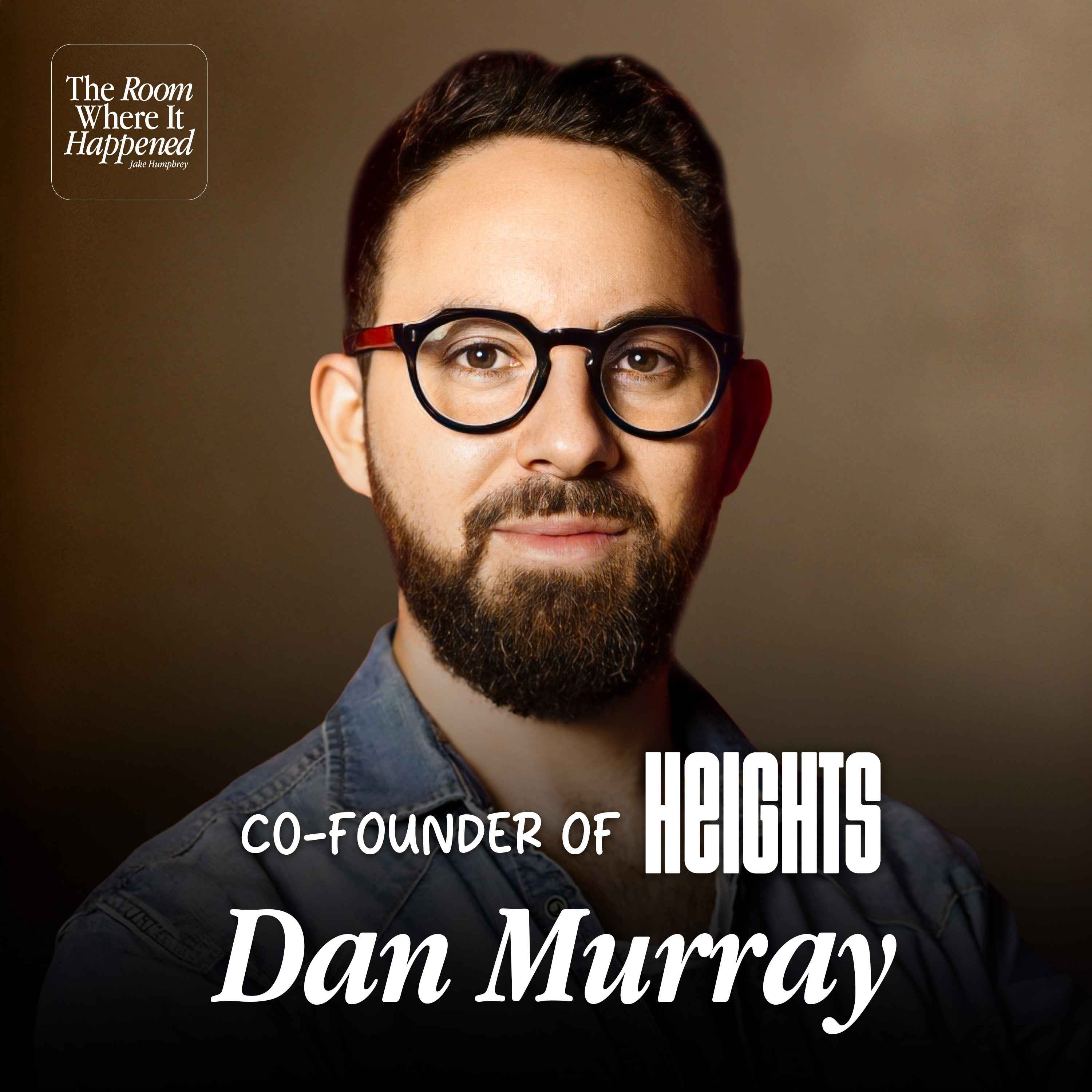
Dan Murray, co-founder of Heights
In this episode, Dan Murray shares his entrepreneurial journey through the challenges faced by Heights, a supplement company, during a stagnation period that nearly led to its collapse. Dan discusses pivotal decisions, including layoffs and rebranding efforts, which ultimately led to renewed growth and success.
Written by AI. May contain mistakes.
Dan shares the early growth and subsequent stagnation of Heights.
“Dan, it's lovely to have a friend sitting opposite me on the room where it happened.”
Dan discusses the difficulties in product development and market saturation.
“And so, you know, 2020 was difficult for everyone.”
Exploration of Heights' marketing struggles and customer acquisition issues.
“So when this stagnation was happening the only thing that you were selling was what's now known as vitals.”
Dan recounts the tough decision to lay off half the team amidst financial struggles.
“Yeah, and you're basically coming up with a logic in business that you would, which is just keep doubling down.”
Discussion on the need to revisit product messaging and customer perceptions.
“because you'll have a monthly burn on your outgoings cost X amount of money.”
Dan explains the process of testing marketing messages to improve engagement.
“And what we learned was through a painful, excruciating, worst six months of my life in business, because I hate this stuff.”
Rebranding the product as 'Vitals' resulted in significant sales growth.
“same product, same bottle, same design, not a single ingredient changed, just the name.”
Key insights on product improvement and customer engagement for founders.
“So we never really had the question of that.”
Learn how impactful titles and thumbnails can drive podcast visibility.
“Where all you do is try and make content as good as is humanly possible.”
Discover the significance of naming and marketing psychology in product success.
“That's not really what the episode necessarily is about, but they know how to sell it.”
Explore the challenges of maintaining credibility through influencer partnerships.
“One thing I really want to talk to you about as well is influencer marketing and working with and partnering with people.”
Hear about the partnership with Russell Brand and its implications for the brand.
“We just spent years defining a scientific product with this amazing science.”
Learn how timing and external controversies impact business decisions.
“You kind of instigated putting the plug.”
Discover how to handle PR crises and manage media narratives effectively.
“It all happened very quickly because I remember sitting on my sofa at home with my daughter.”
Understand the dilemmas of influencer partnerships and missed marketing chances.
“But then he still did like this tweet storm about how Heights uses, you know, whatever, like unethical person to do marketing and stuff.”
Explore how a smaller team can lead to significant revenue growth.
“And he looked at those numbers and they weren't big enough at the time.”
Learn how to prepare for and optimize sales during key months.
“It's probably gone beyond that now already.”
Understand the importance of timing in strategic business decisions, like domain changes.
“You know, you did a post-mortem after something goes wrong?”
Discover how financial strategies can impact operational growth in a startup.
“And actually, what happened to us was we learned that if we'd have had more money, we would have been able to go even harder.”
Learn how maintaining investor confidence can fuel a company's growth.
“Like it's just, you know, it's growing and growing and growing and it's not in the business.”
Explore how authentic partnerships can lead to successful marketing outcomes.
“And in the third month, we started to see customers.”
Discuss potential exit strategies and their implications for entrepreneurs.
“and obviously this is part complement to high performance, but it might also be commentary on committing to a partner in general, which is like you are authentically a customer.”
Explore the emotional complexities of entrepreneurial success and identity.
“And so I do think that there is an exit strategy on the horizon.”
Understand the financial struggles and realities faced by entrepreneurs.
“But the other side of it is I also do want to get a return on investment from my investors.”
Learn about the trade-offs between equity and salary in startups.
“And as a salaried employee, the difference is you have shares.”

Get the gist, explore an idea or ask about something said.
 Claude
On High Performance Business, what are the key points of this episode?
Searching your listeningAutomatic transcript. May contain errors.
0:00Today we're joined by Dan Murray, the entrepreneur and co-founder behind Heites, the supplement company that's built one of the most trusted brands in wellness. And he's about to share with us the remarkable story of how being on the brink of collapse, he was forced to tear down everything he thought about his own brand and ask himself the question, why are we not succeeding? If you've ever wondered how to make a product truly take off or why slowing down might just be the fastest way to grow, this is The Conversation for you. Brought to you by IFS. This is The Room Where It Happened with Dan Murray.
0:35Dan, it's lovely to have a friend sitting opposite me on the room where it happened. Oh, why? Who's here? Oh, someone who's now gone outside. Okay. You're your next guest. My next guest. Look, it's important to say that we know each other already. You partner through heights with us here on High Performance and across all our podcasts, including this one. But I, when researching this conversation, found out so many things that I didn't know and felt bad for not asking you previously. You are quite bad at asking questions outside of podcasts. Yes. Because I use up all my questions on the podcast.
1:07So forgive me for that. So which room would you like to take us to to begin this conversation? It's a virtual room because the year was, I think, 2021 or 2022, potentially. So if people remember, you know, COVID was still going on and heights had a really good start to its journey. And so, you know, 2020 was difficult for everyone. But, you know, in a health environment, you know, it started to get better from about June onwards. and then we were scaling and it was going really well. And I remember tracking our performance versus Huel. So Huel were the company I was looking up to because they were the fastest to reach 10 million or whatever as a DTC company.
1:45We were on track, right? We sort of did zero to 1 million in the first year, then one to five in the second. And that's exactly what Huel did. And that doesn't sound crazy, but it is actually very fast for like a limited resource company. And then we just could not grow past five. And we just completely stagnated. This became a really big problem because our costs went up and up and up. And there's another challenge, which is we only have one product in the market. So the way that Heights works is we create the world's best supplements, best products, and they take a long time to make. But we don't really know how long they'll take to make because we have a whole scientific process.
2:21And sometimes they don't pass. And so we have a whole bunch of products that have never even seen the light of day yet. And our second product was going to be a probiotic. and it was eventually a probiotic but we were always like it's coming out in six months. It took three and a half years until that came out. So we were stuck with one product. So when this stagnation was happening the only thing that you were selling was what's now known as vitals. Right, and what was it called then? It was called the smart supplement and this is part of the challenge and the room I want to set the stage in because the smart supplement concept was it's sort of a multivitamin but it's smarter than a multivitamin And people anchor multivitamins as a very low quality, low cost, low value product in the market.
3:06But multivitamins strategically is the biggest, most sold type of vitamin in the world. So strategically, it's a massive opportunity, but no one will spend a lot of money on it. So we were very much like, let's not call a multivitamin as a terrible idea, right? Supplement is broad, smart supplement. We thought we were really smart to call it that. And there is a thing when you're selling products, which is you go after an early adopter market early on, right? This is typically people who buy the first iPhones, the new generations of things. They're always trying new things. They are very classically entrepreneurs, a lot of other categories as well, but there's a typical market.
3:39What happened to us was this marketing of the smart supplement really did land with smart people. We'd created a newsletter. We'd built up an audience. We'd been talking about this space a lot. We'd built a lot of credibility up. And people who are intellectually curious and like to research things and spent the time were willing to read our science, read the research, buy the product. It was great. But five million pounds of revenue was pretty much, I guess, what we learned was the ceiling of people who would be interested in a product like this. We had to work out why is no one buying our product.
4:14So we had this really interesting thing where we had a subscription product, all of our products on subscription. We have the best metrics in the world in our category on retention. And we've always set up from day one to be a retention company. So because we set up to be a subscription company, our philosophy is retention of customers is rule number one, two and three. So as long as we design the best products, we've always believed that they'll work and people will keep taking them. So that's what happened with that product. The only reason we survived as a business is because every month the same people kept the product.
4:48But we could not for love nor money, and I mean a lot of money that we were spending, maybe like 100 grand a month on trying to get new customers, couldn't get any more through the funnel. No one. So were people trying it and not sticking around? Or were they just not even keeping it a go? People weren't even trying. Our marketing just stopped working. We've done the same thing, broadly the same messaging. What a horrible situation when you're going, well, this worked last year, so let's do what worked. And then it doesn't work. Yeah, and you're basically coming up with a logic in business that you would, which is just keep doubling down.
5:16What we're doing is working. And suddenly what we're doing is not working. And now we've expanded the team two times over. so for context this is 2022 we had five million pounds of revenue we were um about 15 people and we hired up to 25 people including a whole bunch of senior hires ready for this big expansion and we were going to go into the u.s which we did try and do um and started off in la and hired someone in la on like an ungodly salary um and uh all of these plans and everything failed i couldn't make a single dent. And so... And would you have eventually gone bust with those outgoings?
5:58Completely, because we were burning money. So we weren't breaking even. We were spending way more money than we were making. And all through a leaky bucket, nothing was working. So after three or four months of this, we realised two things. One, we'd have to raise more money, but now our narrative was really weak. Whereas if we'd done it a year ago, the narrative would have been strong. We're growing, it's exciting. Now the narrative is we're flatlining. We're spending all this money. No one's buying it. And the only narrative that we've got is that people are sticking around, which is cool, but, you know, it's not enough.
6:33So we had about four months of runway. So four months of money left in the bank if we didn't make some drastic calls. And so we basically did the only thing. It was the end of January. So we were like, listen, it's January. That is going to be our best chance. Let's wait until the end of January. We kind of needed to make this call, by the way, in November. and we sort of knew that we needed to do this in November. But the problem is November and December are bad months for us. We're in health and wellness. So we were like, we've got to wait until the end of January, which again is awkward, awkward timing because you'll have a monthly burn on your outgoings cost X amount of money.
7:04And you know that the data is going to be bad in those months. So you're kind of like, let's waste two more months of money where we know things won't work and hope that January goes well. And it didn't. It went completely flat as well. And so at the end of that month, we had to let go of more than half the team in a day. and it was horrendous. And who had that conversation with you? Oh, Joel and I had to split it up. So for context, Joel's your co-founder. Joel is my co-founder, and we were, you know, because, again, horrendous, but it was remote, which is like, you know, no one likes letting go of people in the first place, but letting go of people remotely is terrible, and letting go of that many people on the same day is because every single person we need to do this has a 15-minute window, and we would just split up, you know, pretty much six or seven people each, 15-minute increments, and just bang, bang, bang, bang, bang, bang, bang.
7:51awful and that in some ways it feels kind of like ruthless giving someone a 15 minute window but you're trying to save a business as well here there's two sides to that yes but actually you know this isn't my first rodeo I've had to let go of lots of people before I've had to shut down a company and let everyone go right my last company failed so I've let 40 people go at the same time the other side of this is actually when you do that people are in shock that's not the time that they want to have a conversation about why, what is it, etc. You've delivered bad news, they want to go away and process it.
8:25So every conversation went the same, which is, this is short, sharp, this is the information, this is the pre like package, this is everything we're sending you, it's all going to go to email right now. Let's set up a call in the next 24 hours at your discretion when you want to. Obviously take the rest of the day off. But when you want to, let's have the chat that is all of the, you know, now you've gone away and gathered your thoughts and stuff. And actually, that's better because people don't want to linger. and listen to the founder justify all the reasons. You've just delivered shitty news.
8:53They just want to bugger off and not look you in the eyes, especially remote. They just want to go away and talk to their partner and say, this has just happened and read the email. So we were very well prepped, which is the good thing about being a repeat founder. You're not unprepared for these things. But it was horrible. Everyone left in the company was pretty much under the age of 25. This was a really tough, mature decision. And in my last company, we left it to the wire too long. We were operating on hope. you know like maybe things will change this time around we were like like maybe things will change but we also need to be in control of if they don't change and we need enough runway to be able to do that and by letting go of all these people giving them their notices etc we extended our runway by another six months which gave us enough time to actually figure this out and the key thing here is what we did figure out with a much younger junior team by the way almost all of who are still at heights now in senior roles is we need to go back to the drawing board and not try and spend money on marketing.
9:50Marketing's not working for us. So what is it about this product that was so good and that everyone loves that they're not liking anymore? What is it that is wrong? And what we learned was through a painful, excruciating, worst six months of my life in business, because I hate this stuff. I'm not, you know, I'm good and excited on creative and growth and stuff. I hate boring stuff and it's so boring, but it's just endless tests on messaging and what we basically learned was other than when we launched it was all about brain and there was only a certain a group of people that are really interested in brain most people want like brain and body benefits and we learned through doing lots of research a lot of our customers were taking our product vitals and a multivitamin as well and we were like why?
10:36they're like oh because this is for brain that's for body and we're like oh okay we've kind of messed up the messaging there because actually this is brain and body it's giving you everything you need in vitamins that's the whole point and so we've messed up on that We've gone too hard on that brain messaging and not really cleared that up for them. So can you just explain the process of this system of messaging and then getting feedback? How does that work? Yeah, so incredibly boring stuff. But basically, you're running hundreds of tests a week that are basically two creatives, two ads, right?
11:09One will say something like, you know, what it did at the time, the smart supplement, you know, brain and body or whatever. and then something else will say, everything you need, nothing you don't. And then you'd put£100 against each ad or whatever and all the ones that get clicked on are the one with better messaging. And so you go through this process hundreds of times and you're tweaking a word, you're tweaking an image, you're not trying to spend thousands of pounds and grow loads of customers, you're spending incremental amounts of money. So it's not about growth, is it? It's about saving the business.
11:40It's about saving the business and getting to the right message. And then in the end, the big, big unlock, like the one that drove the most engagement for us by a million miles was changing the name the smart supplement to vitals and we got to the name vitals out of a list of 20 different names and all of the tests endless endless endless tests 100 pound here 100 pound there 100 you know over months you end up with vitals and then you start to be like okay look what happens if you put 500 pound what about a thousand pound and suddenly you're like why people are buying this now as same formula same product, same bottle, same design, not a single ingredient changed, just the name.
12:16Wow. And look, again, for total clarity, you know that I'm a customer of yours. Yep. And I buy. You do. The heights that I take. You do. I have a monthly subscription. Yeah. And you will know that we are really strict and stingy on that rule. All of our celebrities, every single person that works with us has to be a paying customer of their own volition when they do any freebies. I think it's very important. Otherwise, it's mixed messaging and we can talk about the partnership that we've created through our performance a bit later. But the reason why I wanted to mention that was that I would have assumed that the only answer would have been, let's make the product better.
12:51But this is quite an important thing for founders or entrepreneurs listening to this, that sometimes the answer is kind of hidden in a different area. You know, you already had an amazing product. That's the reason why I wanted to partner with you. I think that's a very important point, by the way, because there are different buckets. You have to ask yourself a question. We genuinely, credibly didn't think we could make that product better. So we started off the whole point of this whole entire product was let's design the best product we possibly can with the most amazing people and a big budget.
13:18You know, we had 750 grand to start with as a pre-seed investment to make a single product. Like it was the best already. So we never really had the question of that. And also our data on retention showed that that wasn't a problem. We kept our customers. So it had to be a different problem. I think it's great. And actually it applies to different areas. is I remember, not dissimilar actually, looking at our growth on YouTube on high performance a year or so ago and thinking, why is that not going anywhere that's very exciting? And then listening to the episode and thinking that's a bloody good conversation.
13:51And then looking at someone who was getting amazing growth, listening to the conversation they were having and thinking that's not a very good conversation. What's the disconnect here? And the disconnect was, I came from a linear TV world, right? Where all you do is try and make content as good as is humanly possible. and I didn't pay any attention really to the fact that it doesn't matter how good it is unless you're able to sell it to people. Yeah, thumbnail. The thumbnail, the title. Can you tap into the algorithm and start to kind of get some traction that way? That was a whole new world to me.
14:18I mean, you look at the thumbnails, you know, for example, I was the first video guest ever on Diary of a CEO. So you go back to YouTube. On that show, you go oldest to newest, oldest, I'm first, right? And that thumbnail for me is the title is something like depression, anxiety, and insomnia, right? So even from day one, they were like, Christ, right? That's very punchy. And actually, if you go on Spotify, because I once had someone come up to me and say, someone DM me basically, and say, you know, you really helped my mental health, et cetera, listen to your episode, blah, blah, blah, blah. And I said, how do you discover it out of curiosity?
14:54And it's like, well, I was going on a walk, and I want to change my pattern. I was having really negative thoughts. And I typed into Spotify, depression and anxiety, and you were the number one search result. And I was like, oh, right. Is that a good thing or a bad? I was like, that's fascinating. That's good to know. But, you know, it's a perfect example, right, of like, they know. Shock. You know, I talked about many things on that episode, but it was like shock factor was everything. And it set the tone on Diary of a CEO, right? Like, you look at those thumbnails. That's not really what the episode necessarily is about, but they know how to sell it.
15:24And so many people have taken that on and grown their own podcasts through a similar method. So in the way that thumbnails and titles were the answer to growth in a podcast space, the name of the product was the answer. Have you worked out why Vitals works and the smart supplement didn't? Yes, there's a very simple solution, I think, as well, which is we came up with a great category name as well, by the way, which I loved. And all of our investors and any like smart, you know, whatever person was like, guys, this is genius, which was brain care. I came up with that idea. I was like, you know, you look after skincare, hair care, nail care, this whole investment deck.
16:06You know, we're inventing brain care. And everyone was like, that's fucking genius. There's a whole category to be made here. And I was like, God, I really am. Everyone keeps telling me what an unbelievable smart God I am. And then we do ads and stuff and no one cared. No one was interested. And the reason is no one is on social media looking for a solution to brain care. Right. People search and look for solutions to their problems. And if you have a problem no one is aware of, like brain care, no one wants the solution. And so similarly, no one is looking for a smart supplement. but people are looking for something that helps their vitals.
16:43Vitals already explains a few things to them. It's like, oh, okay, vitals, what's that? I guess it's my vital nutrients. I guess, right? And so the curiosity gap is so much closer to something that they would be searching for online. And so they will then go and read the vitamins. You know, they will go and look at what's in it. Whereas a smart supplement, no one's looking for a smart supplement. That's actually, smart supplement is about us and vitals is about you. So there's quite a lot of this like marketing psychology that we completely missed. And I think this is something that founders can often get so wrong, which is you can get absolutely like warped in your own reality.
17:19And especially like in, you know, the investor and people around you space. So everyone's like, yes, you are a genius. But actually, you know, what you're always forgetting is it doesn't matter how smart you are when naming these things. You need to think about what your customer is searching for. And the closer you get to that, the better it is. Really interesting. So it saved the business? It saved the business, absolutely. If we didn't do that six months of hardware and give ourselves the runway, there'd be no heights today, like 100 % guaranteed. And so we always look at that year as that was the most grinding, miserable year.
17:52But it saved the business. One thing I really want to talk to you about as well is influencer marketing and working with and partnering with people. Because I think the biggest challenge that you have in your world is credibility. As soon as you lose credibility as a product that people ingest, I think you're done. So how do you get this right? And I suppose I'm kind of interested in who was the first person or when was the first time you thought, hey, that person buys our product. Maybe they could also sell our product for us. Well, we do have an ironic reality to this. So when I started Heights, I was obsessed with, and I still am obsessed with science.
18:31I love science. I think it's awesome. I've taught myself science through the process of doing Heights. I'm not, you know, interested generally in influencers or celebrities because actually it's just a person. And if they're a good person, I like hanging out with them. And if they're not, I couldn't really care less. And I like scientists. So I like people who most people have not heard of, right? And so I started off, you know, Heights by writing this newsletter and I was literally tweeting the scientists and their research papers that I was quoting in our newsletter at Heights. That's how we started.
19:03and our chief science officer, Dr. Tara Swart, who I think you know. She's been on. Oh, she's been on. Yeah. High performance, right? Yeah, yeah. So she is a good example of someone I was tweeting her research and then she was like amazed because this was before she was famous. She was like, oh, there's some geek that's tweeting my research paper here and we went and met for a coffee and I was telling her about heights and she was like, I've had a very similar idea. She's got a PhD in neuropharmacology. I was like, that's literally what you need to make vitamins. So I designed vitals with her.
19:31like it was exactly like worlds colliding of like fortune and perfection but following geek science so she's a good example of someone i am uh you know intellectually impressed by um but we were launching and um in pre-launch we had one investor called damien who's the founder of we transfer lovely lovely lovely guy very arty and creative and he was like you know who would really like this product steven fry do you like steven fry i was like i fucking love steven fry actually in terms of a list of celebrities he'd go right at the top for me because intellectual, right? I'm like, yeah, oh my god, that'd be amazing.
20:09He's like, do you want me to send it to him? No promises, don't know what will happen. I was like, yes, that'd be great, but to your point, this is something, this is a pill that a random is sending someone and actually celebrities get sent things all the time and it's actually annoying at some point, right? You use random shit at your door, you don't ask for it, you don't want it, and you kind of feel bad that you've got to say no to it. So imagine how much he gets in an actual famous celebrity These are random pills. But Damien said, like, do you want to try it? And he actually did. So when you send heights to someone and it's like gifting, it's another reason why we don't really do it, is you can't really genuinely tell if they're going to take it, right?
20:45Once you're in their privacy of their own life, it's are they going to build up a daily habit or not? That's a big commitment for something they haven't bought and decided on themselves. He ended up actually taking it. And I know this because three months later, we sent a list of 100 people that we wanted to be early people or whatever. we sent it to 100 people and we set it up so that at the end of three months it was going to be a day before our launch day we launched january the 6th 2020 and um january the 5th was when people's supply would run out and that was strategically done and so we're like we will find out naturally who reaches out to us to see if it's real or not and they've been taking whatever and stephen fry on january the 5th got my email from damien and wrote me this hilarious email about uh long story short something along the lines of um daniel i've been like absolutely loving these like magic little beans he called them um and i thought they'd really help with my wit my intellects like help keep me sharp all of these amazing you know adjectives you want from someone like stephen fry but i've just gone on the website and i can't buy them so now i'm wondering if they haven't maybe worked at all um which i was like sitting with my mom at lunch reading her the theme of the stephen fry completely like starstruck and was like how hilariously quintessentially Stephen is this email.
21:55And why couldn't you buy them? Because we'd set it up that you had to have a code. You couldn't buy them because they weren't launched until January the 6th. Right. Sort of pre-public launch. Totally. And so in a moment of clarity, fortunately, I said to him, I will give you the code so you can buy them and be our first customer if you give us a testimonial about your experience that we can use in perpetuity, rights-free, all of this stuff. And he was like, absolutely. And he gives us amazing testimonial, image rights, et cetera, et cetera. He said, we can use it on ads, use it on landing pages, on our website, because it's true and authentic.
22:26And he has been, so firstly, he was our first ever customer. Secondly, he's our highest value customer. He spent the most amount of money at heights, full stop. Yeah, the most products and the longest time. Number two is my mum. Well done, mum. Not even your mum gets free products. She still moans. She even moaned yesterday in front of some friends that I don't even get her free. But the reason why it's important, it was really interesting to us. and then a second person in this sort of influencer marketing world was Stephen Butler and you know that helped me obviously go on Diary of a CEO because he'd been taking the product for like six months he really had a that's how you ended up as his first guest yeah so he was like I love this product we were talking quite a lot anyway because I love this product it's amazing will you come in do you want to talk about it and he knew actually because I knew Stephen from before he knew about my mental health journey actually because I'd been sharing quite a lot on LinkedIn I'd had insomnia and that's how I started so he knew a lot about that hence the title of the episode correct yeah Yeah.
23:22So he was like, I'd love you to go and talk about that because you're quite honest about it. Do you want to? Do you mind? It'll be the first time we're trying to film something. I was like, of course, mate. And, you know, who knew? I dressed like a tramp in it as well, which always gets mentioned. I think you look good. You've got glasses, big hats going on. Yeah, glasses, big beanie. It was, you know, if I'd have known. But anyway. It was a good conversation, actually. Yeah, and it was, you know, like two and a half hours of it. Very honest. And anyway, so that stuff was like early and interesting.
23:44But I was still, I don't want to be defined by influencers in our company. I don't think it's the right thing for us. So I didn't really utilize either Stephen Bartlett or Stephen Fry's testimonials and advertising, much to my mistake, like over the long term, because I didn't want us to, to your point, I didn't want us to lose credibility. We just spent years defining a scientific product with this amazing science. Your chief science officer, Dr. Tara Swart. I didn't want all that credibility. We're doing science papers. You know, they take years. And then we're like a randomized control trial, all this stuff that takes a long time in science.
24:17and I just did not want to destroy the credibility of the company by being like an influencer-y type company. And I'm very hesitant about it. And we were doing well anyway, right? So we were kind of like growing and things were going well. And then we had this complete flat line. And I got a bit desperate and was a bit stressed. And one of the customers who reached out to us, and I did think it was super interesting, and we'll give some context in a second, but was Russell Brand. And Russell Brand was like, I've been taking a product for the last couple of years I really love it you know yada yada yada and we're like that's cool I can see that that's great and he's like I've never done advertising on my show I'd love you guys to be the first advertisers and we're like that's pretty cool like you know Russell Brand you know is obviously perception has changed a lot in the last few years especially like from left to right let alone the scandals from left to right wing but as a lefty you know like a socialist and all that stuff he really was anti-ads anti-everything and we were like That is fascinating.
25:16It must be a big statement, right, to his audience to be the first brand he ever feels comfortable advertising because he so believes in it. And the other side of Russell Brown where it made loads of sense for us is he's on a big wellness journey. I have to say, like, worked with him for six months on his YouTube channel. Right. We're the only advertiser. He's just an unbelievable deal, which was like... Could you share it? Yeah, I mean, happy to. We spent 17 grand a month on advertising on his YouTube channel. Bear in mind that he has 7 million YouTube subscribers. And each video would get roughly, you know, a bad video would get half a million views, but a good one would one to three million views.
25:52And on this journey that we've shared with our audience of starting Heights, doing well, chatting to Stephen Fry, going on Stephen Bartlett's podcast, then having the flatline moment, at what point did Russell Brand appear in this timeline? Sort of like towards the tail end of this bad period. Okay. So it was a big... As you were finding the answers. Finding the answers. It was probably still Smart Supplement. wasn't actually from memory it was a smart supplement it wasn't um vitals it was halfway so like we did get to buy so probably half the ads are halfway through that six months journey then changed to vitals and then we actually launched biotic and that actually went really well with him because he loved the probiotic and he felt more comfortable talking about gut health actually for some reason um and it all came through much more authentically and were you selling product through that like how were you able to know if we were it was one of the only things it was because actually that was like one of the only only things so you know in this world where I'm saying like, no, none of our money's working.
26:45Nothing's working anywhere. You know, we'd have a tracking code, you know, brand 20, whatever the thing was. And it was the only thing pretty much being used because again, like this was a sort of slight aside insight when all your marketing is not working, but like charismatic, you know, influencer is managing to get through. It was a signal, right? And that is a signal. And that is like, you know, we talk a lot on startups about, you know, what is noise and what is signal. And the signal here was no matter the fact that we can't sell our own product and get it through the door, when you find someone who is charismatic, passionate about what you do, it's authentic and has their own audience, they can pretty much sell ice to Eskimos.
27:27So maybe there's something to look into here. And his ads, you know, it's not, he had a lovely team and every week they would call us up and be like, these are the videos this week we're thinking you know it's a daily news show so could change but these are roughly the things we're thinking and you know they start off you know be like we'll pick like that one and that one like that's that they sound safe enough but you know it got to a point where like here are your seven options and you know one's about lizard people that one's about and we were like maybe we'll pass on this week like none of them seem like a good idea so we got to a point where we're like listen where he's going on his content journey it doesn't align with us and so let's agreed to stop here.
28:06It's been a great experience. You kind of instigated putting the plug. We called it and then a month later, literally after ending the contract, the whole controversy with him came out. Where were you when you sort of first heard that the stories coming out about Russell Brand were not nice? It all happened very quickly because I remember sitting on my sofa at home with my daughter. She was maybe a newborn, like one or something at that time. And I heard about it. it like you know someone in the team basically found it and sent it over slack and was like god you know that is pretty good timing for us but this is pretty terrible um and it was in that lead up right because actually there was a few days when he was tweeting a lot about it there's going to be the expose so the article hadn't come out yet from i think it was the sunday times or something um and so he was starting to tweet it a lot and then his youtube videos were all on the defensive about this thing and you know trying to be cancelled and everything else and so it was a like build up of like god this is just like uncomfortable all of our ads had stopped running anyway so i at that point i was obviously like yeah thank god but then we started to get journalists get in touch with us and they were trying to write hit pieces and one of them actually did start writing a hit piece for whatever reason the editor of tech crunch just started writing this tweet storm about heights um he'd contacted me and i'd basically put him in touch with my pr agency because I was like, listen, he's trying to write a hit piece.
29:32We don't work with him. I've sent him the contract. He's still trying to. So I'm not equipped to deal with this. And also we haven't done anything wrong. So you guys are our PR agency. Can you just deal with that? And they did. But then he still did like this tweet storm about how Heights uses, you know, whatever, like unethical person to do marketing and stuff. And it's just like fascinating because it isn't true anymore. Like as in like literally out of contract, not a thing, have verified that to this journalist with evidence, and he's still done it. Now, obviously, why TechCrunch? TechCrunch, which is the biggest technology startup publication, but nothing to do with our space or anything, is interested in that.
30:13I think more had to do with the fact that he just hated Russell Brand. And maybe us, who knows. But the point being, that's as far as it got. And it could have got a lot worse because a lot of other journalists did contact us about this. But fortunately, when I showed them the evidence, they were like, okay, there's no story annoying. And did it make you reflect on Stephen Fry and Stephen Bartlett and think, I missed an opportunity there? Yeah, so Stephen Fry, who, by the way, is the fastest emailer back ever. He responds to everything, every time. He's just such a legend in every kind of way.
30:44He wouldn't do the video content thing because he's chairman of mind. So he's super conscious that he doesn't want to get into any kind of conflicting space, regardless in anything around health or wellness or mental health because Chairman of Mind is his number one priority. And I don't think there is a number that he would be paid. Not that I think you could get to that number anyway because he probably gets paid very well and everything. But I don't think it's about that. It's just a creative decision. He's always said the same thing. I like that though. I love it. It's great. It's frustrating for me because he'd be perfect, but he won't do it.
31:16Stephen Bartler, yes, we missed that opportunity. He asked us to be the first advertiser on Diary of the CEO. I wanted to do it. And I said, yes, but we had a head of growth who was one of those big paid people, etc. And he looked at those numbers and they weren't big enough at the time. And Stephen wanted, I think, quarter of a million pound for the year, which would have been a phenomenal investment on the growth that they had. But we had to say no, because the growth wasn't that. And Huell said yes. And look at that. You know, I mean, that's the different trajectory and the different choices.
31:44So we were probably just a bit too early to take the opportunity. And I wish we had. But also, you know, you can't blame everyone else. Like, I'm the founder, and I could have just said, you know what, yes, this is our big bet this year. But I didn't have not just the confidence, but it was, I had that concern about going with an influence-led person versus scientist. Maybe that was the right decision over the long period of heights anyway. You know, I can look back in the whole bird's eye view and be like, well, it helped us work out the right things. There is another thing, which is if we'd have done Diary of a CEO, we probably wouldn't have learned the messaging test.
32:20So I think we would have ended up in that problem anyway. Yes. But more stressful because we probably would have had more costs, more people, had to let more people go. I still think you would have ended up in the same problem. So as we talk now, you announced recently£20 million of annual recurring revenue for Heights. It's probably gone beyond that now already. Yeah, we're tracking towards£25 for the end of the year. That's ridiculous. So how long ago did you announce£20 million annual recurring revenue? Last month. So it is growing really quickly. That's amazing. In the last year, we've gone from, so January ended on 12.
32:55And so we would have almost doubled in a year. Yes. Which is... Yeah, but you've also increased 25 % in a few weeks. Yeah. You've gone from 20 to 25. Yeah. And actually yesterday we had our biggest, I was telling your team, we had our biggest customer day ever yesterday. So we're really trying to push the boundaries at the moment. And by the way, can I give you context that our team now is smaller than it was at 5 million. So we now have 22 people. um we're 25 at 5 million we're 22 now at about 22 and a half million right now so the point being you know more people doesn't always solve your problems right actually getting the right people and being really thoughtful about how we do stuff is usually the right you know not in every industry like that doesn't track to everything but the way that we've learned it um more people isn't a solution to every problem it's a good bit of advice um because people often think that that's at Whisper my production company I always used to get excited about hiring people because I thought it showed how powerful and great we were then when COVID came and we couldn't make any content that was the one thing that nearly killed us as a business you know because suddenly you have got big offices and hundreds of people to pay and all those sorts of things so it's a tightrope when you've got a lot of staff yeah and also by the way like we you know last January so every single January pretty much including the one I mentioned like we've fucked it up like there's always been something some stock issue some marketing problem like we've never been able to make January work so the theory is that we know November and December are bad for us we don't do Black Friday Christmas is Christmas like no one wants health messages forced down their throat at Christmas here's some vitamin fuck off so like we just don't bother right we're like hey there's no need like let's just you know regather and focus on Jan but then we've also managed to mess up Jan every year this year was the first year ever where we all of the decisions that could, like we did what's called a pre-mortem.
34:46You know, you did a post-mortem after something goes wrong? For the first time ever, we did a pre-mortem, which is, hey, January's gone bad. Why? What did we do that went wrong in January? And last year, after five years, by the way, of trying this, like we went from yourheights.com to heights.com, got the domain. And it took five years to negotiate that. And we got that domain in, I think, like May last year. And we did not switch it over until March this year because one of the things on the list of things that could go wrong when you do a domain switch is it messes up all of your Google, all your Facebook tracking, everything it messes up.
35:20There's some problem that will happen. So it's a perfect example of maturity. I wanted ego-wise more than anything, spent all this money on a domain to be heights.com. But you know, it doesn't matter. It's one of the things that could have maybe gone wrong for January. So we just didn't do it. And there were lots of things like that that we just, we left them. Like we've got it, it's fine. Let's just leave it. We'll do it after Q1. It's just not worth it. So last January, we, you know, for the first time ever, were able to push marketing really, really hard. And actually, what happened to us was we learned that if we'd have had more money, we would have been able to go even harder.
35:57Like we probably would have had an even bigger January. So we did about 30 % of our annual sales all in January went from about 12 million to I think 16 million just in January. Right. So the point being, January is good for us. And we learned that, right, there's a combination of good messaging, good product and right time. And so this year, in preparation, we did our premortem. What's one of the things that could potentially go wrong for us? And actually, when everyone hears these numbers, like, why don't you have more money? Like, you know, all your money goes in stock and research. So the more money we have, the more research we do.
36:31Science research costs hundreds of thousands of pounds. It's cash out the door and you don't see any return on it until marketing years later. So that's one of the big commitments we have. We have an in-house science team. We spend fortunes on it. We're doing a randomized control study at the moment on vitals. We've got one running on biotic. They take a long time and they cost a lot of money. But the other thing is we have millions of pounds in stock. Like it's just, you know, it's growing and growing and growing and it's not in the business. so one of our pre-mortem things was well actually last year if we'd have had more money we could have grown more so if it goes so well like we don't know it will but if it was to go so well as again we don't want to stop turn off the tap when it's working and wait until the cash flow cycle rejuvenates in february so we just just just did an investment round and um we did it internally i haven't announced this anyway yet by the way um but we just did an internal round raised another two million pounds, which was pretty much just like extra cash for January.
37:28Did a 60 million pound valuation. And it was all internal and done within one week. As in every single one of our existing investors was like, here's the money. I was wondering why I never got the call. Yeah, that'll be why. No newbies. And that is a great example of, you know, a company that is, I think, doing the right things. Because when you are doing the right things, your existing investors want to keep, help you grow. Like you don't need to necessarily go to new people they've got many different places that they can place their bets you're now growing in confidence for them as a place where they can place a bet and feel like you guys are doing the right thing and you're executing the right way and so you're moving the right way and i think you know being running a business that's now you know 60 million pounds of valuation or whatever i also think is you know an amazing testament to a very very small team and like makes us one of the you know fastest growing certainly supplement companies in europe but like health and wellness companies in europe and i think that is all down to spending the time on the year from hell when things weren't working and i think that we would not be here today if we hadn't done that before we before we start to wrap things up i'm interested in whether and how the high performance relationship has worked for you because it's again it's a sort of case study from both sides yep so um high level what we first learned about podcasting not through you I think we did a couple of tests early and what we learned was they didn't really work we did some advertising you know a few well-known podcasts a month here, month there, etc no redemptions no one's using it is it working?
39:07we don't know so we had like quite a low confidence thing in it we started talking to you and I think also because you were genuinely a customer and all of these other things it felt like let's give it a proper go And I think our first contract with you, we did three months. And in the third month, we started to see customers. There's like no one again, month and two. Month one, month two. And it usually would be like panicky at that point. Fortunately, in month three, we started to see some customers. We were like, okay, well, that's encouraging. Starting to see something. Obviously, you are an expensive podcast because you are a premium podcast.
39:39And so it felt uncomfortably risky for us because we weren't like flush with cash at the time. But let's just keep it going for another three months. and then month three to six, exponential value, and then six to 12 again. And so what we've seen with you is, and obviously this is part complement to high performance, but it might also be commentary on committing to a partner in general, which is like you are authentically a customer. In your podcast suite of all the people you work with, the ones who advertise us are the ones who are actually customers. The ones who don't are the ones who aren't.
40:13So there's a natural thing that happens there as well. And, you know, we've learned that the authenticity and the trust with the audience and then space and time without pressure is the right attitude. You know, I think that maybe that is unique to podcasting. Maybe it's YouTube as well. I don't know. But it is super important if you are running a brand to try and, as they say, let them cook. You've got to give things time. And actually, you know, I listen to a podcast junkie. I listen. It's almost all I do is listen to audiobooks and podcasts. like nonstop. And so I understand my own customer behavior.
40:50I think that's also something that people running brands need to think about sometimes that we forget to do, which is, oh, yeah, what do I do as a customer? I am that user. Do I hear Jake talk about, you know, clothing brand once and then go on, he's going by that? No, but if I hear it like, you know, over three months or whatever, I might eventually go and have the curiosity. And once I'm on the site, I'm probably quite close to converting. But so there is just time, you know, you need to think about your own consumer behavior and generally consumer behavior and have some high conviction and trust in the person that you're working with.
41:23And I think if you do those things, you start to find magically things start to work. So the future, do you have an exit strategy? What does future planning look like? So really candidly, because I do think that founders always pretend that they're not interested in an exit and everything else, right? I have already failed my investors once. I am 100 % determined for my own peace of mind, ego, chapter closing, narrative, whatever the thing might be, I want to get a great return for my investors. I want it for myself, of course. I'm not going to pretend I won't like the idea of money, but I need to get that exit for my investors.
42:04And so I do think that there is an exit strategy on the horizon. We're obviously contacted all the time at the moment by people we always say no thanks um apparently that's the best strategy um but you know we're not interested at the moment anyway because we're very happy there's two sides this one is um philosophically i do struggle a little bit because a lot of my friends are very successful entrepreneurs many of them are the ones that you've interviewed on this podcast many times and on high performance and they're not happy having sold their company because they realized that their company was their icky guy and it's quite possible that heights is my icky guy it is quite possible that you know i cannot express to you the amazing thing of working in the space of health and getting customer reviews every single day because now we're big enough that you get these kind of reviews every day you get you've changed my life type reviews in great detail by people of all ages with all these different health conditions which is really annoying because they can't publish it on our website because it's health claims um but um that's incredibly meaningful and will make anyone want to go to work.
43:07So it takes time to build up to get to that point in a company. And then like, what else would I do? I don't know. This is a cool consumer brand that people love, that people think I'm cool because I've started something cool. That's the other benefit in consumer brands is people are aware of them. And I make people's lives better. Like, you know, it's quite possible. I won't ever find that again. So I'm quite reticent to rush to leave because I am really aware of other people's challenges in this and it is no one feels sympathetic to rich founders that have exited and like I've lost my purpose but sensible entrepreneurs who understand that there is so much meaning imbued in the work that you do and your identity and I've already lost one identity before my last company failed I can relate and so I am conscious of making sure it's the right time and I am emotionally capable of handling that.
44:00I don't want an early midlife crisis. But the other side of it is I also do want to get a return on investment from my investors. And also financial freedom sounds absolutely incredible. Who doesn't want that? That's the other thing that we have to mention here. If someone hasn't been on an entrepreneurial journey like you, maybe they're thinking about it, maybe they're young and they love the idea of this. You are now co-founder of a 25 million plus ARR business, right? Worth easily£100 million, right? If you want to put the valuation on it. But you're not living in a mansion. You're not taking£5 million salary.
44:34You will not have financial freedom at this point, right? No, not at all. And we have to talk about that when we talk about these journeys. Oh, 100%, not at all. And also for so many years, Joel and I were paid like absurdly little. So, you know, I think the first time, But I left advertising. I was getting paid 70 grand a year because I was quite good at it. Or it got quite senior quite quickly. And then I think I was paid, the highest salary I was paid by my own company, so my own thing, was 50K. It probably took seven years to get to that. I did zero the first year, 12K, and I moved back in with my mum, 12K the second year, 18K the third year, because it's really important to have the cash to pay other people.
45:21And so who is where, you know, in this, you know, diagram, where is the money going to move? Always from you. Always from you. And whenever there's a problem, there is multiple times. And actually, by the way, the one lesson I really learned in my last business, it was really important. Joel and I in our last business multiple times sacrificed our salaries and didn't like make it official. So we were like, OK, we can't afford to pay everyone else this month. We will not take salary for three months or something like that. Right. Multiple times. But the point is, we didn't do something like move it to a director's loan or move it into some kind of structure that's on the business so that when the business can afford to pay you back later, you can get paid later, which, by the way, would be the smart and professional move.
46:04So this time round, it's when we've had shaky times. We've not paid ourselves anything. We've done things like a deferred salary. So we're not getting paid anything. In those times, I was talking about those six months, we went right back down to, I think, like 20 grand salaries, right? Like nothing. because we had to extend the runway. But what we didn't do that time was be like, well, whatever. We said, we'll defer our salaries. So if we get out of this, then when we have the money, we will be able to claim that salary back with, you know, getting paid net net over the year, you've been paid the right salary.
46:36But these are some things that you learn the hard way. We've also put cash into our business in the last time, which didn't go in as director's loans, which was also really stupid. So when it failed, we lost everything, including all of our loans etc and actually you know this time around when we have had to put money in to seed it and everything else they went in as director's loans right which means that you get the money out and you get to take the loan back um but again it's only the fails that have taught you this stuff totally but the point is like because of all of this stuff like obviously no you're living like a completely normal i think the really interesting thing that people don't actually understand and i i've realized more recently a founder is a salaried employee and quite often the worst paid salaried employee, certainly the worst paid in the senior team.
47:18And as a salaried employee, the difference is you have shares. You are always the person who values those shares the most. You can try, you know, I appreciate so many people are like, everyone should have equity in your company. That is a lovely talking point. And it sounds pithy. And I know Simon Squibb, who's one of my really close friends, always bangs on about this. But like, listen, in the cold light of day, if you are someone, if they want fucking shares or more money, they'll say more money. So you've also got to be real and practical with people and offer them the choice. And most people do choose more money.
47:51If you ask a founder, do they want more shares or more money? They will always go more shares. So that is the difference. People make adult choices and no one values shares more than a founder. And as a result, your salary is always lower. So you are a salaried employee until if you're lucky, everything goes well, you sell your company, you cash in those shares, you're rich one day, that's fantastic. But it was certainly after a Very long period of being one of the worst salaried people at your company. But what a journey. But it's worth it. And it's better than having a job. It's better than having a job.
48:19Exactly. It does make you unemployable. So there is that. And there's the headline. I'm not brave. I'm just unemployable. I'm a fun guy. Thank you, mate. Amazing. Thanks, dude. Loved it. If you can just take a couple of seconds to subscribe, then of course you can get each episode directly to your inbox. And honestly, for you to subscribe, it makes such a difference to our show. it means we can grow and it means we can attract more incredible guests like George Heaton, Rory Sutherland or Richard Branson to come and join us. And don't forget, you can also check out my Room Where It Happened newsletter.
48:51Just track me down on LinkedIn. Thanks for listening. Thanks for watching and I'll see you next time.
When Heights hit a wall after rapid early growth, founder Dan Murray faced a brutal truth: the product wasn’t the problem, the story was.
In this episode, Dan takes us inside the moment everything changed, explaining how a simple rebrand unlocked a new phase of growth, and why founders often look for answers in the wrong places when momentum stalls.
Dan is candid about the decisions that nearly broke him, including letting go of over half the team in a single day to keep the company alive, and walking away from high-profile influencer partnerships just before controversy hit. He opens up about the tension between ego and data, how his own love of science blinded him to what customers actually wanted, and why every brand needs an “edit button” when growth tactics start to carry reputational risk.
This is a clear-eyed look at the real cost of entrepreneurship: years of low pay, emotional strain, and hard calls made without certainty.
IFS - award-winning Asset & Service Management software
👉 Reimagine your operations at:
https://highpfrmc.com/RWIH-IFS-yt
Heights 👉 Join Jake in maintaining your energy, with Vitals. Get 20% off with code Room20:
Youtube Link: https://highpfrmc.com/room-yt-vitals
Hosted on Acast. See acast.com/privacy for more information.


