
 Ask ChatGPT


 High Performance Business
12 Aug 2025 · 42m
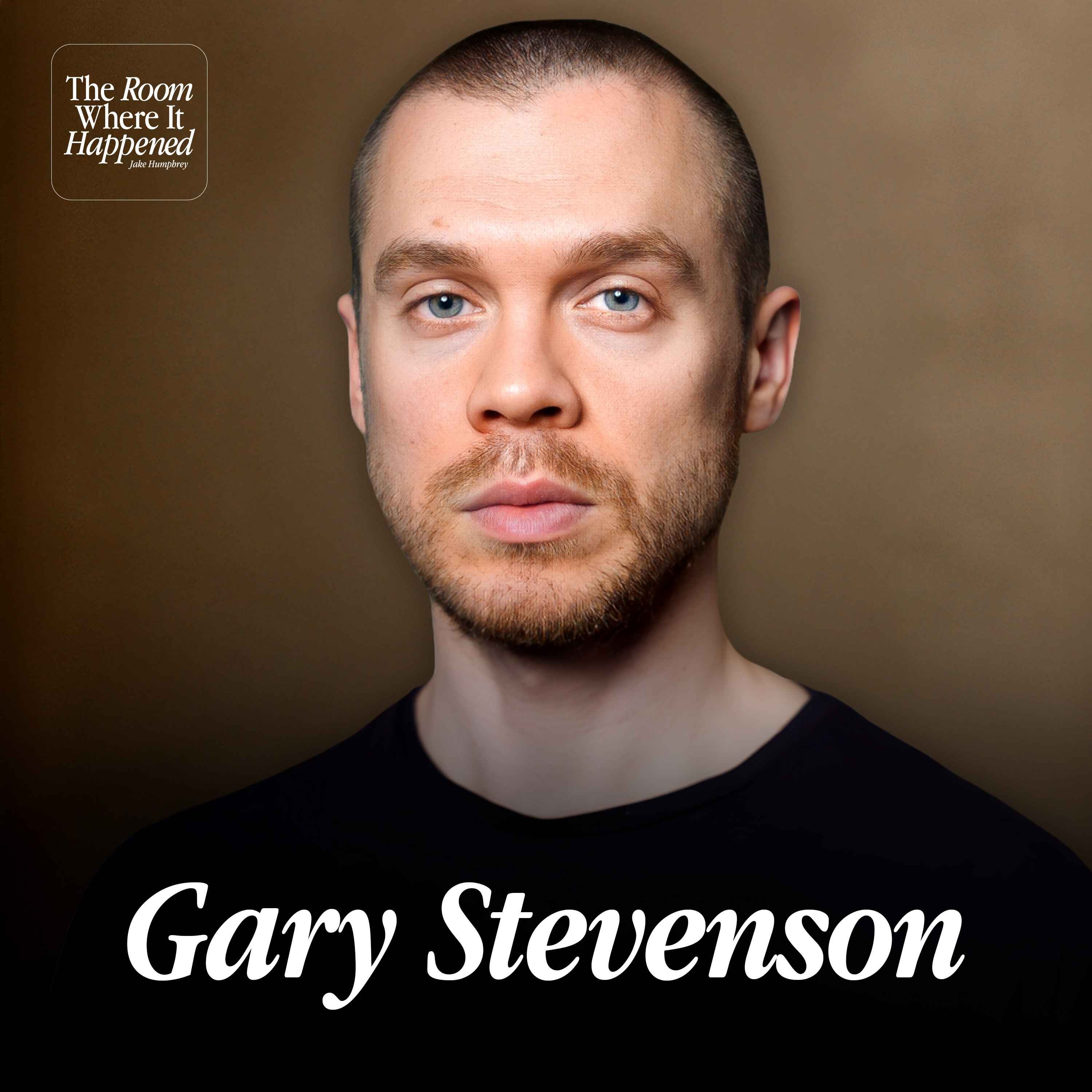
Host: Jake Humphrey
The podcast dives into pivotal moments in the careers of top entrepreneurs and industry leaders, revealing insights and lessons from their journeys.
In this episode, Gary Stevenson, an ex-trader turned activist, shares his unconventional journey from being expelled from school to his tumultuous time at Citibank. He discusses the psychological impacts of chasing success, personal battles with corporate power, and the transformative lessons learned through experiences in Tokyo. The episode emphasizes resilience, the importance of solidarity, and the flaws within societal structures that favor the wealthy.
Written by AI. May contain mistakes.

Get the gist, explore an idea or ask about something said.
 Claude
On High Performance Business, what are the key points of this episode?
Searching your listeningAutomatic transcript. May contain errors.
0:00Welcome to the room where it happened, exploring the defining decisions of the brightest minds in business and the lessons hidden behind them that you won't hear anywhere else. Ex-trader turned activist Gary Stevenson is about to reveal his dramatic battle to leave Citibank, the toll on his mental health and the smart money moves that you can make today. Listen, if you haven't already, please subscribe to the show wherever you're watching or listening so you'll always be the first to know when a new episode drops. We've got some incredible guests lined up so you won't want to miss out. Today though, Gary Stevenson takes us into the heart of his Citibank battle and the trauma at school that led to his journey.
0:36in partnership with IFS. Today, we welcome Gary Stevenson to The Room Where It Happened.
0:47So, Gary, what room are we going to start this conversation in? So, we are going to start this room in my parents' house, which was on Francis Avenue in Ilford, East London, and it's going to be the front room, which is the room facing out to the front street. It's a very small house I grew up in, but that front room was the biggest room, nice little bay window i think the i spent a lot of time in this room in year 11 which is when you're what 16 i was 16 um and i think this room changed my life because this is the room that i spent the entire year in basically by myself after i got expelled from school so i got expelled from school for selling i think it was three pounds worth of cannabis i remember i was in it and i was a bit stoned and the kid next to me was called adam latner i was saying i'm going to get expelled I'm going to get expelled.
1:34And I was on MS Paint drawing like little pictures of clouds and stuff. And he was like, you'll be fine. Then I got, you know, lady from reception comes. He's Gary Stevenson. Got hauled in. Speak headmaster. My dad got called in. My dad took me home. And I remember very clearly, I just went home and I went to bed. And I woke up a little bit in the middle of the night. My mum was crying at the end of my bed. I write about this in my book. I remember thinking like, well, you're not going to fix this. I'm the one who's going to have to fix this. Then I woke up the next morning. my dad was at work my mum was at work my brother's older than me he was already at work my sister was at school she's younger than me and there's no one in the house and that's first of all that's weird right because you know you're 16 you're 11 every day as you go to school you go to school and you've got like nowhere to go I remember I went downstairs sat in the bathtub we had one of them like baths you know the you know you get this little rubber hose yeah from Argos you stick So you had to sit in the bath and have that shower.
2:30We were watching the water go down the drain and thinking like, that's your life if you don't talk this out. I grew up in a small house. I shared it with my brother. There was one little desk which had my brother's computer on it. My brother's a computer programmer now. Back then it was quite rare to have a computer. There was no desk for me to study on. So I had this little kind of, I want to say plank, but it was more like a kind of board of wood that I'd put on the floor in the front room and I'd lie on the floor in the front room. and that was south facing so you'd get a bit of like sunning and um yeah I was there every every single day that was when I was 16 so it would have been end of 2002 beginning of 2003 and I was young man I was young and it was tough you know you're separated from your friends you know my home life wasn't the most stable and my friends are kind of what I turned to but looking back I'm very proud of like 16 year old me that he had the sort of I don't know what the word is they had the commitment, they had the balls or just the character to be like, I'm going to lie here on this floor every day for what would it have been from October to the exams of June, eight months, something like that, doing that homework.
3:36And, you know, we're going to talk about similarities to my time at Citibank. But it taught me the importance of hard work, getting your head down. It also taught me that sometimes the whole world turns on you and you haven't really got anyone in your corner except for you. You need to make it work. Are you now grateful that it happened? Yeah, I am actually. I went to... It was really tough at the time. It was really, really tough. 16 is... I'd just turned 16. So young. But you don't feel young when you're 16, really. You sort of feel like you're getting old in a stupid way. I guess also in hindsight, I think it was healthy for me to experience failure.
4:15And this is, again, we'll make the comparisons to when I was at Citibank, which was, you know, if you are a very smart kid like I was, things come to you quite easy. And I see this a lot. So like I, when I was about to turn 31, I started, did a master's at Oxford as a mature student. And you see, obviously, everyone in the master's at Oxford, they were all like number one at Bristol, number one at Liverpool, number one at Manchester, number one at Exeter, number one at Durham. And then they come to Oxford and they're not number one. In fact, some of them are like in the bottom 10%. And these guys are basically nervous breakdown.
4:49So I actually think it's really important for us as people to experience failure sometimes. And if you don't experience it when you're young, you see people hit that wall at 26, 27. And how similar were the emotions when you ended up leaving Citibank? I haven't really, I've done a million podcasts and we've spoken a lot about my time at Citibank. But I haven't been asked that much about the last couple of years at Citibank, which is when I was living in Tokyo in Japan. this is like the last it's part five of my book and it's actually the part of my book that i'm most proud of i personally think it's the most beautiful part of the book but um so you know i decided so in 2011 i was seat banks top trader i turned 25 that year so still quite young and i had this kind of crisis of meaning or everyone to call it we can talk more about it and i sort of start started trying to agitate to leave and um the bank kind of twists my arm don't leave go go work in Tokyo.
5:44So I moved to Tokyo in September 2012 when I was about to turn 26. God, I was so young even then. And then I entered the sort of lost in translation period of my life. I'm in Tokyo, moved to Tokyo, didn't speak any Japanese, didn't understand Japanese culture, just like young kid from London. I hated it. I was sick of trading already. I didn't understand the food, didn't understand the language, didn't understand the culture. All my friends were back home. My girlfriend was back home. So it's, you know, you have this very similar thing of you've been pulled, just suddenly pulled out of your comfortable environment.
6:24And I decided, like, relatively quickly, like, this is it, I'm done. I'm going to wait till bonus day. Then I'm going to quit. And we'll, you know, we'll discuss the terms. And then I'll quit. So I moved there, end of September. Bonus day's in January. so I think I go into my boss's office in beginning of Feb and I tell him look I want to quit and there's this kind of complicated situation where like the bank they back then it was all about the bonus and they would pay this bonus in like staggered fashion so you get like a quarter every year for four years and that is precisely to stop like very successful young traders from retiring basically just suddenly leaving but there was this way you could leave if you went to work for charity And I was like, I'm going to take that.
7:08I'm going to get the money. I'm going to fuck off. I'm going to be out. And the opening scene in my book basically is my boss, this big American guy sitting me down and basically saying, you know, what he literally said was, I like you. I think you're a good person. Sometimes bad things happen to good people. We can make life very difficult for you. I didn't want to get involved in that world. There's a little cutaway scene in my book towards the end. In the book, it's called Jamie Silverman, a really good friend of mine. And I think anyone who's grown up working class in a big city in this country will have a friend like this.
7:40Kid, really smart, really funny, great at sports, gets involved in drugs, wants to be the best at everything. So he wants to be the best at drugs. He starts selling drugs. He starts being the big guy. And then you see him, he starts smoking too much. He's getting sick. He's getting involved with gangsters and he's getting himself in trouble. and you see this kind of demise, you know. And I didn't want that life for me. So I said, I'm going to be a banker. You know, work fucking hard, go to LSE, get the best grades. And then suddenly you're sitting there, you're 26 years old, and some big banker who went to some elite American university is telling you, you know, bad things happen to good people.
8:20Like he's a fucking gangster, you know what I mean? And you couldn't help but see these similarities, basically. and that started like a period of like, you know, I don't know if you've seen this news in the, this news recently about a banker called Tom Hayes. Have you seen that? So Tom Hayes used to work for Citibank. Right. And he was dragged through the courts for years and years and years and years and years for this libel scandal. You can read about it. The truth is Tom Hayes, I don't know him. He's almost like kind of autistic, not very socially skilled. This guy was the fucking fool guy.
8:56You know what I mean? The big guys, they pick a guy out. This guy has not got a lot of friends. He's the fucking fool guy. Take this guy. They can do that. They can fuck you up, basically. And here was me, just 1026, with one of the biggest guys in Citibank. Yeah, we're going to fucking, if you leave, we're going to sue you. And again, I had the choice to make, which is like, are you going to back down, take the easy path, or are you going to stick to your guns and say like, no, are you going to fucking fight one of the biggest corporations in the world? and whether out of bravery or stupidity, I chose to fight at City Bank.
9:28How did you make that decision? Initially, the bosses said, you can't take your sick leave. It has to be approved by the company doctor and I was like freaking out. I was like, I'm sure the company doctor is going to fuck me over. But I went in there and the company doctor was like a really, really nice old Japanese guy. Have you ever watched the Pokemon cartoon? Yeah. I went into this little room in the City Bank And there was a grey-haired, slightly portly Japanese man standing there with a young, attractive Japanese nurse. And they looked exactly like Professor Oak and Nurse Joy from Pokemon.
10:03And I went in, I sat down there, and I was 100 % expecting a fix-up from Citibank. Like, they're going to fix it up. They're going to make sure I can't get the sick leave. And the guy sat me down, and he was just like, you know, tell me what's happening. Tell me what's wrong. And I broke down there in the office. and it was really weird in a way because I was still in the state of mind where I thought I was applying for sick leave in a kind of strategic move against C-Bank and then when the guy asked me what happened I broke down like a man who was genuinely like on the verge of a breakdown almost and it was this like little thing where I sort of realised like fuck me like maybe you actually are fucked you know what I mean and it's um the book is called the trading game and um partly it's about the way that we like gamify everything we view everything as a game our work is a game our life is a game and um i'd gamified my life so much that like i'd even gamified my own mental breakdown i was like my own mental breakdown is a good strategic move against ebank basically um and he was super super nice and he gave me three months off and i walked out and it just felt like the weight of the world was off my shoulders.
11:16And I didn't have a plan. I didn't have like a full plan. But it was just so amazing to know, like, I don't have to come in tomorrow. And then like this really, it was the first time in my life, I think ever since I got expelled, and we talk about the scars of being expelled. Ever since I got expelled, I think I had been to some degree kind of insane. In the sense of I was, because when I was young, I was super smart and you kind of think he's going to go to Cambridge. Cambridge's going to get a great job. And then suddenly, bam, you're expelled. It's all taken away from you. People think you're going to go to prison.
11:48And it was like, I'm going to make up for this. I'm going to make up for this. Nobody's going to stop me. I'm going to make up for this. And, you know, when I was at LSE, London School of Economics, I would sit on the front row every lecture, like point out the problems to the lecturers and stuff, the mistakes. When I was like trying to get the job, I was insane, this kind of thing. And then I'd never really for a second just stopped and slowed down. And suddenly, just like when I got expelled from school and there was nothing to do, I wake up the next morning, and you've got nothing to do. Except now, like, I don't have to study for my exams.
12:17And, but what I did was, and this is quite funny because you see the, I sat down on my dining room table in my living room in Japan, in Tokyo, and I pulled out my Japanese textbooks. And I was like, I'm going to learn Japanese. I'm going to learn Japanese because I knew that what their plan was, they knew I hated Japan and they weren't going to let me leave. And they were going to think, if we force him to stay stuck in Japan, he'll quit. If you quit, you lose the money they owe you. I couldn't be, I couldn't quit. I had to be fired or I had to be allowed to leave under this like charity route and I was like if they're going to freeze me out and make me hate Japan well I'm going to fucking love Japan and I'm going to study Japanese every fucking day until I can fucking fluent in Japanese and I would spend all day sitting on my living room table learning kanji which is you know the little like picked all characters doing kanji doing Japanese and in the evening I'd go to the bars have you been to Tokyo?
13:09No. Oh you've got to go so there's an area called Golden Guy in Shinjuku, which is like one of the main areas. And it's like all of these tiny, tiny, tiny, tiny, tiny little bars. And the bars are so small, you can only fit maybe six or seven people in there. And now there's a lot of tourists there, but back then it was like, it was for like serious drinkers. That was who went there. And it was, I would just go to these bars and because they're so small and everybody's drunk, you can just like chat shit, shoot the breeze. So I spent all day learning Japanese and I would go to the bar and I would practice what I learned.
13:39And every day I was like, I'm going to be the best of Japanese. I'm going to be the best of Japanese. But also, you know, I took the time to lawyer up, get my lawyers. I had a Japanese lawyer, an English lawyer, an American lawyer. But also, once I started learning Japanese, this thing happened. And I think anyone who's studied a foreign language and lived in a country will recognise this, which is you think you're studying the language. But through studying the language, you start to understand so much better the culture of the place. Japan is so different in a lot of ways. and then I started for the first time in my life to experience something that wasn't just about fucking winning up until then it'd be like I want to win I want to win I want to win I want to be the best I want to get the best exams I want to get the best job I want to be the best trader I want to make the most money and suddenly it was like fuck me I'm in this place Tokyo biggest city in the world I'm learning the country everyone here they think about things so differently and then I was I just wanted to speak to Japanese people in Japanese and try and understand the way they think.
14:36I remember one time I went to this little temple and there was a little kitten in the temple. In Japan, there's all these little temples everywhere. And I took a photo of this kitten in the temple and I showed it to this waitress in a restaurant. And she just looked at this picture of a kitten in a temple and she just said to me, maybe he is God. That's what she said. And I remember thinking, what the fuck? Like, these people obviously have such a different understanding and conception of God that we do. And then I just wanted to watch Japanese movies and learn about Japanese food and speak to Japanese people.
15:03So I had this moment of like, I think it was the first time in my life where I realized that actually life is not just about winning. Maybe it's important to just actually live your life and enjoy yourself and like fucking learn about things and different things. And I think that's just, it's, I was only there for two years, which is not that long, but I go back almost every year. I couldn't go during COVID. It was this, I was going to say spiritual awakening there, but that sounds a bit too wanky. but it was just you know i think these two instances when i got expelled from school and when i tried to quit c-bank and was refused essentially are the two like big obvious examples of my life of times that i failed and i think they forced me into these new spaces because i was never the kind of guy that wanted to watch movies and learn about food and learn about culture and i was forced to do it and i think it really expanded me so much as a person and how did it end up playing out with Citibank so I had three months sick leave then I had to go back and then like I was still fucked so the guy gave me another three months then I had to go back and I was still fucked so the guy gave me another three months but then Citibank said if you take that third three months there's some like fucking clause in your contract you've taken too much time off we can take all the money back that we owe you so I was forced to go back into the office and I remember I was terrified to be honest I'm not like too proud to admit it I was like kind of like shaking on the way in because I'd had my six months away from this space and I was forced to go back in.
16:36And so I was like, I was like kind of a big shot trader. You know, in 2011, I was like the biggest trader in the bank there. And I went back in and I knew they weren't going to let me be a trader. And then they had the little seat for me in the corner. They had a little seat for me in the corner, around the corner, working in some fucking admin team or something. with like a bunch of the, you know, these guys that look like they've hated their job for 30 years and all of their life has gone, the grey, you know, what have I called him in the book? Gerald Gunt is his name in the book. And this guy gave me like a load of the world's most boring spreadsheet work to do.
17:12And I sat down there in the corner of the trading floor. And I thought, this is it, is it? This is what they've got. They think they're going to take me out of this with fucking spreadsheet work. So, it was like, it was like a month's worth of spreadsheet work, like an enormous amount of stuff. And I did it in five minutes. I did like the shittest job you could ever do. Because I was trying to be fired, right? And I spent the rest of the week studying Japanese. And I was learning to draw, actually. I started to draw pictures of the Beatles. I had a big Beatles face in Japan. I don't know why. I still like the Beatles.
17:45I was learning, like drawing pictures of fucking Ringo Starr and studying Japanese. And people would be like, that's a good drawing. and they would be super confused. What's he doing? I got called into a meeting with Gerald Gunn, it's his name in the book. And he was like, can you show me a spreadsheet work? And I was like, here you go. And it was obvious, like the shittest job you could ever imagine. He's looking at you like, is this it? And I'm like, yeah, that's it. He's like, is that what you've done? And I'm like, yeah, that's all I've done. And then he was like, you know, it's not good enough.
18:09And I was like, well, maybe your explanation wasn't good enough. And then they realised like, if what we're trying to do is not fire him, but then we can't fucking force him to do work because we'll just do a shit job, basically. And they realized they couldn't do nothing. And then it was funny. You kind of like, you stared the demon in the face. And then I realized that actually I had kind of the best job in the world because I was getting paid 120 grand a year back in 2013. My housing was paid for, nice house. All I had to do was go into the office for like an hour, two hours a day, study Japanese, print off my documents from my lawyers, there was a really nice spicy ramen place near the restaurant.
18:54I'd go there, have this super spicy ramen, and then I would just go home and go to bed every day. And by then I spoke fluent Japanese. I had a Japanese girlfriend. So it was kind of a sort of a message of what happens when you sort of lean into your failure. And it was quite comedic, to be honest. And I sat on that for a good six months, basically. And I figured that I could probably leave whenever I wanted. but then the management HR called me in and they were like why haven't you applied to leave yet and I was like well actually I'm having quite a good time and then they were like we think you should apply to leave so I applied to leave and they rejected it and I think what they wanted to show me was listen you can't just fuck around you have to choose are you going to walk away from the money or are you going to come back to work so the fight was back on and I immediately broke up with my girlfriend started losing weight again.
19:49That's when I knew we had to have a serious fight, basically. Because, you know, I was happy to sit in the corner for six months, but are you going to sit in the corner for four years? It's a long time to sit in the corner. I think there's actually a really interesting thing happening here, which is you learn a little bit about class. So I come from a poor background, and you don't come from a very rich background. You come from a poor background. You know, if I don't hit it, I'm in trouble with it, basically. So your whole job is about standing out, standing out, standing out. But if you come from a rich background, your dad is really rich and you've gone to the best private schools and you get the best job.
20:27You know that if you do everything your dad wants you to do, you're going to be a multimillionaire, you're going to have a beautiful wife, you're going to have a lovely house. So the game of the rich is about fitting in. I think this is a really, and having like gone to these elite spaces and then also been from a poor background, I think you see this really interesting thing, which is poor people know if they want to make it work, they have to stand up. Whereas rich people know if they want to make it work, they just need to fit in. There's a line in American Psycho where his girlfriend says, why don't you quit that job?
20:56You hate it anyway. Takes his earphones out and he goes, because I want to fit in. And I think this is the life of the riches. Like imagine, you know, imagine if you knew that as long as you don't piss your dad off, you are going to be given at some point 50 million pounds. Imagine that's your life. You're not going to fucking piss your dad off, right? And this is the life of the rich, right? They're terrified of being ostracized from their community. So I think that when I stepped across the line, they were like, we're going to come in, we're going to shout at him, we're going to threaten him, and he's going to back down.
21:29And I think that is because they come from this wealthy space where everybody's terrified of being ostracized from the community. And I remember at the time thinking, this is almost funny, right? Because they're shouting at me. They think if they shout at you enough, they'll win. And, you know, they're doing the same thing on the tax thing, right? I come out, very good analysis, very clear. If you don't deal with the growing wealth of the rich, everyone else will be impoverished. And they just think, no, you can't do that because we'll leave. I kind of went crazy. I remember that's when, again, I started to lose weight.
21:58I started to exercise like crazy. There's this massive Empress Palace in the middle of Japan. It's about five kilometers to run around. And I remember I stopped sleeping. I had a lot of problems with depression back then. When I was depressed, I couldn't sleep. And I would spend all night just running around this Empress Palace. And I was skinny as fuck again. and I decided to just like go fucking mental basically and I started to email like the CEO global head of HR talking about all of the shit that they'd done to me and how it would look within the papers and shit like that and within like a couple of weeks of doing that they let me leave basically with the money?
22:38yeah I was able to leave with the money yeah I was able to leave with the money yeah but it was a long fight it was a long fight A lot of time, they cancelled my housing, I remember, at one point. I had to move out of my house. And there was a guy from Romford. Do you know Romford? Which is a bit further out from where I'm from. He moved to Japan because he fucking loved Power Rangers. And he wanted to be an extra in Power Rangers. And he has actually achieved that since. And he had this tiny little apartment. And I had to move out of this big, swanky corporate apartment. And I started sleeping on this Power Rangers wannabe's floor.
23:11and I slept on his floor for about a month in the last final battle of it. But yeah, I got out. I got out. And I think it's funny if you read the book, I've kind of, I've left it intentionally ambiguous. Like, did he actually fight for the money? Or did he actually fight because he wanted to do this work about inequality and about trying to achieve, you know, a fairer system and better living standards. But you can look at my work now and you can make your choice, I guess. And what happened previous to you going and having a conversation with your boss at Citibank about leaving that made you actually want to leave?
23:43Because I would imagine, rewind a couple of years, you were the happiest guy in the world. You were making big money. You were trading. Fantastic. Well, you know, this is a funny thing. So the beginning of part five of the book, which is when I moved to Tokyo, the first line of that part is, Tokyo is a wonderful place to be depressed, especially in the autumn. That's the first line. And it's the first introduction of the concept of depression. and I think it's or any sort of mental illness really and I think it's very easy to read the book and be like Gary was super successful and then he moved to Tokyo and then he was depressed but I think I was ill mentally ill like really obviously for years before I moved to Japan but I was in that I was in that space of mental illness which I think is super super common for like high performing professionals in this country in the US in the West which is you're working really really really fucking hard you're overworking chronically overworking you're chronically stressed and you just totally totally in denial about it and you try to and you see you know people deal with in different ways a cocaine addiction or you know they're cheating on their wife they're sleeping with their secretary you know i mean they're treating people like shit they're treating themselves like shit i think a lot of people deal with this by becoming obsessed with exercise getting too far into exercise this kind of thing like i was obviously ill for ages to be honest i think i was probably ill from the beginning of the book and i was in but i was ill in that kind kind of basically socially condoned form of mental illness, which is chronically overworking, chronically obsessed with winning, chronically obsessed with success.
25:09Yeah, because you're successful and the world tells you you can't be mentally ill and successful. Yeah, exactly. There's this one line in the book. So you get rewarded all the time. Yeah, exactly. So there's another guy in the book who obviously had a mental breakdown, really, really, really serious cocaine addiction. And the book is called JB. And this guy had the breakdown in front of our eyes. And it was clear he was unwell. And at the time he was at the worst of his breakdown, he and I were like a trading team and this guy like sponsored me a lot in my early career he supported me a lot and and we we didn't always see to e-eye to eye but when he had his breakdown I was like I want to help this guy and I go to like one of the other younger traders called Snoopy and I was like hey should we do something about JB this is in the book and then Snoopy turns around to me and he says don't worry about JB JB is the richest person I personally know that's what he said that's you know but it's great but I think that is how a lot of us think well it's not Snoopy's fault because Snoopy lives in the same world as everybody else yeah I think a lot of us where if you're rich you're happy I was also having a breakdown and I hadn't recognised it and nobody had recognised it because you were also rich so everything was great and no matter how obvious my breakdown became and I was very lucky that I dated a girl later on in the book that just came in and was able to see like with some more sensible eyes she wasn't from London just like you are having a breakdown you're fucked you hate your job you need to quit your job But you still, like, hating your job didn't realise you were having a breakdown.
26:31Quitting your job didn't make you realise you were having a breakdown. Failing mental illness didn't make you realise you were having a breakdown. Going to the doctor who actually said you're not well was the first time. But the thing is, I guarantee you, if you were to go and ask Citibank traders who were there when I was having my breakdown, a lot of them would say Gary faked his breakdown to get sick leave. They would believe that. they just cannot they're unwilling to believe that somebody who has a successful trade that could genuinely have a breakdown because i think to accept that would be to accept that they themselves are kind of fucked up as well you know i mean but i just think that's you know we have all this like people say like we've moved on a lot in discussion of mental health i think in some ways we have but i think in a lot of ways we haven't really i think like we in this elite space it's so normalized people's a chronic the thing is when you chronically people become so hard on themselves they chronically overwork themselves and then they are like chronically extremely judging and hard of others and that's exactly what i was like i was like i am gonna fucking work work work you bring it to me i'll get done i'll do it i'll win everything but then that kind of aggressive hyper judgment and hyper performance in the way i analyze myself was the same way i viewed others and i was a bit of a dick to be honest but i don't think i was any more of a dick than basically anyone else in that profession like it's just this is these are the like normalized cultures of our elite workspaces but like what does that do especially to our young people our young men and young women who go into those spaces i think like we we i think this is part of our culture we aggressively focus on making people hard and making people like i'm gonna do i'm gonna do i'm gonna do it but then i think that's partially responsible for why we have ended up in these like massively like problematic places as a society because i think it is our compassion for others that drives us to stand together and work together and i think we have created a society where we have these obsessions with my performance my winning my success and then when somebody like me you know a top level economist turns around and says to the ordinary working people of britain listen either you guys stand together or you get fucked you're gonna they're gonna eat you alive if you don't stand together and they turn around to me and they said, we don't know how to stand together.
28:42We don't believe in standing together. You know what I mean? I think it's these cultures of obsession with individual performance have actually made the working classes and the middle class of this country defenseless in the face of the rich. Because if the working class and the middle class insist that the way they're going to defend themselves from the rich is fighting them one-on-one, well, they're fucked. These guys are fucking billionaires. You need to stand together. You need to stand together. So I think, and you know, that is again, another big thing I learned from Japan. because I don't want to be one of these guys Japan is a perfect country because it's not.
29:12Japan has a lot of problems and I think Japan's focus on collectivism brings its own problems. But they understand that you need to stand together if you want to protect yourselves as a group. Whereas do you think that we're taught to be suspicious of standing together? Be suspicious of immigrants? Be suspicious of politicians? Be suspicious of the rich? Be suspicious of the poor? Be suspicious of people who are too nice to you? Be suspicious of people who are aggressive? Like you look at the media and it's telling us all to be suspicious of everyone. then you're trying to tell us to all stand together to have an impact I think unfortunately that is true I think unfortunately that is true I think we have trained people to be suspicious but it's in our culture you know the truth is like you know you know I often feel like in this country you have to be so careful everybody's trying to rip you off you know what I mean if you don't you know your fucking mobile phone provider is trying to rip you off and your builder and your mortgage provider and you know your fucking car insurance everybody's trying to rip you off you feel like that all the time but in Japan I didn't feel like that I don't want to be like Japan is perfect Japan is perfect but people you don't I didn't feel like your truck people are trying to rip you off all the time there's another line in my book where like when I was kind of mid breakdown in in trading in London I hired this like Italian kid to work with me sit next to me and read the papers and I was I was doing really really well and he says to me one time Gary you're a really good trader but your problem is you are to homo homini lupus and I was like that's it's Latin apparently he's I said what the fuck is homo homini lupus he said homo homini lupus is man is wolf to man and I remember I stood up on the trading floor back then I used to wear like fucking hoodie and shit and I said to him look at all these guys you see all these guys in this trading floor every single one of these guys is trying to pick my pocket so don't fucking tell me man is wolf to man because you're fucking surrounded by wolves and at the time I thought that that was like a good justification of my position but like in hindsight it's just the obvious proof of what he's saying like I had I had accepted that mindset that everybody is a wolf and I can't trust anybody and I'm by myself and I fight for my own thing and I fight to protect my family.
31:13But the problem is, I think, like, societally, listen, that might, if you're in a hostile society, maybe you have to be like that. But I think unless we find ways to change our society so that we can trust each other a bit more and work together, I think we're going to be in a really bad way here because you look at the way things are changing. The super rich get richer and richer and richer and richer. Government's shutting down. The poor are in a terrible situation. the middle class are getting squeezed if that is the structural direction that you are going how do we protect ourselves from these very rich people these billionaires who are growing and growing and growing their share of the pie if not by standing together you know and this is a thing that i come up against in my work obviously my channel is called gary's economics it's an economics channel but you know we do we do our videos on sunday mornings right so as i said my parents are very religious and um i grew up going to church and i didn't intentionally choose sunday morning because it was like a church like thing but Sunday morning is that chill morning you know when you have a little bit of time to sit and think and the more I do my work the more I realize in a sense the problem we have is kind of a spiritual problem in a sense it's an economic problem but it's also a spiritual problem in the sense that unless British men and women are able to step back a little bit from that rat race mentality me against you that squid game hunger games mentality me against you me against you me against the people around them and recognize that At the end of the day, the people who live on the left of me, the people who live on the right of me, the people who live up north, the people who live down south, whatever, are suffering from the same problems and we need to fight together with them.
32:43Until we can accept each other in that kind of spiritual way in our hearts, then I think we're going to have a lot of problems. And I'm hoping with the work that I do, that I open people's eyes, that we don't have to fight each other like that. And that is something which I learned from my time in Japan, sitting in the corner in Japan. So you think that getting expelled from school lit a fire on you that got you to Citibank? And being fired from Citibank or Citibank attempting to fire you and not pay you lit a fire on you that took you into that fire? You know what? I think these two things connect.
33:15That first thing shows me the power of the individual and the power of this absolute bloody mindedness. I will not give up. and it shows you and and and i sometimes get criticized for some of the work that i do in telling young people to be lazy telling young people not to work and i've never ever ever once said that i would tell young people work fucking hard you know i'm 38 now and i don't have the same like youth and energy that i once had right you only get that for so long yeah fucking use it take it run with it don't don't let a penny drop win make your money buy your house have your family take the things you need but if you do not find the the limits of your greed then that greed will destroy us so for me it's about balance like one of the first things show me the importance of the self the importance of winning the importance of inner strength and the second thing showed me the importance of others and the importance of giving the importance of being part of something bigger recognize that the system's broken and I think what you see here is when I was young and I have this moment get expelled I recognize the importance of fighting but then I come up against this battle with Citibank and I realized like it's not always about winning sometimes if you want to really see the bigger picture it's about knowing how to lose and knowing when to let go and you want us to stand together right you think the I watched one of your great videos on YouTube and it was entitled how to get rich most people would have clicked it hoping for a quick fire getting rich.
34:47And what you actually said was, you need to stand together. Unless you've got a rich parent, you need to stand together. What does that look like for people? Because I hear what you're saying. I get the strength in numbers, but I wouldn't even know how to start standing together with other people to have impact in society. I think, so the idea of my YouTube channel primarily is that it's educational. You look at it and you recognize we have a structural problem in our society, which is that inequality is growing. What that means is the very rich are increasing their wealth and everyone else is losing their wealth.
35:18Government loses the wealth. Working class loses wealth. Middle class loses wealth. And then you own nothing. And then, you know, you can't keep losing pieces. You can't keep losing wealth. This is about getting your wealth back. So the first thing is you understand when I say, listen, I know people like to say I'm a communist or I'm like a tree hugging hippie or whatever. You know, I'm a multi-millionaire trader. I made my money on understanding what's happening. And let's be clear as well. You still trade, right? I do. I still trade and I still So you still make money from this system that you don't like.
35:45Yeah, yeah, 100%. And that's why you should listen to me, because I'm fucking good at this, right? I know I'm doing it. And does that bother you morally? No, I don't think so. Listen, I'll tell you what bothers me morally, right? What bothers me morally is watching a society collapse and doing nothing about it. And you know, we spoke before this, and I know you've been following my work for a bit, Jake. I work fucking hard. I work fucking too hard, to be honest. Harder than I should. And, you know, it's funny we speak about the chronic overwork And I can see myself going back into those patterns, right?
36:13I don't need to do the work that I do. I was about to say, are you sure you're not struggling with your mental health if you're working that hard? Yeah, I mean, to be honest, sometimes I do. But, you know, you see the effect that we have. You know, you see the effect that we have. Listen, there's a lot of basic financial advice that we can give here. You know, obviously, especially if you're able to take, if you're good at maths or if you're good at computer science, you know, take or get your kids to take a degree, which leads to a profitable job, get a good job. I always advise people don't get involved in this Balenciaga bullshit.
36:44You know, that keeps going and going. Don't spend money. Save up what you can. You know, buy sensible things like stocks and shares, global stock trackers, try and get a house. But your audience will have heard all this already. They know the sensible stuff. They know the sensible stuff. Obviously, I'm here to encourage people to get more politically involved. And when I say that, I 100 % recognise a lot of people don't have a lot to give. A lot of people are struggling and a lot of people don't. And what I always say is you take what you need and you give what you can. You know, if you're there in the trenches and you're struggling to pay the bills, then you work hard in the trenches and you do what you can.
37:18But if you manage to get a little bit of space, that's when I would invite people to come back, get involved with the work that I'm doing and help protect the British public, help protect the working class, help protect the future for their kids. So, yeah, I'm trying to get more Bible stories into my answers. Have you heard the story of the widow's mite? No, go on. so you know there's back in the day jesus in the temple and everybody puts the money in and all of the rich guys they're putting all this money in and then this widow comes in and she puts like two mites which is like the tiny like two p basically everybody's laughing at her she only gave two p and jesus says listen this woman gave more than everybody else because she gave everything she had you know and that's what i'm saying like obviously i'm not asking anyone to do what i've done to give up their job and to like devote their life to this because i know people can't do that But all I'm saying is, if all you've got is like a little bit of time, a little bit of energy, come watch the videos, share the videos.
38:11If that's all you've got. If you've got a bit more, then you can try and get more seriously involved. So listen, take what you need and give what you can. Work hard, man. Work hard for your family. I would like to have a family one day and I'll try and do the same for them. But if you've got a little bit extra, protect your country, protect the future. If you want to see where this goes, look at the 20th century, look where it went then. You know what I mean? Economically, it's going to go to the kind of things you see in India or Brazil or South Africa, desperate poverty. But politically, you know, look what happened in the 20th century.
38:39You know, don't fool yourself into thinking that can't happen again. What is happening now is so similar to what happened in the early 20th century. I don't want those things to happen, man. And, you know, unfortunately, for better or worse, I have become kind of like a lightning rod for this. And I know I have the biggest reach on social media and I know I have the biggest reach. So I have to work hard. I have to work hard. And I do struggle with that balance sometimes. And to be honest, like this year, I'm going to try to wind it down a little bit for the sake of my mental health. And that's the reason I come on shows like this, because I want to turn around to the public and say, come and carry a bit of the weight.
39:12Because how do I do that though? Listen, understand why it's happening. This crisis of living standards is about inequality. Unless you start fighting explicitly to reduce wealth inequality, this gets worse. The only way you reduce wealth inequality is by stopping the aggressive expansion of wealth by the very rich. You know, this is Pac-Man eating everything. And how do you stop that? It's got to be about the tax system. Tax wealth not work. We have a tax system which taxes ordinary people 40, 50, 60 % while billionaires are paying nothing. That's a joke. That's a comedy, you know. But they're going to support that.
39:46Of course, billionaires are going to support that. If you don't want that, you need to fight against it. Listen, that YouTube channel is there so that you can channel your anger through me. Listen, I am going to get a meeting with Labour before the election. And if I have one million followers, maybe they ignore me. If I have 10, maybe they listen. And I know people are going to watch that and be like, this motherfucker just wants to get YouTube followers or whatever. What the fuck else do you want me to do? You know what I mean? This is a strategy that I think will work. But listen, you don't need to just follow me.
40:15There's other guys doing great work. Pat Trotting Millionaires, Tax Justice UK. There's other influencers out there that I like. I like Jimmy the Giant. I like loads of people. I like Navara Media. Loads of people doing great work. understand the ideas share with your friends and family follow the youtube channel like use me as a way to push this and you know i know that's going to sound like a me me me me me strategy right but i'm trying to support other people building i wish it wasn't as much me but at the moment i'm the front guy in this movement if you want a fairer system if you don't want worse living standards support me understand the message share it um you know and i wish there were a hundred other guys i could point you to but at the moment there aren't so you know if you understand it make your own videos make your own youtube channel if you're working in a place where you have influence civil service government media academia push these ideas listen i don't want this to be like gary stevenson's fight i want this to be the fight of the idea that if you lose control of the wealth distribution living standards collapse because you know you know the newspapers are attacking me and eventually they'll probably get me cancelled and then i'll be gone but an idea can live a lot longer than a person so i think that idea It's simple idea.
41:22Simple, easy to understand idea. If wealth inequality gets worse and worse, wealth gets squeezed out of the rest of society, living standards fall. You need to manage the wealth distribution and protect the wealth of your country. Simple idea. Share that. Well, thanks for taking us into those rooms. Fascinating story. Good luck with the fight. Thank you very much. Thanks, mate. Thank you. Thank you so much for watching Room Where It Happened. Don't forget, subscribe to get episodes as soon as they're released and we'll see you very soon. for another big conversation as we take you into the room where it happened.
Gary Stevenson didn’t follow a traditional path, he challenged it at every turn. Expelled from school at 16 and later pushed out of Citibank for speaking up, Gary’s journey has been shaped by resilience, rebellion, and a refusal to stay silent.
In this episode, Gary opens up about the high-stakes world of trading, the psychological toll of chasing success, and the personal battles that came with confronting corporate power. From unexpected lessons in Tokyo to quiet acts of solidarity in a cutthroat industry, his story is as much about survival as it is about awakening.
It’s a powerful look at what happens when you step off the fast track, and choose to fight for something bigger than yourself.
Partners:
IFS - award-winning Asset & Service Management software
👉 Reimagine your operations at: https://highpfrmc.com/ifs-au
Heights 👉 Join Jake in maintaining your hydration. Get 20% off with code Room20:
https://highpfrmc.com/heights-hydrate-au
Hosted on Acast. See acast.com/privacy for more information.


