
 Ask ChatGPT



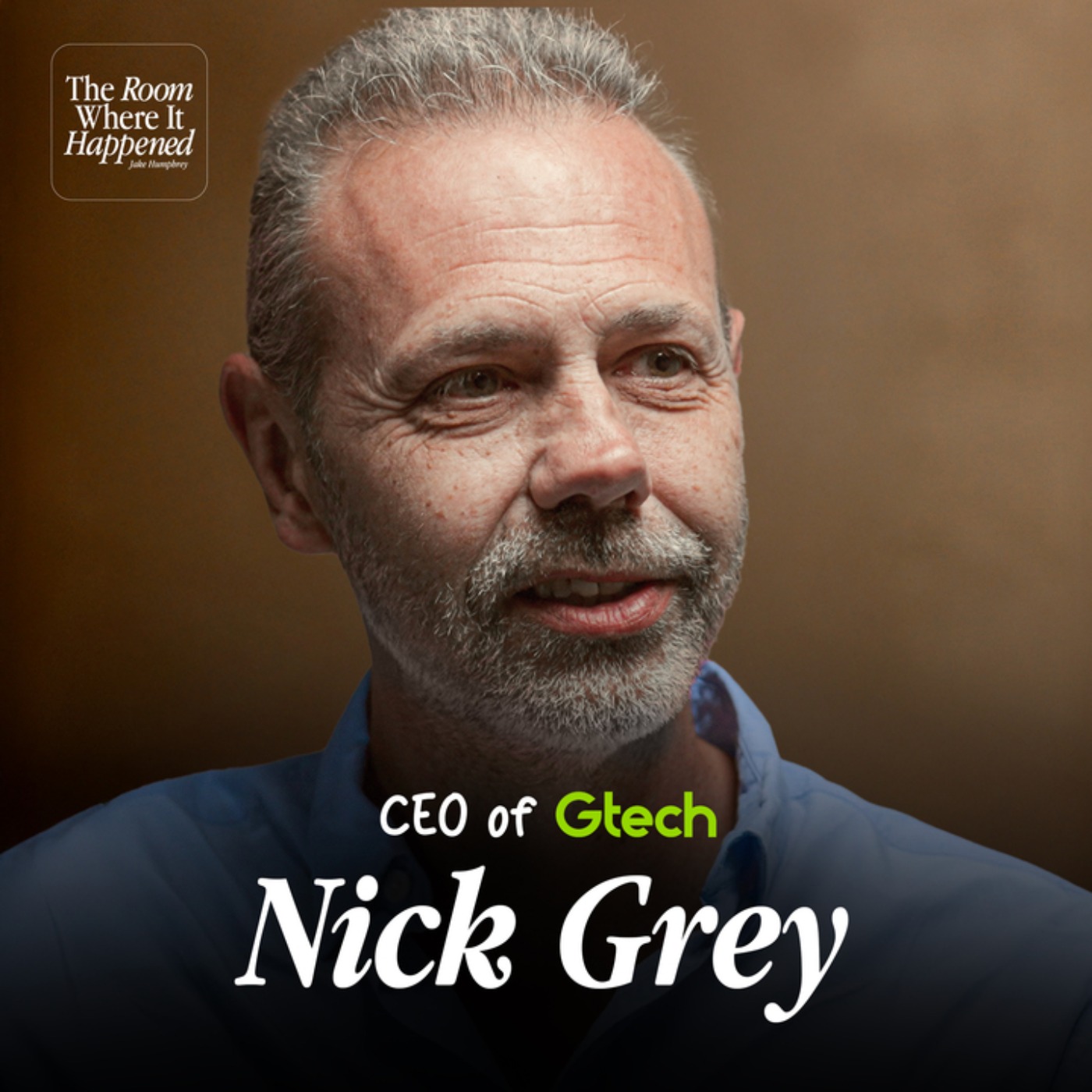
In this episode, Nick Grey shares his unconventional path to building GTECH, a successful UK tech brand. Despite initial setbacks, Grey's belief in his vision, creative problem-solving, and willingness to take calculated risks eventually led to the creation of a business worth $87 million.
Written by AI. May contain mistakes.

Get the gist, explore an idea or ask about something said.
 Claude
On High Performance Business, what are the key points of this episode?
Searching your listeningAutomatic transcript. May contain errors.
0:01What happens when someone with no credentials refuses to believe they can't compete with the best? Well, that's Nick Gray's story. He had no formal training, no funding, no playbook. What he did have, though, was belief, was luck, was grit. And today, he's going to take you inside the rooms where he went from working as a technician to building one of the UK's most successful tech brands from scratch. He shares the chance meeting with someone who saw his talent, but also tells you how self-belief, relentless learning and bold thinking can change not just your career, but your life. Please don't forget to subscribe to the show.
0:42It means we can attract more incredible guests. If you haven't yet, please hit the follow button. If you have, we hugely appreciate it. As we welcome, in partnership with IFS, Nick Gray, to share the room where it happened. So Nick, kindly tell us why you've chosen this as the first room that you're going to take us into. Well, this was a major moment in my kind of career. When I was little, I thought I was very clever and I could achieve things in my life. And something special was bound to happen to me sooner or later. And then when I got to school, I didn't feel very wanted. I was always a creative person.
1:23And I felt in school, they only wanted a certain type of creativity. So they didn't want to go off piste or discuss subjects in any depth. they might give you a piece of paper in art and say draw something but if you didn't if you weren't creative in exactly the way the school wanted you you were just a pain in the neck they had 30 kids to get through their curriculum and thinking of a whole new view on things wasn't really much fun for them so I kind of went into school full of hope for the world and I came out of it thinking oh well perhaps I'm not as clever as I thought I was I went from sort of designing a business in my brain to fit in double glazing on a building site which I liked I liked the camaraderie and it was fun it was the open air it was cold in the winter and then I kind of got a job at Vax just to to sweep the floors and set up tests but there was a kind of a moment where I'd done something creative and solved a problem and it was appreciated I wasn't really supposed to be a designer but they got a problem they couldn't assemble this one part and if they didn't assemble it properly a bit would stick out and it wouldn't pick up what was the floor it was the base plate for a vacuum cleaner but you were just the guy that was there to sweep the floor and help set things up so how would you end it up being involved in what sounds to me like a pretty critical moment yeah proper design so yeah when i'd gone in there it was a busy busy place and like i was supposed to do the test work but i was already trying to do design work so if i tested something it didn't work i'd say well i've just adjusted this and now it does work how about that And the guy who I'd been employed by as the technical manager, a Scottish guy called Alex Laird, was kind of encouraging me to say, okay, well, right, do this, fix that.
3:06So he was gradually letting me branch out into design work, even though I wasn't supposed to be doing design work. That was like a moment where I thought maybe I was supposed to be a designer. Maybe I wasn't supposed to be an academic or something else. that all that hope that i'd had as a child that kind of went away in school kind of gave me the confidence that perhaps i am a designer perhaps i can do something useful and i'm not being rude here but i'm guessing in the hierarchy the the designers were higher up than the lab technician i was the lowest paid in the design department so the the the secretary for the team was was paid substantially more than me and then you had the model makers most of the model making was outsourced actually they went out because it's model making was more of a specialist job then then rachel the secretary and then design junior design engineers and design engineers senior design engineers design managers and then the director was the hierarchy so i was right at the bottom were you not slightly nervous or anxious about kind of going let me take a look i know i'm at the bottom of the ladder here but why don't i take a look or not i just love my time that i loved that environment so that for the first time they wanted my creativity it wasn't like if i came up with an idea they'd be like that might work or if i'd like i said if i'd modified something during the test and said it was getting 65 i've done this and that gets 74 okay you know it was welcome all my ideas were welcome i didn't hopefully suggest stupid things or things that made it worse i was just fascinated by design i was like into everything i was teaching myself and I was trying to figure out if something got a good test result why did it get a good test result what was different about it and this was something years later I changed about GTEC was that the people actually carrying out the test and making the models are closer to the design than the person that draws the design so halfway through a project they know more about that product than the sort of technically qualified person that's a draftsman in some respects So, you know, that's affected GTEC later on in life.
5:19I've made the model makers what we now call product creators. So they don't just make models that's fixed. I'll say to them, right, I want a Hoover that does this, this, and this. Get the nearest one, like a donor product, modify it, and see if you can do it. And sometimes they'll come up with the actual design solution themselves to sort the problem out. I might have an idea, and sometimes I'll say, I'll build it like this, I think this will work. and sometimes i just leave them to it and say solve this problem and they'll solve it so your time at vax taught you about the power of creating a culture where people can actually put their head above the parapet offer a suggestion and it doesn't get shot down there's like an openness to other people coming up with ideas a collaborative approach how do you create a culture though where people feel safe enough to do that?
6:10It's not easy. And as a company owner as well, you have to be very careful because you can look at something and think, it's not going to work. I can't see it working. And maybe seven out of 10 times you'll be right. But then another two or three times out of 10, they haven't really explained their concept. And when they try it or bash their head on it and it fails a couple of times, they actually solve the problem and you're surprised so you have to be aware that that there's no real criticism in design if you do something and it doesn't work you should just learn from it and say okay tick i'll try something else now and it's very easy to give your opinion and say oh i would do it like this and that and blah blah blah but you have to remember that you want creative people and creative people do put their kind of heart and soul into things and you have to be very careful about criticizing creative work because it's creative it's personal it's unique to them it's not like if i don't know um you you you doing the finance pack for instance and if there's a mistake in it you have to say oh sorry that's not right uh this and this don't add up so that needs to be changed because that's kind of factual and even then you still have to be careful about being critical because there's usually reason but with creativity is anything ever wrong you know it's just personal so you have to kind of nurture that and especially if it's busy because running a business sometimes you might be in a bad mood you don't even know it and someone will show you something creative and you can't even think about at that stage you've got something else in your mind and you've popped down to the workshop and you're not even really listening to what they're saying.
7:53And you don't realize until they've just told you, I was just wondering about that issue, but I don't even know if I've heard what you said to me. So you have to be really careful. I know some people get by marching in, giving orders and marching out, but I'm not that person. I'm sensitive. And if I've upset someone, I really get upset. So it's difficult. So Greg Hoffman came on our show and said, failure is the price of success. In other words, you can't be successful if you're not going to fail. So how did you learn to be okay with getting things wrong? If you're a sensitive soul and you're creative, those things can often be quite a difficult marriage.
8:30So how at this time at Vax was your relationship with failure? So if anyone that starts a business is taking risks, and I would imagine there hasn't a single person started a business that hasn't tasted failure in some sort or another. And the more wild and wacky the business or the venture, the bigger chances that things won't work first time. And I think whilst I'm not averse to risk taking, and I accept failure is part and parcel, it's my job as someone that likes to create things to stack the odds in my favor. So I look at the risks I take very carefully. And obviously, you don't want to take a risk with a small reward and a huge penalty if it goes wrong.
9:18You want to take risks that if it doesn't go right, I can handle it. I never risk anything that you can't afford to lose. But if there's an upside, it's a great upside. So you just kind of fiddle with the odds. I wouldn't start G-Tech until I'd done 12 years at Vax. I knew how to design products. I knew people in the industry. I knew that job really well by the time I'd finished my 12 years there so I could go and design a product I could say to either friends of friends so in other words Fax was owned by that stage by a huge Hong Kong manufacturing company with other floor care brands around the world who I'd met at various things so I could say I'm designing a product for myself will you have a look at it and if you like it will you take it from me so now yeah if it's good we'll take it it's only going to be good if i do it isn't it so i kind of lent on that so although it was always a risk and a risk of failure i made sure it was stacked in my favor before i really risked it and at the end of the day i'd saved i mean with 25 years ago now 18 grand and i would either after i'd given back my 50 grand salary in a company car and i was either going to make some money in 18 months so i was going to get another job so i was prepared to lose that 18 000 pounds to follow this dream and see if I could make it work.
10:37So it was kind of a calculated risk with an upside. So let's talk then about the creation of GTIC. So you've left school. You're feeling actually, I thought I was going to do something great. Now I really don't feel that's the case. You've ended up working at the sort of lowest job on the factory floor at Vax in the design department. So when did you at Vax start to think, hold on, if I save some money I can set up my own business because that feels like a big leap from leaving school feeling like maybe there weren't going to be many opportunities come your way well I'd always got in the back of my mind I wanted to run a business I don't know why it was just from what age as long as I can even four and five years old like I want to do my did you know how hard it was no I thought it was going to be a piece of cake I thought everyone would love everything I did and you'd sail off into the sunset.
11:31And no, I didn't. But about that time, everyone was making money out of property then. So I thought, I'll probably buy some flats and get a buy to that mortgage and this, that, and the other, and blah, blah, blah. But that got very competitive as well. And there came a point at Vax where I designed a product which had gone into production and done very well. And I was kind of counting their money. I was thinking, I designed this and now they've sold 100 ,000 of these. I can only get paid once. As a designer, I get paid for my time. And that's limited. That's a limited resource. If I design products, however good the product is will determine my income.
12:07So if I design a product that can sell a million, I'll get paid a million times. Whereas if I design something rubbish, I'll get nothing. So it's do you back the intellectual property you create or do you just want a safe job? And I never wanted safe. I always thought, you know, let's push it. Let's see what we can do. I just had this belief that special things could be achieved. And even though that kind of went by the wayside at school, it kind of came back a bit. I still think G-Tech underperform. I think people don't know about our products and things. And that's a part of my personality that I need to come to terms with, is to spread the word a bit more.
12:44When did you make that leap and how? So probably a good six or seven years before I actually started G-Tech. I started the detail planning so I'd always thought I'm going to start a business probably two or three years into Vax I thought I love design I'd do this for nothing that's what I want to do and I realized that there was money in creating intellectual property but then a good five or six years before I actually started the business I was into the detail so I was saving up money I bought two buy to let flats because the difference between the mortgage and what came in could pay my mortgage every month.
13:20So I knew I could live very cheaply, which was vital if you're not going to get a salary. I saved up the money and I started, I did an open university degree as well. So I did, although I'd never enjoyed academic things, I thought sooner or later, I'm probably going to have to get a bank loan for some setting up manufacture. So I better be qualified. So in the evenings as well, I was doing an open university degree. And so it was, and then I was buying equipment, and I could compute a design station of my own so I could practice. Then I started doing design work in the evenings for people. So it was a long process.
13:55I didn't just think, oh, I'll start GTech, leave Vax, and then sit there thinking, right, what should I do? I'd kind of put it all in place over a period of years. And what's the first thing that you sort of did or wrote down or created to begin the process? For people who are thinking, I'd love to do it, I've got no idea where to start. What's the first question you asked yourself? I suppose it was like, what do I need to be able to design a product for myself and get it on sale? So that's not easy. You know, they talk about the marketing chasm where you start with a product and you've got to raise awareness and start trading and fund the trade and then actually start to make some money.
14:35There's also the chasm of having a design on paper and getting it actually manufactured so you've got a product in a box that you can sell to someone. So the first thing was, if I get to there, have I got everything I need to get to there? So I gradually put that together. I can produce a product. I know how to design it. I know how to get it approved. That's because of safety approvals and things. I know how to package it. I know this, that, and the other. I know how to make it reliable and test it. So I gradually crossed off all the technical bits. Then at that stage, there was this period of manufacture where you could outsource.
15:11So there were good quality factories where you could go there and they would manufacture a product because years before that, everyone just manufactured their own. So you wouldn't just have a design, you'd have to build a factory as well. And you can't go from producing five of them for your friends and family to half a million without huge investment. So it was lucky that we could find manufacturing that was scalable. So it was very fortunate with GTET that the first product we did was pretty successful straight off the bat. And we could go from manufacturing, I don't know what, we maybe had 17 ,000 or 18 ,000 a month manufacturing, and we had to get to 450 ,000 a month capacity.
15:55And we could do that in a relatively short time. And that meant that all of a sudden, it could be me in my living room, because it was at that stage. It was me working at home in the living room and we had access to build more than 100 ,000 products a month and distribute them through licensees. And it was like, wow, that's pretty good, isn't it? It's just me in my living room and yet I'm producing all these products. So it's just all those little things. What could stop us? What do we need to make it scalable? Because business is about being scalable. You sound like a classic entrepreneur. I mean, you know, when people tell me how many people listen to my podcasts and they're impressed by the number.
16:36And I'm thinking, well, that means an awful, far more people are not listening than are listening. And I bet you feel the same. Someone gives you your monthly sales report and you think, great, for someone that's a lot of items. But that means hundreds of millions, if not billions of people around the world haven't bought a G-Tech piece of equipment this month, which I guess is like, that's where the drive comes from, right? Yeah. It's a good thing to feel. Yeah, I think it is. It's like a hunger. And humans are kind of striving beasts. We like to be moving towards something. When we get there, we're kind of a bit lost and think, oh, was that it?
17:11And we need something else to strive towards. It's kind of like a healthy part of life is you're striving towards something. and I do think like our products I've cracked the design I feel like I can do design well and our products are good they last a long time they perform very well there's there's reasons why I think they're fundamentally the best um and yet there's there's large parts of even the UK that have never heard of GTEC I did a thing at Warwick University oh you're the Brentford man I'm like oh not really you know I can be the Brentford man because we swans to the stadium but a whole age group have never heard of gtech even up to people that are kind of 45 years old the media that we've been out in and the products that we've sold haven't really made us known to that audience so this whole new digital generation where they don't watch ordinary telly they only watch what they want to watch it's it's discretional there's a need to get the gtech name out there along with entertaining people and giving them something that's that's interesting to them i feel like I've got to crack that.
18:15So any tips, Jake? I'm all ears. Well, this is really interesting because again, people can go, well, just look at the success he's had. He's created a business. You know, it's been sold product worth many, many millions. He must just be relaxing, counting his money and thinking, isn't life wonderful. But this again is the mindset of what it takes to be successful. I believe in businesses that what's next, what have we not done? Not what we have done. What have we not done? So honestly, Nick, I'm not surprised that you think this way. But I also know that you're an intellectual guy. You're someone that is a creative, but you also want to know the evidence, right?
18:53So what have you looked at for the reason why some people love and know your brand, others have never heard of it, but also what do you think is the solution? What does the modern world of being successful in business marketing look like? So I think there's two things. A physical thing or a practical thing is that the channel, first of all, cordless vacuum cleaners initially appealed to the older generation. Corded vacuum cleaners were too heavy and they needed a cordless one. So we started off with media that suited them. So it's daytime telly, newspaper adverts, direct mail through the door, things that people that had time in the days would look at and reach.
19:35but all those media channels are kind of moving further and further away they're becoming more and more niche but then also i think there's a psychological part which is um i am frightened of rejection and i have to face that as confident as i think i am somewhere deep inside me i'm very anxious to please and i'm fearful that someone that will give all of my real self in public and someone will say, don't like him. He gets so unnerved. And I know the more you go out there, some people will. But I think I've shied away from really exposing GTEC because of that fear that, oh, maybe people won't like me.
20:16Do you know what I mean? So I think that's a personal thing from inside that I need to conquer. I need to put myself out there and say, this is me, this is us, this is what we do and this is why we do it. If you don't like us, that's okay too. but I think I've shied away a bit from that and that's why the GTEP brand is probably less well known than some of the others so until now if you were to do some media how would you behave to protect yourself in the way you've just described so I have a bit of a laugh at myself so I'll I'll kind of self-deprecate I'm not very clever but I lift heavy things or you know in in all our tele adverts I do them with a dog and the dog always wins and I always lose so whether it's like i don't know the dog shakes his head when there's lots of nicks on screen if we're doing a product where there's two three of me then the dog's oh my god or or um he presses the vacuum button i get sucked into the product so i'm always the fall guy at the end of it i'm you know i don't laugh at my design abilities but i laugh at myself and then why does that protect you well because if anyone says oh you're an idiot i'm like yeah i was being an idiot that's that's me do you know what I mean I haven't really put the if I was out there and I talked uh gave my heart and soul and everything and said and really seriously gave my advice and people thought yeah talking nonsense mate then I would be really hurt I suppose so yeah that's that's so if one was the physical bit of the media changing the other one is me holding a little bit back that isn't quite confident enough to expose himself as this is Nick Gray of G-Tech and this is what he's got to say for himself and without the fear of rejection what would you say i need to do it because at the end of the day some people will reject you this is the world not everyone is everyone's cup of tea you can't please everyone and i didn't even realize this existed in me it was just my managing director the other day just said to me nick you know don't hold back so this is quite a new revelation yeah the last few months less than that probably the last few weeks and she said you because i wouldn't even say i wouldn't introduce a podcast or things in hi i'm nick gray i said i just hate saying that it just sounds terrible sounds i don't know what and i went why you are you have to introduce you have to put your name to your program but it just doesn't feel right and i traced it back as to why i didn't like doing that and then i connect it with i always make a fool out of myself on purpose so that no one else can um have you connected why you do that so we're going way back now uh being one of seven children the my my younger sister was six years younger my older sister was four years older i was quite solitary and i would do things on my own i'd find my own fun we never actually lived in the city i would play with my friends at school but i was pretty much on my own when we got home from school and i remember my mum saying oh don't don't show off you shouldn't be showing off and i was just playing the fool i didn't realize i didn't understand showing off but i think from that moment on i gradually clipped my personality and although i was kind of like eager to please and very into design i think i held a little bit back of the real me inside for fear of are you showing off um and even now uh you know 50 years later this you know i'm i'm just starting to realize actually i do clip myself i do hold myself back and if gtech's going to be all it can be i i probably need to to be honest and say you know this is me this is our company this is why we do that this is why we did it and not be prepared to say and there's things wrong with what you're using now because i've almost never ever criticized our competitors but there are advantages of gtech products that are fundamental over other people's and i should probably be prepared to say you bought that it doesn't work and here's why you know it can't handle dirt it can't do this it won't you know and i've never never ever done that and successful people generally will say this is all wrong there's a problem with that you shouldn't be doing that this is better and so i probably need to to be more confident and explain why g tech do the things the way we do why we've stuck with certain things because we think it's profoundly better um we can obviously design me two products and do them like everybody else but we don't for a reason because we've spent a lot of time working on it and we think that things can be done better so yeah i think i do you need to have the confidence to be more outspoken.
24:57Because I think, well, buy it and see what you think. Is this product better? Try it and tell me. That's always my response. But that will only get you so far. The world is so noisy these days. You have to be prepared to stake your claim and say, no, buy that. It won't let you down. It's better than that because of this. So I probably need to get to that. How many units you've sold in total of G-Tech products? um i i don't have the exact numbers it's between 20 and 30 million i'd say okay so you've sold 20 to 30 million individual products yeah so that's hundreds of millions of turnover yeah you've employed hundreds of people you've been in the business for how many years well vax was 12 gt it's 20 we're starting our 25th year soon so almost 40 years in business so from the outside people would look at you and go you you can't get much more successful than that therefore there must be a a chart that shows as you're more successful your self-worth and your self-confidence and your belief just grows with it from the high achieving people i've spoken to that's absolutely not the case so people that listen to this thinking what he still feels that he can't be truly himself what does success do for the for your brain anyway does it make you believe in yourself more or be more confident or is it actually the opposite and it it kind of just makes the stakes a bit higher it's a it's a fascinating question um there's definitely things where you you know you've been successful you've got that at the back of your mind is generally if i put a lot of effort behind something it'll work and if it didn't work there was probably a reason it probably wasn't my fault so at the root you think if i put a lot of effort in it's probably going to work 30 40 years down the line you know if you put your time and effort and focus on something it'll probably work so you've got that but then inside us there's still a little child isn't there in all of us however confident we are on the surface there's still little bits and even the environment like if you take covid for instance even the environment you're in can start to underpin.
27:14Like running a business with successive governments, you think, they're not really on my side. You know, I'd really like them to be doing things that makes my life easier, but they're not. Every time there's a budget, and I'm not just talking about the current government, I'm talking about every government for probably the last two decades has made life more difficult. And you're like, at times when the economy's difficult, difficult you just think can you can you keep adapting to all these new demands put on you um it gets harder so part of it is the if you're operating in an easy environment then your confidence builds but if it's a difficult environment you you you question things a bit more so some of its environment but yeah i like you say a lot of people are very successful still have self-doubts they still gotta build themselves up and and And it can be lonely running a business because ultimately, everybody working for you relies on your business to pay their mortgage.
28:17And out of all the things in running a business, the most difficult is always, sorry, you need to move on. That's horrible. And as a business owner, it's the thing I hate more than anything is at times if we're contracting one department and growing another, sometimes you have to say to people, sorry, this, you know, unfortunately you need to find yourself another job. And that is terrible. And without doubt the hardest bit. So when you've got all those people's mortgages relying on you, there's pressure. And you think, it's not just for me, it's for everybody that built this company because the staff are the company at the end of the day.
28:55They all work hard, they do their best. They've built this company with me and it's my job to pay their mortgage at the end of the day. So there's that pressure too. And as you get more successful, Um, you will compare you, people will always compare themselves. So when you're doing something that is not too high up the business ladder, you compare yourself to people around you and think, yeah, I'm doing okay. The further up you go, you keep comparing yourself to your peers. And let, you know, I'd imagine you would compare yourself to someone like James Dyson, right? Also an engineer, also a designer, also in the world of vacuum and hair care products and other things.
29:30Do you do that? And if you do, how do you stack up? And there's always your own story. There's always your own reasoning. And part of it, I think Sir James, who is a genius, he's never been bothered about criticizing anything or anyone. If he sees something, it was almost his marketing ploy was to criticize, this doesn't work and that doesn't work and the other doesn't work. And that never bothered him. Like he didn't mind crushing his competitors. some of his competitors would say we don't agree with that but it made good marketing so he is very committed in that respect he takes no prisoners having spent 25 years in the same industry I've never actually met Sir James but I've had lots of letters from him and he raises the stakes so if you want to compete you better be on the ball kind of thing and you've got to be careful and he's done so much for britain you know the the way that people see appliances the price range from high end to entry level you know the amount of sort of taxes contributed to the revenue and things um you know it's it it's it's stunning and i would see the different i i honestly think my products are better designed i have to say that you've got to that point look here you are you're You're on a podcast saying that your stuff's better than Dyson.
30:59I would say. That's your first step. He is a genius at marketing. Yeah. And without doubt, more confident and more out there. And he spots the things to say that will generate interest and media and everything for him. But I honestly think GTEC products are better. So in that respect, do I feel good that I think our products design is more advanced? or do I feel bad that I've never achieved the same level of success in financial terms? Because he's incredibly successful, you know, and he is a genius. But we'll take a Pepsi challenge on a pure design front any day of the week. So in some ways I feel successful, in some ways I feel inferior.
31:44That's just, yeah. So I feel the same about some podcasters, right? Nobody's better than you. Come on, let's be serious. And they have more listeners that generate more income. They have bigger teams. Every time I look at what they're doing, I think, why didn't we think of that? Why are we not that creative? Why don't we push the envelope in that way? Why haven't we been that big and bold in our thinking? Like, what's going on? And I think it's good to talk about that because that's the truth of the mindset of someone that wants to be successful, right? So I think it's good for you to sit here and say, yeah, there are times when I get triggered by James Dyson, right?
32:18Because I get triggered by other people. It's kind of okay. Yeah. feel like that has it helped to inspire you because i definitely think that i've been inspired by other success because i suppose my thinking is if if they can do it then i can do it like theirs is mine yeah and it's it is you think um what's been achieved there is fantastic because i think dyson's only 40 years old as a company maybe a bit more i think something around 79 or something um so to build such a huge global brand is an incredible achievement and like it does inspire me like i could i could have retired had enough money i didn't have to keep going but it's unfinished business i do it because i love it i design products because i love it and i'm now trying to figure out how we build the brand because i love the challenges it's fascinating it's interesting it's not just like growing a brand is like designing a product there's so many unknowns there's so many solutions that you can choose how do you actually achieve it so i am absolutely driven to to kind of raise my game and move it on and yeah people that do very well always inspire me i'm always like okay fair play well done what's the secret to building a brand well this is this is the interesting uh question of the day almost because it's what gtech are aspiring to do.
33:41So I think people have to understand what you're about. So why do you do what you do? And it has to almost be an interesting story that they want to tell. Often, branding agencies will create protagonists and heroes and saviors and things like this. And you have to figure out what are you trying to achieve? What's interesting about you? And why do I do the things I do? And if consumers get a feeling for that and they like it and they start talking about it and they see it in your products i think a brand can emerge a brand is kind of like an in an acceptance of a way of doing things almost isn't it acceptance and who have you seen where you're like they do something really well they do this really well they do that really well have you sort of cherry picked from great brands or are you thinking about cherry picking from great brands and if so what are the brands and what do they do well you mentioned dyson obviously extremely successful and have raised the price threshold for pretty much every industry and every product category they've entered.
34:45So, of course, you have to understand that's a massive achievement. Other brands that I like, I like the Japanese approach that superfluous detail detracts from the beauty of what's inside. So they believe in a kind of simplistic approach. So there's often brands which are very simple, right? For instance, just the Nike symbol is their brand. I really appreciate that as a branding icon. It's very simple and it's very clean. And they associate to just do it with having an attitude that association so that's that's for me it's fantastic branding um and i think there's there's all sorts of things like the brentford football club at the moment they're just so intelligent to what they do and like you can see i'm lucky enough to get involved in the back room and the training ground and they'll mention things are we working on this and then on the pitch you'll see and think wow what are the biggest lessons you've learned then from working with brentford football club um that if you practice something and you put your mind into it and you take a modern and data but not just data there's a human approach at Brentford too is they've built a club there where all the personalities fit and if you if you're not a great personality they'll they'll quickly think that's not for us so they've built a club where everybody seems to think the same way that we're in this together we're we're battling football teams with 10 times the resources so we better be on our money they know what they want they know what things on a football pitch affect the results they seem so reactive to what's going on and it's just a pleasure to be involved with them and what about matthew benham have you had a chance to work with him close and personal so matthew's a genius he doesn't like the the limelight you know he rarely um he he rarely He does interviews and things like that, as I understand it, but don't be fooled, he's a genius.
36:53So he's very good at spotting things. He knows what's important. And whether that's recording lots of football matches and analysing what decided, what happened in those football, the events that influenced them, or knowing where to focus, resource in the club, whether that's on making the stadium a fantastic experience, whether it means getting the fastest winger or this type of person in to focus on this area. He's very clever at knowing where to put resources. He knows what matters to make success. Okay, has he said something that's made you go, wow, that's an interesting approach? It's really everything.
37:30It's just like he's a nice chap. He doesn't seek the limelight at all. You can tell he's quite, I wouldn't say shy, but maybe he is quite shy. And we went to the Player of the Year Awards the other night and he doesn't say anything. he just sits there quietly and the club doesn't really mention him either it's like he keeps himself in the background he doesn't welcome the spotlight if he listens to this podcast he might be like shut up nick um i don't know but you know he's just there in the background focusing on what he wants to focus on pushing the club in certain directions and empowering people you know as well as um the people that run the club on a day-to-day basis is john varney who kind of runs everything the stadium it's all done nicely puts on make sure everyone's looked after negotiates um with agents and different things like that and you just you just know that there's a lot of thought and there's a lot of good decisions made at brentford football club it's not luck i think it's really interesting that you've had so much success you've done so many things yet you're still in a position where you're hunting for what the answer is next you're not satisfied with where you're at.
38:43And the most impressive point is that you've realized that actually you also need to change and adapt. It's not about business changing and adapting for you. It's you having to tell more, be more yourself. And I think the fact you've done some reflection, I think it's really interesting, actually. So thank you very much for sharing those things. It's been a pleasure. And thank you. I've never told some of those things to anybody. So you obviously got a skill for extracting what's deep inside. Well, I think even having this conversation was a serendipitous moment it was meant to be exactly exactly who is your biggest competitor uh brand wise in the uk i would say shark now shark have done extremely well and why are you better than them in product terms don't hesitate now come on the the air ram series of vacuum cleaners will take a pepsi challenge with any vacuum cleaner on the planet anyone that uses them pretty much is like that's the best product there is so we believe in our core technology and we really do believe is it the best product easily comfortably especially the air on three the latest one and who who created it well it's a team effort comes from me and there you go you're training me it's yours you created it you're the man behind the brand you built it with a remarkable story um you had a bit of belief knocked out of you but you found it again and And I think with that belief in your brand, you're going to do great things.
40:05Well, thank you. The journey's just beginning. Yes, it is, isn't it? Thanks, Nick. That's a great interview. Well done. Really good. Thank you so much for listening. Listen, if you want to hear more conversations with the likes of Rory Sutherland, Richard Branson, and more from the Brightest Minds in Business, please follow the show and check out our previous episodes. Thanks as well to our partners at IFS, and I look forward to seeing you next time on The Room Where It Happened. about 10 deductions maximum, so, so, do this to my foot dry Caleb.
Nick Grey didn’t follow the traditional path, and that’s exactly what made all the difference. Long before GTECH became a household name, Nick was a designer quietly solving problems, battling self-doubt, and planning a bold leap into entrepreneurship on his own terms.
In this episode, Nick reflects on the early rejection that shaped his drive, the breakthrough product that caught America’s attention, and the surprising media moment that changed everything. He also shares the lessons in patience, preparation, and trusting your vision, even when no one else sees it yet.
It’s a revealing look at how quiet determination and creative courage can power a global brand from the ground up.
IFS - award-winning Asset & Service Management software
👉 Reimagine your operations at https://hppod.co/ifsai
Hosted on Acast. See acast.com/privacy for more information.


