
 Ask ChatGPT



Step inside the moments that shaped the world’s biggest brands in The Room Where It Happened, a podcast hosted by Jake Humphrey. Each episode features guests discussing pivotal decisions and behind-the-scenes moments that transformed their careers and the companies they built.
Written by AI. May contain mistakes.

Get the gist, explore an idea or ask about something said.
 Claude
On High Performance Business, what are the key points of this episode?
Searching your listeningAutomatic transcript. May contain errors.
0:00What does the founder of a billion dollar business look like to you? I think we've probably all got something different in our heads right now, whether it's shiny office buildings, fancy lunch meetings, or being whisked off in a helicopter. But what if I told you it's also about hitting rock bottom and just still keeping going? For Will Hsu and his co-founder at Deliveroo, Greg, it wasn't just about long hours and business plans. It was also a battle against exhaustion, doubt, and the relentless chaos of building something from nothing. We're about to take you back to the UK in the spring of 2013, where Will was just starting out.
0:38He wasn't just running Deliveroo. He was Deliveroo. He did everything. And Will has chosen to take you to a specific moment where he wasn't the wealthy owner of one of the most recognizable businesses in Europe. He was actually an exhausted guy lying on a bed with a scooter helmet stuck on his head. This show is the room where it happened, taking you inside the most pivotal private moments in business into the very rooms where something huge and transformational went on. Today, the founder of Deliveroo, Will Hsu, takes you into the room where it happened.
1:22I was the delivery guy for like a year. And I remember this, so this must have been kind of a month in, right? So we're talking March 13th. I remember it being really cold then. It was like negative two. It was unseasonably cold. And I'm doing deliveries. And at this point, it's still me and Greg, right? And it's not like we built any visualization of our backend system. So I didn't really understand what was happening on any order. So I would be on the, I'd be on the scooter. Greg would be like talking to me, right? And he was in Chicago. So he's like remote. And I'd be answering customer service calls at the same time.
2:03So I'm on the scooter delivering food, answering customer service calls, talking to Greg. And remember, at some point, Greg just goes, hey, he's like, dude, you know, this order is going to be late. You got to like pick this up and like hurry up. And because nothing was super automated at that point. But I was like, I just was like, I remember being really pissed off. I was like, hey, hey, I'm on the street delivering food. Okay. I'm also answering customer service calls. I don't know what you're doing, right? And so I like, you know, we had a little bit of an argument. And I get home and I'm just really pissed off.
2:35And picture this. So I have this scooter helmet on, right? I'm wearing a ton of clothes because it's cold. I get in, I'm cold. And it's just me in there. It's this little flat I had with my flatmate. And for some reason, the scooter helmet, I don't know why. I couldn't take it off. It's like stuck on my head. And I feel a sense of panic at this point and frustration because I'm just, Greg's like yelling at me. I've been delivering food for three straight months and I've got this helmet on that won't come off. And I'm just, I ended up like just yelling, right? I was like, fuck, like whatever. And then I lay down on my bed.
3:19I still couldn't get the stupid scooter helmet off. at this point i didn't realize my flatmate was home so he and i'd went to i went to wharton with him so he knew me we're good friends and went to business school together he like pokes his head in he sees me lying on the bed with just a helmet on like freaking out and he goes he's like will this you're not well he goes you he goes you're crazy man he goes this this is not good for you whatever's going on here. And I just, I was like, help me get this fucking helmet off my head, right? So get it off. And I was just, yeah, I just remember sitting there being like, what am I doing?
3:56And I remember that because I just graduated from, you know, one of the best, you know, business schools in the US called Wharton. You know, I was delivering food every day, right? And so Forrest, my flatmate, he worked at this big investment fund. And so he just said, Like, what are you doing exactly? Right? But I never had self-doubt. I had frustration. Never had self-doubt. So in those hard moments, and it can be that moment where the helmet's stuck in your head or it can be you. But imagine you can't breathe. Yeah, horrible. I'm a bit claustrophobic, so I can get a sense of how horrible that would be.
4:26And then you've got your co-founder yelling at you, you know, like, you got to go faster. It's like, yeah, dude, you know, I don't know about that. And then your flatmate tells you you're crazy, you know, so all of that together. Did you ever just think, I'm done with this? no no what kept you going in those difficult moments i don't i just don't give up you know like i don't i don't know what it is right it was just kind of like probably like what else am i going to do right so so i'm like are you seeing the bigger picture though are you seeing a day when tens of thousands of people no a day are ordering with delivery no that was never in your head no comes later not at that point not at that point it was never sort of like look like the way I'm motivated was like, I want everyone's experience to go well.
5:12It was never about, can I sort of like envision a giant business? It was all about the consumer, right? It's all about the merchants, all about the revenue. How do I make this thing work? That's all I cared about. And I'm so pleased that you're sitting on this show having this conversation because I think so many people now, when they get into business, have got it wrong. Like, I see people who are just creating startups already talking about their plan for an exit. and I'm thinking, you know, I actually remember this. So I have a very close friend of mine. He was visiting me that first few months and he's a finance guy, Patrick, great guy.
5:48And he goes, so what's your exit strategy? And I'm like, what? Right at the beginning. Yeah, because that's how finance guys think, right? He's like, all right, if you exit at this price in three years, then this is the kind of, you know, thought process. I'm like, I don't think about that at all. I'm like, if I create a good business, then hopefully the options will be out there. But like, all I'm thinking about is, do we have the best selection? Are the deliveries fast, right? What does our UI look like, right? Like how, you know, are people motivated at work? You know, those things, you know, that's what I think about.
6:24But I really, really fundamentally always think about everything through the lens of the consumer. That's what, and I'm not saying that's right or wrong. It's just how I do it. The other thing I've learned over 12 years is there's many different ways to approach a problem. And there's definitely not one right answer. Why does that resonate so strongly? Because it's sort of like there was a lot of emotion there, right? There was a lot of been in this for a month and a half, utter frustration, almost helplessness, sense of suffocating both physical and metaphorically, right? And just be like, ah.
6:59Did you start crying? No. No. But I was frustrated. And then I was just like lying there. Just like, what am I doing? Or it was that kind of sense. Like, what am I doing with myself? So why didn't you at that point think, I'm done with this? Just not, don't have it in me, you know? Like, not built that way, I guess. And just motivated by like, okay, like I can make it better, right? The experiences people had today, they can be better tomorrow, right? And how, when you were in that state, did you get yourself out of it? I lied there for a while. Then I'm pretty sure I went to the pub with my fly mate.
7:39With the helmet on still? He cut it off. Still couldn't figure out how to get that thing. What was it? Was it the strap? I don't know, man, but that thing was not cool. Like, I couldn't get it off. So he cut the strap off. I think in many ways, the position that you're in now, the size of the business, the scale of the business, the global conversation that happens around Deliveroo, And I almost actually think it was great that you were given that moment because it's a reminder today of what you went through to get to this point. Hey, man, you know what? Like this is a humbling business, right?
8:11This is what we do, what you do. It's humbling every day, right? Like stuff can go wrong and customers write you these emails like, you know, Mr. Shoe, you won't believe what happened here. Writers will be like, you won't believe what's happened here. Merchants tell us how things go wrong all the time. This is an industry, by the way, where it's a three-sided online marketplace. In the physical world, a lot of things can go wrong. So we're reminded by that every single day. Not one day do I sit around going, wow, I feel amazing, which means it's not for everyone, right? Some people would rather feel that.
8:58you'd think getting a helmet stuck in your head would be the ultimate lesson right and maybe the exact thing that will needed at that moment but if you just rewind a few months the first ever deliver reorder right is about to happen and this is the moment that everything has been leading up to so it's will and his best friend greg and to be honest they've put their everything into building the foundations of what they thought could be a life-changing business. I mean, I imagine they didn't quite realise how huge Deliveroo would become. But in many ways, at this point, they'd done the work. This was the moment where they would see their vision come to life.
9:30They were about to embark on a mission that was going to result in millions of orders being taken and delivered around the world every single day. But all they had to do was get the first order right, to just deliver one pizza to prove the whole thing worked. I'll let Will take up the story from here.
9:54you know this was literally 12 years ago today so really yeah yeah so um let me think here yeah 12 years ago today greg and i we'd been setting up deliveroo sort of you know onboarding restaurants you know building all the technology for probably two to three months before that well really we incorporated the company in august 12 but then we had about yeah call it a five month you know setup but for the last month we were testing you know the technology onboarding restaurants trying to make sure all of this worked and then we got the got the first order now i knew who actually placed the order because obviously we didn't have any customers so it was a friend of mine anetta right yeah and the restaurant rosso pomodoro on the fulham road still there Neapolitan pizza place and you know so we were kind of like camped out there waiting for this thing to happen she placed it you know with her credit card on her laptop heard the noise and I don't know if you guys ever hear the Deliveroo kind of can't even do it this it's a very distinct noise when an order comes in we hear it like what like I fucking started the company I can't even do it but something like that right so where are you standing at this point I'm standing outside the restaurant and the staff are like anticipating it.
11:17So if you said to them, like, this is a big moment, like we're together, we're launching something. We didn't think about it as a big moment. We were just like, let's get this, you know, let's get this thing started. But the restaurant, it's super tiny. It's got this giant Neapolitan oven that's like super hot, right? Piles all over it, counter and everyone's from Naples in there, right? So I got to know them pretty well over the course last month. And so, you know, joke and stuff like that. But I was outside and then these guys were like, you know, get in here. So we hear the noise. They press accept, starts printing out the order.
11:49And I was like, wow, this is our first order. So I am obviously working at the company, but I'm also the delivery guy, right? So I've got my scooter outside. So I learned how to ride a scooter for, you know, a couple days before. Bought a scooter, 600 pounds. Got the box on it. And, yeah, there we go. So we're like, you know, here this thing. They make two pizzas. What was the order? Yeah, so it was definitely a margarita. I remember that. And I think there was some sort of like arancini, something like that. Yeah. So I get the pizzas and the arancini. I put it in the box. And that used to live on Sydney Street in Chelsea.
12:32So I just quickly went over there, got it out. Now, it turns out I made a big mistake. I had so embarrassing I put the pizza in like like this way so pizza sideways in the scooter yeah like like a record like an LP you know I wonder whether you were overcome with excitement or nerves at this point because that's not like that's quite an unusual thing to do with the pizza um unfortunately it happens more than you'd think and it's it's one of the banes of our pizza existence you know pizzas being yes it was done you set the tone i set the tone embarrassingly so really funny so we get this thing she's hungry i'm like hey annette and she's still a great friend of mine today and she we you know we chat about this we go in my co-founder greg is like with me i think was he on the scooter with me oh i probably should have done that yeah but but i think he was you know those one one two five cc scooters they can sit two people but then if you have the cardboard box in the back you shouldn't sit but he just kind of like got on greg hopped on i just i think so i'm pretty sure that's what happened yeah and then we just drove over to annette's house right and then so we bring this thing in open it up she's like i'm not eating this she's like this is uh did you turn this on its side so we made a margarita pizza into a calzone basically so i ended up eating it because she didn't want to eat it um so i delivered it she placed the order.
14:01I ate the food. That was it. That was our first order. As you're munching down on a margarita that's become a calzone, what are you thinking about your business? Are you full of excitement or nerves or? Yo, I mean, like the only thing I was really thinking about is how do we get more customers at that point, right? I'm like, okay, so the tech works. Like, how do we get this thing going, right? There was very little sort of reflecting upon that. It was sort of like, I've got a lot of friends here in this neighborhood. How am I going to convince them all to order? And then I was chatting to Annette about this and she's like, well, Will, to be fair, you delivered something completely upside down.
14:36So this isn't really going to work unless you figure out a way not to do that. But that was all that was in my head. Like, how do we get more restaurants on? How do we get more customers? I want you to take us into the restaurant the moment that your order comes in, right? What is your emotion at that point? I'm feeling excited, right? Because like this is the first, it's like, okay, so we've done a bunch of test orders. They're all fine. This is a live customer that actually wants our product, right? Which is different than testing things. And I'm like, okay, I'm really excited. The restaurant is really excited.
15:13So there's like six dudes, like six Neapolitan guys, like, you know, making pizzas. And they're all like, oh, I remember. They thought this whole thing was magic, right? Because they were like, wait a minute. So someone does something on a laptop and then this tablet magically beeps. Remember, this is 2013, right? So tablets, smartphones, all these things hadn't really reached vast adoption yet. But the fact these devices were connected to each other, like they thought I was a magician. Really? They were like, oh wait, so I do this and then the tablet rings and this thing magically prints out.
15:51Yeah. So it was excitement. It was sort of wonder. It was real sort of like a sense of like, this is real, right? We got a real customer here. And I just remember feeling this, I feel every day, like a sense of responsibility, right? Like we're in it. We're not letting people down, right? Of course, I then delivered it completely upside down, but that was it, right? That's how I felt. So as you and Greg are standing there, and at this point, how long have you two been in the planning, in the process, dreaming of this moment, getting ready for this moment? You know, in a way, our whole lives, right?
16:27We've been friends since we were 10, right? So we've been, like, we discovered computers together, right? We're talking 2400, you know, dial-up modem. We're talking, you know, BBSs for those people that know what that is. You use net groups that sort of, we were online before the visualization of the internet, before Netscape. Yeah, we've been discussing business ideas for a really really long time and and so in a way it's kind of like that that was this was it and do you remember what you were talking about as you waited for order to come in um i think he was like laughing and being like okay i really hope this works because this is pretty important and he just kept telling me he's like just you know just don't mess up the delivery, right?
17:12And I remember he was very anxious that the restaurant staff would do exactly what they were supposed to, because, you know, at that point, it was pretty rudimentary. So it was like, okay, it's going to come into the tablet, it's going to print out approximately 10 minutes before you think the order's ready, press this button, and a rider should get there, right? So it was more manual back then. And so that whole, he was pretty obsessed with that process, Right. But look, at that point, none of us were thinking, is this a big business? Is this going to be successful? We were like, let's get this to work.
17:46Right. And like focus really on the short term. Well, it's one of those strange things where when you're the person that didn't come up with the idea, once it's happened, you think, how did I not come up with the idea? Could you take us to the moment that you because I always remember looking at a local fish and chip shop thinking it'd be cool for that to be delivered to my house. but there's literally no way that can ever be made possible. Yeah. Yeah, you found the answer. Yeah. Yeah, so for me, I've been obsessed about this idea since about 2004. And the reason is, so out of college, I worked in New York on Wall Street, and I had to order every meal to the office, basically.
18:24So I was just constantly working. And in New York, you can actually get anything you want delivered, whether it's high-end, low-end, it doesn't matter. And the reason actually really has nothing to do with technology back then. It was just the fact New York City is so dense, right? So it was very easy for someone to deliver stuff. So everyone in New York before the internet used to order delivery, and they still do, right? You just call up. I used to live above a bodega six floors up. I'd call them up, be like, can you bring up a chopped cheese or like a chicken parm hero? That's just what you did in New York, right?
18:58I moved here in 04, and I'm working in Canary Wharf. and I'm asking the team like, hey, what are we doing for dinner, right? Because I'm working late. Everyone just went to the Tesco and the Canary Wharf Mall and they would get the microwave meals. And I remember day three, I was like, come on, like London's a great restaurant city. Why are you guys eating microwave ready meals, right? And so that's when I was like obsessed about the idea because I had experienced convenience and then it was taken away from me. I know, sad story really. I'm sure people are going to cry about it. Surprise you, left you.
19:30Yeah, but the reality is like, you're like, okay, I want this thing, right? And so I thought about it in 04, like, why doesn't London have this thing? I didn't realize like why, but the idea was there in my head at that point. And what did Deliveroo look like in your head when you first came up with the idea? Because like we've just said these days, it's an app. It wouldn't have been then. So what was the end goal or what was the vision in your... Yeah, the vision honestly was sort of like, okay, I think this works in London. I think it's independent restaurants, right? I mean, now we sell, I got a wrench, what do you guys call it, a spanner here?
20:06Yeah, a spanner, yeah. Yeah, I got a spanner in seven minutes from Screw Fix on Deliveroo the other day because I needed, for my son, we needed to assemble his tricycle, right? Got seven minutes. And then, you know, you can get flowers. You know, we do huge amount of groceries today, right? We're bigger than a cotto on a daily order basis now in the UK, right? So like big businesses, I wouldn't have thought about any of that stuff, right? Wouldn't have thought about any of that stuff. I certainly wouldn't have predicted all of the sort of like, you know, the stuff around the gig economy, you know, the stuff around the internet competition, like all of these things that happened years later, like no way I would have seen that, right?
20:47It was all about, hey, I want some good food. I want it in like 25 minutes. Let's make it happen. That was it. And that was the motivation. It was never about, let me start a company because I want it to be big, or let me start a company because I want to be the boss. It was all about the consumer.
21:09So, you know, some people start businesses because they want to get rich. Others, because they feel they've got a real sense of purpose. Others, because they have this huge plan of something that they think can change the world. As for Will, quite simply, all he wanted to do was deliver food. deliver it fast and make it simple and he was going to do whatever it took 17 hour days convincing restaurant owners one by one to give him a shot standing outside in the cold handing out flyers getting the helmet stuck on his head and like so many other business people he was mocked he was criticized he was told it wouldn't work he faced constant rejection but the key was that he just didn't quit and i think what will's proven to us is the obsession with looking forward with problem solving with believing that you can find an answer to something is the secret to his success and it's so rare that he gets the chance to sit and reflect, particularly on those early days when a company that's now legendary started so small.
22:01And when we spoke, I couldn't help but be curious about what he would say when it came to reflecting on the thing that he's built.
22:15There's two things I want to pick up on from around this period of your first daughter coming in, Rosa Pomodoro. Hard work and luck. Yeah. I don't believe that anything great happens without hard work, and I don't believe that we talk about luck often enough. Yeah. So at that time, what did hard work look like for you back in February 2013? I mean, look, my whole life I've worked pretty hard. I come from an environment that's really important. Your version of pretty hard might be different to other people's. How would you explain what it looks like for you? you know it's hard work but it's enjoyable it's sort of like utter and complete obsession with one thing for like you know the minute you wake from the minute you go to bed right you can call it hard work but i actually just loved it right it was just one of these things where it's like okay we're building something this is really cool this little thing's getting better day to day so you get quick feedback loops but it was all all consuming all consuming for i mean still is but maybe not at the same extent as it was the early days.
23:22But yeah, all concerned. Every part of you was invested in making this successful. Every part. That's all I thought about. I'd be out with friends and I'd be like monitoring dashboards. And, you know, they'd be like, hey, we're at the pub. Why do you have your laptop out? That's really annoying. And I'm like, sorry, I need to figure out what's going on. Right. Was there a cost to that hard work around that time? I didn't, you know, my personal life maybe wasn't great. I didn't leave the M25 for two years. You were just... I was doing deliveries every day. I was kind of doing my thing, and I wasn't particularly social.
24:02That's all right. And I am a social person, but now it's a bit different. There's this great lesson, I think, for a lot of people, though, that a short-term period of sacrifice can actually lead to a huge, long tail of... Yeah, delayed gratification and all that. But here's the thing, though. Are they really sacrificing anything? Like people that kind of tell you, well, you know, we have these big sacrifices. It's like, no, you loved what you did. Did you actually sacrifice something? Did you actually just enjoy doing that more than the rest of your life? And therefore, was it a sacrifice? You know?
24:35Do you think you sacrificed anything? At that point, probably not. You know? At that point, probably not. Now, I think in the abstract, you could say, well, you know, you could have had a better social life. You could have been doing X, Y, Z. could have gone to, done a few trips to, whatever. But like, if you value what you're doing more than that, then it's not a sacrifice in my mind, right? But people always, I think businesses, business leaders get, you know, they get caught up in this, I gave everything, I gave everything. In retrospect, maybe you feel that way, but at the time, you know, did you?
25:10It all comes down to priority as well. And I think society makes you think that the most important things is, human connection, taking holidays, not overworking, building relationships with people. Well, if the thing that you love more than any of that is building your business, then if you're working on it 18 hours a day, the sacrifice doesn't exist. Now, I totally agree with you, but I think it depends for how long, right? You do that for a really long time, like 20 years, I don't, that's probably not great. But in the beginning, you're creating something, you know, call it five years or whatever.
25:46you're never going to succeed unless you do that, right? And you have to love what you're doing, I think, as a secondary step. If you hate what you do and you're working nonstop, I don't think you'll succeed. What about the role of luck? People don't like talking about luck because we live in this world where people want to make out that they're the reason for all of their success. And I think luck removes the ownership they have of their success. Yeah, I think it's so important, but it sort of depends like how we talk about luck, right? Because I'm lucky that, you know, I was friends with Greg when we were 10.
26:22I'm lucky that my parents taught me how to work hard, right? I'm lucky because I came to the UK and I randomly thought I'd stay a year and then I'm here. I'm a British citizen and all of that. But I think to me what it's about is luck in and of it's not like someone just drops a bunch of money on you. That's not really luck. I think for me, though, it's sort of like recognizing and seeing opportunities that are fortuitous and making sure your eyes are open to those things, right? That's kind of how I think about it, right? Before the show started, you were talking to me of how you got your brinks, right?
26:59I mean, part of that's luck, but you took advantage of those things. I don't mean that in a negative way. I mean that in a very positive way. What could you share with people about the kind of mindset that helps you to make the most of those opportunities? I think curiosity, openness, just being in different, maybe even uncomfortable situations where you're constantly being exposed to new things. Those are important. If you're just in your house by yourself and you never leave, that's probably tougher. Now, the online world is a bit different. You can certainly meet a lot of people that way. But yeah, I think open-mindedness.
27:36So I want to delve into this idea that you have to have a mind that allows you to explore and be adventurous and be curious because your life now is so different to the life that you were living when you were the guy on the scooter shooting around London in the dark and delivering stuff. Before we talk about how Deliveroo looks today and some of the... Maybe we can go to a much more up-to-date room. Yeah. Do you miss those early days? I do. Very much. Why? You know, it's just a few people, right? And you're all just, you have this common goal. It's not like we don't have a common goal now, but you don't have to be very deliberate about kind of explaining it to people, right?
28:18You all know, and you're all feeling incredibly sort of tied in together, right? There's 10 of you in a room, right? And you're all friends, right? And, you know, no one has any sort of ulterior motives or anything. You're all just in it together. And that part is just amazing, right? That part of being a team in those early days. Did you have a freedom then that you don't have now?
28:50I think so. I think I can probably say I probably was more open about what I said. I think now I'm almost subconsciously filtering. more than I would have before, right? Because I've learned that there's some upside. I'm pretty straightforward, don't get me wrong, but I think there's no upside in saying everything, I feel. But the stakes are much higher for you now. Yeah, they are. So I'm interested in what the world looks like. Would you take us into a much more up-to-date room in your Deliveroo career that perhaps required you to lean into some very different skills that way back in 2013, when you're the guy with the helmet stuck in your head, you didn't need to use?
29:32Well, I was going to talk about that CMA thing. Is that OK? Yeah. This is the Amazon antitrust thing. Explain for people that know very little about this world. Let's do it. All right. So 2019, we were raising money. Now, at this point, you know, we're competing against all the big internet companies as we do today. Right. And at this point in time, all these companies are losing a lot of money. Everyone's sort of going in the land grab mode. Including you. Including us. So we're no different. Right. But we're kind of the UK company and then you're competing against the Americans and the Chinese.
30:04So kind of a different dynamic. And so we're like, we need to raise some money. And then ended up raising money from Amazon. They became a 14 % shareholder or 16 % shareholder. And so I remember Chantel, who's our general counsel, she's like, okay, I'm just going to tell the CMA. The CMA is called the Competition and Markets Authority. right? So they're the antitrust regulator in the UK. So when you say Amazon were taking a 14 % stake in the liver root, from a financial perspective, what does that look like? I think it was like$600 billion, something like that. I don't remember off the top of my head.
30:44But yeah, I mean, they became a big shareholder in the company. But importantly, not a controlling shareholder, right? They were a shareholder like any other shareholder. The whole CMA process, that antitrust process there were a lot of moments i would say when you know we thought they would just block the deal and if they had blocked the deal we would have been out of money we would have been bankrupt and um you know everything that we had built would have been i don't know if for not is the right word because you might take away some positive things but we wouldn't be operating we'd be done you know we'd be shit out of luck right so that that bothered me hugely, right?
31:27The reason why I ask though is because this is requiring something wholly new from you, I guess, when the business gets this big, which is the ability to not get overwhelmed by the stakes. How did you not get overwhelmed by how big the risks and the rewards were at this stage? I think really just focusing on the users, right? Like how do I create a better experience for the user you didn't like sit there thinking man i if this goes wrong this is so huge now this is going to cost me everything no i didn't i didn't think about that i'm just like thinking about like how can we create a better experience that's it that's it like how do we drive the company towards profitability how do we how do we do this no but i'm not thinking about that much i wonder whether that's a bit of a safety mechanism for you then just to lean back into the thing that made it could be what what deliverer is today but you asked me like okay so like what what what what's true today versus what's true in the beginning.
32:20It is that obsession, right? And I think that maybe it's a safety mechanism, but maybe it's something else too. Was there a moment in this process where you really did have to face up to the reality that this might kill delivery? Tell me about that. Well, it's just that sense of helplessness, right? Like it's not, I can't influence this, right? I can't do anything. It's a bunch of anonymous people I don't know, abstracting about some hypothetical in their head and how that will impact the hundreds of thousands of people that work with us, the millions of customers, the hundreds of thousands of merchants, and then all the work that, you know, we'd put in, I'd put in, would it have been for nothing, right?
33:03I think that would have been incredibly hard. Well, about a week later, you know, we get this message from the CMA saying, look, we're going to have to look into this deal. and we're like, okay, no big deal. By the way, we didn't get the money yet, right? So this is a pretty key point. And then eventually they just ended up launching this giant investigation into the company and Amazon's investment into the company, which was really, really kind of nuts to me because the company's not a competitor. They have a 14 % stake. this should have not even been a thing the CMA even looked at right so we're in this tailspin now right where we thought we had this money we thought they would be a strategic partner and the CMA is sort of like well you know what we're going to review this could take 18 months we don't really know right and we are competing against the most aggressive companies in the world that are burning cash, right?
34:08And so you ask me, what are the skills that I needed to do? Well, A, I needed to be completely calm knowing that this thing, we could have lost the company over this, right? Because we would have just run out of money. So I needed to be calm. I needed to motivate our employees about everything and they can read stuff in the media. I needed to be completely silent to people about really what was going on, right? Because there's no advantage in some people knowing because you don't want to demotivate them. And for me personally, I had to find deep wells of inner strength in this. Because that, you asked me, do I get down or nervous?
34:50I really don't. That was 18 months of just complete, complete sort of jitteriness, right? Real anxiety. And you said that you had to dig into a kind of a reserve that you didn't even realize. Yeah, I just, and I don't know if I could even do it again, right? But like, you know, the fact that every day you're thinking, this doesn't go through, this sort of singular thing, then we're fucked. We're fucked. And then I thought very much like all the effort I put in, is it for not? All the effort my colleagues put in, is it for nothing, right? And our competitors, of course, are loving it, right? They're loving it.
35:28And, you know, they're like, ah, like, you know, you should definitely like shut this thing, you know, shut this down and not make it happen and all of that. Right. So it was just just being calm and sort of going to work every day with this weight on us. And it wasn't just me. It was, you know, my colleagues, you know, Chantel, Faye, Joe, like all of us, we were, you know, really all in it together. It was very hard. And how did you not allow yourself to become fearful? Because, you know, you said at the beginning, the whole delivery world was created from you, not seeing how the future looks, but just dealing with the one thing in front of you in that moment, which is the order, the first order, the first delivery.
36:11I was fearful, right? At that moment, I was. I was fearful. I was anxious. You know, I'm not someone who ever has trouble sleeping, but I'd say in those moments, I did. I did. When you were lying there in bed at night and everything seems worse, right, in the black of night, what was the fear? That it was gone, right? That it'd be all gone, right? And then all of that, all of these things that we've been trying to do for so many years would just disappear overnight. It was bankruptcy, right? That's what I was fearing. And are you the kind of person that shares that or do you keep it all within?
36:50I don't share it. I did share with the friend, you know, so no one related to the business, really. Like the people that were with me in the room, they knew. Right. We would talk about it a lot. You know, so Joe, Chantel, I guess Adam at that point. So like we would we would chat about it. But mostly I just kept it in. How did it resolve itself? Well, month 18, they cleared it. Right. 18 months. Yeah, 18 months. Yeah. By the way, in internet, in technology, 18. Can you imagine if like, look at OpenAI or DeepSeek and anything. Yeah, how quickly these things change. 18 months is an eternity. An eternity, right?
37:38You're still angry about it. Yeah. Yeah, definitely. Definitely. I mean, I'm not like angry as in like I think about it all the time. But, you know, when people bring it up. And obviously, you know, Michelle, our comms colleague outside, she's like, can you not talk about this thing? Because A, you talked about a lot and B, you seem kind of angry and that's not great for a podcast. But yes, I'm angry. So, you know. But that's OK, right? Because the world is about sharing the truth with people. Yeah, I think I'm not motivated by anger, right? Like that's not really like some people I think are hyper motivated by spite or anger.
38:13To me, that's I don't think it's great, but everyone's got their own thing. I'm not motivated by it, but it gets me angry. So as we sit here today and you reflect on the Will who started this business all those years ago, why do you keep going? What is it that excites you now? It's the same thing as in the very beginning, right? I want to just create an incredible customer experience, right? I want and I just find it so interesting. So there's the sort of curiosity side, right? This market's changing so much. There's so many new things we add every single day. So there's curiosity. That's huge.
38:47I think there's competitiveness, right? I want to do better than other people. I just do. There's the sort of ambition, right? Which is like we started in this category. It's a lot bigger. And, you know, we want to be the best that we can. It's sort of responsibility, right? You know, to my colleagues, you know, to our merchants, to our riders, to our customers, to our investors, right? There's responsibility. And yeah, like it's fun, right? I mean, that's the other thing we talked about. Like what is the sacrifice you've made in the beginning if you really enjoyed what you were doing more than the other set of opportunities that you could have done in their place?
39:29And so, you know, it's fun as well. So it's probably a combination of those two things. But for me, yeah, when I think about what excites me about people at the company, it is that curiosity, that consumer obsession, that high standards, relentlessness, right? competitiveness i value that stuff a lot well look for someone that doesn't reflect very often thank you so much for reflecting thinking about some of those seminal moments taking us into not just one room but numerous i guess numerous rooms yeah where it happened yeah and i guess most of all reminding everyone that business and life is not a linear curve nothing nothing's linear you know so you just gotta yeah and if you really believe in something go for it you know thanks so much.
40:13Thank you. Good man. Good. Thanks a lot. That's so interesting. There's some great stuff in there.
40:23So there you go. How Deliveroo went from one pizza delivered by the founder of the business to the huge company that it is today. Thanks to Will for sharing his story with us. And if you enjoyed today's episode, don't forget to subscribe to the show. You can also follow us on Instagram and be the first to get the brand new episodes. See ya.
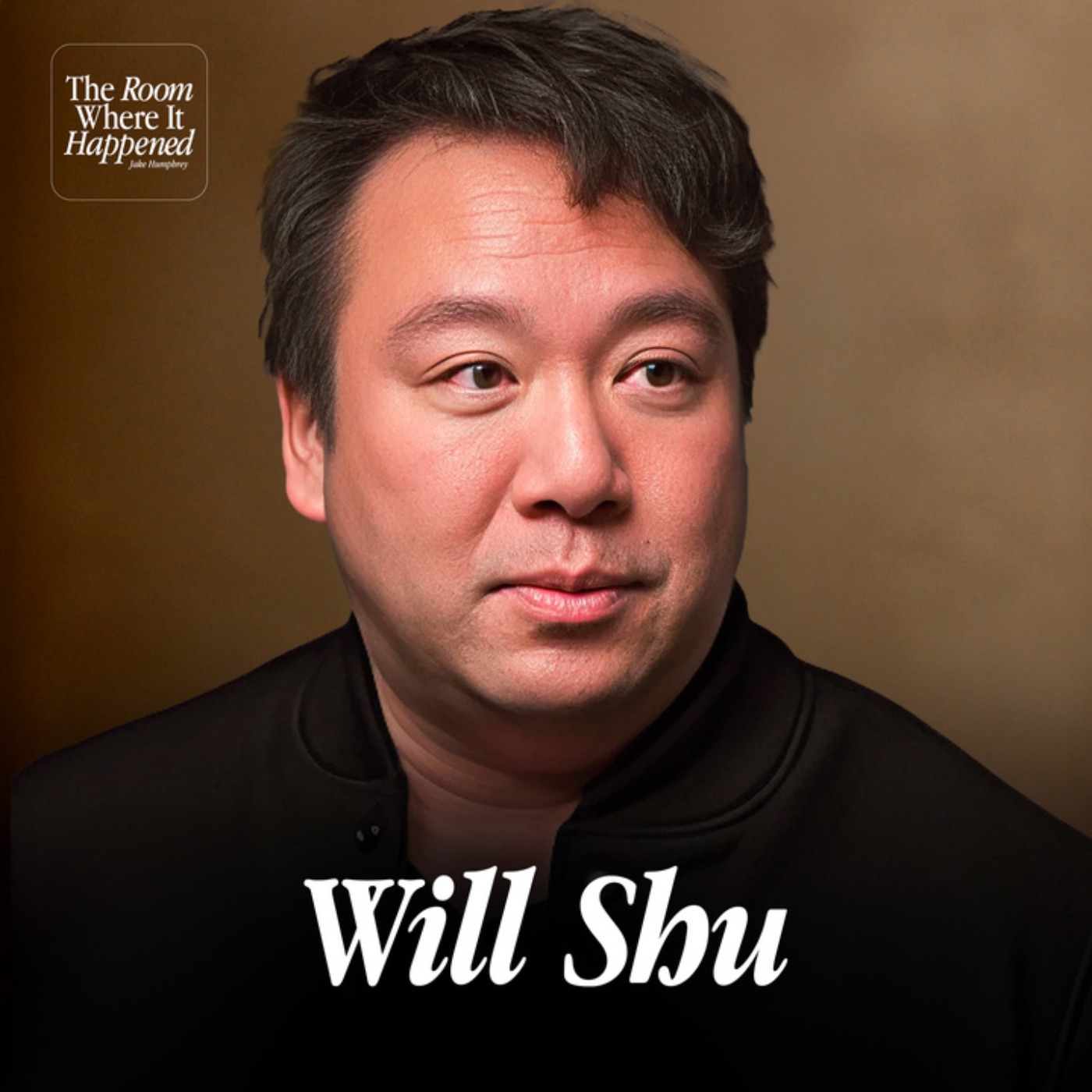
What happens when a hungry banker decides to transform food delivery? For Will Shu, it meant hitting the streets as Deliveroo’s first rider, facing unexpected challenges, including getting a scooter helmet stuck on his head and navigating a high-stakes antitrust investigation.
In this episode, Will shares the key moments that shaped Deliveroo’s journey, from its humble beginnings with just three restaurants to becoming a global force. He opens up about early missteps, the mindset needed to push forward, and why staying obsessed with the customer experience made all the difference.
IFS - award-winning Asset & Service Management software
👉 Reimagine your operations at https://hppod.co/ifsai
Hosted on Acast. See acast.com/privacy for more information.


