
 Ask ChatGPT


 High Performance Business
24 Mar 2026 · 1h 2m · 23 chapters
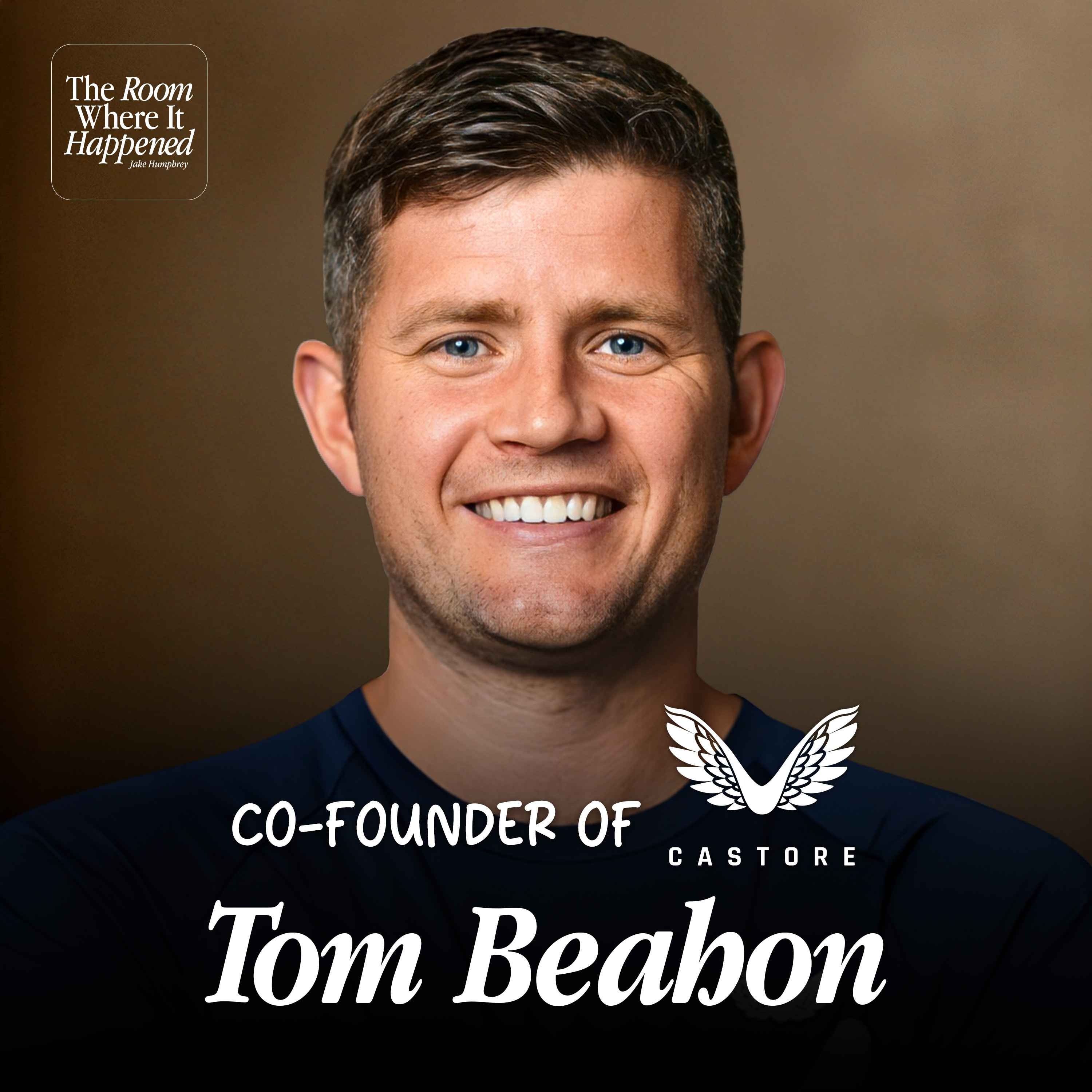
In this episode, host Jake Humphrey interviews Tom Beahon, co-founder of Castore, a sportswear brand that transformed from a £20,000 family loan into a global brand worth £300 million. Tom shares his entrepreneurial journey, the challenges faced, and the pivotal decisions that shaped the brand's success.
Written by AI. May contain mistakes.
Discussion on the challenges and insights of starting a sportswear brand.
“Well, firstly, I think it's fantastic that your daughter is interested in business and thinking about starting her own business.”
Exploring the initial struggles and strategies to gain traction in the market.
“Your mum and dad say yes to the 20 grand.”
The importance of networking and personal relationships in business growth.
“what to do with my new shiny garments i've managed to have made in a factory in portugal that are sitting in my front room in Merseyside.”
Discover the truth behind the notion of overnight success in business.
Learn about the challenges of maintaining financial viability in early business stages.
“How quickly did you realise that actually you had a viable business?”
Understand the personal sacrifices entrepreneurs often make for their startups.
“I think the catalyst to change that was when we did our first kind of proper quote-unquote fundraise that was like a couple million quid.”
Explore the dynamics of working with investors and the importance of commitment.
“But because we had that mindset, we also said, this has got to be our business.”
Witness the pivotal sponsorship decision that shaped Castore's future.
“What's the biggest move that you made with that two million quid that moved the business forward?”
Learn about the risks and rewards of partnering with celebrities for brand visibility.
Discover how entrepreneurial decision-making differs from traditional business practices.
“I don't have another option I've got the chance to partner with Andy Murray I've got to find a way to make this work, yes, it's risky.”
Explore the trend of athletes investing in brands and its implications.
“It was portrayed as Andy Murray as an investor in a sportswear brand.”
Understand how athlete partnerships can provide value beyond financial transactions.
“not this week or this month, but the next five, ten years and beyond.”
Learn how to assess sports teams for potential partnership opportunities.
“How do you decide which sports franchises and sports teams that you want to work with?”
Discover strategies for positioning a brand within a competitive sports apparel market.
“I mean, it would be an overstatement to say that we foresaw that.”
Hear insights on learning and adapting in the fast-paced world of entrepreneurship.
“in a way that maybe the big brands can't.”
Discover how entrepreneurs navigate challenges and learn from failures.
“So where have you learned how to make these decisions?”
Explore the pressures of rapid growth and public scrutiny in business.
“So I think probably the best place to start I think is I don't know if it's correlated but I also don't think it's a coincidence.”
Understand the importance of learning from setbacks in business.
“we'd reach this point where the revenue of Castor was a hell of a lot bigger than the infrastructure of Castor.”
Gain insight into the emotional challenges faced by founders during tough times.
“You're never as good as you might think when things are great and you're definitely never as bad when they're bad.”
Explore the mindset required to navigate the risks in entrepreneurship.
“Here's all the risks that are associated with that.”
Learn about the complex dynamics of investor relationships and decision-making.
“When people see how passionate you are, it does rub off on people.”
Gain insights into the expectations and realities of taking on investment.
“it's when they take an investor's money or private equity money, and then three years later, they say, oh, it's all going really badly.”
Hear about the ambitious vision for Castore as a global sportswear brand.
“when you first started there was no grand vision I wonder what the grand vision looks like today You're 10 years into this project.”

Get the gist, explore an idea or ask about something said.
 Claude
On High Performance Business, what are the key points of this episode?
Searching your listeningAutomatic transcript. May contain errors.
0:00The reason why I was really keen to have this conversation, partly because we've spoken so much over the years on email, and you reached out years ago to say you were listening to High Performance, and we've carried on the conversation. I see all the time people coming up with sportswear brands. It seems just to be something that is happening constantly. And my daughter, who's really getting into business, all of her ideas revolve around designing a new hoodie, designing some new joggers, creating a new tracksuit, some running gears. It's almost like it's the first place that people's brains go to.
0:29Therefore, the amount of these businesses that go nowhere is astronomical. And I'm fascinated by not just how did you get it off the ground, but how have you ended up in a place where, as you've just said, 300 million is the rough revenue that you're doing. What do you think is the reason you're sitting here talking to me today? Well, firstly, I think it's fantastic that your daughter is interested in business and thinking about starting her own business. And I would encourage, sincerely, anyone who is young, it is the best time to do it. I have no doubt whatsoever in my mind. And I think this is probably the first answer to your question.
1:01One of, if not the biggest driver of our success was the fact that we were two young guys. I was 26. My brother was 23. We just didn't know any better. So there's maybe this cliche that gets rolled out about, oh, you never know how hard it will be. But cliches have kind of become cliches because there's an element of truth. And if I look back, that almost naivety, that ignorance was brilliant. as long as you've got kind of a few brain cells in your head, which hopefully we have, you can work most things out along the way. Don't believe anyone that tells you that you have to be some sort of genius or come up with a unique idea.
1:39In my opinion, you absolutely don't. What you do need, however, is a close to inhuman level of resilience and determination and passion just to keep going because maybe there's exceptions to this rule and kind of a Mark Zuckerberg or an Elon Musk is kind of genius level, invent something that is truly unique. But for the rest of us on planet Earth, it is inevitable. It's not a maybe. You will get told no, you will face setbacks that most normal people would say, well, clearly it doesn't work. The world is telling us there's no demand for this. The market is telling us there's no demand for this.
2:19Let's go in a different direction. and there is definitely this impossible to define perfectly balance between single-minded tunnel vision refusal to give up and that for us definitely came from our mum and dad have remortgaged the house if this goes wrong in my head they're going to be homeless I'm not going to let that happen so that was the determination side of it but equally you have to combine it with this humility and when people reject you or you're trying to sell that product and it doesn't work an ability to learn really really fast and most people in my experience have one or the other so you have to have both if you want to be successful deep self-belief deep passion determination to keep going and come what may but also to pivot and be more agile i describe castor But our competitors are Nike and Adidas and Puma.
3:17We're even, given the rate of growth that we've had, we're way smaller than them. We have to be a speedboat in a market of oil tankers. I have to learn faster than them. I have to fail faster than them. I have to be more agile and pivot faster than them. People think being small is a weakness, but I think in the modern age with technology and the ability to speak to consumers directly, which didn't exist even as recently as 15 years ago, So being small can be a superpower. So starting a business, whether it's a sportswear brand, anything that involves consumers, honestly, I think it's easier than it's ever been.
3:54That doesn't mean it's easy to be successful. You're going to have to fail very quickly, learn very quickly, and have the ability to learn faster than almost anyone else. Well, let's get into the story then. Your mum and dad say yes to the 20 grand. What's the first thing that you and your brother do with that money? I so I vividly remember I had a job at the time because I wasn't some people are like right I'm gonna go all in I was not like that I'm gonna keep a job as long as I possibly can because we didn't have any money there was no ability to pay ourselves a salary so having some income allowed me to sleep at night I don't think I would have got through it without that and we I remember my brother and I would give up our annual leave at the time to go and visit factories so it's really difficult in apparel to convince factories to work if you they generally like big customers who are giving them big orders and have kind of banks that underwrite their credit risk and uh provide them with debt and all the rest of it and we had none of those things and we were having to convince factories that these two guys from merseyside with zero collective experience between them were worth them taking a risk on and and our big thing at the start was we want to be premium we want to be a premium alternative to Nike and Adidas and if they manufacture in China we're going to manufacture in Europe so we went to these factories in Europe I vividly remember it this could be another room we met this factory in Portugal it was fantastic worked with all the kind of biggest most premium technical brands in the world and the owner of the factory didn't speak a word of English and I speak not a word of Portuguese but somehow through an hour of whatever we were conversing about, we managed to convince him to take a risk on us, which they generally don't like to do.
5:38And he agreed to make, I think it was 300 units of kind of a couple of t-shirts, a couple of shorts. There was a jacket in there. And you and your brother designed these? No, no. So we kind of hired very randomly. I bumped into this person yesterday. A freelancer, we said, we're going to pay you, but we can't afford to pay you for six months. Is that okay? That person designed some products. We then took those designs to the factory. We had no ability to do anything ourselves. We couldn't design the logo because neither of us had any kind of graphic design experience. Coming up with the name Castor took us, I think, about five weeks and quite a lot of alcohol consumption.
6:18Does it mean something? It does. Well, it did after five beers. I don't know if it will now. So the word Castor comes from a story of Greek mythology. and in Greek mythology, Castor was one of two brothers, Castor and Pollux, and they were two brothers who challenged the Greek god Jus, which we thought was quite a nice analogy for us as two brothers, challenging the big guys of the sportswear world and whilst we've definitely made a lot of bad decisions in the last nine years, I think choosing Castor over Pollux was probably one that we got right. I think you're right. Yeah, it's not the greatest, is it?
6:51Go and get my new Pollux wear. That top looks the Pollux. I mean, that works.
6:58This episode is brought to you by Progressive Insurance. Fiscally responsible. Financial geniuses. Monetary magicians. These are things people say about drivers who switch their car insurance to Progressive and save hundreds. Visit Progressive.com to see if you could save. Progressive Casualty Insurance Company and Affiliates. Potential savings will vary. Not available in all states or situations. There's one place for the newest drops in wellness and performance. And the biggest sale of the year. It's The Drop by GNC, curating the best of what's new, handpicked by the pros who know what works.
7:32And right now, get it all, buy one, get one 50 % off during the semi-annual Live Well Sale. From crushing workouts to leveling up your nutrition and everything in between, get the best deals on the latest innovations. All the newness is all on sale right now during the Live Well Sale on The Drop by GNC.
7:54so i could until this point i understand the story like i know about going to your parents and asking them for money but i managed to buy my first house because i convinced my dad who's a charity worker to remortgage his house and i know that you feel that sort of sense of responsibility i also get meeting a designer and getting them to do a bit of work for you and then meeting a factory owner kind of what comes next is what's confusing me because i would not know what to do with my new shiny garments i've managed to have made in a factory in portugal that are sitting in my front room in Merseyside.
8:22Yeah, so I'll try and talk through this in a way that's chronological. To put it really simply, the skill set required at the start when you have that product, but you've got no revenue, no brand awareness, you've just about built a website, but how do you get anyone to go there? That skill set could not be further removed from the skill set required when the business gets to a level of scale, and that'll be different things in different sectors. This might be 5 million revenue, 10, 100, but there's a level of scale at the start. And some people may disagree with this and I kind of definitely accept there a disagreement.
8:59But to my mind, there's not a lot of intellectual requirement to that. It is just pure bloody minded hustle. And I remember we were based up in Liverpool, up in Merseyside. I would hide in the toilet. Back then it was the Virgin train. Used to run on time more than it does now. I couldn't afford a train ticket I didn't want to spend the money on the train ticket because we had very limited capital. So I'd hide in the toilet to avoid having to get a ticket, come down to London and literally knock on the door of the kind of big magazine publishers, so Mentel, GQ, Esquire. And they said, I want to see Mr.
9:34So-and-so. And they'd say, well, you haven't got an appointment? No, you're not soon. I said, okay, that's no problem. I'll wait here until he's done. And it is, or he or she has done. It is an amazing thing to me how if you just put yourself out into the world and you're passionate and you're driven and you've got humility, people are generally accepting of that and the amount of editors who I had no right to get in the room with that would say, oh, fine, this guy's sat there for two hours. Fine, come in, you've got 10 minutes. And you'd speak to them and you'd say, look, we started this brand.
10:05We're trying to be a premium alternative to Nike or Adidas. We don't have any money, so I can't buy any advertising, but I would love it if you kind of, here's a T-shirt, would you tell our story? And did they? And they did. So I remember to this day, Men's Health wrote about us on the day that we launched because we'd kind of done exactly what I just said two weeks in advance of launching. And that was the first time we got an order. So someone, I won't say the person's name because I'll probably get in trouble for some sort of GDPR breach. But I vividly remember that first order coming in on the first day that we launched.
10:37And I emailed, I did this for the first like six months. I'd email every customer and say, oh, I'm the founder. Thank you so much. This is our story. really appreciate your support and again it was amazing because we're a premium brand a lot of those customers were kind of kind of successful established quite big hitting people and it's amazing how some of those really big hitting people would respond to those emails and engage in the story and be like good on you for starting a brand and is there anyone I can introduce you to and that hustle networking whatever you want to call it there's almost I think this mindset in Britain of, I don't do that.
11:12It's kind of feel embarrassed by it. We wrote a business plan and I can hand on heart say that I didn't want to look at that business plan for the first year or so after starting the business. It was just, I'm going to wake up every day and I'm not going to bed until more people know about the brand and I've heard the word Castor and I've seen the Wings logo than when I woke up. I'm just going out into the world, going to gyms, going to private members clubs going to speak to press people. We kind of came up with this, it felt to us at the time, innovative idea of not paying influencers because kind of influencers were starting to get paid at that time.
11:50But we'd go to the high end personal trainers at gyms like Equinox and Third Space and these cool gyms around London. And we'd gift kit to the PTs and say, oh, if you wear it, and one of your customers goes on and buys and they use your code, we'll give you a percentage of that sales you'll get paid via that and that again helped us get off the ground but it was just one percent every day and we gradually built it up from there so really what you're talking about here is actually it's personal relationships right yeah personal relationships with the editors with the personal trainers with the customers who are buying your stuff emailing them because i actually believe that we are so good at talking negatively in in the uk about ourselves about other people about the country about our opportunities and really what we're actually telling people right now is that Castor was built from individuals that you'd never met before believing in you and believing in your brand because you opened up and shared your personal story.
12:40And I think that in itself is a really important lesson, actually. 100 % Jake, put yourself out there. The world doesn't owe you anything. The world's not going to give you anything. But equally, if you put yourself out there, it is astonishing what the world will give you back. I am a big believer that you have to give more than you get in life. but at some point once you give particularly without expectations you're not giving it's not transactional but it is just look this is who i am this is what i'm trying to do this is why i'm trying to do it the world will give you more back than you ever imagine but it won't happen as quickly as you like so it's not oh good we did this on monday and this happens on tuesday you might have to do that you might have to give for a month for three months or six months before you get anything back and i mean people have different views but that test i think is what really separates more than anything more than anything intellectual is what separates successful entrepreneurs from people who might be far smarter in many ways might have a better idea but they give up earlier than they otherwise should yeah i've read something the other day saying that you know to really build something of scale size and impact takes between five and 10 years and most people will call it a day after two i think that's true and i think i mean we live in a modern day social media era don't we where the perception is that success is instantaneous and it's it's kind of darkly ironic to me people often think that castor has been this overnight success and they're like oh i kind of saw you on andy murray and then a day later two months later you were on this team or that team or that athlete and like yeah couldn't be further from the truth obviously those people didn't see the 1 ,000 trips down to London hiding in that toilet knocking on people's door and when I alluded to earlier a lot of those editors said yes but a hell of a lot of them said no as well and when we tried to raise money not just at the beginning and people said no but after we got the thing off the ground and we were generating revenue still people said no said there's no way that you'll be able to compete with them so the concept of overnight success doesn't exist i think that's true in sport in business and politics anything worthwhile having in life you're going to get tested along the way you've got to be in it for the long haul and the only way that you'll be in it for the long haul is if you're genuinely passionate about it making money is not going to keep driving you in those tough times you have to truly love what it is that you're doing let's talk then about making money because it all sounds very easy, but the reality, right, of the world that you'd entered is that you could sell thousands of units, thousands a year, and still be losing money.
15:23Yeah. How quickly did you realise that actually you had a viable business? How close to failure were you sailing for the first few years? So, I think there's two parts to that, Jake. So, one, I never felt, I remember in the first fight, I never felt, oh, we've got, I was scared every day. Every day was about getting to the end of the month. And when you hire one member of staff, which was a guy that my brother had gone to uni with, you've then got responsibility for that person and that instills another level of fear. I think my brother and I paid ourselves a thousand pounds a month for the first three years, something like that.
16:02So there was never a moment where I felt, oh good, we've got a viable business. It was just a deeply ingrained fear in the pit of your stomach that we've got to run faster, we've got to go harder. I am a massive believer that intensity is the price of excellence. Obviously, you meet so many successful people through your life. Everyone's different, but I do think that having that intensity, not many successful people don't have that. It might manifest itself differently, but we just had that, oh my God, this could fail next week, next month. We've got to go harder. but equally the flip side of that was being in digital first business you're very data rich so you can see every day how many people are coming to my website right what are they buying how much are they spending if they come on that page but they leave at that page i need to fix that so you can be very granular and targeted in making the business better it's almost like an engineer how do i fix this tiny component so whilst i had this deeply ingrained fear I simultaneously had this feeling that if I make all of these 1 % things better, this thing can work.
17:16And again, every entrepreneur is different. I wouldn't profess to speak for anyone else, but there was no grand vision for me. I didn't think, oh yeah, we're going to sponsor Andy Murray and then we're going to do X, Y, or Z. It was just about, well, if I get through to the end of next month, maybe something else will, an opportunity will pop up or maybe I can make it better. I think the catalyst to change that was when we did our first kind of proper quote-unquote fundraise that was like a couple million quid. And then I had this feeling of, okay, so some pretty intelligent people have parted with their hard-earned cash in return for what we're doing.
17:53We must be on to something here. So when did you do your first fundraise? So after our mum and dad, that wasn't a fundraise. No, that doesn't count. oh, this isn't real, this can't go wrong now. The first one after that, I'd say, was two years in. So what, like 2017, 2018, something like that? Yeah, give or take. Right. And we were maybe a million quid revenue, I don't know, maybe a million and a half quid revenue. And just to be clear for people, they will hear you go, we're a million revenue and think, oh, that's a successful business, you must have made a few quid out of that. Like, there are many, many businesses in this kind of, it's not actually a sweet spot, it's an ugly spot, of one to six or seven million revenue with profit that's so tight, you're worried every single month whether you're going to be able to pay your wages and pay your tax bill at the end of the year.
18:41And that's on a few million quid. And you had to get beyond that, I guess. You're completely right. And it's such a good point. So I don't know what the average salary is in the UK, but say, if you were to say to someone who I earn 50 ,000 pounds a year, most people say, well, that's good. You've done well for yourself. You're on a good salary. So it's kind of in the human brain that, oh, I've run a business. I founded a business that does a million pounds revenue. Wow, that's phenomenal. You must have a house in Barbados and have a servant that lights your cigar every morning. And as you say, it could not be further from the truth because as anyone who started a business knows, particularly a consumer facing business, everything goes out before it comes in.
19:20So you've bought a hundred grand's worth of stock and you might sell it for 200 grand for argument's sake. But when you're halfway through selling that 200 grand's worth of stock, You've got to go and buy the next set. And are you buying 400 grand? Are you that confident? Do you have 400 grand? Will a bank give you that? Or do you buy another 100 grand because you're not that sure? And there's this forever balance between how quickly can I grow because I feel like this is working versus not wanting to overextend yourself. If you get those decisions wrong, they can be terminal in the early days.
19:53Again, I don't think it's a purely mathematical equation, but you're absolutely right as a principle for a business to get going, to be viable. You've got revenue. You're making a million pounds. It's coming through the door. You are not wealthy. You are not successful. You're far from rich at that point. All you've got is the opportunity and it's how you make decisions to convert that opportunity into something more sustainable that are going to define your success or not. Completely right. And everywhere I look, I see other podcasts, other media, particularly social media accounts, telling people that if they get to that point that we've just been talking about, then they've got their place in society, they're a valuable person, everything's going to be great.
20:33And it's like, this is the, I think this is the most challenging part because you've worked so bloody hard to end up with a business turning over a million quid. Like you couldn't have done any more. It's taken two or three years to get to that point. But you still aren't where you can be. You are still a bad month away from losing your whole business and you still have no money in your bank. So then you and your brother have to make a decision, right? We need to raise some money. and then by doing that you dilute yourself so then you're a smaller so how much did you have to give away of Castor to get that we were we were very big right from the start on we're willing to do whatever it takes to be successful there's no work life balance there's no amount of hours in the day or there's weekends don't exist that is the mindset we have and the sacrifice that we'll make and again we were young guys we didn't have any dependence so it was easy are you glad you did this when you were young yeah I couldn't have done it even now mid-30s again your life is broader like we were so single-minded yeah we didn't have anything else i didn't see my friends feet i'm gonna tell an exaggeration literally for years you miss weddings and stag do's and again i'm not i'm not saying that's right by the way i'm not necessarily proud of it but it's what we did and did it make us successful or not i don't know but it's what we did and we were i think it's probably necessary i i would i would agree which again is kind of counter to the maybe current narrative of society, but I couldn't imagine doing it any other way.
22:00But because we had that mindset, we also said, this has got to be our business. That isn't an ego thing. We're the ones that have sacrificed our lives. Whoever comes in as an investor, they might be the smartest, richest person in the world, but this is not their business. This is ours. So we've always, and I think it's such a good lesson for entrepreneurs when these investors come in, kind of these so-called professional investors, you don't know anything about finance. Like no one teaches you that. No one, and they, you sit across the table from them and they say, yeah, we don't want you to take any money off the table.
22:32We want you to be committed. Wait, are you joking me? Committed. I've done nothing other than be committed for the last five years. And a lot of entrepreneurs, I think this is a British psyche as well. American founders I speak to don't have this. They feel embarrassed about saying, look, I've worked my proverbials off. My family have not made any money. I've paid myself a thousand pounds. a month for the last three years, you're going to invest a couple million quid. I need to take 10 % of that off for myself and my family. And so many British entrepreneurs were almost embarrassed to say that.
23:05And I would say, don't be embarrassed. No one else is going to look after your interests beyond you, I promise you that. So that mindset for us was, we'll raise money, we'll invest in the business, but I'm never going to feel ashamed in a way that I think some entrepreneurs do of this, I've got to look after myself because unless we do what's right for us, this business is not going to be here and no investor will ever say that to you. You have to have the self-confidence to say it yourself. And what type of investors were they at the early stage? Were they like angel investors or were they VC funds?
23:37So they're individuals really. Correct, high net worths. Again, I think there's a perception in the UK that we've got this bad environment to start businesses. Not in my experience at all. again, these people are not going to come and knock on your door unless you're very lucky and you've got a phenomenal business. So you're going to have to get out there. You're going to have to knock on a hell of a lot of doors. But there is this amazing community in the UK of angel investors that will take a risk. We've got the AIS scheme that kind of makes it quite advantageous from a tax perspective for them to put in money.
24:12They can kind of write off certain losses against their tax income. So they will take risk. and if you can get in front of those people, I can't speak for them, but certainly my sense was they're not investing in numbers. You might have revenue of this and gross margin of that and maybe you're quasi-profitable, probably not. You think you're going to do X or Y or Z in the future. That is far less important than looking in the whites of the eyes and is this a person, a young man or woman, that's going to get in the trenches and do whatever it takes to be successful? And if you can convince people of that, which you have to you can't fake it there are people out there willing to invest and that investment for us was such a big difference to take it from an idea from a hide in the toilet hustle get men's health or gq to write about you free of charge to try and make it a real business because you can do that stuff but it's not sustainable you need investment to make a business sustainable so you take the two million you invest it into the business with a very small amount taken off the table so you and your brother can reward yourselves.
25:20What's the biggest move that you made with that two million quid that moved the business forward? Andy, Murray. So again, every business and every entrepreneur is different, but in a way that maybe doesn't sound logical, given I said we were the definition of humble roots, but we just had big, big ambitions. And again, it was the same mindset. We'll do whatever it takes. We'll make whatever sacrifices are required we'll work harder than anyone else that i know a lot of people disagree with kind of that hustle culture but that is how we are that was our mindset and still is today but if i'm going to do all of that i don't want to do it to be a small business i want to see how far we can take this so we had a big dream right from the start and that led our thinking to well why can't we sponsor andy murray we had no right to do that we were far smaller Why did you choose Andy?
26:13Because I think Andy embodied everything that we wanted Castor to represent. Gritty, hardworking, absolutely maximised every inch of talent that he was given. Competed in an era with Federer and Djokovic and Nadal that some people would say maybe had more God-given talent than him, but won Grand Slams that won an Olympic gold medal. managed to find a way to win when most people thought it was just all of that i just i love him i think he's britain's best ever athlete i couldn't think of anyone that i would more want to represent our brand and i am a big believer in life that the harder you work the luckier you get and the piece of luck for us was that andy was coming to the end of his agreement with his previous kit sponsor for whatever reason they maybe had fallen out slightly we tried to be intelligent and gift kit to people around him so his personal trainer his masseur his hitting partner his agent in the hope rather than any expectation that he just keeps seeing this brand and luckily for us he did and they said oh kind of he said oh what's what's that brand someone said oh it's two brothers from merseyside i guess we're lucky because andy and jamie are two brothers from dumb lane that have gone on to do these amazing things so i think the brother angle was probably fortuitous for us and managed to get a meeting with him and um yeah not going quite the rest of his history because there's been a lot of hard work since but that was a transformational moment when Andy wore Castor for the first time I don't want to misspeak I think we did more revenue in a day than kind of the previous nine months combined kind of thing Wow he wore it at a tournament for the first time he wore it at the Australia Open again they definitely don't teach this at Harvard but he wore it to announce his retirement which kind of you might not remember but he had some hip problems I don't know he was kind of clearly a motive but he said in front of all these journalists that I don't think I can carry on I think I'm going to have to retire which was not in our plan Did you know then?
28:20No no we didn't know that was going to happen and again it could have you all could have got a bit talk about taking a risk like there is clearly a big risk on our behalf but of course what ended up happening is that image of him announcing that was on the back page of every newspaper was shown all over the world our brand got this level of visibility that no amount of Instagram or Facebook advertising could frankly ever give you and it gave us a level of brand authority and authenticity that no amount of normal quote unquote advertising could ever give you so on the one hand I look back and it was a crazy crazy risk for us to have taken but equally on the other hand my mindset at the time was well whatever I don't have another option I've got the chance to partner with Andy Murray I've got to find a way to make this work, yes, it's risky.
29:09But if I want to make this business bigger, I've got to take risks, we have to go for it. That is not something that most managers of businesses would ever think about doing. It absolutely is something that entrepreneurs would do. Did you have to get approval from the people that had invested the money in the business or did you and your brother disagree on it? Or was everyone on the right ticket? So we'd speak to investors. I was very clear and hopefully not, hopefully this doesn't come across as egocentric, but we were very clear with investors that we're the decision makers. And by the way, people did disagree and said, oh, he's had these hip injuries, but you can't run a business by consensus.
29:53You can't grow an entrepreneurial brand via committee. You'll have meetings after meetings and by then the opportunity's gone and no one will ever make their mind up. So we'd speak to them, we'd get their feedback. But then it was no, we think this is the right thing to do. We acknowledge there's risks, but it's our business. We're willing to take those risks and live with them, come what may. And thankfully for us, it worked out.
30:33Progressive.com to see if you could save. Progressive Casualty Insurance Company and Affiliates. Potential savings will vary. Not available in all states or situations.
30:42Tom Beahon: Taking care of your eyes shouldn't be a hassle. That's why Warby Parker is a one-stop shop for all your vision needs. Our prescription glasses and sunglasses are expertly crafted and unexpectedly affordable. Stop by a nearby store or use our app to virtually try on frames and get personalized recommendations. Did we mention we offer eye exams and take vision insurance too? For everything you need to see, head to your nearest Warby Parker store or visit warbyparker.com today. That's warbyparker.com.
31:14I think it's an amazing story. And I remember reading at the time, because this is the way that athletes like it to be now. It wasn't portrayed in the media as Castor has sponsored Andy Murray. It was portrayed as Andy Murray as an investor in a sportswear brand. And I think this is quite a new phenomenon in the last five or ten years where people will go to athletes and the athlete will say, look, there's a big thing here where I want people to see I'm more than just a tennis player, more than just a rugby player, more than just a footballer. Can I be an investor so that I have skin in the game, which I think also works for the brand?
31:47But also I think the athletes have done it because it changes people's perception of them as more than just athletes. I agree. And this happened with Andy, right? It did. and I mean, huge credit to Andy because I think he was, he might've been the first, but he was certainly at the forefront of that change because you're absolutely right, Jake. Ever since I was growing up, athlete would get paid by a big brand, a big fee, that it was a transactional relationship in return for this fee. You will wear this, you will do that, you will turn up for this. Whereas this mindset of no, no, don't be an ambassador, be an equity holder, be an investor, fundamentally changes everything.
32:26The conversation changes from he has to do this social media post or she has to turn up for this photo shoot to if it's the right athlete, which Andy absolutely was, them saying, how do I help more? How can I go above and beyond? So again, hard to articulate just how powerful that shift is where your interests are completely aligned. The athlete has every interest to help you grow the business, not this week or this month, but the next five, ten years and beyond. And Andy was right at the forefront of that. It was, frankly, the only deal that we could have done. We didn't have the money to do a traditional on-market deal.
33:06And just to make it clear for people that aren't of favour of this world, if Andy would command X, you would pay him less than that, but he would also get a bit of equity in the business, a small equity plan. Andy's equity value was, you're right, X up here, our cash in the bank was Y. There was a big gap between X and Y. So the delta, the gap was bridged by him becoming a shareholder. Castor had a value. We'd done fundraisers. So we could legitimately say, look, the business is worth X based on what other investors are willing to put into it. Your shareholding will be whatever the percent is.
33:41That has a market value of Y. There's the gap. So financially, it's quite a creative way of allowing you to do things that you wouldn't otherwise be able to do, but the value is way bigger than the financial delta. It's that you have a guy like Andy Murray that's willing to go above and beyond for your brand. Not only, as I said earlier, did we generate more revenue than the previous nine months, which was amazing, but Andy gave Castor a stamp of approval, an imprintor that, again, And I don't think any amount of marketing could have given us. So a couple of years later, when we went into the professional sports team market, I don't know, because there's no way of measuring this, but I think it would have been almost impossible for us to break into that market, partnering with Premier League football teams, Formula One teams, international rugby and cricket teams, without the trust that Andy had given us.
34:43I don't think I can put a value on that. So whatever deal we did with Andy, hopefully it's worked out really well for him because Castor's grown in value. But it's impossible for me to measure the value it's given Castor. Yeah. How do you decide which sports franchises and sports teams that you want to work with? So the first thing to say is you can't be emotive about it. Sport is innately emotive. It's what makes it and what we all love about it. Fans are so passionate. when you're making a business decision, it can't be a motive. I can't hope that Everton will have a good season or Bayer Leverkusen will win the Bundesliga or McLaren have a chance of winning the F1 World Championship.
35:29That's gambling. You can't gamble. So you're looking, you're trying to quantify the value of that club's brand. So there's a few ways you can do that. you can look at historically how many shirts have they sold and you can look at that over a period of years so when a team is winning logically they sell more product but you can also see if this team gets relegated if they're not performing well if they're not signing star players every year are they still selling the same amount of merchandise is that fan base as loyal and as passionate in the bad times as the good times and i won't name any teams because that would be unfair but every team thinks they've got the most passionate fans in the world I'm in the quite kind of fortunate position I can see in a quantifiable way which teams fans are more passionate because I can look at well how much revenue how much do they spend Because I think when you did these deals I remember actually looking at the deal like Rangers right Newcastle Bayer Leverkusen those three I looked at all three of those and I think that there are most football fans at football clubs turn up and it's like what are you going to do for me?
36:41How are you going to entertain me? I think there are very few groups of football fans who feel like they are responsible for their grandparents' love of that club and their grandchildren's love of the club. And they have, for a short time, that seat and they're going to do everything to emotionally invest in that club. I put Liverpool in that bracket. I put Celtic in there. I absolutely put Newcastle by Leverkusen and Rangers. I agree. and I looked at those and I wondered whether that was part of your thinking so absolutely yes you're trying to quantify if I keep the numbers simple if I invest a million pounds in this football club or 10 million whatever the number is what do I think my return on investment will be and how do you make the money out of these so you're selling product that can be jerseys that can be track suits you can expand the product range you can take that product range into new markets So part of your kind of quantifiable analysis is, do Rangers have fans outside of Scotland?
37:43And the answer is absolutely yes. And you can look at data, whether that's on social media or email signups or whether they have fan clubs around the world, you can see, yes, this team has a fan base outside of their core market. Does that fan base have access to buy product or do they have to go to iBrox once a year, five times a year, whatever it is to buy that product? if it's the latter okay well if i can change that and i can build a digital platform that makes it easier for them to buy product do i think i can sell more do i can make it easier for them is there the opportunity to grow that revenue so we're doing an analysis around is there growth potential how steady is it firstly is it fan base resilient and loyal secondly is there growth potential can i internationalize it do i think that via kind of being better at digital or trying to make higher quality products i can sell more and then there's the final part which is far less quantifiable and i would say hopefully is where castor's built an edge over the bigger brands nike adidas puma are huge businesses but they make decisions slowly there's layers of management to make decisions when castor partnered with by a leverkusen i think there was a very small proportion of people in the world that thought they would win the Bundesliga or do the kind of league and cup double and get to the final of the Europa League.
39:05I mean, it would be an overstatement to say that we foresaw that. I can't make that claim. But we do have the ability to make judgments on these things and there's not a committee. So if we believe that Bayer Leverkusen has the chance to do really well or Athletic Bilbao in Spain or Feyenoord in Holland or McLaren in Formula One, we can be bold in making a decision on that in a way that maybe the big brands can't. So I describe Castor as a speedboat in a market of oil tankers. We're not as big as the big guys, but we have to be more agile, more flexible, more innovative. And with those sorts of deals, do you have to pay a lump sum because Castor is on those shirts?
39:46And then when they sell, is it Castor selling a shirt to the customer and Rangers, Villa, McLaren, whoever get a cut? or is it the club selling it and Castor gets the cut? So there's no normal, I guess, is the first thing to say, the way that the model works, which is for me great because it gives you a chance to be innovative if there's not a normal. But fundamentally, yes, you pay a fee and in return for that fee, which is negotiated and that's based on how competitive is the market, how attractive is the team at that time. I, again, have to try and find value based on sports category. So at any given moment in time, rugby might be undervalued relative to cricket.
40:25MotoGP might be undervalued relative to Formula One. And that's my job to find that value depending on the sports category. And then I'm also looking for value geographically. So maybe Premier League football is really competitive. So that's overvalued. But the Saudi Premier League is undervalued. And I think there's more growth potential there. So I guess in exactly the same way that a hedge fund manager looks for values in stocks around the world and might think, well, Japan is ripe for growth. Let's go into Japan. We'll try and we won't always get it right, but we'll try and make similar analysis and judgments on sports teams based on which ones we think will grow.
41:05Fundamentally, you're right. We pay a fee in return for that. You get two things. One is your kind of logo on their chest and various other marketing rights. and that means more eyeballs see the castor wings, which is great, and I'll try and attribute value to that. And the second thing I'm acquiring is, in return for that fee, the ability to monetize that team's intellectual property, which comes back to the point earlier of, do I think I can sell more, if I was to partner with Wrexham FC, do I think I can sell more Wrexham product in America than maybe has been sold in five years gone by? Now, I'll be expected to pay a premium for that because they've got Ryan Reynolds and other cool people involved in them.
41:45But they're the judgments that I'm trying to make. And that's where we've tried to find value in a market traditionally dominated by giants, is by looking at these things with a bit more precision than the big brands do. And who's taught you this? Because this is no longer Tom sitting at the kitchen table borrowing 20 grand. These are huge numbers. So where have you learned how to make these decisions? The University of Hard Knocks. the university of life. You haven't brought teams of people in? No. I mean, obviously the team has grown. We're kind of hundreds of people now across the business.
42:21And of course you hire very smart people and that definitely helps. But again, not in any way to suggest that we're super genius at all. But I don't think anyone's told us this is how you should think about that. It's again, like every entrepreneur, I think you look at a market, look at a situation, you think, why does it work that way? Why do Mike Adidas Puma dominate this market? Are they doing as good a job for the team that is 7th or 8th in the Premier League as they are for the team that's 1st or 2nd? I don't think they are. Maybe I can do a better job for those teams. So it's trial and error, learn as you go along, that kind of just innate curiosity that I think all entrepreneurs have.
43:06Why does it work that way? Just because it's worked that way before, is it logical? Is there a better way of doing it? So I think that's been very much learned on the job, so to speak. But then it's back to the point we discussed earlier about pivot really quickly. If you see something working, if something fails, equally learn a lesson very quickly. B, have the humbleness, but also the self-confidence. I'm not embarrassed if something doesn't work. You either win or you learn. So either it works and I do more of it, or it fails and I've learned something and I won't do it again. And I think most people don't have that mindset.
43:42They don't want to do things that fail because it makes them feel bad. It makes them look bad. I've got no problem with failure as long as it has taught me something. And that lesson is more valuable to me in the future than whatever the cost of that failure was today. Should we talk about a failure? I mean, we can't have this conversation without talking about this moment and you know what's coming. I remember when I first, because having spoken to you, I was excited every time I saw these big deals done. and then suddenly I see photos popping up on my Twitter of close-ups of the shirts. And one thing that's very interesting, right, is how keen everyone is to have an opinion about things.
44:19So I then saw other people going, well, of course, it's Castor, what do you expect? Oh, this stuff's always like... And it almost became like people who didn't really know what they were talking about were revelling in the fact that something had gone wrong for a business or a brand. And we can talk about why people are so keen to see others fail in a moment. but I'd love to know from your perspective the story of how you realised this was happening and I appreciate it's not an easy thing to talk about. I wouldn't say it's easy but you have to look into these things the only way you learn from them.
44:50So I think probably the best place to start I think is I don't know if it's correlated but I also don't think it's a coincidence. It was maybe six months prior that we'd done this kind of we'd raised money I didn't know such a thing existed but apparently the Times have something called the Rich List which how they calculate it to this day I still have no idea but they put us on some like under 30 Rich List which to the best of my knowledge was not true because the number that they put next to my name was not the amount of money Do you remember the number? I bet you do No I don't and the reason I don't Jake is because it was a long way away from the number that is in my bank account so I'm like where the hell have they got that from?
45:30Just to be clear you're saying the number of your bank account is a lot lower A hell of a lot lower. So I don't know the number, but the business, Castor had been valued at around about a billion quid. So I'm guessing someone worked out the brothers percentage shareholding is X. The X percent of a billion is Y. They're worth Y, which is not the case. It's not liquid. It's not real. You can't go and spend that money. So we were on this 30, I was under 30, 30, under 30, and you're alongside Anthony Joshua and Rory McIlroy or whatever it was. And you're like, this is very, very strange. Again, not something I think any entrepreneur asks for, but there was this weird change after that where, to your point earlier, there was this sense that, oh yeah, look, these guys, let's knock them down.
46:19Yeah, a little bit. And equally, there's also truth that we'd grown so quickly. Like at this point, we're a long way away from being kind of the kitchen table. We were doing hundreds of millions of revenue at this point. We'd done big fundraisers. We were international business. Our revenue had grown a hell of a lot quicker than our infrastructure. So there's many great things about being a consumer brand, but one of the challenges is you're constantly calculating, well, what's next year's revenue going to be? And we always underestimated that. I mean, with hindsight wrongly, but I was always erring on the side of caution.
46:57And if we'd grown at 50 % year on year or 100 % year on year, we'd say, well, next year won't be quite as good, so let's buy less stock, let's not hire as many people or open as many warehouses. And having done that for a number of years, we'd reach this point where the revenue of Castor was a hell of a lot bigger than the infrastructure of Castor. And when you're doing hundreds of millions of revenue, the supply chain that you work with is very different from when you're doing 10 million revenue. it's physically impossible to do hundreds of millions of revenue from a European supply chain and we've been exclusively European for the first couple of years so you've got a man managing all these moving parts you learn as you go along you learn in real time of course everything that makes sport great is also a massive challenge because it's so highly scrutinized and you can't have the good without the bad so you can't complain about that but it does mean that everything is on social media i remember at the time everything that happened to us exactly the same literally exactly the same has happened to nike adidas puma along the years but there is to your point there is this sense certainly it felt at the time and a couple of years ago now so you're kind of more philosophical about it but i remember at the time thinking why is this such big news because this happens to everyone else like when did you first become aware something was going on that's funny as well, I think.
48:25Again, funny with hindsight, not at the time. Everyone you know, your friends, everyone sent me the bad news. So you're right, there was pictures of kind of shirts and people would send me, just checking you've seen this, mate. I'm like, yeah, thanks. Thanks for sending that. And they do it at kind of nine at night, just as you're about to go to bed. No sleep. And then you're just there like, oh, wow, that's just what I need. But people would say, just checking you've seen this, wanted to send it on. Someone said something nasty about you on social media. And there's a funny, I don't know, probably deeper than we'll get to in this conversation.
48:59No one sends you the good articles. So when there was good news, no one ever sent you those. But people, I don't think there's any malicious intent, but there's this wanting to bring people down, I think a little bit. I honestly think that even our friends doing well bothers people. I do, honestly, because I think that they, like, I don't know, it shines a light on what you've done. So if your friend is in the Sunday Times Rich List, it shines a light on what their mate from school has managed to achieve. It's relative, isn't it? So if someone's got a promotion or a pay rise or whatever it may be, and then as you say, there's something that, again, is perceived to be bigger, and I stand by this, for me it's never been about external validation.
49:43I love building a business. I want to build a brand that outlives me. But I know I never asked for any to be on the Rich List or any of this media stuff. but when that happens I think you're right that it does relative to everyone else it's like oh they've so then there's ah good let's let's bring that oh I knew that couldn't be real I knew there was this falsehood there and there was this sense at the time that ah good we knew that everything they'd done was built on sand which was not the case there was kind of you learn you make mistakes as you build a business and you learn from them and you fix them as quickly as you can but there was definitely the sense that people wanted to say, aha, we knew that you guys would get brought down to earth.
50:24But again, looking back at it a couple of years down the line, it is undoubtedly true that you learn more from the challenging periods in life than you do from the successes. Because when you're being successful, and we've been very lucky to have a good level of success, you just do more of what you're doing. Again, it's funny and we shouldn't really because you should analyze how can I do better but why why would you we're it's working people are buying this this is we're growing so let's just do more it's only when you have the setbacks that you have to analyze you're forced to and it just so happened to us that working in the sports industry those lessons that everyone has are quite high profile what was the biggest lesson the biggest lesson i would say is i think there's there's two one is one is a philosophical one which is never get carried away by the ups and never get too down from the downs which is hot again sounds it's very easy to say that but when you're in the moment again i know some of the people you've had on here had these amazing successes and there'll be people listening that might be in a moment of like, oh, this is really working.
51:39You're never as good as you might think when things are great and you're definitely never as bad when they're bad. So that is the Churchill quote of the ultimate definition of success is that you can have good and bad and treat those imposters the same. I'll bastardize what no doubt was a great quote, but I think that... It's a good effort. Yeah, exactly. There you go. A for effort. But that keeping an even keel, not getting too up or down that that was a massive lesson and then there was a more quantifiable one which was all i thought about was growth revenue was and we were profitable so we didn't have to like always their cash coming in we were profitable business we were growing quickly and my my whole mindset at that time was how do i get bigger faster what we're doing is working i think because of that i think because what we're doing was working and i i said earlier about when we did the deal with andy i am a big believer in life that the world rewards ambition again there might be examples that disprove this but i don't think timidity and oh let's check and let's wait to see how the world plays out before we make our decision i don't know how many great businesses have been built that way to my mind you have to be bold you have to have an appetite for risk you have to be commercially aggressive and when other people think no no don't go and do Andy Murray or don't go and expand into the US I'm like no no I am going to do it and I'm going to prove you wrong I think that on a net basis is good but you also have to be very careful that it's not completely wrong to pause reflect analyze think about the downside as well as the upside we frankly hadn't had a lot of downside up until that moment so it was the only way that we learned from it and again looking back the lesson and the value of that lesson is a hell of a lot more valuable than if we just continued to grow easy to say that two years later at the time it wasn't quite as fun um would you just give us the truth about what it's like as a founder as an entrepreneur as a business owner who um is seeing these stories and you don't know whether this actually brings the business down.
53:50You don't know whether it's just a blip for a couple of days. Like, I think often people in your position don't actually talk about what it feels like when your wife is next to you in bed snoring and your kids are fast asleep and your mates are all fast asleep and you are very much not asleep. Yeah. It is tough. You've got to be built a certain way. And again, obviously there's amazing employees in every business and amazing ones in ours, but there is a difference when you're the final decision maker. It is lonely. That's probably the best word I'd use, Jake. If it goes wrong, it's on you. Everyone else will be able to go and get another job.
54:29You'll be the guy that owns that failure, so you feel that far more deeply than anyone else. And again, there'll be founders, entrepreneurs listening to this that I think suspect will be nodding their heads like, yeah, that's how I feel. And I don't know if you can learn it. I don't know if that's innate, kind of the nature of the nurture discussion. I genuinely don't know. But there is a skill in being able to own that feeling, self-analyse it and be like, yeah, this is difficult. This is scary. There is risk here. Things can and do go wrong in business. There is not always a happily ever after.
55:08You look into that. You don't hide from it. You kind of say it maybe slightly dramatically. You've got to look the evil in the eye. what is the evil facing me? No one's going to solve this problem. I've got to solve it. You have to be able to live with that feeling of looking the evil in the eye. And it could be anything for a different business. But then you've also got, whilst owning that feeling, have the ability to get up every day and not just work to fix it, work to make the business better. But even more difficult, I think, is to inspire a load of other people because it's your vision. It's not theirs.
55:44You're the shareholder. often they're not. So to be able to get up and stand in front of a group of people and say, look, this is what's happened. This is why we think it's happened. This is what we're going to try and do to fix it. This is where I think we can end up if we do the right things in the next 12 months, whatever it is. Here's all the risks that are associated with that. But here's where I think this is the right plan. That takes a certain amount of energy that I think most people maybe don't have, and a certain stubborn mindset that I suspect many people don't have. Again, I don't know if you can learn it or it happens through experience, but yeah, there's no book you can read.
56:28And dare I say it, there's no podcast you can listen to. You might understand it on a surface level, but until you're in it, you don't know how you're going to react. Are you going to fight or flight? but again it's all part of life's journey and i'm looking when i look back i'm like you you get better from all of these things that happen and again it might be i remember when an investor pulled out of a deal and at the time it felt like the world is about to end we negotiated terms we'd spent a load of money and then they pulled out and they didn't give us a reason i said oh yeah something's changed sorry we're gone and you're like this isn't fair i thought life was meant to be fair if I work hard if I do the right thing but life isn't always fair you've just got to put your head down and get on with it the world doesn't owe you anything so you took investment at that time with those struggles to invest in the business to invest in infrastructure to make sure the same thing didn't happen again so you're then in a slightly different position now in the business where this thing that you started at the kitchen table now has many people involved some big shareholders who've put in many millions of pounds who are on the journey with you what's the secret to retaining this feeling that Castor is a family business owned by a couple of brothers who started it with a loan from their parents I don't think that's something that you try I think that that that's just completely natural again that I don't think there's anything that would change my feeling towards Castor I don't think there's anything that would make me want to come into the office at 9am rather than kind of 6am, 5am, we get up at 5am and they're normally in the office for 6.
58:08When people see how passionate you are, it does rub off on people. Like they want to be associated with... But what about when those people that have put millions go, hold on, Tom, I know you're passionate about this, but this is my money and I want you to do this. And you're thinking, well, that's not what Castor would do. Yeah, that's a great question. That's all about how, again, in my experience, you've got to go into that relationship in the right way. If you're going to take someone's money, it's right. There will be contractual obligations to them. There'll be fiduciary obligations. There'll be moral obligations and they're all valid.
58:44but equally you've got to be really open going in that look if there's a decision to make and we disagree i'm going to make the final decision the way it works with investors is they have a portfolio so they'll have 10 or 15 or 25 businesses in their portfolio they want all of them to be successful but probably only 10 15 25 will yeah so if this doesn't go well they might not like it but they'll live with it and get on with it. I don't have 10 in my portfolio. This is my life. So whether it goes amazingly well, if it goes terribly or if it's somewhere in between, I need to own those decisions because I don't have a plan B.
59:26This is my everything. So if you're honest with people about that going in, they might disagree, but I would hope that they respect you because you're making decisions that you're honest with them about right from the outset. I think when I've met founders that get themselves into difficulty, it's when they take an investor's money or private equity money, and then three years later, they say, oh, it's all going really badly. The private equity guys kind of want me to cut costs or they're pushing me to exit or they want me to sell to someone else. And I kind of think, well, yeah, what did you expect?
1:00:06They're not your friends. You can have a good relationship with them, but you know going in that they're going to want to exit within five years. That's how the private equity model works. So if you take the money off them, you've got to think about what the exit plan is going to be. And it will never go perfect. So success in life is never linear. But you've got to have a broad view, accepting it will be imperfect, of how this is going to work out. Who are they going to sell to? When? What kind of level is the business going to be at? What story are you telling to the next investor? What's the next growth journey that that investor is going to buy into?
1:00:43You can't be surprised about that. You've got to make sure that you really think about it hard when they come in. And I do think there's a big gap in the UK of hopefully, which we can fix today or kind of at least show there's a problem. I don't think entrepreneurs get told that. So they go in and then they are surprised and someone should tell them, look with this money, which is valid. And it's great that these investors put money in. You lose something as well as gain something. There are strings attached, which are fine. It's right and valid, but make sure you understand what they are. Make sure you have a really honest conversation.
1:01:20And I've been guilty of this. So I suspect others will, when there's a lot of money in front of you and it's like, you can do this deal. And if they put in a hundred million quid, I can go and open this warehouse or hire these people or sign that team you think about that and you have to really instead think no no what how are these guys thinking about it what matters to them how am I going to make sure I get them a an appropriate return on their investment we're not always going to be best friends and that's fine but I've got to make sure I think about how they exit as well as how they enter and I don't think many entrepreneurs do that really good advice and the final question is you said to me when you first started there was no grand vision I wonder what the grand vision looks like today You're 10 years into this project.
1:02:02You've given it your everything. You've had some amazing highs. You've had a few challenging lows. What does the next five years look like for you? I want and would love for Castor to be a British sportswear brand that is recognised and respected and worn all over the world. So I have this deep passion that Britain, despite us loving to talk ourselves down at times, has so much creativity and innovation and energy and so much to offer the world. I want Castor to be part of the next generation of British brands that are genuinely global. So when I look at brands like Burberry and others, I'm like, yeah, why someone started that in Yorkshire 100 plus years ago?
1:02:55And now look at it, why can't we do that? It might happen in my lifetime, it might not. But if we can, whenever I get put in the ground, if we can be closer to achieving that vision than we are today, that for me would be the definition of success. So if that involves, we already partner with England cricket and England rugby. If that involves one day partnering with England football, that would be great but I'm fairly certain that whatever the future holds it's going to be quite exciting Amazing Well look thank you so much for your time I've loved getting to know you over the last few years and it's so nice to actually finally meet in person and you probably don't remember but about five years ago you sent me a pair of Castor shorts still going strong they wash very well I wear them in the gym so I'm happy to sit here and talk about your brand on the show Fantastic Thanks for having me Top man Thanks a lot Cheers mate Cheers Tom
1:03:49you
How does a £20,000 family loan turn into a £300 million global brand? For Tom Beahon, it all began with his parents remortgaging their home to support him and his brother’s dream of creating Castore. That early sacrifice sparked a relentless drive to succeed and made failure not an option.
Tom Beahon takes us through the early hustle, from hiding in train toilets to avoid paying fares, to camping in magazine office lobbies to get meetings. He talks about the struggles of paying himself and his brother just £1,000 a month for three years while building the business and how their £2 million partnership with Andy Murray gave Castore the credibility and authority to secure international partnerships with Premier League teams and Formula One.
EXCLUSIVE NordVPN Deal 👉 https://nordvpn.com/rwih Try it risk-free now with a 30-day money-back guarantee
IFS - award-winning Asset & Service Management software
👉 Reimagine your operations at: https://highpfrmc.com/ifs-au
Hosted on Acast. See acast.com/privacy for more information.


