
 Ask ChatGPT


 High Performance Business
17 Mar 2026 · 49m · 21 chapters
Written by AI. May contain mistakes.
Spencer discusses his transition from being a paid influencer to starting his own meaningful brand.
“occasional thing after Made in Chelsea became popular, but not really.”
Spencer shares how the idea for Clean Co was born out of personal challenges and aspirations.
“I just had vast amounts of drive and ambition and ignorance, you know, which in my opinion is bliss, right?”
Spencer reflects on his naive approach to business valuation and seeking investors for Clean Co.
“You know, take the half million and then started chatting to some other people about what the round should look like with that already attached to it.”
Spencer narrates his pivotal meeting with Lightspeed, a venture capital firm, and the insights he gained.
“Christian Bale was preparing for his role in American Psycho, dressing the part, hitting the gym for the first time in his life, even getting his teeth redone.”
The discussion covers the rapid growth of Clean Co, fueled by the pandemic and strategic decisions.
“They're doing this, we're doing that, I think we can take them, right?”
Spencer recounts a serendipitous encounter with Ursula Burns, a trailblazer in the business world.
“This sounds like good news all the way through until this 80 million valuation.”
Learn how a casual meeting led to a significant investment in a startup.
“And I was just like, you know, I helped her out.”
Discover the complications faced in securing celebrity partnerships for branding.
“Were you looking for him to give his own money to it?”
Hear about a near-collaboration with Tom Holland and its implications for the brand.
“There's an 18-month shelf life on this particular product.”
Explore the lessons learned from missed opportunities with celebrities.
“It was around the time that we were about to set off and make Finding Michael.”
Understand the impact of genuine endorsements versus celebrity promotions.
“The best deals of it, obviously there are times when you would look at all kinds of options.”
Explore the complexities and motivations behind celebrity endorsements and equity deals.
“You know, Vogue loves sharing that side of her personal life with people.”
Spencer discusses the challenges and learning experiences of building his startup.
“Because I think this is something else which is really interesting when it comes to the modern celebrity endorsement conversation.”
Spencer reflects on the difficulties of managing a startup during turbulent times.
“I want to know what it was like for you to be in that position where you're talking to Hugh Jackman, you've got a lady who's on the board of Diageo and everything else running things for you.”
Learn about the strategies used to raise funds during a downturn in business performance.
“This is like, are we going to get out of this at all?”
Discussing the misconceptions of entrepreneurship and comparing it to the glamorized view.
“tomorrow um but it was very much this case of right how do we stop trying to smash this for six runs and how do we just calm down, control it, you know, put a cap on spend, keep a bit of cash in the bank.”
Strategies for maintaining focus and achieving progress within a business context.
“I think it all comes in different shapes and sizes, doesn't it?”
Learn how breaking tasks into smaller, manageable segments can enhance focus and performance.
“And then you finish that K and you're into a new 5K.”
Explore Spencer's relentless pursuit of success and how family influences his work ethic.
“You have just done your incredible seven marathons, seven ultra marathons across seven continents.”
Understand the importance of building something meaningful beyond financial success.
“If you're ambitious and you want to go after stuff, people should just go after stuff.”
Gain insights into the realities of running a business, including setbacks and the importance of adaptability.
“We obviously also record in here, and Simon is also my producer.”

Get the gist, explore an idea or ask about something said.
 Claude
On High Performance Business, what are the key points of this episode?
Searching your listeningAutomatic transcript. May contain errors.
0:04Welcome to A Room Where It Happened. I'm delighted to be invited on finally. It's taken a while, but I have wanted to talk to you about this for a long time. And actually, I've wanted to wait until I think the moment is right, because every store I walk into, every online advert that I see, every conversation I seem to have with my kids now, revolves around brands not endorsed by celebrities, but created by people who already have profile. and this is a journey you've been on so I'd love to talk to you about when you realized that being paid a few grand for sharing an Instagram post from a business you know nothing about was a pretty empty and soulless existence and you wanted to do something real and meaningful.
0:44Oh it takes us back maybe six years to yeah 2018, 2019 so I was getting paid a few grand to do the occasional thing after Made in Chelsea became popular, but not really. You speak of having a kind of, did you say soulless existence for businesses? I was in a bit of trouble, to be honest, with myself and my personal life. And it's only when I started to make real change around myself that I was able to conceive of the business. Obviously, I had massive aspirations for it and always wanted it to be the biggest and best of its kind because I'm that way inclined. But initially, it was born out of a desire to fix something in my own life.
1:37So there was that, you know, nice authenticity to it. The business is quite fluid. So is the market that we're in. so is the state of global alcohol, so is the state of celebrity endorsement and brand building. You know, it all moves all the time. So, you know, the plan that you set forth when you first launched is likely to just be nonsense now. So when you first started, as someone who had some profile from being on a TV show, So how did you even kind of start the journey of finding people to invest in Clean Co or to create the brand, to create the product? Yeah, I had no experience at all of building a brand or a business at that time.
2:24I just had vast amounts of drive and ambition and ignorance, you know, which in my opinion is bliss, right? then I didn't really understand the rules or timeframes of doing anything. I just filled every day full of my desire to create this thing. What were those things? What were you doing? So initially I kind of had to come up with a name. We were called the Clean Liquor Company, which I was able to secure quite easily because it didn't exist, and bought a few domains and bits and bobs. Like, you know, I'm sure you're similar to me in the sense that we have these ideas and you just quickly buy a domain.
3:05Were you doing this on your own or did you have a partner? No, no, I was on my own for the first kind of six months. Right, I can imagine you just quickly buying websites and you probably bought five or six different ones. I was drawing logos and having fun and travelling to different distilleries and trying to find somebody who could share the vision of creating, at the time, the world's first alcohol-free gin. How much do you think you put in to get the ball rolling, though? I put in nothing. Zero. Yeah, zero pounds. I owned 100 % of nothing. So the whole thing is about as valuable as you choose to make it.
3:40This is interesting. These are the fun days. People are saying, yes, based on you, your personality, your energy, your drive. I was talking to someone about valuing the business, a friend of mine who owns businesses. And I was like, how do you place value on something so special? And he was like, well, it's not special, just so you know, for now. You own 100 % of nothing. It's just an idea. right um you know how much of the business are you looking to sell and i was like i i just had no idea about any of this stuff right and i said what's what's normal and uh and he said you know selling 20 to 40 percent relatively early to get the thing going is is would be considered normal um and all right i said right well i want to value the thing at 20 million and he said you want to value the idea at 20 million like you know with just the product i said well why not like people can only say no, right?
4:29Like once you go down and people accept it, you can't go back up, right? Until you've done it. So I said, why not? He said, if you raise, you know, a single pound at that valuation, I'll be astounded. And had a few meetings, got in a room with some people in Luxembourg. I flew to Luxembourg to meet this family office who just adored the idea of clean drinking with the 20 million valuation in mind. And they said, we'll do 500 ,000 pounds at a valuation of 5 million we'll set the valuation right so think about it and come back we want 10 percent of the business it's valued at 5 million you know post money it's like your dragon's den moment yeah yeah and i was just like you know valuation's higher than that and they said listen like you're not going to find half a million quid anywhere else at this stage like you literally you're alone it's an idea you've got a product but you've got nothing else right so this will get you off the deck then all being well we can raise the valuation go out and raise more money um At the time, I thought, you know, why not?
5:27You know, take the half million and then started chatting to some other people about what the round should look like with that already attached to it. Lightspeed, this is when we had our first conversation with Lightspeed. There was a woman called Nicole Quinn who had wrote... Who was Lightspeed? Huh? Who was Lightspeed? Lightspeed's a US venture capital fund, firm fund, who don't invest in consumer at all. They led the first round of Goop, Snapchat, a number of other big companies that you would have definitely heard of. And at the time, Nicole Quinn was there and she wrote an article that was talking about trying to find cool brands to bypass the three-tier distribution system in the alcohol system in America, which is really complicated.
6:15And obviously, we would bypass that by having no alcohol or little alcohol at the time. emailed somebody at Lightspeed, said I'd love a meeting with Nicole Quinn. I've got a startup idea for her that she's going to absolutely adore. At the time, I knew nothing, just nothing, right? The valuation had been set at five. She looked at me and she goes, is this five pre or post money? And I was like, I didn't know. So I said, I've got a family that want to do 500 grand. I think they're saying the valuation is five. And she was like, okay, so that's post money then I was like I guess um I wish I'd said pre because then it would have obviously fluffed up the value of the company but I didn't know the difference at the time so kind of she said uh she said look let's do let's do post money so all the money that comes in is we'll value the business at five million when we've raised the two and she said we'll do a million this is at lunch right day one like with with this woman and um and I said uh you know I I think we didn't need, we were raising, we decided to raise 1.2, sorry, and we didn't need the million.
7:23We needed 700 to go on top of the 500. And I said, oh, we only need 700, but thank you very much. That would be great. And she was like, when Lightspeed offer you a million, you take a million, especially at this stage of your development. She's like, you should always have more money than you need. So I said, fine, whatever. I still had no idea what I was doing, really. when I saw my brother and my brother just said there's no chance in hell that Lightspeed are going to do a million quid into this there's no business, there's no team, there's nothing For people that don't know, your brother is involved in sort of venture capitalist groups, he runs the group that owns Williams Formula One Racing, your dad, you come from a business where your dad ran businesses so I sort of, although you feel alone, when you're not picking up the phone to your brother and your dad and other members of your family loads just asking constant questions and educating yourself
8:15Acast powers the world's best podcasts. Here's a show that we recommend. Christian Bale was preparing for his role in American Psycho, dressing the part, hitting the gym for the first time in his life, even getting his teeth redone. There was just one problem. He didn't actually have the part. Leonardo DiCaprio did. Listen to our podcast, What Went Wrong, every week as we unearth the chaos behind Hollywood's biggest movie flops and most shocking successes. Available wherever you get your podcasts.
8:54ACAST helps creators launch, grow, and monetize their podcasts everywhere. ACAST.com
9:06it took me a while to earn the respect of my brother and father in that way they've always loved me i've always been well supported but they would not have taken me seriously at this time and that's just but they still would have offered you advice no it's a difficult one really is it I think they would have seen me as high-energy, enthusiastic, naive. They would have given my chances of getting this thing off the deck a very low chance. They certainly wouldn't have invested any money themselves at this stage. And that's fine. I didn't go to them for money because I knew that as well. I wanted to prove that I could be more like them.
9:51I would say to my brother, you know, we need to, but, you know, even at the 5 million valuation, my brother was like, you know, it's a joke. He was like, but he wasn't mean. He would just say, listen, I do this all day long. You know, where is the 5 million value coming from? If I walked into Dragon's Den at this stage, right, and I said, my company's valued at 5 million, I've done zero sales, right? I have this product that we've created, you know, in some backcountry cork. It's valued at 5 million because I say it's valued at 5 million. they're all going to tell me to fuck off as well so it's also a good lesson for people here who don't know anything about business but have energy drive we shouldn't count those people out I think it only works at the very beginning energy and drive is only going to get you so far I think once you're off the deck it's all data driven you can clearly see what your ROI is and what people are spending and how sticky clients it's easier for people to develop up an opinion quite quickly on what you're building and how popular it is.
10:50Here, there's literally nothing to look at. My only competition is Seedlip. They're doing this, we're doing that, I think we can take them, right? Like, that's genuinely like where we are. I've got this, right? And we had a bit of a social following at the time. My wife, who I'm sure will come on to, you know, it was extraordinary, you know, becoming very popular. People love her, They much prefer her to me, as I'm sure you probably do. Yeah, yeah. And, you know, so, you know, COVID hit in the very early days. We were making clean cocktails in our kitchen, doing lives on Instagram. Everyone's just sat at home on their phone.
11:30People are boozing far more aggressively. So looking for ways to curb that. You know, the thing then grew very quickly, right? Like, I think we did over£2 million of sales in our very first year. We poured fuel on the fire with another round, 7 million round, a 21 million pound valuation. And then we raised 20 million pounds at an 80 million pre-money valuation. The whole thing just took off, right? And this is around the time, let's remember, George Clooney had just built Casamigos and sold it for a billion dollars, right? They were doing about 30 million dollars of sales at the time that they sold it.
12:05Like a 20 times sales multiple, plus bonuses and buyouts. and crazy stuff, right, happening in booze. You know, Ryan Reynolds became involved in aviation. Didn't found it, became involved in it. It's late. It's been going for seven years or something. Then Ryan Reynolds came, took lots of equity, built that brand, you know, sold that for$600 million, you know, almost immediately. So shitloads was going on in that space, right? So I don't consider myself a celebrity, obviously not to their level. But, you know, in my own little way, it's kind of I've got a following. People, you know, are aware of Made in Chelsea and are aware of me.
12:44And they like that change, that story of evolution, right? I used to be this, you know, drunk wanker. And now I'm this sober, you know, business hopeful. And I think people got behind that because it was positive in a time when lots of things were negative. This sounds like good news all the way through until this 80 million valuation. It feels like... I had a really funny call. you'll love this with uh so you know this incredible woman ursula burns came in came into my life right she she was the first black uh ceo of a fortune 500 company she ran xerox but she came from like less than nothing right her and her siblings were surviving off food coupons single mom you know the whole whole thing in in uh in you know a really really you know dangerous part of New York.
13:31You should try and get her in here. She's amazing, right? And as fate would have it, she was my neighbor, right? She lived in the penthouse of my apartment block. And one day she was carrying stuff into the house. I'd never spoken to her before, never seen her before. She's quite short and was carrying these bags. And so I kind of thought, I'll go and help her, right? So I didn't know she was. Helped with the bags up into her thing. She's got her own code to the lift and, you know, we were going to the penthouse. Things are absolutely insane. And I was just like, you know, I helped her out. We had a coffee and, you know, I didn't ask too many questions because I didn't want to pry.
14:07And then went downstairs and Googled her. And she was on the board of Diageo. She was on the board of Amex, on the board of Uber, on the board of Vion. And I was just like, Jesus Christ, like, you know, what an amazing woman to have in my building. So I drove to the office, got a hamper, put all of the products in it. This is, we'd been operating for, you know, nearly two years now. Took it up to her and just said, listen, would love for you to try my, you know, products. It's my startup. I don't know if you drink or not, but, you know, this is non-alcoholic. It's all clean coat and blah, blah, blah.
14:39And she loved it. And she ended up doing two million pounds into my big raise. And she said, listen, we need to go big on this thing. We need to grow this thing. and um you know i ended up on a call with a guy director of coca-cola uh jim clerkin who was the youngest ceo of guinness uh and was and was then the ceo of moat hennessy who was just leaving um uh her me and uh and hugh jackman right i was on holiday at this time and and i got a call right i got a call i got a call and and uh and ursa was like what do you think about hugh jackman for a clinko I was like what Wolverine and she was like yeah yeah I was like I mean I'm a huge huge Eggman fan I hadn't thought about him being in his 50s and whatever probably not on social media but I was like yeah let's look at it so all this incredible stuff was happening and we again we did a bad deal we didn't work out with Hugh unfortunately why not we had a wonderful conversation I think he passed on it.
15:49Were you looking for him to give his own money to it? I remember why it didn't work. Sorry, it was a long time. No, we were looking for... No, we would have done an equity deal with him, a la Ryan Reynolds, where he just comes in. I think he wanted 30 % of the business. They weren't really willing to accept KPIs of growth. And it was more a kind of like, let's roll the dice on it. And I just thought 30 % of the business is an awful lot to be giving away at this large valuation that we had. Of course, at the time, it was exciting. but it was sort of, you know, unless he's going to be constantly on social media like Ryan Reynolds, and there's no evidence of that ever being the case prior to this.
16:26It just felt like a massive risk, basically. And I had people, by this point, the team's big, right? And I had people saying, you know, like, we're not quite sure how much he resonates. Because I imagine you, knowing you as I do, you'd be excited by that and be like, let's just do it. I love it. I kind of wanted to do it, to be honest. But I was very interested in equity and ownership at the time. And I wanted to own as much of this as I possibly could. So I saw the 30 % as a big kick in the teeth. I think had it been Ryan Reynolds, and that's not a dig at Hugh. It's just that he had a proven track record of taking something and exploding it.
17:03Whereas I think Hugh, he's not as vocal on socials. how is the American Gen Z population going to respond to Hugh Jackman? Do they know who he is? I think that's a serious question. Deadpool and Wolverine wasn't out at this stage. How well do these young people know old school X-Men and Wolverine films? Is it relevant? We did a huge deal with Southern Glazers through Jim. We went into 40 states. That's like being in 40 countries, by the way. So we'd gone from England to just all of America. But this was the plan? Yeah. The plan, right, was to sell 500 ,000 cases in year two and be valued a billion dollars, you know, ASAP.
17:49You know, that was the plan. That did not happen, right? Big fall from grace, big problems, moving stock. We would shift loads of stock and it would just sit there and rot. So we're not an alcohol brand, right? You can't take your time with it. There's an 18-month shelf life on this particular product. so just you know it all became a lot for me i want to talk to you about um about the celebrity economy so you got close to hugh jackman decided not to do the deal have you had any other conversations with any other celebrities through clean go yeah i mean there was a stage when we were talking directly to um a few talent agencies um you know there's been a few really serendipitous moments in like don't you find it really funny in life when you know you're thinking of someone and they just call you randomly or like you know you you're you're thinking of something and you'd get an email really randomly from like someone that knows that person and says oh this person's it's like that's unbelievable right and there was a time uh we were in jersey at the time was at my sister's house and um what we were talking about clean co and uh and her husband adam who's one of someone I respect enormously, very successful entrepreneur, business person, absolutely legend.
19:07And he said, what celebrity would be the best celebrity in the world for Klinko, right? To be the face of, you know, the US or like a big partner for you. And I said, Tom Holland, I reckon, would be my number one. I'd noticed that his Instagram posts were just like crazy, like so many likes, so much engagement, like no misses. Even like a Kim Kardashian, right, who's far more followed, her engagement rate, if you go into those social stats, is 1 % or something. Same as everyone else, basically. Anything above that, you're already killing it. Tom's, I think, at the time was like 18 % or something.
19:51You know, just like he's engaging so many millions more people than anyone else, basically, on socials, far more than his... I don't stay on top of this stuff anymore, but at the time I was looking at a lot of people who engage, you know, mass audiences. And obviously a big A-list actor and, you know, Spider-Man or whatever else. And we were talking a bit about him and, you know, his likability factor and just who he was. And the following day I got an email from his agent randomly, right, just saying, we have a client who is really interested in looking at the alcohol-free landscape and I was wondering if you'd be interested in having a conversation with him.
20:33He'd be willing, he's willing to do a deal on your brand. I looked at it and I thought, I wonder who this is. And I messaged her back and I said, who is the client in question? She goes, Tom Holland. I ran to the kitchen. I went, Adam, you can't believe it. We were having this conversation yesterday. And it was a very, I don't know whether that came from him or her. or, you know, he would have said, I want to explore alcohol-free and, you know, can you get me some meetings, basically. And, you know, this came through. And I Googled her and sure enough, you know, she represents Tom Holland and I kind of couldn't believe it.
21:12It was around the time that we were about to set off and make Finding Michael. And I ended up having my first conversation with Tom from base camp, from Everest base camp. You know, I managed to find a slither of Starlink or whatever it was or, you know, something all plugged in with shitloads of cables coming out of this laptop. And we had a conversation and then I spoke to him again. And again, it didn't quite work. You know, we got pretty far down the line. And obviously Tom now fronts Biro, which is, you know, number one alcohol-free beer on Amazon. And they've done 20 million of sales in their second year or something.
21:50And was that a business he set up or did he do a similar deal with them, do you think? I can't really speak to that. I don't know. Right. Right. But do you now look at that and think, I mean, Biro, I heard something the other day about some mad valuation it now carries. 100 million. Right. So do you ever, do you live with any regrets where you look at those things and think, if only I'd have done that. You can't make people do stuff, right? So I thought the calls with Tom were good. You know, he decided to go a different route and that's on him. And of course, I think that had we pulled that deal off with Tom, Klinko would be further ahead than it is now, in my opinion, right?
22:31What sort of things that he wanted to know? He was quite different to how he might normally be and appear. I think he may have been in character. Even when he was talking to you? I think so, yeah. He kind of... It was an interesting call, shall we say. I took him through a few bits that we're planning on doing. I don't think he loved that we already had a direction in mind. I think he might, maybe perhaps, would have wanted to put his stamp on it. It's a shame we didn't get to talk more, to be honest. You know, I feel like it's the kind of thing that could have been addressed. But, you know, I had that one shot and it didn't work.
23:14I don't know, mate. We've been in touch with the Kardashians through agents and all kinds of stuff. and I think Kim wanted$1.5 million for a post, which felt like a bit of a risk, just in case it didn't pull off. But yeah, nothing against young Ashley Roberts. We paid Ashley not too badly and it didn't sell too much, but again, perhaps it's not the right fit. So that's the Pussycat Dolls member? Yeah, but those styles of deals either work or they don't, right? It's kind of, and they all feel a bit risky. Like, I get paid, as you mentioned earlier, to sell the odd thing. But, you know, nowadays, you know, with YMU as my agents, it's usually in the world of sports or endurance or something that sort of makes sense, right?
24:05It's kind of, you see these kind of horror stories nowadays with certain A-listers even who endorse brands that make no sense. Like I saw, unless it's AI and I'm mistaken, you know, J-Lo was promoting alcohol the other day. She doesn't drink. That's just bizarre. Why would anyone buy an alcoholic drink from J-Lo? She's never even tried it. It's not my place to really judge other people's... I've had my fair share of crap deals as well, right? But, you know, I certainly wouldn't endorse a product that I can't or haven't tried. That feels a bit stupid to me. And would you ever do a deal with someone unless they genuinely got it and believed it?
24:47The best deals of it, obviously there are times when you would look at all kinds of options. I think it's hard to say, yes, I would do this, or no, I wouldn't do it until it's presented to you. I was in the gym with my friend Sean Stafford under my beloved bench press when I got a DM from Ben Stokes. Never spoken to Ben before. Huge fan of his. um he said mate i've just tried a clean gin and tonic in a restaurant i absolutely love it i'm changing my relationship with alcohol a bit can we have a chat about you know stuff i was on the phone with him later that day he invested quite well into the company um that is the dream right like i've come across your product i love the product i've dug into it i love the story you know i like i like you know you for all intents and purposes and how it appears can I be a part of it?
25:42You know, you don't get much better than that. However, chasing down some huge A-lister that you know could make a massive difference to your business, it's higher risk. Because ultimately, you're coming to them, they probably care less, they see it as a money-making opportunity. You know, and ultimately, you know, it could be a good thing that we didn't do stuff with Hugh or Tom, you know, because they're coming in later into a brand that's already built, you know for argument's sake and i'm not suggesting that this would happen but say you just went all in on tom and then tom fell off the wagon and got pissed and you know ran someone over drunk big problem you know isn't it so it's kind of like you just need to be i think it's a big problem anyway right if that happens but it's kind of all of these things need considering like how likely is the person that you're like you know pushing all your chips into actually going to do the job and you know is it going to be a nightmare the minute you sign and you know are you going to get are you going to send them a brief every you know few months and they're not going to be in touch outside of that time and you know that's why the ryan reynolds thing is so great you really get a sense that he is across it on a daily basis and loves doing it and is sees the long game you know clean code could be worth a fortune right but it just needs the right people at the right time to see that and come together to make it happen.
27:06Also, some people sell, some people don't, right? The Kardashians are obviously juggernauts in selling stuff. My wife sells really well. Does she? Yeah, Vogue is incredible. Vogue is a bit of a, you know, obviously I'm biased because I love her so much and she's my wife, but, you know, she's a bit of a unicorn. Like whatever she touches does pretty well, you know, and she's, you know, her company Bear by Vogue is doing incredible things, You know, they sell an extraordinary amount of fake tan. Have you spoken to Vogue about why she and you think that she has the mildest touch when it comes to partnering with businesses?
27:40Why she can get people not just to watch what she does, but to take action and buy the products that she endorses? I think she's got a pretty trusting fan base. You know, she's very constant with stuff. She vlogs every week. She does stories every day. you know like I use social media as a marketing tool so I'm not I'm not on it really like you won't see much of my personal life on it I'm on it when I need to sell you something and I don't mind saying that that's what it's for for me right it's like look at this cool documentary I made you know and by the way Klinko is great yeah uh you know that's kind of more you know if I'm fundraising for charity or something I'll use it but it's not um I'm not that interested in being like you know hey, this is me on Sunday and here are my kids.
28:24You know, Vogue loves sharing that side of her personal life with people. So I think quite a few people feel like they really know her. So when she says, you know, I came across this product and it's really, really great, people take her at face value, I suppose. Whereas if, you know, sometimes if I suddenly appear and go like, you know, buy this razor, it's better than the razor I've been using. People are like, how much is he getting paid? You know, because I've never spoken about razors before. all of a sudden I'm telling people to buy a razor. I think you do it well. Well, if Gillette want to pay me, I'll do it.
28:56That's fine. And does Vogue ever talk about equity deals with the people that she works with? Because I think this is something else which is really interesting when it comes to the modern celebrity endorsement conversation. Every time I speak to someone about some kind of a deal, they don't go, well, how much will I get paid for the post? They say, well, is there an equity opportunity? Yeah, I mean, I won't go into too much detail about what Vogue gets up to. Vogue would be more of a kind of cash-up front style person. That's not to say she hasn't done equity deals. She invests in businesses and then adds equity through posts and socials and KPIs.
29:36She needs to be paid. She likes to be paid, as do we all, right? I've not seen her do a straight equity deal in a while in exchange for content. She likes being paid, right? or someone like Ryan Reynolds is like he sees the longer play and will fully invest in yeah you know I haven't paid myself from Clean Co in a little while you know just to give the thing my salary back you know just you know so there's a bit more cash in the business you know we had this conversation a little while ago she was like but you don't even get paid you know and I was like but we I will don't worry about that you know like obviously I will build Clean Co to a place where it's really comfortable and firing on all cylinders and one day I may choose to sell it and I'll make my money from it.
30:26I'm not so worried about the monthly payments that I could take out of the business. I'd rather leave it in the business, which she completely understands. But it's interesting. We have a very different deal with heights. I invested and I mostly take equity from heights. So I don't get paid really from heights. I front load my equity position. so when you do like the heights ads that i see being used yeah you do that in return for equity yeah i mean i also bought equity right right right i interviewed dan years ago now and i just i thought god this guy seems to know what he's talking about whack you know like i'm not i'm not much of a you can send me a deck right but you know to be honest it's it's kind of in my experience plans often shift and change and so do models and you know it's it's it's sort of if I love you and I think that you are going to win then that's enough for me usually obviously great to have good products and blah blah blah but I just think it's each to their own but you can pick apart anyone can grab a deck and tear it to shreds it's not a I don't think it's particularly complicated to find faults with people's plans I'd rather believe the plan if if I believe the person.
31:45I want to know what it was like for you to be in that position where you're talking to Hugh Jackman, you've got a lady who's on the board of Diageo and everything else running things for you. Everything has been momentum, momentum, momentum. You've got a valuation of 80 million from a place where you feel a little bit in the shade of your brother's business successes and your dad's business successes, right? Suddenly, this is Spencer's breakthrough moment. His billion-dollar business is about to happen. and then the US thing goes to shit. Yeah. How was that moment for you on a personal level? Hard.
32:18Really difficult. Ursula was very helpful to me at the time, you know, but I was losing a lot of sleep over it, kind of pounding around the room trying to figure it out. And there's all kinds of horrible conversations happening, right? Lots of people had trusted us at face value for what we were saying. Obviously, again, we would have been alone in the States, zero brands in the States, so first mover. And we essentially rolled the dice on the fact that we thought what we were doing was exciting, interesting, and of its time, which it is. But we really underestimated the education piece, right?
33:03Nobody just wakes up and goes about their day and suddenly just becomes interested in some new brand and product and just goes and buys it. So we massively underestimated what it would take to get American people to understand the need for this and go out and buy some. We did a few things kind of backwards, and a lot of it was my fault. I was a CEO at the time. I went from being a drunk reality television star to running on paper an£80 million, well, £100 million with the money post, valuation business in a few years. And I candidly have no idea how to do that. My enthusiasm and drive and nature.
34:03Did you lose the fun at this point? Oh, yeah, yeah, yeah. No, this is not fun at this stage. This is like, are we going to get out of this at all? And if we do get out of it, are we going to get out of it without being sued? We're dealing with Americans here. Like, they love, you know, they're pretty... And are you a catastrophiser? Like, did you ever wake up at night thinking, oh my goodness, I could lose everything I have over this? Not really. I'm a very positive person. So I would look at the landscape, which was rotten, and go, what needs to be done to fix this, right? Like, wallowing around in pain and misery in any situation or any case is unhelpful, right?
34:50Like, how do we fix the problem? And, you know, the first thing Billy said when he came on was, this is a three-year mess to fix, right? And I said, three years? He went, yeah. Like, you know, firstly, we need to regain the confidence of our investors. And he said, that's not going to be easy at all, right? Because what we've said we're going to do, which everyone bought into and everyone believed in, including the investors themselves, has not happened. worse than that um we you know we're in a we're in a huge hole here with product write-offs you know that that's been written off we have debt here now in order to get rid of all this stuff you know this is a very different landscape to what we were looking at last year um and you know i did lose some sleep over it but you've got to stay with it we're like a like i've come to realize that clean co is is sort of like a cockroach you know like you're not going to kill it.
35:44If that didn't kill us and wipe us out, we're never going to be wiped out. That's my general kind of view of this thing. We problem solve and we fix things. And we managed to do that. It involved an enormous down round. A lot of the mistakes that were made have already been paid for. And a down round is where you take money to keep going at a much lower investment, right? I invested at this stage. Did you? right so so so you know because the company needed money so we we we nuked the money um the company needed money ursula my brother-in-law adam and i came in for you know for a proper chunk of money um this is now my skin in the game i still believe obviously in the business so does ursula said adam we're close to it have you ever tried to raise money when you literally just show kind of like enormous kind of you know hockey stick progress and then just an almighty crash from hell getting more cash into the business at that stage is is is a very difficult thing to do and we've done it repeatedly since you know we've had many successful rounds since we're opening around again tomorrow um but it was very much this case of right how do we stop trying to smash this for six runs and how do we just calm down, control it, you know, put a cap on spend, keep a bit of cash in the bank.
37:06You know, what we were going to do in two years, let's now do it in 10 years. This is Billy coming in. He just said like, As the CEO, replacing you? Replacing me as CEO. We work very closely together. I probably speak to Billy twice a day, you know, and we've fortunately agree on most things. So, you know, he very much runs the business but I'm across everything and I'm very happy with the way he operates he's a safe set of hands you know like if there's some monster risks to be taken he'll really assess that you know before doing it you know just because he's in that way he's kind of the polar opposite of me but he's um he's safe and you know has done a really good job wrestling this back to you know, a normal and palatable valuation against sales, which doesn't have any whimsicalness to it.
37:59You know, it's just there and good to go. And we've got a really good, you know, base of great investors who are now, I believe, pretty happy with where we are and how we've saved stuff. I think, you know, most people would have written off their investment around that time. And what I like about this conversation is that actually, it's important to tell people this is a genuine and real entrepreneurship journey. Because everywhere I look now, I see people who might have done what you previously did, be on a reality TV show, or they've come out of Love Island, or they've set up one very small business that employs zero people.
38:30And I see the word entrepreneur in their bio. I see them talk about being an entrepreneur. And it doesn't make me annoyed, but I do feel we're selling a lie to a lot of people where we kind of make entrepreneurship look easy. What you've experienced is the lived experience of probably 90 % of people that try and set up their own business. And they have these great dreams, they have these highs, they have these incredible crashing lows, and a lot of sleepless nights, and somehow they keep on going. How do you feel when you see people throwing the word entrepreneurship around like it's a kind of like an easy hat to wear?
39:01I think it all comes in different shapes and sizes, doesn't it? I mean, you know, if you want to go out there and call yourself an entrepreneur, then, you know, by all means, crack on. You know, I think that action is important, and backing up the label you give yourself is probably quite important. I don't know. I'm not trying to sound cool here. I tend not to pay too much attention to too many other people. I don't mean to say that in a selfish way, but I know what we're doing and what we're trying to achieve. I wouldn't be in the weeds of what other people are trying to build. Why do you think it's become so trendy to call yourself an entrepreneur?
39:37Well, I think it's glamorised, isn't it? Being a business owner and working for yourself is glamorised. you don't see the other stressful side of it I think when you look at successful entrepreneurs who are typically the loudest you see a nice car, a nice life somebody who can do what they want whenever they want and somebody who ultimately on the surface appears free but you never really know what you're looking at a business can be doing 100 million of turnover, it could cost 100 million to run the business, thing maybe not even profitable. You know, there could be no dividends coming off that.
40:15There could be, you know, it could be the case that it's so tightly strung that you can't even pay yourself, even though you're doing, you know, that huge level of turnover. So it kind of depends, doesn't it? And I don't know, I've met a lot of entrepreneurs who, and again, you know, I'm, I'm no writer than the next person. But, you know, I know, I know lots of people who do something. And then as soon as it starts going, they jump onto the next thing, and they lily pad and jump around and always doing stuff. And I've learned that that certainly doesn't work for me. If I take my attention off something and put it into something else, that thing suffers.
40:51And that's not because the team need me. It's just because the person who founds a business has to be involved, right, in a granular way. Otherwise, how are you to know what people are really driving forward? You know, like when you have a plan and people are accountable for the work that they're doing, it's really important to drive specific points forward. You know, like who says it? Like, you know, I find some of these people annoying sometimes, but, you know, when you see an Alex Hormosey or an Elon Musk, you know, talking about like the week ahead, it's like these are the four things I'm going to get done this week, right?
41:31And that's all I'm going to focus on. And next week I'm going to give myself four more things to focus on. That really works for me because there's a very clear level of progression through things. The problem, and I was smiling on my way here because it applies to all kinds of stuff. It's the same as running a marathon. If you're just kind of coasting along in the race, it's easy to get distracted and it's easy to get sidetracked and it's easy to lose track of where you are with the race. It's the same with running a business. so like this new thing that I do when I'm running and I need to stay on pace is every three or five k I'll start my watch again I'll click it into a I can't remember what it's called now but it's um you're segregating certain parts of the race so that it starts again so you're never looking at a you've done you know 10k you've got 32k left keep breaking it into every every 5k you're just running 5k boom boom boom and it kind of it sounds obvious but for me that's really useful for my mind.
42:33It's like I'm 3K into the 5K. Good, I feel comfortable. Whoa, I've got a K left. I feel a bit tight. And then you finish that K and you're into a new 5K. Right, I'm starting again type thing. So that's probably just me kind of brain farting. It might not make sense to anyone else listening. But that to me and segregating things into chunks that are quite manageable really helps. And you've now created Untapped, which we're lucky enough to be involved in. You still have Clean Co. You have just done your incredible seven marathons, seven ultra marathons across seven continents. You continue to build and build and build.
43:13Is there an end game for you? Is there like an exit day or a day when you finally will sell up, relax and go and lay on a beach or is that is that not you? I don't think so no um you know I've always been um I've always uh been inspired by my dad and my brother they work really hard my dad's 82 still works flat out all day you know he loves it um and you know that's not to say that I won't enjoy a bit of comfort with my family from time to time but there's always something to do you know I feel better about myself as well when I'm doing something proactive uh you know we touched briefly on my um history with with alcoholism and you know i'm not anti-alcohol i'm actually quite looking forward to having a drink at some point this year i've not drank since uh since christmas um you know and but you know that you know cold beer yeah lovely uh it's more i've replaced quite a few feelings of self-loathing and uh with with pride i suppose and trying to build stuff um you know you were really um inspiring to me in the desert you know we had that we had that calls um and i and i spoke to you about leaving my other shows and which by the way not to sound like a wanker but they paid me really well right like i was i was earning like really good money and i just said to you i was like i want to build something that feels more relevant and special to me and i want to see if we can help people you know understand that they can achieve more with their life and if I can go from here to here you know with these 30 marathons and these seven ironmans in 21 days and stuff like obviously those are just athletic things but the potential within each of us must be more than we think it is right I think people must hold themselves back because they've been told they can't do stuff and they shouldn't try stuff and that's a real shame I think we should all be out there doing and trying as much as we possibly can.
45:10If you're ambitious and you want to go after stuff, people should just go after stuff. And yeah, I spoke to you and you told me your story about leaving punditry, which was really well paid, and to build high performance, which obviously I'm a huge fan of and you've had me on twice. And we shared that opinion that building something that matters to us is more important and building something that pays well, that doesn't quite fit where you want your narrative to be. And I love Untappd. We obviously also record in here, and Simon is also my producer.
45:51And no, I love it. I literally, every interview is different, and I love doing it. I think there's a really cool brand in Untappd as well, which we've not yet tapped into. Yeah. that, you know, we can really explore. And I think the balance of Clean Co and Untapped is really complementary and it drives the exact same thing forward, right? It's Untapped potential in humans and it's living a healthier life, you know, with less alcohol. The two very much coexist. So, no, I feel very fortunate. I also love being sober. Like, I'm not sober full-time. but I really like, I really value long periods of abstinence.
46:32Like it's a different deal for me. Like even if I chucked in the odd beer, it makes a big difference to me. Like I feel great at the moment. Good, well you look great and that was great. So thank you so much. Thanks my brother, cheers. That was cool, wasn't it? Look, let me just say at the beginning, I love the idea of an entrepreneurship journey. I love people being self-starters. I love the concept of not having to work for somebody for your whole life, right? But please listen to the journey that Spencer went on and understand this is a guy who already had profile, which is helpful. This is a guy who has a family who have a business background, that's helpful.
47:11A brother who was working in venture capitalism, that's also helpful. And yet still, despite the great relationships, the great contacts, the fundraising, the success, the ambition, look what still happened when they got something wrong and they tried to launch in the States and it wasn't the success that he hoped it would be. It's one of the most stressful ways to live, right? Running your own business, being responsible for the success or the failure of your own world. And we didn't really get into it in great detail but I think the fact that after the sort of collapse of the American ambition Spencer found someone else who he brought in as the CEO is probably a really significant part of his story because you can be a great founder, you can be a great ideas person you can be the giver of energy in a business doesn't necessarily mean that you should be the ceo of that business which is not a creative job being the ceo is about getting stuff done i also loved what we were talking about when it came to being a you know a modern influencer and how cool that spencer sort of acknowledges that he struggles to sort of sell products to people in the same way that his his wife does you know she is super successful.
48:18What did he say? As soon as she mentions a brand, her audience just suddenly want to buy it. They want to be part of it. And the fact that Vogue is happy to share her personal life with people means that's one of the reasons why she's so successful when it comes to being an influencer and working with businesses. The story about Tom Holland, man, I imagine Spencer halfway up a mountain trying to have a conversation with Tom Holland, who's in character for a role that he's playing, while Spencer tries to sort of sell the dream of his alcohol free brand. It's just a great reminder that in business whether it's his conversation with Tom Holland or his conversation with Hugh Jackman or when he reached out to the Kardashians, sometimes you could be so close to something that you know is going to be so significant and it's going to completely change the game but you can't think it's going to happen till it does and you can't live with regret when it isn't successful and doesn't happen and I think it's cool that Spencer's on this journey.
49:13I think the fact that he's passionate about going alcohol free is the reason why he keeps going when it is difficult and it is challenging but I hope if you have ideas or dreams of being an entrepreneur that conversation not only sharpens your thought process when it comes to what you could be and how you could do it but also is a reminder that things can go wrong very easily and to the outside world what can seem something is totally successful the reality is it can be a real challenge and really difficult So thanks to Spencer for opening up and I hope it was really valuable for you. If you enjoyed it, please hit subscribe.
49:47We would love you to do that. And if you know someone that you think could benefit from hearing that conversation, just ping the episode to them and it might be exactly what they want to hear as well. Thanks for watching.
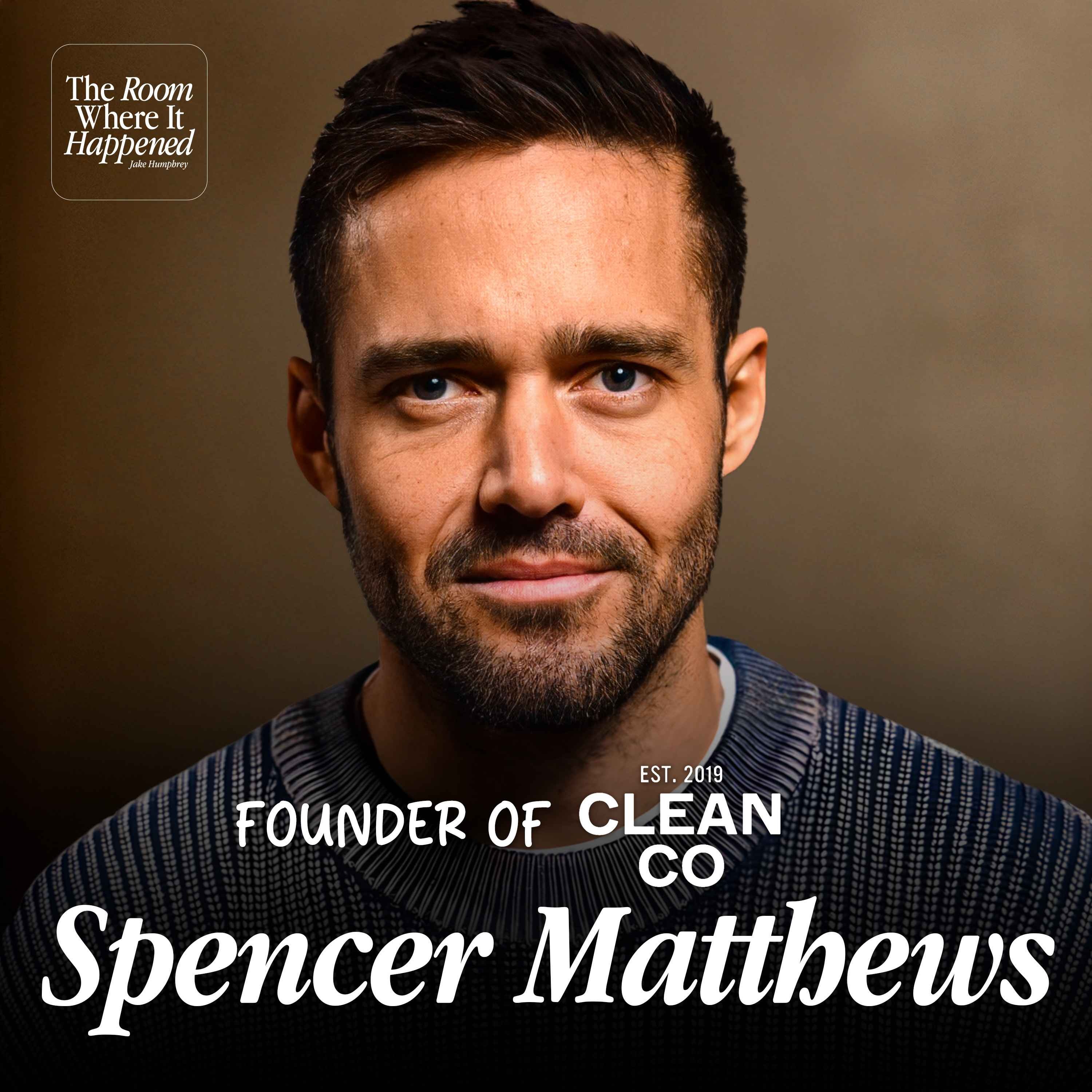
Spencer Matthews’ journey from reality TV star to the founder of a £100M business is a story of transformation, grit, and resilience. In this episode, Spencer talks about his personal evolution from battling alcohol to building Clean Co, a brand that’s revolutionizing the alcohol-free space.
He takes us through the defining moments that changed everything, including the £1M investment offer from Nicole Quinn at Lightspeed and the explosive growth that saw the company hit £2M in sales in its first year, followed by a £20M raise at an £80M valuation.
But success didn’t come without its setbacks. Spencer also shares the challenges of a rushed US launch, the near-collapse of the business, and how a down round and massive product write-offs almost derailed everything. He reflects on the lessons he’s learned along the way, the importance of staying involved in every part of the business, adapting when plans fail, and how Clean Co became a symbol of resilience.
It’s a conversation about transformation, overcoming obstacles, and building a business that not only survives but thrives against the odds.
IFS - award-winning Asset & Service Management software
👉 Reimagine your operations at: https://highpfrmc.com/rwih-ifs-yt
Hosted on Acast. See acast.com/privacy for more information.


