
 Ask ChatGPT



Host: Jake Humphrey
This podcast offers insights from influential figures in business as they recount moments that shaped their careers, revealing key decisions and lessons learned.
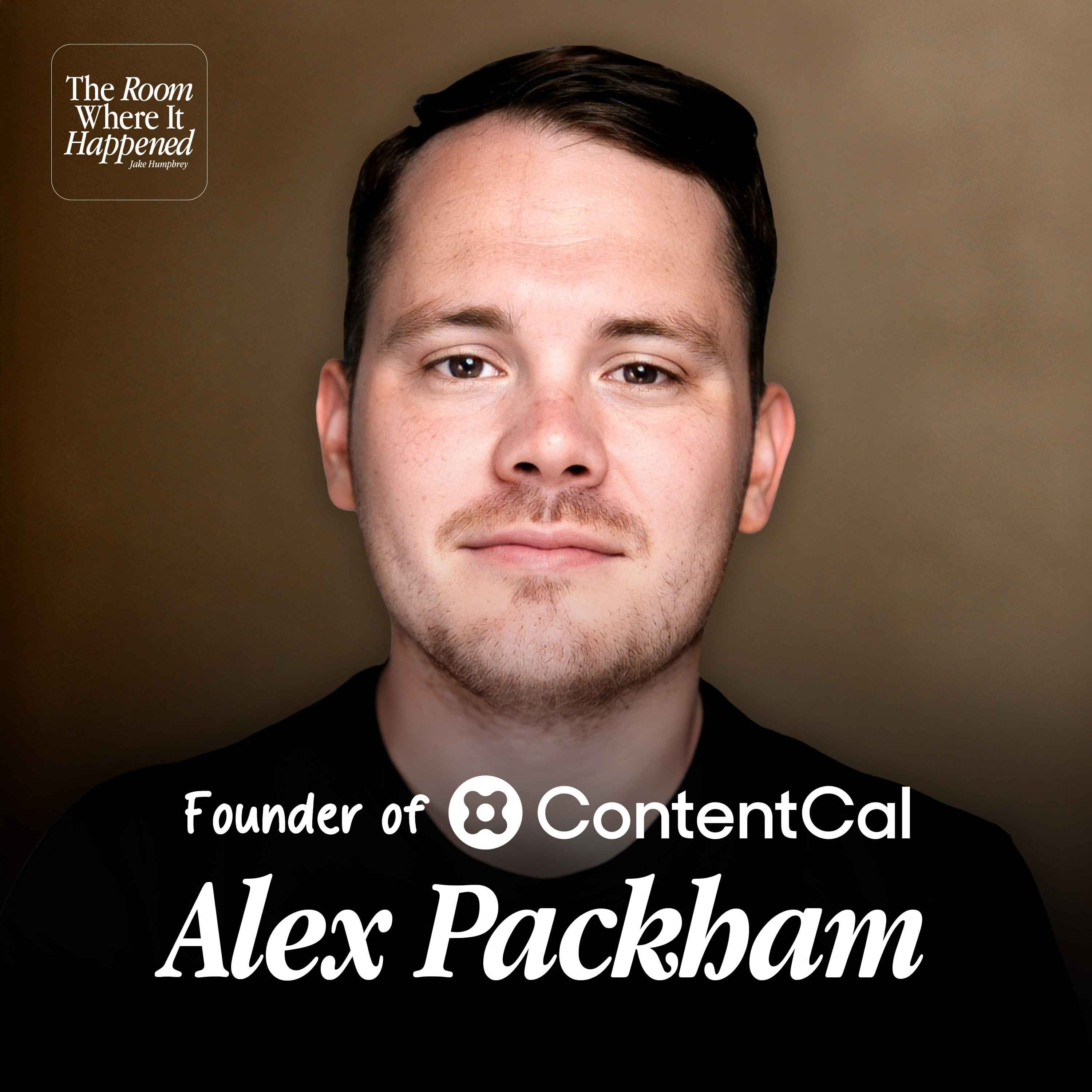
In this episode, Alex Packham shares the transformative experience of selling his startup, ContentCal, to Adobe for $110 million. He reflects on the emotional aftermath of sudden wealth, the importance of luck, the pressure of entrepreneurial success, and the significance of mental health.
Written by AI. May contain mistakes.

Get the gist, explore an idea or ask about something said.
 Claude
On High Performance Business, what are the key points of this episode?
Searching your listeningAutomatic transcript. May contain errors.
0:00Today, entrepreneur Alex Packham. In his 30s, he achieved a dream he'd had since he was a teenager. building a business from scratch to a huge exit. So suddenly he's young, he's rich, he's become one of the most influential faces in tech and he has nothing but freedom in front of him. But that moment, the moment he became richer than he ever imagined, was also the moment that he faced depression, anxiety and a loss of purpose that he simply couldn't explain. And today he takes us on that journey. He shares why competitive tension is something you should seek and reveals the way people think in Silicon Valley that European entrepreneurs need to copy.
0:38This is the room where it happened. First-hand accounts from behind closed doors in business, inside the rooms, feeling the pressure and helping you work out what you should do when it's your turn at the table. Look, if you haven't already, please hit subscribe. It means you won't miss an episode of the show. It also helps us attract the brightest business minds. So here we go then. Brought to you by IFS. this is the room where it happened with Alex Backham.
1:09So Alex, take us into the room where it happened. The room where it happened for me was the spare bedroom of my two-bedroom flat in Wandsworth, not far from the Alma pub, for the people in Wandsworth who all know it. And it's a very small room, you know, two-bedroom flat in London, so you've got kind of one main bedroom, and I turned my spare bedroom into an office, and it was peak COVID time. So talking second half of 2021, when we were in and out of lockdowns in the UK and we were in a lockdown kind of when my deal was going through, I was in there for, well, I mean, full of lockdown, obviously working, but for the deal process, four months, 16 hours a day doing this kind of deal.
1:53And that was my space, but it's got like, it's got an energy in it. And I can feel, I mean, I can feel it now just talking about it. What's the energy? Stress, adrenaline, relief at one point. But it's just like, I can literally picture it in my head, it's concentrated in that four walls. And so, yeah, that's the room where it happened. And what happened in that room was your exit from ContentCal, a sale to Adobe, the numbers, if people want to look at it on the internet, they will find them$110 million exit. what was the moment like when you picked up your phone and i mean i suppose first of all is this the way it happens do you just suddenly have that money in your bank account yeah i mean to my my flat literally main bedroom second bedroom the room kitchen lounge and so that room where i did the deal like i said was this intense pressure cooker actually most of the time once the deal was actually done and signed i was in that room on my standing desk and the feeling of like relief and just raw emotion.
3:00I can't even tell you which emotion, just like raw emotion, just once that happened. And what is the moment when you know the deal's done? Is it someone says, right, the money's coming or we've signed the contract. Okay, let's do it. What's the moment there? It's totally, it's when the contract is completely signed at that point. It's a bit like buying a house in the UK, you have an exchange and then a kind of completion. So the exchange was in the room. And again, I just, it was like a battlefield, right? Every day for me in that room. So, you know, once that had completed, I mean, I actually just had to sit for like, I don't know, like an hour and just think basically and just reflect on the process.
3:33But then the completion, the second phase when the money is actually transferred happened about, I think about two weeks later or a week later. So then you've got this period in the middle where the deal is done. Actually, my memory is coming back now. We announced on Bloomberg on the day that the deal was signed and my phone and LinkedIn and everything just exploded. And then two weeks later even though it's done you've still got this weird feeling like you know has this happened and then when the actual funds go through to all the shareholders and myself I was actually on a zoom call to the team doing my thing on my sofa and you know just because I knew it was coming on the day sort of every hour checking my bank balance kind of thing just to it's hard to describe just to see it there just to be like has this happened and I was on a call checked it and I was like okay put that down finished my call came off it put my laptop down sort of opened my banking and I just sort of stared at my phone for like 20 minutes and it's this bizarre feeling it does just land in an account like there is no other and it is millions and millions of pounds and did it impact your mental health big time big time my most challenging point was I for about six months to over the course of a year I'd say but about six months straight I woke up every day looked in the mirror and I and I really didn't know who I was and what I wanted to do we talked a bit of identity obviously but I really really didn't know and so I didn't have a lowest point but I had a period of just literally waking up and like truly not knowing who I was what I was about and this if you've ever kind of gone through depression this confusion as to what this feeling was and what this funk was that I just literally couldn't get out of and so that was tough that was really tough I mean selling Content Cal which I'd been working on for eight years but really sort of 10 to 12 years and being in the social media industry really young all the way through to a big exit in the space and it being my life you know I look back and realize the reason it was successful because was because it was me and it was everything I was and everything I put effort into you know I don't think you can be successful unless you're literally in it every single day well let's talk then about how you got that success because you don't create a business that sells for over$100 million by accident.
5:47I'd love you to talk us through the biggest building blocks, really, of ContentCal that our audience can learn from and take away from. Yeah, it's almost like a three-part journey. So the first part is creating something from nothing. And so the first part of my journey was I was a social media manager in corporate, right? So I worked for Odeon Cinemas as my first job out of uni, managing social media. I then worked for Now TV for a couple of years, managing social media. I then went on to set up an agency, managing social for brands. So, Odin, Sky, Now TV were our first clients. But that in itself is kind of a big leap, right?
6:21It was and it wasn't, yeah. Because a lot of people don't do that part. This is the big step, I think. Well, I looked at it. I'd always wanted to be an entrepreneur. I was very lucky as a kid, right? Didn't think, I'm going to be an athlete and I want to do this, that. No, I was like, I want to be a business person for whatever reason. What age? 14. From the first experience of selling something. I used to sell SIM cards in the playground, basically, and stuff like that. my first experience of I've taken this thing that I got and I've sold it for this and it wasn't the selling it was the process boom that's that's my vibe basically and I think I can be good at that and then as I grew older I just just loved business I just loved learning about business to be honest but you're right it was a leap but I was 23 I had I was influenced by two books four hour work week and the lean startup so four hour work week is there's no perfect time to start a business go and do it there's loads of other narratives in there but that was what I took away.
7:08And the lean startup is how to build a technology business. And I also knew in the world of corporate and social media, that just wasn't for me. I didn't want to stay in the corporate environment. So I started an agency and Odeon and Sky were my first two clients. I mean, you've got two temple names in the UK, they're straight away and was able to build over two years, a decent, successful, profitable marketing agency in social media. But what I realized in that process was, and this is like phase one, is that whether you're Sky or Odeon, or whether you're a chain of coffee shops, the process of creating social media content is the same.
7:40You need an idea, you need content, videos, copy, images, you need a plan, when are you going to put it out, how is it going to look, you need to know how successful it is or not, analytics, etc. And so I basically realized that there's an opportunity for a product to manage that process end to end in an interface, right, in a SaaS-based business model, software as a service. and believe it or not marketers work in calendars no product had a calendar at the centre of it content cal, short for content calendar which was a working title name kind of thing in the process of making social media content so I built the product I built a prototype that evolved over time we licensed it to all of our agency clients and you did all that coding and that work for you did you have the idea and you sourced I scribbled the thing out so I realised I'm actually quite good at the product scribbling stuff I didn't know this at the time I was just like, I know what I would use.
8:31I know what I would use. Therefore, I think other people would use it. Gave it to a friend who was a designer who became like a kindred spirit in this process, designed it properly, made it look amazing. And then through some family connections, random friend again, coding friend who was like, yeah, I've got a coding agency. He was older than me. He had a business. And he was like, I'll build you the prototype first. And then you start hiring people and building the team. But just putting the pieces together from anyone I knew really was how I built it. It was no, you wouldn't do it like that now, basically.
9:00So we built the prototype. And then the kind of shorter version of the phase one journey was, as the software revenues and business of our kind of two businesses, right, software and a service business, an agency, the software business over two years started to go from like 10 customers to 20, to 40, to 100, to 150. You know, you could see it growing through a huge amount of work and the product was iterating. And our service business just carried on as it was. But we had to make a critical decision, right? are we a software business or are we kind of a service business? And so around 2015, I think it was, we just said, look, this software company, while it's growing, it's very different to a service business.
9:41You need huge amounts of money to build a software company, service businesses you can grow profitably. We're going to make the pivot. We're going to take the whole business into software. And so we had to go through a kind of transition on that. And then we spent the following two years morphing the whole thing into ContentCal. When you say we, who now is involved in this journey for you at this point? So myself, obviously, the key people really was a guy called Lawrence Smith, who was the kindred spirit in the design world. And he knew how to take my ideas. Before I knew what product management and engineering and the actual stuff is, in my head, he would just take my ideas and bring them to life in software.
10:18And then he was key in actually bringing the product visually to life and functionally. And then another guy called Andy Lambert, part of the founding team, he was the guy who said Alex I'm going to go and speak to 500 people this month and I'm going to show them the product and I'm going to get their feedback and try and sell it to them and if they don't buy it but I get feedback I'm going to bring it back and feed it into the team to iterate the product all of this stuff is like very software 101 but at the time for me it was just like cool so you're out there doing that which is my worst nightmare and Lawrence you're able to take the feedback and bring it into the actual product.
10:53And I was sort of between both, but then also fundraising, team building, et cetera. And that central role, that CEO role, now I've got, you know, evolved in that space is very unique in that you're never across anything a hundred percent in reality. So you need these people who are experts in their field. So it was us three and then a really close investor mentor of mine called Colin Smith, who had been on that journey before, multiple times kind of thing. And a team, there was a small team around us. So we hit that, you You know, we hit it hard for two years. And so sort of 2016, a bit more like three years to 2019.
11:25And that was what I call chapter one. We built the software business. And what did hitting it hard look like? Thousands of meetings on the sales front every year on, do you want to buy content, Carol? This is who we are. This is what we do. So that was me and Andy and others, mostly Andy. Every tiny feature request coming through on live chat. So we had live chat in the product or people feeding back in big meetings. Can we make that? We've only got five developers. how are we going to build all of these features in like a week? Constant in and out of that. Me constantly going out meeting angel investors.
11:55We're doing this. This is what our business plan is. This is what we want to achieve. We're going to be the biggest thing ever kind of thing. Can I have your money? In a nutshell, do you want to invest in the business? This constant grind of that. And we'd raised in that period about 2.5 million, 2.6 million in angel investment, basically. So we were not VC backed at all. And it was piecemeal. So nowadays you'd go out and raise the right amount to get you going. but this was all before I'd say the kind of investing scene has matured in the UK like it has now. So it was this two-year grind, right?
12:24Constantly customers going up, products getting better. Overwhelming? Well, I'll be honest. I was so young and so focused. No, I loved it. It was adrenaline driving. We had some really bad days, don't get me wrong. I had some terrible experiences, but would you go through the world of business? But to be honest, I thrived off it. like the way I'd see it is I'm not an athlete but if I was that was like me being on the field I was playing my sport I had good days bad days some wins some losses but I was in it so yeah overwhelming in reality but I was I think youth comes with like a set amount of naivety energy and stuff like that that if you if that's your vibe you're in it so it's more adrenaline I would say than overwhelming um and then 2019 comes late 2019 we agree to raise two and a half million from fuel ventures which was a vc in the scene that was our big okay guys you've made it to step one we're going to give you two and a half million uh you're going to take this from you know what you've told us this stage to this stage this is an institutional investor so this is a fund that manages other people's money it's very different to raising angel money and we're going to inject this cash we're going to go like that that was late 2019 and bear in mind i'd spoken to every vc in london who'd all at that point said no like we like you we like the business but it's just not for us.
13:42So we were really at our last hurrah at that point and they said yes. So big shout out to Fuel Ventures. And then what happens three months later after 2019? Pandemic. Boom. And so every VC in the UK and probably in the world pulls their term sheets. I'm on the phone to Fuel going, is this happening? And they're like, this is happening. Don't worry. We've got you. But you're still freaking out. And then like you've ever known COVID, like it's crazy. So I'm kind of constantly speaking to them because we agreed the deal and December money didn't land to February constantly speaking to them you know is this happening etc kind of going through some light due diligence and then boom two and a half million quid lands in the content account bank account and I'm like let's go but then you're in this environment where you're building a team 100 % remotely COVID obviously is changing the ways of business and everything for two years but luckily for us we had two months of you know when the world no one really knew what was going on everyone sort of paused everything in business and life but then actually for us everyone was doing social media marketing on steroids because it was kind of the only thing to do there's no outside outdoor tv you know sports events there's no this and that so social media was the thing so from sort of march april may 2020 through to when we exited we were like that growing the customers rapidly the team was growing at pace when we were allowed to have socials with the team you'd met all these people online and then you were working with them online and then suddenly like when there's a lockdown release you'd go to a social when it'd be like 30 40 50 60 of us eventually but you've only just met these people face to face even though you've been working them for three or four months together so it was just, to be honest, it was it was amazing, it was an amazing experience and then we'd closed so I'd say I'll kind of summarize that quite quickly but that was chapter two so kind of this 2.5 million pure cash injection to give us the rocket ship and then internally and externally the right environment despite Covid being challenging for so many years I'll just dwell on this point for a second because I think that in this world that we've discussed where it's kind of ego-driven and everybody wants to make out that they are a self-made woman or a self-made man, they've done it themselves, no one talks about luck.
15:48Because luck in some ways removes the opportunity for people to claim that they did it right. How big a role did luck play in your success? Massive. Massive. Like anyone who says luck doesn't play a role in their success is bullshitting, basically. Like, luck is this thing that we can't price in, right? Like, I can't tell you why and when those things happened or why these things unfolded, but I know that they did, and I know that whether it's luck, fate, chance, whatever it might be, they play a huge role in how we do things and how things unfold for us, massively, both good and bad luck. So, yeah, no, I've had countless amounts of luck in my life that have played massive amounts of success.
16:34I'll give you a perfect example. coming on to the, like tying into the story. So we've just had this two and a half million. We've grown, grown, grown. We're then right, we're growing. We're going to raise the next chunk of money. So we're going to raise$7 million, five and a half million pounds at the time, something like that. Fuel Ventures are going to come in for another ticket. Our other investor, Guinness Ventures, came in for the rest. That was in March 2021. So about just over a year had passed between those two phases. That closes. Great. We were growing. So that was a smooth process to run.
17:05Talk about luck. So right, we're like, okay, next stage of growth. We'll invest more in marketing, invest more in the team. So March, April, May, we carry on about our business with this next tranche of cash. I get an inbound email from CorpDev at Adobe to an old email address that I never check because ContentColor changed its domain so many times that I genuinely never check. I decide to look in there for whatever reason on that day. And I've got this email from a guy called Justin Wang in Adobe. Looks like spam, genuinely. Just doesn't look like a real email. I go onto his LinkedIn he doesn't have a profile picture for some reason but looks half legit, half not real and I'm like, that's kind of odd and then what did the email say?
17:45we're from Adobe, we like the look of content cal we do X, Y and Z we're the biggest marketing platform in the world biggest marketing tech business in the world we'd love to have a chat with you, nothing else there was no like we want it for this reasons, it was just that so talk about luck in two folds and I'll continue phase three one, checking the inbox on the day two, bothering to reply three, it not being spam because it really looked like a spam email and then four, which I could never have predicted which then led to our exit somewhere in Adobe's business plan is we want to become a leader in social media marketing we've decided that buy or build is the two ways we're going to do this and we've decided to buy someone so this is however many thousand miles away in California all these meetings happening around this subject are not even on the map at that point six months later, we've sold to Adobe And also, how many other businesses were doing something similar to ContentCal globally, yet they found you?
18:39Exactly. There would have been ContentCals in South Korea, Japan, South America, Australia, North America, Canada, like... Everywhere. And that's what I think is so interesting about this story. What do you think that you were doing? Or what did Adobe say they saw you were doing where they went, like, that's the one for us? Yeah. Do you know what? This is such an interesting point. So we did a really good job at punching above our weight from a marketing perspective. So we'd realized that when people searched social media management tool, the things that people would then use to choose which one they bought, and like you said, there are hundreds of these things, they would use these review sites and blogs.
19:19So rather than Facebook ads and LinkedIn ads and all this other stuff, our biggest source of customers and brand awareness came from top 10 social media tools. we got ourselves into the top two or in some instances the top one and it's a kind of social media is a strange place in a way because everyone's sort of like you either got the kind of gurus who have personalities in themselves who write these blogs and review things and then you've got the really practical best products to use etc. If you could get your way into those review sites one you've got more customers but two if you're in Adobe's corporate development team going best social media management tool and you're in those lists then suddenly you're visible And how did you get up there?
19:59You pay. You pay, you chat, you build relationships. There's multiple ways to do it. Yeah, but you know, cut to the Chase Money talks at the end of the day. You know, these guys who are running these blogs, they're running a business. So you either pay or, to be honest, a lot of the time you build a really good relationship. You build a really good product that actually deserves to be there. And you might pay to say, I want number one instead of number two on the spot. But you've got to have the right, they're not going to market a crap product. So you've got to do all of the graph work to be good enough to then actually almost have the privilege of paying to be in the top spot.
20:31Or building relationships, like I said. So it's marketing. It wasn't luck. That was kind of purpose-driven. It was luck that someone looked at it on the other side of the world. But yeah, we were visible. And so that was our biggest thing. Distribution, which is now a big part of building products and technology and anything you do, right, this creator economy. Distribution is probably the biggest value driver you can have right now on the internet. But yeah, talk about the luck piece. that was a huge part of that but us being on that list is how they found us amongst everyone else and then the other thing was, so I asked the question why us?
21:04They were very transparent with me actually which I really didn't believe this would be the case but they literally said Alex, we've heard you talk about your product, your business what you want to do with it, your vision for the future it's really aligned to what Adobe thinks but we like you we like the way you talk, we like the cultural fit that you could bring to Adobe we like the team that we've met around you and actually that and the product is what we want. And I just couldn't really believe that. That felt a bit like, what's so special about me? I'm just, in my head, I'm a dude in Wandsworth building his business.
21:37But what you learn over time with all of these things is, can you work together? That's what's going to make something successful or not. They could buy the product and buy the team, but the team might go, don't want to work in a corporate, not for me, see you later. The founder who, in a different world, say it wasn't me, I've suddenly gone into a corporate business I don't want to be here you've paid me 80 % of my money see you later whereas I was like no I'm in guys if I'm going to do this I'm going to do it properly and I'm going to be there for the ride afterwards and so it's quite it was really satisfying to hear that what a nice moment for you it was cool yeah but then again you realise that's an amazing thing but there's all these things that come around there that have to make it happen I think this is so valuable for people though because it reminds me of so many conversations I've had over the years I remember talking to KSI and I said to him, what is the thing you think that has made you the creator that people want to work with?
22:30Like how did Prime do what Prime did? And he said, well, you create, you have to create moments. He said, every single week I think to myself, have I created a moment this week? Yeah. Either a moment on my social media or a moment collaborating with someone else. Or like, has anyone seen me this week do something? I'm going, man, that's cool. And you're talking about that. You know, you were creating moments, whether it's a social media post that you were putting out talking about your business or telling people who you were working with. So you were creating moments. I think the other thing that was really valuable for me when I first started working with David Coulthard, who's a co-founder in my production business, Whisper Group, I loved when I was younger the idea of having an agent, right?
23:08And if someone said to me, I'd love you to present something, I'd go, I'd speak to my agent. I thought it sounded amazing. And one day I was talking about that and he pulled me aside. He said, son, personal relationships. Really? Never underestimate the power of a personal relationship. And he's the king at this. like we'd be at a Grand Prix and he would say, oh, I'm having a meeting Santander or someone tomorrow. And a week later, I'd say, what are you doing tonight? He goes, oh, I'm going to the wedding of the CEO of Santander. And you're like, his ability to create quickly genuine, tangible, honest, open, valuable relationships for people was a game changer.
23:42And the final thing, you know, we created Whisper with our CEO, a guy called Sunil Patel. And we've made like, we just made the Birmingham Tom Brady documentary for Amazon or the amazing Sven, you're in a documentary we made the paralympics for channel four we created the coverage of the lionesses when they won the euros um the lions tour to australia all these amazing things that we do and what people love about our business is our ceo the biggest driver of of business and success for our company is our ceo and i think this is something that you learned is that you could do all that amazing work but if you're a bellend right people are not going to want to invest people aren't going to want to work for you the people are going to say your culture stinks and someone like a company like adobe would have looked at all those things oh they do yeah no you're absolutely right i mean those are great stories i can give you a totally different lens on it right so i've invested in 60 different companies personally as alex posted there post exit and i can tell you now having done that as an activity i can tell you which ones are going to be the most successful and it's because of one person whether it's the founder the ceo the leader the space cool gotta be big the product's gotta be great etc etc but I can tell you of the individuals and I can I'm not going to but I could name names of who's gonna smash it and who's not because I know they're a great person like you say they're not a bellend and they are hungry as fuck and they will do what it takes to make it happen and I can tell you the ones that won't I can tell you the ones that have a chip on their shoulder for the wrong reasons I can tell you the ones that just don't want it enough I can tell you the ones that are lost and it's not about the product.
25:20It's not about the space. You need those things, of course, but it's not about those. It's whether the person is good enough to make it happen. And you're exactly right. Like that and personal relationships, that is what it is. We live in a, we are humans. We're a human world. So those things that you can't put a price on and you can't codify, you can't codify a human being. They are the most valuable parts of any business journey. So yeah, it's amazing to hear your story around that as well. because it's so true. It's just so true. How do you feel when you see people emerging from university or at times not even going to university and embarking on a career in content creation, in social media, in this new world of AI and everything else that's happening at the moment?
26:04How do you feel? It's the fastest pace environment I have ever seen. It is light years faster than when I was building ContentCal. Now, AI in particular is just, I mean, quite literally changing the world in front of our very eyes. And I think a lot of people are sleeping on it in the, whether it's copywriting, problem solving, coding, buying stocks and shares, like machine learning, AI, etc. has and will completely change the game. And then there's this other thing coming called quantum computing, which is going to change that even more in sort of three, five years, which just accelerates everything I've just talked about.
26:43So you'll be able to solve the world's biggest problems in a nanosecond through a computer, which AI can sort of do now, but quantum will put it on steroids. And so what I would say is, if you're coming out of uni, or like you said, not even going, one, it's the best time to be doing this. The world is quite literally, as long as you've got a laptop or access to the internet or a phone, the world is your oyster. You can build a newsletter, an Instagram page, a business, a software business, a website, whatever. in the most easiest ways than ever before right in like three clicks you can build a business genuinely the main thing though attached to that is so the opportunity is massive but the confusion the stress the narrative around it you know there's not going to be any jobs all that stuff that's the bit that you've got to process and ignore because the other part is you've got to remain fluid in terms of what you're doing with those tools or your decisions content creator influencer coder whatever it might be freelancer and x y and z you've got to be really fluid to these tools that we've got and how they're going to change and how you then decide to use them but it is complex but I'd honestly say take the negative spins of the pace of change and the kind of confusion around this AI going to take all the jobs and all that stuff go deep into what you want to do you know whether it's a creator you want to go get a job in a big corporate doesn't really matter whatever it might be but figure out how to harness those tools and harness that change and be a change agent within it at that young age.
28:12Because then you're on an ascendancy period where actually you could be the person who brings in the first ChatGPT use case in your business. You could be writing a blog with the tools of AI, etc. So you've got to go through the process of really, again, understanding what it is you want to do and then using those tools to your advantage. And it's the perfect environment now to be doing that. But it is a challenge and it takes a lot of work and focus to get your head around that, both practically and emotionally to make the most of it. But it is definitely a challenge. It's a different world to when I started.
28:43How careful do we have to be around this narrative of giving your all in business? I see it all the time. You have to be 100 % committed or you're going to fail. And I think there is a genuine cost to our physical and mental health when we approach it like that. But then there's another part of me that thinks, well, if you don't do that, it might not happen. And you'll spend the rest of your life regretting that you didn't go all in. So I don't know the answer. And I'd love it if you could shed some light on how you think we get this balance right. Yeah, I mean, it's a real challenge, like you say, in reality.
29:10I think the founders that I meet now, so if you talk about the kind of companies and people I invest in, you need that, like you say, hunger, drive, passion, absolute laser focus. We'll do it in whatever it takes to a certain extent. But you'd also know that actually if someone's on that vibe, 100 % of the time, they will just burn out. That's just, we're human beings, that will naturally happen. So what I also look for now, and it's in subtle conversations, is what does the rest of your life look like? Do you have a family? Do you exercise? What's your sleep like? What are your hobbies outside of work?
29:44Someone would ask me that back in the day and I didn't have any hobbies in reality. Whereas now I've got some great examples of founders in my team who are, I go for a run an hour every morning without fail or I use soreness or my diet is so important to me or I love going and hanging out with my mates and we do X, 1, Z on the weekend. That rounded experience means that you can operate at your highest during the times that you need to and you can drive that passion and energy but you also have this re replenishing time which is actually really important to to be able to operate like that you can't operate a hundred percent like a hundred percent of the time yeah i've done that burnt out without realizing and so when i look for those kind of qualities and those experiences and those things that actually i didn't have that i can really see now help me a lot right i i do those things and i know the benefits of them i can see how an entrepreneur and a founder can be much more rounded and actually play the long game.
30:40If you do too much, too intensely, in too short bursts, for too long a period of time, you will burn out. This game is a marathon, not a sprint. So you've got to really look for that 360 approach to life as opposed to 100 % of the time, because it's just not feasible. And that takes us to the final part of your three-part story of going from zero to over a hundred million dollars yeah the final part so that that bit i've just talked about the first part is i check the email you know i get these calls going with adobe they did were not direct about what they wanted out of us we just had these regular phone calls and then suddenly this kind of amped up over a piece period of weeks and months and then they were like or i was like you know what is this for i kind of had an inkling at that point they were going to buy someone then we're like okay we want to we want to buy a business in this space we were you're one of three we want to work with you how do we make this happen so they're kind of all these discussions happening you're managing your investor base and their excitement to a certain extent but also hunger to want to make it happen you then go into a due diligence process which this is that lockdown bit back to the room where it happened actually so some of that stuff was you know in one of the three appearances where we weren't in a lockdown.
31:54Whenever it was, we went into a lockdown just at the time I was doing this deal. So no social time, no ability to go out, just sat in this room. Eight o 'clock calls with the lawyers through to about 8pm, 9pm calls with Adobe, etc. And then only six people in ContentCal knew this deal was happening. So they had about 150 people probably working on the deal. We had six and some advisors. So you've got this middle part of the day where you're working with the team doing the day-to-day stuff and then and where's your imposter syndrome at that point because i kind of like one of my um if i'm being really honest one of the things i'm not as a ceo right yeah so at whisper there's a ceo here at high performance there's a ceo any business i've invested in and they've said would you like some kind of leadership role i'm like no that's not i'm not a dot i'm okay i'm good at connecting dots but i'm not a dot yeah i wouldn't know the first even now in my late 40s with all the things i've done i wouldn't know the first question to be asking of my lawyers or of adobe to get the best value for my business how did you eve this is a whole new game that you're suddenly playing like how do you know what to say or do do you know what i had some great people around me right so similar to you right i i knew some things from raising money which raising capital is not that different to selling a business in some ways the dynamics are similar right valuation what are you going to price the business out how much percentage are you going to take how do you get competitive tension to get the price up.
33:17If you don't have competitive tension, what other levers do you have? So I'd learned a little bit of that game. But to be honest, our chair, and a great friend of mine, Colin Smith, like I say, totally under the radar, but had done five M &A deals before in software. So pick up the phone, what do I do with this? What do I do with that? So I had amazing help around me. We had an investment bank come in to help us. We literally could never have done this without their help. We had great lawyers. We had great people around us. And actually, the thing I've looked back on, and I now know what good and not good looks like, people who are on our side to make this happen.
33:51Not people who are like, we want the best fee out of this, and we can drag this out for a few more months. They were like, this is a great story. We're like Alex. Let's make this happen, basically. And these are relationships I'll have for life now. Like the calls, like I said, from eight to eight and beyond. You build this crazy relationship. You mentioned competitive tension there. Can I just ask you about that for a second? Because I think I often avoid that because I'm scared that it will derail everything. So how do we sort of get the balance right in business with enough competitive tension without everybody feeling like they've lost?
34:24Because I think that's the worst thing we can all feel. Oh, yeah. I mean, competitive tension is a thing that's quite often used in kind of fundraising or selling a business, but it can be applied to a lot of other stuff. So in the context of a fundraise or selling your business, competitive tension is that if you've got someone who wants to buy you or invest in you and you want to get in a business sense the highest valuation price negotiation terms whatever it might be you need something else at the table to use as a tool or ideally multiple to negotiate those things this person wants to pay this but they want these terms this person actually is going to pay less but they want much better terms for me whatever it might be so in the context again of fundraising or finance that competitive tension gives you the ability to negotiate.
35:09And if you don't have them, you make them up. That's just the reality of it. You don't make them up completely, but you've got to invent competitive tension. So for example, in the content care world, and this was a real one, but we didn't have another company who wanted to buy us at the time. We'd had approaches, but we did need to raise money. And so my thing was, this is a real one. If this timeline doesn't work for you, that's okay. But our timeline is we need to go and get this cash in by this date, which will change this entire scenario. to give another example practically in team so by giving them that date it made them think you're going to go elsewhere and get this money the date was the competitive tension yeah in teams and I think this is the this just works so well if you want to create a high performing team competitive tension is you bring in the best people in their field so that's marketing sales whatever you give them the strategy the structure they need to go after for the team and the business you give them the playing field to operate on the best ideas win the things that work out win but you create the right amount of competitive tension that everybody wants to be the most high performing person in the team How do you do that?
36:15You create an environment where moments are celebrated you talked about moments right so best salesperson gets X jackpot bonus the best piece of content with the best distribution gets X you create an environment where in a really positive sense. So it's not negative as in winners and losers. It's actually the best gets celebrated. There's nothing wrong with that, right? And if you can create that really subtle, fun, competitive tension, and it's no different to like Man of the Match and football or something like that. That really fun, competitive tension where a winner is celebrated. I really believe in that.
36:54A winner is celebrated. You just get that extra 10, 15 % out of people. And that might be something that they do in the office, something they decide to do at home, they do at the weekend, it doesn't really matter. But you get that extra burst of energy. And so that competitive tension piece, yes, it can work in the world of finance, but it can actually work in building a really great team. And when you say you now know what good and bad looks like, people often say, well, what does good look like? What does bad look like when you're searching for people? Searching for people in terms of bringing them into a business or a founder.
37:25Bad looks like chip on the shoulder. But that can be used for good. But if they're too focused on it. It looks like someone who pretends they know it all. Like growth as an individual in a team, if you're bringing someone in to build or run a team, you need to know that you're not 100 % right all the time. You've actually got to create an environment of learning, experimenting, up and down failures. So fostering a culture of growth, both within yourself and within your team. I think experience is key. I think you can't buy experience. You can get someone who's really at the start of their career and you can buy in their hunger, their passion, their drive, but you can't buy another 10 years on their life in reality.
38:05You can't magic that. So you can really value, in my opinion, experience of someone who's done something multiple times before. And it's just a nice person. That's very hard to quantify, but someone who is not, like you said, a bellend, basically. So I think also, to be honest, when you've just met enough people, interviewed enough people, pitched enough founders, pitched yourself. It's a feeling that you get. You're not always right as well. That's the other thing. I always say to people hiring, you're going to be 20 % to 30 % off either way. You might think they've got all the characteristics, but they might not.
38:41But it's something you learn. It's not something you have, I don't think. But yeah, so the deal was being done in the room. We closed in December 2021. And then I've talked about the moments at the start of this call. That was sort of the end of the first part of chapter three. and then the final part of chapter three was I spent three years at Adobe which was thrilling I mean mind-blowingly expansive in terms of my thinking of business and raising money and technology I spent a huge amount of time in California in their offices both learning and working with Adobe but then you're suddenly close to Google, Meta all the big players, Salesforce you're suddenly in this world of tech, this epicenter of technology in Silicon Valley and the mindset, and I cannot describe this enough the mindset of technologists and venture capital in California, particularly Silicon Valley, is a completely different world to anywhere on Earth.
39:36I mean, literally anywhere on Earth. So I can compare it to Europe, UK, Asia. That formula that they've got there, that ingredients of people, capital, innovation, you cannot replicate. You cannot physically replicate. And I can talk about that, but my immersion, can you imagine, into that world as someone who's built tech here and aspired to be in that whole area to now actually have direct access to it for three years was amazing. The things I didn't like as much was you're in a 30 ,000-person corporate business, your meeting structure looks like this, you don't have the same autonomy in reality because most big corporate businesses, they are top-down, they have things they want to do.
40:14But outside of that stuff, I had a phenomenal experience with them. And yeah, it was just amazing. And then coming out of that, right, that's the end of the third chapter, if you like, that experience at Adobe. but then bringing that learning that silicon valley mindset to the uk entrepreneur scene is actually something i'm becoming really passionate about one bringing it to this scene in the uk two bringing it to the individual businesses i'm involved with and then three at some point i'd like to build some sort of narrative structure or whatever it may be around it because we can learn things from silicon valley in the world of tech businesses here we can't replicate it just fundamentally we can't replicate it we don't have the money We don't have the money.
40:55We don't have the right cultural ingredients. We don't have the right risk appetite in this country, even in Europe, I mean in Europe in general. We can't physically replicate some elements that exist in California. It's like the fourth biggest economy in the world. The Californian economy, I think, is bigger than the UK, right? So you can't replicate some parts of it. But what you can replicate, but you need people to have gone there and come back and learn, is you can replicate the spirit. And that's what I'm bringing to the business I'm running, Jack, now. the spirit of like the Californian thinking to that business because it gives us our best shot of becoming a global business a global leader in our space and I just yeah having gone through those learnings if you can bring some of the spirit to the to the UK and European business scene Harry Stebbings is doing a really good job of this in VC if you can bring that a few unlocks then if you get some mega exits and enough of them and the product starting here and IPO-ing here and all that kind of stuff.
41:51Then you can replicate the money and all the other elements. But until you actually get that, you just can't. So what is the spirit of Silicon Valley? The spirit of Silicon Valley is we can build something from nothing into a category leader and we're going to make it happen. There's no ifs or buts. There's no maybes. There's no, if as long as we do this bit, get this bit a little bit right, then we can do the next bit. It is, okay, here's a multi-brilliant, I'll give you an example with Jack. is a multi-billion dollar problem and a massive societal problem in mental health and well-being. There are billions of people who have those challenges every day.
42:28They'll have it in their life, they'll have it up and down, but there are billions of people to go after. We need to build to tackle that challenge a global platform. In our world, it's content, right? So content that is in every language. We need to bring the best people on, celebrities, athletes, well-known people, you've been on there like yourself, others, and we need to create stories where they share their experiences, raw, amazing content. I mean, you'll know this better than me, but it's this high production value storytelling. Bring that to life. We need clinicians, experts, doctors to tell their parts of the story and the education stuff they can bring around it.
43:02We need the best of the best. We need Dwayne Johnson, who is one of the most followed people in the world, to come and do this in America. We need heroes within those stories. We need a complete platform. we need to spend x i think in jack's world a hundred million plus dollars on marketing not because oh anyone could do anything with marketing marketing is not free a hundred million dollars plus will get us to a billion plus people in visits and users we need to create a formula to funnel people into the product and then we need to build the best sales teams the best product teams the best this that and the other to create the products the sales pipeline the revenue, etc.
43:41This is going to cost us X. We need a person to lead it who's X and we need to make it happen in two or three years. That is the spirit of Silicon Valley. That doesn't happen here, generally. And the other thing in the practical element, so you've kind of got the spirit bit, the practical element is, we're not going to give you 5 million to get to 0.1 and then we'll give you another 3 to maybe get to 0.2. It's like, we're going to give you$100 million to go all the way. Make it happen. and if it doesn't work out, it doesn't really matter because part of our in the VC world, part of our thing is we bet on 50 companies each one gets$100 million one of them will pay back the fund so the unit economics of the funds work very differently over there than they do over here so they can afford to take the bet but the spirit is something we can replicate as you can hear me talking through it, I can feel the passion of it it gets me excited so that we can bring to the UK scene and the European scene what we've got to do some work on is the capital side and the practical side but if we want to create that game-changing technology scene here, we've got to tackle the spirit bit first, basically, to then practically get some results that then deliver the capital side of it.
44:50But that, actually, in the round, is just an amazing thing to work on, just helping build that structure out of narrative and potential. Talking of spirit, you seem to have as much as ever, if not more than ever. I know, it's mad, yeah. You know, you could just go to a nice holiday destination and chill out for a few months. You do have the option. I know. I've done it. I mean, I've done it, right? I mean, I've been, you know, the biggest thing I've kind of spent money on has been holidays. I didn't do traveling when I was younger, so I've been able to do it. Look, you can do that. I mean, we've all been on, not everyone, we've all been on holidays, right?
45:20We know what it's like to switch off, but you can sit there and the first few days takes a while to switch off. The next few days, you're chilling out, but then it depends on your characteristic. But for me, I get the itch of doing something. I need to be doing something. My brain needs intellectual stimulation. Like that's, I've realized that. That's just the thing for me. I have to be, you know, big parts of my day need to be stimulated. I also do love chilling out. But again, it's dynamics, right? I'm 35. I've got a lot to offer. I'm not doing it for money. I think I can build something and contribute to things that can change the world.
45:51And that's what drives me now, basically. And I can have a really happy rounded life. I can still go on holidays. I can chill out. I do boxing as training, for example, which I absolutely love. I've really put a lot of time and effort into thinking what does a really well rounded life look like um but you're right you can do that yeah but uh i know some people could go and switch off probably for you know for the rest of their days and chill out but it's just not me yeah i look forward to seeing what comes next and thank you so much for your time thanks for taking us into the room where it happened and that is a fascinating and inspiring story so thank you appreciate it you're talking man that's all thank you man brilliant look i love that conversation i think the biggest takeaway for me is the power of passion in business if you remember at the very start Alex was talking about when he went through that deal to sell his business and he said I can feel I can feel how it is to be back in that room right now when I was trying to do the deal when I was nervous when I was anxious when I was elated I can get the feeling and then at the very end when he starts to talk to us about the future of business and what European entrepreneurs need to take from Silicon Valley entrepreneurs he suddenly says that the hairs on my arm are standing up I feel passionate I feel excited the way he was speaking about what we need to do to think big as entrepreneurs, it's fascinating because on both ends of the spectrum, what he's really talking about there is passion, the importance of passion, the power of feeling, really feeling like you're at the heart of your business.
47:13And the energy that that can give you is absolutely incredible. Thanks so much for joining me. I hope you feel you've got loads to take away from being in the room where it happened. If you can just take a couple of seconds to subscribe, it means you get each episode directly to your inbox. And it also means we can attract more incredible guests like George Heaton, Rory Sutherland or Richard Branson. Thanks for joining us. See you next time.
Alex Packham knows what it’s like to have everything change in a single day, and nothing changes at all. From selling ContentCal to Adobe from his spare bedroom in the middle of lockdown to waking up the next morning wondering who he was without the business, Alex’s journey blends adrenaline highs with the quieter, harder work of rebuilding identity.
In this episode, he opens up about the reality of sudden wealth, the role of luck in big wins, and why mental health matters just as much as the deal itself. Alex shares the behind-the-scenes strategies that helped a small team “punch above their weight,” the lessons he’s bringing from Silicon Valley back to the UK, and how letting go of ego has reshaped his approach to life and work.
It’s a candid look at ambition, adaptation, and what happens after you’ve reached the milestone you spent years chasing.
Partners:
IFS - award-winning Asset & Service Management software
👉 Reimagine your operations at: https://highpfrmc.com/ifs-au
Heights 👉 Join Jake in maintaining your energy, with Vitals. Get 20% off with code Room20: https://highpfrmc.com/heights-vitals-au
Hosted on Acast. See acast.com/privacy for more information.


