
 Ask ChatGPT


 High Performance Business
22 Apr 2025 · 45m
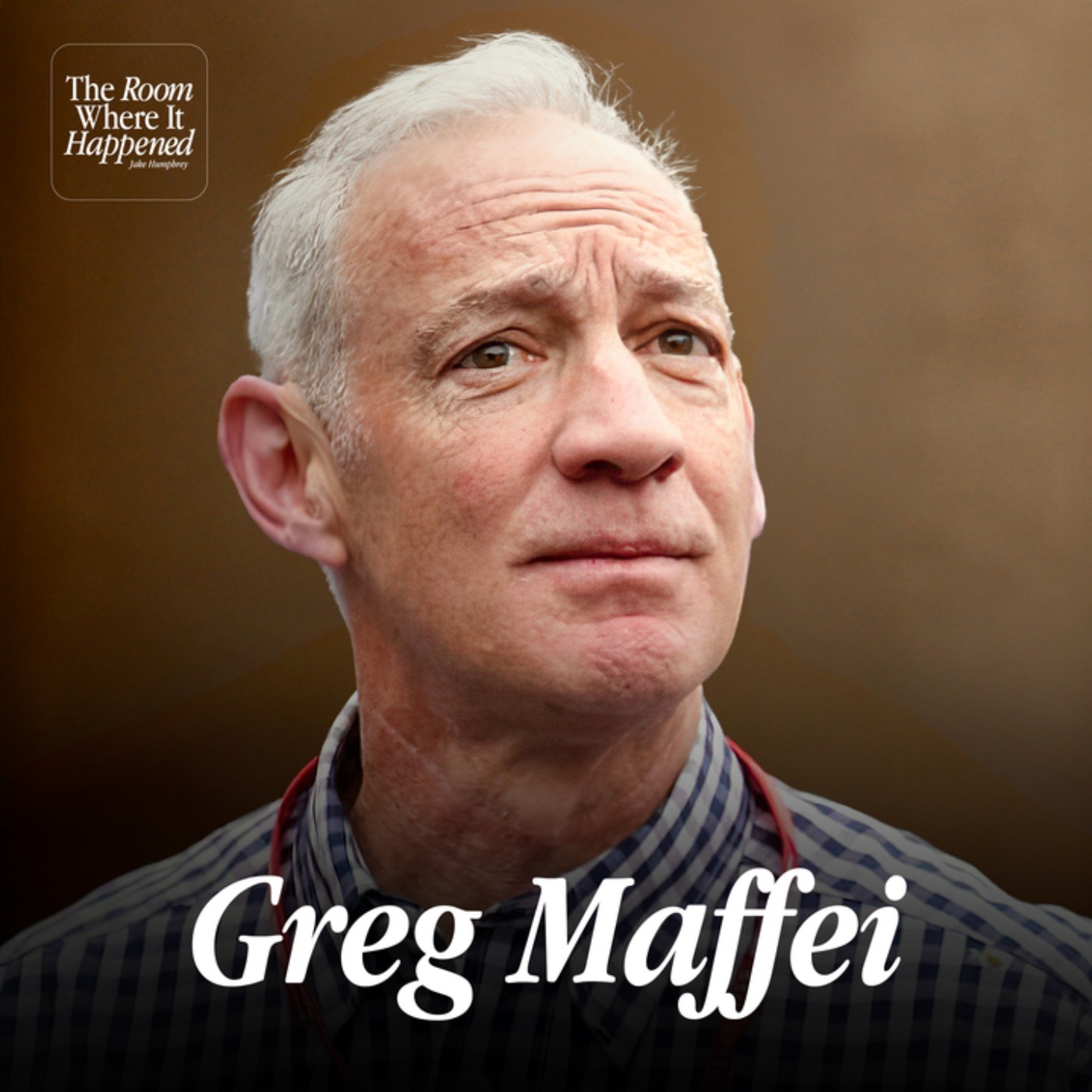
This episode features Greg Maffei, former chairman and CEO of Liberty Media, as he discusses the strategies, challenges, and key moments involved in acquiring Formula 1. Maffei shares insights on high-stakes negotiations, the dynamics of business leadership, and personal lessons learned while transforming the iconic sport.
Written by AI. May contain mistakes.

Get the gist, explore an idea or ask about something said.
 Claude
On High Performance Business, what are the key points of this episode?
Searching your listeningAutomatic transcript. May contain errors.
0:01Negotiation is a curious thing. We often imagine it as a battle, like two sides facing off, although armed with spreadsheets and legal clauses rather than swords and shields. But the truth is that often the most consequential deals don't unfold in these grand showdowns. They actually happen in hushed homes, in wood-panelled rooms, where the air is thick with the weight of billions of dollars. And this is the story of exactly one of those rooms. The conversation was about the purchase of Formula One. this week's guest, former chairman and CEO of Liberty Media, Greg Mafai. Greg had navigated business at the very top echelons.
0:39The numbers were staggering, the egos perhaps more so. This is about a deal that would shape the future of a global sport, a sport that had long been controlled by just one man, a brilliant man, a cunning man, but perhaps a man resistant to change. In this episode, Greg takes us into that room and you're about to be in that room as well. as Greg Maffei takes us into The Room Where It Happened.
1:07Well, Greg, first of all, welcome to Room Where It Happened. Thank you for having me. Talk to us about The Room, how The Room looked, where you were sitting. Oh, traditional English, you know, law firm, polished mahogany table. I'm a person who hates to sit in rooms with no windows. So it had a nice window, I remember that. You could look at it and have a view over London. It sounds like it was one of those lovely sort of wood-paneled, traditional English-type meeting rooms. Exactly, exuding history and power. Before you go into a meeting that is pivotal for the future of Formula One, but also the future of Liberty, on a morning like that, what are you saying to yourself to get ready for a meeting of that magnitude?
1:53Well, I think you're trying to think about what you want, what's important to you, and then what is important to the other side. They had some lawyers and the like, but it was primarily Donald McKenzie and Nick Clary of CVC, City Corp Venture Capital, who were the leading protagonists from the other side. And is it a case of battle lines are drawn? So you've got CVC one side of the table and Liberty on the other? Generally, yes. So you don't all mix up to try and be friends at the very beginning of the conversation? Well, no, and it's probably not trying to, it's not that you're not friends. You often have papers that may be relevant to you.
2:35You don't want to share them with the other side. You may share them with your compatriot. You may want to whisper to your compatriot or they to you about some point in the middle and saying, hey, don't forget this, or maybe there's another angle. Let's go talk about it. So that's why I don't think it's done out of, you don't want to sit with the other people, you don't like them. I think it's done out of convenience and sharing why you sit that way generally. I'd love to just delve into the energy when you're running between the rooms. You might have some lawyers in one room, you might have some strategists in another, you've got CVC in another room, you're leading negotiations.
3:08What's the energy like in a period like that? Well, I think it goes up and down, but because you get your disappointment and you can flag a little. But I, you know, I've been doing this a long time. I enjoy it. I have some level of experience of being in these and recognizing you're going to have ups and downs. So you're trying to keep your team excited. You're trying to say, you know, what do we, again, what do we need? What can we compromise on? How can we be clever? How, you know, but you're mostly, you're trying to keep, we're all in this together. Let's figure out solutions. You're trying to both be mentally acute on how to meet their needs, but also mentally acute on how to come up with other ways to maybe meet the goals without the demands that have been set forth.
3:55It sounds like it's one of those days where you need to walk away where everyone feels like they've won. Well, that's one way of looking at it. Oftentimes, it feels like you walk away from a deal where you've signed and everybody feels like they've lost, but somehow they've enough, loss that they're willing to walk away. Maybe that I wanted this, I wanted this, I wanted this. I didn't get them all, but I did get this. So there's some level of compromise. Is there one area of the negotiation that you would be happy to explain a bit more about to us? Maybe what CVC were after, what you were after, and how you eventually managed to do a deal?
4:32The growth and the equity value of CVC's position had been great. I think there were probably, and you're speculating, there were elements inside CVC that wanted to capitalize on that and recognize that. And there were other elements in CVC who thought, hey, yeah, we need to, you know, we're in a private equity business. At some point, we need to get liquidity and we need to show a mark that we've created this value, not just in principle, but in reality. But there's more upside here, and we'd love to find a way to capture more of that upside. So we worked hard, at least we thought we were clever, in coming up with a deal that paid them some cash up front and set a mark on that value, but then also had brought in a new management team led by Chase Carey and probably a new sponsor who had some credibility in the public markets led by Liberty Media.
5:38and that we would be able to tell a story and we would have bought some stock of their stock for cash initially, but we would be able to get them a higher price for their subsequent stake. And our job was to convince them that we could do that for them. And as I said, I think they had elements inside of CVC, some of who wanted to get the money, some of who wanted to believe in the future growth. So we tried to give each of them something they could hang their hat on. And when you're having these kinds of conversations, do you and your team on the Liberty side decide where the red line is and what you're going to go for and the negotiation that you're going to take to the table?
6:19Or is it kind of feeling it as you go and maybe almost having to step out the room and see where the land lies or have a quiet conversation on your side of the table as the conversation goes on? There's probably some of each. You'd like to walk in and say, here's our red line or here's what we should expect, if not our red line. and inevitably in a negotiation, you'd like to think you've anticipated what are going to be the critical issues for the other side, but new things arise, both to the positive and to the negative. In my experience, you get a sense of where, you know, that's just a non-starter for them, and it may not have been something you thought you could live with, but maybe there's another way to get around it, and you find areas where you thought, well, that's really important to them.
7:10And maybe as you go through the negotiation, they have more flexibility there than you thought. So you're kind of always weighing, here's where I'd like to go. Here's what matters to me.
7:24But I can probably live with that. They seem like they can live with this. How do we intersect those two? And maybe there are places where we're giving more initially than we thought, but somewhere else we're getting more than we thought. And we can weigh that and say, okay, I'll take that balance. So it's a constant sort of game of give and take. You said there that you're judging that there are things they're not happy with. Do you wait for overt messages from them like that's not acceptable? Or are you watching all the time the body language, the way that they're shuffling in their chairs, the things they're saying quietly to each other?
7:57How does that work? I think it's some combination of both. You get direct feedback. That's just not going to work. And you have to judge, you know, is that really true? But you're also trying to read more subtle cues about what seems to have a response, what seems to cause some level of interaction between their side that maybe there's room here or maybe there's another angle. And you are, I think it's a constant loop, and particularly in that deal, which went on a long time. Something which starts out as that's a no way, there's no way we'll ever do that becomes, well, maybe we could live with that if we put these other strictures around it.
8:40We initially started out owning 17 % or 18 % when we put our cash investment in September of 2016. and the back end was going to close sometime after regulatory approval early in 2017. And even at that point, we would only have X amount of governance. They would still be the majority owners, even though the expectation is we would become the majority owners as they sold their stock off. Effectively, we're giving them a public offering for the balance. So there was a lot of give and take about what controls they would have initially, what controls we would have, and how they would move over time.
9:26And we probably started out thinking we needed a lot more, and we ended up living with them having a lot more control in the interim period until we'd gotten them down below a certain percentage of the ownership. And you sort of decide, okay, am I willing to live with that. And that partly comes from developing trust that both sides are aligned, even though they are driving and they have the ultimate control for some period of time. They know that you're headed in the direction that they want to head. You know they're headed in the direction they want, that we can probably live, that they're going to be appropriately motivated, even though we don't have the controls that we would like.
10:07We had some of the controls, not all the controls. It's just an example. You sort of get comfortable with each other. You spend more time. You can believe, okay, I can live with that. It's a great example. And it's so good for our audience to hear these sort of tangible lessons because that's what this show is about. People learning from the likes of you, a genuine titan in business, despite the fact that you'd probably not agree with that because from what I've seen and read about you, you're very humble. What was the win in the room that made you think, yeah, that is a great negotiation, Greg.
10:38You've done well there. I can't recall there was any one particular win. I recall mostly there was one where we thought we'd agreed on something. It was papered. And then once the deal was done, they pretty much ignored it. And at the time, it was truly, truly annoying. But it ultimately resolved. It was just a delay. and, you know, they ultimately, we ultimately did. We'd asked them to do something. We ultimately had to do it ourselves three months later, but it all worked out fine. You know, that was a surprise. They're probably surprised the other way. CVC probably did not anticipate how well.
11:26We bought some stock for$21 a share. Our stock started rising. We got them out at various prices. they probably got out at an average of, I don't know,$20 or$30. The stock has since gone to$95, or it's been as high as$102. They probably did not anticipate that we would be able to do as much with it as we did or as much as the market has done. So, you know, you always have surprises on either side, and you make calculations and decide you can live with them. It worked out better for them than they'd initially anticipated. it worked out better for us than we'd anticipated. So everybody's a winner in that sense.
12:06And before we talk about the incredible growth of Formula One and what you've done with it, how many hours a day were you locked in this room for? How long was each session? Well, there were several. And I think it could be as little as four or five, and it could be as many as eight or 10, because it really depended on the day and what else was on the table. They were in London, so they had other stuff to do. We were probably more dedicated because we were over there in their offices or in their lawyers' offices. Was there a moment when you realized this deal is done, or was there a moment where you stood up and hands were shaken in that room and the deal was done?
12:41I think there were a lot of moments along the way when we thought this deal is not going to get done. It went on a long time. And CVC had a very desirable asset in Formula One. A lot of people were interested. A lot of people offered transactions, which arguably could have been more initial money up front. We think we sold them on a prospect of a good deal up front with a potential upside if we could get the stock to rise, which we were able to do, and they would benefit from that. There were many points along the way in which I thought, oh, we're not going to get this done. It took a long time.
13:17And as I said, I think in part, and you're speculating what the other side wants, in part because there were elements inside CVC who wanted it sold, and there'd rather be other ones saying, there's more upside here. And we were trying to balance that by giving them some upfront and giving them some upside. But you never knew how that balance was going to work out. And you were the man leading these conversations, really, from the Liberty side. So when it feels like you're starting to lose a deal, What's the secret to not losing that deal? I don't know if there's an answer. You know, you're always trying to figure out what the other person wants and what they can live with.
13:56And does that intersect with what you want and what you can live with? Sometimes that's, you know, being tough and saying, this is my line. Other times it's being, you know, that's not, I thought I wanted this. That's not as important. This is really important to you. I think I can live with that. Maybe if you gave me some things over here that give me other comfort. So you're always trying to balance and think about, you know, what intersection will work well for both parties. And that can move all over the place. And as I said, you can, believe me, in eight hours in the conference, you may think you're going to start here and you end up over here.
14:34So there's a lot of time to move around and hopefully reset in a way that works. Would you be able to give us an example of one of the moments where you thought maybe the deal was dead in the water for your perspective? There are too many to give. We went on a long time, and I thought for a long time we were not going to get the deal. I can't recall, honestly, a specific one. But this negotiation went on for many months, and at various times it just appealed we weren't going to get it. And I suspect, you know, that was in part because there were other bidders, and at various times they may have been putting forth something that CVC thought, hmm, that's more attractive.
15:14And again, my perception that there were elements in CVC who wanted this and elements in CVC who wanted that, and maybe for one reason or another, some part or some group within CVC was getting more traction on the idea. Let's just sell it all for cash right up front. And then some other group might be getting more traction on the idea. No, no, these guys have a plan we can ride on and gain something from. So it was never as, and it often isn't, but particularly in this deal, it was never as clear exactly how we were going to get there and when. It took a lot longer and with more twists and turns than usual.
15:51Is part of the art from your perspective then being comfortable with uncertainty? I think you have to have that. You have to have some flexibility because you're, you know, it's very easy to say, this is our position. This is what we know we need. this is what we know we want. And there certainly have to be principles and bright lines in your own mind, not necessarily stated, that you cannot, I just can't live with this or that. But in a lot of cases, you can also find out, you know, if I really pressed, is that something that I need? I think I need that. Can I live with a workaround? Is it another way to achieve the same goal that's less direct.
16:30So you're always trying to balance those things out. It feels to me like a real game of chess. You're playing your side and working out the position of your pieces. You're trying to work out where they want their pieces to be. You've then got people not even in the room who own their own pieces, trying to get their pieces on the chess board to try and win the game over you. I mean, it's so much going on all the time. it's not just as if it's a two-group negotiation. There are other shareholders. There are other constituents on both sides. You know, they've had a management team in Bernie trying to keep him happy.
17:07They had a, we have a board of directors. You know, how do I, we said we were going this way. Maybe now we're shifting. How do I explain and justify that to them? So there's always a balance. You know, it's not just a chess game with the people in the room. You've got chess game people outside the room. You're thinking about how the capital markets, we were basically going to have a public stock. How are they going to respond to these changes? So you're always, there are a lot of calculuses. Can you take us then to the moment that you knew that this deal was going to happen? What happens there?
17:39Is it as simple as CBC say, okay, we've got a deal? Or how does that work? Yeah, eventually. I mean, and it probably wasn't a eureka moment. You, you're, you're knocking stuff off. You start out with a, an issues list, which is 30 issues. You get it down to 20 issues. You get it down to 10 issues. You get it down to five issues. And, and there's compromises all along the way. And some of them are, maybe you decided it's not as important. Maybe they've decided it's not as important. Then they can trade this for that, or you can trade that for this. But then they come down to the last few. So I don't know if there was a eureka moment.
18:19I think it's more like you go, okay, we're getting to a point where that's probably enough that we can get there. There must be a moment where you shake hands and you know it's done. Yes, there definitely was that moment. But I would say when, you know, well before that moment, you think like, well, this sucks. I think we can get there. Would you share with me the moment that the hands got shaken? I have to say, because it was long and many days. I do think we popped some champagne, but I don't recall much more than that. I hope you did. I hope it was vintage for everyone's sake, because it feels like everyone's been a winner out of this deal.
18:52It has worked out well for all, and I hope well for the fans above all. And going to the moment where the champagne was about to be popped, the deal has been done. I mean, the reported number is£8 billion is what Liberty paid for Formula One. That's accurate, is it? Yes. It's just over£8 billion. Yep, around at 8 billion. So you're the guy responsible pretty much for writing a check. Not that it is a check, but you're responsible for the eight billion pound deal. Is there any part of you that has imposter syndrome, fear, doubt, worry at that point? Yeah. Look, you know, people look back now and say, oh, Formula One wrote a great success.
19:32A lot of people at times said, you paid a huge price. We did not pay a cheap price. This was a premium asset that had great performance for years, had global recognition. We thought there was upside in places, but it wasn't like you were – there are other deals where you're saying, look, we did a deal in 2008-9, sort of the financial crisis, where, you know, you look and said, even if we have to break this apart, we can make money. That wasn't the case at Formula One. We paid a full price. CVC did not negotiate a bad deal. They did a good deal. They had other bidders who were willing to pay premium prices because it's a premium product, a premium business.
20:22And so, yeah, there was not trepidation, but there was, you know, we got to make this work. And is there ever emotion in these deals for you? Or do you try and keep emotion out of it? Oh, no, there's always emotion. I think you've got both, you know, you can get yourself worked out around the axle. I need this point. When maybe it really isn't the most critical. And in hindsight, some of them weren't.
20:52And you can become super excited thinking you gained something when it was nice to gain it, but I'm not sure that changed the dynamic either. So yeah, there's ups and downs. You're trying not to let them rule you, but surely we're all, at least I'm human. I think everyone's human in the sense that, hey, I got a win here that I'm happy. I got a loss. So annoying. You know, you hope none of them are terminal.
21:24You know, every empire has its architect. someone who in many ways sees what others can't, who bends the world to their vision, who builds something so vast and so powerful that for a time they seem untouchable. Bernie Ecclestone was that man for Formula One. For decades, he didn't just run the sport, like he was the sport. He crafted the deals, he controlled the money, he dictated the terms. He was charming when it suited him. I know because I spent time with him. He was also ruthless when it didn't suit him. Yet he built a multi-billion dollar empire. And he didn't do it with blueprints and committees.
21:59He did it with handshakes, with gentleman's agreements, with personal relationships. And he wasn't just another executive that Greg had to negotiate with. Bernie was an institution. And when Liberty Media took over Formula One, the question in some ways wasn't just how the business would change, but how would it change with Bernie? How do you negotiate with someone who's never had to cede control? What happens when the future of a sport collides with the will of the man who built it? Well, Greg and I started to reflect on Bernie Eccleston as a business partner, as a negotiator, and as a person.
22:32I mean, I find Bernie a fascinating character. As you know from our previous phone call, Greg, I spent a number of years hosting Formula One for the BBC. I'd love to get your recollections of doing the business that you did with Bernie, how you found him to deal with. I think Bernie is, first of all, a brilliant businessman. What he built was amazing. The fact that he created this juggernaut, it deserves massive credit. He is a charming, there are roguelike elements in Bernie. It's not always charming, always straightforward, perhaps not as always. but he is amazingly sharp for, I think he's 94 now, but he might be 93.
23:21I think he's 94 and he was amazingly sharp then. And so his insights were always fascinating and his ability to try and charm, even though you knew in many cases it was not necessarily straightforward or exactly what he thought. You're always parsing, okay, Bernie, where does that really mean? Where are we really going? And what did he want to know from you, do you think? I think he probably was just generally less excited with us. He'd had a good run with CVC and change was not in his interest just because, you know, he wanted to keep the status quo. So I love this idea of Bernie, who's built Formula One from the ground up, and Greg Maffay, who's had time at Microsoft, time at Oracle, time in multiple businesses, a huge job at Liberty, looking after multiple different businesses under the umbrella, having this conversation, trying to figure each other out, trying to play a little dance with each other.
24:21What's the secret, do you think, to dealing with someone like Bernie? What did you learn from that? My impressions of Bernie were that he is charming, unbelievably smart, visionary, to some degree resisted change. There were so many things we didn't know. We had some fundamentally correct ideas about what the sport could do, many of which we've been lucky that they've turned out to be better than we could have hoped. But we didn't have the knowledge that Bernie had of all the particulars. And in some ways, not knowing that actually was a plus because our North Star was where we could take this.
25:07You described him as a charmer. It sounds like you were trying to charm him as well. I think Bernie is seized through most attempts to be charming and for the sake of charming and looks to what he considers the essence of what he wants and the essence of the business issue. We'll carry on the conversation in just a moment. But first, if I asked you to picture AI in action, I reckon you'd think of a large language model or something that you think optimises your own personal productivity. But have you stopped to think about the impact that AI actually has on the big industries? Industries like aviation, manufacturing, construction and energy.
25:46The kind of businesses that we interact with every single day that rely on AI without us even being aware of it. Let's take service management. Did you know 2 billion people a day use elevators and walkways maintained and serviced with IFS.ai? Industrial AI is IFS.ai. I've been working with IFS for years. I know them really well. I've seen the impact up close and personal. And I'm so proud that they're partnering with Room Where It Happened on this show. And if you're like me and your business deals with assets and you want to deliver the very best class service to your people and your customers, please check them out at ifs.ai proud partners of room where it happened how important is flexibility from your perspective because dealing with the financial people at cvc compared to dealing with an entrepreneur like bernie probably takes a very different skill from your perspective is that fair that is fair um and you try and be thoughtful about you know put a little homework and a little thinking about what does this individual want?
26:52What does this part of the institution want? And again, you can perhaps sell them and move them some way, but you know they're also going to have some set of principles that probably you can't move them from, and you're trying to find out where those lines are. And are there ways to circle the square if they have this initially? Are there ways to move them and think, well, what do you really want there? Can we get this another way? So that's part of the goal. And I think in the eyes of the fans, the departure of Bernie signified a new start, right, for the sport. Was that one of the harder parts of the conversation for Bernie not to be involved going forwards?
27:34Absolutely. You know, we'd had some agreements about how that change would occur. that didn't occur exactly the way it was anticipated. In what way? With the timing of it and who would drive, it ended up being much more us. You know, it was a difficult situation. I mean, Bernie was a, is an icon. You've never heard me say anything privately or public other than how much he deserved. kudos for what he had built and what he had done. We thought change would be helpful, but you had to also recognize how reliant the sport was on him, how critically he had been. What would you like to share with our audience about how you do a deal with someone when emotion is such a big part of it and you're having to have that kind of a conversation with someone that really brings an end of an era for them?
28:40You know, I don't think Bernie was hoping it was the end of the era. So that was tough. As I said, Bernie could be charming or arguably duplicitous about what was being said. So that made it all the more difficult. How'd you deal with that? You try and stay on your North Star. Here's what we need. You try and there's no reason not to, you know, Bernie deserved, deserves unbelievable respect. And we've tried to do that. you know at various times Bernie has been critical of what we've done with the sport he's also been given us crude kudos in other situations and you try not to have a reflexive reaction and you know come back and say well wait a minute you know you give him recognize what he built it was his baby what he built and he deserves so much credit for it I think also you have to and I'm sure you do have an understanding that there will be pain there so when Bernie says things publicly about Formula One there will be an element of hurt right Absolutely.
29:38Yeah. And do you have a relationship with him where you can pick up the phone and talk about those kinds of things?
29:48I don't call Bernie often, but I just recently saw him in Austria, and we had a great conversation. I saw him in Austria in the end of January, and I hadn't seen him much before that. And while I saw him at Monza, and we had a good conversation there as well. So in the last six or eight months, I've had two good interactions with him. Look, you've already said that there were a few bumps in the road after the deal was done with CVT. I would love you to take us into the detail of just one or two of those bumps. When you discovered them, what they were, and crucially, Greg, how you overcame them.
30:28Look, none of them were terminal. I think we did not know a lot about the sport. I'll stipulate. I think we had the North Star correct that this was an unbelievable asset that had an opportunity to be made more broad. The story told in a better way, not just about the cars, but about the drivers and about the excitement that there was an opportunity to grow the fan base in places like the United States. There was an opportunity to expand the fan base more broadly. There was an opportunity to tell the story better, not only to fans, but to sponsors. There was an opportunity to link that, create.
31:16Sponsors increasingly want not just branding, but activation. There was an opportunity to do things around high-end hospitality. The Paddock Club was great, but there was an opportunity to excite, to raise the bar on that. So there were a lot of things that we had an intuitive idea, didn't know the details on.
31:39You're not going to know the business as well as the guy who created it and run it for, at that point, I don't know, 35 or 40 years. You're not going to know that. So those were the positives. There were specific deals, found out the deal with this promoter or that promoter, and you're looking like, how was that deal ever cut? That was not what we anticipated. You're talking there about the individual deals with the individual circuits, right? Yeah. And there were things in there that were like, oh my God, that's ridiculous. I didn't know. What sort of stuff? Can you give us a detail? There was a deal.
32:13There was one promoter deal. You're like, that promoter has a ridiculous deal. We are basically, you know, losing, bringing the sport across. It was a flyaway race. We're bringing the sport there. We are losing money in a deal that makes no sense. How did we not understand this and why the hell did they do it? I think there's something in this, though, that, you know, Bernie was Mr. Formula One. He grew it from the beginning. And when you come in with fresh eyes and you know, as you've said, and you're very, you know, magnanimous to say it, we knew nothing or very little about Formula One. I think the beauty of that, it gives you a totally fresh perspective on it, doesn't it?
32:47Fortunately, we were right on some big principles. Story could be told differently. There were markets where we could, that did not have fan bases. There were groups of younger fans in particular, female fans in particular, we thought, that had opportunity. I think we had a good plan. We also got incredibly lucky. You know, credit Sean Bratchett for really being the father of Drive to Survive. Great idea. Do we know it would be as popular as it was? No way. I think there were other things like creating fan exhibitions and fan arcades that were broadening the sport, exposing it more widely. There is a veneer or a protection around Formula One that was great.
33:39It's glamour, it's technology, it's excitement. The racing is high level. but some of that was held off from the fans and showing them a peek of that, giving them that. We were right on some of those things and that worked out well, in some cases way better than I would have anticipated. And some people struggle a bit with Drive to Survive. Some of the old school fans where they're like, you're creating heroes and villains here, you know, storylines are getting ratcheted up. What's your take on that? They're right. Weird, a lot of that's going on. But what you find is there are fans who want to know tire strategies, want to understand everything about, you know, this wing and what the impact is.
34:26And there are fans who love the story about, you know, what Gunter's doing or what Gunter was doing at the time. And there are fans who love Lewis Hamilton's outfits or think Charles Leclerc is handsome. and you try and meet and segment the market and say, okay, we got fans for this and fans for that and fans for this. And you're not going to dictate, you must like this part of the race or only these elements of the race. There are so many elements that go on in the racing. There's so many elements that go on in the paddock. There's so many stories. Let's try and open those stories up and let fans who are interested in one piece get that.
35:10and fans are interested in another, get that. I do think we've been able to help educate more broadly the fan base about many elements, including the quality of the racing, but you're not going to force feed it and say that's the only way you're going to take it. You're going to say, hey, we'll give it to you in different ways. You know, not every fan watches the whole race. Not every fan watches all the Grand Prix. Some people love all the Grand Prix and Martin Brundle walking the grid before the race. Other people probably don't think that's that exciting and think that's kind of a waste of time.
35:44What's really interesting for me, though, is, you know, there's an argument that it wasn't a distressed asset, Formula One, but there was a sense that it could have been so much more than it was when you got involved. You know, you had Manor being sold for a pound, you had Williams struggling and having to exit, you know, Claire Williams, because they couldn't make it pay. How did you know Formula One could be so much bigger rather than just, this is where the sport is and this is as big as it will ever be? I wouldn't say we knew all of those pieces. We thought some of the points that you made about our ability to market to different audiences.
36:18We thought there were structural elements in a business that could be improved. you know the cost cap trying to some degree flatten the payouts which were so tilted towards the top meaning that the bottom teams were going to lose money forever we now have a case where you know you know the man are getting sold for a pound now you probably can't find anybody who's worth less than a billion dollars or maybe even a billion pounds why you've you know raised the whole level of sport, but we've also created cost caps. We've created more parity among the teams in terms of how the payouts work. We've created an opportunity where they get more payout from us because we've grown the sport, but also that the excitement has made it so that their own sponsorship in many cases has gone up dramatically.
37:17I'm guessing Red Bull sponsorship is up, you know, 400 % in the time we've owned the sport. So. Of all the things that you've done since taking over Formula One, what are you most proud of? I'm certainly proud of the financial performance, but mostly I'm proud that, you know, we really have caught in many cases, the gestalt of a lot of things. And Formula One was kind of a, at least here in the United States, was kind of off to the side. It was not a major sport. There was a niche group. group. Now, I was looking at a recent report, and they had the big four in the United States, football, U.S.
37:56football, hockey, baseball, and basketball, and then they were putting Formula One performance. That was the fifth one. So, suddenly, we're in where we've really captured a place, particularly here in the U.S., that we never had. So, it's kind of fun to think you change the direction.
38:16Success is a tricky thing. In the moment, it feels like momentum, you know, it feels like the world is moving fast and it's going forwards and all you have to do is hold on. Everything's going to be great. But then at some point, inevitably, the climb slows, the landscape changes and the question changes as well. It goes from how do we get there to where do we go now? And Greg Mafai has spent his career asking and trying to find the answers to those questions. He's been at the helm of some of the biggest deals in media and sports. He's turned overlooked opportunities into global powerhouses. He's the guy who helped take Formula One from a niche obsession to a mainstream juggernaut.
38:52I mean, his life has been incredible. But what does someone like Greg do next? Does he chase another revolution? Does he find the next Formula One? Does he take a step back and let the machine that he helped build keep running and watch where the future goes without him? He has thoughts on all of this, on the direction of sport, the role of the media, what's been done right and what still needs fixing. But perhaps the most intriguing question of all is the one that Greg's now asking himself. After spending so long at the top of the mountain, what's left to climb? Now, I need to talk about you briefly, Greg.
39:27We sit here with you having exited from Liberty. How does it feel? Well, it's a big change. I was there 19 years, And we went through a lot of changes in Liberty in that time. But Liberty has changed from being a big, you know, multi-media conglomerate with a lot of arms to being really now just Formula One. And we've got a great CEO in Formula One and Stefano Domenicali, someone I talk to still frequently and I consider a good friend. There are parts of it I surely miss, but I'm working on my next adventure. Tell me what you missed, because it's almost incomparable, but I did a few years on Formula One, and the day the first race happened and I wasn't there, I really missed it.
40:14I then spent a decade hosting football here in the UK on the television, walked away. The morning I woke up and the season started without me, it felt very strange. Tell us about the morning you woke up and you were no longer Greg Maffei from Liberty. Well, I had known it was coming for a while, so it wasn't like one day off, one day on. Yeah, they're clearly, you know, it's funny. I was 19 years and for 19 years, you're only thinking about the business and how you're driving it. And then suddenly you're thinking less about that. You know, you might have a thought just because you're still watch.
40:53And I'm thinking about, hmm, what do I want to do? And what's my next chapter going to be? That's both a little bit nerve wracking because you hadn't been thinking that way, but it's also exhilarating. And what answers have you found? Well, I'm not quite ready to reveal yet, but I'll let you know when I have. Look, I'm sure you don't mind me revealing how old you are, right? Am I right in saying you're 64? I am. So you're 64 years of age. What's your ambition like compared to the Greg who first started out? I'm still probably pretty ambitious and have goals. And what are the areas in business that you would still love to explore?
41:32Well, I think sports, media and entertainment, where I've been most of my last 19 years, is a great space. So this is obviously my area as well. So I'm excited to find out from you. When you think that you're excited about the future of sport, media and entertainment, what excites you? Well, I still think there are lots of opportunities out there with leagues and events, which have the opportunity to grow from where they were. I don't think the growth of Formula One is over by any means, but the explosion has probably slowed down. You'd like to find the next one you could explode. Look, we're contracted Liberty.
42:13I can't say we anymore. Liberty is contracted by MotoGP. I think MotoGP could be very exciting, the changes that could occur there. We'll see. What do you think will be the biggest change to the way that we absorb sport in the future? I think there are so many ways it's going to change. You know, let's start with one that I would not claim to understand all the ramifications, but AI is going to have a massive change. We're already in a world where fans are created a 32-hour day because they've got a device in their hand which is doubling up for eight hours of it while they're, you know, you're going to enter into a Formula One race register and say, you, Jake, like these kind of things.
42:58We're going to be putting that on your screen. I like these kind of things. They're going to be putting that on my screen. That's going to lead to greater engagement. That's going to lead to greater opportunities for sponsorship, which are targeted. That's going to lead to a hell of a lot more interest probably in betting because the prop bets are going to get much more specific. So I think there are lots of ways in which it's going to lead to a lot of cases, maybe less, maybe in the less informal one, but, you know, which players on the pitch, the football pitch, play best together. What's the wear and tear on that player?
43:32What's the likelihood that that player is at his end? What's his true value? And how much do I want to pay for him in transfer fees? I think there's going to be a massive, AI is going to have massive impact. Well, I can see the passion and the excitement is as great as it's ever been. Wherever you reappear in the world of business, they're going to be very lucky to have you. I can't think of another person or another business that's taken a sport that was largely B2B. Formula 1 was pretty much there for business, right? And now Formula 1 is very much there for customers. And the way that you did that, as a Formula 1 fan myself, I'm grateful forevermore because you've injected some serious excitement into that sport.
44:11Greg, thank you so much for your time. We are surrounded by businesses, both the successful and the struggling. Those that have good fortune, those that are simply unlucky. but to truly understand the truth behind their stories you have to learn from them. You have to ask the questions. You have to be there. You have to be in the room where it happened. If you enjoyed today's episode in partnership with IFS don't forget to subscribe to the show, follow us on Instagram and you'll be the first to get the latest episodes.
What does it take to steer one of the world’s most iconic sports properties through a high-stakes transformation? For Greg Maffei, it meant navigating tense negotiations, decoding power dynamics, and learning to read the room, sometimes quite literally.
In this episode, Greg unpacks the behind-the-scenes moments that almost derailed the Formula One deal, the trust-building that kept it alive, and what he learned from working alongside legends like Bernie Ecclestone. From reading subtle negotiation cues to betting on bold strategies like Drive to Survive, it’s a deep dive into patience, perspective, and leadership under pressure.
IFS - award-winning Asset & Service Management software
👉 Reimagine your operations at https://hppod.co/ifsai
Hosted on Acast. See acast.com/privacy for more information.


