Ask ChatGPT
 High Performance Business
14 Oct 2026 · 16m · 12 chapters

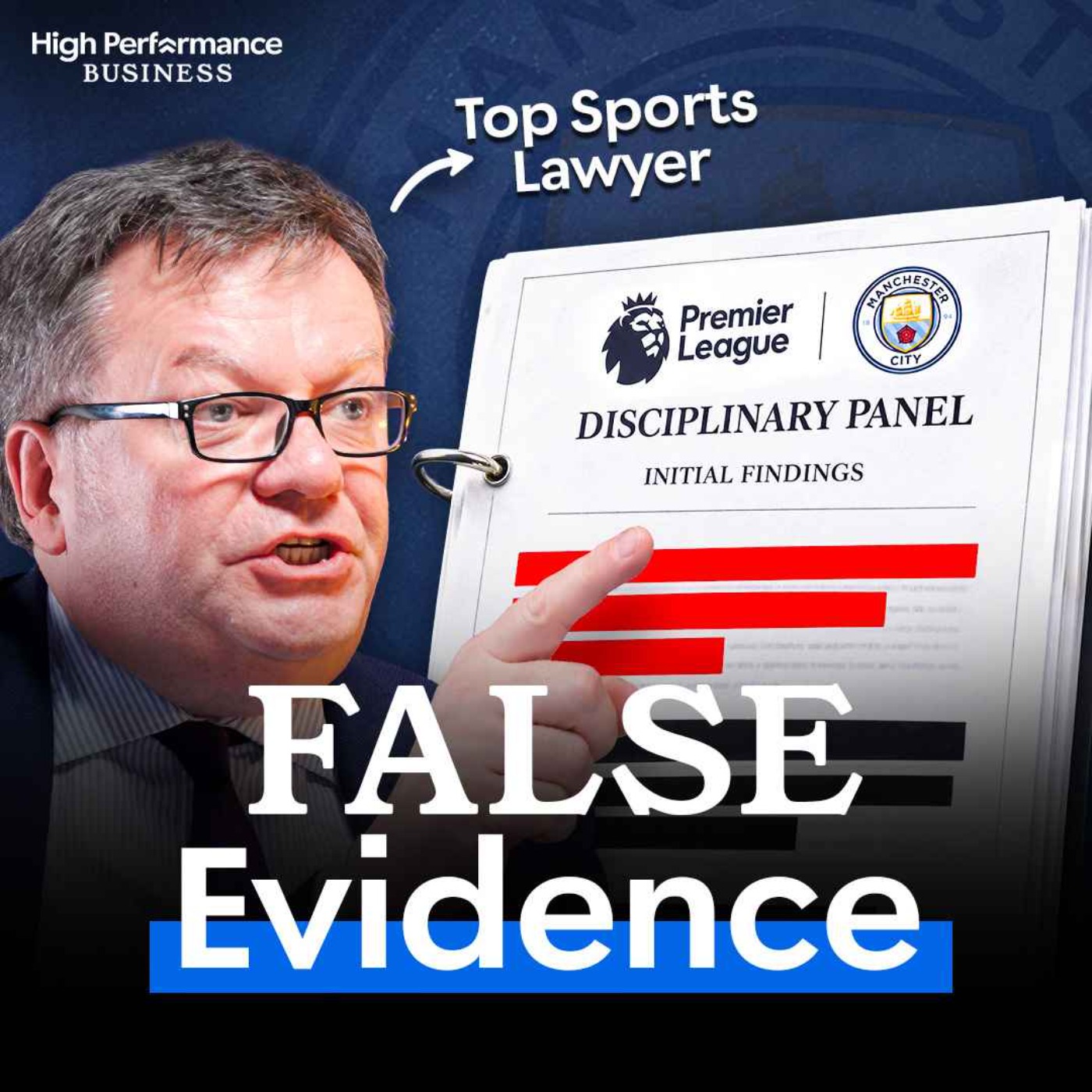
The episode asks what VAR “really costs” in the Premier League—financially, operationally, and in fan trust. It explains VAR’s rollout: voted into the Premier League for 2019-20 after earlier MLS use, with Howard Webb saying it would only be used for goals, penalty decisions, direct red cards, and mistaken identity.
VAR’s direct cost is small versus Premier League money (Premier League/FA WSL/EFL refereeing spend ~£40m, with tech/cameras “under £10m”); VAR delays average ~37 seconds; and only ~2% of VAR-reviewed decisions are judged incorrect (in 50 games).
West Ham vs Arsenal (95th-minute goal ruled out after ~4.5 minutes); Haaland derby and Bruno Guimarães vs Villa (human errors).
Howard Webb (Chief Refereeing Officer; previously rolled out VAR in MLS) and a co-host/analyst (unnamed in transcript) discussing Premier League financials and VAR statistics.
Written by AI. May contain mistakes.
Understand the purpose of VAR and the financial implications in football.
“VAR was brought in to stop refereeing mistakes.”
Learn when and why VAR was introduced in the Premier League.
“This is Playbook, a new high-performance business special in proud partnership with IFS, where we take the biggest business stories in sport and break them down into bite-sized episodes.”
Discuss early expectations for VAR's effectiveness in football.
“Goals, penalty decisions, direct red cards, and cases of mistaken identity.”
Explore how much each position in the Premier League is worth financially.
“Based on the most recent set of published Premier League accounts, which was 24-25, we know that each position in the league has a financial value attached to it, right?”
Analyze how bad VAR decisions can impact a team's financial standing.
“UEFA pay more if you get into the European spots.”
Discover how VAR decisions can affect teams' revenues and standings.
“Yes, but then I think that's where we start to have problems.”
Examine the financial investments in VAR technology and refereeing.
“And I know absolutely nobody, but because of your flag waving for VAR, you have a lot of phone numbers of referees and indeed their trust.”
Discuss fans' perceptions of VAR and its actual operational delays.
“So to sum it up, the actual cost in a traditional sense of VAR is not really the issue here.”
Discussion on the accuracy of VAR decisions in the Premier League.
“not the ones that we all saw from 20 ,000 miles away.”
Exploring the impact of human decisions on VAR performance and fairness in football.
“But let's remember what VAR was brought in for, these four key things.”
The negative impact of VAR on fan enjoyment and the overall football experience.
“But this is why if VAR lessens fans' enjoyment of football, the cost is infinite because you're damaging your product.”
The potential for improved communication and decision-making transparency in VAR.
“So there could be a world in a few years' time, perhaps, where we could hear what the VAR, and we won't get that four minutes of complete debt, because in a stadium, it's awful.”

Get the gist, explore an idea or ask about something said.
 Claude
On High Performance Business, what are the key points of this episode?
Searching your listeningAutomatic transcript. May contain errors.
0:00Therapy's biggest impact doesn't show up in some dramatic breakthrough. It shows up in the smallest moments. You bite your tongue instead of escalating. You put your phone down instead of firing off that text. You say what you actually mean instead of what would hurt someone else the most. Nobody applauds those moments, but they quietly change your life. That's what growing feels like. And that's exactly what Grow Therapy is here for. Grow is therapy that works, covered by insurance. Sessions average$21 with insurance, and some pay as little as$0, depending on their plan. There are no subscriptions, no long-term commitments.
0:37You just pay per session. Grow connects you with thousands of high-quality, licensed therapists across the U.S., offering both virtual and in-person sessions, nights and weekends. You can search by what matters, like insurance, specialty, identity, or availability. And you can book a therapy session in minutes and begin in as little as two days, not the national 48-day average. See if you could pay as little as$0 for therapy in seconds at growtherapy.com slash ACAST. That's growtherapy.com slash ACAST. growtherapy.com slash ACAST. Availability and coverage vary by state and insurance plan. VAR was brought in to stop refereeing mistakes.
1:23But what happens when the system designed to get decisions right gets them wrong? In the Premier League, where one place is worth millions, the financial stakes are huge. So what does VAR actually cost? Is football getting its value for money and who is profiting from it? This is Playbook, a new high-performance business special in proud partnership with IFS, where we take the biggest business stories in sport and break them down into bite-sized episodes. The very first thing that we're going to do is just explain why and when VAR was brought in. VAR was brought into the Premier League in 2019-2020 after clubs unanimously voted to bring it into the top flight in 2018.
2:06But in 2017, little story for you, it was actually brought into MLS first, Major League Soccer in the States. And the man responsible for rolling it all out was Howard Webb, who of course is now the chief refereeing officer here. I sat with him in New York in 2017, and he told me categorically it would only ever be used in four major instances. Goals, penalty decisions, direct red cards, and cases of mistaken identity. Yes. So I went to some MLS matches where it was being used, and it was going off without incident. And I came away from there thinking, this will be a simple, easily implemented aid to the referee.
2:44And I think Michael Carrick and plenty of other managers might argue I was being a tad naive. What do you think? It was never going to work for me, not with the ego of football. Natalie drank the Kool-Aid, right? She had a T-shirt, I'm with VAR. Almost like you were a secret agent for it. I was one of the few voices going, oh, the ego of football will not be able to get this right. Here we are in 2026, still waiting. But that's not what this is about. This is about how much it costs. So we can quantify this somewhat. Based on the most recent set of published Premier League accounts, which was 24-25, we know that each position in the league has a financial value attached to it, right?
3:27The further you are towards the top, the bigger some of those financial consequences. So the champions receive 20 times the basic merit payment. the second team gets 19 times, etc. It worked out 24-25. When Liverpool won. When Liverpool won. That Liverpool got about 53 million for winning the league. Southampton, right at the bottom, 2.7 million. So each place they went up was worth around 2.6. Getting to last season when Arsenal won, it's probably up to around 3.7 million per place that you go up. Okay. Then, of course, you've got Europe. UEFA pay more if you get into the European spots. So 54th is a massive drop.
4:03Yeah. So, for example, Arsenal making the semis of the Champions League that season, they got£102 million from UEFA on top of the basic merit payments. And then they've got the TV money kicking in. So we know a point in basic merit payments, basic, was worth about£3 million. Two things. First of all, you love this, don't you? I do. And second of all, yes, just getting into the group stage for the Champions League is a massive payday. Huge. You probably make more, I guess, in the Champions League group stage, being in that massive league as it is now, than you would win in the Europa League. All right, so it's comparable.
4:38So that extra place could be priceless. Liverpool, for example, the season they won the Premier League, they made 85 million from being in the Champions League, whereas Europa League, Spurs, for example, made 35 million. Exactly. For anyone listening on the podcast, Colin is making funny little hand movements. so how much is a Premier League point worth? I feel is you skipping around the issue of what VAR costs and what VAR can cost you, and I think this is where we disagree, because it seems to me that you're intimating that if you are, for example, take 2024, Crystal Palace, three major VAR decisions went against him, Everton, three major VAR decisions went against him based on the actual referee stats, So you're saying, well, if that costs you five points, we can now work out what you lost in revenue based on bad VAR decisions.
5:34Yes, but then I think that's where we start to have problems. For example, there was that big incident at the end of last season with West Ham and Arsenal, where West Ham score in the 95th minute, they think they've scored an equaliser, they're battling out at the bottom. And then that is chalked off. It took four and a half minutes for VAR to make that decision. And so what West Ham fans might say is that that decision cost us a point and that decision could have therefore given us an extra point at the end of the season, yada, yada, yada. Maybe it might have been different had they have got that point, etc.
6:07I just don't think you can ever get into the weeds, as you like to say, of whether that really cost them. Well, let me ask you a question. How many decisions does a referee make in an average Premier League game? I would say quite a lot. 245 decisions about 185 of those are fouls and discipline and probably only half of those you wouldn't even know the referee's making that decision so this is of course the rubble VAR they talk about the percentage of decisions they get right but that's based on the big decisions they look at most proper fans of football would say most decisions are made in the grey area and we can find 20 other decisions in that game that influence the game but as a financial conversation we can absolutely say that this is what points cost.
6:51And I would argue that if the decision's in the last minute of the game, and instead of a win, you draw, two points dropped. That happens in the last game of the season. If that happens in the penulti beginning of the season, you can start to put a lot more on it and say, well, you brought that in to protect us, and it actually sank us. But of course, the team doesn't get relegated because one decision went against them. You've had 38 games. Dry your eyes a little bit. We know what it costs if you lose points because of a bad VAR decision, but both of us agree that that's tenuous. So then the other side of that, and a very different question, what does it actually physically cost?
7:25Now, that's real intrigue. And I know absolutely nobody, but because of your flag waving for VAR, you have a lot of phone numbers of referees and indeed their trust. And I believe you've made some calls, and we can maybe put a kind of a figure on it. So what we do know is that the investment... You know. What we know is that the investment in refereeing this season from the Premier League FA WSL EFL, lion's share from the Premier League, is close to£40 million. Now that is for the whole of the men and women's professional game, top to bottom, training, coaching, development, performance analysis, etc.
8:04And that money has gone up from£25 million because the game is faster. Referees need more support. What we do not know and what they would not tell me is how much of that 40 million, close to 40 million, is actually spent on VAR. What we can confidently say is it's an industry. So you've got Hawkeye that run the core VAR system framework. Genius Sports runs the semi-automated offside. You need around 44 specialist cameras at every Premier League game. and if you look at Genius Sports, for example, it's publicly listed, so it's got a market value of above a billion pounds, generated almost 700 million dollars in total revenue in 2025.
8:48So we are talking big business for VAR.
9:06Behind every one of those moments is a professional who needed to get it right, and did. Thomson Reuters builds the technology that sharpens insights, speeds up decision-making, and powers the outcomes that matter. So when professionals act, the impact is felt by everyone. Be a changemaker. Visit tr.com forward slash changemakers. Therapy's biggest impact doesn't show up in some dramatic breakthrough. It shows up in the smallest moments. You bite your tongue instead of escalating. You put your phone down instead of firing off that text. You say what you actually mean instead of what would hurt someone else the most.
9:42Nobody applauds those moments, but they quietly change your life. That's what growing feels like, and that's exactly what Grow Therapy is here for. Grow is therapy that works, covered by insurance. Sessions average$21 with insurance, and some pay as little as$0 depending on their plan. There are no subscriptions, no long-term commitments. You just pay per session. Grow connects you with thousands of high-quality, licensed therapists across the U.S., offering both virtual and in-person sessions, nights and weekends. You can search by what matters, like insurance, specialty, identity, or availability.
10:19And you can book a therapy session in minutes and begin in as little as two days, not the national 48-day average. See if you could pay as little as$0 for therapy in seconds at growtherapy.com slash ACAST. That's growtherapy.com slash ACAST. growtherapy.com slash ACAST. Availability and coverage vary by state and insurance plan.
10:49The companies, though, make their money in so many other places. I was actually surprised at how little was spent on refereeing. 40 million across all those leagues is crazy low. And when you talk about VAR, it's not in the other leagues. So we're only talking about the Premier League, right? So of that 40 million, the amount spent on tech and cameras, I'm going to say is under 10 million, right? It's personnel. It's still personnel in bricks and mortar. and referees earn anything from about 80 ,000 to the very top referee quarter of a million. That means Champions League semifinals and finals and all of that.
11:30I don't begrudge them that. Nobody applauds a referee when they do well. And to some extent as well, I feel that VAR hamstrings them. And I've had confidential conversations with Premier League referees who've said, yeah, like we have to implement that rule to get paid, to get the right evaluation, to get the next game. So I'm quite enthused by the fact that the biggest amount of money still goes to the referees. It's interesting that you said you feel it's probably quite cheap comparatively. I thought the figure was going to be scandalous. Right. It's used in 200 competitions in 70 countries.
12:04So for a league like the Premier League that has money, it's actually relatively a small amount of money. But for other leagues around the world, it could be cost prohibitive to actually have it. So the technology itself, I'm not sure that software tech are making their absolute fortune just off the Premier League. But if you're Hawkeye and you look at that business model that stretches across tennis and cricket, technology is a multi-billion pound business. But I was so surprised at how little was spent on it in the Premier League. So to sum it up, the actual cost in a traditional sense of VAR is not really the issue here.
12:46if you look at the billions of pounds flowing through the Premier League, we're talking about, you know, a raindrop in a puddle, really, in terms of the cost. And that's why maybe the biggest price that VAR is paying right now is the disapproval of the fans. I think the disapproval of the fans is a really interesting point. I want to ask two questions. Yeah. How long do you think the average delay in a Premier League match To this point, the beginning of October has been 50 games thus far. It's a bit like the temperature. Like it is something and then it feels like something. Exactly. So it's probably like a minute and a half.
13:24Interesting. It feels like three days. Okay. The average length of delay is 37 seconds. Yeah, too high. But you went with triple that. Slightly on it, but yeah. I was interested by that because I think fans would perceive it to have been hours, right? But that's another one of those smoking mirrors that they throw at you. The offside is quick, right? It's two metres offside. How many times do you have the commentator going, just flag? They count that as a VAR decision that they got right. That takes three seconds. So actually, it's about how long does it take you to make the big decisions, not the ones that we all saw from 20 ,000 miles away.
14:06Out of 50 games thus far in the Premier League, what percentage of decisions that VAR had to look at have now been judged incorrect? You're including then all of the decisions that they get to say we got right that they never needed VAR for, but they decided to use it. I just want to close. We're not against each other. Purely for something that's happened in a game that went to VAR and then was then looked at by the key match incident panel, which, by the way, is made up of one person who's a ref, one person who's Premier League, and three people who are independent before you say they're marking their own homework because they're not.
14:42And here's the thing, right? Just get this clear. We're not against each other in this, right? Sometimes. So I'm going to play your little game of guessing, but it's an invalid figure. Go on. How many sessions have they gotten wrong already in 50 games? Percentage, yeah. 5%. Less. What? 2%. Right, okay. 2 % of the decisions they sent to VAR. Correct. But let's remember what VAR was brought in for, these four key things. It's not there to re-referee the kickoff. It's not there to, you know, question whether it was a yellow card. I'm not going to bite. You should work for these people. I'm merely bringing you statistics.
15:222 % wrong. I think this is a fascinating business problem because the technology can be right, but it's the humans running it that got those decisions wrong. For example, Haaland in the Manchester derby, Bruno Gimaraes for Arsenal against Villa. These decisions were made by humans who got them wrong. So my question is this to you. Yes. In football, there is fair and there is unfair. Do you think there's such a thing as more fair? Especially when at the end of it, the very people who enforce the laws of the game tell you how many clubs had wrong decisions made against them. Whereas before, the argument in the pub was, it kind of evens itself out.
16:09I think over the course of a season, it will even itself out. But I think the discussion we've just had is interesting because fans perceive that their club has been treated unfairly. whereas the statistics don't necessarily bear that feeling out. It shows it's always Crystal Palace. Yeah. Because the Football Supporters Association did a survey earlier this year and the headline figures, you know, 8 ,000 people, headline figures were that 75 % did not support VAR continuing. Yeah. And when you're looking at... The figures are never good. No, they're never good. But when you look at, when you break down how many they actually did get wrong of the things that were sent to VAR, it's far smaller than you ever think it actually is.
16:57But this is why if VAR lessens fans' enjoyment of football, the cost is infinite because you're damaging your product. Technology in sport at its best brings jeopardy and quick decisions and judgment from coaches. Baseball's just brought in strike zone, automatic strike zones, but it has to come from a challenge from the batter, the pitcher or the catcher. NFL has the same thing, throw the flag. It's a judgment and a jeopardy and you get behind your team and nobody in the NFL, nobody in the MLB, nobody in cricket. Cricket's got it bang right. It's like we're not saying we're trying to make it perfect.
17:38We're going to introduce the fact that you can have your team, your manager some form of sway to balance it, right? Football has got to stop trying to make the decisions perfect because we're not looking at it to be perfect. Do you know what we want to do? We want to celebrate our team's goals. And the more I can celebrate my team's goals, the more it turns me off the game. Fans will often talk about rugby and how rugby, as a fan experience, is better because you can hear what they're thinking. that is something that English football wants, but it's something that IFAB, who make the rules, are not yet currently allowing.
18:20So there could be a world in a few years' time, perhaps, where we could hear what the VAR, and we won't get that four minutes of complete debt, because in a stadium, it's awful. It's an awful experience, right? So I think it's really clear that you and I might not agree on this. I personally feel you can't put the genie back in the bottle. VAR is going to stay. But I will say this. we all go through indoctrination and then we have to like unravel it. That's where you are with VAR and it's a process for you. But on a serious note, can we finish with this? Let's stop trying to make it all perfect.
18:52Like we're school teachers. We're not professors. We're not school teachers, right? We're not academics. It's football. Let's enjoy it. Let's enjoy it. And on that, you and I absolutely agree. Thanks for listening to High Performance Business and Association and proud partnership with IFS. And remember, this show is for you the fans we want to hear from you so please like comment subscribe DM us at highperformance.business on Instagram he will never read it but I will paper diary I keep paper diary we'll see you next week bye
When one refereeing decision can be worth millions, what price is football really paying for VAR?
Colin and Natalie examine the business behind football’s most divisive technology, from the millions riding on a single league position to the companies cashing in on the systems designed to get decisions right. But with three-quarters of surveyed fans opposing VAR, the bigger question is whether football is fixing mistakes at the cost of the matchday experience.
Because in a sport chasing perfection, getting the decision right might not be the only thing that matters.
IFS - award-winning Asset & Service Management software 👉 Reimagine your operations at: https://highpfrmc.com/IFS_HPB_AU
Hosted on Acast. See acast.com/privacy for more information.