Ask ChatGPT

 High Performance Business
28 Apr 2026 · 42m · 23 chapters

PDC CEO on how professional darts became valuable and mainstream—through fan culture (e.g., fancy dress), youth development, storytelling around Luke Littler, monetization (prize money, PDC TV/OTT), and broadcast rights negotiations.
PDC CEO (Barry Hearn referenced as a playbook influence; no other named guest in the transcript). The host asks questions throughout.
The CEO is a long-time darts executive (20+ years in darts; previously worked in football; mentions 25 years at Matchroom). Barry Hearn is discussed as a snooker-era character/storytelling model, but he is not speaking in this transcript.
Fancy dress is validated (not policed) to build fandom; Littler’s impact is “age + ability” and his “normal kid” authenticity; PDC doesn’t manage Luke directly—works with his independent management/PR/commercial teams; licensing and regulation professionalized darts; data/graphics improve engagement; broadcasters matter because YouTube algorithms won’t reach non-established territories.
Luke Littler (world title at 16; calm media presence); Mitchell Laurie (15, Scotland); kids taking up darts during COVID; Gerwyn Price’s popularity turnaround; PDC TV as a subscription/priority-ticket tool; Sky rights deal in the UK (double-digit millions; “single-digit millions” previously).
Written by AI. May contain mistakes.
Discussion on how the PDC fosters a unique culture in darts, including fan engagement.
“in the breaks, on social media, as you say, with prizes, with sponsor activations, all those different things, by validating the behaviour and the atmosphere like that, it makes people feel part of it.”
Exploration of Luke Littler's rise in the darts world and the narrative surrounding his journey.
“I wonder whether darts just catching up though.”
Insights into the management of young players and the professionalization of darts.
“They might watch, you know, Saka, Bellingham, someone like that, and think, I could never be him.”
Discussion on the impact of media interest and storytelling in darts, particularly with Luke Littler.
“And what's the biggest impact that his explosion of profile has had for the sport?”
Exploration of how data and fan education can enhance the darts experience.
“people would have said they want to see the walk-ons, they want to see the 180s, and they want to see the checkouts, and that's it.”
Learn how data influences the viewing experience and fan engagement in darts.
“Because I find that gives you, as a darts fan, that gives you an idea of the momentum.”
Discover the parallels between darts' growth and the challenges faced by golf.
“with how golf has tried to do something similar with Live Golf.”
Explore the cultural significance of sports history and its effect on fan engagement.
“Does that mean as much just because it's a big check?”
Understand how different generations consume sports content and their preferences.
“I remember when the Snickometer came in to play on Channel 4.”
Examine how sports organizations can adapt to changing viewing habits among fans.
“Because I sit at home with my boy and I don't work in football anymore, right?”
Explore the evolution of sports broadcasting and the role of digital platforms.
“Well, it's frustrating because if I want an excuse to sit on the sofa and watch it, he's not giving me one.”
Learn how the PDC approaches growth in underdeveloped dart markets.
“Yeah, everything varies territory by territory.”
Understand the challenges of gaining visibility in new markets via social media.
“We'll go to somebody and we'll offer them the content and say, look, let's give it a try, see how it works.”
Explore the complexities of negotiating long-term broadcast deals for darts.
“So YouTube, the darts algorithm will be great for a fan in the UK or Germany who watches all the time.”
Discover how the value of darts is determined in relation to other sports.
“and marketing and, you know, all this sort of ancillary stuff that goes around it.”
Learn how various sports influence subscriber retention on platforms like Sky.
“do you know the number of subscribers that you think Sky have got because they've got the darts?”
Examine the potential for darts to grow in various international markets.
“So we make a case that we justify our rights fee based on the strong level of support that we would give to the top tier content.”
Understand the long-term vision for darts and the importance of grassroots development.
“you know, or we weren't quite ready for them, you know, but the fact that we're on their radar is positive for the future.”
Learn about PDC's approach to streaming and the importance of an OTT platform.
“You have to get on the radar of media and broadcasters.”
Explore the dynamics of negotiating with broadcasters while maintaining autonomy.
“Because I've honestly thought for the last 10 years, why don't the Premier League just have their own OTT platform and everyone pays a five or a tenner a month?”
Explore how subscription models can enhance the profitability of professional darts.
“Now, X thousand people are paying€5,€10 a month to watch it on our platform.”
Learn about the strategic decisions made during COVID that strengthened the darts community.
“Well, I think you're very modest because you don't talk too much about what you've done to grow the darts.”
Understand how a flexible work culture fosters innovation in the darts industry.
“And I'm interested just briefly there on the culture at Matchroom, because I remember you were staging boxing events in the garden of the Matrim HQ, weren't you?”

Get the gist, explore an idea or ask about something said.
 Claude
On High Performance Business, what are the key points of this episode?
Searching your listeningAutomatic transcript. May contain errors.
0:02We'd love to find the first person who came to dance in fancy dress. Yeah. Why did you do that? What made you do it? Look what the culture you've created around it is. You know, if you come to Alipali at Christmas now and you're not in fancy dress, you look out of place. And it is like a subculture where, you know, it's just the thing to do. But again, I think it's because it's organic, because it's authentic. So explain what you think you've done to encourage that and create this kind of fandom. I think he's responding to it, right, more so than encouraging it. I think he's validating it. You know, when people want to come and dress like that and sing and enjoy themselves, instead of us blocking it out and ignoring it and sending out messages saying don't do it.
0:39I mean, clearly there's a line and you can't cross the line, but people respect that 99 % of the time. So by embracing it, by including it in the way that we engage with fans during the show, in the breaks, on social media, as you say, with prizes, with sponsor activations, all those different things, by validating the behaviour and the atmosphere like that, it makes people feel part of it. When was the first time you heard about this kid called Luke Littler? It was about four years ago, four or five years ago, I think it was about 14. Yeah, and he'd started to then play against men and beat men and it was obvious that he was a special talent back then.
1:14And what does your job become then? Because you can't just ignore it and wait for him to suddenly appear at the top table. There's a chance then for you to create a narrative, a storyline and build something. Yeah, I mean, we had to be a little bit careful because obviously you have to be very conscious of his age and you don't want to be heaping pressure on and things like that. So he would have been left to his own devices. But in the background, we were making sure that it was, what events is he playing? And you can't play in our adult system until you're 16 for sort of semi-obvious rules. So, you know, it was about fostering that, working with the junior partners who are, you know, doing such great work at building academies, the JDC.
1:53and making sure that they were able to be strong enough to foster not just the talent that Luke's got, but the talent that a whole other generation of young dark players have got. There's a kid called Mitchell Laurie, a 15-year-old coming out of Scotland, who's an amazing player at that age as well. There's kids in Belgium, Germany. The talent is everywhere. And bizarrely, one of the things that really helped that was during lockdown because they couldn't do other things that they could normally do. So we've had kids qualify for our professional events who only took the sport up during COVID. And I guess they just begged their parents for a board on the back of their bedroom door.
2:27Took it up. Maybe like video called their mate, scored it on an app, you know, gamified it a little bit. And then all of a sudden realised they were quite good. I love that. Why do you think Luke has had the impact that he has had? Primarily age. You know, I mean, the ability is amazing. But the ability, the ability, if he was 27 instead of 17, you know, when he first won the world title then, it wouldn't have had the same impact. So the ability is obviously phenomenal, but it's the ability coupled with the age that was the difference. For him to come through as a 16-year-old, reach the World Championship final, then go on and win it, defend it, it's an amazing narrative.
3:07And as well as putting on the dance events, do you guys manage someone like Luke's career? No, we don't. No, he has independent management. We obviously work very closely with that management, work closely with his family. He's got a PR agency, he had a commercial agency. We work with those because clearly there are interests that are aligned and there are some things that they will want assistance from us with and there's other things where we'll need Luke's support. So it's about a collaborative approach because ultimately that will make Luke stronger because the more that everything off the board is looked after for him, the more that he will, and this applies to any player obviously, he will then be able to concentrate on playing on the board.
3:47And I do get frustrated sometimes if I see players who spend a lot of time focused on things that other people could be controlling for them or managing for them or helping them with. And I think these are just diversions that you don't need because there's so many events now and there's so much prize money at stake and so many plaudits at stake that they need to be 100 % focused and able just to block out the noise. I wonder whether darts just catching up though. People know in football, Well, you get a PR agency, you get a manager. It is, and it's in a much better place now than it was 10 years ago.
4:21We brought in a licensing scheme for managers. I used some experience I had from football to look at it and think that there just weren't the controls in place to stop the wrong people getting involved. And money brings a lot of good, but it can bring some questionable attributes as well. When you see people involved who aren't necessarily there for the right reasons and are only looking short-term or who aren't prioritizing their players strongly enough. So the licensing scheme came in and there's a lot more regulatory control around all aspects of the sport now because we've had to professionalize and we're still on that journey.
4:57I wouldn't sit here and claim that we were 100 % professional. We've got 128 tour card holders. There's probably still 25 to 33 % of those players who are reliant on earning money from outside of the sport because they're not able to earn enough money to pay for their expenses over whatever period and go to every event. Well, that's a major focus for us. It's all very well saying we're paying the winner of the World Championship a million pounds. But if we're paying you£15 ,000 for qualifying for the World Championship, then we're going a long way towards helping with the costs that you will then need to play the following year.
5:32Going back to Luke, what did you get so right around the storytelling of him and his journey to the top level? I think Luke himself was a major, major aspect of that because of how comfortable and calm he was in that scenario. You know, he was really natural with the media. He came across really, really likeable, really affable, very, very authentic. You know, a phrase I've used in other interviews, there's a Luke Littler in every town in the UK. You know, he's a normal kid, isn't he? You know, if you go to sixth form college or you, you know, you look at other people of that sort of age, Luke is just like one of them.
6:08You know, he's just a normal lad. And I think it's very obvious in darts where people can connect with the players because of how authentic they are. They might watch, you know, Saka, Bellingham, someone like that, and think, I could never be him. I could never be that. You know, look at the money he's got. Look at the lifestyle he's got. Look at the profile, the background, everything like that. But they can look at Luke Littler or a dart player and think, do you know what? I could be like that. You know, he's a normal guy. He's just got an extraordinary talent. So I think when you talk about getting the narrative right, the ingredients were in place, the age, the ability, but just the fact that he was a very normal kid, you know, and now growing up into being a very normal adult.
6:54Taking care of your eyes shouldn't be a hassle. That's why Warby Parker is a one-stop shop for all your vision needs. Our prescription glasses and sunglasses are expertly crafted and unexpectedly affordable. Stop by a nearby store or use our app to virtually try on frames and get personalized recommendations. Did we mention we offer eye exams and take vision insurance too? For everything you need to see, head to your nearest Warby Parker store or visit WarbyParker.com today. That's WarbyParker.com. ACAST powers the world's best podcasts. Here's a show that we recommend. Hello, hello. It's Brooke DeVard from Naked Beauty.
7:35Join me each week for unfiltered discussion about beauty trends, self-care journeys, wellness tips, and the products we absolutely love and cannot get enough of. If you are a skincare obsessive and you spend 20 plus minutes on your skincare routine, this podcast is for you. Or if you're a newbie at the beginning of your skincare journey, you'll love this podcast as well because we go so much deeper than beauty. I talk to incredible and inspiring people from across industries about their relationship with beauty. You'll also hear from skincare experts. We break down lots of myths in the beauty industry.
8:08If this sounds like your thing, search for Naked Beauty on your podcast app and listen along. I hope you'll join us. Acast helps creators launch, grow, and monetize their podcasts everywhere. Acast.com.
8:27So what's the job of you, of Mattram of Skye, to make the most of that? How do you then get... that's his story but how do you tell it you have to make the most of it but you also have to be respectful of it and manage it you know so with his age there was a certain amount of you know welfare considerations that had to come into it you know about the demands on his time and things like that so that straight away focuses you to prioritising the main stories the main the main aspects the most important things you know once we knew Luke's comfortable in this environment and you know this is something he's capable of doing this isn't something that's going to be too unnerving for him or anything like that.
9:05And most of it was inbound. The interest from non-traditional sporting media was unprecedented for us. It was coming at us from lifestyle media, from women's media, from news media. Every sort of different type of outlet that wouldn't previously have touched arts wanted a piece of it. So in that respect, and because it was a positive story, It became not straightforward, but it was very doable. It wasn't like we were trying to hide things or turn things away or anything like that. But Luke really helped to manage that narrative himself just by the way in which he approached it all, just so calm and mature.
9:48And what's the biggest impact that his explosion of profile has had for the sport? Your 10-year-old son. Yeah. And my 9-year-old son, who when he takes his darts into school and they're allowed to play on the board in the school gym at lunchtime and they have to hand their darts in the office on their way in because obviously you can't take darts into a school. Every single one of them puts a set of darts on the side of the desk and they all look little as darts. And I'm sure your son's got a set as well. That's the impact. Those kids, with the greatest respect to the world champion five years ago, wouldn't have had a set of his darts.
10:24And then it comes down to not just Luke being who he is, but you helping to kind of create the nuke, which is the character that he is. I'm interested in this because this is really a playbook from Barry Hearn, right? In the days of snooker, he got all the snooker players together for people that don't know. And he said, right, your character is this, your character is that, you're the one everyone loves, you're the one everyone hates. Have you done that with your dance players? Do you know what? We haven't because naturally they've got character anyway and they want to thrive off the crowd. We're presenting them with this atmosphere that is something that you can really benefit from and it won't suit everybody.
10:59And it didn't suit everybody. When we transitioned from our sort of small hall crowds to our big arena crowds, some of the more experienced players at the time really struggled with it. You know, just not darts was what we got told. It's just not darts. It's like, well, actually, it's the new darts. Whereas people like Little Humphreys who are coming into it now, it's all they've ever known. So they're very natural in that environment. So they're savvy enough to come prepared. They've got a shirt. They've got a walk-on song. They've got a logo. They've got a nickname. They've got a merch range.
11:27because they know that that's what's expected of them and there's fortunately good people around them who will look after all of that for them. So it's not really, sometimes a player might come to us and say, I'm not sure about my walk-on song or what do you think about my nickname? And then we'll just have an honest chat with them. But as I said before, it has to be authentic. If I sat there and said, right, you've got to wear red, you've got to wear yellow, it just doesn't feel right. but also you have to it's like it's like any cast in a theatre show or a TV programme or whatever you have to have different characters you can't have eight clowns you can't have eight serious ones you know so to go back to what Barry said when he told Steve Davis he was this and Dennis Taylor he was that and this that and the other whilst we don't tell the players that you need to have that blend and if you haven't got the right blend what do you do then?
12:19Nice we wouldn't manufacture it right We wouldn't manufacture it. It doesn't work. I don't believe that you can artificially create things and expect crowds to latch onto them. I think the crowds have to latch onto them. And by the way, it doesn't matter. You might not get... Not every player might be loved. You know, it's not great, but we've had players who've been booed before. We've had players who, when they've been booed, have really thrived on it. And then others who've really struggled with it. You know, Gerwin Price went through a difficult couple of years and now he's one of the most popular players in the world because people have seen the transition and the transformation that he's had.
12:55And now when Gezi goes out there and he gives it the big one at the start of the game, the crowd thrive off that energy that he's giving them. Whereas five, six, seven years ago, they booed him for that. But everyone goes through different phases in their careers, don't they? And it's nice now that we've got crowds who turn up genuinely wanting the players to do well. And how involved do you get in the TV coverage in terms of, look, I think this is a great story for you to follow. Yeah, very, very. And we've got excellent partners in Sky who are really experienced, really understand the sport and know how to deliver it.
13:27And then we've started doing our own production this year for the ITV events. And again, we've brought in some excellent people who have got experience in darts, experience in other sports, and we've been able to put our own twist on it. I think data is a really interesting one because when I first started in darts 20 plus years ago, people would have said they want to see the walk-ons, they want to see the 180s, and they want to see the checkouts, and that's it. whereas now the audience is much more knowledgeable, much more engaged, much more interested in the overall picture of not just the match but the event.
13:57When did you start putting up the graphic for the average score from three darts? That's been there a long time. Because I find that gives you, as a darts fan, that gives you an idea of the momentum. It does, but it also can be misleading because you can win a match with a lower average. So for me now with data, it's about a little bit more than that rather than just telling you what the average is. Why does it not tell me? When this player averages between 95 and 105, he wins 86 % of the time. When he averages between 90 and 95, he wins 62 % of the time. And when he averages less than 85 or whatever, he wins 36 % of the time.
14:33Why does it not tell me that? So tell me a little bit more about it. Make me more educated. I believe that people engage more with sport when they feel that they understand it more. and particularly in the world that we live in a lot of our sponsors are betting sponsors so clearly they will have an agenda to encourage your engagement with the sport and I just think that the more educated a sports fan is the more they feel that they're part of the event that they're watching Do you watch Formula 1? Yeah sometimes The amount of data on screen is I can't even believe and it's powered by the fact that AI is now in the sport but you've got like when someone's likely to overtake, how many laps it will take, the percentage chances of that overtake happening, the power that they've got in the car.
15:20I mean, I suppose the issue you've got is there aren't that many data points available for you. No, there's more than you think, though. And what's encouraging for us is that we've got all of that data because every time a dart lands in the board, every other data point is affected by that. You know, the spin-off of that is huge. There's not a lot, there's no subjective data to collect. You know, sometimes you look at it in football and it says possession percentage. What does that mean? Does that mean the number of touches? Does that mean where on the pitch? Does that mean how many seconds that they had the ball for out of the 90 minutes?
15:53That sort of stat can be so misleading. Well, it's like pass completion, right? Yeah. If you're passing two yards, you'll have 100%. Yeah, totally, totally. So tell me a little bit more about that. And they've started doing other things now, like touches in the opposition box and stuff, which can be quite fun when you see a team scored two goals and had four touches in the opposition's box and stuff. But when you bring subjectivity into that kind of thing, it loses a bit of credibility. So I think what you're saying there with Formula One, what I've said about the darts, once you know that the stat's got credibility, then it's when it can really start to be used.
16:25What sport do you watch on the TV and think, man, that inspires me, I love what you're doing? Well, I love golf. And I think, you know, I love watching the ball tracker and all the different stats that come up around putting and things like that. I think that's really good. While we're on the subject of golf, I'm really interested in the kind of parallels here, how the PDC was created, how darts has grown, with how golf has tried to do something similar with Live Golf. And if you speak to a lot of people, they just don't feel that it's working. What do you think's going on there? Yeah, Live's a really interesting one, isn't it?
16:57Because in many ways, I look back at the origins of the PDC before my time. That was a breakaway organisation from players who were dissatisfied with what the governing body at the time was doing for them. but at the time, darts was really on its knees. And whether you could argue that golf needed live, I don't know, because if you look at some of the things that it's done now, it's moved back to a 72-hole format from a 54-hole format. They tried to introduce these teams. When I talk about darts being authentic and people having a connection with it, I'm not sure how anybody is ever going to say that they're a supporter of a specific team in live.
17:32I don't know what connection you'd have with it. There's no geography. There's no history. it just doesn't really seem to mean anything to me anyway as someone who is a golf fan maybe I'm too old you might need to ask somebody younger but I don't see hordes of people following specific teams in golf and I think the fact that it was very transparent that everybody went for the mummy perhaps turned people off it a little bit you know in golf there's a huge amount of history on the majors there's a huge amount of prestige on the Ryder Cup you know that's what the public want that's what the media want Do they care if somebody who's on an$80 million guarantee wins in Adelaide for another$8 million?
18:12Does that mean as much just because it's a big check? And that's perhaps a cultural thing between markets where sport is really ingrained in culture and society and places where they're perhaps just trying to buy their way into sport. But I think this is where you have an opportunity that I think some sports, and golf is a good example, see you do and then try to replicate and they're jealous of it but the reason they can't do it is because they have a history and a lineage that golf sorry darts doesn't have so the RNA the green jacket the history of the masters all of that it's a bit like cricket you know test cricket it's so hard to break away from because it's so ingrained in our society whereas you don't have those handcuffs no we don't you're right and that is an advantage and I think with those scenarios you have to strike the balance between respecting the history preserving it thriving on it and people being brought up with it, but also still evolving.
19:06You know, it's all very well saying, yeah, the green jacket's still there, but there still has to be some progress, doesn't there? You're not servicing the same audience in 2026 as you were in 1976. So they expect the green jacket, but they'll want to see it in a modern way. You have to find a way to make it relevant in 2026. How old are you? 46. So you're almost the same age as me. I remember when the Snickometer came in to play on Channel 4. Do you remember when they had the Ashes that year? And it felt like I was watching a different sport all of a sudden because I was inside it. Do you know what's really interesting?
19:40So, you know, we've got sons of the same sort of age. I don't know if your boy's the same. My son and his friends, they love VAR. They love it because of the level of drama. That has gamified football. That has given another level of suspense. And I say to people, and I actually don't mind VAR because I worked in football and I would hate to have been relegated from a goal that couldn't have counted or lost the cup final from a game that shouldn't have counted or whatever. So I don't mind. I think sometimes it takes too long, but overall I don't mind it. But I listen to people moaning about it, and I think you're the reason why they've brought it in because these kids who are going to be the next generation of fan, and you shouldn't ignore the older fan, but you have to be very conscious of the younger fan.
20:17These kids who are the people who are the future of the sport, they look at it through completely different eyes to you. And I think that's something that can be overlooked. It's very interesting, isn't it? Because you need to work out how and why your son and my son are watching darts in the way they are. Not what they're loving now, but what they will love in the future. And I think VAR is a great example because I think the biggest issue with VAR actually is the commentator and the co-commentator. Because I sit at home with my boy and I don't work in football anymore, right? So I'm watching it on the TV and I know exactly what's going on because like you, I've been there.
20:53And a penalty decision is getting looked at. And at home, the drama starts to creep up. and the referee puts his hands in his ear and you go, VAR checks coming here and you start getting excited about it and then they wait a couple more minutes and then you know he's going to go to the screen and then commentate. And then what is the commentator from the co-commentator saying? It's taking too long. It's killing the atmosphere. Now I know, and let's just caveat this because there were people yelling at their podcast player on YouTube at this point. I know VAR doesn't work for people in the ground and that has to be sorted out.
21:24But in terms of a spectacle on television for the millions around the world, They need to stop saying, because they're not talking to the audience in the stadium, they're talking to us at home. They need to stop telling us that it's not dramatic and it's slowing the game down and it's bad. Because at home, it's dramatic. And if it takes six or seven minutes, that's like, oh my goodness, that has been unbelievable. And then you know you've got this chunk of time at the end of the game where whoever's 2-1 down or 1-0 down is like, let's go. And I just think it adds. I do think it adds. Yeah, I don't disagree.
21:52I think it's an important part of it. But you reference YouTube there as well. and the other thing to consider is my you know maybe it's because it's too late at night sometimes but my boy won't watch four hours of darts but he'll go and watch the YouTube highlights you know so people are consuming it in a different way now you know sometimes you know our generation brought up on you know the excitement of sports channels coming in in the 90s and everything like that we're quite happy to sit down and watch a whole live event but again kids who are coming up now they're quite happy to consume clips to consume, you know, as live, to consume the best bits, the top fives, this, that, and the other, rather than sit there and say, you know, right, okay, it starts now, it's going to finish in best part of two hours time.
22:34So how do you respond to that?
22:40Taking care of your eyes shouldn't be a hassle. That's why Warby Parker is a one-stop shop for all your vision needs. Our prescription glasses and sunglasses are expertly crafted and unexpectedly affordable. Stop by a nearby store or use our app to virtually try on frames and get personalized recommendations. Did we mention we offer eye exams and take vision insurance too? For everything you need to see, head to your nearest Warby Parker store or visit warbyparker.com today. That's warbyparker.com.
23:13Well, it's frustrating because if I want an excuse to sit on the sofa and watch it, he's not giving me one. But no, how do I respond to that? Well, I make sure that our social media content or our media team make sure that our social media content hits that type of fan as well and we service multiple audiences you have to service your core audience who want the in-depth piece on the world number 73 who's just done something he's never done before and let's hear from him and understand what he thought and blah blah blah but then the casual fan who just wants bang bang bang this was what happened and this is what's going to happen next so you have to make sure your content services different audiences i get that and i think it's important like you don't want to sort of not pay service to the darts fan that's been there forever and still wants an hour's build up with your brilliant presenting team and wants to see everything but it all comes down to money right and I remember working in TV 15-20 years ago where you and me would have a production meeting and at the end the exec might go oh there's someone here from digital or are you going to film behind the scenes or something and a really dismissive throw away kind of attempt to include the person doing the social media do you not now need to be in a world where almost the first thing you ask is right in tonight's match in tonight's event what is the digital first offering how are we going to go viral is there a meme in this so every every piece of content we deliver whether it's live or you know whatever for social media it has to be cross-platform you know you have to be able to produce different length versions different style versions for different different pieces otherwise you know realistically from an economic perspective it's not being as efficient as it could be but then also like you say how can you amplify what's happening in the arena to produce a new audience you know your core fan will follow the live event or they'll be following their feed or whatever but what's something will happen in every show that can cross into another space so how can we then use what's happening to go and get somebody new to go oh wow that happened in the dance tonight I should be following that and what are you looking for for those moments maybe something humorous something quirky you know in darts you tend not to get a sporting feat that hasn't happened lots of times before obviously you'd have a nine darter or a player will win or whatever but that always happens it's not like in football where you know a player scores an overhead kick from 30 yards or someone scores five goals in the first 15 minutes or you know what happened to the poor Spurs keeper the other night you know those sort of moments don't tend to happen that often in darts so then it has to be something that perhaps reflects the atmosphere because we're very conscious of the fact that to attract a new fan into the sport, it might have to be the atmosphere that we sell them rather than the sport.
25:49You know, when we go to new territories now, we have one of our marketing tactics on our artwork. It doesn't really reference darts that much. It's the sport's biggest party. And it just shows people having a good time. And it's like, that's the hook to get them in. You know, that will get people interested more so than here's a picture of a dartboard and a player throwing a dart at it. But this is the challenge for you, but I think also the opportunity is that you're almost, you're coming at it from totally a different angle. Like if you look at something like football, they predominantly serve the TV audience because that's where the money is, right?
26:23You're predominantly serving the in-arena audience because people like me sitting home watching them in the arena are loving it. In something like football, they're predominantly there for the sporting moments. You know, the goal from the halfway line, the unbelievable free kick, the goal that we've never seen ever happen before. You can't offer that. No, but they're also there out of duty. They're also there because that's their team that they go and watch week in, week out, and all they care about is the result. You know, they talk about, in football, they talk about fan experience. And apart from a few clubs, most people don't offer a fan experience.
26:55It's awful. And I go to football and it's awful. It's like something from the 1980s. And it doesn't have to be any better because you'll keep going. Yeah, yeah, yeah. And you'll just keep going. And the only thing you care about is the result. So football clubs, as a result of that, And there's some exceptions. You know, you go to clubs with, like, new stadia and they've got, like, nice plazas and stuff outside. But if they weren't doing any of that, it wouldn't make any difference at all. It's very interesting. It's a totally different mentality. I still think that we've seen, people like you and I have seen huge change in media, right, in the last five or ten years.
27:28I still feel the biggest change is yet to come. So we're now in this world, as I mentioned at the beginning, of the OTT providers, YouTube, people absorbing your sport on social media. I'd love to talk about what you think the future of sports rights looks like. Before we get to that point, I want to take people inside a negotiation. So how does it work when you effectively own darts and broadcasters want to put darts on their channel? I'm sure Netflix and Amazon and others have approached you to take the darts. Have they? Yeah, everything varies territory by territory. Some territories we go chasing, because darts isn't as well established there.
28:07And there maybe aren't marquee players from that country or there aren't any events in that country, but we've identified it as a territory where we want to grow and where we feel there's a market that can be tapped into. So then we'll be the ones, we'll be the aggressors. We'll go to somebody and we'll offer them the content and say, look, let's give it a try, see how it works. For free? Yeah, sometimes, yeah, yeah, yeah. We'll work with you and we'll give you shoulder content and we'll give you social clips and everything like that and we'll help build it. And if it doesn't work, then we'll try it.
28:36And why do you need them in a world of YouTube and Instagram and kids watching highlights? Because the way that your algorithm will serve you, it's not going to give you darts in those countries because you're not already in that world. So YouTube, the darts algorithm will be great for a fan in the UK or Germany who watches all the time. But for a fan in Canada where we don't have a broadcaster, it's not going to serve you because it's just not going to work the way that we need it to work. And then you've got the other markets. Germany, you know, have just had a very, very quite quick but quite competitive process for our rights in Germany.
29:13You know, obviously we announced the Sky deal at the end of last year. Our more mature markets where there is competitive interest and where there is a heavy demand from channels, usually subscription channels, who know that they need to retain the darts' rights in order not to, you know, suffer an unnecessary churn of subscribers. And now that that deal is done, I'd love to talk about it if we can. People have no idea how you end up doing a four-, five-, six-year deal for a certain broadcaster. Would you take this in? It's probably more straightforward than you think. I mean, we sat around the table and we said to Sky.
29:51In Germany? No, in the UK. We said to Sky in the UK, look, we've been great partners for 30-odd years. You've done a huge amount to build up the product for us, but we're living in a different world now, and this product has a value. and you have to show us that you value this product because the growth of the product shows us that it has a value way, way, way in excess of where we talked about last time when we had... The thing is, we had benchmarking data and we had market information and stuff like that, but of course they do too. You can't... What did they pay the previous time? I can't. Roughly, yeah.
30:22Yeah, well, like single-digit millions. Single-digit millions, right. And you were asking for... X times more than that. You know, I have to be a bit careful on the commercial confidence. But went into double millions. Yeah, yeah, yeah. Yeah, yeah. And then, of course, they'll say, well, yeah, but how many more subscribers are we going to get from taking more darts? And you have a bit of horse trading. You go forwards and backwards. And in your head, you always know what number you'll accept. And in their head, they always know what number you'll accept too. And then they either offer it or they don't.
30:51And with Sky, they didn't want to lose the darts. And we didn't want to lose Sky either. We just needed to be in a position where the product was valued how we felt was appropriate. You know, as I say, we know what they're paying for other sports and we knew what audience we were giving them. But we're also very realistic to know that, you know, their business objectives, you know, would we satisfy their business objectives in terms of can we help them get new subscribers, you know, things like that. So we talked about a lot of things. And then once you've agreed the money, you know, then you get into the weeds of the detail about social rights and marketing and, you know, all this sort of ancillary stuff that goes around it.
31:26And that's where the strength of the relationship really, really shows because all of that was great. because it's so collaborative. We know we can be of mutual benefit to each other and we know that the darts is a massive product for them and they know that they're a massive broadcaster for us. So you want to help each other, you want to work together. And ultimately, you both have the same interest in that you want the product to look as good as it can on screen. And as much as the Premier League, for example, know that the quality of what's getting put out is important, the rights deals they do, as you know, they will agree for TNT or Sky or whoever to have the Premier League.
31:57And then they then cover it, they do all the socials, they've got producers sitting there making decisions. There's not someone from the Premier League sitting with you as a Premier League broadcaster. Whereas the difference is for you, you're there. Your matchroom team are there around. Yeah, we have a guy whose job it is. He's head of broadcasters. It's his job to work with our broadcasters. He doesn't sit in the truck, but he'll be speaking to the producer before every show and the director, and they'll talk about editorial narratives. They'll talk about little changes that they might want or things on graphics.
32:26Or we might say, listen, we didn't really like it when you did that. and they'll say, well, we wanted to do it because of that. It's all about relationships. One thing I've learned from working for Matchroom for 25 years is contracts don't mean anything. Relationships mean everything. If you can't get on with the people you're working with, if you can't take criticism from them, if you can't give them criticism in the right way, if you can't be productive and constructive together, then you're not going to get anywhere. So I can count on the fingers of one hand the number of times I've had to turn around to one of our key partners and say, well, it says in the contract.
33:02Because you shouldn't ever get to that point. You know, you should always be able to manage that on a relationship level. So when you're having those conversations with Sky, do you know the number of subscribers that you think Sky have got because they've got the darts? We had a guess, yeah. You know, you can use the data of viewership to try and relay that, to try and portray that. Because you know that the majority of people who subscribe to Sky Sports do so because of Premier League football, maybe Formula One. But how many people subscribe primarily because of the darts? But how many people subscribe because the darts is there alongside the football, alongside the Formula One, alongside the Ryder Cup?
33:44If you're a sports channel, you have to have a portfolio of rights. Otherwise, you become just the OTT platform for that product. So I think for us, it was about proving and justifying that we were a really important right to have to sit alongside those real top-tier rights that really Sky would hang their hat on. But you're not going to add any new subscribers to Sky by them retaining the rights because they've already got the rights. So how do you have that conversation? Well, it's more about what's the damage to you if one of your competitors picks this up? Right. You know, how many people would look elsewhere?
34:20You know, if they're looking for an excuse, everybody's, they call it cutting the cord in America, don't they? everybody's looking at their household expenditure. It's not cheap to have subscription TV anymore in the traditional model. So it has to be justifiable. And we're a big volume producer of content who delivers really, really strong numbers. So we make a case that we justify our rights fee based on the strong level of support that we would give to the top tier content. I think this is interesting stuff for people to hear. I mean, we're a pair of broadcasting geeks, right? So we could talk about this for hours.
35:00But it's important that people understand that you can have really niche sports that don't cost an awful lot, but are important to a broadcaster because they might just bring 500 people. But if those 500 people are going to subscribe on a monthly basis to have that, then great. But equally, they will pay 6 million, 7, 8 million pounds per game for the Premier League because that is the blue ribbon sport that you hang your hat on and you get literally millions of subscribers for that amount. But interestingly, you say six, seven, eight million pounds per match for the Premier League. What it's become now is it's whatever million per match for Arsenal v Man City.
35:36Maybe not for, I won't name them, but two of the much lower ranked teams. You know, so all the content and you could, you know, we do the same as well for the rights fee that we get paid. The vast majority of it is obviously attributable to the World Championship. You know, the rest of the content's great and it's the strong events with a lot of history and prestige and everything like that but the crossover event is the world championship the one that people will watch the crossover football matches Arsenal v Man City Liverpool v Man U or whatever the ones that people more than just the fans of those teams will watch And how long do you do to deal for?
36:10Five years we do Right because that's also a big thing for you to take into account if you transform darts in the next five years you're not going to be earning the money that you will feel you should be because you've transformed it right? No maybe But in the same vein, we're also, you know, we're satisfied with what we've got. It's a length of time that enables us to plan. You know, we feel that it's fair to Sky for the return and the reward on their investment and the fact they've stuck with us since day one. And also, you know, from a stability perspective, as I say, from a planning perspective, we don't really want to be going to market every 18 months, every two years.
36:45You know, we can build the product collaboratively with them over that length of time. I also think that they're a vital partner for you because they want the lot, right? I don't know whether you've had this conversation with them, but I would imagine Netflix or Amazon, for example, would want the World Championships. They wouldn't necessarily want everything else. Yeah, and I think that's an important point to consider. We did talk to Sky about the prospect of them having all of our content and having a branded name channel. I didn't feel it was quite the right time for that. But perhaps the next time we negotiate with them, that might be something else that's in the offer.
37:15Of course, they called the F1 channel the Darts channel. They do, during December. But again, it's a test for them, right? Does it feel right? Does it sit well? And it also reflects the prestige that the event's got now. Ten years ago, if you'd have suggested that, it would have been a few people putting their finger under their collars there. And have the likes of Netflix and Amazon come sniffing yet for dance? Yeah, we've had plenty of interest, but people have got to be the right partner for us as well. We're in a growth phase. We have to deliver an audience. We need somebody who's going to come on board with us and go on the journey to truly internationalise and globalise the sport.
37:47and perhaps those platforms weren't quite ready, you know, or we weren't quite ready for them, you know, but the fact that we're on their radar is positive for the future. How big can darts become, do you think? Probably bigger than it can in my lifetime. You know, I think if you look at where we are on our growth curve, the PDC is only just over 30 years old. You know, if you look at PGA, ATP, I don't know, NBA, whatever, FA, they're all 100 years old and more, you know, they're all so well established. and their sports have got a different level of understanding around the world. You know, our goal, can we get much bigger in the UK?
38:22Maybe not. You know, we've got great broadcast deals, great sponsorship deals, great events. We're not going to start putting five or six more big events on in the UK. Totally pointless. You know, we need to find what other markets we can grow in. Can we get much bigger in Germany? Yeah, a little bit more. Netherlands, a little bit more. Eastern Europe? Yeah, loads more. Southern Europe, North America, Southeast Asia. All of these territories, Africa even now, you know, we're getting interest from. We can grow regionally, and then it becomes part of this machine that just becomes a global phenomenon.
38:53Because realistically, we can't put Littler, Humphreys, and the rest of them on an aeroplane to every city in the world every week of the year. It's just not going to work. So we have to develop the product locally, and that takes time. Whenever we go into a new market, whenever we look at a new demographic, you have to give it 10 years. We didn't start funding youth darts and expect to find Luke Littler on day one. found him like nearly 15 years after but in the lead up to that every year the percentage of players who played in the World Championship who'd come from the development tour grew and now it's nearly 50 % almost half the players who qualify for the World Championship have been in our system since they were kids and that's come about over a decade plus worth of investment same with women's darts you know Bo Greaves is a fantastic player Fallon Sherrick, Lisa Ashton they were the real flag wavers for women's darts but they're not the ones who will get the main benefit of increased opportunities and professionalism for women.
39:47They'll be the next generation of players. Same with the events that we're funding in Australia, in Scandinavia, in America. These things take time. You have to become more conscious for people in those territories. You have to get on the radar of media and broadcasters. You have to build your credibility and then you'll see the benefits.
40:12and I think you know your legacy isn't that people are dressing up more than ever or the people are giving us amazing walk-ons your legacy is that millions of people around the world would have taken up darts 100 % because you knew that to grow your sport they had to start playing yeah it has to be a bottom up approach it has to be it has to become part of people's lives you know and it might only be part of their lives at Christmas you know it's like darts is for life not just for Christmas like a dog but it people's touch points with darts will vary throughout the year. As I said, we're not asking them to buy tickets to go to 20 events a year.
40:46They'll go once, maybe twice, three times a year, tops. But what else are they doing? Are they engaging with us on social media? Are they subscribing to our OTT platform? Have they bought a dartboard for their house? Have they joined a local team? Have they downloaded our app? What are they doing with darts for the rest of the year? When you say your OTT platform, have you got your own? Yeah, PDC TV. So we've got second and third tier content away from our major events, which we stream live on that all the time, hundreds of days throughout the year. And we've got territories where we don't have a broadcast partner, where we sell subscriptions.
41:19It also gives you priority ticket access, so it's popular because of that. It's a really successful outlet for us. Could that be your future? Because I've honestly thought for the last 10 years, why don't the Premier League just have their own OTT platform and everyone pays a five or a tenner a month? Now, imagine millions of people around the world all paying a tenner a month. No one's going to try and watch it on dodgy boxes anymore. No, I mean, I guess for the Premier League, when you're dealing with£6 billion worth of annual income, it's a big punt, isn't it? It's a big punt. But it's less of a punt for you.
41:49It's less of a punt for us, and that's why we do it so effectively in countries where we haven't got broadcast partners. And actually, it becomes a tool where you can then go and get a broadcast partner, because if you turn around to someone and say, look, two years ago, nobody in this country was watching darts. Now, X thousand people are paying€5,€10 a month to watch it on our platform. Put that number into your database and work out, you know, how many that would translate to from your subscribers. All of a sudden, you've got a sellable product. So it's a great home for some of the lesser content, which only really the diehards are going to want to watch.
42:25And again, talk about service in different markets. That service is the diehards. But it's also a great way of servicing people in a country where you're very niche still. But it also protects you as well. if you're all in with the broadcasters, you're vulnerable. If you're all in on your own platform, you're vulnerable. Yeah, yeah, yeah. It gives us that different option. Well, I think you're very modest because you don't talk too much about what you've done to grow the darts. You talk about it as something that's kind of happened organically along the way. If I was to ask you the biggest decision that you made personally that you think was of real value to the world of darts, what would you say?
43:02I would say, in all honesty, it was probably the way I got us through COVID. because we came out of COVID in a much stronger position than we could have done. We staged a huge number of events, the bubble concept, the players playing remotely against each other. We could have been really, really damaged during that period. But actually, when we came out of that period, the demand for the sport was higher than it had ever been before. And I'm interested just briefly there on the culture at Matchroom, because I remember you were staging boxing events in the garden of the Matrim HQ, weren't you? You were finding ways to do it.
43:41Well, the culture there thrives on creativity, flexibility. We don't have layers of management. We don't have to have committee meetings. We don't have to go and get signed off from different departments and everything like that. If we want to do something and it broadly makes just about enough sense, then we'll give it a go. And I think that's what's so unique about the company and what's so appealing about the company and helps perhaps people relate to us. One of the reasons why Barry and Eddie are so popular is because people can, well, as are mainly, but, you know, Ed won't mind me saying that.
44:07Well done. Well edited. But people can just look at them and think, do you know what, they're just normal guys again, you know? They're just normal guys. They're not like sat in some ivory tower or whatever, you know? They're just normal guys who've got the same passions as, you know, the bloke down the pub. Thank you so much. Pleasure. Top man. Really, really interesting.
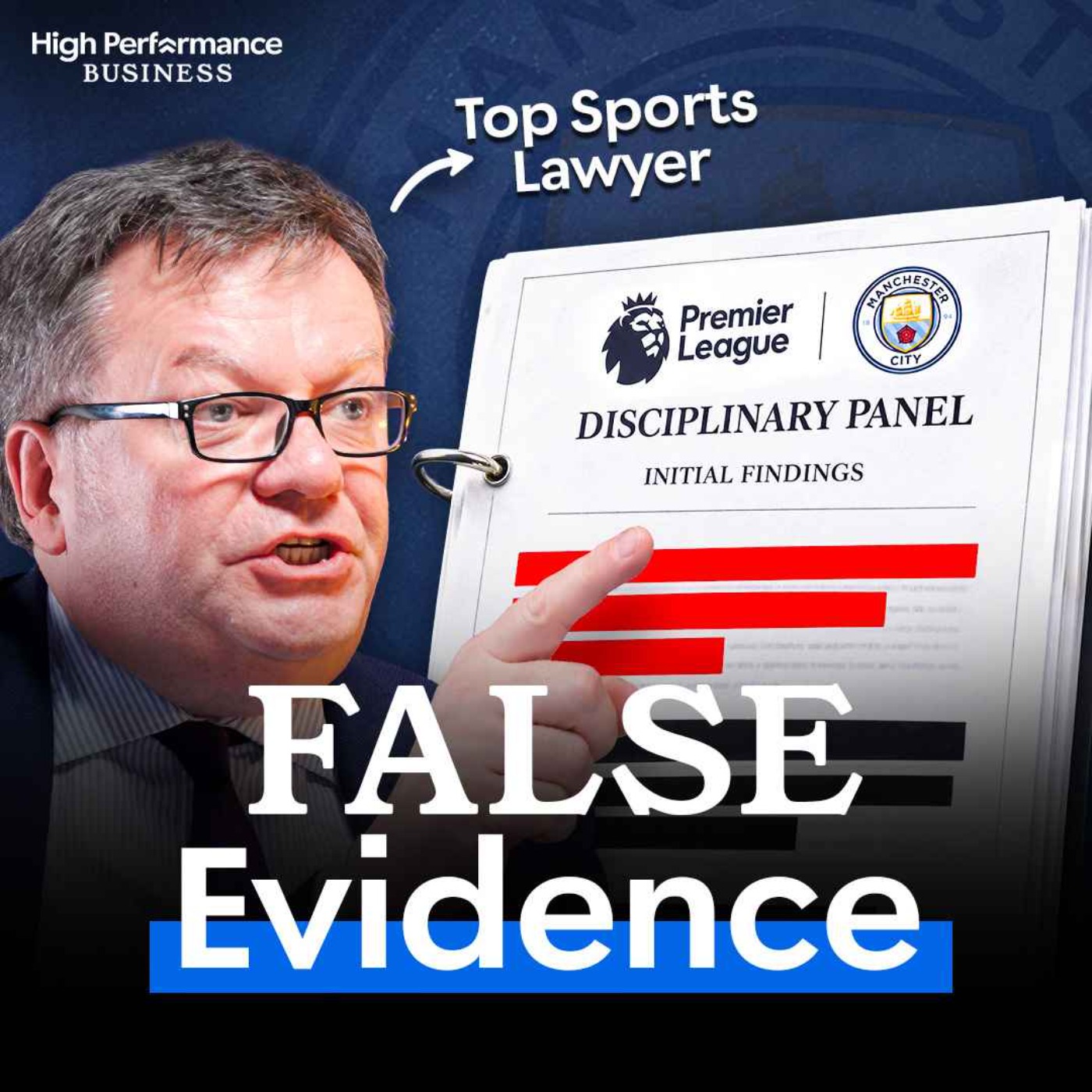
PDC Chief Executive Matt Porter has spent over a decade transforming Darts from a smoke-filled niche into a global entertainment powerhouse. He did it by flipping the traditional sports model on its head: instead of telling fans what to want, he listened to them, removing the stress of the result to create the most authentic atmosphere in live events.
In this episode, Matt explains why the "Luke Littler phenomenon" wasn't a stroke of luck, but a decade-long masterclass in building youth pathways and relatability. He draws sharp, uncomfortable contrasts between the organic growth of Darts and the "manufactured" models of LIV Golf, revealing why corporate spreadsheets often fail where genuine connection succeeds.
From his "relationships over contracts" philosophy to the tactical use of data in fan education, this is a strategic blueprint for leading a brand that thrives on authenticity and rapid innovation.
IFS - award-winning Asset & Service Management software
👉 Reimagine your operations at: https://highpfrmc.com/ifs-au
EXCLUSIVE NordVPN Deal 👉 https://nordvpn.com/rwih Try it risk-free now with a 30-day money-back guarantee
XTB 👉 To find out more and make your money work, use code RWIH at: https://highpfrmc.com/xtb-rwih-au
Eight Sleep 👉 Upgrade your sleep and wake up with more energy - get up to £350 off the Pod 5 with code RWIH: https://highpfrmc.com/eightsleep-au
Stride 👉 Feel, think and perform better today and invest in your future health at: https://highpfrmc.com/Stride_au
Hosted on Acast. See acast.com/privacy for more information.