Ask ChatGPT

 High Performance Business
20 Jan 2026 · 39m · 20 chapters

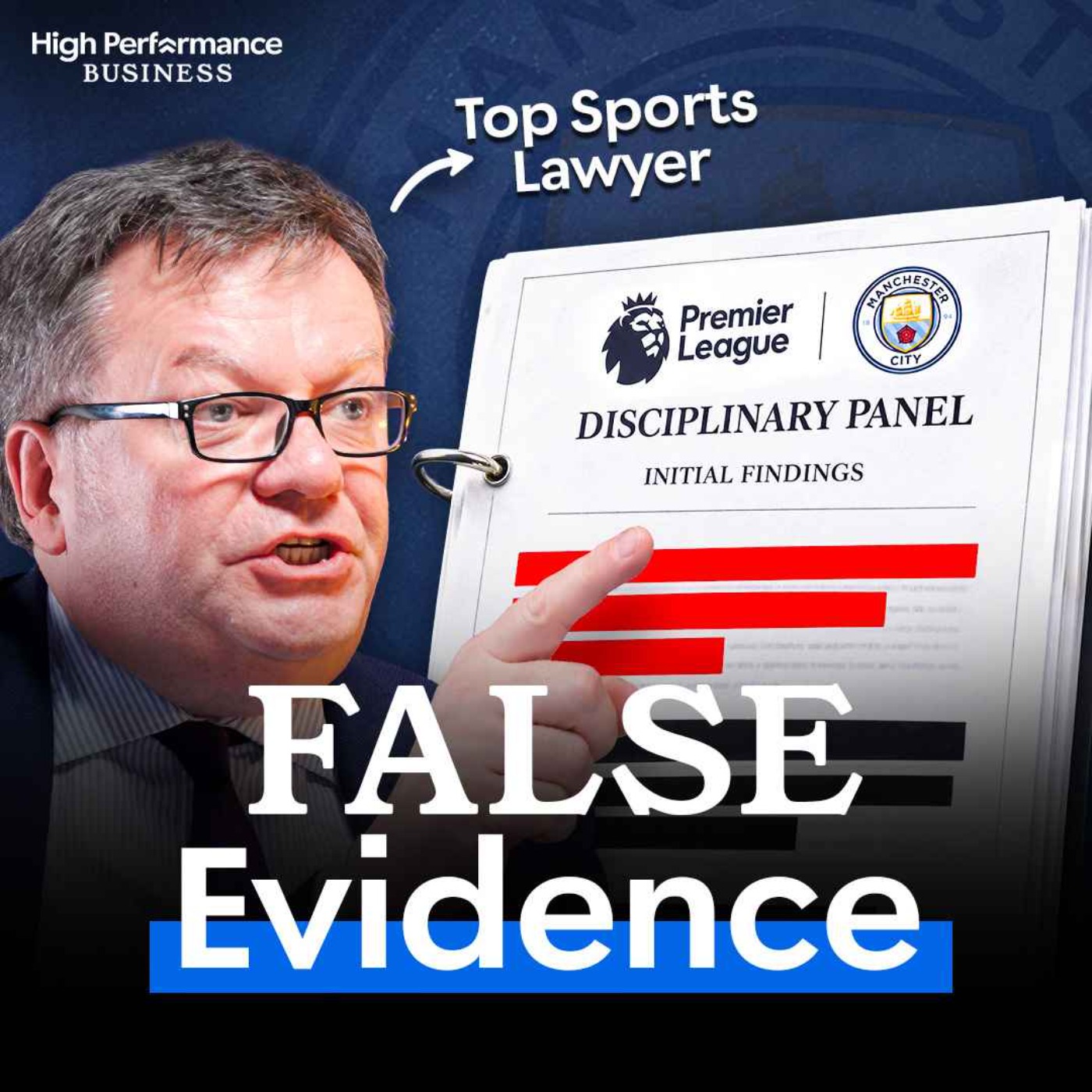
In this episode, host Jake Humphrey interviews Richard Harpin, the founder of HomeServe, who shares his entrepreneurial journey that led to the sale of his company for £4.1 billion. Richard reflects on critical moments, pivotal decisions, and the lessons learned throughout his experience as a founder. He emphasizes the importance of resilience, strategic thinking, and a focus on core strengths.
Written by AI. May contain mistakes.
Richard Harpin shares the critical moment that saved HomeServe.
“And this was the last throw of the dice.”
Explaining the initial challenges and wrong business model faced by HomeServe.
“Before the mail shop was sent out that day, why were people not coming to HomeServe?”
Richard discusses his early entrepreneurial influences and childhood ventures.
“I assume you, did you have wife and kids at the time, family?”
Describing the anxiety and determination during HomeServe's toughest times.
“I remember to this day, when I was four, my father put me on his shoulders.”
How HomeServe scaled operations and revenue after finding a successful model.
“So how did 38 people signing up turn your business from losing half a million a year to making three quarters of a million?”
Discussing the transition of leadership at HomeServe and Richard's future aspirations.
“So what was that sort of scale-up operation like?”
Richard outlines his criteria for supporting and investing in new entrepreneurs.
“until I drop dead and I'll work until the day I die.”
Learn about the importance of investing in profitable businesses.
“So that is consumer, retail, leisure, and tech.”
Discover the nine steps to becoming a billionaire outlined in a bestselling book.
“The brilliant book that you've written that details the nine steps that people can take if they want to follow in your success.”
Understand the significance of honing entrepreneurial character for success.
“And that is the characteristics of the entrepreneur in the first place.”
Explore how to effectively copy and pivot business models for success.
“So what I would say is step number one, copy and pivot.”
Learn about the importance of finding the right investor for your business.
“How involved are you going to be in the business?”
Discover the innovative idea of combining coaching and mentoring in business.
“And what I mean by that is three things.”
Understand the effectiveness of traditional marketing methods like direct mail.
“And I look back and think it was pretty lonely in home serve.”
Learn the importance of hiring the right leadership to scale your business.
“It's really important because entrepreneurs are foxes.”
Understand the importance of evolution over revolution in business growth.
“$250 million of annual profit and still growing like mad.”
Learn the significance of creating a not-to-do list for business focus.
“So every year you can plot the development of Next and one of the best examples of evolution.”
Explore how focusing on core products can drive business growth.
“We inspire our founder and CEO members to fast forward their growth through unique content and facilitated learning.”
Discover the importance of self-awareness and character in leadership.
“And one of the things that we do in a business leader for each of our members is everybody goes through the Clifton Strengths Assessment, 200 rapid fire questions in 30 minutes online.”
Hear about the real struggles and breakthroughs in entrepreneurship.
“We only have seven and a half thousand large companies in the UK that employ more than 250 people.”

Get the gist, explore an idea or ask about something said.
 Claude
On High Performance Business, what are the key points of this episode?
Searching your listeningAutomatic transcript. May contain errors.
0:00Welcome to The Room Where It Happened. Today we're talking to Richard Harpin, the infamous entrepreneur who built HomeServe and ultimately sold it for over 4 billion. pounds and today he takes us on the epic journey from the day that HomeServe was almost going out of business to getting to the point where he is now a titan of industry. He also walks us through the nine straightforward steps from his book that you can take to make a billion pounds yourself and exactly what he would do if he was starting a business tomorrow. Welcome along to the show. In association with IFS, we welcome the incredible Richard Harpin to share with us the room where it happened.
0:41I'd like to take you into the room where we just sent out a mail shot test to a thousand homeowners. And this was the last throw of the dice. There were 23 people in the business, all about to be made redundant. We'd run out of cash down to our last£10 ,000 after South Staffs Water had put in half a million pounds into the business sort of a year before. and that mail shot brought in 38 customers, a 3.8 % take up from direct mail. I remember getting on my office desk in front of those 23 people that are about to be made redundant and said, yes, we've made it. And that was the critical moment, make or break.
1:29That was copying somebody else's business model. a little water company in Sutton in Surrey. I copied the model, improved it, and sent out our mail shot. And literally, the business went from losing half a million pounds in that first full year to making three quarters of a million pounds profit the following year through going to all the other water companies in the UK and saying, you didn't want to invest in my loss-making business based in Newcastle-upon-Tyne that didn't have the right business model. Now we've cracked it. We'd like to sign you up as an affinity partner where we would take their brand name of the water company like sort of Thames or 7Trent.
2:13We will use your customer base and we'll pay you an annual commission for every customer that signs up to our plumbing insurance cover. And that was it. That was almost the rest is history. So HomeServe was offering people the chance to protect the boiler and the pipework in their house. Before the mail shop was sent out that day, why were people not coming to HomeServe? Why was the half a million pound investment you'd taken about to be lost? Why were people about to lose their jobs? Because we didn't have that home assistance model. Prior to that, we were selling a pay-on-use plumbing emergency service.
2:50Cost of generating customers was high, mainly at the time by Yellow Pages. We were at the front of the other pages because the business was originally called A1 Fast Fix to get in the front of the section in plumbing and heating. People only have a plumbing emergency every five years. And unless you charge an exorbitant price for that one-off emergency, there's no repeat business. So very, very difficult to make money. That was the wrong business model. And what was your emotion on the day that you sent that mail shop, knowing it was the last chance to do? I assume you, did you have wife and kids at the time, family?
3:28Yeah, but this is my life's dream from the age of four was to be a successful entrepreneur. And I'd been at it with a number of businesses in my teens. Some of those a little bit successful, some not. Yeah. What sort of businesses in your teens? I went from breeding white rabbits and selling them at school to running a rabbit kennels where people brought the rabbit back when they went on holiday. to selling conkers and then a tuck shop in my locker at school, children's magician, tying flies for fly fishermen, then selling the materials by mail order to other fly tires to tie their own flies. So was there someone in your family that was entrepreneurial and had said to you, Colin Richard, this is the exciting way to live your life?
4:15Or had you been inspired by something you'd seen? It was quite the reverse. My great-grandparents lost all the money in the Great Depression of 1929. They were mill owners in Huddersfield in West Yorkshire, where I was born. They drilled it into my dad that you can't go into a high-risk profession like running your own business. You need to be a civil servant. So he was a civil servant, chartered surveyor. my influence was a helicopter. I remember to this day, when I was four, my father put me on his shoulders. We looked over the wall of the big house at the end of the cul-de-sac in Huddersfield and watched the helicopter land.
5:01I remember saying, Dad, I want one of those. And he said, well, actually, you should run your own business then. And I found out about three years later, it was Lord Hanson, the famous industrialist, flying in to have Sunday lunch with his parents who lived in that big house. So that was my influence from the age of four. Wow. And so I guess that day, everything that you ever wanted to be was on the line, right? So were you nervous? Were you anxious? Or did you actually still believe that HomeServe was going to be saved by what you were about to do? This was probably the lowest point in my life at that point where the water company said, well, we're not putting in any more money.
5:45I was worried about the future of those 23 people that worked in HomeServe. But my business partner, and he's still my best friend today, came to me and said, Richard, we've run out of money for a second time. Your lifetime dream of being a successful entrepreneur, you've got to face it, it's over. You better go back and work for Procter & Gamble. And you know what, Jake? when you've got a life's dream and you're determined, I've got to find a way through. And luckily, I'm an optimist. And I think that occasionally you can have a bit of luck. And that bit of luck was that person calling me saying, have you seen that plumbing insurance scheme in Surrey?
6:30And that was the bit of luck. And how many people sign up? 38. 38. So how did 38 people signing up turn your business from losing half a million a year to making three quarters of a million? Because that was a test that I then knew that 3.8 % take up from direct mail. Anything better than 1 % is great. This was paying back the marketing in less than a year. So we then sent out 100 ,000. Right. So in other words, at that point, the more you spend, the more you're going to make. I mean, it's a simple equation, right? Eventually, 20 odd years later, we went back and we bought Sutton Waters Plumbing Insurance Programme.
7:11It had gone from 30 ,000 customers down to 15 ,000. We'd gone from nothing to the eight and a half million members across 10 countries that Homeserve has today. If you can just take a couple of seconds to subscribe, then of course you can get each episode directly to your inbox. And honestly, for you to subscribe, it makes such a difference to our show. It means we can grow and it means we can attract more incredible guests like George Heaton, Rory Sutherland, or Richard Branson to come and join us. And don't forget, you can also check out my Room Where It Happened newsletter. Just track me down on LinkedIn.
7:47So once you realize you've got a model that works, I think the biggest thing is then managing to meet that demand. How do you go from having, how many staff did you have that day? 23. 23 staff. Well, if you're suddenly serving 8 million people in multiple countries. That's not going to be done by 23 staff. So what was that sort of scale-up operation like? Did you have to borrow more money to do it, or was the money coming in? No, because actually we never needed to borrow any more money again. This was a cash machine because customers paid mainly up front. In latter years, some of them paid monthly by direct debit, but sending us their payments.
8:27and then obviously some customers would have a claim in a year and those are expensive, so we'd cover the cost of that. But it was really then just about rolling it out in the UK and then the pivotal moment was my step number five and I think this is the most important one, hire your replacement. Right. For all of us entrepreneurs, that's really difficult because we think, oh, we're indispensable. But I worked out that as a rubbish chief exec. And I'd hired a guy that I met socially. And he was a marketing guy, brought him in in business development. And he did a good job in signing additional utility partners and managing them.
9:18After a year, I thought, I called him into my office and said, Jonathan, you're promoted. I'm making your managing director of HomeServe UK when we were only a UK business. And that meant I could work on the business, not in the business. Left Jonathan to focus on delivering great service to the customers, continuing to grow the business. And I then thought about, I wonder whether HomeServe would work in a foreign country. So what was your skill if it wasn't being the chief executive? I had very few skills, but I think the biggest one was having a vision and a drive to create the growth. So I wasn't really interested in the day-to-day.
10:04I wanted to focus on how do we grow this business quicker, bigger? Can we get it into a foreign country and make that model work? And then how do we scale it? And how big did it grow to when you finally left the business? Yeah, when we sold to Brookfield, the Canadian investor, for£4.1 billion in the beginning of 2023, we'd got 8.5 million members, 10 ,000 staff, and operating the business across 10 countries. And what was that moment like for you? Because the one thing that had driven you your whole life, from the day you looked over the fence and saw that helicopter was a sense of purpose. Well, no matter how much money is in your bank account, when you sell your business, the purpose gets sold along with it you don't really know that you've made it until you until you sell and you bank that money yeah and i think every entrepreneur worries that what if it goes wrong uh it nearly did for home serve on a number of occasions and so the moment was sort of bittersweet uh it uh did feel like i've finally done it but I'm a believer in evolution, not revolution.
11:18So I didn't want to run off into the distance with all my money and go and retire to my desert island. I'd be bored within a fortnight. So first of all, I wanted to stay, no longer be chief exec of HomeServe because I'd done that for 30 years, handed over to the top two members of my team, one that was running North America, one that was running the rest of the world. and stayed as chairman for a couple of years because I wanted to make sure that HomeServe was my baby, needed to make sure that it was going to continue to be successful under their leadership, which it has been, and that we'd got a smooth transition.
12:01And while I sort of fully worked out what I was going to do in the final third of my career, my final 25 years, until I drop dead and I'll work until the day I die. Okay. So what did you decide to do with the final 25 years? I'd been to Harvard Business School for three days to work out what my career objective should be. And I'm a bit slow on the uptake. In three days, Jake, I could only come up with two words. But those words were inspire breakthrough. Right. And I think if you went to any of those chief execs that made HomeServe happen, that wasn't me. They would say that I challenged them and I inspired them.
12:47And as a team, we achieved more than we ever dreamt of. So I thought I want to take that only talent. And I never want to be a chief exec again because I've done that for long enough. I want to see whether I can back other entrepreneurs in this country that are in an earlier stage of their career and help them avoid all the mistakes that I made in HomeServe. And help them to get there quicker by investing some of the money I made in HomeServe in their businesses. but as a minority shareholder, so that I'm not telling them what to do. I'm giving them help and advice, but it's show and never tell.
13:29So if I'm an entrepreneur, a business owner, a business comes to you and says, Richard, we need your investment. What's your criteria for deciding who you support and who you don't? Great question. First of all, it's the entrepreneur themselves, because entrepreneurs need to be ambitious, but resilient, curious, all of those really important characteristics, courageous, persistent. And so that's number one. And then I'm looking for areas where I've got an interest in or an expertise along with my team. So that is consumer, retail, leisure, and tech. And then because I'm auctioneer, a bit tight with my money.
14:16I'm a believer in not all of these digital businesses that lose money forever, but ones that are profitable. So I'm looking to back entrepreneurs that are making between two and five million of profit already to say, how do we inspire breakthrough in you and not go from three million profit to nine, but maybe you could become the next billion pound business. Absolutely. Right. Well, let's talk then about nine steps to becoming a billionaire. The brilliant book that you've written that details the nine steps that people can take if they want to follow in your success. Why nine steps? There were originally eight.
14:57And so after I'd sold HomeServe, I thought I want to just reflect on all the mistakes I've made and the eight things that I know now that I wish I'd known at the start of my journey. if I had maybe as a team we could have got there in 15 years not taking 30 to get there yeah so I wrote those down I'm big believer in market research so 40 page pamphlet then took those eight secrets to building a billion pound business out to five other entrepreneurs that had built a billion pound business like um ben francis at um gymshark uh my own greg jackson at octopus energy that um we used to work together in home serve and said tell me whether those are the the right eight secrets and they said absolutely but don't call them secrets because you want to get them out there, they'll no longer be a secret.
15:55So call them steps. And then you've missed one. And that is the characteristics of the entrepreneur in the first place. And I've called that step number nine, hone your character. What does that mean? How can we do that? I spent 30 years in HomeServe enforcing performance reviews. Must happen every six months. You've got to fill in a three-page form, which is what have you achieved? What are your strengths? And then what are you rubbish at? And guess what happens? Everybody leaves those meetings miserable, only focusing on the things that they're bad at. And I was bad at so many things. And what I learned was focus on your strengths and then hire people to do the things that you're bad at, which are the things that you don't want to do anyway.
16:49And that really was my magic model. What about people listening to this who either want to be entrepreneurs or they're starting out on their journey and they can't hire 30 people to come and be on the journey with them? How do they solve the problem of step number nine if they can't hire five or six people? Yeah. start with just you or use a little bit of your savings or borrow a bit of money from friends and family and get your business going by bootstrapping on a shoestring, test it, stay small. My biggest mistake was I was so eager to grow that I hadn't proved the winning business model and therefore ran out of my£50 ,000 of savings initially, which was me and a business partner, somebody else who was at Procter & Gamble in Newcastle.
17:46And so that didn't work and then eventually did find the model. So what I would say is step number one, copy and pivot. How many people do we hear that say, oh, I had a great business idea, but somebody's done it. So I'm not going to do it. I would say, fantastic. If somebody else has done it and they're still doing it, then it works. All you then need to do is copy their model, improve it a bit, and then go bigger and quicker. So let's go through the nine steps then. So number one is copy and pivot. Number two is get an investor. And that's really about try and not do that at the beginning because you want to keep the business small rather than burning through loads of cash and giving away too much of your business too early.
18:39I would say get an investor when you've proved your model and you want to press the accelerate button. That's really not just about getting the cash. It's about getting somebody that has made all the mistakes, got the grey hair, some relevant experience for your product or market, and can help you as well as providing a bit of cash. I had to sell a majority of HomeServe, 52 % to get that half a million pounds of investment from South Staffs Water. I would say, don't do that. Stay small and take the cash, but only sell a minority holding. So you sold half of homes for half a million pounds, which eventually would have been worth two billion pounds.
19:27But there's also an argument that maybe without the half a million pounds, there is no two billion pounds because it kept you going for a little longer. And actually, it wasn't just about the half a million pounds. It was the water company that provided the test bed and their customer base so I could prove the model I'd copied. and because we were a small water company we were had the credibility when i went to talk to the bigger water companies we weren't a threat to them but uh had some credibility because we were owned by one of them so i don't look back and say it was a mistake because we got there and it all worked out in the end but ideally you wouldn't give away that sell that 52 percent too early on and briefly on this point, what are the questions people should ask of a potential investor to make sure that they're the right person?
20:17How involved are you going to be in the business? I don't think you want somebody that says, well, I'll just write you a check and then walk away. Because I do think having an investor with skin in the game that can help is a good thing to do. But equally, you don't want an investor that's trying to run the business and be the chief exec and telling you what to do. So it's getting the balance between those two. Get some coachment. And what I mean by that is three things. One is... Is this a word you've created? Yeah. Right. After leaving HomeServe, I thought, how am I going to go from being a hands-on chief exec to a chairman and an investor?
21:01And I thought I'd go on and train as a business coach. I did it at INSEAD Business School in France. 10 days spread over nine months and i probably didn't know the difference between a coach and mentor at the time business coach is trained to help you tease out what the problem or opportunity is what are the range of options that you could think about which do you think would be the right option based upon what you want to achieve. So they're a facilitator and a diagnostic, but they're not telling you what to do or giving any advice. The mentor is then that person with the gray hair that have made all the mistakes.
21:49And they're saying, what I've understood from your problem or opportunity is I've got a golden nugget in the back of my small brain that says, have you thought about doing this or that? So they're applying a business experience to the coaching. So the magic model is having both of those. And that's why I call it coachment. There is a third part to coachment, and that is join a peer group. And I look back and think it was pretty lonely in home serve. Even though I had a board of directors, loads of direct reports, I didn't have a peer group of other founders and CEOs that I would sit down with eight times a year and we'd have a bit of quality time saying, let's help each other, because one of us will have been through the problem that I'm trying to tackle right now or the opportunity.
22:47I did have it at Procter & Gamble. Twelve of us, all graduates, new to Newcastle, all working on different brands. I was on Fairy Liquid, the brand assistant. That's why my hands are still so soft. And each of us would learn on the job during the day, go out and socialize in the evening. And inevitably, we would talk about business. So it was a ready-made peer group of amazing learning. And I look back and I never had that peer group. I love this idea of leaning down and pulling other people up. and it's why, and maybe we'll come on and talk about it, but I set up Business Leader where we do provide one-to-one coach, we do provide peer groups that meet eight times a year, and we also help a business leader member to find the right mentor.
23:43That was step three, right? Yep. So step four. This might seem a bit strange because aren't we in a digital marketing world and my step number four is bricks and clicks and paper okay think back to your doormat jake 10 years ago and think about how much direct mail landed on it and then think about how much was there last time you're at home yep it's gone from a lot to virtually none so loads of businesses have said oh we don't do direct mail anymore in a digital marketing age we'll spend money on google but that's pretty competitive now. Those businesses that are still spending money on direct mail get a bigger percentage share of the doormat.
24:28And is it still effective? Absolutely. It still works in HomeServe today. It still works for a business that I reinvested in when I left HomeServe. That was part of HomeServe called CheckerTrade. Yeah, CheckerTrade.com. Great. Yeah, so everybody knows the jingle. What they don't know is that one of the best bits of marketing is the 16 million leaflets we put through doors six times a year. And that generates clicks because some people will ring the track trade telephone numbers in the leaflet. Yeah. 150 trades are local to 50 ,000 households and others will be prompted to go to our online marketplace.
25:16So a great example of paper generating clicks. We only do that paper because it works fantastically well. Think of the White Company still have a catalogue. Charles Tyrwhitt, Sweaty Betty, Johnny Bowden. I get all of these coming too, now you think about it. He stopped printing his catalogue and his revenue, his sales fell off a cliff. He called himself a nitwit and started printing the catalogs again. So interesting. So the fifth step on your list. Hire your replacement. And we touched a little bit on this. It's really important because entrepreneurs are foxes. They're always looking for the next opportunity.
26:05And you need to have somebody that really focuses on running a simple business model and a day-to-day. And the guy that did it quickest was Ben Francis. After only three years in Gymshark, hired Steve Hewitt as his chief exec. And Ben then didn't need to go through step two and raise any money because Steve ran a really tight operating model, used suppliers' money to fund all the stock, 90 days credit. And Gymshark got to a billion pounds before they got their investor. And then obviously at that point, when you're taking investment, you're giving away a lot less of your business for the money that's coming in because you're valuable.
26:46Yes. And then my magic model was then hiring great chief execs in each of those countries as we rolled out HomeServe, which leads on to step number six, which is go global with locals. Is it as it sounds, using local people to spread your message far and wide? Exactly right. And so HomeServe was in America. We'd been there for about six years. I'd sent that amazing chief exec that took my job in running Home Server UK, sent him to America. He did a really good job, but he was handicapped by the fact that he was a Brit. And Americans buy from Americans. And therefore, however good your Brit is, you've got to have a great American as your chief exec over there.
27:33Otherwise, the business won't be taken seriously. and we weren't signing enough utilities. So in 2010, when HomeServe America was making$10 million annual profit, I brought Jonathan back to the UK, hired a guy called Tom Roosin. He's still there today. And last year, HomeServe America made$250 million profit. The profit. Wow. Dollars, not pounds, but still. Still not bad. $250 million of annual profit and still growing like mad. That wouldn't have happened with a Brit. Yeah. Okay. So step number seven. Evolution, not revolution. There is a role for revolution, but that is at the beginning of the business.
28:21When you've copied somebody, you come up with something that is revolutionary, different or slightly better than that. Thereafter, revolution is really dangerous. but equally evolution and not having constant evolution is even more dangerous okay so why is revolution dangerous because it's two steps removed from what you're doing whereas evolution is one step removed and i'm sure we both watched the the blackberry movie on netflix yeah great case of they didn't keep evolving. Blockbuster Video, Nokia, Yellow Pages as a fraction of its former self. No one was saying they should have revolutionized what they were doing.
29:10What they were doing was okay, but it should have evolved. Just keep evolving, exactly. Best example of a business that have evolved year after year that's now making a billion annual profit in the UK, next. and that's a business that started as a ladies wear high street uh old-fashioned chain then became menswear as well uh we're old enough to remember the the next directory that big printed paper catalog next directory yeah then it went online then they said we're going to do homewares then they said we're going to stock other brands that are not next branded then we're going to buy some of those brands like Jules and Reese, and then we'll develop internationally.
29:57So every year you can plot the development of Next and one of the best examples of evolution. Who owns Next? A listed company. It's run by Lord Wolfson, Simon Wolfson, and he's been the chief exec for getting on for 25 years and has done a tremendous job. But think about Apple. Cast our minds back to 2012 when Steve Jobs unfortunately died. And can you remember what shareholders were thinking and saying? And Apple at the time was worth$350 billion. And they were saying, oh, we're really worried with Steve gone, there's not going to be a revolutionary new product. And guess what? There hasn't been.
30:44AirPods, Apple Watches, Apple Pay, Cloud Services, evolution, not revolution. And Apple today is worth$3 trillion. All through evolving. Exactly. So impressive. Next step, the penultimate step, number eight. Lots of us have a to-do list, but how many of us have a not to-do list? and what you need to do here is go to your management teams, if you haven't done this, and ask three questions. First of all, what are we passionate about in this business? And that will normally be the purpose. Secondly, what can we be the best at? How are we slightly better than that competitor? Thirdly, what's our economic engine?
31:40How are we going to make money out of this business? Now, the hard bit is you've got to answer those three questions in one sentence of no more than 20 words. That's amazing. We did this about eight months ago before I'd hired my great chief exec for business, my business leader organization, Sean Prime. and we came up with a business leader. We inspire our founder and CEO members to fast forward their growth through unique content and facilitated learning. That is all we do. All of the 35 people in Business Leader that are helping our members to grow on our nine steps growth program have memorized that.
32:27Hopefully they've also got it written on a screensaver on the desk or tattooed on their arm. And they would look at everything they're doing today, this week, this month, this year, and say, does it fit with that statement? And if it doesn't, I'm not going to do it. It's going to go on the not to do list. Obviously, like you, I meet lots of business people, lots of entrepreneurs, and they almost think the thing they should be most proud of is that they're doing a thousand things a day because they're entrepreneurs. And actually what you're saying is, well, how do you know how big your North Star could be if you weren't distracted by all those hundreds of other things?
33:04Yes. And there's another bit that sort of in getting that real focus is go back to that step number seven, evolution, not revolution. And we do need devolution. So occasionally the business might have evolved so much from the original core that it's still become a bit too complicated. There's a great example recently of a business called Johnson's Leisure. And he's really big in the UK on outdoor saunas, hot tubs, cold plunge pools, and garden rooms. And he said, I want to grow internationally, working out which country to go into. But I look at all of those products that we offer in the UK, and actually our hero product is the garden rooms.
33:54we make the most money out of those those account for the biggest bit of our turnover so let's forget everything else internationally and we'll just do garden rooms so it takes a lot of courage to do that to say let's get even more focus and then we can go bigger and quicker and we'll be more profitable because we're more efficient more focused and the final of the nine steps. It's back to that hone your character. And one of the things that we do in a business leader for each of our members is everybody goes through the Clifton Strengths Assessment, 200 rapid fire questions in 30 minutes online.
34:34And it tells you what you're really good at. Oh, that's interesting. And then by definition, it also says the things that you're not good at, you need to hire people to do those and then you take that and you say of the team that i've got in my business i need to make sure that we've got uh somebody that's got a real strength in all of these factors that are required to run a successful growing business right so good look i've loved going through this with you i think story is really inspiring and fascinating i love the fact that you want to lean down and help lift up the next generation i love the fact that you're not just doing it publicly by writing a book and talking about it you're doing it in reality because you've told us of the some of the many investments that you've you've been involved in today i suppose the final question is did you ever get the helicopter i did yeah and um i don't use it when i'm in my from my yorkshire home to london uh i take the train so you've got to be a bit sort of environmentally friendly today but I did get it I am on my third helicopter I got my license and did all the flying in the year 2000 I don't fly it anymore I have when I'm using it I have two pilots from a safety point of view yeah I probably only use it once a week now to go to different parts of the country and visiting businesses.
35:59When I do, when I get out of it, I still get this feeling that, wow, how lucky I am. And despite all my weaknesses, I got there. But this really is only the start. We only have seven and a half thousand large companies in the UK that employ more than 250 people. And we need to double that. And that's the way to get out of the difficult economic conditions in the UK. Those 7 ,500 new large companies are not going to come from startups anytime soon. They're going to come from that forgotten medium. Businesses out there that are turning over between three and a hundred million pounds, and I'm dedicated to helping them.
36:49One of the best bits of my working week is I have 14 entrepreneurs in my dining room in Marleybone for a free growth workshop going through my nine steps. Anybody listening to this that wants to come, that is turning over more than£3 million, an ambitious founder or CEO, do come along to one of those sessions. And it's a discussion rather than a lecture. And I promise you, you'll go away thinking, I'm going for it. Love it. Thank you so much, Richard. Thanks, Jake. I thought what was really interesting about those nine steps from Richard there is that he's marketed them as nine steps to a billion.
37:31And I get that because he sold his business for quite a few billion. But I think those are just really good bits of practical advice for life. You know, hiring your successor before you're finished in business, making sure that you communicate better with people, being hugely ambitious, having a to-don't list, knowing the areas that you want to focus on and areas that you don't want to focus on. I promise you from the things that I've done in my life, that is just good life advice. So whether you want to build a business worth billions or just whether you want to live a life that's more practical, more valuable and more rewarding for you, I honestly think that those lessons, those steps from Richard are really valuable.
38:09And the final thing is just to remind all of us, right, because I'm pretty sure that you haven't sold a business for a few billion. I know that I haven't. And sometimes those things can make you think, man, when is that moment going to come for me. But actually, look at what he told us. He was in a room having risked everything, having wanted to be an entrepreneur all of his life. And he was one day, he was one last roll of the dice. He was one final shot away from losing everything. And that is the reality of life. Sometimes when you're at your lowest step, when things are at their most challenging, at their most difficult, is actually where the breakthrough comes.
38:41And Richard is testament to that. So I hope that you enjoyed it. Do check out his book if you want more. And please do come back for more conversations like this from The Room Where It Happened, where we really open up and just have very honest conversations in depth with entrepreneurs about the things that will be of value to you. Don't forget, if you enjoyed the episode, you can hit like, you can hit subscribe. It makes a big difference to us. And do forward this on to anyone that you think might benefit from it. And finally, big thanks to IFS. Big thanks to Richard Harpin and big thanks to you.
39:10We'll see you again soon for another episode of The Room Where It Happened.
39:17Thank you.
From a childhood helicopter dream to building and selling a £4.1bn company, Richard Harpin shares the moments that nearly ended, and ultimately defined,his journey as a founder.
In this episode, Richard takes us inside the make-or-break decisions behind HomeServe, including the last-ditch mail shot that saved the business when they had just £10,000 left in the bank, and the devastating moment a partner told him it was over and to return to corporate life. He reveals how copying what already worked, then pivoting fast, became a survival strategy, and why hiring people to cover your weaknesses is one of the most underestimated leadership skills.
Richard also reflects on the bold moves that unlocked global growth, from trusting local leaders to scale internationally, to the bittersweet decision to sell the company after decades of building.
This is a candid conversation about staying grounded, enduring setbacks, and the long journey from near-failure to lasting success, and why childhood dreams still matter at the finish line.
IFS - award-winning Asset & Service Management software
👉 Reimagine your operations at:
https://highpfrmc.com/RWIH-IFS-au
Hosted on Acast. See acast.com/privacy for more information.