
 Ask ChatGPT


 High Performance Business
9 Jun 2026 · 36m · 12 chapters
How countries win and then deliver FIFA World Cup bids, with emphasis on “purpose” and legacy (not just football matches), plus examples from Australia/New Zealand 2023 and Canada’s 2026 preparations.
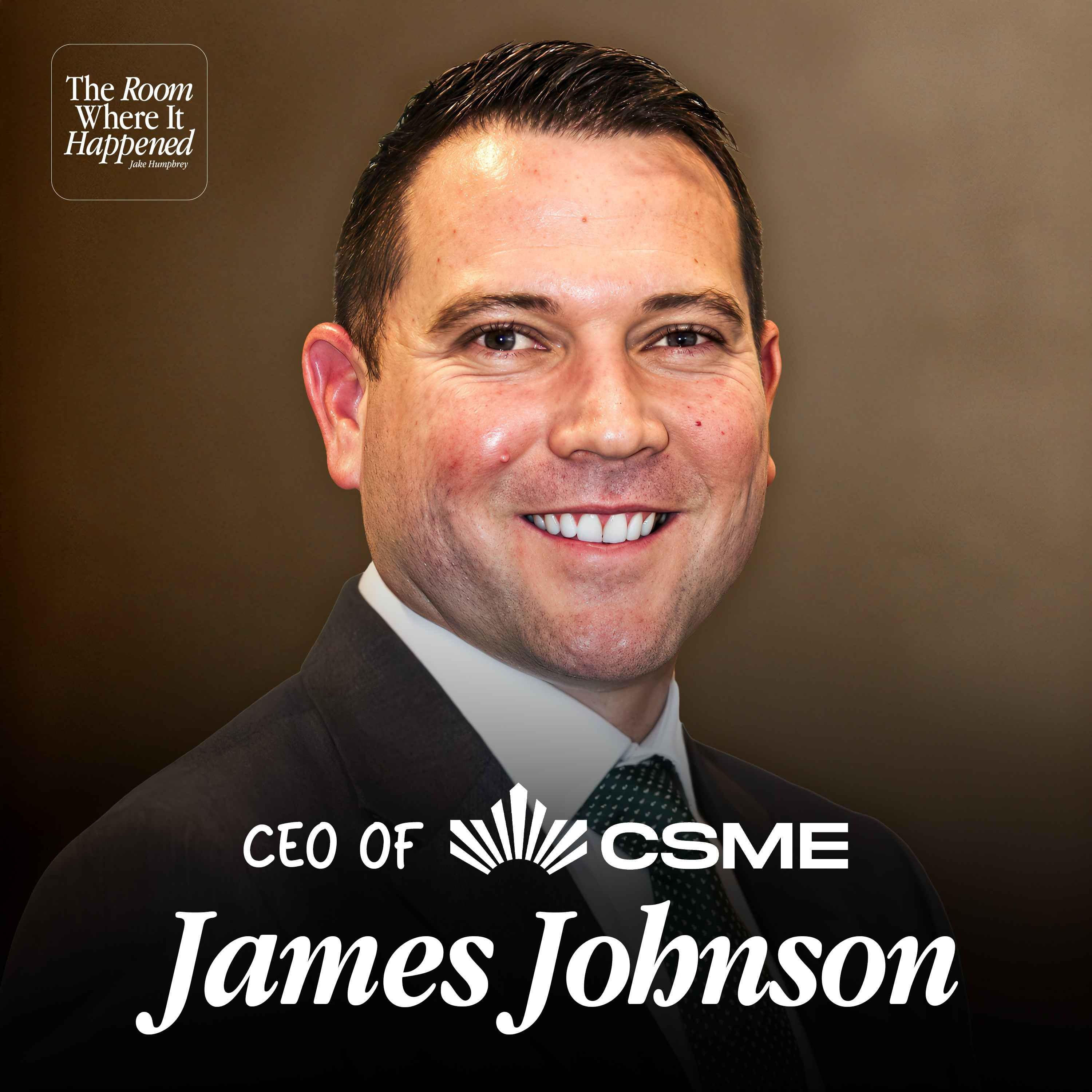
James (ex-FIFA executive; CEO of Football Australia for the Women’s World Cup 2023 bid; later described as CEO of Canadian Soccer Media Entertainment and commissioner of the Canadian Premier League).
Start bid talks by defining why you’re bidding (political image, sport transformation/legacy, or commercial goals). Winning requires political navigation among confederations, not only a technical bid. Legacy should be defined early and measured via participation, commercial revenue, government interest, competitiveness, and social impact. Hosts can influence home-team performance by funding high performance.
Australia/NZ bid vs Japan/Colombia/Brazil; needed CONCACAF and then Asian support; Japan exited, consolidating Asia/Oceania/CONCACAF votes. Crisis: Sam Kerr injury the day before opening match; delayed announcement and managed messaging. Home-team impact: Matildas run drove ticket sales, merchandise, and record TV viewership. Canada 2026: compressed “runway,” rights renewal, court win enabling OneSoccer linear channel; goal is mainstreaming soccer via CPL.
Written by AI. May contain mistakes.
Discussing initial conversations and motivations behind bidding to host a World Cup.
“that happens behind closed doors when a country decides that it wants to host a World Cup?”
Exploring the reasons countries bid for the World Cup and the importance of purpose.
“you know, put your country on the map politically.”
Insights into the technical and political aspects of bidding for the World Cup.
“And I really want to kind of try and take the audience inside what actually happens in these negotiations and these conversations.”
Exploring the importance of relationships in securing votes during the bidding process.
“And what was the secret to convincing those other federations that you were the people to back?”
Discussing what constitutes a successful legacy from hosting a major tournament.
“And I think the countries that do it well, they're very specific with what they mean by legacy, and they set legacy early.”
How hosting events can change perceptions and improve sports in a country.
“together, you create almost like a growth cycle where they feed off each other and then you see magic happen.”
Exploring how sporting events can change perceptions of nations and the importance of legacy.
“you know, some nations will bid for these things to change the way the world sees them.”
Discussing how host nations can influence tournament outcomes and investment strategies.
“I think that you're certainly not in control.”
Learn about the legacy objectives and challenges faced by Canada in hosting the World Cup.
“I personally believe that the commercial part of this tournament will be reset and I think the standards will be reset.”
Explore the complexities and potential of co-hosting future tournaments.
“And how much competition is there between you and the US and Mexico to be the nation that everyone says, of all the nations that hosted 2026, they got it.”
Discuss the challenges of ticket pricing and the implications for fans and the sport.
“and certainly the way that FIFA's thinking, there's a shift to bigger competitions, more teams, bigger formats, right?”
Understand the key themes of purpose in hosting and the impact on the sport.
“Look, if people are interested in the book, and it is a really good read, it's called Hosting the World, How to Win, Deliver, and about building legacy from the world's biggest sporting events.”

Get the gist, explore an idea or ask about something said.
 Claude
On High Performance Business, what are the key points of this episode?
Searching your listeningAutomatic transcript. May contain errors.
0:01Well, James, welcome to the show. It's really nice to see you. What is the first conversation that happens behind closed doors when a country decides that it wants to host a World Cup? Well, I think the first conversation, what it should be, it should be, you know, why are we bidding? I think that's the starting point. Unfortunately, Jake, sometimes that's not the first question that gets asked. But certainly in my case, with the Women's World Cup in Australia and New Zealand, that was certainly the first question I asked. I think the reason that's important is because how you take decisions over the three, four or five years leading into the World Cup will all come back down to your purpose.
0:44One purpose might be to, you know, put your country on the map politically. Another purpose might be to transform your sport through legacy and hosting of a major competition, or it might be a commercial purpose. But I think starting the conversation with the purpose and being clear on that from the start is the right way to kick off a World Cup bid campaign. And at what point in the conversation or at what point in your career did you realise that actually the conversation about football is not the most important conversation in these negotiations? Because I think as football fans, we like to think that that's really what it's all about.
1:22And as you just explained, often it kind of isn't. Yeah, look, I think it depends how you define football. So if you're looking at it from a, you know, let's give the fans in a particular country a great experience for a month, that is absolutely football. And that's a heavy focus on the delivery of the tournament. But another way to look at, I think, a football discussion is how do you actually grow football in a particular country as a result of hosting, right? And that might be a case of how do we increase participation? How do we, in Australia's case, for example, how do we break the sport into the mainstream because it's a competitive sporting market?
2:04Or how do we build commercial revenues that we can reinvest into the sport to actually lift the profile of it? So I think they're both football-first philosophies, but they're just coming from different angles, I would say. And I really want to kind of try and take the audience inside what actually happens in these negotiations and these conversations. Can you take us to a moment where you either believed a bid was lost or won? Yeah, I can. So if I go back to the early parts of 2020, I just joined Football Australia as the CEO and we were in the, what I would call the second stage of the bid. So I think in any bid there's two parts.
2:48One is the technical part where you're putting together a technical bid, you're meeting all the requirements, you're putting together a bid book and then you're communicating around it. The second part is actually the political navigation and trying to basically turn the technical part of your bid into a political win. So in our case, we were up against Japan, Colombia, and also Brazil, the Australia and New Zealand bid. And, you know, it's a complex bid. And for me in that process, I knew we'd have a superior technical bid, but to get the votes we needed to win, we needed to align at least three of the six confederations because a lot of the voting, although it's done by the FIFA Council and the individuals vote, confederations do tend, if you look at historical trends, to vote as blocks.
3:47We knew that we would have the Oceania Football Confederation because we were partnering with New Zealand. However, we needed to get the Asian Football Confederation on board, which was difficult at the time because both Australia and Japan were bidding for the same Women's World Cup. So the way we approached that is we tried to get CONCACAF on board by giving them confidence that we could deliver a great tournament but also legacy. And when we got the support of the second confederation, it essentially allowed us, or positioned as well, in Asia to ensure that we got the Asian vote as well. So we had a scenario where Japan exited that bid.
4:31And what that did is it consolidated three confederations, Asia, Oceania, and also CONCACAF. So I think that was the point when Japan exited the race, so to speak. That was the point that I went from having a vision and being hopeful that we could win the bid to really believing that we could do it. And that's where our base of the political vote came from. And what was the secret to convincing those other federations that you were the people to back?
5:03Let's be honest. If you have a cat, you've probably wondered what your house smells like before guests walk in. Thankfully, Arm & Hammer Cat Litter helps take that worry off your plate. Because not all litters are the same. Arm & Hammer Hardball Cat Litter gives you long-lasting odor control, plus strong clumps that make scooping quick and easy with low dust, too. It's a five-in-one litter made for busy people, helping your home stay fresher every day so you can feel confident opening the door for family and friends. Candles? Air fresheners? Not needed here. Odor control is Arm & Hammer Cat Litter's job, not yours.
5:36Be guest ready with Arm & Hammer Hardball Cat Litter. Find it now at Walmart or Amazon. Running a business means juggling a lot of moving parts. And when your communication tools can't keep up, things start to slip. Missed calls, slow replies, scattered conversations. They're not just frustrating. They're lost opportunities and revenue left on the table. That's where Quo comes in, spelled Q-U-O. Quo is the number one rated business phone system on G2, trusted by over 90 ,000 businesses. One shared business number for calls and texts, so every conversation stays visible, organized, and accountable.
6:16It works from an app or computer. You can keep your existing number, add teammates, and sync your CRM, letting you scale without adding complexity. And with built-in AI, Quo logs calls, summarizes conversations, and flags next steps, even after hours. Stop missing customers. Stop leaving revenue on the table. Try Quo free and get 20 % off your first six months at quo.com slash tech. That's Q-U-O dot com slash tech. Quo. No missed calls. No missed customers.
6:55I think there's layers, Jake. One is, you know, relationships matter, I think, and having not just the ability to connect with decision makers but where you've had runs on the board because, you know, you've done work and delivered for people and people believe in your abilities to deliver something more than, you know, just what your bid book says. I think that is really important. Another is how you frame this balance between delivering a great tournament and the KPIs that you believe you can meet, whether that be attendance or broadcast figures or revenue for the tournament so it can be reinvested into the sport.
7:45How you balance that versus the legacy that you're going to leave for a country or even a region. In our case, we had a very heavy focus on the legacy. We knew that Australia and New Zealand would deliver a great event. We do great events in Australia in multiple sports, so we knew that was going to be strong. But the real test was how do we create legacy for the region, for FIFA with having a great competition, elevating it to a new level, but also making a difference on the ground. And that was a lot of our selling points. But it wasn't just selling. We had to prove that we could deliver it.
8:22And I think that experience and I suppose having runs on the board through previous work I think helped us get that message through and ultimately get the votes. I think legacy is really interesting, isn't it? Because if you speak to people who are backing the Enhanced Games, for example, they'll tell you one of their reasons for creating the Enhanced Games is because they don't think there is an Olympic legacy. They think it costs too much, it's too draining, it's too demanding, it takes years to pay it back, it doesn't work for anyone. So what is a great legacy for a major tournament? Look, I think you're right, Jake.
8:59I think legacy is a bit of a buzzword, to be honest. It sounds great. And I think the countries that do it well, they're very specific with what they mean by legacy, and they set legacy early. In my view, legacy is more than infrastructure investment. That's obviously part of it. But the way I look at legacy is participation increase, I look at the commercial revenues increase, the interest of government in a sport. In countries where football is not the number one sport, it's making the sport more competitive against other sports is another way to look at it. And I think another component of legacy is something that's quite hard to measure, and that's the social impact that the hosting of the competition has.
9:52So I think there's about seven or eight different ways I think you can define legacy. And then it's all good defining legacy, but I think it needs to be defined early in a strategy and then all the decisions you're taking in the lead up to the kickoff of the first match in the tournament really need to have a legacy lens on it. In the case of the Women's World Cup in Australia and New Zealand, We actually assembled our executive committee, sorry, our executive team the day after we won the bid. And I remember reinforcing the purpose of why we bid, and that was to create legacy and to really use the competition to transform the sport.
10:33And we started to shape our strategy at that point, like literally the day after we won the bid. And within six months, we had a very clear and specific legacy strategy of which we executed daily. And we thought about and we spoke about daily, you know, two and a half years before the tournament even started. And I think that's the way, in my view, that if your purpose is to create legacy, if it's to transform sport, that's the way to do it. It needs to start well before the tournament kicks off. And internally, how did you sum up your legacy with each other? What was the sort of sentence that you used to remind yourself and to keep you facing that North Star?
11:12So the day after the bid, there's obviously a lot of celebration that's going on. For me, I remember locking myself up in my office and I drew two structures on a whiteboard. One was delivery and the other was legacy. I remember even at that stage thinking about the two people that would lead both of those structures. And then it's really about shaping strategy and then, you know, ensuring that the delivery arm understands that, yes, they've got to deliver a great tournament, but they're, you know, they're only going to deliver on our purpose if the delivery of the tournament creates the legacy.
11:58So I think having those two different arms working in tandem, them understanding why they need to both perform and then also overlaying it with the performance of the home team. That's, I think, the third factor that really helps the legacy of the tournament on one hand, but also the interest in the delivery on the tournament of the other. So, you know, that's how I look at it. Three areas, delivery of the tournament, hosting of the tournament, and also the home team performance. And if you can get those three areas working together, you create almost like a growth cycle where they feed off each other and then you see magic happen.
12:36And on a personal level, is there a moment where it goes from exciting and glamorous and a sense of achievement to basically terrifying? Yeah, there's lots of moments. I think that initial transition from the moment the decision comes out that you've won the bid, you know you have a sense of triumph on one hand you know your vision and your beliefs that you can win the hosting rights is somewhat validated but then that wears off and you start moving emotionally into the reality and that is you know you had this dream and now you've got a duty to actually deliver. For me personally that actually happened very quickly.
13:28we the the women's world cup in 2023 was announced in sydney time at about two in the morning and by about four in the morning the celebrations had had gone and you know you're thinking about how you deliver but also how you shift the mindset of your team from from bidding to to delivering and hosting. And I think that in our case happened very quickly in 2020. Yeah. And I'm really interested in this kind of idea that you said at the beginning that, you know, some nations will bid for these things to change the way the world sees them. And we, you know, I think we felt that with Qatar. We probably felt that with Russia previously as well.
14:10How do you as a sporting person feel about it, feel about the fact that sport can be used in this way? Look, I don't, look, I think sport and football in particular, it's powerful, right? It creates emotion, it connects the world. I don't personally have an issue with that. If that's the purpose of the government and they're going to invest lots of money and lots of time for that purpose, I don't have an issue with it, provided it does two things. It delivers a great tournament. And then secondly, it leaves a legacy for the sport. I think, though, as long as those two objectives are achieved, you know, I'm okay with what the purpose is, but they do have to achieve those from my perspective to get the JJT.
15:02And do you think that the conversation around Qatar, arguably mainly before they hosted the World Cup, changed the way that nations approach bidding, change the way that FIFA consider awarding tournaments or not? Yeah, look, I think my learning from Qatar, Qatar actually shaped the way I thought about legacy, Jake. Their legacy was different to the legacy we had at the Women's World Cup. They wanted to put Qatar on the map geopolitically. They wanted to develop infrastructure for many, many years to come. I think Qatar were very clear on the legacy outcomes they wanted. that when I was developing my own legacy thoughts was something I did look at but I looked at other examples too like the Sydney 2000 Olympics and the importance of home team performance for example with Cathy Freeman I don't know if you remember that but she won a gold medal and that really transformed the you know certainly the moment but also the events.
16:02I think it did for me as well and I think one of the interesting things for me is the conversations around Qatar were not conversations people were having about Qatar before they won the bid. It shone a light on every part of that country. Yeah, I think you're right, Jake. And I remember from the Australian perspective, then we were obviously going to be the next host of a major FIFA World Cup a year later in 2023. But we're also participating in the Men's World Cup with the Socceroos. But it was a really complex issue. And it was one that, you know, in our case, we wanted to make sure that our players were fully briefed on all sides of the argument.
16:40And I think it created a lot of good awareness for players, but also for fans around a very, very complex issue. And to your point, I think getting that conversation on the table, understanding that it's not as simple as looking at it from one perspective, I think was a good thing. And I would consider that as part of a legacy of that tournament. You're also right. When you talk about Cathy Freeman, I mean, for me, that's one of the historical sporting moments. I actually, I came to Australia to work on the Commonwealth Games in 2006. I mean, what an amazing nation. The only thing that made me laugh was when if an Australian sports person won a bronze medal, they'd cut to the ceremony for the bronze to be awarded and they wouldn't have shown you the gold or the silver.
17:26Or if they won a gold, they'd show the gold and then it would cut away. Or of course, the famous trifecta, which was something that the Aussies spoke about a lot and trying to have a clean sweep, which is fair enough. But we had a similar experience in London 2012. And here we are now 14 years later and people still say our country hasn't felt like it felt around 2012. But in an interesting way, that's the one part that maybe you're not even in control of. You're not in control of how your players deliver, how your athletes perform, whether the performances give you that memory. Are you?
18:03Let's be honest. If you have a cat, you've probably wondered what your house smells like before guests walk in. Thankfully, Arm & Hammer Cat Litter helps take that worry off your plate. Because not all litters are the same. Arm & Hammer Hardball Cat Litter gives you long-lasting odor control, plus strong clumps that make scooping quick and easy, with low dust too. It's a 5-in-1 litter made for busy people, helping your home stay fresher every day so you can feel confident opening the door for family and friends. Candles? Air fresheners? Not needed here. Odor control is Arm & Hammer Cat Litter's job, not yours.
18:36Be guest ready with Arm & Hammer Hardball Cat Litter. Find it now at Walmart or Amazon.
18:44Look, I have a slightly different view on that, Jake. I think that you're certainly not in control. I would agree with that. But I think you can, as the host, heavily influence that. And if I go back to the three buckets, delivery, legacy, and home team performance, you've got decisions that you're making day in, day out about how you allocate budget, how you prioritize. And for some host nations, they might just want to deliver a tournament and their team, you know, they know they might not perform. I mean, Qatar was a good example. You know, great tournament, great legacy, but the home team didn't perform, right?
19:26That's just a fact. In our case, we knew that in order for Australia to come to life, that we needed the Matildas to start the tournament and effectively play to the end. And in the Women's World Cup in 2023, the way the competition format worked is there was a 30-team tournament, 32-team tournament, there were 64 matches, and there was a third and fourth playoff. So essentially, if the team got to the semifinal, It didn't actually matter the outcome because it meant that the team would play for the whole duration. And that's what happened. And then every stage of the tournament that the team went through, the metrics of the tournament lifted.
20:09So when the Matildas went from group stage, maybe Canada 4-0, and went to round 16, there was an instant jump in ticket sales and mainstream interest and merchandise sales. Then when the team got to the quarters, and beat France, the whole thing went, it went crazy. And then the semifinal, right, when the Matildas played against the Lionesses, it was the most watched TV event, not sport, but TV event in the history of Australia. Like that is remarkable for a sport to do that. But we only, you know, were able to create that sort of magic because of the way the team performed. And I think as administrators and leaders of the sport, you know, You've got to make those decisions because you're going to fund high performance and the dollars you're not putting into high performance, you're putting into hosting or legacy projects, but you've got to carve out enough revenue to put the team in the best position that they can perform.
21:12And the Matildas, they were very well-funded going into that tournament and I would go as far as saying that they were the most prepared team that played at that tournament because of the investment that went into them. Well, talking of investment, I think one of the interesting things for you is when you're talking to football people, when you're talking to FIFA, when you're talking to the other federations, when you're talking to people on your team, like they get it, right? But there will be a large swathe of politicians or people that you have to deal with who maybe don't quite see the value of hosting a World Cup or putting on a major tournament, you know, that is in the tune of tens of millions of dollars.
21:52What have you learned about how to convince those people to come on a journey with you that they maybe don't initially believe and that you think is valuable? I think it's speaking their language, Jake. So, you know, if I think back to Australian football, for example, Australian football has complained for, you know, decades and decades that the government don't fund them enough, right? And that's okay because that was true, right? Right. My thinking at the time was if we were going to change the trajectory of that issue, we had to speak the language of government and align our asks to the policy of government.
22:36So instead of saying, you know, we want, you know,$100 million because we're the biggest participant sport, like they know that, right? But, you know, how do we create a narrative which which government can be the champions and actually release, you know, revenue investment in the sport. Our plan was to link participation to health. We were coming out of COVID at that time. So our narrative was, well, you know, let's just not look at sport and the buckets of money in sport. Let's look at health as well. And the more active people are, the more healthy they are. And we showed that, you know, we thought that the participation would increase if there was investment, which there was, but that also meant that we needed the right infrastructure, particularly at the community level in Australia, to facilitate the growth of participation.
23:25So our narrative was very much aligned with the policy of government and I think that's where we found the success. It's using the right language and aligning what you need in your sport with the policy objectives in this case of government. And once the tournament's going and it was largely very successful from your perspective, including that moment where you thought this is changing women's sports in Australia and maybe around the world forever. Was there also a crisis or something that happened behind the scenes that at the time needed some serious work? There's always a crisis, Jake. And any person that's involved in the hosting or delivering of a tournament needs to prepare because it'll come up in a way you don't expect.
24:14Yeah, I can give you a major crisis. It was the nights before the opening match in Australia. The Matildas were going to play Ireland. I received a phone call from the head coach, Tony Gustafsson. This is like, it would have been about four or five in the afternoon, the day before the Matildas were going to play Ireland. And the conversation went like this. JJ, Sam Kerr is injured. She will miss tomorrow's match and she may miss the entire tournament. There couldn't have been a bigger crisis, Jake. Sam was arguably the best player in the world at that point in time. We had really positioned Sam as the face of the tournament.
24:59And in the Matildas team, she had a huge influence on that team like Maradona did in 1990 for the men's Argentina team, right? So this was a major crisis. So what do we do about it? We didn't have a lot of information to go on at that point in time. We didn't know how bad the injury was. We didn't know how long it was going to be. We didn't know if Sam would miss game one or would be out for the whole tournament. But we took a decision not to announce, and you can debate whether that was the right or wrong decision. We took a decision not to announce it. We kept it to a very small group of people that night, and we essentially waited until the team sheets were given out the next day when the Matildas were effectively warming up on the pitch.
25:47Why do we do that? Number one, I felt from the competition perspective that if we had announced that too long before the first Australian game kicked off, it would have a sort of put a negative slant on the competition. And I thought once the game kicked off, everybody would get wrapped up with the emotion of the match. I didn't think it was right for the Matildas. I knew that Ireland would be planning, you know, their tactics around stopping Sam from playing. And thirdly, I didn't think it was good for Sam personally because it was a big emotional issue that she was dealing with and she needed time to really, you know, work through and process what had happened.
26:31And the reality is there was a small group of people that knew. We put out a press release about 45 minutes before the game kicked off. I remember I was sitting in a panel in a pregame event with Matt Common, who's the CEO of ComBank. I did give him a heads up, but during our panel, I remember the hundreds of people in the event, they were looking at their phones because they realized that Sam was going to miss the first game. And that is a crisis, and I don't think he could have had a bigger one for that World Cup. So when we measure success, you know, there's all your typical KPIs that, I mean, the evidence says that they're all met or they're beaten substantially.
27:10So from broadcast to attendance to revenue to, you know, the goals scored, like every KPI we had, we really hit a home run on. Yeah, I bet. Are you expecting to feel it again in 2026? Yeah, in a different way, though. I mean, it's a different competition, different markets. The Men's World Cup, it's very established, whereas the Women's World Cup, I think, was maturing and we took it to another level. I think for the 26th World Cup, we're in the biggest commercial market in the world. There's three countries that are all heavy hitters. when we talk about world economics, I personally believe that the commercial part of this tournament will be reset and I think the standards will be reset.
28:10On top of that, you have a higher number of teams, 48 teams, over 100 matches. The tournament is played over a longer period, so it's just a much bigger beast. So I think the way that legacy will be defined will be very different from the Women's World Cup. You know, in our case, and I'm talking, you know, as the CEO of Canadian Soccer Meter Entertainment and the Commissioner of the Canadian Premier League, our focus is on building revenues in the sport in Canada, commercialising the sport. Our focus is on shifting the sport into the mainstream and being able to compete with other sports like hockey and baseball that are the dominant sports in this country and ultimately putting the league at the very centre of, you know, of the national sports agenda, you know, following the World Cup.
28:59That's our focus. And if we can deliver on those three objectives, then I would say we've delivered on legacy here in Canada. And we're having a conversation just a few weeks before the tournament. When you lie awake at night now, what's the thing that stops you from falling asleep when you look ahead to the tournament? It's the runway, Jake. I came into this role in July, August last year, so I knew we had 10 months to really get our speed skates on. Excuse me, pardon the pun. It's allowed. If I compare that to the Australia example, which is also short, we had nearly three years. We had six months to put in place a legacy strategy and then we had two and a half years to create the narrative and really deliver on it.
29:51So we here, it was a very compressed timeline. We've had to do some, you know, big significant changes. For example, we had to renew our rights agreement with Canada Soccer, which we did for 12 years recently. We had to win a federal court case, which we did earlier this week, against Rogers, which allows our partner one soccer, which is our media channel here, transition into a linear channel from an OTT channel, which is important to grow the following of soccer. So there's been some big chunky pieces that we've had to do just to get into a position where we can focus on legacy. And look, we're there, but I wish we had another 12 or 24 months to do this.
30:40We don't. We have four weeks. And how much competition is there between you and the US and Mexico to be the nation that everyone says, of all the nations that hosted 2026, they got it. You know, something I've learned in the period I've been in Canada is I don't think Canadians think like that. I think that Canadians genuinely want, you know, they want the world to be great. They think outside of their own interests. So I don't think it's a case of, you know, being better than the United States or Mexico. But one thing I will say, Jake, is I do think, I do believe, and I wouldn't be here if I didn't believe this, I think that Canada will be the legacy story of the World Cup because, you know, whereas the United States and Mexico both hosted men's World Cups and have seen significant growth as a result, Canada's not been through that journey yet.
31:38And I think the stars are aligning for this nation and I think we're going to see fast growth during the World Cup and then beyond and I'm very excited by it. I love your optimism. I mean, I think it's the most exciting World Cup. I think it's the most challenging World Cup as well. What do you find is particularly difficult when you're trying to align three different governments, three different football cultures, three different political systems and I guess everyone kind of believing that they're the ones that are leading the tournament? Yeah, look, we're not directly involved in the delivery of the tournament, which is actually good for us.
32:20That's, you know, the good thing for us is we have the president of our region, CONCACAF, happens to be Canadian. So, you know, I've got a lot of trust and faith in Victor and his ability to ensure that, you know, he keeps the three countries in line and the tournament is ultimately delivered, which it will be. So, you know, our focus is really on, you know, we know the tournament will be delivered perfectly. We've got Peter Montopoli, who's a longstanding executive who's delivering the tournament in Canada. So for me, I don't have to worry about that. I'm just focused on, on one hand, making sure that we can put as much money into Canada soccer as possible so the team can be invested in, so the team can perform better.
33:05and ultimately, you know, our role is to, you know, commercialise the sport, bring in the mainstream and put the Canadian Premier League right at the centre of transformation and legacy. And that is our narrow, deep focus for the Men's World Cup in 26. And do you think that there is, if this goes well, do you think there's an opportunity for more multi-country hosted tournaments like this? Yeah, look, that's a good question, Jake. I think if I look at the trend in the industry at the moment and certainly the way that FIFA's thinking, there's a shift to bigger competitions, more teams, bigger formats, right?
33:54So we've seen the Men's World Cup go from 32 to 48. We know that there are very advanced conversations around the Women's World Cup going from 32 to 48 as well. And once you get into 48 teams playing over 100 matches versus, say, 63, 64 matches, the ability to have enough stadium and the right infrastructure in one specific country becomes limited, right? so I think that you know with the competitions expanding I think it becomes more difficult for single nations to host and I think we're going to see that you know in the years to come I don't think that's a bad thing you know it is more complicated to co-host tournaments because there's a lot of to your point earlier a lot of coordination between hosts there's coordination between governments.
34:55But, you know, I'm a bit more on the optimistic side. I see that it's bringing countries together. And when the tournament's delivered well, you know, it has long-term relationship value, which is what we saw in Australia and New Zealand. And look, James, as a football guy, I love it when we talk at the beginning about legacy and you don't talk about the financial impact on the country or the money that was made for the sponsors or how pleased the corporate hospitality people were that they sold so many tickets. How do you feel when you see the reports that this could be the most expensive World Cup for the fans?
35:30And I guess I wonder whether some of the legacy gets affected when it stops feeling like a global celebration of football and more like a luxury product that certain people can afford to enjoy. Jake, look, it's a really complex issue. So, you know, if I compare the ticketing strategy, if we were specific about it in Australia and New Zealand, you tend to have this balancing act that needs to be, really needs to be split between accessibility and optimising revenue. In the Australia example, we lent towards accessibility, right? Because we wanted to get more people in stadiums. I think here with the optimization of revenue, what's important there is the revenue actually will get reinvested back into the sport.
36:31And, you know, FIFA's got to invest in 211 countries around the world. I don't necessarily think that's a bad thing for football in my view. I know that might be more expensive for fans attending games, but I think if we look at it more broadly, you know, we know that investment will go into more countries. And I think we need to sort of balance our thinking a little bit on that point. Great. Look, if people are interested in the book, and it is a really good read, it's called Hosting the World, How to Win, Deliver, and about building legacy from the world's biggest sporting events. Final question is about the book.
37:09Once people have finished reading it, what would you like them to think about major tournaments differently to before they pick the book up? I think the main theme that you're going to see in this book, Jake, is its purpose. Purpose of bidding, purpose of delivering and purpose of hosting. And in my view, purpose is always about the impact that the tournament leaves for the sport. And we talk about the ingredients in the book that is needed to create that. and so I think, you know, from my perspective, being really clear from the very start that your purpose is to change the sport by hosting the event, not just to host the event and have a great month for the sport.
37:57I think that is the focus of the book and I hope that that's the impact it has, that, you know, whether it's governments or sports administrators or sponsors or broadcasters or players can look at it and say, you know, yes, we're going to have a great event for four or five weeks, but how do we play our role in actually transforming the sport? What can we do? And if we can do that, then the purpose of the book has been satisfied. James, thank you very much for your time. Thank you, Jake.
CEO of Football Australia James Johnson takes us behind the scenes of hosting the most successful Women's World Cup in history, revealing why major events need strategic purpose, not just political visibility. He shows how real legacy isn't a buzzword, it's a measurable strategy that must begin years before the first whistle.
From the Matildas' historic run becoming the most-watched television event in Australian history, to unlocking government funding by aligning sport with public health policy, James makes the case that the deepest legacy of any major event is a permanent cultural shift, one felt far beyond the final whistle.
This is the blueprint for how sport can change a nation, not just entertain one.
IFS - award-winning Asset & Service Management software
👉 Reimagine your operations at: https://highpfrmc.com/rwih-ifs-yt
XTB 👉 To find out more and make your money work, use code RWIH at: https://highpfrmc.com/xtb-rwih-yt
Hosted on Acast. See acast.com/privacy for more information.


