
 Ask ChatGPT


 High Performance Business
4 Nov 2025 · 41m
Host: Jake Humphrey
The podcast delves into pivotal moments that shaped influential brands, showcasing firsthand accounts from entrepreneurs and industry leaders.
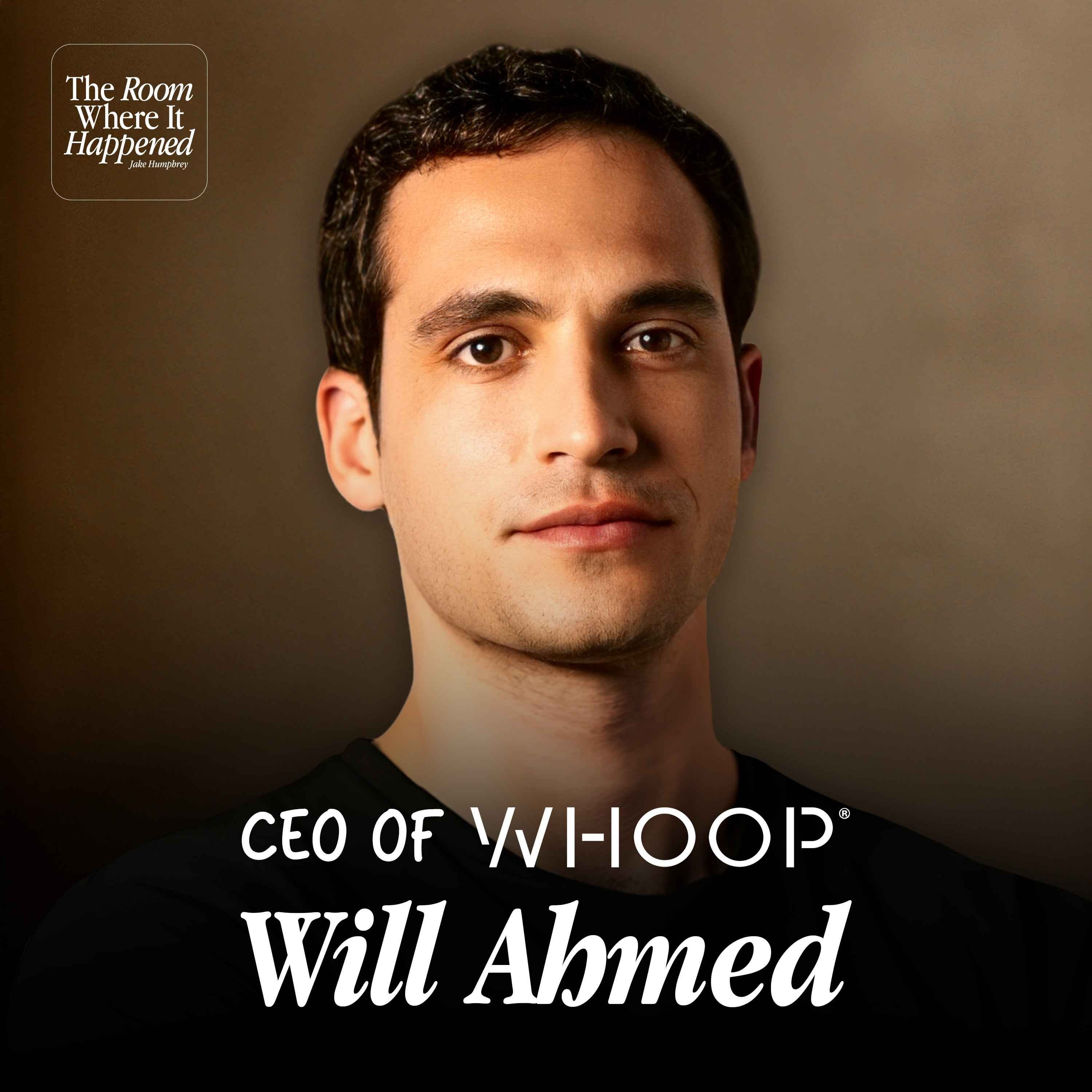
In this episode, Will Ahmed, the founder and CEO of WHOOP, recounts his journey of transforming a college dorm idea into a leading performance technology company recognized by top athletes globally. He shares insights into the challenges he faced, the crucial pivot to a subscription model, and the importance of authenticity and resilience in building a successful brand.
Written by AI. May contain mistakes.

Get the gist, explore an idea or ask about something said.
 Claude
On High Performance Business, what are the key points of this episode?
Searching your listeningAutomatic transcript. May contain errors.
0:00You are just inevitably going to face rejection and conflict and a lot of challenges if you're trying to create something that doesn't exist. I faced more rejection in the first 12 months of starting Whoop than I had in my entire life up to that point. Today we're joined by Will Ahmed, founder and CEO of Whoop, the performance wearable trusted by the world's top athletes from LeBron James to Rory McIlroy. Will built Whoop from a Harvard dorm room into one of the most credible names in health technology and this is a journey defined by resilience, by grit and by belief in his core idea. Today he's going to discuss how he convinced sceptical investors to bet on him at 24 years old, how Nike made a critical mistake that opened the golden opportunity for Whoop, and crucially, what the future of wearable tech looks like.
0:51This is The Room Where It Happened, first-hand accounts from behind closed doors in business to better understand the world today and lessons to improve your work tomorrow. Brought to you by IFS, this is The Room Where It Happened with Will Ahmed.
1:10Well, I was thinking about this, and the first room that came to mind was literally my dorm room some 13 years ago when I was thinking of starting Whoop. And I can kind of remember it like it was yesterday. Picture a college dorm room. You've got papers scattered about. and I'm looking down at this desk and I've got a physiology paper, which was like a 70-page paper that I wrote on physiology and what you could measure about the human body. And I've got this business plan to my right, which was like an 80-page document that a 22-year-old myself maps out how you're going to build a business around building technology to understand physiology.
1:53and I'm sitting there asking myself, am I going to do this? How much of writing about the idea of building a company was a thought experiment versus a career choice? I was 22 years old when I was making this decision to start Whoop, but I think some of the lessons I reflect on then apply to really any age, which is how do you know you want to take a leap? How do you know you want to do something that maybe a lot of people in your life don't recommend? What gives you the courage to do it? So I totally understand the paper about physiology, right? Because you were a university student, that's what they do.
2:37The 80-page business plan is something that I think very few students at the same time as doing a degree are thinking about. Now, can you take me also back to the moment where you wrote the first word of that 80-page business plan? Because that, I think, is the biggest leap of all, actually thinking, maybe I could turn an idea into a business. Yeah, there was this sequential process where it started with me being a college athlete, playing squash and training all the time. And I'd kind of always grown up interested in sports and exercise or like a fan of sports and exercise. And I was someone who used to overtrain.
3:15And so that got me interested in what I could measure about my own body. But as a consequence of overtraining, I then wanted to look into what is the physiology underneath all of this. And so that then led me to doing the physiology research. And as I did the physiology research, and mind you, at this point, I had no interest in starting a company. This was just my own curiosity. And as I started doing the physiology research, I really started to understand how antiquated a lot of technology was. and particularly medical technology. There weren't instruments that were readily available, inexpensive, accurate, that could measure the human body.
3:54And as I went deeper looking at physiology, I started to understand recovery and sleep and stress and all of these different important concepts, I think, for one's health. And it got me really thinking about, well, shouldn't you be able to measure the human body? And again, this is 13 years ago, But I was watching computers, so to speak, go from being on your desk to on your lap to in your pocket with the smartphone, right? And then it seems sort of inevitably that they would eventually end up on your body. And could that leap from in your pocket to on your body be also tied to improving people's performance or health?
4:36I thought it could be. And so that led me to then figuring out, okay, well, if I had this idea, which I now do, how do you translate that into a business? And so I figured out a way to take a business school class at MIT where the premise was you come in with an idea and you come out with a business class. At the same time as studying for other things? Yeah, I just took it as another class at Harvard, but it was at MIT. if you can just take a couple of seconds to subscribe then of course you can get each episode directly to your inbox and honestly for you to subscribe it makes such a difference to our show it means we can grow and it means we can attract more incredible guests like george heaton rory sutherland or richard branson to come and join us what stops most people in their tracks is the actual business conversation i read something recently saying that when you when most people get to the of their lives, they can look back and see a business that changed the world and think, I had that idea.
5:33And basically what that was saying is that the easy part actually is the idea. Almost the easy part is to go, oh, maybe technology can end up on our body somewhere. The hard thing is then going, hold on, hiring staff, going through seed rounds, valuing a business, having the bravery to leap and have a go at this thing. And so few people have people around them that will encourage them. Almost everyone has people around them that say, well, well, that's not a very sensible idea. You should take your degree and get a job, and then you're guaranteed a salary. So I'm interested in that leap moment for you.
6:03You got the 80 pages. When did you make the decision, okay, this is going to happen now? Yeah, it was fall of 2011. I was probably 21 years older. I just turned 22. It was my senior year at Harvard. And again, back to that room we were talking about in my dorm room, I had done what I think a lot of people do when they're trying to figure out what they want in life. And that was I asked everyone in my life. Now, there's a couple problems with asking a lot of people a question about taking a leap. One is you might be asking for directions from people who haven't gone where you're going, right, which in itself is problematic.
6:48The other is that I do think it's a deeply personal question, which is to say you need to go inwards to answer it. I have this sort of principle, which is that a lot of life is figuring out what you want and then figuring out how to get what you want. And the process of figuring out what you want is actually a process of going inwards, but a lot of people go outwards. and the process of getting what you want, you need to go outwards and go meet people and get out there and get rejected and all these things, whereas a lot of people become insular. And there's a little bit of this paradox where people are doing sort of the opposite of what they need to do in the process of trying to know what they want and then get what they want.
7:32And so that moment for me as a 22-year-old, I really had to ask myself, what is it that I feel? What is it that I want? And there's signs. Like one sign is that it was the thing that I would think about whenever I was sort of quiet. You know, what do you think about when you're looking at a cab or you're in the shower or right before you go to bed? Like for me, it was thinking about this idea. Like I just kept coming back to this problem. It was a problem that my brain wanted to chase. And I think a lot of people have these sort of things that come to them in quiet moments. but maybe they ignore it or maybe they're on their phone and so they don't even notice it.
8:12And I do think you want to be perceptive of what's your heart pulling towards, right? And then having some trust in that. And then, of course, once you make that leap and say, okay, I'm going to do this thing that's counterintuitive but feels right to me, then you have to face this whole new challenge of getting out there and getting rejected and having your idea really get batted around and face a fair amount of criticism. Let me talk about this LinkedIn post that I read from you. You were sort of defining the qualities you look for when hiring, building a business. And I have this belief that every business is a recruitment business, regardless of what you do, because if you get your recruitment wrong, then it doesn't matter what your product is, your business fails.
8:58That's well said. And you spoke about intensity, humility, ambition, grit, and a team-first mentality. Can I just pick up a few of those for a moment? Yeah. Let's begin with grit, right? Because you've already said that in some ways the hardest part of this journey was when you finally committed to it and then you had to take it from in here and go out there. Yeah. And the world was telling you this isn't going to happen and you were getting knocked back. Would you take us into some of those knockbacks, which for so many people is the time they go, oh, it wasn't meant to be. I won't bother with my grand ambition for my life.
9:35I'll just go and do the thing that everyone told me I should have done in the first place. Well, building a business or going out on your own, so to speak, to create something that doesn't exist in the world, I think requires an enormous amount of resilience. you are just inevitably going to face rejection and conflict and a lot of challenges if you're trying to create something that doesn't exist and I faced more rejection in the first 12 months of starting loop than I had in my entire life up to that point and so it was really a quite a painful time, you know, and in some ways I felt like I was growing up kind of quickly and trying to figure out who I was really quickly.
10:23And that's a very, in hindsight, healthy experience. It doesn't feel like when you're in it. Like when you're in it, you feel this enormous sense of anguish and pain and inner turmoil. And we can come back to maybe good ways to cope with that. But you really have to build a certain sense of grit and keep picking yourself back up and keep trying to meet the next person and solve the next challenge. It's not easy. It's not for the faint of heart. There's an element of becoming an entrepreneur where you may find out very quickly you're not an entrepreneur just because of that period of getting your pain threshold up, so to speak.
11:13And in some ways, it's also pushing your ego down, right? Your ego doesn't want to be rejected all the time. But you kind of learn to embrace it. You learn to accept it. you learn to say, okay, well, I'm doing something that doesn't exist. If it was obvious to everyone, it probably would exist. I just have to keep going and keep finding the right people. I think that people have also got resilience wrong because they think, well, if I'm resilient, then life's easy. The truth about resilience is that resilience doesn't feel very nice because you're still having to do stuff that is painful and is difficult and is hard.
11:49But like you, I think that it is the font of all success in life because in the hundreds of conversations I've had on podcasts, resilience beats talent every single time. It doesn't matter how talented you are, if you have no resilience and you get knocked back and you stop doing what you're doing, then suddenly your talent is irrelevant. Yeah. Right? So you said that you now feel that it is, that period of knockbacks and setbacks was good for you. And I think understanding the difference between what's hard for you and bad for you are two different things. It was probably hard for you, but it wasn't necessarily bad for you, right?
12:19That's a great way to describe it. Would you take us to one of those moments and share with us what happened and why it hurt and how you kept on moving forward? Well, I mean, in those early days, it was very hard to raise capital. And I was learning how to fundraise, which turns out to be something of a skill in its own right. So if you're listening to this and you're saying, oh, I'm not good at raising capital. Well, know that that also takes reps like anything else and learning how to position your story and how to position yourself and how to describe what you're going to do with capital. And is storytelling the biggest secret to raising capital?
12:55I think it's a lot of it. I think you want to also demonstrate some level of credibility and confidence and integrity in how you're building something. But I think storytelling is a big piece of it. Also to say, I was trying to raise$400 ,000. Now today, whoops raised over$400 million. dollars. And yet that 400 grand was as hard as, you know, the last 200 million, probably harder, you know. And so I just say that because I think it's important for people to hear that any amount of capital that you raise at any stage can be very difficult. And so, you know, there's just this period of getting rejected over and over again by investors.
13:46And what reasons were they giving? Well, there's the reasons they were giving, and then there's the reasons they were actually rejecting me. And so those might be different things. I think that... Okay, why do you think they were really rejecting you? I think it was because of me. Like, I was a 22-year-old talking about building an incredibly complex business at the intersection of hardware, software, design, and medicine. and I was not an engineer or a computer scientist or a designer or a doctor. And at the same time, there were rumors that Nike was entering the market, Apple was entering the market, Microsoft was entering the market.
14:30So you had these like giant companies coming into the space. And I was still figuring out the exact story I was telling. And of course, I was still figuring out how I was actually going to do it. And so I guess I recognize why. faced a fair amount of rejection. But I think the thing that people who did bet on me or did bet on Whoop at the time got right is they saw someone who was going to go the extra mile to figure it out. Like, if there was one thing I definitely was, it was committed. I was not going to bail on this idea. Like, I was all in. I love that phrase. So the first time I heard that phrase was when we you interviewed Steven Gerrard, the former Liverpool captain for the High Performance podcast, and he spoke about being all in.
15:18What did all in look like for you then? And actually, if we fast forward over a decade, what does all in look like for you now as a father? Well, there were different periods of my life, just to state the obvious. I was 22 years old. pretty much every waking minute I was spending was figuring out how to build this company and solve this problem. And so, you know, that's an amazing luxury that you can have as a very young person. I think often young people are told, oh, go get experience and then come back to starting a company and it'll be less risky. Risk is this sort of fascinating thing that I don't think is that well understood.
16:01But you might actually argue it's riskier to do it when you're 35 or 45 and you've got a family support, right? Even though now you've got more experience, there's different type of risk that comes with now building a business. What do you think we don't understand about risk? There's the risk of the venture itself. There's the risk to your sort of soul and compass of not doing what you're supposed to do. And there's the risk of how it affects your career or your overall journey, right? And most people focus just on the first form of risk, which is, okay, Jake has an idea. What's the risk of that failing?
16:46But what's also the risk to you if this is the thing that you are supposed to do and you don't take it on? How are you going to think about that in 20, 30, 40, 50 years? You're going to have a lot of regret, right? And then what's also the risk of you do it? and maybe to the first point, you know, about the risk of the business, maybe it doesn't go as perfectly as it's supposed to. But along the way, you meet certain people and you learn things about yourself and you grow at a pace that you weren't growing at over here. All of a sudden, that's not looking very risky. That's looking like that was great.
17:21And maybe the, you know, the first investor that you raised money from, even though this venture doesn't work out, they back you on the next thing and now you're off. I mean, the amazing thing about entrepreneurship is how many great, great entrepreneurs had one, two, three failures before they got to their home run. And so that's what I mean about risk. I don't think it's that well understood. There's another part of your post that I want to talk about. Team first mentality. Because a lot of the conversation so far is about you in your room, you coming up with a business plan, you walking into rooms.
17:56the reason why you didn't get the early investment because you were the 22-year-old trying to take on the giants. But you now have a team-first mentality at Whoop. So can we talk about the importance, as we've discussed every business as a recruitment business, the importance of getting the right people around you? Maybe less so now with the size you are, but in those early days, how do you choose to share this with the first person that you bring on board on the journey? Well, I had to adopt a team-first mentality from the earliest days because I, in many ways, was totally unqualified to build the vision that I had.
18:30It was really just doing all of it in parallel. And I think there's more organized ways to do it, just to say it. You know, a more organized way to do it would say, it's you and your founding team, then you all go raise some capital, then you go out and recruit a bunch of people and you hire those people and, you know, you can pay them appropriate salaries and give them some equity. That would be sort of a natural way to start a business. I was figuring out so much on the fly that I was doing all of it in parallel. And I had people say they were going to work with me who bailed at a very early stage in the business.
19:08I fortunately got two very reliable, well, I would actually say three very reliable early founding team members. And one was a phenomenal computer scientist and mathematician. One was a phenomenal mechanical engineer who's fortunately still with me. And the other was an excellent designer who's also fortunately still with me. And so that kind of early, the four of us were able to create a vision for, here's a prototype of a thing that can measure heart rate and heart rate variability from the wrist. It looks ridiculous and it's ugly, but it can do it. Here's some algorithms that demonstrate that this is collecting very accurate data.
19:53And here's a design for what this ugly thing will one day become and the interface that'll go with it and why we'll have millions of people wearing this on their bodies all the time. But the people that you hired, those three brilliant early hires, they brought some hard skills to the business. You know, the ability to design, to code, to create, to turn your vision into a reality. But it was still very much on you, really, the sort of creative vision of this. And I think one of your earliest, most impressive decisions was not to go, right, let's get this out to everyone across the world as quickly as possible and make as much money today as possible.
20:27It was to lean into the niche of working with elite sports people to give you data, to give you information, to give you credibility before you went sort of global, if you like. How did that decision come about? Because I think what that requires is something else, which is a vital skill in business, which is patience. And so few founders have patience because they have so much pressure from the money that they've taken and the desire to make this thing happen. I wanted to work with professional athletes, I think for two reasons. The first is that I felt professional athletes most needed the data that we were going to be collecting, which is to say that professional athletes, you know, make millions of dollars a year based on how they're recovering and training and performing.
21:09And here we were developing the first technology to measure recovery, to measure sleep, to measure strain. And so I thought that that athlete audience was the right audience to really love the product. The second reason, though, for working with these elite athletes was that I thought if we could get the world's best athletes to wear Whoop, we could create a brand around performance. And that would one day allow us to go to the consumer market and build a much larger business. I grew up always very inspired by Nike as a company and this idea that you could be wearing a white cotton t-shirt versus a white cotton t-shirt with a swoosh.
21:53And it's the same t-shirt, but one makes you feel differently. Like, what is that? Well, that's a brand. That's a company that stands for something. And when I looked at the medical technology space or the health monitoring space, I was amazed by the lack of branding. In fact, it was kind of the opposite of the phenomenon I just described at the t-shirt where a swoosh made you feel good. In many cases, medical technology made you feel bad. It was really stigmatized. If you were wearing a health monitor, you know, 10 years ago, it probably signaled something was wrong with you. You know, and that's not aspirational.
22:34You're totally right. I hadn't thought about that. As soon as you saw someone wearing it, you're like, what's wrong? Yeah. So the other hope in creating medical-grade technology for pro athletes was that we could make health monitoring aspirational. And when you looked at the other businesses that were in a similar space and they weren't taking this approach that you wanted of building a brand, a positive brand around your wellness, did that not make you think, oh, maybe these guys are already going, so maybe I should change tack? How did you maintain the belief that your approach was the right approach?
23:11There was a bit of a herd mentality amongst the other wearable devices in the market where they all shared similar characteristics. They all were very focused on step monitoring versus, say, physiological monitoring. So that was sort of a technology fork. If you look at all the sports apparel brands, for example, they were very what I would call rudimentary in their approach of how they were going to measure the human body. and remarkably you know nike built a product that was a wearable device and yet none of their athletes were wearing it right and i thought that was such a mismatch between the brand and the product development yeah another thing that they all shared is most of them had a screen on it uh and the challenge with having a screen on a wrist-worn device is then you're a watch and if you're a watch you then compete with all the other watches and if you're really trying to develop a physiological monitoring tool you want it to be on people's bodies all the time and if you're going to create a competitor in all the watches then people are going to have to choose between your wearable and watches and so that was another one where i was like i don't think that's the right way to go you know and and so we approached all these things from from sort of first principles thinking.
24:30And fortunately, that took us in a sort of different direction than I think a lot of the products that now looking back on things are, you know, no longer in the market because they failed. You've already said that, you know, when you went in and met potential investors, one of the things they said was like, other people, big businesses are doing this thing. And Nike, obviously, was one of the most famous, which famously also ended up not being something that flew was there a moment where you saw things not working out maybe at nike thought actually this is this is good for us this can help us to be honest i knew the product would fail almost immediately and it was because they didn't have their professional athletes wearing it here they had lebron james and serena williams and uh the very best athletes at that period of time.
25:23This is like 2014, 15. And yet none of those athletes were wearing it. And I thought that was such a flaw in their product strategy, that it wasn't a tool for those athletes. Because if it was a tool for those athletes, they then could have told the story to the mass market. They could have gotten consumers then to pair data with these athletes. And it was right there for them, because they had them all under contract. Did it also tell you that what they'd come up with wasn't the right thing because even if it wasn't part of their strategy, if it was brilliant, the athletes would have gone, well, I want that in my life, please.
25:57Yeah, I need that. That's going to make me better. Yeah, the fact that they didn't have that made me realize that they were going to miss the market on this one. And seeing where other people get it wrong also obviously informs you the direction you should be going, I think. Yeah, and it made us feel even stronger about our positioning in the sense that we really wanted to create a product that they felt they were going to get value from, that they wanted to wear. So if you go back to the beginning when you were working with a few select athletes, kind of quietly getting the data, using that to give credibility to your business, you now do deals with, I think Cristiano Ronaldo is probably the one that everybody knows Whoop for.
26:38How did you make the decision to partner with, arguably, the biggest sports star on the planet? Just to go back, we always wanted, again, to have this athletic base and this high-performance base on Whoop because it would make health monitoring aspirational. And then we also wanted it to be authentic, which is to say we're not going to someone and handing them a check and saying you need to wear this product and you need to read this script. We wanted to find high-profile athletes, probably the best of their sport, who were organically wearing Whoop. And so if you look at all the partnerships we have, Cristiano Ronaldo and Patrick Mahomes and Rory McIlroy and Marina Sabalenka and Nelly Korda, you go down this sort of remarkable list of high performers.
27:38These were people who were wearing Whoop for a year or two before we had any relationship with them. I mean, Cristiano was wearing Whoop every day for two years before I ever met him or spoke to him. And we had no relationship with him. And just to say it, that was quite unusual because, you know, people were paying for everything else on his body, so to speak. And he was paying you to have Whoop on his body. Yeah, he was paying, I guess, our monthly subscription. But he, yeah, we got to meet and I went to see him in Riyadh. And this would have been probably early 2024. And we spent, you know, probably 90 minutes together just talking about life and performance and, you know, what he used Whoop for and where he wanted to go with his career and how he thought about partnerships and how I thought about partnerships.
28:35And it was a really lovely conversation. And obviously, I knew who Cristiano Ronaldo was, as does everyone. I didn't know him to that depth. Like, I kind of viewed him as an incredibly talented footballer, one of the best of all time, if not the best, you know, something of a playboy sort of superstar, right? And what I heard in that conversation was a sports scientist. This was a guy who was deeply obsessed with his body and deeply obsessed with measuring things about his body. He had a discipline level that was unmatched as far as I was concerned. He would talk about his routine in great detail.
29:21He had very specific questions about the Whoop product and about recovery. And so I thought to myself, okay, well, here's also a new story to tell. Yes, this may be the most followed man in the world, but have other people heard him talk about health and performance like this? And by the way, that could be good for him to talk about the same way it could be good for Whoop to talk about. And so then again, you have this sort of feeling of an authentic relationship, and we marched forwards. And look, we know that there are some people that are the greatest in the world because of God-given talent, and he certainly has a lot of that.
29:59but it's interesting to hear how much of what he's achieved is is through the decisions he makes daily those kind of world-class basics if you like those little habits those tiny actions whether was there anything that he said that he likes to do or the way that he lives that you've adopted in your own life and thought yeah that's actually that's a cool that's a cool approach to life there's a discipline level which very few people that i meet but certainly cristiano fits in this category, there's a discipline level which is so exceptionally high that it makes you just ask, if you want something in life, what are you willing to give up for it?
30:38This is a man who wanted to be the best footballer of all time. And what that means is that he's not just competing for three or four hours a day on the pitch. He's competing 24-7. He's focused on his sleep. He's focused on his cold plunge and his sauna. He's focused on his mindset. He's focused on how he can do all these things and yet still be a father and a loving partner. And so it makes you ask yourself, how far am I willing to go? How can I keep ratcheting up that level of discipline? And I do believe with people, again, there's very few athletes to supply us to. But I do believe with Cristiano, you could give that talent to a lot of people in the world.
31:30And very few would end up being Cristiano. And it's because of that work ethic that burns inside. We talked before about, you know, is it talent or is it grit or is it work ethic? And I do think if you combine both of those, that's where you end up with really, really unique results. Am I right in saying that relatively early on, there was a point where you had to pivot to a subscription model? Otherwise, you were going to struggle financially. You think the business might not have worked, right? Totally. That was in 2017 to 2018. So the company was five, six years old. We had built pretty compelling technology.
32:17We had done what you and I just described earlier of building this foundation with professional athletes.
32:26and now we're going to the consumer market and this was going to be sort of the payday moment, right? And so we launched Whoop as a$500 piece of hardware and we saw really two things over the next 12 months. The first is that the people who bought Whoop, the consumers who bought it, would wear it for a long time. And that was actually a pretty big deal because if you looked at the history of wearable technology, it was plagued with drop-off rates and a lack of retention. So the fact that people would put this on their body and not take it off, that was like a big win. We had a different problem, though, which is the second thing we observed, and that was that not that many people were buying it.
33:06So, you know, we had a sales problem. Was that overwhelming for you? Well, it was painful because, again, you sort of think, oh, if I do all these things, then we're going to be successful. And when you're starting a company, you want to be careful with how many things you innovate on. I didn't think we needed to innovate around the business model. You kind of want to pick your lane of risk and then de-risk other areas. I thought the risk for Whoop was going to be all around technology development and brand building and marketing. I didn't think the risk was going to be how we sold the product.
33:43Like, do we need to take on risk here? Do we have to come up with something here? And so we had this bet the business moment where we said, we've got totally the wrong business model. It was a bit of a light switch moment from a growth standpoint. You know, we went from selling tens to hundreds to over time thousands a day. There are a lot of elements of a business where you realize that success also creates problems. Because we were now a subscription business, which means you get less money up front. but more money later actually the faster you sell your product the faster you run out of money it's a little counterintuitive but all of a sudden we had this sort of rocket ship that was taking off and we were like leaking fuel right because uh our business model now meant we were consuming a lot of cash because we're making a ton of inventory people are signing up people wouldn't think that they would just think the more you sell the more money you make but you're oh my god yeah and then it can take a very long time to look really successful overnight look final question um which is really about purpose you know your purpose as a young guy was to build this business your purpose when you went and met these um investment groups was to make the business successful.
35:07It now is. You've won. You can't ever reverse that. You've done that. The valuation of over$3 billion for Whoop is something that so few entrepreneurs will never be able to say they achieved. So what keeps your energy? What does the future look like for you personally? Well, I wake up every day with this mindset of service, and I'm on this mission to unlock human performance and health span for humanity. And that gives me a lot of energy. And when you make a mission about something much bigger than yourself, I think it creates a sort of sense of gratitude and serotonin, which also, if you're a hard-driving entrepreneur who lives on dopamine all day is a good balanced way for you to approach the world.
35:59And look, I think it's a reinforcing mission, which is to say that as I and the Whoop team and, you know, as we get more successful at delivering value against this mission, we get more feedback from our members of how the product's changing and improving their lives. And when you get a message that's like subject line whoop saved my life and it's this long story about whoop data and going to the er and all of a sudden realizing they needed surgery because of their whoop data and thank you so much and or you know a message from someone who lost 100 pounds because they they used your product or quit alcohol or quit smoking or because they realized you know the effect it was having on their bodies or you know just so on and so forth and we get these testimonials fortunately every day, all of a sudden that becomes like a wind at your back.
36:52You know, when I was 25, it was like, I was in a headwind. There were no testimonials. It was rejection every day. Now it's like you wake up to a sort of, you know, feeling of like, there's a wind at your back because you've got a customer base that's growing and you've got, and you've got all these testimonials. So, you know, For me, it's being grounded in that mission and having it, you know, focus on the bigger mission and the millions of people that we're trying to help. And how do you make sure that you get it right so that in 30 years' time, your wife and kids don't say, look, Will, you wanted to help the world and look after the world.
37:31You didn't look after us. How do you get that right? Well, it's topical because I've got a seven-month-old at home. and so I started a family with my wife. And look, I believe in work-life harmony, which is a little different than work-life balance. I feel like work-life balance sort of implies if you spend six hours here, you need to spend six hours here. Whereas harmony sort of acknowledges that there's going to be times where your attention is in one place and then there's times where your attention is going to be in another. And those don't have to be evenly balanced over the course of a day or a week or a month.
38:07but in the long run should feel harmonious. And so that's what I've tried to develop with Whoop and my family. And look, the other reality is you have to be selective in the other things that you're doing, you know, and make hard choices about where do you really want to allocate your time back to that point of discipline? Like, what are the things that really matter? Thank you so much. You thought fundraising was hard in your 20s. Becoming a dad is infinitely more difficult. Yeah, I'm learning that as well. Absolutely. It was a great conversation. It's nice to see you again. Thank you, Jake. Thanks a lot.
38:42Cheers, man. Thank you. I knew as soon as I saw what Nike were doing, it wasn't going to work. I mean, I thought when Will said that, it was so interesting. And although he didn't tell us how relieved he was, I bet he was relieved. Because if you think about it, there's this guy who's a graduate and he's managed to borrow a few hundred thousand dollars and he's creating this thing, probably wasn't even called Whoop at the time, this new little bit of technology, and it was going to change the world. The reality was as soon as Nike said they were doing something similar, if they'd have just got their strategy right, Woot would never have happened.
39:13Will would not be sitting here now. Will would not be the guy who created a business that's been valued at over$3 billion. And when we spoke about him doing his degree and all of the other people who are coming up with amazing ideas at Harvard, and he said, I don't think another one of them even made it. So not only is Woot the one that made it, If Nike had got it right, Whoop still would never have made it. And I think it's an important reminder that we, of course, we lord and we lionize these amazing, successful business stories like Will and like Whoop. But the reality is it only takes one tiny thing to go in a slightly different direction.
39:52And Will is not celebrated. Whoop is never purchased by anybody. And those are the margins. Those are the fine lines that we're talking about when we have a conversation about business. And actually, in some ways, it should be freeing. because it means that all that people like Will can do is focus on the product, keep the customer at the heart of what they're trying to do, want to change the world for the better, be all in and give it everything, every single moment of the day. That's all you can do. And it might mean that one day you could be sitting in that chair that Will was in just now. But it also might mean that if one thing goes slightly differently, you might never be in that chair.
40:27And that, I'm afraid, is out of your control and out of my control. and that's where luck enters the conversation. I hope you enjoyed that fascinating insight into Will Ahmed and the incredible business that he's built at Whoop.
As founder and CEO of WHOOP, Will Ahmed turned a college dorm room idea into one of the most influential performance technology companies in the world.
In this episode, Will shares the leap of faith that started it all, the early rejections that tested his resolve, and the pivotal decision to pivot WHOOP from a hardware company to a subscription model, transforming its future.
He also reveals how authentic partnerships, a growth mindset, and a relentless focus on mission helped turn setbacks into breakthroughs and build a brand trusted by elite athletes and everyday users alike.
It’s a story of conviction, adaptation, and the discipline required to build something meaningful from the ground up.
Partners:
IFS - award-winning Asset & Service Management software
👉 Reimagine your operations at: https://highpfrmc.com/ifs-au
Heights 👉 Join Jake in maintaining your energy, with Vitals. Get 20% off with code Room20: https://highpfrmc.com/heights-vitals-au
Hosted on Acast. See acast.com/privacy for more information.


