
 Ask ChatGPT



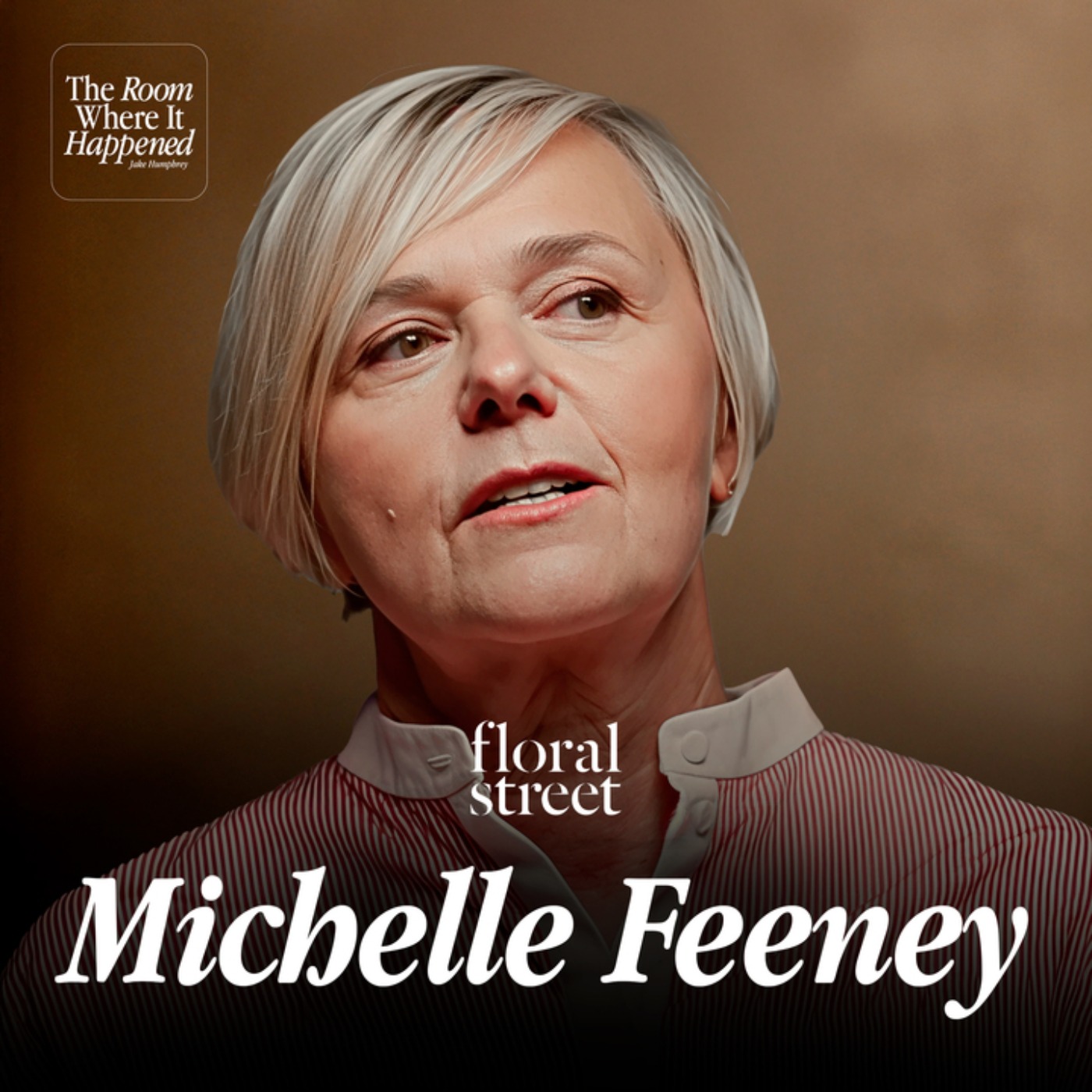
In this episode of "The Room Where It Happened," host Jake Humphrey interviews Michelle Feeney, founder of Floral Street, a modern and sustainable fragrance brand. Michelle shares her transformative journey from a successful career in the beauty industry, including roles at MAC Cosmetics and Estée Lauder, to starting her own brand at the age of 51. The conversation revolves around her decision-making process, the challenges she faced, and the lessons learned along the way.
Written by AI. May contain mistakes.

Get the gist, explore an idea or ask about something said.
 Claude
On High Performance Business, what are the key points of this episode?
Searching your listeningAutomatic transcript. May contain errors.
0:01What if I told you that the most disruptive thing a founder could do was actually nothing. Look, we're told that startups are built in co-working spaces by 20-somethings, moving at lightning speed. We picture hoodie-wearing disruptors, chasing unicorns, raising capital, scaling at all costs. But today's guest, Michelle Feeney, a powerhouse in the beauty industry, did the total opposite. In her 50s, she walked away from a 20-year career that included growing MAC cosmetics, being headhunted by Estée Lauder, to becoming CEO of Saint-Tropez. and she walked away to do nothing. She took a year-long sabbatical and actually in the quiet calm at her kitchen table, she created one of the most talked about beauty brands in the world today.
0:51We're about to go into that room. We're about to find out about her story and she answers a crucial question. In a world moving at a lightning fast pace, how do you stop being fast and start being different? This is The Room Where It Happened, brought to you by IFS. And today, we bring you the Floral Street founder, Michelle Feeney.
1:20So, Michelle, of all the rooms you've been in in your life, why have you chosen this particular room for us? I think it was because it's so transformational. and I was in my 50s. So it's sort of a condensing of all the rooms I've been in, which could actually fill an apartment building. But it was where I actually sort of grounded my idea and thought, I'm going to do this for myself. So before we talk about the idea and the process of what came next, can you describe the room to us? It was the first house that my husband and I bought in St. John's Wood. And it had been there since 1500 and something.
2:03And so it was, it had a lot, a lot of history in the room, wooden floors, white walls, big table, where I love to cook and I love to share family times. And it felt cosy and warm and very, very old English. You know, you could imagine people dressed in sort of Elizabethan almost in there. And just grounding, really grounding. And it's where I took my gap year. It's also I just sat around that table where lots of love went into it. Our children, my mum, my husband's mum and dad all around that table. And I decided this is where I was going to do it for myself. And why did the history of the house and the history of the table and, And, you know, I've got kids, they're still living at home.
2:55And sometimes Harriet and I, we talk about the days when we will miss the sound and the noise of the kids. And you're sort of sitting in this room, I guess, where like these ghosts are floating around you, right, of your past and all of those thoughts. Why was that so significant when it came to this big move that you made? People have been there before. You know, you're not the only one going through these decision making all these times. I just think it's become more and more important to me in times when things are challenging, in times when you can't make a decision, somebody's been there before.
3:26Yeah. You know? I can totally relate to that. I love history for that exact reason. I think you can be overwhelmed with modern life and then you watch something from 150 years ago or whatever or even recent history or ancient history and you're like, well, this doesn't matter. No, exactly. It can be the worst decision I ever make. Millions of awful decisions have been made by people that carried on living, right? Exactly, exactly. And no one even remembers. Exactly, exactly. So Floral Street. Yeah. Before we talk about it, how would you describe it a sentence to people listening to this, what Floral Street is?
3:58It's an independent, modern, sustainable fragrance brand. So I don't believe that that comes in your head in a kind of light bulb moment, sitting at that ancient table in that beautiful room, right? I'm assuming leading up to this day, this has been swimming around in your head for a while, has it? Not very long, actually. No, I mean, the idea came when I was in Floral Street, the street in Covent Garden, and I literally looked up and I thought that'd be a great name for a fragrance brand. somebody in my industry sent me a package from another fragrance company actually and I had to undo the bow of the beautiful bag there was another bow there was a box um inside that was more packaging and I took the candle out and looked at all this packaging in said room and thought this is what I'm going to do.
4:55I'm going to make a statement to my industry to make some change. So I need a personal sort of catalyst to do things. So if I can see something needs changing, if I can see what message can I help bring to light with that, what difference will it make? And if you look at all those sort of roles I've had within brands, they've always had an edge to them they've always been slightly different or a charity which which I've loved working with um but this was like a ha ha moment then I started to look at what the industry wasn't doing and then it consolidated and I started with mood boards at that table yeah at that table was there a moment where you just sort of thought right it might not be for a big beauty brand but I'm going to make this happen and you sort of committed mentally that you were going to drive this forwards and I'd actually pitched it to a bigger company and they were they what I call P &L'd it to death so basically done all the math on it and thought it would be too much investment and didn't want to do it and so I took it on board and I'm a visual person I'm a creative person.
6:16If I can see it, I have to see it. And if I see it, I think I can make it happen. It's quite interesting that because I, believe it or not, people don't really believe this, but I think, you know, the self-belief, I seem outwardly, you know, I do believe in myself as a person, but, you know, sometimes that self-belief isn't as strong as you need it to be. And there's a few people in my life that have been that catalyst person. And for this, there was two people. There was a friend stroke colleague in New York who really believed in this, called Paul Austin. And then there was Selma Tertzic, who had worked for me.
6:58And she said, I found you a product development person, and you are going to do this. so once I had been pushed ahead by these two people saying you are going to do this I sat at the table with product development person and we started and then there was no going back we've heard some amazing stories on the show so far so if you want to learn from the likes of Sir Richard Branson, Rory Sutherland or the leaders of brands like Five Guys and Ikea then please follow the show wherever you watch it or listen to it and you'll get the very latest episodes and updates right back to michelle so how big was the risk then that you were taking to create floral street i always ask myself what's the worst that can happen in any decision making and if i can live with that then then i jump the money you know we have invested quite a lot of our own money hard-earned money but almost my professional reputation as somebody who's had success was more of a risk than the money because I knew I know it sounds but I can always earn some more money no matter what you know no matter what I don't mind you know working doing anything I can always have money but that people looked up to me for being successful and the thought of not being as successful as other people perceived me being was more of a risk or lessing other people down who I had employed or I'd got to jump in with me that was that was a big consideration and you felt that sitting at that kitchen table I did we have this image though of entrepreneurs and business owners and founders of being the one that drives everybody else.
8:53I think it's really interesting that you had to, first of all, be given a little bit of a kick up the behind by somebody else. And the image we always have is I did it on my own. I went for it. I led from the front from minute one. The power of other people then is very important. Really important. And I don't think nobody does anything alone. I need other people. I need validation. I need to sit around a table and debate things to make them the best they can be and once you have a vision you need other people to help fill in the gaps of that to make it reality you know so once you'd decided this was going to happen with a bit of help from your friends yeah what is then the first thing that you do because I think for a lot of people that is kind of like some sort of dark art like what's the first step i put together um the idea i had for the brand the values i wanted the brand to have what were they female led i wanted to help you know women become experts in fragrance i'd worked in a lot of other brands like mac for instance that helped the consumer become an expert in makeup and i felt that fragrance was all this mystical thing with a big commercial, with a celebrity.
10:12And I just thought, you know, let's turn this on its head. Let's do it a bit differently. So I put down the values. I wanted it to be sustainable. I wanted the packaging to be sustainable. I want product had to be brilliant. So I drew upon my connections. Again, my village that helps me get things done. but in New York and I got an introduction to one of the top noses in the world I then took my mood boards on the plane and went to see him and he loved what I was proposing to do and then that was the next catalyst till the next stage so it was creating the product and in beauty products my background is product is king product has to be beautiful has to be the best it can be and then once you start getting other people on board you've got your you've got your team you're putting your team together even though they're not sitting around that table and they're not working directly just for you and then I started to learn and when you see other people be inspired by your idea it gives me the next level you know I had no plan literally sort of no plan of how to commercially bring it to right to bear i i just wanted to create something beautiful that i knew that people would respond to um and it started from there and that was it two of us really and then external we got we got somebody that i'd worked with before on a creative level to help you know create the packaging we found a pulp company in the late district that had never created for beauty before and we're like you know knock on the door could you do this with us you know and it's always that pushing that envelope and asking and pushing some doors open and and and pulling the pieces together um that I find so exciting as you can probably tell I love it love your passion and as you're sitting at the table yeah I think it's really interesting that what you didn't do was write out a business plan what you actually did was write out what you wanted to do, how you were going to get there, you had no idea.
12:28And every time I hear anyone talk about business or offer business advice, the first thing they say is, well, what's your business plan? But you didn't do that. No, my husband would probably say, what the hell were you doing? I didn't because I think it can kill, I think it's because another company had killed the idea already by doing that. Look, I don't think anything would get done if everything was a business plan. And was there a point where you called in your husband or you called in your kids or you called in a friend and you kind of sat over coffee at this table and just said, am I mad or am I a genius?
13:02Like what's the situation? I'm probably the first one, but, and not the latter. I just have got the, you know, I've got the husband to do things and challenge myself. And I did, you know, my husband is a businessman and he gave me some really good advice he's like look you know there's always an accountant out there that can help you but there's not always the person with the idea so it's like let's let's build around that i meet a lot of founders and and and you know so-called entrepreneurs at the beginning and they're spending 75 of their time trying to raise money or present to the investors what's going on and this for me was I see the vision I know how to build brands I'm the tortoise not the hare I really believe in doing the best job every day and building and building and building and building and building and that day plus that day plus that day adds up to momentum and in a very fast-paced world I think that's you know it's hard to stick to that but I just could see it I was starting to build it I had my own money that has pluses and minuses because you're really hard on yourself about what you're doing but I sort of thought what's the worst that can happen it doesn't work and I get a job so in a world of people thinking about an exit before they even set up a business in a world of people taking on huge amounts of debt or investment before they even know if their business actually is viable or not, in a world where people want to have an instant success story to stick on their social media and tell the world what a genius they are, you're kind of swimming against the tide here.
14:52You're taking it slowly. You're putting patience ahead of pace. What did that do for you? That patience, that slowness, that calmness? I remember one retailer saying, you've got to manage your own expectations on this that was when I was like no I'm not going to manage my own expectations if I start if you believe in this which I did and I could see that that retailer believed in it big time then you've either got to invest to give us the space we require or I'm going to create it for myself and that's when I actually did decide to have my own store because nobody had the vision that I had about the brand.
15:37And how old are you at this point, if you don't mind me asking? No, I'm 52, 53. Right, so you're a female in her 50s going into these established brands who are telling you, take it slowly, limit your ambitions, and you're going, no, I don't think so. No, I don't think so. I mean, it's inspiring for me, the self-belief, right? But we all know, and you've already alluded to it, not far below self-belief, just underneath if the surface is normally shitloads of doubt, right? Yeah. So how were you managing the doubt at this point? I don't know what it is. I don't know whether it's my background, it's my energy to...
16:11Once I've said it, I have to have it achieved. It's really, you know, maybe it's a bit chippy in some respects, you know.
16:22I think I just wanted to get it done and I started so I want to finish, you know. you know the mastermind questions but I I really wanted to get this done it was for me I've had so much experience so much incredible uh business experience brand experience traveling the world this was me on the line so this was my own it was the only thing I hadn't done was start something from scratch as far as I was concerned and I was going to get this done and self self of doubt, my God, we did the store the night before it was about to launch. I couldn't get out of bed the day before. I was paralysed with fear that nobody could come.
17:09How does it feel now reflecting on that? Yeah, I mean, I haven't reflected on it until this moment again. But, yeah, pretty incredible, really, because seven years on, here we are, we are global. I'm playing against the big boys. I've got an incredible team. and just to get that response from the world really is pretty great. And for my own kids to see, they were part of this from the beginning. They were part of the reason I made it sustainable as well, just looking at young adults and younger than that, really, my daughter was. And the fact that my daughter from age six knew the word recycling, and it was this big, I was listening to them as well to teach me about what I thought we should be doing.
17:56Not me thinking what we should be doing, but sort of what the wider world was missing in that industry and what they would be looking for as they got older, really. How grateful are you for those hours you spent at that kitchen table? Unbelievably grateful and still, you know, we have moved house since then. But it all happens around the time. And then at night, I'd have to clear everything away because we were eating dinner there. So it's... The reality of entrepreneurship. The reality there.
18:27I'm really enjoying Michelle's story so far I love the fact that it feels like it's about defying expectations the fact she had no business plan I mean that flies in the face of everything that we're all told she was also not in a rush she didn't want to surround herself with noise which so many people seem keen to do and this image of her just sitting at a table with an idea and that quiet determination is what is so impressive to me but actually what comes next is also what surprised me the most. And I think it will surprise you as well, because these days, when we talk about founders or hear from founders, we tend to be celebrating speed, ruthlessness, ambition, scale, the grind.
19:03You know, so often we see founders and entrepreneurs who are living in a social media first world and all they want to do is tell us about their success. But Michelle actually sees it differently, which is probably no surprise. And what she's actually about to share, I think challenges some of the modern assumptions about business, about what it actually means to build something and do it with purpose. I think that it's such a great story because you've brought together everything that happened to you over your career, the highs, the lows, the struggles, the doubts that you had, the doubts that other people had.
19:36But I think something that really sets your story apart is that often we think about it's all the things we've done that have equipped us for where we are. But in your case, it was something that you didn't do that equipped you for where you are. It was an entire a year of not working this yes taking a gap year in your early 50s so 51 years old you take a year out michelle nobody does that like well they should i tell you they should especially if you're a woman you bloody well should i was exhausted right i'd worked since i was 15 i'd moved countries i'd had a global job as a single mom i'd had a baby at 41 i then turned a company around and sold it I was absolutely knackered.
20:20And also, I'd had the idea for Floral Street. So I had registered that name in the beauty category around the world, because that's the first thing to securing your idea in a way in our industry. And then I thought, do I really want this? Does the world need any more products? And I thought, I'm going to take a year out and not travel so it was kind of travel inward I'd done so much traveling in my life sounds a bit woo-woo and I literally I didn't want anything to do with the fashion or beauty industry I didn't buy any magazines at the time I just wanted to be I'd never had the opportunity to just simply be was there not a fear that you were going to kind of be left behind or forgotten and about do you not care not really I didn't I thought I've always thought I'll I'll do I I I was I worked in charity I was on um I was a trustee of well-being of women because I thought do I want to actually is that my mission in life uh I was more able to be present um you know for the kids however they were like when are you going back to work because of course that becomes your but I just literally gave myself this space and and I know it's a real luxury for people to be able to do this but I think particularly for women your body's gone through change you if you've if you've had children which not everybody has but if you've had them you've given everything to sort of that you've juggled job and everything what about you and what you need for the next the next phase and what it made me realize is if you don't take a little bit of space first of all you can't think something you can't get clarity and secondarily you might even get ill you know because you're just constantly on the go so this year was me being almost acting like a young adult you know sitting watching box sets you know reading a book in the day um and and getting to know myself as that person and not being defined by a job So that's a really big thing because people were used to introducing me at parties as, you know, this is Michelle from Mac or this is Michelle who's CEO of Saint-Tropez.
22:47And suddenly I was just Michelle Feeney again. So getting to know Michelle Feeney in order to step back to go forward. And who were you? My parents' daughter, you know, who grown up seeing people, you know, My mum's from Ireland in the 50s. An amalgamation of opportunities, of love, challenge, drive, but ultimately a driving force. So I needed to have something to drive. And it couldn't be my children because I was driving them crazy. And were you proud of the person that you found when you stopped and looked inwards? Yeah, I always am actually. You know, people often refer to me as, you know, very straightforward in business and things like that.
23:40I loved working in New York for that reason as well. You could like truly very straightforward about business and life. But yes, I am. Yeah, I'm very proud of who I am now. And what do you now think it did for you? Oh, my goodness. So much space, mental space. Did you have therapy in that year? No, I didn't actually. I went back to doing yoga full-time every day, and that still is a discipline of mine, non-negotiable, I call it. Love that. And I didn't kick back into therapy until a few years ago. Right. So, no, I didn't do therapy. I was really in the moment, spent a lot of time. My husband had bought me a Land Rover Defender, an old one.
24:31Yeah. So a lot of time driving that in the country, really, and just being happy with the window stand, just literally, it sounds, but literally being in the moment and not thinking and being present. And that really helped me know I was ready for the next level and that I didn't want to stop working because that was another consideration. Right. So what did you realise about yourself then that meant you knew it was time to carry on and you still had a big play left? but also when did you know to stop reading the books and driving the defender and going to the yoga classes and chilling out and actually go right now is the now's the time here we go again it was those catalyst people come on michelle we're missing you come on get going get going the world needs this we need a bit of a bit of future and the piles of things that were building up and the kind of the need actually to to create I also didn't like the inequality of not working and not earning I'd never not earned for myself so that work ethic of work and keeps you independent as well it keeps your independence quite strong and I realized in that that year and reflecting i'm a independent you know i'm an independent person in a great relationship with my husband but we are you know we're partners and when you look back because you can obviously learn some of that stuff by still working and by getting older and becoming more experienced and seeing the world what do you think you found in that year that you just would not have found if you hadn't if you hadn't stopped working if you hadn't given yourself that space that you've taken into Floral Street and that perhaps has made all the difference to the business that you run now?
26:19What I did was sort of, I've had a few moments in my life like this. It was like when Mac became a billion dollar brand and I was in a major ballroom at a luncheon and I was at the back of the room and I was looking forward and I was like, it's time to go. And - How did you know? I just thought my work's done here and now it will be part of the share price and then that will make changes to what you've created. But with myself in that, it was just looking at the industry, looking at the world, seeing how I'd spent so much time looking inward in companies and getting really upset about things that shouldn't be upset about.
27:09and it gave me that space to go okay if I'm going to do this I'm coming in at this different level psychologically different level
27:21you know it would have been so easy wouldn't it for Michelle just to do what everyone else in the industry was already doing get her products wrap them in plastic get a well-known celebrity on the campaign and then try and pretend that she's being innovative but as we've heard in the conversation that's not what happened and it's not what she wanted because for Michelle it's clear that building a brand is actually about creating something beautiful but at the same time holding up a mirror to an industry and asking a question that very few people dared to ask which is is any of that stuff really necessary do we need to keep doing the thing that we've always done because while the rest of the beauty world was still chasing what they'd always offered which is basically luxury, Michelle was quietly pushing for something else, like still a luxury product, but one with honesty, with accountability, and the kind of sustainability that isn't being done just because it looks good in a press release, but actually because it really matters.
28:14And coming up now, Michelle shares what it means to make change, and why doing the right thing doesn't mean sacrificing your success. And I want to talk to you about the bravery, actually, of stepping out of business and walking away because I get eternally frustrated when I go on LinkedIn or look on Instagram or listen to business podcasts. You know, there's this, this kind of, this hustle culture that we live in now, this constant need for more, this desire to tell everyone how brilliant you are, push, push, push, work, work, work, graft, graft, graft, sacrifice everything, sacrifice your relationships.
28:52One day it'll all pay off. You're talking here and you're sitting here as a hugely successful woman telling us the total opposite so how do you feel when you see the way that business entrepreneurship is is talked about well first of all i think the label is an issue you know i'll tell you something most working women are entrepreneurs every day in their life they're juggling they're getting things done they're having to be creative about lots of things you know if you want i think we've we've we've labeled it um there's been too many really not that good TV shows that, you know, say this is the reward.
29:33It's always about money. I think we've adopted quite a lot of things about America. I lived in America a long time. I loved it. It taught me a lot. But, you know, money isn't the end goal for everybody. And I think we've just sort of labeled this entrepreneurship as a thing. You can even do a degree in entrepreneurship. I mean, you know, somebody that came to work for me had done the degree and said, I've learned more in the first year working for you than I would have done on a degree. And why does the idea of an entrepreneurship degree make you roll your eyes? Well, just you've kind of got, you've got, you said about bravery, right?
30:08So you've kind of got to have it or you haven't in some ways. I'm not saying it's an invalid degree, first of all. Look, whatever, whatever you learn will serve you in some way along the way. but I guess when I got to being this this age and and I remember my husband also said to me I was thinking in that gap year also of doing you know do it do an MBA I'd been offered to go to Harvard by Lauder to do an MBA and I couldn't do it because I was a single mom and I couldn't go away for that length of time and he said well you've done your MBA you know you you've got there now what you're going to learn and just get just get on with it but I think the messages we're sending to young people about what is successful and what is not and being an entrepreneur or not is not particularly the right message and I think they're all feeling very stressed that they have to do things in a certain way or have to live up to a certain level or need to be successful and for me if I'm got I am most successful not scrolling through Instagram seeing where we're not but by thinking about where we should be in a year's time.
31:18So you do a lot of mentoring offer a lot of support. I think this podcast itself is a great mentoring session for me and a lot of other people. What are the big challenges out there for, I think particularly for female business leaders, entrepreneurs, maybe the kind of thing that I as a bloke just maybe don't see a lot of the time? Well, first of all, I think women probably are their biggest challenge to themselves because there's that self-belief thing. um depends where you are in in your life cycle you know but I got asked a really interesting question the other day I was I was at Virgin actually and I was giving it they have this entrepreneurs evening and they asked me to speak and somebody stood up and said um how you know I've had I've been in a big job and now I've started my own company a female and how do you deal with perfection wanting to achieve perfection I said what a fantastic question I said look I lived I worked at the top of my game I call it Olympic working in in New York in a billion dollar company you could achieve what was expected of perfection because you had all the tools and all the around you I said when my biggest lesson has been an a founder of my own business is you cannot achieve perfection in everything.
32:46So decide, be in control of what can be imperfect. And the other thing that applies also to women, working women who perhaps have families, and I had to do this to myself for myself when I lived in New York. You know, I had a young son and I had a top job, a young son. I had to decide what to be in control of that I could not worry about. So I always give this example of if he wore the same trousers for five days, it was okay. He wasn't going to die. So be in control as a woman of what you choose to let go of for a while while you build the business. And make that very clear to your partners, your family, your kids even.
33:40Don't say, oh God, mom's got to go to work. Mom loves going to work. And guess what? Bring them with you. And I think often women think I want to be perfect at everything. And there is no such thing as balance. you but be in control of what you choose to put slightly on the back burner for a while while you build one thing which if it's your business it's your business there's a lot of charlatans out there as well yeah lots of charlatans especially in this you know female area where you know they've got followings and they're writing books and they've got and they haven't got any formal training or you know so I my message to younger people is take it at your pace define your own success it's hard though isn't it in a world that kind of tries to define it for us yeah but if you don't what what's the alternative because you're actually you can just fail every day then how do you define it my success I set out I've set out what I needed to do which was start my company for myself i've i've made a statement we've been taken heed of and copied a lot which you know is challenging but i'm being flattered yeah but it's that's what i set out to do and i was like you know my inner conversation is that's what you said you were doing you were going to stand on that on that box and say this industry doesn't do enough in this area and we've achieve that tick so um you know i that for me is success we've got a lot of wins with our small independent you know british company very proud to have started it in britain being british being recognized like marks and spencers and boots and you know wanting to stock us and expand us and believe in us um so very happy every day there seems to be another tick but i'm equally happy if, you know, my daughter's happy in her day at uni and my son's happy in his photography.
35:47You know, every day is a little success. That's great. Would you be sitting here talking like this, do you think, if you hadn't had that year out? No. Why not? I'd have probably taken another job and then I'd be on somebody else's...
36:09timeline, somebody else's vision. And trust me, good God, I've had so many down days during the last seven years of not believing. And then somebody comes on under you and goes, come on, look at this, look what we've done. I think there's one thing about you know constantly moving forward you do have to look back and I think modern communication different platforms makes very you know it's always about moving forward but really important is to to have that moment every day that you just reflect I think we you know that reflect on yesterday what have I learned even if so if you think it's gone wrong it hasn't nothing actually goes wrong you just have to go okay it's sending me in a different direction and I think young people particularly they've just got this fear of what they call failure you know it's not failure it's sad isn't it yeah I feel really strongly about that you are not failing it just hasn't gone the way you thought it would go and actually that leads if you're really open that lead that can lead you in a much better direction you know I think one of the other challenges with failure now and it's partly it's about creating and building resilience but also when you ask people why do you feel you've failed they'll often answer you with what they expected to happen and that's the biggest thing they're failing against their own expectations and their own expectations are being raised to an unreasonably high level because they're watching other people sharing untruths about their own successes which are not telling you everything are not revealing the truth often are inflated if you actually look at the numbers behind it or the truth behind it you realize it isn't true and then you're wondering why young people are feeling like they are failing and struggling all the time because they'll never reach that so they can't almost can't be resilient they could be resilient against the truth but you can't be resilient against the lie you know no you can't and uh it's very difficult for all young people now i think in the world that they it's much harder um and instead of me early on going oh my god I've like embraced that now to sort of try and show my young team members that it's okay please come to me I'm not expecting you to know everything it's okay you know I don't know everything I'm learning every day but I've had to sort of cut myself off from I don't even do Instagram myself now it was driving me mad and I thought if it's driving me mad what's it doing to these brains.
38:47And even if you can see the truth behind a lot of the posts, it still makes you angry. And that's a waste of your energy. It's far more exciting places. I love what Floral Street stands for. And I love the fact that actually you're on a really clear social mission. But it's also, let's be honest, it's a commercial superpower as well. So can we talk about how you get this balance right for people listening to this, how you can improve the world, improve the planet, improve the direction that certain businesses go in, but also make it a commercial success. What's the secret there, do you think? When I worked as a VP at MAC Cosmetics, we inherited a company that somebody else had set up and had a MAC AIDS fund, and it raised money for the sale of a lipstick.
39:30And I then was given that to grow at the beginning of the ownership. I was like, that was my arrival moment in the world where you could do something really commercial that was honestly, truly doing some good and you could marry the two together. I was raised Catholic, so you're never that comfortable with being successful anyway. But anyway, it was this kind of, this moment of aha. And this is how Americans do it, you know? This was in the 90s. This is how America does it. It makes a successful business, but then it has the opportunity to do something good with that. Never, you know, I was able, I went to the United Nations, knocked on the door there and said, can we give you money?
40:16You know, AIDS in Africa was a big problem. They're like, come on in. So with my team, you know, the young people are always wanting to be part of something that is giving back. And I decided you can't give back till you start being commercially successful. But by setting up the company to make change with sustainability and putting that in the framework of the business it means you are doing good yes and then when we do even better we can do even more and we might take it to the next level to to align with something and along the way I'm sitting here with you you know thank you for asking me here today but you know hopefully I can inspire another person to think they can do something so I'm managing my expectation of what you can do we were the first to have a pulp box for um you know a fine fragrance lots of people have copied us that was the goal yeah thank you for copying because that's the goal let's make the planet better you know let's raise the bar every time one person texting me saying they've worn the fragrance and it boosted their confidence and it made them able to step back into a job when they're a woman who's been out of that job for a while that's enough for me that is my success so good i love this conversation and actually i have to come clean and be honest the reason why i'm so interested in the business and sustainability angle is because it's a passion point of mine oh good um i have a an eyewear brand that i'm a minority shareholder called coral eyewear okay and these glasses coral eyewear is from 100 % recycled plastic taken out of landfill, taken out of the ocean.
42:03Little things like, you know, the lenses that are on the glasses when you go into the opticians to try them on and see how they look? Well, that made of virgin plastic. And then they're just thrown away at the end. It's mad. I mean, the eyewear industry, from the plastic they use to the toxins in the glues and the metals, it's horrendous. So we're trying to make a difference. But what was interesting was at the very beginning of the coral eyewear journey, we would go to, you know, a big like opticians event at the XSEDL somewhere in London. And our big selling point was these are 100 % recycled eyewear.
42:36In fact, they're planet positive. So our eyewear is good for the planet. It doesn't just solve a problem, it's good for the planet. And people wouldn't buy them because they assumed that meant they weren't brilliant eyewear. I think what you come up against is as you start to grow, there's challenges there. But it was to make a stance and to make people think slightly differently. And then your tribe starts to join, right? They start to come in, you know, and the power of having those smaller tribes and one customer at a time that buys them, that likes them. And, you know, that to me, nothing has changed in the whole 40 years of me working from the 80s in London, 90s in New York globally.
43:23So we have a lot of people that listen to the show who I think you and I can both relate to. They're like young, hungry, ambitious. They're keen for it. They want it to happen. They believe in their product. You know that feeling where you wake up and you're like plugged into the electricity mains because you believe and love what you're doing so much. But they're also messaging to say, oh, just not getting the cut through. People aren't buying the story. People don't understand what I want to do and how I want to do it. What would you share about storytelling that you think could be beneficial to people?
43:56I think it's not believing your own story you know you need validation from other people you know I got given some really good advice by an amazing woman who had built Estee Lauder International called Jeanette Wagner and she said there's a million good ideas there's always a million good ideas it's making it happen that is the skill so you know don't start with your head being maybe my head goes big but I've got the big experience behind me to to question myself back I never think I know it all I never think I know what I know and I'm passionate about what I know and I know the vision might be right but along the way I have to listen to other people to say you know what that storytelling isn't quite working and how about if we do it this way so I would get some other people around you they're going to challenge you and don't take it personally the challenge you know I did take it very personally at the beginning because it was my baby now I'm like thank you for that challenge you know you've made me think differently um put you put your own story to the test with other people you know seek out somebody that can actually help you, not maybe financially, but just that has done it before, you know.
45:20And don't judge yourself also too harshly about that either. And know that you just start somewhere, just start somewhere. It's great advice because I think sometimes if it's our story, we feel it's the most important story, but it might not be the story that resonates with thousands or millions of people, right? I've been told a lot that I'm lucky and everything I touch turns to gold. really pisses me off and basically um somebody in LA said to me no no no no no such thing as luck it's preparation meets opportunity if you are an entrepreneur or you've got an idea just think about where you play your ego in and out of that everybody's got ego but where do I sometimes taking the ego out of it of being first or getting it done and gives you a clarity if i was to ask you what is the best advice you've ever received but also the worst what kind of toxic information has someone shared with you at some point that really wasn't helpful wow um well i think there's no good or bad advice it's just advice it's how you actually respond to that that is the good or bad well you know there's been times that i have been given advice that i haven't wanted to hear now i could say that's bad advice but actually when i look back on it that was really good advice because it was advice that made me change my behavior which i needed to do a good piece of advice i mean i got locked i've had so many brilliant you know people in my life that have men and women that have unknowingly given me advice or given me direct advice or said you know lay off that or do this so I think the best piece of advice one of the best is from Mr Leonard Lauder who built S.
47:15Lauder companies you know just when you're fed up of hearing something somebody else is hearing it for the first time so again take a step back you know as young entrepreneurs you're always thinking oh my god i need to get out and i need to change the message because things have worked no no no no no be consistent be consistent somebody else is hearing it today that's the amazing thing about advice isn't it it's all about how it's received yeah michelle thank you so much oh what a fascinating conversation i've loved that okay thank you we're surrounded by businesses both the successful and the struggling those that have good fortune, those that are simply unlucky.
47:52But to truly understand the truth behind their stories, you have to learn from them. You have to learn from the likes of Michelle. Ask the questions. You have to be there. You have to try and be in the room where it happened. And that's exactly where you've just been. If you enjoyed today's episode in partnership with IFS, don't forget you can subscribe to the show. You can follow us on Instagram. You can also connect with us on LinkedIn and you can subscribe to my weekly newsletter, all about the show. If you do subscribe, you'll be the first to get the latest episodes before anybody else. Thanks for listening and we'll see you soon.
What happens when a beauty industry powerhouse walks away from the boardroom to build something entirely her own? For Michelle Feeney, it meant defying expectations, embracing uncertainty, and launching a purpose-led brand grounded in decades of experience.
In this episode, Michelle shares the pivotal moment that sparked her leap into entrepreneurship, the challenges of starting over in her fifties, and the quiet doubts she turned into fuel. From frank kitchen-table conversations to redefining success on her own terms, she takes us behind the scenes of a career that’s blended bold vision with hard-won wisdom.
It’s a conversation about bold choices, inner drive, and the power of backing yourself, especially when it’s not the easy option.
IFS - award-winning Asset & Service Management software
👉 Reimagine your operations at https://hppod.co/ifsai
Hosted on Acast. See acast.com/privacy for more information.


