
 Ask ChatGPT


 High Performance Business
9 Oct 2025 · 18m
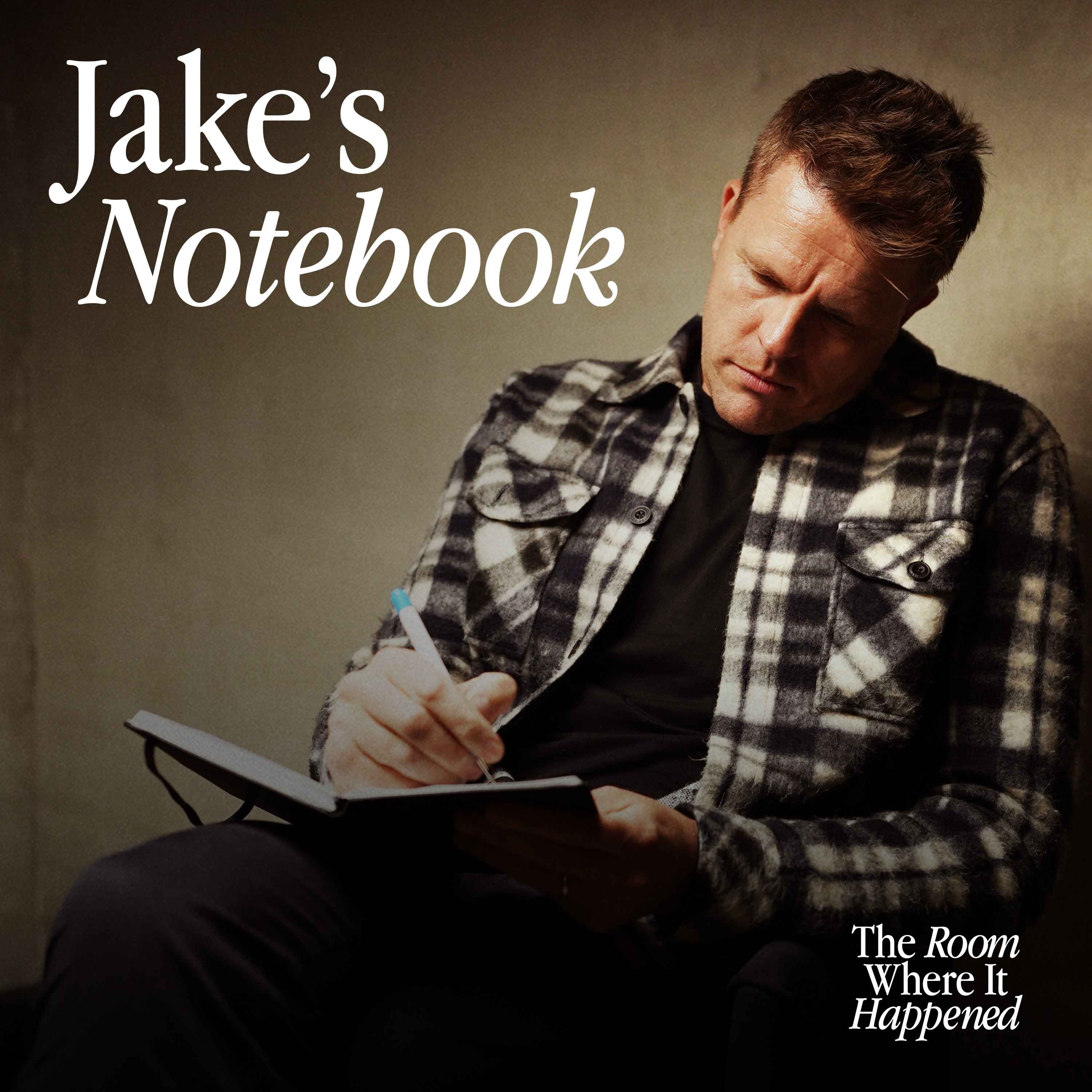
In this episode of The Room Where It Happened, host Jake Humphrey shares personal reflections and life lessons from his experiences, emphasizing the importance of joy, purpose, and resilience. He discusses key concepts like "Mudita," the significance of understanding one's "why," and the value of embracing ordinary moments.
Written by AI. May contain mistakes.

Get the gist, explore an idea or ask about something said.
 Claude
On High Performance Business, what are the key points of this episode?
Searching your listeningAutomatic transcript. May contain errors.
0:00Hey everyone, welcome back to my notebook. This is the place where every week you get the real me, my innermost thoughts, the things that I'm struggling with, the breakthroughs I've made. And if you haven't listened to before, basically each week, I just simply head upstairs to my home office, which is where I'm sitting now. I have a cup of coffee. I have my trusty notebook. And you're about to get the most unscripted, unpolished, unfiltered podcast that I make. No rehearsal, no second takes. And that's really why I love doing this. And thank you for all the feedback so far. A few people have asked me why I've decided to do this.
0:33Well, notemaking has been an essential part of my life for over 20 years. And I think the more that I can open up my notebook and share with you, the more value it can give you for your life. So I hope you enjoy the next 20 minutes. Please reach out to me and tell me what you think of the show, what you want more of. And by the way, before I start, if you could just do one thing for me, I'd be so grateful. Could you right now just hit the follow button wherever you're listening to this show? It will take you a couple of seconds. It just means we can grow the show. It means we can keep doing it.
1:01It means we can bring you more good stuff. So if you can please just hit the bell icon, hit follow, hit subscribe, whatever it is, oh man, I'd be so grateful. But right now, welcome to the show. Let's open my notebook.
1:21So the first thing I've written in my notebook this week is one simple word. It is six letters and the word is Medita, M-U-D-I-T-A. and medita is an ancient paleo in sanskrit word right and it means sympathetic joy it means the happiness that we feel when others succeed and i wrote this down this week because there was a couple of moments that i saw people doing amazing things and i spoke about this actually on the very first episode the instant envy rose i thought oh why is that for them and not for me and i need to remind myself about this because the human brain for all of us has this natural instant need to feel envious of others but medita is the opposite of envy this is this is what happens when the walls between your joy and my joy dissolve so there is no difference between their success and my success and basically if you want to live with medita it means you're celebrating someone else's wins as if they were your own because the truth is that lighting someone else's candle doesn't reduce the light on your candle right their light doesn't steal yours actually if anything medita is a reminder that those people are showing you what is possible.
2:30If they can do it, so can you. And actually, the more that I look at the news in the world, the more that I see what's going on, the more I think that the world doesn't need more envy. What it actually needs is more people who can feel joy in the rise of someone else. So that's a very simple way to start this episode, the word Medita. Maybe write it down and remind yourself about it next time you're feeling envious of somebody else. So the next thing that I've written down is find your why. And the reason why I decided to speak to you about this was because I interviewed a really cool guy actually this week.
3:06He's the UK CEO of Microsoft. His name is Darren Hardman. And he spoke to me about starting out life in a small bedroom in a terrace house in Manchester, being inspired by his dad's work ethic. and that's taken him all the way to CEO of Microsoft UK. And it's because he has this sense of purpose. He has this need to create, to build, to leave the world in a better place. And for you to ask yourself your why is so important because when you find a purpose that's big enough to pull you forwards, I promise you that something will shift. Your mind will start working differently. Limits that you thought were there seemingly fall away.
3:43It's almost like parts of you that were previously asleep have finally woken up and you realize what you were capable of all along and you don't need i suppose really what i'm saying is you need a reason big enough to remember why you're here you need a reason big enough to remember why you're here and what i'd like you to do is get a piece of paper while you're listening to this this is a really simple exercise if you're driving obviously do this when you stop and you get to work but grab a piece of paper and write down on the bit of paper i want you to draw four circles that meet in the middle so four circles that overlap in the middle and I want you to write in each circle what I love what I'm good at what the world needs can it pay me now the can it pay me circle is the one that you think of at the very end because you don't just have to do things because they pay you but obviously we have kids to feed and mortgages to pay and partners to look after and futures to plan for so if you can find something that will pay you as well then great but the most important questions are what does the world need what do i love and what am i good at because if you can find the thing that you need or the thing the world needs the thing that you're good at and the thing that you love then you found what's called your ikigai and it's the japanese word for your reason for being and so many of us i think are going through life and this was certainly the the case for me for a long time like i loved being a kids tv presenter i'm proud that i was the you know the bbc's football host a Formula One host.
5:11I loved hosting football on BT Sport for a decade. None of those things were my reason for being. It was only when I had kids that I actually realised my reason for being in a personal capacity and in a work capacity, without doubt, conversations like this, episodes like this, building high performance. That was the reason big enough for me to remember who I am. And I'd love you to do the same. It's a fantastic exercise. Find your ikigai, find your why, get a piece of paper four circles what do i love what am i good at what does the world need and can i earn money doing it okay so the next thing that i've written down in my notebook is answer lucy's question lucy thank you very much for reaching out she said to me i'm really struggling with how much i need to push my children to be successful everywhere i look there are parents who are celebrating their children's success children who are seemingly talented in every area and I'm so concerned that my kids are not going to live extraordinary lives and when I saw the line about extraordinary lives it reminded me of a poem by William Martin and the poem is actually called don't ask your children to strive William actually died in in 2010 aged 85 he was born in a place called Silksworth near Sunderland in one of the pit villages.
6:36And I think his poetry is incredible. And I want to read this one to you. Do not ask your children to strive by William Martin. Do not ask your children to strive, to strive for extraordinary lives. Such striving may seem admirable, but it is the way of foolishness. Help them instead to find the wonder and the marvel of an ordinary life. Show them the joy in tasting tomatoes, apples and pears. show them how to cry when pets and people die show them the infinite pleasure in the touch of a hand and make the ordinary come alive for them the extraordinary will take care of itself that gives me goosebumps right when i read that because and i'm probably partly responsible for this need for people to strive because after all what is high performance um if it isn't about driving but the reason why i think that's really important is because even with the amazingly talented people that i've met and over the years particularly through the podcasts that i make i've met people at the top of wealth at the top of fame at the top of success and the moments right where those things happen are so fleeting and so rare 99 of the life of an elite athlete or an elite business person or a really well-known celebrity is the mundane is cracking on his grafting is working is honing their craft and that's what we have to teach young people is that life is not about the extraordinary life is not about the moments of glory or the joyful successes life is about finding joy in the simple everyday stuff i mean look at what our amazingly talented poet pointed out the joy of tasting tomatoes apples and pears the touch of a hand i just think it's amazing and that is one thing i'd love you to also take away from this conversation today is ask your children to strive for finding the joy in the ordinary not for finding the extraordinary right what else have i got in here
8:38um i've written in here remind people ej was the light in the room so this week i was asked to go to Ireland to do a talk. I had a lovely week actually. I went to Ireland to do a presentation the day after. I did a big presentation in London. I love it when I can stand up in a room of a couple of hundred people and talk about the things that I've learned, the mistakes I've made, the messages that I want to give them. And I landed in Dublin and Eddie Jordan was a Dublin boy. He moved to Bray when he was a little bit older, which is just on the edge of Dublin. What did Bono say on the obituary to EJ's life that we made at Whisper which is my production company he said um so bubbling in Dublin he moved to Bray and I really felt kind of connected to EJ for the first time since he passed away earlier this year just being in Dublin and I traveled across Ireland and it reminded me right that the reason why Eddie left such a mark on me is that he was the light in the room he was the spark of light in the room and I would love you to remember how important that is every day when I drop my kids over at school I say to them hey come on be the spark of light in the room and the reason why that matters is because the spark of light can change the temperature in the room um it was the biggest lesson i learned from eddie he walked in a room and you knew he was there but you knew that he was there for a good reason and i'm not saying that everything he did um would leave people feeling good you know when he was striving to keep his team alive jordan grand prix like he was pretty tough and but i think it was important at that time so um be the spark of light in the room people please um make the most of being spark of light in the room aim to be a thermostat not a thermometer um the next thing i wrote down here was uh the power of walking away so um i got a lovely message this week let me just it's on my phone let me just grab this let me read this to you hi jake um i'm really loving the vulnerability um that you're showing on the notebook i love hearing about the life that you've lived the things that you've learned thank you so much for sharing it i would like to know what you're most proud of um during the career that you've had and the things that you've done um and that is from sydney and um sydney 403 so sydney um you know what the thing that i'm most proud of is walking away and that's what i just want to talk to you briefly about just for a couple of minutes so as you know and i've already mentioned it on this um on this show um i was a tv presenter i I suppose I kind of feel like saying I am a TV presenter, but that kind of feels like I'm clinging on to the past a little bit.
11:08Am I still a TV presenter? I've not put an earpiece on for a couple of years. I've not hosted a TV show for a couple of years, but I feel I still am a TV presenter. But 10 years on kids TV, five years on Formula One, 10 years presenting sports programs, the best part of 20 years as a broadcaster presenting some of the biggest and best known TV shows in the country. And I was very much enjoying life at BT Sport, but started to feel that it wasn't the right place for me. I was having conversations I didn't like about judging footballers, about judging referees. It was hypercritical of managers at that time.
11:42There was a sort of growing need to be really critical of footballers and the more critical you were and the more that pundits would row and fight and scrap with each other, the bigger the numbers. And Jamie Carragher and Gary Neville do it very well if indeed you think that confrontation is a positive. I don't happen to think that is the case. So I just was slowly feeling it wasn't the right thing for me. And I actually went to BT Sport and asked them whether I could stop hosting Premier League coverage and just host the Champions League. They kindly agreed to that. Then they were taken over by a new company.
12:16And that was, I don't mind telling you, an incredibly stressful period. We came to an agreement that we would part ways. but you know I have bills and kids to feed and a mortgage to pay and so when I stopped doing that there was obviously that fear but the probably the bigger fear right actually was who am I if I'm not a TV presenter what am I if I'm not someone who hosts television programs how useful am I to society if I can't use my skills as a live broadcaster and that was a really strange time actually. And it reminded me that so much of our self-worth is wrapped up in what we do. What's the first question people ask you when you go to a party?
12:57Hey, what do you do? And you can't just say, well, I explore the world. I enjoy just being an existing. I'm a human being. I'm not a human doing right. Um, but of course you go, Oh, I'm an accountant or Oh, I'm a doctor or Oh, I'm a TV presenter because the world makes up their mind about what kind of person you are, depending on the answer that you give them at that point and I loved for years I've reveled in the sort of egotistical growth that you get when you tell people I'm on the television you know and the thing I'm most proud of right Sid is um is the fact that I was able to walk away from doing that job and I'm okay with it and I think that I I've realized that I am not a TV presenter who isn't doing it anymore.
13:43I'm a person who was and maybe still is a TV presenter, but it's not who I am. It's not what I am. It's just a thing that I did for a period in my life. And if we can not have our self-worth entirely wrapped up in the jobs that we do and the decisions that are made in the office in the good days and the bad days, then I think we'll be living a better life. I remember when we interviewed Hector Beyerin for the High Performance Podcast, the former Arsenal fullback, and he said, live like a candle. And I remember saying to him, like, what does that mean? live like a candle and he said well if i had a good week at work and arson wenger picked me and told me i was brilliant then the flame grew and i felt fantastic but if you're going to allow your flame to grow when good things happen i'm afraid to say you also have to allow your flame to shrink when bad things happen so actually the most powerful thing you can do is not have your flame grow from doing good things because the flame will also have to shrink when you're not doing those good things how about like hector says you live like a candle regardless what's going on in the outside world the job that you're doing the success that you're having or not you are a candle it it just is those things have happened around you which leads me on to the final thing i wanted to share with you it doesn't happen to me it happens for me uh this week i welcomed on to room where it happened will ahmed the founder of whoop and you can hear that conversation very soon on the show um that line that he delivered was the most fantastic line that i've heard from a guest in a very long time it doesn't happen to me it happens for me and he said that you don't just have that mindset when things happen that are great oh i've sold my business that's happened for me he says you also have it when times are difficult when there's a struggle when you fail when you collapse when you're doubted when things don't go the direction that you want them to go because as soon as you can have this mindset that those things are still happening for me those things are still teaching me a lesson that failure is still educating me that setback is still growing me that person who's been critical of me is somehow building my resilience then it leaves you in a much better place to go forwards and to explore and i think the other thing that's powerful about this idea of things don't happen to me they happen for me is that when we realize that anything that happens can happen for us anything the bad the seemingly bad stuff can actually be the good stuff right as soon as we understand that and we might not know it's the good stuff until a few years down the line when i was bullied at school i thought it was bad i now realize that those bullies taught me something that i use every single day they actually helped me in a strange way i think as soon as we realize that anything that happens to us is happening for us not to us it allows us to explore imagine how much braver you would be with your life if anything that you did whether it failed or succeeded it didn't impact you because whatever happened it was happening for you so you would explore you would challenge yourself you would find your boundaries you would push you would be demanding of yourself you would do things that you never thought were possible because fear was holding you back but the fear wouldn't be there because it's not happening to you it's happening for you so that's it for this week's notebook um a few things i've written down a few things that i've enjoyed sharing with you i hope that somehow they have been helpful and valuable please reach out and tell me if you want more of the mindset stuff, more of the business stuff, more of the lessons from guests, whatever it is that you want, I will tailor my notebook to be what you want it to be.
17:06And I've been leaving and keeping notes for the last 20 years. So if you want me to go back in time to certain periods in my career, um, and explain and share with you those things, I'm also more than happy to do that. I think, um, life is exciting and I want to share that stuff with you. So please let me know what you like. let me know what you don't like. If you can hit the follow or the subscribe button, it makes a world of difference to us. I would love you to do that. I'm so grateful for you taking the time to listen to my notebook. I will open it again in a week's time. Please share this episode with people that you think might find it valuable.
17:40And we'll speak soon. See ya.
Hosted on Acast. See acast.com/privacy for more information.


