
 Ask ChatGPT


 High Performance Business
25 Sep 2025 · 23m
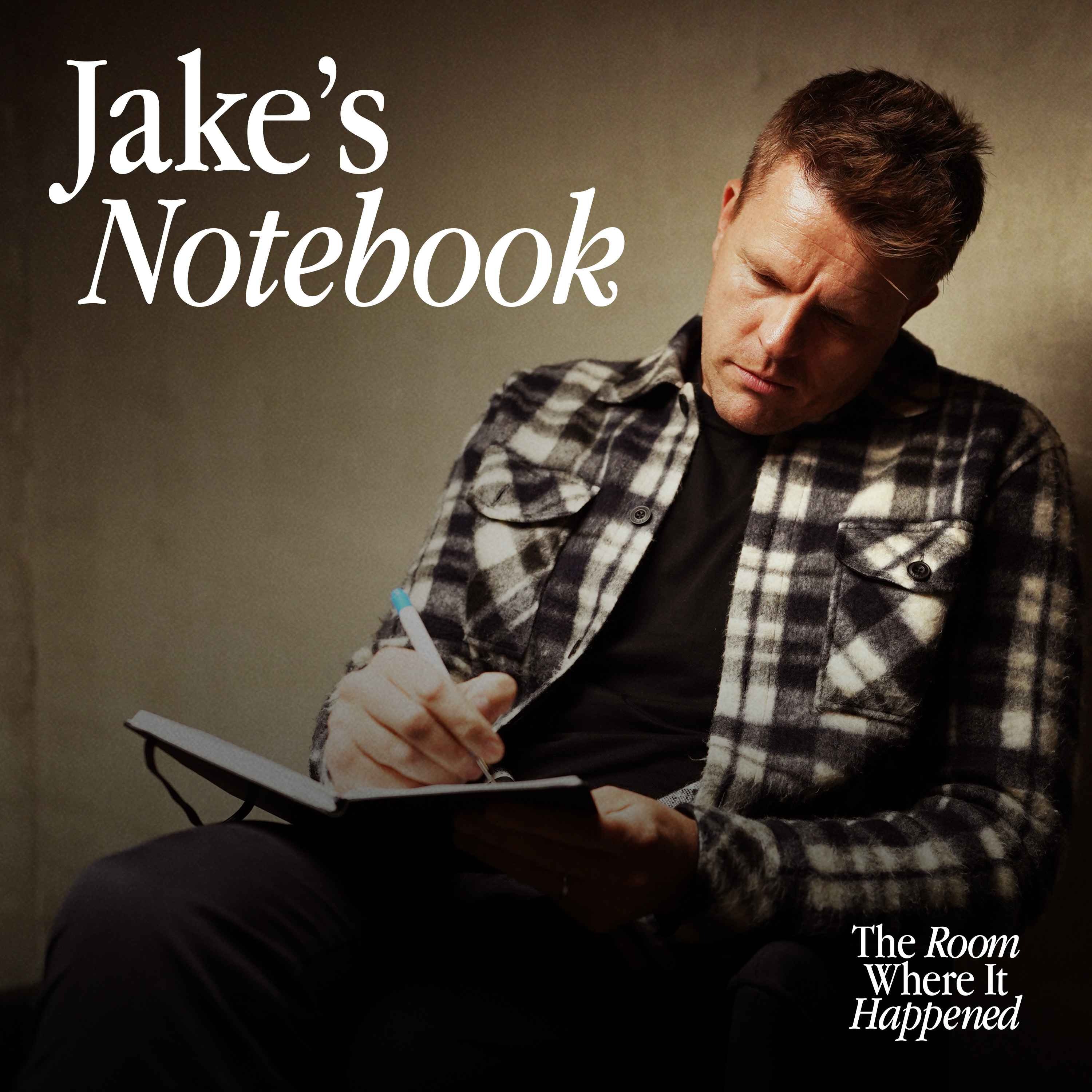
In this episode, host Jake Humphrey reflects on pivotal moments in his life and career, discussing themes of regret, the significance of the final 5% effort, and the importance of enjoying the present. He also shares personal stories, emphasizing the value of being present and mindful amidst life's challenges.
Written by AI. May contain mistakes.

Get the gist, explore an idea or ask about something said.
 Claude
On High Performance Business, what are the key points of this episode?
Searching your listeningAutomatic transcript. May contain errors.
0:00Hey everyone, I'm sorry about the slightly squeaky chair. I'm back. Let's do this. Welcome to the notebook. this is the place where you will get the real me this is my innermost thoughts um things i'm struggling with the breakthroughs i've made the stuff that actually this week i've been thinking about what are the things that i'm thinking or feeling that i'd like to share on here i've never had a platform like this before so i've never had a kind of place to send these thoughts and um i can do that now which is very cool also thanks very much for listening to episode one last week over half of you were still listening at the very end of the episode which people tell me is good for a show like this so i'm pleased and um hopefully there'll be more value for you this week because just like last week you're about to get the unfiltered truth about my life my life and business my life at home as a almost 47 year old still trying to figure out what this is all about um and if you've not listened before quite simply each week i head upstairs to my little home office i'm in here now with two things a cup of coffee and where is it here it is and this my trusty notebook and so for the next 20 minutes or so i'm just gonna really give you my unscripted unpolished unfiltered thoughts directly from this book directly from the notes that i've made over the last week um there is no rehearsal there is no script um there's no second takes uh this is the totally unproduced uncomplicated uh podcast um and i love it i think for that so anyway welcome back to my office welcome back to my notebook i hope you enjoy it and i hope you come back week after week and this show provides real value for you and please do reach out to me and share what you love also what you don't love about this um because i want this to provide value for you but let's go let's open my notebook so we start with um something that i wrote actually um on monday so it's now i'm recording this on sunday evening so almost a week ago i wrote you're here so have no regrets and i think this was this was triggered by a conversation that i had on episode one where i spoke about some of the challenges with my ego as i'm not on the tv i was about to say as much as i used to be i'm just going to say not at all at the moment i'm just not on the telly and that's a challenge right sometimes for my ego so let me tell you a bit of a story that is the reason why i wrote in the book in the notebook you're here so no regrets.
2:23And the important thing there is you're here. Like I'm still alive. I'm still breathing. I'm still working. I'm still a dad. I'm still a friend. I'm still doing all of this stuff. So therefore, how can I have regrets? And you might then think, well, of course you can have regrets because there's some great stuff that you could be doing that you're not doing. So let me tell you two of them. The first one is that when I left the BBC, which was in 2012, the end of 2012, at the time I was hosting Formula One for the BBC, I was offered a new contract to stay, and it was a four-year contract, and it meant I would be hosting Formula One, match of the day two they were going to offer me, the Olympics, the Commonwealth Games, the Euros, the World Cup, and Sports Personality of the Year.
3:11Now, if you're a sports broadcaster, right, that is the holy grail of content. That is the holy grail of TV shows. that is exactly what I would have written down at the age of 15 when I really wanted to be on the TV and I said no and the reason I said no is because I sat at the table with Harriet my wife and she was pregnant with our first child Florence as we now know and she said to me all of those things that you've been offered which of those is happening in the UK like which ones would you be around for and at home for bearing a moment we've got a new kid on the way and I looked at it and I I said, well, sports personalities hosted around the UK, Olympics, Commonwealth Games, Euros, World Cups, they all happen abroad, Formula One happens abroad, and a match that day too would happen in Manchester.
3:57So we decided to leave, and I went to BT Sport, and I walked into a production of five people. That's how many people were working for BT Sport at that time. I'd left the oldest, most famous broadcaster in the world. and I didn't do any of those shows for the BBC and it was only about six months after Jeremy Clarkson decided to punch his producer that a senior BBC exec came to me and he said, you know what, if you'd have stayed at the BBC I think you, David Coulthard and Eddie Jordan would have been given the Top Gear job and I was like, oh, wow and then just recently Gary Lineker's left Match of the Day and who has replaced him as one of the three presenters Mark Chapman the presenter of Match of the Day 2 well that would have been my job if I'd have stayed so there's a pretty strong argument here that if I hadn't left the BBC back in 2012 I could now be hosting Top Gear and Match of the Day but that only tells one side of the story and the reason why I think it's important to say you're here so no regrets is how do I know how that story plays out?
5:09How do I know that I'm not involved in some horrible accident travelling to Manchester to host Match of the Day 2? How do I not know that I carry on with Formula One and I get ill abroad or something horrendous happens or I fall down a flight of stairs in a hotel that I never would have been in if I hadn't have carried on with that job? I think it's so easy to look at the things that could have been different and the things that we've missed and the decisions we've made that have taken away opportunities, right? But that only tells half the story. and I think it's really really important to look at all the things that you are doing and the biggest thing that all of us are doing is that we're still here so if you're struggling a bit at the moment with this kind of sense that opportunities passed you by I'm not saying they didn't and I'm not saying those opportunities would have could have been incredible but they also could have been the very worst thing that ever happened to you so if you're here then I think that should be enough so no regrets the next note i made was inspired by the fact that i listened to uh an old episode with mark webber the formula one driver on high performance and this is what i wrote down the final five percent is worth more than the previous 95 right in some ways that's a stupid thing to write because how on earth can five percent be worth more than 95 % because you've virtually done it, right?
6:29The reason why I think that's important is because what Mark Webber said to us on high performance is average is easy. That's why it's popular. Average is easy. That's why it's popular. And it led me to think that the reason why I think the final 5 % is worth so much more than the previous 95 % is that I think almost everybody gets to 95%. I think so many people that I work with, so many people that I know, so many people that I see doing similar things to me or not similar things to me, I look at them and I think, man, you've really done well. You have really pushed yourself. You've exploited opportunities.
7:05You've worked hard. You have got to that 95%. But I have this sense that almost everyone doesn't reach the final 5%. So therefore that final 5 % is the thing that separates you from everybody else that is the differentiator and that's been really important because i think that that's all that we are really looking for right in life is if we want to be successful is what is the what is the small tiny advantage i can get over other people because everyone's good and the answer is that final five percent and it stands out and it stands up because almost everybody doesn't get that so that's then your differentiator the 95 everyone's doing like everyone's doing that so therefore you're kind of like everybody else so the final five percent is what i think you should focus on this week and all you need to do is at the end of a piece of work or a day or a conversation or a meeting or a workout whatever it is even just driving home from school with your kids in the car it's like was there a little five percent i could have added to that conversation to really make it special to really find an edge um and And that is why the final 5 % is worth more than the previous 95%.
8:23And that's why Mark Webber is totally right. When he says the average is easy, that's why it's popular. You know, getting to 95 % is popular because human beings can cope with that. The final 5 % actually sometimes comes at a cost and people are not willing to pay. But what does it the Marines say? Everyone wants to eat. Not many people are willing to hunt. Okay, next note in the book this week.
8:48let's enjoy this let's enjoy this is what I wrote down after I had lunch with Damien in Istanbul so it was a busy week actually this week I went to Istanbul with Damien to do a talk for one of the biggest companies in the world interviewed their CEO interviewed some of their senior leaders did a presentation using clips from our podcast and after it was really nice but afterwards Damien and I got to sit on the banks of the Bosphorus in Istanbul and have a bit of food. And this doesn't happen very often because I think people assume Damien and I like our best mates because we host this podcast together and we get on well together.
9:26That's all very true. But Damien lives in Manchester. I live in Norfolk. So we both have kids. We're both married. We've both got things going on outside of high performance. And so we basically try and get to the record days as late as possible so we can be there when our kids wake up and chat to our other halves and things and we like to get home because it takes us both about three hours to get from where we record high performance back in the front door so we don't want to be leaving the office at eight or nine o 'clock if we stay for drinks in london till 10 or 11 you're talking 1 a.m in the morning when you finally get home and so i had a lunch with damien and it's we get we very rarely get a chance to connect and so i just wrote let's just enjoy this it's all wonderful and i think sometimes we are all guilty of forgetting how special things are right like i can't believe that we started this podcast in 2019 two guys with two cheap microphones with one producer getting the train to the south coast to interview sir ben ainsley the sailor about his version of high performance and here we are all these years later and high performance has grown into what it is and it's so easy when you're on this kind of a journey just to discard these milestones or these moments and you're so focused on the next thing and you kind of feel like every time you achieve something you don't enjoy it because there's something bigger to achieve because you just achieved the last thing and actually the thing that was really important to you just a few moments ago that you've now achieved is suddenly a distraction because it isn't the next thing it's just taking your mind away from the next thing so you can't possibly think about what you've just done you need to think about what's next I mean there's a story that Sir Edmund Hillary the famous explorer climbed a record-breaking mountain.
11:09And when he came down, a reporter said to him, Edmund, what did you think when you got to the top? And he said, I got to the top. I looked to my left and I saw a higher mountain. I mean, I think for me, that sums up the human brain perfectly. My next note, don't be in a rush. I speak to founders. I speak to business people all the time. It's one of the reasons why I wanted to create this podcast, um room where it happened to speak to founders to speak to people about significant moments in their business journey um and so often when i speak to them they've just set their business up they've not turned a penny of profit they've probably not even started and they're already talking about an exit things have to start small don't be in a rush don't see what the final chapter looks like before you've even written the first chapter you know one of the things that i am most proud about is being a co-founder of whisper group so whisper group has hundreds of employees turns over many many many millions of pounds you can find the numbers online if you're so inclined we produce some of the biggest and most famous tv shows including ironically from what i said earlier we actually produce sports personality of the year for the bbc would you believe um and lots of other things besides.
12:32But what I love about that journey is that we are now in a really great place and I have to give full credit to the CEO, Sunil Patel, my co-founder. But we had absolutely no plan when we started that business. I'll tell you the story very briefly about how Whisper first started. I don't think I've really spoken about this publicly very often, but Sunil and I were working in Formula One together. I was the host for the BBC. He was the producer. and we were eternally disappointed with these production companies that were involved in formula one and they had deals with formula one teams or they had great partnership relationships with formula one sponsors and they were responsible for producing content and on the bbc we were always keen for any great content that could help bring our program to life and often these production companies would come and see us and they would promise us something amazing and invariably when it got delivered to us it was plastered in advertising there was no narrative the sound wasn't very good it just was not very good so invariably we had to say look i'm sorry we can't make use of this and one day sonal and i got talking bbc sport was moving to manchester he had a decision to make and i said well instead of moving to manchester why don't you and me have a shot at creating a production company because i think we can do a better job than most of these people that we see and then full credit to sonnell he quit his job at bbc sport took all the risk i didn't take the risk because i carried on hosting f1 you know i was just supporting him really um he quit his job and we decided to give it a go and i will never forget to the day i die in fact it's going to be one of my abiding memories right on my deathbed is that one day sonnell and i drove to the williams formula one team claire williams was running the team at the time um and we had a meeting with her and this lovely girl called sophie who now works at mclaren and we basically told them our plan and bearing in mind at this point we had no office we had no business we had no name we we had no structure we had no plan and i think so often people are so obsessed about these things that they they forget about the actual importance of the action but we took action we went and met williams and said let us produce your content and they agreed and I don't remember what they what they agreed to pay us but I think it was something like 60 or 70 grand which was their budget for content for the year and we agreed that we'd make it and I remember leaving the factory and honestly the two of us were like in shock here we couldn't believe that someone was gonna trust us to do this like you know we were experienced tv professionals but doing this on our own like people in tv didn't do that a producer and a presenter at that time did not set up a production company it's actually pretty common now and i like to think that we kind of we we set something in motion here like it's quite often now that i see presenters particularly in sport funnily enough going oh yeah i'm going to set up a production company and i think it's brilliant and i love it i love that we did something that inspired other people but we left the williams factory the first thing outside their factory in grove is i remember it and like an old lay-by like a gravel lay-by and we stopped got out the car and did this ridiculously fun dance and then one of us said hold on if they look out the window and see this they might think they've made a bad decision let's just stop this doesn't seem particularly professional and so sonal and i got back in the car started driving back to london still in total shock and at some point on that journey sonal said um we need we need to think of a we need to think of a name for this business to have a name and he'd been on a lad's holiday just before that and had a, I think he had like a business car in his pocket or something from a bar called Whispers.
16:19Um, and we just settled on the name Whisper. We also liked the fact that we, we thought it was cool to say, you don't shout about what you do. The quality of your work is so great that you can just whisper and it'll have an impact. Um, I love that story actually. And it reminds me like we were not in a rush. You know, it's taken us 15 years to get to this point for a long, long, long time. It was Sunil and my wife running the business with a couple of other people. We were lucky that David Coulthard got involved. I fully understand that we were in a fortunate position that David would agree to be an investor and come on board as a co-founder with us.
17:00Fully understand that I already had some profile and that Sunil and I had some connections. But it was still very difficult. And one day, I think, I'd love to sit down with someone and talk about those difficult days where the industry doubted us where people who had previously supported us suddenly didn't where we felt like we deserved something that we weren't getting but it's led us to an amazing place and you know the thing I'm most proud of is that this year Whisper was named as one of the best big companies to work for in the UK and for quite a few years successively now or is the word consecutively, I think the word's consecutively for quite a few years consecutively we have um we've been awarded sunday times best places to work in the uk and that to me means way more than the financial success or the the the work that we've won and the and the um the business wins that we've had so don't be in a rush i promise you from personal experience not being in a rush allows you to make much better long-term decisions rather than looking for constant short-term wins before I wrap up there's one other quite personal thing that I wrote here
18:17it's National Suicide Month this month raising awareness of people who have died by suicide and as we know if you've been reading the news there's been some heartbreaking high-profile stories about suicide over the last couple of weeks of people involved in sport and men of my age are more likely to die by suicide than anything else but it's important we also say that actually women attempt suicide more often than men the sad and tragic fact is that men are for want of a better expression better at it they're more effective which is um tragic and i lost my grandma to suicide when i was a teenager um and it's something that had a huge and very profound impact on obviously my dad and his brother my uncle michael but also on our whole family um and i was honored actually to go and talk about ina my grandma and the story that we went through at my local church uh over the last few days and at the end uh john norman who runs the church with his wife chantelle he offered people the chance to write down on a piece of paper something that they wish they'd said to the person that they lost and i wrote down dear grandma you gave more than you took and i love you um and the reason why those words which i hadn't planned came to me is i know it's the wrong way to look at it but sometimes you can't help but look at what someone took when they died in that way.
19:58You look at the times they weren't there, the things you could have shared, the great moments they've missed, the family events that they were absent for. But I think that's kind of natural because we all have a negativity bias. There is a negativity bias of the human brain. The human brain is designed to look for threats or to observe things that could have been better but the message i wanted to give my grandma was yep it was a tragic way to end but you gave more than you took you were such an important and precious and special part of our lives for so many years that um that far surpasses anything else and i really hope that you haven't experienced something similar in your life but i do think the lesson from this still stands up which is it's very easy for our brains to look at the moments that we lost all the things that could have been you know i spoke about it at the beginning of this episode about having no regrets but i would love you to remind yourself all the time that life i promise is giving you more than it's taking so don't allow the negativity bias of the human brain to win.
21:10So there you go. That is my notebook for this week. And it goes in my bag. It comes with me everywhere. I will make notes for the next few days. But can you do me a favor? Please, can you pass this to someone who you might think would find it valuable? And would you please just reach out to me on LinkedIn, on Instagram, and tell me what you really want from this? You know, how do I make this feel like it's our space? I think that there is less connection than ever before. I think podcasts are more exciting than ever before, but everywhere I look, these podcasts have all become like these big budget productions.
21:42They're like bloody movies these days. Sometimes I think just this is what we all need. It's for you just to listen to someone very unplanned, unscripted, unthought about at times. Actually, it's funny, last week I mentioned that it's like the ramblings of a madman and Hannah, who I work with, sent me a message saying the new name for the show should be the ramblings of a madman um it feels like that at times but i want it to feel like ours i want it to feel like you connected to this i want this to offer you as much value as possible so please tell me what you want from my notebook what can i talk about from my past from the things i'm doing today that would be helpful for you um and that's it so no regrets the final five percent is worth more than the previous 95 enjoy things don't be in a rush try and counter your brain's natural negativity bias and I will open my notebook for you again in another week thanks for listening
Hosted on Acast. See acast.com/privacy for more information.


