
 Ask ChatGPT


 High Performance Business
19 Aug 2025 · 44m
Host: Jake Humphrey
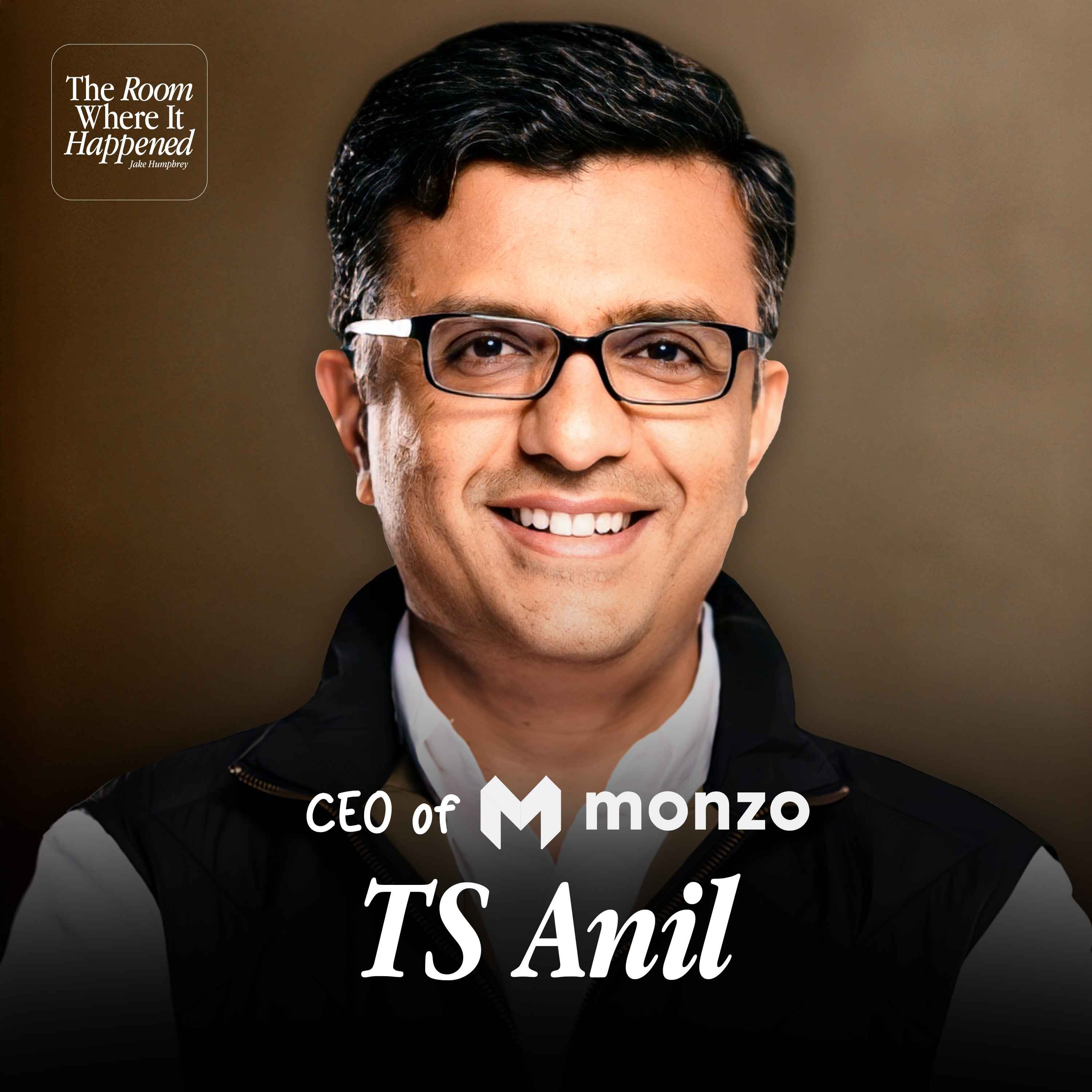
T.S. Anil, CEO of Monzo
The shortcomings of traditional banking and the innovative steps being taken by Monzo to improve financial inclusivity and reduce financial anxiety.
Written by AI. May contain mistakes.

Get the gist, explore an idea or ask about something said.
 Claude
On High Performance Business, what are the key points of this episode?
Searching your listeningAutomatic transcript. May contain errors.
0:28Welcome to the room where it happened. But right now, in partnership with IFS, let's welcome today's guest, the CEO of Monzo, T.S. Anil.
0:42T.S., welcome to the show. Thanks for having me. What room would you like to take us to, to begin with? You know, the room where it crystallized for me that incumbent players weren't about to transform the industry that they were a part of. It's probably the one, because it was one of those pivotal moments that got me to... craving a Monzo as the place to go and do the best work of my life. Even though I didn't know Monzo and Monzo didn't even exist at the time, it created the kernel of that being the thing I wanted to do. So this is India circa 2013. The market context is incredibly important at the time.
1:18So obviously, mobile phone connectivity, handset prices, right, are all sort of moving at this crazy pace, right? The country is getting connected with mobile telephony, but also handset prices are coming low enough that more and more people have access to phones. And India's leapfrogging that tech sort of journey. Alongside, there's a set of people in India that are building out the digital rails for the country, right? And even today, this many years on, it's probably the best in class in the world. Digital rails for payments, instant payments, the ability to build on top of that, etc., etc.
1:52All of this stuff is being created and fintechs are being formed, riding those rails to solve narrow use cases like payments. And then you have this third dynamic where the regulators are paying attention and saying, look, we need to do more. And how should we license more banks to actually participate in this? Because India, as you can imagine, a fast-growing emerging economy, but financial inclusion is a challenge. So it's in that context that we start thinking hard about what it might be to build a digital bank in India that could service hundreds of millions of customers. and not service them, you know, just in terms of giving them access to a bank account.
2:29Definitely that. Financial inclusion was in and of itself a massive problem to solve. But even beyond that, like really build the ability for people to change their relationship with money and use the power of technology to do that. And then it all sort of continues to build up lots of conversations internally, taking people on the journey, et cetera, et cetera, et cetera. And then there is a moment when we're sitting in this room discussing the go-no-go effectively or like, what do we do next? And it's a bunch of, you know, senior people, senior execs of the bank. And as you can imagine, you know, big, large bank, top floor of a fancy office tower, great views outside, like a bunch of people in suits and formal wear sitting around a table and having this conversation.
3:10But it was so obvious to me in the threads of the conversation that we were having that really this was not going to go very far. And there is such a mindset of protect, right? which is about protecting the existing business model and questions like, no, but what does this mean for our existing business? Which is a killer to the mojo of trying to build something new because the minute you're protecting, you cease to reimagine, you cease to rebuild right from scratch. So there was that. And then there was the competition with the existing business about saying, no, no, but you know, if we have to staff this thing, it's going to mean that something else doesn't get staffed.
3:47And something else doesn't get staffed, the thing you're trading it off against is something that is very backward looking, right? And very remediation, backward looking oriented, or at best is incrementalizing, like moving the dials a little bit forward. And then there was all of the rhythms leading up to that moment as well, right? When I say rhythms, I mean, you know, the documents that were being written, right? And docs being written, not because they're a way of crystallizing and sharpening your thinking, but being written for like stakeholder management. What I left that with was the sense that, oh my God, this transformation is overdue.
4:24Transforming financial services is overdue. It's a sector that is ripe to be transformed with software because it's a services sector. It's a software-driven sector at the end of it. But my God, an incumbent player is not going to do it. It's so interesting for me to hear you talk like this because this is exactly what's happened in the media landscape. I think back five or 10 years to when I was working for some of the biggest broadcasters in the world. And I would be in a meeting about linear television, you know, the big television channels we all know. And then somebody would start talking about social media and streaming and digital and content creation and user-generated content.
5:06And exactly the same as you're describing, the people in the room wouldn't understand it. They would see it as a threat to the thing that they have already created and that is already successful. and then the worst thing of all really they would kind of they would feel they have to do something to show willing but they would never go all in they would never do anything to jeopardize what they've already got therefore it could never happen yeah and a lot of those traditional media players are now dead or dying and those that were able to see the shift are now thriving yeah and this is exactly what's happening in your experience and it's it's such a kind of um an obvious human trait right to protect what is successful yeah but i guess for you it meant the only thing to do was to walk away from a traditional legacy financial organization and join Monzo.
5:52With Monzo, it felt like, you know, I had a long career before Monzo, and it felt like a series of different moments, different bets, different sort of aha watershed moments that kind of added up to Monzo. What did you see that the world of banking had to become so it didn't die that some people in that original room couldn't see? User research anywhere in the world will tell you that most people's relationship with money is one of anxiety, right? Because you don't really talk about money so much in most families. You don't really think about the tools you need. Most people aren't trained in financial education in any sense.
6:31And it all adds up to this context where money is a thing, but despite the fact that it's such a crucial part of our lives, It's an enabler of so much of what we do. And not just in the moment. Of course, money helps you buy the pint at the bar. But it's also an enabler of future generations. It's also an enabler of so much more that as an industry, banking should be helping customers make sense of it. Helping customers transform their relationship with money in a way that becomes about understanding it, making good choices, being told what good choices might look like, learning about it. So there's so much more that can happen in the industry, which does not happen.
7:12The irony is that technology actually enables you to do it. So at Monzo, that's what we're obsessed with. How do I put better tools in the hands of a customer so that they can make better choices? How do we make them understand money in a way that takes away the anxiety? How do we help customers actually set a financial goal? Even if it is as sort of near term as saying, I want to save for a Christmas holiday. How do you do those things in a way that abstract out the anxiety and the complexity and instead give you the ability to understand it and then through the magical power of design, the way we design every user journey, make it very human as well.
7:49We're talking in the UK, I'm British, you live in London. Is this a UK thing or do you think this is a global issue? It's global. It manifests itself in different ways. In other cultures, it manifests itself because somehow money is seen as a cheaper aspect of life, right? One should live above money, right? Money can't buy you love, right? So there's things like, for a combination of different reasons that dial themselves up in different cultures, money is not something that people talk about. Money is not something families talk about, right? I don't know what it was like for you and your family, but most families don't talk about how to think about money and budgeting and so on.
8:26You know when your family is hard up and you know when your family is wealthy, but that's the level of abstraction at which it sits and in different cultures you see you know in some there's some communities in each culture that typically tending to be you know sort of small business communities where money becomes a thing in the family that they talk about but even then it's in the context of business money yeah right how do we make more money how do we sell more that type of stuff it's about the business but it's not really about money so what should we be talking to our children about to prepare them for that moment when they're out in the world of work?
9:00At the beginning, you should take away the taboo of talking about money, right? And acknowledge that, look, money is an important part of life. It's an enabler of so many things that go into your life, the dreams, aspirations, lifestyles, choices, you make things you can do, all of that, right? So it's okay to talk about money. It's okay to actually think about it in a way that helps you make good choices. So that's the second piece, good choices. What does that mean? Right? Without any judgment, good choices should be about whatever helps you get farther along with your goals. Right? I can't judge what's a good choice for you.
9:30It might be a terrible choice for me and the other way around. Right? But depending on what your goals are, the choices you make should help you get closer to it. That's just starting to think about that. As I said, it could be as near term as saying, look, I want to save up to buy a new PlayStation for a kid. Right? Or for someone else, it's a down payment on a house. Or for someone else, it's, you know, rainy day money. Whatever that thing is, bring it out into the open. and have the tools to manage it, right? And we built this tool three or four years ago called the gambling block. It was built on the back of a customer talking to our contact center and they had lost a lot of money the previous night gambling online.
10:09And it was just this throwaway thing about the fact that they wish that someone had stopped them from it, right? So in a matter of days, we built this tool and shipped it, right? which allowed customers to put a block in their account on their ability to top up an online gambling account. Now, it's your money. You can top it up, but you set the cooling off period. So as little as two days, as much as one year, you decide what the cooling off looks like so that in the heat of the moment, you're not saying, okay, just another 50 quid. Let me see what happens, right? So it's a tool, zero judgment.
10:42You don't have to turn it on. You decide if it's a relevant tool for you and you decide what boundaries you want to set around it. But we make the tool available. 700 ,000 customers have signed up for that tool. It tells you the scale of, of course, how many people feel like they need it, but the impact that it has then. And only 10 % of people have ever turned it off. And here's how we bring, this other thing that I should talk about, which is you take all of the tools that I'm describing, which are all tech-driven tools, but then you layer in the human aspect of it. The human aspect of it with a two-legged gambling block, is letting our customers choose a catchphrase that they write that plays itself to them when they decide to unblock.
11:28So I'm doing this for Emily's future. Right, wow. Right, so now think about... So you're mirroring up the technology with the sort of... With the human response, yeah. Because it is a human moment, right? We've taken money and made it this dry thing for centuries, but money is a part of our human lived experience. It's an enabler of our human lived experience. And therefore, we connect that with magical design. So I want you in that moment as a customer to feel like, okay, I've got a real tool that I can use that helps me achieve my financial goals. And by the way, that tool is not some dry abstract thing.
12:03It's human. It sees me. It knows what I need. And it helps me build it for myself. We're not picking the catchphrase. The customer's writing it, right? And how excited are you about the advent of AI and the leaps that this will allow you to take and the speed with which you can deliver what you believe people need. Very excited. And the reason I'm very excited is because at Monzo, we look at AI and we don't say, what can it do for Monzo? The question we're asking, what can AI do for our customers? So the power of AI tools in customizing an experience, in personalizing what is relevant to a customer based on their financial goals, based on their understanding of money, based on where they're at in their lives, that is extraordinary.
12:47So our ability to build using AI tools, that personalized experience is a huge leap forward. Because the ways in which you want to understand what investing means are going to be different than someone else. And so how do I personalize it for you? And technology allows you to do that. Technology allows me to abstract jargon, abstract complexity, serve it to you in a way that is relevant to you. That is how you think about the world. I'll tell you what, I think the biggest challenge that you have is, but it's also the greatest opportunity, is I wouldn't even know what questions to ask to educate myself to be better with money.
13:27So how do you solve that? If I don't know what to ask, how do you know what to tell me? Through a combination of massive, massive amounts of speaking to our customers all the time and layering it with expertise, right? Because the point is that both those things need to come together. I need to listen to you. I need to ask you questions. I need to bring whatever expertise I have to that conversation so I can ask the right questions. But ultimately, learning from you, learning how you think about stuff, right? And for us at Monzo, user research is not something we do. Okay, let's go send out a survey today and see what happens, right?
14:00It's a constant learning mode. It's always on, right? When we surface a product to you, like where are your eyes lingering? What are you swiping? What's not? What's resonating? What's not resonating? And so on and so on and so forth. just learning how you process it all. And then we have this amazingly active community of Monzo customers who are constantly giving us feedback. They will roast us if we build something that is janky and they will tell us what they want. They will delight us when we build something that actually solves the need. But that's our way of constantly learning. And I think that in the world of AI, building a community is so much more valuable than building a customer base.
14:40There's a huge difference. and for people that are listening to this and maybe they're in business maybe they're not in fintech or financial industry but they're building businesses like we do with podcasting for example what's the secret to building a community not just a customer base and i'll reframe the question a little bit because the risk is that it feels like do these three things and it will unlock the power of a community but i deeply believe that these things only happen if they're authentic right the minute it feels like some contrived corporate effort to create community yeah i mean you're not going to sign up for it i'm not going to sign up for it right but the authenticity of it in monzo's case the authenticity of our mission our mission statement is make money work for everyone right and that that idea is not a poster in the office kind of thing or it's not some wrapper around what we do it's the way in which the whole company thinks about stuff like the obsession with the customer is like at the heart of it's the dna that we have now when you're as authentic as that then this doesn't become about what's the spin on it then the community doesn't become a place where you're spinning stuff the community becomes a way we are actually talking about stuff you're listening to them not because you know it's a tick box in a process but because that's the thing and yeah you know and as you said the distinction between a customer base and a community is that authentic thing that actually builds it it's very hard to sort of will it into existence and say now we shall create a community that you have to it has to start with an authentic commitment to what that community is about.
16:10It has to manifest itself in every decision you make and how you communicate, what you build. Everything has to be sort of true to that purpose. And then people connect with that authenticity. And how do you as the leader maintain that as Monza gets bigger and bigger? You know, I read reports about Monza going public, for example. That would be a very different business where being purpose-driven is harder, right? When you've gone public because you've got to answer to people regarding your share price. We already do, right? And there's many parts to the answer to your question. Because as you scale, you have to be incredibly clear about what is the golden thread of your culture that is going to persist.
16:48That will always define you. And that must show up in how you hire. Every single executive or leader that I've hired into the company myself. have had a moment when it's been really important to me to assess what their motivation for this company, for this role is. If it feels like a job, if it feels like just the next thing, a sequence of gigs that they've done, it's so much less interesting than if their eyes light up when they're talking about the thing we're building. And you continue to sort of infect that energy, infect that passion for mission with every hire you make. And that's what that sort of propagates, right?
17:30It doesn't rely on, like at Monzo, therefore, that sense of mission doesn't come from the top. And I say, no, thou shalt comply with a mission. But everybody feels that way. Nobody in the company would hesitate to call me on it if they felt like I was doing something that they could didn't grok how it connected with the mission. And that's a great open conversation. The things that thrill us are, you know, when a customer blogs about us, saying that she discovered, you know, in her 30s that she had adult ADHD. And in the run-up to that insight, that she was broke, bankrupted, separated, single mom, living on a friend's couch, all of that.
18:07And she writes about how enter Monzo in her life, and now she can actually make sense of it all. Right? She can understand money so she can make better choices. Her ADHD goes in the direction of now helping her make good choices and setting up a pot versus doing impulse, something that was not good for her. And so when you authentically get your joy from moments like that, when customers talk about you like that, it's magical. And that's the thing that pervades in a culture. So how would you describe the Monzo culture? I'd describe it along three threads. This one that I'm talking about, which is this authentic, deep, real commitment to the mission and building everything around the customer and what problems you want to solve for that customer.
18:50The second is incredibly ambitious, right? Because it's not enough for us to serve, you know, a few million customers, right? Our ambition in the UK, so, you know, is tens of millions of more customers. The ambition is that every part of the world needs a Monzo and we want to be everywhere, right? And so the huge sense of ambition and not resting on laurels, I think that's the second piece of it. And then the third piece of it is, it's a very values-oriented culture, right? Like all of us deeply believe that you can be incredibly values-driven and create an ambitious, great commercial success at the same time, right?
19:31This trade-off between saying, oh, we're values-oriented, we're not really performance-oriented, I don't get. It's false binary, right? So that third aspect of our culture is deep commitment to our values, treating people as humans, embracing every form of competence in the ways we see it, creating a culture which is really hard on problems, not on people. And all of those things that define who we are. And what's the secret as the leader to creating a culture where your values are at the center of your move? I mean to begin with as the leader it's incredibly important that those values are yours right that you that they resonate for you yeah that they float your boat because if they don't it gets back to my earlier point if it's not authentic it's not authentic period right so for me as a leader if those values didn't speak to me if they were not the things that gave me joy if they were not the things that inspired me every single day then it's going to yeah It's going to fade at some point.
20:33What's the secret to holding high standards in a business? And how do you make sure that the standards other people have in Monzo match yours? Well, it's not just about matching mind. It's also about raising mind. So for me as a leader, I'm not just projecting out or teaching. I'm learning. It's important to me that people raise my standards as well. And it happens all the time that I'm in a conversation with a junior product manager or an engineer and they say something I'm like wow I learned something and that feeling gives me joy as well so I want to put that out there first it's not just about me raising people's standards in sort of in one direction but I think you know here's the difference between incumbents and players like us incumbents are forever measuring themselves relative to last quarter or last year where they have been so we grew X percent over last year right it was a big thing yeah but at a place like Monzo, at Monzo, we're measuring ourselves relative to our ambition, right?
21:36Measuring ourselves relative to where we want to get to. And that alone creates that profound difference, right? Because if the only discussion is about, look, that's where we want to get to, right? That many millions of customers using our product in this way. Then the fact that you, you know, moved up five notches from where you were last quarter is interesting, but irrelevant, but irrelevant, right? It's only relevant in that so what did we learn? And now how do we make that five notches, 20 notches next quarter and 100 notches the quarter after and so on. It's a learning journey as opposed to just looking backwards.
22:08So I think if you set the ambition at the right place and that's what you're orienting yourself towards, how you get there becomes a much easier conversation. Most people sort of fixate on the, how do we get there? And that becomes the incremental conversation. I was lucky enough to do a presentation to some British special forces a few years ago. and in the SAS, they have a poem and it's all about we go further than everybody else. There's always a little further to go. And talking to some of the servicemen and women after the presentation, they said, it's kind of hard because no matter how far we go, we know we always go further.
22:45So how do you also create a culture where you're asking people to aim for this huge, lofty ambition, but also realizing that you do have to praise yourself along the way. For sure. Look, being ambitious doesn't mean you don't celebrate wins along the way. Right? But it just means that you don't get complacent with them. That's the punchline is that this is to be celebrated because we have one more ledge up this cliff we're climbing. Right? So it's that feeling about to absolutely celebrate. It's a joyful culture. Right? We celebrate customer moments, big business milestones, big products launched.
23:25but it's through this lens of like what we're getting towards so i don't think those two things exclude each other of course we celebrate every every victory we celebrate the little ones and the big ones but they don't take away from the fact that we're like okay so that means that that thing is even closer that thing is even more possible that ambition gosh if you could do this that means should we raise the ambition on the other side right it just sort of energizes you in that direction. And what is the future then for these legacy banks, these legacy businesses who are judging themselves, not just on last quarter, but also telling their customers, we've been around for 150 years.
24:00We got people through a financial crisis in 1928. You can trust us. What does their future look like if Monzo are doing the things that you'll do? Look, I'll say this with the respect for the incumbents and the humility of having worked there, I'm sure there will be the odd incumbent around the world, which will succeed as well. Right. But the history of industries is not about incumbents transforming them, but players from the outside coming in and transforming them. From a Monzo perspective, it's always been incredibly clear to me that to succeed at scale in this industry, you have to be great at tech and great at banking, right?
24:41Now, this is a race in my mind between will the incumbents get tech or will the challengers get banking, right? And I would bet on the latter every single day, certainly at Monzo because we take all the banky bits seriously. How to understand treasury, making sure we safeguard your money effectively, smart underwriting, managing risk in every sense, great regulatory relationships. All of those things, right, are an aspect of the industry, right? And we just have to be great at it. And so we will go toe-to-toe with anybody on anything that relates to banking and the safety and the soundness and the prudential aspects of it and all of that.
25:19And then we will win by bringing technology and product and design and transforming the customer's relationship. So if we go into the realms of the never-never, the imagination, right? my nine-year-old son, what do you think or what potentially could his banking experience be when he's 39? In 30 years' time, how could that look for him? In 30 years, but I think a lot sooner than that, he will effectively have a Monzo that he sets financial goals with and it solves those problems for him. He said that, okay, well before he's 39, he's decided he wants to put a down payment on a home. he knows that he wants to start a family he's got this vision Monzo has helped him set those goals and based on whatever other life choices he makes related to money his profession and this and that and the ways in which he earns money Monzo will make it magical for him to make the choices that he needs to keep moving farther along his goals and it will be exactly like I said like a best mate in your pocket so a two-way relationship it's a two-way relationship that's always learning about what you care about and helping you make choices, surfacing options, surfacing choices that help you get farther along.
26:36And that'll happen well before he's 39. And of course, Monzo isn't the only player in this market. There are very many bright people and incredible businesses. And you're in a race to win those customers, to impact people's lives positively. What can you do as the CEO to make sure that Monzo wins? By being maniacally focused every day of the week, on the things I'm talking about. Maniacally focused on the mission and the ambition. Maniacally focused on making sure we build better and better products that actually solve problems for customers and are not self-serving. And monetize effectively on the back of that.
27:15Monetize responsibly, effectively on the back of helping customers do things that are good for them. And thirdly, just making sure that we recognize that we're in an industry where managing people's money. People are bringing the life savings to us And we will run this in as smart and sensible and safe and secure a way as possible. So I bring all of those things together and keep learning. I think at the end of it, you know, we're living in a time where there's a beautiful line that, you know, it's a credo line for me, which says, in times of change, learners inherit the earth, while the learned find themselves beautifully equipped for a world that doesn't exist.
27:50Oh, wow. Right? So this idea that as a company, as leaders, as individuals, just keep learning because if you pride yourself on what you had learned 10 years ago or whatever, that's going to become stale so quickly. Learners inherit the earth. While the learned find themselves beautifully equipped for a world that doesn't exist. Talking of being beautifully equipped, I'd like to talk about your leadership style for a moment. You talk there about being maniacally focused. What does being maniacally focused look like for you personally in terms of your daily behaviors? You know, there's a few things I care about as a leader.
28:31One of them, which I learned really early on, is this thing that really the thing that matters is impact and outcomes. Tell your story. So I started my career, I was a generation of kids that went straight from high school to undergraduate to an MBA. and I was 21 when I got my MBA and I started working in India. And my first job was in the mortgage lending thing at Citibank. And I remember we were doing this major event and promotion type thing. And at the time, one of the media you used to get your word out was hoardings, billboards. They were a big thing. Now, this is also the world where billboards and hoardings weren't electronic.
29:13so it involved a painter putting up a scaffolding at a billboard climbing it up and actually physically painting the hoarding right wow anywho so one morning uh you know work like four or five the night before at this ad agency where we were designing this creative for this hoarding and it had all been locked in and early in the morning the painters who literally were single person and painters would come pick up this artwork and then bike to wherever they were going to paint the thing and start painting. It would take a day typically or sometimes two days. Anyway, so I come back to this office at 9.30 in the morning and I realized, oh crap, they've picked up the wrong artwork.
29:54Now the difference between the wrong artwork and the right artwork was minuscule. The only people that would know that it was a different artwork were the five people that had sat in that advertising agency's office at five in the morning and locked one versus is the other nobody else would know maybe not care yeah but it was important and my boss at the time right my first boss taught me that thing about look it matters and every detail matters and the outcome matters so for me it was this thing that oh my god i can't have the wrong artwork be the one that's painted even if it's such a minuscule difference so here i am at 22 years old i get on my motorbike Yamaha RX100 in 40 degrees weather in what's now called Chennai in India Madras at the time I bike 20 kilometers in that heat to where this hoarding is being painted and I show up there and there's this scaffold up against this thing just off the highway and this painter is up there and the painter speaks Tamil I don't speak Tamil right so I'm trying to call out to him and tell him that look I have a different artwork for you and he's looking at me like who the hell are you like what are you rocked So I said, okay, he's not going to get this.
31:02So I stick the artwork under my shoulder and I climb this freaking scaffolding. And it's like, it's a wobbly scaffolding. They're not designed for two people. But I climbed the scaffolding and gave it to him and explained to him, this is the right artwork. He said, okay, fine. And I came back down and, you know, went back and went on with the rest of my day. But for the month that that hoarding stayed up afterwards, that every time I drove past it, it felt like, oh, we did the real thing there. It's the right thing there. Right, so there was a sense for me that outcomes and impact are the thing that count, right?
31:32The best of intentions, right, really don't, you know, are only so good. So back to your question, therefore, about leadership and, you know, things I do. So I'm constantly tracking for outcomes, right? How hard the team has worked, how, where that effort has been directed are all inputs on the journey to sort of what happened. Did this product work the way it was supposed to? Did, how many customers are using it? Are we impacting their lives in the way we want to? So that's a big thing for me. From a leadership perspective, you know, other things I care. I mean, the thing for me is this belief that you have to marry up a sense of true north and the context at the same time, right?
32:12So clarity about where you're going to, but whatever the context is, like work with that context and like make things better. You know, I discovered sometimes the sea through the storm, right? When you're building and scaling businesses at the pace that we are, there's a lot of stuff. there's lots of storms lots of things don't go your way right covid like capital raising products that work or don't work there's so much stuff that is a storm that's as the leader you need to be able to see through that storm play the long game of what you're actually building towards and like keep that energy going but in the moment like keep keep switching context that i mean i lived and worked in japan right which was a completely different context than anything that i had been used to right anything from a cultural perspective i didn't speak the language.
32:56My whole team only spoke Japanese. And I was CEO of this, you know, 1300 person company. So I learned to adapt in that context. So bring to any context, the adaptive ability to see what's it going to take, what aspect of you should dial up, right? What muscle are you going to require in that context, while still being clear about your values, what you're building towards the ambition, the true north. So that's the second thing for me. And the third is, I mean, you know, I think any leadership is about enablement, right? Enable the people you work with to be the best versions of themselves. Enable them to do the best work of their lives.
33:34And sometimes that means leading from the front. Sometimes it means leading from behind. But you figured it out for that thing because you're enabling people to drive towards great outcomes. And yeah, so you do what it takes. I think one of the great elements to your story is the travel. You know, whether you've been in India, whether you've been in North America, or whether you've been in the Far East. Is there something that you would like to share with us from those travels where you learn something that you simply would not have learned if you hadn't been in that country? Yeah, for sure. And, you know, having lived and worked in different places, you learn in different contexts and things sort of create this aha light bulb moment for you, right?
34:13And in the context of, so when I moved from Citibank to go work at Capital One in the US, the thing that made me want to do it was literally a conversation where I'm being interviewed by this person at Capital One. I was 27 at the time. This person is 23, which is a big enough age gap at that time. And he said, let's do a case study. I'm like, okay, sure. And I'm thinking case study, you know, high level strategy, market entry kind of stuff. But within three questions, we're talking about pizza delivery. And the case becomes about math, right? Like becomes a conversation about saying, okay, what were the relationship between those two variables that you're talking about look like?
34:52Can you graph it? And suddenly I felt, I was 27, I'd been working at Citibank already for like six years. I suddenly had the sense that, wow, I'm using parts of my brain that I did not expect to. And that journey led me to Capital One in the US. And the culture was so much about the truth of being in the numbers, right? And it was, you know, very, very data rich culture. But the bigger insight for me was this idea of being truth-seeking, right? Like opinions are cheap. Let's put them into, let's quantify it, make it rigorous, right? The idea of throwing rigor behind a hypothesis, right? And seeking truth became the defining thing for me from that culture.
35:36And that made conversations about disagreements so much easier because, you know, when two people are disagreeing and they have different opinions on the same topic, it's possible to double-click and get to, like, how would you make this conversation? How would this conversation be more rigorous? Like, what do you actually think? what basis do you have for it? That kind of mindset was like a huge part, a huge sort of aha for me. Living in Japan and going and working and leading in Japan. So I was CEO of the Citibank subsidiary there, you know, 1300 % company in a country that had visited only for the first time six days before saying yes to the job.
36:11And we moved there as a family. And of course, the language barrier is massive, right? Because nobody speaks English. I have to communicate through an interpreter. But it very quickly for me becomes like living in a movie with subtitles. You just learn to process the audio and the visual and the translation all at the same time. And yet, the language barrier was not the defining thing. The cultural barrier was. Because I remember my chief operating officer and sort of trying to work with him, inspire him to what we wanted to build. when I realized that, my God, I've worked in contexts where I understood the motivations of the people I was leading.
36:54I understood the motivations of the people I was going to work with. I knew what they were solving for, their career moves and so on. But here was a completely different context. And Kudo-san, my COO, his real motivation was standing within the community of his peers across other companies, playing golf and playing the bass guitar. Right? And so talking to him in the context of a Citibank career was just not relevant. So how do you learn to tap into like what is your energy, your motivation and therefore and have it be authentic. Right? Authentic to you, authentic to my conversation with you was like a whole other experience.
37:39Right? And standing up in front of a team and trying to talk about a big idea when you if everybody gets your language, you do it with a particular cadence and a particular way of speaking, right? But imagine doing that in front of, you know, an all hands or a town hall with like 800 people in the room. But every line that you say, you have to stop because the interpreter is going to translate it then. So your cadence, your ability to sort of rouse yourself up and give yourself into that moment is suddenly shot to bits because you say something, you've roused yourself up, then you have to freeze like while the translation happens.
38:11so you learn to channel different different things and you learn so much more about yourself and what it takes in different contexts that becomes a muscle that you know stays with you so then when you one morning you know it's three in the morning you're living in palo alto it's covid you become ceo of monzo and it's an existential difficult time for monzo it's a difficult time for the world because it's the early weeks of covid everybody's locked up and you're trying to ship product grow the business, address, you know, control weaknesses, build relationships with the regulators and raise capital, and you've never raised capital before, all at the same time, you kind of tap into different bits of bits of what's gone before that.
38:53You said that when you joined Monzo, you felt like you'd built the muscles that were required in other parts of your life to be ready to deliver for them. And obviously, one of those muscles was the muscle that you built off resilience when you tried to do something similar in an incumbent, in a legacy financial institution and it didn't happen. So for people that struggle with failure or not having the desired impact or finding that what they thought was going to happen is not going to happen, what's the secret for dealing with that? I wish there was one secret. I think there's many things go into it.
39:29It's the stories you tell yourself. One of my ways of dealing with, you know, difficult moments, difficult situations, failures along the way has all, has been this idea that I talk about which is type one fun and type two fun. That makes sense? So type one fun is when you're having fun in the moment, right? Type two fun is when in hindsight you have fun because it's a great story. It taught you something, right? So, very often when something's not going our way, I'll say, okay, this is type two fun. It's going to make a great story one day, right? It's fine, right? And it's like a bad camping trip when you get rained on and everybody's soaked and soggy.
40:08You're not having fun in the moment, but you know you will be talking about that moment for years. Type two fun is what people talk about at your funeral. Yes. Where they go, this one time, this thing happened. There you go. And we thought it was a desire. Because when you go to funerals, that's what people talk about. They talk about the time when things nearly went wrong and actually in the end it was funny. Right. So that's... They matter. Yeah, they matter. And I think reframing failure or setbacks or difficult times in that context helps me. So stories and stories we tell ourselves matter, right?
40:40The stories we tell ourselves about what's a journey, what's a destination, right? Where are you getting your joy out of matters? Because look, it's the real world. Things don't go your way, right? Things can be hard. Things can be fun. But reframing that in ways that help you both deal with the thing and find your energy to keep going is incredibly important. And finally, I think the most important thing that you bring to the table is this genuine desire to impact people for the better. You know, you don't write a book if you want more people to be logged onto your app. You just spend more money and more time on the app.
41:14You write a book if you want people who are never going to download an app to still benefit from the knowledge that you and your business have created. Absolutely. And that's what we were talking about at the beginning. We're publishing this book, The Book of Money. It's been written by Monzo. And experts that have actually tried to make that conversation become an easy one, right? Give you the tools to actually think about it. As I said, no judgment, no jargon, just help you understand the landscape so that, you know, you're better informed to make the next set of choices you're going to make.
41:43So look, to finish off this conversation, I really want people to leave here with a good understanding of some things that they can do right now. But also, if you wouldn't mind, one thing that we should all stop doing when it comes to our finances. Three things that, you know, everybody can do like right the second go into your monzo app and think about something that you want to save towards create a pot for it and move some money into it doesn't matter how much it is get started right create a pot call it what you want to and start that process the second thing i would do is help people get on the journey on making long-term investing decisions so the second thing you can do is create an investment pot.
42:27And doesn't matter, you can start it with as little as one pound, start investing, because investing compounds and better still set it up as a regular investing, where whether it's 50 quid or 100 quid or whatever that amount is every month, let it go into the your investment account, so that it starts the journey of compounding. And the third thing, which is kind of, you know, almost the first thing you should do is start to think about setting a financial goal. It doesn't matter when financial goal sounds like this huge, big, daunting thing. But I'm not saying a 20-year goal. Maybe it's a six-month goal.
43:01Maybe it's something that says, okay, I want to do that thing. I want this to be true in six months and have that conversation. Because honestly, the first conversation you have, I think starts to unlock your relationship with money. Because it's very daunting to do that first thing because most people are like, oh my God, what will I discover if I start to have that conversation? It's hard. Have it. Have it with the best friend, have it with your partner, have it with yourself, but just get started. And the one thing we should stop doing. I think what we should all stop doing is thinking about money as this complex, abstract, amorphous lump.
43:38I think we should think about money in little buckets, in pots, in compartments that allow us to think about different needs, budgeting, borrowing, saving, spending, investing, insurance, like all of those things, like give it a little bit more granularity because it can make more sense and it can put you more in control. When it feels like this big, dark looming thing somewhere on the side, you can't make the first move. Brilliant. Thank you so much. Thank you. Great conversation. Thank you. Thank you.
TS Anil’s journey through the world of banking has been anything but conventional. From boardrooms in Tokyo to the fast-moving culture of Silicon Valley, each step taught him that real change doesn't come from preserving the past, it comes from building something new.
In this episode, TS reflects on his decision to leave the safety of big banks, the career-defining leap into tech at Visa, and how those experiences prepared him to lead Monzo through some of its toughest moments, including the height of the pandemic. He shares the story behind Monzo’s most innovative features, the importance of listening closely to customers, and why purpose and adaptability are the real keys to leading in uncertain times.
It’s a story of bold decisions, quiet resilience, and building the kind of company you’d want to be a customer of.
Partners:
IFS - award-winning Asset & Service Management software
👉 Reimagine your operations at: https://highpfrmc.com/ifs-au
Heights 👉 Join Jake in maintaining your hydration. Get 20% off with code Room20:
https://highpfrmc.com/heights-hydrate-au
The Book of Money: How to feel good (or better) about your finances by Monzo publishes 4th September: https://www.amazon.co.uk/Book-Money-better-about-finances/dp/1804948667
Hosted on Acast. See acast.com/privacy for more information.


