
 Ask ChatGPT


 High Performance Business
16 Jun 2026 · 44m · 22 chapters
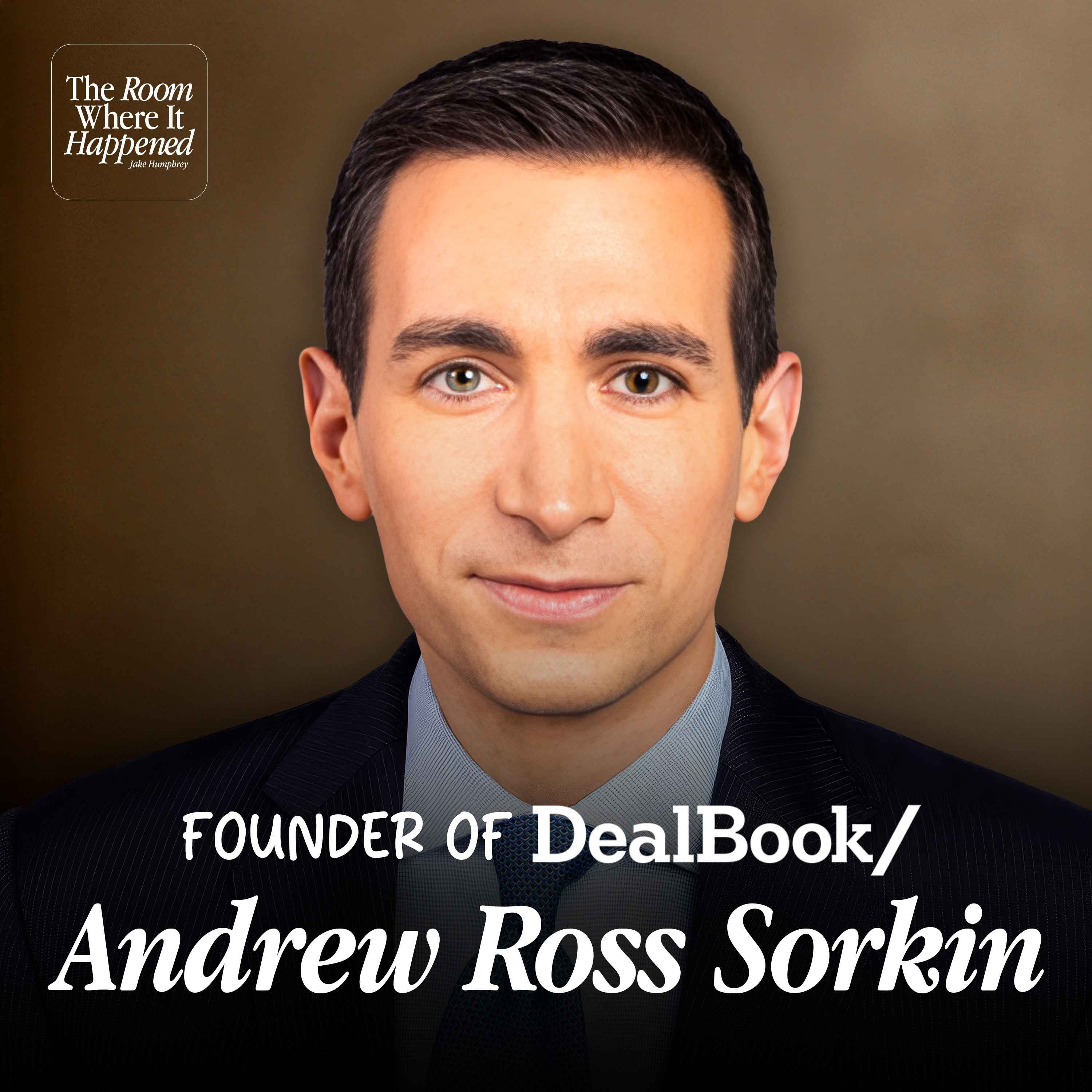
Andrew Ross Sorkin compares today’s AI/tech euphoria to past bubbles (1929, dot-com, 2008), then explains how valuations for SpaceX, Anthropic, and OpenAI are justified, why volatility can spread (example: Broadcom’s $285B one-day hit), and what risks could trigger a downturn (valuations “don’t math” vs. AI success causing labor-cost/agency shocks).
Andrew Ross Sorkin is a journalist and author of 1929, known for skepticism and market coverage; he’s covered Elon Musk since ~2006/2007 and has interviewed major tech figures.
AI breakthroughs drive real optimism, but valuations may overshoot; two bubble risks are revenue shortfalls vs. data-center costs, or mass unemployment if AI succeeds. Valuations are projections to 2030/2040, not current profits. SpaceX’s IPO is unusual due to NASDAQ rule changes and retail access.
SpaceX $1.75T IPO talk; Anthropic near profitability vs. OpenAI not profitable; Broadcom growth slowing; unemployment parallels to 1932 (25%). Elon Musk’s pivots (X→XAI, selling data-center access to Google/Anthropic) and governance/control.
Written by AI. May contain mistakes.
Discussing the similarities between the economic collapse of 1929 and the current AI landscape.
“People were super excited about how that was going to change the world.”
Exploring the potential bubble in AI valuations and the uncertainty around productivity.
“And for people who are trying to draw parallels between what happened in 1929 and what might be happening now, is the risk that the optimism, therefore the investment, therefore the subsequent collapse.”
Analyzing how companies like SpaceX are valued based on projected revenues.
“Like, I think if you go back 10, 20, 30 years, you kind of understood, all right, this is a business, they're going to do an IPO, and I kind of understand what they are there.”
Debating whether Elon Musk is a better storyteller or businessman and discussing his strategies.
“You know, he had this company, SolarCity, and he ended up merging that into Tesla.”
Examining the unique aspects of the upcoming SpaceX IPO and its implications for the market.
“Like, if you look at a business of, I'm going to have a social media platform, I'm going to sell advertising and make money, you kind of go, okay, yeah, I can see that works.”
Discussion on the implications and expectations surrounding the SpaceX IPO.
“has to buy an extraordinary number of SpaceX shares.”
Exploration of Broadcom's recent stock drop and its impact on the tech sector.
“And so, would it surprise me if this stock is a bit of a roller coaster over some period of time?”
Analyzing how the AI boom affects various sectors of the economy.
“Because I think when you talk about all the different businesses that are involved in AI and the various bets they're making, like it's inevitable that they're not all going to pay off.”
Discussion on the risks of economic interconnectedness and potential loan market issues.
“And when I spoke to my mom, who lives in a lovely little village in rural Norfolk, a couple of hundred miles from here, I said to her, I said, this is the conversation we're having.”
Examining historical market patterns and the psychological aspects of market crashes.
“You look at where we were in 1929, 30, you saw it go up and go down.”
Exploring cultural attitudes towards wealth and historical figures in finance.
“It's a great line where one of the guys...”
Discussion on the human elements behind financial decisions and historical events.
“And I wonder whether that's your interest is the humans behind.”
Explore the implications of wealth concentration and the influence of billionaires on politics.
“It means that somehow society has broken down to create wealth for you and not for everybody else.”
Discussion on the relationship between creators and big tech companies, including compensation for creators.
“Yeah, that's a lot of power for one person.”
Insights into different AI platforms and their effectiveness, with personal experiences shared.
“Well, as a creator, I absolutely think there should be.”
Concerns about personal agency and the impact of AI on human decision-making and autonomy.
“I don't know whether I'm getting the rounded news spectrum fed to me?”
Positive perspectives on AI's potential to redefine human existence and work.
“And I think the reason why they were worried is because you can't know what you don't know, right?”
Discussion on the differentiation between having an idea and executing it, emphasizing entrepreneurship.
“And I also love the fact that I can get an hour's work done in three seconds.”
Exploration of the traits of high-performing individuals, focusing on insecurity and curiosity.
“So then now you're making me question, though, what I think about the folks who are handing over the money.”
Explore how childhood experiences shape ambition and drive in successful individuals.
“There's no question that that is part of what's driving me.”
Discuss the importance of allowing children to face challenges for their personal growth.
“If it's all just you're gliding, it's going to be harder later.”
Learn about the concept of having a 'chip on the shoulder' and its relation to success.
“No, it's very true because that's what we are doing.”

Get the gist, explore an idea or ask about something said.
 Claude
On High Performance Business, what are the key points of this episode?
Searching your listeningAutomatic transcript. May contain errors.
0:01Welcome to the show. Thanks for having me. I want to start by talking about 1929, your brilliant, fascinating book drawing parallels between the economic collapse and the world we find ourselves in right now. I think a lot of people would be confused by the parallels. So when someone thinks, hold on, AI is just here to improve the future and solve everything that's ever been a problem for humankind, what do you tell them?
0:26Andrew Ross Sorkin: I tell them that they're, by the way, I tell them they're probably right. I'm excited about AI. The only thing that makes me nervous in this moment is that, you know, I worked on this book for eight years about 1929. And the 1920s felt like this. The automobile had just arrived. People were super excited about how that was going to change the world. Radio had arrived. There was a company, RCA, which was the NVIDIA of its time. People were going crazy. They were buying the stock like they didn't know what to do with themselves. So I think every time we get to these sort of moments where there's a euphoria in the market, part of that euphoria is genuine because it is a technological breakthrough.
1:09Andrew Ross Sorkin: And AI is that. And so I'm excited about what it could do for all of us. I also worry about two things. I worry that there's too much euphoria, that the valuations don't make sense, that in these kind of times, a lot of money goes to good things but invariably also goes to bad things. and that's when you have things tip over. So that's on one end. Are we in a bubble and does it pop? But then, and this is where it's different maybe from 1929, I also worry about what happens in success. Because if AI is as successful as we want it to be or we think it could be, to justify these sky-high valuations, these companies have to create extraordinary productivity.
1:53Where does productivity come from? It comes from growth at lower cost. What's the cost? you're looking at the cost. We are the cost. And so if we're all out of business, who actually pays for all this stuff? So that's, to me, it's like a double-edged sword. It could break both ways. That's why there's almost like a very narrow lane for us to sort of land the plane on for this to totally work. And is your message to people, sit and see what happens?
2:20Andrew Ross Sorkin: My message to people is not to stuff your money under the mattress. Because the truth is, over the last 100 years, you've been way better off actually being optimistic about the world than you've ever been being a professional pessimist. I am, as a journalist, a professional skeptic. That is the job of what I do. So I'm always looking and asking all the questions. But the truth is I think investors, for the most part, are professional optimists, and they've been right to be professional optimists because even with 1928-9, You could look at the crisis in 99. You could look at the dot com 99. You could look at 2008.
2:59Andrew Ross Sorkin: Even with all of that, you would have been way better keeping your money in the market if you could have stayed in the market. I mean, if you didn't cut and run in the middle. And for people who are trying to draw parallels between what happened in 1929 and what might be happening now, is the risk that the optimism, therefore the investment, therefore the subsequent collapse. Is the risk here? The risk? Well, that's why I think there's two risks. One is that the math doesn't math. Meaning all these guys are building data centers. They won't be able to have enough revenue on the other side to pay for the data centers.
3:38Andrew Ross Sorkin: And then all of a sudden, this comes unwound and undone. That's like one risk. And then the other risk is it works. And, you know, So ultimately we get to some kind of unemployment number, I don't know, 10, 20, 30%. By the way, 1932, there was 25 % unemployment in the United States. And so that's what I worry about because that was what a depression felt like. And when it comes to the investment side of things and the huge, exorbitant, incredible numbers we see being thrown around, knowing you were coming on the show, I pinged something on my socials and just said, Andrew's coming on, what do you want to know?
4:13So, you know, more than half the people that responded said, can you tell me how they work out what they're worth, these companies? What is the answer to that question? So right now, it's a projection, effectively, of what the revenues of the company are going to be. Not the profits yet. Anthropic is probably close to profitability. Open AI, still not profitable. And yet we're talking about it as a, you know, potentially trillion-dollar company. SpaceX, by the way, not profitable. We're talking about it as a close to$2 trillion company. That's with a T. And so you might say, well, how could it be worth$2 trillion?
4:54I think what you're doing is you're saying, look at how much money they make today. And you're projecting out what kind of money could they be making in 2030? What kind of money could they be making in 2040? If you believe that SpaceX is, to some degree, to be a monopoly in space for some time, and that there's lots of business, government business. There's business with satellites in terms of communications around the world through Starlink. And if you believe the AI story that ultimately we're going to be putting data centers in space, and I know some people go, like, that seems crazy. But if you believe that, then you can make sense of the story at that kind of valuation.
5:36It's a very interesting time where what we're actually asking people to believe in, though, is stories. Like, I think if you go back 10, 20, 30 years, you kind of understood, all right, this is a business, they're going to do an IPO, and I kind of understand what they are there. Lastminute.com, they sell holidays on the internet. Like, that wasn't hard to understand. Data centers in space is like... There's a phrase in the market called a story stock.
6:00Andrew Ross Sorkin: Yeah. These are story stocks for now. and then we'll find out whether they're profitable stocks in the future. So someone like Elon Musk, right? And as we have this conversation, there's all this talk around an IPO for SpaceX and you're right,$1.75 trillion. I know, I know. So is he a better businessman or a better storyteller?
6:33Here's a show that we recommend.
6:37I'm Eden Sher. And I'm Brock Charlelli. We played Best Friends on The Middle. And became Best Friends in Real Life. We're here to re-watch The Middle with all of you. Each week, we'll recap an episode with behind-the-scenes stories, guest interviews, and what we think now, many years later. There's a lot to dive into, so let's get to middling.
7:01Acast helps creators launch, grow, and monetize their podcasts everywhere. Acast.com
7:12Oh, I think he may be one of the best, clearly one of the best storytellers of our time.
7:18Andrew Ross Sorkin: and thus far has managed to be a shockingly good businessman. I mean, the thing that is so amazing is not just what he's produced in terms of Tesla, in terms of what he did with SpaceX. It's also that, you know, he's bought things that haven't always looked like they were going to work out. You know, he bought X, social media platform. Looked like he'd overpaid for that. It wasn't going to work. What did he do? He pivots. He decides, okay, I'm going to merge X with my new AI platform. All of a sudden now, XAI has value. And then he says, you know what? I'm going to actually sell XAI to myself effectively in the context of SpaceX.
7:59Andrew Ross Sorkin: But it means that if you were an investor with Elon Musk, thus far, for the most part, you have won and you have always won big. Even SolarCity. You know, he had this company, SolarCity, and he ended up merging that into Tesla. You could argue that Taylor Swift wasn't working, and it wasn't, but he found a way to, quote, unquote, make it work. And I wonder whether that's part of the$1.75 trillion valuation is that people go, well, it's Elon Musk. Oh, if you were investing in SpaceX, you are going literally along on the rocket ship ride with him. Yeah. Because unlike most companies, the way the governance of it is structures, he has full control of the company.
8:42Andrew Ross Sorkin: I mean, full control. You can't vote him out. You can't vote to change his compensation. You can't vote to do anything. I mean, for a long time, we talked about democratizing finance, democratizing governance in companies. In this particular company, you as a shareholder are literally just, you're along for the ride. And if you invest in Starlink or if you invest in SpaceX, are you investing in Starlink? You are. Yeah. And that's, by the way, that's to the extent that the company is making a lot of money. That's where the money's coming from right now. And when you look at the way that he sets himself up and he has an AI business and he has X and X isn't quite doing what people thought it would.
9:20So he merges the two and they work and he does the same with Tesla. Like, is this him reacting or is this all a long-term play where he already knew even years before we thought about it? If I buy X, I get the data of millions of people and I have an AI business that requires data. Therefore, you might not even see this coming. But here's my plan.
9:38Andrew Ross Sorkin: I don't know if it's all 4D chess, but I do think he thinks about optionality. Yeah. So, I think there is an element to which when he bought X, he said, you know what? Maybe if I can't make the advertising piece of it work out, maybe there's going to be some value down the line with, for example, the data. I don't know if he thought he was going to even build AI at the time, but maybe he thought there was some optionality to having value that other people weren't ascribing to it at the time. And I think across the line he's done that. He started building these data centers himself just in the last year.
10:16Andrew Ross Sorkin: Nobody was focused on that. People thought he was building those data centers for XAI. XAI has not become as popular as he wanted it to be, frankly. But what has he done? He's turned around and started selling access to his data centers to Google and to Anthropic. So, again, he sort of pivots. He pivots. He's very quick to pivot and find a different avenue. He's very clever. And actually, when you look at the pivot that he makes, I think that XAI and the platform X is the best example. Like, if you look at a business of, I'm going to have a social media platform, I'm going to sell advertising and make money, you kind of go, okay, yeah, I can see that works.
10:54It's not especially exciting. When you marry X up with an AI platform, suddenly it looks like one of the most exciting businesses on the planet. That's the other thing that I think he does so well. He kind of sees maybe what we don't see.
11:08Andrew Ross Sorkin: I think he's able to see what we don't see, and then his ability to move fast. I mean, even building those data centers, he built those data centers faster than just about anybody else. And just even the ability to pivot as quickly as he does. When he first bought X, if you recall, he wanted to turn it into a financial services platform. You remember that? He was going to, you know, we're all going to be buying things and doing, you know, commerce over X. That part hasn't even happened yet. And maybe it will in the future. But he clearly said, you know what, I'm not doing that, I'm doing this.
11:40Andrew Ross Sorkin: And that's very different than a lot of entrepreneurs who hold on to their ideas for dear life and don't pivot. And do you know how he works? Does he have like a brains trust, like a group of people, like a board of advisors? Or is it his gut, his feeling, his decision? Look, I've covered him. I've known Elon since, I think, like 2006 or 2007. My sense is that most of this is all in here, for the most part. I think he does have a—I think there is a bunch of people around him, and over time he's had a couple of people around him. And he also relies on people. I mean, Gwynne Shotwell, who is the CEO of SpaceX, she genuinely runs SpaceX day to day.
12:20I mean, that is—she is the one who is running that. That's not to take credit away from Elon, But in terms of how he's able to manage all of the things he's doing, we haven't even talked about Neuralink or the Boring Company or the other things he's working on. And is the IPO of SpaceX unlike any other IPO we've ever seen? It's the biggest IPO.
12:41Andrew Ross Sorkin: It is structured in a way that's frankly different than just about every other IPO. More retail shareholders are going to have access to that IPO. Historically, companies, when you go public, didn't want to allot too big a portion of the shares to retail because the view was that retail, the ordinary investor, wasn't diamond hands, didn't have diamond hands. They weren't going to hold. If the stock moved, they'd flip and sell the stock quickly. This time, Elon's taken a bet that the retail is going to hold on. We'll see where the retail holds on. The other big shift is the NASDAQ, which is the stock exchange that the company is going public on, made a decision in part to attract Elon Musk to pick them for the exchange so that the NASDAQ index, which is the big index of all the companies, changed their rules, literally changed their rules basically for this purpose so they could get the SpaceX IPO.
13:43Andrew Ross Sorkin: which means that SpaceX, the stock, will be part of the NASDAQ index in the first five days of trading. It used to be they'd have to wait several months before you'd be put in an index. But what does that mean? It means there's an automatic buyer for SpaceX shares. Five days in, this index has to buy an extraordinary number of SpaceX shares. So, there's a lot of things going on that make this very unusual and very different. And it will be a big test for the whole market. And can it fail? Because I think, like, if you've got the NASDAQ changing their rules to be part of this, that's kind of them putting their seal of approval on this and going, man, this is so exciting, so big.
14:25It's going to be so successful. We need in. And I've sat and had conversations with people who've floated their company, gone public, and it's the worst five days of their life. Yeah. Because they sit there and go, shit, it isn't doing what I thought it would. Right. I almost feel if the position that SpaceX is in, that kind of can't happen. It just will be successful. I honestly don't know.
14:46Andrew Ross Sorkin: Look, I root for all of these things. I hope it works. I would also just note, you know, you could look at shares of Tesla. They have been volatile shares from the get-go. They have been super high. They have been super, super low. And so, would it surprise me if this stock is a bit of a roller coaster over some period of time? It very well may. Talking of roller coasters, can we talk about Broadcom? We can talk about Broadcom. So only last week their stocks were hit to the tune of$285 billion in one day. I think for a lot of people who tune into our show who aren't heavy in this world, that's a very confusing thing.
15:27And again, you talk about volatility, that's a great example of it. Well, so right now, all of these companies, anybody that's been in the sort of Broadcom space, anybody in the chip space has been on a rocket ship, to use the metaphors that we've been playing in. And the view has been that the growth would just go to the moon or to Mars. And in this case, the growth wasn't that they started losing money. It was just that the growth wasn't as fast as people had expected. And people dumped the shares. And so that is the big issue, I think, with all of these things, which is are we going to wake up one day and NVIDIA is going to announce that they didn't sell as many chips as people thought.
16:08Are we going to find out that OpenAI hasn't brought on as many new customers as we thought? Or Anthropic hasn't signed up the same number of new enterprise clients as it wanted? And it's those days where all of a sudden the investor class sort of, quote-unquote, re-rates what the value of the stock should be. And that's what happened to them. And what does that do for the general sentiment around AI stocks?
16:34Andrew Ross Sorkin: I think everyone's got their spidey sense up right now about sort of what comes next and whether the slowdown in what's happening with Broadcom is going to somehow affect others. Because I think when you talk about all the different businesses that are involved in AI and the various bets they're making, like it's inevitable that they're not all going to pay off. Inevitable. Inevitable. Some companies are going to win, some companies are going to lose. And so, you know, you can go through the list. And we often talk about AI, by the way, simply in the context of, you know, the large language models or the chip makers.
17:11Andrew Ross Sorkin: But this extends to the real estate world these days, where all these data centers are. It extends to construction companies. It extends to the energy sector. So, you know, this trickles out to the entire economy. By the way, you take out the AI boom from GDP in the United States, for example, and if we didn't have AI right now in terms of the AI growth, you basically have flat GDP. Is that right? Close to it. So this is supporting so much? Oh, this is absolutely supporting. And the nerve-wracking part about it is it's so concentrated or feels concentrated in a handful, maybe a dozen or two dozen stocks rather than fully throughout the whole economy yet.
17:53And when I spoke to my mom, who lives in a lovely little village in rural Norfolk, a couple of hundred miles from here, I said to her, I said, this is the conversation we're having. This is the guy that I'm talking to. And she said, yeah, it's interesting, but it wouldn't impact someone like me. And I think that's the important thing. The reason why it's important we all listen to these kinds of conversations is that if If this does go the way that potentially it could, none of us hope it does, but if it did, I don't think anyone would be immune from the impact of this, would they? Oh, no. I mean, I think that's, look, every time we've ever had a crash, and again, I'm not suggesting we're having a crash tomorrow, but what happens in a crash is historically the banks which provided the credit to all, you know, they're the ones providing loans.
18:37Also by the way, today it's what's called private credit, the sort of shadow banking system that's providing this credit. If, in fact, all of those guys start losing money on all these loans that they've made, right, they pull back. And they don't just pull back from loaning to the AI world. They pull back from loaning to everybody. So if you want to get a mortgage, it becomes harder to get a mortgage. The interest rate on your credit card goes up. If a business can't get that loan, it means that that company may not be hiring as many people next quarter or may, by the way, cut back on its people.
19:09That may very well have nothing to do with AI. So, that's why our economy is so interconnected. And is there a moment where the risk is diluted somewhat? Is there a moment where we're kind of past the fear of a repeat of 28, 29?
19:26Andrew Ross Sorkin: I don't know if we're ever past a fear. I mean, right now we're at all-time highs. You could look at a chart. You look at where we were in 1929, 30, you saw it go up and go down. You look again, you could look in 99, you'd see something that looks like a massive and it goes up and down. 2008, up and down. And now we're doing this again. And by the way, what you don't know is, are we at the summit? By the way, the summit may be here. The summit may be here. And so, we may still have a ways to go. The craziest part about calling the market, back in 1928, a guy named Charles Merrill, co-founder of Merrill Lynch, most people may know Merrill Lynch, he told everyone, get out of the market.
20:10Andrew Ross Sorkin: He was like, get out. This is crazy. And in retrospect, you go, oh, Charles Merrill sounds like he's probably right. Except for the fact that between the beginning of 1928 and September of 1929, the stock market went up another 90%. After he'd said, get out. After. And so that, so he was right and he was wrong. And this is what the complication with sort of being the Cassandra really is. Does it have to drop though? Have there been examples over the last hundred years of this and then this? It's usually that the pendulum goes a little too far. Our sort of self-correcting... Because we're human beings and we just want more, more, more, more until the moment there is no more.
20:56Andrew Ross Sorkin: There's a great line. Do you ever see the movie Wall Street 2? No, I haven't, no. It's a great line where one of the guys... By the way, not as good a movie as the first Wall Street with Michael Douglas. But Shia LaBeouf is in Wall Street 2. Someone turns around and says, what's your number? As in, what's your walkaway number? How much money do you need to make to just be cool and be done? And he turns around and he looks at him and he goes, more. That's my number. And I think that encompasses the whole idea, which is that we as a culture, we always want more. Yeah. Why do you think 1929 has resonated with so many people?
21:38Andrew Ross Sorkin: I mean, I think people have always been fascinated by that period. We always hear about it. And I think it's the characters feel so resonant. You know, there's a character named John Raskob who was running General Motors back in 1919. He was the Elon Musk of today. So when you're reading about John Raskob, I think you're like, oh, my goodness, that seems like Elon. He's a philosopher king. He's building all sorts of new crazy things. He builds the Empire State Building in New York. He's creating mutual funds for the first time. He's getting involved in politics. I mean, you can almost see him owning Twitter himself.
22:17Andrew Ross Sorkin: You know, this guy named Charlie Mitchell who was running a bank called National City, which becomes a city group. He's like the Jamie Dimon of his time. Carter Glass, who was a senator in Virginia, is like the Elizabeth Warren of his time, I'm sort of someone who's trying to puncture Wall Street. So I think from what I, the feedback I've been getting about, you know, people who read the book is they just go, oh, my God, I can't believe I'm reading about history. That's what's happening. But I think I'm really reading. And that the people, it's not like reading a period piece. It really isn't in a way.
22:52It's sort of unusual like that because I think the human emotions are so similar.
23:01Do you keep hearing podcast ads like this one, for example, but always wonder how you actually get involved with them for your own brand or organization? Well, it's easier than you think. We're Acast, and we give you the platform to do it all yourself. Browse thousands of popular podcasts, choose the shows that match your perfect audience, set your budget, and launch. And if you want a hand, our podcast specialists are there to help you launch with confidence. This is podcast advertising without barriers. Get started at acast.com slash advertise.
23:40That's what's interesting from my perspective is that a lot of people will look at that as a finance book or a history book or a numbers book, but it's a human book. And I wonder whether that's your interest is the humans behind. Oh, that's all I'm interested in.
23:56Andrew Ross Sorkin: All I care about in everything I do is about the personal connection, the incentives, the motives, what's driving a person. It's a lot of the kinds of questions you're always asking of your guests. What's driving all of this? Where does this come from? And in this case, the challenge of the book was to try to put yourself back in that period and put yourself in their shoes. Obviously, these people are not alive anymore. So I was reliant on, I spent eight years trying to find memos and letters and personal diaries and transcripts and all sorts of family material from people so that you really, when you're reading a scene, everything is real.
24:39And when they're talking to each other, those are quotes of them talking literally to each other in that room, in that moment. And you go, oh, I get it. And because ultimately when you're in the room, everything's gray. Because, you know, with hindsight, we can always look back and go, ah, so obvious. Can't believe that guy did that. That seems ridiculous.
24:58Andrew Ross Sorkin: But when it's real time, it's contemporaneous, and you're in the room, nothing looks black and white. Everything is gray. And I love living in that gray. And I would recommend the book to people who think they know everything about that period or think they've studied the crash and the aftermath. But the lovely thing about what you've done is you've gone to the individuals. You've gone to the stories. You've gone to the emotion. When you look at the people who were involved in 28, 29, and then you fast forward to the Elon Musks and the Sam Altmans and the others involved in our current AI boom, do you see similarities in the types of people that they were as well as the things that they did?
25:36Oh, goodness, yes. I mean, one of the things I think we're seeing even now is, you know, when things are good, people want to put blinders on to what the real risks are. There really is right now, let's talk it up, let's talk it up. And there's something almost patriotic people talk about, sort of talking things up. If you talk it down, that's not the right thing to be doing. It's okay over here. In America, you're different, but we love talking things down in the UK. We're masters of it. I think there's a lot of the sort of entrepreneurs of our era now, you know, think they're changing the world.
26:15Andrew Ross Sorkin: I think the people back in the 20s thought that they were changing the world. And they were. And they absolutely were. I just, by the way, we oftentimes think the bubbles are bad. But I would make an argument to you that to some degree, at least America and I think large parts of the world, were built on the back of speculation. I did an interview a couple weeks ago with Jeff Bezos. And we were talking about bubbles and whether we're in one and what that means. And he was like, you know, we may be in a bubble. It's possible. But even if we are, if you think about human progress and you think about technological innovation, the big things that have changed, they've typically happened in a bubble.
26:50Andrew Ross Sorkin: They've typically happened in a speculative moment. You think about vehicles or one or dot-com boom. I mean, every time we've had sort of a major shift, it's been that. And invariably that means people come in and they bet on things that seem insane at the time. Whoever bet on Tesla originally, you probably had to think that was crazy. If you were one of the first money into SpaceX, I mean, the idea that you're going to literally land the rocket back on the ground, you would have thought everyone would have lost their minds. Yeah. And do you share the view that a lot of people in the world have when they start talking about tech bros and they look for all the reasons why someone like Sam Altman should not be someone who maybe has the world in his hands?
27:37Do you worry about having individuals so central to businesses that are so central to our lives, or not?
27:46Andrew Ross Sorkin: You know, so I'm not in the category of, you know, there's a big campaign in the United States right now that there shouldn't be billionaires. Is that right? People say, shouldn't be billionaires. Based on? Just the idea that if you are a billionaire unto itself, that means you have too much power. It means that somehow society has broken down to create wealth for you and not for everybody else. So, look, my view is more in the context of I don't think you want power to be concentrated in only a handful of hands. And the bigger issue is once you have that concentration of power, at least in the United States, politically, there's now so much money in politics that you can use that money to influence politics to elevate your power even more and to prevent that power from ever being eroded.
28:40And so that's probably not a great thing. Look, in a way, one of the reasons that I would root, for example, for Jeff Bezos, his Blue Origin, to succeed is because without it, it means that there's no competition for Elon Musk. And it effectively means that Elon Musk would have a monopoly power over space, at least for some period of time, over Starlink. Starlink's involved in defense of our country, of your country. Yeah, that's a lot of power for one person. And what is your take on the view of billionaires about them we should ban them?
29:20Andrew Ross Sorkin: My personal view? I'm not in the category of banning billionaires. I'm in the category of we should try to create as many as we can. And I think the biggest distinction is if you believe that the people who are getting wealthy are getting wealthy on the backs of other people, that I'm not for. And therefore, then the question is probably around taxes and around how that money gets distributed and things like that. I think we're in an interesting period, though, where these billionaires may well or are having they're well built by something that we don't yet fully understand, the value to ourselves.
29:58When you look at all of the potential AI platforms. Well, think about that.
30:02Andrew Ross Sorkin: By the way, and they're ripping off what we're talking about here. This conversation is going to be ingested into some AI model, probably Gemini at a minimum, because they own YouTube. And whatever value you think we've discussed here, if we've discussed any at all, will be regurgitated out in some other way later. And so should there be some kind of compensation for that as a creator? Well, as a creator, I absolutely think there should be. Yeah, there should be. Yeah, for sure. But there won't be. Indeed, there won't. And we have to just suck it up. No, I mean, these are the things that I think we need to have a bigger conversation about.
30:44Andrew Ross Sorkin: And this could now go back into money and power and politics, which is you would think that the political leaders would be trying to fix this on behalf of the creators. The creators don't have nearly the amount of money and therefore influence among the political class as the big tech companies do. And so we're left. But where would we be without creators? You need the creators to create the content that the AI businesses are going to make use of. Of course you do. But there's a sense that the tech companies have more power. They may need the creators, but only to a certain extent are they going to hand over the cash.
31:26Yeah, well, yeah, I'll become the creator potentially and then we'll... Well, that's a whole other, yeah. I'll be at your door in the U.S. begging for just a small crumb. We're all going to be begging for crumbs. I think so. In terms of the platforms that we are all using at the moment, where do you lean towards? which one do you look at and think, I love the direction this is going?
31:47Andrew Ross Sorkin: I'm, I've been, I bop around all the time. So I probably over the past couple of months became very Claude centric. More recently, I've been back with ChatGPT. I find it's faster. Yeah. And it gets me a little bit better, actually, in terms of the persistent memory feature. I use Grok for news, I find that its ability to really be able to benefit from the timeline and everything that's taking place on X. And do you feel that with, because one of the things I fear with Grok is that X attracts a certain type of person, I think, with a certain view. And I think that Grok is then regurgitating only those views to me.
32:29I don't know whether I'm getting the rounded news spectrum fed to me?
32:34Andrew Ross Sorkin: Well, I ask it all the time. I say, tell me all of the popular views right now and give me everything on the spectrum about this issue. Or tell me all the crazy quotes that people are debating about this thing. So that's how I've been using it. I find that's pretty effective and that's something you can't really get on ChatGPT or Claude. And then I use Gemini. I find Gemini oddly more reliable for things like even dealing with a spreadsheet or something. I'm angry with myself for how easily I'm impressed by the fact that ChatGPT remembers my name and answers in ways that it knows I like. Well, so the bigger thing that I think we're all, I don't know if you worry about this, I worry about just personal agency.
33:19You know, I don't know if you ever go on like a, I call it a Claude Bender. Like you're really just in there with it. Welcome to the rock and roll year of 2026. The Claude Bender.
33:34Andrew Ross Sorkin: And, no, no, but how often you start to really listen to what it's saying. And what I worry about is sometimes it's obviously wrong. And hopefully I'm a grown man with some life experience that I can identify what's wrong because, hey, that doesn't make any sense. And then it'll, of course, say, oh, you're right. I made a mistake. Ba, ba, ba, ba, ba, ba, ba, ba, ba. Not always, but sometimes. But if you're a younger person, this is what I worry about with my kids, for example, they may not have the experience to say, hey, Claude, that doesn't sound right to me. Yeah, yeah. Can you check that again?
34:06And then are they going to listen to the wrong thing? And then this idea of, like, what our own personal agency even is going to be.
34:15This is depressing. It's only depressing because it's forcing us to live a different life. Do you know what I mean? It's like it's so big, it changes the rules of engagement for being a human being. That's where we're at. Yeah. And we have to just accept that. I think for our kids, it's never going to be a problem. My 10-year-old will never remember life before AI. It just won't be a thing for him to fear. It will be the most normal thing in a way. Are you excited about it? Yeah, I am excited about it. I'm an optimist, which is why I created these podcasts, because I just want to speak to people and find out how do you think, what do you think, what are your rules, what are your non-negotiable behaviours, all these things excite me and i think that for all so i come from a farming family and i've got photos on my wall of my great granddad standing with a tractor looking forlorn with a load of farm laborers looking forlorn as well and um they were forlorn because they had to buy a tractor because everyone else was having tractors but they feared what the tractor was gonna was gonna to do for them.
35:21And I think the reason why they were worried is because you can't know what you don't know, right? So they didn't know that in the future, you could be a podcaster, you could be a content creator, you could be a YouTuber. Those things didn't exist. So they couldn't be excited about the other possibilities. But the arrival of the tractor is one of the reasons why human beings had time to think of other things. And I think AI is doing that for us now. And I I think the reason why we're scared of it is because we're using language that exists today, not knowing that stopping doing all of the laborious stuff that we don't necessarily want to do allows us to look at what else being a human being looks like.
36:03Because I feel we're human doings, not human beings anymore. We're obsessed with work and we're addicted to work. And all the things that make the AI superheroes successful, this need to change the world. I think it will change the way that we see what being a human being is, I think. And I also love the fact that I can get an hour's work done in three seconds. I like that too. I sometimes wonder who, because I'm fascinated by people that have kind of changed the world, right? And I think a lot of that is happening at the moment in this space. And sometimes I think about who am I more impressed by, the person that has the idea or the person that is willing to put their money into the idea that someone else has had.
36:44Do you know what I mean? I think they're two very different things, two very different emotions. Because in many ways, the person that's had the idea, they're the kind of the groundbreaker. They're the one who asks you to follow them. But I think it takes a very different type of person to go, okay, I'm going to give you huge amounts of the money that I've already made from somewhere else and give that to you. Oh, so now it's a competition. Who do we give more credit to? I'm giving more credit to the inventor. Yeah.
37:08Andrew Ross Sorkin: I'm giving more credit to the person who – because it's not – I think it's the right thing. And it's not just the idea. It's the idea and then executing upon the idea. There's lots of people who have lots of ideas. I often laugh because my father-in-law is the king of saying, I had that idea in 1975. I said we should have done this. And what I often try and explain to him and other people is that the idea is actually, we think as human beings the idea is the magic, but we all have ideas because we have imagination. I think it's the person that takes an idea and turns an idea into reality. that's where the credit lies, I think, not in the idea.
37:46Would you agree? 100%. That's the magic. The magic is the person who not only comes up with the idea, but then somehow makes it actually happen. So then now you're making me question, though,
37:56Andrew Ross Sorkin: what I think about the folks who are handing over the money. And is it just about handing over the money? Should they get more credit than just that? It's complicated because also in this day and age, if you're in the venture capital business, and I have great respect for people in that business, but you're typically not just handing over your own money. You're really actually handing over other people's money. So there's sort of like an agency question. It's also what they do, and I also think that they have permission from themselves and other people's money to go, yeah, you might lose 50 % of this.
38:30And that's the other piece. Which makes it an easier decision. It makes it a lot easier. If you know going in, look, I'm just trying to, I've got to hit one out of the park. I've got to get one out of the park, but I could actually fail on the other nine out of 10, that changes the balance in terms of how you think about it. I think so. I think we've both come down on the side of the entrepreneur, the originator of the idea. I think we're fans of entrepreneurs. And from the many, many that you've spent many, many years with, and I get this question about high performance. We've done over 400 episodes, and people will stop me and go, what's the one thing that you think links all these people together?
39:06And really, they're asking for a shortcut, right, to their own version of high performance. So I'm going to steal their question. From all the people that you've spent time with in this space, what do you see as a thread?
39:18Andrew Ross Sorkin: I'll give you two.
39:22One, and this may be somewhat counterintuitive, I do not know, a healthy sense, and healthy is sort of the word here, of insecurity.
39:32Andrew Ross Sorkin: I think a lot of the people who've had great shoot-the-moon success are driven by some semblance of insecurity, of a need to prove themselves to somebody. And I say healthy sense of insecurity because, you know, insecurity can also be debilitating, depending on sort of, you know, what level of insecurity you're contending with. But to the extent that it can be used as fuel to drive you and to keep driving you, even somebody like an Elon Musk, who's had obviously as extraordinary success as you can imagine, I think to some degree today is still driven by trying to prove to the world that he's able to do this stuff.
40:14Andrew Ross Sorkin: That it's not just that it is possible, that it's possible that he's the one who's going to bring it to the world. And I think I've seen that over and over again. The other thing I was going to say that I think is true is a real sense of curiosity that persists. So I know a lot of people, I'm sure you have met a lot of these people too, who early on in their career are very curious. Ask lots of questions, lots of people always. But as they get more senior and more successful, in part because they're probably being asked questions themselves all the time, they become less curious. They get sort of used to just answering questions and not trying to find out about what else is happening.
40:56The most successful people I know, even when they're 90 years old, are still asking questions as if they're 20 years old. That's great.
41:07Coming back to your first point, which is this need to prove something to the world.
41:12Andrew Ross Sorkin: Yeah. I think a lot of the people that we laud and we celebrate are probably dealing with some sort of unresolved trauma, particularly those Instagram influencers that are running till they clap. I can do 100 ,000 press ups. Why do you have to punish yourself to have any sense of worth? What's going on here? I wonder whether you would like to be one of these people, a Jeff Bezos and an Elon Musk, a Sam Altman, and putting so much of your own self-worth and happiness in the requirement to change the world. I don't know if I'm changing the world, but I often think that I'm still trying to prove myself to my mother.
41:50That's for sure. Is that right? Oh, absolutely. I think when I'm writing books or doing an interview on television or writing an article, I'm still in my own way trying to prove myself. There's no question that that is part of what's driving me. You don't think your mom loves you regardless of what you do? I think she does, but she's a tough cookie.
42:11Andrew Ross Sorkin: Really? So, yeah, I think I'm probably driven by a lot of that too. I don't know if it's a full-on, you know, I think I go back, we keep talking about Elon Musk. I mean, Elon Musk, I think, had some real hard times when he was young. I think that definitely fuels him. But I think there's a lot of people who are fueled by things that happened in their childhood or some of it trauma, but other could be just different relationships or other things to try to, again, prove themselves to somebody else. I think it's very interesting. Have you got children? I do, three. So all our time spent as parents is trying to remove all the trauma and all the stress and all the challenge for our young people.
42:48And the one thing that we've just said is that the one thing that puts someone like an Elon Musk or a Sam Altman or a Jeff Bezos at the forefront of the world is the fact they struggled and the fact they failed and the fact they feel they have something to prove.
42:59Andrew Ross Sorkin: Okay, so guys, my guys watch YouTube. So if you're watching this now, know that your mother and I have conversations about how we can instill a healthy sense of insecurity in you. And I don't know if we're doing it well or not. And what answers have you come up with for how to do it? a little bit of grit. We're trying to throw a little bit, we're trying to throw a little, I don't want to say throw sand in the gears. I think we're not trying to prevent all the sand from getting in the gears. But a bit has to get through. I think you want to have a little bit of challenge. Yeah. If it's all just you're gliding, it's going to be harder later.
43:36And I think it's important because exactly as you've noticed, the thing I've noticed with the people that I sit and speak to on a show called High Performance is that they've had to deal with challenge, and challenge has given them the evidence that they can do hard things. Therefore, what do they do? They go and do hard things. And I read this great quote recently that said, as a parent, we like to solve our children's problems, which improves our self-esteem. Yet at the same time, we steal from them the very opportunity they've got to solve their own problem and improve their own self-esteem.
44:07And I think it's a really important way of looking at it. That's an unbelievable quote. Who said that? I don't know. I'll take it as my own. Clip that. Yeah.
44:15Andrew Ross Sorkin: But it's true, isn't it? Yeah. No, it's very true because that's what we are doing. It's unfortunately seems like oftentimes to parent, it's as much about yourself trying to. Yeah, I feel you. Before we finish, I know you've got a lot going on while you're in the UK. We came across a commencement message that you gave at the American University. Yeah. In Washington, D.C. And you mentioned an analogy on that about a chip on the shoulder. Yeah. And I think for, well, the whole production team at High Performance watched it and were like, man, that is so aligned with the way that we think. For people that are watching this and haven't seen it, would you mind sharing it?
44:53So I told a story about a great friend of mine who has a line that he's been using for years. His name is Josh Wolfe. And the line is, chips on shoulders create chips in pockets. and the whole idea is that people who have that chip on their shoulder that have something to prove that have something that they are desperate to demonstrate they're the ones who are going to not just have that idea be that entrepreneur with the idea but they're the ones who are going to get it done and that's what's going to put the chips in pockets brilliant um i recommend anyone going and watching the full commencement speech thank you very much for joining us thank you for the This was a ball.
45:31Thank you for the knowledge. It's been great fun. It was great. Thank you. I appreciate it. Thanks. Thanks a lot. Thank you.
Journalist and founder of DealBook Andrew Ross Sorkin cuts through the hype to expose the high-stakes reality of the AI boom and how a single technology is currently holding up the entire US economy.
Drawing parallels to 1929, the dot-com era, and 2008, he unpacks a dangerous paradox: for AI's massive valuations to make sense, it must replace human labour, but if everyone loses their jobs, who's left to buy the products?
Andrew also makes a compelling case that history's greatest leaps in progress, from railways to Tesla and SpaceX, were born out of destructive, speculative frenzies. He shares what separates elite entrepreneurs: a healthy insecurity that drives relentless execution, paired with a lifelong curiosity that success usually kills.
Andrew Ross Sorkin's book: '1929: The Inside Story of The Greatest Crash in Wall Street' is available in paperback now: https://amzn.eu/d/05LJS2F0
IFS - award-winning Asset & Service Management software 👉 Reimagine your operations at: https://highpfrmc.com/rwih-ifs-yt
XTB 👉 To find out more and make your money work, use code RWIH at: https://highpfrmc.com/xtb-rwih-yt
Hosted on Acast. See acast.com/privacy for more information.


