
 Ask ChatGPT


 High Performance Business
19 May 2026 · 48m · 27 chapters
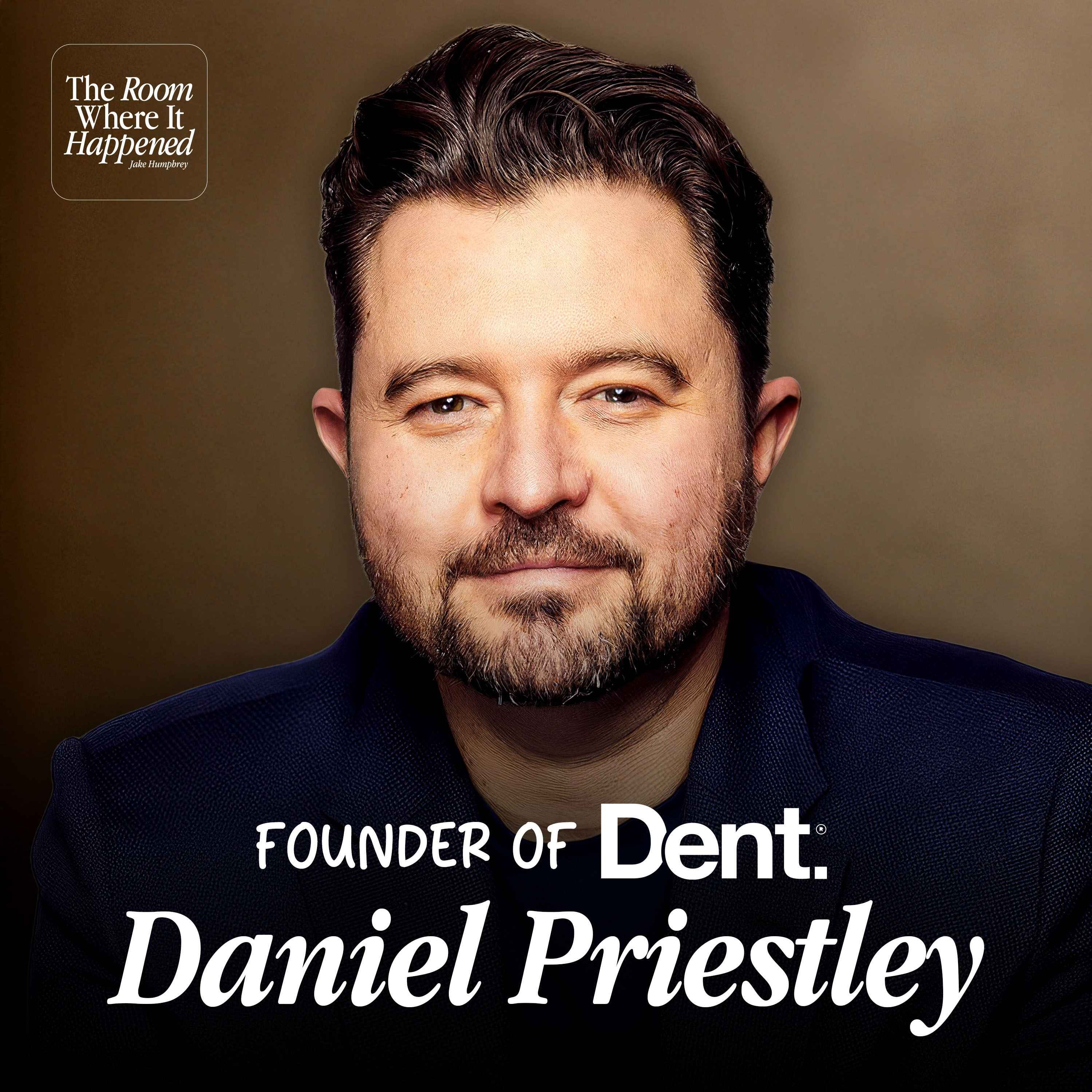
Daniel Priestley argues AI will reorganize society by democratizing information, and he explains how to use it beyond “search” by feeding it business and personal context. He also claims AI will disrupt language-based professions (law, accounting, management consulting) and may trigger economic instability due to massive, fast-replacing AI infrastructure spending.
Daniel Priestley is an entrepreneur with 25 years building technology companies, co-founder of four AI startups (about 100 employees total), and previously ran an entrepreneur accelerator.
AI can act as a “central character” in organizations via an “AI cake” (governance/security, models/tools like Claude/ChatGPT, a continuously refreshed context layer, and automated skills). Humans still matter for conviction and agency. Degrees/MBAs may lose signaling value; learning via building businesses matters more. Data is a “common good,” and governments may need new rules for data licensing.
Using Claude for a legal issue that Priestley says would have cost £50k–£100k; he and his co-founder reportedly produced an action plan for three issues in half a day. Sales transcript analysis: 74% of prospects mentioned a second/third decision maker, and inviting them could speed sales cycles.
Written by AI. May contain mistakes.
Exploring how AI is changing lives and societies through democratization of information.
“When we invented bronze, we had the Bronze Age.”
Daniel shares his experience as an entrepreneur and his involvement in AI startups.
“big questions is well how much are you regurgitating the information of other people and how much are you a genuine AI expert.”
Understanding the AI cake structure and its components in a business context.
“So I used to structure my startups, where we would basically have a team of about eight people on a go to market strategy.”
How businesses can feed data into AI systems for better insights and operational efficiency.
“It's delicious and it's a set of layers.”
Illustrating how AI acts as a central character in business decision-making.
“So we put all of that into the context layer and the AI can read up on everything that's going on in the organization.”
A compelling example of how AI improved sales processes by analyzing call transcripts.
“So it's almost, it basically turns AI into a central character in the business that you can just ask it.”
Discussion on how AI provides actionable insights for team performance improvements.
“Is the most unpredictable vote on this court.”
Contrasting human conviction and advocacy with AI's limitations and capabilities.
“you didn't follow the process here or you've missed a really big opportunity on that last email, they mentioned X and you didn't reply to that.”
Exploring practical applications of AI in creating detailed financial forecasts.
“So it lacks conviction on any particular thing.”
Learn how AI can create detailed financial forecasts for various life scenarios.
“So I want to explore this full range of options and I want to have actual scenarios planned out for me.”
Understand why providing context is crucial when using AI for personal planning.
“Think of it like a graduate who has done a master's in everything, but just lacks a lot of context about the world.”
Discuss how the traditional value of degrees is evolving in the digital age.
“It also probably demonstrated that you came from a very wealthy family or well-connected family.”
Discover why starting a business may be more beneficial than pursuing higher education.
“is that university is a very slow to change institution.”
Explore the need for personal agency and adaptability in a rapidly changing world.
“What are the questions they should be asking themselves in this new world of AI to get ahead, to start a business?”
Learn how to support children in balancing school pressures with their unique interests.
“Okay, so I have an 11-year-old as well and then a 13-year-old, so a couple of years older.”
Understand the importance of fostering agency and independence in children.
“from their peers and their school and all that.”
Discuss the importance of allowing children to pursue their passions in a changing world.
“See, let's be really clear about this then.”
Exploring how different generations perceive changing cultural norms and interests.
“My dad was really upset at me when I quit university.”
Discussing the exorbitant costs of legal representation and the value of practical solutions.
“You should be a blacksmith because the world doesn't change very much.”
How AI can streamline legal work, offering efficient solutions compared to traditional firms.
“And I went to one firm and they said, cool, send us 50 ,000 to get it started.”
Assessing the outcomes of using AI for legal strategy development and case management.
“ourselves and Claude just did the whole damn thing.”
Analyzing the financial implications of AI infrastructure and the potential economic impact.
“there's going to be a disruption to industries that are purely based on language.”
Exploring how the rise of digital empires alters traditional economic structures and power.
“You give it to every single person in America.”
Explore how tech giants are reshaping economic power and societal structures.
“And while we're warring over these systems, they're already out here building these new continents that we all have to sit on top of, right?”
Discuss the duality of AI's potential benefits and risks for society.
“And by the way, when Sam Altman was asked about this, his answer was, I think AI will help us to figure it out.”
Contrast two perspectives on economic challenges and proposed solutions.
“those 153 billionaires, they're somehow buying up everything and pushing the price up and they're pricing everybody else out of housing and commodities and all of those sorts of things.”
Learn practical steps to utilize AI for personal and professional growth.
“Finally, the first thing you would love someone to do who has heard this and thinks, right, I need to bring AI into my life.”

Get the gist, explore an idea or ask about something said.
 Claude
On High Performance Business, what are the key points of this episode?
Searching your listeningAutomatic transcript. May contain errors.
0:24Daniel Priestley.
0:30would like people to start thinking about when it comes to this conversation? It's an incredibly powerful tool. It's going to change the world. It'll change your life. It'll be in your life mostly for the rest of your life because that genie is out of the bottle. Societies reorganize themselves around technology. When we invented bronze, we had the Bronze Age. When we invented steam, we had the Industrial Revolution. And now we've invented this incredibly powerful technology, which essentially democratizes information. It's read every book. It's read everything that's ever been published. It's watched every video.
1:04And it knows everything. And it's synthesized it into a format that is very easy to access. A farmer in rural Africa has access to a GP in their pocket now, unlike what they've ever been able to have access to before. you know a kid who is in you know in a part of the world that doesn't have a great science tutor has a science tutor now if they've got access to you know the internet so we have let something very interesting out of the bag and it will have a profound impact on on the way we live and work and often we have people who we see on the internet on youtube wherever talking about ai and one of my big questions is well how much are you regurgitating the information of other people and how much are you a genuine AI expert.
1:53So would you just explain for us your current relationship with AI? Yeah, so I'm an entrepreneur by background. I've spent the last 25 years building technology companies and companies. So I've had multiple software companies and I've also run an entrepreneur accelerator where I've had the opportunity to work with a lot of tech entrepreneurs. At the moment, I'm the co-founder in four AI startups. There's probably about 100 employees across my companies. And yeah, we're basically building AI applications. So if I asked you what your business structure looks like, if you're happy to tell us, how does it work?
2:26And where is AI in that structure? So I used to structure my startups, where we would basically have a team of about eight people on a go to market strategy. And we would have sort of, you know, very much specialist roles at that point starting to get into, you know, a specialist role in marketing or a specialist role in sales, a specialist role in customer success or product development. And then we would get the go-to-market strategy right. And then we would then very rapidly go from eight to 12 people up to 30 people. When we got to 30 people, we had a leadership team of five. We would have different teams with eight to 12 people in each team.
3:10So that would be the traditional way of running businesses in the past. If you think about the org structure that we now have is at the center of every business is what we call the AI cake. And the AI cake is a set of layers. It's delicious and it's a set of layers. And you've got what you'd call security and governance to make sure that whatever's in there is safe. And then you've got what's called the models, which are all the the models and the tools, which are essentially AI tools and AI models like Claude and like ChatGPT that are doing language generation and producing AI generated stuff.
3:50So you'd think all things generative AI. Generative means it generates something. So it might generate language or video or images, right? So that's the tools and the models. Then we provide it with what we call the context layer. So the context layer is we take everything that this business knows about the world, and we put it into folders for the AI to look at. So it could be every conversation we've ever had and transcribed. It could be all the books that I've written. It could be videos that we've put out. It could be frameworks that we've got. It could be examples of competitors. It could be our ideal customer persona documents.
4:31It also can be databases, spreadsheets, financials, forecasts. So we put all of that into the context layer and the AI can read up on everything that's going on in the organization. And we set up our systems so that constantly is refreshing every day. So every conversation that happens on Slack, that goes into that AI cake. Every new piece of, every new sale, AI cake. When our salespeople talk to someone on the phone, it's transcribed, goes into the cake. So the cake is always getting new ingredients coming in. And then we also develop something called skills, which is we have ways of directing AI automatically so it knows our way of doing certain things.
5:11So our way of responding to things or our way of trying to achieve an outcome or regular routines that we want it to do. So we build that into the cake as well. So that's the center of the business. And as much as we can plug things in, we're plugging things in. And that's working for you 24 hours a day, seven days a week. It's unbelievable.
5:32It's talk to the spaceship and the spaceship knows what's going on. So it's like, have we got all four engines on? No, one engine's been hit, right? Are our shields up, right? No, the shields are down. So you can just talk to the ship and the ship knows what's going on. So it's almost, it basically turns AI into a central character in the business that you can just ask it. In fact, you can just ask it natural questions. Like you can say, how many sales came in last week? And it says, we had 54 sales come in last week. Is that up or down? Well, it's actually trending up because the week before was 47.
6:04And then you can go deeper as in what type of businesses were they? How did they reach us? How did we reach them? Yeah, I'll give you a real example. So we have one of the businesses, we have about 15 sales guys, salespeople talking to people. We said, let's look at the last 250 calls, transcripts. Tell us, what do you think we're missing? Like, what are we not doing? So it reads the 20, 250 transcripts. and it says 74 % of all the people you've spoken to mention that there's a second or a third decision maker who helps make decisions relating to what you're doing and at no point in your sales process or your marketing process do you invite anyone else onto the call you only schedule a call with one person and you never tell them that it's okay they can bring another decision maker to the call if they want to if you just simply add that decision maker to the call you'll speed up your sales cycle.
6:58Now, right? Game changing. It told us that. It read the transcripts and it came up with that on its own.
7:08Most people don't realize how much of their personal information is being bought and sold every day. Data brokers are making billions pulling details about you from public records and the internet, then packaging and selling it, usually without your consent. That's how your information lands in the hands of scammers, spammers, even stalkers. It's why you get endless robocalls and why ads seem to follow you everywhere. That's where Aura comes in. Aura actively removes your data from broker sites and keeps it off. They also instantly alert you if your information shows up in a breach or on the dark web.
7:43But Aura goes beyond data protection. With one app, you get a VPN, antivirus, password manager, spam call protection, dark web monitoring, and even up to$5 million in identity theft insurance, all backed by 24-7 U.S.-based fraud support. Other companies might sell just credit monitoring or just a VPN. Aura gives you all of it together at the same price competitors charge for just one service. Start your free trial today at aura.com slash safety. Protect yourself now at aura.com slash safety.
8:45Is the most unpredictable vote on this court. Slow Burn. Becoming Justice Gorsuch. Out now, wherever you get your podcasts.
8:57Acast helps creators launch, grow, and monetize their podcasts everywhere. Acast.com.
9:09That's just one example. Now, that happens all the time. So that's the central layer. and all of the team can ask the central layer, the cake questions. So the whole team can just say, can I see some examples of, you know, I've got a customer who's asking this question. How do we typically answer that? Or did we used to sell a product that did this and have we discontinued that? Yeah, okay, let me tell you. And can it work the other way where the central cake says to someone, you didn't follow the process here or you've missed a really big opportunity on that last email, they mentioned X and you didn't reply to that.
9:43It absolutely happens. Yeah. Wow. And we actually get daily updates where the AI analyzes everything that went on and it said, here's what you guys could have been doing better today. And it just goes straight into the Slack channel. So the AI is making comments in our communications channel. And again, it comes back to the most famous AI question at the moment. If that's what your agentic AI is doing for you, what's the requirement for staff? I think there will always be an advantage to having people doing, there's definitely a human layer. So AI has no conviction. It has no, like, there's no gut feel.
10:22There's no drive. You've seen it before. If you ask AI, tell me the worst case scenario, it will. Tell me the best case scenario, it will. It could be talking to three different people and giving three very different answers to a similar thing because it picks up what you want and it kind of gives you what you want. And that's how it's trained. So it lacks conviction on any particular thing. And humans are great at conviction. So we say, this is what I want to see happen in the world. This is, I'm trying to achieve this outcome. I want to impact the world in this way. When you become aware that it's very human to have conviction and it's not very AI to have conviction, you build a conviction radar and you actually start realizing that this is a human trait.
11:04Advocacy is another thing. So the ability to advocate for something. So when I'm telling you about our new business, Videnary, and why that's a good idea, I can passionately make the case and put my name and reputation. Because AI doesn't have any skin in the game, it doesn't have any reputational risk, it doesn't have any risk of being ostracized or bullied or any of those sorts of things, and not worried about that, it doesn't matter if it tries to put its name to something, it doesn't carry any weight. So when a human puts their reputation behind something, that is a human element to be able to say, this is the right course of action.
11:43I'm backing this. This is what I'm reputationally advocating for. So in this world, who thrives? Someone with a degree, someone with an MBA, someone who is a sort of go-get-em self-starter with an entrepreneurial mindset who maybe didn't get qualifications, someone who's in their 50s and has decided that they know a lot about the world and they want to give that knowledge to AI. Who are you hiring? What are you hiring for? The first person who does well is the early adopter, the person who's on it. it's a little bit like the London Marathon. If everyone sets off and they're all running on the London Marathon and then someone says, hey, by the way, we updated the rules.
12:27Anyone who wants to ride a motorbike, you can ride a motorbike if you want to. And you go, oh, I've never ridden a motorbike before. I'm not sure about that. And you say, well, it's up to you. If you want to, you can or you can run. And you go, you know what, I might give this motorbike a try. The people who get on the motorbike first, they're going to finish first. And what does getting on the motorbike first look like? Yeah, so using AI every day and using it for more than a glorified search, like actually having it shape your decisions. So would you explain that? Because I see so many people saying, I know exactly what AI is about.
13:01And then I talk to them and they basically go on to Claude or ChatGPT and just ask questions, right? So using AI properly today or really using it in a deep, rich way, what does the behavior look like? So the behavior looks like if you're talking to AI, you're putting lots and lots of information into the AI. You are saying, here's a spreadsheet, here's a PDF document. So, for example, let's say you wanted to use AI to build your wealth management plan for the next 30 years to build your retirement plan. And you wanted to just say, look, this is going to be my first go at it. So you would literally say, look, I'm starting to think about retirement.
13:39I you know I'm this age and I do this and here's my income and here's my earning potential and here's some of the things that I you know I've got already and here's my financial you know information here's some of the financial information here's a you know you know this is what I'm trying to achieve and then say I wanted you to paint me a picture of what I'm going to expect to see decade by decade I want you to create a financial forecast for me I want to do 16 scenarios ranging from moving to Dubai and paying no tax through to becoming a government employee here in the UK and doing that through to launching my own business.
14:15So I want to explore this full range of options and I want to have actual scenarios planned out for me. And you could run down the whole rabbit hole and have essentially really, really detailed, you know, senior level analysis that previously might have cost tens of thousands. And you can just do all that for free. um you know so you've got a financial analyst who's going to analyze your entire life and create spreadsheets and forecasts and narrative and pitch decks uh and basically help you to think about your future if you wanted to so you know that's that's just an entire project uh that you might do with ai but obviously the the the answers you get are only as good as the questions you ask yeah and also the information you give it you've you've really got to think of it like a human, like a person.
15:04Think of it like a graduate who has done a master's in everything, but just lacks a lot of context about the world. It's a 23-year-old graduate who can look stuff up and is super smart, but you wouldn't just go to a graduate and say, oh, can you create me a financial plan for the next 30 years? A graduate, but you haven't told me anything about you. you know well you know just give me something general okay I'll give you something general but that's all I can do you would have to sit down and explain who you are and what you're doing and you know where you know what your values are and all of those kind of things so you need to kind of treat it as though it's a it's a human like it's a it's a type of intelligence you know so where does this leave degrees and MBAs so look the idea of a degree and an MBA used to just be a way of demonstrating that you were disciplined and focused and had some agency.
16:00It also probably demonstrated that you came from a very wealthy family or well-connected family. I think the origins of university probably used to be as a way for your dad's mate to be able to promote you ahead of other people. And it was probably just a good excuse for nepotism for a long time, which is why you saw things like someone who had a degree in French history being able to go in and become a senior manager at a young age somewhere else. So it was a good way for people who were well-connected to be able to get their kids to jump the thing. And then what we did is we said, oh, everyone should go to university and you should get into debt for life for it.
16:38And then it lost its signaling value and it lost those kinds of things. So the problem is, is that university is a very slow to change institution. So the world is very rapidly reorganizing around the technology. And essentially, you should probably be learning faster with that technology than trying to focus on reading a textbook or something like that. If your kids were uni age, would you encourage them to go now? I wouldn't, no. What would you be saying to them? Start a business. Just spend three years trying to start a business and learn everything you possibly can in the process of trying to do something.
17:16And you'll learn as you go and you'll figure it all out. And there's this tool that's going to help you with absolutely everything. And in the process of launching a global business, you'll figure out geography and history, and you'll figure out money and finances, and you'll figure out lending and pitching and all of that sort of stuff. And your kids have grown up in a house or are growing up in a house where they see a businessman, where they see idea generation, where they feel empowered to throw something at the wall and see what sticks. Lots of young people aren't growing up in those houses, right?
17:46So when you say to them, just think of a business and start a business. I honestly think 90 % of the young people around the world go, well, I have no idea where to begin. What are the questions they should be asking themselves in this new world of AI to get ahead, to start a business? The first thing is, I didn't make up the rules and I didn't, like a lot of people get angry at me for saying stuff that I think is true, but they say it as though I'm advocating for it. Like, it's kind of like if a tsunami was coming and I said hey guys there's this massive tsunami coming it's going to wipe out the whole village you should probably get to higher ground you say this guy's a real arsehole right he obviously caused this tsunami to come and he's the one who's wiping out our village and he's disrupting our life I'm not I didn't make up I didn't invent AI um I I like I just want to say if I could I would wave a magic wand and we would go back to 1999 to 2002 or something like that, around that kind of late 90s, early 2000s, I think that's where we peaked.
18:45It was just an awesome time. Great fun, great music, right? Life was pretty good. So I wasn't the one who moved us beyond that point. So don't get mad. Don't shoot the messenger is what I'm saying. But look, the truth is, here's the issue. The issue is the school system was developed in the 1850s and it was designed to create factory workers, factory managers, people who would go and work in factories and offices. And it hasn't really changed a lot in 150 to 200 years. If I go back to the late 1800s, you've got 20 or 30 kids sitting in a room, they're looking at a board, they're doing times tables, they're doing phonics, they're reading, they're regurgitating, they're doing periodic exams.
19:30And essentially, So that's kind of what they do now. So imagine school as a factory that produces workers for the industrial age. And imagine any factory, there's something called an overrun, an overproduction. And you get to a point where you say, oh, okay, we've made too many of these iPhone 14s and now everyone wants the iPhone 15, right? What do we do with this excess stock? So the excess stock, we made too many of those. Unfortunately, anyone who's in school at the moment or coming out of school soon, you are in the factory line being produced for a world that no longer exists, right? So you are the overrun.
20:08You're the overproduction. You've been churned out of a system that no longer needs you to be that way. So the very harsh thing is just to say, you know, Dan's an arsehole. Get it, okay, for saying something so horrible. But then you might also say, well, is he right? It looks like he possibly could be right about that. In which case, I need to retrain. I need to say, okay, what does the world actually look like? Who's doing well? What are the economic systems that are prevailing? What are the economic systems that are in decline? What are the businesses that are doing well? What are the businesses that are doing poorly?
20:45And then you're not a tree. You're not stuck in one's place. You need to then make some moves and get yourself in alignment with the world we're going into. And that sucks, but that's kind of what has been happening. How old are your children? Seven, eight and 11. Okay, so I have an 11-year-old as well and then a 13-year-old, so a couple of years older. What should I be doing with my children outside of what they're doing in the classroom? Because this is a really hard thing for parents. You can't not have your kid in the classroom. Yeah, no. You can't have them tell them. My kids go to school, yeah.
21:16And you know that social pressure of they're in the B team, they're in the A team, they're in the top set, they're in the bottom set. That will still be a game that all parents play for the next few years. Well, for starters, you don't have to play that game. True. But there's a lot of pressure to play it. There is. But that is part of, you know, that is part of, look, when my kids say to me, I don't want to do my homework. I say, don't do it. Yeah. And they go, oh, but I'm meant to do this homework. So it's your life. You do what you want to do. And they're little. I go, you're in control of your life.
21:47If you don't want to do your homework, they might kick up a fuss tomorrow, but then it'll last five minutes and it'll be fine. You don't have to do your homework. If you want to do it because you want to learn something, do it. But you're not getting that pressure from me. Or if they say, oh, how much do I have to study for this exam? And I say, as much as you want. It's up to you. The exams aren't all that important. So, you know, I say you live in a world where you can ask an AI anything you want. So, you know, it's fine. Unless it's to be used for schoolwork, of course. Yeah. Well, I don't care if you use it for schoolwork.
22:27That's great. For schools to do it. Yeah, but I don't really care what they think. If they get angry, they get angry. It's their problem. It's not my problem. I don't, I'm not, I'm not worried. Like, the funny thing is, is the kids are already under enormous amount of pressure from their peers and their school and all that. I don't think they need any extra pressure, and it's not pointing them at anything. But you still want your kids to do well at school? Well, for starters, I don't want to smooth off their rough edges. I really like the rough edges. The things that make my son – so my eldest and my middle child are very different personalities.
23:01The thing that make my eldest him, I want him to retain the quirks, the the differences the silliness uh the the the craziness the the curiosity i want that right i don't want to shave those edges off the things that make my my other one a bit more cheeky and rebellious and um a bit of a badass i like that i don't want to shave that off so i'm i'm really encouraging them you know you are a unique person you don't have to be a cog in the machine anymore the world doesn't need more smoothed out cogs in the machine you know we need to develop you to become you and foster your strengths and your interests.
23:44And you need agency. So one of the reasons that I'm taking the pressure off is because if you need someone else to direct you all the time, you're screwed in the world that we're going into because no one's going to do it. You're either going to have agency and you kick the door off the hinges because you want to and you have that in you, or you don't have agency and you need someone to manage you and it's not going to happen. The managers are not going to be there. You know, I had a friend of mine that I went to school with. His mom was always on his case about homework, homework, homework. And she was like on his case and breathing down his neck.
24:18And the funny thing is, is that now that he's an adult and no one breathes down his neck, he can't get anything done. She basically outsourced my dad, who was a school teacher. I used to ask him, oh, you know, I don't want to do this homework. He would say to me, right, because it's a bit of a family tradition, he'd say to me, it's okay, you might just have to repeat the year and your friends will go to the next year and you'll stay in this year. It's up to you. It's your life. But he was very much, he put the ball back into my court. One of the things that AI really thrives on is human agency.
24:54You have to have that agency. You have to have that desire to do stuff because you want to do it.
25:01Most people don't realize how much of their personal information is being bought and sold every day. Data brokers are making billions pulling details about you from public records and the internet, then packaging and selling it, usually without your consent. That's how your information lands in the hands of scammers, spammers, even stalkers. It's why you get endless robocalls and why ads seem to follow you everywhere. That's where Aura comes in. Aura actively removes your data from broker sites and keeps it off. They also instantly alert you if your information shows up in a breach or on the dark web.
25:36But Aura goes beyond data protection. With one app, you get a VPN, antivirus, password manager, spam call protection, dark web monitoring, and even up to$5 million in identity theft insurance, all backed by 24-7 US-based fraud support. Other companies might sell just credit monitoring or just a VPN. Aura gives you all of it together at the same price competitors charge for just one service. Start your free trial today at aura.com slash safety. Protect yourself now at aura.com slash safety. Here's a tip for you. There's a podcast out there with fans waiting to be your next customer. They tune in every week.
26:16They trust the host. And that host wants to talk about brands like yours in their own words to their audience. The problem is you just haven't been introduced yet. We're Acast, where that introduction happens. As the world's largest podcast marketplace, we let you browse shows, see who's listening, and book host-read sponsorships or run your own ads all from one platform. Transparent pricing, real-time data, complete control. Start advertising on podcasts by visiting acast.com slash advertise.
26:54See, let's be really clear about this then. What you're not saying to your kids is, fuck it all off. Just sit on your bed, look at the internet, watch YouTube, it's fine. What you are saying is, I'm not going to make you do this. You either want to do it and you do, or you don't and you don't, and you'll learn your lesson. Because that breeds agency. And in the future that our young people are going into, agency is what they need more than the ability to follow processes. because AI is the thing that can follow processes. And also not to freak out people, but I actually don't mind them sitting and watching YouTube if they want to run down a rabbit hole because that's where their interest takes them.
27:33We're living in a world where all sorts of random shit will make you a ton of money, right? And all the things like being a lawyer and being a doctor and all of that sort of stuff, it's becoming highly commoditized. I mean, it's ridiculously unfair, but there are streamers who basically stream their gaming and they make 80 grand a month. So, you know, as a parent, we have to trust that there are interests that seem preposterous to us, but there is a reason that, like, our kids are tapped into a different culture and a different time and there are different rabbit holes that are actually worth it for them.
28:17My dad was really upset at me when I quit university. He wanted me to be a uni because he was the first to go to uni in his family and my mum was the first to go to uni in her family. And then I basically drop out. But it was because I was so passionate and so interested about this thing called entrepreneurship. And I end up going off and joining a startup and learning from an entrepreneur and I go and learn in the real world. And then, you know, 21 years old, I launch a company. It's doing 10 million by 24. or like, you know, I followed my curiosity and it took me to a place that took me where something that was right for the time.
28:53Yes. So there has to be a little bit of trust that in a world that's not changing very much, you say, hey, son, I was a blacksmith. You should be a blacksmith because the world doesn't change very much. And I can teach you blacksmithery. And that's how it's going to work, right? In fact, we'll make our last name Smith. in a world that is fast changing you need to say look you're going to notice stuff that i don't notice and um that's because you're tapped into culture at a level that i'm not tapped into and your fresh eyes is an asset and and i want you to i want to encourage you to have those fresh eyes um to notice stuff and see where it takes you so and maybe look maybe my kids are lucky because they've probably got a backstop.
29:37But given my circumstances, that's the message. One of the things I saw you say that, again, as is often the case, Daniel, when you come on a podcast, it divides opinion. You talked about plumbers out-earning lawyers in the future. Yeah. Was that said for clicks and for impact or because you truly believe it? Oh, well, it's a nuanced answer because if everyone were to retrain for plumbers, then you'd have an oversupply of plumbers. But I was saying that there was once a very, very, I mean, this is based on a real story. A real story is I had a legal issue inside my business. And I went to one firm and they said, cool, send us 50 ,000 to get it started.
30:21And then it'll probably come in at 100 to 150 grand by the time we're done. But you need to send us 50 grand to get started. And I went to another firm and they said, oh, let us sit in on the board meeting where you're discussing it and we'll just bill you 5 ,400 for that, for us to sit in on the board meeting. And then at the punchline, oh yeah, send us 50 grand and we'll get started. The issue itself initially was probably worth£170 ,000 to fix. And the lawyers wanted£50 ,000 to£100 ,000 to fix it. And it was only 50-50 as to whether they would be able to fix it or not, pragmatically, from a real world perspective.
31:01And it felt really horrible that we either spend£50 ,000 with some lawyers to just start the process of talking to us, or write off this£170 ,000. And we were kind of basically like, it feels very wrong to write off this£170 ,000. It feels very wrong to pay£50 ,000 chasing£170 ,000 or£100 ,000 chasing£170 ,000. and none of that makes sense. So we kind of felt a little bit like stuck. And it was one of those weird legal cases that it kind of like, you know, checkmate previously prior to AI. It's like, damned if we do, damned if we don't. So my co-founder and I, we said, how about we just block half a day and we just see how far we get with this with Claude?
31:47And he said, great. So we just sit there and we're just basically on Zoom and we're just dumping all the information in, dumping the bank records in, dumping the evidence in, dumping all the communications in, right? And we're just basically doing this. Unbelievably good. Claude just says, okay, you've actually not got one issue. You've got three. Here's the three issues. And you must never entangle these issues. You need to use this language. This language here is criminal language, and you don't want to use criminal language when dealing with this civil matter. You need to separate these three issues.
32:17And first, you need to deal with it on this level, then this level, then this level. and I'm going damn no like none of the lawyers explained that to me like that was that was straight away a clear insight and I'm like this is phenomenally good now I'm smart enough to know that I'm not being hoodwinked this is actually this this actually is real I've got enough experience to go okay we're onto something here so then we start breaking this into three separate projects and literally have three separate projects running and by the midway point of the day where we'd gone from nine o 'clock till midday we've then got an a complete action plan for all three of these things we've got a timeline as to when to start each process we've got all the contact information for who who to leverage and what what independent experts we need to validate and create evidence kits for right like we've literally got the whole damn thing mapped out we've got emails drafted and written that are going to go out like we we got so much done in half a day.
33:15And it felt like having worked with lawyers for 20 plus years, it felt like this was the 50 ,000 that they were going to charge us. And we just did it in half a day with ourselves and Claude just did the whole damn thing. Right. Now, as it turns out, it's going really well. Like we're executing on it and it's going really, really well. And we're resolving the case and it would have been crazy to spend the 50 to a hundred grand would have been right. And, uh, and actually things are coming together nicely. Um, Have you employed a lawyer at all? No, only the 5 ,400 for those two guys to sit in on the meeting.
33:48It's so interesting. Yeah. Now, we could get a lawyer to sense check some of it, but ultimately we've figured out where we need to sit with it. But one of the issues is now completely resolved, perfectly, cleanly, and that would have been 18 to 25 grand of the budget. That first issue is done. Second issue is kind of done, got nowhere. It hit a dead end, but it would have anyway, even with 25 grand worth of support. And now the third issue is in play. So unbelievably interesting. So this is me when I'm saying, yeah, there's going to be a disruption to industries that are purely based on language.
34:31Like coding is a language. Law is a language. Accounting is a language, right? So any industry that is essentially just creating a language or creating words or taking ideas and putting them into consulting, management consulting, all massively going to be disrupted. And what about the world away from individuals? Because we've spoken about individuals at university or at school or people working in business. We've discussed the perfect way to set up a business, what you should be thinking about now, if you're thinking about what your future might look like, What are the questions to ask yourself, the tools to use?
35:08Is there not something totally out of all of our hands, which is a potential economic crash caused by the arrival of air? Yeah, so the biggest financial issue is that we're doing one of the world's biggest infrastructure build-outs on the scale of railways, fibre optics, electrification, motorways. We are building out a huge infrastructure. So the infrastructure spend each year now is$650 billion. And that's just kind of like the data center build out. So not including all the peripherals and all this sort of stuff. Of the$650 billion, about 40 % to 50 % of that is GPU spend. So there's land, there's sheds and cooling systems and all of those sorts of things.
35:55But all of that is to basically make GPUs run, processing computers, right? Computers run. The thing with computers is that computers get superseded about every three or four years. So you can basically build a data center, fill it full of computers, and at the end of three or four years, you have to kind of have a new data center and fill that full of computers. And then while that one's being built, you have to then go and replace all these computers and try and sell them to somebody else. And then you have to then upgrade the new computers and all of this. So where we are right now is we're at the first stage of the cycle of spending$650 billion a year for three, four, five years.
36:31but where we get to in about four years three years to four years from now is that not only will they continue to build out the build but they will also have to replace all the old ones um and we're talking about a trillion a year worth of spending to just to keep ai running and yeah to create this infrastructure yeah um now to give that some perspective there's like uh one to three percent of the population that pay about 20 bucks a month like call it five percent of the population pay twenty dollars a month um so imagine you like here's here's an image to have in your head imagine you give every single american an iphone for free with with air with airpod pros right so about two and a half grand spend per person So you give a fully maxed iPhone Pro with the headphones.
37:24You give it to every single person in America. But then you ask them, how much are you guys willing to pay? And 95 % of them say nothing. I want it, but I don't want to pay for it. And then 5 % of people say I'll pay$20 a month for it. And then three, four years from now, we have to replace them all and do the next iPhone. It's very difficult from a financial perspective to see that working. Now, obviously, we could get a massive uptake of people willing to pay for it. We could get advertisers willing to advertise to people who don't want to pay for it. We could get companies firing lots and lots of people and redirecting their spend, which would create a bit of a downward economic cycle.
38:07But one way or another, about 2029, 2030 is where we end up with this double spend of new data centers needing to be built and old data centers needing to be refreshed at massive scale. And just to give a perspective, historically, every time we spend about two to three percent of GDP on infrastructure buildout, we cause an either an economic crash or a stagnation. So infrastructure spending is notoriously great for stimulus followed by crash. So railways crashed the US economy three times. The railways crashed the British economy, I think twice. We all know what happened after we put fiber optics across the world and there was a massive telecommunications crash in the early 2000s, the dot-com build-out.
38:58The only difference with fiber optics is it lasts about 30 to 40 years. So you can put the fiber optics down and then kind of run on those rails. You can put down train tracks and they last 100 years, we still in London have the same train tracks as we had in the Victorian era. These data centres don't work like that. They need replacing very rapidly. Let's talk then about the sort of AI infrastructure. Is there a way that we can create something now that does last, that does empower people, that doesn't die, run out, cause us more problems than it solves? Yeah. So let me go full scale, kind of esoteric and a bit weird, right?
39:37So in economics, there's four major pillars that create economic value. There's land, labour, capital, and enterprise, right? So this is one of the things we learn that ultimately the four factors of production, land, labour, capital, enterprise. Imagine a pendulum, right? And a couple of hundred years ago, 1700s, 1600s, 1500s, the pendulum is hanging over land and all economic systems revolve around land. And basically, you have colonialism, you have feudalism, you have mercantilism, but essentially it is about the dominance of land and sea. And the whole economic system sits across the land means of production.
40:15But then the Industrial Revolution kicks in and land becomes less important and it's more important to have capital and labour. So now we have capitalism and socialism as the two dominant economic systems that are warring at each other because they both need each other. That capital needs labour and labour needs capital. And essentially these two systems are at each other's throat. But imagine that the pendulum has now swung to this fourth one, which is called enterprise. And we used to have systems for land. We then had systems for labor and capital. And now we're going to have to have an economic system based around enterprise.
40:50So ultimately, this pendulum, the reason that we're now feeling so up in the air economically is because the pendulum swung out of labor and capital. That's not even relevant anymore. You You don't need that much labour and you don't even need that much money to do that. So, right, so the pendulum is down here. So the first thing, answer to the question is, what does the entire economic system look like over here? Now, and who runs the system? If we went back to the 1600s, 1700s, it's the landlords, it's the feudal lords who are in charge, the kings, the queens, right? And then they become way less important when you get to the industrial age.
41:34In the early 1800s, 1830s, we have the reform, great reform, and we have this whole new economic system that is basically brought in. We have Engels paused for 50 years, and then a new economic system has brought a new system of government exported around the world. So we have industrialization. and the new people who are in charge are presidents and prime ministers and industrialists and then over here we now have this new system and who's in charge well actually we have new emperors and new kings we have king mark zuckerberg who has a continent called meta and we have king jeff bezos who has a continent called amazon and aws we have king larry and king sergey who have google and right so we have these new continents and this new entire economic system called the digital infrastructure, the digital system.
42:24And while we're warring over these systems, they're already out here building these new continents that we all have to sit on top of, right? So when they build out this economic infrastructure, they become the new kings of this new land called the digital land, right? So they're the new emperors. So here's what you'll see. You'll see them doing all the things that governments used to do. So So you'll see the big digital companies doing school and education. You'll see them doing security and policing. You'll see them getting involved in healthcare and wellness and all of that sort of stuff. And essentially, they will then tell government what they want from government, right?
43:04So they're in charge and government will freak out because they don't want to piss off the kings. So we're kind of in that phase here. If we were to wave a magic wand and say, how would you structure things so that we have as many people come along for the ride as possible. You might say that data is a common good, that ultimately your data, my data, everyone's data is what fuels AI. So therefore, these kings have to pay a license tax back to the individuals. And basically, the data is the common good. Their data centers might even be government owned, right? And then they get to essentially lease the data and lease that infrastructure.
43:44And they have to pay money back into society because we're using and creating and doing all of that with data. That would actually be a pretty smart way to kind of structure things. We need some big new ideas. Bear in mind, it took 50 years from 1780 to 1830, which was known as the Engels Pause. At the end of that period, you had Charles Dickens writing about kids starving in the streets. You had the French Revolution, right? So it really went into a pretty bad place before we then had the Great Reform. I think Great Reform Act was 1832 or 1835 or something like that. And we reinvented the nature of power and industry and who could do what.
44:31And we began this kind of new system that we now think of as the industrial system. So where we're heading is a new system. And we've got to figure it all out. So with all the things we've spoken about in terms of the value that AI brings us, the opportunities that it creates, the future of what business looks like, versus the fact that there is this potential and very real risk of a worldwide financial collapse. Yeah. And by the way, when Sam Altman was asked about this, his answer was, I think AI will help us to figure it out. Well, he's probably right. That's kind of a little bit of a risk, right?
45:08Yes, it is. It almost feels like the most well-equipped thing on the planet to figure this out, even more so than human beings, is AI. And that's even now. So in five years' time, how's it going to look? So when you take a look at the entire AI landscape, are you an AI optimist or an AI pessimist?
45:30Let's imagine we're two aliens and we're sitting up in space looking down on planet Earth. And we say, hey, this is interesting. These guys have taken every single idea they've ever had. They've taken every book, every movie, every PhD, every dissertation, every Nobel Peace Prize winning entry. They've taken all of it, synthesized it, recorded it, and made it really easy to access for every person on the planet. They've leveled up the level of intelligence on the planet, right? It's a form of intelligence, and they've just made it available for every single person. Let's bet. Do we think it's a good thing or a bad thing that there's now a lot more intelligence on the planet?
46:09I think we'd probably bet that it's a good thing. But here's what we might say. In the short term, it's going to be very disruptive because they built their society around an uneven layer of intelligence. They built their society around humans doing all these jobs that require intelligence. And now that intelligence is free. By the way, a human job typically requires about a certain number of tokens, which is how AI measures its output. And the cost of those tokens is somewhere between$200 ,000 and$2 ,000 per year. So a typical year of human labor is, in token output, a couple of hundred to maybe a couple of thousand in terms of what it costs to replace a job with AI, if you possibly can, based on just the token cost.
46:59So that's going to be super disruptive. But we would also bet that it's probably going to be long-term a good thing. And one of the most famous conversations you've had on any podcast was when you and Gary Stevenson had a debate. Let's say it went viral. It did. How do you reflect on that now? Look, I think both Gary and I agree on the problem that we face. We just disagree on the, like, imagine two doctors who can see that there's a sick patient, But the two doctors, one doctor says, you know, this is what's causing it and this is what we do about it. And the other doctor says, I think it's being caused by something else and I think we do something else about it.
47:37So a lot of people think Gary and I wholesale disagree with each other or they think, actually, no. The biggest criticism is that they think I've got my head in the sand and I think everything's just fine because I'm fine. They're like, oh, because you're fine, you think everyone's fine and you don't understand that a lot of people are having a very hard time. I say, that's not at all what I say. I agree with the entire diagnosis of what symptoms that we're seeing in the world. Gary says that the symptoms that we see in the UK, for example, is that there are 153 billionaires and that those 153 people have somehow got the power to bid up the entire cost of housing, the entire cost of food on all the shelves, every commodity.
48:20those 153 billionaires, they're somehow buying up everything and pushing the price up and they're pricing everybody else out of housing and commodities and all of those sorts of things. And he says, what we need to do is we need to attack these 153 billionaires and take their money off them at about a couple of percent per year. And then we need to give that back into the economy somehow. So that's Gary's kind of view of the world. My view of the world is that the government's gotten too big and that the government is so big and heavy and non-productive that it's weighing down the entire economy.
48:52And as they tax us all more and more, the economy's slowing down. We're taking money out of the productive economy, putting it into an unproductive economy. The government is not particularly known for productivity, right? So they're taking it from productive people, putting it into the unproductive people hands. That slows the economy. And then they use that to leverage more and more debt and they take out more debt and more debt and more debt. And then we have to have more money going towards servicing the debt. And then essentially we get to the point, In the last two budgets, we've increased taxes by$67 billion while the economy hasn't grown, which means we're just carving up the pie.
49:27And we're on a downward spiral where as the government gets bigger and more unproductive, the productive people within the economy just cannot handle the weight of government. My theory is that economies have never collapsed under the weight of highly productive entrepreneurs, but they regularly collapse under the weight of unproductive big governments that are too big for the society. So that's probably, Gary would probably hate me characterizing it like that. He'd have a much more elegant way of putting his argument. But essentially, I blame government. He blames billionaires. Look, such an interesting conversation.
50:04Finally, the first thing you would love someone to do who has heard this and thinks, right, I need to bring AI into my life. So definitely subscribe to a couple of the different subscriptions. So you've got Google Gemini, you've got Claude. Claude is at the moment the leader. You've got Chatsy BT and you've got a number of others there. And then I want you to get into that. Like at this particular time of recording, I'd say Claude, right? So pick Claude. And then I want you to ask it some questions like, say to it, ask me questions about me and then advise me on how I can get AI to start helping me with my day-to-day life, make me more productive help me to earn more money help me to be a better parent help me to have a better relationship I want you to help me in all the ways that you can so first ask me 10 15 20 different questions to help you to understand me and then once you've done that let's let's start some projects together where we start improving health wealth life I want you to I want you help with the whole lot to level me up.
51:11And basically start entering the conversation with AI as to how it can help you. Brilliant. And look, in a world of so many divisive AI conversations that we both know are designed to get you to click on a thumbnail or listen and get angry, I think that's a really valuable and helpful conversation about what our future looks like. Amazing. Thank you, buddy. Cheers, thank you. Thanks, man. That's really good. Really interesting.
51:38you
Award winning author and entrepreneur Daniel Priestley joins us to reveal how AI has become the ultimate power shift, turning global knowledge into a universal commodity. He introduces the "AI Cake", a strategic internal nervous system every business must build, to explain why traditional information gatekeepers are becoming obsolete.
We go behind the scenes of a £170k legal dispute where Daniel bypassed six-figure fees by using Claude to identify critical oversights missed by human counsel. This serves as a case study in using AI to disrupt established professional services and solve complex problems in hours rather than months.
Despite the technology’s power, Daniel argues that AI is purely "rocket fuel" that lacks conviction. Since AI has no "gut feel" or skin in the game, human purpose remains the only factor that provides direction. Without vision, the most advanced models simply spin their wheels.
This episode explores the shifting economic pendulum as land and labor give way to the era of "Enterprise.”
IFS - award-winning Asset & Service Management software
👉 Reimagine your operations at: https://highpfrmc.com/ifs-au
Eight Sleep 👉 Upgrade your sleep and wake up with more energy - get up to £350 off the Pod 5 with code RWIH: https://highpfrmc.com/eightsleep-au
XTB 👉 To find out more and make your money work, use code RWIH at: https://highpfrmc.com/xtb-rwih-au
EXCLUSIVE NordVPN Deal 👉 https://nordvpn.com/rwih Try it risk-free now with a 30-day money-back guarantee
Hosted on Acast. See acast.com/privacy for more information.


