
 Ask ChatGPT



Written by AI. May contain mistakes.

Get the gist, explore an idea or ask about something said.
 Claude
On High Performance Business, what are the key points of this episode?
Searching your listeningAutomatic transcript. May contain errors.
0:28Imagine being offered a job. Support means we can keep bringing fantastic guests to the program. If you haven't yet, hit follow. If you have, thank you very much. Right, here we go. In partnership with IFS, this is The Room Where It Happened with Dylan Jones.
0:47So Dylan, would you take us into the first room that you want to share with us today? The first room would be the room where I was made an offer. and this would have been a room, a first floor room in W11, yellow, ornate, someone's house, someone's home. And I've been offered a lot of jobs in my life and I think it's really interesting where the offer takes place. and I think that the smart thing to do is to do it in the way that it was done, that it would be someone's house, so it feels personal. Yeah. Very personal. And so the conversations feel like they're open conversations and everything feels sort of homely and honest with an air of transparency about it.
1:46And I'm not saying that's not true, but I think the issue is, Always, that's on their terms. Yeah. So it's a warm bath. I think it's always very important to listen and then go away. Someone said to me years ago, never make an important decision at night. And it's actually, it sounds trite, but it's really true. You need to step away, think, pause. And then I went back to my own room. and my home room is it's not just got the memories of home but it's also got a lot of achievement and a lot of failure and in my case it was my office yeah my my home office my study i think it gives you a very clear idea of where you are what you're about to do and it allows you more clarity on what you've just been offered.
2:42So the first room was incredibly important because that was the offer. And the second room was even more important because that's where I considered how to approach and respond to the offer. What was the offer? The offer was GQ. I'd been the editor of a quite successful magazine called Arena in the 80s and early 90s, and then had gone off to work in newspapers for nearly 10 years. It's always flattering. Well, not always flattering, but it's usually flattering to be offered a job. And this was a big job with a big publishing company. And they'd actually approached me four years previously about the same job.
3:25And I couldn't do it because I was doing something else. And I had a long talk with myself about whether or not this was something I wanted to do because I thought to myself, of do I want to go back into a world of cufflinks and shoe trees and immerse myself in the fashion world? Because it wasn't just publishing. It was a big commercial job and you needed to be immersed in the luxury goods industry to really make it work. And I wasn't sure that I wanted to do that because I thought it might be a sense of repetition about it. And then I started making a list of what I wanted to do. And whenever someone comes to me and they've been offered a job and they're unsure about it, and they're genuinely unsure, they're not just coming to try and barter and trying to get me to give them some more money to stay.
4:29They're usually younger and they've been offered a job and they don't know which way to go. And I always say, old school, piece of full scat paper, A4, draw a line down the middle, just write pros and cons. That's it. It's really simple. And after you've done that, you will know whether or not you want to take this job. Because I can't, I can tell you why it might be a good idea and the pitfalls, but you need to work that out for yourself. And I thought of what I could do with this title, because at that time, GQ was like a yuppie bible it was the magazine that you read if you were in your 20s maybe early 30s you were a man and you wanted to know what clothes to buy what cars to buy where to go on holiday what things to say at dinner parties um kind of cool shit you know um but it wasn't really known for anything else and having spent a long time working in newspapers after working in magazine for 10 years, I thought, well, if I'm going to do this, I need to make it a vehicle for good journalism.
5:40And if I'm going to do this, I really want it to be fantastic. I really want it to be incredible. Now, that sounds trite, because I don't think anyone takes a job like this and goes, well, I'm going to coast, or I'd like to make it slightly less good than it is at the moment but I said I really want to make this amazing and I made a list of the things that I would want to do I knew the budgets wouldn't be huge but I spent a couple of days working out how I could make this work and I joined the Sunday Times about 10 years earlier 10 years previously to this and Andrew Neil was still the editor who was a bastard to work for but he was a brilliant editor absolutely brilliant and when he inherited the Sunday Times he'd basically stolen from magazine culture because he turned the Sunday Times into a multi-section newspaper that as well as having news and culture and sport and business suddenly had cars and it had fashion and it had entertainment and it had health all of this stuff not only did that make for a really attractive interesting package but commercially it was fantastic it was huge and it was at that time in the 80s when there was a lot of money in the advertising world and so 10 years later I thought well hold on a minute I'm going to do exactly what he did.
7:18But I'm going to do exactly the opposite. Because we've got that world. We've got a huge machine that dovetails with the luxury goods industry, with the car industry, with Hollywood, all of this stuff. But what we don't have is journalism. Because Jiki was never renowned for its journalism, never won any awards, didn't have any great journalists working for it. I had some very good consumer lifestyle writers, many of which I kept. But it didn't have, knock it out the park, eight plus journalists. So I made a list of the people I wanted, some of the things I thought we could do. And then I went back into the other room and I said, yes, thank you very much.
8:03I'd like the job. But what I didn't do, I didn't tell anyone what I was going to do. Not even the person that had offered you the job? Well, broad brushstrokes. I said, we're going to do this, we're going to do that. It's going to be jazz hands but i didn't really tell them what i was going to do because the worst thing you can do is tell people what you're going to do why because their expectations um change quite quickly you confuse them you might scare them just do it do it brilliantly do it well and don't tell anyone who was the person that was offering you this job uh someone who was very senior You're a Condé Nast.
8:44Right. And when they called you into the room, the first room, their room, was your gut feeling this was something that you were going to take or not going to take? That's a very good question. The percentages were that I was going to take it. Right. But I needed to make sure. Because I was 38. And I think there are various times, usually in kind of four or seven-year periods, where the job you do is very important. And since leaving magazines, I'd done various jobs that I needed to do. I think there were jobs initially that I wanted to do. And there was a period where jobs I needed to do. I need to go and do this.
9:28I might not enjoy it as much, but I need to go and do this. And this was a pivotal thing. And in the end, I think it was both. But I'm also interested in their angle as well. What were the secrets that maybe you didn't learn from them, but that they employed in that moment to sell, to sell themselves, to sell their idea, to sell them. I think it's always a combination.
9:51You're interested in someone. You're probably speaking to half a dozen people at the same time at that level. Maybe a few more, maybe a few less. And you also want to make sure that someone is going to take the job for the right reasons. It's exactly the same process I would employ when I was interviewing people. And when I was interviewing for entry-level positions, it's less about strategy and ideas and more about delivery. Wherever I've been, I've always tried to take as many work experience people as possible. because I think it's a brilliant experience. And if they're brave enough, they come in for a little chat, starry-eyed, you know, because they're usually very young, and they want some advice.
10:53And I say two things. I say the first thing is you have to work harder than you've ever worked before. Just volunteer for everything, become borderline irritating, just become the person that people rely on. We used to have a guy who was a workie, and he'd come in and he was borderline irritating. Everything he'd volunteer for. And in the end, he'd go, fuck it, just give it to, you know. But he'd do it. And after six months, he became a default part of the office. And so we'd sort of say goodbye to him, and then he'd come around the back of the office again, and we'd have to do all this convoluted HR stuff, which was nonsense.
11:38and he went on to have a fantastic career. But I say to people, my point is, we don't want you to have lots of ideas, but no interest. I've got ideas, people. I just need you to be able to do something. So if I give you that camera and tell you to take you to Shepherd's Bush, I need you to get there in one piece and you come back and do something else or get me Hunter S. Thompson on the telephone. It's just like, it's all about delivery. Because I say, unless it's, you know, Unless it's medical or science. You work in our office, you can work anywhere. The second thing I would say to them is you have to be lucky and we can't teach you that.
12:16So I think that person was employing the same strategies that everyone uses. You're explaining what the proposition is and you're sounding out using your own techniques, whether or not that person is the person you're going to offer the job to. And what are your memories of what that room looked like? Their room? It was yellow. It was Indian yellow. It had lots of Indian artifacts in it. It was very Notting Hill. It was gorgeous. It was like a room that would have been in the world of interiors, which was one of the magazines that the Condé d 'Asse did and do publish. And you sat opposite each other on a sofa?
12:56Well, I think we sat like this. Right. Coffee? No, gin and tonics and beer. because it would have been 6, 6.30 in the evening. Right. And then you go back to your room. Yeah. And you write your pros and your cons list. I'm interested in the cons. What was the con that was the one almost stopping you from making the decision to take the job? Corporate interference, I suppose. And I think that's the fear I've always had in my life is corporate interference. Because with corporate interference, it's very difficult to achieve anything. When I decided to take the job, it sounds very grand deciding to take the job.
13:37I took the job and it was mutually beneficial. I walked into my office, which had just been feng shuied, so I had to un-feng shuied it. Someone had pinned, someone I knew who worked in the building on another title, had pinned something to the pin board. It said, Condé Nast will give you a lot of rope. if you hang yourself that's up to you and that kind of proved proved to be true they were they were fantastic company to work for for 20 years and we developed a lot of freedom and we were so successful that very quickly they they left us alone and of course you don't completely leave someone alone you want to see what they're up to but they knew that i ran a very professional tight ship was never over budget, never a penny over budget.
14:33And we delivered and we over delivered. And we also did the things which I didn't tell anyone, which I knew we were going to do in the first place. Well, let's talk then about the things that you did. Yeah, we're talking here about someone reimagining one of the most famous and beloved brands and magazines in the world, right? So if someone listening to this or watching this is in a similar position where they're ready for a big change in their business. What's your advice for the first thing they need to do? Secure your team. And whenever I've done that, I've been, I did it at the Standard a couple of years ago.
15:09You have to bring the team with you. You have to go in there and you have to be incredibly respectful. I mean, this isn't artificial. This is true. Because you need to work with your team. They don't need to work for you. yes you're offering leadership but you need to work with them and you need to be very clear about what the aspirations are and you need to empower people and my thing was it's always been the same this is where we're going that's the hill that's where the battles are going to be that's the enemy this is how I'd like you to do it catch and that's it and I'm there to make sure that nothing goes wrong.
15:56But if you empower people and they're the right people and they know what they're doing, you've got no problems. And what's the trick to knowing if they're not the right person and if they aren't, how you deal with that? Well, you sit there and you watch and there's always people that you don't need. And you get rid of them quickly. And my advice to people is never second guess yourself because you know. If you look at someone, someone who you've inherited an office and there's, I don't know, the last office I had was 120 people in it, but at GQ there was probably 45.
16:34There are people who you might need for a while to find out where the bodies are buried because everyone has relationships and some people are very good at having good, deep, complex relationships and you need to work out how you can replicate that if you get rid of them. But get rid of them. Don't give someone a second chance because you will be disappointed. They might not disappoint you tomorrow, next week, but in 18 months' time, they will. So don't waste your time. Don't try and be the good guy. Don't think, oh, I'll give them the benefit of the doubt because it's pointless. How would the people in those early months at GQ have described your leadership, do you think?
17:13No idea. I hope that they knew precisely what the objective was because I was telling them. The other thing is I had no interest in interrupting their social lives and I was inheriting a title at the tail end of the 90s which was a very ribald, intense period in London, particularly for people in media and entertainment. and art and the Groucho Club. I mean, it was just a very rich world. And it was the last decade before social media. So people behaved really badly. And I knew there were lots of people on my team who were doing things that I didn't think were particularly conducive to their livelihood.
18:05But I said I wasn't going to interrupt that. If something became a problem, then it would be a problem and it would be dealt with immediately. But I set very clear parameters. I had very clear objectives. And so not only did I need the people there to do the things I wanted them to do, I needed some of them to do things in completely different ways. Most of it I did myself in terms of the hiring, the people I wanted to work for the magazine, principally writers. But everything else had to be done through the team. and it's like that. You bring them with you. Some people weren't interested and they went quite quickly.
18:47Some people weren't interested but were sly and in very, very important positions. So I had to kind of keep them for a while knowing I was going to get rid of them eventually. But yeah, I moved quite quickly. And going back to those early months, was there a period where you felt you were doing the wrong thing? No, never. Really? No. Was there a moment where you didn't know the answer to something or a really hard sort of conundrum that you were trying to… No. I mean, I made a lot of mistakes. Yeah. Made loads of mistakes. But I didn't second-guess myself because I knew precisely what the objective was and where we had to go.
19:32And the gratifying thing is that after a while, and it took longer than I expected, which is arrogant of me but it took longer than I expected when it started to work it really worked and that's there's nothing like that there's no sensation like that that's fantastic and it's the feedback is a combination of kind of glory and enthusiasm and appreciation over here and absolute horror and kind of antagonism over here and that's fine because I'd always I'd got used to that media became different then and I became I had more attention from the media but I didn't bother about that it's fine because if you do bother about it you're going to think you have to be confident what was your relationship like with making mistakes with failure?
20:28they weren't failures they were mistakes very different things what's that? well they were these were small mistakes which weren't cataclysmic which weren't going to alter the process it's fine you move on I think you always think these things are far more important than they are and they're not really can you remember any of them yeah I'm not going to tell you what they are but yeah loads of them would you not share one wrong cover choices it sounds silly now when imagery is so diffuse because of social media. But 25 years ago, the cover of a magazine was actually important. Not anymore, but to a lesser extent.
21:16But then it was really important. And you could sully a brand quite quickly. It's that old adage, it takes a lifetime to build a brand and you can kill it immediately. You can kill it in five minutes. Now you can kill it with a tweet, as we know, or the wrong Instagram post. I published some things I shouldn't have published. I, we didn't, our product became very, it became laden with irony as it needed to. And it was a very ironical sort of sarcastic period. Occasionally we got the tone wrong, but it's always all about chiseling down and making the tone perfect. I'm very interested in this idea of brand building.
22:07We live in an era now where you have to work on your personal brand or your business's brand. You know, I think growing up, I don't think I was even aware of what someone's brand was. You know, I knew whether it was in the house and we ate it or used it or liked it or didn't like it. But branding, I don't think it was talked about in the way that it's talked about today. I'd love to talk to you about branding. The power of branding and the secret to getting your branding right. Because every time I open my Instagram handle, I see people earning good money espousing knowledge about branding, and I often question whether their knowledge is on track.
22:41What's the secret to a great brand? The secret is transparency. The secret is to be real, to be true. And branding is all about developing something that works, that has an honesty to it.
22:59And this is going back to my thing about show and tell. It's like, I don't want to be told. I want someone to show me. Take Keir Starmer, not having a great time at the moment, making lots of economic mistakes domestically, but look at Keir Starmer before the election, right? The Labour Party, three, three and a half, four years before last year's general election were a basket case. They were not a mainstream party. They were led by a maverick. Jeremy Corbyn was on the fringes of mainstream politics, and he had pushed the Labour Party into a position where someone who had voted for Blair one, two, three times would have found it very difficult to vote for Jeremy Corbyn's Labour Party.
24:06Keir Starmer becomes leader. And Keir Starmer doesn't run around telling everybody what he's going to do. He does it. And I have to say, he did such an extraordinary job because quietly, patiently, carefully, ruthlessly, he changed the Labour Party into a political party in a very short period of time and made them electable. And that's huge. That's enormous. I mean, it's not unprecedented, but you take, if you speak to Alastair Campbell about, who worked for me very successfully for a while at GQ, if you speak to Alastair Campbell about what Labour's greatest, new Labour's greatest achievement was in 97, he used to say getting elected.
24:59and if you spoke to David Cameron about his greatest achievement, he said it would have been forming the coalition after the election. And Keir Starmer's, so far, his greatest achievement was turning that party around and turning them into a proposition that made the majority of the UK vote for them. That's extraordinary. But that was about showing. It wasn't about telling. and I think advertising has a huge issue with this constant thing but this is what we're going to do for you this is what we are going to do for you this is how we are going to change your life because we're going to do this why don't you just show them and the disparity between the reality and the aspiration sometimes it's crazy I mean my bank is Lloyd's bank but why do I want to see all of these galloping horses over here.
25:54Why does that? I'm a member of your brand. I bought into your brand. I want some transparency. I don't want an illusion. I don't want this paint box imagery. So it's about delivering. And I think that with branding, the first thing you need to do is to find out or make a decision about what you want to be. That's it. Whether it's a color, whether it's a distance, whether it's size, whatever it is, you decide what you're going to do, what the objective is. And then you map it. How long is it going to take? And how are we going to do it? But the kernel has to be... It has to have a truth to it, or else it won't work.
26:51And are you mapping towards a specific outcome? Yeah. And it's both. It's to do with editorial success and commercial success. I'm arrogant enough to think that I could have achieved commercial success by doing it in a completely different way, but I didn't want to because I wanted to be incredibly proud of what we did editorially. And I wanted people to say, that's good. Of course you do. You want to have a smack on the back. but it was the two things were hand in hand it had to be good we wanted to hit editorial heights but if it didn't work commercially it failed what do you think when you see a brand like Jaguar and their attempted rebrand I think that that's exactly that's exactly the example of what I've been talking about because they're basically going look look what we've done we're not that we're this are we clever and it's like no it's um i think the the really interesting thing here is that um most people have only seen the concept car they don't actually know what the car's going to look like and if that's your aspiration that's fine there's nothing wrong with wanting a new consumer there's nothing wrong with wanting a new product there's nothing wrong with completely changing the strategy of your brand and there's nothing wrong with changing the brand, but they've done it in such a bad way.
28:21I tend to think, I know a little bit about how this happened, and this isn't how it happened, but in my head, I see these people from Jaguar walking into this room, long corridor. There's a big man from an advertising agency at the end, and he sees these people, and he can see the fear and desperation and the aspiration in in their eyes. And he's reaching into the bottom drawer, the bottom drawer of something that he hasn't managed to sell for the last seven or eight years. He's tried to flog to OXO, to Lillettes, to Ford, whoever. And he says, look what we can do. And they go, it's fantastic.
29:03It's amazing. We'll have one of those and we'll have it in pink. Because there's nothing wrong with attempting to do what they want to do, but they've done it in such a bad way because, A, they've immediately and aggressively alienated their core readership, their core consumer group, quite aggressively. And they've basically told the new consumer who they are, very prescriptive, and they've done that awful thing of believing the zeitgeist. and i'll tell you a crass a crass analogy is that people in the fashion industry love new right so they all want they always want to use the new photographer the new location the new model and in menswear new models are young right you don't get old models suddenly i'm starting to decide to be a model at the age of 50 they're kids right 17 18 they've all got 28 inch waists right and so someone would do a well they until i stopped them let's say look what we've done i say you've photographed an 18 year old man wearing clothes that cost probably 12 000 pounds how can he afford them oh it's all about the illusion it's about this i said no it's not it's got nothing it's nothing pragmatic about it it's it's there's no reality there it's just fantasy stupid Absolutely stupid.
30:31And I tend to think that the disconnect between the people in the advertisement and their core consumer is mad. They could have achieved that, and I'm sure they will, through time, achieve what they want to do by being less ham-fisted about it. I think it's dreadful. What was the message you think they were trying to put across? What we've been doing forever is shit. what we're going to do now is going to be amazing. And we're going to appeal to all you lovely people. It's fantastic. And it's just silly. They could have achieved that by far more sophisticated means. It's an amazing decision, isn't it?
31:12Because I can imagine if I was a Jaguar driver, I'd walk out onto my drive the next day, look at my car and think, well, I now don't like this car very much. Of course. Because even the people that made this car don't like this car very much. Of course. It's awful. You can believe all of the things that they believed. But the communication was dreadful, really dreadful. It's not broken. They can solve it. And I'm sure they're solving it now. And I'm sure the product will be fantastic because they make very, very good cars. And it's a very smart company. I just think this was an aberration. And it was a mistake.
31:45Exactly the same thing that happened with Bud Light. Silly and unnecessary and kind of insulting to your consumer. You shouldn't be like you are. you should be someone else. You should be younger. You should be different sexual orientation. Maybe you're a different color. I don't like your jacket. It's like, that's the wrong way to do things. And so much of it feels like it's not being done because they believe that this is the right thing for the brand. I feel so much of this that I see is being done because someone in an advertising agency or in a senior position thinks it's the right thing to be seen to be doing.
32:21And also, I think it shows weakness because if you really understand the brand that you are the custodian of, whether that's an airline or a car company or a media company or someone that makes training shoes, you should know the DNA of your brand inside out in a very deep way. The relationship that you have with your brand needs to be deep. And if it isn't deep, then you need to be really, really smart. And I think it smacks of insincerity and lack of confidence because what people want is confidence. It's like you'd see a manager go into a failing football team with a bunch of makeweights. I mean, we all know that because we all have a football team.
33:06And you have to show leadership and you have to have a clear direction and you have to bring people with you. And how did you bring the GQ reader with you when you made a fundamental change to the magazine that many of them loved? By not scaring the horses. and also at that time it was a very ribald time for publishing because in 94 I think a loaded magazine launched by James Brown for IPC which was a fantastically irreverent, really clever, funny magazine really smart much denigrated and it shouldn't have been was wildly successful then you had FHM which was owned by I think EMAP at the time steamed in saw what Loaded was doing so well why don't we do that but we'll do it with a bit more sex and then all these other magazines started piling in like Maxim and Front and Nuts and Do and this one and that one and hundreds of them made it very difficult for our part of the market the kind of arena GQ Esquire market who were ostensibly operating on a kind of higher ground.
34:25So, and these magazines were incredibly successful. Yeah. I mean, FHM at its peak, which I think was 97, selling a million copies a month. That's a lot of money. A lot of money for advertising as well. I mean, it's a lot of money. These were big beasts. You could go into W.H. Smith when W.H. Smith was still on the high street in Ludgate Circus on a lunchtime and you'd see maybe 200 men in there, sort of 12, 13, 14 deep, all looking at magazines, deciding which one they were going to buy and then buying a magazine and going back and having their sandwich on their desk. And that was mirrored throughout the country.
35:07So these were big, big titles. However, you take a magazine like Maxim and FHM at the time, who were selling in huge numbers, big numbers, and eventually you plateau. Then you might start to dip. And because a lot of these magazines, the constituent part, the salient part, the most obvious part, the sex, they started pressing that button a little harder. So the magazines became more sexualized. more sexist lots of flesh more pornographic so they were off-putting to advertisers and it coincided with the rise of the internet so if you want pornography there it was on a laptop or on your screen so the two things kind of went like that and it killed the market because when you keep pressing that sex button if you keep pressing it too hard you just end up with pornography and that's kind of what happened when i inherited gq there was still a kind of ribald sensibility in the market i wanted to change that and i did change it but i wasn't going to be mad enough to do it overnight and say you're all wrong we're going to do this now um because i would have been fired immediately um you just did it carefully subtly um and we And again, that took a while because even though we were ahead of the conversation, you couldn't be too far ahead because you need to bring people with you.
36:45Because we were selling 200 ,000 copies a month and had a huge NRS figure of 900 ,000. What's an NRS figure? It's readership. Okay. So you take a copy of the FT and it's bought by a certain number, but it's read by three or four times, etc. etc etc so it was it was done carefully i'm very interested in your decision making process around this time what questions were you asking yourself to make decisions to ensure that the direction you were going to go and was true to where you wanted gq to go that it wasn't going to alienate the the current readers that it was going to kind of push the envelope and move the dial in a direction that you wanted to go so whether it was a a colonist or um an idea for a feature how were you sure that it was the right direction.
37:32How were you holding you and your team accountable? Because I knew precisely what we were going to do. I mean, like I say, I made lots of mistakes and we hired the wrong columnist and that feature didn't work and we shouldn't have done that and that was the wrong idea. That should have been bigger. That should have been smaller. All of those things. But they're just tiny things. But I knew what we were trying to achieve. And that was the most important thing. Knowing what you want to do and having the ability to deliver it and bringing a team with you in order to deliver that. And then it became a whole set of different relationships because after six months, we suddenly had 20 new, very high-profile writers from Piers Morgan to Alistair Campbell to A.A.
38:17Gill, Boris Johnson, all of these people. And they all needed very careful management. And so we kind of got into a different world. We became like talent agents, basically, because a lot of these people had huge egos and they needed to be treated in the same way that a Hollywood superstar would be treated. So they all had big egos. I mean, the names that you've just mentioned, you know, Piers Morgan, A.A. Gill, Boris Johnson, Alistair Campbell, there's many others. Also, people with very strong opinions. Yes. So what was your decision-making process for who made it into GQ as a features writer at that time?
38:53Well, I knew what people's opinions were and if I didn't, I had a pretty good idea of which way they'd go. Plus, I've never, I mean, even at The Standard recently, and this became, we had long discussions after October the 7th about how the situation in Gaza and Israel had affected the Jewish community in London. But I was always advocating the fact that I would say to people, I'm very happy to have two opposing views on the same page. I think that's healthy because I think too much of media now is so binary and so black and white. And if you have a relationship with your content producer of choice, you kind of know what they're going to say.
39:54And as well as having my opinions confirmed, I also want them to be challenged. It's not an easy world to share opinions these days. It's not. So for people who are trying to build a brand, maybe they have a brand, maybe they want to share their thoughts genuinely and honestly, what advice would you give them about how you do that in the modern world where it's so easy to be cancelled, where things are so easily taken out of context, where entire brands are taken down, as you say, with one ill-informed tweet or one CEO, founder, owner's decision or view that people don't agree with? I think two things.
40:35I think that the eccentricity and radical notions are easier to spot now, which is good,
40:50because sometimes people are saying things which they really shouldn't and they should be cancelled. And care. I mean, you need to be, you need to bring in the same kind of care and process that we would do on a magazine or a newspaper. And if you can just go, that's done. And that shouldn't, you shouldn't do that. I mean, we don't do that on a magazine. We don't do that on a newspaper, even though we've got websites. I mean, there's a process. There's care. And people are going, so, should we be doing that? Of course we should. And then you have a cup of tea and a glass of water, and maybe someone goes outside for a cigarette and says, actually, we probably shouldn't do this, should we?
41:39But that doesn't happen in social media because everything's so immediate. So it contributes to these, A, to the echo chamber, and also to the fact you've got people over here with such strong opposite views. But, and I keep returning to this, you need to be honest. Because if that's the kind of person you are, then social media is going to show that. It doesn't matter how much you kind of, you polish your stone, and what brand, you were talking about personal brand earlier. I mean, people find out, which is why there's always been such a kind of clamor for the real stories behind celebrities, formerly movie stars, because those people were never what they appeared to be.
42:31There was always a chink. Someone had a sexual kink. Someone had a problem with their family. I mean, no one's perfect. and the more you project that that you create um these different levels of in of intrigue and to perpetuate that and to kind of mold yourself into something that's going to work in a social media world is dangerous because you can easily be found out so i think a combination of having the right opinions in the first place um and not being mad um care and process which is old school media which is taking care before you publish something because social media is publishing yeah what's your take on cancel culture?
43:20I think it has for some time now become too extreme and often there's no due process and there's no there's no trial You know, it's justice by media, which is always unfair. Is the pendulum swinging back? Very, very slowly. But it will. Because I think people have slightly sick of it. And also, I think a lot of it was very good. And I think a lot of injustices and a lot of processes were changed for the better and continue to be so. but I think it has, in certain respects, become hysterical. But it will change. I've got two children younger than yours, 9 and 12, a boy and a girl, and I think they're growing up in a world that is going to be safer for them.
44:26I think they're growing up in a world where they're going to be able to share how they feel and they're going to be protected, I guess, by the changes that have happened thanks to, in part, social media and the Me Too movement and other things that have happened. But we also live in a world where people end up being non-platformed or being cancelled or being removed from their jobs for things where it just feels like it isn't fair. I mean, a good example is Gary Lineker, right, having to leave the BBC after sharing, obviously, something that was inappropriate and shouldn't have been shared. But I don't know if you know Gary.
44:59I do. He's definitely not an anti-Semite. He's not a racist. yet he's had to walk away from a 30-year BBC career with one week's notice because of an ill-founded, badly advised post shared on social media that wasn't thoroughly checked. The question is whether that is a good world that we're living in. I know and like Gary. I know Gary a bit and like him. I know Tim Davey a bit and like him. I have no idea what their conversations have been so I really couldn't comment. and I don't disagree with anything that you said. I want to talk to you about empathy and the importance of empathy. Did my wife ask you to ask?
45:41Yes, she said she struggled with it. No, she didn't. I think you are an empath and I think that to do the work that you've done and have the impact on people that you've had, you have to see the world through their own eyes. Is that a fair statement? I don't think I'm particularly empathetic. And I don't say that proudly, I just don't think I am. And I don't really understand what you mean when you say that. What I mean is that when you set up GQ, you didn't just see it through your own eyes and bulldozed forwards going, this is what I'm going to do with GQ. You saw it through the eyes of the audience and the readership and how it was going to impact them with certain decisions that you made.
46:20When you look at the debacle at Jaguar over the last couple of years, you understand why it impacted other human beings. I don't think you can do the job you've done, be the kind of interviewer that you are, without being an empath, without seeing the world through the eyes of others. Well, that's two different things. I would disagree with you, because I think that if we're talking about what I did with GQ, in the same way that you could say what I did at the Evening Standard in a completely different way, I didn't ask anyone, I just did it. And I was being very... need to ask people because you're empathetic and you understand the way that others see the world no i think it's just i'd like to think i did it in the right way um and i was very prescriptive i just didn't i hopefully didn't do it in a cat-handed way yeah so i i'm flattered that you say that but i'm not actually sure it's true you don't think so not really but i've never done it out of spite and i've never done something because i've never done something that i didn't believe.
47:25I think that's the important thing. If you start doing that, then that becomes tabloid, and that's something that I'm not interested in. Is it possible in marketing to please everybody? No, of course it's not. Is the secret to wanting to get such, I'm thinking about community here, to do something that gets such a strong tribe around you, that possibly does alienate 80 % of the audience, but the 20 % that love what you're doing will come on that journey? Oh, I think it was the other way around.
47:56but no you can't because if you set out to please everyone what are you doing you're just you're just waiting to receive information from people no you've just got to be very clear and you have clear aspirations about what what you want to do what you're going to do what you believe is the right thing to do and then it's about process and it's about those two things and I don't think it's anything more than that. It's impossible to please everyone. You bring as many people as you can. But in media terms, where the investment is very different from Jaguar, because with the Jaguar, you're talking about going out and spending tens of thousands of pounds investing in something.
48:41With media, it's attention. And in some media, that's all it is because there's no transaction.
48:53That sometimes you're just making a fuss. And I used to say, I would love everyone when they go to bed at night, their last thought, you think, I can't wait till tomorrow because I'm going to get up. I'm going to get up. I'm going to have my breakfast, shower, get dressed. I'm going to go down to the newsagent and buy a copy of GQ. That's going to be fantastic. But of course, that was never going to happen. So you have to, what we were attempting to do was to do something you couldn't ignore. Not by being duplicitous and kind of, oh, let's do that because that'll be fun or silly. You know, we did it with care, but we needed to make people notice us.
49:40And these days, it's even more different. Sorry, it's even more difficult. The problem is, is that nowadays people think the way to attract people is by being even more outspoken. And that's the culture we've got at the moment, which is bad. Absolutely. What is the way to attract people in this world where we seem so saturated? By being honest and having the right opinions. I mean, it sounds banal, but it's true. But if you're running a business and you want people to notice your business? Well, Jaguar got a lot of people noticing their business by doing what they've done. But I think it was destructive.
50:16I think they could have done that in a far more effective way that would have attracted just as much interest because they could have done it without alienating their core constituency, which they have done. What brands do you look at now and think their branding, their marketing is absolutely exceptional? That's a really good question. Shall I tell you the one I love? Go on. I think Red Bull are genius marketers. Why? Because they're never telling you to buy a can of Red Bull. I don't know what's in it. No one ever goes, this is what it tastes like, this is what it looks like, this is what it is.
50:52Every time I open my social media, or every time I watch my son watching YouTube, he's seeing people jumping out of planes, wearing their Red Bull, drinking a can, throwing the can, doing all these crazy things. And now when we go in shops, he's like, shall I get some Red Bull? And my question to him is, you maybe don't agree, but my question is, why do you want Red Bull? He said, well, because I love their videos. Yeah, but I think that's that. I'm not impressed with that. And I would hate it if it had an effect on my kids if they were younger. Because I think fundamentally, Red Bull's probably not a very good product.
51:28No. But it doesn't matter if the marketing... Well, it does matter. Because the product's bad. It always comes down to product. It always comes down to content. Is it any good? Are these pair of jeans any good? Is that jacket any good? Is your podcast any good? Is your car any good? Is your house any good? Is it worth it? It has to be about quality. It has to be about what is the right thing. But unless you find a way to cut through and tell that story, it doesn't matter how good it is. There's loads of brands that are providing something brilliant, but they're dead because people didn't buy them.
51:59That's very true. However, I don't think... I innately am very suspicious of Redwood because I just don't think it's a very nice product. That's it. so the fact that they've got a great media strategy and they can convince a young child to buy their product I don't think that's good in fact I think it's the opposite of good I think there's something evil about it because I fundamentally think that Red Bull's probably not very good for you does that not make the marketing great though because it's not a great product but people love it well hats off to them but the fundamental thing is about the product Can you sell a really awful car?
52:41Yeah, of course you can. But if it's an awful car, then what have you achieved? I mean, great. I go back to what I was saying earlier on. I think I'm arrogant enough to think I could have made a success of GQ without caring as much as I did. And by maybe making it slightly less good, cheaper, etc. I didn't want to do that. So I'm disappointed that you say that. Don't be disappointed. fleetingly. It's not going to affect our relationship. But you can understand my point, though, that we live in a world, I think, now where I rally against this idea that there are so many bad brands and bad people and bad messages, but they're great marketeers.
53:29I think a lot of it's about confidence and cool. I mean, take a brand like Gucci, right? Six, seven, eight years ago, Gucci were on fire. There's nothing they could do that was wrong. Everything they did was applauded and sold. So critics liked it and punters liked it because stuff just walked out the door. And I used to include this in marketing talks. There was one period where it was around then, so maybe two years before COVID so maybe seven years ago there was one period where Gucci in market had eight different logos I mean that's confidence that's confidence we can do anything we like we can take that Sony logo and we can turn it upside down inside out we can make it stencil bold we can do it in filigree we can do anything we like with it because it says Gucci that's amazing and where are they at now?
54:34I think they're having problems. I think luxury is having problems at the moment. Usually, luxury is impervious to economic fluctuations. It isn't at the moment. Luxury is suffering. It'll come back. Of course it'll come back. Everything comes back. Most things come back. But it is suffering at the moment. We live in a world where sometimes luxury is easy to criticize. If you put something on your social media and it's a Burberry backpack, a lot of the replies will be, oh, that's great for you, but not everyone can afford£1 ,500 on a backpack. Because the means of communication have changed. You know, it's like taking an ad for a Burberry bag in a magazine.
55:14You can't scroll on it and then give it back to the publisher. I mean, that's the world. You're always going to get the politics of envy, you know. We've just given people an opportunity to voice their envy. Yeah, exactly. but I think and I know I'm a scratch record but I come back to the fact that is it worth that money and sometimes it is and sometimes it isn't if it's an Hermes bag it is if it's some brands it might not be and I think that's the issue it's quality it's worth it's value and with that comes a certain kind of transparency I remember when there was a period during the economic downturn of 2008, which affected the luxury goods industry.
56:05And every brand was rushing around trying to find provenance. Oh God, yeah, we were invented in 1750. Oh, 1410, 1869. Oh yeah, we did leather goods, we did bridal, we did this, we did that. And this was their way of saying it's worth it because we're old, which I understood. It's a bit silly. Because I would always use the example of Prada. And even though Prada is an old leather company, Prada became famous by sticking little bits of metal on little bits of plastic. And that's what they did. Was it worth the money? Who knows? If that's what you wanted, that's what you paid for. So it was about the integrity and the honesty to say, that's what we do.
56:52And if you like it, you're going to pay$5 ,000,$10 ,000,$1 ,500, £10 ,000 for. So, you know. I've really enjoyed sort of walking around and discussing the way that the landscape looks from a marketing and a branding and a communication perspective in 2025. And we've talked about, you know, people being non-platformed or being cancelled. We've spoken about the fact that the consumer now has an opportunity to tell you what they really think of their brand. Yeah, which is good. Which is good. That there's more noise than there's ever been, more opportunity to tell your story than there's ever been.
57:26Yeah. So if you owned a business today and you believed in you, I mean, I can take high performance as a really good example, a podcast brand that has a foundation, has books, exists to try and help people to get them to move in the right direction or to find their own version of high performance. If someone has a brand they believe in like that, where they know that there's quality, in this modern landscape, after the mistakes of a brand like Jaguar, what would you advise them are the things that they should... You want some free consultancy? That is outrageous. I'm not asking for it from me, obviously.
58:00I'm asking for it from the audience. Know what you want to do and make sure it's good. I mean, it really isn't that complicated. Advertising is… It must be more complicated, though, because you run a consultancy business and if you only told people that, you would… No, I mean, that's the top line. The worst thing is, and I do a lot of consultancy, but I want to add value. I did some consultancy about 20 years ago for a big brand. And I got paid really well. And it was a three-year contract. And it's great, et cetera, et cetera. But I was really disappointed because the company was so big. It was a manufacturing company.
58:45They were so big that each department thought the other department was using me. So for three years, I kind of did nothing. And the money was great. but I felt embarrassed because I hadn't actually delivered and I hadn't actually made my mark or contributed very much. So I know this world very well and there are a lot of charlatans out there. A lot of charlatans who have their speech, but I don't have that. I think you should go in and ask lots of questions. I did something for a big piece of work for Soho House a while ago and I went in there and the first thing I said, I want to speak to people.
59:22And I spent three months talking to people, interviewing them, you know. What sort of questions would you want to ask? Asking them what they did, what they were trying to achieve, how they worked. Yeah. And I came up with some quite savage and quite dramatic suggestions. You can't just go in and say, I think it should be read. You know, why should it be read? And did Nick or the owners of Soho House tell you what they want, what the sort of end game was? Yeah, of course. And what they wanted to achieve. Of course they did. But your job is not to tell people what they want to hear. Your job is to say, that's all very well, but you've got a problem here and have you thought of this and et cetera, et cetera.
1:00:06If you just go in and be a patsy, it's pointless. And you look stupid anyway. And you're not going to get rehired because you haven't delivered anything. You don't need to be deliberately confrontational, but you need to add value. because if you're not adding value, it's not a job. It's just an opinion. So if someone runs a business today and they know their audience, they know what they want to achieve, and they know it's good quality, but they're still struggling to cut through, what are the questions they should ask themselves about why that's not happening? Well, that's about analysis because if they are all the things you say they are, then they should be successful.
1:00:41And it's probably, there'll be one very clear reason why that isn't working. They either don't have enough money or they've got the wrong people in particular positions or it's the wrong territory or it's price point. I mean, there are lots of questions to be asked. Can I talk about authenticity and the importance of authenticity in marketing and business? Where would you put that on the list? Well, that's probably a word that I haven't used, but I think that's the paramount. That should be what we're talking about because I think everything I've talked about is basically you could shovel that you could not not listen you know you not listen to the last hour of our conversation and just use the word authenticity because that's the word it has to be yeah it's all about authenticity and it's it's crass and people don't believe it and they're suspicious and they think it's marketing but it's true why is it so important because otherwise it It's just advertising.
1:01:40It's like I take, you know, I go back to your story about Red Bull. It might be authentic, but the root, but the genesis is the product. And I don't like the product. And I think people interpret authenticity in rather too narrow ways. I mean, it can be anything, but is it good? You know, is it true to yourself? Is it true to the message? Is it true to the core brand values, to the product, etc., etc., etc.? And also, I think that itself brings an air of suspicion with it. It's like someone was saying about Bruce Springsteen. Authenticity is also a style. He is a style. Everyone is a style. There's a style.
1:02:32But is it real? Is it true? And I think you could say with Bruce Springsteen, it is. But it is a style. I love the fact you're talking like this, though, because there'll be lots of marketing and branding experts who actually would say, don't worry about the authenticity. Don't worry about the quality. It's all about the storytelling. We can get people to buy anything these days. People can. Storytelling is really important, and people are always talking about storytelling. But wouldn't it be great if what they were talking about was good? Well, the world will be in a better place, right? Well, I don't know about that.
1:03:01But in terms of what we're talking about, I certainly think it's true. And also, what you're doing is you're creating an expectation where you're going to be disappointed. And who wants that in life? Your energy seems as, well, I didn't know you 20, 30 years ago, but you've got a lot of it. Are you as passionate and as committed to exploration as you've always been understanding the way the world looks? Yes, I am. I'm just more careful about how I apply that. How do you mean? because I think it helps I think it's about experience is what I really mean and it's about being able to change things in different ways because I think years ago I'd run around trying to change things and you don't really need to do that you just need to make the decisions but yeah I'm completely I think as soon as you lose your curiosity, you're done for.
1:04:01And I think the world's fascinating now. It's scary, but it's fascinating because things move so quickly. And you wrote a book recently where in it you very openly spoke about the abuse you suffered as a young boy. Yeah. Why were you unable, do you think, to talk about that earlier in your life? I had no interest in it. I didn't want to. No one's business. the only reason I did is because I was encouraged to write a memoir which I'd never considered before because I didn't want to I thought it was slightly self-aggrandizing my agent was determined I had some free time because I'd just left a big job so I did, I spent a year doing it and I showed it to four people I showed it to my wife my agent and my editor so I'm lying I showed it to three people and they all said the same thing because it was about work it's about career and I said then you need to make it more personal yeah and I said really uh and I did and they and my in my my editor said well you really need to make it personal so I said well sod it and and so I did um and it was quite difficult it wasn't difficult writing about it because I've learned to write in a way that I can express myself.
1:05:26But I didn't want it to look like a misery memoir. I didn't want to. I didn't. I've read so much about abuse. And I think that the problem is now that real abuse gets kind of sullied by people who write about things that aren't really abuse in a way to draw attention to themselves. So that was a concern for me. But yeah, that's the only reason I wrote about it. I haven't made a habit of writing about it before because I didn't think my experiences were particularly interesting to people. Did you ever know your story when they were saying make it more personal? No, not at all. Right. So who did know?
1:06:05I think they just wanted more of me in it. Yeah. Because I write a lot and I write a lot of... It's all non-fiction and I'm very analytical and it's about other people. You can fold in personal anecdotes if it's relevant to what you're talking about, which often it is with me because it's about popular culture. But I wasn't remotely interested in writing that kind of book. But I took his advice and I think it did make for a better book because it was more rounded. Are you glad you wrote about it? Am I? Glad that you wrote about it. I'm not embarrassed about it but I'll never do it again so yeah I suppose so yeah yeah and was it a cathartic experience because I was it not because I sometimes I have this image of you living in this world where authenticity matters more than anything and you know baring your soul putting emotion at the forefront of everything you're doing to connect to other people yet you had this trauma inside you that you weren't able to share uh was it no i mean i feel no more different about it now than i did before i wrote about it um look before we wrap up this conversation and i've really enjoyed it so thank you very much thank you so much about your amazing and incredible career what change in the world of marketing and communication or branding are you most excited about at the moment i think that the consumer is so cynical now that it's forced people to be not just smarter about what they do, but to actually analyze what they are as a brand.
1:07:52And I think it's really interesting you say that this whole storytelling thing, it's okay because we're going to tell a story because it isn't, we've moved on from that because like you say, anyone can tell a story. So actually, I think that the cynicism that has been inbred in younger people through social media is good. There's lots of terrible things about social media, but the fact that we've got a very cynical younger generation is good. I mean, I was talking to my daughters. I mean, everywhere I've worked for the last 30 years, the office hate me because I'll come in and go, shouldn't we do something on this?
1:08:34and they'll go he's been talking to his kids again but I think that's great because they're young they've got completely different values they've got completely different inputs in terms of culture and that's brilliant I mean most of it I've got no connection with but it's not about me you know and they are so passionate about things and so dispassionate about other things and I think that's really healthy and they are very cynical and they ought to be cynical Brilliant. Thank you so much for the conversation. Thank you. It's fascinating. Stop drinking Red Bull. It's bad for you. Thank you so much for listening.
1:09:14If you want to hear conversations with Rory Sutherland, Richard Branson, and so many of the brightest minds in business, follow the show and check out our previous episodes. Of course, thanks to our great partners at IFS. And we'll see you next time when we take you back into Room Where It Happened.
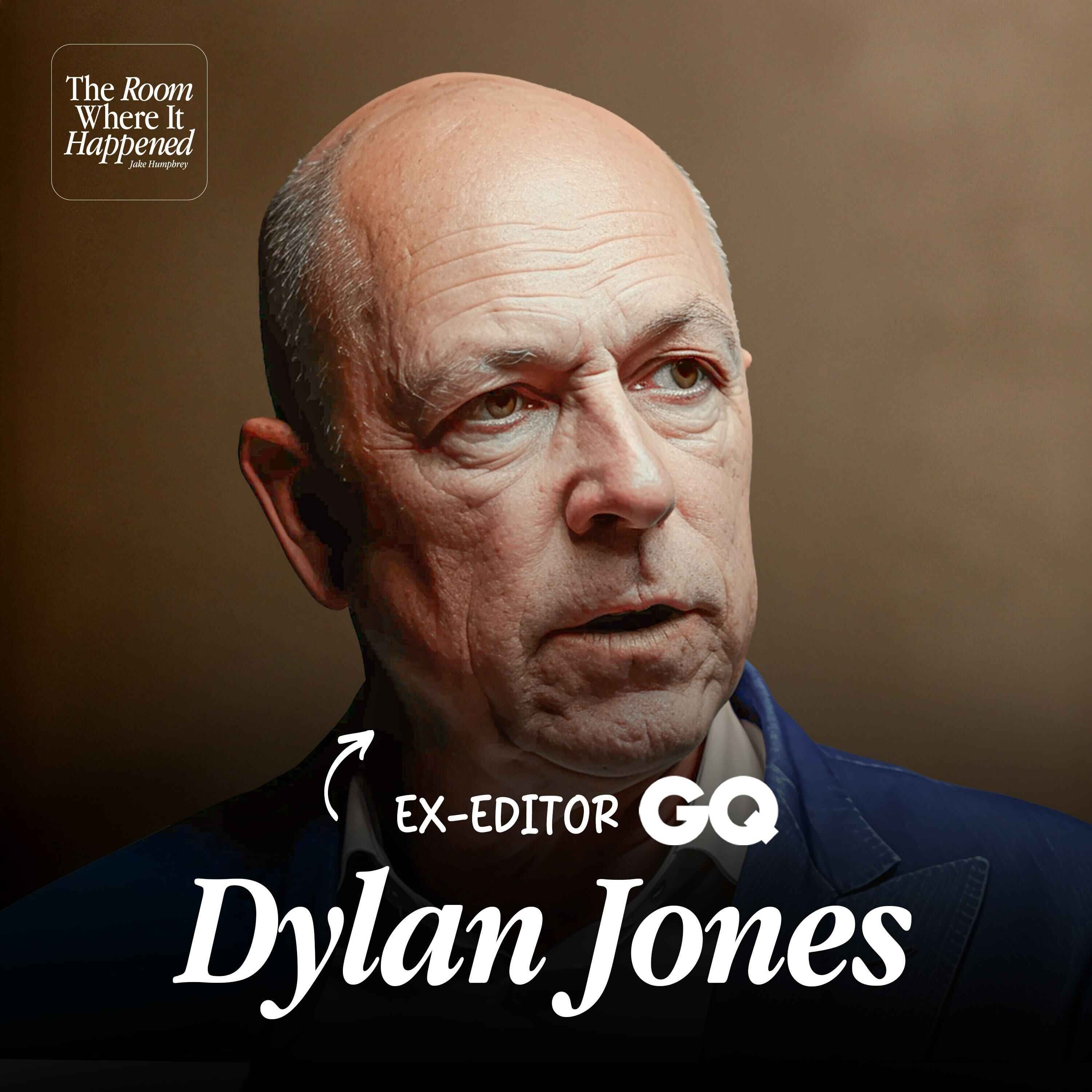
How do you take a brand from dated to defining? For Dylan Jones, it started with a clear vision, a few audacious hires, and the nerve to challenge tradition from the inside out.
In this episode, Dylan reveals the calculated risks behind GQ’s reinvention, the behind-the-scenes battles that shaped its new voice, and how one outrageous idea proved he was the right person for the job.
From navigating corporate pressures to redefining authenticity in media, it’s a candid look at transformation, leadership, and the power of trusting your vision when the stakes are high.
"IFS - award-winning Asset & Service Management software
👉 Reimagine your operations at https://hppod.co/ifsai"
Hosted on Acast. See acast.com/privacy for more information.


