
 Ask ChatGPT


 High Performance Business
3 Mar 2026 · 1h 3m · 30 chapters
Host: Jake Humphrey
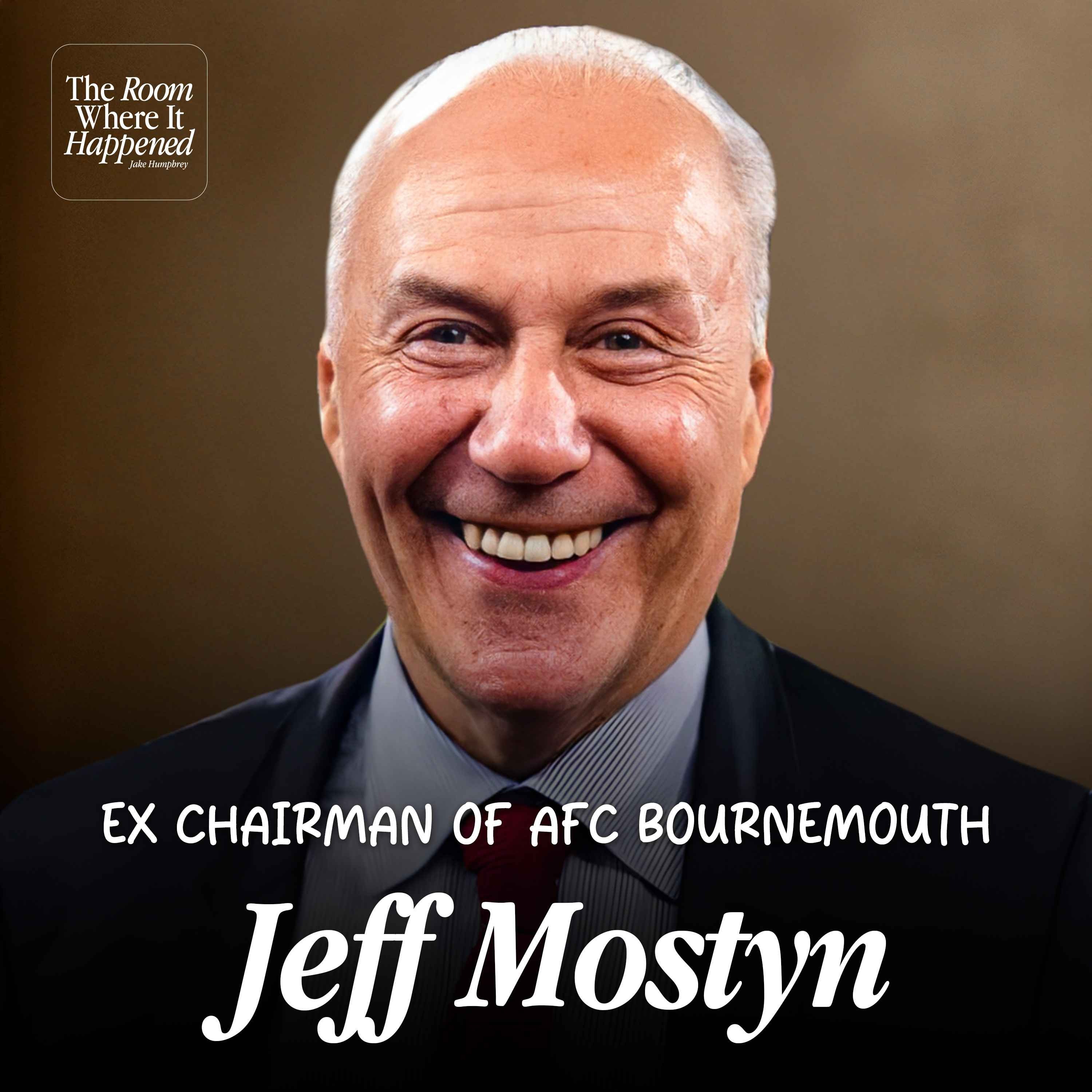
Jeff Mostyn, former Chairman of AFC Bournemouth
In this episode, Jeff Mostyn recounts his unexpected journey of saving AFC Bournemouth from liquidation and reflects on the lessons learned throughout his 17-year tenure. He discusses the highs and lows of running a football club, financial challenges, and the importance of community and leadership.
Written by AI. May contain mistakes.
Discussion on how the dynamics of football club ownership have shifted over time.
“Have I read it right that that's what Premier League ownership looks like now?”
Exploring the impact of monetization on the integrity of football ownership.
“I just wonder what the change from your era to now looks like from a sort of integrity perspective.”
Insights into the financial realities and risks of owning a Premier League club.
“What a lot of owners didn't recognize is that you can put you know, lock, stock and shooting barrel into a football club.”
Discussion on the need for regulation in football and the challenges involved.
“Who are the people who need to keep their eye on this and regulate it?”
Analyzing the conflicts between clubs, fans, and governing bodies in football.
“I can't speak of what the current temperature is within the Premier League room.”
Discover the challenges of competing fairly in the Premier League landscape.
Learn about the intense discussions during the COVID era regarding season curtailment.
“So, you know, I would be fighting hell for leather on behalf of AFC Bournemouth.”
Explore how self-interest shapes decisions among Premier League clubs.
“And it is that self-interest that makes it very difficult to come to an alliance and an agreement that is in the best interest of all.”
Understand how the balance of power has shifted towards a few elite teams.
“So, you know, as long as our 14, you know, put their hand up as self-interest, we could block most things that the top six wanted and vice versa.”
Delve into the implications of broadcasting revenue on club finances.
“And as a consequence of that, they get a little bit more, but we get equally more out of a greater share, for me it was a no-brainer.”
Learn why consulting managers is crucial for football club decisions.
“You know, I think as a collective at the football club, we need to make sure that if it was, for instance, when we were talking about the increase in substitutes, you know, to seven, i.e.”
Examine Eddie Howe's approach to Premier League discussions and team dynamics.
“And what was Eddie's general approach to your Premier League meetings?”
Learn about the camaraderie and philosophy that shaped Bournemouth's success.
“This was, you know, compliance, if you like.”
Understand the dynamics of player transfers and the chairman's involvement.
“And it would be my chief executive, Neil Blake and Richard Hughes, who would, you know, talk to Eddie and the players on a day to day basis because Richard was the technical director, sporting director.”
Explore how players are evaluated and the initial steps in transfer negotiations.
“You have agents who often pretend to be agents of a certain player.”
Discover how player contracts affect decisions in transfers and player movement.
“Because the working relationship, the day-to-day working relationship would generally be with the chief executive and the manager.”
Learn how to reassure players when key team members leave and maintain stability.
“I want to take the offer, but even though you work for me, you get the final say.”
Examine Eddie Howe's unique approach to leadership and team management.
“We've replaced them with incredible players.”
Understand the emotional challenges faced when a pivotal figure leaves.
“And we've got all the square pegs in the round holes.”
Learn about the emotional impact of a pivotal conversation related to football management.
“And that was in, you know, every competition.”
Explore the mutual decision-making process behind Eddie's departure from the club.
“because it was such an important part of your life, and if you weren't emotional, it means you didn't share what you did.”
Discover how personal relationships impact professional ties in football management.
“where, you know, he's the messiah, you know, despite them, you know, you've got to look at supporters who are fanatical.”
Learn about the financial struggles faced by lower league football clubs.
“And, you know, you have like given me the honour of writing the forward for the book.”
Hear the story of overcoming financial difficulties to leave a lasting legacy.
“I want to talk about the sort of financial side of the game now because people think, oh, Bournemouth win the Premier League.”
Understand the complexities behind the decision to purchase a troubled football club.
“I think about that all the time and my love with the supporters, the staff, the players, certainly, you know, the players of my era is still exactly the same as it was the day that I left the football club.”
Explore the shocking financial realities and personal risks of club ownership.
“But then people will think, how can it have been the worst decision of your life if that's what it gave you?”
Learn about the financial challenges faced by the chairman in keeping the club afloat.
“So this was the, our wages were circa 1.2 million a year.”
Discover the difficult decision to place the club into administration and its implications.
“So I met Gerald Krasner, and it's quite funny, at the Tewton Glen Hotel.”
Explore the emotional turmoil during a pivotal press conference and its potential consequences.
“is happening in terms of finding a new buyer and the status of the football club.”
Hear about a crucial moment when the chairman had to choose between financial ruin and saving the club.
“I think before it got, you know, in fairness, I don't want to be melodramatic here.”

Get the gist, explore an idea or ask about something said.
 Claude
On High Performance Business, what are the key points of this episode?
Searching your listeningAutomatic transcript. May contain errors.
0:00He said, if you shake your head, I will liquidate the club live on air today. Did you sense the balance of power was shifted towards just a few teams? When you're in a board meeting, you know, it is a political minefield. How hard was it when Bournemouth and Eddie parted ways? Eddie phoned me and I'm racing through this without getting emotional because, you know, Rose said, I think that'll be the last conversation you have.
0:30Geoff, welcome to the show. Thank you, Jake. A real honour and a privilege being here. Look, I love the book, The Chairman, about your life, owning, running, rebuilding, saving Bournemouth Football Club. And I want to talk about your journey, but I want to talk about it in the context of the modern game. Because I now look at the way that football looks in 2026, and I just think to myself, it's now about who has the deepest pockets, rather than who has the greatest vision, or who has the most thorough passion for the game. Have I read it right that that's what Premier League ownership looks like now?
1:02I think you probably have, you know, just after being out of the role of chairman for the last three years, stepping back and looking at the real world, you know, of football. I think the chances of a butcher, a baker, a candlestick maker ever owning a football club again has long since gone. It's now corporations, you know, money men that are running football. And how has that changed the ownership of football from your perspective? Well, I think that, you know, when you are a local person, you know, normally in the lower leagues, you're buying a local football club. You've got your heart, you've got your soul, you've got your passion.
1:43It's about the community rather than just the football club. You know, we all know the winning's important, not the taking part. Oh, certainly that's part of my DNA. But we know you have to take part in order to win. I think that, you know, today it is all about monetization. Yeah. You know, and that's with respect to the owners and the communities because I think taking the Premier League as one entity, they do an amazing amount of work in the communities. When I was chairman and owner of AFC Bournemouth, it was all about the community because, of course, we never had a vision of getting to the Premier League.
2:21Yeah. See, I'm the chairman of the Community Sport Foundation, which is linked to Norwich City. So I absolutely can testify for the amazing good that football does. I think the only issue from my perspective when it comes to the modern ownership is when they talk about the European Super League or you talk about clubs having 115 charges laid against them or you talk about financial fair play or questionable shirt sponsorship or stadium sponsorship things. I just wonder what the change from your era to now looks like from a sort of integrity perspective. I've got to be very... Yeah, of course. As soon as we mention integrity, you know, I've got to be very careful how I answer that.
2:59I think the integrity is still in the game. Yeah. But, and there's always the but or however, you know, people are looking for every opportunity to take every sporting advantage that they can because of the economics that are involved. You know, whereas you would have a local sponsor, people are now looking for global entities. You know, it's not just about sponsorship, what's on your shirt, the stadium naming rights. It's about spreading the gospel globally to maximise the income and the reputation of the football club. You know, hence the multi-club ownership model. Yeah. And a lot of people sort of talk about the way that the game has gone now as being, if you want to lose a lot of money, buy a football club.
3:53I'm not sure that's really true, though, is it? I think that if you want to own a modern Premier League football club, it's going to cost you a lot of money to buy it. But it seems to me that the value is only increasing, right? The values are increasing. I think, you know, once upon a time, there was always the analogy with MLS clubs. You know, why are MLS clubs financially sound where you can invest literally millions? I think the franchise is round about half a billion now to buy an MLS club so I believe and then it might cost you another half a billion to build a new stadium etc. There are very few licenses that are issued there but theoretically you can't lose money because there's no relegation.
4:37What a lot of owners didn't recognize is that you can put you know, lock, stock and shooting barrel into a football club. And if it doesn't, there's no performance on the pitch, you can actually lose an awful lot of money. But I think that was relevant when individuals own football clubs. Today, I think if you look at the ownership model of the Premier League clubs, the vast majority are one form of consortia or another. There are very few that are, you know, owned and run. You know, I can name Brighton, you know, with Tony Blue and Paul Barber, who both happen to be very dear to me. So a nice shout out there, you know, which is the most incredible model that you have.
5:22The way that football club is run, I think, is as good as any club in Europe, let alone in the UK. Brentford, another, you know, another ideal model. So I think with overseas ownerships, you often get different mentalities. which would be akin to how they've been brought up and how they see the sporting value. But a lot of the value now is what is the end goal? Is it to buy a football club, develop it and then sell it? Whereas in the past, you had ownerships that were passed from one family to another. I mean, and we can talk later about the day that you became the owner of Bournemouth. How much of your brain on that day was like, oh, I wonder what I'll sell it for one day?
6:10Zero. Zero. Whereas the modern owner of a football club is probably sitting around a boardroom with their investors, probably with a pie chart or a chart of some description going, look, in five years, 10x. Because the people who are sat around that boardroom table are financiers. So if you look at hedge funds, investment companies that are part of the consortium of, I would assume, quite a lot of clubs in the Premier League and certainly in Europe. They want a return on their money. And you can only do that by, you know, growing the asset value of the club. I can safely say that, you know, when I bought the football club, there was zero because I bought it with my heart, not my head.
6:52And that's embarrassing because I'm a financial advisor by profession. I wouldn't even give myself financial advice now, let alone anybody else.
7:05That new thing? Yeah, we've got it. The Drop by GNC, bringing you all the newness that matters, hand-picked by the pros who actually know what's up and what's proven to work. We keep you on top of the trends and dialed into what's next. Whether you're crushing it at the gym, leveling up your game, or thriving every day, The Drop by GNC is where the latest solutions in health and wellness land first. Non-stop innovation and fresh finds daily. Explore what's new and what's next. On the drop by GNC. Guys, it's no use putting it off. The best time for an underwear refresh is now. Tommy John underwear is designed for a perfect fit that stays put all day.
7:44There's zero chafe thanks to four times more stretch than competing brands. And their innovative horizontal quick-draw fly is a game changer. With over 30 million pairs sold, there are thousands of men out there more comfortable than you. Don't settle for less. Go to TommyJohn.com today for 25 % off your first order with code COMFORT. That's TommyJohn.com slash COMFORT. TommyJohn. Comfort perfected.
8:11Who are the people who need to keep their eye on this and regulate it? Is it the job of the Premier League? Is it the job of the FA? I mean, there was a period where the government were looking to kind of regulate football, and probably still are. Well, of course, there is still this issue with the football regulator. I must admit, I'm not quite up to speed of where we are now. One minute it's been appointed, then it's been put on the back burner. I think football needs to regulate itself. I think the danger is that you don't want to kill the golden goose. The Premier League is the greatest league on earth.
8:50Again, it's only my humble opinion, and for understandable reasons, I'm biased, having, you know, played a part in the growth of that. It is absolutely incredible. You know, so many people wake up in the four corners of the earth. I think there's, you know, over one, two, three billion people that watch the Premier League, either live, syndicated, you know, streamed over the period of seven days, and then the same again. And if you think about that, it's probably like one in eight people globally, you know, actually watch the Premier League. I, you know, I'm not, I'm not silly. I know, you know, you're not going to get too many people that are going to wake up three o 'clock in the morning, you know, to watch, you know, two sides that don't feature one of the leading clubs.
9:35And it's why I've always felt that it's been an honour and a privilege for Bournemouth, you know, to be in the Premier League, to have our name blazoned out, you know, around the world. It's not only brought prosperity for the club, but the community as well, of which the supporters are gaining a benefit, although it's intangible, you know, within the benefits of the town. And I think that's where, you know, we need to sort of keep our eye on it. And I think the tendency can be, you know, as soon as you get somebody who's not football related, that starts to impose rules and regulations that can stifle that interest in bringing the world's greatest players to our league, we have a problem.
10:21And I think that was my only concern with the regulator. The government would argue that we haven't regulated ourselves, you know, because of the distribution of funds, you know, coming from the Premier League down, you know, through the pyramid. And I do understand that. But there's an awful lot of money in excess of a billion going from the Premier League to support the lower leagues. I know Rick would say there's not enough money going. And, you know, I can only speak from three years ago. I can't speak of what the current temperature is within the Premier League room. But I do know that the EFL always want more and the Premier League want to give less.
11:01There's no other company. If you ran a supermarket, you wouldn't expect somebody to come into Tesco's and tell them that they have to start sending money down to Lidl because they've got a greater share of the dividends. it's a business at the end of the day and I've always said that and I think people use that when it suits them but dismiss it when it's not necessary I've always said the difference when I was doing any public speaking locally with to some of our supporter groups or the wider community that the biggest problem that we have running a football club is that people actually think it's a football club and there's a clue in the name because but I can only take our own club we're in the business of playing football and the clue there is we're in the business of playing football and it's the bottom line that counts so you have to create that monetization but remember that it's the community that are paying those wages when you start to break it down like this you realize the complexity don't you of the premier league because you've got this incredible product that a tiny island has created the best football league in the world then understandably the richest groups in the world go, hold on, there's money to be made here, so over they come.
12:21And then you start thinking, hold on, we don't really want our game being sold abroad and owned by everyone apart from the people that created it. But at the same time, you've got the government saying, well, let us solve the problem. And then you say, well, hold on, we don't want the government controlling football. Whilst the EFL and grassroots football are saying, well, hold on, if there's no grassroots football, there is no Premier League because we create the players that get to the top. and you see this tug of war at the very top between the club and the fans where, you know, again, with a business hat on, if you were the owner of Chelsea, Man U, Man City, Liverpool today, you'd go, well, look what the TV money's worth and look what the fan through the gate is worth.
13:01So where's our priority? And you realise that football will never be stable. Not everyone will never all be happy, will they? And you were kind of years in the absolute centre of this tornado of politics, really. And that's what it is. You know, it is a political minefield. And if you sort of, you know, look at the, I'm just looking at the rug here, the round table. And, you know, this was, you know, when I, my very first Premier League meeting, it's almost in the round. You know, it's like, you know, King Arthur and the Knights of the round table. And how do you satisfy 20 owners, 20 chairmen, 20 chief executives.
13:42Now that round table is filled with financiers. You have 20 different business models, but all sharing effectively the same business. So I sit there as AFC Bournemouth alongside Manchester City, Manchester United, Arsenal, Chelsea, Liverpool, the giants of the game how can our model be the same as theirs yet we're all competing on the same field for the same amount of money but knowing that you know the reality is you're not going to compete on a week by week basis if you are all voting on a specific point you have a self-interest in ensuring that your hand goes up at what will first and foremost benefit your club yeah and then secondary how it will benefit the league.
14:36Right. And I remember at one, you know, no names, no pack drill, but being at one shareholders meeting, this was during and just post the COVID area where, you know, we were looking desperately to almost try to curtail the season or, you know, retract the season because we were sitting in the bottom three and we thought if the season doesn't restart, why should we be relegated when only two-thirds of the season has been played. So, you know, I would be fighting hell for leather on behalf of AFC Bournemouth. And I remember putting my head above the parapet, which I was always very careful not to.
15:17And especially as AFC Bournemouth came before Arsenal, so I was actually sat next to the executive table. So you sit in alphabetical order in the Premier League meetings. And I literally sort of started this debate off, said my piece and then when it got around to somebody else again no names no pat drill but they actually you know turned around and said oh my god jeff we've never heard such a display of self-interest in all the years i've been sat around this table and i had to think for a minute i remember richard scudamore who was you know chief executive almost mr premier league in my time you know just pausing for a moment as i paused and he said do you want to respond to that jeff i said oh thank you i'll just sort of regain my composure and i just turned around and i just said thank you for that compliment i said nobody has ever given me such a compliment before because it shows that i am doing my duty my fight history duty on behalf of the football club Wow And that was the end of that conversation And it made me realise then That not only did I have self-interest But the other 19 clubs have So trying to get a decision Amongst the clubs You know There was traditionally always the 14 And then the 6 And you know You really had that top 6 That was stabilised Now it can be sort of any one of 10 In the top 6 Including ourselves We were there in the early part of the season.
16:52Shout out for the ball. It is changing dramatically. And it is that self-interest that makes it very difficult to come to an alliance and an agreement that is in the best interest of all. And when you were sitting around the Premier League board table, did you sense the balance of power was shifted towards just a few teams? Yes. I mean, it was, and I think it was, I didn't resent that. You know, I think there was, you know, that period where the top, and I still call it the top six. I think it's a ridiculous statement now. We know who you mean. We know, exactly. And I think although there are pretenders to the crowd, there's still the solidarity, the wealth of those clubs.
17:39And your big six is Man U, Man City, Liverpool, Arsenal, Tottenham. Chelsea. And Chelsea. Yeah. I mean, they were, you know, and probably still remain. They may not be in that order. But I think, by and large, they're going to come through. Eventually, their huge wealth and the players they recruit, you know, the cream generally comes to the top. It may not do every week. But if we just call them those clubs, you could always see that, I wouldn't say there was an alliance, but there was a self-interest. that as long as they stuck together and the other 14 stuck together, there was almost an impasse because you would need 14 votes.
18:20So, you know, as long as our 14, you know, put their hand up as self-interest, we could block most things that the top six wanted and vice versa. Would you take us into, and again, without necessarily naming names or betraying any confidences, a time where you as the 14 were blocking something that the big six wanted, and then the politics that ensues to try and get one of you to come and side with the big six and what kind of conversations would happen? I think there was always... I never found there were people deliberately obstructing progress. But often there would be times when the big six almost demanded a greater share of the broadcasting.
19:10And I think that that was probably the most notorious period where there was a collective decision on whether they were entitled to more or not. I think, you know, when the Premier League was founded, you know, amongst the fathers, you know, there was David Dean and the Brotherhood. the broadcasting was divided equally amongst 20 because nobody in those days ever thought that internationally the growth would be as incredible as it happens to be. And now the broadcasting overseas revenue is absolutely incredible. So putting the politics aside and almost bypassing your question only because it's slightly political.
20:02I can just give you my own opinion at the time, was that if they wanted a greater share of the overseas broadcasting, would that be fair and equitable to a club like Bournemouth? From my humble opinion, it was that if the revenue is at such a high level because of the elite clubs, should we be standing in their way? Is 50 % of something better than 100 % of nothing? It was nothing like that. We're talking about a fraction of 1%. And I thought, is somebody, and again, without being disrespectful to our own club or to another club that I could mention, would you wake up at 2 o 'clock or 4 o 'clock in the morning in Las Vegas to watch AFC Bournemouth against Wolves.
20:58I only mention that, no disrespect to certainly my own club, but to Wolves because we play them next week. I wouldn't be getting out of bed. Would I be watching AFC Bournemouth versus Liverpool? Absolutely. Manchester United. So they're driving the revenue. And as a consequence of that, they get a little bit more, but we get equally more out of a greater share, for me it was a no-brainer. And is that what created the basis of your finishing position determines your income? Was that conversation? Well, almost. It was making sure that you were future-proof on whatever was being agreed now because once again, trying to get a decision achieved can take from one season to another.
21:48trying to get it reversed might take, you know, forever. So, you know, I would just go along. So I was representing the club at most of the Premier League meetings. My chief executive, Neil Blake, would join me as and when, you know, he saw fit. There were always two representatives from each club. And then I would take, once Maxim bought the football club, take Maxim's views. Really, it was a conversation between me and Neil. You know, Neil had delegated responsibility for running the club on a day-to-day basis. My job as chairman was to support him. You know, it's like an up and down situation.
22:27We would get a view from Maxim, who was effectively paying the bills. And I knew exactly how I was going to vote. You know, we believe this is the way forward. And you could be persuaded by those that had the strongest voice. you know my two of my great mentors you know were always very articulate steve parish paul barber yeah you know paul's a really you know been one of my greatest mentors ever since i joined the premier league um or even through the efl and i would take their counsel and if it was different to how i'd arrived at the meeting you know with my briefcase and your committee has said this lad, then I would go back, you know, would have a phone call at a break.
23:15I would phone Neil, say, look, I think the consensus of opinion is X, Y, Z. What are our thoughts? Can you get Maxim's thoughts? So I would never wing it. You know, I think as a collective at the football club, we need to make sure that if it was, for instance, when we were talking about the increase in substitutes, you know, to seven, i.e. five you can bring on, why would we make a decision without consulting Eddie Howe? You know, this was like ridiculous. I think, yeah, five, hang on a minute, this is going to disadvantage the club. We've got five teenagers on the bench, you know, Man United are bringing on about£600 million worth of players.
24:00And what was Eddie's take when you went to him and said, this is a proposal? So Eddie would, whatever it happened to be at the time, we would take his view. Right. And then we were representing, for me, the football aspect of the business. This is the bit that most people, you know, can't comprehend. And I didn't when I bought the club. You could have the greatest minds on earth, you know, whoever would be your, you know, you alluded to earlier about 40 guests who, and I know there must be 40 incredible, influential people. If you put those 40 people on a board of directors, this would be a guaranteed successful business.
24:41Then you buy a football club. And the only thing that changes the dynamics is no matter how brilliant those minds are, no matter how incredible their performance is, you have a losing team on the pitch and the whole dynamics of the economics of that business goes out of the window. And I never realized that. I bought the football club thinking, oh my God, financial advisor, I can change the fortunes, you know, of this football club with my business acumen. I forgot that we were actually playing football. And you lose nine games out of 11, or you don't win for 11 games, just taking our recent run.
25:24And suddenly the sponsorship's gone down, the economics have gone down, and the business is now in disarray. So you have to be careful what you wish for when you're in a board meeting. Don't get carried away with egos. This is an egotistical business. And you have to use your head, not your heart, like I did when I bought the club. And always take account if you're discussing an issue that is relevant to players and managers, you need to have their input. And even if you use the philosophy of, you know, we'll listen to everybody, but we'll still make our own mind up, you know, which is foolish.
26:09But a lot of people actually have that attitude. at least you can talk to your manager and say, look, we did discuss this with you, even though we've chosen this. Because Eddie might think, yeah, I want five substitutes. I might think, why should we disadvantage? We can only bring on five of this particular quality. We're disadvantaging ourselves.
26:35Jeff Mostyn: Taking care of your eyes shouldn't be a hassle. That's why Warby Parker is a one-stop shop for all your vision needs. Our prescription glasses and sunglasses are expertly crafted and unexpectedly affordable. Stop by a nearby store or use our app to virtually try on frames and get personalized recommendations. Did we mention we offer eye exams and take vision insurance too? For everything you need to see, head to your nearest Warby Parker store or visit warbyparker.com today. That's warbyparker.com. Parles-tu français? Hablas espanol? Parli italiano? If you've used Babbel, you would. Babbel's conversation-based technique teaches you useful words and phrases to get you speaking quickly about the things you actually talk about in the real world.
27:19With lessons handcrafted by over 200 language experts and voiced by real native speakers, Babbel is like having a private tutor in your pocket. Start speaking with Babbel today. Get up to 55 % off your Babbel subscription right now at babbel.com slash acast. spelled B-A-B-B-E-L dot com slash ACAST. Rules and restrictions may apply.
27:47And what was Eddie's general approach to your Premier League meetings? Was he the kind of manager that wanted to know what's being discussed? Who's discussing it? What are they thinking? What's the momentum? Or was he like, look Jeff, come to me with minimum distraction from the football? This was, you know, compliance, if you like. Right. You know, and Eddie, I think I've, you know, one of, I think, my legacies, you know, along with our management and executive team is that we built this incredible philosophy and camaraderie at the football club because of the longevity of the relationship. so myself, Maxim, Neil Blake, Eddie Howe, Jason Tindall, Richard Hughes in the later days it was like you know six people and our other board members so you know forgive me if you're listening you know not to exclude them but we were working at the football club on a day-to-day basis and I believe we created the the greatest winning capsule if you like of two dressing rooms So we had Eddie's dressing room downstairs and we had our dressing room upstairs, but we had one common heartbeat that drove the business together.
29:07So we complemented each other. And it would be my chief executive, Neil Blake and Richard Hughes, who would, you know, talk to Eddie and the players on a day to day basis because Richard was the technical director, sporting director. Neil was the chief executive. I didn't need to know what was, you know, happening on the training ground. My responsibility, you know, was my responsibility liaising with the EFL, my role on the FA Council. So flying the flag at football's highest table, my being the face of the football club, my relationship with the supporters, my relationship with the staff, giving everybody of Jeff Cuddle every single day, making them feel valued and important.
29:54Those were the things I was interested in, knowing that the skills of my fellow executives and Eddie and the team, that was being looked after. And Eddie would think the same. I don't care of what was going on at the Premier League meetings. It was of no consequence unless it affected what was happening to Eddie. I'd love you to help me just break down what a transfer actually looks like for our audience who have no idea let's take I know you're not there now but Semenyo's just joined Manchester City for a club record 68 million or whatever yeah so can you explain to us what would happen there what's the first that you as chairman of the football club would know that one of the biggest clubs in the country is coming for one of your players well I think there's you know now you know with agents that You have bona fide agents.
30:45You have agents who often pretend to be agents of a certain player. And there's the general gossip. So, you know, I think the mechanic, and even since I've stepped down as chairman, things have evolved dramatically. You know, now with the development of the technical directors, the sporting directors, they would be the first person to get to know that a club of whatever stature has an interest in one of your players. And would they come to you as the chairman first or would they go straight to the manager first and say, look, there's an interest in Semenya, for example. What do you think? Or is it your job to go to the manager and ask?
31:27No, I think that if we, I think, just one step back to let's assume that this was happening under my tenure. The first thing that they would discuss would be with our chief executive. Right. Because the working relationship, the day-to-day working relationship would generally be with the chief executive and the manager. And I think that's when interest would be shown. I think that our model may be different to a lot of clubs now because, and again it's only hearsay, you hear that decisions are being made without the manager's knowledge or consent that players are being bought and sold. Gav Southgate just wrote the whole article didn't he?
32:08Exactly. The manager's power is being eroded. Yeah, it is because of that. So I think that I would only assume that today this is an economic decision built on the ethos and the financial structure of the club. So a decision could be taken out of the manager's hands. if we say that Semenyo, again, these are just alleged figures, cost us$10 million, Bristol City will be entitled to a sell-on, we're going to sell him for$65 million. That money will allow us to do this. If you take our position now, it can help with the development of the ground, but we believe that we can replace Antoine because of X, Y, Z.
32:55What we also have to take account of is, it's not the best example that we're using this, but I know why you have, because it's current. But our hands are tied because Antoine had a 65 million buyout clause. So there your hands are completely tied. and if you have a sell-on clause, again, subject to what the other intricacies and the minutiae of that contract is, you have no say in whether he wants to go or not. So I assume that in this case, he would have been told that we have an interest from allegedly Manchester City, Manchester United, Tottenham, Chelsea, you know and god knows you know which other clubs maybe some in europe is this something that you know you would consider well for me it's you know it's like it doesn't take the brains of an archbishop to realize that if you inserted a sellout a sell-on clause it had to be with your permission it wouldn't just be for the football clubs yeah so i know with rayon that we've just signed.
34:03Allegedly, there's a massive sell-on clause there. So what the club have got to do is almost indemnify themselves to say, at some stage, we are a club that is going to develop players because of our incredible coaching with Andoni. We are going to have to sell. What we need to do is make sure that we have such a value. It will either deter clubs from buying, or if we get that, my God, it's a jackpot. And would you ever sell a player because the money was right for you but the player didn't want to leave, but it was kind of, listen? You can't. So basically, if a player is contracted and you have a desire to sell him but he doesn't want to go, the power is with the player.
34:52So I work for you. Jeff Mostyn's got a three-year contract. You know, there's an offer coming. I want to take the offer, but even though you work for me, you get the final say. I get the final say. And did you ever have a player under your watch force their way out and realise that actually, even you're the chairman of the club, you still have no power if a player really wants to go? I think that, you know, you could, again, it would be unkind to name players, but you know that those situations are definitely manufactured. that, you know, why would you... This is the problem, that you have got an employee who has made it quite clear they want to go.
35:36You're insisting that they see out their contract. And then you can't understand why that employee is not giving his best. And that's where the power lay. And my final question, when this happens and a big player leaves a football club, what would you as the chairman do to reassure the players this isn't the start of a collapse, to let the manager know that this isn't you suddenly having a fire sale? How do you stabilise a ship when someone like Semenyo walks away? It's so hard for those that are left, I think. It is. I think that if you've got the great culture at the football club and you have the right structure at the football club, it would be the chief executive and the sporting director, along with the manager.
36:20to reassure the existing players that, again, so you wouldn't usurp anybody. In our case, you know, in AFC Bournemouth's case, it may well be that Bill, you know, would do that. But I know that, you know, with, you know, Jim Favola, an incredible head of our management team, you know, president of business, that he would, I think, entrust that this is football. Everybody knows that this is just business. We had an example in the summer when we lost our entire, you know, our back four. We've replaced them with incredible players. So I would be working on the reputation that our sporting directors and recruitment team have got at AFC Bournemouth is enough to reassure the players that, you know, we reverse the roles.
37:16you know you're working for me now you know jake what a great opportunity for you you know you've been right on the periphery i have almost been praying for this time jake this is your time now to show us that you can shine that you can perform you've seen what's happened to your peers your career can really take off at this time but i assure you we will be strengthening the squad So you take, along with everyone else, because you're very humble, you as a football club take Bournemouth to the Premier League and then have that incredible fight to stay there. And almost everyone has an opinion about Eddie Howe.
37:55I wonder what it is that you saw in Eddie that season and I guess in subsequent seasons that a lot of people have missed or don't really understand that you think is the actual secret for how he managed to keep that club in the Premier League. Well, I think that Eddie has always earned respect. And, you know, I preempt the respect with earned, because I think in any walk of life, you know, you have to earn it. I think so many people think they're the gaffer, you know, they're the manager, they're the chairman, they're the chief executive. Everybody in the room should respect you. you know that is something that i never think is right i think you have to set an example and then earn it and what i love about eddie and i've always spoken you know always spoken highly of him is he has this insatiable appetite for personal development um and i think that is really the key to anybody's success i mean i've just enjoyed my 80th birthday um a couple of months ago and i'm still learning um i still have this insatiable appetite to develop what skills i have so i can better myself and by bettering myself i can better the people that i'm responsible for so if you take an analogy of a manager who is set in his ways and you know we could all name names you know here you know not the old days of you know malcolm with the you know the five foot cube you know I'm talking about a cigar here you know sort of you know coming into coming into a room and do it's my way or the highway or you're just the face you've you know you wear a suit not even in a tracksuit and you've got three coaches you know that are you know really training the boys Eddie is leading the training I believe you will respond with respect knowing that the manager is still developing his own skills, as opposed to being set in his ways and not being willing to change anything.
40:03This is my skill set. This is how you're going to play. We've got a lot of square pegs. We've got a lot of round holes. And we've got all the square pegs in the round holes. And the round holes, Christ knows where they are. And we've seen examples of that recently. Again, no names, no pack drill. but Eddie has always earned the respect of how he treats people one-on-one, how he treats people collectively, how he respects his staff and that is what I think his greatest strength is. And once you've got the dressing room and Eddie proved from Division 2 right through to the Premier League that no matter how much status you have, how godly you are, then unless you have the dressing room, the players can crucify you with their lack of effort or lack of support or lack of discipline.
41:03And I think that is Eddie's greatest strength. How hard was it when Bournemouth and Eddie parted ways? Oh my God, it was one of the most, for me, one of the most emotional moments when he left. And it was almost inevitable. You know, you could just see the strain that Eddie was going through. You know, people would, you know, would comment to me that, you know, has he been at the football club too long? You know, I resent all that because right up until the last match, which was Everton, you know, away, which was, you know, Rose and I were the only two directors, well, Rose wasn't a director, but we were the only two people that were there because it was COVID.
41:48Yeah. Yeah. And Eddie knew. And afterwards he said, I knew I'd look up into the stands chairman. I knew we'd always have your support. I never missed a match home or away 17 years, you know, within reason. And that was in, you know, every competition. He could always count on my support. And I felt as chairman that they should be able to look up into the director's box and know you're there, that you're not offering an opinion, you know, having watched something on the television or, you know, listen to announce a broadcast, I think it was, you had to be part of that joined at the hip. And I think that the inevitable, you know, was around the corner.
42:33But what was interesting, we played Everton, we won the game, still got relegated. And Rose and I, we were married in Chester. And we decided not to stay in Liverpool that night, win, lose or draw. or it was all too much. So we stayed in Chester. And Eddie phoned me on the Monday when we were driving back because after the game, all the dressing rooms were segregated because of COVID. So I didn't get a chance to see him after the game. And we had about an hour's conversation. How do I know it was an hour? Because the phone rang when I was just passing Nuts for services, and it concluded when we got to Stafford at the end of the roadworks.
43:17And it's funny, that's how significant this phone call was. And I'm racing through this without getting emotional because, you know, Rose said, I think that'll be the last conversation you have. Oh, man. So Rose felt it? Yeah. And why did she think that? She could tell, I think, because of the silence. Right. Excuse me. Listen, you and Eddie shared something incredible, and I always say you deserve to be emotional about these things because it was such an important part of your life, and if you weren't emotional, it means you didn't share what you did. And I'm sure you've thought about this long and hard.
44:00What had happened that had led to the decision for Eddie and Bournemouth to part ways? Well, I think it was mutual company. You know, there was no decision that we wanted Eddie to leave or Eddie, you know, wanted to leave. I think it was just the collective that, you know, he felt, I think, that it was a moment in his life and in his career that he needed to step back. And I know he's spoken, you know, about this, you know, now after, funny enough, a long time and almost a year out. And, you know, it was almost a year to the day, you know, he took a sabbatical. but he felt that I assume he felt it wouldn't be right for me to put words into Eddie's mouth but that he couldn't take the football club forward and he felt that maybe a change was going to be beneficial to Bournemouth AFC Bournemouth and going to be beneficial to him And I think, you know, that proved to be the case, in particular with Ed.
45:08You know, I think getting the opportunity after a 12-month sabbatical to go to Newcastle United, where, you know, he's the messiah, you know, despite them, you know, you've got to look at supporters who are fanatical. I mean, I love going to St James' Park. I love going to Anfield to name but two states. I mean, this is beyond supporters. It's their life. So it's no surprise when the team goes through a bad run. You know, do we need a new manager? You know, he's brought silverware. He's a god. I know this from, you know, him coming to the book signing, you know, with me at Waterstones in Newcastle and bringing the town to a standstill and closing the store.
45:56Really? You know, it was remarkable for me to see three floors of people spiral in Waterstones for him and Jason to come and sign my book, you know, with me. Good for book sales as well. Oh, it was great. Well, do you know what I said to them? It was incredible. Because I'd only asked him, it was about a month before, we were playing Newcastle. And it was on my birthday, so 21st of September, and it was my 80th birthday. and the game was then switched to the Sunday. So, and that was when I was having my 80th party at home for the family. So I messaged Ed and said, you know, I can't, I won't be at the game.
46:40So he said, Chairman, why don't you come to the hotel, have dinner with me and the boys, which was amazing, you know, and I met all the team and he introduced me to everybody. And afterwards I said to him, I've got a huge favour to ask of you. and I said I mean this is huge he said chairman whatever it is the answer is yes um and I just said look I'm about three million short and he joked he said chairman if it was only money the answer's still yes I said it's beyond money this I said he said what is it I said I'm having a you know I've written the book which he wrote the the forward to um and I said I want to have a book signing in Newcastle, you know, because literally the book is about you as much as it's about me.
47:26And, you know, you have like given me the honour of writing the forward for the book. So would you come to do a book signing with me at Waterstones? He said, of course I can. What date is it? And I said, oh my God, you are literally above and beyond. I said, as if I'd have the audacity to have already got a date without asking you whether you would come. So I just said, now the answer is yes. You and Jason decide when the date will be. And he came back, you know, with the date. He'd never even set foot into the middle of Newcastle. And for him to come along, and even when we had photos with all the fans, I said, look, if you want just a picture with Eddie and Jason, I'm happy to step aside.
48:11No, Jeff, you know, if it wasn't for you, we'd never have got Eddie and Jason. And I literally had a picture with Eddie, Jason and every Newcastle fan. And I said to the manager, the general, he was the regional manager of the bookstore when we were planning it, I just said, I don't care if people think I'm his grandfather and I've got nothing to do with the book as long as they come along and buy one. So it did really help, you know, on the day, but that shows the strength of our relationship that, you know, he would come along and do that for me along with Jason. What a journey you shared together.
48:49I want to talk about the sort of financial side of the game now because people think, oh, Bournemouth win the Premier League. They're rolling in money, everything's easy. You know, suddenly all of the challenges that you have as a lower league football club are gone. What was the reality? Well, you know, it's like chalk and cheese talking about where the club are now, especially under the new ownership, to what it was like when I first bought the football club. we couldn't afford a first class stamp um you know the club every day people were talking about jeff you know you were chairman of the football club you owned the football club what was your sort of daily routine the daily routine was how do we find an investor to help save the football club and it was impossible you know my vice chairman steve sly and i went from land's end John O 'Groats.
49:44And people say, how would you identify an investor? And I would say, we used the mirror test. We'd stick it in front of somebody's mouth. If it steamed up, they were alive. They were a potential investor. And we talked to them. It was impossible. Why would anybody invest in a football club that had no assets, no money? It was really, really hard. and you know we had to really struggle and of course my first interview with um tony husband of bbc you know it was the usual new owner walking around the stadium i'm puffing my chest out um you know jeff you know why have you bought this car crash of a football club that's been in financial difficulties all its life and i said oh my god tony thank you for asking me that you know I'm a fully qualified financial advisor.
50:36I'm going to bring financial stability to the football club. You know, a year later, I'm putting it into administration. Because I bought it with my heart, not my head. But the reality is that today, the finances are incredible. And when you look at, you know, the progress that this football club has made, I'm so proud, so beyond words of the legacy that I've left the football club. I think about that all the time and my love with the supporters, the staff, the players, certainly, you know, the players of my era is still exactly the same as it was the day that I left the football club. Nothing has changed.
51:23You know, I'm there on match day. I still have the love in. and it adrenalises me. It still keeps me part of that football club because it was like a divorce. You know, when I had to step down, I was an emotional wreck for probably almost a year. Really? Yeah. I never realised, and it's probably only now I'm realising just what the club meant to me. Now, for people that don't know the story of how you ended up owning a football club in the first place, I think this is interesting from a kind of business perspective. What was your rough net worth when you decided to buy a football club? I was not that wealthy, but I just sold my business.
52:06Did I have a few million? Yes. But it was, I wouldn't have enough money to pay a Premier League footballer for the time that you and I have actually been together today, which I think is less than an hour. So how did you come to the decision that it was the right thing to do? I was asked recently, I was actually across the road at the Langham Hotel doing, it was a showcase, I think with Peter Schmeichel and Michel Roux. And I was asked a question when it came to the Q &A by somebody, a young lady who said, Jeff, this must have been the greatest decision of your life, buying the AFC Bournemouth.
52:46And I just paused, almost lulling, there was about 250 people there, lulling them into a sense of false security. and I paused and I just said, I can absolutely say without any question, and I think they're still thinking it's going to be positive, it was the worst decision of my life. And I bought it because of a number of things. One, my passion for football from being a child to my best friend was manager of the football club, Kevin Bond, who I'd known for over 40 years. And almost maybe subliminally thinking I'm going to save his job. you know, if I actually become owner of the football club.
53:26So it was the worst decision of my life. And what I said to people that night, and I say to your listeners, is that you cannot, because it had a happy ending, you cannot make the worst decision of your life, suddenly the best decision of your life, because it had a happy ending. You have to compartmentalize that decision, so you never make that decision again. and that's how I articulated it that night and it always will be the worst decision of my life but it created the greatest journey of my life 17 years you know well it's almost 20 years ago it was 2006 when I bought the club so we're now in 2026 20 years ago it's created the greatest journey the greatest excitement of my life outside of my own family, the privilege and the honour of meeting people like yourself today.
54:24But then people will think, how can it have been the worst decision of your life if that's what it gave you? Because it had the happy ending of the people that I met on the way that actually helped me. So having bought a club that I realised very quickly had an amazing amount of debt that was non-disclosed. How much? well, it was nearly$3 million of additional debt. We're now talking about a Division I club that was soon to be relegated to Division II. There's no assets. People say people were suspicious. I had death threats. My wife had death threats. My children had death threats. They're thinking, why does this man from Manchester buy a football club that he doesn't even support?
55:08You know, he's been a Manchester City supporter since he's the age of five. Why the hell has he come here to ruin our life? What was it like the moment that you realised the true debt of the football club was three million? Oh, it was, you know, where's this dark hole? Did you think you basically bankrupted yourself? Well, yes, because, and that's why I had to put it into administration, because prior to that, I was funded. So when you talk about the, you know, the level of expenditure relative to your own wealth, it was a huge percentage. We're not talking about, you know, our new owner, you know, who's a billionaire.
55:46And, you know, we've just bought a player now for, you know, with add-ons, 35 million, Rayan. And, you know, we've bought numerous other players. But back then, I was paying$100 ,000 a month in round figures to keep the club alive. So this was the, our wages were circa 1.2 million a year. So I'm paying this out of my own pocket. And then it was the residual amount of what was needed. So if you said on X day, we don't have a home game, you know, Mark Luther, who was, you know, our accountant at the time, who I work closely with, we'd have a meeting every week. You know, chairman, we need a check for 100 ,000.
56:32and then we'd have a home game the next week. We might only need 40 ,000. We've got some revenue in from, you know, the local fish and chip shop who have decided, you know, to sponsor the corner flag. You know, that was eight shillings and sixpence. So we only need 55 ,000 this week. But in round figures, it was about 100 ,000 a month that I had to budget for. So suddenly I've worked 25 years in round figures to build up one of the largest independent brokerages, providing financial advice to, as was Her Majesty's, the late Her Majesty's forces, and providing financial security for me and my family.
57:15You know, and I was 61 when I bought the football club. It's hard for me, you know, to even think that I'm 80 now because, you know, Eddie has always said, you know, Chairman, you are the world's oldest teenager. And it's probably because I act like it And I've been blessed with, I've got a young family and I've been blessed with a young family at the football club. So the four inches between my ears are alive, you know, with positivity and energy and please God they, you know, remain so. So I, you know, was finding that I can't continue this. So we had to put the club into administration. I met Gerald Krasner, you know, who at the time had put leads into, he didn't put, he was the administrator for leads.
58:03So I met Gerald Krasner, and it's quite funny, at the Tewton Glen Hotel. And he demanded half a million to take on the role of administrator. And that was based on£100 ,000 a month for at least five months. He said, it may take us up to five months to find a buyer. I need that guarantee that you will pay not only me and he said Jeff I'll be up front I am first because otherwise I'm not going to do the job and then the players and the staff so I had to commit another half a million I already put in over a million of my own money during this period since I bought the football club until the administration this is a lot of money you know for me it's a lot of money for a club, you know, languishing, you know, with debt in Division One.
58:57And during this period, we were relegated to Division Two, ironically, on my daughter's wedding day. I knew I'm in for a penny, in for half a million at least, but I'm a man of great integrity, great loyalty. And I demonstrated that by taking on that role, that I would give the football club a lifeline by funding the administration until we found a new buyer. Wow. And what was the famous nod moment? Well, the famous nod moment came a little later. So what happened is we managed finally to sell the football club and Gerald Krasner had found a couple of buyers. It was Paul Baker and Alistair Sarriamutu under the guise of P6.
59:45And it was just amazing. we'd had once we were let down by a consortium from the west country they were in the stand you know with the the scarf and you know we're the new owners of you know the football club and and this was amazing so rose and i went off to spain to almost celebrate and you know when i talk about selling the football club this was peanuts yeah you know i mean you've got your money back no wow no no we're still going to lose money and this was going to be paid over a um you know a long period and you were thinking eventually i might just about get that i'm not sure i can't remember what the agreement was it was certainly a couple of years so off we go and i'll never forget it we're in porto banoose and having a glass of wine and suddenly the phone goes and it's gerald hey lad it's gerald there get your rear end back here lad uh the deal's fallen through So I'm thinking, what the hell?
1:00:43He said, we're having a press conference next Friday. Because as you know, it's a journalist that the administrators of football clubs had to have this monthly meeting so that they could tell the supporters, tell the EFL as it was, what is happening in terms of finding a new buyer and the status of the football club. So we get back, and on the plane coming back, you know, Rose and I decided that enough is enough. You know, we just can't keep throwing money after money down, you know, an endless hole because, in fairness to Gerald, he said it's not just about the administration, but until we find new buyers, it is next month and next month and next month.
1:01:35So we decided that I wasn't going to agree to fund the football club any further. In the meantime, Gerald calls a meeting with me. So we're now Friday afternoon at the football club. And he said, Jeff, you know, you'll arrive a little bit earlier and I'll tell you exactly what's going to happen. Meet with Gerald. He said, I need a cheque for another£100 ,000. He said, you're going to stand at the back of the room. I'm going to announce to the press that this is what's happened this deal has fallen through I'm going to ask you for a cheque for£100 ,000 you're going to nod if you're going to give me the cheque you're going to shake your head if you're not going to give me a club and he said I wouldn't blame you if you're not in fairness to him because he said I'm not going to just need this cheque but if we haven't got to buy a next month I'm going to need another cheque so I said right so we get into the press conference I'm stood at the back of the room and he it gets to the point where he's asking me the question so I said Gerald can you just repeat the question I know exactly what it is I'm needing more time you know to compose myself and he repeated the question and he I was still a pause I'm like I'm really an emotional wreck at this time, but not demonstratively emotional.
1:03:05And he said, what are you going to do? And I'm suddenly thinking that a hundred years of history is going out of the window because he said, if you shake your head, I will liquidate the club, liquidate the club live on air today. The club will not make the weekend. And that's the quote on the front of my book. So there's no, you know, he's bluffing. He might have been bluffing to this day. I don't know. But I'm thinking 100 years of history, this can change people's lives. What is going to happen to this football club? It will never be the same again. It might be reborn six or seven leagues down.
1:03:53And despite me and Rosie saying we're not going to do any more, I just nodded. I just felt that I couldn't let the club die after what I had done over the previous 12 months, 18 months. And it was a moment of sheer madness, you know, on my part because I didn't know how it would end. And it could have ended in economic ruin. I think before it got, you know, in fairness, I don't want to be melodramatic here. you know that oh my god this is just one saint that god's put on earth you know for one purpose to love afc bournemouth and change the face of dorset because i'm not that person but i felt in that moment i couldn't let the club die i got home and rosie before i opened my mouth said sweetheart i know what you would have done blimey look jeff it's the most remarkable story from start to finish And I think the insight into the modern workings of the Premier League, the relationship with Eddie, the culture that you created at Bournemouth, the risks that you took to keep the club alive is captured so beautifully in your book.
1:05:06And thank you so much for sharing so much of it with me. Once again, Jake, honestly, I'm absolutely honoured, humbled. I have so much love and respect for you, for what you and your team do and achieve, and how much positivity you bring and growth to people of all businesses. You know, I'm just proud to be part of your journey, as well as so proud to have been part of AFC Bournemouth's journey. Oh, mate, what a thing to say. Thanks a lot. Thanks so much. Thank you. That's great. Thank you.
Jeff Mostyn didn’t set out to become the savior of a football club, but that’s exactly what he did when a single nod saved Bournemouth from liquidation. In this episode, Jeff takes us back to that moment, when he committed another £100,000 despite promising his wife he wouldn’t, and reflects on how that spontaneous decision set the course for a 17-year journey with the club.
From the highs of creating the "greatest winning capsule" with Eddie Howe to the lows of financial crises and personal sacrifice, Jeff opens up about the hard-earned lessons along the way. He talks about the importance of human connection, how his approach to leadership, treating everyone like family, became a key to Bournemouth’s success. Jeff also shares the challenges of keeping a club alive through financial turmoil, including paying £100,000 a month out of his own pocket to keep the team afloat.
It’s a conversation about making tough decisions, balancing heart and head, and the power of loyalty and perseverance in the face of overwhelming odds.
Jeff Mostyn's book 'The Chairman: The Man who saved AFC Bournemouth' is out now.
IFS - award-winning Asset & Service Management software
👉 Reimagine your operations at: https://highpfrmc.com/ifs-au
Hosted on Acast. See acast.com/privacy for more information.


