
 Ask ChatGPT


 High Performance Business
1 Jun 2026 · 37m · 13 chapters
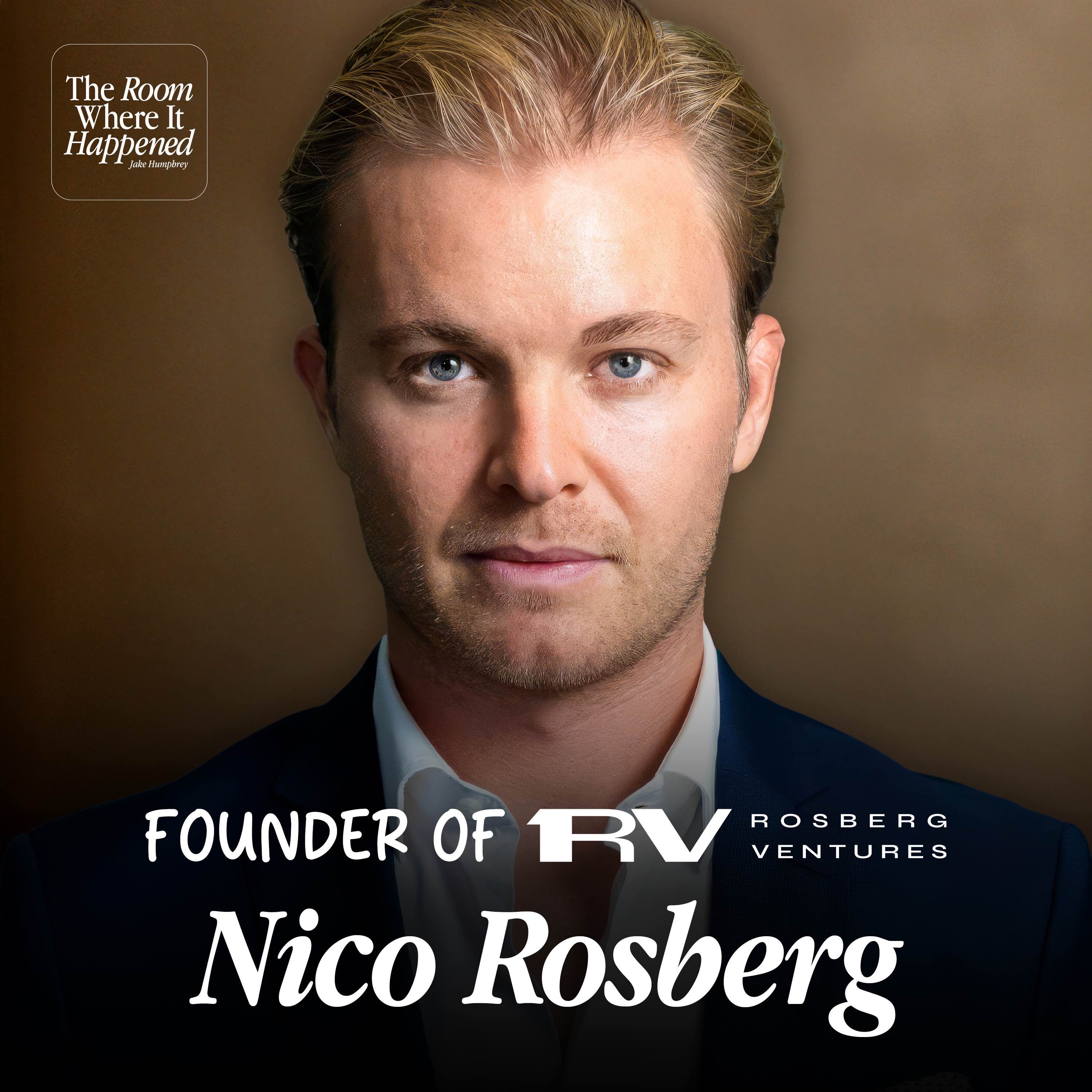
Nico Rosberg discusses why F1’s audience in Germany has declined after moving from RTL to Sky, and how he’s building a second career in venture capital via Rosberg Ventures—using startup “wins,” deal access, and relationship-building through F1.
Nico Rosberg is a former Formula 1 champion who now invests in startups through Rosberg Ventures. The host is not identified in the transcript.
Startup investing is a “small club” dominated by a few top investors; “win” means getting allocations and then seeing valuations grow (e.g., 3X with dilution). His strategy is “help first” to earn trust and access. He argues AI needs oversight and cites social-media regulation examples (Europe, Australia under-16 limits). Athletes and founders share traits: speed, focus, iteration, and resilience.
Anthropic and OpenAI; Lovable (online shops from antique collections); WhisperFlow (voice-to-text). He describes investing access via F1 gatherings and a 62-foot boat at trackside events, plus introductions to German “legacy” companies (e.g., SAP, Mercedes). He also mentions Delivery’s origin story (pizza delivery on a moped) and his own “allocation” email after three years of declines.
Written by AI. May contain mistakes.
Discussion on the decline of F1 viewership in Germany and the impact of paywalls.
“F1 is dead in Germany because it's moved away from RTL to Sky and they have less than a million viewers.”
Nico discusses the challenges and joys of moving from F1 to the startup world.
“So this would be in the latest examples now, it's like Anthropic or OpenAI.”
Nico shares what winning looks like in the startup ecosystem and the significance of investment access.
“And so the win for me at the moment is, for example, the startup world, since it's a very small club, it's very much an access challenge.”
Nico explains the importance of relationships and adding value in the venture capital space.
“with dilution a little bit less, but whatever.”
Nico offers insights on how athletes can successfully navigate their careers after sports.
“And this is really a unique ability for us to add value in the ecosystem.”
Discussion on entrepreneurs' role in society and the potential impacts of their innovations.
“I just think that the big thrill for you obviously is being successful, obviously is making Rosberg Ventures one of the biggest investment funds and the most successful.”
Learn how dictating can enhance productivity and the role of entrepreneurs in society.
“So I hit my button and I dictate everything I'm doing.”
Explore the balance between government regulation and the freedom of entrepreneurs in innovation.
“and try to bring people around it and add some value.”
Discover the challenges and strategies behind establishing a venture capital firm effectively.
“that some of these founders have to have.”
Understand the emotional highs and lows of achieving success in the business world compared to sports.
“Without having the money secured from the other partner families, I could not sign the contracts with the actual opportunities in the startup world where I'm then liable to fund them.”
Learn why celebrating achievements is crucial in both business and sports.
“there's not really a finish line either which also sucks so how do you work that out?”
Discover the similarities between high-performance athletes and startup founders.
“Grateful that you won and then you can continue on in an expert suit, but we've got to take our moments.”
Understand strategies for investing in startups and identifying potential winners.
“and it's enjoyable to partner with them.”

Get the gist, explore an idea or ask about something said.
 Claude
On High Performance Business, what are the key points of this episode?
Searching your listeningAutomatic transcript. May contain errors.
0:01Nico Rosberg: F1 is dead in Germany because it's moved away from RTL to Sky and they have less than a million viewers. RTL always had more than four. Is that right? Such a shame. So the whole thing. And it's the one country where Netflix has not caught up as much as everyone else. Well, Germany. We were getting 11 million for the BBC coverage back in like 2010. 11? Yeah, but globally, no? Was it globally? In the UK? 11 million. the highest ever was Canada in the rain when Jenson Button when he won took Vettel yeah that was 12 million no that is huge we would get 6 or 7 for most Grand Prix 8 for the British Grand Prix enormous enormous but there's only 40 million people living in Britain 60 but I don't know what Sky would get now for a good Grand Prix 1.5 maybe no more would they only 1.5 I think so what's happening there it's just because it's behind a paywall.
0:57Nico Rosberg: But the sport is still big in Britain, isn't it? Or would you say it's much smaller then? Yeah, there's so much now is YouTube, highlights, Instagram. Like my boy loves Formula 1 but he can't, he's 10, he doesn't want to sit and watch Hulk Grand Prix. But he'll go on YouTube and like, just watch highlights. Nico, welcome to the room where it happened. I'm so interested in your career after Formula 1 because I think for so many people what they achieve in sport is the pinnacle. And after that they never quite managed to get to the same level yeah we're sitting here talking about rosberg ventures which is something that i think is as exciting for you as the time you spent driving a racing car is that true that's hard i i could i can already say that that's not correct how close is sorry about that it was a good try but how close that's not gonna get it nothing's ever gonna get close um no nothing gets close to uh to winning Monaco Grand Prix or it's a winning which is just so insanely amazing in F1 winning your home race celebrating with friends and the challenge that led up to it is off the charts but still I get a lot of joy now from the business life and a lot of excitement and I'm able to win again which is super cool so it's great, it really is great What does a win look like for you in your new world?
2:18Nico Rosberg: so winning now I am in the world of startups and the world of startups is a very small club because there's only a handful of amazing investors in the world of startups and eventually there's thousands and thousands of startups but it crystallizes down to only a handful of generational startups as they break out and start to grow and hit this exponential growth curve What sort of startups are you talking about? So this would be in the latest examples now, it's like Anthropic or OpenAI. Those are two startups. Anthropic was only started five years ago, if I'm not mistaken. So five years ago, and it's perhaps currently, maybe one of, I mean, it's one of the top five companies in the world already.
3:07Nico Rosberg: They're talking about valuations in the trillions now for these AI businesses. So that was a small startup. and it grew into this world-changing business. And so the win for me at the moment is, for example, the startup world, since it's a very small club, it's very much an access challenge. You can see Anthropic breaking out one year ago and then it's about can you actually manage to get yourself the opportunity to be able to invest because the whole world wants to invest and they don't accept anybody. so you need to find ways to add value to them as quickly as possible to then build relationships and then to finally get accepted and if you do get accepted that's a first huge win because you know that you've managed to get you've managed to invest it into one of the greatest opportunities in the world of venture capital and into one of the greatest opportunities in the whole world of business fastest growing company the world has ever seen so that's a win by the way I failed because I didn't manage so that's a bad example didn't manage to get into that one not quite true I got our partners in but it was too small for myself to get in so I let them because I care about our partners so I gave them all of the allocation and decided to not invest our own family money so they could have more because I care and then the other win comes once Anthropic keeps on growing one year later and raises at another valuation, which is three times the valuation that when you invested in.
4:48Nico Rosberg: So you've 3X'd your investment with dilution a little bit less, but whatever. That's the next win. So those are the wins now that I'm celebrating. And in fact, this morning I was walking to school and whilst I was waiting for my kids to come to the lift, I did one check of my phone and I had an email. With three years I've been trying to get in, which in this case is a fund, which is one of the greatest funds in the world of venture capital, historically. And for three years, they've been declining us. And this morning, the first sentence read, we would like to offer you an allocation. Now, I don't know more than that, because they're still sleeping in the West Coast of the US.
5:27Nico Rosberg: But this is huge. So this was enormous. So this was one of the biggest, possibly one of the greatest wins in my career after F1 came this morning. We'd like to offer you an allocation, which is amazing, because the whole world wants to get in this thing. It's fun, yeah? It's the best performing fund in the world. If the whole world went into this best performing fund and today you got an email saying you're in, what do you think you've been able to do to do something that so few people have managed, which is to get into this fund?
6:01Nico Rosberg: So the most important thing, you have to help them first before being able to ask them for anything. So it's adding value to others in business before you're going to be able to get anything back. It's relentlessly trying to find any kind of angle where you have a unique ability to add value. So what is my angle? First of all, the easier one, I have Formula One. And everybody, especially in the tech world, loves Formula One. So how about I invite some of the greatest people from the tech world to Formula One, but I also make sure to curate the group that those people have super valuable other people that I invite where they can actually agree partnerships and deals at my F1 gathering that I've created.
6:53Nico Rosberg: So curating the group that they get so much value amongst each other because the one guy is building the product that the other guy needs and the other guy is one of the greatest investors and the other guy is raising money and he needs money. so let's put them all together in a way that they get amazing value from each other whilst also having an amazing wonderful experience together where they're all passionate about F1 so Monaco Grand Prix we have a little it's not little it's a big but 62 feet boat which in the world of yachting is not exactly a giant yacht especially not in the world of Formula 1 yachting where we've seen some of those giant yachts from some of the team principals and owners.
7:38Nico Rosberg: But anyways, it's 62 feet. It's very nice. And we have it trackside every year. It's parked on the track. And every year I host the startup community on the boat and try and really add value to them by giving them an amazing experience, putting them into a group where they get inspiration, partnerships, deals, capital, everything. And this is really a unique ability for us to add value in the ecosystem. But you're doing that with no guarantee that... No, there's never... But that's the point. You shouldn't go in it necessarily like, I'm only doing that if. Just go for it and help. Human beings will appreciate help and you will get help back eventually one day.
8:22Nico Rosberg: And if not, then so be it. But most of the time you will, you know? Because that's how it works. We help each other and that's enjoyable, you know? That's valuable. That's a nice way to do business. just helping each other and let's help first and let's see where it gets to. And this is working, this has really been a super valuable ingredient of our success now building Rosberg Ventures, just relentlessly trying to support and help. The second thing where I am able to help is that all the German big companies have been sponsors in F1. So I know the families that own them, I know the people running those companies, whether it's the CEO or the CIO, Chief Information Officer.
9:05Nico Rosberg: I know a lot of those people and I put a lot of effort into developing those relationships because the startups, the best startups, they need those companies as their customers eventually. Open AI with ChatGPT, it's not good enough for them to be on all our phones. They also want a SAP or a Mercedes in Germany to be their large customers. They need that to be a global success eventually. And we have really focused on building that bridge between startups to the German legacy large cap companies. And that's another very unique angle where we're able to support with very, very valuable introductions, put a lot of effort into that.
9:54Nico Rosberg: And that's working very well as well. So this is like examples you see where you have to find your angle where you have a unique position to be able to add unique value that maybe they cannot get so easily elsewhere. And I think one of the most fascinating things that you've done is to create a second career after your Formula One career. And I'm sure many current professional athletes are looking at you thinking, I'd love to do that for myself. What advice would you give to athletes approaching retirement who are looking for something to fill their time? Well, first of all, it's super hard and I can relate with that because I went through it.
10:27Nico Rosberg: One advice is seek out go to speak to as many inspirational people as you can find whatever it is in any space where you think it might be half ways interesting to you go seek them out because those people will take time for you because you've had such a successful career or you're an athlete high performance athlete they'll take a bit of time for you to help you out with some inspiration or some insights so speak to as many people as you can and then listen to their recommendations also what they think you could be doing and then take your chances really just go for it take chances it's going to be painful because you're going to fail a lot and at the end in our careers as athletes especially in my case if I stop right at the peak I'm used to winning so it's hard to then accept that you're going to fail but you just got to take your chances and just go for it go for it and keep trying and then at some point you'll find something that you like doing and that you can win again at even though it might take a little bit of time you got to be patient which is hard to say I was not patient none of us are patient but you got to find a little bit of patience and I'm very lucky now that I found what I really enjoy doing and I'm winning again which is nice creating great success creating a lot of value for people our partners the founders I'm really positioned myself in a way that I'm able to create value now for everybody we're involved with which is great we're a great team also super enjoyable to build a nice team to win together so we're a super team here based in Monaco but working remotely and hopefully celebrating our wins more and more spending time celebrating, it's nice to have a team so that's what it's all about I think it's great and I think it's really inspiring for people and if people don't follow you on LinkedIn they should because I see you knocking around with Sam Altman I see you talking to thousands of students inspiring them I see you sharing philosophical quotes and thoughts on your socials.
12:26I just think that the big thrill for you obviously is being successful, obviously is making Rosberg Ventures one of the biggest investment funds and the most successful. But I think for you also, it's exploring meeting new people and being fascinated by the world of business.
12:42Nico Rosberg: Yeah, it's incredible. These guys and girls, what they're working on is just amazing. How they have this idea and then they create such an enormous success around it. Like I'm invested in Lovable, for example, from at the early stage. I got involved with Lovable and Lovable now, if at home you see that you have amassed a huge collection of antique furniture stuff or whatever from generations of your family or whatever, You can now on Lovable in five minutes create the most amazing online shop, just your own, where you then start selling these antique furnitures and that can then become a business.
13:37Nico Rosberg: Maybe your neighbor sees your online shop and says, hey, can you do mine as well? I'll give you 25 % commission on each furniture that you sell. And so anybody from his home on Lovable can now build his online presence by just writing the text. And it goes even beyond writing the text now. I downloaded, it's called Whisperflow. It's an amazing listener to your voice. So I'm dictating most of the time now. I'm not typing anymore. So I hit my button and I dictate everything I'm doing. Dictate emails, dictate everything. I'm dictating everything, which is three times faster than typing. and so I can dictate into Lovable the kind of website, whatever, that I want it to build for me and I will build it in a couple of minutes and it's done and it's the most amazing thing and you have your own shop then suddenly in a couple of minutes, which it just enables all of us such opportunities, you know, it's unbelievable.
14:30I interviewed Richard Branson recently and he said that politicians won't save the world, entrepreneurs will save the world and I'm fascinated to see what happens with space, with AI, with all these startups and you're central to it.
14:43Nico Rosberg: But we do need politicians to protect us also sometimes because entrepreneurs can also get a bit greedy at times and run a bit too far in pursuit of their success and they might sometimes compromise a little bit the well-being of society for their own short-term success. So we do also need the politicians to be mindful of that and give us some rails to work along at times. And AI is the best example now. Absolutely. Because AI in the hands of the wrong people will be disastrous. So we do need to be careful. So do you think we need some kind of government regulation on these big businesses? No, well, naturally.
15:22Nico Rosberg: AI is insanely powerful. And it's just, we will need to be careful with this. There needs to be some oversight and guidelines as to what is allowed and what is not allowed, 100%. because you can do anything with this AI. It's just crazy. I just think if you're Sam Altman, you wouldn't give up control though to a government. It's yours. No, no, but they will force Sam Altman to work to certain guidelines. Otherwise, you are not allowed to be in business anymore in the US, for example, or Europe. Europe is doing it with social media, is the best example. And we can agree or disagree with how far they go, but they try to guide the social media narrative into certain directions and censor certain things and control the speech a little bit.
16:09Nico Rosberg: And some things one can agree with, some things not, but there's certainly areas of that where you think, okay, that is kind of a good idea. Or Australia limiting social media to under 16-year-olds. That seems to me to make a lot of sense because I see these kids now that are 11 who are on TikTok. That's not a good world to be in at 11 when you think that that's the real world also. So that's really not healthy. So all these things are good ideas. And this is government, you know, government controlling entrepreneurs because the TikTok founder for his success is unlikely to proactively stop anybody under 16 from using his platform, which would cost him billions.
16:50Nico Rosberg: Don't think so. Sometimes, but mostly not. So we need government to keep an eye on us. And if people are listening to this and they just want to try and make their mark in business, they're a self-starter, they're entrepreneurial they're ambitious but they haven't got the legacy of the Rosberg name and the success in Formula 1 and the wealth that that brings it doesn't matter every one of us has something unique it can be it can be anything it can be that you love poker so then you organize the most amazing poker nights and startups I see even startups building some of their success on poker nights because they bring together all their prospective customers, they have a great time.
17:35Nico Rosberg: One startup, literally, that is their strategy. Part of their growth marketing strategy is to add value to people by creating this amazing poker night, which is becoming a big sensation. Everybody comes together, has a great time. Every one of us can develop some kind of a special angle that we have. It can be anything. One guy is a hobby DJ. Well, then let's bring people together and do a really fun music night in a special setting. It can even be at home. Anyone can have their unique angle, which you just need to double down on and try to bring people around it and add some value. Even if it's just an experience, we all have the possibility.
18:22And I think it's also important to point out that some of the biggest apps, some of the biggest startups, some of the biggest businesses in the world at the moment they had such humble beginnings of course
18:31Nico Rosberg: everybody starts from zero well no I mean most people start from zero I know the founder of Delivery which is the UK you know delivery business he sold recently but it was him on his own moped delivering one pizza to someone yeah unbelievable that's how it started yeah but he was relentless he was determined to win he did not give up when there was big setbacks when every time it looked like his company was completely going to fail I'm sure there was at least 20 times where it looked like this is completely going to fail. He remained committed and committed to finding a way to win. At the same time, curious to learn from everybody who's around him, who's already made mistakes, learn from potentially modifying the business idea into another direction and not being too stubborn and saying, okay, it has to be this way and only this way.
19:25Nico Rosberg: Maybe there's a way to adapt and to be able to grow even faster and to be able to add value to customers even better, even quicker. So those are examples of these character traits that some of these founders have to have. And how did Rosberg Ventures first begin? How small were you at the very beginning? Actually, a similar story because we were destined for failure because there's no way to build a venture capital firm. and we had to raise capital from other primarily German families in order to be able to succeed because I didn't have enough capital to be relevant to these funds, the best funds in the world.
20:06Nico Rosberg: How much would you need to be relevant? So the sweet spot is around 5 to 10 million. More than that, you start to be too big because these funds in Europe and US the best startup funds are very small. There are only a couple of hundred million in size because the opportunity set is very small. Startups don't need to raise hundreds of billions. They raise 5 million, then 20 million. So the opportunity set to deploy capital is small. So these funds can only remain quite small. It's changing now because some of these startups are becoming ginormous. So now they can all deploy much more capital. So things are changing.
20:42Nico Rosberg: So I had to, for this model to work, and something I'm very good at is plotting out how do I get from A to B? How do I get in the most quick way to a success? I'm quite good at knowing exactly where I should put my efforts in and what doesn't require efforts and just we should not ignore that. Really focusing on the important stepping stones. And one of the important stepping stone was we needed to raise some capital from some of the most influential German families who own those big businesses in Germany. because then you have more capital which starts to become more relevant then for these funds because if you're too small, if it's just my personal capital, a couple of hundred thousand, which I call it small in this case, of course it's a lot of money, it's just too small, it's not relevant.
21:32Nico Rosberg: So you need to be a little bit more. So raising funds from these big German families allowed me to raise, the first raise was 22 million. And so suddenly with 22 million, you can commit and you're a decent size. And then also it had to be from these strategic German families who own the big businesses because then I could also come to the funds in the US and say, not only do I have the right amount of capital now for you guys, but I also can connect some of your startups to the best companies in Germany. And I can generate revenues for your startups by creating those warm best introductions. So I came with double value proposition, the right capital and the right value add.
22:15Nico Rosberg: but the problem was to convince these families these families are legacy families who have been investing across generations and they've seen it all they have incredible expertise they have whole teams of people managing their wealth and here comes the race car driver who knocks at their office door walks in and says you need to now I recommend that you give me 10 million of your wealth So of course, they totally laugh at me at first. They're like, what are you going to teach us about? I mean, sure, I think you can teach us how to drive a race car fast, but not where to invest our money. So it took time.
22:55Nico Rosberg: And again, the most important thing is to build trust. That's essential in any relationship, any business relationship, is to manage to build trust with your prospective partners. That's like the fundamental thing. And how did I build trust? I made it tangible how I may be able to build relationships with the greatest people in venture capital. And how did I do that? Again, it came back to Formula One. I invited some of these families to some of our Formula One gatherings with the greatest founders and investors from venture capital. So the family then saw the group that we were curating and it was really tangible.
23:35Wow, okay, I understand how Nico is building his relationships here,
23:40Nico Rosberg: adding value to the really core of the venture capital ecosystem. So it really was suddenly understandable to them. Okay, he's not just a race car driver. I understand how he's able to make progress here, build relationships, becomes friends, secure opportunities in future. And okay, it makes sense. We would not be able to do this. So yes, I understand. So let's give it a go. Let's give Nico a first 10 million, which is for them nothing. And see if he's able to actually come good on what he's telling us here. So you have to build trust, make it tangible, step by step. Did you not feel the pressure though because this is people giving you money and saying, okay, deliver for us?
24:23Nico Rosberg: No, I felt a lot of, the chance of failing was like 90 % because it was a chicken and egg. Without having the money secured from the other partner families, I could not sign the contracts with the actual opportunities in the startup world where I'm then liable to fund them. So you had to get the money before you could even do the deal. But if I don't... But you couldn't do the deal without the money. If I can't show them that I have the possibility for these great deals, they're not going to give me the money. Yeah, of course. So it was an enormous chicken and egg situation. And it was really destined to fail.
24:55Nico Rosberg: Yeah, there was like no chance. But my great asset now is that I'm not scared anymore of failing. I couldn't care less. Because I failed so much in sport that any failure that's going to come in future is just going to be a piece of cake. in comparison to what I lived through in the sport. Failures in the sport just seem so big. So I'm not scared. So I'm very brave to just take those chances. And I did see a 10 % chance of it succeeding. And if it does succeed, it becomes a cool outcome, like big outcome. So we just took the chance and managed to get to a point where two of these 50 families that we spoke to took a leap of faith and says, okay, Nico, we see that you're relentlessly dedicated to this.
25:35Nico Rosberg: You want to win? We saw a glimpse of how you want to get there. Let's take a chance on you. And they took a chance. And they gave me two times 10 million. So I had 20 million. And I secured the deal. So they were impressed. They were like, wow, you actually made it happen. Okay, wow. And they can't get into these deals, like zero chance. So yeah. And now only two years after that, two and a half, we're past 200 million in capital raised of which I'm always with our family wealth one of the biggest investors but we're past 200 million now we've secured nearly all of the greatest opportunities in the world of venture capital so we're really flying it's really exciting I'm interested in the fact that in Formula 1 everything happens quickly yeah oh that's so sad so this morning I got an email with probably the greatest success in my business life because I got granted the opportunity to invest in this most special of opportunities in the world of startups.
26:40Nico Rosberg: I've been trying since three years. Three years, always declined. Three years. And when I try, it's literally, I mean, to say I try every single day, I drive people nuts. I always have to, I go very often too far and it's down a bit because they really say to me, like the last one said to me, Nico, with us, just so you know, more is less for the future. so I was like okay I got your point so you've got to learn to be patient in this new world yeah yeah yeah I got to dial it down a bit so I tried three years and now this morning the email comes through Nico we're ready to welcome you and I'm like whoa but it's such a anti-climax like I'm not driving past the finish line with the whole team going nuts on the fence and then they're shouting in my ear and me coming in the pit lane and stage diving into the whole team and hugging all my friends and my wife and then partying in the evening.
27:41Nico Rosberg: It's like, oh man, business world is like, it's an email. And then I'll get an emoji from my teammates. There'll be a thumbs up emoji. That will be the highlight of the celebration. So one important thing that I'm doing is I'm making sure that we try to at least find some moments to also celebrate these moments. That's very important. so next week the team is all uniting we're going to go out we're going to have a celebration because you need to take the time to celebrate and it's a big weakness in the business world people forget they're so stuck in their ways that they forget to actually celebrate their moments it's very important we need to celebrate so that was big this morning in this world though is there a finish line?
28:24Nico Rosberg: there's not really a finish line either which also sucks so how do you work that out? But you should be quite forceful in setting your finish lines because otherwise you'll never be happy. It's like Johnny Wilkinson in your other Human Performance podcast, which is the one that I also just went on. He said he won the World Cup and he was happy for 30 seconds. And after that, he was already, again, in relentless pursuit of the next victory. That sucks. I mean, seriously. You win one of the greatest achievements in sport and you're happy for 30 seconds. I mean, I can relate because I was similar, but that sucks.
29:03Nico Rosberg: You've got to enjoy your victories and enjoy the moment and prolong that. And especially in business also, you've got to make the most of those. So it's important to set those goals very clearly because otherwise it's just an endless pursuit. Set the goals and take a moment to appreciate. Appreciation, you know, be grateful. Grateful that you won and then you can continue on in an expert suit, but we've got to take our moments. Do you see many similarities between elite athletes and startup founders? Oh, it's exactly the same. And that's why I love the startup world so much. Because a startup founder or a great business leader, I think it would be very similar.
29:40Nico Rosberg: But especially startup founders, they are high performance athletes. They are so competitive. I mean, it's just like, it's relentless to the extent that they'll sleep in the office. and they got to be careful with their mental health. That's always a bit on borderline, but they'll sleep in the office and motivate the troops and just fight so hard and be so fast also, so fast moving and iterating really, really. It's speed of execution, which also, and it's also very important for speed of execution, you need to know where you're focusing on. Any moments where you're focusing on the wrong thing, which is not going to get you moving fast enough forward, you're wasting time and energy so you've got to be very very good at focusing always focusing actually the whole team on the right things that matter, that will be the fastest ones to get you to progress and that's also a skill that you need to have as a great founder the ability to focus not only yourself but your whole team onto what matters and what's most important and zero on what's not important zero, zero, zero, super hard because your ability to say no, you know, you need to say no.
30:56Nico Rosberg: No, no, no. Yes, I'm just going to go for that. Because there's opportunities coming at you all the time. You got to be so strong. No, no. That's very hard to say no. Because there's a little chance there as well, but there's a bigger chance there. You got to go for that one. And then also, I love how they're very curious also. And that's a strength of mine in my career. I was very curious to adapt my ways to become a greater race car driver, to learn, make progress, notice that I'm suffering from jet lag. Okay, let's hire a Harvard sleep professor, Dr. Luckley, and let's eliminate jet lag from a whole season.
31:37Nico Rosberg: And I went from heavy jet lag to zero jet lag for a whole year. Changed my life. Jet lag, we all know how horrible that is, not sleeping, being destroyed the next day. and then zero jet lag for a whole career, a whole season of F1. Amazing, life changer. How much energy that gives you. And in high-performance sports, 1 % makes the difference. But also when you're a startup founder, 1 % can make the difference because it's just, you have such competition. Everybody's trying to do it, what you're doing. And if you just do move faster, move better, that little bit better, then you'll win and the others will lose.
32:12Nico Rosberg: And so I see so many similar characteristics in these founders to us high-performance athletes so I can really relate. and it's enjoyable to partner with them.
32:25One thing I think is really interesting is once you've managed to convince someone to give you some money to invest, you then have to decide where that money should go. In the modern world, what are you looking for? Where are the places that you think your money is best spent to get the best returns?
32:44Nico Rosberg: So in the startup world, first of all, there's the 10 greatest investors of our time. They each have a fund. And it's pretty clear who they are, but it's a tiny club. No one can get in. Even all the pension funds in the world are trying to get into that. All the universities in the world are trying to get in. So it's very hard to get in. But if you can get in, and we have managed to get in, then that's an obvious one. So you invest in those 10 best. And you know that it's going to go well. You don't know how well, but you know it's going to go well and it's not going to go to zero. Because those founders have got a track record.
33:17Nico Rosberg: Because those investors, not founders. Because those investors. Those investors have a track record of always backing the greatest founders. And they only need to back one to do already a great performance for the whole fund. Because this one startup will do 100 or 1 ,000x of that entry valuation if it becomes an Uber or Airbnb or SpaceX or whatever. And they have an amazing hit rate. And especially if you then diversify across 10 of them, not just one, you get the 10 best, you know you're going to have a great investment, a great product, because it's going to do well. And you're going to beat public markets and things like that, by far, so it's going to be an amazing return.
33:59Nico Rosberg: So that's pretty given. Then you can go into investing directly in the startups. This is now getting harder, because where it's okay and easy still is when you invest in the startups that are already at escape velocity, they're growing very fast, they have 100 million revenues, like they're already worth billions, because there it starts to be pretty clear which the best ones are. From thousands of startups or tens of thousands being started, there you get down to already 50. There's 50 that are becoming generational. And then if you get nailed that well and you invest in the best 10, that's the next strategy which we're pursuing now.
34:40Nico Rosberg: harder already to identify which are the 10 and where do you invest because it's still a long journey it's pretty easy to say today who's the best but you've got to project also a 5-10 year things are changing fast so that's the next step the Champions League in startup world is investing at idea stage so you find the generational talent when that person has an idea and is about to start a company and you give him the first check so that he can create his company. That is the Champions League. And that is the hardest because at that stage, 70 % of them fail. So 70 % go bankrupt. 20 % kind of break even, survive, you don't lose your money.
35:29Nico Rosberg: One becomes generational 100x company and that's how you then, And it's with that one that you cover all the losses of the other by far and you create a five-time multiple on invested capital overall. But this is Champions League and it's very, very hard because there are thousands of these founders. And to pick, you need to pick 20, 25. And to pick the right 25, that's super hard. And also to get accepted by them because the generational talents, some of them are pretty obvious initially. and the best investors that I mentioned before will already want to give them their money so then they don't accept anybody else.
36:07Nico Rosberg: So again, it's difficult to get access. And even in that situation, would you only invest in someone who's got a track record that they've done it before and they're trying to do it again? So for this space, for now I've only dared to invest my own capital personally, our family money, and very, very small. Not in a way that it would matter if I lose all of it. So very small. because this is Champions League this is like even the best most experienced investors in the world it's a hard challenge for them so it's like telling you hey now you're going to take my Formula 1 race car and let's put you in the race against Lewis Hamilton it's going to take you time if ever for you to manage to yeah well don't say never all of us have great potential if you put the right time into it and dedication then there's a small chance so I'm working on that as well at the moment.
37:02Nico Rosberg: And that would be the Champions League to really then like go big on backing these talents at idea stage. But that takes time. It takes time. Nico, I'm loving watching your second career unfold. Thank you so much for explaining more about your world of business to us. Thank you very much.
Former F1 driver Nico Rosberg traded the adrenaline of the racetrack for the high-stakes world of venture capital, leveraging his unique F1 access to build a powerhouse fund managing over €200M.
In this episode, Nico breaks down the brutal reality of reinventing his identity after reaching the absolute peak of elite sport, and how a lifetime of racing failures completely inoculated him against the fear of failing in business.
This conversation also exposes what most athletes and entrepreneurs get wrong about building a network and how Nico uses his network strategically to connect tech founders, investors, and legacy corporations. He shares why you must ruthlessly add value before asking for anything, and why success requires setting clear finish lines to avoid an endless, unhappy pursuit.
More on Rosberg Ventures here: https://rosberg.ventures/
IFS - award-winning Asset & Service Management software
👉 Reimagine your operations at: https://highpfrmc.com/ifs-au
XTB 👉 To find out more and make your money work, use code RWIH at: https://highpfrmc.com/xtb-rwih-au
EXCLUSIVE NordVPN Deal 👉 https://nordvpn.com/rwih Try it risk-free now with a 30-day money-back guarantee
Hosted on Acast. See acast.com/privacy for more information.


