Ask ChatGPT
 High Performance Business
5 Aug 2026 · 1h 2m · 25 chapters
The episode connects two major sports-business stories: FIFA’s failed attempt to sell stakes in competitions to private investment and the Premier League’s move toward direct-to-consumer streaming via “Premier League Plus” (Premier League Plus/Premflix).
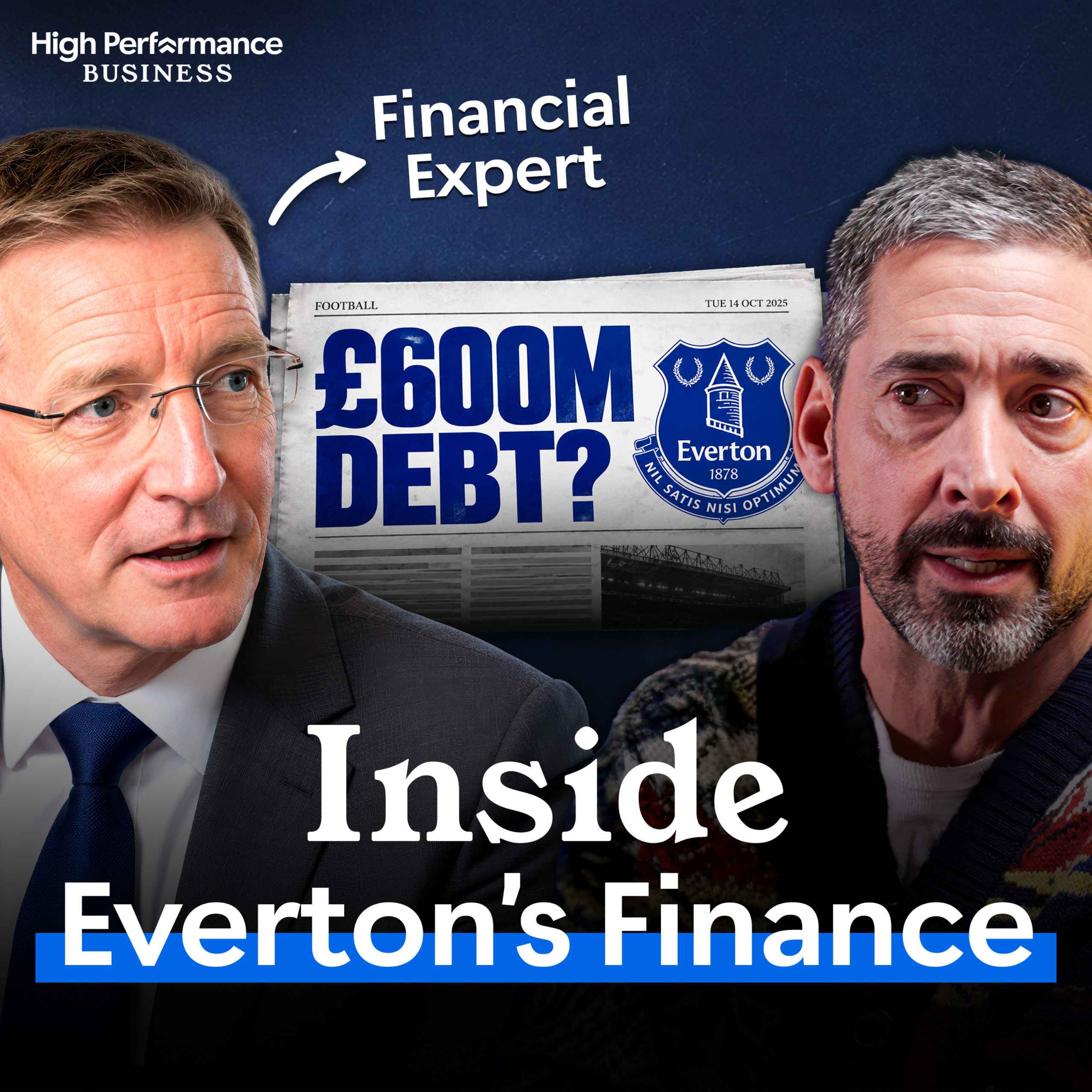
Kieran Maguire, football finance expert and host of The Price of Football podcast.
Maguire is known for analyzing football’s financial structures and broadcast economics.
Premier League Studios building in London; MLB/NFL direct-to-consumer analogies; MLS audience loss after Apple; FIFA’s World Cup trust breakdown examples (e.g., Balogun red card); FIFA reserve figures cited (~$7B cash/assets; ~$2B reserve).
Written by AI. May contain mistakes.
Discussion about the podcast's aim to bridge sport and business.
“Yeah, and when you're picking a guest for the first episode, So you go to high ground, you go, who can we guarantee as a banker?”
Introduction of guest Kieran Maguire, a football finance expert.
“The answer is yes, because the Premier League is officially launching its own direct-to-consumer service called Premier League Plus, not Premflix as it was first touted.”
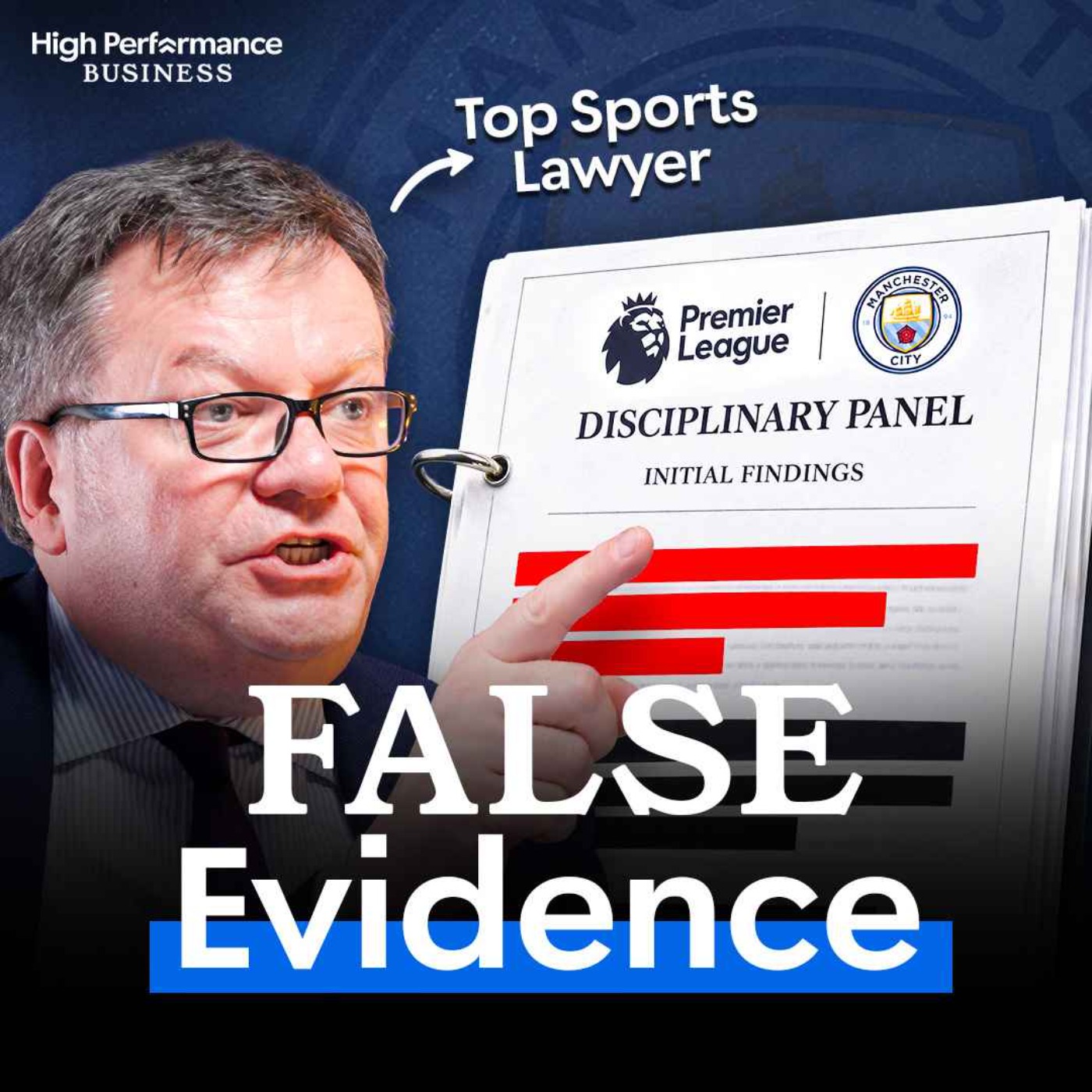
Discussion on FIFA's controversial attempts to sell football.
“Premier League Productions, which is now Premier League Studios.”
Exploring the implications of the Premier League launching Premier League Plus.
“They've built the equivalent of Media City in Manchester.”
How IMG has shaped the broadcasting of Premier League content.
“How bogged down the figures do you want to get?”
Analysis of how changes in broadcasting could affect sports viewership.
“This has been described as the single most transformative shift in broadcasting for this generation, this idea of direct to consumer.”
Delving into the pilot of Premier League Plus in Singapore and its significance.
“Some might say no, some might say yes, because actually you're giving a Liverpool fan here every Liverpool game, or you give me X amount, which we'll get to the minutiae of it in a little bit.”
Discussing potential financial outcomes of the direct-to-consumer approach for the Premier League.
“current broadcast deal runs out, you are going to be able to watch Liverpool flicks.”
How fan preferences may influence the Premier League's broadcasting strategies.
“I think there's so much further down the line than we think with their market research.”
Kieran Maguire shares expert insights on the future financial landscape of the Premier League.
“who I wasn't sure existed because usually I just see you down a Zoom and here you are in the studio, which is great.”
Explore how broadcast revenue is shared among Premier League clubs and the implications for competition.
“They want Manchester United TV to be in charge of the individual relationships between the broadcaster and the fan.”
Discuss the future landscape of Premier League broadcasting and the potential shift towards direct-to-consumer models.
“But I think it was up until fairly recently, Sky's money accounted for like 50 % of the Premier League's global broadcast revenue.”
Analyze how changes in Premier League broadcasting could affect the football pyramid and smaller clubs.
“Okay, as a Liverpool fan, you just want to see a Liverpool play as often as you can and B, see Liverpool win.”
Explore the financial conservatism in football and a historical trivia about the first televised match.
Discussion on FIFA president Gianni Infantino's controversial proposal to sell World Cup stakes and the subsequent backlash.
“levity in between just to reset our brains do you know what the first televised football match was because there was resistance even to that.”
Analysis of the backlash from football federations against Infantino's proposal and the implications for his leadership.
“this year broke and evolved and that can turn out to be a curse or a blessing.”
Unpacking the informal relationship between Infantino and Trump through a satirical reenactment of their WhatsApp conversation.
“say they don't like the deal when he has just spent the best part of a year cosying up to them.”
Discussion on the potential for a vote of no confidence against Infantino and the political maneuvering involved.
“I feel like we've been through this together to get to the stage we can have what we think is a definitive conversation about the week that was in the life of FIFA.”
Explore the complexities of power within FIFA and UEFA, including financial decisions and leadership challenges.
“And if you miss Kieran, you don't get a second go at them, at least not for a while.”
Discuss FIFA's financial reserves and the implications of its funding strategies on football's future.
“forwards, FIFA will only be getting, what, 79, 80 % of all of the money that it's making from future activities.”
Investigate the erosion of trust in football due to controversial decisions made by FIFA leadership.
“We were saying on Saturday morning, weren't we, Colin, that you said, you know, he's basically Icarus.”
Light-hearted discussion about favorite World Cup songs and Shakira's impact on football anthems.
“And that's the point where you can just go on your merry way and listen to your next podcast.”
Explore standout musical moments in football history, focusing on personal anecdotes and favorite tracks.
“somebody said to John Barnes do you want to go and get up and do the Anfield Rap during Colin's said or World in Motion and he went, I always do that.”
Delve into discussions about near-perfect episodes of favorite TV shows and what makes them stand out.
“I want to talk about near perfect TV episodes.”
Share personal favorites and recommendations for TV series, including comedic and dramatic examples.
“detective in a rural town in America and genuinely for the hour of this penultimate episode I didn't breathe.”

Get the gist, explore an idea or ask about something said.
 Claude
On High Performance Business, what are the key points of this episode?
Searching your listeningAutomatic transcript. May contain errors.
0:02Hello and welcome to the first ever episode of High Performance Business, which has come into existence because in the modern day, sport is only half the story. So thank you very much for being on board from the beginning. I'm Colin Murray.
0:15Colin Murray: And I'm Natalie Pirks. And we are sports journalists, but we're also fans, aren't we? And we're here to drill down into the business of sport. And if we can understand it, frankly, so can you. Yeah, and on that note, if we're going to be the conjoint for connecting sport and business, you need to be part of that. We'd like you to say, I don't understand this. Could you explain this in an episode? We want you to say, we don't talk about this enough. Could you highlight it? If you're from the business world, get in touch. If you love sport, get in touch. And there's a way to do it that I do not understand.
0:44Colin Murray: Yeah, because you're a Luddite. It is Instagram and it's at highperformance.business. DM us. Tell us what you want to hear. We'd love to hear from you. Yeah, and when you're picking a guest for the first episode, So you go to high ground, you go, who can we guarantee as a banker? And that is the prof himself of all football finance, Kieran Maguire from the Price of Football podcast. We both know him, we both love him, and he's going to be here. And don't worry, we're going to talk about the biggest sports business story of the year. We're going to talk about FIFA and what many people say is their attempt to sell off football.
1:14The only reason that's not all we're talking about is we're not a rolling news channel. And even in the time it took me to say that sentence, this story has changed. but the overarching issues for you and for us stay the same. And we're going to talk about that with Karen, but that's not all.
1:30Colin Murray: Is the way we view the Premier League about to change forever? The answer is yes, because the Premier League is officially launching its own direct-to-consumer service called Premier League Plus, not Premflix as it was first touted. For this season, you can watch every single Premier League game for£25 a month. Game changer. Yes. Isn't this really exciting for you? if you're in Singapore, there's always a catch. There's always a catch. Bubble burst, because that's where they're testing this out. But the story doesn't start now. The news that the way, and Natalie's right, you're going to watch your Premier League, is going to change forever.
2:07It actually begins a long time ago, and it begins on the outskirts of London with the Premier League and IMG. Explain everything.
2:15Colin Murray: So you might not know. I mean, it's quite niche, isn't it? We know this, but people watching Premier League around the world might not know that there is already something called Premier League Productions, which is now Premier League Studios. They've been working with IMG, a big, big production house. Should we say what they do? Yeah, go for it. So IMG is like a huge agent, you know, like, not like our agents. IMG are not going to look after Natalie Perks or Colin Murray. They've looked after all the biggest names in sport, your Tiger Woods and all of that. And then another arm to what they do, of many, is big productions.
2:46So they create, and they have been for a long time, creating Premier League productions, the studio, the output that we would call Sky Sports, TNT.
2:55Colin Murray: The interviews, the commentary, etc. They've been creating it for a lot of countries. How many is it? It's more than 180. I want to say 188. So some of them take all, they all take the studio, some of them have their own commentary, but by and large, there's a system where this company called IMG make a television service for the Premier League, which they sell in packages around the world, but no more. They've dropped IMG, or at least that contract has ended. It's not you, it's me. It's not you, it's me. And they've built their own mega studios in Olympia, right here in London. So now not only do they have their own football teams, but they've got their own TV teams.
3:29So hold on, they've built the equivalent of Television Centre. They've built the equivalent of Sky in Australia. They've built the equivalent of Media City in Manchester.
3:39Colin Murray: Correct. In the middle, in the heart of London, where they can control everything, and there is a hell of a lot of broadcast knowledge in that building. So they've cut out the middleman. Correct. Like, for example, if we got rid of our producer, then we could take a higher percentage of this podcast. Who would make us tea? But if we got rid of the producer, we could take a higher percentage of this podcast. Right. But apply it to the modern age. And this direct-to-market exists already. It exists in the MLB. It exists in the NFL. It exists across American sports and around the world and scattered in different ways.
4:13Fun fact, Bundesliga sells to the more sky model in Germany, but outside of Germany, they're directly to the market. Yes. So it exists already in different places, but does it make financial sense is the first question that we have to ask. How bogged down the figures do you want to get?
4:30Colin Murray: Well, I know you love a sexy figure, don't you? Shall we start with first why Singapore? What they're doing? Let's just do that, just get it out of the way. So the answer is an opportunity presented itself, but it's mainly proof of concept and that's important. So this PremFlix or Premier League Plus is going to have its own app. We can pick which game you want to watch. We'll stream every game. Exactly. And Premier League Chief Exec Richard Master said, for the first time, we're going to have our own customers. That's important. So starting there, no-brainer, tech savvy, wealthy nation, good time zone for English matches.
5:06Colin Murray: It's running already alongside their existing broadcaster, their Star Hub, so there's no sort of risk involved. and crucially, it gives them a proof of concept and key metrics. They'll get subscriber numbers, what people are watching, churn rate, who's cancelling. This has been described as the single most transformative shift in broadcasting for this generation, this idea of direct to consumer. Like you say, it's already been done in other sports. Formula One do it quite well. So if you're listening in the UK right now, as most of us will be, you'll be thinking, well, okay, fine, that sounds cool, but what does it mean for me?
5:40Colin Murray: And the answer is right now, nothing. Yeah. But in the future, possibly everything. Because if it works there, the Premier League then has this proof that it could eventually work here. We're always going to be honest with you and we're just minutes into our first podcast. I am delaying talking about when it's going to happen because Natalie and I talked for an hour and 47 minutes on the phone about this three days ago and could not change our minds. so we will present in a very respectful way none of you are shouting like you did last time right none of you that word that you called me can we bleep it can we bleep it shh call me so do bleep it but I'm delaying getting to that and let's just look at the figures and let's just look at the business of this the bottom line is if the Premier League thinks they can take it themselves then it's a no brainer so the gamble is will as many people give us their money as they're given the sky.
6:40Some might say no, some might say yes, because actually you're giving a Liverpool fan here every Liverpool game, or you give me X amount, which we'll get to the minutiae of it in a little bit. Is it better for the fan? Here we go.
6:52Colin Murray: If it's cheaper for the fan, then it's better for the fan. Yeah. My feeling on it is twofold. One, we have competition law in this country, which is the reason we have fragmented rights anyway, that says you cannot have a monopoly. You can't just have one broadcaster or one streaming service showing that product. So they're going to have to, if they do decide to go down this route in this country, they're going to have a Sky AT &T on board, right? So that's all ready for the fan. They're still going to have to do what they're doing now. I would say that the model they'll get to and it'll benefit them is there'll be marquee games.
7:32And I'm not necessarily mean every Manchester Derby, every Merseyside Derby, every North London Derby, and let's just say Brighton Crystal Palace because we know who our guest is coming up. I think you'll get that game and they'll be able to buy a package that that'll be on Sky, but I still think offering a fan of Arsenal, 33 of 38 games in their own personal Arsenal world, like a virtual season ticket is just such a game changer. And I think you're buying right. If they can get the price right for that, that's a much better deal for most fans. This idea that we want to sit down and we want to watch a smorgasbord of football, I don't buy that.
8:14Everyone I know, what's the most important game in the world today? One your team's playing in. Doesn't matter whether you're a Woking fan or you're a West Brom fan. Doesn't matter whether you're a Leeds fan or a Liverpool fan. And if you can get more of your team, I think this is just a natural model. And it fits in with a model that has evolved in drama. It fits in with a model that's evolved in muse. music about all of it, all at once for a fee that you can pay. So I think it's a little king canute to think we're not going to get there. It's just when we're going to get there. I think sooner rather than later, you think roughly about the time that my grandkids are going to primary school.
8:52Colin Murray: No, I'm saying the current broadcast deal runs out in 2029. That's only three years from now. I do not think they'll have enough proof of concept from just one place, Indonesia. I know from speaking to people who are around this deal that, yeah, of course, if it goes well there, then they'll go, oh, let's have a look at somewhere else. And then let's have a look at somewhere else. I just cannot see a world where in 2029, when this current broadcast deal runs out, you are going to be able to watch Liverpool flicks. Like, I can't see that. The serious business ramifications of this is imagine if you can see exactly forensically how many people are giving me, say,£25 a month just to watch Liverpool and the response of Liverpool to that when the clubs have always been pulling for a bigger slice of the pie.
9:39That's a constant wrangle, isn't it, between the clubs and the Premier League? So it adds another dimension to that. But purely on the face of it, is it not one-eyed at the very best to think that we're not going to end up here?
9:53Colin Murray: I agree that we probably will end up here. We just disagree on the timeline. But I also think that the Premier League will look at a cautionary tale. They'll look at Ligue 1, I appreciate it's not the same product. They'll look at MLS and what happened with Apple. And Apple have been famously very cagey about telling people what their subscription and what their viewers are. But essentially, from all figures, it looks like they lost about 65 % of the audience to MLS. Not the Premier League, we know that, but it is somewhere that has Messi. so I don't think we're in a position where the Premier League will suddenly go let's just abandon our usual model of work that makes us a lot of money to do this thing not yet here's my take on it talking to some people and how they've worked within the Premier League in recent times and I'm talking going back 15 years they've travelled with the NFL they've worked with Major League Baseball This is one of those things that we're talking about now and a lot of people be going, really, is this coming around the corner?
10:58But I think it's years in the making. I think there's so much further down the line than we think with their market research. And I think they have full confidence in the Premier League product and as they should because it's the most commercially successful sports league on the planet. In fact, the business of the Premier League has proof of concept already. I think, you know, you look at now how established podcasts are. This is almost traditional media in a flash like that. And I just think they might be closer to it than many people, including yourself and possibly our next guest think. Well, the man who's going to separate our opinions and deal in only fact is the professor of football finance, right?
11:41The wizard of the numbers when it comes to all things football. from the price of football, it's Kieran Maguire, who I wasn't sure existed because usually I just see you down a Zoom and here you are in the studio, which is great.
11:52Colin Murray: As we live and breathe. So look, this is the way sport has already gone. Other sports have already gone this way. It seems inevitable that we will get to a form of it. But what's your take on what we were talking about and, as to say, disagreeing on in terms of how far away the UK is from, with a broad brushstroke, the Singapore model that they're trying out? I think we're one or two iterations in terms of the renewal of the TV deals domestically. If you take a look at the Premier League's revenue, they flatlined in 2025 compared to 2024. And the clubs, and when we talk about clubs, talking about club owners, it's really important to separate the people at the top from the fans, from the sponsors and so on.
12:36So that money is not increasing. the Premier League is not making any more money from Sky and TNT in 2029 than it was in 2017. We're up 4 % over 12 years. In real terms, it's down. In real terms, they've had to give away a lot more matches. So is there an alternative? They're going to find out what works and what doesn't work in Singapore. Since the commencement of the Premier League, broadcasting revenues are up 6 ,500 % in a period of time when the consumer prices index is up 130. So the current deal, the current relationship with Sky and a secondary broadcaster, whoever that has been, has been fantastically successful.
13:22The Premier League like Sky, Sky need the Premier League. So there is that relationship between the two. From a point of view of certainty, if I'm a club, I'm looking to sign players on four - and five-year contracts. If I know, because we've got a four - or five-year deal with a domestic broadcaster, I might want to prefer to take actually the more conservative approach. So there's a lot of discussions. But we saw with Project Big Picture, which was an attempt of a domestic curve of the game, that what the big clubs want to do is they don't even want this. They want Liverpool TV. They want Manchester United TV to be in charge of the individual relationships between the broadcaster and the fan.
14:10We also saw that in Super League. I was fortunate I managed to get hold of the documents. And again, it was allowing the clubs to sell a certain proportion of the individual matches direct to consumer and then the central broadcasters pick up the rest. I think Premier League Plus gives the Premier League itself that ability to sell the whole package, and that's essential for the competitiveness of the Premier League as a product. One of the things which is fantastic about the Premier League is that Crystal Palace can beat Manchester City in an FA Cup final. As a Brighton fan, I can go to Old Trafford with a 30 % chance of getting a point or more.
14:55And you can't do that in France, And you can't do that in Spain. And that's because of the deals that we have at present. So this is the really important business aspect from the club's point of view. So right now, 50 % of that broadcast revenue is shared equally across the Premier League. And 25 % is based on your league position. We know how important nights to eights can be in terms of your money for next season. And 25 % is based on what we call facility fees. That is the number of times that you're live on UKT. and this is exactly the thought that I had and I thought Uncle Ciarán would be able to set his right on this.
15:32Clubs have always said, the biggest clubs have always said, if we're driving more of the subscribers, why aren't we getting a bigger slice of this pie? They're going to have that data. They're going to know absolutely, just like my MLB TV, you will declare the team you support, the reason why you're subscribing, how many streams of each of the 10 games every week or if it ends up being eight or it ends up being seven you're getting. Does this create, if anything, the biggest road bump in this happening,
16:01Natalie Pirks: which is what the clubs get and how they get it and what they'll agree to? Absolutely. But we've already seen concessions given away in the sense that the international deal used to be split evenly between all 20 clubs. And the reason for that was that when the Premier League commenced as a product in 1992, the Premier League lost money on the international broadcasting deals. And I think one of the genius decisions, and Rick Parry and his team at the time deserve a huge amount of credit for that, that they went to Nigeria, they went to Malaysia, and they said, we're going to give it away for you for nothing.
16:41And then because they knew that if they produced it correctly, it would create an addiction. As we are, we're all addicted as football fans. And when they went back in five years' time, Manchester United had a huge fan base. Liverpool had a fan base on the back of that. And they were able to generate the money. So the big clubs initially were quite happy to split the losses between all 20 clubs equally. In 2016, the best and the worst thing this century, as far as Premier League football took place, Leicester City won it. You talk to Sky, it was dreadful for broadcasts because the ratings, they didn't generate.
17:19So they're the lowest viewing figures. But the big clubs then said, we don't want this to ever happen again. And that's why they forced through a deal so that now the international broadcast rights are not the same, but they are going the same way in the sense that they are geared towards the bigger clubs. At the same time, Liverpool already know. They've done their data. They know just how much the ratings are for a match win. Liverpool are playing away from home or Anfield. Bournemouth versus Wolves is not delivering the product. So the bigger clubs, they simply say, we'll give you a bit of the pie, but we want an increasing share of the pie.
18:04And against that, to be fair to the Premier League, they've said we've always had 1.8 to 1 as that ultimate deal breaker.
18:15Colin Murray: One thing you said was that Sky need the Premier League more than the Premier League needs Sky. But I think it was up until fairly recently, Sky's money accounted for like 50 % of the Premier League's global broadcast revenue. So you're not going to just turn that tap off. You're not going to suddenly go, right, I want 100 % of the pie because they're paying you a lot of money. So you said earlier, you think it would be one or two revolutions of the broadcast deal, which I guess takes us to what, 2034? Well, the current deal takes us to 2029. I think we'll have another four years. Could we then see, because we've still got 100, 150 matches which are up for grabs in terms of they're not covered.
19:01And as a consumer of the Premier League as a product, do I want the opportunity to watch all 380 games? Well, I'm paying through the nose for it. And I've got my friends who are in Ireland. I've got my friends who are in Sweden saying, we just tick that box. We've seen its success in terms of the EFL. We've seen the success when Amazon Prime were given, and they were given for practically nothing, the rights to stream 10 matches in a single way. And people made their choices. So can that go that way in the future? I think it can. And then we'll see that from a price point of view. Two things, analogy alert.
19:44The idea they wouldn't jump to take the money themselves, I find illogical. We're not dealing with Trotter's independent traders here. We're dealing with the Premier League. They built their studios. As I said, they haven't built it for any other reason other than to make the product direct for market. I think it's really super cautious to think that it's going to take two revolutions of a contract to get there. And the analogy is this. You and I are dating. Nothing wrong with that. It's comfortable. And then Brad Pitt asks you. out. The Brad Pitt is we will take the money directly. We will take the advertising revenue and we will take the sponsorship, not taking the money and letting someone else make money off our product.
20:25They're saying we will have both of those pies at the same time. And it is a direct reflection of how we consume every other part of our popular culture. Football, if anything, surely is late to this party.
20:40Colin Murray: So what you're now saying is that someone who is a literal professor of this is wrong because you think in two years the Premier League just go, bosh, 2029 when the deal ends, we're going straight for this. What you've done is you've left a nuance out of that because whatever I was saying, I was looking at you, which diffused the situation. I'm just saying, Kieran agreed with me that it's going to take some time. That's all I'm saying. I just feel it'll happen quicker. I think you might be underestimating where the Premier League are in this plan because they didn't start having it this season no right and again not speaking out of school but like this has been their target for how long Kieran when was the first time you heard that the Premier League were building their new studios and they were changing from Premier League productions to Premier League studios when is the first time you heard about the Singapore plan are they not five six years into this project 2019 wasn't it when he first mentioned Premflix I think it was But let's look at it from the Premier League's point of view.
21:38We've got this. Clubs are very conservative. They've been spectacularly successful with their broadcast partners to date. Why doesn't the Premier League sell itself a package of 100 games in 2029? Because they've got the spare capacity to do so. And for four years, they work out exactly what's working in terms of pricing, in terms of getting sponsorship and advertising and building up partner relationships. And then in 2033 or 2035, they say, thanks, Guy. We've decided that we have fallen in love with ourselves now. We are Brad Pitt and we're looking in the mirror so much. And then they pick up the whole package.
22:22So I think it's a case of when rather than if, but there is no hurry if they've already got a successful relationship which they have with the broadcasters here domestically at present. Talked us right down into the weeds and specifically about how it filters down the clubs because it might affect what's going to each individual club based on us having pure data about who's paying their money over to see Liverpool and who's paying their money over to see Crystal Palace and explain how that then filters down through the football pyramid and the concerns you may have about this model and the overall health of football in England.
22:59If we move to a scenario in which all 380 games of the Premier League are going to be broadcast, where does that leave the EFL? Because if I'm a parent, I've got two kids, and I'm trying to persuade them to go and watch Walsall versus Accrington Stanley. Belder. Don't know. I've been to Walsall on many occasions don't play that card you're Brighton fan and he's going to give his old oh yeah absolutely man and boy I've got the hard yards I was at
23:34Colin Murray: Accrington Bromley recently excellent excellent does it mean that it's going to be that much more difficult if it's going to cost me 40 or 50 quid for a parent and two kids to attend a match and at the same time Liverpool are at home to Chelsea so I think there are broader issues we do have the inception of the independent football regulator who probably as we speak is in a meeting with both the EFL and the Premier League and potentially the National League as well trying to work out if more money is going to come into the game can we give a bit more to the smaller clubs. What do you want as a fan?
24:18Okay, as a Liverpool fan, you just want to see a Liverpool play as often as you can and B, see Liverpool win. Do you care about competitive balance in the Premier League? Because surely it's your club you want to see win. It's all very great being egalitarian and noble, but you'd much rather win matches. It's a weird thing. Absolutely. And we've talked a lot about disillusionment with the Premier League. And I definitely go to less games when it's less competitive. So part of your marketing strategy in the business of football should be competitiveness. And I think actually Leicester, what you might want to look at through a short-term lens, I think in many ways it bought the Premier League a lot of years after that.
24:59We thought, well, magic can happen. I remember going into that season just feeling like it's just the same thing over and over again. It's why I don't watch the group stage of the Champions League. And I'm a huge football fan, but you're forgetting I'm a Northern Ireland fan. You're forgetting I'm somebody who will travel to the Faroe Islands to see our only win in the group. So I have that hardship and I do actually feel win or lose. I probably would. The bottom line is, I feel this is like a better deal for the fan who's directly getting their team. My concern is that it filters down properly to make sure that the pyramid doesn't collapse further.
25:34And if the Premier League can create a model that makes people not reach for the fire stick. And let's be clear, they're not offering the same services Sky or TNT. For your club, they're offering a way better service. They're coming into the modern age if you can have it when you want it and you can have it all when you want, then I think there could be more revenue coming into football. And even if it remains the same percentages, that does filter more money down in. That would be the hope anyway. A bigger pie means more money. Then it comes down to how are you going to slice the pie. And we've seen with the movement since 2016, there has been a shift towards the bigger clubs, but it still allows the smaller clubs to be competitive.
26:16And the reason for that is that Bournemouth and Crystal Palace and Brighton-Hove Albion and Brentford, they all have bigger budgets than every other club in Europe with the exception of the elite. And that's allowed the Premier League to become that dominant position because these clubs are great at picking up those players from Ecuador, from Brazil, from Belgium, second division and so on. and that has meant that, again, whether you're a Manchester United fan or a Liverpool fan or Arsenal, you say, we're away to Bournemouth, it's not a walkover. What you don't want is to create a distribution model so that we end up with football that you see in France, whereby who's going to play second?
26:58Now, we've got Germany. You could argue similar because it is the Bayern Munich show and what's Germany doing now, the Bundesliga, as we speak, is in discussions with private equity. I don't like the thought of private equity coming into football full stop because private equity is very good at doing what private equity does, which is to make money for shareholders. It will change things to make more money for shareholders. Anybody who has got any form of romance in football would be quite nervous about that.
27:31Colin Murray: Can I ask, how scared, worried do you think the big broadcasters are? If you are the chief honcho at Sky Sports, how worried are you about PremFlix? Well, given that Sky offered no more money for the current deal, then that would suggest that they feel quietly confident. Or that the end is nigh. He's determined to go down this road. But compared to Spain, compared to Germany, compared to Italy, we're still doing fantastically well yeah it's a risk and football clubs are quite risk averse despite the fact that they know they do zero or pretty close to zero due diligence when they're about to spend 50 60 70 million pounds on a 22 year old young man from another country but they tend to be very conservative when it comes to revenues and i think that's the one reservation i have and that's why i say why not sell it to ourselves do 100 matches for three or four years and then in 2034 2035 take the jump yeah um just to finish this section before we move on and because the second thing that we're going to talk about we definitely need a bit of levity in between just to reset our brains do you know what the first televised football match was because there was resistance even to that.
29:02It was a 15 minute experiment on the BBC. So 15 minutes on the 6th of September, 1937. I'm getting nothing from you both. I'm disappointed. So I'll give you at least a guess. It's Arsenal at Highbury versus who? There you go. I mean, you've got a chance of guessing it. Sunderland. I know the answer to this.
29:25Colin Murray: Only because you told me. Oh, did I? Yeah. Arsenal Reserves. Arsenal Reserves. Oh, wow. Yes, fantastic. So, Arsenal fans, you were all of the first football match. So, if you ever had the first televised match, they didn't... That's another brag for them. Is that Spurs? They didn't even make that call. They didn't even make that call. They could have walked it. They could have walked it, quick horse and cart down. But just before World War II, Arsenal against Arsenal Reserves for 15 minutes. Before you ask, don't know the score.
29:54Natalie Pirks: Welcome back, everybody. And now, by the magic of podcasting, We are 72 hours later on the eve of episode one of High Performance Business being published because in the lead up to our launch, you could argue that the biggest story in sports business this year broke and evolved and that can turn out to be a curse or a blessing. And in all honesty, it's kind of lent more towards the former. Every time we talked about it, the story would produce another massive headline and everything that we said was now dated. There's even a chance that by the time you listen to this, another huge twist will have taken place.
30:34Natalie Pirks: But suffice to say, on Monday the 3rd of August, as we talk now, in just the space of a few days, FIFA president Gianni Infantino has gone from seemingly invincible to eminently sackable. How that came about, well, Kieran will rejoin us. But first, Natalie, let's just really clearly put a timeline on the week that was for Infantino, for FIFA and for world football.
31:03Colin Murray: It was a simply incredible week, wasn't it? This time last week, Infantino was riding high after the most financially successful World Cup in history. He'd been flying around on his private jet gifted to him by Qatar, meeting up with his new bestie, Trump. But as we stand here today, he is a man on the brink. This is all because apparently with zero consultation, he decided members around the world should vote on whether to sell stakes in FIFA competition, including the World Cup, to private investment funds, one with links to Trump. He reckoned it'd be worth around 20 billion quid and if the 211 member nations voted for it, they'd all get 30 million quid each.
31:48Colin Murray: when enough of them said absolutely not. He realised he'd lost the numbers and then on Saturday he had to row back with his tail between his legs and acknowledge the plan had created divisions that made the idea untenable. That might not be the end though because your wafer particularly smelt blood and are considering legal action and the English FA has written to FIFA to say you know we are withdrawing support as well as the Welsh FA so the numbers are starting to build in the case against him?
32:19Natalie Pirks: The responses from the various federations, they took me by surprise, if I'm being honest. I think across fandom, we have had enough that's happened over the last decade or two for us to second-guess and doubt most things that those who have their hands in the levers of power of world football, whether it be in Europe, whether it be in Africa, whether it be anywhere, that we are dubious about it. But the response was deafening, in particular, as you say, from UEFA, for them to say in public, and I quote, this is a shabby, backroom, opaque deal. That's like telling your partner you're having an affair.
33:05Natalie Pirks: There's no role. You can't roll back on that, Natalie.
33:09Colin Murray: I was thinking how much you have to have really messed up to get the whole of Europe to agree on something so unanimously. The idea that they would release something that strong, those words you've just used. I mean, there was no love lost between UEFA and FIFA anyway. This goes back quite a while with Shefferin and Infantino. Infantino rocked up a couple of hours late for FIFA Congress because he'd been with Trump and that caused Sheffrin to lead the UEFA walk out of the Congress. Then of course we know Sheffrin boycotted the World Cup final because of the whole Balogun red card situation. So you know that we know that relationship is not strong.
33:55Colin Murray: But for them to unanimously keep releasing these statements it feels like right now they have got their boot on his neck and they do not want to let go. They're going to keep this pressure up. And now, and we'll speak to Kieran about this, but it will all come down to numbers. Who's got the numbers to get this man out or who has got the numbers to stay? Because remember, Infantino has a lot of support. And I think he would have been shocked, actually, at how many nations or member sort of federations came out against him. Conquer CAF coming out to say they don't like the deal when he has just spent the best part of a year cosying up to them.
34:35Colin Murray: would have been a huge blow for him.
34:37Natalie Pirks: But Natalie, it was how pointed it was at Gianni Infantino, who I don't know whether people would use the phrase Teflon Don. I wouldn't. But somebody who had felt like nothing could stick, no matter what happened during the World Cup, none of it stuck. He was always so defiant in his response to stadiums and entire nations booing the hydration breaks in the four quarters of football. But this wasn't UEFA or CONCACAF coming out and saying the plan was a disgrace. They did that, but they pointed it at him. CONCACAF's line that stood out for me was symptom of leadership that has stopped putting football first.
35:22Natalie Pirks: Yet again, it went for the throat. Asia's Football Federation said football should never have been placed in such a position. And as a result, we're having to work again on this section of our first episode of High Performance Business. But that has given us a little bit of time because as it stands with Infantino's private investment plan dead in the water, we've managed to get hold of the WhatsApp exchange between Gianni Infantino and the US President Donald Trump. It's an exchange that occurred after the announcement of the scrapping of the president's plans. I'm going to read it to you now, Natalie.
35:59Natalie Pirks: I haven't even been able to share this with you so that I'll be able to get your response. So it starts with Gianni Infantino who says, you up? And Trump replies, yes, on sofa again. Don't ask. Gianni says, you see the news. Trump says, yeah, I'll have to say it was your idea entirely. Gianni replies with just K. Trump says, are you all right? Gianni says, yes, binge eating donuts. Trump says, Krispy Kreme. Gianni says, course. Trump says, you still good for the sleepover next Tuesday? Gianni says, hopefully. Trump says, okay, better go. Gianni says, K, love you. And Trump says, love you too. So, I mean, that's a huge scoop for our podcast and it speaks to how intimate that relationship is and that they felt they could get away with this heist.
36:53Natalie Pirks: and that exchange is less than slightly by the fact that high performance bosses are very twitchy about me even joking that I have the real WhatsApp and legally I have to state that even though it's obvious that that was clearly all made up but the cosy relationship wasn't made up but it wasn't as strong as I didn't think it was as strong as all that until the week that just was Natalie and they announced a plan that ran straight through the White House wow.
37:24Colin Murray: I think we now have a really, really good understanding of exactly why he would hand President Trump an entirely made-up peace prize, why he would hold up Congress for hours because he was having meetings with the president. It looked from the outside like he was just being what he's now been dubbed, Sikofantino. But actually, all roads led to this deal and this private investment firm that is led by the brother-in-law of his daughter. So we now understand, and I think this is a really good opportunity for anybody that's been wanting him out of that hot seat, aka some of the federations, to now really stick the boot in.
38:12Colin Murray: And they see this as their moment. This is really their moment, because in March next year, he is currently up for re-election, unopposed as FIFA president. They're never going to have a better time than this.
38:24Natalie Pirks: And will I come earlier? Could it be with a resignation? Could it be with a vote of no confidence? What happens next is the question that we're going to ask and hope that it's not outdated within 24 hours from now in this episode being released. And we are delighted that Keira Maguire, for no extra money whatsoever, has remained true to the cause of this podcast and is joining us again now to mop all of this up. Ciarán. Hello, Colin. Hi, Nat. I feel like we've been through this together to get to the stage we can have what we think is a definitive conversation about the week that was in the life of FIFA.
39:04Natalie Pirks: Ciarán, there's only one place to start as we sit here, as we say, on Monday the 3rd of August, hoping this doesn't date over the next 24, 48 hours. is there any way, regardless of what the timeline is, that Gianni Infantino can survive this? I think initially there was a view that was taken that the proposals looked pretty horrendous, but he might be able to smooth talk his way out of it. I think the subsequent revelations that we've seen in The Times in particular about him potentially being able to earn up to$30 million as the sort of the general manager of FFE. That looks really bad. The amount of scheming that was taking place, the number of people who were not being kept in the loop was quite astounding.
39:57So it did look like what was initially a personal vanity project, then a project which was going to be as beneficial to Gianni Anfantino as it was to anybody else from a financial perspective. looks terrible for a not-for-profit organisation.
40:14Colin Murray: A lot has to happen now, doesn't it, between where we sit and him potentially being ousted. Can you just give us an idea of some of the numbers, what they're going to have to do to try and get him out if indeed that is what they want to do? Well, that's right. I mean, we've got to be careful that we don't fall into, we're Europeans, we know what's best, because there will be pushback on that. But I think we're going to need, I think it's at least 43 votes to be put forward for a vote of no confidence. So that will be one potential issue. Now, it could be that there will be meetings held off record in terms of getting the other federations.
40:54And there's five FIFA federations. Will they come on board for this? Otherwise, UEFA could end up shooting itself in the foot. It puts forward a vote of no confidence. Infantino survives. That emboldens him. that strengthens him, then it's going to be a case of, well, if he's won that, who's willing to put themselves up as the alternative candidate? So a lot of politics, which will be taking place hour by hour, minute by minute.
41:21Natalie Pirks: I can't really think of many other situations in politics, in business, in sport, that follows this similar pattern. Not a fair to put somebody up against Gianni Infantino, But without a doubt, as Kieran just said, Natalie, backroom conversations, off the record calls, WhatsApp messages that even you and I can't get our hands on. And we know we're very good at that because they'll want to put, Kieran, one person up against them. That'll be the decision that they're making now. a good analogy I suppose is they only get one shot at Gianni Infantino and a little bit like how you replace a prime minister and the party rally behind one candidate uncontested we had that just recently of course with Andy Burnham and I hate to say it and I'm not drawing a direct comparison but it is like the movies you watch featuring Mafia where one person slightly down the family tree wants to challenge the boss and you get one go at it.
42:29Natalie Pirks: And if you miss Kieran, you don't get a second go at them, at least not for a while. It has the feel of that. You're absolutely right. And there is a concern that if UEFA get this wrong, and clearly it's being driven by UEFA, but they have, first of all, I was talking to somebody connected to CAF over the weekend and they say, We're not happy with Infantino. At the same time, he has delivered. We've got more African teams playing in the World Cup. We've got a potential expanded World Cup in 2030, where there is a lot of support for that. And the financial distributions have been far greater than anticipated.
43:15So, yes, we don't like him. And we can't be bought, but he has delivered on some of the positives. So we've got to be careful that what we're seeing in this, which is a money grab, is a power grab, is the dilution of football as we know it, as part of culture. Other people are saying, well, yeah, it's not perfect, but it's worth having a conversation. Look at what's happened in Formula One. Has Formula One become worse off simply because of the involvement of PE?
43:46Colin Murray: One of the things UEFA said in their statement about this whole idea was that we need to use some of the money that is sat idle in FIFA's bank accounts to deliver the kickstart the game needs rather than sell off the family silver. So why does FIFA say it needs more money when it's got all this money sitting in reserve? What is it that is not seeing that huge amount of money drip down to where it's actually needed? Well, I went through FIFA's accounts over the weekend, partly due to that I've got no friends or life. And if you take a look at them, you combine cash, financial assets, which is effectively, it's the equivalent of putting money into an eyesore on a savings account.
44:33And you put those two together, FIFA had close to$7 billion. Well, admittedly, some of that money had been received in advance from ticket sales, which had taken place in 2025, and that applies to the World Cup. But at the same time, an awful lot of money will be generated over the course of the last few months. That money is then distributed to all 211 members. And could FIFA be more generous? Yes, yes, they can. Now, FIFA will say, hold on, the reason why we're holding some of it back is that in 2027, we've got the Women's World Cup, great tournament, but not a lucrative tournament. The same in 2028, the same in 2029.
45:17So they say they want to drip feed the money over four years, whereas the private equity plan would have allowed them to have a huge payment over the course of the next 12 months. But at the same time going forwards, FIFA will only be getting, what, 79, 80 % of all of the money that it's making from future activities.
45:38Natalie Pirks: I just want to put some figures on that quickly. So the reserve that they have, a reserve, you know that money you go and put it in the biscuit tin, not just in case we can get a cheeky pizza on a Saturday night. Well, their biscuit tin has over$2 billion in it. Record revenues of$15 billion in relation to the Summer's World Cup. But the true figure is said to be much higher than that. And I almost feel like ending it there because Natalie's asked the key question that my mates are asking, that fans are asking, which is, why does FIFA need more money? And it sounds so simple, but it's so important to this entire conversation.
46:16But let's do the other question that I think a fan would ask sitting here right now. And I want to make it clear. There is a difference between Blatter's FIFA and Infantino's FIFA. I think there's a stark difference between many of their biggest mistakes. but in terms of public perception, Kieran, I use the Tour de France as an example. If you have Lance Armstrong and then you have somebody else who is caught cheating in a different way, they may have done it differently but it affects the sport the same and the trust the same. I would argue that while it is different in terms of public perception, it isn't.
46:56I think you're absolutely right and you mentioned the key word there which is trust. When we go to watch a football match, We sign an invisible contract which says, I might not like the referee, I might not like the opposition, but ultimately if we lose, I'll have a moan about it, but I know that the right decisions have been made. And I know that ultimately it was the better 11 or the lucky 11 or whoever it's going to be that won the match. some of the activities that we've seen over the course of the last 12 months. I think they've unpicked that trust. The decision to award Saudi Arabia the World Cup was one which was in plain sight.
47:39The Cristiano Ronaldo decision, we didn't really get enough traction because, hey, Cristiano Ronaldo's in the World Cup. Surely that's a good thing. the Inter-Miami decision. Hey, we've got now Lionel Messi playing in the Club World Cup. Everybody wants to see Lionel Messi. And the way that it was, if we have to go and bend the rules a bit, but then during the course of the tournament, I think the Balogun red card was an obscenity. And the treatment of the Tunisian referee, the tea treatment of the Iranian team, every team should be treated in an equal manner. And it was that which I think started to accelerate the breakdown in trust.
48:19And this is just a further testament to Infantino's objectives and aims.
48:26Colin Murray: We were saying on Saturday morning, weren't we, Colin, that you said, you know, he's basically Icarus. And I said, well, I'm not sure yet if he's fallen into the sea and drowned. But it's starting to look a lot like he could be drowning. What do you think, Kieran? Yes, I mean, my initial reaction was that he's a wily old fox and he's a survivor and he knows enough people. And also he knows where the bodies lie. There's 211 members, a lot of those individual football associations, they benefit. If you look at the hotel bill and the flight bill for FIFA's annual congress, you've got 211 sets of flights.
49:10FIFA doesn't say, oh, well, you know, we've not had a great year. You know, it's a non-World Cup year. We want you to fly premium economy. Everybody's business class. Everybody's fine. Everybody is looked after extremely well. And, you know, Jani, he's got his little book, as all leaders do, and he'll be now able to use it. But the reporting, I think Martin Ziegler of the Times has done a magnificent job in just, first of all, the initial announcement, and then sort of second, third, fourth, on a daily basis, holding back and then revealing more things. This plan has been in operation for months, and everybody has been blindsided by it at FIFA.
49:59And it's the fact that it's a solo operation in conjunction with private equity. And there's nothing wrong with private equity. It sets out its aims. It's very good at what it does. I don't like what it does a lot of the time, but if you get into bed with it, you know what you're doing.
50:16Natalie Pirks: I don't think I'd use the phrase wily old fox. If you would allow me to take the last two letters away and replace it with five others, then I think we would be in real agreement about that. Can I just finish with this? We're always going to have the fan at heart in this show because that's what we are. hopefully will be frustrating to business experts and enlightening to sports fans that don't pay as much attention to the business of sport. Isn't it sad to hear Kieran just say what you just said when we're talking about the people who have their hand on the future of the game we love so much that yet again, just like we were all those years ago when FIFA members were marched by the FBI out of hotels with silk sheets over their head, that were yet again using phrases like, the head of FIFA knows where the bodies are buried.
51:08Cairn, does that not make you really depressed? It does. But for me, the positives of football still hugely outweigh. And football is wonderful in spite of the likes of Blatter and Infantino and not because of them. And that's why we keep coming back. And that's why we get giddy at excitement at the third round of the FA Cup. and we choose our favourite teams for the World Cup. I got 11 different shirts for this World Cup from different countries. And I'm a grown man. I'm still collecting the stickers. I'm 64 years old. I'm still collecting the stickers because for a sports fan, the World Cup is the nearest thing to Father Christmas.
51:53Natalie Pirks: Yeah. The thing that saves football time and time again is football itself. What a beautiful place to leave it with, Kieran. and we really appreciate you coming back and back again as this story developed and made previous chats dated. Kieran Maguire, legend. Thank you very much. Thank you. Yes, what a legend he is for coming back again and again. And that, I hope the next podcast I launch will not be in the week of the biggest story connected to it of that year, although it has been fun following it and just trying to get to a point where we could sum it up. But thanks to you and thanks to Kieran.
52:26Natalie Pirks: I think we managed to do that.
52:27Colin Murray: I think just about, But yeah, I'd rather if we didn't have every single week, the biggest sports story of all time, drop on our laps. That would not be good for my health.
52:38Natalie Pirks: Absolutely. And with that, the first episode of High Performance Business is closed for business. And that's the point where you can just go on your merry way and listen to your next podcast. But if you're going to become one of our family, one of our team that meets up once a week and has a chat, We just put this little five minute bonus at the end in which you get to be part of just our lives and our developing relationship. Nat and I know who each other are and know a lot about each other, but didn't have a personal relationship until like two weeks ago. So we just created this little place that we could get to know each other and therefore the audience could get to know us.
53:15Natalie Pirks: And it's just about one thing from the week that you want to talk about. And Nat, off you go.
53:20Colin Murray: Well, I would like to talk about one thing that FIFA actually did get right this summer. And that was handing our lady and saviour, Shakira, the keys yet again to the World Cup, official World Cup song. Because Die Die was a banger. And if you think back to 2010, Wacka Wacka, most streamed FIFA World Cup song of all time, up to a billion streams on Spotify. I was there in South Africa. I was also there in Brazil. I was also there in Russia. I was also there in Qatar. Cannot tell you 2014 song or 2018s or 2020. Can you? Can you name those?
54:00Natalie Pirks: There's a few things you're going to pick up on there. Go on. I don't feel like you needed to use it for a humble brag of all the World Cups you've been to.
54:08Colin Murray: I was meaning to tell you I was pitch side at all of those events and I can't remember the songs.
54:14Natalie Pirks: But it felt to me like this is the relaxed bit of the program. It's like off, completely off notes. And you thought, I'll just mention I went to all those World Cups. To a Northern Ireland fan, that's Red Rag De Bull. However, I'm absolutely with you. And just the other day, for some reason, connected to my radio show, I was looking up the most streamed tracks of all time. And I want to say Waka Waka was in the top 10 of all music videos ever on YouTube. I remember at the time just thinking, is everybody else hearing how good this is? And then she comes back with, as you say, another banger. Then she, to be fair, not hard to steal a halftime show at the World Cup, by the way, but she did.
55:02Natalie Pirks: And her and J-Lo at the halftime show at the Super Bowl a lot of years back, again, one of the all-time greats. Shakira is amazing. And you're right. I think she should record every World Cup anthem until there's backlash. And then when we have backlash, we can get rid of her. But I'm good for at least three more Shakira World Cup anthems.
55:27Colin Murray: Yeah, she's incredible. What's your favourite World Cup song of all time? Doesn't have to be the official FIFA one. I would say, if you wanted me just to choose a song that was released for a World Cup, it's hard to ignore England New Order World in Motion because it's credible and it's got John Barnes who in Madrid ahead of the European Cup final Champions League final Liverpool Spurs I was lucky enough to DJ at the fan park in Madrid to 80 ,000 Liverpool fans and backstage before I was going on somebody said to John Barnes do you want to go and get up and do the Anfield Rap during Colin's said or World in Motion and he went, I always do that.
56:09And I went, we'll do something else. And he went, okay, have you got the, can you get me an instrumental of Rapper's Delight? And I was like, yes. And he got up and did the whole song. And it was one of the greatest moments of my life. So that track for me. That was your humble brag, see? Do you know what? It kind of was. So yeah, is she also your favourite or do you want to throw another? Have I hit the other one already? I think we seem to be connected well.
56:37Colin Murray: That Waka Waka is my absolute favourite. Can I also just, before you do your little bit, just tell people, because what we would love is for people to write in, tell us theirs, DM us, Instagram, highperformance.business. But 1994, a Colombian lesser-known track called Pechanga El Football. Wow. It features a cockerel. It features the words Valderrama, Esprit, Rincón. and I urge you all to get on YouTube because it is a treat. It is a feast and you will not regret it.
57:11Natalie Pirks: Well, that is a great tip. I'm going to do that. I will also commit to reading out any polite, one-sided handwritten letter. You can get High Performance's address off Tindernet. With a pigeon. I would love, I will bring in a letter opener. You know, from the days of old kings and queens, a letter opener. We need to get a monogram. That's how we'll really make this podcast a success. We need a monogram that we put like a wax seal on handwritten letters. If anyone wants to do a handwritten letter about sports business, about whatever, I will read it out. I will open it and read it on air. That would be amazing.
57:52Natalie Pirks: Oh, now you're opening the floodgates. I want to talk about near perfect TV episodes. And I want everyone to have this conversation away from the podcast because it's not something we think about much we have our favorite series and we have the programs we love that's not what i mean so last month the last series of the bear was released it's a disney plus series about this amazing chef called carmen who is blessed and cursed in many ways by his talent and the pressure of being a chef in a restaurant and he goes back to the south side of chicago to work again with his crazy lovely family and on we go i won't bog you down with it.
58:29Natalie Pirks: But the bottom line is the first two series were great and it fell away somewhat. You had to really, really stick with it. And it's now a rare example of a TV program getting the ending right. So many of us let us down. And the penultimate episode is close to perfection. This only happens once in a blue moon. The other example I'd use is the West Wing. There's an episode called Two Cathedrals. And anyone who watches it right now is going, And yes, that's my one. President Bartlett, played by Martin Sheen, has a confrontation in an empty cathedral with God, in which he flips between English and Latin as he confronts God.
59:11Natalie Pirks: And if you like your series tense and a little dark and involved and you haven't watched The Bear, not only watch it, but stick with it just so you can watch this penultimate episode. I don't know what your top TV shows are. We haven't talked about it yet. nah we haven't got to that place that's that's like the second base of friendship but what would what's the episode that came into your mind and you thought oh yeah that one I can watch it time
59:37Colin Murray: and time again well I'm not sure about watching it time and time again but the one that immediately came to mind was the penultimate episode of Mayor of Easttown which is Kate Winslet starring as a detective in a rural town in America and genuinely for the hour of this penultimate episode I didn't breathe. I was so, I couldn't, it was so frightening, unbelievable acting, terrifying, exhilarating. It was everything you want from a TV show. So that's what sprung to mind. For me, I couldn't get past the first episode of The Bear. And I know I need to go back in, but it was like an assault on the senses.
1:00:18Colin Murray: And I'm very, very simple, Colin. I need my telly to make me laugh and just let it wash over me. I cannot deal with a lot of noise, tele-noise. Well, everybody apart from Natalie Perks, watch The Bear because if one episode did it for you, that was kind of light. It gets much darker. So stay away from that. I'll give you Brooklyn Nine-Nine and I'll give you an episode called The Box in which Peralta and Holt interview and interrogate a dentist who thinks he knows it all played by the brilliant Sterling K. Brown. That's my favourite series probably of all time, Brooklyn Nine-Nine. I haven't started quoting it yet to you because it's intensely annoying and I want this to go well.
1:01:01Colin Murray: I feel like Schitt's Creek is my version of that. That I can just watch over and over and over again. Doing my makeup, doing my hair, put it on, happy days. Well, I think you'll be saying something like that if I keep quoting Brooklyn Nine-Nine. So no noises or smarts, but we will say thank you so much for listening to the first episode of High Performance Business and I've written this down just to finish, just to impress Natalie.
1:01:27Natalie Pirks: If you'd like to correspond with us, go on to Instagram and DM us. It's highperformance.business.
1:01:38Colin Murray: So good. Well done. I'm so proud.
1:01:41Natalie Pirks: Thank you so much. Just like a proud mother. What a lovely end of the episode. Check our next one out next week.
1:01:51Thank you.
Colin Murray and Natalie Pirks are joined by football finance expert Kieran Maguire to unpack a week that shook the game. FIFA President Gianni Infantino's proposal to sell stakes in the FIFA World Cup to private investors has met fierce opposition from UEFA and football associations around the world. So what happens next, and what could it mean for the future of the tournament?
Plus, the Premier League is quietly building its own direct-to-consumer streaming service. Colin and Natalie debate how soon it could change the way fans watch football, while Kieran breaks down the financial realities behind broadcast rights, club revenues and what's really at stake for the future of the game.
We'd love to answer your questions! Send them to @highperformance.business on Instagram.
Hosted on Acast. See acast.com/privacy for more information.