
 Ask ChatGPT



Host: Jake Humphrey
This podcast takes listeners inside the pivotal moments that shaped the careers of top entrepreneurs and industry leaders, providing insights into the decisions and lessons learned along the way.
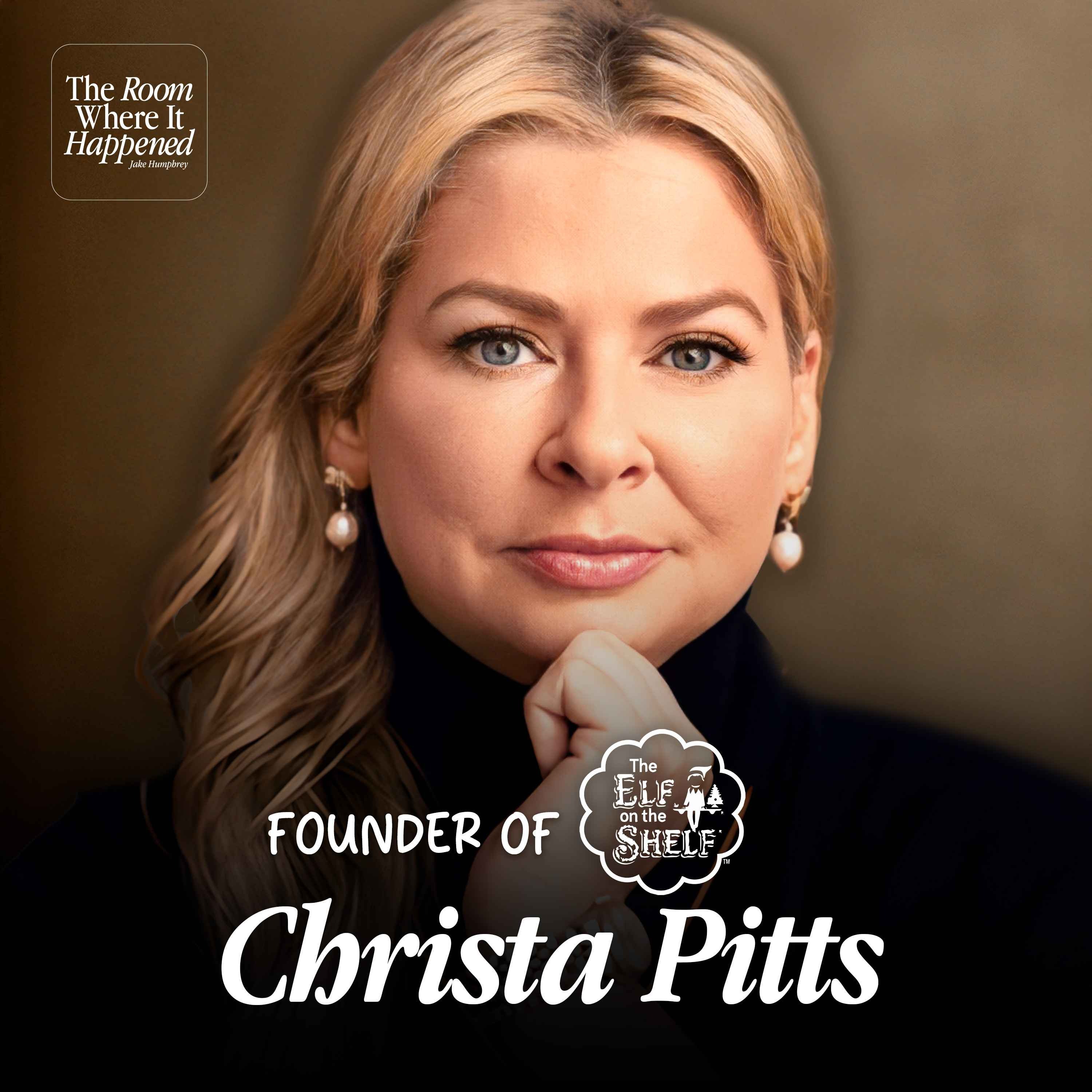
Christa Pitts is one of the founding sisters of The Elf on the Shelf, a Christmas tradition that has transformed into a global phenomenon. In this episode, she recounts the journey of turning a family tradition into a lucrative business, emphasizing grit, creativity, and the power of storytelling.
Written by AI. May contain mistakes.

Get the gist, explore an idea or ask about something said.
 Claude
On High Performance Business, what are the key points of this episode?
Searching your listeningAutomatic transcript. May contain errors.
0:02You're not going to have all the answers. Everyone has some level of imposter syndrome. Do you? Yeah. Yeah. And every female business leader I talk to definitely does. Today, we're talking to Krista Pitts, one of the founding sisters of the Elf on a Shelf. From bestselling books to Netflix specials to elves decorating the houses of millions of families around the world, Krista, her sister Chanda, and her mom have grown the Elf on a Shelf universe to a business that sold over 30 million units worldwide. And in this Christmas special of The Room Where It Happened, Krista walks us through exactly how she built this business empire, the initial idea, and why storytelling is so important for all businesses.
0:45I think you'll love this conversation. One of my favorites in association with IFS. This is The Room Where It Happened.
0:57I'm going to start in our living room. in Woodstock, Georgia, a suburb of Atlanta, Georgia in 1970s. I'm not getting a particular year, but it was in that living room that the idea for what would become the Elf on the Shelf was part of my Christmas experience in childhood. So you were having an Elf on a Shelf in your life before it became this global phenomenon that it has become? Yes. How? So I never remember a Christmas without our elf. And our elf was named Fisbee. And Fisbee had been the elf for my own mom during her childhood. And so when mom had us, there's myself, my sister, and my younger brother, our younger brother.
1:46And Thanksgiving, our elf would arrive. And then every night while we were asleep, the elf would be flying to Santa and providing an update on the day's activities. and then the next morning when we would wake up, we would race out of bed. Like there was no trouble getting us up out of bed. It was like we have to get to find where the elf landed. And so the elf would be in a new spot and we'd go race and find them. And then, of course, there were a couple rules. The first one is you weren't allowed to touch the elf because it could lose its magic. And the second one was that the elf has a job for Santa and it's to watch and listen and report.
2:25so it's not going to be able to talk to you because if you're talking, you're not listening. And so that's where the core idea for the Elf on the Shelf began. And where is Fisbee now? Fisbee has a perch of honor in the Loomistellic Company's headquarters. Quite right. Yes, yes. A bit of a throne, so to speak. Now, this show is rumored to happen. It's about business, right? And as lovely as the story is about your mom kind of being this, I suppose, outlier. creating these amazing stories for her children. That doesn't tell us how you're now this global phenomenon. And at this time of year, every time I log onto my socials, and we can talk about this later, all I see is elves on shelves, which is like the greatest free advertising any business would love.
3:09But how did you go from you and your brother and sister having these magical moments to making that something that happens now around the world? What was the kind of first thing that happened? Yeah. So the first part of it was obviously creating something, right? People have family stories and they tell them all the time to other family members, but it wasn't a business of any sort. And so when my sister had gotten older and had the first of the grandchildren, she said to my mom, why don't we write a book about the elf? Because we wanted to do something with her kids and her family. And there wasn't anything out there like it.
3:50There was no concept of this idea at that point. And so my mom, who had been going through a bit of a rough time, her kids had grown up and moved away. And I think there's probably a lot of parents that feel that way when you reach a new chapter in life. And so when my sister said, Mom, why don't we write a book about the elf? And at the moment, our elf was sitting literally on a shelf. And mom agreed to start writing what would become the elf on the shelf. And they began that day pounding out a rhyming, rhythmic story about the elf on the shelf. What I love about this is that storytelling is as old as time.
4:31You know, we were doing it sitting around fires while living in caves many, many years ago. And actually, I think that's why I get a lot of messages from people with an entrepreneurial spirit. And often the message goes like, I've got a great idea for a book. I've written the book, but I just can't get it away. I can't get it published. I can't get any traction. What can you do to help? What I will do from now on is send them this episode of this conversation because you managed to do it. But how did you manage to do it? Because so many people feel they have a book in them. Often they write that book and then they might self-publish and that's the end of the story.
5:06But it wasn't the end of your story. So how did the thing play out after that? Yeah. So no one wanted it. No one. In fact, we magically, honestly, if anyone's ever tried to get a literary agent, you know how difficult it is. Just that alone. So first and foremost, I always say you either have a good idea and it's all it will ever be, or you're going to do something with it. And knowing the stories that you share, every entrepreneur has this level of grit and tenacity that's very next level. It's just no is not acceptable to you or in that vein. And so we did get an agent and she pitched it to every publishing house, big, small independence.
5:52No one wanted it. And we would get the feedback. You know, we'd be very hopeful that this was going to be the one and we would get the feedback. We got, they're not famous. We received children don't like rhyming books anymore, whatever. We even got a letter that was basically a consortium of all of the major publishing world experts from publishing houses to distributors like Baker and Taylor or Ingram through the major book companies. Barnes and Noble was one of them, Borders at the time, and Books A Million. And in writing, we received a letter because the deal was if you submitted your project and they took it, they would put it in a pipeline and then magically you would be in bookstores.
6:41And we received a letter that said it's destined for the damaged goods bin. Please tell me you still have that letter. We do. Yeah, good. We do have that letter. Because those often, they're the fuel for someone with an entrepreneurial spirit, right? How did you and your, this was, at this time, was it you and your sister sort of leading the charge now? Yeah, my sister, my mom and myself started the company and we self-published, which goes back to your point when people were like they self-publish. But which of you three was the one going, come on, let's just keep going. We're going to be okay here.
7:13Let's believe in what we're doing. My sister, she's incredibly tenacious. She's super gritty. And she is a creative genius. And the beautiful thing about the elf on the shelf, despite all of the people who were telling us it would never work, and they did, plenty of them, is that we'd grown up with it. So we knew deep down how magical it was. And my mom understood from a parent's perspective what that experience of having the elf in the home was like. And so she saw the benefits of the fact that your children are getting out of bed first thing in the morning, right? They're not rolling over. His job as a parent.
7:53The hardest, the hardest. And that we were better behaved when the Elf on the Shelf was around. We wanted Santa to know that we had been good and done kind things and really been able to bring a little more holiday spirit into the house through that experience. So, yeah, we ended up doing a couple things. Number one, my sister did a bunch of research, and the Internet was fairly baby even then, 20 years ago. So what year are we talking about now? This was 2004. Okay. And so she started doing a lot of research on how to publish a book and paperweights and Pantone colors. And we found a local artist who believed in us.
8:38Wasn't like, all right, I need a bunch of money or this is never going to work. She just loved the story from the beginning. And so a local watercolor artist who did a lot of art fairs became our illustrator. And we just kept talking to people. And we kept trying to find out more information and more information. And ultimately, we were able to cobble together money. And it was, I sold my home and put profits in. My sister took out credit card debt, maxed the credit cards. and my mom and dad took what little they had in their 401k or retirement fund. And that's how we started the company. 5 ,000 units was the minimum order.
9:22And that's what we brought in, 5 ,000. So this is a huge risk. You're risking your home. Your parents are risking their retirement. Your sister is also risking everything that she can get together. Yes. What gave you the belief that that risk was a gamble worth taking? Honestly, I think it's because we grew up with it. We just knew if families tried it, they would love it as much as we did. And it didn't matter what anyone said to us. It didn't matter that they said it would never work or that we weren't going to be able to find a way to get into the market. Now, I had been a host on QVC. And so I knew how to market and sell goods.
10:06And we started basically a guerrilla campaign. We started with very local Christmas marketplaces because there was no concept of the Elf on the Shelf. Now people will be like, oh, it's the Thanksgiving version of the Elf on the Shelf. There wasn't anything. We knew we had to explain this to people and we had no money for marketing. So what we decided to do was start local, which is a very important thing for people who are launching their entrepreneurial journey. You don't have to conquer the world in your very first launch. You can start very small and be deliberate. So that's what we did. We got into a small Christmas market.
10:49It was called the Cobb Junior League Mistletoe Marketplace. And I knew for sure that there were two things we needed. number one, people with expendable cash looking for unique items for Christmas presents. And secondly, that there would be families there. So it was going to be our target audience. And so we set up a small booth. They didn't even want to let us in because they said, you only have one item. I don't know about that. And we said, we won't hold you accountable. Let's just see. Let us launch this. Let us see what happens. And so we bought those blinky bracelets that are very inexpensive and they come in a big giant bag with lots of different colors in it.
11:31And we said, we're going to give these away. We're going to give them away as parents walk through the show. Kids love blinking things. And as we are trying to get those to work, right, you have to take a little pen and put it in there and the kids were choosing their color. One of us would handle the bracelets and then the other would come around the side and explain what it was we were really there to do. And we would talk to them about what the Elf on the Shelf was and how it worked. And at the very end of our elevator speech was a good 45 seconds, blinky bracelets in hand. Parents felt, I need to sit and listen.
12:07They're giving something to my kids. And that's where we sold our first 500 units. And that is a great lesson in selling, I think, to people listening to this who maybe are at the start of their entrepreneurial journey. One of those people is my 12-year-old daughter, Florence, who every week comes in with another idea for a business. I love it. Which I think is great. But what, from a parent's perspective, what I understand happens here is as soon as someone gives something to your child, which you haven't paid for, and then they say, are you interested in this? There's almost that like, you've almost created a contract with them at that point where you think, well, they were really kind just then.
12:39So at the very minimum, I'll give them 20 seconds of my time. Yeah. And that's all you really wanted because I think what's nice about this is that sometimes people do that and actually they're just selling some crap that you don't need. They don't believe in. They're just trying to sell stuff as quick as possible to make some money. The nice thing about this is, yeah, you were using a pretty crafty selling tool, but underneath it was something that actually had a heart. You believed in this. You weren't trying to sell something that you didn't believe in. Like if you just got them, I'm pretty sure your passion was the reason why eventually they took one of the elves from you, right?
13:13I think so. I think it was a real critical piece of it. I think they saw our authenticity. And I think when you were looking for something that's different or special or unique, we had that answer. And we knew if they got it home, they cracked it open, they started using it, the word of mouth would spread. And that was what we needed. That's what we wanted. So we were practically giving them away just so families would try it. And when we were able to sell through 500 units in just a few days, and some parents got it, right? They would be like, oh, this is brilliant. I think it just created an opportunity for us to have the fuel to keep going, to move on, to know that we could recreate this in another Christmas market.
14:01And what would that look like? We were going everywhere. Anyone that would have us. Small church markets and fairs, like we would split up. Mom would go some and my sister would go some and I would go to some. And it was really very much grassroots. And I guess the power of patience was important here as well, because you're not getting rich from selling a few hundred or even a few thousand of these. I imagine every single penny of profit went back into getting more. For three years, none of us made any money at all. Wow. It was truly take every penny we have to pay for the next round of product that we were going to bring in year after year after year.
14:41And at the very beginning of this, right, this journey began with your sister saying to your mom, write a book about the elf on a shelf. When did the moment move from self-publishing a book after constant rejection from publishers to one of you going, well, why don't we actually sell the elf to people? It's always been together. Right. So the elf came with the book. The elf has always come with the book in a set that I like to call a tradition in a box. Right. And so you weren't buying a widget or the latest fad. You were buying a tradition that was going to come back year after year after year.
15:18And it was going to be in your family for generations. And so we knew it was far more than just this, quote, cheap doll. It was an experience. And that's what set us apart. And that's what allowed us as we continued forward on this journey to now sophisticate it a bit in that in 2007, the actress Jennifer Garner was photographed carrying the book box set. That's the way it's always come with the big elf on the shelf on the front, down the streets of New York City. And a paparazzi caught the picture. And we still don't know how she got it. So this was nothing to do with you. This wasn't a product placement deal.
16:01This wasn't a PR stunt. It was none of those things. This was genuine free marketing. Yes. I picked up the phone. And of course... When did you first see the picture? Well, when you start a business, you're doing everything, right? And that's what people should remember. I was the call center, the sales staff, marketing. We were shipping and logistics. We were all of the things, just myself and my mom and my sister. And so Jennifer, back then, as the internet was still kind of growing into its own, there were these celebrity blog pages, right, where the paparazzi would take a picture and then it would get posted.
16:38And so I answered the phone and this woman is screaming, Jennifer Garner has this elf on the shelf. What is it? I want to know what this is. And so I said, what do you, what do you mean? She's like, you don't know. And I said, no, I'm not sure. Do you mean the actress? And she was like, well, yeah, she's carrying it through the streets of New York. I have to know what this thing is. And so it was pretty shortly after that, that more people outside of our, you know, smaller. Who was the woman that called you? No idea. Like a blogger? No, like someone who was a fan of Jennifer Garner. Just randomly part of our story.
17:15Have you ever managed to thank Jennifer Garner for this moment? No, we still don't know how she got it. We need to tag Jennifer Garner in on this clip and let her know. Thank you. This is it. You launched a completely amazing phenomenon. Without knowing it. She probably has Elf on a Shelf in her life now and has no idea that it's gone global because she bought it. Yeah, she was the very first moment that it went beyond just the family story and the small people who had already started experiencing it in their home. So you see Jennifer Garner carrying an elf on a shelf. Have you heard of a UK business called notonthehighstreet.com?
17:53No. It was created by a lady called Holly Tucker, who very similar to you, she used to travel around craft markets and she saw all these amazing crafters, all with passion, all with love, all working hard, but all having to pack and repack their stalls on the weekend and travel from various parts of London to other parts of London. And she thought, how do I help these people in this? Because she was one of them. Brilliant. So she created notonthehighstreet.com and basically went round at these markets and said, look, you can still do this, but why don't you also come onto this website that I've created so the whole country can get like an online craft market, like an amazing little craft fair.
18:28And that's how Not on the High Street was born. It's huge success. She's become very wealthy from it and it's fantastic. But there are still so many people doing what you do, travel around markets with their passion, but hoping for that moment where they actually end up in a store or going national. Obviously that had to happen to you. Otherwise, Jennifer Garner is not walking down the high street in New York with an elf on a shelf. So when did you make that leap from local market to being in stores? So we started working with specialty retailers, which is a fantastic way to move your product forward because the people who own those stores and the people who work in them talk to people when they walk through the door.
19:08So like what, small, like toy stores, small independent toy stores? Small independent, so specialty boutiques, gift stores, toy stores, small independent book stores. All of those stores go to major trade shows. You can even just walk in and talk to the proprietors yourself if you're starting extremely local. So we started with about 20 different boutiques in year one. That number grew to around 200 in year two. And then by year three, we had started working with more of the regional book retailers. They're not making the national decision yet, but they were making regional decisions. And so we were starting to see that footprint grow.
19:51And quite frankly, by the time Jennifer Garner was photographed, we had enough locations spread out around the country that between Amazon, which was still fledgling at that point, our website and those retailers, we were able to meet that type of demand. Now, this is a great inflection point as well for a business. And having been involved in a number of businesses which have had that moment where you smell that the growth is around the corner, from the outside, it's the dream. You finally have a business that's growing. That must be when you finally make money. What people forget is that that's when you finally have to spend money because suddenly the world needs tens of thousands of what you've got, not just a few hundred.
20:32So once phone calls come into you and suddenly you see sales are starting to grow, how do you manage to suddenly service the demand that came your way? It was very difficult. I mean, again, banks don't exactly look at elves and books as amazing collateral, right? Our resources are still very scarce. Do you want the money for what? Okay. Yeah. So, I mean, we did some things that were highly risky. They had this thing back then called credit card factoring. I don't know if it still exists. And honestly, it's shark city. Yeah. But basically, we had chosen to only accept credit cards in the beginning because we needed the cash.
21:17Yeah. So we didn't have net terms offered to anyone. And because this was our business model, we could engage in that practice where they swipe a credit card, they take the top part of the 50 % as a repayment for the money they gave you, and then the rest of it comes back to you. And so it was a huge risk, but we didn't have another choice. And scaling is something that's often overlooked because what you need when you start is not what you need as you grow. And I have a mentor who gave me some of the best advice, and we've followed it time after time. which is to hire for where you're going and not where you are.
21:58I think as an entrepreneur, it's the scariest thing to start making hires because that's your cash, right? Like, I need this for more product. What am I going to do? But if you only stay within your current expertise, you're never going to grow. And you have to look forward. And for us, we needed an attorney. We were an IP company. We needed someone that was going to come in and be thoughtful about protecting our IP. But it's not as if hiring an attorney to come in-house is an inexpensive proposition, right? But it was something we had to do. We had maxed out the time I could spend devoted to it.
22:39Or, you know, my sister had taken on some of the more sourcing-focused roles on top of creative. And so each of us were breaking into our area of expertise as the company was scaling. But I think one of the best pieces of advice I ever received was to be forward thinking about what that would look like and what we were going to need to achieve it. And apart from the moment when you were getting constant rejection from publishers and this whole thing nearly didn't happen, were there any other moments in that early growth phase where actually you just nearly lost this business? I think there's several.
23:13we knew how important it was going to be to build the brand. And I used to just repeat it nonstop. We've got to focus. We can't be everything to everyone. And we've got to build the brand. We need people to call their store and say, do you have the elf on the shelf? Not any elf will do. Do you have the elf on the shelf? And early on, there was a major plush slash toy company who had come out with a product they literally called the little elf on the shelf. and this is where working with boutique owners was a differentiator because one of the owners called me and said hey listen I don't know if you know this but x company walked in here with their sales catalog and they've just launched a product they're calling the little elf on the shelf and I couldn't believe it and I was like well can you prove it you must have felt sick at that moment?
24:14It was just, it was heart-wrenching because again, we're still scrappy. We're fighting to be seen as a brand. We're fighting to figure out who we are. We're fighting to scale. And now here's one more battle. And we're up against a major company with tons of money. And they said, no, they won't leave their catalogs behind. I just wanted you to know I'd seen it. And so scrappy on me, but I snuck into the Mart. And sometimes you just have to go out there to protect what you're creating. And I snuck into a Mart and they had their catalogs laying all over the showroom. And I happened to take a page with me from the catalog and we were able to prove what they were doing and thus provide a cease and desist and ultimately settle.
25:03But it was one of those moments where we weren't big enough at that point, but people were starting to say the elf on the shelf. So had that actually hit stores, it might have been a genie we couldn't have put back in the bottle. And one of my issues with being an entrepreneur and a creator of businesses is that I'm a catastrophizer, which isn't a great mix, right? Are you the same or are you quite calm in those situations where you can see that if this doesn't go our way, this is the end of everything we've ever worked for? I think there are those moments for sure, and they've happened over and over again.
25:37But I also believe that my sister and myself are continuously gritty. So we may have inside of us this concern or this nervousness that it could all collapse. But then it also becomes a bit of the obstacle is the way. You know, no one ever would have predicted that there would be a global pandemic that would shut down the world, right? But how are you going to see your way through that when you're a seasonal company? And what we've come to understand is that you can't delay Christmas, right? Christmas is always going to come. And Santa's sleigh is always going to fly. And so you can't backorder Christmas.
26:21You just have to figure out how you're going to deliver it. It may be in a different way. It might be different retailers. It might be different ways of marketing or sharing your story. But at the end of the day, Christmas is always going to come. And that's an important thing for you to kind of keep in focus. And there have been so many times that we thought, just privately, between the two of us, are we going to be able to make it? And we hold hands and we trust the people around us and we move on. I think one thing that's really, really interesting when you're building a business like this, and it's two sisters and a mom, I guess your mom eventually kind of took a step back and allowed you to go.
27:04She did. Mom ended up retiring from the company in 2021 and took a step back to focus more on her own world. But what isn't part of the story is that my father was a key figure, as you might imagine. One of the greatest men in the world and a huge supporter of my mom and myself and my sister, just amazing man. He passed in 2014 unexpectedly. effectively. And that was a turning point in terms of what are we going to do? Like our guiding light in this, our big supporter, our dad and her husband wasn't with us anymore. And so that was a time in the company where we had to really sit and redefine, are we ready to be done with this?
27:50You know, what's our plan? And it actually forced us again to reestablish a new mission and a new vision for the company. And it's taken us to the 20-year mark now. So what did you find in that moment when you sat down with your mom and your sister and you were grieving the loss of your dad, but you also very cleverly knew this was kind of seminal moment for us? What did you find that moved you forward? So in the beginning, our vision was our elf on every shelf, right? And at that point, We were about 10 years in. And my sister, again, one of the driving forces here, said, I just think there's so much more.
28:33Our stories aren't done yet. And here, the off on the shelf is a hero brand that is guiding all of these families across the globe into the North Pole. What other characters are there? What other lore exists? What stories can we tell and what can we own here? And up until that point, it had been all about the elf on the shelf in many ways. And that's when we started recognizing that we could be more. We could become the voice of Santa's North Pole. And children and families were already trusting us with that responsibility. And so now it became a natural opportunity for us to launch elf pets, which we did.
29:15And there are three of them, a St. Bernard, a fox, and a reindeer. and they each have different jobs for Santa. We started putting out content. So we have four Christmas specials, three of them around elf pets, and one of them is what we call our classic property, an elf story. We then started naming characters like Nora, our magical Arctic fox. So how does Santa travel the world in one night? And how does he land on all these rooftops? Well, Nora can spark the northern lights with her tail. That pauses time, and that's how Santa gets around the world in one night. And she can spark up snow with her tail and put it onto rooftops so Santa's sleigh can land, no matter where in the world it is.
30:01Even if it's Australia and it's hot outside, Santa can land the sleigh. And so we started recognizing that we can own this space. and that's when in 2014 we redefined our vision as owning and telling the stories of Santa's North Pole and broadening our assortment and broadening our storytelling and we doubled down we became entrepreneurs all over again isn't it interesting that the one thing you would not want to have happened in 2014 is to lose your dad but equally isn't it interesting that as much as we spend our lives trying to avoid trauma and heartache and heartbreak. Often it's those moments, the obstacle is the way, it's often those moments where we actually see the path for what it is.
30:44And obviously the energy you got from your dad, I guess, left you all in a position where you're like, right, he's not going to be here to see the rest of this story. But if he was, let's make sure this is a story that he would be proud of. Yeah. And we say that all the time. I feel like he looks down on us and he smiles. And there are moments where he is absolutely with us. And I think, you know, he always taught us that with great success comes responsibility. Yeah, yeah, yeah. And we take that very seriously. And it's why we try to be as philanthropic as possible. And we've built an amazing culture in the company.
31:20Everyone works for Santa and what he's meant to represent. And so, you know, I think he is proud. I think he's proud every moment about what we've done. And it's a legacy. People say to us all the time, oh my gosh, you must be, you know, where's your private jet or your private islands or whatever? No. And they're like, well, how are you ready to sell? No, not really. Because for us, it's about legacy. You know, are we continuing to tell these stories? Are we making our family proud? I think we are. Yeah. It's funny, isn't it? When you're a kid, you think when you're older, you can cope with the loss of a parent.
31:58So only when it happens to you at an older age, even as successful business people who've often got kids of their own, God, it just hits you up. It also never goes away. It never stops being a thing that you kind of, an emptiness in there, right? Yeah. Yeah. And again, I think, you know, we all at some point will lose our parents if things go in a certain way, but you're never ready, I don't think. And certainly when it's a surprise, you're not ready. But ultimately, it just, it affects you. You're never going to let it go. But I don't think people talk about leadership through loss enough, honestly.
32:37You're always, as a leader, expected to put on this strong front and be deliberate and have the answers. And I do think there's something to figuring out what that looks like when you're in a position where you can't just stop. How did you deal with it, with your company? I do think we did the thing most people do, which is put on the strong face and push forward. But my father was such a part of it because this is a family business. that everyone was feeling this loss. He was a fixture in the office. He'd go around and talk to people or hang up the artwork in their office because that's what they needed or wanted.
33:18So in a way, he was kind of everybody's dad. And I think it probably having people know him and love him and respect him as they did kind of helped all of us feel like as we moved forward, the company was too. And let's talk about where the company is today. How many staff are involved in Elf? 125 full-time staff that work directly inside the company. And then we staff up for customer service, marketing support, and supply chain logistics for fulfillment in the season. And you sell your Elf in how many countries around the world? 29 countries. And the business is turning over what kind of numbers?
33:57We don't usually talk numbers. I can tell you we've had over 31 million scout elves, elf pets, and elf mates that have been adopted worldwide. We've launched into really four arenas. So we've got our content. We've got our entertainment and experiences. We have our collaborations and partnerships. And then we have our hard goods division. So that would be the elf on the shelf core box set, our elf pets, our elf mates, which are really popular here in the UK. and then our characters that come from that. So what's the secret for people listening to this, for being agile in your thinking, for not being wedded to one way of operating, one way of thinking, but actually to constantly be open to any suggestions that people might have for how this business can grow and evolve?
34:45Yeah, I think evolution is the key. Yeah. Right? It's one of our secret sauces. So we're constantly able to make decisions and move far more quickly than some large established company. And it always has been this way. And is that a deliberate thing for you? Yes. Yes, it is. Because we've managed to be successful in mass retail specialty. We've managed to find our space on Amazon or a platform that's similar to that, which is a completely different animal, right? Things that have been around a long time are more successful than new, new, new, which is what a retailer might want, and now social selling.
35:26And so when we move into that space, we're able to bring our teams together, focus them very quickly on what it is we're trying to accomplish, and then let's learn. Maybe we do it right. Maybe we do it wrong, but we're going to learn along the way. And so as we moved into social selling, it was, guys, this is a test. All of us, this is a test. We're going to learn. We're going to keep track of the things we learned, what we got right, what we got wrong. But ultimately, this is how we're going to move forward. So you would permit failure? Yes, absolutely. You have to because you're going to fail.
36:03At some point, something's not going to work, but it's what you do with it that matters. And what about bringing in expertise around you? Have you created like a growth board or some kind of advisory board of people who are at the top of the business world, who have done things you haven't yet done, who can advise you? Not like you might think. So we have an executive board. There are four of us, myself and my sister, our president, and then the COO. And we're very tight. We've worked together for a very, very long time. And so that's a place we all trust. We don't see things eye to eye all the time, but it's a nice combination of thoughtfulness and culture blended with innovation and evolution.
36:46And then we also have each of us belongs to various trade organizations or groups. So I belong to YPO, which is a global organization for leaders. We've got several members that belong to different groups. And then Shanda and I both have a mentor who's been with us for years. And he grew a business and sold it very successfully. Probably one of our biggest cheerleaders on the planet because he looked at my sister and I a couple of years ago. And he said, do you guys know you changed Christmas? And we were like, what? And he was like, you made Christmas better. And who even knew it was broken? And it really gave us a new sense for where we are now and what that looks like.
37:31But, you know, we still deal with it. Like there's imposters everywhere. There's dupes, the dupe economy, right? Where people are truly and quite dangerously copying what you do in many cases. counterfeits a problem across the globe and any major company will tell you that. So we still have big, big battles to fight. It's just that we are more aware of them. So that scrappy woman going in, ripping out a page of someone's catalog to make sure that someone didn't come and kill your business is just as scrappy as she's always been. But the battles are just a bit different. That's so true. It's so true.
38:10Yes. Duke's up. Let's go. Love that. Well, you have to fight, man. No one gets here without fighting. You're so right. And I don't think people talk about it. You know, you get on a stage, you're on a panel, you're doing a guest speaking. And most people just want to hear how it started and how you continued on. But you're right. I mean, it is a scrappy fight in a different way every single time. And any entrepreneur who's successful, that's what they do. See, that's why I wanted to create this show, because I watched so many people that I knew were successful business people like you talking.
38:44And I just felt like on stage or on another podcast or on a TV show where you get like two minutes to talk, I felt like I wanted to understand business more deeply, but I felt it only was surface layer stuff. Oh, be more creative, hire the right people, work hard. You know, that's so valueless for me. Right. They don't know what I mean. What do I do with that? They all want a next step. Everyone wants a next step. And I just say, start. Wherever it is, just start. And then you can always build from there. But until you actually start, an idea is nothing. Please do not come to me and say, I have an idea.
39:19First of all, if it's about my products, I don't need your idea. I've got millions of them myself. And legally, I can't even listen to you. So if you have an idea, it's what you do with it. And you should put it on paper first, because that makes it real. It separates it from all the other ideas that you have. And then the second part is just to let this journey emerge in front of you. You're not going to have all the answers. Everyone has some level of imposter syndrome. Do you? Yeah. Yeah. And every female business leader I talk to definitely does. Because there are times, particularly as a blonde woman from the South in the United States, where I've had, we call them the suits, truly men in suits, walk up and be like, oh, you guys got so lucky.
40:08Good for you. Why don't you let some real business people handle it? Wow. And that still happens? It happens. Yeah. And your response? Huh. Huh. We'll see. I mean, usually I just smile at them, but every now and then it depends on the environment. I let them know that this is not something built on luck. This is built on thoughtful, strategic, hard work and planning. And I think one of the other things that we really have to be clear with when people are listening to this and they may well have a dream of their own is that actually as useful as I think this conversation is, I think it's fantastic.
40:41You can't take away their learning. You know, like you've said there, just start. And often people think about things or they make notes about things or they prepare a date they're going to begin or they talk to their friends about what they're going to do. None of those things are doing the thing. You have to do the thing. Just start. Start. Yeah. and expect to get it wrong. Expect to feel like at some, have you heard of Cantor's law, which is that everything in the middle will look like a failure. And that's where 99 % of people stop. Almost like if things are hard or difficult or you feel like you're failing, you must be on the wrong path.
41:17And what we need to explain to people is, you're almost certainly on the right path. That's how the path looks. It looks like a failure. It always is. Yeah, people love to look at the end, right? and say, oh my gosh, that's what I want to be. But they fail to recognize the millions of moments that went into what you finally see, which was a difficult decision, a moment you thought you might not even make it. Again, no bank wanted to come to the table and support us until we had gotten to a certain level. But you have to make it to that level and it's not gonna be easy. And if I had all the secrets, right, if I could write the magic book of recipes, that's all I would sell.
42:05Because guess what? I would be a bajillionaire because I have just found the magic formula. But it's different for everyone. Yeah. Well, I think the magic formula for you is that you had two crucial things in your armory. You had a genuine story, not a story that had been made up to fit. But also you had something that nobody else was offering. That no one else had at that time an elf on a shelf. And I think if you can bring originality and heart to a business, then surely you're already ahead of 99 % of other businesses. Yeah. Often when I have a chance to talk to people, I say, you know what?
42:41You have to figure out what's going to differentiate you, no matter what you're doing. So in our case, elves have worked for Santa forever. But they were in the toy shop or they were baking cookies. They were cobbler elves. Our elves were the only ones assigned to work for Santa, live in your home, in the planet Earth, and go back to the North Pole. So elves have been around forever, but it's how our elves work and act that makes them different. And that principle belongs to every company. I once had a dentist. Do you like going to the dentist? Not massively. Nobody does. I'll tolerate it. It's not fun.
43:22It's not fun. And they ask you questions, right? of your mouth open. But when I walk in, I sit down, it was a new dentist and they said, would you like a massage? I was like, what? She was like, yes, you can choose from a hand massage or a neck massage, which do you prefer? Now, now I like going to the dentist because they have something that differentiated them. It didn't cost them a lot of money, but they thought about what they were doing differently. Dentists are everywhere. You can choose any number of them. But if I'm going to go, I want to go to the one where they do a great job and I get a massage.
44:01You care to make it feel like a spa, not like a doctor's appointment. And I think that same principle applies to whatever you're doing. So find another way to engage people. Do something that no one else is doing. Yes. What differentiates you from all of the other ones out there? I think what also differentiates you is that when December arrives, Elf on a Shelf arrives, on my social media, like you wouldn't believe, I mean, I cannot go on to Instagram stories at the moment without all of my mates, because I'm in that age, I have a 10 to 12 year old, people have got some slightly younger kids, and they're deep in this world of Elf on a Shelf.
44:39This ability that you seem to have to allow people to generate content surely is one of the most important things for your business now, right? You're not paying these people to be your content creators, but how do you kind of exploit that to its maximum? How do you make sure that that keeps on happening? Well, again, it goes back to evolution. So for the ones that are the most brand right and make the most sense, we engage with them. There's banter from the North Pole, right? From the elf on the shelf directly, they just liked this post. And if you're someone who's posting and most of them, not all of them, are doing so because they love it.
45:18They love what's happening on their kids' faces in the morning. They love the fun, interesting things that might be happening with the elf in their home and our other characters from the Santaverse. And so, because it's authentic, right, it translates in a different way. And so, our way of engaging with that is to repost, to share, to comment, to be part of the conversation and not just leave it to other people to own it entirely. But they also, it's, you know, user-generated content for a reason. So it's got to reflect their personality for it to really resonate. And we lean into that authenticity.
45:54But the other thing which has come through constantly in this conversation is that you don't just engage with every post. You're intentional about the posts that work well for you, that look like the right kind of story that you would tell. And I think there's probably a message there for people as well, that intentionality in every part of your business is so important. In a totally different realm, we recently spoke to one of the world's best golfers on one of our other shows. And he was saying that most golfers just kind of hit some balls. And I think they've done their thing. Whereas he intentionally puts a ball where he most expects it to be.
46:25And then he writes down exactly what he did with that shot. And he said every single shot he's ever taken in practice for his whole career, every single one has been intentional. And I think intentionality just isn't spoken about often enough in life and in business. I think you're right. There's something to that. First of all, there's a reason he's the best golfer in the world, right? Yeah, exactly. There's a reason for that. And I think intention is critical because sometimes things aren't brand right. And while they may have a lot of hits associated with them or they may be highly engaged with, maybe they're not the types of content we want kids to see.
47:02And we pride ourselves on creating joyful family moments. And if somehow, you know, the elf is causing like true heartache or pain to someone, we don't want anything to do with that. That's not our elf. That's not true to our quality and what we intend to do. So we're very intentional in how we engage with people and how we have those conversations. And I think if your heart isn't in the business, if it's purely financial, I think so often it's hard to make the right decisions for what is and is isn't your story. Whereas you clearly know your story so well because it truly is your story. Final question.
47:39I've spoken to so many entrepreneurs and business leaders and successful people who just haven't enjoyed the journey because they've been so busy being successful. They forgot that these are the good old days happening right now. You know, you probably look back fondly on the toughest times at the beginning with the fondest of memories. So have you managed to enjoy this journey? I have to force it. My sister and I talk about that as well. My mom too. at different points in time, you have to sit for a moment and recognize like this happened. You know, The Rock, who's one of the most famous people on the planet, right?
48:18Last year he posted and he had touched the elf and his kids are freaking out, literally like, oh my god dad blah blah blah blah but still the rock is engaged with something my mom and my sister and i created and so there are moments you just have to sit back and be like that is cool yeah that is really really cool and i get a moment like this where i'm sitting here talking to you about business stories and your background and what you've learned and who you've spoken to which I think staying curious is part of that living in the moment and being joyful for where you are and what's happening. Is it exhausting at times?
49:01Yes. I was up at four o 'clock this morning, getting ready for the day, but you know what? They're not going to last. And like you said, you have to take those moments and force them when they happen. And then you're off to fight the next fire. There you go. What was your dad's name? Bob. Bob Abersold. Well, I think with Bob in mind, let's try and remember to enjoy every minute of this journey because it's so, so quickly over, right? So well said. And you've done it. Whatever you would have dreamed at the very beginning, sitting around that table with your mum and your sister, you've done it. So I hope today's one of those days that you force yourself to stop and realise how well you've done.
49:38It was a pleasure to chat to you. It's a joy. Thank you. Thank you very much. That was great. Oh, what a story. Thank you. You're great. Thank you so much. Genuinely, one of the most interesting people that I think we've spoken to on the room where it happened. And I think the one thing that comes through is the constant scrappiness. Scrapping in the early days when it looked like nobody was going to back their business to scrapping today to make sure that other people don't come and copy their business to make sure that the counterfeits are closed down at the right time. But also the fact that when you have a global business, I think it's really important to remember that the stakes are a lot higher.
50:11The bigger your business, the bigger the overheads, the bigger the risk. And of course, the higher you climb, the bigger the fall as well. And I think if this conversation stands for anything, it's a reminder for us that creating a business is one thing. Creating a business with passion and purpose and heart is something totally different. And actually, I think in those difficult times, which we spoke about in great detail, when you have a business that is your purpose, when you have a business that absolutely solves a why in your life, those things that normally look like obstacles actually become fuel.
50:42So when you've got someone looking to end your business by copying it and creating the little elf on a shelf, without purpose, I think you just go, oh, I can't believe it. But I think with purpose, it fires you up to go in and to solve that problem and to deal with it. And I think that is one of the most valuable conversations about starting a business that we've ever had. I have so many people reaching out to me with businesses that are a passion point, but they just don't know what to do next. And as you heard there, you just need to start. That's the single most important thing. And if you've got a business that you've got in mind, and you came to this conversation because you want to turn your dream into a reality, I hope that this is a conversation that will help you, not just today, but in years to come.
51:26Thank you so much to Krista for joining us. And don't forget, please hit subscribe or follow wherever you're enjoying this conversation. It means we can continue to bring you amazing chats like this. And I'd love you to pass this chat to somebody who you know would love to build their own business, but they're just not sure the first thing they should do. I think this is full of such value for so many people. Thank you to IFS. Thank you very much to Krista. And I'll see you next time for another episode of The Room Where It Happened.
Before it became a worldwide holiday staple, The Elf on the Shelf was simply a Pitts family tradition, one that Christa Pitts helped turn into a cultural phenomenon through grit, creativity, and unshakeable belief.
In this episode, Christa looks back on the early days of being rejected by every publisher, the decision to self-publish with her family’s savings on the line, and the scrappy marketing tactics that brought their little elf to life in homes across America.
She reveals the unexpected celebrity moment that sent the brand soaring, the battles to protect their idea from copycats, and the hard lessons learned while scaling a fast-growing company. Christa also opens up about leading through personal loss, staying true to the brand’s values, and building a culture that embraces experimentation, heart, and the occasional failure.
It’s a conversation about family, courage, and the magic that happens when you bet on your own story, no matter how many times you hear “no.”
---
JOIN OUR COMMUNITY
👔 LinkedIn 👉 https://www.linkedin.com/showcase/the-room-where-it-happened/?viewAsMember=true
📸 Instagram 👉 https://www.instagram.com/room.where.it.happened/
🗞️ Newsletter 👉 https://www.linkedin.com/newsletters/the-room-where-it-happened-7315326937923485696/
PARTNERS
IFS - award-winning Asset & Service Management software 👉 Reimagine your operations at: https://highpfrmc.com/RWIH-IFS-yt
#JakeHumphrey #business #highperformance
Hosted on Acast. See acast.com/privacy for more information.


