
 Ask ChatGPT


 High Performance Business
25 Nov 2025 · 49m
Written by AI. May contain mistakes.

Get the gist, explore an idea or ask about something said.
 Claude
On High Performance Business, what are the key points of this episode?
Searching your listeningAutomatic transcript. May contain errors.
0:01And then the first thing I did is I booked a flight and I went to Seattle where the headquarters of Boeing are. And what are you trying to find out at that point? The first question is you go around and you say, how much for one of these and how much for one of that? What was the answer? Today we're joined by a man who works right here, the Principality of Monaco. And I believe we're joined today by a titan of business, Sostelios, the man who created EasyJet. You know the brand, you know the airline, you know all of the other businesses that have been created from the Easy name. But how much do you know the man himself?
0:34How the business was created, what drives him today and what he thinks the future of business looks like tomorrow. Let's go meet him.
0:48Well, Stelios, thank you very much for inviting us onto your lovely roof terrace here in Monaco. Pleasure. Pleasure to have you here. Let's go straight to the room that you think of when I talk to you about the room where it happened. Where is that room? it's somewhere there. We can't see it from here because it's the trees, but it's basically the restaurant at the top of the nicest hotel here in Monaco, where me and my father, my late father, had lunch in 1994. And he approved, he agreed to finance my dreams of starting EasyJay. My father was a very successful self-made shipping magnate. So I worked for him.
1:32My only other boss in my life was my father. And in 92, I convinced him that there's a new way of running a shipping company now. You know, can I start Stelmar, my own shipping company? Interestingly enough, when I started working on the project of the airline, the working title of the airline was Stelair. So I was going to brand extend from Stelmar to Stelair. So, running my own shipping company was interesting, exciting, challenging. But people were not giving me credit for it. People said, well, it's your father that's telling you what to do. He knows the business. You are his son. It's not your work.
2:14And was that true? To a certain extent, yeah, always. I mean, you know, I've always had a very good working relationship with my father and we always exchanged views. But, you know, the fact that I wanted to do things slightly differently, people were not giving me credit for it. So I was determined to prove myself to my father and the rest of the world. So I said, I have to start a new business in an industry that he knows nothing about. The other thing that I realized by that stage is I had a bit of a marketing skill. So in shipping, you are business to business. So you're not really communicating with the consumers.
2:47So I was determined to start a consumer-facing business, a consumer-facing brand. I wanted to create what I used to call back then household names. So back to the room where it happened. Summer of 94, I said, I had enough of shipping. I want to start an airline. Will you back me? And my father said yes. And all of that happened over lunch at the grill, the restaurant, the grill at the Hotel de Paris here in Monaco. Your dad agreed to loan you five million pounds. Was that enough? Five million was the original bet. In other words, you know, take that. And if it doesn't work, we close it down. But I'm sure people are listening to this or watching this thinking, of all the people in the world to agree to lend you money, it's pretty easy to get it from your dad.
3:30Was your dad, like, did he drive a hard bargain? Did he need convincing from you? Was he quite a hard-nosed businessman or actually? I mean, he was hard-nosed, but equally, I think he believed in me and I'm eternally grateful for that. I mean, you know, to this day, I always say, thank you, Dad, that, you know, you gave me this opportunity. And something else, a little detail that few people know is that part of the condition was that my brother and sister would be also shareholders in EasyJet. And hence, they're today substantial shareholders. So he said, I'll give you the money. You can leave the family business to do your crazy idea, but you have to carry your brother and sister.
4:05So if you benefit, the whole family would benefit. Love that. So it remained a family business. It remained a family investment. Yeah, absolutely. And then the first thing I did is I booked a flight and I went to Seattle, Seattle, Washington, in the United States, where the headquarters of Boeing are. If you can just take a couple of seconds to subscribe, then of course you can get each episode directly to your inbox. And honestly, for you to subscribe, it makes such a difference to our show. It means we can grow and it means we can attract more incredible guests like George Heaton, Rory Sutherland, or Richard Branson to come and join us.
4:41And don't forget, you can also check out my room where it happened newsletter. Just track me down on LinkedIn. Okay, so you get the money and you go to Boeing in the US. Exactly. And what are you trying to find out at that point? The first question is you go around and you say, how much for one of these and how much for one of that? What was the answer? I think back then a Boeing 737 was about$30 million. And you've got five. Before discounts. Okay. And it was that visit at Boeing in Seattle where I said, really, you want to make money in aviation? Go and visit Southwest Airlines in Texas. the original, you know, the prototype low-cost airline that was created in Dallas, Texas in the 70s.
5:21And everybody looked at them as the best successful example. So the Boeing executive said, you know, they are our biggest customers. They buy more planes from us than any other airline. Go and visit them. So I got on a Southwest Airlines flight for the first time. You know, I had peanuts. That's all they gave you. That's why they were called Peanut Airline. I booked myself to stay for the first time in a Motel 6. Right. Another budget brand. And I learned later that Motel 6 was called that because the entrepreneur who started it wanted every room every night to be$6. Which is not very clever if you think about it because with inflation, you won't be able to break even at$6 a room tonight.
6:05So I said, here is a great brand with a geographical connotation. Here is another great budget brand, Motel 6, a price point that will become obsolete. What if I chose a brand that is actually neither the one nor the other? It conveys the brand values I wanted to convey, which was affordability, convenience, and these things. So who told you at this point not to call it Stellair? When did you lose the ego for that? I think in the process of starting the daunting task of making a brand known, I realized that an international name would be a better bet than my own name. Yeah. So, again, I was sitting at a bar in London and, you know, having had meetings with brand consultants and lawyers and everything else.
6:48I said, well, let's try the options. Stell Air. Yeah. Stell Jet. There was an airline back then in the United States called Value Jet. That's when I started getting the suffix jet. And then I said, cheap jet, maybe not. Affordable jet, you know, whatever, light jet. I was thinking Coca-Cola light, you know, the light version of Coca-Cola. And were you writing these down? Yeah, in a napkin. I've lost a napkin, but we've replicated it. I bet you'd still love to have that napkin. Yeah, yeah. So after a few failed attempts, EasyJet came out. And I think that was it. I said, you know, if you're going to build a brand and invest millions in marketing, you might as well call it a name that everybody can pronounce, basically.
7:33Easy is easier to pronounce than still. Well, the other thing that came out of the United States trip in 1994 is why not share the brand between different industries? If you're going to have a budget hotel and a budget airline, why not give them the same name? And that's where the brand extension idea was born from. So, easy jet, easy hotel. But of course, to do that in much the same way that Virgin have done that, I know we'll talk about Richard Branson, he's a real confidant and a friend of yours, but you have to build that brand. And I think one of the things that you got right in that moment is that if you call something cheap jet, a lot of people don't want to fly with a jet that says cheap.
8:16Even affordable, it kind of has this connotation that it's cheap, right? And it's a long word. Everyone in the world wants something easy. Yeah. Everyone. And it doesn't matter whether you want an easy flight or an easy hire car or an easy bag of crisps. I think it's the masterstroke that you managed to get right was the name. I was very lucky. I think you need a combination of a good service, a good product itself. It has to work. But also you need a lot of marketing. There's no escaping from the need to spend money. And a lot of PR. And again, the intangible value of seeing something on television through a TV program, which we're going to talk about in a minute.
9:02But, you know, it's all of this combination of public relations, you know, free publicity, basically, paid publicity, and also a product that works. Back to 94, 95, so I decided that EasyJet is the name, and then I had to find a place to do it. By then, I realized that people like Richard Branson were taking on British Airways, and of course, there was another legendary name, Sir Freddie Laker. who was the original low-cost airline that was ahead of its time. He tried and failed, in reality, because they put him out of business. So I thought that, you know, Britain has the right business environment.
9:42Like, they encourage startups, they encourage competition, they encourage people, if you like, claiming their competition rights in court. Because, famously, Freddie Laker took British Airways to court and got compensation at about£10 million. pounds. So I thought, you know, UK, London it is. Then I looked around London. Everybody said, you have to be at Heathrow to make money. I said, rubbish. Heathrow is too expensive. It's too congested. Aeroplanes spend too much time on the ground waiting for the passengers and the hub and spoke system, as it's called. We're going to do a point-to-point airline that doesn't rely on connecting traffic.
10:18And what's the cheapest airport around London? And it was Luton, which was a bit of a joke back then I mean it was too far away nobody knew how to get there but they gave me the best deal I think it was a pound of passenger that was the deal from Luton a pound of passenger I love this you mentioned Freddie Laker and Richard Branson let me just talk about those two for a moment and I think that I love the mantra Richard Branson has of screw it let's do it and it sounds to me like you're at this point living with the same mantra, because it would have been so easy for you to just continue working in the shipping business, to operate under your father, to take over his business when he retires.
10:59Like, that's a nice, safe life with guaranteed success as well, by the way, because you knew what you were doing. To go into a totally different market, to decide to call it EasyJet, to decide to run it out of Luton, where had you learned this idea of screw it, let's do it, or this sense of bravery to do all these things? I think what happens when you are 27, 28 is that you have enough experience to have read the book and met Branson and, you know, heard about Freddie Laker. I met him a bit later. You know, but in reality, you're old enough, experienced enough to know roughly what you're doing, but you have no idea how much risk you're taking.
11:39So I think that's the perfect day. Being naive was helpful. A dreamer, basically. You say it's going to work. It's going to be fine. So I think 27, 28 is when you should take your big risks. And that's why now that I'm giving back to society by helping young entrepreneurs start their own businesses, I put the cutoff point for applying as a young entrepreneur at 34, which means you must have started about 27, 28, 29, which is the right time. And if you've made it by 33, 34, it means you're on a good track. I think your dad obviously played a vital role, not just in the meeting, in the room where it happened, but in giving you the confidence to do this.
12:17Is there one piece of advice from your dad that was ringing true then and still stands with you now that you'd like to share with us? I mean, my father was always a very good cost controller. He believed in cost control. I mean, not in his personal life. I mean, he did well and he was enjoying his life. But, you know, his shipping company was run as a low-cost shipping company. He always instilled on me this idea that, you know, you shouldn't take money for granted. you should look after it and spend it carefully. That's what I've learned from him. He had a different way of managing things. For example, he was very...
12:50Maybe it was his generation in Greece. He didn't want people to be jealous, so he didn't talk too much about how well he was doing. For example, he had one office in London that knew all the revenues, one office in Greece where they knew all the costs, and nobody knew both. So he was the only one and maybe one accountant that he used to put the two numbers together to know whether he's making a profit or a loss. That's so interesting because I think… It's very Byzantine if you think about it. It is, but it obviously worked for him. And I think it's great thinking actually. And often when people say, oh, the best bit of advice I learned, they come up with some kind of pithy phrase or a motivational sentence.
13:27I think what's nice about the lesson from your dad was it's really practical. Like, pay attention to your incoming and your outgoing and you'll have a successful business. And keep the cost down. It's amazing how many people forget that side of running a business. I mean, nowadays, you know, all you have to do is look at the stock market valuations of some of the AI companies. And cost control doesn't even come into their thinking. It's the more I spend, the more I'm worth. But I didn't come from that era. I can't get myself to operate that way. I mean, maybe it's wrong. Maybe people make, you know, they make bigger paper fortunes by inflating their spend.
14:00I mean, just look at the valuations nowadays. They announce a deal that they're going to spend$100 billion on AI computers, and their valuation goes up 100 billion instead of going down. Well, I've always been amazed when, because I think people start businesses now and they're already thinking about the exit the day they set up the business, which I think is the wrong way to think about it, right? But I've always been confused by this world where you can have a business that's never made a penny of profit, but it's managed to raise 50 million, therefore it's worth a billion. And I'm thinking, well, show me some profit first.
14:32And the numbers you're talking about in the United States at the moment, you probably add two, three zeros next week. I mean, it's huge numbers nowadays. Who knows what's right? I remember I built a business around, you know, old-fashioned industries like airlines or hotels or things like that, storage. But in reality, my business model now is one of managing a brand. So I focus very much on realized, steady, recurring income. For me, it's the pennies that come in every day that's more important than how much the business is worth. There are people who just build a dream. They sell it well on the stock market.
15:09They go, the stock market gives them a lot of money. Have you ever been tempted to try that? I don't think I have the right frame of mind now. I mean, I'm 58. I don't think I can go and stand in front of investors and say, believe me, I'm going to build humanoid robots that one day will work, but they don't exist yet. Just to use an example. There you go. Well, coming back to the real world of business that you were operating in in the 90s, great advice from your dad. What's the biggest thing you feel in this period that you learned from Freddie Laker, for whom things did go wrong? Well, we were not shy to sue British Airways.
15:41I mean, remember, Freddie Laker was the original who took British Airways to court and won. So I've learned that you have to claim your rights in business, your legal rights. I mean, nobody will give them to you. So if you feel there is an area of competition law, most people don't understand it quite, but it's called abuse of dominant position. If you are a company in a dominant position, you shouldn't abuse it. You shouldn't lower the fares to drive the competitor out of business and then put them up again. That's called abuse of dominant position. So as soon as British Airways launched their subsidiary Go, you remember the little airline they created to compete with EasyJet, we immediately went to court and started saying this is an abuse of dominant position.
16:26And I think that kept them more honest, if you like, because they knew there was a legal threat. Were you not ever overwhelmed by the fact that you'd set up this business, you'd borrowed the money from your dad, you'd begun, and suddenly there you are, this son of a Greek shipping magnate from Cyprus is taking British airways to court in the UK? Like, did that confrontation not scare you? Or do you have to be comfortable with that in business? I believe you have to be comfortable with using the legal system. It's your right, you know, it's for the judge to decide. I think it's absolutely perfect.
17:02And I also think that it sends a message to the competitors. They can't mess around with you. But you were good at sending messages to competitors. And I wonder whether it's something that you learned, actually, from your dealings with Richard Branson. Things like parking your airlines in places in airports where you weren't meant to park your airlines. Or dressing up in an orange overall and handing out leaflets and food and drink on your airlines. I see so much from the Richard Branson playbook in those early days. Let's talk about that incident with Go, because I think that's 1998, May 98. It's when I think EasyJet entered the consciousness of the British public as a whole.
17:43So a few months earlier, British Airways had announced that they will start an airline with a separate brand called Go to imitate EasyJet and compete with EasyJet. So they advertised the first flight was going to be Stansted to Rome. And the price was going to be£49. So as soon as they opened the bookings online on the internet back then, it was novel to do it on the internet, we went and booked 10 seats on the first flight. They couldn't stop us. So me and nine colleagues turned up at Stansted Airport wearing orange boiler suits and said, we want to check in for the flight. Here is our ticket.
18:22You can't stop us. so we're going to behave. Whose idea was this? It was a combination of me and Tony Anderson, our marketing director at the time. So you were both mischievous people. Yeah, and he came with me. And it's funny, out of the 10 people we booked seats in their name, a couple of them were scared and they didn't come, actually. Well, it's the daunting thing of, you know, if you gatecrash a British Airways plane, they might put you in jail. Well, you're going to war with British Airways at this point. I mean, there's no question about that. And obviously, they can then retaliate if they wish.
18:53Yeah, and of course, the cameras being there helps. They're not going to do anything stupid in front of the cameras. But that's when, you know, when that flight was reported as the first flight of Go and Stelios being there in orange boiler suits handing out free flights on EasyJet, it's when everybody for the first time realized there is this new airline in the UK and we better try it. And the other big decision I made against best advice from our own lawyers and even marketing people was to let the cameras in for the docu-show on ITV, the airline series. Which I loved, by the way. I mean, so many people say that.
19:32It was what's and all. You had 12 million people watching each episode of that show back then. Those were the days. The audiences were not fragmented back then. I know. But did you do it because, you know, you've already admitted, and I think there's no one in business who's successful like you without a bit of an ego, right? You've already admitted in the early days, you know, Stelmar and Steljet, there was a bit of an ego. Was the airline TV show a bit of feeding your ego, or was it purely a marketing play from your perspective? Well, I never wanted to acquire personal fame as such. It happened a little bit by accident because of the airline series, because sometimes I would appear.
20:08But I would appear on the show almost when things are going wrong. So it wasn't necessarily the most pleasant experience. So I'll be on a delayed flight, and I have to stand up and say, apologize for the delay, and here is a free drink for everybody. that sort of thing. Yeah, but what great marketing. The people who became stars were the staff. Yeah? Yeah, I mean, Jane Bolton is, you know, became famous for her dealings with the customers. And, you know, I was reminded the other day because we had to look at the footage again for the 30th anniversary now. And one of the best clips is there was a bride booked to fly on EasyJet.
20:44She traveled to the airport by taxi. She left her passport in the taxi and couldn't check into the flight. So Jane Bolton actually managed to track down the taxi driver, got him to come back to the airport, give her the passport so she can check in and go to her destination. And that was a bride. So were these things done quite in a calculated way because you knew it would look great for the audience and it was brilliant for building the brand? Or was it just instinct? I wasn't anywhere near Jane Bolton when she made that decision. It's just empowering people to do the right thing. Right, so how do you create a culture in a business then where your staff are able to make those kinds of decisions?
21:21I think a culture is created by many people. It's not just one person. I mean, the airline around four or five years into it coined the phrase the orange spirit. So that's one way of understanding the culture. You know, this energy that you get out of being orange. You know, everything is orange. The plane is orange. Your uniform is orange. But I think it's something that says, you know, we're going to celebrate our wins. we're going to congratulate them when you do well, we're going to learn from our mistakes. You know, you look after your employees, they will look after the customers. I mean, there are 100 million passengers flying Egypt every year now.
21:59I can't look after all of them anyway. You know, you have to rely on the 15 ,000 staff and another probably 15 ,000 subcontractors at the airports that look after these 100 million customers. I also think the decision to go orange was inspired. I kind of had in my head that when you decided to go with EZ and call it EZJet, that you would have employed some very rich, expensive, wealthy London design agency to give you the perfect color, to give you the perfect logo. And then in your book about the 30 years of EZ called EZ History, funnily enough, I read that that wasn't the way it happened at all.
22:34And actually, it felt to me like a very Stelios way of creating the brand. Well, I did hire the expensive brand consultants and they came in and I think they had freshly designed the United Airlines brand in the States. so very expensive. I think they took about a hundred grand off me for the first phase of the consultancy. And then I said, enough is enough. I think I'm going to do it myself. I don't like what you're telling me. Because they were designing an airline that looked like British Airways and United Airlines. You know, very blue, very corporate, very business-like. So it was a question of saying, let's look at our competitors.
23:11British Airways, Air France, KLM, they all are a combination, Olympic Airways in Greece, they're all a combination of the flags of that country. It's basically white, blue, and red. And even Virgin is very British in a way. He's proudly flying the British flag on his planes. So he was deliberately meant to be nationalistic. Egypt was meant to be above national boundaries and to stand out throughout Europe. So the only color that I could find that was bright and memorable was orange and was not used by another airline. And I think, again, it was one of these moments you sit in front of an Apple Mac with a designer and you say, try this color, try this color.
23:57Well, this is it. And is that what you did? You just sat at a computer with someone? In Luton Town. Well, in a coffee shop or something. No, a design agency. I mean, a small cheap design agency in Luton. White Knight Design in Luton. A cheap design agency in Luton. With one Apple Mac. With one Apple Mac and you sit with the designer. You put the plane on the screen and you try filling in the different colors and see what it looks like. And that's how EasyJet became to be. The font was chosen again because it was rounded. It was lowercase. Again, most companies put uppercase the first letter of the name.
24:33It was always meant to be lowercase for E and then uppercase the first letter of the brand extension. Why? Jet is capitalized. Hotel H is capitalized and everything else. But a rounded font that would be more friendly is what I wanted. I don't know if you remember, but the British Airways logo is actually all capital letters. And the first letter is slightly taller than the other ones. That shows arrogance, if you like. That's what it's designed to show. I think it's so interesting that every touch point for the customer, for your brand, had to have that same feeling. It had to be friendly. It had to be easy.
25:08It had to be convenient. and had to be kind, if you like. And what age are you at this point when you're creating EasyJet? 27, 28. 27, 28. The launch was at the age of 27. First flight, 10th of November 1995, I was 28 by then. What were your emotions sitting in the cockpit alongside the pilots for that first flight? Well, I was stressed. And, you know, you know the expression, happy landing? When we landed, I was happy. No, we got a lot of good feedback from the people. I mean, that's what kept me going in the sense that you knew at that moment that people would enjoy that sort of service. It's not the free lunch.
25:44It's not the free drinks. It's not business class that you need on a flight of 55 minutes from Luton to Glasgow. It's on time, good price, and that's about it. And I have this image in my head of this young Stelios, a full head of jet black hair, having all these ideas. What a difference 30 years makes. Too much stress. You're involved in everything. Every part of the business has got you involved in it. Tell me about your work. I mean, it wasn't necessarily an option. I mean, there was nobody else. The first sort of hired gun I hired as a chief executive to run the airline because at the beginning it was a travel agency, if you like.
26:24The planes were operated by another airline called GB Airways, which ironically was operating for British Airways, and then EasyJet bought it later. Another airline we bought off the British Airways table. So the first chief executive I hired was the chief engineer of Air New Zealand. So again, gray hair and loads of experience, an engineer, you know, not a marketing guy. And he was the safe pair of hands that was keeping the airline safe. And you need to surround yourself with people with a skill set, which is complementary to yours. You know, I was comfortable making the sort of marketing decisions, but I needed someone else to run the airline.
27:04I mean, I think you're the ultimate marketeer, but none of this happens without hard work. So give us an insight into your work ethic back then in your late 20s, trying to build this airline. What did your commitment to doing this look like? I never kept track of my working hours, but I reckon back then and today is about 60 hours a week, in the sense that I think, you know, A human being has capacity to work for about that length of time. So, you know, I'll borrow this expression. I've heard it from other people. But we spend most of our careers working for the second sentence of our obituary.
27:39So the first sentence in my obituary is going to be founder of EasyJet. That's spoken for. It's probably not going to change, no matter what I do now. The question is, what's the next phrase? I would like to think that the second sentence in my obituary would be that he gave a lot of money to charity that I was a philanthropist, basically. And it takes time to create that. And another thing to remember is to give a lot of money to charity, the money has to come from somewhere. So what I've created is a recurring income stream through the Easy brand. So every time you fly EasyJet, you pay£100. 25 pence of that will come into Easy Group, which is my own company.
28:18Easy Group is a business, has expenses, and then the profits are donated to the Stelios Philanthropic Foundation, a UK registered charity that gives back to society. So you have to keep that flow of money going. So you need to earn it somewhere, donate it to the charity and then manage how it's spent in the charity. And that's what keeps me going. I mean, you have to keep doing it until the end. And I think there's so much in there to celebrate and laud. And congratulations. If people have a look through your book, Easy History, 30 Years of Building Your Businesses, they will see that you have given, it says in the book, over 84 million euros to charity.
28:57And much more will be given away before the end of your lifetime. If you don't mind me correcting you, because the book is a couple of years old. Go on, what is it now? It's another proud moment. Every year, our financial year is September. So we just closed the books. And the cumulative charitable giving is now 122 million euros. So it's gone up significantly in the last couple of years. We made some big donations. How many businesses license the Easy name now? So the bottom line is we have a long list of about 300 brands. And obviously none of that can happen unless the name Easy carries something.
29:29You know, it means something. People trust it. Creating a trusted brand is so rare. And I was thinking about your kind of, should we call it, rivalry with Michael O 'Leary and Ryanair. And look, you can't criticize Michael O 'Leary for his success in the airline business. I'm not sure, though, that Ryanair is the kind of brand that could then be hived off for other businesses in the same way that you've been able to do with Easy. What do you think about that? I think it's a fascinating question. We can spend hours talking about that. So let's go back to the origin of Ryanair. There was an entrepreneur called Tony Ryan from Ireland that was an aircraft leasing guy, and he had the ambition to create an airline with his own name, hence Ryanair.
30:12But Tony Ryan was a great haircut leasing guy, but he wasn't a very good low-cost airline manager. So he hired Michael O 'Leary, then an accountant with KPMG. And I think Tony Ryan told Michael O 'Leary, if you turn it around and stops losing money, I'll give you half the profits. That's what made Michael O 'Leary. He turned around the loss-making small regional airline called Ryanair into a low-cost airline at about the same time as I was starting. So Michael O 'Leary was the manager that went to Boeing, like I did, found the Boeing jets, said that it has to be low cost, cut the fresh oranges on board and said, you have to pay for it slowly like I did.
30:55He copied that. Originally, he used to pay commission to travel agents. Then he copied EasyJet and saying direct only. So all in all, the two companies have been watching each other, leapfrogging each other for years. is Michael O 'Leary has created more shareholder value. They make more profits, and the stock market values the profits more. But I think he's done it by being very ruthless with cost-cutting. And when trying to understand Michael O 'Leary, I think you have to think of, he sends messages to consumers that, you know, if you come with a very big bag, we're going to charge you a lot of money for it.
31:36So come with a small bag or pay us a lot of money up front. So a lot of the rhetoric is actually to position the expectations of the clients and to keep their costs down. He chose to do that. I think the name is not franchisable because if you are a ruthless cost cutter, people do not necessarily want to create Ryan Hotels or Ryan Storage in the same image. It might not work. I think that you can still learn things from people who you don't necessarily want to operate in the same way as. What is the thing that you did learn from him that you were impressed by? I think his ability to keep the cost down is second to none.
32:15And I think he doesn't care what people think of him. So he plays the aggressive, ruthless CEO that will cut costs at any price, if you like. You know, he's probably getting better deals from airports. You know, he's notorious for sort of aggressively stopping flights and starting flights again, depending on the deal he has from the airport. What I have to say is that he's made a lot of money for himself and his shareholders. So, you know, he's a single KPI guy. You know, how do I make more profits? And if that's the barometer that you measure success by, he has been very successful. What about when he created the advert saying Mr.
33:00Late Again? with your image. Did that feel too personal to you at that point? I mean, he has paid damages for that. There was one that actually portrayed me as Pinocchio, which is clearly libelous, that I'm lying. Basically, that's what he wanted to say. And we actually sued, again, using your rights in court, in legal case, and we won, and he paid$50 ,000 in damages, which I donated to charity. But again, you have to draw the line somewhere. He hasn't attacked me personally now for the best part of 10, 15 years. I want to talk to you about hiring people because in this book, which charts 30 years of your business, there's a photograph here.
33:42And it says, Stelios with marketing director Tony Anderson, reading the Scottish newspapers at Glasgow Airport. Now, we've already established that Tony was pretty important in the creation of EasyJet and the growth of the early business. And I'm not being rude here when I say he looks about 15 years old in that photograph. What's the secret to hiring great people, do you think? Tony's still with Easy Group, by the way, but I think Tony himself says the following story. When I advertised to hire the marketing director, we didn't even put the name of the brand because we were not even sure that it would be called EasyJet.
34:20So he replied to an anonymous advert by a headhunter, you know, marketing director of airline. And when he came in for the interview, I established from his CV that he has worked for British Airways and Thomas Cook, the then very powerful tour operator travel agent. So Tony says that I told him that because my biggest enemies are travel agents and British Airways, and you worked for both, you're a gamekeeper turned... Poacher turned gamekeeper. Poacher turned gamekeeper. What do you look for in a hire? You have to look at complementary skills to yours. I mean, I've always believed you need a good accountant in a business.
35:01Don't underestimate the boring side of things, of keeping the books balanced and, you know, having monthly accounts by the seventh working day of the month and things like that. You need a marketing guy. You need, you know, an operations person, depending on what industry you're in, but every industry has its operations. There's an expression, it's mostly American, keep the trains running on time. You know, it's that sort of a job. It sounds like you're saying the important stuff in business isn't necessarily the sexy stuff. It isn't the public stuff. It isn't the exciting moment. It's about making sure that the foundations of your business are stable, which then allows you to do the funny stuff.
35:39And you know where you are financially. I mean, you know, those monthly accounts on the seventh day of the month is not a joke. And how do you know when to take risks and chances and the direction the world's going to go? I mean, I think of a really good example of in the early days of EasyJet, you had your phone number plastered on the side of your airlines. But then in the late 90s, you were one of the very first people to understand the internet is going to be the future. And the phone number was replaced with easyjet.com. How did you have that realization that the future was going to be online for everyone?
36:14I mean, we were struggling to answer the phone. Remember, before the internet, it was a question of call centers, right? So we started operating a call center in Luton in 1995. And I think we're paying people at that stage. It was probably a pound of booking again. Another famous pound of booking. So a pound to Luton Airport and a pound to the person that books the flight. A pound to the call center, a pound to Luton Airport. And that was our cost. But, you know, because the airline became so popular, especially when the airline series would come on television with 13 million viewers, the phones used to go crazy.
36:48So we couldn't answer the phone. So adopting the internet was almost a no-brainer for me. You know, it's going to decongest the phone lines. It's going to enable us to process customers and changes to customers more easily. So I think, again, another famous pound discount, we said, if you book on the phone, it's X price. If you book online, it's one pound less. And that's what caused the shift. And for many people, many, many people, the first ever purchase on the internet was an issue of light. Really. This conversation has been one about all of the successes that you've enjoyed, the growth of the business, the risk-taking.
37:26Was there ever a time where you thought you were going to lose the airline in those early days? Let me give you a funny example from the early days and then a more recent example, which was much more serious. As I explained, I was already living here in Monaco. My home is over there. And my apartment has a good view of the Grand Prix, of the Monaco Grand Prix. So the first flight from London to Nice was in 96, in the summer. So come up to May 97, it was the first Monaco Grand Prix where EasyJet as an airline was going to bring people from London to Nice to watch the Grand Prix. Big day. I invited a lot of my colleagues and journalists and other people on my terrace to watch the Grand Prix.
38:11And of course, they flew EasyJet and everything else. And then, you know, towards the end of the afternoon, when the race was over, we realized that we had set up an extra flight to go back to London after the race by canceling a flight that was going to go from London to Aberdeen and directing the plane to fly to Nice to bring the passengers back. And you can imagine my shock horror when about 6 o 'clock in the afternoon, I receive a call from someone at the airport saying, there is no plane here. The flight that was cancelled, when the plane that was cancelled from flying to Aberdeen went to Aberdeen without customers.
38:50And we had 149 people in Nice Airport wanting to fly back to London and no plane to carry them. Which was an expensive mistake. Obviously, it was only money, so we somehow got people home. But that shows you that in a small company in the early days, a lot of elementary mistakes can happen. The other moment I thought we're going to lose the whole thing is COVID. Because, you know, it's not that long ago now. It's a little over five years. But there was a three-month period between March and April and June of 2020 that the airline was completely grounded. And, you know, I was worried that we might lose it.
39:30but in the end, I got comfort from the fact that EasyJet is a public company on the stock market, on the London stock market. We own 15 % of it now, but the other 85 % is owned by other professional investors who actually put more money in to keep the airline going when COVID struck. So again, it's another example of sharing the risk and the reward and the important to have deep pockets investors behind your companies. is not what percentage is mine, is how many other people I can get to invest in it. So I think we only survive because more investment flowed into the airline to pay for the losses of...
40:11Can you imagine? Three months, full expenses and no revenue. What sort of... How much are we talking about in terms of expenses? In round numbers, the airline lost about a billion pounds each of these years. And that had to be put in as extra equity investment. A billion pounds? How often? It was the first two years. 2020, 2020. After COVID. Yeah. A billion a year. Remember, COVID struck in March 2020. So it was halfway through the year. So you lost money for September 20 and 21. Does that not keep you awake at night? It's another example of why you should share the risk and the reward. Before we wrap up, I'd love you to give us your memories of the very first easy jet flight.
40:50I mean, I read that you were in the jump seat in the cockpit alongside the pilots. And something else that I love the idea of was that the staff that were operating, the stewards and the stewardesses on the flight, they were on commission for the amount of snacks they were selling, which again is like, I think it's a brilliant business move. It's a common place today. Everybody does it. But back then it was completely novel. Yeah. How did you come up with the idea? I remember I went to the London School of Economics. So by training, I'm an economist. And one of the things I learned at the LSE is there is no such thing as a free lunch.
41:25nobody will ever offer you a flea ranch. So why should you get one on an airplane? So in trying to cut costs, I said everything has to be for sale. So there's no free coffee, no free, you know, orange juice or whatever. No free peanuts. If you want to buy peanuts, there's a price. And then there's a question, how do we incentivize the crew? Who until then, they were used to giving it away. Remember that their source of pride was, we offer the best service. You know, remember expensive airlines, you know, very complicated menus on long-haul flights. So how do you change the mindset? And you say, okay, the more you sell, the more you make yourself.
42:02Like a shop assistant. I mean, it's not unusual to see shop assistants in... But nobody was doing this in airlines back then? No, no. I mean, nobody would sell coffee on an airplane. It was always free. It was a freebie. 25 pence for a cup of coffee. Is that right? Is that right? Is that what a coffee was? Oh, man. I think you should have celebrated 30 years of EasyJet by making it the prices from 30 years ago. I would have loved that. And what advice would you offer people if they're scared to make decisions? Because I think one of the things that I've learned from reading your story is you weren't afraid to make mistakes and you would move quickly, you would try something.
42:38If it didn't work, you'd reverse it. But I think a lot of people struggle with that. As a businessman, I believe there is no better way to learn. In other words, I'd rather have trial and error rather than never make a mistake. Yeah. Because unless you make a mistake, you never take risk, you never progress things. So I'm a great believer in size the amount of risk you want to take, how much money can you afford to lose, to put it bluntly, and then take that bet. And if it works, it works. If it doesn't work, you reverse it, you try something different. Could you give us an example of a bet you took which didn't work and equally one that really did?
43:14Yeah, I mean, I'm still proud of it as a venture, as a brand extension, as a brand as a whole, but I made a mistake in the way I executed. So do you remember the Internet Cafes? Again, it was pioneering in its day. 97, 98, outside Victoria Station in London. For the first time, people could pay a pound and surf the internet, this new thing. So millions and millions of people in London and across Europe experienced the internet for the first time at the price of a pound instead of paying a thousand pounds to buy a computer and thousands of pounds to connect it to the internet. So it was a great brand builder.
43:55Many people got to know the Easy brand. Many people booked their EasyJar flight from an Easy Internet cafe. Now, the mistake I made is I didn't buy the real estate. I leased the real estate. Again, I was a bit naive at that age, and I said, well, that's an expensive shop in opposite Victoria Station in London. How much is to buy? 10 million. How much is to rent? Well, we'll rent it to you for 300 ,000 a year. You know, the 3 % yield in real estate. I said, I'll pay 300 ,000 a year. But then I forgot that you signed up for 20 years. This lease, property lease. Internet cafes became technically obsolete when we all started walking around with smartphones and Blackberries.
44:37You remember the Blackberry? The minute I got my Blackberry in 2002, I said, why would people go into a shop? So it became technically obsolete. But as it declined in revenues, the problem is the rents kept going up. If it was an owned property, I would have turned it into something else. But this is also a big secret to business, I think, is that you might be sitting on something today that's hugely successful. But you need to be thinking, what does the world look like in one, two, five, ten years' time? Because it might be that what works today doesn't work in a few years. Technical obsolescence is brutal.
45:09I mean, if you think about it, I've just mentioned a venerable name from the year 2000. Blackberry. Where are they today? You know. Nokia. Yeah, Nokia. iPhone made them completely technically obsolete. And again, who knows whether the iPhone might be eclipsed by the next big technology, but who knows? I think you should be prepared for technical obsolescence and prepare for it, in other words, be ready for it, know what to do if that happens. I don't know. What machine would eclipse make technically obsolete the aeroplane? You remember Star Trek? Beam me up, Scotty. Yeah, yeah. If someone comes up with a Bim Me Up Scotty machine, maybe easy just to think about investing in those machines rather than buying aeroplanes.
45:49But we'll see. I've really enjoyed this conversation. I have something people might not be expecting here, which is a tin of chili con carne. And the reason why I want to just finish by mentioning this is that this is part of a donation from the Stelios Philanthropic Foundation to the Trussell Trust, which people in the UK will know. They provide food banks. They help people that can't afford to eat. And the reason why I want... This is your lunch today, okay? Thank you very much. The reason why I wanted to finish just with that can there is this whole journey began because you were a young guy who felt like you weren't taken seriously, who felt like you were always going to be the son of your father.
46:25When you sit here now and you know that you were successful in shipping, you moved into airlines, you created one of the most respected and loved airline brands around the world, you did it in a profitable and sustainable way that made your customers feel good. You then had the foresight to create such a strong brand that you could lease that brand name to hundreds of businesses around the world. That now provides you with a sustainable income that you're able to turn into philanthropic donations to change the lives of millions of people. The young man who felt like he had to do this because he was always going to be his father's son, is he now proud of what he did?
47:03I am proud that we're doing so much for Charity, that I'm giving back to society in a meaningful way. And this is helping the neediest. Would you give us one last thing before we finish the conversation? If you were talking to a young Stelios, maybe this is a message for young entrepreneurs listening to this. If you had them in front of you for 30 seconds, what would you like to impart to them? Well, the first thing is start with a rich father. It helps. The second thing is take a risk, but don't take a risk you cannot afford to lose. In other words, calculate your risks. Nowadays, it's possible to start a business and raise finance at the same time.
47:45I mean, I raised finance for my father. There are VC funds now, venture capital funds that finance startup business. So, you know, if you don't have your own funds, if you don't have a rich father, go to a VC fund, try and raise money that way and take a calculated risk. And do it early because at 58, I'm not going to take a big risk nowadays, you know. So, do it early. Do it in your 20s. Thank you so much. Thank you. Pleasure for having you here. Thank you. Thank you, Stelio. Good man. I actually love the fact that when he said the room where it happened was just over there. He was a young guy in his late 20s, very much in the shadow of his father.
48:22And then for him to make EasyJet successful, it wasn't just about making the hard-nosed business decisions. And he spoke brilliantly about the importance of making sure your finances are in good shape. But it was about the marketing. It was about putting himself out there. It was about dressing up in an orange boiler suit. It was about going on an ITV show. It was about turning himself into the face of the brand. And I don't think it's the sort of thing that came easy to him. But I think it was absolutely crucial to have this smiling Greek businessman welcoming you on board his airlines. I think he stood for what EasyJet was.
48:55And I think he actually is the reason that business was so successful. Not just because it was a good business, but because he was a great leader. Thank you.
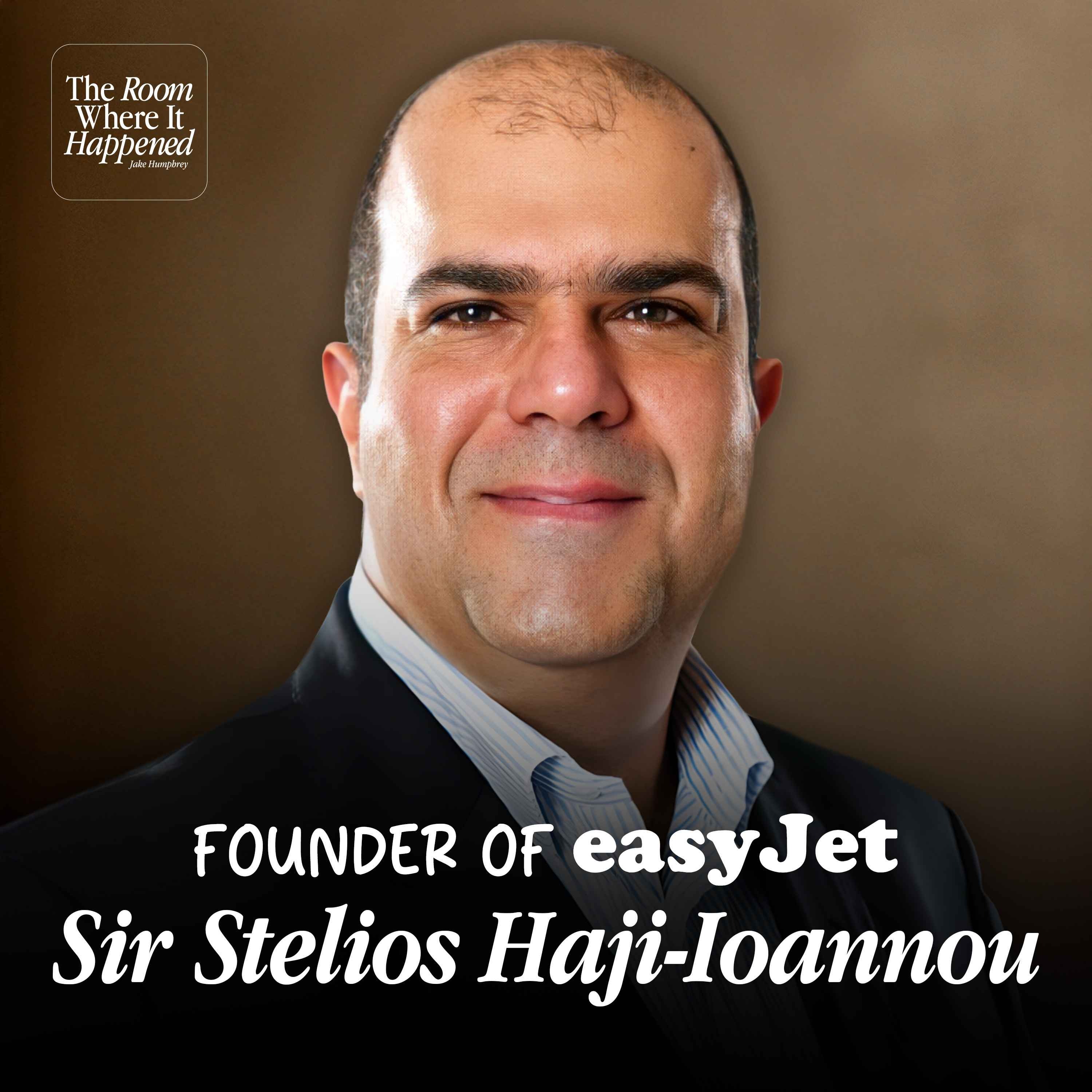
Sir Stelios Haji-Ioannou joins us from Monaco to revisit the moment easyJet was created, beginning with the 1994 launch, where he persuaded his father to back his idea for a new kind of airline. He reflects on the early years of bold marketing stunts, legal battles with British Airways, and a fierce rivalry with Ryanair that pushed him to keep costs low, move fast and build a brand the public instantly recognised.
Stelios speaks openly about the pressure of running a young airline, the mistakes that almost derailed it, and the key decisions that shaped its future, including adopting the internet early and expanding the "easy" name into hundreds of businesses. He also shares how this success now fuels his philanthropic mission.
IFS - award-winning Asset & Service Management software 👉 Reimagine your operations at: https://highpfrmc.com/RWIH-IFS-au
Heights 👉 Join Jake in maintaining your energy, with Vitals. Get 20% off with code Room20: https://highpfrmc.com/heights-vitals-au
Hosted on Acast. See acast.com/privacy for more information.


