
 Ask ChatGPT


 High Performance Business
23 Sep 2025 · 49m
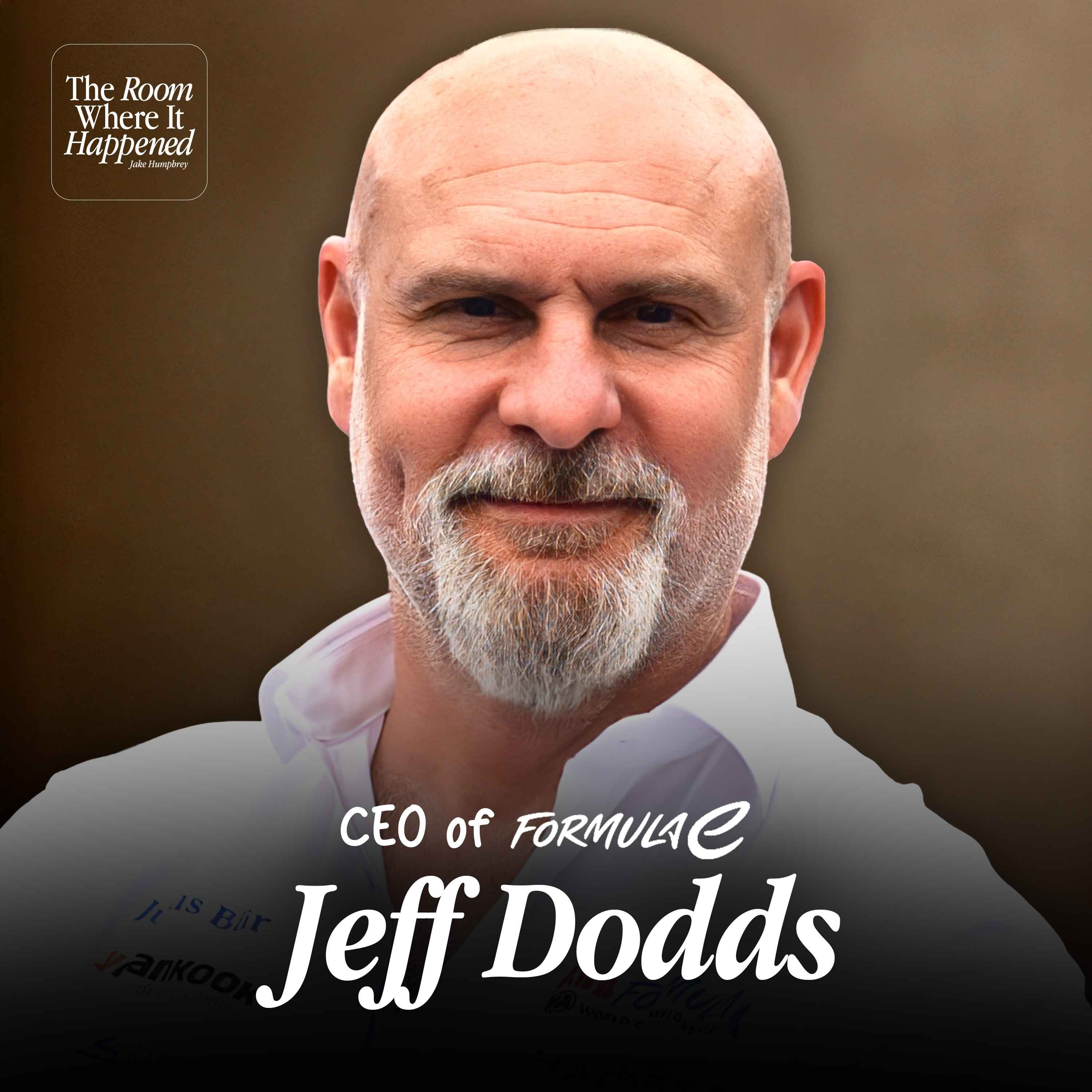
In this episode of The Room Where It Happened, host Jake Humphrey speaks with Jeff Dodds, CEO of Formula E, who shares insights from his journey through significant leadership roles in varied industries. From leading a $44 billion merger at Virgin Media during lockdown to embracing the fast-paced world of motorsport, Dodds emphasizes the art of feedback, teamwork, and the importance of fostering diverse, inclusive environments.
Written by AI. May contain mistakes.

Get the gist, explore an idea or ask about something said.
 Claude
On High Performance Business, what are the key points of this episode?
Searching your listeningAutomatic transcript. May contain errors.
0:00Today we're joined by Jeff Dodds, CEO of Formula E, the all-electric motorsport rewriting the future of racing. You can expect to hear Jeff explain how leaders should use motivation and trust to drive performance, a lesson in teamwork he learned from Usain Bolt, and how the future of sport will be won by those who embrace disruption and diversity. This is The Room Where It Happened. First-hand accounts from behind closed doors in business. Inside the rooms, the pressure, and what you should do when it's your turn at the table. Brought to you by IFS. This is The Room Where It Happened with Jeff Dodds.
0:38So the room I'm in is in Denver, Colorado. It's a beautiful corner office, views out over the city there. And I'm talking to Mike Freeze. Mike Freeze is the chief exec of Liberty Global. So huge organization. At the time was the co-owner of Virgin Media 02, which is where I was the chief operating officer. And I'd worked on and off with Mike for about 12 or 13 years. I joined Virgin Media shortly after it was informed by Richard Branson. If I remember correctly, when I joined there, I think the share price was about$4 a share. I mean, it was a business that was in massive need of transformation.
1:18It was really on the edge. If that was phase one, I was there for the second phase when we sold that business. We sold it to Liberty Global, the business that Mike runs, and we sold it in 2013 for about$23 billion. dollars um to put that in share price terms i think the share price then was about 44 dollars a share and then i was there for the third phase of its life and the third phase was the merger it did with o2 in the uk um about a 44 billion dollar transaction all done during lockdown by the way so it was all done over zoom it wasn't done in a room which is quite interesting but i've been in this business for all of these phases of its life and and i had this moment of realization which was I'm not sure what more I'm going to learn from this business because it had gone from you know almost out of business to highly successful part of a 44 billion um dollar merger um and I just wasn't learning enough um I'd run out of I guess uh the excitement and the energy um that comes from kind of learning new things and I made that the minute I made that decision and it happened pretty quickly I kind of booked the next flight to Denver and just said to Mike hey I need some time with you I want to come and talk to you about something and and turned up at his office in Colorado and and we just got straight into that conversation.
2:42So what were you not what would you not getting at that moment from your business journey that you were getting previously because that is I think it's something that a lot of people listen to this will think yeah I remember feeling that but it's a big leap to ring someone and say look I'm going to come and I'm going to tell you how I'm feeling. Often people are sort of too scared to share that almost. Yeah, well, first of all, the good thing is that this is a guy that I have just an incredible relationship with and a brilliant level of respect for. So I actually thought it'd be pretty disrespectful to be feeling it, but not talking about it.
3:13That was the first thing. And I think, James, sometimes you just know. I mean, I've always said to everyone who works for me when the alarm goes off in the morning if you don't bounce out of bed and just want to get on with it and crack on with it um then you need to start asking the question whether what's changed you know do you need something else and and i was still very busy and still i think creating value but i was it was beginning to become formulaic for me and the minute i realized that maybe that was after the excitement of the big merger, maybe that had eroded to a point where I just needed, I was looking for something else.
3:53I just kind of grasped the netto and wanted to crack on with it. And so did you go to him and say, look, make me the CEO of Formula E? Or did you go and say, like, these are the things that I'm not getting that I want to get, and he kind of worked out an answer for you? Well, yeah, and I wasn't actually going for the answer. That was the cool thing. I went and saw him, and the conversation played out something like, Like, you know, I said, look, I've been around for 12 years, worked with you on and off for that period of time and built it, we sold it, we've merged it. And I've been reflecting on what I need next, what I'm looking for from the next phase.
4:30And I want commercial challenge because I thrive in that environment. So I really want something complicated and lots of commercial challenge. I really want something where there's a huge growth potential, not just growth for the business and the industry. but personal growth potential i want to be somewhere where i'm learning all the time and i'm i'm you know developing my skills um and i've actually liked some element of it being slightly more purposeful and he was pretty challenging he really wanted to make sure that i thought it through and he said well i tell you what i hear you so i've heard you and he stood up he gave me a really big hug said i've heard you just hang around the hoop for a bit now that's a great American phrase, which for me as a traveling Brit, I didn't really understand.
5:15I just agreed to it, walked out of the room and said to someone, what does Hang Around the Hoop mean? And they said, well, I think he just means whatever you've been talking about, he just means don't rush off and do anything. Just kind of stick around and see where it goes. And he actually came and called me back in the same day into the office and said, do you know what? I've just had this one idea. We're a minority investor in a really interesting business that I think could tick all your boxes. How do you feel about it? If something came up there, how would you feel about it and um I'd worked in motorsport before a bit of Honda back in the early 2000s when we had a Formula One team I was sadly at Honda when we when we um we closed that form we handed over that Formula One team to to Braun so I I kind of love motorsport I knew a bit about it I knew about the auto industry um and I said yeah that that sounds really interesting and and then within a matter of weeks we were deep into a conversation about it and when Mike stood up put his arms around you and said, I see you, I hear you.
6:12How crucial was that moment? Yeah, massive. This is a guy who I've worked with for years, who I respect enormously, kind of acknowledging, he challenged it pretty aggressively, as we said, but acknowledging the thought process and telling me that he understood why I felt that way, which is, you know, it's a really big thing. And then, you know, a big old, you know, big old manly hug. And, you know, I, I hear you I've heard you hang around the hoop for a while was kind of a is not that you've shared a problem but there's two of us now looking at this how we can how we can help realize the next phase for you not just it wasn't just all in my head I suppose one of the big changes with the job that you do now is that it's also a very public facing role so was it daunting for you that things like this were going to have to happen you know in the nicest possible way people are less excited to talk to the CEO of a telecoms company than they are to talk to the CEO of Formula E.
7:09Yeah. I mean, it's a blessing and a curse, isn't it? And you'll have it because you're a media figure. So you will feel this as well. So the blessing is people are interested in what you want to talk about. And you get great opportunities to talk to interesting people and to share the story of the organisation with more people. The curse is that everybody has an opinion on every single thing you say or do. And I think that's a really difficult part of the role, actually, which is because i've grown up wanting to take feedback from everybody i like to listen to feedback i'm really interested in everything anybody has to say but actually if i if i listen to everything everyone had to say in this role i just couldn't make any progress because i can talk to 10 different teams and get 10 different answers of what's the right answer for running the championship i could talk to you know we've got 400 million fans around the world if i talk to them i'll get 400 million different versions of everything we should be focused on and doing differently.
8:04It's that really weird thing, Jake, about wanting to listen to what people think, but knowing you just can't listen to everybody. In the end, you have to take a point of view and crack on with it. So yeah, blessing the curse. If you can just take a couple of seconds to subscribe, then of course you can get each episode directly to your inbox. And honestly, for you to subscribe, it makes such a difference to our show. It means we can grow and it means we can attract more incredible guests like George Heaton, Rory Sutherland, or Richard Branson to come and join us. And when you move into such a high profile role on a global sport, in the most important position in the business, where was the sort of the fear, the doubt, the imposter syndrome, the anxiety sitting when they finally went, okay, Jeff, you're going to run Formula E?
8:52Yeah, well, I remember day one, Jake, I came into the office here, I'm sitting in it now, the office in Hammersmith, and I sat at the desk and I kind of, there's a couple of overwhelming emotions I had from that day. The first is as I walked in on the desk, there was some piles of papers. And one of the piles was kind of the challenges, things that we've got to solve. And the other pile was the things we've got to get done. So contracts, deals with teams, media deals. And I remember the pile of opportunities, get stuff done was much greater than the challenges pile when I walked in. And first thing I thought was, I can't remember working anywhere where the pile of opportunities in front of me are bigger than the pile of challenges and I also remember driving home that evening after meeting everyone and my head was spinning just spinning with stuff I needed to get stuck into and my feeling at the time was how am I going to find the time to get all of this stuff kind of looked at and worked on and and it almost kind of crystallized me then all the things that I'd had that conversation about with Mike had almost come true on day one.
10:01You know, I was working on a business that was net zero from day zero, very focused on sustainability, very focused on the energy transition. I had this pile of opportunities in front of me that I, you know, I was desperate to get stuck into. And on the way home, my head was spinning around learning new things, trying to process new information I've been given. So I remember feeling pretty excited. I guess from an imposter syndrome point of view the only thing i would say is when you're working in sport and you've worked you know you've worked in and around sport for a long time you know when it's elite sport you have to earn your stripes a bit in elite sport and and i was a guy coming out of a media telco business um uh who worked for one of the shareholders stepping into a sport and i think there was there was a lot of eyes on does this guy know what he's talking about um and i didn't really have time to think too much about how I processed that because I my first race was Jakarta Indonesia and I actually was there I think a week before I started officially in the role so I they said jump on a plane go over start to get a sense of it and of course I turned up as a guest and within 15 minutes I was not a guest I was an employee because you can't go there knowing you're about to take it over and just not get stuck into it so um so there was not really any time to think about whether whether it was daunting or not it's interesting this sense of being an outsider I I remember when I started hosting Formula One and I'd come from kids TV, right?
11:27And Formula One and motorsport in general is a world that wraps its arms around you, right? It feels like a family, but they're a family who are saying, don't come here and mess this family up. Like you play by the rules. And so I found what really worked for me was to say, look, I haven't got the tradition, the history, the experience and the background in motorsport, but I have got a background in broadcasting. So my message to Y 'Neddy Jordan and David Coulthard, who I was working with, is I will just do the TV thing. You can just focus on the sports thing. You can talk about Formula One until the cows come home.
11:59Don't worry about the TV thing. Just let me deal with that. I'll never know what you know. So I was able to bring something that no one else was bringing. What was it that you were bringing that no one else was bringing? So when I turned up, you know, I wasn't trying to make the cars go faster and I wasn't trying to, you know, make the drivers better at driving their cars. There was no, I wasn't trying to do what the teams are doing or do what the drivers were doing. My pitch was very simply, which was, I think there's a huge amount of potential in this platform. And I think if we realize that potential is good for everybody, it's good for the teams, it's good for the drivers, it's good for the media partners, good for everybody, good for the sponsors.
12:38And I've come from an environment that's all been about growth, growth for the last 20 odd years. so I'm going to focus on setting the targets having clear KPIs working on the media plan working on bringing new audiences to the sport and working on trying to create value for all of us in terms of better economic value for all of us and let me deal with the business and then you can focus your time on hiring the right people and making the cars go faster so I think probably similar to you I wasn't turning up to be a threat to them in terms of their motorsport knowledge or or creating better racing teams i was an additive force you know i was there to try and turn up and just make the platform bigger for them and how did you work out what to attack first because there is the opportunity for more global growth there's the opportunity for more partners there is the opportunity for greater socials and tv documentaries and like it feels overwhelming when you look at the opportunities that were in front of you back then so how how did you work out right this is the order of priority.
13:39And what can our audience learn from that so they can maybe do the same? The good thing was I met all the partners, all the owners, all the sponsors early. And in reality, they say it in different ways, but there were two metrics that were really important to them. Maybe a third one if you add the financials, but they were saying we need more fans in this sport globally. And in order to get more fans, we need more media reach globally. So more people have to be exposed to the product. So they became kind of the two priority KPIs for me. How do we grow the number of eyeballs watching the sport?
14:15And how do we grow the number of people that would consider themselves to be fans of the sport? Became two really big kind of tier one KPIs for me. And the third was, how do we show financial growth to a point where we can continue to attract investment into the sport to help it grow by showing that this is a sport that's on the up? so they became the top three priorities now in reality there's probably 25 metrics that i measure every every week with my team and we go through them all but they're all bricking up to better financial success more global fans more global eyeballs can we go into that idea of going through those metrics with your team each week would you explain what happens in those meetings the kinds of questions that you ask the metrics that you look at and and then how you work out the next step from those and it's interesting yeah look and i so i came from a big quarterly business that we talked about so i guess when you're the coo of a of a multi-billion telecoms business you know you you live or die by the kpis by the metrics um so i guess that was the discipline i brought to to this sport that perhaps wasn't here before um i'll give you a good example so if we have if we have a race so any race of the year so our first race for this season upcoming will be san paulo once that race has finished and we've done the podium before everybody goes off and has a glass of beer or champagne or water with their teams and checks in with people my entire team we will go and find a quiet room and have a hot debrief on the race weekend so we will go through a kind of i like i like i wonder so i like that that was great but i wonder for the next race whether we could do this differently it'd be better because my view is the minute the the weekend's over and you're back in the office you've just moved on everything your headspace is different so so we'll have a hot debrief and then back in the office the week after we will go around departmentally and talk about performance how the race performed on tv what the digital views are like what the social views are like pr impressions we'll go through uh fan base nps so customer satisfaction fan base satisfaction we will go through all of that and try and make modifications and improvements in time for the next race.
16:27And what's the importance of the hot debrief? Because obviously you're doing that before you actually have the answers. You haven't got the audience figures, you haven't got the social media impressions, but you're already debriefing. Yeah, but you know, I mean, it's very much a military thing. So I think feedback in the moment is incredibly powerful and it's something you actually learn from being around sports people. I think a lot of organisations are very poor at giving and receiving feedback. So a lot of individuals and organizations aren't interested in it, don't seek it out there. And therefore, there's no cult, no feedback culture.
17:00And we try and have a culture here whereby it's not it's a nonjudgmental exercise. It is literally that worked really well that we can do better. If it's something we can do better, who's accountable for it? Let's get the feedback to them as fast as humanly possible and then trust them to take that and get on with it. So, yeah, I think if I go to my to-do list, I've probably got 60 things on that to-do list. If we can't get that debrief processed quickly and instantly and off to other people to work on, then it just gets added to my to-do list, which means it's unlikely to ever get done. So I think the hot debrief has become a really powerful tool for us.
17:42And that's an interesting line you say there. If I don't hand it to other people to get done, it will stick with me. And if it sticks with me, it probably won't get done. And I think this is a really interesting point to explain to people that you can be the leader in a business, you can be the CEO of a business, but you're almost connecting dots rather than acting as one of the dots in that business yourself. Yeah. And if it's an exciting business like this one is, of course, the tendency is to want to be involved in it because it's quite exciting. But I actually had a great call with my, I was away last week, but I had a call with my CFO during the week and we were chatting about something.
18:13and and i actually asked him for some feedback in the moment i said at the end of the call i said right anything for me any feedback for me anything you know i've missed anything i need to be aware of and he just said there's on the list we've just gone through there's two things that are existential you know they if they go wrong it will be devastating if they go right it will be incredible for the growth of the business so his only feedback to me was will you just commit your time to those two things the other seven or eight things we've talked about just i've got those i'll get the team to work on them you just get them off your list and forget about them because the value your value will come in those two areas which i thought was good feedback for me which is it could have been his way of telling me just to butt out but i think legitimately he's saying look you've got the best chance of supporting those two areas for us so you crack on with those and everything else is just not important enough to distract you and when it comes to feedback to you how do you lead in a way that actually allows people to genuinely give you feedback how do you create a culture where failing is okay because if you don't fail you don't understand where the limits are what's the secret to that kind of a culture which you know i i've heard is the culture that you've created at formula e so my dad used to say this phrase to me a lot and i've heard it from other people in various different ways but the phrase which is i can't hear you because your actions are deafening me which is this is all okay but i'll judge you based on what i see you doing not what you tell me is going on and i and i think for me from a feedback point of view the most effective way to encourage feedback is to act on the feedback you're given so i'll give you a good example so one of one of the team um came to see me very recently to say you know just wanted to pick up with you we have that a pretty robust conversation about something and whilst I completely take on board the content, the way you delivered it to me probably won't get the best out of me.
20:10That's quite a brave thing to come and say, right? I love the fact he had the conversation with me and it turned into an hour's conversation around what does get the best out of you and how can, within our relationship, what's the most effective way of us working together so that we're both getting the best out of each other. And we agreed a different style of communication, different format to communicate through and it's working really, really well for us. So I think my hope is that those stories in the organization start to permeate, which is, oh, no, no, I gave him some feedback or I gave somebody else some feedback.
20:40They listened to it and they did something differently as a result of it. Because if you can't get that, I think you just limit your potential constantly. Can we talk briefly then about media? I mean, as you know, that's my background. It's where I've spent my life. And I think it's in the most exciting place it's ever been. You know, only today I was, you know, we're talking on a podcast here. I was looking at various podcasts securing rights for live football games and then streaming those on their YouTube channels. The rate of change in the media industry is greater than ever before. And let's also put our cards on the table.
21:11I'm a co-owner of Whisper Group and we produce the UK coverage of Formula E. I'm very proud to do so and love working with you. When you look at the media landscape, what do you think is the biggest and most exciting opportunity for Formula E? I think it's going through an incredibly exciting period of transition. And I think AI will change it again. I think it was already going through an incredibly exciting, and maybe I'll talk a bit about some of the things we're doing with AI in a second. I think what worries me, first of all, before I do the exciting things, the thing that worries me, Jake, is the way that new media is valued is completely different to the way that traditional media is valued.
21:51And by that, I mean, if I'm talking to partners or sponsors or media outlets or broadcasters, there's still quite an old fashioned approach to cost, you know, CPM cost per thousand. What's the value of a free to air TV, linear TV program versus very disruptive partnerships with people, digital platforms like TikTok or YouTube or Instagram? and I think we're really well versed in how to value the way we used to do media and I think there's a real big lag into how we value and how we kind of ascribe a premium to new media outlets and I think we have to correct that really quickly otherwise we're incentivizing people constantly to work in the past not in the future and that worries me a little bit.
22:42So is that the fault of formula e looking at the world in a traditional way or is it the world still seeing what you can offer them and and looking at it through a traditional prism of how many people are going to watch it on a saturday afternoon at 2 30 on x channel exactly right so more the latter so you know i could if i take something like um the evo sessions we did so the evo sessions 11 world-class content creators uh supercar blondie sergio aguero mr beast all these people in cars at the Miami race are made for digital program. So they put out over their social channels. I think as I sit here today, that's probably upwards of 600 million views across that content.
23:24But it's quite, it's almost easier for me to go out and say to one of our partners or sponsors, oh, by the way, I've just bought on a new free to air broadcaster in insert country here. And they're going to put it out on a Saturday afternoon at three o 'clock and it might get a million average audience that in some respects would get a more positive reaction because it's easier to process and there's a benchmark versus the we're taking this product to a brand new audience for a really disruptive media strategy and it's got 600 million views because no one really knows how to value those views if you see what i mean it's just it's just more complex and it worries me as an industry that the failure to address that means too many people are grounded and wedded in tradition and not prepared to take risks and try new formats and is there a way of taking those 600 million views which is incredible by the way and i thought i mean that was an inspired thing that you did right and i think there's a lovely balance by the way with that alongside traditional media and giving people the opportunity to you know consume your content in a way they always have um is there a way of doing that stuff and then you being responsible for kind of educating your partners or proving proving proving the experiment worked if you know what i mean like how can you take that number and make it make sense for other people so you're 100 % right first of all it's an and not an or because if we said we're going to swap out all the traditional tv stuff we do for this strategy i think people would have heart failure so you have to do the two together to be able to demonstrate the benefits of both.
25:02And there's different benefits to both, of course. But I think you're right. It's only when maybe a team might start to pick up sponsors or might start to see their fan bases changing because different fans are coming into the sport and following their socials. They have to see something happen as a result of the activity to start to get behind it and feel more encouraged and more enthusiastic about it. But I'm a big believer in the and not all, because I think all too often it's we're going to do traditional media or we're going to do disruptive digital media. In reality, you have to do both.
25:35I guess for startup businesses, Jake, they can't all afford to do both. And that's the interesting thing for me, which is, you know, if we started a business together, you know, we wouldn't have millions of advertising dollars and we wouldn't have the right to go and get traditional linear TV broadcast deals. So we have to go about it in a very disruptive different way and I guess I would just like more people to be open to that style of communication yeah and actually it's interesting you talk about that because one of the biggest learning curves for me since leaning more heavily into this world of podcasting and being a content creator is that my traditional background right of working in television hosting programs co-founding whisper being at the BBC before that is I thought as long as it's great then people will find it so as long as you you at formerly create great racing people will find it as long as we're at high performance produce good episodes of podcasts people will find it it was such a learning for me that that's not the way the world is now and you can you can have the most incredible conversation on a podcast as an example for the audience listening but if you get your thumbnail wrong if you get your packaging wrong if you get your title wrong yeah if it doesn't somehow tweak the excitement of the youtube algorithm you're talking to five people another day you get those metrics right and you look at the numbers and 100 000 people have watched it in 12 hours or something and that yeah that's the really interesting thing isn't it like just creating good racing is not going to win the day for formula e it's not enough it's not enough and the opposite happens as well which is you know sometimes i'll see tens of millions of views behind a piece of content where the content is not particularly good or exciting or compelling but the way it's been packaged up or you know how they've how they've titled it has has compelled people to go and watch it and to share it and by the way that's killed me a few times over the years because i've done i've done shows or episodes and i've been like it's so good and then what i would consider to be a some utter dog shit's been made by someone else and it's had millions of views it's trending people are talking about it it's captured everyone's imagination and i've actually had to say to myself right stop being a dinosaur here like yeah okay it might not be in your eyes as good as what you produced but but just because they haven't produced great content doesn't mean their ability to be a great marketeer is any less worthy and i sometimes think we're critical of great marketeers but they are like they're the clever ones like yeah well they're clever the only thing i would say is um this whole clickbait trust thing i don't know whether you find this but you know if i continually go to the same outlets and i'm baited into watching something and what i'm watching doesn't live up to the title my trust erodes pretty quickly with continuing to watch stuff from those outlets so so i think you have to find that balance but i completely agree with you and if i look at i've got two boys 16 and 14 if i look at the content that they find compelling and want to talk about and comment on and engage with it's completely different to what i would find exciting so it's not it's generational as well it's different audiences like different styles of content um yeah you talked about the importance of ai i would love to explore that further with you yeah well so we we're very lucky we got lots of ai partners here in this business so google cloud are an ai partner for us infosys are an ai partner for us so we get the benefits of um of kind of their learnings their scale their development but we're doing so much with it jake so other than the day-to-day you know i would encourage anybody listening to this that is not incorporating it into their just day-to-day working practices have a have a serious think about how you can because i'm much more efficient in the way that i work with it rather than without it um and i'm having desktop agents built for me and ai agents um built for me on a weekly basis by the team here for to help me be better at my job and get more efficient to do what kind of tasks oh it could be lots of it so it could be tasks like to take the feeds overnight from different media around the world and present to me stuff that's important for me whether it's on auto industry electrification sustainability so package up my my insight overnight for me it could be for our biggest partners sponsors our vips understand if there's big birthdays coming up if there's moments of celebration if they've got something going on at work that's being reported that i should be acknowledging or recognizing just trying to make me more efficient and more effective at what I do every day um so lots of different agents building things I'm sure others are building more meaningful ones but but a couple of big things we're doing at the moment with it so one we have this hypothesis here which is and actually David Coulthard who I know is one of your partners also is um is involved in a business called more than equal which is trying to um set out to try and find the world's first women formula one world champion um so we have a hypothesis here which is men and women can compete equally in elite motorsport but the barriers that exist for both parties are completely different so it's like that hypothesis is unproven so one of the things that we're doing with google cloud is we have this ai driver agent which is trying to accelerate the learning for um people from diverse backgrounds so women perhaps people from poorer backgrounds who don't have the privilege of you know go-karting and their parents being able to afford to push them through elite motorsport so we're trying to accelerate the learning curve using ai as a coach to help them get better at driving more quickly brilliant um so things like that i also we did a huge google hackathon last year around ai which was hosted at our london race and i think it was a thousand some people came to that hackathon and at the end of it the the piece of um programming that won as the race commentary finished so as the tv product um concluded within 30 seconds it had packaged up the commentary turned it into a five minute um summary audio summary of the race and translated that into 40 different languages to syndicate it around the world um and i love this getting in front of more people using technology what was super cool about that was somebody also said well what about for people who are visually impaired so for people that can't watch the race can you use the same technology to provide them audio description or a better description of what's happened at the end of the race using the same technology so we actually did a partnership with the rnib to look at how we take that technology to support uh people who are visually impaired.
32:13So I would say everywhere around our business, whether it's how we freight better, how we route our products better around the world to be more sustainable, how we accelerate the learning curve of up and coming drivers, how we bring in more fans, more audience, it is an ever present in our business. So you know, when you talked about the overwhelm when you took over Formula E, and it was an overwhelm of opportunity, I think a lot of people feel like that about AI, they know it can help them, they know it can help their business. They're bombarded by people telling them the great things it's doing for them and they feel like i don't know what to do here what what are the questions that you would advise them to ask themselves to work out the role ai can play in their life in their business jake i remember this call um i went to this really cool liberty global event once i think it was in sicily or somewhere like that and there was a technology expert there this is pre predates ai but i asked them a question which was i've got young children if if there was one bit of advice you could give to somebody starting out um in life or going into the workplace what would it be and he thought for ages and he said the question i think people should ask more is how could we test that and i just love that i took that away and i really love that because it with ai with ar with whatever it is whether whether it's as simple as we want to see whether a different broadcast channel works or a different headline works on social media content or whatever it is if you start with the premise of okay so how could we test that someone's got a great idea or it might be a terrible idea but no one knows okay so how could we test it this sense of how how okay so throw yourself at it test it if it doesn't work it doesn't work and i think for ai for me first of all it's um an inevitability right so so there's so much energy and so much money behind behind ai and it's only becoming more prevalent more important so any resistance to it would be you know futile anyway so rather than that jump in dive in and just keep asking the question okay would having a desktop agent make me more efficient well how could i test it and i can test it by building something simple and seeing if it works so i'm a big believer in they just lean towards it not away from it and keep asking how could we test it and i think people often feel like with the advent advent of ai where does it leave them as human beings but i look at your role right and you have to bring together teams manufacturers broadcasters sponsors mayors of various cities you know leaders of various countries you know you are you are linking so many people together on an emotional level to support and back formula e there will always be a requirement for that won't there as a human being yeah yeah yeah look google Google said something really interesting the other day when I was speaking to them, and they said it's going to change the nature of how value is ascribed.
35:09And the example they gave was, if you think about a doctor or a surgeon, it is quite conceivable over the next five to ten years that they will be paid less because a lot of what they do can be replicated by machine learning, by AI. So it can do what they do. But the role of the nurse, that may be much more valuable. Because the empathy required and the skills required to support people through recovery are much more difficult to replicate by AI. So I think not better, not worse, just different. I think one of the sort of superpowers that you have actually is the ability to take all those sort of disparate groups and not just get them to be part of the formula e-story, but get them to operate to your standards.
35:57what is the secret to letting people know the standards that you expect of them and then holding them accountable to those standards i like to believe most people don't turn up to do an average job they're trying to do their best job i think the default is normally it's the process so i also i'm a big believer in helping people realize their potential so i think you have to provide opportunities for people and keep setting the targets and demonstrating what's required and and supporting them by removing barriers to delivery and but eventually sometimes it's just not enough um and also sometimes you just need new energy and you know a new view of the world so um i also like to think that changing of people isn't always a terrible thing for either party actually bringing new new eyes into a business and a new perspective is a good thing sometimes always um but also freeing up other people to go and you know and and use their skills in different locations and different environments is also not a terrible thing i think you're right i think the power of creative renewal is badly undervalued people think it's a negative for everyone and actually sometimes the best thing you can do right is make a change even actually when it's working don't wait till something's failing before you change it right can i can i talk to you about formula one you mentioned it briefly there um the growth the incredible like it's shocked me what's happened to formula one in the last few years in a good way right and i think sometimes people in your position might be derailed by that they might go well how are they getting that and how do we get some of it and i actually love this phrase that their success is our success if they so if they can do that yeah it means any business on the planet can do that yeah what have you seen them do that has impressed you the most?
37:41So first of all, the sentiment I 100 % agree with, which is nobody wants a weak incumbent. So I want Formula One to be very successful, bringing more eyeballs to motorsports, encouraging more people to come in to watch elite motorsport. I think a good, healthy, successful Formula One is good for all motorsport. So yeah, no issues with them being highly successful from my seat. um i think they if you go back in history with formula one i mean it's been difficult to run profitable successful teams in formula one many teams have come and gone they've not been valuable those teams um i think they've had a poor broadcast product or a you know a weak broadcast product but i really think over the last kind of seven or eight years they've done a lot of stuff right and I don't want to link it directly to Liberty Media coming in but I think they brought a different quality threshold with them.
38:41I think obviously Drive to Survive, not only was it a great product, it humanised the drivers but it came at a time during lockdown when people were desperate for things to watch and therefore timing was perfect for that. You know, I think that's also caused a lot of problems for other sports because I think they've looked at it and they've gone, what's the golden bullet? Oh, Drive to Survive, quick, let's make our sports version of Drive to Survive and then we'll also be massively popular. It's not how it works, is it? It's so not how it works, but also it doesn't stop people asking. So, you know, a lot of our partners, a lot of our sponsors rightly will say, we want more exposure like that exposure.
39:17Now, our pivot, Jake, was to say, well, we'll do a bit of that because we've got a different story to tell. But actually the Evo sessions and a made-for-social product is so different that that maybe could be our thing. So let's own that and not try and just replicate a drive to survive. product but i just think i think they with liberty media they found a partner that has capital and conviction in it which means they take a long-term view of the business they put the money they needed to put in behind it to do things like the the las vegas race and the miami race and the drive to survive series and to invest in the growth of the championship and i think we have the same with liberty global with us doing the same bringing huge conviction to the long-term success of the sport and bringing the capital we need to grow so i think the timing of liberty media coming in was perfect for them and i think they've they've built an exceptionally um uh capable team there and stefano is a friend of mine i know a lot of the guys that work in that business they're very very high quality people yeah what's the secret to building a team of high quality people i think for me jake it's i think if we try and replicate a team in your image that's a pretty quick route to failure unless you're a perfect person at the top which i haven't met one of those yet i just like a bit of diversity in the team i like different backgrounds different thought processes different views of the world different volume of voices um i think having difference around the table is always a good thing so for me a high quality team is not a high quality team that are all good at doing one thing it's got to be a group of people that are all good at doing different things.
40:58And so when I was at Virgin Media, one of our ambassadors was Usain Bolt. And I remember I was out for dinner with Usain in Jamaica. We were filming something with Richard Branson, actually. And I was sitting next to Usain, and we got to a quiet lull in the conversation. I was trying to fill it with interesting questions. And I said to him, what gold medal do you value the most of all the ones you've won? And I thought he would probably say Beijing in 2008 or maybe the 9.58 world record in Berlin at the World Championships in 2009 or something like that. And he actually said, and I forget which one it was, but one of his relay medals.
41:41I said, well, I'm a bit surprised by that. Why do you like the relay medal the most? And he said, well, here's the thing. When I won the gold medal in Beijing, I went back to my hotel room and I watched YouTube and I called a few people. But it's actually quite a solitary experience. You know, actually, if anything, I felt a little bit low afterwards because it was kind of the calm after the storm. It's quite a solitary thing. When we won the relay medal, that's three of my best mates. And we've trained for that together. And we celebrated the success together. And that meant we went out, we partied.
42:16We will talk about it for years to come. It will be a bond between us for years to come. It was a much more enjoyable experience for him. And my reflection on that was, do you know what? That's how I feel. You know, a personal victory in business is great, but it's momentarily, you know, it's fleeting, right? You might feel good about it for an hour or two. But doing things together with teammates that you can look back on for years and years and years to come and talk about and celebrate together and remember fondly is so much more powerful. So for me, when you talk about building great teams, I think it's the first acknowledgement which is so much more enjoyable to win things as a team.
42:58What a wonderful sentiment to almost wrap us up on. Before we do wrap up, you started at Formula E almost overwhelmed by the incredible opportunities in front of you. I think the remarkable thing is you've done a lot of them and you probably still feel that there's the same number of amazing opportunities. So when you cast forwards the next few years, what would you love to achieve? Maybe this is not the sexiest answer, Jake, but from a performance and product point of view, we have this incredible tailwind of formulary of electrification. So just the pure potential of the product, electric product, is kind of driving us along, no pun intended.
43:40But over the next probably four to five years, you're going to see cars come out of Formula E that will be competing with Formula One cars around any circuit you choose to go to for a fraction of the level of investment. i talk about one of formula one's great strengths is it's very exclusive the cost caps are very high the budgets are very high the cost of entry is very high the cost of grandstand tickets is very high the hospitality tickets are quite exclusive to become a world-class driver in formula one you probably have to come from a privileged upper to middle class background to have had the opportunities to get into that car not everybody but probably it's a very exclusive sport i want our growth to feel like we're the most inclusive elite sport in the world and that means if you want to come and watch it you can do that for a very low price if you want to engage with the social content get to know the drivers better feel like you're part of the community there are very low barriers to entry to do that if you want to enter a team you're going to be able to do that for a fraction of the cost of getting into something like formula one so i want the cars and the driving and the drivers to be as good as the best in the world over the next four to five years, but for it to feel like we do that in a really inclusive way, not a hugely exclusive way.
45:01Brilliant. And I wish you all the luck in the world with it. And the final area that I just want to talk about very briefly, I know you've got to go in a few minutes. I just want to talk very briefly about golf. You had an amazing time with Callaway, I'm sure. Golf is exploding right now. Content creators, brands are desperate to jump on the bandwagon. It seems more popular than ever before. Did you see that shift coming for golf? no no i didn't um no when i was in golf so first of all i'm about the most nerdy person in the world when it comes to golf and golf equipment so i i love golf i love everything about golf i grew up with golf my father-in-law's a golf course designer my wife worked in golf used to look after nick faldo's club down in down in kent chart hill so i've grown up around golf um no when i was at callaway i mean it was very much about the technology of golf so it was about making drivers go longer and straighter and it was very much about you know the traditions of golf if you'd have said to me back then 10 years ago or 15 years ago you know we're gonna have competing leagues with live music and i'm more more of an entertainment product and people will be playing i don't know what 40 million dollars i think the fedex um purse was at the weekend um it'll be a huge uprising of content creation and you know 250 000 different coaches on youtube telling you to do completely the opposite things to each other to make your swing better you know i'm just not sure i could have conceived how that would be the case but but that is that is where we are now saying that whether all of that turns out to drive a huge amount of financial value into the sport or into the industry remains to be seen.
46:41But it's certainly a very high interest category. And why has it happened or how has it happened? Well, look, I think there's a kind of a symbiosis with a little bit with Formula E. And, you know, I think, you know, golf as an industry, very, very traditional, comes with a lot of legacy, a lot of history, a lot of tradition. You know, two, there are more than two tours, of course, But, you know, what was the European tour, the DP World Tour and the PGA Tour, two very established tours doing things in a very established way. And what that means is there's room for a challenger brand, for someone to come in and do things slightly differently.
47:20And I think that's exactly what someone like Liv has done. We talked about capital and conviction earlier. You know, well, the PIF come with conviction in trying to shake up that sports industry, but also come with a huge amount of capital. and therefore they can invest to shake it up and i think formulary doing something similar in motorsport which is you know and being done in a certain way formula one turned 75 years this year most other established motorsports have been around for a similar period of time doing things in a in a very specific way and we've come in and we've tried to gamify it and digitize it and change the formats up and bring a different audience to it so i think when when things don't change quickly enough you open the door for a challenger to come in and try and disrupt and i think that's what happened in golf i actually think it's made the traditional product better by the way so if i look at things like the fedex um and i look at some of the social content now the the main tours are putting out um i think it's significantly better now that it feels the breath of a challenger brilliant look i know you got to go i really appreciate your time thank you so much for talking to us.
48:28I loved it. Congratulations with what you've done. I think you've been brilliant for Formula E and I look forward to staying in touch. Yeah, thanks, Jake. Take care. No worries. Thanks a lot, Jeff. Cheers, buddy. Thank you so much for joining me. Look, I hope you feel you've got lots to take away from being in the room where it happened. If you can just take a couple of seconds to subscribe, then of course, you can get each episode directly to your inbox. And honestly, for you to subscribe, it makes such a difference to our show. It means we can grow and it means we can attract more incredible guests like George Heaton, Rory Sutherland or Richard Branson to come and join us.
49:00And don't forget, you can also check out my Room Where It Happened newsletter. Just track me down on LinkedIn. Thanks for listening. Thanks for watching. And I'll see you next time.
What does it take to guide companies through billion-dollar transformations, and then walk away in search of something new? Jeff Dodds has done just that.
From leading Virgin Media through a $44 billion merger in the middle of lockdown, to stepping into the fast-paced world of motorsport, Jeff’s career is defined by bold pivots, unexpected opportunities, and the courage to admit when it’s time for change.
In this episode, he shares the leadership lessons that shaped him, from the power of direct feedback and diverse teams to the art of knowing what really matters, and why the future of business will be built on curiosity, empathy, and shared wins.
It’s a conversation about curiosity, courage, and creating cultures where people, and ideas, can thrive.
Partners:
IFS - award-winning Asset & Service Management software
👉 Reimagine your operations at: https://highpfrmc.com/ifs-au
Heights 👉 Join Jake in maintaining your energy, with Vitals. Get 20% off with code Room20: https://highpfrmc.com/heights-vitals-au
Hosted on Acast. See acast.com/privacy for more information.


