
 Ask ChatGPT


 High Performance Business
14 Oct 2025 · 54m
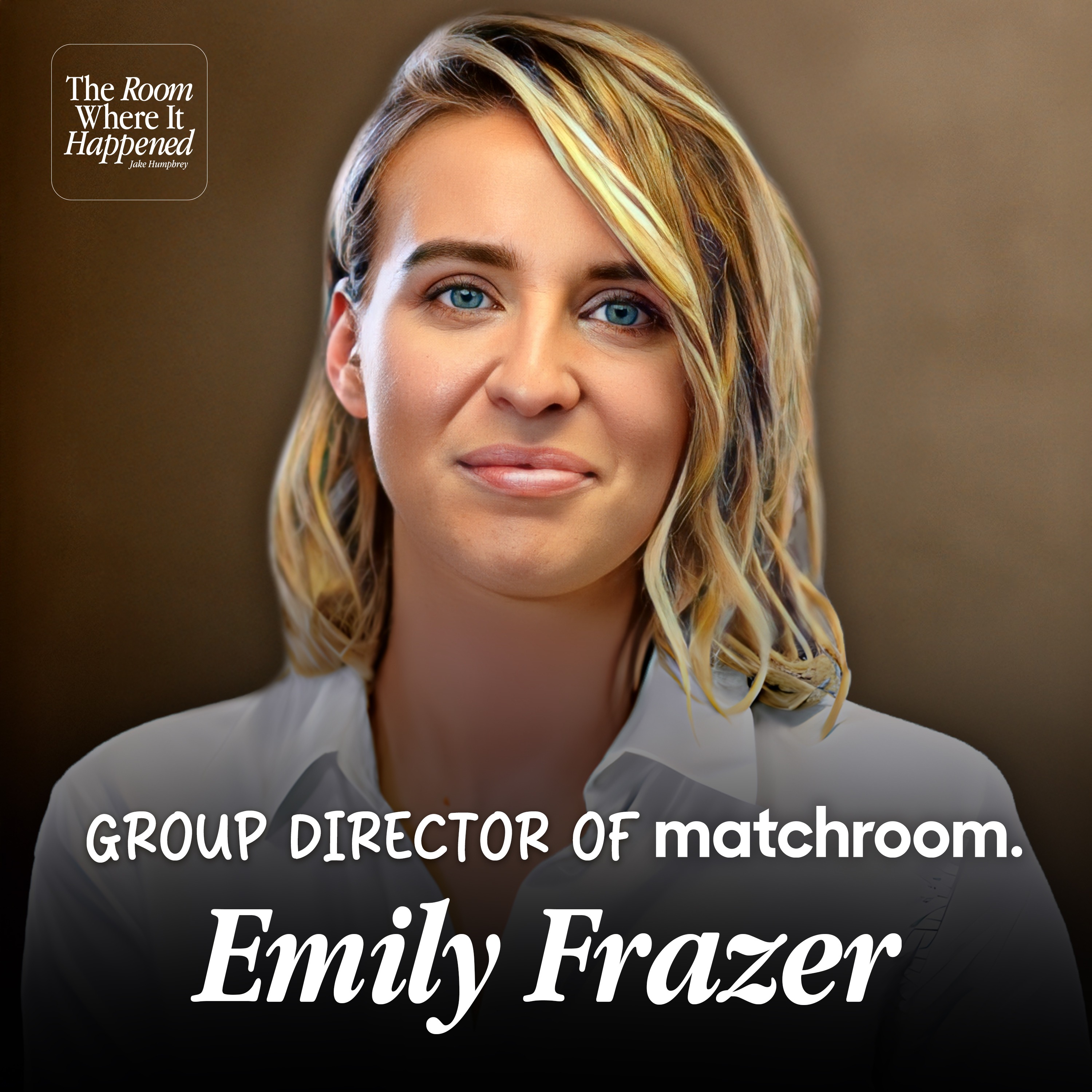
In this episode, Emily Frazer, Group Director at Matchroom Sport, shares her unconventional journey to success in the live sports events industry, focusing on boxing, darts, and pool. With no university degree and a diverse work background, Emily discusses her rapid rise within Matchroom, overcoming imposter syndrome, and her leadership approach in a male-dominated industry.
Written by AI. May contain mistakes.

Get the gist, explore an idea or ask about something said.
 Claude
On High Performance Business, what are the key points of this episode?
Searching your listeningAutomatic transcript. May contain errors.
0:00Today we're joined by Emily Fraser, Group Director at Matchroom Sport, the global events powerhouse behind some of the biggest moments in boxing, darts, snooker, snooker, and pool. Yet her story is actually an inspiring tale of struggling at school, of joining Matchroom at the very bottom of the ladder and in such a short space of time, becoming the boss. Expect to hear how to overcome imposter syndrome, what to do when you're scared of failing, and the one piece of advice that can take you from the bottom rung of that ladder to the boardroom in double quick time. This is the room where it happened.
0:33First hand accounts from behind closed doors in business. the rooms, the pressure, and what you should do when it's your turn at the table. Brought to you by our friends at IFS, this is The Room Where It Happened with Emily Fraser.
0:50Barry's office, which is Eddie's office now, it was the transition from Matchroom's TV department into special events. That's what we were called back then. I think that there were two other people in that department at the time and an opportunity came up and, you know, people put my name forward. Barry always sort of knew who I was. It was just, you know, my dad's daughter. My dad played poker and that's how the connection was there. And so I had this opportunity and obviously he was like, well, what do you think? grabbed the ball by the horns thought right okay let's go um and I was made event director of special events which came with a whole new load of responsibilities which back then I wouldn't have admitted it I was well in over my head I had you know these events throughout a year like three pool events a ping pong event a fishing event 10 pin bowling and I just had to manage and put on these shows and I always wanted to do events when I worked in the TV department I was like assistant producing like running production managing and you know it was great I was at the office and stuff but it was when I got to the events and I was working on them I used to sit there and go oh I'd love to be running events I'd love it and I would never have dreamt like back then just saying something like that but then I would be in that position of actually running a show.
2:31But the responsibility that came with that, you know, you've got budgets, you know, you're putting on these events. And obviously I was, I think I was like 24, 25 at the time. And I was young coming into it and going, right, I want to do this, I want to do that. And all this glitz and glam. And I was just making mistakes left, right and centre. And it was just, you just learn from it every time. and they were different sports. It's not like, you know, with boxing, you've got a boxing ring and then you change your capacity based on the show, the darts is the dartboard. In these sports, I was going from like an outdoor lake to then a pool table to then a bowling lane that you have to then build in an arena.
3:18And I had no idea that bowling, did you know that bowling lanes come in pairs? No. So they all come in pairs, but you only need one bowling lane for the Weber Cup and you know you have to it costs thousands to just put all of that together into this one arena so you're just learning so much and I would say that's probably the time where I had the biggest amount of responsibility you know in sort of the jump going from that transition and when I think back now it's like what 10 years ago and I still think that I've grown so much since then despite that huge jump of that role. With the position you're in now, would you have given that job to the 23, 23?
4:02Maybe not. But I think what really helps is that when you look at my team that I've got now surrounding me, they are very, like not everyone's got the experience or the qualifications. I always just look at someone and think they've got the determination, the relentlessness, and they want to be brilliant at their job, I give them that opportunity because that's how I felt. I've always wanted to be successful in life. Financially, it's always been kind of there because I was always taught that in order to pay your bills, you've got to go to work kind of vibe. But I also wanted to make a difference, wanted to make a change, and I wanted to do something with my life.
4:49So I always wanted that, but I just had no idea what that was going to be. So when I got given this opportunity, I was like, yeah, let's go. But I had no idea at that point what the vision was. I just knew, I just wanted to make Barry happy and I just wanted to be brilliant at my job. So that day that Barry called you in his office, did you know what was coming? I remember having the conversation with Katie and saying, I want to get hands on with the events. That's what I want to do. And Katie was the person doing the job before you? No, Katie... His daughter. His various daughter. Sharon was doing the job before me but no I don't believe so I think I got called in and was like look Sharon's retiring she's emigrating to another country I do remember him saying I think he said you know everyone's a bit unsure are you up for this?
5:43because I think I was going out I was young as well and that's why I always think that and I always say it all the time I've been so fortunate to have someone like Barry who he's always given me the opportunities just because of how hard I work. So he's kind of like, I don't really care who you are, how old you are, as long as you work hard. And everyone's always sort of known me as that. I will basically give everything to Matroom. It's kind of in my blood now. So, no, I don't believe I had an idea. It does just feel like such a blur all the way back then. if you can just take a couple of seconds to subscribe then of course you can get each episode directly to your inbox and honestly for you to subscribe it makes such a difference to our show it means we can grow and it means we can attract more incredible guests like george heaton rory sutherland or richard branson to come and join us let me play you a very quick clip from eddie on one of our other podcasts called tapped with spencer matthews so actually in the documentary you'll see that because it focuses on three key people within the business.
6:51Frank Smith, who's my right-hand man in boxing, Emily Fraser, who runs multi-sport, Matt Porter that runs the darts. They all started working from matchroom at 16 and 17. And now that's 15 years on or more. They're all CEOs of departments and doing very well. And he's a big believer in allowing people to go and prove themselves. And that was no different with me. So, look, as someone who runs a few businesses, some of them big, some of them small, I love this idea of taking a chance on people. So, would you explain to us what the culture was like at Matchroom that allowed people like you, allowed people like Frank to go in almost as kids, like green behind the ears, not really knowing stuff, but feeling no imposter syndrome, feeling, do you know what, I'm just going to give my all here.
7:42Because I think if the culture is different, it frightens people away like you. But it didn't do that, did it? No, it's just so welcoming in that respect. And I just think they wouldn't have given us that kind of opportunity if they didn't want. I think it comes down to the core family business. There's a lot of people that I know, like friends I've had, don't even know their bosses. A lot of people go to a company day in, day out, and they don't know who they're working for. and I think because it was Barry and he started it from nothing and he built it up with people around him and then he's obviously with Eddie and Eddie you know even in like the documentary he talks about how he was like a young lad and his dad's like oh I don't think you're ready to take this on he probably sees parts of himself in everyone else and he and Barry sort of looks at and probably thinks, well, if someone had given me a chance at that time.
8:42So I think it's those core family business. And I would say that you're kind of like an extension of the family and you do feel like you've put in, I won't lie, I've put my heart and soul into this company. It is everything to me. And some people might look at that and be like, that's a bit strange. You know, it's not your company. You're not a hern at the end of the day. But that's how it makes you feel. you feel like you are a part of that family. And what are the specific behaviours that you see then that make you feel like that? Because I've seen enough companies and worked at enough companies where you go in at the bottom and you feel invisible.
9:19It's just the trust, probably. I've been given a lot of responsibility with the pool tours. That's more a couple of years ago where Barry looked at it and he said, look, we were doing three, four events a year at the pool. we got to go all in now so he's like so the pool tour's your baby and you think of that I think that's quite normal because that's how I've grown at matchroom you know you've got these events someone left okay you've got to take on the poker you get given this responsibility and you just have to take the reins and you learn and then you know I can't remember being sat down and being like shouted at by Barry like if you make a mistake listen you know about it trust me and it still happens but he he does it in a way where you learn from it and it's like okay we've learned that you're not going to do that again but it's just you get that trust you get that responsibility to take everything on and so you you are gonna work you know in massive hours just to get things done but Barry's got this kind of aura about him that you can walk into a room and you can be the most deflated that you've ever been and I find this like I could be upstairs at the office and I could be dealing with a huge challenge that I think's the worst thing in the world for that day and I think I'll go downstairs and check it with Barry because he's always available and that's what's so brilliant about him and everyone actually is and you go down I go oh this and that and he goes that's fine just do this this and that and I go oh yeah why didn't I think that through because he's so experienced.
11:03But then he comes out with this stuff. And it's just you and him in the room. And he comes out with this like he's doing a motivational TED Talk. And you're kind of there and you're like, and you feel like every time you walk into a room with him and you have like a one-on-one, I'm ready to go to war as soon as I finish that conversation. He has this way that motivates you where you will go above and beyond for him, for Matchroom. but he does that with his group like his team yeah and it's like you want to well I personally I want to make him proud in that respect and if you tried to take on some of that that style of management that kind of ability to be the light in the room for other people do you think um probably without knowing yeah just because you see how it motivates and helps everyone else sometimes like i will choose not to go into the office certain days because i'm not in a good way and i if i'm like that i don't want to put that onto my team i think if i'm deflated what chance have they got yeah so you have to you can't go in in a bad mood doesn't matter what's happened elsewhere you've got to go in you've got to motivate your team because at the end of the day if you're not happy and if you're not trying your best well then what are they doing you want to make sure that they're happy going to work every day and they're enjoying it and they're ready to go to war that's that's how it is at matrim you you it sounds awful but you kind of want to fight everyone because it's our little it's our bubble and you protect it you protect our sports and protect our players and it's you just go over and above for it and i can see why barry would feel like that i can see why his kids would feel like that it's a real skill to get people who are salaried employees who don't own 50 of the company to feel the same way right and i guess if you feel like that then a lot of the the wider business would also feel like that as well in terms of like specific ways of sort of managing people how how do you like to kind of set standards and hold people accountable to those in that in that matchroom style do you sort of have a meeting at the start of the week where you call everyone together and you you explain what the expectations are how does it work i'm laughing because it's like there's no structure whatsoever because people think well the only way to be successful in business is to have a strict structure and stick to it but this is good because it kind of blows that mip out of the water I'm like as you're saying it I'm like oh yeah that's a good idea I'm like that's a great idea I haven't done that in a while and that's all well and good and trust me on paper I'm like start the week we need to do that and you know I just recently had a meeting with Jake who's our head of media he's also a story he's been at the company for over seven years and he's gone from like a press officer now he runs media and he runs our ott platform i love that um and i said you know at the beginning of the week you should have this meeting this so it's all well and good and you want to do this structure but at the end of the day we're running live events and also you don't know what's going to happen each day every day you wake up and you think everything's cool and i've got this all in my diary and this is all structured for today listen stuff hits the fan and you kind of go well that gets scrapped this gets scrapped you prioritize what the biggest problem is and you feel certainly in our job and I don't know if it's just live events or other people have it but you just feel like you're fighting fires all the time yeah um I think one of the best things that maybe Barry did with his management style is loyalty is probably the main thing I'd say that I always I feel so loyal to the company and when you get given that responsibility you want to kind of give that back and then it's giving people within your team that trust for them to go out and do it on their own to go and fight fires but you're always the one thing I've always loved about Barry is if there's an issue and you're chatting about it on the phone or anything like that, he goes, just call me if there's any problem.
15:24And I know if I pick up the phone, him, Eddie, Frank, Matt, I need help with this. They're there. And I want my team. And that's what I try to install on my team. This is what you need to do. You got a problem? I'm here. Don't try and hide it. Nine times out of 10, I've been there and I've been through it and I probably know how to solve it. If I don't, then we'll come through it together. But I just love my team. I just want them all to be the best version of themselves. And if it means that there's certain things in their job that makes them better at other things in their own personal life, I love that.
16:02Like, I think it's just brilliant. Like, I was never good at maths. Like I said, I was awful at it. And one of my first key responsibilities when I moved into that major role for Barry was budgets. And he's an accountant. He gets that stuff so right. And I remember going into it, I had all these figures wrong. I had to do a spreadsheet. I'm like, I've got no idea what I'm doing. Like this doesn't add up. And now like I couldn't go and do a maths test, but if you're sat opposite me and you want a tournament in your country and you want a certain number of players and you can give me a site fee within seconds, I can say, these are the players.
16:42This is the format. This is the prize fund. This is how many, you know, this is the format of the prize fund. This is what it equates to. And I can do all the mathematics behind that. But I couldn't do that on paper in another scenario. But give me an event, I can do that with my eyes shut. But that's taken me, you know, over 10 years to try and do it. I think one of the things that people fear about a position of authority is that they suddenly have to have all the answers. So do you feel you need the answers? Or do you just want to kind of almost provide the motivation the motivation for others to go and find those answers on your behalf?
17:19It's a good question. I like to be able to resolve everything. And I want to be the person that does solve stuff. However, I've learned along the way that you can't know everything. And that's where you go to the likes of Barry. You can go to Eddie and you can ask. And then you learn something new. And then maybe you then can answer that question when one of your team comes to you. but it's also important for you to share this stuff because i think often we hire people on the by asking the wrong questions what did you get at university what were your a-level results what are your strengths and weaknesses at school although you know like you i failed my a-levels i got an e and n and a u and i never went to university ended up working in telly i got fired from mcdonald's for a lack of communication skills and now run three media businesses i mean that's like because people ask the wrong questions when you're young you know they think that exams of the thing that is going to determine whether you're talented or whether you're going to be successful in life.
18:19So when you're now hiring people, because that's the role that you're in, what are the questions that you ask to make sure that you're not hiring people for the wrong reasons and you're finding the next you? Well, first of all, always, if they're late, no interview. No interview? Don't even interview them? No. How late is late? Like late. You should be, in my opinion, someone who's always late, by the way. you're allowed to you're the boss yeah yeah um i just think if you're you know if you really want something that this is the job that i want i love everything about that i'm there one hour early like that is what i want i don't if i don't want to mess something up i'm preparing i'm there early like like for example today this is a really cool podcast and i was like this is like really high profile this is really cool I'm not getting there late so you prioritize things and I think if someone's really serious about a job you get there an hour early like I don't care just sit downstairs and you know I'd love that but so then when you come into the actual interview process it's a bit different for us because I think Frank and I say it quite a lot there's like an Instagram life to what we do you might see it from our side of things that it's like oh it's a plane here and And you go there and you're in this wonderful location and you do this.
19:41You get on the plane, you get off the plane, you shower, you go straight to a meeting. You might not have slept for like 12 hours. You've got to go to that. You've got to go to this. And a lot of people go, oh, you must get to really travel and see the world. Yeah, but you're stuck inside a venue or by the time you come to the end of the event, sometimes we're there for 10 days. You just want to get home or you have to get on a plane and go to the next event. so the first thing I say is you know what's your personal life like because do you want to travel the world what do you think this job looks like essentially because some people have a different perception of what we do everyone in my team and everyone within matchroom works ridiculous hours because that is live events that's what we do um and sometimes you've just got to do what's necessary to get the job done.
20:32If that means you got to stay extra a couple of hours later. So I never look at anything on their paper, just the person that I'm sat opposite. Are they going to, first of all, support my team? Because every member of, I'm not saying staff because it's not staff, every member of my team all have each other's backs. They know how everyone is wound up, by the way. They know how to wind the others up, but they also know how to support the other And it doesn't matter what job it is. One person come in and go, right, I'm getting you a coffee. You look like you need it. So I always look at them and think, right, how do they fit into here?
21:11How do they support my guys? How do they help elevate the team? So I don't even look at, sounds awful, doesn't it? It doesn't really because it works for you, right? It sounds almost like you're saying how someone makes you feel is a really important part of a job interview for you. But then people can be really good at talking about everything and then you put them into the scenario. It's different. So I always think, get them on in a live event, see how people work under pressure. And because it's in live TV, I mean, you know it, things happen and you've got to sprint there and you've got to hoover the set quickly and you've got to do this and do that.
21:54I like to know how people react under pressure because for us, you've just got to be calm. be chill, it's not the end of the world, we'll fix it. You just want someone who's going to bring that positivity, that calmness, but be able to get a job done. I can tell how thoroughly committed you are, right, to being successful, to doing well for Matchroom, to doing well for yourself. How do you deal with people who don't have that same level of commitment when you've hired them and they're working in your team? I always just think that it's not like this, but it's very similar to this. It's like, if you love someone, you'll let them go kind of vibe.
22:32That's what you say. Thanks for working for me. I love you so much. We're going to actually ask you to leave the business. I just think that if the difficult thing is, and there's always that saying, it's like you can't have all these leaders in a team. You know, there's different roles within a team that make it work. But you still should love your job and you should be committed to it. And that is kind of how we are. And because of the nature of our business, we're traveling all the time. You are with your team 24-7. My team are with each other more than their partners at home. So you have to all get along.
23:11You have to be committed. So if it's something that they're not in, then they should be in another job. And so I think it's easier to, people can get into that experience and go, do you know what, this is maybe for me. or they learn every person who's coming to my team, like me, didn't have any interest in nine ball call. Zero interest, zero experience, and they all love the tour. That's so interesting. And they all want to see it be a success. They don't want it to fail. That's the team I want. So it almost sounds like you're saying, not that you're hiring shit people, right? But the attitude over ability is actually a really smart way of hiring people yeah because you learn at the end of the day if you give people put them into those responsibilities and they'll learn like phoebe's my head of operations now she was a nanny and she worked at nando's before she came in had zero event experience and i hired her in because we needed like help with admin and she reminded me of myself when i started she was just like a sponge she picked up on everything and now she run like she's head of operations she never had any experience that she didn't learn that nothing she didn't know that was what she wanted to go into but she's fallen in love with her job that's the kind of people I want to hire because now she looks at that and goes and she walks into a room full of like a you know a big big room of people who are double her age and she's got to command that room and I feel proud when she does that because I think she's learned so much she's come such a long way and she enjoys her life now like not saying she didn't before but she enjoys that and she gets a kick out of it and what about the importance of personal relationships where does that sit in the list of what makes you good at your job well I think it just takes years to even try and master it because everyone's so different Sometimes people react differently to how you are.
25:14And I think one of the things that Barry always said to me when I was younger was, you have like seven different faces. Right. And he said it to me once, he's like, yeah, use that Emily face for dealing with that situation. Because I was always fighting with myself as to, am I being too assertive? Am I being too soft? And, you know, it was really difficult when you're younger because obviously you're trying to take command of a room, you're trying to take command of a situation. And, you know, if you're younger, it's quite difficult too. I'd say that it's more, not easier now, but there's probably more people that are younger in higher job roles like now.
25:58But you're kind of fighting with that. But you also now, I look back and I step back and go, well, actually, there's a different person for each different scenario. so you first of all just sit there listen and see what you're dealing with rather than going in bullying the china shop is that what you were like kind of day one if you like because i sometimes think about what it's like for people when they get a big promotion how they kind of work out what the first thing is they should say to everyone i don't know what you i don't know what you decided to say on day one or what you decided your approach should be yeah it was uh But it was different for me because obviously the team had been working their way.
26:39Like we ran our gymnastics event and it was one of the first ones that we did. There was three of us in a team and it was like 20 ,000 at the O2, Max Whitlock. Like everyone had just come off the back of winning loads of the Olympics. Huge event for us. And I was so in over my head. And you were in a team of three. Yes. Like wild. When I look at it now, like a joke with my team, I'm like, look, we can do this. I was like running. I was doing accommodation flights, getting the players, the TV doing this. And I was like, it's almost exactly what you needed because you then see everything. Of course.
27:11And like, I look at it now and I think that all of those jobs that I've done, all of those hard work that I've done, I've learned so much along the way. And I, I like all of my team being like a jack of all trades. I get everyone's got their key bits that they're really strong at, but you've got to be able to adapt into different scenarios. And that's what I love about myself. I think that I can adapt, put me in anywhere in the world and I can adapt to that situation. Can you give us an example? I think it's even how you run an event here in the UK is to going over to the Philippines, going over to Vietnam, going over to the US.
27:54US is a total different ballgame when it comes to like costs. you know it's you look at like staging costs and hours and things like that and the overtime and you got to put that all into consideration listen we're running a pool tournament at the end of the day and you've got 256 players every match is an extra stream game so we're like right that's revenue coming in but then you think all right that person needs to have a break and so the way that you kind of deal with the team there on the ground is completely different to how you deal with a team on the ground in Vietnam. It's just different cultures and different ways that you go about things.
28:33But you don't learn until you're in that situation. You kind of maybe get a bit stung. You might say the wrong thing or you just go, all right, okay, that's how I should handle that. You just read the room. That's one of the first things I think you've got to do. And I'm not saying I did that to begin with. I was probably very Berlin China shop because I felt like I had something to prove. it's coming in at a young age and I want to make all these changes and I want to put my stamp on it um like a bit of ego comes in like I think all of us like the directors at Matchroom like we all have to have a bit of an ego because it's just how it is and you come in you want to put you know your stamp on things you just got to calm down a little bit and just take a breath whereas before I was like running like that, which I am doing now, but it's more you take each scenario, you look at it and go, right, how do I assess that?
29:31I don't react as much anymore. Knowing we were having this conversation, I spoke to someone who works at Matchroom and said, what would you say? And they said, I think she's a visionary. I think that she has a big long-term plan for what she wants Paul to look like. and it's really like it's up there. What's the beauty at multisport is that we've got the PDC, we've got boxing, we've got the snooker and we can learn from everything that they do. Okay, that might not work for us, but that works great there. You just got to look at it and just go. And I always say to my team, what are we trying to achieve?
30:06At the end of the day, you go to work every day, but what are you trying to achieve from that post that you're putting out, that email that you're sending? What are you trying to achieve? and for me is I want to make pool a global professional sport and I want it to be as big as the snooker. I want it to be as big as the darts because we have incredible talent. No one really respects a pool player on the table because it kind of doesn't have that professional vision as such. Darts was like that. Who would have thought that throwing three darts into a treble 20 would go? 20 ,000 people would lift up in the air.
30:48So, and you just, and I think at Matchroom, and it's probably instilled from Barry, we are a little bit like left, like we're a little bit crazy because we do kind of believe, like I genuinely believe Paul could be huge. If I didn't, it wouldn't. And so I have to be a little bit mad to think like that. And sometimes Barry and I say to ourselves, We're like, is it just me and you that genuinely think this is going to work? But someone has to believe in it. So if you look at it and you look at the map and you go, right, what are we trying to do? Yes, we've got over 40 different nationalities in our top 128 players.
31:29So yes, there's global representation here. And they're great players. They've got great personality, but no one knows who they are. So how do we level it up? How do we change gear? we go to different locations, go to different countries, try and increase prize money, but then you've got a load of loss. So what have we got to do? And you've just got to be relentless about it and grow a tour. But it's only really Barry that's kind of experienced those early stages of a tour. That's why he's so vital to you though, isn't it? Because he was there at the beginning of the growth of snooker. Like people forget what they've learned, right?
32:06Yeah. And so people try and relearn everything. And actually you can just go to Barry and go, what did you do in 1983? that I can now do in 2025 that work for you. The world might be different, but it doesn't matter. I think the one thing that Barry was a master at, and I'd like to get your take on this, is he wasn't afraid to fail. He tried stuff. It didn't work. He pivoted. He did something else, but he didn't get derailed. What is your relationship like with failure? He installs that within us because it's more if you do kind of mess up or something. I mean, it wasn't even too long ago. I mean...
32:42situation not too long ago and I said to him we were walking away we're filming the Netflix stuff and uh we're walking away and I said and it was playing on my mind like we'd already spoken about it he said well you should have done this what you'd messed up or something yeah like I'd not like messed up but I may maybe made the wrong call on something but and we kind of really briefly discussed it and like I said it's short and sweet it's like well you should have done this okay cool and then we're walking back and I said because it's playing on my head and I feel like I've let him down and I've let myself down and I said to him I said oh so annoyed at myself he goes why I said because I shouldn't have I should have done that you're right he goes listen I'd much rather you be making a mistake day by day than not doing anything at all it's like the fact that then you look at it and you go well I'm actually making decisions there's a lot of people who maybe criticize like what we do like within the industry um because they feel that the other decision might have been the right decision at the end of the day I'm the one who sat there having to make that tough call but I'm doing it for the the tour the bigger picture because I have to step back and take a look at that you know we have a business to run as well at the end of the day so a lot of people would make different calls in in their position but I've I've got to make those bad calls and I'm okay with that the good thing is about like baronet is that you kind of learn that it's okay to be the villain because you know you're doing it for the right future and you know we've got a path and I'm very much like this is my plan if you don't like it there's the door and you've got to continue with this plan in order to get us there if I listen to that and I listen to that then you're just going like that and you're not getting as far as what you need to do listen that's taken me years to understand that and I think Barry's like taught that quite a lot and you sort of self-learn that but you've you've got to make those tough calls at the end of the day and you do have this sort of master plan and you've got to follow it through because also I don't want to let the players down I feel like I've started this tour if I don't do this I've essentially failed them but I struggle a lot with that because I don't ever want to fail yeah and I get very very frustrated with myself and if I make a mistake or if I feel like I failed I'll get real down about it for like a day.
35:22Then I go to the gym, try and turn it around and just get back on track. Well, if we're being candid with the audience watching this, you turn up today and said, God, I said, do you like doing interviews? And you went, not today because I've had a shit day. I'm so glad you swore. Yeah. So after a day like you've had today, how long does it take you to kind of turn around that kind of feeling of frustration that you arrived here with? By the way, no one would ever know you're doing a brilliant job of pretending you've had an amazing day before sitting down and talking to me. Yeah, I'm years of mastering that, I must say.
35:57But sometimes you go into things and your face hurts because you're like signing. You're like this, and behind you, like, oh, I'm going to kill someone. I'm going to cry. I think it's, you know, normally you kind of have a day. For me personally, the gym is like the best thing for me. I rarely even drink anymore. Like I'm very much like if I have spare time, I go and see my family and any other spare time, I'm just in the gym. And I feel like that really helps me. And it's normally you get out of like a funk. I go to the gym, I see like my PT, she's kind of like my therapist and just like I'll float to her because she's not associated to work.
36:35So I can just go, blah, carry on my session. She's like, right, no, come on, we're doing a proper session today or she'll take it easy. like she can see from my mood and you have so many great people around you and that's what you kind of build um but like for today for instance I'll be real I feel like the last 14 days it's been every day something different and it's a new challenge and I genuinely I sit and I'm like like when's it gonna end because you feel like every day it's a new challenge it's a new fire you're fighting and it's not nice because it's not enjoyable like I wake up thinking what's it going to be now and then you've got that and it's like you said you've got a day planned like I had a boxing class planned this morning with PT and I turned up and within five minutes the whatsapp that I received I had to deal with it not normally I would just put my phone aside but do not disturb on and I go and have my sessions I know I'm better for it but I turned up and I said I like this is I've got to deal with this and I stepped away and I'm trying to sort it out and I said to my trainer I said look I got um I drove back and I went and tried to deal with it and I've now and it's like felt like every single day and I'm genuinely I'm sat here and I don't know what to do and I kind of go I don't know how I'm going to get myself out of this not like that it's you always will get through every challenge but for me I'm like how am I gonna positively get through it now because I feel like I'm being draining on my team feel like I've just been negative and I don't like it I don't like I'm a positive person and I always just think like if you just smile at the end of the day like it will help but fuck it's it is one thing after the other but I also know that it does go like that and I think that anyone who goes I want that kind of job and stuff like that listen it's not all you know sunshine you do have to go through those situations and you just kind of have to deal with it but then I do think that I'm a very tough person and I think that my job's kind of built me to be like that um so at the moment I'm going through this like two week kind of situation I don't really know how to get myself out of it but I will and that will be something that I've kind of learned along the way and the next time I get to this I'll go right it wasn't as bad as that time or that time seems a lot easier but surely something's coming around the corner but everything happens for a reason right and I think you know can I just say for you sharing that on a in a conversation like this is very important because otherwise it isn't a real conversation.
39:31You come in and you say, oh, being a leader in a sports business and being a powerful woman in sport, it's so easy. Look at me. I've got energy. I make decisions. To then go, and I'm in the middle of like a hell storm at the moment, and I don't know the right direction to turn. It's so important for people to hear because otherwise a conversation like this just makes them feel inferior. And they think, why am I the one? Why is everyone else living a great life and I'm the one struggling, right? we're all carrying something at the moment and I see when you talk about it it makes you emotional right and I don't know if that's because you take it so personally or because you care so much about matrim and delivering what you have set an expectation for yourself and for them to deliver yeah it's probably the expectation side of it I think I do sometimes take things personally but I think it's more, how can you not?
40:24Like this tour is my baby. Like people ask me if I've got kids, I'll have them when I'm ready. But the pool tour is my baby and I protect it. I nurture it. It is everything to me. Like I've always struggled with any sort of normal relationship because I live and breathe work. And I love that about myself. and that is what I've chosen in life, people find that hard to understand. So if I leave and I go home, I take everything with work around with me because that is my life. The pool is... You don't get lonely? Yeah, of course. Like any sort of normal person would. But then I think that I've got...
41:12I've always been so fortunate. I've got such a great family. My mum and dad are so supportive and I've got two great sisters and a couple of best friends who I really lean on. But because I never want to show any sign of weakness, I never really offload that to anyone. So I'm just kind of like, right, I'll just deal with it, get through it. And I think that's why I find it easy to offload to my PT because it's kind of like a bit disengaged. But you do kind of just sort of, like everything I do is to do with work. and you can't not take it personally because it is like people criticizing the tour that's essentially me like it's the tour is me I see not in like a selfish kind of way but that's what I'm creating and so if that's under attack or you know you're trying to get through those challenges I want it to be successful so of course if it's hitting a road bump like some people go I think that's where you kind of choose who your friends are and stuff like that and some people go why does it affect you so much because it's everything to me and if you hit a road bump that upsets me because I want it to be successful I want it to be brilliant and I'm annoyed at myself and I'm annoyed at the situation because I want it to be great and it's my passion at the end of the day I do sort of sit there and go would it be pool like would it be any other sport but I think it's because it's something that's growing it yeah um and it's got like my spin on it and also that it's Barry's next you know like legacy so he's been through it with the darts been through it with the boxing the snooker and his view was maybe Paul could be my next legacy like imagine if I can set that up and actually make that sustainable business.
43:10It's a lot of pressure though. Yes, but I do secretly like pressure. I get bored. Like sometimes you're at an event and it's all going really swimmingly. I'm like, what's happening here? I need to fill out my comfort zone. Something go wrong, please, or I can fight a fire. Please can someone just like, you know, just run through and stop the broadcast. But I like that pressure. I feel like that's where I'm, I'm really, really good at making decisions when it's going all pear-shaped. Yeah. Because I feel like I've learned so much. The instinctual decisions. Yeah, I go in my gut. Common sense decisions, yeah.
43:46And I feel like that with people and situations and I feel I know if something's there in my gut, I'm like, this isn't the right thing to do. Like I normally will go with that. And I feel like you have to make it quick. You can't sit on it, ponder on it. But you do. But I do now take like a bit of a breath and I go, do I need to make this decision right now? No. Sleep on it. Go for a walk in the morning, go to the gym, reset your mind and take another view of it. All this stuff, I'm still learning that like three days ago. So much about your story and the way that you share things that impresses me.
44:24I love the fact that you take it personally because if you didn't, you wouldn't care as much. If you didn't care as much, I don't think you'd have as much impact. I think it's very important to talk about the fact that when you were in an MD or a leadership position like you are, it can be extremely lonely because you can't go to the people below you with your problems. In your case, there's people above you, but those people are also really busy. So where do you go? I think the fact that you care about every email that gets sent or every social post that gets sent shows that you operate with intention and that every tiny detail adds up to the bigger picture.
44:57But that's also totally exhausting. And you have that constant feeling of why does no one else care as much or have as high as standards? That leaves you knackered at the end of the day. And then you go through these hard couple of weeks like you've just been through and you are single and you don't have kids and you do work every hour, God sends. And then you start asking yourself the question like, is this really it? And then that's scary, right? But what the fuck am I doing? And those are scary questions to ask, aren't they? Because you attach all your self-worth to this. Before we wrap up, I was struck by you saying you don't like to show any weakness.
45:32And I wonder whether that's because you're, a woman working in not just what feels like quite a macho business matchroom you know run by barry and eddie predominantly but also in the world of pool which is quite a bro world right how how does that sit with you i think i think when i first started at matchroom and like i said it you kind of get that job because but i got that job because i just worked really hard and every progression that I've made within the company it's always been yeah but she will just she's the hardest worker there and so I just think if I just keep working hard I'll show everyone like I might not know everything might not be the brightest person in the room if I work really hard and learn and I'll pick it up so I think when I've come into like the different industries and things like that the whole me being a woman it doesn't like phase me as much because I was always brought on and I've always been treated that it doesn't matter who I am as long as I've got you know the right motivation and I work hard and that's what happens and I always think like there's always like the right person for the job essentially listen it's challenging because it is tough like when you're younger and you are a woman coming into a male dominated industry.
46:56But I also think like you kind of work to your strengths. Like I'm very, I don't like showing weakness. I really hate it, but I'm also very like nurturing and like my family say that I'm the most lovable in my family. Right. And so I say that I think that works really well with my team when you're in that team and you're in like our little circle I care about them and I want to protect them and so I think me being a woman that helps and I see like the strengths that I have in myself I think that's what contributes to doing what I do today so I see it as like a strength um and I just think every challenge I'm not I'm not make it seem like I haven't been through challenges or anything but you just deal with it and you come through it you know tougher um but I've always been like that like I don't want to show a weakness thing I don't know where it's come from I've just always been a bit like that and I don't like showing people that I find it tough or that I might come across as weak in those situations and, you know, I just got to kind of deal with that.
48:15Yeah, that's just something that I just don't think I'll ever be able to sort of not think in my mind. Can I just remind you, though, that things being tough doesn't make you weak. If you weren't dealing with tough things, then you wouldn't be strong. Dealing with tough things is what strong people do. Do you know what I mean? So actually, it's a myth to think, if I'm finding things hard, I'm weak. If you're finding things hard, you're strong because you're finding things hard and you're still here. but you're still doing it. Are you ready for a few quick fire questions? Okay. To finish with. The first one is what we call work in one, which is 60 seconds of you just sharing advice for young people that want to get into the world of work and the world of business, the sort of biggest things that you've learned.
48:59I think number one, the main word is just relentlessness. Just keep going at it. And I'm saying that to myself now because I'm going to do that tonight. You've got to be relentless. at everything you do. You keep banging on the door. Doesn't matter what it is, just keep banging on the door. If you want it, go after it. Grab a ball by the horns and just take what you want but enjoy it at the same time. I think that if there is something that you want to do in life and you don't find it fun, you don't get like a buzz out of it, don't do it. Because you've got to find it exciting. But I heard something where there's got to be fear as well as excitement and I find every other day I'm scared about certain things and it scares me I think oh that's when you go for it two feet jump in don't do anything half-assed just full steam ahead love that is there a business book that you'd recommend our our audience read?
50:05I love the 5am club. Robin Sharma, he's been on the podcast. Oh, wow. That's good. I'll send you the link, he's good. Yeah, loved that. Just because it just taught me things. Yeah. Yeah, I'd say that's my main one. What's the single best lesson you've been given in business? Listen. And you don't always have to be the smartest person in the room. And finally, the golden rule for success sort of work that you'd like to leave people pondering on after this conversation sacrifice which is like i don't know if that's like a bad thing it sounds so negative doesn't it um you gotta come to terms with that you're going to sacrifice things which i've come to terms with but then you get to a point where you realize then what it is you want to sacrifice what you don't want to sacrifice and then you learn how you want to sort of live your life, but also be brilliant at what you do.
51:05Brilliant. Thank you so much, Emily. I love that conversation. Yeah? Good. Brilliant. Thank you. Thank you so much. It's all right. One of the things that I speak about often from my years of hosting podcasts is being the light in the room. It's something that I learned on my other show, High Performance, and something that I often look for when people first walk into the room. I promise you, the minute that Emily walked into our little green room, which is next door to where we film these conversations, she was the light in the room she just came in with an incredible energy and i hope that came across in the conversation i felt like it did but i also felt like it was a really honest conversation about what life is like at the top of a very dynamic fast-moving demanding business in this modern business age because emily knows that she's having to make sacrifices like she says kids will come when i'm ready for them she openly said that she doesn't have a partner and I think in some ways there's a sadness to the fact that the person she speaks to when she's feeling like she's struggling is her PT that's kind of as close as she's able to get to finding someone to to share her thoughts with but on the flip side a it works for her clearly but also she knows that there's a sacrifice she knows that this is the price she's having to pay for the place that she's in today I found her so inspiring I imagine she's an incredibly inspiring person to work alongside and to work with and actually my favorite moment of the conversation was when she revealed that things aren't always rosy because I don't think it's valuable for you I don't think it's valuable for me for someone to sit here and say being an MD or being a senior leader in a business is demanding but brilliant all the time so when she said she's in the middle of a two-week storm I was like thank you for telling us that that's often the emotion of a senior leader you've got a smile on your face you're still the light in the room you're making all the sacrifices you're working for hours yet at the same time there's a real cost to that and And I thought the fact that she opened up about that is absolutely vital and very important.
52:59And I just related to her story. I didn't go to university. I don't have any serious qualifications. In fact, I don't have any qualifications at all. And common sense, I think, is the thing that's got me here. And I think it's certainly the thing that has got Emily where she is today. And I'm excited about the future of Paul, which I didn't think I would say before this interview. But I'm excited because she's at the helm and I look forward to seeing what she does with it. and I think Matchroom are very, very lucky to have Emily working for them. And if she left, I think I would try and hire her in about five seconds flat.
Emily Frazer’s path to becoming a leading force in live sports events was anything but traditional. Without a university degree and after jobs ranging from gymnastics coach to estate agent, she found herself at Matchroom, where a sudden promotion into event direction pushed her to grow fast and take on big responsibilities.
In this episode, Emily shares candid reflections on battling imposter syndrome, the behind-the-scenes innovations that helped elevate events like the Mosconi Cup to global recognition, and the lessons she’s learned about leadership, adaptability, and building loyal teams in a male-dominated industry.
It’s a story of relentlessness, unexpected opportunities, and the power of turning unconventional beginnings into extraordinary impact.
---
JOIN OUR COMMUNITY
👔 LinkedIn 👉 https://www.linkedin.com/showcase/the-room-where-it-happened/?viewAsMember=true
📸 Instagram 👉 https://www.instagram.com/room.where.it.happened/
🗞️ Newsletter 👉 https://www.linkedin.com/newsletters/the-room-where-it-happened-7315326937923485696/
PARTNERS
IFS - award-winning Asset & Service Management software
👉 Reimagine your operations at: https://highpfrmc.com/IFS-yt
Heights 👉 Join Jake in maintaining your energy, with Vitals. Get 20% off with code Room20: https://highpfrmc.com/room-yt-vitals
Hosted on Acast. See acast.com/privacy for more information.


