
 Ask ChatGPT


 High Performance Business
6 May 2025 · 40m
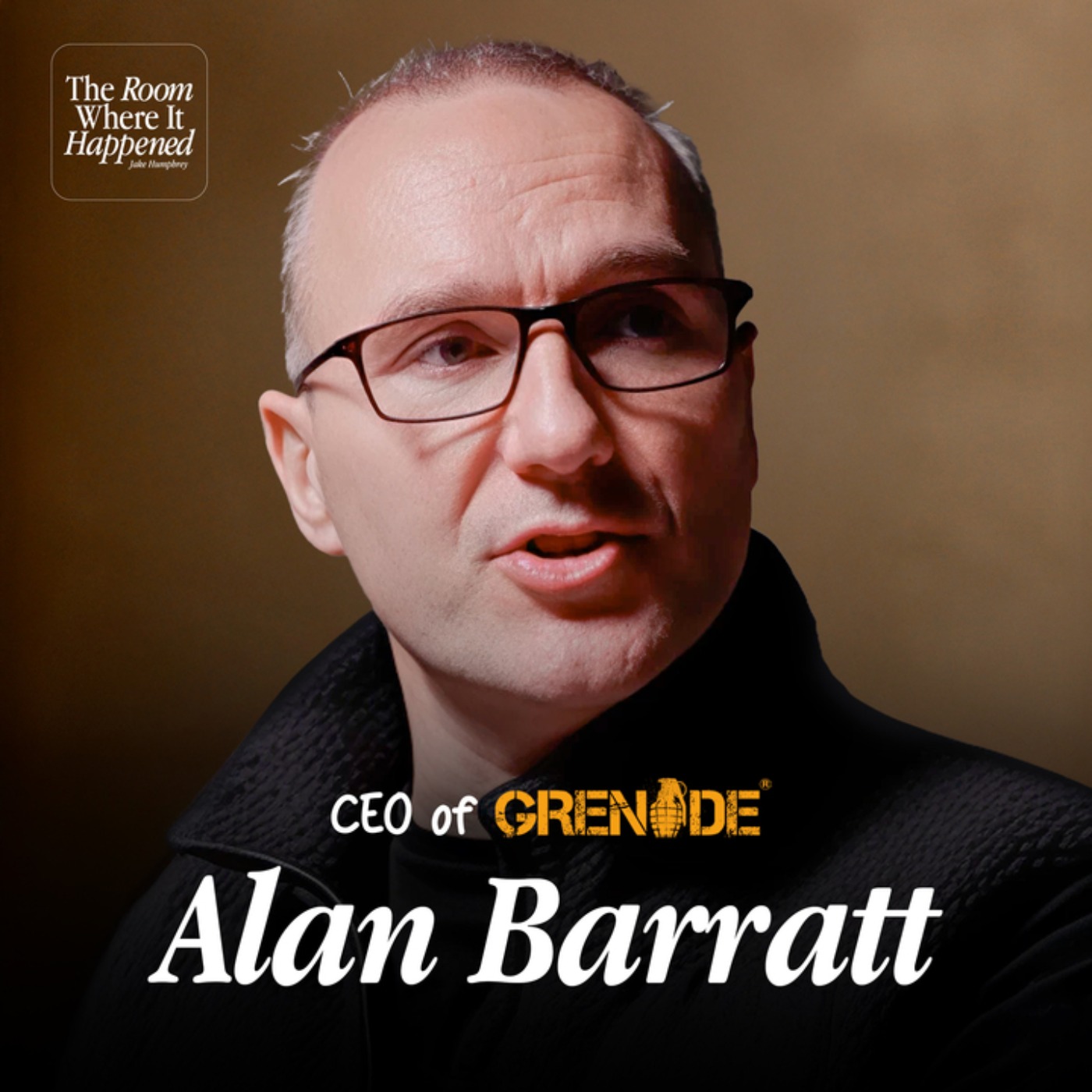
In this episode, Alan Barratt shares the transformative journey of Grenade, a sports nutrition brand that evolved from a small supplement manufacturer to a billion-dollar global business. The discussion revolves around pivotal moments, risk-taking, and the power of instinct in entrepreneurship.
Written by AI. May contain mistakes.

Get the gist, explore an idea or ask about something said.
 Claude
On High Performance Business, what are the key points of this episode?
Searching your listeningAutomatic transcript. May contain errors.
0:00There are moments in business that seemingly defy logic. Moments where instinct clashes with experience, where risk overshadows reason. And sometimes, in the most unassuming of places, a single act, a quiet, deliberate act, can alter the course of an entire company. And this is one of those moments. You're about to meet Alan Barrett, co-founder and CEO of sports nutrition brand Grenade. They were just a quirky supplement manufacturer, but Alan had bigger visions. The problem was, he was already successful. They were doing everything they should be doing. The shareholders were happy. They were providing jobs.
0:32but Alan knew there was something else out there. If he could just land on the right product and convince his very content, settled board of directors to sign off on his invention, he'd be onto a winner. But he had to do it in the shadows. And this is the story of how a single product took grenade from a niche but popular manufacturer of weight loss supplements to a billion dollar global business. And Alan is about to take you into the room where it happened in partnership with IFS.
1:05so come on then alan let's go into the room where you made this seismic decision about the future of grenade do you want to know where the room was yes so it's now 2014 i would say and it was a very small boardroom probably half the size of the room that we're in in coventry in england on a little industrial estate and there were probably six seven people in the room i was actually quite nervous used to get very nervous around board meetings because i'm an well at the time well i still am actually i was an unqualified gym instructor from birmingham who had been a a free school meal kid um came from a minimum wage family and then i'd created this business with my wife at the time, now my ex-wife.
1:58And to say that I felt out of my depth with that business and probably still do really, and to say I made it up as I went along would be an understatement in the sense that I'd go into a boardroom then where I have to justify all of my ideas, emotions, where we want to take the business, where we think it can go.
2:23and something I might have even thought of that morning as an entrepreneur. I don't know what I'm doing necessarily tomorrow, let alone planning out the next three or four years. But to sit in a board meeting with just very capable, accomplished business people, which I wasn't and I'm still not. I mean, our chairman at the time, he was on the board of the Bank of England and he's going in. So he came up from London to Coventry for our board meetings that were monthly. and I've got to sit there and try and talk sense in front of these people who've invested really good money in us. How long had you wrestled with this feeling that the direction of the business was not right?
3:01Over a year at this point in the sense that I started producing or working on a bar in 2013. It was April 2013. We're now towards the back end of 2014. The bar actually launched in the April or May of 2015. So it was two years to make that bar. We had over 42 variations of bars that I wasn't happy with. And I hadn't even said anything to them until this point. The reason I'd mentioned it at this point was... So hold on, you developed the bar. In secret. But the people on your board had no idea. They got no idea at all. I've been working on it in secret because it wasn't a business they'd invested in.
3:38And I think... So why did you want to keep it a secret? Why didn't you go to them and go, guys, I've got this amazing idea that I'm working on? I didn't have something to show them. And I knew that if you imagine, as I said, we were having board meetings monthly. If I'd have mentioned it, we'd have had 15 board meetings where I wouldn't have had anything to show them that I was happy with. So the reason I mentioned this particular board meeting was we cut up a protein bar. And I'm going to say specifically, it was as good as a Mars bar. And I even said, and I chopped it up. Can you talk us through this?
4:10So the meeting begins. Yes. let's go into the moment that you decide to take control of this meeting and start cutting up these bars i'd love you to take me into that moment so i remember it quite specifically because we had these really cheap white thick plates that i got from the kitchen downstairs and for some reason we didn't have a sharp knife up at um uh in the office and i uh so i bought a knife in from home and then went up to the board meeting with a knife, which in itself probably felt quite alien. I remember cutting through the bar. And what people don't realise, again, with an entrepreneur and you start your own business is when you start your own business and it's just you, the best thing about it is that you're not sackable.
5:00Whereas when you've taken tens of millions of pounds of investments and your job role is formalised, you're very much sackable and that's something that since that point over the last 10 years i've been very sackable as a as a ceo um and i think that's probably for most people again in most jobs that's something that people people really fear and understandably why because it's because it gives you that fear now what would you do if you aren't afraid if you weren't afraid of losing your job, what would you really do? So I've always tried to do what I've really wanted to do, irrespective of the consequences.
5:37So that if I get fired over this, I'll get fired over this. If you want to learn from the likes of Sir Richard Branson, Rory Sutherland, or the leaders of brands like Five Guys and Ikea, then please follow the show wherever you watch it or listen to it. Don't forget, you can subscribe to the show. You can follow us on Instagram. You can also connect with us on LinkedIn and you can subscribe to my weekly newsletter, all about the show and you'll get the very latest episodes and updates. So as you're cutting up this bar, is that in your head the fact that if this whole thing goes tits up, this is a potentially sackable offence?
6:12It's always in the back of your mind and me being me, very often someone needs to save me from myself. the same as a lot of founders in the sense that if they'd have given me just a categorical no do this and you will get fired blah blah blah I'd have done it anyway yeah and I don't mean that in an arrogant way if you just do it anyway and it's just an absolute disaster even though I could then replace any financial loss potentially which you know would have been at the time. Remember, I've just started drawing a salary at this point. I don't think I'd recover from being sacked as founder or CEO of the business at that stage.
6:59So it is always on your mind that you can just get fired. But like I said, even if you recover the financial loss, why would they want to keep a CEO in place who just frankly just doesn't play ball and isn't a team player or just doesn't do what the board agrees? But this is probably, it could have been our fifth or sixth ever board meeting? Because I'd have been working on this bar when we actually got the investments and again, never mentioned it because why would I? There were no numbers, there was nothing to show. So all of a sudden, five or six board meetings in, I pop up with a crazy idea that it literally means it's going in the opposite direction.
7:36And almost everything we've sold them about sports nutrition, I'm now almost implying, isn't true? So with all that in your mind, take us back in the room and talk us through the moment you've cut the bar up and you start to pass it around. Is it quiet? Are people talking? Is there doubt in their eyes? What are you looking for? It was always extremely quiet in our office in the sense that there were never many people there. Our office then was above a warehouse and there we probably had, again, you know, probably, you know, eight or 10 staff in total, if that. So you're handing these bars out and it is quiet.
8:09Yeah, there's just silence.
8:14So, yeah, there was just the chink as I sort of, as I probably put too much pressure on the bar and it just cuts through. How did you kind of broach the fact you were about to throw an entire hand grenade into the business? I dropped it in at the very end of the meeting. What did you say? Tell me exactly what it was. Under any of the business. I said, oh, before you go. No. Before you go, I'm just going to completely change the entire business. Everything we've just talked about the last two hours, forget all that. Were you nervous? I was always nervous in board meetings. At this moment, though?
8:46Yeah, of course. And the thing is as well, you'll know this with entrepreneurs. We believe what we believe. And we're very passionate people. And, you know, Grenade is my baby. And I find it, and I've got like a form of Asperger's really, so I find it quite difficult to comprehend why people can't see what I can see. but I can't always articulate that. I feel as I have all these great ideas I don't know how to tell people then they don't come on the journey. So you have to find a way to get them to come on the journey. You do and I thought the way to do this was to chop up this bar that I was pretty happy with.
9:20Not completely but it was the best one I'd seen to chop it up and show them. And I mean there was lots of nervousness backing up the meeting by about an hour. You know Grenade was doing well our products were doing well. I just couldn't see a path towards making this the brand that it is today. And for those that don't know, the brand that it is today, last year Grenade was valued at just under a billion dollars. So you can imagine 10 years prior, I wanted to try and think of a path to build a billion dollar brand. So had you, is that the way your brain worked? You decided that this is the end goal and creating these bars is what gets us there.
9:58I wanted to build a household name. I wanted it to be in every country. As today, we're in probably 80 countries. is. I wanted it to be everywhere. I don't have children, so this is my baby. I wanted to build something iconic that everyone could get benefit from, genuinely. And something that I get asked a lot, I do a lot of public speaking, there's always someone who says, why should I buy your products? And I always say, you shouldn't, you shouldn't buy supplements. Do you eat a perfect diet? No, we probably need to buy our supplements then. One of the reasons for doing bars we want a lot of people loved our products but didn't have 50 or 60 pounds to spend which is fine we have a very very very ingrained in the military at the time which created this perception that and people would say this it shows i love your products but i can't take them and i'd say why and go well i'm not in the military and i realized then oh we've pushed this too far so it was a way of backing out and of course anything in the military was very grungy and green and dark and and so on the color schemes because when you think of the military you don't think of bright colors and i used to work in a shop called workout world in the early 90s so i kind of understand how shop retail works and although a grenade stands out because of the shape and the name under shop lighting a lot of our stuff actually didn't pop on shelf and then And the idea, of course, with having bars was it gave us free reign to break away from military branding and actually be a bit more Ben and Jerry's, I would say, to the team.
11:34So now all the bright colours that we have. I mean, we flipped that grenade tank. We're known for driving a tank through London and through into shows all around the world. That tank's now bright orange. It started off being green. But we flipped that and we got no negativity at all. People just love it. So it just gave us a lot more creativity with the brand. And I wanted to create something that more people could afford. We could put in more places, namely petrol stations. There are 10 ,000 petrol stations. So how did you explain the big vision to the board? And I guess you only have a few minutes to kind of explain why you're doing this and how big you believe it can be.
12:14Yeah. So the minimum, because they said, what's the financial commitment? And this involved us pivoting from sports nutrition and specialist retail, which we knew, into mass market convenience and forecourt retail, which we didn't know. But I knew that GrowthPoint as investors had a 1 % share in a petrol station business called Rontech, owned by Gerald Ronson, who had about 350 petrol stations at the time. and I wanted an introduction to Gerald Ronson to get a trial in his petrol stations with our protein bar to try and prove the concept. It was a 50 ,000 bar minimum run and they said, well, what will we do if it doesn't sell?
13:00I said, if these don't sell, I'll buy them myself. I'll put the money in. I'll buy all the protein bars. I'll eat them and give them away. What number are we talking? 50 ,000 bars was the MOQ. so that would be at the time i'd imagine probably around about 60 000 pounds as of 10 years ago so not a hit that you want to take but it was a risk i was prepared to take because i really believed in it and the reality was when we actually did launch the bar i sold them in two hours and then for the next two years we were pretty much out of stock everything we we made was was just pre-sold and then now we do 120 million bars a year minimum just in the uk but it started with that one protein bar that we cut up that no one particularly enjoyed apart from me so they try the bar you then sort of explain which i guess is a big message we're going to go from something that is selling for 60 70 pounds a time to something that's selling for a couple of quid yeah we're going to go from specialist retailers to your average petrol stations news agents every shop in the country can get these it's a massive decision for the board to make a lot of your reputation sits on the line with this what little reputation i had not true you're nervous as hell because you're putting up your own money to take the risk yeah so did you leave that board meeting with a with like a yes or no answer from them what actually happened was the board were pretty much against it and i can completely understand why because backing up an hour in that board meeting with our products that were doing very well brad had said as the chairman he said these are fantastic numbers, Al.
14:35And this is from someone who's on the board of the Bank of England, so I would like to think knows what good numbers look like, or rather doesn't know what good numbers look like. And then I'm saying, it's a bit like, who wants to be a millionaire? We don't want to give you that because I've got a better idea. And of course, when you're running a business, you've only got so much time and anything that's not in the core focus is just a distraction you can't be everywhere remember we've got a team of 10 people and we're all busy everyone's got about six jobs so to go and then almost move away from sports nutrition and then start in food from scratch with no retailers with an unproven product and remember protein bars and you know to use a quote that was used in the meeting but protein bars don't sell.
15:26Who said that? I think that was actually probably Kevin. And he knew that because Maximusle bars hadn't sold and he was correct. They were listed in retailers and Holland and Barrett and Boots. And I said, but the reason they don't sell is because no one makes a good one, Kevin. And we've made a good one because why would you buy? I'm a massive believer in repeat purchase. It's easy to sell anything once. You can literally convince anyone to buy something once but that's irrelevant what matters is getting them to buy it again and again and again and we'd already proven that with our weight loss product that we could get people on the journey and you know we created a brand that we believed in and other people wanted to believe in it too and came on the journey with us so we knew we had this brand loyalty and i knew anything we made people would try our consumers would try because they would trust the fact that we we'd not just made a product for the sake of making a product which is why even today we make so few products we could churn out hundreds and hundreds but why i don't believe in making products just for the sake of making a product so how did you go then from the sort of negativity in the room and someone saying these bars don't sell to you being able to walk out the room and attacking this plan of yours to put the money up yourself to take all the risk and to get 50 000 bars into petrol station it was actually that and you won't remember this but I actually spoke to him about a year ago and I reminded him of this uh the sentence that he said it was a guy called Leon Blitz who out of Grove Point who were just the nicest people Leon was always the one if you were going to fall out with someone it'd be him he really didn't take any prisoners they were all serious but he was another level serious and again I was always a bit he was the one out of the three I was a bit scared of to be fair it came from a really unexpected angle because i'm i'm arguing my case here and no one's really buying it and and he said do you know what al he said if if you you've always you've been right so far and um i think we just trust your gut feeling on this one and it i just got this lifeline from a very unexpected angle because he wasn't the type of person that would take take a risk.
17:42So I think I just asked for a month until the next board meeting to see what I could find. And I think I'd probably, after we got the green light, I'd probably sold the protein bars before they got back to London. So you walked out that board meeting with a yes, right? So you were able to go. Yeah. I mean, a yes on the provisor that it didn't distract us from anything else we were doing. There was no downside to the business. And if this didn't work, I was going to pay for it personally, which again, at that point, we'd already sold shares in the business. And for the first time, then really, I'd got the makings of a job.
18:13When you have your own business as founder and entrepreneur, and there's just two staff, and it was me and my wife, it's not a job. But then as the business grew and we had external investments, you probably have less flexibility because you start to create and professionalise the business, which is good, but it's, it did start to feel like a job. And again, to take the risk of just saying, look, I'll buy these myself was just a way to protect the business because the business was four years old at that point. And it's still very much, you know, wearing nappies or wearing diapers if you're in the US.
18:50And these businesses need protecting and insulating. And I think for the first four years in business, most entrepreneurs would know this feeling. It's a relief to wake up in the morning and you've not gone bust overnight. And I'm serious about that. Plenty of businesses do. I mean, at one point with Grenade, we were down to£27 in the bank within a year of starting up. And Jules and I had a very genuine conversation as to what we do if we lost the house. But I think as long as we actually could think of the worst case scenario of what could happen, we've got no children. You know, we'd got the house mortgaged and so on.
19:28But, you know, we didn't. We took a real punt with Grenade. It was a hobby that turned into an obsession. And we didn't take a salary or a day off for the first four years. So if we thought if the worst thing that can happen is we lose the house, well, at least we're still together. So I think we had just a really honest discussion about what could happen. And then we just we worked even harder to protect the downside. And I think nowadays people just don't think about protecting the downside. So we thought, well, if we end up in a one bedroom bed, sit somewhere, at least we're together. And actually, well, we'll do it again.
20:00And I think this is the tenacity of founders and entrepreneurs that most people just don't get. Because actually, you know, hard work is an aspect. It's not the only aspect. But I just think it's that mindset of not giving up is incredibly powerful. And then I left that board meeting. I'm glad the board meeting was over as it always was. But then I think it breathed a bit of life again back into the business. because rather than looking at the UK retail landscape and looking at all the places that we were, I could now look at all the places that we weren't. And I think I said at the time as well, they said, how do you know this?
20:41What evidence is that that you actually want to do this? And we've bought this, invested in this one business, and now you're saying you want it to become a different business and that's not what we invested in. Why? And the best answer I could think of was, I can't tell you how I know I just know and everyone really was against the decision I won't do it the way I said I'd probably do it but it will it can weave and bob as these things do but if I say I'll get there I'll get there I really believe in under promising and over delivering and I think nowadays most people struggle with that concept but I'll always I'll always over deliver.
21:22Every brand has an origin story, right? A beginning that kind of seems obvious in hindsight, but in the moment is anything but. And this particular one starts with a husband and a wife, a kitchen table, and a relentless belief in a product, a product that actually defies expectations. It was a name that no one could ignore. It was a business that was growing faster, leaner and louder than anyone thought possible. But actually momentum at times can be deceiving Because even when everything seems to be working, there's that question lurking in the background. One that every founder has eventually had to face.
21:53Is this it? Or is there any more on this journey? Well, with us, Alan reflected on his business, how it's changed over time, and the eureka moment that would eventually lead to his fortune. And how many of those six people then in the room were with you on this journey from minute one? How many of them also believed that what you were suggesting was the right thing? I mean to my fate, I mean Jules again as my wife, you know she didn't agree she'd always say which is great because my strengths were her weaknesses and vice versa so we made a hell of a team. You know she wasn't a consumer of these protein bars but she always trusted my judgement with knowing sports nutrition.
22:35I was a sports nutrition consumer when I was 15 years old in the early 90s so fast forward on now I've got 20 years experience. just as a consumer and manufacturing product and knowing the retailers and knowing all the other brand owners. So she would always, her thing was brand, you know, she was head of marketing, so she'd always do what was right for the brand. And I think she certainly understood all of the principles behind what we wanted to do and what we wanted to achieve and that Grenade could be so much more. Tom, then my CFO, again, you know, he got it. he's actually now CEO of Grenade, one of my closest friends, been there 10 years.
23:14At that time, he'd just started. So we were still getting to know each other. But I mean, he's just a hell of an operator. And, you know, he certainly never voiced any open support or criticism, really, to be honest. Again, he was just a, you know, he could go along with trusting my gut feeling. There was also a guy in the room called Kevin Peters, actually, who was ex-Maximus, who was on the board, who came in when GrowthPoint invested, he was very, very much against the bars. And because he was very much bought into the sports nutrition business that he'd come in to advise on. But he could really only advise on what Maxie Mussel had done, which again, had worked at the time.
23:54But that path was now broken, I felt, and just wouldn't work again. Let's go into that then, because I think this is interesting. What was wrong with the business? Like, give us an idea of what your, how many dollars were you turning over? Were you profitable? How big was your business at that time? Yeah, and it's a great point. There was really nothing wrong with the business. We just felt it could do more. I mean, we were generating numbers that most brands would die for now. And I'm saying probably at the time, we might have had probably about$7 million of revenue, perhaps about$2,$2.5 million EBITDA.
24:28So making money, but extremely, run extremely lean, probably 10, 12 staff in total. And as Grovepoint put up when they invested, this business is just Alan Jules and four cats, basically, because we had four cats at the time. So there was nothing wrong with it. It's just I could just sense that things were changing in sports nutrition. What were you selling at this time? So at that particular time, we'd set up the brand in 2010, and we were purely weight loss. We had a fat burner product, a weight loss product in a grenade bottle. we still sell it and within a year we'd made it the number one selling weight loss product in the country which was fantastic and the repeat purchases were 80 % of people would rebuy it because there's no such thing as a magic pill and we never sold it as that but all the aspects of things that people struggle with when dieting this helped with so we did extremely well with that and in 2012 we launched a pre-workout product called 50 caliber and of course our packaging was very distinctive.
25:29But the problem was everywhere that we could be, we were there and we were number one. We were the best selling product on Amazon. Now, Amazon in 2012 wasn't Amazon in 2025, but we were out selling all of the food products. We were out selling chocolate bars and coffee. So, and it was a good number, but if I'm going to do something, we're going to do it properly or not at all. And it just felt like we could do a lot more. Sports nutrition was really pretty much pigeonholed back then into specialist shops, hardcore gyms, so spit and sawdust gyms, I'd call them, and a little bit of retail at Tesco and NutriCenter.
26:09We were doing well in Holland and Barrett. We were 2 % of the entire turnover for GNC. So if anyone knows sports nutrition, GNC was the biggest bricks and mortar sports nutrition retailer in the world, 6 ,000 stores in the US alone. You know, fantastic retailer, but the market was changing and they probably weren't sports nutrition was becoming around that time and we certainly encourage this trend it was no longer something that would be used as a as a specialist item by just sports people it was starting people were starting to realize that they needed to consume less sugar they um you know that protein was important they were most people were probably thinking about protein was a better way to incorporate into your diet rather than say carbs so the market was was certainly changing and you know so we were two percent of the entire turnover for GNC and we're very happy with that but we felt like we were growing in a not a declining retailer but almost a static retailer and I just me being me and this is this is one of those examples where this is probably the mind of an entrepreneur.
27:16When I drove home, all the places that were, I didn't drive home, and it was probably a 25-mile drive home at the time. I didn't drive past a shop that sold our stuff. I didn't drive past a single shop or gym that sold our product. And I remember one of my supporting arguments for moving to protein bars was, I want to drive home and I want to drive past places that sell our stuff. And everyone thought I was mad. But it all came back to that one room where nobody wanted to do it. And frankly, everyone thought it was a shit idea, to be honest. So every now and again, you just think, yes, my work is done.
27:56But every now and again, I do remind people the fact that, yeah, nobody wanted to do it.
28:04You know, in hindsight, success can almost sound simple, can't it? But actually, before that billion-dollar valuation, before the global brand, there was just one guy, his wife, and a business teetering on the edge. No salary, no safety net. At one point, they had just£27 in the bank. Yet against all that logic, against all those odds, they just kept going. Because sometimes the biggest risks aren't actually taken in the boardroom. They're taken in your own brain when you know that you've got nothing left to lose. And in the end, this wasn't about protein bars. It was about risk, gut instinct, believing in something that no one else could see.
28:37Alan had built a business, nearly lost it, and then bet everything on an idea that eventually exploded larger than he could have ever imagined. And years later, when he looks back at that moment in the boardroom, he doesn't actually see certainty or confidence. He sees fear around that decision that changed everything. How often do you reflect on that day? Quite a bit, to be honest. I mean, it's amazing, isn't it, how things can pivot? Because if that had been... I made a gamble that sports nutrition wouldn't necessarily decline, but it would become a bit stagnant. And 10 years on, it absolutely did.
29:12And sports nutrition really is no bigger than it was back then. You could argue as well that's possibly a self-fulfilling prophecy because we dedicate all our time and effort into bars. So did we potentially cause the, you know, not the demise of our own core business, but as I said as you wake up you've only got so much time and where's your time best spent I'm still just as passionate about sports nutrition as I ever was and more people now realize again about protein powders and protein shakes and you know pre-workouts and so on but you I still believe you can't put those in all the locations that we are today I think as I look at the UK with the exception of Starbucks you'll find our bars just about anywhere I mean we got a cost of coffee listing and Cadbury couldn't get a listing in Costa but we were in there same with M &S M &S listing our products and imagine a a hardcore sports nutrition brand called Grenade with a tank with a protein bar called Carb Killer and we're in M &S something else I really want to make sure we do in these conversations is draw out some key lessons for other entrepreneurs other business people or just anyone that's fascinated by this world of being a self-starter.
30:29So I'm going to throw a few words at you and I'd love you just to give me your response to these. I'm terrible at quickfire stuff. Taking risk. What do you want people to know? You have to do it. As a good friend of mine always says, if you risk nothing, you risk everything. So nothing is gained without taking risk but protect the downside and embrace failure but embrace failure quickly people see failure i mean i mentioned before we made 42 versions of bars so we had 41 failures we didn't we learned 41 ways that to make a protein bar that we didn't want so embrace failure and learn quickly fast failure is your friend long drawn out failure is just death by a thousand cuts and sometimes you can just belligerently follow an idea too long.
31:22So that's where gut feeling comes in. Risk, learn, fail, learn, retarget, try again. What's the key to fast failure? It depends on the scenario, the person, the situation that you're in, the market. There's a lot of factors. But other than just saying gut feeling, if everyone's telling you the product is poor and you don't think it is i mean you should listen because you can't ignore the market you can't know what people are telling you although people were skeptical and for the reasons i've said and rightly so they like the product so that's absolute key for years with competitor bars we were trying competitor product because like i said we didn't invent protein bars we just invented good ones people were making bars and they were so much worse than our bar and it baffled me thinking who's selling this off because this is terrible they haven't actually invented anything here so one of the initial problems we had was with making good protein bars was our competition was so bad i don't mean that disrespectfully but if you went and tried a bad protein bar that wasn't ours why would you go and buy one of ours whereas actually i tried to make all the competition better because if you enjoyed someone else's bar, you probably would have ours.
32:41So just because ours is nice, you can still enjoy the people's. But when the competition was poor, that was actually frustrating to me because it actually, I felt it hurt the category. Personal relationships. Critical. And again, I think the cornerstone of being an entrepreneur is getting people to do things for you that they probably shouldn't do, but just because they like you. and Jules and I would go into meetings at Tesco. And obviously we were one of their smallest brands, you know, Coca-Cola one day had just left. But the guys that came in for Coke, they didn't found Coca-Cola and they didn't own Coca-Cola.
33:21They worked there. Whereas Jules and I founded Grenade and were owners of Grenade. And they always used to say, this is our favourite meeting of the week. It's the best meeting we've had all day. and I think that just going in and brightening someone's day and being refreshing and just being yourself, personality gets you a long way. And over the years then, you learn how to milk that. So Moshinisa, who owns Asda, became a really great friend of mine. He won Entrepreneur of the Year the year before or after I did. And then now, you know, we kind of get a problem or something with Asda and I can pick the phone up to the owner of Asda.
33:55So how helpful is that? Hard work. Just an absolute given. I'm probably not very good in this regard in the sense that and Jules more so than me Jules works to the point that she'd make the Terminator look lazy so we probably worked too hard if anything I think over the years I've tried to learn how to work smarter not harder but I think like I said before we just hadn't had a day off for four years no children hadn't got the time no holidays no days off no salary we just got up and if we were awake we were working but we had to be because all of our competitors had got hundreds of staff and more money than we did so where but we were flexible and entrepreneurial and then you have to you have to make your weaknesses strengths so i i've just never met anyone who's created anything meaningful that has said to me oh we didn't work that hard have you you know it's just a given and but it all these things you have to of amazing products you have to work on they're just non-negotiables and there's probably a list of about 20 things we could come up with um all linked by consistency you've got to be consistent because you said work hard but work how hard for how long yeah a day you know we can all work hard for a day you we can all work hard for a week work hard for four years five years ten years but i got this off my off my family all my family died at work and never made a penny My granddad went blind and went to work at 82 and still went to work.
35:23He was handing them tools. My dad was a mechanic. My uncle had a stroke and went to work, died at work at 74. So I learned the ethic of hard work from my family, but I learned the fact that I'd like to make it count for something because they just worked themselves to death, literally. Which leads to the final question, which is regret. As in, do I have any? I mean you could I suppose you could take this literally I wouldn't be amazing to go back 25 years and invent Facebook or Amazon just something like that yeah um otherwise you know I don't believe in it I mean I think the two most powerful things you can have just being happy and healthy and I'm happy and healthy um and as I said before this started I've been wealthy and I've been poor and I know what I prefer, but I don't really have any regrets.
36:17There's some people I probably wouldn't have hired just because, you know, people come in and it doesn't work and then people come out again. That can be a bit painful. But the failures and the mistakes, that's where you learn. If you just wake up and everything goes really well all day and you go into work and everything goes well and you launch a product and it takes off immediately and you've got fantastic margin and everyone loves it and you're a hero. And it just grows and grows and grows and grows. What do you actually learn? Because the problem is then at some point you've got a speed bump coming and a speed bump's much easier to cross if you're driving slower.
36:53So you want to learn when you've got a chance to recover. Imagine now if we have a production problem. Well, it's probably going to cost us 100 million. So I'd like to think that we've learned from much smaller runs. So that's where the regret comes in. as in do I regret cocking up production and whatever? No, I don't. Because actually that's been really powerful. And I tell you a talk with that actually was Johnny Brownlee, the triathlete. So we went for dinner. This was 2012. And he was telling me how he'd been injured in the run-up to the London Olympics. And I said to him then naively, oh, you know what?
37:32That was how awful being injured in the run-up to the biggest sporting event of your life. and he said best thing that ever happened to me and I was like what um he said I learned loads he said because training's easy when you're not injured and it all goes well so actually he learned how to train smarter and not harder and I thought do you know what I'll remember that for business so um I always always remembered that that was 13 years ago that conversation well I can't thank you enough for taking us into the room where it happened sharing things I've never heard you talk about before it's inspiring for people whatever stage of the journey they're at full of fascinating learnings and lessons, but more than that, it's just an incredible story.
38:08I would love you just to leave our audience with something ringing in their ears that you think is really important for them to hear. I know it sounds really corny to say not to give up, but you do really have to follow your dreams, which I know sounds really corny as well. But there are so many people who message me every day and they just say, I've got this idea, but where should I start? and they've almost answered their own question. Start. If you don't start, you've already failed and there's two good times to start a business and that's probably 20 years ago or today because it's better to start it today than wait until tomorrow.
38:43So protect the downside. If you have an idea and something you believe in, do it because if you don't do it, you'll regret it. So everything I've done, back to the no regret point, if I thought of it, we've done it and some of it works, some of it doesn't, but just double down on what works. Thank you so much. Thanks for your time. Good man. Cheers, thanks Jake. We are surrounded by businesses, both the successful and the struggling, those that have good fortune, those that are simply unlucky. But to truly understand the truth behind their stories, you have to learn from them. You have to ask the questions.
39:18You have to be there. You have to be in the room where it happened. If you enjoyed today's episode in partnership with IFS, don't forget to subscribe to the show follow us on Instagram and you'll be the first to get the latest episodes
What does it take to turn a niche idea into a global phenomenon? For Alan Barratt, it meant trusting his instincts, betting on a product his own board doubted, and risking it all on a pivot that made no logical sense, until it did.
In this episode, Alan reveals the behind-the-scenes battles that shaped Grenade’s bold transition from sports supplements to protein bars, the critical moment one unexpected ally tipped the scales, and how a sold-out launch in two hours changed everything.
It’s a masterclass in the power of instinct, risk-taking, and the importance of embracing failure along the way.
IFS - award-winning Asset & Service Management software
👉 Reimagine your operations at https://hppod.co/ifsai
Hosted on Acast. See acast.com/privacy for more information.


