Ask ChatGPT


 High Performance Business
23 Jun 2026 · 59m · 21 chapters

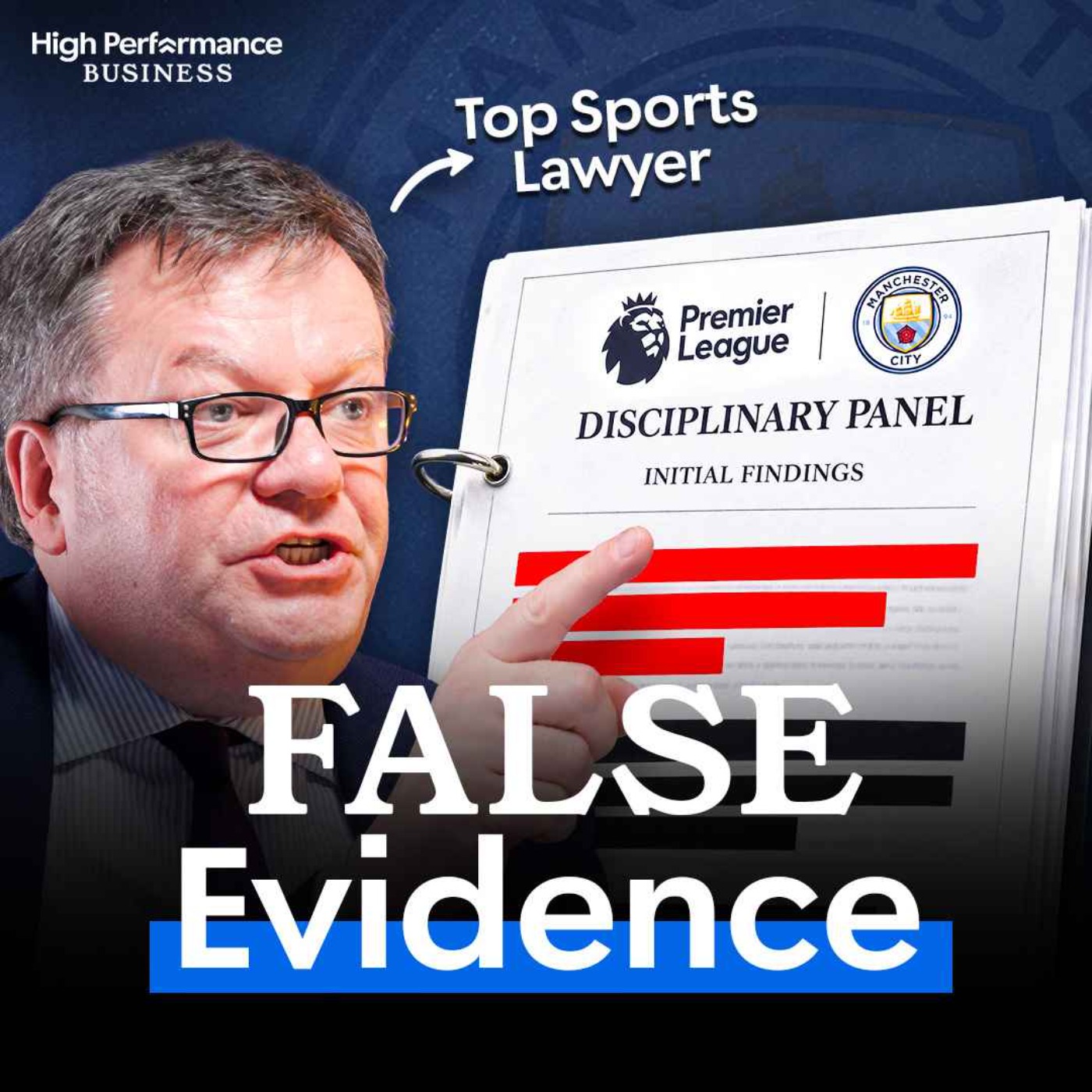
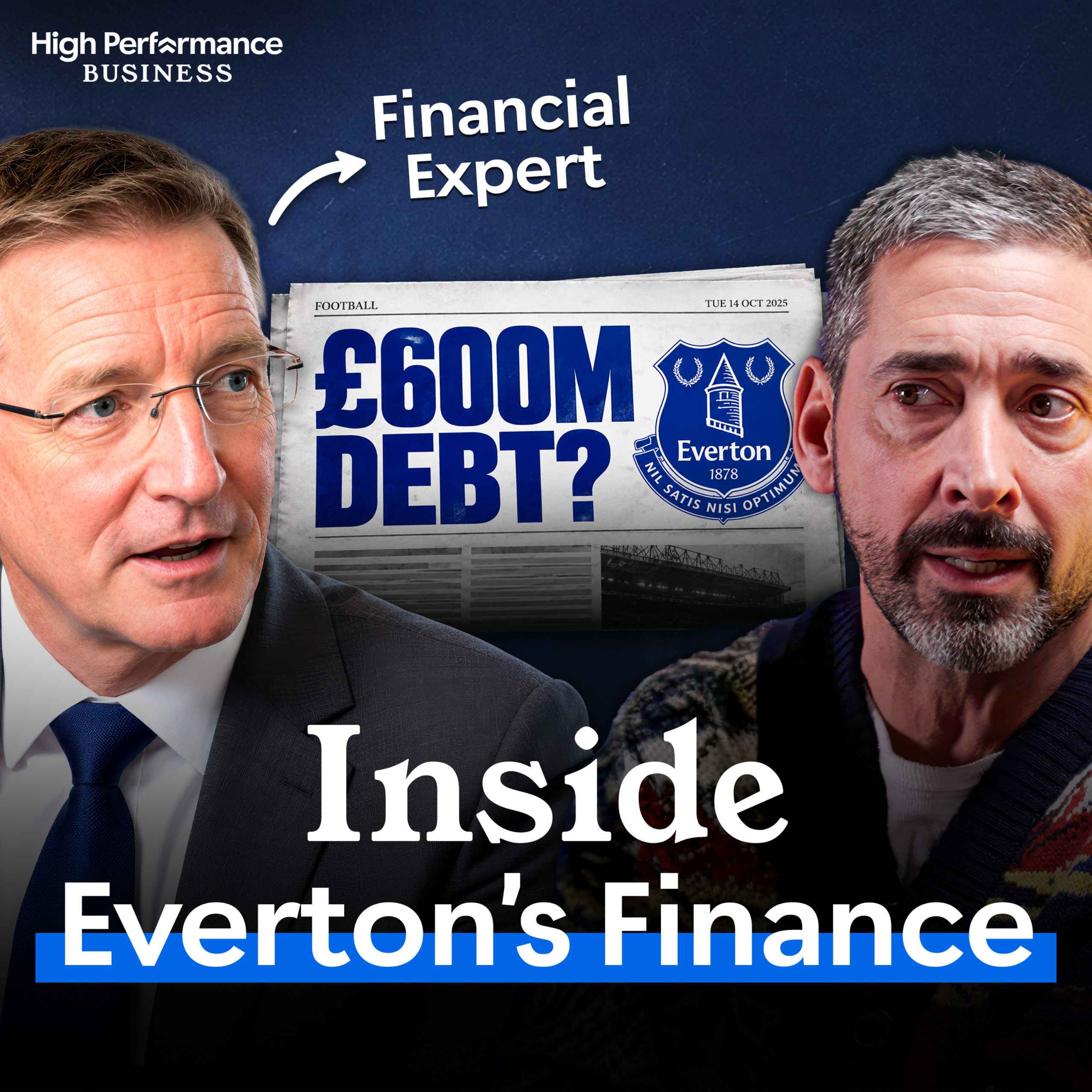
Premier League football finance—how clubs are valued, why relegation risk matters to investors, how European qualification affects profits, and what’s driving financial crises (notably West Ham). It also covers why Super League failed, and how culture and recruitment systems can outperform big spending.
Kieran Maguire (football finance academic/author; expert witness work on contracts; long-time analyst of club finances and spending rules).
Arsenal revenue estimate ~£770m; valuation ~£5–6bn. Kroenke/Glazer/Abramovich purchase-sale figures. Palace earning ~£21m from Europe but losing ~18 points’ worth of performance. Wrexham’s wage-heavy rise; Hull’s “should’ve been relegated” promotion. West Ham: stadium rent ~£4.8m; maintenance ~£16–20m; owners’ complications; Daniel Kratinsky ~27%.
Written by AI. May contain mistakes.
Discusses the valuation metrics used for football clubs in the Premier League.
“When you look back at last season, what do you think in the Premier League is the most interesting football finance story?”
Explores the financial realities and valuation changes in football clubs over time.
“But the bankers and the financiers, they focus on the science side of it.”
Analyzes the sustainability of club finances and the implications of overspending.
“Football tends to not quite go out of business.”
Discusses the addictive nature of promotion in football and its financial implications.
“If they do a Sunderland, they're looking at£130.”
Compares the financial and operational strategies of Wrexham and Salford.
“Football, in no other industry would you see a company spending£240 on wages for every£100 it made in terms of revenue.”
Examines the implications of the Super League concept on investment and fan engagement in football.
Examines the implications of the Super League concept on investment and fan engagement in football.
“They lost£5 million in the National League, losing£100 ,000 a week.”
Explore the implications of the Super League on football meritocracy and fan engagement.
“So that element of democratisation that a club can force its way into Europe and so on, I think is really good from a sporting merit and an uncertainty perspective.”
Understand the financial repercussions for Tottenham missing out on European competitions.
“a system that will not include Tottenham next season.”
Learn how Premier League positions directly affect club revenues and expenditures.
“And do they get a specific amount for winning it?”
Examine Tottenham's business model and how they generate revenue beyond football.
“So let's say close to£150 million is the difference between Tottenham finishing in the Champions League places and just avoiding relegation.”
Discuss the challenges Tottenham faces in regaining their position in European football.
“the premier venue in London for these events and they've done very well.”
Explore the financial dynamics and competitive challenges in the Premier League.
“Next year, they've got to finish top half as a bare minimum, but they should really be trying to get into Europe.”
Understand the differences in financial regulations across football leagues and their impact.
“Yes, they're not included in the Premier League, but they are included in the championship figures.”
Examine how clubs like Brentford and Liverpool effectively navigate financial challenges.
“Who is the single most impressive club for you in the Premier League from a financial perspective?”
Explore the financial struggles of West Ham United and potential repercussions of relegation.
“The club was in danger of going into administration itself.”
Discuss the complexities of West Ham's ownership situation and its impact on the club.
“Will some players have relegation clauses?”
Learn about the financial implications and challenges of clubs promoted to the Premier League.
“in rent for the stadium the stadium costs around about 16 to 20 million pounds to maintain over a season that cost is borne by the taxpayer so so that makes me angry as a taxpayer by the way Yes, I can understand that.”
Understand the preparations needed for newly promoted clubs to compete successfully.
“And he was telling me that they had to take a loan six months into the season around Christmas time.”
Explore how promotion impacts club finances, including costs and revenues.
“Liverpool, Manchester United, Chelsea, Arsenal City, they are delivering eyeballs.”
Understand the rising public interest in football finance and its implications.

Get the gist, explore an idea or ask about something said.
 Claude
On High Performance Business, what are the key points of this episode?
Searching your listeningAutomatic transcript. May contain errors.
0:01When you look back at last season, what do you think in the Premier League is the most interesting football finance story? For me, I think the most intriguing thing was Spurs not getting relegated. And the reason for that is that there's lots of talk about deals. Who's going to buy this club? Who's going to invest in that club? And how do you go about valuing a football club? Well, for the big six clubs, they're valued using this metric. And there's an assumption that none of them are ever going to get relegated. So investors like certainty and they don't like risk. And one of the biggest risks in the Premier League itself is that if you buy a mid-tier club, so if you bought Wolves two or three years ago, the danger is what happens if Wolves go down.
0:51The big six clubs, they were perceived as being the untouchables. They'll never go down. They'll never have a relegation issue to deal with. And they were being valued on that basis. What we've seen with Spurs this season, I appreciate they didn't go down. But if they had done, it would have had a huge impact upon the values of if anybody is thinking of now buying Chelsea or buying into Liverpool or Arsenal. So that was that was the big issue, certainly as far as the valuation of football clubs is concerned. And how to value a football club, it's more art than science. But the bankers and the financiers, they focus on the science side of it.
1:32I think the other issue was Arsenal and the other clubs that have made progress in the Champions League. The gap between them and the rest is getting bigger and bigger because it's very much the Champions League or nowhere as far as European participation is concerned. okay well let's delve into some of this then let's start with valuing football clubs what is um an arsenal a man united a chelsea what are they worth today they are what you normally do you say well how much money is the club generating on a year-by-year basis and then you multiply that by a magic number now that magic number changes depending upon what you think of the quality of the management what you think about the future prospects and so on but we're probably looking at a figure of six or seven.
2:21So Arsenal this year, we think they're going to make around about£770 million in revenue. You multiply that by six or seven, that's giving us a value of between five and six billion pounds. Now, when Stan Kroenke bought out Alicia Usmanov eight or nine years ago, it was valued at£1.8 billion. So we're talking about a three to four billion pound increase in the value of that club in less than a decade. That's why people want to buy into Ford because when you get it right, the numbers are amazing. The Glazer family will set aside the fact that they are highly unpopular with the fan base. They have done spectacularly well with Manchester United.
3:02They bought it for 700 million. When Jim Ratcliffe bought into it, that was valued at around about five. Even Roman Abramovich bought Chelsea for 140 million. It was sold in the middle of a war which was taking place where it was a forced sale. It was sold for nearly two and a half billion. So there is an awful lot of money to be made within football. I think very much at the elite end, at the other end of the game, you can do a Rob and Ryan, you can buy a football club for two million pounds. Five years later, it's worth 300 million. So the success stories are spectacular. Equally, there's lots of failure stories.
3:41We've seen what's happened with Sheffield Wednesday over the course of the last 12 months and the owner is effectively going to walk away penniless there we've seen people put hundreds of millions of pounds into clubs in Middlesbrough they missed out on promotion this year their owner Steve Gibson is 200 million pounds down plus and there's many other clubs even some of the clubs in League One where he's and I'm looking at the numbers that club over the years it's lost 150 million 200 million so it's it's a fascinating industry to observe as a as a nerd which is what i am i love that you're a self-confessed nerd but a self-confessed nerd with plenty of knowledge and understanding of the game before we go into some specifics in in terms of the premier league and some other clubs like is this how it should be like should we have clubs that play our national sport being worth four five six billion and then huge teams like sheffield wednesday with incredible history and a passionate fan base in a large stadium losing money hand over fist and owners walking away you know having not just not made anything but having lost sometimes hundreds of millions of pounds like is healthy overall for football i i don't think it is healthy but i think it's it's a function of the way that the business works at different levels if we go back to the the tech boom of the the start of the of the century for every amazon for every ebay there's 50 or 100 You look at the business in which you're successful in, if you take podcasts, for every successful podcast, there are 20 that have come and gone.
5:16Football tends to not quite go out of business. And the reason for that is that whilst we've lost Bury and we've lost Macclesfield Town, for the other clubs, the ones which really should have been allowed under normal circumstances to no longer carry on trading, they mean so much to the local community. They mean so much because they're part of your identity, your history, your heritage. When I talk to Sheffield Wednesday fans, they say, well, we are Wednesday. We couldn't let that club disappear because of the top ten memories of my life, six involved Sheffield Wednesday football club. And that's the unique thing about football.
5:59So it's a strange industry in the sense that in order to be successful, you have to overspend. if you think about if we take the championship for example the average losses for a club in the championship 400 450 000 pounds a week so somebody every month is getting a phone call normally the owner get a phone call from the chief executive how much do i need this month it's you know i need a million pounds for waiters i need a million and a half so we're talking 20 to 25 million pound loss on average over a year in the championship and that is acceptable to an owner let's take out the antinacios who now own my football club norwich city again i said mine didn't i that's how we look at football the club i support norwich city they will be happy to swallow that or they will swallow that a because they have to but also because of the potential promise of the premier league but it only takes say three or four years of doing that and suddenly a promotion to the premier league is only a break-even number yes you're absolutely right Football becomes addictive to the owners.
7:03We do have what I'd refer to as casino management and casino ownership in the sense that if I want to get into the playoffs, if I want to get automatic promotion to the Premier League, and I'm going to go from Norwich City will have made£12 million this year from the EFL TV deal. They get promoted, it's£110 minimum. If they do a Sunderland, they're looking at£130. And you look at Sunderland next year, they've got Europa League, they'll be looking at£160,£170 million from a team. That's what you buy into as an owner. The owners are all convinced that because they tend to be independently successful and they've built up their own businesses, that those skills are transferable into football.
7:48Football is unique. Football, in no other industry would you see a company spending£240 on wages for every£100 it made in terms of revenue. You just close the business down. Football isn't like that. If we buy that centre forward, if we invest in that new manager, then that could get us into the playoffs, get us promoted. And sometimes it works completely against the odds. Hull City, based on XG, should have been relegated last season. They've just been promoted. They're all getting very, very excited. And again, it's that part of dreaming within football. And there's still that element to dream.
8:30Hull now will be creating hundreds of other very wealthy dreamers that might be in the UK, they might be abroad. They'll see the Hull story and go, oh. And that's the magic, I think, of the English game, is Hull show that it can still happen. on a relative shoestring. Yeah, you're absolutely right. And think what's happened at Wrexham. They've gone from non-league to one win away from being in the playoffs. And has that been a loss-making journey to that point?
9:15tasty flatbreads and their new balsamic chicken salad in the prepared foods department. Keep things fresh with organic red cherries, strawberries and peaches at their peak. And stock up on bug sprays and sun care must-haves. Make your summer sizzle at Whole Foods Market. Parles-tu français? Hablas espagnol? Parli italiano? If you've used Babbel, you would. Babbel's conversation-based technique teaches you useful words and phrases to get you speaking quickly about the things you actually talk about in the real world. With lessons handcrafted by over 200 language experts and voiced by real native speakers, Babbel is like having a private tutor in your pocket.
9:53Start speaking with Babbel today. Get up to 55 % off your Babbel subscription right now at babbel.com slash acast. Spelled B-A-B-B-E-L dot com slash acast. Rules and restrictions may apply.
10:13It has been, yes. They lost£5 million in the National League, losing£100 ,000 a week. It cost Stockport owners around about the same. So it's a very expensive journey, but you're one or two matches away from hosting Liverpool and Manchester United and Chelsea and Arsenal next season. It's very, very, it's seductive. I don't know whether you ever saw the Welcome to Sunderland documentary, but the signing of Will Grigg, that particular episode, for me, is the textbook way of how football makes rational, sensible, successful people act like gibbering schoolboys. Yeah, yeah, yeah. And if people haven't seen it, they should watch it.
11:02I mean, they're just kind of making decisions about Will Grigg, which didn't turn out to be a successful transfer, did it, by the way. and it's like, now they don't want this, should we pay it? Ah, okay, let's pay it. And you would never make that decision in business. Have you looked at why a club like Wrexham, obviously they've got the TV deal and they had some great American Airlines partnerships and all those things. They had access to more income because of Ryan and Rob. But have you looked at why, for example, they've managed to do it and a team like Salford, who've got the backing of the class of 92 and again have had a TV documentary and access to other relationships, other partnerships they wouldn't have normally had?
11:42Have you looked at why they've not managed to do a team like Salford? It's the difference between globalisation and localisation. I watched the Class of 92 programme, I'm a football fan. But it was very much geared towards the domestic audience. How many people in America, how many people in Asia have heard of Nicky Butt? Yes, they're aware of the Neville brothers. Yes, they'll be aware of Paul Scholes, but they weren't stars in their own right. Whereas Rob and Ryan, they had the ability to go to American brands and they said, we're doing this show for Netflix. Netflix is going to be broadcast all over the world.
12:27And that meant more money was generated so Wrexham could spend more than Sulfur could spend. And hence, one is close to making it to the Premier League and the other remains in League Two, having lost the playoff final this year. That's right. Wrexham had the biggest wage bill in the National League. They had the biggest wage bill in League Two, when they were in League Two. And they had the second biggest wage bill in League One. And only because the Birmingham owners came in and that they were going to sort of try to get the link towards Peaky Blinders, Shelby and so on. And they lost an absolute fortune in getting out of League One.
13:01So interesting. Let's talk Premier League then. Tottenham almost getting relegated to the Championship. Does that scare investors enough to damage the value of top teams in the Premier League? Well, if they had been relegated, then I think there would have been nervousness about it from investors. But they weren't. Now, it'll be an interesting season next season. I'd expect them to bump back. You've got nine teams participating in Europe, so therefore they've got midweek distractions. Spurs won't have any of that as a problem. Why was Super League so popular with owners of Spurs and Manchester United?
13:45It had no risk. You were invitees as opposed to having to win football matches to participate, so therefore you had guaranteed revenues, you had guaranteed cost controls it was from a business point of view it was an absolutely brilliant product the problem was we all grow up or we all grew up with a belief that football was a meritocracy and even the fans of Chelsea and Manchester United and so on say we want to be in the Champions League because we've won matches because we deserve to be there rather than the fact that our owners have effectively bought us into the competition. So that element of democratisation that a club can force its way into Europe and so on, I think is really good from a sporting merit and an uncertainty perspective.
14:37Why do fans go from Hartlepool to Southend on a Tuesday night? It's because they think that if they keep doing that, their club could get promoted and get up into the Premier League and so on. And if you take that away, one of the ideas behind Super League was a smaller league and then that would coincide with less relegation in the Premier League. It was going to drop to two, two and a half teams. That reduces risk. Investors don't like risk. They want return rather than risk. So has the Super League gone away or has it just gone quiet until they think the time is right to talk about it again?
15:13I think it would be very difficult for Super League to work. If we take a look at that first edition, and I've managed to get hold of all of the documentation, German clubs wouldn't buy into it because of the German 50 plus 1 model, where fans have a greater say in the activities of clubs. The reaction of Spanish and Italian fans was uncertain. They weren't hugely against it. But I think you have to give Gary Neville, Jamie Carragher, the day that it was announced, remember it was announced on a Sunday afternoon, they were indignant. They rallied the troops. And all of a sudden, we as football fans, we set aside from the view that you're a Chelsea fan, I'm a Manchester United fan, he's an Arsenal fan.
16:03Actually, we all realised we've got so much more in common because we've been built up on this belief that our club will be successful due to its own merits. So it was the fan pressure which I think really prevented it from taking place. How you would manage to persuade fans, because you've got to get the fans to buy in. How can you persuade fans to buy into Super League? The fact that Juventus and Barcelona dropped out, and it's only Florentino Perez who is still thinking that it's a great idea, But Florentino Perez tends to believe that all ideas of Florentino Perez are great ideas. Indeed. OK, so it looks like the Super League might be gone.
16:44It looks like, for now anyway, we have a system we have for European football, a system that will not include Tottenham next season. So what are the financial implications for Spurs of not making it into any form of European competition? Well, they'll be quite happy that they didn't fall into one of the minor competitions. You actually lose money if you end up in the Europa Conference. Why is that? Because if you take a look at the money that you earned, Crystal Palace probably earned a total increase in revenue of around about£21 million. I'm an academic. We do sort of nerdy research. On average, especially for one of the smaller clubs, if you are in the Europa Conference, you're playing Sunday, Thursday, Sunday, Thursday, Sunday.
17:31You've not got the squad, which is big enough to cope with that. So the data, the analysis indicates that you will, on average, earn 11 points fewer than the previous season when you qualify for Europe. That normally equates to around about six places. Now, every individual place in the Premier League is worth£3 million. So Palace got an extra£21 million from being in Europe. And on average, they're going to lose 18. Because it impacted their form. It impacted on their form. They finish 15th. People forget that. You have to have a bigger squad. You've got the costs of transportation. You've got the extra salaries.
18:15You've got the extra transfer fees because you've had to expand the size of your squad. And you put all of that into the equation and actually you end up losing money. So Brighton have qualified for the Europa Conference next season. Great for the fans. They'll be trying to work out, you know, how to get to the Faroe Islands on a Thursday night. From a fan's point of view, absolutely fantastic. The boardroom will be going, OK, well, we've got to go and put on a smile because we want to be able to say we're in Europe. But financially, they're worse off. And also, under the way that the cost control rules work, is if you're participating in European competitions, you can only spend 70 % of the money that the club generates on player costs.
19:00If you're not in Europe, you can spend 85%. Right. So Brighton can spend 70 % of their money. The club that finished one place below them, which I think was Brentford, they can spend 85 % of a slightly smaller pot. but when you crunch the numbers Brentford are better off Oh it's so interesting isn't it when you start looking at it like this so you said£3 million per place in the Premier League Yeah I used to think it was£1 million maybe it was a few years ago so that's changed drastically so I think of Tottenham if they'd finished a fourth or fifth and got into the Champions League that's worth about£100 million Champions League qualification um you you get 18 million pounds for qualifying yeah 2 million euro for each victory 700 000 for a draw and then once you get into the knockout phases it starts to tear up so uh psg have probably made around about 150 million euro this season from all of their success and that's before you take into account they've had seven eight matches at home so you've got you've got gate receipts you've got bonuses and sponsors.
20:10And do they get a specific amount for winning it? Yeah, it was 4 million, 4 million euro. Which, interestingly, is kind of... Oh, exactly. By the time you've got to the final, like 4 million's not here nor there, is it? And by the time you paid the players bonuses for winning it, you're worse off. Yeah. So again, it's this crazy situation. But what does it do? It opens two new doors. You've got the European Super Cup. So PSG are now going to be playing Aston Villa. Now the winners of that, they'll get 5 or 6 million. And you now qualify, of course, for the FIFA Club World Cup. That competition was worth£80 million to Chelsea.
20:47What? £80 million. How is the Club World Cup worth£80 million? Because FIFA had to make it attractive to clubs to enter. FIFA had a very last-minute but very, very lucrative broadcast deal that they signed for the competition. And on the back of that, they'd make more money. The crazy situation. Chelsea made far more money from winning the Club World Cup, which, let's be honest, do you know anybody that actually watched it? No. I mean, I don't remember who played in it. I just know what the results were. Yeah. So I can't remember any of the matches. I didn't watch it myself. I'm football mad. If you win the FIFA World Cup, which we're about to get very excited about, you only get 50 million.
21:30And yet that's a bigger tournament, surely. But that's the crazy economics of modern day football. So the Club World Cup pays the winner, 80 million. Yeah. The World Cup, 50 million. For a full. So keep it with the conversation about Tottenham. They're not in the Champions League, which for Pearce, it was worth 150, but it could for most, for 100 is a different number. But Tottenham also have lost three million pounds per place from the days when they were a top four, top five team. If they're finishing 17th, let's say that's 14 places. So you're better at maths than me. That's another. So let's say close to£150 million is the difference between Tottenham finishing in the Champions League places and just avoiding relegation.
22:24And that's just from TV money alone. You think about how much money Spurs make. I worked out that the average money they make per fan, per seat, per match is 90 quid they'll be making£6 million a match easily because it's a fantastic stadium it's geared towards the corporate and hospitality sector you've got 7 or 8 of those matches that's another£40 or£50 million the sponsors, they'll lob in another£10-15 million as well you add it up and a good run in the Champions League Arsenal will have grossed well over£200 million from this year's competition. So does that put Tottenham into a financial fair play situation, if their income has dropped so drastically with the players they already have and the wages they already pay?
23:11Well, not quite, because the way that the rules operate, it's based on your profit. So profit is your revenue less your costs. Now, if you take a look at a player's contract, they are heavily incentivised towards getting to the Champions League. So I occasionally do expert witness work for players or for clubs or whatever it might be. And you get to see the contracts of individual players. And I did a show with Wayne Rooney, who said on air at Manchester United, Champions League, extra 25 % on wages, Europa League, Conference League, nothing. So yes, yes, the club will be better off, but it will then be absorbed by increasing wages.
23:58You'll have the increased running costs. But overall, yes, very, very beneficial. And from a fan's point of view, you've now got a bigger budget. So you get to sign more players. Again, of course, you've got the cost of those extra players coming in. But yes, it is lucrative as far as the Champions League is concerned. Europa League, I reckon if you get to the quarterfinals and beyond, you'll be making a bit of money, you're at the conference, you're in it for the glory. So are Tottenham going to be in an FFP situation or should that not be a problem because they won't be paying the bonuses and the increased wages?
24:31I think Spurs will be fine and the reason why I say that is twofold. First of all, I've got a list of every single wage bill of the Premier League clubs going back to when it started in 1992. like you do, Spurs have always paid the lowest proportion of wages compared to the revenue coming in. So they're normally not paying out more than sort of 45 to 50%. So they're fairly well covered then. And then the other issue with Spurs is that Spurs are no longer a football club from a business point of view. Spurs are an entertainment complex. They signed a deal last year to have 30 non-footballing events with the local council which can uh be be hosting a full capacity stadium per year wow that's a huge so you'd be in theory well that's like as much as they are football at that stadium exactly so and what yeah and to be fair they don't sell the tickets themselves but they go to promoters and they'll say to the promoter if you're selling tickets for Beyonce or Coldplay or whoever it's going to be we want you know this is our hosting fee it's traditional that if you look at merch sales the the venue will take 20-25 percent that's why that's why t-shirts are banned and so so on are so expensive if you're buying them um so it's incredibly lucrative uh for Spurs and and they I think they've positioned themselves as the premier venue in London for these events and they've done very well.
26:08They got the retractable pitch which is a separate issue because we've seen the number of soft muscle injuries this season. Some people are now saying is it due to the fact that they've got a retractable pitch? That's for the medical nerds not the finance nerds to invest in it. So I'm interested in how Tottenham get back to where they were because you said at the beginning that the money now in the Champions League is so huge and it's so lucrative. So Arsenal as the Premier League winners are there. Manchester City are there. Manchester United are there. Liverpool are there. Aston Villa are there.
26:41Tottenham aren't. How long will it be before the gap financially between those clubs and a team like Tottenham that used to be in the mythical big six, they're so long out of it that it's hard for them to catch up in the same way that a championship side really struggles upon promotion to challenge a Premier League side? I think if you're out for three or four years, it starts to become a bit of a problem. If you think about what happened at Arsenal, they went a long period of time without success. And Arsene Wenger used to say, finishing fourth for a club with Arsenal's resources, because it didn't have, at the time, the financial backing of Abramovich or Mansour, finishing fourth was the equivalent of a title in its own right and the fans didn't like that and you can understand that because the fans want to see trophies but Arsenal went through a very fallow period and it then took a serious amount of investment from the owners to effectively to restart the engine and they have accelerated of course in the last three to four years so that That would be my concern for Spurs, to finish 17th twice in a row.
27:53The first year, the European success dug them out of a hole and allowed them to qualify for the Champions League through the alternative route. That doesn't apply this year. Next year, they've got to finish top half as a bare minimum, but they should really be trying to get into Europe. But the problem with Europe is that six into five, and effectively going forward, such is the dominance of the Premier League in European football financially, that one would expect one of those two additional places in the Champions League that UEFA now allocate to be given to the Premier League. But we've got a big six.
28:34We've only got five places. Aston Villa are genuine disruptors, I think, to that. Newcastle have the capacity to do that. Everton wants to do that six into five doesn't work if you are constantly the six pace club then you've got a bit of an issue from a footballing point of view and I always say to people I know nothing about football I know a wee bit about finance but from a footballing point of view Spurs have always tended to pay the six highest wages in the Premier League and if you take a look at their average position in the Premier League it's six and I go on Spurs podcast and I explain this they say but we're Spurs fans Spurs is all about glory I say well yeah but money tends to override glory in most aspects of life and I think that's the challenge that the club has so are we going to see a change of mentality with the owners of Spurs if they want to compete they've got to invest Sonny and Harry were absolutely brilliant Spurs overperformed for quite a few years because they had those two magnificent players who were scoring goals, which under normal circumstances, he would have said, well, Spurs would probably finish sixth.
29:50So Spurs fans got into that habit of expecting Europe, in particular the Champions League, as a right rather than as a reward for overperformance. So should we look at wages rather than transfer fees as a more accurate identifier of a club's spending? yes because what attracts players to a club the player doesn't care about the transfer fee and remember we now are of course in the era of the Bosman transfer so uh killing Mbappe cost Real Madrid nothing as far as a transfer fee is concerned that was reflected in his wages I think if you can sort of look at them both together and you know I do sort of various types of metrics whereby you can look at first of all wages compared to revenue then wages and transfer fees compared to revenue then then that's the way forwards and the new rules which are coming into play from the first of july 2026 these squad cost rules they take both the player wages but we ignore the non-player wages and that your transfer costs and your agent's costs and it you add those three together to work out whether or not you're on the right side of the lines or not.
31:02Now, there's something interesting that I want to talk to you about here when it comes to what is included in the new system for working out a club's spend is that a manager's salary is not included because they're non-players.
31:29and ready to cook kebabs for hassle-free flavor. Grab tasty flatbreads and their new balsamic chicken salad in the prepared foods department. Keep things fresh with organic red cherries, strawberries, and peaches at their peak. And stock up on bug sprays and sun care must-haves. Make your summer sizzle at Whole Foods Market. Scaling a business takes the right expertise at the right time. Upwork helps growing teams quickly bring in specialized freelancers so you can move faster and take the business to the next level. One of the biggest growth hacks is realizing you don't have to do it all yourself.
32:03Upwork makes it easy to bring in the right freelancer when you need them, so you can stay focused on what you do best. Upwork is a one-stop platform to find, hire, and pay expert freelancers across web and software development, data and analytics, marketing, business operations, and more. With Business Plus, you can access the top 1 % of talent on Upwork. And with AI-powered shortlisting, you'll get matched to the right freelancer in under six hours. No endless searching required. Visit Upwork.com right now and post your job for free. That is Upwork.com to connect with top talent ready to help your business grow.
32:39That's U-P-W-O-R-K dot com. Upwork.com.
32:48Yes, they're not included in the Premier League, but they are included in the championship figures. So we now have five sets of rules. We've got UEFA's rules. We've got the Premier League rules, which are supposedly the same, but they've got some subtle differences. In the championship, there are differences. The championship's based on cash as opposed to the accounting methods for players. And then in League One, you can only spend£50 on players for every£100. that you're bringing in compared to the championship where it's 85. But you do include, I think you do include the manager's wages, but in League Two you don't.
33:32So if you're a sports lawyer, which I'm not, I'm a teacher, but if you're a sports lawyer or a sports finance nerd, which I am, it's long hours trying to work out just the very, very subtle differences. Which is always good for lawyers. They love long hours. Oh, yes. Long hours equals big money. I'm talking of money. One thing that I find interesting in Formula One, which is a world that I'm also really fascinated by, is that you have a cost cap, but the drivers are not included in the cost cap. So a driver then becomes a genuine point of difference in terms of a performance advantage. So you can't go and spend£40 million developing the floor of your Formula One car because it would put you over the cost cap limit.
34:13You can go and spend 40 50 60 300 million pounds on the very best driver who might give you the same performance gain as developing the car i saw something in the paper about kieran mckenna potentially joining fulham and them being happy to pay a potential eight million pound signing on fee or a transfer fee effectively and i wonder whether the future of the manager involves this kind of thing so we almost get to a point where the manager particularly if they're not included in the premier league's rules, a great manager becomes so valuable that we start seeing them being bought and sold for 20, 25, 30, 40 million like a footballer.
34:51What we do, if we take Manchester United, when they've acquired Amerim, it cost them 17 or 18 million to buy him out of his contract. And then when he left, a year and a half later, they're paying him up to, I think it's 16 million as a payoff for his position there. So managerial costs are a consideration. I know that they're in some of the calculations. I may have got it wrong. They might be in the Premier League ones. I'd have to check the small print. But they are now a significant cost. But in an industry where, I know it's a glib phrase, where marginal gains are so important, the ability to inspire players tactically, tactically, physically, psychologically is really important because motivation is that one percent difference.
35:44But also damage your opponents by removing the one person that could determine success or failure for them. If you pay enough money you can steal the manager and damage them. We now have a series of clubs where is it the club or is it the manager that's the difference. If we take Brentford as an example Thomas Frank went to Spurs and he'd done superbly well. And Brentford, who in my view are one of the smartest, or if not the smartest club in the Premier League, they recruited their set-piece coach. And how many people had Brentford to be relegated and for Keith Andrew to last until Christmas?
36:26Well, this is where the club, if it's got the right culture, in terms of management, if it's got the right algorithms which it uses. And it says, for those particular types of clubs, we're not recruiting a manager, we're recruiting a coach, we're recruiting somebody to just develop these players. We will find you the raw materials, because we've identified the characteristics. This is the style of football you want to play, go away and do your stuff. And it's so interesting, as we talk more and more about finance, we talk less and less actually about culture. And I think when you look at the Brentford Spurs example you see the fact that Keith Andrews was able to come in and take Brentford to where he did is because of alignment and culture the reason why successive managers have failed at Tottenham is not because those managers aren't good you know Thomas Frank didn't become a bad manager overnight but if you focus purely on finances and take your eye off the ball when it comes to alignment and culture and alignment is the one thing that behind the scenes everyone talks about at Tottenham but no one seems to want to come and talk about it on camera they talk about a lack of alignment and it's almost impossible for a manager to overcome a lack of alignment and all we do as football fans is look at it go well you've got great players you've got a big stadium how can you not win games of football no because everyone's putting in different directions the manager has to fit in with the culture of the club so if you've got yeah ang ball is different to thomas frank ball is different to robert you know deservey ball then then the costs of change that that friction A, it costs the club a fortune because you've got to a new manager comes in I play this type of football I've got six players that aren't fitted for that type it's very expensive you've got to get rid of those you then have to to recruit the right players recruiting players is expensive and it's highly risky there's a really good book by a guy called Dr Ian Graham who was the head of research for Liverpool and the book's called How to Win the Premier League and he goes through the processes that he went through and his team went through to build the algorithm because Liverpool overperformed.
38:31Because they bought the right types of players. Well, why were they constantly buying the right players? It's because they did their homework. But even he says, on average, there's a 50 % success rate in terms of buying players for big fees. And I think his parameters were something like, if you sign a player for more than£20 million, pounds how do we judge success he says okay this is this is my measure of success they've got to start at least 20 matches for the next two seasons less than half the players in the premier league who've been signed for 20 million quid satisfy that particular parameter amazing so if you can get that 50 to 60 because you've got the right culture and you've got the right people everybody in alignment everybody rowing in the same direction that's how you'll overperform that's why Brighton and Brentford and Palace and Bournemouth have focused upon that.
39:24And the manager, yes, of course they're important, but the club is, we always say that you need more than one person in an organisation. The manager is transient to all of that. Yeah, and I think people overlook sometimes the importance of culture because it's not something you can go and buy. No. So therefore you can't put a tangible value on it or a price on it. And it's far more sexy if you own a top Premier League club to go and buy Erling Haaland or Jose Mourinho than it is to spend six weeks asking someone to compile an in-depth report into culture at your football club and resolving that.
40:04No fan wants to hear it. They just want the big signing. Who is the single most impressive club for you in the Premier League from a financial perspective? I would probably say Brentford closely followed by Liverpool. Brentford because when they joined the Premier League, 11 ,000 capacity stadium, yes, the GTEC is now 19 ,000, 20 ,000, but it's still the second smallest stadium in the division. They've made money. Look who they lost. Mbwemo went, Visa went a couple of other players went they lost four or five players last summer they had a change of manager they were destined for relegation on any of the traditional ways that we view the club were they phased by that?
41:00not at all because they'd done their homework they'd got their replacements in their heads before the players left before Thomas Frank left and so on so they're a very good Brighton are up there I think Palace don't get the credit for the way that they recruit they've made some magnificent signings again they are fishing in a different pond to the clubs which are more wealthy because they say we can't be bigger but we can be smarter and ultimately a smart one is just as effective if not more effective than a big one and why would you have Liverpool down as the second best run club financially in the Premier League because okay I know they've had a traumatic 12 months.
41:44Yeah. And I think people underestimate the impact of the tragic loss of life of Diego Jota. But in order to get from where they were in 2008-9, under the former owners Hicks and Gillette, the club was a mess. The club was in danger of going into administration itself. The new owners have came in and on a much smaller budget. Again, if you compare Liverpool's budget historically, until perhaps the last 12 months, in terms of wages, in terms of transfer fee, in terms of the overall cost of the squad, they're looking at fourth or fifth. Well, last season was a disastrous season because they actually matched their performance, but they've been finishing first and second.
42:33They've won the Premier League. They've won the Champions League since the new owners have come in. on a budget which was lower than that of their peer group. And for me, that's how you assess everything's not equal in the Premier League. How are we doing in terms of wages and squad costs? How powerful will Arsenal be next season, having won the Premier League and gone very close to winning the Champions League? I think to a certain extent, and again, this is football gossip, I think it's theirs to lose. And the reason why I say that is you've got a manager who is aligned with the culture of the club.
43:11If you look at the remainder of the big six, Spurs have got a new manager. Manchester United have got a new manager. Manchester City will be getting a new manager. Chelsea have got a new manager.
43:26What have Arsenal got to worry about? They know where they have to recruit as well. They've got the benefit of all of the money that they've just made from this season's Champions League campaign. And how much have they made this season when you compile their Premier League and their Champions League income? Premier League will be around about£180 million. Champions League, again, this is TV money, is probably around about£130,£140, so that's£300 million. Then you've got, I'd always factor in sort of the additional revenue that you get from having those additional games at the Emirates for European nights.
44:06And are they a commercially strong club as well, Arsenal? Yes, they've got long-term relationships with partners. So the Premier League is getting rid of front-of-shirt gambling adverts. Arsenal have got a long-term relationship with Emirates. That deal is due for a null, and there would have been bonuses that would have kicked in for winning. And when does the shirt deal change come into effect? It comes in from the 1st of July, 2026. So it comes in from next month. I mean, it has to be said, the big clubs don't traditionally go for a gambling sponsor because the gambling sponsors are normally looking to spend somewhere in the region of, say, £7 to£15 million for a front of shirt deal.
44:55Arsenal are always looking for£50 or£60 million because they're looking to align with global brands, but that they will have had a bonus. Because what do sponsors want? Sponsors want alignment with success. Football is seen as a sexy industry. You've got passionate fans. You've got elite athletes. You've got a fantastic brand in its own right. So that's a positive. And if you've now got a big shiny trophy, you've got your product, the player, the trophy, were you going to charge more money for that if you're Arsenal or anybody else? Can we talk about the clubs that got relegated? I mean, for a club like West Ham United, maybe more so than Burnley who knew what it was like to survive financially in the Championship the previous season, maybe more so than Wolves who I think would probably pay less wages right than West Ham.
45:48I wonder how decimated that West Ham squad is going to be and how deeply impacted West Ham are going to be from relegation. West Ham are a considerable concern because if you take a look at their accounts for season 24-25 they lost over 100 million pounds and this was in a normal season so something's not quite right that's likely to be repeated or close to be repeated in season 25-26 the money that the club generates that's going to fall probably between 80 to 100 million pounds in its own right So we've got all of these issues. Will some players have relegation clauses? Yes, but not all players.
46:31But some players will have relegation clauses, so it will help to impact that blow. Even so, the numbers look really grim from West Ham's point of view. So therefore, how are they going to get money? You get money from two sources. First of all, player sales. I hate to use this phrase. West Ham have some very good inventory. So Fernandes, Bowen, Somerville, those players I think they'll be able to generate money from, from those disposals. Secondly, West Ham have borrowed money. They've borrowed money from strange companies. The traditional banks don't like lending to football clubs. Why would you lend if you were a bank manager to a loss-making business in the first place?
47:18And also a loss-making business where if you're the bank manager and you call in the loan, well, 30%, 40 % of your customers are fans of West Ham. They're going to say, well, I'm going to take my business to bank X, bank Y. So traditional banks are a bit reluctant. And also you've got interest charges on those loans. There was talk, if you take a look at the annual accounts of West Ham, the owners did say we may have to put money in ourselves. There are complications at West Ham. That's the most diplomatic way I can describe what's happened at the club, as we know, over the course of the last few days.
47:57So you've got a club which has got one of the owners sadly passed away a few years ago. So therefore, his estate is trying to get rid of the shares. You've got one owner who's had to resign from the board of directors because of personal issues. You've got a third owner who is from Czech. Who's the third owner? A guy called Daniel Kratinsky. So he owns about 27%. Could he take over the rest of West Ham? Potentially. He's certainly become a bit more bullish in terms of his profile. If it works out again, it will be good from his point of view. Very, very successful. He owns the post office. He owns part of Sainsbury's, I think.
48:43He's not lacking for funds. No, he's not selling the big issue. But again, he's got that money because he's a successful businessman. You just said West Ham is a£100 million per season loss-making business. No successful business person wants to take on a company losing that amount of money. Unless they think they've got the special sauce. Oh, and there we are, back at the start of our conversation. That's what unravels so many football club owners. This West Ham conversation, I think, is so, so interesting. because I don't remember a club of that size and that scale getting relegated to the championship.
49:20I mean, is there a situation where they could go bust? I think it's highly unlikely because of the sale of the players. That will generate short-term cash. I think Kratinsky and they have other wealthy supporters who will prevent that from happening. So I think that's highly unlikely. I know the mayor of London said he can't he said that the London taxpayer is going to take a hit as a result of relegation as well West Ham last year were paying around about 4.8 million pounds in rent for the stadium the stadium costs around about 16 to 20 million pounds to maintain over a season that cost is borne by the taxpayer so so that makes me angry as a taxpayer by the way Yes, I can understand that.
50:10How is a club like West Ham, if that's£100 million over a season, roughly, that's roughly£250 ,000 a day. How is a business, let's call it a business, which is what it is, despite the fact it's a football club, how is a business losing that sum? It's an astronomical amount of money. Football has poor cost control and West Ham's wages aren't excessive, I can assure you, by Premier League standards. Their average wage, probably in the region of 75, 80 grand a week. By Premier League standards, that's roundabout ballpark. They've got some overheads. They have spent an awful lot of money in the transfer market.
50:57and if you sign a player for 50 million pounds on a five-year contract that works out as 10 million pounds a year so that's the way that that goes into the finances so so their investment in players which has been hit and miss i think west ham historically have been one of the clubs that have been a bit bit wary about buying into the the data analytics the the algorithmic side of of player recruitment and and yes you will save some money you're not incurring those costs but But from a success point of view, you've got a bit of a problem there. So you just look at the overall costs of running the club.
51:34I've got the data. Since the Premier League started in 1992, inflation for you and I, when buying our loaf of bread or a pint of milk or a pint down the pub, inflation is around about 130 % from 1992 to 2026. the money coming into the Premier League up 3 ,100 % in that period. You think, well, this is absolutely amazing. The Premier League is a fantastic success story. But we have this saying in the world of finance, revenue is vanity, profit is sanity. The problem is, is that wages have gone up by 4 ,200 % and transfer fees have gone up by 4 ,200%. Your revenue is only up by 3 ,000. So So that's what we've had this shift.
52:21That's partly due to Bosman. That's partly due to Roman Abramovich coming in and resetting what was the go-to wage. David Dean, the former chairman of Arsenal, he said that he woke up one morning and Roman Abramovich was firing£50 notes from a tank into his lawn, offering huge... So how did Arsenal respond? They had to increase their wages. Manchester United had to increase their weight so we've seen this Sheikh Mansour comes into Manchester City Manchester City within three years were losing £200 million in a year wages went up as a result and that sets a new benchmark everyone responds everybody has to try to protect their own interests and a word for the clubs that got promoted this season as well from the Championship so Hull with that amazing playoff final win Ipswich and Coventry all up to the Premier League now as a Norwich fan I remember talking to someone at the club a few years ago when we got promoted to the Premier League.
53:18Sadly, it was a few years ago. And he was telling me that they had to take a loan six months into the season around Christmas time. And I remember saying, well, Colin, you've got£100 million for getting promoted. I don't understand. And the way he explained was that you don't get all the money up front, but you do get the upfront bonus payments to the players for promotion, the upfront increase in wages to the players for promotion, the upfront improvements to the stadium to be ready for the Premier League for promotion, the upfront payments so that you're ready for VAR upon promotion, and numerous other upfront costs that come with getting promoted, so that by the time you get six months into the new season, and you've had to, by the way, invest in your squad and sign new players that are being paid more than your old players, and your old players are money, and they want what the new players are earning.
54:03It's not actually always the kind of joyful moment that maybe it should be. So can you just explain to us briefly, with much more experience than me, what actually will be going on at clubs like Coventry, Ipswich may be slightly different because they've been recently in the Premier League, but certainly Coventry and Hull. What will be happening there for them to get ready for the new Premier League? And can they even imagine being competitive? You say you have to set yourselves up for VAR. So that's increased points. You have to make sure that your broadcast facilities are of a sufficiently high quality that they can allow HDR broadcast to 190 different countries around.
54:43So you need thicker cables. You need the big wagons that come in. So you need to expand the size of your car park. As far as media access is concerned, you're going to have Vox Pops crews coming from Korea, Australia, America, because such and such a club is playing and that club's got a big support back in that country. So there's far more interest in it. So you've got those costs, which are, I think when Luton Town were promoted, it was only two or three years ago, probably in the region of£10 to£12 million to upscale the stadium, to make it Premier League ready. Players will have earned significant bonuses.
55:30So the bonuses for promotion, again, you're probably looking at somewhere in the region of£15 million at the 30th of June or the 31st of May in the season that they've been promoted. And then on the 1st of July, if you take a look at the players' contract, it says step up from promotion. So from the 1st of July, you've got that additional money going out. You've got to invest in players. When Ipswich were promoted and then immediately relegated, they spent around about£115,£120 million. pounds we've seen Sunderland just do it they spent 150 million pounds and it's been rewarded that they bought superbly well so you look at all of the extra money coming going out how much extra money do you get from coming to the Premier League your TV deal goes from 12 million to say a minimum of 110 so yes it's 100 million quid yes you'll get more from sponsors yeah I tell you and when do you get that money you get um the the premier league tv money is again it's split into pots yeah broadly 50 of it split evenly between all 20 clubs which is really good it does allow those clubs to sort of acclimatize 50 of it is is based on your final league position so that's that three million pounds we were talking about earlier and so it's to 25 is split that way and then a further the 25 % is based on how popular you are with the broadcasters.
56:56And that's right and proper. Liverpool, Manchester United, Chelsea, Arsenal City, they are delivering eyeballs. And if it is, I don't want to be any disrespect, if it is Bournemouth versus Sunderland, how many people are going to tune in compared to if you've got Liverpool versus Manchester United or Arsenal versus Spurs? So it's linked to the popularity. and that's historically used to be around about a million pounds for every match you played over and above 10 matches being picked for live broadcast as far as the TV company is concerned. Because we've got a new TV deal, it's slightly more nuanced than that but yeah, that's roughly where we are today.
57:44So those clubs that are going up Are they kind of I suppose are they wealthy Or are they actually not a lot wealthier for promotion Because of the additional costs they have to swallow What you tend to see Is that in that first year In the Premier League That the clubs are profitable And the reason for that Is that if I'm looking at a club In the Championship A club like Hull is probably paying wages on average 12 14 15 grand a week those players will go up to 40 grand a week but the average in the premier league is 70 so the the extra money coming into the game does exceed the extra cost of wages so okay i've got i've got a spreadsheet with with every year's clubs i bet you have can i just say i'm not at all surprised no no bits no personality no friends big on spreadsheets yeah that's my usp um so what we've seen when brighton were promoted they made a profit in their first year when palace were promoted they made a profit in the first year brentford and so on and then those profits very quickly diminish they just about break even in year two and then in year three four five they start to lose money you might say why are these clubs committing themselves to losing money in uh in the premier league it's because the fear of relegation is so big so we overspend to avoid relegation we overspend to try to get in the Champions League and we overspend to try to get out of the Championship into the Premier League because the step ups and step downs in money are so huge that it's people feel it's worth the gamble yeah and I think you can look at it and think it's a shame that you know a club like um Rexham or Salford feel they have to go for it to try and get promoted or that a club like like Sunderland or Ipswich, if they get to the Premier League, they have to go and spend 100, 150 million.
59:40Or that a team like West Ham are so badly financially damaged by relegation. But at the same time, I think all of these things are the things that make football incredible. If you didn't have promotion and relegation, everything we've spoken about for the last hour, it doesn't exist. And that's the magic, I think, of the game, is that there's jeopardy. It's jeopardy, it's creating dreams. it's if you talk to Spurs fans that final match of the season where they avoided relegation they celebrated in exactly the same way as they did 12 months previously when they won a trophy and what what about the interest like where does it come from like I don't think you and I are sitting having a podcast conversation about finances in football five years ago but if I go on to my X account most days I see a post with hundreds if not thousands of likes quite often from you talking about financial implications in the game where's this come from it's because we are proprietorial about our football clubs we want to know every single issue to do with the club because outside of your family for many football fans your football club is the most important thing in your life and therefore its well-being is really important 10 years ago 12 years ago when i started teaching this at university I had three students and now I've got 160 and we have to go and turn them away it's it's a it's from from my point of view it's always been fascinating but I think other people are taking it seriously because compliance with the financial rules are either an incentive or a restriction on an individual club's ability to be successful well it's it's as important as the manager picking a team or a player kicking the ball in the right direction if you get your finances right quite often your results follow suit thank you so much for joining me and give my love to your spreadsheets thank you very much see you Jake it's hot man
Football finance expert Kieran Maguire exposes the volatile economics of the modern game, where Premier League revenue has risen 3,100% since 1992, yet spending has climbed even faster, leaving the sport structurally loss-making.
He unpacks the 2025/26 season's biggest financial shockwaves, from Arsenal’s £200m+ Champions League windfall to how Spurs’ brush with relegation rattled multi-billion-dollar investors. Kieran also exposes football's strangest paradoxes: why playing in Europe can lose clubs money, and how the Club World Cup now outpays the actual World Cup.
Looking ahead to the new 2026/27 campaign, Kieran breaks down the impact of the new Squad Cost Rules, the bleak future facing relegated West Ham, and why Arsenal are so well positioned to dominate both on and off the pitch.
IFS - award-winning Asset & Service Management software
👉 Reimagine your operations at: https://highpfrmc.com/ifs-au
XTB 👉 To find out more and make your money work, use code RWIH at: https://highpfrmc.com/xtb-rwih-au
Hosted on Acast. See acast.com/privacy for more information.