
 Ask ChatGPT



Host: Jake Humphrey
The podcast features guests who recount pivotal moments in their careers that significantly influenced their paths and the brands they represent. It aims to offer insights into the defining moments of top entrepreneurs and industry leaders.
Written by AI. May contain mistakes.
Mark shares his early work experience in a hotel kitchen and the lessons learned.
“I mean, I'm thinking frying pans flying over my head on a Saturday night.”
Mark explains what IFS does and the importance of their software for industrial companies.
“to get to the point where you're the CEO of IFS.”
Discussion about Mark's feelings and approach on his first day as CEO of IFS.
“and try and find anything you can do to remain incredibly grounded because you just don't know what's going to happen.”
Mark talks about the importance of building a strong team and self-development.
“It looks kind of cool, but it's a bit inaccurate.”
Mark discusses the rapid advancements in AI and its implications for businesses.
“a business that we were looking to do some work with and I was just blown away by the level of insight I got.”
Mark shares practical examples of how AI can be utilized in various scenarios.
“and we're working with them and a utility company in North America called Eversource.”
Learn how AI is enhancing maintenance and productivity in various sectors.
“So all the video, all those readings I talked about, and then we're using AI to look at all that, and to come up with a suggested maintenance plan.”
Explore the evolving job market and the creation of new roles due to AI.
“Therefore, more people are required, not less.”
Understand the importance of adapting to AI's impact across all sectors.
“So from a sector perspective, I would say customer support, marketing, professional services, today would be the most impacted.”
Discover how AI will enrich everyday life and transform routine tasks.
“and for other huge businesses around the world.”
Recognize the risks associated with implementing AI in critical operations.
“But are there elements that do worry you a little bit, that you think you need to be a bit wary of, things you may be slightly more pessimistic about?”
Discuss the current market valuation trends of AI companies and potential pitfalls.
“and she said her big fear with AI is that two or three companies led by one or two individuals are kind of deciding on the future direction and governments aren't yet grabbing hold of it and regulating it enough.”
Learn key questions to ask for enhancing customer service and building relationships.
“with our customers and finding ways to make AI available to our customers and let the rest of it just kind of wash through.”
Explore the importance of high standards and having difficult conversations in business.
“I think it's no surprise that the people that ran this hotel that you worked in as a 13-year-old had incredibly high standards.”
Learn the importance and challenges of having tough conversations in business.
“And what about people that don't do those things in your business?”
Explore the personal sacrifices and energy management of a CEO.
“I'm passionate, I'm energetic, I love learning, I love developing.”
Discover the cultural values and vision for IFS as a company.
“One of the things I really like about you and getting to know you, one thing I've noticed is there is the accountant side of you, but there's a very human side of you as well.”
Understand the strategy behind aiming for significant business growth.
“and we've got the culture that's all about winning and doing amazing things for our customers.”
Learn how early experiences shape a strong customer-first approach in business.
“That's just a kind of recognition of where we're going.”
Discuss the value of providing opportunities and support to others.
“and it categorically came from that environment.”
Explore the mindset necessary for innovative and expansive thinking.
“You know, it's a much more positive environment, helping people.”

Get the gist, explore an idea or ask about something said.
 Claude
On High Performance Business, what are the key points of this episode?
Searching your listeningAutomatic transcript. May contain errors.
0:02If you've got AI fears or if you're excited about the future of AI, I promise you that this episode is for you. Today we're talking to Mark Moffat, the CEO of IFS. Mark's about to explain what you should be doing right now to get the most out of AI, whoever you are. But he starts by taking us back to a time and a place that taught him to be inquisitive, taught him to hold the highest standards and taught him how to build powerful teams. And now those lessons are yours as we welcome the CEO of IFS, Mark Moffat, to the room where it happened.
0:37I started work when I was 13 years old and my first job was in a hotel kitchen as a kitchen porter with all the craziness that comes with that particular environment. I mean, I'm thinking frying pans flying over my head on a Saturday night. I'm thinking chefs going crazy because front of house haven't handled something properly. That's my first job. I, from the age of 13 years old, have appreciated the value of work and money and graft and all of the opportunities that have followed since those early moments. So where I'm at is in the hotel kitchen, operating a Hobart dishwasher with mass craziness happening around me and learning what it takes to work.
1:23And I wonder why, despite all the things that you've done since and the fact you're now CEO of a huge business, why the lessons from that kitchen particularly are the ones that stay with you? I think it's the principles of doing the hard work and the graft and learning. I went in at 13 years old. I was in an environment where I was lucky enough to work with people who prepared to coach me and help me progress in a very early young career. In that case, through the kitchen environment. So I began washing dishes. Then I began to help preparing service for mealtimes. And I showed I could learn and I had aptitude to learn.
1:59and that progressively meant over a period of five to six years in the end I was running the hotel kitchen at 16 17 years old which was such a cool experience and it taught me the value of just developing that learning mindset and the value of progression and there's definitely attributes that I developed then that are true in my role today. I love your story of the journey you took to get to the point where you're the CEO of IFS. For someone that has maybe seen your logo on one of our podcasts or has heard of it but doesn't really know what you do, how would you describe the service that you provide in a couple sentences?
2:37So IFS is a global software company that supports large industrial companies. So we support companies who've got industrial operations, asset intensive, capital heavy in nature. Think aerospace, think construction, engineering, manufacturing, telecommunications, energy, utility companies. So the industrial sector. And the software that we provide to those companies is we help them manage the end-to-end of their asset. So when they buy equipment or they buy plant for a manufacturing floor and they allocate money to it, all the way through to running an operation. The software that IFS delivers to those customers helps them manage that asset lifecycle.
3:2670 % of the world's workforce today do not sit behind desks. They're in the field. Technicians, running production plants, running warehouses, the industrial workforce, we support those people. So can you take us back to when you walked through the doors of IFS for the first day as the CEO? in the place where you'd come from and the businesses around it. That was a big deal. You would have been spoken about by a lot of people in the business and a lot of people outside the business. Mark's got the CEO job at IFS, bloody hell. How did you keep hold of your imposter syndrome? How did you decide what message you wanted to convey to the team?
4:04What did day one look like? I've never really felt imposter syndrome because I've always felt, from the very earliest days of working, that you just don't know what's next. And I don't know quite how to frame this. I've always had a sense of never get too big for your boots. Never get too carried away in whatever role you're in and try and find anything you can do to remain incredibly grounded because you just don't know what's going to happen. So it's not so much imposter syndrome, but it's more be grateful for every opportunity you have, be grateful for every day you have and the role you're fortunate enough to occupy because you just don't know what's going to happen.
4:43so it's not an imposter syndrome but I have no there's no entitlement there's no
4:54complacency in occupying that role and I just feel enormous gratitude every single day I'm really interested in this idea of building a great team around you what are the things that you would advise us to do to get the best people around us to take our businesses to where we want them to go I'm a great believer in self-development. I'm a great believer in finding ways for every individual and a collective team to figure out how they can perform at their highest level. I think our company, IFS, is a company where every single individual can reach the best version of themselves. We're high growth, we're tech-centric, we're in this whole AI world.
5:37I'm surprised we've not mentioned the word AI yet. I bet it's on your list. It is. So there's so much to be grateful for. and every individual can grow with that. Every individual can be the best of themselves. But in pursuit of that, like creating enough time and space for people to understand themselves and how to be better. Individually and collectively as a team. I think self-development is misunderstood sometimes. It's not about necessarily fixing your weaknesses, but it's about making you self-aware. There are things you're likely to be stronger at, the things you're likely to be weaker at.
6:09And if you know what you're weaker at, you'll compensate for it. It doesn't mean you change fundamentally, but being self-aware puts every individual and a team in a place where they can make sure that they're playing to their strengths and they're compensating for things that they're less good at individually, collectively. One of the things that you've already mentioned is not knowing the answers to things, exploring, not deciding the direction of yourself or your team or your business today, but just seeing where things go and being open to that. I mean, that particularly matters for you because you work in the world of AI, right?
6:43Have you been amazed by what we've seen happen in AI over the last four or five years when you've been in this role, or were you kind of expecting it because you're in this world? No, I've been amazed. It's way exceeded the potential that I thought it would when I first really started to explore and to educate myself and to learn. You know, like many people at the time when ChatGPT first came and we'll all remember the first moments we used ChatGPT. We're like, oh, that's amazing. It looks kind of cool, but it's a bit inaccurate. And I certainly wrote it off as being another fad, not appreciating what we'd do to the world as we know it today.
7:22What made you think that ChatGPT would just be a fad? I think it was an app on the phone. I think I was sat in a group, I remember, and it was an individual I work with who typed in, tell me about the CEO we'd just dealt with that afternoon and the feedback was 60 % right and they got a few things wrong that were quite entertaining. I just put it down to an app and a fad and not something that's necessarily going to stick. And then six months later, I remember using it again to research, I think, a business that we were looking to do some work with and I was just blown away by the level of insight I got.
7:58So yeah, I definitely underestimated it. and at that point it became very evident that we need to figure out a way to make sure that we capitalise on the opportunity. So in the way that you've done it, what should we all be doing every day to capitalise on the opportunity of AI, not just as a business, but as individuals as well? Just experimentation. Be curious. I mean, it's super simple, but I'm constantly downloading new things on my phone. I'm constantly looking at new services on the web. I've got probably six or seven apps on my phone right now, Grok, Gemini, Claude, Perplexity, Fathom. I mean, I've got them all.
8:34What do Perplexity and Fathom do? So Perplexity is particularly good. It's an LLM, but it's particularly good at financials and understanding companies, breaking news and looking at the construct of a business from a financial perspective. Fathom is something, it's an AI note assistant. So many calls that I'm on now, a little note taker will appear provided by Fathom and it'll just be digitally recording the conversation so I can hold myself accountable to the actions I agreed. I don't use it all the time. It's interesting because is it universally socially accepted? If you and I jump on a call, a one-on-one call, and my note taker appears, I'm not using it.
9:13So you can turn it on and off depending on what the call is and whether you want to do that. Yeah, but the reality is today, like any conversation we have has been digitally recorded. It's just whether you make it obvious or not, I think. but I've got so many of these things so be curious and explore I think some of the use cases or some of the examples where I used AI in the beginning were the thing that got me from a personal perspective I remember I'll give you two examples example one I'm looking at a wine list with my wife and I like wine but I'm no expert at all and being the Scotsman I am I took a photograph of the wine list and I sent it to my favourite I think it was ChatGPT and I'm like do me a favour look at this wine list and get me the best value for money get me the best wine at the cheapest price and I still use it today in restaurants don't tell anyone I'm now going to start using it in restaurants but it was incredible to me and the sommelier would come across and be like I'm thinking about this or this oh tremendous value you obviously know your wines not really so that was one example second example professionally I was sat in an aircraft in Southeast Asia and this particular airline was just a bit funky.
10:29They were a bit different for a whole host of reasons. Oh, tell me more about this airline. Okay, interesting. They've got quite a big fleet in Asia. They're expanding. Tell me about who they use for maintenance, repair and overhaul. So one of the things that IFS does is provide the software that helps businesses maintain and repair an engine, like a jet engine. Tell me about that. They're thinking about changing provider. Oh, interesting. can you tell me who runs the head of technical operations the head of technical operations is this individual okay michael i think his name was uh do you have michael's email address no we don't have his email address here's the customer service number try harder oh maybe if we put his first name with last name based on information that's available on the web if we put this suffix on it that's quite likely to be his email address okay great draft him an email draft an email from mark Moffat CEO of IFS.
11:22Okay, great, looks good, send it. Ten minutes, right? Ten minutes to do research in the company, to look at alignment on where my business and their business could overlap, get the email address, guess the email address, send the email. I got a response within half a day. And we had a customer conversation. Wow. So I've got so many examples like that. But that's just using AI to win work to give people AI. Just be curious. Be curious, experiment, put yourself out there. That would be my advice. And what part of AI are you most excited about? So a lot of the AI that's used today is in what I'd call natural language, the English language.
12:06I mean, yes, there's video, there's imagery and whatnot, but ChatGPT, Claude, a lot of these are about natural language. You know, draft me an email, help me with customer support. where this gets particularly exciting for the businesses that we support is about how to help ingest vast quantums of data from a manufacturing plant, from an airline, from a refinery in the case of oil and gas and find ways to get a better return on investment from equipment that are being bought by businesses. So industrial AI in what we call the hardcore industries that we support. so industrial sort of sector. I think that's completely untapped.
12:49At the moment, it's very focused on natural language. It's very focused now on image and video. And I think there's huge opportunity in the more industrial sector. And what does that opportunity look like? If I put it into, let's, again, give an example. So we're working right now with a business called Boston Dynamics. Boston Dynamics, they make robots. And they're famous for Spot the Dog. Spot the dog, the robot. and we're working with them and a utility company in North America called Eversource. And they've got big tunnels under the cities that they serve. This is Eversource, the utility company.
13:26And today, people go down those tunnels and they inspect all the equipment, all the lines, everything that's in those tunnels, over a five kilometer long distance. It's dangerous work. No one wants to do it. There are skill shortages and tends to be prone to error. somebody doesn't see something in the equipment that needs to be replaced. So what we're doing is we're sending Spot the Dog down, and it's taking video and image and gas sensor readings and temperature readings, and it's analyzing that whole environment, looking for fine stress fractures, looking for rust or corrosion on parts of the equipment.
14:02And it's ingesting all that data. So all the video, all those readings I talked about, and then we're using AI to look at all that, and to come up with a suggested maintenance plan. Or it spotted something the human eye couldn't see that otherwise would fail. And that's the kind of software that we're bringing to bear in that example. And what that results in is greater uptime of assets, higher productivity in equipment for that utility company. So their financial returns are greater, but it's also taking care of jobs that people don't want to do, or there's skill shortages, or it's dangerous, it's hazardous environments.
14:41So there's so many attributes to that. And what is your take on this idea that AI is going to take jobs from people and leave the human beings of this world redundant? I'm sure you've thought a lot about that and had a lot of interesting conversations with people. I think right now the demand that we're seeing and the companies we serve is exponential. You think about all the demands for electricity right now with AI, it's well reported. Grids need to be improved, there needs to be new power generation. So there's just massive capacity demands that skilled workforces can't cope with today. So I just see a huge increase in demand for skilled labour.
15:17There's obviously now a re-industrialisation of Western economies. Manufacturing is moving quite a bit as new global world trade order sets in. So I just see demand, demand, demand, demand. Then I read some, if you look at the World Economic Forum in January this year, they wrote a report about the future of work. and they said by 2030, their anticipation is 170 million new jobs will get created. But 92 million jobs today will change. But there's 170 million new jobs. So I don't need to be an accountant, which I am, to know that there's a big additional capacity that's coming for skilled labour and for work.
15:55And is it AI that's creating that because of the way that we're working differently? Yeah. Because we can do so much more. 100%. Therefore, more people are required, not less. Correct, correct. and the AI ideally is taken away from more routine tasks, more administration tasks, more mundane things from a certain sense and it's allowing people who are in roles today to do significantly more, to contribute to the growth of a business, to contribute to new business opportunities, new ideas that we couldn't even imagine today. So you put all of those things together,
16:29moving manufacturing, supply chains, new energy demands building of infrastructure and data centers so much growth yeah it's come and i and so i but i gravitate i'm an optimist i gravitate more to uh the positive aspects but i recognize that there's you know a displacement of some roles today but i'll point you again back to the uh 78 million net new jobs that will be created so the example you gave there about the robot going off and doing their work. I kind of get that because it's an engineering job and robots can do that. But what about people who are listening to this and they're in maybe a more creative sector across the world?
17:08Are we going to see AI have different impacts in different areas? I mean, all sectors will be impacted, Jake. The sectors I often think about that will be most impacted were those with big customer support operations, you know, consumer businesses, as an example. Healthcare, there's a massive positive disruption coming, of course. And then if you look at the arts and media and marketing and so forth, definitely also be impacted. I think what it comes down to for me is that the attitude once you take is that every single sector is going to be impacted to a greater or lesser extent. And if it's lesser now, it'll be greater in the fullness of time because this innovation is moving so fast.
17:47You know, the advice I'd give to anyone and often do is that one must lean in now and understand what can be used with AI in order to prepare for the future. Whatever sector they're in, otherwise they run the risk of being replaced to people who do use AI. So from a sector perspective, I would say customer support, marketing, professional services, today would be the most impacted. And we're going to see a big shift, I think, to healthcare and the industrial sector. And that industrial sector is one that we support. And what questions should people ask of the way their business looks today so that this doesn't kill their business and, in fact, it enhances their business?
18:25I think getting back to first principles when we talk to companies we spend a lot of time going to first principles what is it you do when you make goods where do you start you buy raw materials whatever that looks like and whatever business that is you do something to those raw materials and you sell it to customers and the raw materials might not be physical things but in every single case that's the fundamentals of a business if you go back to the relevance of any business and how they make a return whether that return is financial or non-financial, challenging oneself about how things might be disrupted and go back to things that you can do in that value chain to be relevant in the future in this changing world and asking search and questions of yourself, just future-proof anyone.
19:11So you have to go back to first principles. And we spend a lot of time at IFS when we work with our customers, not sitting in an office. If we're supporting an aircraft business or a whiskey manufacturer, is another example I think about the team working on right now. Get into the distillery. Get onto the shop floor. Speak to people who are actually running the operation. Or in an aircraft business, get into the hangar. Look at people that are deconstructing jet engines and performing maintenance routines and understand their day-to-day life. So first principles. If you go to first principles and you remind yourself why you're there and what you're there to do and what the fundamentals of your business are, and then you find ways to challenge yourself about how it's going to be disrupted through AI, you'll figure out a way to be relevant.
19:58I love the conversation about how AI is important for your business and for other huge businesses around the world. But you're also a dad, you're also a partner, you're also a colleague. So what about for us in our everyday lives? Are there things that you've seen or areas, directions that you know businesses are going to be taking AI that you think is really exciting for us and that we should have our eyes open to? I think for everyone in society and in day-to-day life, there ought to be enrichment to life. There's so many things that we get caught up in that we'd rather not be doing at the weekends, whether it be tasks, whether it be administration, silly things like how you sort out your photograph albums.
20:38All of that is going to be made much more easy, I think, with AI. It will impact every single faucet of our life. and I keep coming back to the same thing. It's been open-minded, it's been curious, it's been asking questions and it's leaning into it and just accepting a degree of change. I think there's no question in my mind, and I suspect you'd be the same, that AI is here. This is a revolution that is happening. It is a revolution and it's going to impact every facet of life. And based on my own experience, personally, as well as professionally, life gets better as a consequence of using some of these capabilities, but it just feels a little bit uncomfortable.
21:20And we've got to get comfortable with uncomfortable. I love the optimism around AI. I love your explorative mindset around it. But are there elements that do worry you a little bit, that you think you need to be a bit wary of, things you may be slightly more pessimistic about? It's less about being pessimistic. It's more about being real. What we do at IFS is we support companies with mission-critical operations. you've got to get it 99.9999 % right. If you don't, there's threat to life ultimately. Supply chains grind to halt, aircraft are grounded so you can't afford to get it wrong. So I think in that case, recognise the risk and make sure you understand what AI is doing and you have an ability to understand what it did in the event there's any issues.
22:06So what we focus on quite a lot, and I think this should be true of anyone putting AI into important things, is make sure you know what it's doing and make sure that you have a mechanism to unpick what it did in the event of problems. So one of the things we talk about is the concept of life cycle management. It's a grand way of saying, when you put AI in, make sure you can track it, make sure you log it, make sure you know what it's doing, how it got to the decisions it did, so you get half a chance of finding ways to improve it in the case of issues. And I think, for me, there's no excuse for it.
22:39You've got to know what it's doing. And I spoke to a journalist on this show actually called Karen Howe, and she said her big fear with AI is that two or three companies led by one or two individuals are kind of deciding on the future direction and governments aren't yet grabbing hold of it and regulating it enough. Do you have those fears? I did, I do, but I see it's all dissipating. Is it? So ChatGPT, I think, had 98 % market share. If you look at forecasts that I read yesterday, that in the next two, three years might be 30 % market share. It's still big. But there's new companies coming in all the time.
23:15There's new players coming in all the time. So I think there'll be natural kind of diffusion in the market and there'll be less dependency on a fewer number of companies is my belief, which is obviously a good thing. Yeah. And you're an accountant, right? I was also reading that all these AI companies are being overvalued a bit like the dot-com boom, where just because you've got an AI business, you're worth hundreds of billions of pounds. Now, IFS is very different. It's a business that is operational. It's been operational for a long time, very successful. But I do keep seeing these new businesses that I've never heard of, and suddenly they're attaching a$3 billion valuation to these businesses.
23:48Is that your reading of it? I mean, there's obviously a lot of money flowing in right now, and there's a lot of publicity around some of the investments that have been talked about, particularly in the US. And I'm an accountant, and I have done the basic mathematics, and it doesn't add up. So there's something inflated. in the hype right now. But I keep coming back to the fundamentals and the basics. For our business, we know that AI is going to make a massive contribution to the customers that we serve. And what we focus on is figuring out what those needs are with our customers and finding ways to make AI available to our customers and let the rest of it just kind of wash through.
24:28I think from a consumer perspective, there's obviously a lot of benefit to be had. in the consumer world where a lot of those valuations come to. But it'll all wash through. So now at IFS, all these years later, I'd love to know what lessons you carry into the business that you run now, particularly when it comes to customer service. So for people watching this who might work in a business, and I guess almost every business in the world, right, it's about pleasing customers in some form or another. What are the questions that we should ask ourselves to make sure that our customer service is on point?
25:04I think it is super simple and it's incredible to me how many people get this wrong. And it's the art of listening. And in order to listen, you need to ask questions and you need to be curious. And it is incredible on how many occasions, and try this. So my wife says this a lot, like when you sit in a room with people, just observe how often you're in a room, might be with one individual, might be with multiple individuals, how many people don't ask questions. and how many people just transmit because they're on their own agenda. And the simple art of, in my case, meeting customers, I did this morning, asking loads of questions about their business, about them personally, what they're trying to achieve with their business and finding ways in which you can respond.
25:53And in responding, you just create happy customers. You create customers who want to come back. And of course, you've got to identify thematic themes, which are relevant to our business, but it's so easy when you put yourself in a position where you've been curious. So the art of listening, I think, and responding. You do that, then long-term you'll be bulletproof. And what about holding people to exacting standards? I think it's no surprise that the people that ran this hotel that you worked in as a 13-year-old had incredibly high standards. They'd come from that background, and now here you are as a CEO that tries to do the same with your team?
26:32What do exacting standards look like in your world and how do you hold people to account with those? Yeah, I mean, it's a multitude of different things. I think I'd boil it down perhaps to making sure that one has clear focus and a clear set of priorities. That would be number one. It's so easy to get distracted by so many different opportunities and things that happen in our market. But in order to deliver exacting standards, you need to be clear about what you're doing and the focus and the strategy for the organisation in whatever period that you're in. And the other thing that jumps to mind in terms of delivering against a high set of standards is just putting your money where your mouth is, actually following through on your commitments, delivering the things that you've promised, making sure that you follow through on whatever actions you've committed.
27:16Again, it's amazing to me how many people socially and in professional life that make commitments, make promises in the moment, but they never follow through on it. I met a CEO of a multi-trillion dollar business yesterday and we had a really good conversation about some of the things that we're doing in partnership. Very senior guy, huge organization and overnight he sent me an email detailing the actions. And I don't experience that very often. And I get inspired by that because if a guy of that level with that breadth of responsibility can take the time to make sure that he follows through on the things that we committed to in that short conversation, then we all can.
28:02And what about people that don't do those things in your business? What's the secret to having difficult conversations? Just having the difficult conversation. People find it so hard, though, don't they? Being brave enough to front up to it. I find it hard. Yeah. And there's no question occasionally that I'll procrastinate. No question. But it's being self-aware enough to know you're procrastinating and to put yourself in a position where you do something about it. I think tough conversations and the number of tough conversations I've had always on reflection at the other end of it might not be then, might not be the next day, but certainly in time, you're always relieved that you had the conversation in the first place.
28:42Because if you haven't, you're perpetuating something that's just not working. And deep down, you know it's not just working and you're just putting yourself in a position of jeopardy if you don't have that tough conversation. So it's easy to say, of course, and I've been very honest, I do procrastinate occasionally in some of the tougher conversations, but I'm always more relieved when I've had them. And it's exciting, and I can see you light up when you talk about it, but there's also a cost to live in a life like this. What is the cost to being a CEO of a business the size of IFS? I love my job.
29:12I'm passionate, I'm energetic, I love learning, I love developing. I told you earlier that I've never considered myself to be the finished article and I never will it's a great privilege so I get a huge amount of energy for that. I think what I've learned over the last couple of years is that sometimes I throw myself so much into those things that come, I don't know, the proverbial Friday night that I collapse a little bit and I've got a little bit less energy so I've had to find ways to rebalance my energy to make sure that loved ones get some of that as well so that would be the cost. But I'm conscious of it.
29:50I'm working on it. I'm getting better at it. But it's a function of doing some amazing things that I love and sets me on fire. One of the things I really like about you and getting to know you, one thing I've noticed is there is the accountant side of you, but there's a very human side of you as well. So you're not just... Are they not the same thing? No, because part of it is about the numbers in a business. And part of it is about how people feel working for that business. What would you like people to say the culture is at IFS. High performance, AI first, all in. That's our tagline. I obviously like the sound of that.
30:21Clearly. Because all in is very important, as we know, high performance, we both understand what that means. And of course, AI focused is what really matters. Because as well as caring about the people, I've seen you talk about you believe IFS can be a$100 billion business. How do you get from where you are today to get there? Well, firstly, we will be a$100 billion business, but what does that mean? It's just a big number to some extent. How are you so certain you will? Because we've got the track record and we've got the culture that's all about winning and doing amazing things for our customers.
30:54And having a track record and amazing things for our customers for a very long time, and by having a winning mentality, and having a mentality that's about pushing the boundaries and innovating faster than anyone else, and because we're listening to our customers and we're responding to what they need, that's just continuation of growth. So in some senses, it's about not getting too carried away and keeping it super simple. So what is it that we're known for? We're known for bringing software to big industrial companies and having that software create massive return for our customers in the space of asset and service.
31:30Our software helps big businesses, industrial businesses, get more out of their assets, get more out of their people, help their people be more productive. So we do those things and we respond to what's happening in our customers' domain, then we'll be strategic partners to them for a very, very long time, and the consequence is just going to be we're going to grow as a result. So keep it super simple. We happen to play into market right now that is dominated by some very large companies, an order of magnitude larger than IFS, who, to my mind, have lost touch with what their customers are telling them.
32:07And we'll just keep taking market share. That's interesting. So they're bigger at the moment. But do you think maybe, without naming any names of any businesses, that maybe they're a bit too confident in their abilities? Why do you think they're allowing you to take this market share? They're too big to fail. They're too important, too relevant. Nobody will ever move. Well, guess what? They are. and they are because we're offering difference and we're offering a more dynamic, dialed in, committed energy than I think will experience. And I'm not naive. That partly comes as a function of our size.
32:46And one of the things that we talk a lot a lot within the business is about recognizing that. So being self-aware. So we know right now because we're smaller than some of these big competitors, we could be more customer-centric. Well, guess what? Let's make sure we nurture that and we protect that as we get bigger. So as we get bigger, we keep the spans and layers tight. We keep the decision-making short. We remain entrepreneurial, agile, responsive, fast to market opportunity. And if we protect that and we nurture it, then as we get bigger and bigger and bigger, then we'll keep winning at the pace we are.
33:19And then the 100 billion thing becomes a little destination point on a journey. I mean, that's the destination point. That's not the finish point. That's just a kind of recognition of where we're going. so be a hundred billion dollar turnover business with the mindset of a hundred million dollar turnover business and you'll keep on winning yeah exactly so where do we want to be is a hundred billion the destination hell no we go right beyond that and i think if we keep it simple and we're responding to customer needs we're responding to customer demands we're entrepreneurial agile uh then we'll win i quite often say internally to the team no idea with whatever price tag gets turned down if is a clear ROI and it's consistent with what we're trying to achieve as a business.
33:59We're an investment-orientated organisation and we encourage everyone to help us blow the doors off. And one of the things that you talk often to me about is your customers. It's always the first thing that you mention when I talk about how you are, how business is, what's going on. Did you learn that customer-first approach and that connection to customer service in that hotel environment? Categorically. The gentleman who I worked for at the time, there was a couple who ran the hotel. they had very exacting high standards. They had been developed in a high-end hotel chain in England. They came to Scotland and they brought that with them to the small town where I lived.
34:39And they were all about customer service and they were all about the details and all about the things that people don't see behind the scenes that give a customer a great experience. And when you're in that type of environment, you've got a number of people who come in from a dining perspective. you've got people who stay in the hotel environment, you just see all walks of life. And being able to give customer service to a wider range of people obviously need you to put yourself in their shoes to understand what it is that's going to give them a great experience and everyone is different. So again, the concept of just taking a moment to understand what is it these individuals, wherever they came from in their life, wherever they're in the hotel environment in the first place, what is it going to take to give them a great experience?
35:25and it categorically came from that environment. And today, I can still think about some of the lessons I learned, some experiences I had in that environment. And it was all across the map. So life lessons. Lots of life lessons. So I'm always asking questions. I'm always being curious, trying to understand. And I really appreciated people who gave me a chance. And I've benefited my entire career, right up to very recently, for people who gave me a chance. So I come across anyone in life, whether it be walking down a street, whether it be in a restaurant whether it be in the professional setting that I'm in every day and whenever people need a bit of help or I can give them some assistance or some coaching just giving people a chance.
36:05It's amazing what people can achieve if you just give them a little bit of a chink of an opportunity. I can also sit here and say that I've known you now for over a year and what you've just said there about giving people an opportunity is 100 % true. The number of conversations that we've had where I've had similar conversations with other people and they'll do something and then you never hear from them again. Whereas in your case, the things you said, I can do this, or let me connect you with that person, or let me speak to them. You've absolutely done those things, which is one of the reasons why I was so keen to have you come on this show, because it is a rare trait in people that end up in the heady position that you're in, that they still care about people who might be not just a rung below them, but 20 or 30 rungs below them in a totally different business who they will never meet.
36:47So what is the value in helping others? I want to say it's about kind of paying forward and it's about one day expecting the same help from others, but it's not about that. I just find it's a more positive way to be. You know, it's a much more positive environment, helping people. And the joy I get from seeing other people succeed through the benefit of my support, or, you know, it could be second, third order magnitude, it's just more fulfilling. This is a tough world that we live in. There's a lot of challenges, you know, individually we encounter, families encounter. And I just think it's a more positive place to be.
37:23And I think the final thing I want to talk about with you is this idea of thinking big, but also thinking outside the box. So I was on stage with Usain Bolt in Orlando. That's not just big thinking, but that's kind of outside the box thinking to get him on stage talking to your people. The fact that we're having this conversation is largely due to the fact that IFS have supported Rumour Happ and we had a conversation about the concept behind the show really early on and you're like, I love that. Let's make it the best business show that's out there and we sit here now with hundreds of thousands of views and listens across various platforms over the last year.
38:01But again, that doesn't happen unless you A, think big and B, think outside the box, right? I don't see any other AI businesses doing this kind of thing. What's the superpower to thinking in those two ways, do you think? I find myself with all these opportunities, the most recent of which was working together, collaborating with you on the room where it happened. just as a function of getting excited about things we can find in common. Putting myself out there to be curious, ask questions, engage in others, find ways to help, and just find common ground. And in this particular case, we couldn't be proud of the association with the room where it happened, but there are so many other examples like that that I come across every single day.
38:42I've never really thought about it in this way, and it's kind of weird to say it aloud, but I think I'm an ideas guy. And it's about trying to land those ideas in ways that find congruence with whoever else you're working with. And it's just a lot more fun. You know, when you're breaking new ground and you're thinking differently about how to work with other people, it doesn't matter in what walk of life. It's just, it's a more engaging, more positive place to be. So it keeps coming back to the same thing, being curious, listening, asking questions, being non-judgmental and figuring out ways to help one another.
39:15In this particular case, you know, this came about. I love it. Well, that idea of mixing the background of an accountant with the creative mindset, along with the work ethic and the human element that you picked up when you were starting out your career in a hotel a long way away from where we both are today, I think has held you in good stead. And, you know, I've seen firsthand what a great leader you are. So thanks for your time today. And thanks for so many great lessons for our audience. Thank you. Love it. Thank you, man. Thank you. Well, I really hope you enjoyed that conversation with Mark.
39:49I think the big thing to remember from the things that he said is let's just be optimistic. Let's be optimistic about AI and let's explore the things that it can do for us. And I think I've obviously seen a lot of the reports as of you about the fact that AI is going to decimate the job market. AI is going to leave thousands of people not knowing what to do, sitting at home, out of work. but he says all of the evidence that he's looking at and he will be seeing the real stuff is that AI is going to generate more growth, more opportunities and more jobs than it takes away. So I think none of us really know what the future looks like but I think for someone like Mark who I know to be a great guy, a good parent, a good friend, a great colleague for him to sit here and say he's optimistic about the future of AI and he's excited about the things it can do for us as human beings then I share his optimism.
40:36but the biggest watch out from him, you have to do something about it. You can't exist either as an individual or as a business ignoring the fact that AI is coming and thinking that in some way that future proves you. I reckon the hardest decisions are the ones that you're going to have to take right now to adopt using AI every single day in your home life and in your business because that way, when it changes totally out of your control, you'll be well equipped to change with it. Thank you so much for listening, for enjoying this. You guys seem to really enjoy AI conversations here on The Room Where It Happens.
41:08So if there's someone else that you'd love us to talk to, please let us know. Please send this episode on to people that you think might find it useful. Don't forget, hit like and subscribe. It makes a massive difference to us. And we'll see you again another time for an episode of The Room Where It Happened.
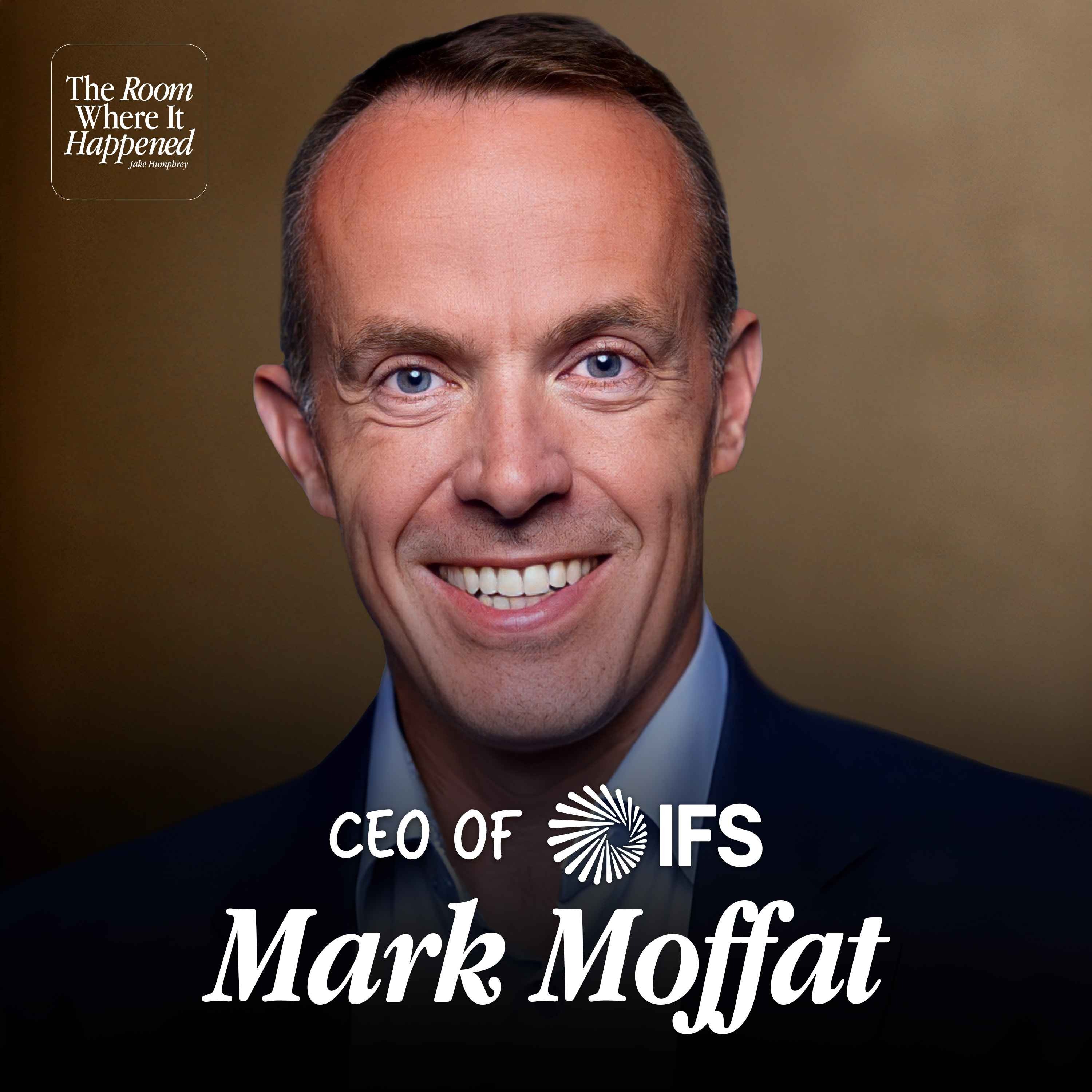
From washing dishes in a chaotic hotel kitchen at 13 to leading a global software company, Mark Moffat traces a leadership journey shaped by humility, curiosity, and learning from the ground up..
Mark opens up about his evolving relationship with AI, from early scepticism to using it practically in everyday life and high-stakes business decisions, and why industrial AI represents one of the biggest untapped opportunities of the next decade. From robots inspecting underground tunnels to helping frontline workers do safer, better work, he outlines a future where curiosity beats fear and people who learn to use AI outperform those who don’t.
This is a conversation about first-principles leadership, staying close to customers as you scale, and why the mindset that took someone from kitchen porter to CEO might be the same one needed to build the next $100bn business.
IFS - award-winning Asset & Service Management software
👉 Reimagine your operations at:
https://highpfrmc.com/RWIH-IFS-au
Hosted on Acast. See acast.com/privacy for more information.


