
 Ask ChatGPT



Host: Jake Humphrey
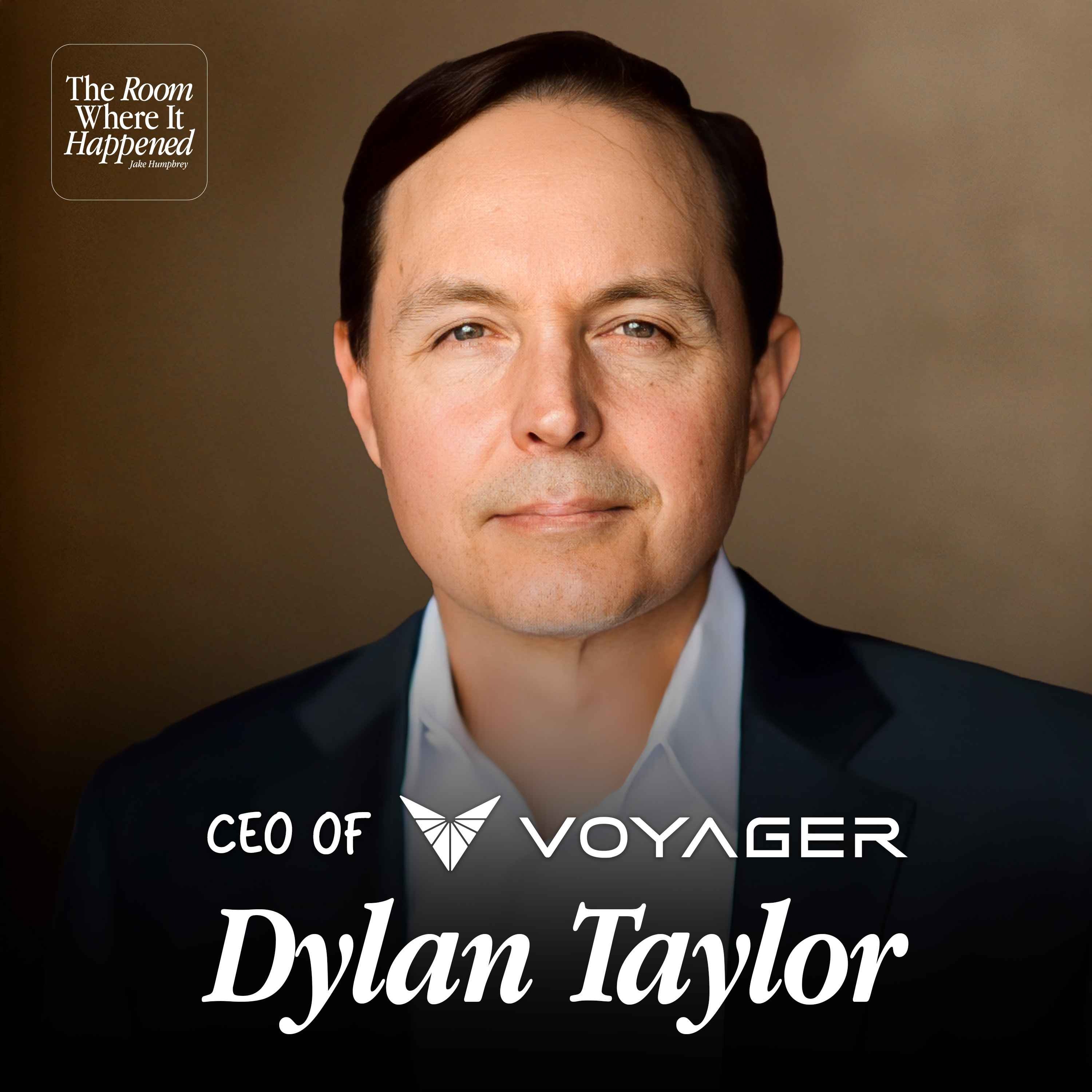
Dylan Taylor
The transformative potential of space and the motivations behind private space exploration initiatives.
Written by AI. May contain mistakes.
Dylan Taylor discusses how space can transform humanity and our perspective on Earth.
“How do we realize we're all in this together?”
Exploration of the misconceptions surrounding billionaires and their motivations for space exploration.
“and we haven't really made progress on them.”
Dylan explains the two main camps regarding human expansion into space, O'Neill's vision versus Musk's.
“The other part of this, so back to that point, data centers.”
Discussion on the technical difficulties and challenges associated with establishing a colony on Mars.
“So I like what Elon is doing there, but I think that's a 50-year, 7 ,500-year exercise.”
Insights into how space travel influences individuals and society at large, beyond financial aspects.
“or whether it's drug development in microgravity, or space-based data centers.”
Exploration of current and future applications of microgravity in healthcare and technology advances.
“I think Jeff, who I know, was impacted by his own space flight.”
Dylan discusses how space research directly benefits life on Earth, including internet and resource advancements.
“There are other really interesting things in microgravity research as well.”
Learn how Starlink satellites are transforming internet access worldwide.
“we're actually missing the point that there are tangible impacts in all of our lives already happening and it's going to accelerate hugely.”
Explore the potential for conflicts over space resources similar to Earth.
“You see, my fear is that it just becomes a kind of a space grab rather than a land grab up there.”
Understand the importance of actively shaping the future of humanity in space.
“Actually more than we could possibly even mine.”
Discuss China's rise in space exploration and its geopolitical effects.
“And I think just washing your hands and saying, you know what, humans are humans.”
Examine the balance between collaboration and competition in space efforts.
“One is, so let's talk about the International Space Station, which I think they're trying to emulate.”
Analyze the risks of territorial conflicts emerging in lunar exploration.
“But you also need the competitive, creative landscape to drive the innovation.”
Consider the possibility of global cooperation in future space ambitions.
“So I think these are all really important issues, and they're all great topics, I think, for imagining.”
Discover how space is becoming an integral part of various careers and industries.
“Talking of the Ukraine war, do you have a fear that warfare just starts happening in space?”
Learn about the revolutionary capabilities of SpaceX's Starship and its impact on space launches.
“And Starship, you know, again, credit to Elon.”
Explore the ambitious plans for Starlab and its international partnerships to enhance space research.
“And the ambition for Starlab is to be an all-encompassing place where multiple countries are involved, and it does the opposite of kind of create tension and division.”
Discuss how Donald Trump's presidency has affected the commercial space sector and innovation.
“We can't talk about a U.S.-based business with a U.S.-based businessman without talking about your president.”
Get insights on the current state and future of commercial space travel for civilians.
“There's a good message there for people who are operating with old ways of thinking, right?”
Understand the motivational role of space exploration in inspiring global unity and hope.
“You go up into space, you come back down, and you land.”
Learn how current space advancements are influencing technology and everyday life on Earth.
“There are things that unite us, but I think space is the great unifier.”

Get the gist, explore an idea or ask about something said.
 Claude
On High Performance Business, what are the key points of this episode?
Searching your listeningAutomatic transcript. May contain errors.
0:02Why are billionaires obsessed with space? Welcome to The Room Where It Happened with Dylan Taylor. He's a man at the centre of the space race, and he's about to explain to you why we've got the conversation about space completely wrong. Here's the truth with Dylan Taylor on The Room Where It Happened.
0:22Well, Dylan, welcome to the show. Thank you. As we were walking in to talk, you said, space is the place. Space is the place. What do you mean by that? It's the next big thing for humanity. I mean, I'm in this camp that says space really is a tool for transformation. It's the way we can reimagine what humanity can be. And if I look at all the problems we have here on Earth, it's not escape from Earth. It's how do we gain a new perspective? How do we realize we're all in this together? And how do we reimagine what's possible? So I think there's a misconception then because every time I hear people talk about space, they talk about, oh, why are these billionaires so desperate to show off their wealth by sending rockets up into space?
1:02But actually, they're reading this then completely wrong. If you think that space is a place that can be transformational for the human race, it isn't just about going up to space to look at the view. No, it's not. No, I think there's a lot of different ways to look at it. So one is reimagining what humanity can be, right? And if you think about a blank canvas, the best blank canvas I know is space because it projects the best of humanity. If you look at Tim Peake or a professional astronaut, this is the best, typically, of a society, whether it's the best collaborator, the best scientist, the best professional explorer, right?
1:41So think of space as the best that humanity has to offer. So I think that's one element of it. The second element, and we can talk more about this, is all the science happening in space that benefits Earth, whether that's perfect crystal growth or biopharma drug development. The cancer drug Catruda was developed on the International Space Station. And there's a lot of reasons why microgravity is a magic laboratory in terms of developing things that you can't develop under gravity. So that's the second thing. And then the third thing is just this notion that we have a lot of intractable problems here on Earth and we haven't really made progress on them.
2:17And one notion would be maybe we're not having the right perspective. Maybe we're not looking at it with a wide enough lens. And you can't zoom out much further than Earth. And, you know, having the privilege of being out there myself and seeing the Earth from space, I can tell you it totally changes the way you see the world. You know, like when you're a little kid and you say, I'm going to draw space, and it normally is a star and a moon and a rocket, right? Right. When you lay your head on the pillow at night and dream about space in a few decades' time, what do you see? So there's a couple of different ways to think about it.
2:48One is based upon a guy named Gerard K. O 'Neill. and the other is based upon a guy named Elon Musk, who you might have heard of. I think they're complementary visions, but let me lay them out, because Jeff Bezos, for example, is in the O 'Neill camp. The O 'Neill camp says we live in a gravity well, Earth, and as we get out of that gravity well with a rocket, the natural thing to do would be to put infrastructure in stable orbits. They're called Lagrangian points. One Lagrangian point is where the James Webb telescope lives, about a million miles from the Earth. But the point is, it's an orbit that doesn't degrade.
3:26So think of an orbit between the moon, the sun, and the Earth. And it's sort of permanently getting tugged in each direction so it remains in place. So imagine all the heavy industry on Earth, all the polluting industry, all the things that we do here that pollute the Earth or change climate, all those things. Imagine getting that heavy industry off the Earth and putting it in these Lagrangian points and making the Earth essentially a national park or a Shangri-La, an oasis, a utopia, at least physically a utopia. So that's the O 'Neill camp. I subscribe to that. And I think we have the ability now that we have heavy lift rocketry that's reliable and inexpensive.
4:12And with Starship, that's SpaceX's new rocket coming online, I think this will become a reality. So infrastructure on the moon, infrastructure on Lagrangian points, less heavy industry on the Earth, and more of a utopia, more of a national park here. How far in the future? In our lifetimes, 20 years or less, in my opinion, this will happen. The other part of this, so back to that point, data centers. Data centers are sucking a lot of water, a lot of energy. Elon's talking about putting data centers in space. So that's an example of getting industry off Earth but benefiting life here on Earth. The other camp, which is really best exemplified by Elon, is we need a backup plan to Earth.
4:57We need to diversify consciousness. So we get out of this gravity well, which is Earth, and we go back in another gravity well. which is, in this case, Mars, and we build infrastructure there so that it's self-sustaining, so that if something happens on Earth, you have humanity and consciousness on another planet. The moon is not sufficiently diversified from Earth. Think of the Earth and the moon as the same planetary system. So those are the two big camps. And I subscribe to a little bit of both. I'm probably more of an O 'Neillian like Jeff is. But I think Elon has a point, which is we also need consciousness self-sustaining on another planet as well.
5:41And what is it about the Mars idea that you seem less sold on? Well, one notion is if you spend all the energy to get out of gravity well, why go back in another gravity well, right? That's point one. And point two is technically, it's extremely difficult. Just to give you a sense, you know, I'll talk in kilometers because I think it's easier. The International Space Station is at 400 kilometers above the Earth. The moon is at 400 ,000 kilometers above the Earth. The first Lagrangian point that I mentioned earlier where James Webb Telescope is, is at 1.4 million kilometers from Earth, round numbers.
6:25Mars at its closest approach is 65 million kilometers away. So the degree of difficulty to get all this infrastructure to Mars, to put it back in a gravity well, because it has its own gravity, it's a planet, then to terraform Mars, because until you do that, you have to live in tunnels underneath the surface because of radiation. So it's a much bigger challenge. So I like what Elon is doing there, but I think that's a 50-year, 7 ,500-year exercise. I think the risk would be, and the counterargument is it's escape from Earth, and all the rich people leave, and all the people who don't have the resources stay.
7:10I think it's going to be the opposite. I think it's going to be the people in space are going to be—it's going to be—I was in Antarctica last week. Here we are, you know, Scott was down there in 1911, right? Sadly passed away, but he was down there in 1911. Here we are in, you know, 2026, and there's still only, you know, 4 ,000 or 5 ,000 people living down there, right? And other than the nice resorts, it's a pretty rugged place to be. So I think you're still going to have this kind of pioneering notion. But because we have Antarctica, we can do climate science. For example, there's a neutrino experiment down there that I had the privilege of touring.
7:52And that's benefiting life here on Earth because we're learning about the origins of the universe. So I see space as a similar thing where it's going to be the real pioneers, the people living and working on the moon are not going to be staying at the Four Seasons or the Peninsula Hotel or the equivalent. But they're going to be doing their duty to do things that benefit here, life here on Earth. whether it's fusion power that we can beam back to Earth, or whether it's drug development in microgravity, or space-based data centers. Because we have unlimited power in space, right? Well, because of solar?
8:28Because of solar. Yeah, it's always on. It's always on. No cloud cover. And by the way, when you're up there, the sun is white, of course, because there's no atmosphere. So it's our atmosphere that makes the sun look yellow. Yeah, indeed. So when you look at the sun up there, it's white. It's a star. Yeah, I know. So the Bezos' and the Musks of this world who are generating a lot of the headlines around this, are they involved in this because it's a transcendent experience or because it's a financial experience, do you think? I think their motives are pure in the sense that they mean what they say.
9:03I think Elon is very focused on diversifying consciousness, and he is a Mars guy. I believe that sincerely. Clearly, he's also the wealthiest person in the world. So that's had benefits as well. And by the way, he's starting to lap everybody else. Is that right? Well, I think so. I think last I saw, he was at 500 billion pounds or something. I mean, something crazy. But I think Elon's sincere about that. I think Jeff, who I know, was impacted by his own space flight. And that's when you saw him really donate to a lot of these Earth-based causes. So I think he's very sincere about that as well.
9:43So yeah, I think it's interesting. There have been roughly 700 people who have been to space since the history of civilization. And I've had the privilege of meeting quite a few of them. And I would tell you whether it's male, female, Russian, Korean, Japanese, American, English, fighter pilot, hardcore, artistic, autistic, spiritual, atheist, all of them have been impacted by spaceflight to a person. And it seems to be a universal cognitive shift. I'd love you to go a little bit deeper on the things that are happening right now while you and I are having this conversation that will change our lives in the short term.
10:29Yeah. So this is going to sound like science fiction, but this is actually happening. In microgravity, because microgravity exists because you're in perpetual free fall around the Earth. And they call it microgravity because there's a little bit of gravity, but not much. Think of it as a magic laboratory. If you want to print a human organ, you can't do that here on Earth. Because essentially you're depositing biological material, and the biological substrate doesn't have a chance to set up, right? So it'll collapse under its own weight. Right. So you can print an organ or a meniscus or a kidney in space.
11:05Now? Yes. You can absolutely do that. In fact, they've printed human meniscuses in space and brought them back down to Earth. But not put them into a human? No, but they've done animal trials. Right. So it's actually very close at this point. And it worked. And it does work because these are biologically identical to something you can do on Earth. Protein folding and drug formulation. So one of the challenges with human drugs is getting the right formulation. So formulation has to do with efficacy and whether it works or not. You can actually work all that out much better in microgravity than you can here on Earth.
11:44So the cancer drug, Keytruda, which is a breakthrough drug being marketed today and utilized today, was developed in large part on the International Space Station. And that formulation was worked out with microgravity. So imagine a world not too far in the future where you need a new organ. And you don't want an organ from another human because it could be rejected, right? But you can take stem cells from your body. You can actually go to a commercial space station in the future, have those stem cells manipulated, have your organ printed on the station, have that organ be brought back down to Earth, inserted in your body, and it's biologically identical to your biology.
12:30So there's no chance of rejection. And that is something that is feasible today. we need to work out the scale and the you know the the details of it but scientifically and biologically this is something we can do today it already permeates every single thing that you do every business plan that's been created in silicon valley or in london the last 20 years has been based upon space-based technology ultimately being enabled by it so so that's already there right and you know tv telecommunications streaming all that stuff i think in the future what they can expect is additional breakthroughs so when i say breakthroughs i'm talking about true breakthroughs whether it's drug development organ printing like everyone's going to need a new organ right depending on you know how longevity research goes so that literally applies to every human being on Earth.
13:28So things like that. There are other really interesting things in microgravity research as well. They're just being explored because we haven't had the lab space. The International Space Station is constrained. Astronaut time's at a premium. Space-based manufacturing is a thing. Optical fiber being printed in space or extruded in space, that's a thousand times more efficient than anything you can make here on Earth. That has direct applicability to the speed of the internet and things like that. So every time we see these rockets taking off and we sort of tut and shake our heads because it's another billion pounds that's been sent up into space, we're actually missing the point that there are tangible impacts in all of our lives already happening and it's going to accelerate hugely.
14:13Indeed. Thanks to these rockets taking off. Yes. I mean, and a lot of them are carrying Starlink satellites. Yeah. And Starlink satellites are changing the world because a lot of parts of Africa and elsewhere where they have no internet at all are being enabled. I was in Antarctica, like we talked about, in a camp deep in the interior, all the way ultimately to the South Pole, and we had internet access thanks to Starlink. So yeah, I think whether it's internet-based data services or whether it's research or whether it's resource mining, data centers in space, which we talked about, these are all things that benefit life here on Earth.
14:50There's probably a pretty compelling argument that the war in Ukraine has looked different as well because of Starlink, right? Indeed. Yeah, that's my understanding, is that their comms would not be up without Starlink. That's what I understand to be true. Yeah, and you can imagine how that war would look for Ukraine if they weren't able to communicate. Right. Well, you lose. Yeah, without comms, you can't fight a war. That's for sure. You see, my fear is that it just becomes a kind of a space grab rather than a land grab up there. And as soon as someone discovers the latest precious metal or a certain something floating around in the atmosphere up there that is of a limited resource, we just do exactly what we've done here on Earth and we fight over it, right?
15:32Is that not the end game, really? It's possible. I'd like to think we are wiser than that now. Well, I'm not sure. We're rowing over Greenland while we record this conversation. That's a true story. But again, Greenland is a finite resource. So if I think about rare earth minerals as an example, there are many of those on the moon. Yeah. Actually more than we could possibly even mine. So if we were able to mine the moon for neodymium, then take that one off the list in terms of what we fight about here on Earth. That's one example. So, but I do think, you know, here's another way I think about it, and this is what motivates me every day I get out of bed.
16:21Space is going to happen whether we want it to or not. And so, do you want it to happen to you and just say, you know, people are who they are, human nature is what it is, and I'm just going to sit back and watch the movie? Or do you want to help shape it? And I think if the right people help shape it, you know, and here's a thought experiment that I like to post. I say to people, the future of humanity in space will be resolved by the answer to a single question. What will happen first? The first human born in space or the first combat fatality in space? And the answer to that question, I think, very much will shape our future.
17:00And I very much hope it's the former, and I'm working to make sure it's the former. But our history, you know, our future is not yet history, right? We haven't written it yet. So again, I think part of these conversations are important because people can help shape this. And I think just washing your hands and saying, you know what, humans are humans. You know, it's going to be a dog's breakfast and there's nothing we can do about it. I'm not in that camp. And Donald Trump has reduced the budget that NASA has, which is why private businesses are stepping forward and doing a lot of this frontier work.
17:34What's happening in China? Are they funding their own attempts to do the same thing? They are. Yeah, China is investing very heavily in space. And I would say it is astonishing what China is able to have done in the last 10 years in terms of catching up to the U.S. and other Western powers. So I think it's amazing what they've done. Their technology is, you know, just maybe one hair below what the U.S. and Western technology is. Now, a lot of that technology is ours that they've repurposed, of course, as they're famous for doing. But they're investing very heavily in space. And is there a risk, do you think, if China is the country that wins this race?
18:20I think geopolitically there's a risk. I think there's a lot of soft power associated with space. I think there's a lot of countries that are on the fence. You know, should I be—you know, think of it as two different ecosystems, like Apple and Android. You know, the Chinese ecosystem and the Western-led ecosystem. There are a lot of countries that haven't chosen whether they want an iPhone or an Android. So I think there's that risk. That being said, space has been a great collaborator. So on the International Space Station today, we have the Europeans, the UK, Canada, US, Japan, and Russia. And Russia, yeah.
19:00Russia. And Russia has been a great collaborator on the ISS. Now, in everyday experience, of course, there's lots of tension, but space seems to be above the fray in a lot of respects. What's the name of China's space station? Chiang Gong. Chiang Gong. And what does Chang 'e-gong allow China to now do that they perhaps weren't able to do previously? Well, I think a couple things. One is, so let's talk about the International Space Station, which I think they're trying to emulate. One is the science, so having scientific research. The second is the ability to have an outpost where you're viewing the space or the Earth from space, and you can make decisions based upon that.
19:41But the third, which is probably the most important, is an expression of soft power, right? And this is why it's really important that with this next generation of commercial space stations, that we make these global efforts. That India, that the Gulf states, that South America, that Brazil, all these new space-faring nations gravitate towards the Western platform. I think it's really, really important. So just to give you an idea, I believe there's roughly 75 space agencies in the world today. 20 years ago, it might have been 15 or 20. So, you know, we have Apple, we have Android, but there's a big middle that hasn't chosen which side they're going to go to.
20:27So I think that's the opportunity it provides the Chinese is to attract these countries that are on the fence to come over to their way of doing things. And on the subject of China, is there maybe an argument that the weakness of the Western approach is that it is trying to be collaborative? Yeah. And as we both know, when you're trying to involve lots of different parties, everything gets slowed down. Yeah. Yeah, I think short answer is yes, there can be some risks there. So, for example, with China and the central planning, they can determine we're focusing on the moon. We're building a space station.
21:02That's what we're doing. Everyone's going to fall in line. Whereas maybe in the Western, maybe the Europeans and Americans don't agree necessarily on whether a space station is important or whether the moon is important. So I think there are risks to that, and there's definitely, I think, more acceleration under the Chinese model. However, what you sacrifice is the innovation and creativity that comes from having all these different vectors on the Western side that might not be perfectly aligned. And so what I would worry about for China and other models like that is, because they're getting, frankly, a lot of their innovation from us, right, by virtue of just copy-pasting what we're doing.
21:43I think without that innovation, I'm not sure they would have the capability to execute on their plans. So you need both. You need someone to make a decision, and you need a clear path. But you also need the competitive, creative landscape to drive the innovation. Because without the innovation, none of it happens. We wouldn't have reusable rocketry without the commercial markets, without Elon. So I think there's pros and cons to both systems. I think the risk on kind of the Western-led system, I'll just take the U.S., for example. Maybe one president is focused on the moon. The next president is focused on Mars.
22:27Well, these are four, five, 10, 15-year projects, so you can't really have the whiplash. You need the consistency. So it's a fair point that China might have a slight advantage with the central planning, but they don't have the innovation and creativity that we have. I don't know what the benefit would be to this, But is there a fear that we talk about a return to the moon, that it's actually a race to the moon? And you know the famous image of the U.S. flag getting put on that moon rock? Would there be people in other parts of the world that think, let's get the flag in and that moon is ours?
22:59Yeah, yeah, you know, for sure. Well, China, that's exactly what's happening. China's trying to beat the U.S. back to the moon. And when I say the U.S., I really mean the Western space programs. To own the moon? To control it? To prevent others getting there? So there is a treaty, space resource treaty. They never get broken. Well, I was going to say China's not a signatory to that. So part of this is, you probably played king of the mountain as a kid. So part of it is like, okay, well, it's your mountain until someone knocks you off the mountain. All that being said, the moon is a big planetary body.
23:36So even if you planted a flag and say, we own the moon, it's not, how are you going to, you can't put a fence around it, right? So I think these are all really important issues, and they're all great topics, I think, for imagining. But I don't see a moon-based conflict in the near term. I don't see that. So do you ever see a day where Russia and China and the U.S. and Europe and any other country that wants to be part of this conversation all come together and say, listen, instead of you building over here pretty much 99 % the same as the thing we're building over here, and you spending billions, if not trillions, and us spending billions, if not trillions, up there we don't need to fight over things, as you've said, Dylan.
24:15So let's now agree not to do this individually. Let's do this as a planet rather than as a bunch of nations, which, by the way, we've just created ourselves anyway, right? It's a human construct. Indeed. Well, I think that's the vision of Star Trek, right? That's the Star Trek Federation, if you will. I don't think that'll happen anytime soon. But what I do think will happen is you'll have these two different ecosystems. I like to think the Western-led one will be larger than the other. And I think they will coexist. That's what I think the most likely near-term scenario is. And then maybe further down the road, there'll be some event that has to unify those two operating platforms, for lack of a better analogy.
24:58This is incredible. Talking of the Ukraine war, do you have a fear that warfare just starts happening in space? I do. I do. And it's back to that combat fatality question I posed earlier. You know, the U.S. now has a space force, which I had mixed feelings about. But, you know, we now have a military position in space. Now, that wasn't done in a vacuum. That was done in response to things like what China has done. What have they done? All their astronauts are active duty military, every single one. And their posture has been very militaristic. I mean, that's just the bottom line. And so I do worry about it.
25:44You know, when you think about warfare, which I don't know much about, but I've read Sun Tzu and I've read, you know, Napoleon. Space is the ultimate high ground, right? That much we know. And so I think from a military standpoint, it's important that if you're a superpower, that you have a space-based capability. So I think it's a real risk. And the thought at the moment is a lot of this is about what happens away from Earth. Can we go to Mars and live? So my little kids, who I've already mentioned, you know, not even teenagers yet, how should they be viewing space? Because traditionally, as a little kid, you're here and space is up there.
26:18Yeah. Feels like that's changing. I like this idea, and preview it with them when you talk to them, please, that space is an eighth, it's the eighth continent. Because a lot of people think about the space industry. You know, we don't talk about the China industry. We don't talk about the UK industry. It's like, these are domains, right? And so, and the thing I like to tell young people is, whatever your passion is, if you're a passionate cook, if you're a passionate artist, if you're a passionate writer, if you're a programmer, if you're a data scientist, it doesn't matter what it is. All of those careers will have a space component to it.
26:55And so I would get them to imagine that. And I would also tell them, okay, imagine, you know, we're at a place, I don't know if you go to Scotland or where you go on weekends, but you're in the countryside, you're sitting on the porch, and you're looking at the moon, and there are lights on the moon. And there are lights on the moon because there are humans living and working on the moon. I think that's a pretty brilliant thing to imagine. How many years do you think it will be until you can look up and see lights on the moon because there's humans living and working there? 2035. Nine years. No.
27:28True story. And that's based on facts, knowledge? I mean, we're going back to the moon, we meaning humanity. The Chinese are going back, we're going back, the US is, with the Europeans' help. And we're going back to stay, which means there's going to be a moon base. And if there's a moon base, there's going to be lights. Oh, my God, that's going to change the way the world looks forever. Well, that's just it. Every night, I'm going to see people. Well, that's my point. My point is, this is right around the corner, and I don't think people fully appreciate this is happening, right? And Starship, you know, again, credit to Elon.
28:04Starship, the next generation heavy rocket that is being built or has been built, is really a game changer. Because it's not only the amount of mass that you can lift to orbit. but it's the cadence by which you can launch. So today, not Starship, the previous generation of SpaceX rocket, which is the Falcon, is launching every 48 hours. Every 48 hours. That is astonishing. SpaceX sent more satellites to orbit in 2025 than the history of humanity put together up to that point. So it's snowballing. And so, in fact, our space station, Starlab, will be launched to space in one launch. The entire thing, 60 metric tons, will be launched to space, 2029.
28:54And do you want to go? I'd love to go. I would love to go. We'll do a reprisal of this podcast in 2029 up there. That's a deal. That's a deal. There can't be many people that would say no to the offer of going up to space. Well, some people need a hall pass from their significant other. I mean, I need one for my wife to go. But, yeah. It's noble work. Well, thank you. I think it is, too. And the ambition for Starlab is to be an all-encompassing place where multiple countries are involved, and it does the opposite of kind of create tension and division. Indeed, indeed. And, in fact, so it's called Starlab because it's focused on the lab and research component.
29:38And it has 100 % of the research capacity of the International Space Station. So think of that. But then the partners we brought in, because we formed a separate joint venture, Airbus, representing Europe, including the UK for that matter, because they're huge in the UK, as you know. Mitsubishi, representing Japan. There's a company, largest aerospace company in Canada called MDA. They're involved. And then we have other companies that your viewers have probably heard of, including Palantir and others that are involved. So the idea is recreating that dynamic nature of the International Space Station, but doing it in the commercial markets.
30:15So that's the idea. And then, of course, we'll have much more diversity of use by other spacefaring nations, including Eastern Europe, South America, and elsewhere. We can't talk about a U.S.-based business with a U.S.-based businessman without talking about your president. Yeah. Is Donald Trump good or bad for your dreams for space? I think Trump is an agitator in a positive sense, and here's what I mean by that. He is challenging the government model. You mentioned the budget. He's challenging the status quo. And he's saying, why does the budget need to be what it is? Why are we slow? Why are we bureaucratic?
30:59So that's the agitation part. In response, my answer, and the answer of many, is you need to tap the commercial markets more. Be more reliant on commercial companies. So in that sense, he's very positive for companies that can react in an entrepreneurial way. Now, if you're an old, stodgy, large company that's been around forever on the gravy train, maybe it's not great for you because maybe it's hard for you to change. But if you're an up-and-comer, if you're a technologically-based company that is highly entrepreneurial, it's actually quite good. So I would say, all told, it's positive for the new guard, and it's probably not as good for the old guard.
31:45Okay. There's a good message there for people who are operating with old ways of thinking, right? And that's true of a lot of industries, right? Yeah. And then someday this new guard that's disrupting space will become the old guard and the cycle will repeat. That's the nature of industries. And for people who heard your very kind offer to take me to space in 2029. That's right. At a small price. It's not legally, but yeah, exactly. Small. We might have different views on what small looks like, but we can talk. For people that do have this dream and in their lifetime they want regular commercial space travel.
32:19Yeah. It feels like such a different topic to the one that we've been talking about. It feels like the drivers and the reasoning for that is so different to the things that you've mentioned. Maybe it isn't, but what does that look like now? What is the latest news in terms of regular space travel, purely for the fun of seeing Earth from up there? Well, suborbital flights are happening now on Blue Origin. Virgin Galactic has paused for the time being, but I think it's my understanding they intend to restart here soon. Blue Origin, I think, is going to continue to scale. I wouldn't be surprised if they add a second launch site somewhere in Europe or the Middle East.
32:56So I think those flights will continue to increase, which means if the flights increase, the prices should come down. They're still very, very expensive. What is the cost at the moment? It's all subject to NDA, but it's extremely expensive. In the millions or hundreds of thousands? It's reported to be in the millions, which I can't confirm or not confirm. So super expensive. So that's one element of it. But then you have orbital flight. Orbital flight, and just to be clear, suborbital, you have enough energy to get to space, but not stay. So you go up, you're in space, and then you fall back down.
33:32Orbital, you have enough energy to go to space and stay in space and do a complete orbit or as many orbits until you come back down. Orbital is, you know, 50 or 60 times more expensive. Much, much, much more expensive. And it also begs the question, where do you go, right? And today, basically, the only place to go is the International Space Station. In the future, you'll be able to go to the moon, perhaps, and not only go to the moon and back, but maybe land on the moon. So all of those flights, I think, will be opening up over time. But I think, you know, suborbital is increasing. Orbital will increase.
34:10The prices will come down. And then the last thing, which people should be super excited about, is this notion that with an orbital rocket that can reland, like Starship, why not be able to go from London to Sydney via rocket in 20 minutes? You go up into space, you come back down, and you land. So think about point-to-point rocketry. And you get your astronaut wings, you see the Earth from space. Maybe you have enough time for a Coke Zero or something like that or a gin and tonic. And then 20 minutes later, you're in Sydney having lunch. London to Sydney in 20 minutes. 20 minutes for the price of a business class ticket.
34:53Who can say no? The Earth gets smaller and space gets bigger. That's right. I love this blue sky thinking, though, because if you don't think of it, it never happens, right? That's right. Someone needs to think about that. And what's the driver for you? Why does this excite you so much? You know, it's my life's work. It's my life's passion. I mean, if you believe that space is a tool for transformation, that it's the next big thing for humanity, that it's the way for us to reimagine what's possible, if you believe that, which I really believe strongly, then my motivation is how do we build the infrastructure to make sure that that is accelerated?
35:32And so I jump out of bed every morning because I feel like I'm doing the most important work in the world. This is also the first time I've ever had a conversation about what's happening with this space race and felt excited. Yeah, well, good. Because people don't know these things. Indeed. What was the third reason why we need to pay attention? Well, I think, again, it's this notion of projecting the best of us. So space, to me, if you look at motivation, human motivation, hope, excitement, Things like STEM education. You know, if you talk to a lot of Gen Alpha people today, they're very dystopian.
36:10If you look at the art, if you look at the books, if you look at the movies, it's very dystopian. It's very, the future is bleak. The future is evil. It's dark. It's depressing. And space is really an antidote for that because a lot of people get excited about space. They see a rocket launch, which is a bit of a spiritual experience. You can feel the thunder, you know, the rocket against your body. You can see the arc in the sky. So these are the kinds of things. And, you know, sovereign astronauts. You have Saudi Arabia, UAE, Poland, other countries minting new sovereign astronauts. Why are they doing that?
36:50Because they're celebrities. They're people who can get people excited. You know, I had the honor of forming a nonprofit called Space for Humanity. We send humans to space. We pay for them to go to space in return for them coming back and doing something to benefit life here on Earth. And the beauty there is, for example, we sent the first Mexican-born female to space. So rather than someone like me going to Mexico and saying space is this tool for transformation, it's a young Mexican woman saying that. And now she has a STEM education center that the Mexican president has formed named after her.
37:27She's on the cover of Vogue magazine. She has her own Barbie doll. She is an influencer on Instagram and YouTube. And she's inspiring young women, and boys for that matter, in Mexico to aspire to space and STEM education. So that's an example. So I think space as this kind of motivator and this beacon of hope, I think it's really, really, really important. And there are very few things in the world today that people can get excited about. maybe sport and other things. There are things that unite us, but I think space is the great unifier. Great. Well, I look forward to traveling on one of your special jets at some point to Sydney as well.
38:06I'm sure you've got that in the planet. It's in the cards. Let's do it. I love that conversation. I just think it's challenging people to think about the world and what's beyond it in a different way. So thank you. Thank you. Great being with you. Good man. Thank you very much. Cheers. I loved it. That was so interesting, yeah. I think that conversation, from my perspective, is a reminder that so often we get confused by the way that things are reported and it changes the way we think about them. So actually, every time Jeff Bezos or Elon Musk does something big regarding space, it's all over the news and therefore we think it's just a billionaire's playground.
38:38But then you hear Dylan sit here and he talks about the fact that China are racing against Western countries to be the first to get back to the moon. We have a conversation that there are things happening right now on Earth today that have been created in space that couldn't be created on Earth. And if we think about this as something in the future, we're totally wrong because every time you pick up your phone, every time you ask AI to do something, every time you create something technologically, it's happening up in space and then being fed to us down here on Earth. This is not something that's going to happen in our future.
39:08This is something that's happening right now and I think we all have a duty to be educated about it. It's going to be fascinating. That was Dylan's take. I'd love to know yours. Hit me up in the comments.
39:25Thank you.
How does a passion for space transform into a mission to reshape humanity’s future? For Dylan Taylor, it started with a transcendent experience in orbit, a realization that space could be a powerful tool for solving Earth’s most pressing problems, and a commitment to making space accessible to all.
In this episode, Dylan Taylor takes us through the journey that led him to found Space for Humanity. From his life-changing personal space flight to his drive to send people to space and empower them to bring back life-changing insights, he reveals the pivotal moments, bold decisions, and game-changing ideas that are accelerating humanity’s transformation through space.
Dylan also discusses the breakthroughs happening now, from cancer treatments to microgravity innovations, and how space is no longer just a futuristic fantasy but a tool for real-world change.
It’s a conversation about vision, purpose, and the radical shift in perspective that space offers.
IFS - award-winning Asset & Service Management software
👉 Reimagine your operations at: https://highpfrmc.com/rwih-ifs-yt
Hosted on Acast. See acast.com/privacy for more information.


