
 Ask ChatGPT



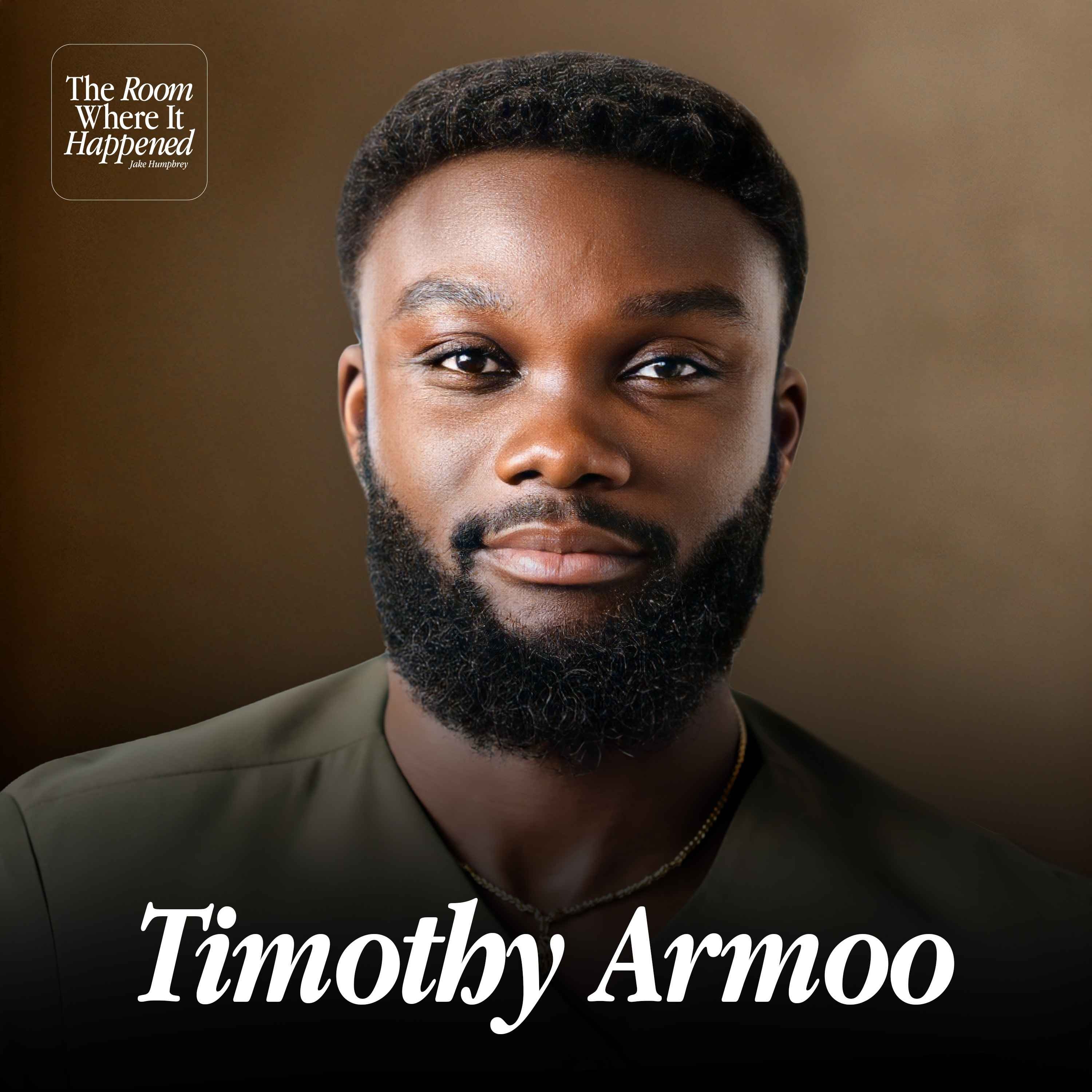
Host: Jake Humphrey
The podcast explores defining moments that have shaped the careers of industry leaders and entrepreneurs, providing insights into their pivotal decisions and the lessons learned.
Written by AI. May contain mistakes.
Tim Armoo discusses the abundance of opportunities but highlights the distractions that prevent Gen Z from building real wealth.
“is because now like with AI, social media, actually, if you wanted to start that 10 grand a month business, 20 grand a month business, there are so many options, so many options.”
Tim shares the three essential questions to ask when starting a business in today's climate.
“So I think to start any successful business, you basically need to answer three questions.”
Discussion on how Gen Z struggles with too many choices, leading to indecision and purposeless content.
“And if all you have is the effort, then time is the only constraint.”
Tim critiques conventional views on property as a wealth-building strategy, advocating for skill acquisition and business leverage instead.
“So are we talking here about intentionality, right?”
Explore the misconception that property is the best path to wealth.
“It's funny because I think that the story that property is a way to build wealth is a lie.”
Learn why investing in personal skills can be more beneficial than real estate.
“So they're not making the money from the property, they're making it from the business behind it.”
Understand the advantages of gaining experience through mentorship over formal education.
“If I was 18 now, I would not go to university.”
Discover how working under experienced entrepreneurs can accelerate your learning.
“the time with them, whether you learn everything you need to learn or not, at least you know that what you're actually getting is the truth rather than just a sales pitch.”
Examine the trend of personal branding and its implications for entrepreneurs.
“That seems to be the prime objective is to build your personal brand rather than build your skill set.”
Discuss how ego can hinder growth and the importance of focusing on genuine value.
“the founder of Heightz, is busy building his personal brand on LinkedIn and Instagram.”
Learn about the significance of personal branding for entrepreneurs and the concept of niche fame.
“But I guess the question that people have to ask themselves before they start on this personal brand journey is, if someone's going to invest in you, the personal brand has to tell them who you are.”
Explore the tools and techniques for personal success as presented in the guest's book.
“I want to delve into some of the interesting stuff from your book.”
Understand the concept of 'doing it scared' and the importance of consistent execution in business.
“you know, you pick up frameworks, tools, techniques, But one of the things and why I made the first chapter was audit the story that you tell yourself because that forms the foundation of everything.”
Learn how consistent effort over time leads to success and the importance of taking initiative without needing permission.
“and just doing those simple things, following up, sending their proposals.”
Discover why you don't need to be a genius to succeed and that consistent effort is what truly counts.
“Dude, I started an influencer marketing agency.”

Get the gist, explore an idea or ask about something said.
 Claude
On High Performance Business, what are the key points of this episode?
Searching your listeningAutomatic transcript. May contain errors.
0:02Why are Gen Z not the people who are going to build the businesses of tomorrow? It's time to find out with Tim Armoo, a man who built, scaled and sold multiple businesses before he was 30 years old. And today, we welcome him to the room where it happened. Tim, welcome to the show. What's up? Let's roll. Let's do that. I see so many messages every time I open up my social media accounts or I go on YouTube. People telling Gen Z, you can build whatever you want, the opportunities for you to be wealthy and successful are endless. Is that the truth? All right, so we're going in strong. I think the opportunities now are abundant to create some kind of income.
0:42Whether it's to build real wealth, I don't think so. The reason why it's very simple is because now like with AI, social media, actually, if you wanted to start that 10 grand a month business, 20 grand a month business, there are so many options, so many options. But the problem is there are also so many distractions. So what you have is you have a lot of Gen Z who are like, oh, I'm going to do this drop shipping thing. And then they make, you know, 20 grand a month from that. And then they go on Twitter and they see someone else is doing a eBay store. Oh, now I'm going to do this eBay thing. Oh, there's this AI automation thing.
1:15So what happens is that people just jump from the 10K thing to the 5K thing to the 20K a month thing. And they never focus on one particular thing, which is actually going to get them to a million, which is going to build enterprise value. And that, I think, is one of the biggest crises facing the new school of entrepreneurs. There's so many ways to get, quote-unquote, side income, but there's so few ways for you to just focus, lock in, and actually build real wealth. But if people watch this and decide, okay, I'm going to focus on the thing that I'm doing at the moment, which is making me 10 grand a month, do you believe the opportunity is there to turn those businesses into genuine wealth-creating businesses for this new generation?
1:57so i think it depends on the vehicle right so for example uh if you if you have a tutoring business which is making 10 grand a month what are the odds that that business then has then becomes a huge business in the next three to five years probably not just because the vehicle is not as scalable as if you started like uh ai business if you started a ai automation business i do think the opportunity for most businesses, especially if you're able to separate your time spent into the income generated, if you're able to separate those, I think most businesses can actually hit, you know, seven figures in the first three years, like quite easily, quite easily.
2:42If you were starting out today, having not had the success you've had and the excess that you've had and the businesses that you've built, what are the first questions that you would ask yourself to try and be successful in this climate now? Ooh, it's great. So I think to start any successful business, you basically need to answer three questions. The first question is, what is the current wave? So for example, my last company, Fanbytes, one of the things in hindsight that we did quite well was we built an influencer marketing business in 2017. When influencers were on the rise and there was a wave.
3:15So we didn't actually need to be like geniuses. We just needed to pick the right wave. And I think for so many founders, wave picking is actually a skill in itself. If you can pick the right wave and surf the right wave, then you don't actually need to be a super skilled surfer or swimmer. You just need to stay on the board. And it's no surprise that with Fanbytes, when we sold in 2022, within a year, about eight different influencer companies also sold. Because we all pick the right wave. So that would be the first thing. Not what I want. It is what is the right wave? The second thing is, am I able to apply the skill set, the unique skill set that I have to that current wave?
4:00So again, if I think about Fanbytes, for example, right? I was a 21 year old. My two co-founders were 21 and 19. We are people who understood the Gen Z audience. And so if you are thinking about it now, we are picking a wave, influencer marketing, and then we're pairing it up with our unique skill set, which is we understand influencers because we watch them and we know how they work. And then the third thing is, given my current capital, can I then apply that to the business? So for example, we knew at that point that we didn't have a ton of money. So we didn't go ahead and try and build a B2B SaaS business for influencer marketing.
4:38We said, we're going to build a tech-enabled service agency business. That doesn't need a lot of money. It's just an agency business. And then we align technology on top of it. And so now, if I was thinking about how do I build a business, I'm thinking, all right, what is the right wave? Wave picking. All right, I'm going to pick something which is short in supply, high in demand. So it'd be something around AI for sure, like AI enabled services, AI automation. Then I will ask myself, what is my current skill set that I have that I can apply? So for example, if it was me right now, take away all my exits, etc.
5:13I'd say right now I understand how to do public speaking. I understand how to build funnels. I understand the world of social media marketing and how to take a stranger who doesn't know me to then go and buy something. So then I'd apply that to that wave, which is how can I basically build a service business? less again. And then the third thing is my service-based business, because let's say I don't have any money. So I would say, how can I apply my skill, which is funnel building to the world of AI businesses or AI needs? And then how can I underlie that with a service-based business? And somewhere in that would be the nexus for the business that I'd build for the next five years.
6:03podcast. Here's a show that we recommend. Michael Gargiulo stalked and slaughtered his female neighbors in LA in the 2000s until one survived.
6:15Tim Armoo: She painted a picture that you could never imagine. In a first on Mind of a Monster, we dive into a case that's still active. Did Michael's murderous rampage start in the 1990s when he was just 17? His impulsivity and his rage was starting to peak around that age. Listen to Mind of a Monster, the Hollywood Ripper, wherever you get your podcasts. Acast helps creators launch, grow, and monetize their podcasts everywhere. Acast.com.
6:51And are people doing this or are they basically derailed because there are so many opportunities, there are so many things they could do, there are so many choices they end up making no choice at all the people who are doing this are people who are saying no to shiny object syndrome in fact if we're being perfectly candid like shiny object syndrome is the biggest thief of success in today's generation break that down when you start something and then you go on twitter and you go oh crap i should be doing this other thing because this guy made a hundred thousand in a single day and then you then spend time trying to investigate that when really what you should have done was just focus on your thing.
7:32And unfortunately, and social media has been a massive, massive, massive culprit of this, is we don't understand that building anything of significance, whether it's wealth or fitness or anything like that, we don't understand that these things take a lot of time. And if all you have is the effort, then time is the only constraint. And what we end up doing is saying, oh, well, I didn't get rich after two months Because that random guy on twitter who is selling me a course That random guy said he made a hundred grand in a day and i'm still stuck on two grand a month So there must be something wrong with me when really it's nothing wrong with you It's just that you just didn't let time happen.
8:17And if I think about let's say prior generations, right i'm 31 so I'm kind of like I've graduated from Gen Z but I'm at the low end of millennials one of the things that is a massive advantage that prior generations had was they didn't have enough options and that's actually a massive advantage if you don't have enough options of all the possible things you can do then you just focus on the things that you can which is why so many people made a lot of money from say real estate or property or like boring businesses because they were like, I'm a Martin. I've got a truck driving business. I know truck driving.
8:58I'm just going to do that. They don't say, I might try truck driving. Then I might do this AI automation thing. Then I might do this crypto thing. Then I might do this e-commerce thing. It's like, I don't have many options. So I'm just going to focus on the actual options that I have and just dial it. And that's a massive advantage that prior generations had that we don't. Are Gen Z spending too much time there absorbing the content rather than creating the content? Is that what's happening here? So I actually think more Gen Z are creating content because it's now easier than ever to create content.
9:28What I would say is more Gen Z are creating mindless content or rather purposeless content. So now the... So break down mindless or purposeless content for us. What would that look like? Right. So if you think about what purposeless content is, it is I want to have followers because I want to have followers. I want to just create because I want to create and now there's this bizarre ecosystem of people creating personal brands talking about how they create a personal brand and then teaching you how to create a personal brand based on the fact they create a personal brand and it's just I don't know if you've seen that spider-man meme where people are like pointing to each other it's like that's what's going on um in the world and that is what I call purposeless content because people are thinking well I just want to do the thing I don't know what the outcome is going to be Now, on the other side, I think that for myself, for example, there were a lot of things that I did.
10:25And even now, there are a lot of things that I do, which are just to have the skill. So for example, every Sunday, I spend the afternoon just working on AI tools. When AI first came out, I paid someone. I pay them$500 an hour. And I said, I just want you to sit on Zoom with me and just like show me how to build AI agents. Just like show me how to do this stuff. I don't know what I'm going to end up using it for, but at the very least, I have the skill. And so even though I talk about Gen Z creating purposeless content, I think the smart ones are those who are saying, I don't know where this content is going to go, but I want to hone my skill of creating videos, editing videos, telling stories, being able to craft narratives.
11:17And eventually, at some point, it might work. One of the really interesting things, and you would absolutely love this, there's this guy in the US who is a 17-year-old. And he's now built a$6 million a year business. And his business is basically going to people and talking to them in the street and saying, hey, what's your business idea? Blah, blah, right? He started off just doing that in school. What then ended up happening was he was getting a lot of views. And then brands will start to come to him to say, can you do this man in the street interview with our CEO, with our CMO, etc. So now brands then use him as a marketing channel.
11:53That would not have happened if he didn't hone the skill of interviewing, if he didn't hone the skill of understanding the right hooks, etc. So that is purposeful content. But what's happening is that whole ecosystem of people who are just yapping and yapping and yapping because they just want to get followers without actually any end goal behind it. So are we talking here about intentionality, right? because I have a lot of people that will speak to me because I have some media businesses and they will say, how do I do it? How do I? And my answer is always, listen, when I was 18, the only way to work in the media was to be employed by a business to work in the media.
12:30Now you can just take your phone out of your pocket. I believe the barrier to entry has never been lower. I believe the opportunities for young people have never been greater. But we've just spoken about decision paralysis. We've spoken about spending more time consuming, not creating, shiny object syndrome, comparison culture. So it almost feels like just as we've given young people the greatest technological opportunity to be creative, that same technology has removed the opportunity to be creative. Yeah, yeah. That's a good way to say it. And it's all perspective, right? Like in my book, there's this whole, the first chapter is like, we are the stories that we tell ourselves, right?
13:10And I think that actually even extends to, well, what story are you telling yourself now with the golden opportunity that we have? Are you looking at social media and saying, oh, sweet, there is more mindless content I can now consume? Or you're saying, oh, I can just create stuff and then I can build a business behind it? That's incredible. And that really is the decision that I think not only young people, but just like everyone has to make, which is, is this going to be a tool for good or is this going to be a tool for distraction? Because I just don't know if I was young, whether I would do anything.
13:44because, you know, I see people online saying that it's really easy to set up a business where you own a load of property and rent it out. Every time I go online, I see, you know, these guys sitting at a desk. Let me give you the answer. This is how you can get rich in the next six months. That's funny. Yeah. Why is that funny? It's funny because I think that the story that property is a way to build wealth is a lie. I really don't believe that anyone should be looking at property as their first business to build wealth. If you want to build wealth, you need to be able to separate the value that you get from time.
14:25Property, the biggest constraint is, I'm just going to buy this house and let time do its thing. Why on earth would you want to outsource your wealth to time? That makes no sense. If I put the same deposits and I use it to invest in myself, I use it to equip myself with skills, I use it to start a business where I have some form of leverage and I can influence the leverage, that is a way better thing. And I think all these people who, even the people who sell you these property courses, their business is selling you the property courses. And that they can influence. So they're not making the money from the property, they're making it from the business behind it.
15:03and it's shocking that people still go for this. So I've long been of the opinion that if someone is actually great at something, they don't need to sell a course telling you they're great at it. Now, is that out of date thinking by me? That's funny. So I can actually say a lot of the things that I have learned in business have come through paying for the information. If I think about it, you can either learn something by yourself, which might take time and you involve a lot of errors, or you can pay for the speed. And so if I think about things like learning how to run Facebook ads very early on, I bought a course about it.
15:41Learning how to build out teams and everything else. I actually paid someone to teach me that about how to set up org charts and all of that. You know, my last company, Fanbytes, by the time we sold the company, we're doing like eight figures in revenue in five years, a team of 80 people. And I was 27. I'm like, bro, I don't know anything about that, right? But what I did was I had people around me, some of them who I paid as mentors or as coaches, who said, oh, yeah, this is how to do the thing. And then I said, okay, yeah, cool. That sounds good. Now, I think it's down to the judgment of the customer.
16:17So if this person is someone who has actually done what they said that what they are saying, and they're effectively showing you how to do it, then I think it's actually fine. Because if you think about it, Jake, right? And this might be somewhat controversial. But you know what the most expensive course that most people would buy in their life? Is a university degree. Because you really think about what a uni degree is. It is three, four, five years paying someone to teach you about stuff. And sometimes you don't even use the stuff. 90 % of the time, you don't do the thing that you actually went to learn in university.
16:56but we go out and we say, yeah, of course, let's spend 30 grand on really this course because society said that is deemed normal. But if you say, I want to spend 500 pounds on the course about Facebook ads or a course about Infants and Marketing or a course about leadership, you go, oh, snake oil person. And there is where I think a distinction needs to be made. If you were 18 now, would you go to university? Oh, no. If I was 18 now, I would not go to university. If I was 18 now, the number one thing that I would do is I will go on LinkedIn and I will search for successful entrepreneurs and I will message them and I will say, hey, for the next year, I want to work as your right hand person.
17:42You just need to pay me a minimum wage and I will just work like a dog for you. And all I want to do is basically swap your expertise and your experience with the energy and the youth that I have. And let's make that trade. because candidly, everything that you're trying to do in life and in business has been done by someone else. And what you're doing is you're trying to accelerate the time that you can learn those things. I personally, if and when I have kids, I actually would encourage them not to go to university. Interesting. Because I think what you're saying there is be really wary of giving your time and money to someone selling an online course where you can't verify whether they're actually selling you hope or selling you the truth.
18:31Whereas if you go on LinkedIn, or if you track down people that you know are bona fide business leaders, business creators, and spend the time with them, whether you learn everything you need to learn or not, at least you know that what you're actually getting is the truth rather than just a sales pitch. Yeah, and you also have the ability to be in close proximity with people Here's a very interesting story After we sold my company, I actually went to work for someone who had sold a company for 200 million And I actually DM'd them, I said, hey, can I work with you for six months? Now on one end, you could be like, wow, that was an ego hit, right?
19:13Because I'm someone who had, you know, sold my business, I've done financially well I'm getting all the applauded from, you know, Forbes, BBC, oh my God, the most successful entrepreneur, blah, blah. And then I'm asking someone, hey, can I please work for you? It's because I realized there are levels to the game of business and I just did not have the required skillset to get to that next level. And so I, you know, even he was surprised. He was like, why? And I said, well, you know, you've bought and sold a bunch of nine figure companies. I haven't done that I want to learn how to do that And I will happily just like spend time with you I will do all the stuff that you need me to do And it worked quite well Because actually shortly after that Was when I then did another deal Which was just me as the broker Where we sold a PR agency for 19 million And it was all from the stuff that I learned from Mike And I was just like, oh, yeah Okay, that makes way more sense, you know And one of the main points, I think, is ego is really killing our generation.
20:18And by ego, it is this sense of, I want to do it myself. I can do it myself. When for so many of us, having some kind of an apprenticeship in business, having some kind of really dialing in under another person who has done the hard yards, it's such a cheat code, it's ridiculous. So I sat across from Ben Francis, right? Who we both know has created Gymshark. and I asked him where he learned his biggest lessons. And the answer was when he said, well, I'd founded the business, but I couldn't be a CEO because I didn't have the ability. So I went and worked in the processing department. I went and worked in the marketing department.
20:53I went and worked in every area of the business to learn about it. And then when I was ready, having asked someone else to be the CEO, I went back to doing it. Yet we're in a world where we are seeing people giving up the opportunity to build skills like he did and you did. and instead build a personal brand. That seems to be the prime objective is to build your personal brand rather than build your skill set. What damage is that doing to the next generation of entrepreneurs and business builders? So one thing I would say is I am not surprised at this. Because if you think about it, for centuries, if you said to anyone, you could become a celebrity, you could get the fame and the accolades, et cetera, probably 90 % of people will jump at it.
21:46The problem was before social media and before now, it was actually relatively hard because really celebrity meant being on TV. Celebrity meant having a whole infrastructure around you, being a star. And now celebrity means you have 10 ,000, 20 ,000 followers and you have a bunch of likes coming to you and that's micro fame. So I'm not surprised that now there seems to be this absolutely incredible desire now to build a personal brand. That doesn't surprise me. Now, in terms of the damage that it's doing, I'm actually going to push back on that. I think building a personal brand is actually a net positive for us.
22:31It's a net positive for people because one of the things that I talk about in my book is basically how to get lucky, right? And to me, luck is obviously a function of preparation and opportunity And if you build a personal brand What you end up having is that you are increasing your surface area of luck Because you are opening up yourself to more people knowing you And more people giving you different opportunities and different things like that And so I think a net positive building a personal brand Is a good thing as a vehicle for you to get to some end goal Where I think it's damaging Is where we are building personal brands For the sake of building personal brands That is where it gets really damaged And I think unfortunately A lot of Gen Z are seeing I have a personal brand as the end destination And not thinking Well, what does that help me do?
23:29And I see that so much Especially with these lifestyle influences Like famous for what? I'm just famous for being famous and there's where I think there's a problem. So this is interesting for me to hear because I've been confused by the desire for people to build a personal brand. You know, I know a guy I've mentioned to you, a guy called Sam Stoffel, successful businessman. He's now busy on Instagram building his personal brand. And I looked at that initially and thought, why do you want to tell the world what you're doing? I know how successful you genuinely are as a businessman and now I know you have a team of five or six people working across your socials to build your personal brand.
24:10And I've thought, why does Tim need to improve his personal brand? Because he's been successful. A friend who actually, you and I, you're responsible for me meeting this guy, Dan Murray, the founder of Heightz, is busy building his personal brand on LinkedIn and Instagram. And again, I looked at him and I thought, mate, I know how good your product is. I know that you're doing something real, so why do you need to build a personal brand? But actually what you're saying is, for Sam, for you, for Dan, building a personal brand makes sense because there's something beneath it. There's something beneath it, right?
24:44Dan, you know, Dan Heighton, he's talked about this, I think last year they did, well, 25 million a year or something, right? Now, you could say, well, a big part of it was through paid media and running the business. But Dan's personal brand also is a magnet for good talent to work for his business. It's a magnet for investment. is a magnet for what I'll call serendipity for his business, right? Similar to me. Like we are now about to launch a program which is all around helping founders to build sellable businesses. Even since I sold fan buys, the two exits that I've brokered, they have come as a result of people seeing my personal brand.
25:26And so there's a business behind it. I would actually very candidly say when I first started building a personal brand, I built it for the wrong reason. 100%. When I first started shortly after Fanbytes, I built it for the wrong reason because I personally just did it for ego. It was because, you know, I am a kid who grew up on a South London council estate. I've been through a bunch of random shit. And at 27 years old, I've achieved like financial freedom. And I'm like, cool. I want everyone to know about it. You know, I want people to stop me in the street and I want them to say, right, Timo, you're the guy.
26:11So very candidly, for maybe the first six to 12 months, I told myself it was like, you know, it makes business sense. But being super candid, it was because I wanted the applause. And then after about a year of basically getting that applause and getting all these things, I went, hang on a sec, why am I doing this? Because whether it's a team or whether it is myself obsessing over a script, why am I doing this? And so I had to go on this very deep thought and say, right, well, if I didn't have the personal brand, what would I be doing? And I went, oh, well, I'd be building businesses. I'd be working with great people to build their businesses.
26:54I'd be investing in businesses. Oh, okay. So now the personal brand acts as a magnet for me to get to that and go. Whereas beforehand it was just, yeah, we're getting a bunch of views and followers and people say that you're great. And that was kind of it. And understanding that just helped me to just be a better entrepreneur. It helped me to understand the sort of content that we're creating as well. Credit for your honesty. Thank you. I appreciate you saying that. But it's interesting, isn't it? Because in many ways that's indicative of the world we live in. if you haven't filmed it, if you haven't told people about it, if you haven't posted it, it didn't happen.
27:29And I remember actually when I worked in Formula One, we used to go to like a club and in would walk someone who's on a reality TV show or a Formula One driver or a TV presenter and standing in the queue waiting to get in is like a multi-billionaire, one of your most successful business owners. And you could see the frustration and thinking, do you guys not know what I do? But no, no one knows what you do. And that's where we've now developed this need, not just to do it, but to tell people that we do it. And actually, I totally understand you with building a personal brand now, that if you're going to stand out in a sea of people who are successful entrepreneurs, if you want people to come and invest in your business, well, how often are they investing in the business and how often are they investing in you?
28:15But I guess the question that people have to ask themselves before they start on this personal brand journey is, if someone's going to invest in you, the personal brand has to tell them who you are. Not just tell them what you do, not just feed your ego. And it also has to be truthful. And how many times have you and I seen people building personal brands and looked at it and thought, I'm going to call bullshit on that because I know the truth. Look, I think one of the most important things that we have in 2026, and I would really love your audience to take this, is there are so many opportunities now for niche fame.
28:50And actually, if you are an entrepreneur or you're someone building something, I actually think niche fame is something that is very attainable and advisable. So niche fame is, for example, you run a carpentry business and you post about your carpentry business on Instagram. And the only people who really follow you are, it's only 3 ,000 people, but they are all people who are interested in working with you and buying your products and services. That, I think, is such an underrated opportunity. Whereas what tends to happen is when people think about personal branding, they instantly think, I'm trying to maximize the number of followers or views that they have.
29:32I have a very interesting story about this. One of my friends is a vet, right? And she wanted to start a business where what she did was teach fellow vets how to set up their own vet practices. And she came to me and I said, well, why not just talk on Instagram about like the finances and the details of running a vet practice? Because the algorithm would show it to people who want to do something similar. So she started that last year, March, and she closed last year with 1.3 million. She has 2 ,700 followers. But every one of those 2 ,700 followers are fellow vets who want to build a vet clinic and say, oh, Rachel, you know how to do it.
30:28Let me just pay you to help me do that. Rachel could be walking in Sainsbury's right now. You would not know who she is, but a small group of people know who she is and they know, like, and trust her. This year, she'll easily do 5 million or so in two years. And just because she optimised for that niche thing rather than broad thing. Vital information. So if people are watching this and they're thinking of going on their own business journey or maybe they're on it, but they don't have a personal brand, don't think of a personal brand as how famous can I become for being a random person? How deep can I go with the niche that works for me and works for my business?
31:06Yeah. I want to delve into some of the interesting stuff from your book. Because what I love about your book is that I see so many business books, life books that talk about hacks and they talk about skills and they talk about knowledge and they talk about putting things into practice. And when I start to read them, I think this is just motivation. There's no actual tools here that I can use. And I think your book's very different. I think your book is full of tools. Can I go through a few of them? Sure, let's roll. So the idea of mindset and identity and creating this understanding of how much of someone's success is the story that they tell themselves, particularly for someone with a story like yours.
31:47So the name of the book is What's Stopping You? The book is split into 11 chapters and each of them are called cheat codes because they are tools and frameworks that you can actually use to get to your end destination much further, much, much faster. And the first chapter is called We Are the Stories We Tell Ourselves. And the reason why I made that the first chapter is because, you know, in the book, you will learn about how to build a network. You will learn about how to get first customers. You would learn about how to build a team, et cetera, et cetera. But the foundation of everything is what is the story that you tell yourself, right?
32:27Because like for me, as I mentioned, like I grew up on Oakent Road in South London, like between Peckham, Brixton. That was a crazy place to be early on. And I remember I was being like surrounded by, you know, a bunch of gang stuff, a bunch of just violence going on. And I didn't know anything about money or building wealth or anything like that. But I remember going up the stairs every single day because I live on the fourth floor, going up the stairs every single day. I will say, I don't belong here. I don't belong here. I don't belong here. Right. And it almost became a way that I was brainwashing myself.
33:06And at that time, I had this red Toshiba laptop, which always needed to be charged. And I remember saying, I need to change my physical environment. And so I decided every Sunday, what I would do is I would take that laptop. I will go down for a flight of stairs. I would take the bus 453 to Oxford Circus. And I will walk to the most expensive hotel that I knew, which was Claridge's. and I would sit in the lobby of Claridge's working from my laptop doing emails and I did that every Sunday. And I remember just sitting there being surrounded by these conversations. People were in suits. I'm hearing the clinks of different glasses.
33:50I'm hearing all this wealth around me. And did that inspire you rather than derail you? It inspired the hell out of me. It made me go, You deserve to be here And I remember one very specific moment Very specific moment When I'd done that about six or seven times And I went in And a staff member, a doorman said Oh, hello sir And that was the first time that I ever got called sir And I remember thinking, alright I'm a sir now, they know me And it's now a very full circle moment because last Christmas, I took my mom to Claridge's. And I remember just standing there in the lobby thinking, literally a decade ago, I came here with this breakup laptop.
34:49And now full circle, I'm able to take my mom there and she's ordering caviar and all of this stuff. And that was a very powerful moment for me. The other really powerful moment was when we had an investor who wanted to invest in Fanbytes. And we had agreed all the terms. And then he calls me. I'm the only one left in the office. It's a Thursday evening. We have an investor who is set to invest 500 grand to our business. And he calls me up and says he can't invest anymore. I say, why? and it says it's because he was having dinner with a friend and the friend said that TikTok was a Chinese spyware app.
35:36And at that time, we were activating a lot of campaigns on TikTok and we were desperately needing to raise money. And I remember almost being frozen thinking, oh my God, this could be the death of the business because we were running out of cash. And I remember I put the phone down and I said, I just shouted I just shouted I said it's not that deep It's not that deep I just kept shouting it And I think in that moment I was telling myself that Okay this seems like a very bad thing But I am not going to let it kill the business And within six weeks We ended up raising 700 grand From a bunch of different investors Only because at that point I said to myself This is not going to kill the business I had decided the outcome was not going to be what would happen to other people, which is they didn't raise funding and so their business closed.
36:32And I just remember that being such a pivotal time because then we had so many things that happened in the business, employees leaving, competitors seeing our clients, etc. And each time I just say, it's not that deep. And we just kept going and kept going and kept going. One of the things I talk about in the book is developing an alter ego. So, beforehand, I was known to everyone as Timothy or Tim. And then I remember when I was 25, I had the biggest speaking engagement was with ITV. It was in front of 3 ,000 people. And I was so nervous. I was so, my legs were shaking and everything. And then this woman, I remember her very clearly.
37:20She had pink hair. She came to me backstage and said, you know, are you ready? I was like, yeah, yeah, yeah. And he said, okay, cool. What should I call you? You know, is it Tim? Is it Timothy? Is it Timo? And it's like a light switch just went off. And she said, Timo? And I just thought, Timo is this alter ego version of me who is so confident. Who talking to 3 ,000 people is just a piece of piss. Who just goes up and absolutely shuts it down and gets a standing ovation. And so then I said, okay, let's go with Timo. And in that moment, I just became a new person because that story I told myself was, all right, Timo is the guy, Timo can do it.
38:03And then I went on stage, I ended up getting a standing ovation, 3 ,000 people. And I just remember thinking, man, that was so powerful. And so if one of the things you pick up from the book, you know, you pick up frameworks, tools, techniques, But one of the things and why I made the first chapter was audit the story that you tell yourself because that forms the foundation of everything. Which actually leads on to when you talk about taking action, you say in the book, do it scared. What does do it scared mean? That is chapter four, do it scared. If I had a tattoo, the tattoo would say do it scared.
38:40Because I think that for a lot of us, we kind of wait for us to feel ready. We wait for us not to be scared of the thing and then we say now i'm gonna do it But the truth is you will always feel scared. You always feel like you're not ready You would always feel like you're not prepared And so the best thing to do is acknowledge Yeah, this might be scary. It's meant to be scary because your brain wants to protect you And if you're starting a business or changing careers or Doing something that you haven't done for the first time your brain is going. Uh-oh. Uh-oh I've never done this before And that's where you feel the fear And so rather than waiting for the fear to go What you should be doing is saying Okay fear I know you're here And I'm still going to do it anyway And I'm going to come with you to do it And I'm going to do it scared I actually wish more young people could think that I think there is this Unfortunately there's this narrative That at some point You will just be fearless and so many times in fanbys, Jake, so many freaking times, even now.
39:48I got an email two days ago from a big BBC show. In fact, I'll tell you, Question Time. And they want me to come on it. And my first thought was actually going to say no, because I know Question Time is big, but I also know it's about politics. It's about something. I'm thinking, I don't even know much about politics. So am I going to embarrass myself? I have aunties and uncles who I know watch Question Time. If I come on, are they going to say, you know, oh, you didn't represent us well? And so I remember my first thought was almost to ignore the email. And then after a few hours, I was like, dude, you talk about doing it scared.
40:31Yeah, you'll be a bit nervous. Yeah, you'll be a bit anxious. Yeah, you'll be surrounded by people who know the subject matter a lot more than you. but are you going to do it or not? And I said, yeah, I am. And so then I emailed back. I said, cool, let's talk at that point. So even with all my success, accolades, blah, blah, blah, blah, I still do things good. Brilliant. And good luck on that show. I'll be watching. There you go. Thank you. You also talk about the simplicity and executing things properly. And you talk about doing the easy stuff well. I used to think that business was really hard.
41:07Now I realize it's just doing the easy things consistently. Because I'm sure even you can talk about your production company or what you're creating here with the media group. It's not like we're trying to save the world or build rockets here. It's actually relatively simple things. But the challenge is doing those simple things in a consistent way and not losing enthusiasm. it. And unfortunately, when I was getting started in business, I remember my idols or the people I'd look at, you know, Elon Musk, you know, Mark Zuckerberg. I'm looking at people thinking, man, I'm not a real entrepreneur until I build something big like that.
41:54And the business I started was a bloody marketing agency. Very simple. We have ideas, we sell them to brands, we do the work. and just doing those simple things, following up, sending their proposals. Nothing that we did was particularly magic. We just did it consistently for a long enough time period. And I really hope that when people read the book, they almost go, oh, none of this was really that hard. He just did it. He believed in himself and he just kind of just kept doing it. And so in that regard, that's why I say just like do the easy things, but just do them over a consistent amount of time and you eventually win.
42:33And before we wrap up, is there a habit that you would encourage people to employ that will instantly get them ahead, which is also something that kind of crops up in the book? Okay. A very simple habit to become successful is to do something that no one told you to do. So here's what I mean by that. When you grow up, so many things are because a teacher told you to do it, a boss told you to do it. But actually having the ability to pick up something like a new language and commit to it. For myself in August last year, basically said, I'm going to spend every day in this month learning to swim.
43:18No one is going to see whether I did it or not, but I'm just going to commit to that hard thing. And I find that in committing to any hard thing without waiting for permission from someone, whether it's learning to swim, whether it's learning a new language, whether it's learning how to play an instrument, if you hold yourself to that accountability, just that simple habit translates to way more success. Because what you're building is the mindset and the machine of I can do things. And that I can do things can be applied to, I can build a business. I can go into a relationship that I want. I can get any job I want because I'm not waiting for external permission.
44:05And if I can even share one big thing from the book, that's why the book is called What's Stopping You? Because it's saying, well, you don't need permission you can just do the thing and rather than waiting for your teacher to tell you for your boss to tell you it's like nah bro you can just decide to do the thing and then do the thing and eventually you become successful and if people have listened to this great conversation and are now inspired to go and do something i think the final message from you should be a reminder to them that originality is overrated yes this is a chapter in my book i think is chapter eight and i called it originality is overrated because i desperately want everyone to remember this you do not need to be a genius to win you do not i've started so many companies I've sold a bunch of companies.
45:06None of them have been original. Dude, I started an influencer marketing agency. I've started a PR agency. I started a tutoring business. I just do the most basic things that I see work somewhere. And then I just apply them with consistency. I am not a genius. And if someone finishes the book, I want their thought to be, if this bozo can do it, then I can do it. because this thing was unremarkable. It was just consistent effort over a long enough time period. You don't need to be a genius. Originality is overrated, for sure. Brilliant. Thank you so much. It was lovely. Enjoyed it. It was great, man.
45:49Thank you. It was good. In so many ways, I think that conversation is really empowering because Tim sat here and said, look, I'm not a genius, right? I'm a simple guy, but I know what it takes to build, scale, and sell businesses. So I think in that respect, we should listen to that conversation and think, yeah, okay, this is available to everyone. But we also have to listen to the things that he's told us, that actually having more information than we've ever had before is almost the biggest hurdle for the modern generation. Gen Z are being derailed by the fact they can do everything. And you know what it's like when you can do everything?
46:18You end up doing nothing because you have too much choice. So we've got to stick at things. We've got to stop thinking that our personal brand is more important than actually building something that lasts. And we need to start realising that it takes time to be successful. and in a world that is built and created to tell us that people are getting instant success. We've got to learn to ignore that and focus on our own journey. And you know what I think the best example was? I mean, it was fascinating when Timo said, just remember the person who's selling you a course about how to buy property, their business is not buying property, their business is selling you the course.
46:53And I think it's really important that we have our eyes open to that. And I'll see you again soon.
47:02Thank you.
What’s stopping Gen Z from becoming millionaires? In this eye-opening conversation, Tim Armoo uncovers the harsh realities young entrepreneurs face, from crushing competition to a rapidly shifting landscape. Have side hustles truly replaced traditional entrepreneurship, or are they just a distraction?
Tim reveals why the road to success is harder than ever and how the game is changing for the next generation of business leaders.
IFS - award-winning Asset & Service Management software
👉 Reimagine your operations at: https://highpfrmc.com/ifs-au
NordVPN Deal 👉 https://nordvpn.com/rwih Try it risk-free now with a 30-day money-back guarantee
Hosted on Acast. See acast.com/privacy for more information.


