
 Ask ChatGPT


 High Performance Business
12 May 2026 · 49m · 26 chapters
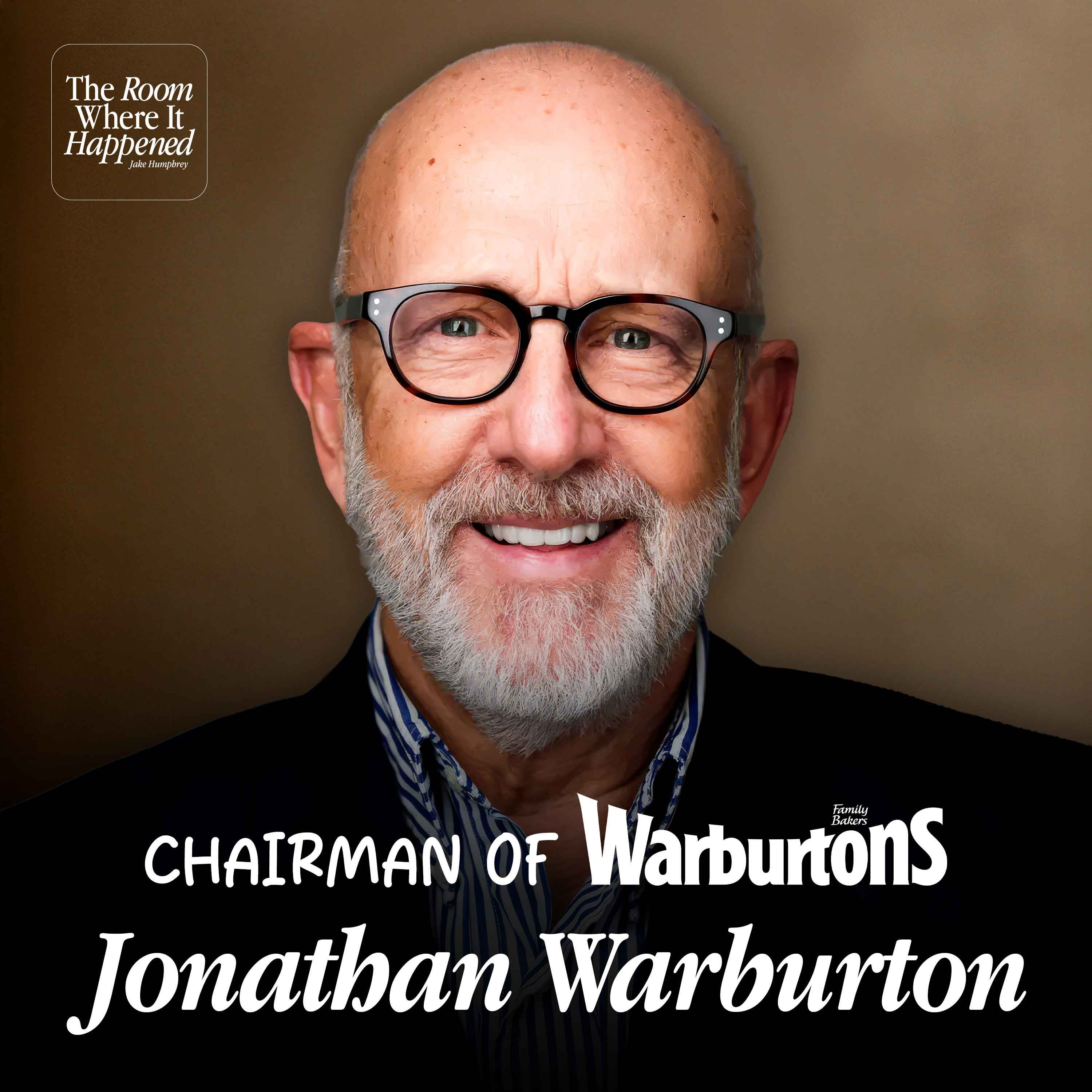
How Warburtons (a Lancashire bakery) used Hollywood megastars and other famous characters to market bread/crumpets, while keeping the ads “in on the joke” and tied to brand equity, humour, and family-led culture.
Jonathan Walton, long-time Warburtons leader (joined ~40 years ago; 5th generation; 150th anniversary; runs/helps shape culture and marketing). Interviewer: Jake Humphries (mentioned as host).
Big-name talent is relatively inexpensive compared to media costs; the goal isn’t sales attribution but positive brand perception and “smiles” at the brand; stars must deliver on camera, not necessarily love the business; Warburtons’ culture is “serious about excellence, not serious about itself,” with clear expectations and humour.
1987 ad with Jonathan’s mother burning a loaf; 2012 campaigns featuring Sylvester Stallone as a driver (after a snow-delivery story) and later Robert De Niro, Olivia Colman, Sam Jackson, Morgan Freeman, and The Muppets (Jonathan visited Hollywood). De Niro’s “Goodfellas/Casino” line-level detail; Freeman and Jackson anecdotes; ad style praised for viral positive reaction.
Written by AI. May contain mistakes.
Discussion on the beginnings of Warburtons' advertising strategy and the initial challenges faced.
“Only one wrote, only one bothered to respond.”
How Warburtons transitioned to using celebrities like Sylvester Stallone for their ads.
“And then 15 years ago, we were moving agencies.”
A compelling moment highlighting the conversation with Sylvester Stallone and his commitment.
“He said, so, honestly, I'm sat having tea, I'm having supper at home with Kim, and my phone's on, and it comes up with the California number.”
Insights into the costs associated with hiring big stars for advertising campaigns.
“And I, when I had the conversation with him, I said, look, this is, to Warburton, this is a lot of money.”
Discussion on how to engage with celebrities and the importance of authenticity.
“A lot of work advice sounds good in theory, but falls apart when you actually try to use it.”
A reflection on the surprising moments and interactions with famous personalities.
“what were you doing at 3am this morning that got you up to write that?”
Descriptions of the behind-the-scenes experiences of working with Hollywood royalty.
“But what I've found is that they're not good at asking you questions.”
Discover the unique perspectives and experiences shared by Sam Jackson and Robert De Niro during filming.
“I ended up talking about Sam Jackson about he was leaving us and he has a month off every year in the Mediterranean on two boats.”
Learn about the financial considerations and strategies behind hiring big names for advertisements.
“I remember thinking, I can't believe this.”
Explore the famous advertising insight about the unpredictable nature of success in marketing.
“to come to the UK to film an ad, it's costing you hundreds of thousands.”
Understand how brand equity and consumer perception are assessed beyond immediate sales.
“I just can't tell you which 50%, but I know it works.”
Examine how humor and British culture play a role in the effectiveness of celebrity ads.
“of Warburton's and its brand and its growing?”
Discuss the evolving challenge of selecting celebrities for advertisements and brand image.
“like Snoop Dogg advertising for takeaway food.”
Learn how reputation influences the acquisition of celebrity talent for advertising.
“And do you ever get directly involved in the deals for these people?”
Explore the benefits for celebrities in endorsing everyday products and their enjoyment in doing so.
“a friend of my son's went to a gym in L.A.”
Discuss the creative approach to integrating celebrity personas into advertising narratives.
“advertising for EE, right, it's a cool get, right, and he's done it for many years.”
Explore the unique interaction between performers and puppets, revealing the surprising dynamics at play.
“He says, no, it's all bad and we're Stallone.”
Discuss how celebrity endorsements have transformed public perception of the Warburtons brand.
“I mean, it was funny because my mum and dad died 10, 15 years ago, and my mother was as down-to-earth Boltonian as was ever born.”
Learn about the importance of cultivating a strong, collaborative business culture at Warburtons.
“I was asked a similar question yesterday because it's our 150th anniversary this year and we have a management conference every year and we were doing a bit of internal filming about, so what was it like?”
Uncover leadership insights gained from family dynamics and the evolution of Warburtons over generations.
“because we only had the Bolton bakery at the time um and I would run around with my sister on the flower sacks and play in the and and so you you immediately go I would watch my dad interact with the guy.”
Discover the keys to maintaining high standards and a relentless pursuit of excellence in business practices.
“but still be determined and ruthless and successful?”
Evaluate the balance between risk-taking and strategic investments that drive business growth.
“I mean, so for us, tomorrow is almost finished.”
Learn how long-term thinking can create competitive advantages in business.
Discover the necessity of constant innovation in maintaining business relevance.
“Well, let them, they'll have to, and we'll go, well, the shareholders understand why we're doing this.”
Understand how to identify and create products that consumers need.
Hear about the personal motivations and legacy-building in a family business.
“fast-moving consumer goods in Britain, but the biggest British one.”

Get the gist, explore an idea or ask about something said.
 Claude
On High Performance Business, what are the key points of this episode?
Searching your listeningAutomatic transcript. May contain errors.
0:02Morgan Freeman: Can I ask you about how a bakery based in the north of England ends up with Hollywood stars on their adverts? Because I think this has changed the game for your business. Now, maybe I'm wrong.
0:12Samuel L. Jackson: No, I think you're probably right. So, 40 years ago, I'd just joined the business. I'd been in the business and we were a Lancashire business. This was before any cable or satellite TV. We were just doing a little bit of local advertising in Granada. And we had a guy who was running it who had no qualifications to run our advertising at all, other than the fact he was the only person who put his hand up. I wrote to three advertising agencies. Only one wrote, only one bothered to respond. So I went to see them, and I told them the story that I'd been brought up with of why Walbertons was better.
0:57Samuel L. Jackson: And this would be so interesting. And it was about Canadian wheat. It was about the shape of the tins. It was about the moulders, the mixers and all the stuff that my dad had talked to me about. And he sat there a bit like I am now and he listened to me and he said, Jonathan, that's actually really interesting, but it's probably the dullest story I've ever heard. And I was bloody crestfallen. And I said, oh. He said, but one thing about you is we think you're a family that's worth investing in. And in baking, family matters. Now, at the time, there were two businesses. You might remember one, but you're far too young to remember the other, where people were advertising their own business.
1:44Samuel L. Jackson: One was a turkey farmer from Norfolk. The other Matthews. Matthews, those beautiful turkeys. Yeah. And the other was a guy called Victor Kaya. And he went on, he was an American guy with his Remington razor. Yes. And he said, I like the product so much I bought the company. And my mum and dad blessed them because I said, you're going to be an ad dad. And he was retiring. And they said, we'll do it on the proviso that we are seen to be in on the joke. And we made an ad in 1987, April 87, because I've still got the original clapper board. and it was hugely successful. It was just a 30-second ad and it was my mother burning a loaf of bread.
2:27Samuel L. Jackson: And the reason she burnt it is she was only a Warburton by marriage. So she needed Derek, my dad, who walked in with a loaf. And the telling thing about it was is that my dad walked in with a loaf, beautiful loaf that he'd made, which we didn't actually sell. Oh, was that right? And it made me think at the time, That's bloody interesting because we're not, people love it, but they haven't cottoned on that we don't actually make the product. Anyway, cut a long story short, this went on, and we ebbed and flowed between good and bad, and I did a bit in my 20s. I was just shocking. And then 15 years ago, we were moving agencies.
3:10Samuel L. Jackson: We were then a national business in the sense we were delivering to the South Coast. and we'd moved agencies to a company actually based not far from where we're sat now and one of the principals said look, you'll never achieve what you do you've got to make yourself famous which to a sort of northern fellow is a bit like, well that's not really for us and also crucially because that sounded like it would cost us a lot of money and be careful with the money anyway, cut a very long story short I was written a letter by a shopkeeper up in the Cairngorms. Dear Mr. Warburton, I thought you ought to know that your driver, we've been stowed in for five days.
3:53Samuel L. Jackson: In fact, I don't know exactly, I've been to the shop. You've been stowed in, we've been stowed in for five days. The only driver that got through the snow was your van. So I took this letter and I gave it to the creative guy and I said, there's got to be a story in here. And there's me thinking, oh, we'll use our own drivers because they can make it look beautiful and battling through the snow. And he said, we love the idea, but you can't use your own drivers. We think you should use somebody famous as the driver. Now, at the time, there was a series of movies called The Transporter. The actor was Jason Statham.
4:32Samuel L. Jackson: So I'm beginning to get really worried because he was, I mean, he's done fantastically well and does a great job. but he'd done lock stock and he'd gone into transport and he was the driver so he would fit and i went home to my um to my wife and daughter so charlotte daughter would have been about 20 kim would have been about uh 50 for this conversation and said we're thinking of approaching a guy called jason statham which charlotte went poor you know can i come and kim went who's he interesting so i thought so i went back and i said there's good news and there's bad news because obviously kim a 50 year old lady at the time she'd be much more target market than the 20 year old yeah of course and as often happens in these situations somebody the the chap we were using um who was running the pr agency we were using at the time was really well connected he He said, oh, I know Sylvester Stallone.
5:30Samuel L. Jackson: What about him? I went, he won't come to Bolton. And the rest is history. He did. He was, I had a conversation with him. He rang me up from California. You know, it was like.
5:47Morgan Freeman: What does he say?
5:48Samuel L. Jackson: He said, so, honestly, I'm sat having tea, I'm having supper at home with Kim, and my phone's on, and it comes up with the California number. I picked it up and he said, is that Jonathan? And I was like, hello, Mr. Sler. And he went, call me Sly. And he was fantastic. He came over. We had him literally. He ran up Bolton Town Hall steps like Rocky. Yeah. And I think there are two things. He was such a nice fellow. And I, when I had the conversation with him, I said, look, this is, to Warburton, this is a lot of money. and it's a big risk. I absolutely have to be sure that you are fully, you're not just here for the money.
6:33Samuel L. Jackson: And he said to me, if I do this, it's my reputation. You know, Britain's a big market for me. I've got to do it. You've got my, you know, my word, I'll give it 100%. And he was true to that. And he was great. And that's how it started. And what year was that? 12, 2012.
6:51Morgan Freeman: Okay, so quite a long time ago. Can you remember the rough financial commitment from Warburton's back then? I can.
6:59Samuel L. Jackson: Are you happy to share it? I won't tell you how much we paid them, but it was surprisingly less than you'd expect. It was in the hundreds of thousands. For the whole thing?
7:12Morgan Freeman: No, just for the talent. For the talent. So I would have thought Sylvester Strang would have been 5 million.
7:18Samuel L. Jackson: Well, I think if we'd have been in the US, it would have been. Right. But because it's a small market and we can only use the ad. And that then set the benchmark. The biggest cost, you'll know this, Jake, the biggest cost in our campaigns is the media. Yes. That's where all the cost goes. The talent is, in a funny sort of way, relatively inexpensive. In the scheme of the, it depends if it works, of course. But that gave us the confidence, and then we did the Muppets. The only bit of glamour in the whole thing is I went to Hollywood to do that. Really? Yeah, my own trailer.
7:58Robert De Niro: ACAST powers the world's best podcasts. Here's a show that we recommend.
8:05Jonathan Warburton: A lot of work advice sounds good in theory, but falls apart when you actually try to use it. I'm on a mission to change that. I'm Molly Graham, a company builder and the new host of Work Life, a podcast from TED. I've spent my career inside fast-growing companies, And one thing I know for sure is that work is messy. In this new season, I'm excited to share my conversations with founders, operators, and creatives about the real story behind their shiniest successes. The lessons that no one ever posts on LinkedIn. Listen now on Work Life wherever you get your podcasts.
8:40Sylvester Stallone: Acast helps creators launch, grow, and monetize their podcasts everywhere. Acast.com.
8:52Morgan Freeman: Look, a few hundred thousand pounds is a lot of money, but it's not going to change Sylvester Stallone's life, right? So when you have conversations with big, mega talent like him or Robert De Niro or Morgan Freeman, you know, these huge names, what do you tell them about your business to make them realise that actually this kind of obviously matters for you, but also matters for them?
9:13Samuel L. Jackson: I do a very condensed version of what I've just done for 20 minutes or however long we've been chatting. I try to get them to understand a little bit of what matters to us, why we think it would be fun, why we're not. I think crucially from my perspective, it's really, really important to me that they don't see this as a Jonathan Eco trip. Right.
9:38Morgan Freeman: How do you make that clear to people? Because it's easy to think, oh, hold on, the guy that runs the business is now on the adverts. He must love himself.
9:47Samuel L. Jackson: Well, I think back to when my mum and dad did it and said, we'll only do it if people laugh with us. That's always been my mantra. And I've said to our head of marketing, and Jane knows very well, that if there's any sense that people think I'm doing it for myself. I mean, people still ring up and say, could you tell me who plays Mr. Warburton? So we made an ad with Olivia Colman just over a year ago, February last year and my son Harry as I mentioned his background is advertising Harry was working there and he sat in there behind the camera and he's off set and he sat with one of the crew and the lad from the crew turned around to me and said who plays Mr Warburton who plays your dad he went it's my dad so I'm either so ineffective that nobody would take it seriously or I've got away with it.
10:46Samuel L. Jackson: And I think it's because people, when people tend to find out, it often gets a response, well, most of the time, I do get the odd, I mean, you've experienced it yourself, you get the odd email and you go, what were you doing at 3am this morning that got you up to write that?
11:04Morgan Freeman: You don't want to know sometimes. No, you don't want to know. You're best not to get the answer to that question. But you know what I mean?
11:08Samuel L. Jackson: You get these sort of weird folk who just give you a load of grief, I'm not bothered about that.
11:14Morgan Freeman: And of all of the famous names that have partnered with Warburton's to advertise your products, is there any that have left you starstruck or thinking, I can't actually believe this person said yes?
11:27Samuel L. Jackson: No, I don't think so. I really genuinely don't. And that's not me being, well, they're lucky to get the chance. There's none of that. I just, I care so much about the business. I think that this is what, so the last one, Morgan Freeman, who was delightful. Actually, no, the previous one, Olivia Colman. So she was lovely. I chatted away to her. And at one stage she said, oh, just let's take a selfie. So I took a selfie of me and her, and she pinged it. I said, where's that going? She said, I've sent it to Sam. I was like, Sam? She said, yeah, it's Sam Jackson. I know him really well. and literally 30 seconds later he comes back and he called me j-dubs he said send j-dubs my love and i'm like oh yeah you know so i think because i just tried to be myself yeah um i mean he was he he at the time was the highest grossing actor in history sam jackson he would be one of the top two or three and he's physically very big and i've seen the movies and you know things like shaft and Pulp Fiction and that sort of things that he was in and so he was he was quite a big hitter and he had they all bring people which always makes me laugh
12:47Morgan Freeman: Would you tell us a bit about that sort of the day that they turned up I mean we're talking here proper Hollywood royalty Oh proper royalty What's the kind of process like? Well I mean they all You were waiting around and they say they're five minutes away There's a little bit Like when you're waiting for the royals
13:03Samuel L. Jackson: to come and visit them There's a little bit of that There's a little bit of you know uh he'll be here in a minute but what tends to happen is that they have these people and the people get all worked up about the fact that the talent's coming in once the person male or man or woman arrives you go and talk to them and actually as long as you can get past the first they tend to be quite what i found with all of them maybe this is just me maybe I'm just a medium adult. But what I've found is that they're not good at asking you questions. And I think the reason being is they're so used to being asked questions, they're not inquisitive.
13:47Samuel L. Jackson: And that's where Stallone was unusual because he really wanted to learn about the business. Peter Kay, who was great, was a Boltonian, so we had a report that was different. And that's where, particularly the big Americans, They're not good. I ended up talking about Sam Jackson about he was leaving us and he has a month off every year in the Mediterranean on two boats. One he rents and one his best mate, Magic Johnson, rents and they go around. And I said to him, what's it like when you go to a taverna in, you know, Amalfi Coast? What's it like, you know, in a little pizzeria there? I said, you must get mobbed.
14:37Samuel L. Jackson: He said, the funny thing is, he said, I learnt very early on, A, I hardly ever leave the boat. But he said, when Magic Johnson's your best mate and he's six foot nine, nobody bothers with me. So if you wanted to talk about them, it was quite interesting, but they didn't really want to know. I'm not bothered about that, but it makes it take a wee bit of getting going. Once they get going, they're fine. And does it matter whether they love the business, love the brand? It only matters that when the camera rolls that they deliver. So Robert De Niro, he was by far the most businesslike about it. And he didn't want to engage at all.
15:24Samuel L. Jackson: But as soon as the camera went, he was like somebody flicked a switch and he was brilliant. He became a gangster. So what, would he just almost sit there in silence beforehand? He'd go off to his trailer. He had to have... I don't get a trailer, but that one does. And he'd be in a warehouse and he'd go and sit in a trailer inside a warehouse. And he would then go, right, Mr De Niro, can you come out? And he'd come out in his orange suit out of whatever movie it was, I can't remember now. and he'd be dressed in his orange suit, right, action, and he would nail it. So he was very businesslike and was clearly, you know, he was in Europe doing some no-boost stuff and I think he thought, oh, he's a great opportunity to earn a few quid in the process.
16:08Samuel L. Jackson: But they are, you see why they're where they are. He became a gangster in a heartbeat, just like that. and it was great for me to see. You know, I mean, people say, you know, all I'm doing is playing myself when I do my bit.
16:23Morgan Freeman: But do you mess up your lines and you're saying to Robert De Niro, sorry, I just have to go again?
16:27Samuel L. Jackson: Actually, how it works is you watch these skilled actors and they kind of get it wrong for the first two or three times and then nail it and get better and better. I'm directly the opposite. it so before i start thinking about it i'm quite good yeah and i get the first couple which i'm hey that's all right and then it starts to deteriorate because i start thinking about it um but what i learned interesting enough from this is from de niro so the lines are simple you know these are not complicated for these guys but de niro um had somebody stood behind the camera with a big board written on a white, big white board.
17:17Samuel L. Jackson: He had his lines written. I remember thinking, I can't believe this. And then I thought, well, actually, it makes perfect sense. And the last one we did with Morgan Freeman, because I was looking at a blank screen, and he was in the States, I said to the guys, look, can you just write my lines down? because I actually said a bit more in this one than I've done in the previous one. You've become a diva. I thought, I am clearly getting ahead of myself. I need to pack in because, but actually I thought, well, yeah, I've learned something off De Niro.
17:54Morgan Freeman: Oh, so interesting. But, you know, we're talking business here, right? Yeah. So what's the process for making sure that if you're going to get Robert De Niro or Morgan Freeman or Olivia Colman or Sylvester Stallone to come to the UK to film an ad, it's costing you hundreds of thousands. I mean the total cost of the whole thing is in the millions, right?
18:14Samuel L. Jackson: Yeah.
18:15Morgan Freeman: How before you start shooting and the ad goes live, what are the questions you ask yourself to be like, right, is this actually going to get people to buy a crumpet?
18:25Samuel L. Jackson: Look, there's a very famous old Boltonian called Lord Leverhue who created Unilever as it is now. And he was asked that very same question, of which, as a Boltonian, I stole and use it now. 50 % of my advertising works. I just can't tell you which 50%, but I know it works. And unlike, you know, if you're the brand manager for Walker's Crisps, great business, you know, PepsiCo, American-owned, you're the brand manager for them and you make an ad campaign, it's highly highly likely you'll be judged on whether the sales of walkers crisps go up by 10 % while the ad's running we don't do that because we think is this on balance building brand equity in a positive way for warbuttons as a business and will consumers when they're in at a fixture smile at the thought of morgan freeman or sam jackson and go actually are warbies and i don't know if that's true but we wouldn't carry on doing it if we knew it wasn't true yes um the family because it ultimately manifests itself through me but the family have been so supportive of us carrying on doing it and so it's quite different than most people would be, where you will be judged on, well, that hasn't really worked.
19:57Samuel L. Jackson: So we have to change tag. Whereas we've gone, if you go and talk to consumers, which we do all the time, and you assess your advertising, do most of the people, most of the time, have a positive impression of Warburton's and its brand and its growing? Yes. Well, that means it's working.
20:15Morgan Freeman: And were you ever fearful that a big Hollywood name takes a story away from a UK family business? Or does it almost in a strange way, because it's so juxtaposed to a Bolton-based baking company, it almost makes it more ridiculous.
20:31Samuel L. Jackson: Well, it's so ridiculous in a lot of ways. I think people love it. And hopefully our humour's very British. And people like it because, you know, I'm quite happy to sort of be in on the joke. and it's that sort of, I think because of the style that we do, there is that, have you seen it? I mean, if you watch the social media feed, when our ad goes live on YouTube, we tend to do it two or three days before it goes on ITV. If you watch the narrative that comes through, 99 % of it is positive. And it goes viral, whatever that means. But, you know, it will be incredibly positive. Oh, have you seen the latest?
21:18Samuel L. Jackson: Oh, this and then that. It's fed round, and that's when you know you've got something right. And the big worry for me and for the business has been that people spend too much time worrying about who the next star is, not about the brand. So we have a challenge now because we've done eight of these, and we've got a new generation of family members in the business. and they've got to start having an influence of how the brand develops. But, look, we've had a damn good run at it, and it's right that they should. But we know it's been 150th. This ad will run for the rest of the year, and then it gives you plenty of time to put your thinking cap on.
21:59I also think something else that's changed, right,
22:02Morgan Freeman: is that it's no longer a big surprise when a megastar advertises for a bit, like Snoop Dogg advertising for takeaway food. You look at that and... It was Just Eat, wasn't it, I think?
22:15Samuel L. Jackson: Yeah, I think it was.
22:16Morgan Freeman: You look at that and think, Snoop Dogg, I don't know if I ever Just Eat. So it almost... It's like you've lost the sort of shock factor. There is a bit. So then it's like when... So who would we do?
22:28Samuel L. Jackson: Yeah. Who would we get next? You see, I think Sidney Sweeney would be perfect for a Warby's head. I can see Sidney Sweeney advertising. You see, exactly. You and I could probably think about it. but Mrs Warby wouldn't like Cindy Sweeney very much. Would she not? No, and there is a point, though, is like, how do you...
22:47Morgan Freeman: But do you ever just actually talk like this over a family meal? Guys, who do you reckon? Oh, God, yeah, all the time. Really? Oh, all the time. Who would be good? Tom Holland, I reckon, would be good.
22:57Samuel L. Jackson: Yeah, you know, Angus, Edar Verling Harland, you know, because he's a city fan.
23:02Morgan Freeman: Actually, yeah, it needs to be someone that still makes you go, they got them? Yeah. How have they got them?
23:08Samuel L. Jackson: But it does obviously get harder and harder every time because we have had some pretty high-end folks.
23:15Morgan Freeman: And do you ever get directly involved in the deals for these people? No. You allow that to happen totally separately? Absolutely not. Well, do you give a budget and say, this is our ceiling? Correct. Let us know if you can get them.
23:25Samuel L. Jackson: Yeah. So the managing director, Mary-Anne, who runs our business day-to-day, the head of commercial works for Mary-Anne, and they decide it and then, oh, no, because we have a ceiling at what we will do, and that's their job. That's not for me to interfere with that.
23:42Morgan Freeman: And as it got to the point now where you get approached from agents in the US going, I know you've had Robert De Niro and Olivia Colman and I'd love to give you the opportunity to pay some money to my client who loves bread. What we do get now,
23:59Samuel L. Jackson: my perspective is, and I'm not in the weeds of this, but getting talent is much easier than it used to be because we're known. so you know the sam jackson sending olivia coleman a message to me uh morgan freeman saying he was going to get in touch with sam jackson to say you know he he our belief is that he spoke to sam jackson and said i've been approached to do this and sam jackson went these are good lads trust me they're they're good people and so that helps so we're in the conversation yeah i'm saying that But, you know, we are in that sort of, we're a known thing now. I mean, they don't sit around talking about us.
24:43Samuel L. Jackson: But there have been examples where we've had it third-hand that, you know, a friend of my son's went to a gym in L.A. and met Sylvester Stallone, and Sylvester Stallone said, I remember your pal's dad.
24:59Morgan Freeman: Wow. Isn't that interesting? Because I wonder what it does for them. I do think there is, because I do think that a megastar advertising, not a high-end watch or a high-end car, advertising a loaf of bread that you can buy for a couple of quid that everyone has in there, I do think there's something in that for them as well. Of course there is. What is that?
25:21Samuel L. Jackson: Well, I think that they are, you know, most of them are just ordinary folks. You know, they're... And it's a chance to be an ordinary... And send themselves up and... And, yeah, they're quite happy to, you know, have a bit of fun. I think that was the thing that struck me about Sam Jackson is that he actually really enjoyed himself. You know, he was quite happy to sit and chat about going sailing with, you know, Magic Johnson. He relaxed, visibly relaxed, because I think he thought,
25:53Morgan Freeman: you know, actually, this lot were right. There's something else I think that you've done really well, which is impressive, is if I think of someone like Kevin Bacon advertising for EE, right, it's a cool get, right, and he's done it for many years. But if I did an advert for EE, I could do what Kevin Bacon does because he's kind of just a person talking about EE and how much he loves them. Where I think you had a stroke of genius was leaning into the thing they're already famous for.
26:19Samuel L. Jackson: Yeah.
26:19Morgan Freeman: You know, you put in there, like Robert De Niro is still a gangster.
26:23Samuel L. Jackson: Correct.
26:23Morgan Freeman: In a Warburton's world.
26:25Samuel L. Jackson: Yeah.
26:26Morgan Freeman: Well, that's ridiculous.
26:30Samuel L. Jackson: If you saw the detail of which Billy, who writes the ads, or oversees it all, De Niro's a very good example of that. If you saw the detail and the references to, you know, to movies, so Goodfellas, the references to the Goodfellas movies, so you get Goodfellow freaks whose life is built, they know every line of the Goodfellas movie, will write in and say, I noticed that, and he had this. And so the detail, because I'd be like, nobody will notice. These people do. Can you give me an example of one on that? Well, there was some, so we had him in an orange suit, which he, I think it was in Goodfellas, or was it the one when he's in the, because I can't remember, I should know this, Jake, but anyway.
27:20Samuel L. Jackson: And he said a line, which I didn't know, and it was Casino. He wears the Orange Shoots Casino ad. And he used a line in the ad that was the same line that was in the movie. It's that quality of detail. And The Muppets, the ad I did with The Muppets, which that was the one I went to Hollywood to, and I had Miss Piggy and all. And watching them, and you have the two, Waldorf and Statler at the end, who appear either side of me, and they use the lines that they use in, you know, it's like, that's not half bad. He says, no, it's all bad and we're Stallone. So there's all that interaction. It's just been bonkers.
28:10Morgan Freeman: I love the puppet stuff because I did a lot of that when I was on kids' television. And, you know, not to ruin the magic for anyone, but there is someone with their hand up the puppet and you find yourself talking to the puppet, not the puppeteer. Did you notice that? You're chatting, you know, so if you had a busy weekend, And you're thinking, oh, no, I'm talking to that person, but Miss Piggy's answering the question. So with the Muppets, you're sat on a platform
28:35Samuel L. Jackson: because they're all operated from below. And they're looking at a screen, and you've got this big green thing crawling up your... Literally. And Miss Piggy, you know, but, you know, it's a bloke.
28:48Morgan Freeman: Yeah.
28:49Samuel L. Jackson: And I'm thinking, this is all a bit bloody weird. But you go with it. What would your great-grandfather have said? Oh, I don't know. He'd either, yeah, I don't know. I think you'd maybe think it's cool. Well, I'd like to think so. I mean, it was funny because my mum and dad died 10, 15 years ago, and my mother was as down-to-earth Boltonian as was ever born. She thought it was all the nonsense, but quietly really liked it. And also, I mean, I say we've got away with it. It's worked. But, you know, can I tell you if it's sold as 10 % more range of products or 11? No. But do you think it's changed the way people like me view your business?
29:33Samuel L. Jackson: Completely. Yeah, you get in a taxi here. You go to Euston from here and you chat in to the taxi driver. What do you do? Well, I'm a baker. Oh, right. Oh, interesting. Yeah. Who do you work for? Oh, Warburton. you're that bloke on the telly aren't you i've had that a couple of times and when people find out about it it they love it yeah and then they want to you know what was
30:00Morgan Freeman: you know what was he like and how do you think the megastar hollywood star has changed how we view
30:06Samuel L. Jackson: your brand well i think it's it's it's raised a level in the consciousness of the consumer not a little bit but a huge amount which we would never have got unless we unless we just looked upon a campaign the megastars as robin wright said to me in the very beginning have made us famous but famous in a good way for most of the people most of the time not in a bad way and it's been it's fun you know it should be you know it should be bloody good fun
30:48Morgan Freeman: it'd be not good if it was all serious and miserable I'm fascinated by your business which is why I wanted to have this conversation I'm fascinated by a business that I feel is part of the fabric of our nation and I don't think you can get to that point without a great culture so I would love to explore with you if you're happy what you found the day that you walked in as the fifth generation Warburton to create a culture that's taken your business to where it is today?
31:12Samuel L. Jackson: I was asked a similar question yesterday because it's our 150th anniversary this year and we have a management conference every year and we were doing a bit of internal filming about, so what was it like? And very similar question. And I was with my two cousins, Brett and Ross, who I've worked with all my life and we're very close to one another. Thankfully, very complimentary. And we were thinking, well, so where did it come from? And I honestly, I mean, it's sort of, it sounds quite folksy, but it's true that my dad was, his passion was baking. And for his generation on big bits of kit, he was the guy that would, he knew how to make it better than anybody else.
31:55Or we believed, and I could bore you rigid with all the reasons why.
31:59Samuel L. Jackson: but he used to take me in on a Sunday morning at the age of three and he'd go and of course he could do that now god you couldn't possibly do it now and he'd go off and meet his bakery manager because we only had the Bolton bakery at the time um and I would run around with my sister on the flower sacks and play in the and and so you you immediately go I would watch my dad interact with the guy. He was called Tommy Ball, this bloke. And he would interact with Tommy. And I would see how dad would interact with him. And I think it starts to, and what dad would never do is he would never do, I want you to do this.
32:41Samuel L. Jackson: He would always ask him, would he do it? Or how's it going? And his style was very collegiate. It was very collaborative. And it was, look, the clue's in the name. So I don't have to throw my weight around. and I think what happens is that you you realize quite early that it's a quite effective way of leading particularly everybody knows who you are so you don't have to you don't have to throw you don't have to be the big eye and I think that that culture is something that we worked extremely hard are developing and the behaviors that we have we're and and to to bring it in to one phrase is that we and we've used this a lot i've used it personally is that we are a business that takes ourselves very seriously but we do not take ourselves very seriously i mean i wouldn't be daft enough to go on telly to do that but i think what it's meant is that people understand that Most of the people most of the time who work in Warby's, as it's known internally, know how the family behave.
33:51Samuel L. Jackson: And if the family behave like that, what the business is very good at is rejecting people who don't like that management style. You inevitably make numerous recruitments who just aren't good, or they don't fit the culture. And the business just spits them out. it's not real you know but we you know you kind of go yeah they won't survive and three months later they're either they're either going this is not for me so i think it's that i think it's born out of watching how our fathers behaved watching how they got the best out of people and thinking well that sort of suits me anyway and i i honestly think it started literally from
34:33Morgan Freeman: the age of five or whatever it was so you can have a business with kindness and compassion and understanding for people, but still be determined and ruthless and successful? The two can sit together.
34:46Samuel L. Jackson: I, we have, it's in the centre of our things that go on the wall. We have an unrelenting pursuit of excellence. We have a huge amount of self-discipline. We're a pretty classless society. If you can exhibit humility, that's really important. And the final one is humour. and if you can if you can package all those together but the the center of the bullseye is the unrelenting pursuit of excellence because i don't see it's it's like you doing this at a conscious and a subconscious level you want to do this better than anybody else does a podcast that's no different than me i want warbitons to be regarded as the best of the best because i can't see why you would want to be second best what's the point you know everything that you do you need to and people need to see that because if I care as passionately as I've done for 40 years I would expect you to be the same and some people find that a bit odd and I understand that not everybody wants to be like that but it is it's just to me it's just a common sense way of behaving and how does that show up in your behaviors i am what i'd like to think and i when i say i i really mean we it's a bit difficult because i can't say every time or well the three of us but i think we've we have expected we were very we were born into a business we want a family that happened to have a business you know it's all right for you you've got a family business yeah well there are loads of people, if you think of how many businesses have started since 1876 and are still going, it's tiny, tiny, tiny, less than 3 % make it past the third generation of a private business.
36:40Samuel L. Jackson: And I think that we got this opportunity and many businesses fail because they haven't got the quality of people. They fall out about money. The business doesn't do well and that means them falling out. And I think we thought, well, look, we've got a Eugenic opportunity. We'd inherited quite a diverse organization which was full of unusual investments and we the three of us said well actually this is the one thing that we it has our name over the door and we actually think we're we we're quite good at this because a combination of how we make our bread the raw the flour we use is unique and that's a lot that's another story in itself but if you have this opportunity, then you can either sit there and go, aren't I lucky?
37:30Samuel L. Jackson: Or you can go, right, we need to turn glibly a silver spoon into a full canteen of cutlery. And to do that, and we turn our stock over 363 days a year. I mean, so for us, tomorrow is almost finished. because we're thinking about the day after. The business had 5 ,000 people in it, 4 ,950 are worried about tomorrow. So in our roles, we've been able to sit back and go, look, it's a great opportunity. Business is doing well. We invest very heavily. We've spent a lot of our own family money in it. And when people see that and you go, well, they put your money where your mouth is. I've fallen out with retailers, big customers in the past sometime with good reason and i actually once said to one of them well you know it is my money well yeah but that's yeah but it is my money so i think people see that and they go well yeah okay these lads play themselves well and they drive nice cars but they're in here most days and you know we've turned a lancashire business into a decent size business and i think that they if they see how you behave then it becomes that's how you get that's how you behave and if you wake up you've worked for us you work for us jake and it's a wet tuesday in november and your alarm goes off at half past two in the morning because you're a van driver oh bloody hell i've got to go to work and yeah actually i i know what's expected of me I like the people who I work with it's okay to have a laugh you know on balance I'll go in so I think having and to do that they have to understand what's expected to them and the only way you can do that is give a message that's so clear and simple that people aren't well I don't know what's expected of me actually in Warby's Warbyton's you do know because this is what we're trying to achieve But so it's sort of common sense, but it's just not very common.
39:40Morgan Freeman: So what's the secret to having a brand that retains its heart and its values, but at the same time there's this part of you that is super ambitious
39:50Samuel L. Jackson: and you're just going to do things differently? I think it's kind of in your DNA. You're either, if you're like me, the problem is you're never quite satisfied.
40:05Sylvester Stallone: Right.
40:05Samuel L. Jackson: So, you know, I've got a lovely house, I've got a great family, I've got a holiday home in Cornwall. And most people go, I've just made it. And I'm very happy with my lot. But I'm frightened to death of not being as keen tomorrow. And the downside of that is you're never satisfied. The upside of it is you're never satisfied. It's a bit like we sat in the bed to get out on. You know, some days you get up and you think, but on balance it is that motivation and people see it and it is a behavior that people go well okay if that's expected then that's what i should do and my job is to uh other the management team but ultimately manifests itself through the family our job is to clean it is to paint a picture that's simple and clear sort of referenced it in the last question where people can go yeah i know I know what I'm meant to do here.
41:01Samuel L. Jackson: Because so many businesses complicated because, well, I've done an MBA, mediocre but arrogant. I've done an MBA and I must, you know, I'm so clever, I must do, whereas we're just, that nonsense doesn't, we're just not like that.
41:19Morgan Freeman: Were you given advice when you took the business on about whether you should be kind of stable and stick to the principles of Morbys or whether you need to bring it into the modern world? Because I sort of wonder whether you're a risk taker.
41:35Samuel L. Jackson: That's a good question. Am I a risk taker? Well, I've been daft enough to go on telly for 15 years, so you can say at a personal level, yes. I've probably just about gone away with it. we've spent 500 million of family money in the last 15 years investing in the business it's quite a lot so you could say yes most of that has never felt like a risk because we know our world and we know our market and we know our lane and what we learned from inheriting a diverse business is what I would glibly say I can't hold more than one thought of my head at any one time and I think that's meant that we've been really look this is where we're heading we have a unique opportunity here where we don't make private label for anybody else so own brand nothing wrong with that at all but not for us everybody else does you know we are being private we can take a five to ten year view of the world so if we think it's appropriate to hold back on something now we will do because that can be a competitive advantage particularly when you're dealing in businesses with businesses that have a different ownership where they're under pressure to perform we'll go well we'll let them we'll make them sweat now because we won't put our prices up, for example.
43:11Samuel L. Jackson: Well, let them, they'll have to, and we'll go, well, the shareholders understand why we're doing this. Because we're, you know, there's only about six of us anyway, and three of them are on the board. So we kind of go, look, lads, and we, you know, my cousins and my sister, they've been incredibly supportive. But that's because we've done well.
43:31Morgan Freeman: You said 95 % of the people at Warburton are thinking about tomorrow. You've also got a job to think about five years after tomorrow and ten years after tomorrow. What do you think your business looks like in a decade? Okay. First and foremost, I hope that it stays a privately owned business
43:52Samuel L. Jackson: with family involved in running the business. And it makes products that have war buttons on them and not a supermarket.
44:01Morgan Freeman: Nothing wrong with that at all.
44:03Samuel L. Jackson: Not for us.
44:07I hope that the quality of the products that we make retains that premium positioning as an everyday product.
44:17Samuel L. Jackson: So a loaf of Warby's in Tesco will be£1.40 for a loaf of Toasty, and there'll be alternatives down to half that price. So we are always, because it costs us a lot more to make it, and we distribute it differently than everybody else does, because we still have all our own trucks. I'd like to think that they will do that. but I think to run a business and this is no different for you in your business than mine is that you have a responsibility to innovate yourself out of existence because if you don't do that there's some bugger out there doing it to you and there will be somebody doing it to Jake Humphries now you've got to keep relevant constant worrying the problem so that you are when I started we were 90 % sliced loaves we're now less than 50 you know we make this week we'll make 16 17 million crumpets we didn't make any when i started that's not to do to me but you know we make six million bagels a week so it's working out we have an extremely good head of innovation we're good at failing fast we we try and create products that people didn't know they needed and I think that what the boys the next gen and the senior team have to do is probably run faster than we've had to because to stay relevant to consumers you have to one of the greatest examples of innovation i've come across i've used this many times is i guess you've got a smartphone yeah okay i know some you probably have a laptop yeah so 15 years ago you weren't sitting there going you know what i really need is a very expensive not very powerful halfway house called an ipad yeah genius that was just genius creating a product that you've got that i'll be reading the paper on the way home on the train that's where you really are able to create products that consumers didn't know they need and suddenly go how have i managed yeah so i think this responsibility of constantly innovating be it as an individual of trying to improve how you are or as a business will keep and if they can do that then i think they have a good chance of becoming with the fifth largest fast-moving consumer goods in Britain, but the biggest British one.
46:57Samuel L. Jackson: But to get to fourth, to get to third, and you've got, you know, Cadbury, Mondelez at the first, Coke, PepsiCo with Walkers, and Nestle. So you're punching in good company. We never set out to get there, but it's the by-product of hopefully running a good and innovative business. To get to the fourth and third, you're going to have to do more than what we do now.
47:19Morgan Freeman: Such an interesting conversation. It's fun, though. Well, that's what I want to finish with.
47:24Samuel L. Jackson: Yeah.
47:24Morgan Freeman: You're, I think you're 68, am I right? I am. You're 68 years old. You've been with the business for 40-odd years. What keeps you going? What's the reason for you to sit here and for the last hour talk as passionately about Wargertons as you probably did on day one? Well, because I think I've been lucky.
47:45Samuel L. Jackson: I've never really done a proper job. You know, I've never had a promotion. I don't have a job title on my business card so it's a great privilege and we the three of us have moulded the business to reflect our personalities that's bloody lucky I think that the I care as much about it now I think had none of my children wanted to go in it I think I'd have been pretty devastated At the moment, Harry and Jack are identical twins. They're both in the business now. And, I mean, I chatted to Jack. He ran me about something this morning. I think that you just, it's been so interesting and it's been such a unique opportunity.
48:34Samuel L. Jackson: And I've really enjoyed it. Not all the time, because it's rubbish some of the time. But on balance, and that's my point about trying to create an environment that people go, you know, actually on balance, I think they're all right. And crucially, I know what's expected of me.
48:53Morgan Freeman: Yeah.
48:54Samuel L. Jackson: Because we give very, very clear, simple directions. So we have a thing, I have a thing called the pub test. So you've sat and listened to me and chatted to me for an hour now. And you go to the pub on your way home and you stand at the bar. Oh, what have you done today, Jake? I've been chatting to a bloke called Jonathan Walton. what is it they're trying to do? If after an hour you can't articulate what I hope I've got across to you, then I've made it too complicated. And what would you like me to say when they ask me? What are they trying to do? I would like you to say that it is an extremely focused, very competitive, driven business that has a good time.
49:41Morgan Freeman: I was going to add on the end with a heart. and which I guess is the same thing and I think that's why this has been such interesting conversation because we see the fun we see the daftness we see the Hollywood superstars we see the Muppets we see you happily sending yourself up but underneath all of that is actually a really serious driven business that people rely upon every single day so thank you so much for your time good really enjoyed it thank you yeah I did really enjoyed it
The ambition of a family business meets the influence of the A-list in a story that redefined British advertising.
In this episode, Warburtons chairman Jonathan Warburton reveals how a bakery from Bolton bypassed the traditional corporate playbook to land global icons like Sylvester Stallone, Robert De Niro, and Samuel L. Jackson.
Jonathan breaks down the high-stakes world of celebrity negotiation, explaining why he treats Hollywood stars as collaborators rather than just paid endorsements. He dives into the "Hollywood grapevine", where legends like Morgan Freeman and Samuel L. Jackson compares notes on the brand, and explores how a personal, values-led approach convinced global legends to trade the red carpet for a delivery van.
It’s a look at what happens when a legacy brand stops playing safe and starts playing for keeps, where the gap between a global hit and a total flop comes down to a single letter and a handshake.
IFS - award-winning Asset & Service Management software
👉 Reimagine your operations at: https://highpfrmc.com/rwih-ifs-yt
Eight Sleep 👉 Upgrade your sleep and wake up with more energy - get up to £350 off the Pod 5 with code RWIH:
https://highpfrmc.com/eightsleep-yt
XTB 👉 To find out more and make your money work, use code RWIH at: https://highpfrmc.com/xtb-rwih-yt
EXCLUSIVE NordVPN Deal 👉 https://nordvpn.com/rwih Try it risk-free now with a 30-day money-back guarantee
Hosted on Acast. See acast.com/privacy for more information.


