
 Ask ChatGPT


 High Performance Business
30 Sep 2025 · 44m
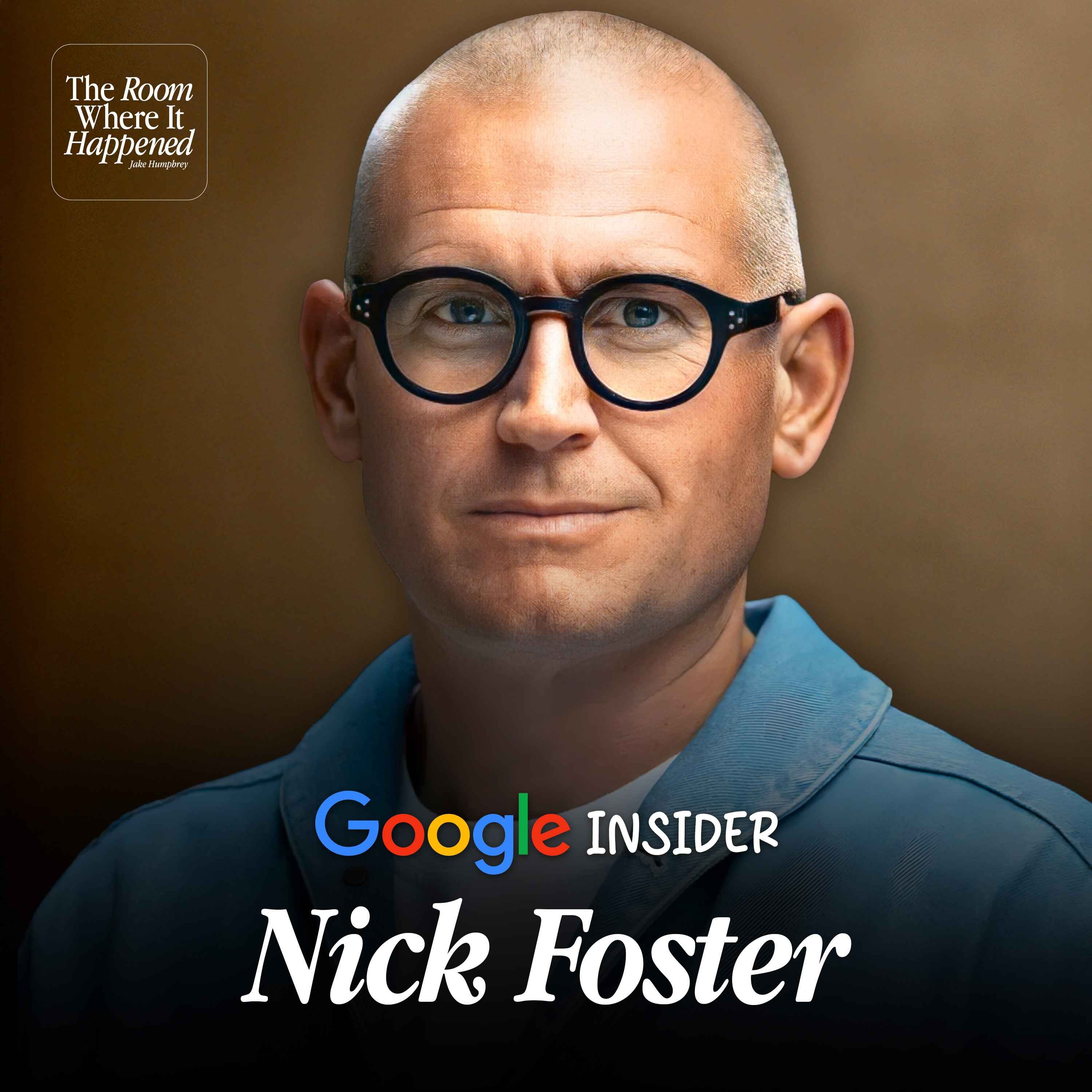
Episode Guest: Nick Foster, ex-Head of Design at Google X
In this episode, Nick Foster shares insights from his extensive experience at Google X, discussing how to approach the future of AI and technology with a mindset that goes beyond fear and hype. He emphasizes the importance of understanding the underlying trends, behaviors, and possibilities that shape our future.
Written by AI. May contain mistakes.

Get the gist, explore an idea or ask about something said.
 Claude
On High Performance Business, what are the key points of this episode?
Searching your listeningAutomatic transcript. May contain errors.
0:00Today, Nick Foster, Head of Design at Google X. He argues that the real challenge isn't predicting the future, it's changing the way we think about it. From his framework of could, should, might and don't, to lessons learned designing moonshots at Google X, Nick's about to show you why AI technology and everyday life needs far more rigour when we think about what the future looks like. This is the conversation you need to hear to help future-proof your thinking. This is the room where it happened. First-hand accounts from behind closed doors in business. The rooms, the pressure and what you should do when it's your turn at the table.
0:37Brought to you by IFS. This is the room where it happened with Nick Foster.
0:46Well, look, Nick, welcome to the show. I'm delighted to have you with us. I would love to start by you taking us to the room that you've chosen to begin this conversation. Yeah, it took a little while to actually pick this out because I don't think there was one particular spot where I had this big thunderclap moment. But the room is the second floor of the Royal College of Art building in J. Mews in Kensington in London, where I was in 1999. Why? Why? It's a real sort of, if I go back through my career and think about where I am now and what I've done, I think that was a moment when I was probably, what was it, 99.
1:22So I'd done my degree. I'd worked for a little bit. I'd gone back to do a master's. and about December time of my first year of that master's degree, I sort of realized that I had a choice of where I wanted to go in my career. And I think I had a conversation with somebody that says, what are you doing here? Because basically I was doing what I'd already always been doing. And I got to this moment and suddenly realized, yeah, that's a good question. I don't really know. I thought I was sort of performing. But at that moment and in that place And at that time, I think my mind made some sort of a switch and I became much more curious, much more confident, much more independent in my thought about what I wanted to be, what I wanted to do, and my opinions about design and the future and all of the things that have kind of made me who I am today.
2:08So the reason why I was really keen to have this conversation with you and why I think it's so important is because this is a business podcast, right? But surely everyone in business, if they can predict the future, they're going to find that hopefully their business takes the direction that they want. You know, I work in media. It's helpful if I know how people will be consuming media in 10 years' time so I can produce what they want. If I work in retail, how are people going to be shopping? If I work in travel, where are they going to be going? How are they going to want to be traveling? What will they want to experience when they get there?
2:38So can we delve into the things that you kind of learned about the way we currently look at the future and maybe help the people listening to this work out, how they can ask themselves some slightly different questions about what the future might look like? Yeah, and this is an evolving... I don't want to come across as some sort of TED Talk guru or anything here. I haven't got a specific method or a... I can't see anything anyone else can't see. but what I've done is I've spent the last 25 years of a professional career working in large organizations big technical organizations many of which you've probably heard of things like Sony Nokia Google I was head of design at Google x for a long time and in that time I've spent a lot of time talking to different sorts of people about the future about the things we might make about the direction of a market about the direction of an industry about what consumption habits might look like.
3:28And so I've spent a lot of time with designers and engineers, but also with investors and with sort of CTO type people, people who are leading organizations, leading people within organizations. And it feels like our ability to talk about the future with any level of rigor is woefully underdeveloped. And what I mean by that is people seem to sort of snatch at it. They don't approach conversations or thoughts about the future with the same rigor that they do conversations and thoughts about the present. And that to me has just started to build momentum over the last 15 years of that 25 year career, where it started to really eat at me because it does feel like right now is a really good time to have a conversation about what the future holds, mostly because of all of the change that we're sitting on top of.
4:15But it does feel like an underdeveloped skill in almost everybody and myself included. And I think we fall into little buckets of behavior and little ways of seeing the world that either prop up things that we already believed or thought we knew or sort of justify where we'd like or how we'd like the world to be. It is a skill that I think we need to start asking more questions of, of everybody, because I do think it needs to be better than it is. If you can just take a couple of seconds to subscribe, then of course you can get each episode directly to your inbox. And honestly, for you to subscribe, it makes such a difference to our show.
4:49It means we can grow and it means we can attract more incredible guests like George Heaton, Rory Sutherland or Richard Branson to come and join us. So would you mind Nick sharing some of those buckets, some of those ways of thinking that we're all wedded to because we don't know any different, but that aren't actually serving us? Yeah, I mean, what I've tried to do here is break up. Like when we think about the future, it's a massive thing. A billion ideas come rushing in. And all I've tried to do with my sort of most recent work and the book that I've written is break that work up into four big buckets that I've called could, should, might, and don't.
5:23And they're very simple words. They're just very simple behaviors that I think we all fall into. And I can go through them very, very quickly, maybe as an overarching term. And if you want to dive into any of them, we can do that. So could futurism is all about possibility, the things that could happen, mostly amazing things, mostly technocratic things. If you go to Google Images and you type the future, these are the sorts of things that come rushing at you. Very science fiction inflected, sort of a product of modernism and automation and robotics and this sort of thirsty futuristic stuff. It's very exciting.
5:54It's very consumable. It's very alluring. But it treats the future as sort of over there somewhere, this ambitious end point. It doesn't really talk about anything in between. And it leans very heavily on science fiction in a way that acts as a sort of uncomfortable crutch for it. So that's sort of could-futurism that I think a lot of us do. and we can, you know, it's very, very popular because it's very easy to digest. Then should futurism is a way of thinking about the future as a sort of dot in space, either a destination we want to head to, which is typically built off an ideology or some shape of the world that we'd like it to be, or the predictions world.
6:34And obviously when I say I work in futures, everybody sort of asks me for a prediction and it's a sort of a strange thing to be asked because I don't have access to anything that anyone else doesn't have access to. But we still have that feeling. And in modern business, we've tended to rely a lot on data and projections. So we look at the world as it is and how it has been. And we build data around any particular observation and create a chart, a model, an algorithm. And then we use that chart to put a dotted line out into space. and it's really reassuring because it looks like if we're at 10 ,000 yesterday, 20 ,000 today, we're going to be at 30 ,000 tomorrow.
7:13And it feels very rational, but we all know any dotted line is just a story. It's not data. And something could happen, a ship could get stuck in the Suez Canal or a celebrity could tweet something about your brand and suddenly all your model just doesn't make sense. So it's a rational way of thinking about the future, but it's incredibly stochastic and volatile. So the third way that I think about the future, I think people think about the future is what I call might, which is about scenario planning, thinking of all of the things that might happen. And it's a kind of product of the Cold War and people like Rand Corporation, where you start to think about if this, then that, if this, then that, and it becomes very complicated very quickly like chess, which is why it sort of grew in parallel with big compute.
7:57The challenge of that always is that our ability to imagine future scenarios is colored by what happened in the past. And that's why stage magic works. When somebody pulls something out of a box that didn't have something in it before, because we've never seen that scenario play out, it feels sort of amazing. But if you ask companies like Blockbuster or Nokia, where I used to work, what the future holds, they either didn't see something coming, or if they did, they put it way out into the edges of impossible. I realize I'm on a monologue now, but let's finish. Don't is the final way of thinking about the future, which I actually think is growing in a lot of us.
8:30This idea of the future as a place for fear, things that we should stop, things that we want to avoid. And this is where sort of protests come from, things that contravene our own ideologies and places that we'd like to live. And it can be quite critical. It can be quite sort of oppositional. It's where a lot of our politics is finding itself at the moment. I think it can be useful because it can drive major change. But I think it's very difficult to integrate into industry and into businesses where positivity, forward momentum, growth, expansion are sort of the key mantras. So those are the four like very blunt buckets that I think we all fall into whenever, you know, we're asked to talk about the future at work or down the pub or with our friends or in the media or on TV.
9:12I think those are the four channels that we all fall into. And the problem I have with it is I think we all find comfort in one. And what we should really be doing is trying to spread ourselves across all four. And how do we do that? It's a good question. It obviously requires an awful lot of time, an awful lot of investment, which most companies and most individuals don't have, which is why we find ourselves sort of snatching at the future. But I think that needs to change. And it comes from a position of privilege. I'm aware of that. I've been well-funded to do this type of work by big companies for my whole career.
9:44I get that. Most companies struggle on just the day-to-day, getting through the next meeting, the next quarter, the next payroll. I get that. But I think the audience, the partners, the consumers are starting to change. And we're starting to realize that we're all living in little time capsules that were accidentally planted by short-term people in the past. And I think the world, I hope the world is starting to realize, actually, if we're going to move these 8 billion people forwards in a meaningful way, we need to start spending more time and more investment and more real deep thinking in what we're going to be when we grow up.
10:21what we're going to be in 5, 10, 15, 20 years. And again, that does take time. It does take investment. But I think it's money well spent and time well spent. So whether it's Sonya, whether it's Dyson, Nokia, Google, of the places you've worked and the things you've seen, where do you feel they got it right when it came to thinking about the future and apportioning time, money and resources? I think each of those places got bits of it right at different times. I think the one that did it the best, let's say the best spread, is probably Google X, where I was at most recently, which is that ability to talk about technology and the direction of a technology and the direction of the world as you'd like to see it and the things you'd like to try and solve.
11:10And being able to spread that uncertainty and try multiple different things and kill a lot of things. I think that ability to sort of step in a multivalent way into the future was done best at Google X. I still think there's a long way to go in almost everywhere that I've worked. And, you know, I would say that. But I do think it's a difficult thing for people to say, we should do more of this because this is the hard part. There are no sort of ROIs or KPIs for this kind of work. If you make an investment or you make an acquisition or you sign a partnership, you can then measure that and you can look at it and you can say, okay, that grew by 12 % year on year or whatever.
11:48It was a good investment. That was a bad investment. When you're thinking about the future, a lot of the work is either just building culture and building a way of thinking in an organization, or quite often it's killing things. It's saying we've looked into the future and this may be not a good territory. And as soon as you stop doing something, it becomes invisible and unmeasurable. So a lot of the work that we did in my team was talking to innovators, engineers, scientists, creators, and saying, I think that territory might not yield the sorts of things you're looking for, or this area might not be a good one to step in.
12:20And it's quite easy to forget those things. Like those avenues you didn't take, those turns you didn't make sort of disappear. So I've always found that the type of work that I've been involved in is sort of quite easy to dismiss and quite easy to ignore. And it becomes invisible quite quickly. So when times get tight, it's often one of the first teams to get sort of streamlined and cut down and reduced. And it is more about culture, and it is more about sort of building a momentum of ways of working in an organization, which again, very hard to measure. See, I'm really fascinated by Google X, because I think that, you know, the previous businesses you were at, from Sony to Dyson to Nokia, of course they were having to predict the future, because they needed to know how we were going to clean our homes, consume audio or video and use mobile phones, right, in 10 or 15 years to remain relevant.
13:10But they didn't really tell us that they were futurists or they were future planning. They just kind of seemed to give us what we wanted when we wanted it, which was clever. Whereas Google X, when people started talking about it, you're like, what's that? And they're like, oh, they're preparing for what our future looks like. And it's the first time I'd ever heard of a business really like overtly saying, we're just going to take, as it became called, we're going to take moonshots and see what happens. So would you take us sort of inside the world of Google X and give us an idea of like, how do you even sort of decide what you're working on?
13:40What are the conversations about where your focus is going to be? How are you working out that there are certain things that people shouldn't focus on and certain things that we should really be focusing on quite urgently? Yeah, obviously I can't go too much into too much detail because a lot of stuff is still either unreleased or secret or, you know, not a part of everyday life, let's say. But just to give you some sort of top line scope, I think during my tenure there, we worked on over 200 different investigations. So it is a very iterative, very try something, see if it's interesting, if it's not interesting or doesn't yield the types of things we're interested in, let's kill it quickly.
14:20And how do you decide who is the person that says, let's try blah? Is it just one of the team has an idea? Yeah, there's a group of people specifically hired from very sort of diverse backgrounds to come up with ideas and come up with ideas that will yield, either address a sort of major well-acknowledged problem in the world. And, you know, problem is a problematic word in itself, but like trying to identify something that is problem-shaped, let's say, start to, you know, we are a very technocratic organization. It sees technology as the sort of key sort of solutions furnace, let's say. So we're always trying to find technological solutions to those problems.
15:00Again, I'm being very cautious about my language here because it's quite heavily weighted, some of this. And they'll propose things. And they'll propose, what if we tried this? What if we tried that? And quite quickly, certain people higher up in the organization with more experience in the domain could look at something and say, ah, I don't know if that's going to work or it's not going to yield the types of things that Google are interested in. Or maybe let's make a prototype. And so then a bunch of different people with different skills, myself included, would jump on a project and say, well, what could we make quickly that would help us see if there's a there there?
15:32What could we produce that could physically test if this works or run this piece of software and see if that yields the kind of things that we think it's going to yield? And again, it's trying to get to a no as quickly as possible. And if the no's keep avoiding, then the team gets bigger and bigger. And at some point, my role would be to help the team who were building that thing hire their first designer. And then my team would step away and they would become sort of free to grow that business within Google X and then hopefully expand outwards either through acquisition or become part of larger Google.
16:04And with the world so big and so much going on, how were you sure that there wasn't someone in a tiny room somewhere in a far-flung city who'd already sort of had a thought about this and tried something? Or would you reach out to people and actually find out that maybe that had happened? I'm sure it's always the way, like new ideas are often not fully new. There's always something somewhere that you're leaning on, either something you thought at the same time or some previous piece of research. It's obviously a tricky territory because IP and other things are very important. I think making sure that an idea doesn't already exist, not my domain of expertise.
16:39We have people everywhere I've worked that are experts in that. But yeah, you do have to be very careful. You have to be careful that you're not stepping on anyone else's toes or doing something that is genuinely innovative. I think it's fascinating. I also think it's the kind of thing that probably 99.9, if not 100 % of people listening to this will think, well, we can't quite do that in my own business because we don't have the resources, we don't have the opportunity. So I guess really my question is, how do you want this book to make us think about the world differently or see the world differently that we can all adopt in our own everyday lives?
17:15Yeah. And what you said at the start of that question is very true. And I am acutely aware of it. I've worked in very wealthy organizations with the time and the resources and the money to have these sorts of labs and futures teams and everything like that, which I understand is kind of a 1 % privilege. So I just want to get that off the table immediately. But what I will say is you can start to build a small amount of culture into every meeting you have where maybe you carve out the last five minutes and just have a small conversation about what does this look like in five years? What does this look like in 10 years?
17:49What are we missing? What else could we do? What do we think we should do after this? You know, even a small act like that in a meeting culture or in a business or in a startup or whatever it is, because it's very easy to just focus on this quarter, this deal, this prototype, this thing we're building right now and sort of assume the future will figure itself out. And often it doesn't. And you find when you look up, you're somewhere you hadn't planned for. So I do think you can build that culture. what I would say is the book is not specifically for practitioners it's not a methods book there's no matrix to scroll on a whiteboard here there's no framework that I'm trying to sell it is a provocation and a poke to everybody lay people, business leaders, innovators, futurists whoever you want to say we don't talk about how we think about the future enough we talk about the future a lot the what of the future what we want it to be what we think it'll be what we'd like it to be.
18:47But we don't actually sort of interrogate what's going on in our brains and in our teams and in our cultures when we think about the future. And I think that's the starting block. Because there are a thousand books you can buy, which will tell you what's coming, what the future is, the 10 mega trends, the whatever it is. And people are welcome to them. But I really didn't want to write that kind of book. I wanted to take a little step back, a little breath and say, how do we do this? Like what goes on when we're at the pub talking about 10 years from now with our friends? Like what's going on?
19:18And actually, do I find myself falling into one of these buckets? And if I can just finish that little monologue again, what I really think is going to be the turning point for this type of work, you mentioned earlier about teams not wanting to invest in it. If the audience, which is all of us, for futures work, if the audience changes and gets more confident to putting their hands up and saying, what do you mean? Say more about that. because I do think we all tolerate some pretty shoddy futures work out there. And it's not rigorous. And if the audience, the people in the crowd at conferences, the customers, the people writing reviews, the partners start to say, hang on a minute, this feels really biased or a bit empty or a bit vague.
20:02Could you say more, please? Then the work will naturally have to increase, improve an investment and it will naturally start to happen. And why is it so important that we do start having these conversations? Well, I think that the world has changed immeasurably. And certainly even in my lifetime. But if we go back 100 years, my dad lives in Derby, has lived in Derby his whole life. He just celebrated his 82nd birthday. So he's experienced the world before the creation of a vinyl album and after the creation of ChatGPT. So that's insane amount of technological change. We've also seen huge cultural change, huge societal change, huge political change.
20:40The population of Earth has doubled since I was born. And I think finding ways to navigate the future and think about it more with more rigor, the kind of rigor that we expect from conversations about the present, I think if we don't start doing that, we'll constantly be patching up the mistakes that we make in the past. And I just think the audiences and the voters and the customers are starting to say, where is all this going? You know, if you search Google Trends for what will the future be like, they've tripled since about 2020. Like everybody is starting to get that feeling of sort of what's going on?
21:16Where are we all going? What's this all for? So I do feel like there's a tide coming of interest, concern, consternation, curiosity about what does this all look like? And is there more change than ever before? Because it's interesting. I believe there is. I said this to my mum and she is in her late 70s and she said, sweetheart, it's been changing since I can remember. It doesn't look any different today to how it did in the 1950s. i'm not sure whether that's true or whether we're kind of talking up that there's more change than ever and it's not necessarily the case so i have two two perspectives on that that are not oppositional i actually think they go together so purely on a technological change perspective technological change is naturally accretive it piles on the past so when one generation develops an internal combustion engine that then exists for the next generation to start thinking about gearboxes and turbochargers.
22:10And as such, that sort of bedrock of work has already been done. So I think it's very hard to measure something like change. It's just a difficult thing to put your head around. But I think from a technological perspective, it's quite easy to see that things accelerate. Once somebody else has built a tool or an API or a bit of software, you can then just take that and build on top of it. So I do think we've seen an acceleration. And there's lots of sort of professional futurists who talk about the future being exponential, for example. And I think Depending on how you measure it, that's true. Now, the second part of my answer is something I hold very dear to my heart, which is the majority of things kind of remain the same.
22:49You know, if we look at something like the global market value for VR, for example, the global market value for socks is nearly three times as much as that. You know, we're still living in a world of ordinary, mundane, everyday experiences. People are buying dog leads. People are going and twisting a knee, playing soccer at the weekends. the majority of life sort of remains the same because human beings sort of remain the same and our motivations remain sort of the same. So the world does change quickly around us and I do believe that it's accelerating that change, but we're all still navigating through it as organisms and societal groups and communities.
23:26So I think finding that balance of not just focusing on what's different and what's changed, but focusing on that in the context of people going to buy a loaf of bread or going on a weekend camping holiday in Rill. You know, these are the sorts of things I think we need to talk about when we talk about the future. You see, that is so interesting because whenever I think about the future, I think about space travel. I think about time travel. I think about, you know, my shopping being delivered by a drone. I think about flying to the States in 15 minutes to go on holiday. I think about big stuff that I've seen in sci-fi films.
23:59I don't think about the seemingly mundane, everyday stuff. But what you're saying is that actually, that's the way that we should be looking at this. We should be asking, how does the future impact the simple stuff that we do every day? I really think so. And I wrote an essay many, many years ago called The Future Mundane. And it sort of followed me around a little bit over the years. And it's this, in the early part of my career, I did a lot of that energetic, sort of thirsty, what I called could futurism earlier, that sort of exotic renderings of future civilizations, future products, future technologies.
24:35And the clients all seemed happy and it sort of seemed to solve the transactional relationship we were in. But then I thought back to my own upbringing in Derby. I thought back to the people I did summer jobs with and thought, this just doesn't feel like it dovetails into their lives at all. Indeed, my life. And so I started to that sort of journey of honesty that I was talking about earlier, that ability to be comfortable saying, we're naturally dragged towards the ends of a bell curve when we imagine the future rather utopian escapist fantasies or dystopian horror shows and the vast majority of experiences will be somewhere in the middle i'm not saying those things can't and won't and don't happen but the the reason why a bell curve is shaped like a bell curve is because everybody's in the middle and people are just sort of getting through life and we absorb these emerging changes into our lives and sort of normalize them and being able to talk about these incredible new things incredible shifts in politics society technology and say well yes but how does that also fit going to pick up your prescription from the drugstore or whatever like finding ways to ground the future in everyday ordinary experiences suddenly makes you ask much more rigorous questions of it so what are the things that are kind of distracting us if you like the the technology, I guess, that's overhyped, that we all think is the thing we should be thinking about for the future and actually we should be a bit more cautious?
26:01I mean, it's a very good question, actually, because I don't have a solid answer. Because I think we have a habit of sort of bucketing technologies into discrete things. And the truth is they all interact with other things. So the obvious answer I could give would be AI. Hugely transformative, LLMs, machine learning, all that sort of system that we've created allow us to do pretty stunning things if we look through a five years ago lens. There's huge opportunity there. There's huge things that could be beneficial to society on any given metric. There are problematic questions. There are other things that we haven't yet thought of that this technologies and these technologies could affect.
26:41And I think it's difficult to say good, bad, right, wrong, beneficial, detrimental, because these are amorphous things and they'll find their way into how we book our flights and they'll find their way into you know how dog food is made or how you know i have a heart condition how my heart gets scanned you know that they'll find their ways into things and i think this this notion of thinking about the future as a thing or a technology as a thing rather than as part of uh i feel like i'm getting a bit academic with my language now but it's like a firmament or a bedrock or something Like we need to situate all of these conversations.
27:17What does this actually mean in the context of, you know, Jake walking the dog or playing the piano or doing whatever? Like how does that fit in? Before we can even start having conversations about beneficial or detrimental or overhyped or, you know, those kinds of words. Because I feel like this about AI a bit. I mean, all I've seen over the last few weeks regarding AI is people getting really excited that they can take an old photo of their great-grandparents and make it move. And I'm kind of thinking like you're getting distracted by the wrong stuff here. Like that's not what AI is going to look like in our future, is it?
27:50I mean, it's kind of a fun thing for a couple of weeks and we'll all get bored. And the real AI is something a little different. It'll be all of them though, Jake. It'll be all of that. You know, a lot of people wrote off a lot of things that are incredibly huge now as sort of novelties. TikTok, Instagram. It's just a thing for sharing a picture, right? Who cares about that? Like we've been sharing pictures for years. Who cares about that? Huge, you know, billion, trillion dollar businesses, not trillion, billion dollar businesses. And who knows? Making pictures animate and show them moving could be the next big thing.
28:22I have less interest in that, let's say, personally, than some of the other applications and things that people are talking about. That's just my preference. I'm not 17 years old. Maybe if you are 17 years old, that's the most amazing thing you've ever seen. Or being able to bring photographs of your long lost aunt back to life and have a conversation with that. Again, it comes with huge ethical concerns, big questions, but it could become the dominant use of some of these technologies. I think the question on the lips of our audience when talking about AI, and for someone that thinks so often about what the future looks like, what do you think is that, what is the area about the advent and the increase of AI that excites you the most?
29:07So I think at the moment, a lot of people are looking at these technologies as sort of efficiency grease. They're using them, these technologies, to apply to existing businesses, existing behaviors, existing problems, to speed them up, to automate them, to make them more performative. And I think that's maybe step one. I think step two is where I start to get more excited, which is I'm really keen on the fact that this is a fundamental shift in the way we think about computing. where computing has shifted from being a, when I use my mouse at the moment, the tip of the mouse is on a very specific spot on the screen and it's doing a very specific thing and it's a specific color that it's picking or a specific pixel that it's selecting.
29:52But our relationship with computers when they're running these kinds of systems and platforms is much more negotiatory. It's much more of a conversation, a bit less of that, a bit more of that. This vague approximate sort of way of thinking about computing is new. And it's not something that we've become familiar with. And it comes with errors. And we're not used to having a, I'll use the term dialogue, but I don't necessarily mean voice, like this back and forth with our computers. We're used to giving them a command, then running through that algorithm or running through that computation and delivering the answer.
30:26And that's not how these systems work. They're much more akin to sort of an audio mixing desk or something a bit more vague and approximate and knob twisty and dial turny and slide pushy you know and i think that is going to fundamentally change our relationship with these things computers now come with sort of errors and uncertainty built in which is feels like it's new and you've got some people who are saying well ai is a disaster because it's going to kill everyone's jobs you've got other people saying hold on ai is going to create entirely new industries that we don't even understand exist yet if you don't know which is probably almost everybody what are the questions that we should be asking ourselves or what should we be focusing our efforts on in in business like the everyday people like me you know what should i be asking my teams to be thinking about to prepare for what ai could do for us in the future i would try to embrace everything that's available try it play with it try to integrate it approach all these things with an air of openness and an air of experimentation.
31:30Bring them into your workflow, see if they change for the good, for the bad. I think the problem is when things get too dogmatic and too stuck and saying, we don't like that, we don't want it. Because either it will come and take you over or take your roles or change your business to a point where you're no longer a competitor. Or, you know, it'll just become this other thing that is the devil somewhere locked away in a closet. And I think what we need to do is build a community that's curious about these technologies, about any new technology, a feeling of experimentation and real openness to learning.
32:06I do think that they're offering kind of fundamental shifts, more in mental models than outputs. The way we think about how we do our jobs and the things that they can do alongside us rather than instead of us. I think that's a stronger way to think, how can this be an extra skill within my own skill set as opposed to replacing or making more efficient what I already do? I love the way you look at the world, you know, because I actually, well, I wrote a book a few years ago called How to Change Your Life. And it wasn't because people had to change their lives because their lives were broken in some way.
32:40The premise of the book was everything around us is changing all the time. So if you're reticent to change or if you're handcuffed to the present, you're going to find yourself washed away. Have you thought about why change scares human beings so much? I mean, it's a very timely question, actually, Jake. I should be 50 in February. I know I don't look it, but I should be 50 in February. Thank you. 15, did you say? Yes, you definitely delivered the right answer there. And I've obviously got to this position in my career. I've been doing this for a long time. And people of my sort of age and my sort of time in a job tend to go one of two ways.
33:16and I'm desperately trying to go the way of listening to the youth, listening to young people, being open to change, being open to new things, new ways of doing things and being able to let go of things that I've held true for a long time. That is technologies, that is ways of working, but it is sort of societal norms and language and other things. Not least because the young people will be in charge of your and my healthcare when we get older. So we better start a relationship with the young people soon. and being open to listening and being open to learning. I might be misquoting here, but I think I heard Stephen Fry once, who's obviously a very erudite guy and very learned and very trained in the classics, talking about language and saying, you know, people complain that young people make up words.
34:03And he said, well, every word is made up. You know, it's just an evolution and the world is constantly evolving. And I think it's fine to hold onto things that you cherish. And I think that's okay. But understand that the world does change around you all the time. And I'm much more in favor of that because we have a negotiation about change and it helps us have conversations rather than just holding on tight to the pier as the water tries to wash us away. I think we all need to get more comfortable with the idea that change will happen with or without us. So sort of get on board and enjoy it and see what you can get out of it.
34:36I love the idea of hold your beliefs lightly. Yeah, yeah, exactly. And if you really feel strongly about something, don't just tell people they're wrong tell them a story that encourages them to see why you're right that's the way i think of it like let me let me share with you all of the reasons why i love this rather than you're wrong which i think it does feel like we've sort of lost the ability to do that in a in a constructive way there's an awful lot of a lot of finger wagging going on and all of pointing and saying you're wrong rather than saying let me try and convince you why what i think is more interesting more engaging you know more valid more vital um and I like to see that a bit more rather than scolding people how are you how are you having conversations with the youth how are you accessing them what are you asking them I mean this is a very good question I don't have children of my own so I'm missing that sort of playground picking up kids from school kind of conversation and birthday parties and things so I do sort of have to work at it and it doesn't without wanting to sound creepy i try to wherever it uh wherever it crops up so other people's children i meet them and i sort of ask them a question rather than try and tell them things or tell them how good the olden days were try and educate them just ask them what are you up to what are you interested in tell me about roblox tell me about what you're playing on what's that game what does that do what's going on at school what music are you listening to because it's very easy to dismiss that stuff and say it's nonsense but like i said these are the these are the next generation of politicians they're the next generation of sports stars they're the next generation of writers and educators and so figuring out figuring out how they see the world and how they understand the world and make sense of the world is really important as we i say we as i get older jake oh we're all aging at the same rate that's one thing that won't change in the future um you see i'm lucky to have two kids nine and twelve i've got one of each good and bad um and everywhere I look, particularly on social media, because I think it gets likes and it excites the algorithm, therefore it does business, I see people saying, keep your kids away from screens, screens are bad, screens increase dopamine, screens remove happiness.
36:42There's certainly an argument for not too much screen time. But when I watch my two kids playing together on Roblox, right, where they're in a world where they're growing, they're just growing and selling vegetables, right? It's called Grow Your Garden. And suddenly these vegetables become available that weren't available the day before and they're excited. They can't wait to get online. Their friends message them and tell them that like, I don't know, golden frothy apples are being, and then someone that they've never met before and never will again offers them a hundred million of imaginary money to buy this vegetable from them.
37:12They're talking about it. They're conversing. They're screaming. They're laughing. And I think that's an area where we have to really think carefully about young people. It's like, don't just say being on a screen is bad and being off a screen is good. How are they playing the computer game? How are they engaging with other people? how excited are they about the latest development on that game or how it differs from the previous variation or the latest opportunity it provides them. And the biggest thing is, I think, they are living in worlds that we never lived in as young people. You know, my son can be in one day an astronaut, a Formula One driver, a professional footballer, an allotment owner and something else.
37:49In the space of an hour and a half in the morning before he goes out and lives the rest of his day, we're demonising this stuff. And I think we just have to be a little bit careful about how we do that, right? Because again, it's the fear of the future that is making us demonize it. Yeah, it's fear of the future and fear of the unknown. And I think that's probably why what I think you're doing and what you're describing is healthy, which is taking an interest, being in there, asking questions, what is this? What's going on here? Rather than letting them be in a room on their own. Because unless you're able to understand the worlds in which they're playing and the conversations that they're having, and at a really sort of granular level, get involved in that conversation, it becomes very difficult for you to police it which is part of your role as a parent you've got to take part in the conversations and take part in the technologies and understand their world rather than dismiss it particularly now because the the scope for um let's say negative versions of the future to play out it's quite high when you're online and when you're sharing with the world and when you're you know dealing with money we're real or virtual there are some very bad things that can happen.
38:53So you as a parent or anyone listening as a parent or somebody around a child has to take part in that world, understand it, make sense of it and say, this is all fine, but be careful of that bit. That bit's a bit weird. Please don't talk to those people or don't get involved in that. Or if you're going to spend any money, let me know first or sort of basic parenting, get involved in your children's worlds, whatever they are, whether it's soccer, whether it's playing roadblocks, get involved so you can see it, make sense of it, and then act as a parent around it. And also, it's not just your children, is it?
39:23I think there is an argument that when young people come into the workplace, the senior people can't wait to remind them that they're senior people and that they're talking from a place of experience. But who are the new employees? Were there young people talking from a place of youth? Like their idea of the world is just as valued, right? And as valuable. Yeah, absolutely. And there's sort of a flip to that as well, isn't there? That, you know, my father, as I mentioned earlier, he's had to make sense of so much technology at a time in life when maybe his interest in it wasn't as high as mine.
39:54You know, when I started my degree, none of us really had computers. And by the time I left, most of our deliverables were on computers. So I've had to go through my own evolution of that. But my dad had to do that in his 60s and his 70s. And you know, he lives alone now, my mother passed away, and he has to make sense of these online booking things and these dentist apps and whatever else. And it's hard work. He actually has to sort of sit there and it's very he's stressful because it's to do with money, it's to do with drugs, it's to do with health, it's to do with the council, it's to do with tax.
40:24All of these things that he's sort of, I won't say he's struggling to deal with, he's a smart guy, but it's work and he has to sort of put in the work to learn it. And I think that's the sort of flip of it as well, that change comes with a burden and a duty to make sure that that change brings everybody along with it or tries to. and a lot of companies and a lot of individuals and a lot of innovators don't think like that. I've really enjoyed this conversation. I think the thing that I like about it is that I've hosted hundreds of conversations on my other podcast, High Performance, and people often ask me, what's the one thing that links everyone together, makes them a high performer?
41:02And I say optimism because optimism is what builds resilience, right? And resilient people outperform talented people so often. And the reason why I like this conversation is because I think there's two ways to look at the future. we can either be scared of it, therefore bury our heads in the sand and ignore it. Or we can be optimists, right? And we can believe that the future is actually bloody exciting. And therefore, let's be part of working out what it looks like and how we might get there. Yeah, I think we need that balance. We always need that balance across, like I said, all four of those things.
41:34You need to find optimism in the work that we're doing every day. Otherwise, it does just become this sort of ambient apocalypticism, which is very crippling and actually genuinely damaging to a lot of people's mental health too. So we do need to find ways to acknowledge the challenges that are all around us, acknowledge the heaviness of some of the things that are going on and some of the things that are changing and do our best to find the positivity and the through lines of positivity through all of it. And the final thing, because there's been so much here that I think has been really interesting, but what I really like is this idea that what we need to do is encourage people in the teams, in the places where we work, to just sit and have a conversation about what the future might look like.
42:14What are the questions that you would like us to be asking each other in those meetings to get the most value out of those few minutes every day? I think the best question I've ever tried to ask is imagine yourself sort of seven years old. No matter if the person sitting opposite from you is the CEO or has a PhD, just ask why and what do you mean? And can you say more? It's really basic. And if you say why five times in a row and keep saying it, what you'll actually uncover is the person's ideology that's underneath it all why why why why and then eventually they'll say because we want to make tons of money off the french or whatever it is you know you'll eventually get there and just being that having that small amount of confidence to say well what then and then what and then what and then what and you'll find actually either there's nothing there except hope or there's a strategy that sounds a bit scary and sketchy and we should talk about it some more or there's just uncertainty and maybe we could start filling it in with some things.
43:09So the real basic questions are the ones that are most powerful and being that sort of pestering child in the back of the car saying, well, what do you mean? What do you mean? Why? What next? When? You know, those sorts of questions. I found those to be the most powerful and potent because they just start to uncover the hidden truths underneath everybody's perspective on the future. Brilliant. Nick, thank you so much. I can't wait to see what the future holds for both of us. Oh, likewise. It's really, really nice to talk to you, Jake. Honestly, Thank you. No worries. No worries. Thank you so much for joining me.
43:40Look, I hope you feel you've got lots to take away from being in the room where it happened. If you can just take a couple of seconds to subscribe, then of course you can get each episode directly to your inbox. And honestly, for you to subscribe, it makes such a difference to our show. It means we can grow and it means we can attract more incredible guests like George Heaton, Rory Sutherland or Richard Branson to come and join us. And don't forget, you can also check out my room where it happened newsletter. Just track me down on LinkedIn. in. Thanks for listening, thanks for watching, and I'll see you next time.
What will the future really look like—and how can we prepare for it?
In this episode, Nick Foster, ex-Head of Design at Google X, takes us behind the scenes of moonshot projects and shares how to think rigorously about the future, from everyday life to big industries. He explains why AI is just one piece of the puzzle, and why understanding the trends, behaviors, and possibilities shaping tomorrow is more important than ever.
What you’ll learn in this episode:
* How to think about the future beyond hype and predictions
* Why the “mundane future” matters more than flashy sci-fi ideas
* The frameworks that help you make better decisions today for tomorrow
* How AI and other technologies will shape industries and daily life
* Simple ways to build a culture of forward-thinking in your work or business
Whether you’re a business leader, innovator, or just curious about what’s next, this conversation will help you see the future more clearly—and act on it confidently.
IFS - award-winning Asset & Service Management software
👉 Reimagine your operations at: https://highpfrmc.com/ifs-au
Heights 👉 Join Jake in maintaining your energy, with Vitals. Get 20% off with code Room20: https://highpfrmc.com/heights-vitals-au
Hosted on Acast. See acast.com/privacy for more information.


