
 Ask ChatGPT


 High Performance Business
29 Jul 2025 · 41m
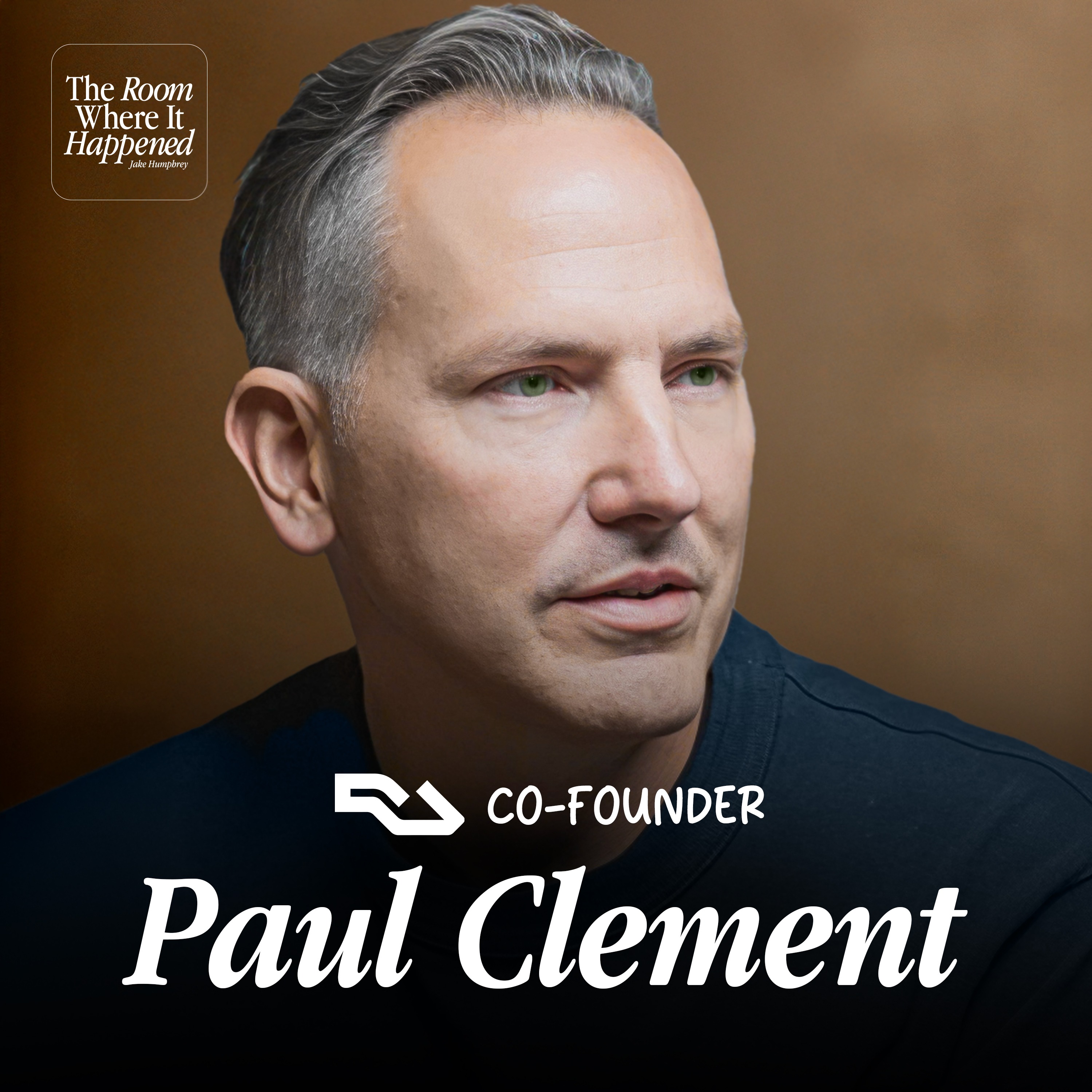
In this episode, Jake Humphrey interviews Paul Clement, the founder of Resident Advisor, a global music platform that emerged from a genuine passion for dance music and community engagement. Paul shares insights into the early days of his venture, the evolution of his business, and the challenges and triumphs he faced along the way.
Written by AI. May contain mistakes.

Get the gist, explore an idea or ask about something said.
 Claude
On High Performance Business, what are the key points of this episode?
Searching your listeningAutomatic transcript. May contain errors.
0:28Welcome to the room where it happened. all founders face at some point. When do I go all in? When do I quit what I'm doing to find out whether I can really make this into something? And here we are now, 25 years later, and Paul has built a global business. Before we get going, please do hit subscribe. It means you're going to hear the new episodes before anybody else. And we've got some amazing conversations on their way. So hit follow, hit subscribe. But right now, please join me in welcoming Paul Clement to the room where it happened. So before you take us into the room that you've chosen to share, tell me what your life was like at this early stage.
1:06What was going on for you? If we step backwards from, you know, this moment around 2006 to when we began, you know, it was sort of year 2000. It was quite early for the Internet. And I was working at a creative agency as a, you know, what now feels like me as a kid, like I was 19, 20 years old. I was still full-time at university, and I managed to get a job as a young programmer. But I crammed that into two or three days a week. And at the same time, one of my workmates slash friends that we used to go out a lot with, because we're going out every, probably most weekends. You know, I still remember he kind of came in to himself this one morning.
1:50And he was like, oh, hey, Nick and a friend and I think about starting a website on dance music. Do you want to be involved? I was like, sure, cool. Like, what does that mean? There wasn't some deep strategic idea to grow a business or something. It was just like we were so passionate about this thing. And the scene in Sydney at the time was, you know, if you went out every week or so, you start to get to know more people, your friends, friends of friends, you know, starts becoming quite a neat community of sorts. Yeah, it was a hugely influential part of our lives at the time. So what were you trying to solve with this website?
2:31Was there a plan to do something specific? I think at the time, there wasn't a lot of information online. Magazines weren't online, at least like the professional, traditional ones. You know, newspapers weren't really operating that well. And because we had the ability to build things, it just seemed like such an, you know, we're passionate about music. How do we, you know, be part of that? And it was, you know, the literal ability to write about what was going on, the parties and shows that were happening. And this is in Sydney at the time. It wasn't called Resident Advisor from the very beginning.
3:07Yeah. And why was that the name? Kind of connection to resident DJs, you know, I guess providing advice and coverage. We pretty quickly realized when you write about a party in Melbourne or Sydney or whatever at the time, the audience is a small number of thousands of people. If you wrote about an album, the audience was anyone online interested in that sort of music. And so that helped just from the very beginning. It was writing about what was happening in music and also events. and so that genesis of you know news and features and reviews as well as the sort of like listings was there from the very beginning and that you know to this day is still somewhat the same it's just a you know it took us some time to get better at it and learn you know what is publishing what is good editorial what does it take to be a writer or have a team of writers yeah it was kind of just a naive, idealistic approach to doing something.
4:10You know, you just, we're just taking steps and making decisions along the way without any sense of master plan. So you weren't being strategic. And we didn't have a business plan. You know, we started with, there were four of us at the very beginning. Within two weeks, there were three. And a little bit while later, my coworker at this agency had moved to London and, you know, got a job and stepped out. And Nick and I started the company with$400 Australian dollars. So you went from four people to two people. In the space of like two months. Yeah, most startups try and go the other way and add more people as they go.
4:46And so, you know, we started with effectively nothing, you know, incorporate a little company and serve costs for my credit card. And that was basically it for the first few years. And one of the things that I think, especially when you look back at the time horizon of 24 years or whatever, we built a system for users to create content or manage information because we had no other way to do it. We didn't have the resource to pay people to do it. So it was effectively easier for us to build the tools to enable people to submit events, you know, artist profiles, listings, you know. So you were both very computer literate at the time, right?
5:27You knew your way around, what, coding and building websites and stuff? Yeah, because that was effectively my job and I was studying business and computing. And so, yeah, we were kind of like, I guess, when you look back early to user-generated content, because we had to be. It wasn't because we were like, this is going to be the future and we need to be strategic about building a, you know, whatever business. And how'd you quit your job? No, so we, it took, it was probably five years. You know, I kept working at this creative agency before and after the dot-com bubble burst originally. And then I moved to London, got a job at another creative agency here.
6:10And so by the time we got to taking that leap of faith, it's five years in. Professionally, I'd finished my degree. I've got six, seven years experience working. And that, arguably, like that work itself taught me, at least me personally, at a technical and programming level, the ability to build systems. and so in the back of my mind when I'm you know waking up at 6 a.m working on our project then going to the office working for another company coming home at night having dinner or whatever and then working till one in the morning or something effectively like start applying what you've learned in in a professional career to this thing that we're wanting to create and what was the energy at that point because that feels and sounds like a very demanding week right It was intense, but it never felt like a job.
7:06Work was work. You know, go to the office at 9.30 or whatever, do the job, go home. But the experience was life. It was going to parties, traveling around the world. Even though at the beginning the impact was small, it grew organically to a point at which by the end of that first five-year period, you know we're reaching quite a lot of people and you know and even like you know i'm new kid at this london agency and the new biz guy comes back into the office and he was like you have this you have this company resident advisor right and i was like yeah he's like we were just pitching to brand to do their i don't know what like creative work and they referenced your company as somewhere they want to be connected to and that for me was like mind-blowing that this thing that we're doing had reached the interest levels of the company that i've been paid to work for is coming back and and also i guess at the time like the audience wasn't insignificant it was hundreds of thousands of people every month yeah um we just hadn't you know we hadn't planned And for it to be a business, we hadn't worked out how to make good money or enough money to do more than cover basic costs.
8:30As well as we started paying our editorial staff before we paid anyone else and took on basically an ad sales type role. And those things effectively fed into the ability for us to then take that leap into full time. before we go into the uh the leap um i think there's so many great lessons though for entrepreneurs and young founders and people just starting out because these days i think we're so people are talking to me about an exit before they've even set the business up they've already got their five-year plan before they begin they've already setting themselves often hugely unrealistic targets and when you actually speak to them a bit further and delve a bit deeper and you find out what is your driver what is your passion what is your reason for creating this business they say well the exit the freedom the wealth the money and i just think it's such an unhealthy way to begin because if you don't get those financial rewards then there's nothing else to keep you going there's no other thrill around this you know if you can find what you found which was a passion-based business that regardless of whether it paid you or not you loved it reminds me very much of when i started podcasting i didn't pay myself for the first two or three years and paid everybody else but it was okay because i really loved doing it and so i was happy to let the business build and build slowly and build organically and build without any investment because i just bloody loved it and i sort of get the sense that you maybe felt the same like you didn't mind you didn't resent not paying yourself maybe in those early years no i mean it wasn't even a thought it was more the question was one effectively of sustainability um you know if you can be profitable month to month forever and you love what you're doing, why would you ever change?
10:13You know, that profit might have been£100 or£1 ,000 or£100 ,000. It doesn't really matter. It was more if you're operating within a world of sustainability that you've created. I mean, granted, having to wait five years before you can start to do that in a meaningful way is a lot to ask of anyone or anything these days but i you know looking back i don't think it'd change it a i think it was important you know we started when we were young we didn't really know a lot about the world at that point like and arguably even by you know uh 2006 or whatever we weren't you know we're still making our way in the world but far more ready to to have at it and to do it with conviction but i don't you know i can't really speak to you know private equity vc game you know we still nick and i still fundamentally own 100 business and and we haven't taken any external investment that these days is quite rare and rarer than you know you probably like it to be in a world where you know the ability for you to contribute to the world in a way which you care about or you know, that drives you to get up in the morning.
11:29It's very different if it's, you know, purely financially motivated of start the thing, sell the thing, make some money, then do other thing and repeat. Like, I don't, it's not something of interest. One of the issues we have now is we live in a world where everybody's in a rush because everybody sees everybody else's success online, right? So they're constantly comparing their own thing to everyone else's. And I think if we live in this world where we're setting up a business to have an exit in the future, then we're basically saying right the joy is going to come down the line the joy is going to come in five years the joy is going to come when i have an exit the magic of a purpose-driven passion-driven business is the joy is there today regardless of how much money you've made that month the cheesy one-liner is like the journey is the reward but it is actually true though and i don't it's a good instagram quote but it's also true you know i think it was i mean many years ago we'd be approached by interested investors or whatever.
12:28People would ask, oh, you're going to sell the business, whatever. At the time, my comment was always the same. What am I going to do with myself that's going to be more impactful and meaningful in something that I care about? I still haven't got an answer to that. Not to say that I've hit the ceiling of life or something and I'm not going to do more than this, but we've had a good time. If I offered you enough money to live in a life filled with purpose or more money than you need and no purpose in your life, which one would you take? Well, I mean, that seems like a silly question, doesn't it?
13:00You'd be an amazing amount of people that take the money. Well, like, you know, I guess the way that I've looked at it is, you know, if you, the reality of life is money is necessary in, you know, in the structures of the world that is created around us. If you can get to a point at which you can afford life, that doesn't, you know, that's obviously going to be contextual to an individual's approach to you know what they want in life but if you if you could reach that level you know you're free you're free to do what you want in a way which contributes to theoretically something you care about the notion of like what is retirement i haven't got a good answer to that question so let's go then to the moment that you keep referencing five years in when something changes i suppose the first question from for me is it feels like you're in a great place you've got a purpose-driven business you're loving doing it it's making enough money to employ a few people you're having an impact you've got a decent size audience of hundreds of thousands of people a month why did you make this decision to professionalize pretty early on you realize like if we could just do this it would be it would be a significant change and and why would you want to work for someone else you know you know at the time building interesting things for great brands and whatever like i i just built the Barbican's website.
14:21That taught me a lot about cultural institutions and how they work and manage events and things. But I guess we got to the point at which we could pay ourselves a menial salary, which probably isn't even standard living wage these days. But there was a sense that, okay, if we effectively pay ourselves near nothing, enough to maybe contribute to costs, but we can at least have a full crack at it for the coming year or two and see how it goes. The idea of tickets was floated a few times over the years, and while it felt late, it was very much a turning point of with this infrastructure in place, we can build a ticketing layer and checkout process within our service.
15:07And I spoke to Dave, who was one of the four at the very beginning, one of the guys I used to work with. And I was like, you know, do you want to come back on board? Like, you know, work with me because we were both developers at the time. Like, work with me on the ticketing side, you know, as I, you know, clean up the front end and effectively help us launch tickets. And having him back, it's kind of like a, you know, sweet, magical thing. Like, he was a good friend. It very much felt like a defining moment. The ability for us to relaunch the platform got that done. And then, you know, in the following year, moved to Berlin.
15:48We launched tickets in 2008. You know, Berlin was our first proper office. And from that moment, the ticketing service worked from day one of it being live. And from there, sort of felt like we had a business. So you're sort of eight years in, coming to the point at which this thing unquestionably has found a place. So this period where you've made a really fundamental decision, right, to go from kind of providing editorials and a real community and for people feeling, I guess I'd say like you're on their side, you know, you're one of them, you're in their world, you're talking about the thing that they love.
16:23And now suddenly you're pivoting from something that's primarily community based to a clear business. You know, you're selling tickets through RA. The way I think about it is we enable promoters to be successful or we enable promoters to better run their events and grow should they be wanting to or be successful in how they operate and run their shows. I think the element of ticketing for us was a service we built off the back of an event discovery platform. So not all events in the system are ticketed. You know, far from it. Actually, the most important data set we have is the events-based data.
17:10Ticketing is a service for some promoters and clubs to utilize. And that has meant that the fundamentals of the business, in which we're aiming to support, you know, discovery of what's going on and whatever, in a way which isn't directly self-serving from a ticket sales perspective was important. Is there always a bit of double jeopardy though with your business? Because when you launch ticketing, you can just get it wrong in terms of get the processes wrong, get the platform wrong, get the messaging wrong, and it doesn't do well. You don't sell very many tickets. But also you could sell a lot of tickets, but get it kind of culturally wrong.
17:53You could do things that made people feel like you were no longer RA. You've kind of changed. You'd become about turnover and profit and earnings for yourselves. Was that on your mind? You know, we'd built things that failed in the past. We tried stuff that didn't work. There was strong conviction in the fact that because of the way people were using the platform, we knew that people were coming to find out what was on. So it was a sort of no-brainer. And thankfully, that played out. I think, you know, the question of the risks associated with a successful business connected to what you know ideally is a platform that represents the community um you know one of our one of our company values is purpose over profit and it was some point around i'm not sure exactly what year it was but probably 10 years in that as a company we decided to write down or try to write down our values you know it's funny like you've had a business for 10 years and you've never actually written down what the values of the business are and that turned out to be well you know in a way the exercise seemed quite corporate and and and throw away but actually ended up being really powerful and and what i realized was we were actually defining in a way the community's values and you know applying that to ourselves and not to say that we are able to define the community's values because that's also an impossible job but that set of values gave us the ability to rethink how we hire yeah every single role doesn't matter if it's you know finance development whatever they had to you know live those values they had to be passionate about the scene they had to you know care about the past present and future of electronic music because if our staff didn't embody that that there would be countless other people that would love to be in that seat and have that same sense of passion that they're going to come to work you know in a different form it's not just a job it's not to say we're asking people to work infinite hours or whatever i mean but it was just the the connection and commitment and understanding of what um you know what it was like for you know the audience we're serving and i think we will have a lot of either entrepreneurs who have an idea and haven't activated it or people at the very startup phase of their business listening to this and they're fearful of the the step where they actually turn into a proper genuine business partly because if it fails that's like a big failure in their minds i don't know whether that was something that you thought about we can maybe talk about that but it's no longer just a game it's no longer just a side hustle it's no longer just a passion project but also the lack of knowledge about business so did you did you seek some advice or some help or did you did you train yourself into how to run a business because suddenly things need to be a bit more serious i guess it's funny because i wouldn't say there was there was a lot of support within the community and i think the the neat thing about the world in which we work or operate the community is also the business you know the promoters and the artists and and the labels and and the various people that work in in music are also on the dance floor they're also participants in the scene they're also making up the audience yeah and so we very much felt like the community building for the community so we're in service of this world and so there was always a a deep level of support and connection there but from a business perspective i don't you know it's hard to feel like there wasn't any guidance or advice on how you do it there was no you know strategy we didn't have a board and to this day our board is still you know nick and i and our ceo and um we're you know working on how we fill that out but this is 24 years here yeah and when did you decide to employ a ceo out of covid right uh it was a big change but i think if i think about like what are some of the universal lessons learned i think there's there's an element of hustle and finding your way you know you know if it's obvious and everyone's doing something obviously it's going to be saturated um having conviction and i wouldn't even say we were like the first you know we weren't the first to create a mobile um a mobile first platform but we were early enough uh and had full conviction and executed it well.
22:26So in, you know, 2013, when we launched that mobile-first platform, there was very much a feeling that, okay, we've cemented the next five years. Like, this work that's gone into replatforming and optimizing for mobile will give us the next five years. And that sense of, like, stability and future was really powerful. You know, being early to podcasting. We launched a weekly mix series in 2006, which is heading up to its thousandth episode in the coming month or two. 2006, you were podcasting? Yeah, weekly. Every Sunday night at midnight. I thought in 2019, I was an early adopter. 13 years behind you.
23:08You know, but at the same time, like tickets felt late. 2008, it felt like we were a decade late to start doing tickets. And so it's kind of like, there's a few contradictions, like being early maybe you don't need to be yeah just doing it with conviction with purpose for a specific audience i think is um you know something that's been really valuable how much time did you spend looking at who was already in that space what they were doing and how you can do it better how much as opposed to none yeah we didn't look at all we just like you know you didn't look at all no we're like you know there's an opportunity to create a podcast, start putting up mixes via...
23:50So how did you know what people wanted? I mean, we knew within our world what artists people were interested in. We knew what was interesting to us because we were in the clubs. We were out. The team was out. There was forums and chat and comments and we're covering things in news. We get all the sense of who's interested in what, you know what albums are impactful or exciting yeah the sense of like who sells out shows is pretty easy to to get to when that's all you do and and so the the culmination of like uh a bunch of different people contributing to the to the platform and then you know we took the podcast pretty seriously there were like four or five people at any one time vetting every mix you know working out you know if it was worthy publishing it at a certain time you know sometimes sending them back i mean there was a period where we were inundated with mixes so we couldn't publish anywhere near as you know as much as we'd like so we had to be pretty hardline about what did make the cut but you know that was just because that's what made sense to us there was no like rule book or advice or guidance on what you should or shouldn't do we just did what felt right to us and i think that's probably been you know we didn't know how to publish things we didn't know why you know artist x is on the cover of magazine y we did it because we cared about it in just the sort of fundamental sort of way there's a real thread running through this whole conversation that the passion for the music industry was there all along.
25:31And I very often speak to founders who are finding that they haven't got the momentum they would want. And they say, well, what is it you're doing? And they tell me. And I say, how do you know that's what people want? And they go, well, I really want it. And I think people want it. But it sounds like almost all of your time was kind of unwitting market research because you were in the clubs, you were having the drinks with these people that were using your website. You were going to the events. You were seeing what people loved. You were reading the other websites. You were fully immersed in it, which was kind of your version of deep market research, which a lot of people don't do.
26:06Yeah, I think, you know, it obviously helps to have great people. What's the secret to hiring great people? This is going to vary for different professions. But I think, especially in a creative sense, some people are only going to work for someone who they have respect and admiration for, especially if you talk about, you know, editorial, you know, designing creativity, probably also technology and programming and things like if if there's no uh appreciation for and understanding for the nuance of what makes editorial truly special i think it limits your ability to have the best contributing to that but you know in various forms like the the ability to have great um curation and and editorial insights and understanding also people that understand music and trends and what's going on gives you or gave us such a great insight into like okay like a we're not creating content for the numbers we're we're publishing a story knowing it's not going to go well we're going to write 10 000 words about an artist that no one cares about because we have a feeling or we have conviction in this is a sound or a moment or something that is worth telling, you know, that may or may not be part of the future.
27:27But I think the underlying narrative for us that, you know, nearly 25 years in feels somewhat consistent is, you know, at the very beginning, the scene was small. You know, the clubs were smaller. There weren't these mega 100 ,000-person festivals or whatever. And I think our growth was, in a way, in parallel or in some sort of symbiotic relationship to the scene. Not to say we grew the scene because, you know, that's obviously, you know, not something we set out to do. But I think we grew with it. And with that, I'd like to think we helped move it forward into the future and benefited from its increased, you know, reach and audience and the connectivity that, you know, the fundamentals of the Internet provided.
28:16And so our growth and our story is one of, you know, supporting a world which we care about. And I guess in a way, you know, benefiting from that. Can we talk about where the industry is at the moment then? Because, you know, sometimes I see negative news stories about ticket websites having issues when people are buying tickets in their droves for a big gig. and the reason why I think that creates such an issue is because the relationship between a music lover and a band or an artist is not like you've gone to the supermarket to buy some eggs like it's a much deeper relationship you know you feel like they're part of your life and you're part of their life how do you remain at the heart of what's going on in the industry with the rapid changes that we've seen whether it's the creator economy becoming huge whether it's artists wanting to take more control, whether it's record labels having less control, whether it's AI coming to the fore, this ability to kind of adapt and mold your business to what the industry looks like, I think has absolutely been a superpower of RA from what I've seen.
29:19Yeah, I guess, you know, you couldn't start how we did today and expect to be successful. Like, times change, things change, you know, like what AI's influence has on society and business will, you know continue to play out in the coming years but i think like you know there's obviously pros and cons to any change um what technology enabled was breaking down the barriers to entry for you know people having access to tools to create music or sharing music or mixes or you know um education knowledge the fact that kids can dig into the deepest corners of any form of passion that they have is a huge change.
30:03I mean, you know, you make case that like a global creative economy becomes some monolithic soulless monster or something. But at the same time, if you travel the world, you go to different cities, countries, cultures, the way in which they enjoy, embrace, play, you know, music or engage in those sorts of things is still very unique and different there's questions around challenges that industries face clubs under pressure closing you know big promoters the live nations of sorts love to get beaten up in those sorts of contexts but you know i mean at a fundamental level staying relevant in in a cultural world is needs to forever change you know in support of it you know i think culture by definition is always changing what do you have to be in 2025 to remain relevant i don't know you know i think that there's a sense of connection to to what's happening not you know as we've been doing this 25 years like i'm not the new age future of this scene um and so the role that we play needs to continue to adapt and support that and i think you know younger generations will always define and redefine what existed before them you know at times without a care for what came before either um you know some people can take an inspiration from but sometimes it's great to forget about all of what was and just do a thing because you enjoy it what does ai mean for creativity as someone that's spent a lot of time in technology I see it being infinitely valuable.
31:52The concerns about its impact on the historic systems of 9-to-5 work and work at a fundamental level is a challenging thing to address or contemplate where are we in five years down the line. if the ability to develop systems and tools and the barrier to entry to that comes down in the same way that it did for musicians or whatever, that puts historic organizations with resource and technical teams at risk of being put out of business by smaller, more agile teams of people creating new tools. But I haven't got, you know, I don't, I think our approach to AI is one of exploration, you know, utilizing in a way in which if it can help us be more effective and efficient and serve, you know, the audience who are aiming to support, then, you know, great.
33:01But I'm, you know, I love the fact that you can create infinite versions of stuff, but you know what point does that have meaning and soul and purpose am i right in saying you worked or you had a relationship with avicii uh i met him once twice um you know i think that the that big you know edm boom was one that came from dance music and inspired by and very much part of but because when when you watch footage on the internet or one of the documentaries about how he worked the music was great but the music was greater once you'd seen how he put himself into it and how he it was his take on the world and i suppose i wonder whether ai changes that i think the the true creative genius super talented producers of music i don't think are going to be you know wiped out by ai or something you know probably levels up broader music at large or creative industries or whatever but you know the magic that makes you know certain uh creative people that cut above is is pretty special um and i think you know if anything if you think about a scenario in which if the barrier to entry to making music has is gone down there's an infinite supply of people playing with music as a you know a side well not even a side project just for fun and that uncovering really talented you know people that are natural or have a unique style or sound and that rising to the top i think has been part of where i guess how music has to me gotten more interesting more i guess uh technically um diverse and more more creative So do you think in the new world that we're entering, actually, the human side of what you can offer becomes almost more important?
35:05There's been moments within, over the last 20 years, I think there's been phases where as the different worlds have grown, as more music is being released, as there are more artists touring, as there are more shows and parties and people, as a publication, it's harder to try to represent that. You know, you go back. 10 or 15 years and you could make a case that okay we've heard all the best albums of the year and and been able to you know distill that into good guidance and recommendations of what you should consider listening to these days it's far more difficult and i think i don't i haven't come across i mean you know algorithms are getting better and all that sort of stuff but i think with AI and the connection to infinite guidance and advice, I think people may or will look to specific curators and real people that they would turn to for recommendations and insights into new music or whatever it may be.
36:17So are you excited about the future for the music industry? I mean, I'm optimistic about the future of music always. By and large, most people on the planet enjoy music in some form. And it's been an absolute gift to be able to do what we have and work in the way that we have. You know, never take that for granted. Where have you now got offices? Our main offices is in East London. we have a sort of secondary space on the same sort of little street. And then we've got an office in Manchester, Berlin, New York, LA, Madrid. We've kind of ebbed and flowed with some offices. You know, we had a space in Tokyo for a long time, in Sydney and whatever.
37:01But we've tended to have, because we started with a remote bunch of people in different parts of the world, you know, offices, we effectively set up offices where people were. And how many people work for you now? Around 100 full-time. There's a couple hundred contributors usually in any given year. And with the size of the business and the global footprint and the hundreds of people that are involved and the hundreds of thousands a month that you impact and you reach, do you ever get overwhelmed? I think there's moments where you go, actually, that's a big salary bill for the year. But because it's been organic, effectively we've grown exponentially year on year forever by 20 or 30 something percent.
37:51It's slow enough to be at a pace in which you normalize it. And so little wins at the very beginning, the first time the local street press wrote little sidebar news of our launch, felt as big then as some huge win for us now, curating a festival stage and having 20 ,000 people or whatever. The feeling of success is still the same. But we've been lucky that I think our journey has been so consistent and slow. What are you most proud of? Probably just the underlying impact on people's lives. You know, tens of millions of people a year for, you know, 20 years. Consuming a culture that is meaningful to them.
38:44You know, someone popping up in a city that they don't know well, using the RA guide to find out what's going on tonight. Having an experience that was unplanned, unexpected and something, and they attribute that in a small part to us. Like that happening millions of times is, you know, is something I'll forever be proud of. And look, you and I are the same age, you know, 22. 23. You can't do this forever, right? So I love the fact that you're proud that you've grown organically. I love the fact that you're proud of the fact that you've taken it slowly in a world where everyone seems to be in a rush to be successful.
39:24have you thought about what an exit looks like and when an exit looks likely not in any meaningful way that has an answer like am i the person to define the you know 22 year olds of of tomorrow's you know world of culture and music and clubs and whatever that is like no you know what role i play with it long term is a question that you know i ask myself but But also, in human history, not many companies make it to 25 years, let alone 50. I don't know. I haven't really got an answer to that. And your advice for people who have got something that they're deeply passionate about, but they haven't yet taken the leap to do something about that in the world of business?
40:14I think in a way, it's easy to come up with ideas. And it's easy to see an opportunity. but actually doing it is where it matters. Persevering, having conviction, being committed to something. I mean, we could have probably worked in many other industries and been more financially successful far earlier or something but maybe not, I don't know. Having conviction and persevering in something you believe in, should that be possible. Cheers, Paul. Thank you. Thank you.
Paul Clement never set out to build a flashy startup, he set out to build something that mattered. Born from genuine passion and a deep connection to the community he served, his business grew not by chasing trends, but by staying grounded in purpose.
In this episode, Paul talks about the power of building slowly and sustainably, why loving the process matters more than chasing quick wins, and how adapting to change doesn’t mean losing your identity. From bootstrapping with intention to making decisions based on evidence, not ego, his story is a masterclass in thoughtful entrepreneurship.
It’s about staying true to your values, trusting your pace, and creating something that lasts.
IFS - award-winning Asset & Service Management software
👉 Reimagine your operations at https://hppod.co/ifsai
Heights 👉 Join Jake in maintaining your hydration. Get 20% off with code Room20:
Audio Link: https://highpfrmc.com/heights-hydrate-au
Hosted on Acast. See acast.com/privacy for more information.


