Ask ChatGPT
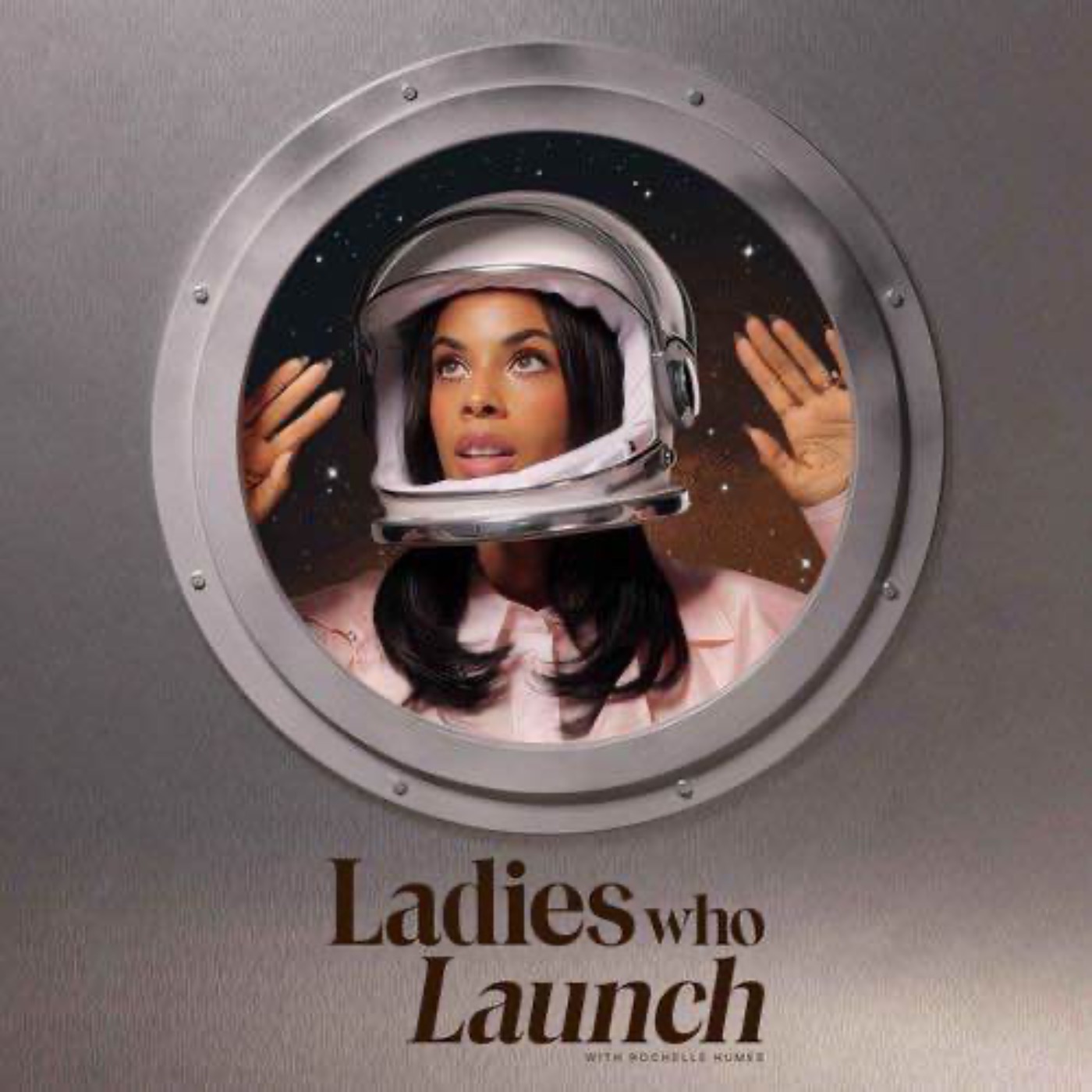

 Ladies Who Launch
29 Oct 2025 · 57m

Ladies Who Launch is an empowering podcast that showcases the journeys of women entrepreneurs who have made significant strides in business. Hosted by Rochelle Humes, the podcast features inspiring stories and invaluable insights from female leaders who have pursued their dreams fearlessly.
Written by AI. May contain mistakes.

Get the gist, explore an idea or ask about something said.
 Claude
On Ladies Who Launch, what are the key points of this episode?
Searching your listeningAutomatic transcript. May contain errors.
0:12Today I'm joined by Anastasia Soare, the founder of Anastasia Beverly Hills and the woman who turned eyebrows from an afterthought into a global beauty category. After emigrating from Romania, Anastasia translated her craft and started an iconic business with just£5 ,000 and turned it into a$3 billion brand. So let's find out why she's a lady who launched. Well, thank you so much for stopping by and coming to have a chat with me. I'm so, so pleased to meet you and get to learn more about what I already know. I've done my research and I've known about you for many years and I'm just so so in awe of what you've managed to achieve it's so so impressive so thank you so much first off um I like to start every conversation in the same way and that is sort of digging a bit into the younger you because I really think when it comes to entrepreneurs there's that real connection between early life and then their founder or the entrepreneur they then grow on to be.
1:19So tell me a little bit about you when you were little and where you grew up. Well, you are very true. Thank you. First of all, thank you so much for having me. Second, I think you are very right. When I start last year, I started writing this book, Raising Eyebrows, and I start looking back my life. and I start kind of looking at things that I probably never had time to look or I wasn't maybe interested in looking and I realized that the first 30 years of my life I lived in Romania I was born in Romania I lived there during the communist regime and I came from a family that was emigrant in Romania.
2:08They were Macedonian during the second war. They emigrated in Romania. So as emigrant in Romania, not myself, I was born there, but my grandparents and my parents, I was able to kind of see their struggle to integrate to the Romanian culture, Romanian community. They were lucky enough to come with a big group of people, family, the entire community from Macedonia. So they kind of start building almost like a village together. But there were different struggles. And I think I was able to kind of learn a little bit about that struggle. but my grandfather, that was a huge figure in my life, was a good and great mentor for me.
3:02He was an incredible smart man and very determined and he was so poised and able to never give up in all his dreams. Of course, he went to Romania. He built a house and a whole community. When the communist regimes became stronger by late 50s, they took his house, land, animals, and he moved to the city and built another house for three of his kids. and after probably 12 years, the Ceausescu at that time passed by with the car and he said, oh no, we should demolish all these houses and we should build apartment buildings. So they demolished, they took that house as well and he ended up in his 80s in a two-bedroom apartment, fourth floor with no elevator.
4:01and he was never that type of man that would complain. He would always see how we could change, how we could, you know. Like find the positive. Find the positive. And I remember one very important moment where one of my uncles that lived in the same compound when they took the second time the house, he started crying. I mean, he was a growing up man, probably in his 50s. and he couldn't believe that they would take the house. It was a new house. And he looked at my uncle. My grandfather looked at my uncle and said, you know, I built five homes, and they were destroyed or taken away. We don't have time to look at the past.
4:51Let's look at the future, present and the future. Let's see what we could do better for us. So this was his attitude all the time. So I grew in this loving family that every weekend we'll get together at my grandparents' house. And my mother had six siblings and everybody, all the cousins. We had some amazing times together. I think I was able to witness the resilience that the community had, the family, the love, and everything else. And I went to school in Romania. The good part about that communist era was the school was amazing. On TV was nothing for us to watch because it was only communist propaganda.
5:40And we used to go to library and spend a very long time reading books. And education was excellent. I had the most incredible teachers. And by late 70s, almost early 80s, it was unbearable. It was impossible to live in Romania. So I decided to leave. My husband was ship captain, and I convinced him, because he didn't want to leave, convinced him to escape, to defect. He was in a port in Italy, and he defected the ship. He went to American embassy and asked for political asylum. So that was half of my life that I think made me, without even knowing, learn me how to be resilient, how to be really adaptable.
6:44Because in Romania, you had to learn how to survive. Yeah, yeah, yeah. You know, nothing was handed to you. Again, early 80s, you couldn't, everything was on the black market. People couldn't buy food. So you had to find somebody that you were connected, you exchanged. We used to, I remember we used to exchange goods from, because my husband was ship captain, he will bring jeans or cigarettes or stupid things, coffee, and we'll exchange with food. So you had to find ways to survive. And, I mean, that in itself, and obviously, like you say, the struggle of that pushes you into finding those ways to survive.
7:28At the time, that's life and that's normal. And I suppose you don't have time to sit down and take stock and think, what is this teaching me? But like you said, it teaches you that different level of resilience. I suppose also values that, you know, those family values and what kind of those sentimental values and what that means to you. Also, like you say, trading coffee or jeans for food. Almost weirdly, the struggle makes you learn entrepreneurial values. Absolutely. At that same time. Yes. And I suppose it's something that you that you don't ever really get to sit down and go, how has this happened or what what am I doing today that I take a little bit from my past I suppose writing the book for you yes must have brought everything to the surface totally everything when you when you I suppose being a sponge and you've got your grandfather and that family presence it's a real kind of strong influence on you when you were studying at school and kind of really enjoying that great education what was it that really interested you what what kind of what was your passion at that age I at that time I had so many things that I liked I was a gymnast I went to art classes because my art teacher was amazing and after school we we had the club and We used to go and paint and did sculpture.
9:00Or I would go to the library and read. We used to read a lot. We had clubs. We were friends, and we'll get together, exactly how in America right now we have book clubs. We used to do that in Romania. And reading books was a way to separate the classes. Yes. If you are an intellectual or you are a Caminer, so reading was very important. Education and reading was the only way because everybody in a communist regime, everybody should be the same. And I think was, I really, when I was in Romania, I really never knew that, oh my God, I'm so passionate about something and I'm going to be, I don't know, an artist.
9:53I had so many interests, but I never thought that I'm going to stay focused on one lane. And in Romania in the early 80s, women didn't have too many choices. You had to get married, have kids, and, you know. Follow suit. Yes. Yeah, yeah. So that was probably one of the reasons why I really wanted to leave. do you know you're right and i'd love to hear you say that actually there were so many things that interested you because i think sometimes as women really talk like what is the focus what are you what are you what do you do and i think we're such sort of like multifaceted humans where there are lots of different things that interest us yes and that's okay to try a bit of everything absolutely i think it's very healthy to try everything because once you try you know okay I like this or I'm okay with this or I'm really passionate about this so I think for young people that are listening I think I encourage everyone to try everything that they can they should be like a sponge and at the end when when they will be ready they will think okay I'm really passionate about this something I'm gonna go for it yes yeah yeah so when you you have that conversation with your husband which I can imagine is quite a big one to say okay we I want out I want a change it's a really brave decision even though like you say Romania at that time is a hard place to live it's also a really brave decision to leave everything that you know and kind of that your safety network the people the family community it's the community is a really big decision how How did that conversation go with your husband?
11:41And was he instantly in agreement? No, he didn't want it because he used to go to... It sounds like many conversations with my husband. In 78, he went to the United States, to Houston, was a trip that he needed to do. And when I told him that I really want to go to America, he said, you don't understand. It's very difficult. Number one, you don't speak the language. Two, we don't know anyone. we have our family here is the support the community it's almost crazy for you to think that we'll be okay there and I don't know for some reason I wanted to go to America and how tough was the first that first kind of you decide to come you make your way and like you say the language that's that's a huge thing did you feel intimidated at all or was it like an instant I want to better my life and America's where I'm headed so when I when he was first of all he was speaking the language very well I didn't and he still was convinced that is not a good idea to to go to America.
12:56And I really told him that it doesn't matter. I want to go. The moment we got to America, it was, I think the first six months I cried every day because not only we didn't know anyone, we didn't have the money. I didn't speak the language. And it was very difficult to communicate. It's not like I felt embarrassed or like I felt hopeless. So I wanted to, I remember I went to a supermarket and the guy was asking me plastic bag or paper. What do you want lady? I didn't, I couldn't understand. And I wanted almost tears in my eyes. I want to say, you know, I'm really smart, but I don't understand what you are saying.
13:45And that's what I always find that like when people speak English as their first language because we can get to most places in the world and we can get by and I always feel for people when they move here or move to the states and don't you know don't speak yes I feel like there's that kind of urgency that to learn you know well we go to different countries and we'll be like hi we want that and just expect somebody to understand us but to kind of be to have no choice and to be in those situations and living life. And it was very difficult. We are talking about 34 years ago when Romania was completely blocked.
14:23You couldn't go anywhere. You didn't have TV. I didn't know what a credit card was, what the check was. It was like, if I will take you right now and drop you on the moon and say, hey, you have to find a way to survive. It was exactly like that for me. So how did you go about it? What become your sort of lifeline at that time? Like you go from crying every day and thinking, gosh, this is hard. What was it that kept you there and sort of, I suppose, yeah, kept you going? Well, first of all, I landed in L.A. July 26. It's like polar opposite, isn't it? 89, okay. And in December was the revolution in Romania.
15:09They killed the president, and we couldn't move back. I mean, right after I came, the first week, I would go back to Romania because I didn't like it. Right. But they would put my husband in jail because he was an immigrant. Yes. He couldn't go back. Wow. You have no choice. I had no choice. We had to stay, bite the bullet. and in December was the revolution and then was little hope because I thought, okay, let's wait and see how that will fold and we could go back in six months or a year. So it was that little hope for me that we could go back to Romania. And I was watching TV. After like two, three weeks, I thought, okay, I need to do something.
15:57Let me go and take some classes to learn English. and he bought me a car because we didn't have enough money,$200, a beat-up Ford that I think was as big as this room, and with a steering wheel that was like a truck. And he put on my lap a Thomas guide, which is a map. It was a map. It didn't exist. GPS. And he said, this is north, this is south, this is east, and this is west. Go and figure out. You wanted America? This is America. And I got in the car, and I used to drive to learn the streets. Right. Yes. And I remember I had to learn how to drive on the freeway because we didn't have freeways in Romania.
16:52Thank God I knew how to drive, by the way. Yes. Because in L.A., you are dead if you don't drive. You can't walk anywhere in L.A. No, exactly. Exactly. And it was hard, but I was very determined to learn. Yes. So let's talk about how that determination, because it keeps you there. Yes. And let's talk about your passion for beauty and how that then evolves into starting your own business. So when my husband came to United States, he called me and he said, look, I don't think you could get the job here in your field because you don't speak the language. I met somebody at church. It was a group of Romanian women, and they were all doctors, engineers in Romania.
17:43And here they are esthetician. because in the beauty industry in the early 90s, every esthetician was Romanian from Easter Block. And he suggested I should go to beauty school. So I went to beauty school while he was in the U.S. because I had to wait two years and a half to get my passport. The Romanian government didn't give me the passport immediately. So I went to beauty school. I got my license. And when I arrived in Los Angeles, I met one of the ladies that Victor, my husband, met in L.A. And she was pregnant. She's supposed to take three months time off for her having the baby. And we made a deal.
18:36She suggested I should work in her place, replace her for three months while she was in a maternity leave. And then when she will be back, I had to leave. And it was a great opportunity for me. I thought, OK, at least I could learn something. And it was I never by the way, I never worked in the beauty industry before. I studied construction engineering. Absolutely nothing to do with beauty. I loved beauty, but never worked. But you didn't have that experience? No. And I used to go every month, every week, the salon getting facial and the whole beauty. My mother used to love beauty salons and all the treatments.
19:22And those three months were an incredible experience for me. And I gave 110 % of myself. I wanted really to learn. And when she came back, Mihaela, my friend, the owner really liked me, and she offered me a position, a permanent position there. So I started working there. For two years I worked, and I was surprised that nobody paid attention to eyebrows. And I remember my art teacher always saying, if you want to draw a portrait, you want to change an emotion, you change the eyebrows. Wow. And I bought a portable camera because we didn't have cameras in Romania. And I started taking pictures of the family.
20:10And I couldn't believe that. I kind of looked surprised in all the pictures because I was a victim of pencil-thin round eyebrow in the 80s. We was all there. That was the fashion. So I thought, this is the eyebrow. My eyebrow gives me this look. Right. So I started going to the library to revisit the Leonardo da Vinci study that my teacher always talked about. And I developed, I start fixing my own eyebrow. And that way I started developing this technique on how to shape eyebrow according to everybody's bone structure and natural shape using golden ratio. I mean, and it's so like, it's so genius.
20:55And you're right, there's not one single person that won't look back at an old picture of themselves and think, oh my gosh, my eyebrows. What was I thinking? I over plucked them all. It was the tadpole trend for me, the bit at the front. We've all sort of done it. But to apply the golden ratio from art school to eyebrows, I suppose it feels like such a personal thing. but there's so many people that would understand it instantly. How did you convince people? Because at that time, eyebrows just wasn't a focus. So how did you convince people that it needed to be and that would actually frame your face in a whole different way?
21:38So for probably two, three years, I didn't even charge for eyebrows because eyebrow service wasn't... It wasn't its own treatment, was it as such? No, it wasn't a treatment. and I start shaping their eyebrows before I will do their facials. Wow. And then the key is that the human eye is encoded to recognize that perfect balance and proportion when you have your eyebrow perfectly shaped, your face looks in harmony. So we human, we perceive that perfect balance and proportion as beautiful. Yes. So once the client will get her eyebrow perfectly shaped, she will look in the mirror and like, wow, I like this.
22:23Or people will say, wow, you look great. You look rested. Of course, she knew that was eyebrows. And they will start coming back only for eyebrows. So it's almost like your eyebrows, before it was a treatment, was selling the facial. Correct. Because they were having the whole treatment and seeing themselves in the best way. but it was the eyebrows probably versus the facial which is which is so so interesting so I suppose then you're at this salon yes you're then creating the treatment that didn't exist and now people are coming back just for the eyebrow shape yes how quickly did you realize that this is something that you are really in demand for um so I've worked at the salon where Mihaela introduced me for a year and a half.
23:11And I went to the owner and told her that we should do as a service. I want to create that as a service for myself and offer to my clients. And they thought, well, it's like how much we'll charge you spend. Because at the beginning, I used to spend half an hour to shape an eyebrow. And how much you could spend,$10, you could charge the client. And this is not enough. An eyebrow was way more expensive and it took 50 minutes. So they didn't agree with the service. They didn't believe that that would make them money. And I understand it was a financial decision for them. I suppose everybody has a, you know, time in the salon that actually that takes away from other appointments.
23:55Yes, of course. For them, it didn't make financial sense. But I really believed in it. And one Sunday I were having breakfast. I went to the market, I bought a LA Time magazine, newspaper, sorry. And I looked, I opened the magazine and I told my husband, I'm going to open my own business. I'm going to rent a room in a salon in Beverly Hills only. And he looked at me like, are you crazy? There are American people living here, they don't own their own business and you barely speak the language. You want to open your own business and I looked at him and I said what do I have to lose why do I have anything what do I have to lose yes I could go back to another salon and work as an esthetician yes this is it again it goes back to your bravery and your husband at this point must be used to how brave you are and how that no he thought I'm crazy he didn't think I was brave maybe but he knows that you're going to do it anyway right so how did you because as as you say this is and I suppose to your husband's point it's kind of it's a hard thing to have your own salon and to fund those early moves how did you fund the start of building your own business and obviously at the time I suppose you're not to know what's to follow so I worked in a salon as an esthetician for a year and a half.
25:25And every money that I made, I saved. I cleaned the house. I never took our clothes to the cleaners. I took care of everything. I spent money only on rent and on food. And I saved$5 ,000, I remember very vividly. And I rented this room, and I bought my supplies and a steamer for the facial bed, all the supplies that I needed with those$5 ,000. And I pay actually$1 ,000 as a deposit for my rent. And that was my first, I mean, it's crazy,$5 ,000. And I spent every penny, and my husband wasn't working at that time because he lost his job. He was working as a taxi driver, and he got mad one day and got on a fight with a customer, and he lost his job.
26:25So this is like extra. Extra, extra. Yeah, yeah, yeah. And I told him, like, go and work in a pizza place. Like, I'm a captain. I cannot work as a—any way for him to work as a taxi driver was like a big deal. It was a big thing anyway. Yeah. But you see, he wasn't willing to downgrade his position. I didn't care. You were doing it anyway. I could care less. Seriously. I love that. I love it. So you've got this room at the salon. Everything's gone into it, like you say. This is like putting it all out there. Totally. Almost to the point where, okay, we're going to go for this. and it has to work.
27:13It has to work because your husband's out of work. Every penny has gone to building this business. How quickly did the custom then follow and then how quickly did that growth become apparent to you? So I rented the room in 1992 in April. I had probably like 50 clients that they came with me, but still I still needed to to get more clients so the room that I rented was in a salon in Beverly Hills on Wilshire across the street from Neiman Marcus and Saks Fifth Avenue I mean incredible location so every everything was strategic I didn't you know yeah yeah um so when I didn't have a client I would go in the salon hair salon and I would invite every hairstylist every colorist, every shampoo girl, every receptionist to come and I will do service for free just to send me clients.
28:14Then I will go across the street in the makeup counter at Neiman Marcus and Sachs and invite the makeup artist. Now, the makeup artists at Sachs and Fifth Avenue, they realize that once their client has the eyebrow clean, they clean the space, it's easier for them to create the perfect makeup. It's so much easier and it complements their work, their makeup. So they start sending me their clients. Then I had a client that was an agent at CAA representing a lot of celebrity. And she starts sending me their clients. So it was a constant struggle. I used to work eight, nine hours, sometimes 10 hours a day.
29:05And after I finish, I will go with a hairstylist that had her room next to my room out to dinners or clubs with cards to promote our work. So it was a nonstop hustling. Hustle, yeah. And it's almost like the, it's sort of like how people build communities now online via social media. You were doing that without the tool of that. Without the tools. And more importantly, I wanted really to master my craft. I wanted to do the best eyebrows ever. And I knew that one client is going to send me her daughter, her sister, her neighbor, her best friend. Yeah. I wanted to really do the best job ever that women will promote was worth of mouth in the 90s.
29:59The best recommendation. The best recommendation. foundation and then let's talk about so by 94 excuse me interrupt because you asked me when it started so I started in 92 and by 94 I was completely booked and I had the first huge article two pages in Vogue magazine talking about the the best kept secret in Hollywood wow and that was and I mean that sort of promotion is just like that must have felt like a real pinch me correct and to be labeled as the best in my book I call them my Oscar moment yeah absolutely that absolutely that and what was the because like you say at that time it was less social media focused and more social media didn't exactly that so it was it was the it was the press it was those glossy mag yes they're the space and the people that you wanted to capture let's talk about high profile clients what was what was that experience like for you and what who was your first high profile client that really sort of made an impact in the 90s i started working with the the supermodel because they were the cover of magazines um cindy crawford uh neomi campbell Talisa Soto, Jasmine Gauri, Stephanie Seymour.
31:25They were the most gorgeous creatures. Cover of magazines. I had Michelle Pfeiffer as a client, Faye Dunaway. And slowly, by 92, I started doing Jennifer Lopez when she was starting the Selena movie. Gosh. Yes, long. I mean, we would go way back. and ever since she's still my client. Wow. And then I started working with so many celebrities because I was the only one doing eyebrows. Yeah, yeah. And you were making everybody feel special in that way. And then before you launched your own product line, which is what I want to come to next, you appeared on the Oprah Winfrey show. Yes. And you showcased that golden ratio method of yours.
32:11Yes. how much did that appearing on that show how much of a sort of catalyst was that moment for you was was there a real surge and a demand after that appearance oh the the phone will not stop ringing for six months Oprah Winfrey was the real influencers she was the original influencer her show was in in every country around the globe I went a few months after my show in South Africa I was on an elephant and the woman that was with me on the elephant I said that I'm from Los Angeles and she asked me what do you do I said well eyebrows like oh my god I saw you on an opera show It just travels It was like the speed of light, the ripple effect And then when obviously you're fully cemented a name for yourself Like you say you're Hollywood's best kept secret Yes.
33:08You've got a method that nobody else's. This is your method. Correct. When did the idea of product come particularly apparent? Because this is this then changes the whole landscape. That's a great question. When I of course, I will wax, I will tweeze the eyebrows of my clients. But a lot of clients over tweeze their eyebrows. So I had to fill in. I used to mix some aloe vera with eyeshadow and create this paste like a pomade and fill in. I bought a brush from an art store and cut it angle. And that was what I was using to create the perfect shape. But the client will come back and she will say, well, when I leave your place, my eyebrow looks perfect.
33:56Once I'm taking a shower, sometimes they will put scotch tape and Kleenex and scotch tape just to take a shower to go out. To protect what you've done. But they said, once I take a shower, I don't have the product. We need the product. So I realized that I need to go to Italy, and I went to Cosmoprof. It's a show, a beauty where a lot of manufacturers go there. and I went and I started to research. And was that again another moment where you had to sort of think to yourself, I'm going to be brave here because what you've already built, you are flying. You know, there's no one better than you, that you're best in your game and it's quite, it's also a decision that you're like, yes, this feels like the kind of, the way that this should evolve by doing products.
34:52But was it a scary decision or it felt right? No, I never, like I said in the book, I didn't have a plan, like a master plan. Oh, I'm going to do this and this is my P &L. No, it wasn't like that. I needed to offer my clients those products. What they wanted. They wanted. So it was very organic. The growth of the business at the beginning was very organic. I wanted to offer my clients that ability that their eyebrows should look perfect between the visits. It's built by demand. Exactly. Built by demand. You're right. And then outside of your clientele, because I suppose this is this must be a real kind of moment when the light bulb goes off, because people that have the privilege to have you do their eyebrows and are a client of yours, that's one thing them using your product but actually for that to travel and to for people to be desperate and to hear about it from the outside that you've never touched their face but they want a piece of what everyone's getting that must that must be a moment when you know that this is really reaching this has got reach um working when i opened my salon so after I had that small little room I decided in 97 to open a salon in Beverly Hills because the demand was crazy I had the chance and the opportunity because I had so many celebrity clients and every magazine every tv station everything and of course Oprah show was promoting the brand everywhere.
36:38I had clients from everywhere, from Singapore to Hong Kong to Australia, everywhere. And everybody was saying that, well, we need this product, this mentor. You need to take home to do it at home. So that was the idea of creating the product line. And that for you, I assume, is where you really see that boom and the business kind of just... Yeah, but it wasn't that easy, I have to say, because we created the product. I sold it in my salon first. I never thought that I would sell it in department stores. Because of my celebrity clientele, Nordstrom's came to the salon, and they asked me to have the brand in their store to sell it.
37:27It was amazing, but I didn't know about, I didn't have the infrastructure. Exactly. So I convinced them to have brow studios inside the department stores, which department stores were not in the service business. They are in retail business. So convincing them to have brow studio because in the early 2000, nobody knew how to put the powder in your eyebrow, how to fill in your eyebrows. without that expert without it yeah exactly the esthetician that I used to train and they will work there so um I I really convinced them to open that and we have even now like 80 brow studios in Nordstrom's but that was another step which I had the full makeup line put it there I didn't know that I have to pay for the makeup artist I thought I sell to Nordstrom's I'm perfect they can handle No.
38:30So then, because the esthetician used to charge for eyebrows, I kept only the eyebrow products, and I pulled the makeup back. So in my book, I talk a lot about all my successes, but my failures. That was a failure at the beginning. Yeah, yeah, yeah. So it wasn't that easy. It wasn't an overnight success, the product. And also, as we know with retail, people obviously assume that a lot and I've had lots of different founders sat in this chair that actually of course you can sometimes have particularly if you don't take on investment early on or some people don't at all but you get offered these incredible opportunities but to then have the cash flow to press go on that order it can sometimes pull the business back before it's begun so it is there's that real struggle at the same time as success and both can be happening at the same time?
39:26No, the best is that I thought, okay, Nordstrom is going to place the order. Ooh, I have this check. It's amazing. But if you don't sell it, you have to take that back. Or you have to pay makeup artists to sell your products. Or, I mean, there are so many charges in the back that you don't even know. I didn't know anything about business in department stores, and I had no experience. But I learned. It cost me a lot of money. Yes. But I was working, doing eyebrows nonstop to be able to put the cash in the business again. Back into the business. My part-time job was I bought a house in 1994. I fixed the house and I flip it.
40:13So that was my part-time job. I used to buy homes, not very expensive, but I would fix them. I would decorate them, sell it, and the cash, I would put it in the business. So you had to be inventive. The hustle just didn't stop. The hustle didn't stop. No, no, no. Because you know what? Nobody wanted to invest in my business. Nobody believed that eyebrows would... Which is just like, I mean, it's very... They must look on now and be like, boy, did we fumble the bag? Because that is, it's just a crazy idea. But like you say at the time, what you were doing, it was that constant education piece and understanding how that was going to better everybody.
40:57In 2018, you decided to, so this is fast forward many years, you decided to then take outside investment from TPG. What was your reason for taking investment at that time? And had you been completely self-funded up until that point? Yes, I was owning 100%. Again, I was very good with my cash. My P &L was all the time. I was in control. At that time in 2018, we were in Sephora, Ulta, Macy's, in almost all department stores in U.S. domestically, and we wanted to expand internationally. I expand in I think UK was the first one and I realized that it's very difficult for me to do eyebrows make products create being the CEO of the company and and expand and do operation internationally because you're so hands-on across the business yeah so I thought I should get a partner that has experience in operation internationally because it's a it's a financial implication that you need to report you need to pay you know taxes and everything so it was complicated and I wanted to partner with somebody that had that experience so that was the reason why I decided to get a partner and I hire a banker to kind of figure out how much the business was worth it because owning 100 % I never sit there and thought okay let me see how much is my business worth it.
42:44You're in it. Yes I was in it all the cash was going back into the business because I wanted to grow I wanted to have the cash my EBITDA and I was always obsessed with my EBITDA had to be perfect. I was watching every penny I would place the order I would negotiate for the business every deal you were across every detail every detail and doing guy bros in the same way I know which is like you say you're so hands off on to have a partner at that point must be important for you and for your lifestyle too to be able to have another set of eyes across it with you and feel as invested in the company as you are yes how did it look at that point and what did they say the business was worth three billions almost fell off the chair at this point you're to your husband we're going to be good we've got this um I it's just so like it's I'm not surprised you fell off your chair it's just so so incredible and I mean to hear a number like that and know that you that is like this business is your DNA and I can sense that there's I was going to ask you my next question was what what sort of difference has that had to your role now within the brand but I'm sure there is a difference but at the same time I can see that this is you and you will always be yes I still sign my checks there you go there you go of the company but I mean it must even having that additional support and that investment must it's very hard to pull back when you know what you've built and but i think we we i i didn't haven't changed yeah too much i mean i still do everything i i want to be hands-on i need to know everything that's happening uh and the reason why i still sign the checks with the ceo because i always i ask a lot of questions because i want to go to the invoices by by reading all the invoices you know exactly what's going on in the business yes this is what is not i that i am a control freak i am kind of but you kind of have to be to a degree but you need to know what's going on in the company by reading every invoice you know what's happening that's so that's such good advice yes it's so so interesting are you still as excited and as passionate about the business as you were when you realized that you could change the way that people see their eyebrows?
45:29I always say this, I still work like I can pay my rent next month because I love what I do. At this point, I don't even need to worry about, oh my God, I cannot pay the rent next month. I just do it because I love it. It's a passion. I wake up every morning and it's a challenge for me. I like to be challenged. I like to win. I like to create products that I will meet somebody and they will say, oh, my God, I'm wearing your brow wiz or brow pen or whatever. You know. Did you ever think like it's so interesting to hear your life and this I mean it's just been so colorful and so so impressive and a mix of struggle and you know low lows but super high highs.
46:19Did you ever think you'd get to the point where someone would say you need to write a book. Well I just wrote the book. No I know but did you ever see that coming. Oh, there were many times for years people asking me, oh, you should write a book. It's not the right time. I mean, no. But last year, I thought, I think it's a time. After COVID, I think a lot of people, especially young people, have this, they are afraid that I don't know if I could make, I don't know if I could make something about myself. Or I need to have this perfect plan. I need to have the perfect investors. I need to know this is I want to tell my story because you could be inspired that I started from nothing and you could do it.
47:09Just take action. Don't wait to have the perfect plan. Master that craft and take action. That's what I love about you is that you can. And I've you know, I've read other clips and, you know, watched other bits of what you've said before and actually be the master of what you do. That's very important. it is and however that looks be the best and and don't do it for the money absolutely that because you don't know when it does not that that part of it is not guaranteed you have to love you have to fall in love with what you want to do master that craft and everything else will come with absolutely that but i want to do our rocket round now yes before we wrap up and this is essentially a quick fire round.
47:53Although I do always say when you get two ladies together, it's hard for us to do that quickly. But the first question is, we ask all of our guests the same questions. And the first one is, what do you believe are the non-negotiables for running a business? Oh, there are so many.
48:17what I believe are non-negotiable to run a business I think you have to be very strict with your employees the employees need to understand that is a job and everybody has to deliver their job description and a little more for I think
48:46money and your EBITDA is very important your cash flow is very important you cannot negotiate you cannot be under yes ever ever it's such good advice because sometimes people we're sort of out of that era now that people are like spend to make spend but actually it's such a scary prospect You don't need to spend. You don't need to feel like, oh, my God, I need to have the right car, even if I cannot pay my rent. No. Nobody cares at the end of the day. I always like to think in the long run. It doesn't matter today what car I drive, what clothes I wear. It doesn't matter. I'm building something, and that's more important.
49:30The future is the focus. The future is more important to me. Absolutely that. When did you first realize that you truly launched? Was there a moment that you thought, this is really happening for me? I think when I really, in 2018, because I was working until then, I worked, I worked, I never even thought of how much the company was worth. Someone telling you your company's worth three billion. I think I finally made it guys what's the first thing you do when you wake up and the last thing you do before you go to bed I check my emails and my social media I love that, that's so real sometimes we get people that are like I do meditation which is great but great for them we check our phones I mean I grab my phone and the last thing when I go to bed I'm with you, unfortunately.
50:28I wish it was a little bit more wellness, but I'm with you. One piece of advice that you wish that you hadn't listened to. I think I'm a person that kind of, if I get an advice, I really have plan A and plan B. Yes. Okay. Because I believe that, okay, I will plan A, that it's an advice, oh, you should do this because it's going to be great. But I always think, okay, if that is going to fail, I need to have already the plan B and spin it immediately and don't wait another month to prepare the plan B. Yeah, that is such good advice because we talk a lot on this podcast about failing fast. Oh, yeah.
51:14Whatever it is, just pivot and off we go. That's the key. But it's having that backup plan ready so that you can. Yeah, that's brilliant advice. A skill that you'd love to learn. a skill i want to know how to make flower arrangement oh that's a good one yeah i love that's like a really therapeutic skill very i mean i buy flowers i love flowers in my house good flower and i mean i follow beauty on instagram and i follow uh artists that they make flower arrangement because i think it's so that's your algorithm that's what's popping up on your page. And of course they pop up millions. Eyebrows and flowers.
51:56What is one thing that you wish someone had told you before you started out? It's going to be hard but you'll love it. Keep going. A dream collab for your brand. You know now we're seeing a lot of these brand on brand collabs. Nike and Kim's. I mean what's amazing collaboration is that. How about for you? For me
52:23I would like to make a collaboration Maybe with Red Bull I like that Because they sponsorship Formula One And The female Formula One And the brow whiz Something about the fast cars Love that Love that if you could choose one female figure as a mentor past or present who would that be um i think for me was oprah and always would be oprah the queen the queen she is the queen yes um and then last question before we find out what you eat for lunch is um every episode i ask our guests to leave almost one piece of tangible advice that a listener could action from today If they've sort of watched on and seen your journey and thought, I'd love to do something in that vein.
53:22And I am so in awe of what you've done. What would that piece of advice be?
53:31If you want to do whatever you want to do, do your homework. Go and work for a company that is in a beauty, for instance. You want to create your own makeup line. Go and work for somebody that is in that business because you will learn things that you don't even think about it. Go and do your homework, learn and be like a sponge. Don't be superficial. Yes. Do not be and don't think, oh, no, I want to be only the CEO. I want to be the owner. Like, no, you start from the bottom because you will learn everything. I still have right now people that I work with. And when I ask questions, they cannot move around because I know everything they do.
54:19I know every job in the company. Because you've been there. I've been there. Witnessed it all. Exactly. That is such good advice. I changed the toilet paper in the salon. So I know everything. Yeah. Okay. That's so, so good. I think it's important to learn every aspect of the business. because you will be prepared. Well, because you'll need it as you build your own. For sure. Absolutely that. And then lastly, we ask every guest how they spend their lunch hour. If they take one, what's your go-to order and where are you at lunch? So I don't have breakfast. I have only coffee. I woke up in the morning.
54:56I have my black coffee and I do my emails and social media. and then I have lunch at one o 'clock that's my first meal and usually I cook myself and I like or a grilled chicken grilled fish and some vegetable or a salad with grilled chicken I like that protein I have to eat protein I like the caffeine first we all need waking up that's it just get us up and we'll be good and water and lots of water thank you so much I've loved talking to you I've loved hearing about your whole journey. And it is honestly so, so inspirational to hear your story and how it's played out. And to see a female being so incredibly successful.
55:45Thank you. Thank you. Well, I hope the book is going to inspire your readers. It absolutely will. Your fans to kind of follow their dream and never give up. Yes. And it's so generous of you to put it in one place because it's exactly what we need. We've got your Bible now. Exactly. Absolutely. Thank you. You're very welcome. Thank you so much. Thank you.
56:14Don't forget to follow us on Apple and Spotify or wherever you get your podcasts to make sure that you don't miss out because next time we're going to be talking to another incredible lady who launched. If like me, you're a watcher, then please follow us on YouTube and don't forget to like and subscribe.
56:31Thank you.
Discover how Anastasia Soare turned one brilliant idea — the perfect brow — into a global beauty powerhouse.
When Anastasia Soare arrived in America, she barely spoke English and had $200 to her name. Today, she’s the founder of Anastasia Beverly Hills, one of the most influential beauty brands on the planet.
In this episode, Rochelle Humes uncovers the incredible journey behind the woman who redefined eyebrows and built a $3 billion business from the ground up. Anastasia opens up about her early days as an immigrant, the moment she spotted an untapped opportunity in the beauty industry, and the powerful lessons she learned about resilience, self-belief, and doing every job in your business.
This is more than a beauty story — it’s a masterclass in building something iconic from nothing.
Tune in for real talk, raw lessons, and inspiration to build your own version of success.
Key Talking Points
1. Early Life in Romania & Lessons in Resilience
00:01:25 – 00:07:22
2. Immigrating & Adapting to Life in America
00:11:08 – 00:15:32
3. Entering the Beauty Industry
00:17:23 – 00:19:45
4. Eyebrow Technique & Business Foundation
00:19:45 – 00:22:30
5. Starting and Growing Her Own Salon
00:23:05 – 00:27:56
6. Press, Celebrities & Oprah Winfrey Moment
00:30:01 – 00:33:01
7. Launching Products & Scaling
00:33:21 – 00:43:05
8. Advice for Entrepreneurs
00:53:31 – 00:54:39
FOLLOW ANASTASIA
https://www.instagram.com/anastasiasoare/
Anastasia Beverly Hills: https://www.instagram.com/anastasiabeverlyhills/
FOLLOW US
Instagram: https://www.instagram.com/weareladieswholaunch/
TikTok: https://www.tiktok.com/@weareladieswholaunch
YouTube: https://www.youtube.com/@Weareladieswholaunch
Hosted on Acast. See acast.com/privacy for more information.