
In short
Wilson AI’s “AI paralegal” for legal operations and legal aid-style access to faster, verifiable legal support. Gus Neate explains how AI helps with contract review, document term extraction, and policy-based Q&A, with humans (lawyers or paralegals) supervising and escalating high-risk items.
Guest
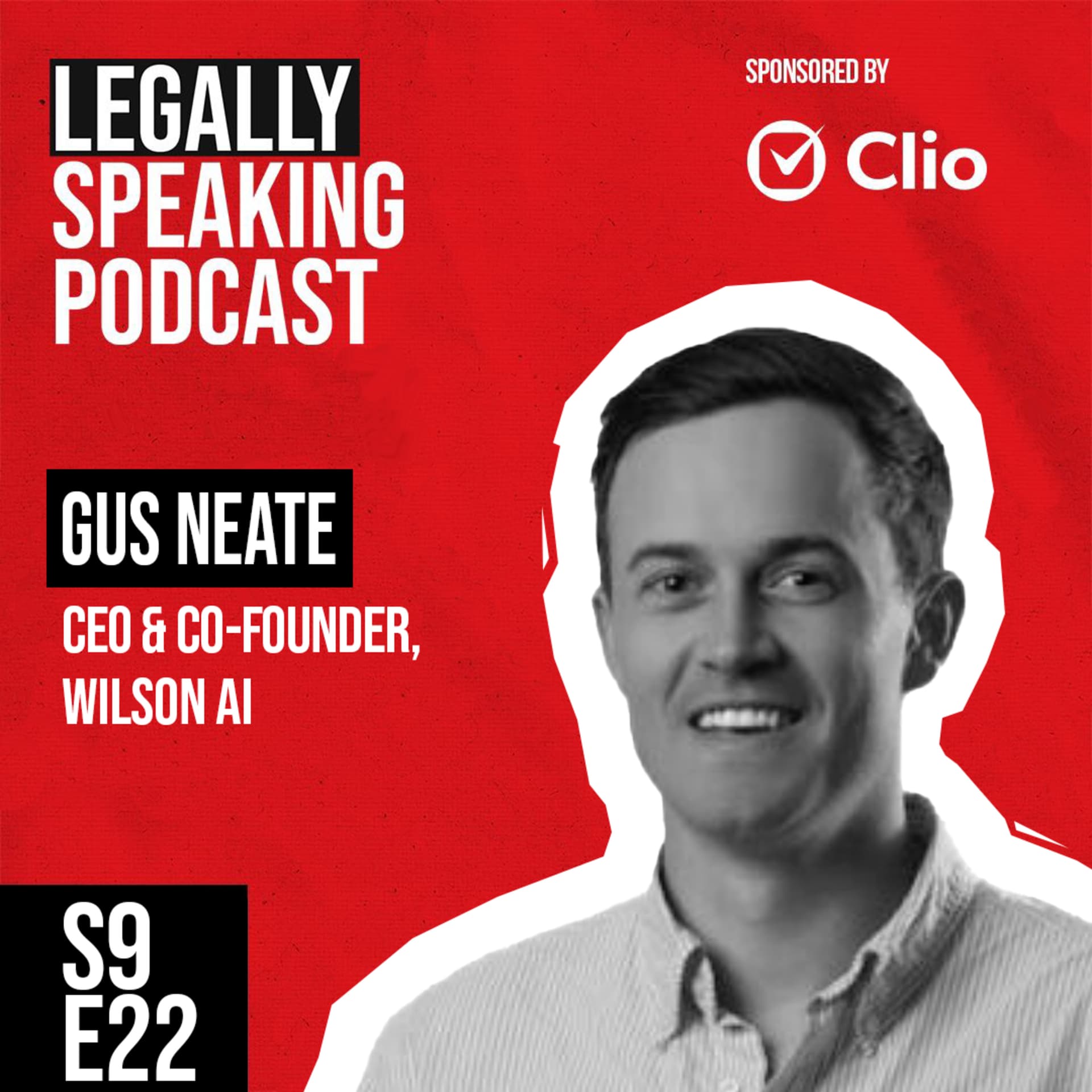
Gus Neate, CEO & co-founder of Wilson AI. Background: engineer (Oxford), qualified as a private equity lawyer at Clifford Chance; worked in legal tech product (H4) and in-house legal teams; met co-founder Alex Wang via Entrepreneur First.
Key claims
Wilson can complete 70–90% of tasks; uses playbooks for NDAs/MSAs/DPAs with red/amber/green ratings and suggested redlines; provides sourced, verifiable answers; paralegals learn quickly and gain leverage; AI won’t replace lawyers so much as raise standards and expand access.
Notable examples
uploading an NDA/MSA/DPA into Wilson to apply tailored playbooks; extracting payment terms/notice dates from batches for renegotiation; Q&A sourced from internal policies (with double-click verification).
Written by AI. May contain mistakes. Listen to the episode to check what was said.
Chapters
Tap a time to open that second in VOIntroduction to Wilson AI
0:00 to 0:45
Learn about Wilson AI's capabilities in reviewing legal documents.
“It's as simple as taking the contract that you've just received.”
Icebreaker: Reality of Suits
1:18 to 2:36
Gus Neate rates the TV show 'Suits' and shares his law firm experiences.
Gus Neate's Career Journey
2:36 to 4:39
Gus discusses his transition from engineering to law and founding Wilson AI.
Leaving Traditional Law for AI
4:39 to 5:58
Gus explains why he left a prestigious law firm to start Wilson AI.
“And I was drilled into me really well at Clip of Chance.”
Exploring Wilson AI's Features
5:58 to 8:21
An overview of Wilson AI's functionalities as an AI paralegal.
“Obviously, with the release of GPT in 2023, a lot has changed since then and the pace of progress has continued to be extremely rapid.”
Mission of Wilson AI
8:21 to 11:28
Gus elaborates on Wilson AI's mission to provide accessible legal support.
“Love that mission because I say if they're not big enough and don't scare you, then you need to go back to the drawing horde.”
Pain Points Addressed by Wilson AI
11:28 to 13:45
Understanding the specific problems Wilson AI aims to solve in legal teams.
“So, okay, the first problem, I guess taking each feature in turn, the first problem that Wilson AI would be solving is for the teams that are spending too long on lower value repetitive contract reviews.”
Pain Points Addressed by Wilson AI
13:49 to 14:05
Understanding the specific problems Wilson AI aims to solve in legal teams.
“Clio Duo is arriving this summer and it's already creating a stir.”
AI's Impact on In-House Legal Teams
14:11 to 17:40
Explore why in-house legal teams are adopting AI and the benefits it brings.
“So they are being filling out by the hour.”
The Role of AI in Supporting Lawyers
17:40 to 19:11
Discuss how AI tools enhance lawyers' capabilities rather than replace them.
“So Wilson AI are very much powering the transition with the AI paralegal tools to enhance teams expertise.”
Show all 17 chapters
Future Skills for Lawyers
19:11 to 21:53
Learn about the essential skills for lawyers in an AI-driven legal landscape.
“I think what really will happen here is lawyers will be able to do more work and the standards that people expect in their legal support are going to go up.”
Ethical Considerations in AI Adoption
21:53 to 22:53
Understand the ethical framework for safely implementing AI in legal practices.
Human-Centered Legal Practices
22:53 to 24:19
Discover the importance of a human-centered approach in the legal industry with AI.
“And what we've seen that's fantastic is a lot of in-house teams are plugging the gaps across an entire business.”
Workshops for AI Implementation
24:19 to 26:11
Find out how Wilson AI is training legal professionals in AI tool adoption.
“And actually the way that you phrase those instructions for the AI is very important.”
The Future of Wilson AI
26:11 to 28:00
Explore the anticipated advancements in AI technology for legal tasks at Wilson AI.
“The reason that that's exciting is we're starting to see the quality of the reviews on contracts kind of coming up close to sort of or sometimes even exceeding lawyer levels.”
Advice for Aspiring Entrepreneurs in AI
28:00 to 29:35
Learn key advice for starting an AI-driven business, focusing on understanding customer needs.
Exploring Wilson AI and Career Journey
29:35 to 30:02
Discover where to learn more about Gus Neate's career and Wilson AI.
Transcript
Automatic transcript. May contain errors.0:00It's as simple as taking the contract that you've just received. You upload that into Wilson. There are existing playbooks inside of Wilson available out of the box, which will review your NDAs, MSAs and DPAs. You can tailor those to your positions, both lawyers and paralegals. User tools. The first port of call is Wilson, who works like a junior. So when you're reaching out to Wilson, that means that it's taking you sort of 80 % of the way there on tasks. What's interesting is that we're also running training tests now with actual paralegals. It's right with the future of the profession being right at the forefront.
0:30We've seen paralegals are particularly good at learning how to use these tools and then increasing their leverage, which I think is seriously exciting. It's a whole new career path, the case of making the overall quality of client service much higher, and that will drive additional demand for legal services. On today's Legally Speaking podcast, I'm delighted to be joined by Gus Neat. Gus is the CEO and co-founder of Wilson AI, an AI-driven platform designed to streamline legal operations for businesses. An engineer by background, Gus qualified as a private equity lawyer at Clifford Chance. He has experience working in the product team at a legal tech platform, H4, and multiple in-house legal teams.
1:08So a very big warm welcome to the show, Gus. Cheers, Rob. Great to be on. Thank you so much for having me here today. I'm looking forward to it. Oh, super excited for today's discussion and all the great things you've been getting up to and indeed your career prior. But before we get into that, we do have a customary icebreaker question here on the Legally speaking podcast which is on the scale of one to ten with ten being very real what would you rate the hit tv series suits in terms of its reality of the law if you've seen it on a scale of one to ten i might go with an eight this is quite strong remember when i when i first joined clifford chance i mean the lifts in clifford chance are almost identical to lifting suits and um i was lucky i got to sit with a fantastic partner there in the corner office which was like it's not not quite as dig is the one in suits but it was pretty dramatic so i do remember things i was slightly surprised and um there was the equipment there were kind of equivalents of donners who were completely running the entire show behind the scenes and so i was i was struck certainly early in my career by how similar in many ways it was to see the only bit that is different it's often the work the drudge the drudgery of the sort of 3 a.m digging through documents kind of looks quite fun in the suit but usually in reality that that can be quite quite quite a task well no we we rarely get eight so we're going to take the eight and move certainly on because you justified it beautifully so to begin with Gus would you mind telling our listeners a bit about your your background and career journey yeah of course absolutely so I guess my background is that I was originally technical I studied engineering at Oxford enjoyed kind of building both hardware and software but then in quite an unusual move I changed to focus on then becoming a lawyer going through law school I worked for a range of legal tech businesses I think you mentioned h4 but also one called clifford chance applied solutions which was a chance selling into its existing client base certain technology products then i became a lawyer at clifford chance trained in their london office was lucky to get boosted comments to in-house legal teams and then became a private equity lawyer it's worth mentioning that kind of after doing that the next big stage was going to through an accelerator program called entrepreneur first that was where i met my co-founder a guy called Alex Wang who's incredibly smart I'm very lucky to get to meet meet him he's a Cambridge computer science and math absolute genius and he's the kind of brains behind what we're building at Wilson AI and then we've been it was about nine months ago that we now founded the company raised a pre-seed round in San Francisco and New York but happy to dive into all of it in a bit more detail yeah absolutely and we'll definitely get into that part of the journey I guess taking your mind back to you mentioned obviously you studied engineering at university of olxford what drew you to a career in the law yeah i think it's a really interesting question so i guess from my perspective there are two things one of which is that i love that the law is often the underlying uh nature of almost all commercial agreements so fundamentally when people agree to transact on anything usually they are falling back on the law there so we're the um it that means that similarly to engineering it feels like it's an underlying fabric that goes across society that's extremely important and the other piece that i found really interesting was that knowing that fairly few people from engineering backgrounds go into the law as an industry and a lot of the work is automatable i thought it'd be particularly interesting for me to go and take a look being like oh i've seen what people can do with software now it'd be really interesting to go and dive really deeply into the industry to start understand how it works and why it's structured the way it is at the moment yeah i love that that's that's very forward thinking as well so then you you obviously qualify into a PE at Clifford Chance what did you most enjoy about working at a magic circle law firm you mentioned the donors you mentioned the lifts but was there anything else yeah absolutely I mean I think there's I think there are probably two things that I really enjoyed the quality of the people is exceptional which is fantastic so I was able to learn from amazing people and work alongside amazing people who worked really hard there was fantastic training and then exceptional client focus so i did see that people are obsessed they're doing the best of their clients we're cruising on my second favorite thing there which is probably the actual clients themselves often you're working with people that are also absolutely leading in their field it makes it extremely interesting to kind of get directly into their shoes and understand what it is they really want from their legal services normally that's to find ways to achieve their business outcomes in manners that are sort of legally sound that's which i I think it's really interesting and important.
5:37And I was drilled into me really well at Clip of Chance. Yeah. And I always think if you're around really great people, that naturally brings you up to their level as well. So I guess that leads to my next interesting question. What inspired you to leave the traditional legal world? You're arguably one of the best law firms out there. What inspired you to say to leave and then start Wilson AI? Was there a particular moment? Yeah, absolutely. So I think prior to going to PIPA Trans, I did kind of work a bit in legal tech and it was clear at that stage that there was a lot of potential to start automating legal work, but I would say the tools weren't quite there.
6:13Obviously, with the release of GPT in 2023, a lot has changed since then and the pace of progress has continued to be extremely rapid. That's made a massive difference for what you can automate and the quality of solutions. one thing i i still think if the case and luffy you're seeing it changing a bit more is you don't see that many tools built by lawyers kind of for lawyers there are examples which are but i think that that's um i felt that that was an exceptionally good thing to do often i was seeing lawyers saying wow i wonder like who they got testing this with my existing tooling because it doesn't feel like it actually makes it easier um i felt that that meant there was a massive opportunity at the moment yeah so you can see it from both sides and obviously then you've collaborated with your co-founder and you've obviously produced Wilson AI which I do like but tell us tell our listeners as CEO and co-founder of Wilson AI what it is.
7:03Yeah absolutely so we think of Wilson like an AI paralegal so what that means is that it will help with doing tasks to sort of 70 to 90 percent of the task will be done but you keep humans in the loop to supervise and those humans are usually lawyers but it can also be paralegal supervising the AI paralegal they then supervise and double check the work. The key things that Wilson actually helps with, there's sort of a big three. One of them is reviewing contracts. So what happens there is you can have a playbook that you can apply across, for example, a third party contract that applies and marks it up based on all of your positions.
7:37That's the first bucket. The second bucket is across historic documents, extracting the key terms. And that often comes up in kind of due diligence or risk lagging exercises and can be very time intensive. And then the last one is kind of answering common Q &A, offer an app inside your existing systems or across your policies um again the key thing here is that as an ai paralegal we're always giving really easily verifiable sources for example so a lawyer can just jump in quickly to double check the work similarly that if you're working with a fantastic trainee or paralegal yeah now i love how you kind of mentioned the balance there obviously the text doing the tech and the human impact uh doing the human bit there um i strongly believe that mission-led companies are the ones that are going to survive and thrive.
8:19So Wilton AI's mission, as I understand it, aims to make world-class legal support instantly accessible to every business. Love that mission because I say if they're not big enough and don't scare you, then you need to go back to the drawing horde. But can you explain your mission in more detail to us? Yeah, absolutely. So I guess what that really means is the way that we view having the human in the loop here is having world-class legal support being instantly available to all businesses. What that really means is where you can instantly have an AI answer that is suitable, that should be provided.
8:52But what we want to be able to do is give that AI as a sort of first port of call anywhere it's appropriate, but make sure that you're having humans looped in continually where that's also required. So that speaks a little bit to where we see the future of legal services going, which is that people will heavily use AI, but they will, of course, be humans jumping in, plugging the gaps, training the systems, understanding the risk tolerances of businesses. We really want to be able to kind of provide that end to end for businesses, which is what we're building towards. Yeah. And I guess that leads nicely.
9:22And you've kind of touched on this, but we're trying to take our listeners on a journey with AI and legal tech and probably as by episodes go, go a little bit deeper so we can educate and inform. So you have different features with Wilson AI, review, query, and oversight. So would you mind just outlining in a little bit more detail how Wilson AI works in those respects? Yeah, of course, maybe. So starting on the review side, it's as simple as taking the contract that you just received, you upload that into Wilson. There are existing playbooks inside of Wilson available out of the box, which will review your NDAs, MSAs, and DPAs, but you can tailor those to your positions.
9:57Then when you press run, Wilson goes through the document and does a red, amber, or green rating for each of the points in the playbook. If something is a red or an amber risk, it will then suggest exactly the red line to put into the document. You can then go to that red line and say, yes, agree, disagree, which allows you to speed up massively the process of marking that document up. The key thing that we're then doing is feeding back what users do back into the system so it continually improves and learns from their input. That's the first one about reviews. The extraction piece is a little bit different.
10:31So that tends to work with historic signed documents of any format, you can upload a large batch of documents, then depending on the document type, Wilson can assist with pulling out things like payment terms, notice dates, whether or not the indemnity aligns with your standard positions. And it produces a sort of tabular output, you'd be able to very quickly understand, okay, we've got four contracts that we need to renegotiate because the payment terms aren't in line with what we need for our current fundraising, for example. And then the last one is the Q &A, this one is most similar to kind of the use of if anyone listening uses things like chat GPT or Claude as a similar you go in you ask a question Wilson's connected into your data systems so it will find and then source for you it's actually looked even if people use perplexity as similar sourcing saying oh here we go I found that you have like an infosec policy the answer is here you can then double click on that to check that the answer is correct because we're very focused on making sure that things are verifiably correct as well as correct yeah and that's so important as well to build trust and indeed enhance adoption um okay i see a lot of you know you've had a successful journey very early on into wilson ai um but you know for legal techs to really thrive and for law firms and legal teams to actually adopt and buy you need to really articulate the pain point it's solving so to simplify things now what problem or problems does Wilson AI specifically solve?
11:53Yeah, absolutely. So, okay, the first problem, I guess taking each feature in turn, the first problem that Wilson AI would be solving is for the teams that are spending too long on lower value repetitive contract reviews. Often that means that, for example, you're seeing business like sales cycles being delayed. So you may receive a large quantity of MSAs that you're hoping to sign. But the fact that it takes a long time to go through those each of those sometimes it can be you know two to three hours for each term that basically delays the amount of revenue you can book so the problem we solve is with saving legal time and we're actually making doing those deals a much quicker process when it comes to term extraction the problem that we're usually solving there is that people have saved down all of their documents but they don't really know what's in them and then they know that if they would like to know what's in them they can either fire people or perhaps go to a law firm and pay a a pretty staggering sum often to go through all of those documents and pull it out.
12:51Really, this is often being done for risk review exercises. You know, I wish I could tell how many of my contracts align with the new standards we just set. That is a big issue for teams and it's usually very expensive to solve. We're able to kind of surface that information much more quickly. And then the last piece is around this Q &A side around policies. Really, the pain point that we are hearing from teams is they deal with a big, big range of stakeholders in the business and really legal almost are acting like a knowledge center often is like oh legal will know that which means they get swamped across all sorts of channels tons of things filling their legal inbox probably filling their slack inbox or teams and therefore starting to make it more self-serve it almost operates like a training system so you see people say i'm swamped i wish people would be more trained to understand actually that this is like in our internal systems wilson's like kind of jumping in and filling the gap and saying i can take some of the more basic things off your plate.
13:45Today's episode is brought to you by Clio, leaders in legal tech and the team behind one of the most exciting AI launches this summer. Clio Duo is arriving this summer and it's already creating a stir. Built right into Clio Manage, Duo uses AI to help you draft emails, capture time, summarize documents automatically. It's smart, seamless, and designed to save you hours every week. Find out more and see what Clio Duo can do for your firm at clio.com forward slash uk now back to the show i think that's a really good way to to sort of simplify and people can visualize actually the real problems that it's solving because this is what i talk a lot about on the show is tech for good you know to improve your your your lifestyle your well-being as a lawyer you know to take away the drudgery to increase efficiency happiness it all matters okay let's talk about in-house legal team because at wilson ai you starting with in-house legal teams because they can control the majority of the legal budget and are closest to the decision making as you say so taking into consideration your own experiences from working in-house as mentioned could you explain further why wilson ai is focusing on in-house teams and why you think they are right at the starting point of legal ai adoption yeah absolutely i mean what we're hearing from in-house legal teams is fascinating i think is they have all the right incentives to adopt AI.
15:05So they are being filling out by the hour. So becoming quicker at their tasks is directly beneficial for business outcomes. So often what they're being measured on is things like SLAs. If they are much quicker, then the business moves faster. And that's a massive win for these in-house legal teams. And we're seeing that that's meaning that the pace of adoption in in-house legal teams is much quicker. What's interesting is even the case that you're seeing adoption at the in-house labor team and also business users so you're seeing people say hmm could i self-serve the sales contract is there certain types of sales contract can i have the then use a platform ahead of even coming to legal so then the whole business moves quicker um one of the things i always really enjoyed a couple of chances getting very close to what the clients or the business teams really cared about what's really interesting work with in-house teams is they're right in that mix as well so we're often say we see people in the business using wilson too yeah no absolutely i love what you're doing for the the in-house community and we remind listeners actually go back and listen to ben white's episode from crafty council who's featuring uh doing some great work in the in-house space and indeed on the the sort of tech side so let's talk about the evolution then of in-house teams how do you think the role of in-house legal teams is going to evolve and is evolving and how does ai support this shift Absolutely.
16:22So I mean, what we were saying is that when you start to automate some of the lower hanging fruit as an in-house lawyer, that allows you to get even closer to the business and strategic decision making. So we're often seeing that lawyers are being turned to to look around corners so that they're setting the risk profile, which the tool will use. And once you've set up the policy, actually, not as much has to come to you, which means you can kind of look down the line and say, OK, are we going to need a regulatory approval here? how should we be handling that or what's our like next key milestone so they're moving closer to sort of strategic business advisors and then also setting risk parameters for tools um i think that's a pretty exciting change and we're seeing that that's really like empowering in-house legal team to go further and closer to the business and do less of the drudgery and i think that may eventually help bridge that sort of you know well-known conception that you know cost center the more that you can free up the time to show that you're not a cost center you're a genuine value add and can help you know really add that value to the organization i think that's good for team culture as well yeah absolutely i mean it's um it's awesome to see when you see someone um previously the cost center thing is like if you're driving revenue much more quickly by getting a tool that means you all book your sales contracts faster everyone's turning around go wow okay what else can legal do because that sees unbelievably important promises yeah no i couldn't agree more okay you talked earlier about paralegals want to kind of go back to that because you know So Wilson AI are very much powering the transition with the AI paralegal tools to enhance teams expertise.
17:50So can you just tell us a little bit more about the paralegal tools? Yeah, of course. So, I mean, so it's a similar, similar tools to what we see being used by lawyers. So both lawyers and paralegals use the tools. What's really happening there is it's the first port of call is Wilson, who works like a junior. So when you're reaching out to Wilson, that means that it's taking you sort of 8 % of the way there on tasks. what's interesting is that we're also running training sessions now with actual paralegals because it's part of the sort of future of the profession being right at the forefront we've seen paralegals are particularly good at learning how to use these tools and then increasing their leverage which i think is seriously exciting and it's a the whole new career path really could be an expert in how to adopt and set up fantastic systems that reduce certain areas of work that wasn't as interesting i'm putting my legal recruitment hat and I think that's a good way to future-proof careers as well you know and through that collaborating as well um and actually informing and educating and retooling I think that's a really good opportunity to uh to keep people um engaged excited and yeah just all good stuff when it comes to culture leading to that then I guess is AI replacing lawyers there is a lot of talk about AI replacing lawyers particularly from people outside of law of course we read the headlines in the media etc etc but how do you see Wilson AI assisting lawyers rather than replacing legal professionals?
19:11Yeah, absolutely. I mean, I think it's, I mean, looking back more, perhaps more historically, it's clear that there were very similar conversations that I had about, you know, things like the accounting industry with the introduction of Excel. I think what really will happen here is lawyers will be able to do more work and the standards that people expect in their legal support are going to go up. And the ability to access great legal services, I think, will also increase. So what that really means is you would expect clients to want contracts turn around much more quickly, you might expect smaller businesses to be more willing to hire lawyers, or to use more legal services.
19:49So I think overall, you'll see the pie grow a lot. And actually, it's highly I think people will retool and the role of being a lawyer will be different. And the same way as like accountants who are doing manual ledgers would now obviously all use external tools. But I think that realistically, it's not a case of reducing the number of jobs here the case of making the overall quality of client service much higher and that will drive additional demand for legal services yeah and i want to pick up on a point you mentioned there because i was having a conversation with a boutique law firm owner who is actually a developer by background himself you were saying about the role of the future lawyer and what that looks like he was saying quite vivosely that um you know you need developers in law firms now that needs to be the you know just as important as part of future proofing the the legal journey what's your what's your view on that in terms of you know the lawyer versus not necessarily just being the lawyer but moving more to having you know sales development type skills as well as a future lawyer absolutely i think it's like one of these big trends people call it kind of like o-shaped lawyers as well right where you have lawyers that actually are very experienced in other fields i think that's extremely valuable um i saw at the chance they had you know like a data science team they would be doing pieces that were extremely important and very complementary to what the lawyers were doing we do the same thing at wilson so obviously there's a consistent feedback loop between engineers and legal expertise to understand like how to improve tasks so i certainly think it makes sense to have a broad range of skills including engineering mixed with legal skills in law firms and in-house figure teams yeah and you make a really good point about o-shaped as well and i do encourage folks again to go and check out our episode with dan kane the founder of the o-shaped lawyer because he gives some really good insights and what he's building there i think it's uh super powerful and a great initiative you've talked about verifiable and that leads nicely to what i wanted to ask you about some of the ethical considerations because you know we're not still there where everyone is 100 on board with this and has skepticism and a little bit concerned so what ethical considerations do you think law firms and indeed legal teams should be mindful of if they're looking to adopt or when they're looking to adopt these ai tools yeah absolutely i think that's a that's a fantastic point to pick up i mean i think it's important to make sure maybe it kind of comes back a little bit to what we were talking about before about the future of the profession and training i think one of the key ethical considerations is how do you roll this out safely and how do you train your people to use it what we're seeing there is often this is about maintaining client confidentiality ensuring that your future workforce are well equipped to use these tools and well placed there and i think also one thing that we're looking at quite a lot is making sure that it's not the case that these tools are only available to sort of at a super high price to really high-end customers but really making sure that there is that accessible justice piece um one of the most exciting things about the changes from ai is that currently it is the case that to get world-class legal advice it's usually there are substantial financial barriers um things becoming much more accessible with ai i think that's extremely important to kind of access to justice um i think that making sure to roll out ethically for that is very important yeah and that's something we we support and i know clio who sponsored the show you know are hugely focused on trying to reduce that access to justice gap and as i say tech for good to to help people that need it and get the support that they need for the for the justice they deserve yeah really well said um okay and coming back maybe more to the the o-shaped side of things in a recent wilson ai article it states the skills that matter in an ai first legal team you share the shift to ai first legal teams isn't coming it's already here and the legal professionals who lead in this new era the ones who combine legal acumen tech fluency strategic process thinking and human centered client service so can you share the importance of these four areas when it comes to integrating ai yes absolutely i mean so i think the i think i really pick up on the last one there is that often really the businesses are made up of people.
23:44And what we've seen that's fantastic is a lot of in-house teams are plugging the gaps across an entire business. So they're the people who are saying, I've spoken to someone who can help with automating this process. I've now spoken to like our info sector team and that's now they've like uploaded their policy. They've got it signed off. I've set up the system. I've now onboarded all of Sayer. I've trained them and I'm starting to see the whole business moving faster. So I guess we picked up on four skills there, but I would probably say that being human centered in terms of managing the process across the business and juggling between stakeholders to make sure everyone hits their outcomes that's what we're seeing fantastic legal teams doing i think it's super impressive and it's a challenging skill but i think it's something the lawyers are extremely well placed to do yeah and yeah the better they can become at that and become that more human-centered my listeners will be sick to death of me saying it's not b2b b2c it's h2h it's human to human connection that you can build um in this year and beyond uh so important you've talked about um sort of collaborating with paralegals and doing some some classes i want to just dive a little bit deeper because you know you do offer classes and seminars which not all sort of ai legal tech businesses do and i think it's a really good thing to to think about and adopt so can you tell us more about the range of topics you cover during these workshops yeah of course so often it is the case one of the big topics that we're facing at the moment is how to generate great AI playbooks.
25:04So what that means really is when you have the AI work doing, starting to be able to do contract reviews for you in your style, what's really important is being able to really easily codify how it is that you review, what the points that you need to have the AI pick out are. And actually the way that you phrase those instructions for the AI is very important. So saying things like always check for this provision is very different to saying, make sure or you know i would like to see this because the more formal and strict you are with your language the higher the performance of the ai so we're doing a lot of training to help people to get good outputs by having really good inputs um the other piece i would say we're also doing training around how do you know how to quickly verify things when should you be kind of suspicious or or concerned about using ai what's the one of the areas where actually one thing which that we've recently added into wilson is an automatic escalation feature so something high risk but like uh to say that it will get sent to lawyers but we do a lot about training about making sure you're implementing the systems securely and in a safe and risk appropriate fashion yeah no it all makes sense and you know very um very good to educate people so it leads to adoption this is the number one thing that we're hoping to encourage through people listening to the show is there are amazing tools and content and classes and things out there which can hopefully enhance adoption and tech for good and i guess as we look to to sort of close what are the future plans you have for wilson ai i know it's difficult because when you say the next five 10 years because the world the world that we live in i won't put a sort of number of years on it but what does the future look like and you know what are you most excited about as a ceo and co-founder of an exciting legal tech business yeah absolutely um so i mean what we're seeing at the moment is like a massive increase in the pace to which AI is able to do tasks or the quality to which it's able to do those tasks.
26:58The reason that that's exciting is we're starting to see the quality of the reviews on contracts kind of coming up close to sort of or sometimes even exceeding lawyer levels. What's interesting is then we're starting to chain that with other tasks. So it's moving a little bit towards, okay, the AI does an initial contract review and then loops in one to two other stakeholders who give their feedback on a point and then sends it to the uh trust an email to counter parties send it to them assist your negotiation sends it all out on doctor sign saves it down extracts all the key terms but you're seeing really it's chaining into more and more workflows um that's really interesting i think and very exciting uh you then start to see the legal teams really as orchestrating the agents and or giving them the ability of like what what they should do at each particular point and making sure that they're doing it in the style that the lawyers with their risk risk profile that's extremely uh powerful they'll start to look a little bit more like ai workers than just ai tools and i think that will be an extremely exciting transition yeah absolutely and i i think it's uh going to be a very productive efficient exciting world for those in the legal space if they they listen to content like this they surround themselves with people like you they get curious they learn and then take that action to actually adopt um okay as someone who is running a ai driven platform a business what advice would you give to others looking to start or what are some things they need to think about to avoid mistakes no doubt you've made yeah of course absolutely um so i think for people thinking about starting i would say um get really close to the people you want to build things for it's really worth understanding obviously it helps if you yourself have been if you might be a customer for your own product that's fantastic um but if that's not the case i would spend a ton of time talking to people really deep like deep diving specifically into their problems and how you might be able to help i think that's um that's a fantastic way to start after that there's a there's a ton of learning and i'd recommend it as a fantastically satisfying experience it's extremely challenging but it's really it's also like the hardest things you do often generate the most growth and the most and they're extremely satisfying so it's a great it's a great career path and people are thinking of starting up i would recommend it yeah and i i agree with that you know the comfort zone is great but nothing ever grows there and you know terrific is specific you know the more specific it is the more terrific it is and i love that point as well great advice okay if our listeners which i'm sure they will want to learn more about your career journey or indeed wilson ai where can they go to find out more feel free to share any websites social media handles we'll also share them this episode for you too brilliant thank you yeah it's www.getwilson.ai or we can you can find us on linkedin and twitter um those are probably the best platforms to reach out on so yeah thanks ron there we go well it just leads me to say thanks so much once again gus it's been an absolute pleasure having you on the show so from all of us here on the ladies being podcast sponsored by clio wishing you lots of continued success with your career and indeed all things Wilson AI.
30:03But for now, over and out. Thank you for listening to this week's episode. If you like the content here, why not check out our world leading content and collaboration hub, The Legally Speaking Club, over on Discord. Go to our website, www.legallyspeakingpodcast.com for the link to join our community there. Over and out.
From the publisher
On today’s Legally Speaking Podcast, I am delighted to be joined by Gus Neate.
Gus is the CEO and Co-Founder of WilsonAI, an AI-driven platform designed to streamline legal operations for businesses. An engineer by background, Gus qualified as a Private Equity Lawyer at Clifford Chance. He has experience working in the product team at legal tech platform, H4 and multiple in-house legal teams.
So why should you be listening in?
You can hear Rob and Gus discussing:
- AI-Powered Legal Support and Making it Accessible
- The Future Of Legal Professionals, Particularly Paralegals
- Groundbreaking In-House Legal Transformations
- Ethical AI Considerations Moving Ahead
- Technological Legal Innovations from Wilson AI
Connect with Gus here - https://www.linkedin.com/in/gus-neate